• About
  • Best Baby Names
  • Celebrity Baby Names
  • Celebrity Baby Names – Current
  • Celebrity Baby Names – Past
  • Featured Boys Names
  • Featured Girls Names
  • Featured Unisex Names
  • Links to Name Data
  • Waltzing on the Web

Waltzing More Than Matilda

~ Names with an Australian Bias of Democratic Temper

Waltzing More Than Matilda

Tag Archives: nature names

Cherry-Rose and Uneke-Hope: Double Names for Girls from the Bonds Baby Search

02 Monday Apr 2012

Posted by A.O. in Baby Contests

≈ 3 Comments

Tags

double names, flower names, locational names, nature names, triple names

I would have loved to have listed all the girls’ double-names, but they went for pages – the Something-Roses alone ran into the dozens. So I have limited myself to those which made the most impact on me.

Aiko-Jayne

Aleah-Persia

Alisha-Savannah

Annabelle-Ang

Asher-Marcelle

Bella-Ching

Bryndee-Bella (there is a mountain range called the Brindabellas)

Caprice-Elouise

Carlay-Diaz

Cereniti-Lee

Cherish-Bonnique’

Cherry-Rose (pictured is the rose called the cherry rose)

Daisha-Lee

Denyella-Sophia

Destenee-Rose

Elexis-A’vril

Ellie-Peach

Esthershoel

Imarni-Rose

Indigo-Saige

Ivory-Rose

Jaylah-Mae

Jazzmine-Tira

Jypzee-Lee

Kailyn-Stevie

Kimyah-Lee

Krisjanis

Kyarnah-Jane

Lahnee-Mia

Latalia-Star

Lily-Jagga

Maddison-Torika

Mayella

Memphis-Bella

Montana-Armour

Myami-Jade

Narla-May

Nevaeh-Mai

Odessa-Brigit

Parkah-Grace

Pipi-Grace

Rangimarie

Rita-Adele

Ruby-Lou

Sarita-Hazel

Scarlett-Rose

Shiah-Blue

Schuyler-Rae

Sienna-Jade-Lee (a triple name!)

Tilly-Rose

Tippi-Lee

Uneke-Hope

Violet-Amaya

Zaphire-Lee

Thank you to Sophia for suggesting some of these names

Girls Names From the Top 100 of the 1900s

25 Sunday Mar 2012

Posted by A.O. in Name Themes and Lists

≈ 18 Comments

Tags

Anglo-Saxon names, Arabic names, classic names, famous namesakes, fictional namesakes, flower names, gemstone names, germanic names, Google, honouring, Italian names, K.M. Sheard, Latin names, locational names, mythological names, name data, name history, name meaning, name popularity, name trends, nature names, nicknames, Old English names, Old French names, Old Norse names, plant names, popular names, retro names, royal names, saints names, Shakespearean names, Victorian names

There have been many Googled requests for names from the 1900s, so this is my selection of ten girls names that were Top 100 in the 1900s which I think are usable today. I’ve tried to get a balance between names which are currently rising in popularity, and those which haven’t charted for many decades. All the data comes from New South Wales – the only state which has made public its data kept since Federation.

Amelia

A variant of Amalia, the Latinised form of Germanic Amala, a pet form of any name beginning with Amal-, and meaning “work”. This was one of the many names introduced to Britain by the Hanoverians; part of its easy acceptance was that it was considered a variant of the unrelated Emilia, and indeed Princess Amelia of Hanover was called Emily in everyday life. In the 1900s, Amelia was #95, and it had left the Top 100 by the following decade. It has been on the rankings almost continuously, dropping out in the 1940s and ’50s. Rejoining in the the 1960s, it grew steadily in popularity, until it was in the Top 100 by the 1990s. It’s currently stable at #10. Famous Australians named Amelia include Amelia Best, who was one of the first women elected to the Tasmanian House of Assembly, and opera singer Amelia Farrugia. Amelia was under-appreciated for many years, but is now extremely popular, with a host of nicknames such as Amy, Melia, Millie, Mia and Lia. Pretty and unpretentious, it has a ready-to-wear quality that makes it a handy choice.

Bessie

A short form of the name Elizabeth, in use since the 16th century. The name Bessie was #78 in the 1900s, and grew in popularity during the 1910s. It took a nosedive in the 1920s, left the Top 100, and hasn’t been in the rankings since the 1940s. Famous Australians named Bessie include portrait painter Bessie Davidson, who was celebrated in France in the pre-war era, and Bessie Guthrie, a designer of the 1920s who was an ardent feminist and early proponent of solar energy and ecological balance. She founded the Viking publishing house, and in later life was a crusader for the rights of abused children, before finally, in old age, being able to join a movement of feminist political protest she had waited all her life for. Bessie is such a sweet yet spunky name for a girl, and one I saw recently mentioned as having been given to a baby in 2011. I think it’s one which is ready to shed its “old lady” image and be used once more.

Edith

Based on the Old English name Eadgyð, meaning “rich war”, this was popular amongst Anglo-Saxon royalty; Saint Edith was the illegitimate daughter of King Edgar the Peaceful, and Edith of Wessex was the wife of King Edward the Confessor. Unlike many Anglo-Saxon names, it remained in use after the Norman Conquest, and didn’t fall out of favour until the 16th century. It was revived in the 19th century by the Victorians. The most famous Australian with this name was Edith Cowan, the social campaigner and first woman elected to parliament; she was part of the group which helped give women the vote in 1899 (her picture is now on the $50 note). The name Edith was #16 in the 1900s, and remained Top 100 until the 1940s, leaving the rankings in the 1970s. Very recently, it has had a revival, and is now increasing in popularity in the 500s. Strong, patriotic, and still aristocratic-sounding, it’s fast becoming a fashionable favourite. The short form Edie seems to be even more popular.

Ida

This name was introduced to England by the Normans; it may come from the Old Norse word for “work”, or be related to the Norse goddess of youth, Iðunn. Folklorist Jakob Grimm theorised that her name may come from idis, a divine female being in Germanic mythology, meaning “respected woman”. Ida died out in the Middle Ages, but was revived in the 19th century. This may have been partly inspired by Alfred, Lord Tennyson’s poem on female education, The Princess, where the heroine is named Ida. Gilbert and Sullivan parodied the poem in their operetta, Princess Ida. Tennyson probably took the name from Mount Ida; there is one in Crete and one near ancient Troy, and both were sacred to the Mother Goddess Rhea or Cybele. According to K.M. Sheard, the name is from the Greek for “woodland”. Ida was #42 in the 1900s and fell rapidly, leaving the Top 100 in the 1920s. It hasn’t been on the charts since the 1950s. Ida Standley was a pioneering schoolteacher in Central Australia. Ida is similar to popular names such as Ivy, Eva and Ava; it can also be used as a form of the Irish name Ita.

Leila

This variant of the Arabic name Layla was introduced to English-speakers by Lord Byron, who used it in his poems The Giaour and Don Juan. In Don Juan, Leila is a little Turkish girl rescued and adopted by the hero; in The Giaour, Leila is a member of a Turkish harem who falls in love with a non-Muslim, and is punished for adultery by being sent to a watery grave (vampires also get a mention). As such, it seems exotic, romantic, Gothic, and literary. Leila was barely Top 100 in the 1900s at #99, but has remained in continuous use, although very rare in the 1950s and ’60s. It’s never managed to join the Top 100 since, but has been climbing sharply since the 1990s, and is currently only just outside it in the very low 100s. Famous Leilas include Leila Hayes, who was in soap opera Sons and Daughters, and Leila Mackinnon, Channel 9 journalist. Leila fits perfectly with current related favourites Layla and Lila, and I wouldn’t be surprised if it was back in the Top 100 soon. Pronunciations vary, and as far as I’m aware, LAY-luh, LY-la and LEE-la are all considered correct.

Louisa

A Latinate feminine form of Louis, this was another name introduced to Britain in the 18th century by the Hanoverian royal family. The most famous woman named Louisa from Australian history is undoubtedly Louisa Lawson, the mother of national poet, Henry Lawson. A poet and publisher in her own right, Louisa was also a leading feminist who was called The Mother of Suffrage in New South Wales, and helped bring women in her state the vote. It is generally believed that she is the prototype for all the kind, capable, and hard-working country women who appear in Henry Lawson’s stories. Louisa manages to be a classic, remaining constantly on the charts, while being underused, for it has not been Top 100 since the 1900s, when it was #79. It’s currently around the #500 mark. You really can’t go wrong with Louisa – it’s never been in vogue, yet never been out of style either, so it doesn’t sound old-fashioned. It’s pretty and sensible, and honours one of Australia’s heroines. Nicknames can range from brisk Lou, to cutesy Lulu, and anything in between.

Maud

This is another form of Matilda. The Old Germanic Mahtild became Maheud in Old French, and Anglicised as Maud. Matilda was thus the Latin and written form of the name, while Maud was the way the name was said aloud. For example, Matilda of England, the first female ruler of the English kingdom (her reign was brief), was known as Maud in everyday life. Although the name may remind you of the word maudlin, that is actually from the name Madeline (its original pronunciation). Maud became rare at the end of the Middle Ages, but was another old name which Alfred, Lord Tennyson helped revive, due to his tragic and enigmatic love poem, Maud. Maud McCarthy was a nurse who served with distinction during the Boer War and World War I, receiving several medals. Maud was #94 in the 1900s, and slipped off the Top 100 the following decade. It hasn’t charted since the 1930s. It’s a genuine antique, and if you are determined on Maddie as a pet name, Maud would make a far more distinguished “proper name” than Madison.

Myrtle

Myrtles are graceful, fragrant flowering evergreen bushes, which in ancient times were sacred to Aphrodite or Venus, the goddess of love. Perhaps because of this, they are traditionally included in wedding bouquets; they are always used at weddings amongst the British royal family, a custom began by Queen Victoria. Myrtle has been used as a name since the 19th century, when other flower and plant names became the fashion. A famous person with this name is Myrtle White, who wrote books describing her life on a remote outback station. Myrtle was #47 in the 1900s, and had left the Top 100 by the 1930s. It hasn’t charted since the 1950s. I added Myrtle to the list, not only because we have myrtle species native to Australia, but because Baz Luhrman’s remake of The Great Gatsby will be released soon. There is a character named Myrtle in it, and this may give the name a new image than that of Moaning Myrtle from the Harry Potter books and films.

Pearl

Pearls are produced by molluscs such as oysters and mussels; they are essentially calcium carbonate or limestone in crystalline form. Ones occurring naturally in the wild are very rare, so that they are considered extremely valuable gemstones. Pearl became used as a name in the 19th century, when other gemstone names became fashionable. It probably also had religious connotations, because pearls are mentioned in the Bible, and Jesus compares the Kingdom of Heaven to “a pearl of great price”. Australia still has a significant pearling industry in Broome, Western Australia. A famous Australian with this name is Pearl Gibbs, an Aboriginal leader and activist who focused on women’s and children’s rights. Pearl was #87 in the 1900s, and left the Top 100 the following decade. It did not chart in the 1960s and ’70s, but staged a comeback in the 1980s, and has been climbing precipitously in recent years. It’s currently in the mid 200s, and this name from the sea still has plenty of lustre. It’s similar to the more popular Ruby, but seems more delicate and lady-like.

Sylvia

A variant of the Latin Silvia, meaning “of the woods”. The mother of the legendary Romulus and Remus was called Rhea Silvia (Rhea of the woods), because it was supposedly in the woods that she was seduced by the god Mars. Saint Silvia was the mother of Pope Gregory the Great, famous for her great piety; according to her portrait made during her lifetime, she was beautiful with large blue eyes. A common name in Italy, Silvia was introduced to England by Shakespeare, in his play The Two Gentlemen of Verona. Famous Australians with this name include Sylvia Harper, a tennis champion of the 1920s, and Sylvia Breamer, who was a Hollywood actress from the silent film era. Sylvia is a classic which has never left the charts. It was #58 in the 1900s, and didn’t leave the Top 100 until the 1950s. It hit its lowest point in the early 2000s, and is currently gently rising in the 500s. It’s lovely seeing this pretty name gaining in use; it almost seems like a nature name, because of its woodsy meaning and silvery bell-like sound.

(Photo used is of a bride in 1906; image is held by Culture Victoria)

Only Natural – Nature Names from the Bonds Baby Search

22 Thursday Mar 2012

Posted by A.O. in Baby Contests

≈ 3 Comments

Tags

animal names, astronomical names, Australian Aboriginal names, colour names, english names, flower names, food names, French names, fruit names, gemstone names, geographic names, nature names, plant names, season names, Thai names, tree names, vocabulary names, weather names

GIRLS

Acacia

Anise

Autumn

Azalea

Berry

Briar

Cedar

Cherry

Clover

Crystal

Cypress

Dahlia

Dawn

Dusty

Ember

Emerald

Honey

Indigo

Ivory

Jacaranda (this South American tree is so popular, it is often assumed to be native)

Jewel

Juniper

Mallee (a native tree; name of Australian Aboriginal origin)

Magenta

Misty

Ocean

Opal

Peaches

Pearl

Pepper

Rain

Raven

Saffron

Sage

Sapphire

Scarlet

Season

Soleil (French word for the sun)

Star

Sunshine

Swai (Thai word for the iridescent shark)

Tigerlily

Tulip

Winter


BOYS

Ash

Aspen

Baye

Bear

Bryne

Clay

Cove

Fin

Flint

Fox

Heath

Jarrah (a very tall and strong native tree; name of Australian Aboriginal origin)

Layke

Onyx

Reed

Reef

River

Rock

Rowan

Rye

Silvan

Sky

Storm

Sunny

Talon

Teal

Tiger

Tyde

Wolf

(Photo of Mother Cummings Peak Track, Tasmania from There’s Nothing Like Australia website).

Curl Up With a Good Book in the Nook of Names

11 Sunday Mar 2012

Posted by A.O. in Blog Reviews

≈ 6 Comments

Tags

Amazon, book reviews, choosing names, eymology, KM Sheard, Llewellyn's Complete Book of Names, locational names, mythological names, name advice, name books, name history, name meaning, nature names, Nook of Names, Pagan names, popular names, surname names

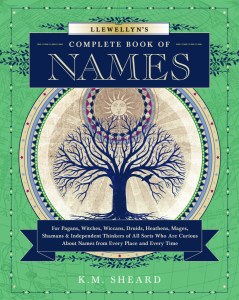
Most of us started our name blogs as a way to store and share our information, or as an extension of our online activities in forums, or even on a whim. Kay started her blog, Nook of Names, to promote the book she was preparing for publication: Llewellyn’s Complete Book of Names: For Pagans, Witches, Wiccans, Druids, Heathens, Mages, Shamans & Independent Thinkers of All Sorts Who Are Curious About Names from Every Place and Every Time.

That’s an impressive title, which embraces a wide spectrum of people who will want to read this book. If you are not a Pagan, Druid or Shaman, I hope at least you fit under the heading of being an Independent Thinker Who is Curious About Names. Slavish Non-Thinkers Who are Incurious About Names should leave now …. and in fact, how ever did you get here in the first place?

Because Kay has both a book and a blog, I am going to attempt to review both of them simultaneously. It sounds an insane plan, but in my defence I did try to do them separately. In the blog review, I kept needing to refer to the book, and in the book review, I needed to keep referring to the blog – the two are so intertwined that I felt compelled to combine them.

Kay started blogging on Midsummer Eve last year; although she says it is her first attempt, it is a beautiful and professional-level name blog. The Misty theme is a perfect match, the colours are soft and natural, and the background design from the book’s cover suitably mysterious. I must pay tribute to the illustrations for the blog; they are sumptuous and lovingly chosen works of art.

Nook of Names was set up to whet our appetites for The Complete Book of Names, with great success. The first post introduced The Complete Book of Names, the second explained why it wasn’t just for Pagans, and then began the process of providing some sneak peeks into the book’s contents based on names of people who connected to her on Facebook. For example, the entry on Estelle, also covers Stella and Esther, and hints that looking up the entries for Ishtar, Hester, Easter and Vanessa will prove rewarding.

Kay addresses the fact that a Complete Book of Names cannot ever literally contain every single name ever given on earth, and Nook of Names is thus her way of covering many names that couldn’t be included in the book. As a result, the blog has a huge number of names, and they are all indexed, from Abel to Zygus.

Llewellyn’s Complete Book of Names was published at the start of this year, and is available at Amazon and Amazon UK, as well as other good bookstores. UK-based readers can buy a signed copy of the book directly from Kay through Paypal. Australians can buy it from Angus and Robertson, which is rather pricey; if you don’t mind a longer waiting period, The Book Depository has free postage.

I have had my copy since the end of January, and for over a month it has been my constant bedtime companion. It’s a hefty tome – nearly 800 pages, and weighing almost 2 kg. It contains thousands of names, and a wealth of information for each one.

Massive reference books often come in small print, presumably in the belief you will only be looking something up for a few minutes, but Llewellyn have been very generous, and The Complete Book of Names is easy and pleasurable to read. The print is large and black on very white paper, and although there are many codes used to save repeating the same phrases, they are so commonsense that you can probably figure most of them out without consulting the key every time.

(I must confess to not actually using this key, as it is easy enough to decipher that ESW means English-speaking world, and Hist means historical – although having a quick glance at it now, I see it might be possible to confuse yourself, with Lat meaning Latvian and not Latin).

Each entry contains much more information than the usual “name book”, providing not just origin and meaning, but a mini-history of the name, with links to related names which may provide further elucidation. You may wonder what makes the book particularly Pagan; although there are plenty of “ordinary” names, like Henry and Katherine, and “modern” names like Sienna and Chase, the CBM includes many names from world mythologies, and also more nature names than are usual in a name book.

Pagans of all sorts are united by their love and respect for Nature, and so it is not surprising to see unusual name suggestions from the natural world, such as Paprika, Chaffinch, and Hypericon. Names of plants and gemstones often have magical associations, and it is fascinating to read that Parsley was dedicated to Persephone and used in funeral rites, or that Bears were sacred to Artemis, so that young initiates to her cult were called little she-bears. This gives a much deeper understanding of the “meanings” of such natural names.

Kay’s qualifications for writing the book are impressive. According to the back of the book, she is a scholar of history, Assyriology, Latin and Greek; a graduate of the University of Cambridge; and knows a number of modern and ancient languages. She also belongs to the Order of Bards, Ovates and Druids, and is a member of the British Pagan Federation. In other words, she is a pagan name expert.

Kay has her own theories on names, and that’s one of the things I most appreciated about her book. There’s nothing more annoying than looking up a name and being given the unhelpful entry: “meaning unknown”. I always feel like saying, “Surely you must have some idea?” Kay does have some idea, often several of them, and she’s happy to share her thoughts as to the most likely derivation of an obscure name. When the meaning is lost beyond all finding, she can still help explain its cultural context, and thus what it “means” on another level.

Despite her interest in languages and etymology, this is not just a “name dictionary” which gives a definition of a name. Although it is certainly a valuable reference work, it is intended to be used in choosing real life names, whether that be a name for yourself, a pen name, a name for a baby, names for literary characters, or even a name for a pet.

Although I’m sure most readers will be eager to dive right in to look up their favourite names, or skim through it for more name ideas, it’s worthwhile to read the excellent introduction. It contains a history of naming in the western world which I think everyone who is interested in names should read, and also has thoughtful advice on choosing a baby name. Even this has a certain Pagan flavour – most name books don’t suggest that you might like to consult an astrologer, or seek guidance from your tarot cards or rune stones!

And yet most of it is sensible advice that anyone would benefit from. Although Kay feels that Pagans are more likely to think deeply about their name choices, I’m sure most people do choose baby names with care, and certainly all of us should think deeply about it, and follow our intuition, even if we don’t necessarily use rune stones to do so. One of Kay’s principles of naming is that we don’t so much select a name for someone as undertake a journey to discover it, which I think is a wonderful way to see it, and also puts you in the right frame of mind and heart to find the perfect name.

This is a book that anyone who cares about names will want to own, and consult again and again. It’s filled not only with fascinating information on each name, but contains a multitude of creative naming ideas, including lists of names grouped together by meaning or theme. It may be written from a Pagan perspective, and no doubt fellow-Pagans will find it suits their needs better than any other name book, but it is a book for almost everyone. In short, I don’t know how any name aficionado or name blogger can live without this book.

Now with the book out, and hopefully walking off the shelves, does this mean that Nook of Names has served its purpose and will be laid to rest? There are no signs of it, because there are so many names out there in the world still waiting for Kay to document them. Besides, I bet she’s already working on a revised edition of The Complete Book of Names!

There’s a lot to discover at the Nook of Names. There are essays on onomastics, such as one on Surnames as First Names, which has generated alphabetical lists of English surnames which could make unusual and interesting personal names. There’s Pagan Name of the Month; these always show the pagan roots or pagan connotations of commonly used names such as Aidan or Ruby, making them pagan-friendly populars. Pick of the Week looks at a less usual name; it’s impossible to pick a favourite, but the one on Coventry stuck in my mind.

A series inspired by the runes gives interesting lists of names, there’s names from the world of fiction, including a two-parter on characters in Dickens (lots of cat names!), and inspiration from travel, such as this essay on the sacred landscape of Somerset. British name bloggers, perhaps because they are surrounded by such richness of history, seem remarkably skilled at finding name inspiration wherever they go.

There’s plenty of Paganesque entries, such as ones of names from Nature, names for Pagan festivals such as Imbolc, and names from the history of the Salem witch trials. Kay seems to enjoy starting a new Category as much as I do; however, like me, she sometimes bites off more than she can chew, and Witch of the Week still seems to be a work in progress. It’s an excellent start though, and the entry on Ceridwen was especially lovely, bringing in plenty of first-hand information from Wales, where Kay lives.

Many of these posts are a chance for her to expand on the entries in Complete Book of Names, so if you are a fan of the book, then Nook of Names is essential reading. On the other hand, if you can’t get enough of the blog, then you need to get yourself a copy of Complete Book of Names at once. Then curl up in a cosy nook, and lose yourself in Kay’s magical world of names.

Q & A WITH KAY

Name: Kay Michelle Sheard

Have you ever wished for a different name?: Frequently! I’ve come to like Kay more, as it has a lot of meaning when you start to dig. But I don’t like Michelle. There’s nothing wrong with it, but it’s never felt “me”.

When did your interest in names begin?: Like a lot of name buffs, I used to collect names as a child – not just first names, but surnames and place-names too. The whole concept of naming and how names began and evolved really fascinated me. It all goes hand in hand with my interest in etymology and social anthropology in general.

How did you first decide to write a book on names?: Writing a book about names was always at the back of my mind, but its birth was sparked by two things in August 2009. I was lamenting the lack of a really comprehensive book of names for Pagans/alternative-minded folk. Meanwhile, one of those Facebook apps offered to tell me what my name meant. I knew already, but did it for fun, and it came out with something so outrageously wrong that that was that!

How long did the book take?: The whole process has eaten up the best part of two years.

How did you find a publisher?: Finding a publisher was very straightforward. I approached Llewellyn in October 2009 with the idea, and was offered a contract in December.

Hardest thing about writing a book: Keeping a balance between work and everyday life. There were times when I ended up having to work on it virtually round the clock, and on more than one occasion I ended up working through the night, snatching an hour or two’s sleep when sheer exhaustion took over.

Your favourite blog entry at Nook of Names: Incan Inspiration – it was great fun to research and write. Plus, my sister-in-law had just got back from a trip to Peru and very kindly let me use some of her amazing photos of llamas.

Your pet naming peeve: Top of mine has to be the school of thought that tries to frighten people into choosing “safe names” with prophecies of doom and disaster, or howls of derision over the choice of something more unusual. The former, I feel, perpetuates the tendency to put the blame on victims for things like bullying, rather than on the perpetrators. And the latter demonstrates ignorance.

Your favourite names: My favourite names are those of Greek and Latin origin, especially those from Greek and Roman mythology. A close second are Welsh names, and names from Welsh mythology, born out of my Welsh heritage and love of all things Celtic.

Your least favourite names: Michelle – for reasons already stated (poor Michelle!). Other than that, I can’t say there’s anything I really despise, except, perhaps those that make a really strong statement about the parents’ world-view, like Neo-Nazis calling their son Adolf Hitler, and truly outrageous stuff like Talula Does The Hula From Hawaii.

Names you love, but can’t use for some reason: Ptolemy. Its meaning – “war” – I can’t embrace, no matter how much I try to persuade myself that the word has a broader meaning than just physical fighting, and that Ptolemy as a name has accrued many positive associations.

Your child’s name: I deliberately keep Small Child’s name private, as it belongs to her, not me. But I will reveal what she would have been called had she been a boy: Octavian Theodore Rhufon.

Did you and your husband/partner have any issues agreeing on names?: Not a great deal; we share similar tastes and attitudes. We came to an agreement that if Small Child was a girl, he’d get to choose her first name, and if it was a boy, I would. I was happy with that, as we both approved each other’s choices, and I got to choose all middle names regardless.

Names you are considering for future children: We probably won’t have any more, but if we did, there really are too many for me to say. However, I think it would be a safe bet to assume that his or her first name would probably be Greek or Latin, and they’d have at least one Welsh name too.

The one piece of advice you would give to someone choosing a name for their baby: Listen to your intuition – your heart – and don’t pay too much attention to what others say, be it family (other than your partner, of course), friends, books, articles or online forums. I can’t help feeling there is something in the notion that there’s a name that’s exactly right for each of us – unfortunately, not all of us get that name because our parents bowed to those external pressures, and that’s a shame.


Saturday Celebrity Sibset: A Taste of Scotland – Leigh McClusky and Simon Haigh

18 Saturday Feb 2012

Posted by A.O. in Sibsets in the News

≈ Comments Off on Saturday Celebrity Sibset: A Taste of Scotland – Leigh McClusky and Simon Haigh

Tags

celebrity sibsets, famous namesakes, fictional namesakes, food names, nature names, plant names, Scottish names, surname names, twin sets, unisex names

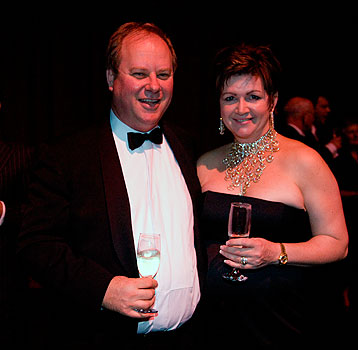
Last year we featured celebrity mum, Rosanna Mangiarelli, who took maternity leave from Channel 7’s current affairs show, Today Tonight, after the birth of her second daughter, Olivia.

The Today Tonight presenter that Rosanna took over from was Leigh McClusky, who was the show’s anchor from 1995 to 2007. She left when she became pregnant with twins, and later founded her own media and public relations firm in Adelaide. Leigh is currently the host of SA Life, a lifestyle show promoting South Australia. On her team of presenters is Michael Keelan, Grant Cameron, Briony Hume, Rosa Matto, and Pete Michell.

In 2000, Leigh married Simon Haigh, owner of Haigh’s Chocolates. This family-owned boutique chocolate business was started by Simon’s great-great grandfather, Alfred Ernest Haigh in 1915, and continued on by his son Claude. He left the business to John, Simon’s father, who trained in Switzerland, and now Simon and his brother Alister run the business together.

The family motto? “If you’re born a Haigh, you eat dark chocolate,” says Simon.

I’m so glad I am not writing this story at the age of six, for I would have cried with jealousy at children who had a dad with his own chocolate factory, and where you inherit a family tradition of eating dark chocolate.

Now grown-up, and unable even to finish my Valentine chocolates without generous assistance, I feel I can press on without too many tears.

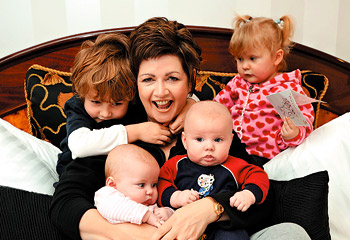
The Haighs chocolate-inheriting children are:

Murdoch (born 2002)

Sigourney (born 2006)

Jock and Tansy (born December 2007, and 18 months younger than Sigourney)

The twins were born with the help of IVF, and according to Leigh, made their different personalities apparent even as new babies – Jock serious, Tansy laid-back.

There’s a Scottish theme going with the boy’s names, suitable for sons of someone named McClusky. Interestingly for the son of a journalist, Murdoch also has the name of a famous family of media magnates; most of us will have heard of Keith Rupert Murdoch, so often in the news recently because of his newspaper, The Sun. Leigh never seems to have worked for the Murdochs, so it may just be a coincidence. Jock seems to have been given the Scottish version of the popular boy’s name Jack.

Sigourney reminds us of American actress Sigourney Weaver. Ms Weaver’s real name was Susan, and she chose Sigourney as a stage name from an off-page character barely mentioned in F.Scott Fitzgerald’s The Great Gatsby, Mrs Sigourney Howard, who is the aunt of the sporting Jordan Baker. It’s a surname occasionally used as a first name, often for males. Because of the actress and the classic novel, it seems very American, although Sigourney Weaver is of Scottish heritage too.

Tansy is the name of a bitter and toxic herb, considered useful in cooking, gardening and medicine for thousands of years. It has cheery yellow flowers, and is a good companion plant as it keeps away insects. A tansy is also a type of sweet omelette pudding, flavoured with the herb; British comedian Sue Perkins got slightly poisoned eating one on the entertaining Supersizers Go … series. The plant grows abundantly wild in Scotland.

(Both photos from the Herald Sun archives).

Saturday Sibset: Nine Children in Nine Years

11 Saturday Feb 2012

Posted by A.O. in Sibsets in the News

≈ 12 Comments

Tags

Chinese names, Greek names, mythological names, nature names, sibsets

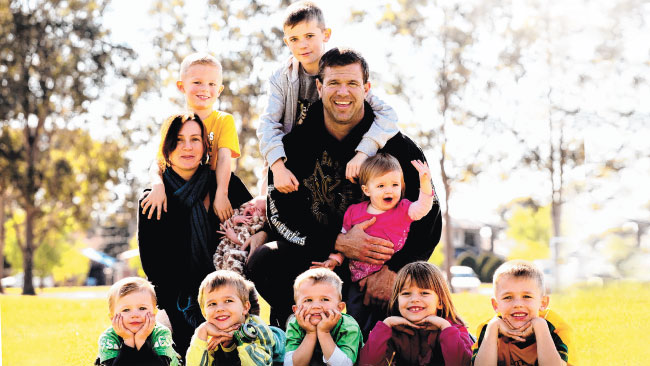
Trudy and Clint Hill live in a five-bedroom house in South Penrith, a suburb on the outskirts of western Sydney. Clint works from home inventing fitness equipment, and Trudy is kept pretty busy, because she became pregnant with their first child in 2000, and then had nine children in nine years.

Trudy says, “I just fell in love with having kids. I love that whole experience of giving birth and having a newborn baby. For me, that’s really addictive and that’s what keeps me going back and having more.”

Family life is well-organised, and the Hills claim to average seven hours sleep a night. Trudy copes with stress by hitting the gym twice a week. In fact, Clint and Trudy first met at the local gym, and soon after they began dating, planned to have a large family.

At the end of the story, Trudy says she is open to the idea of having another baby, and says she might get clucky a bit further down the track – she’s never had the opportunity to get clucky before!

The Hill Children

Jett (boy), born February 2001

Cruize (boy), born November 2001

Bronte (girl), born March 2003

Reef (boy), born June 2004

Zye (boy), born October 2005

Finn (boy), born December 2006

Bay (boy), born February 2008

Skyla (girl), born May 2009

Nox (boy), born May 2010

This is a great collection of almost typically Australian on-trend names. The Hills seem to be very attracted to short names, as seven of the nine names are one syllable, and although the girls’ names are two syllables, neither has more than six letters. There is a noticeable absence of classic names, Biblical names, elaborate names, names with a long history of usage, or frilly names for the two girls. These are names that are fresh and punchy.

Although the Hill family are practising Christians, the names aren’t Christian-oriented, except maybe Zye, which might be short for Zion. However, it could also be seen as an attempt to Anglicise the Chinese word zai, meaning “young man”, or the Greek xy, relating to “wood, forest”. Nox even has the name of a Roman god.

If there is any particular “theme” to the sibset, I would say that it is one relating to nature, and in particular the beach. I think these are Australian surfer names, and show an affinity with the encircling sea and the great outdoors.

Famous Names: Tully and Yasi

07 Saturday Jan 2012

Posted by A.O. in Famous Names

≈ 8 Comments

Tags

Australian name trends, created names, cyclone names, famous namesakes, Fijian names, Game of Thrones names, Irish names, locational names, name history, name meaning, names of rivers, nature names, pen names, rare names, Roman names, surname names, tree names, UK name popularity, unisex names, US name popularity

This blog entry was first posted on January 7 2012, and revised and republished on August 31 2016.

TULLY
On January 3, the town of Tully in Queensland celebrated the upgrade of its famous Golden Gumboot, which was damaged by Cyclone Yasi nearly a year ago. The tourist attraction is a 7.9 metre (26 feet) high gumboot, painted gold, built to commemorate the town’s 1950 highest recorded annual rainfall level of 7.9 metres (310 inches), earning Tully the distinction of being Australia’s wettest town.

When the Golden Gumboot was re-opened, it had received a fresh coat of paint and a new viewing platform. Fittingly, it rained heavily throughout the ceremony.

The town of Tully is named after the nearby Tully River, which received its name from Surveyor-General William Alcock Tully. William Tully was originally from Dublin, and arrived in Hobart as religious instructor on a convict ship in 1850 before embarking on a career of conscientious public service.

Tully is an Anglicised form of an Irish surname, originally MacTully, and having a host of variants, which is often derived from tuile, the Gaelic word for “flood”. Another theory is that it has been mistranslated from toile, meaning “will” (as in the will to keep going). However, some Tullys are so convinced of the first interpretation that they have hyper-Anglicised their surname to Flood.

The meaning of “flood” is very appropriate for the name of a river, and a town famous for its sogginess. In Game of Thrones, the Tully family is one of the Great Houses and as it is the principal house in the Riverlands and their ancestral home is Riverrun, perhaps George R.R. Martin also had the Irish surname and meaning in mind.

Tully has been used as a personal name since the late 18th century. Although the name can be found in early records from Ireland, it seems to have been more frequently used in the United States.

One inspiration for it may have been the Founding Father Alexander Hamilton, who wrote patriotic pamphlets under the pen name Tully – in his case, a reference to the Roman philosopher Marcus Tullius Cicero, whose name was occasionally Anglicised to Tully. The Tullia took their surname from the legendary Roman king Servius Tullius; the name is so ancient we do not know its meaning.

Tully has never been a common name. Last year in the US there were 8 boys named Tully with no girls listed with the name since 2013. In the UK the name has been in sporadic use, and in 2014 there were 4 baby boys named Tully. No girls are listed as having been given the name since 2009.

In Australia I have seen a roughly equal number of boys and girls with this name, and the name may be more evenly unisex here than elsewhere. One boost to the name for girls is women’s basketball champion Tully Bevilaqua, and after the attractive but controversial Tully Smyth competed on Big Brother in 2013, I heard many Australian parents refer to Tully as a “girl’s name”. Perhaps more importantly, it fits with the Australian trend for female names with a T-L pattern, such as Talia, Tilly, and Tallina.

YASI
The town of Tully was one of the worst affected by Cyclone Yasi, which hit the coast of northern Queensland early in the morning on February 3 2011. The town suffered extensive damage to its main street, and the area’s banana crops were completely flattened. Because Cyclone Yasi originated in Fiji, it was a Fijian cyclone forecaster called Misaeli Funaki who chose its name.

If you think naming a baby is difficult, spare a thought for the meteorologists who name cyclones. The cyclone had to start with Y, and nobody could think of an appropriate name for either gender.

So Mr Funaki suggested Yasi, which is the Fijian word for “sandalwood”. It didn’t have a history as a personal name in Fiji, but with no other candidates, his nomination was accepted by the ruling UN body. And so a new name was created.

Sandalwood is a tree with fragrant wood native to Asia and the Pacific. Australia has a sandalwood industry; the tree’s oil is used to make incense, soaps and cosmetics. Its antibacterial properties make it excellent as a skin cleanser, and Australian Aborigines eat its fruit as a bush food. Sandalwood is also used in the rituals of several eastern religions.

Yasi is neither used for boys or girls in Fiji. The cyclone forecasters were looking for a male name when they chose it, but they often resort to unisex names, and probably meant Yasi to be one. It’s commonly said to rhyme with Darcy, but seems to be more correctly pronounced YAH-zee.

During Cyclone Yasi, one doctor was apparently very keen for all babies born during the cyclone to be named Yasi, but there is no record of anyone following his advice. However you can find people around the world with the name Yasi, mostly female – perhaps a short form of names such Yasmin.

These are two short unisex names important to Australia’s history, especially connected with Queensland, rain, and storms. Tully is uncommon, but not unheard of, while Yasi is a true rarity, but not unusable.

POLL RESULTS
Tully received a very good approval rating of 70%. 46% of people thought it was a good name, while not one person hated it. Yasi was far less popular, with an approval rating of 22%. 53% of people weren’t keen on the name, and only one person loved it.

(Photo shows the Golden Gumboot in Tully, Queensland)


Girls Names From Stars and Constellations

11 Sunday Dec 2011

Posted by A.O. in Name Themes and Lists

≈ 32 Comments

Tags

Arabic names, Aramaic names, astronomical names, Biblical names, British Baby Names, celebrity baby names, famous namesakes, flower names, Greek names, Latin names, literary namesakes, locational names, mythological names, name history, name meaning, nature names, popular culture, popular names, Sanskrit names, Slavic names, Spanish names, surname names

Christmas is a time for stars – we put stars on our Christmas trees, sing about stars in carols, send cards with glittering stars on them, and cut gingerbread in the shape of stars. Elea at British Baby Names has a post on starry names up on her lovely Advent calendar; she also had a post on astronomical names back in October, which contains many star names. If you name your child after a star, you will want to show them “their” star when they get older, so I’ve given a few hints as to the best time to view the star from Australia; to learn more, two great resources are the Skynotes newsletter from the Melbourne Planetarium (includes video), and the Beginner’s Guide to the Night Sky at ABC Science. I normally do ten names per list, but because it’s the last set for the year I’ve done twelve – besides, stars naturally seem to go in groups of twelve, don’t they?

Alya

Alya is a common name for the yellow binary star Theta Serpentis in the constellation Serpens (“The Serpent”). Its name comes from the Arabic word alyah, meaning “fat tail of the sheep”. Arab astronomers saw this part of the sky as a pasture, with Alya representing a sheep’s tail. The Arabs have cooked with the rich fat from a sheep’s tail for centuries, and it is still considered a delicious comfort food. It might seem like calling your daughter Lard, but it fits in with the popular Aaliyah variants, while being simpler to pronounce and spell. You can always tell people the baby is named after a star that represents a sheep gambolling in a field; however vegetarians may not be able to get past the fact that the Arabs were looking up at the star and thinking, “Yum yum yum”. Serpens is visible in Australia in the middle of winter, and its stars are not easy to see.

Andromeda

Andromeda is a constellation named after a character from Greek mythology. This princess was chained naked to a rock for a sea monster to gobble, thanks to her rather stupid mother’s boasting of her beauty. The hero Perseus, on his way home from other heroic deeds, saw her in distress, and did the traditional hero’s rescue-and-marry-damsel manoeuvre. An awkward detail was that Andromeda was already engaged to her uncle, but Perseus turned him into stone, which got rid of him nicely. The name is pronounced an-DROHM-eh-da, and is said to mean “to think as a man” in Greek, interpreted as meaning to be as intelligent or brave as a man – which sounds a bit sexist, but the story isn’t exactly a feminist fairytale, and it’s clearly meant to be complimentary. Andromeda is a stunning name which can easily be shortened to Andie, Annie, Meda, Mia or Romy; it will remind people of the Andromeda Galaxy, which you can see best in November from Australia, along with the constellation.

Capella

Capella is a common name for the yellow star Alpha Aurigae, the brightest in the constellation Auriga (“The Charioteer”). It means “little she-goat” in Latin, and represents the divine goat Amalthea from Roman mythology. Amalthea was the foster-mother of the god Jupiter, and provided him with milk. When Jupiter broke off one of her horns, it became the ‘”horn of plenty”, which provided its owner with whatever food they desired. For the Boorong people of Victoria, this star was Purra, a kangaroo who is chased and killed by the twins in the constellation of Gemini; the tracks of Purra form the bed of the Wimmera River. Capella is a small town in central Queensland named after the star, so it’s a surprisingly Australian choice as a star name. It’s a fresh twist on Capri or Caprice, with the popular -ella ending. You can see Capella on the northern horizon during summer in Australia, and it’s bright enough to be clearly visible.

Carina

Carina is a constellation of the southern hemisphere; its name is Latin for “keel”, and it represents part of the ship, the Argo, sailed by Jason and the Argonauts in Greek legend. The most prominent star in the constellation is Canopus, the brightest star of southern skies, clearly visible and high in the sky. If you live in the far south of Australia, Canopus will never set. The Bibbulum people of south-western Australia saw Canopus as their ancestor Waa Wahn, the trickster crow. The Maoris called it Atutahi, or “Stand Alone”, because of its brightness. Carina also has meteor showers which peak around Australia Day, and contains the Diamond Cross, sister to the Southern Cross. Considering that the winged keel on Australia II is said to have won us the America’s Cup in 1983, Carina adds up to being a patriotic star name (and suitable for boaties). As Carina is also a name related to either Cara or Katherine, it has the added advantage of sounding like a “regular name”.

Gemma

Gemma is a common name for the binary star Alpha Coronae Borealis, the brightest in the constellation Corona Borealis (“The Northern Crown”). In Greek mythology, Corona Borealis represents a crown worn by Ariadne when she married the wine god Dionysus; Gemma is Latin for “jewel”, so it’s “the jewel in the crown”. Australian Aborigines called this constellation The Boomerang, because of its shape (being in the southern hemisphere, we see the constellation upside-down). Gemma is a popular name in Australia, and the star association helps give it another layer of meaning, while also showing that you don’t need to have a strange or rare name to be named after a star. The constellation is best viewed in winter from Australia, and its difficult to see without practice.

Lucy

In the constellation Centaurus (“The Centaur”) is a tiny white dwarf star, smaller than the Earth, with the boring name of BPM 37093. Its carbon atoms are believed to have formed a crystalline structure, and because diamonds are also carbon arranged in crystalline formation, astronomers have nicknamed this star Lucy – as in Lucy in the Sky with Diamonds. It’s a fun star and song reference for a very popular name, and as you probably know, Lucy means “light”, which seems apt for a star. Because of its size, you can only see Lucy with a telescope; however the constellation Centaurus is the most magnificent in the southern hemisphere, with two of the brightest stars, Alpha and Beta Centauri. You can see a great portion of the Milky Way in Centaurus, and on a moonless autumn night, it will be easy enough to point at Lucy’s general location. Does it matter if it cannot be seen? The Little Prince told us that what is essential is invisible to the eye …

Lyra

Lyra is a small constellation whose name is Greek for “lyre”. It is associated with the myth of Orpheus, a legendary musician, poet and prophet who is best known for his descent into the Underworld in search of his wife, Eurydice. According to some accounts, he died being ripped apart by savage Bacchantes, the female worshippers of the god Dionysus; the Muses gave him a proper burial, and he was finally reunited with his beloved. The Muses took his lyre to heaven and placed it amongst the stars in his honour. In Australia, you can see Lyra low in the northern sky during winter. The name has become well known since Lyra Belacqua is the young heroine of Philip Pullman’s His Dark Materials Trilogy. English model Sophie Dahl named her daughter Lyra in May this year.

Maia

Maia is the common name for 20 Tauri, a blue giant in the constellation Taurus, and the fourth-brightest star in the Pleiades cluster. In Greek mythology, the Pleiades were seven beautiful nymphs who were sisters. They were pursued by the hunter Orion, and Zeus changed them first into doves, and then into stars – where they are still chased by the constellation Orion. The Pleiades are often called the Seven Sisters, and you can see them clearly in summer from Australia. The Aborigines have several legends about the Pleiades, and one involves seven sisters being pursued by a man, just like the Greek myth. Maia was the eldest of the Pleiades, and the mother of the god Hermes. The meaning of the name is uncertain; it may be a respectful title for a mature lady. Maia the star appears as a character in Mary Poppins by P.L. Travers – an Australian writer who clearly loved stars, because the Mary Poppins books are filled with them. Maia is said like the popular Maya (MY-ah), but seems more elegant and literary.

Mimosa

Mimosa is a common name for the yellow binary star Beta Crucis, the second-brightest in the constellation Crux (“Cross”). Crux is the smallest of the constellations, but very significant in Australia, as it is our dear Southern Cross, represented on the national flag as well as the Eureka flag (Mimosa is the left-hand arm of the Cross). Various Aboriginal peoples saw the Cross as an eagle’s footprint, a stingray, a possum in a tree, or two brothers cooking a fish on their campfire. The Aborigines of Eastern Australia called it Mirrabooka; Mirrabooka was a kind and clever man who was placed in the sky by the creator Biami so he could watch over the earth. Because the Southern Cross is always visible here, Mirrabooka never leaves us. The Maoris call it The Anchor; it anchors the Milky Way. The star Mimosa received its name because of its colour; the mimosa is another name for the silver wattle. The name is from the Greek for “mimic”. It’s an extravagant name that’s very patriotic; you could use Mim, Mimi, Mia or Mo as nicknames.

Mira

Mira is the common name for Omicron Ceti, the most notable star in the constellation Cetus. It’s a binary star consisting of a red giant and a white dwarf; the closest symbiotic pair of stars to the Sun. Mira is a variable star; like other red giants, its surface oscillates so that its brightness increases and decreases. Mira was the first variable star ever observed in modern times, and so it gained its name, for Mira means “wonderful, astonishing” in Latin, and is said MEE-rah. The constellation Cetus depicts the sea monster that was going to eat Andromeda: for some reason it has also been immortalised in the stars, and placed worrying close to its intended victim. It’s a large constellation, but not very bright or easy to see; it’s best viewed in Australia in November. At its brightest, you can see Mira with the naked eye; at its dimmest, you will need powerful binoculars to view it. Mira is also a Sanskrit name meaning “ocean”, and a Slavic name possibly meaning “peace”.

Talitha

Talitha is one of the common names for Iota Ursae Majoris, a yellow and purple star system in the constellation Ursa Major consisting of two binary stars orbiting around each other. The name is Arabic, and means “the third leap”, referring to a gazelle jumping about, which is how Arab astronomers saw this portion of the sky. Talitha is also the Aramaic for “little girl”, and is taken from the New Testament when Jesus raises a child from the dead by saying Talitha cumi (“Little girl, get up”). Talitha is pretty, and fits in with popular names like Talia and Taia; it’s pronounced TAH-lith-ah. Ursa Major, or the Great Bear, is one of the best known and loved constellations of the northern hemisphere, but in Australia it can only be viewed in April/May, and is so low on the northern horizon we see only part of it; we cannot see Talitha at all.

Vega

Vega is the common name for Alpha Lyrae, the brightest star in the constellation Lyra, and fifth-brightest star in the sky. The name is from Arabic, and means “falling” or “landing”, referring to the constellation Arab astronomers called The Alighting Vulture. Lyra was seen as a descending vulture; an idea dating back to ancient Egypt and ancient India. Even when the Greeks said it was a lyre, it was still often pictured as a vulture or eagle holding the instrument in its talons. The Boorong people saw Vega as a Mallee Fowl, and knew that once the star disappeared in October, it was time to collect that bird’s eggs. Vega is also a Spanish surname meaning “meadow-dweller”; it’s familiar from the Spanish playwright Lope de Vega, and folk singer Suzanne Vega. Vega is a glamorous-sounding name that’s strongly associated with its star. Once you learn to find Lyra, it will be easy to spot Vega because of its luminosity.

Baby Center Australia Releases Its Name List for 2011

10 Saturday Dec 2011

Posted by A.O. in Name Data

≈ 6 Comments

Tags

Baby Center Australia, Biblical names, famous namesakes, fictional namesakes, name data, name popularity, name trends, nature names, nicknames, popular culture, popular names, royal names, unique names, unisex names

There have been several stories in the press about how babycenter.au has revealed the top names of 2011. What they don’t say is that this isn’t based on birth data from registries, but just on names chosen and made public by the members of the website.

Baby Center also combines spelling of names, which in some ways gives a more accurate impression of the most popular names; on the other hand, it won’t necessarily gel with what the official data says. So yes, take notice of these trends (especially as they are the closest thing we have to a national survey) but they are not the final word on the subject by any means.

Most Popular Girls’ Names

  1. Chloe
  2. Sophie
  3. Ruby
  4. Charlotte
  5. Olivia
  6. Lily
  7. Ava
  8. Ella
  9. Emily
  10. Mia
  11. Sienna
  12. Amelia
  13. Isabella
  14. Lucy
  15. Zoe
  16. Grace
  17. Isabelle
  18. Maddison
  19. Emma
  20. Charlie (tied with Hannah)

Most Popular Boys’ Names

  1. Oliver
  2. Noah
  3. William
  4. Lachlan
  5. Ethan
  6. Jack
  7. Lucas
  8. Charlie
  9. Joshua
  10. Thomas
  11. Max
  12. Riley
  13. Jacob
  14. Aiden
  15. Liam
  16. Jackson
  17. Cooper
  18. Alexander
  19. Xavier
  20. Benjamin

Trends in Boys Names

Jack declines in popularity, and loses his position at #1 to Oliver. Old Testament names for boys continue to increase in popularity; big risers include Jacob, Noah and Joshua. William went to #3, which they attribute to the Royal Wedding, although William has been extremely popular for many years.

Dropping from the list are James, Samuel and Ryan, to be replaced by Alexander, Xavier and Benjamin. If Ryan really does drop significantly it will be interesting, as it has remained stable for around two decades.

Trends in Girls Names

Chloe moves into the #1 spot, while Lily declines in popularity. Isabella falls further down the charts, which Baby Center assures us is due to the Twilight series coming to an end. I’m not sure how they make this tally with the fact that Isabella was popular in the 1990s, while the first Twilight novel wasn’t published until 2005. Nor does this explain the increasing popularity of Jacob, which is also a name from Twilight.

Baby Center places Charlie for girls in the Top 20, because they combine it with the spellings for Charli. Although I think Charlie will be in the Girls Top 100 for 2011, I don’t think it will be Top Twenty. Baby Center also assures us most girls named Charlotte (#4) will be called Charlie in everyday life. I’m not sure where they have gained this information from.

Matilda and Georgia have dropped off the list altogether.

Unique Names

So if these are the popular names, what about the names that were given to only one baby on the website?

Boys: Audi, Brisbane, Fonzie, Harlem, Hawk, Haze, Hendrix, Hercules, Matisse, Rocky, Rome, Spirit, Toohey, Voltaire, Westin

Girls: Breeze, Clover, Deep, Halo, Justice, Lake, Oceana, Rain, Rainbow, Sailor, Serenity, Spring, Star, Storm, Vanilla, Zen

I somehow think that more than one baby received at least some of these names this year, although I expect all of them will be rare.

Poet Poppin Nicholson: A Daughter for Kasey Chambers and Shane Nicholson, a Sister for Talon Jordi and Arlo Ray

04 Sunday Dec 2011

Posted by A.O. in Celebrity Baby Names

≈ 7 Comments

Tags

celebrity baby names, celebrity sibsets, english names, famous namesakes, honouring, nature names, vocabulary names

Kasey Chambers has impeccably authentic country music roots. When she was only a few weeks old, her father, guitarist Bill Chambers, and her mother Diane took her and her two-year-old brother Nash to the Nullarbor Plain. It was meant to be a working holiday shooting foxes and rabbits, but the holiday lasted for ten years. Kasey grew up wandering the desert with her nomadic parents. They slept in the open air, or in the back of the family Landcruiser; each night under the stars, Bill would sing country songs to them around the campfire.

When the ten year “holiday” came to an end, the Chambers family moved to a fishing village in South Australia so that Bill and Diane could resume their interrupted music careers, and Kasey and Nash could attend school with children their own age. Back in civilisation, with mod cons like radio and TV, Kasey discovered Top 40 music and was soon rocking out to Mötley Crüe and Metallica – but those formative years spent listening to her dad sing songs by Hank Williams and the Carter Family left their mark on her.

Bill and Diane began playing in pubs and clubs again and before long they became a group, as first Kasey, and then Nash, joined their parents on stage. They called themselves The Dead Ringer Band, as Nash and Kasey resembled their parents so closely. During her teens, Kasey not only gained experience as a performer, but also began writing songs. Nash built his own studio so that he could produce the band’s albums (he is now a full-time music producer). The Dead Ringer Band put out seven albums, won three ARIAs, two MOs and seven Golden Guitars during the 1990s.

After Bill and Diane separated, the band took a long break. When EMI tried to sign them and found the band were no longer together, they were happy to sign Kasey as a solo artist instead. She and Diane took a trip to Africa, and there she wrote many of the songs for her first album, The Captain. The Captain was recorded on Norfolk Island, her mother’s new home, with her dad playing guitar and her brother producing. The album went double platinum, and Kasey went on to win ARIAs for Best Country Album and Best Female Artist. On the back of her success, she toured the US as a support act to Lucinda Williams, and supported Emmylou Harris on her Australian tour.

The Captain was a good start to Kasey’s solo career, but her next album, Barricades and Brick Walls, made her a country pop star. Not only did the album go seven times platinum, but her single “Not Pretty Enough” went double platinum. She is the only Australian country artist to have a #1 single and a #1 album in the charts at the same time. She won ARIAs for Album of the Year, Best Country Album and Best Female Artist.

In 2005 Kasey married singer-songwriter Shane Nicholson; they met in the early 2000s when Kasey’s brother Nash produced Shane’s critically-acclaimed album It’s a Movie, for which Kasey and Shane performed a duet. In 2007, Kasey and Shane welcomed their first child together, Arlo Ray – he is named after folk musician Arlo Guthrie, and Ray is the name of Shane’s father.

Kasey already had a four-year-old son from a previous relationship to actor Cori Hopper, and although Cori may not have been the perfect partner for her, they were compatible enough as baby-namers to both come up with the name Talon for their son independently. Kasey is a fan of songwriter Fred Eaglesmith, and Cori was a supporter of the West Coast Eagles football team, so Talon made sense to both of them. Talon was declared one of the worst celebrity baby names in a Brisbane newspaper, and an elderly woman told her the name was “horrible” – luckily Kasey just found this hilarious.

To continue the family tradition, Talon Hopper is already writing his own songs, and has his own band, called The Little Hillbillies, of which Arlo is also a member. Others in the band are Nash’s children Eden, Béla and Skye, and Bill Chamber’s kids from his new relationship, called Tyler and Jake. Rounding it out is Townes Werchon, the son of Kasey’s best friends Worm and Bernadette. The band has brought out an album called Little Kasey Chambers, Poppa Bill and The Little Hillbillies. Kasey says it is a “politically incorrect” children’s album (I think that means it has songs about poo on it). The album was nominated for the ARIA for Best Children’s Album in 2010, but lost to The Wiggles’ Let’s Eat! I hope that wasn’t about poo, anyway.

And now Kasey and Shane have added their baby girl, Poet Poppin, to this big crazy musical extended family. I am just so happy to have Miss Poet Poppin Nicholson as my last celebrity baby name profile for the year, because she is a name-blogger’s dream. She’s exactly what people want from a celebrity baby name – something original, slightly outrageous, fun, fresh and lyrical.

Poet because she is the daughter of two songwriters, and Poppin was chosen by her big brothers – because she kept “poppin’ around” in Kasey’s womb before she was born. Add another celebrity trend to the mix: baby names chosen by their siblings. If all the digits on both my hands were thumbs, I still wouldn’t have enough to give as many thumbs up as I’d like.

This year Kasey won the International Songwriting Competition’s Grand Prize for “Beautiful Mess”, a song she wrote for her children:

She says, “I was at home babysitting a friend’s one-year-old son along with my two boys. It was one of those chaotic days with kids running around and having lots of fun while this song was coming out. And that’s what it felt like that day – a beautiful mess. That’s what parenting constantly feels like. It’s specifically written for Arlo and Talon, who are the most important things in my entire life. I love them, and I have an outlet to show them that through songs.”

That’s kind of how I see Kasey’s naming style: it’s kind of a mess, but boy, it’s just beautiful.

(Photo from Shane Nicholson’s website).

← Older posts
Newer posts →

Enter your email address to follow this blog

Categories

Archives

Recent Comments

A.O.'s avatarwaltzingmorethanmati… on Zarah Zaynab and Wolfgang…
Madelyn's avatarMadelyn on Zarah Zaynab and Wolfgang…
JD's avatardrperegrine on Can Phoebe Complete This …
A.O.'s avatarwaltzingmorethanmati… on Rua and Rhoa
redrover23's avatarredrover23 on Rua and Rhoa

Blogroll

  • Appellation Mountain
  • Baby Name Pondering
  • Babynamelover's Blog
  • British Baby Names
  • Clare's Name News
  • For Real Baby Names
  • Geek Baby Names
  • Name Candy
  • Nameberry
  • Nancy's Baby Names
  • Ren's Baby Name Blog
  • Sancta Nomina
  • Swistle: Baby Names
  • The Art of Naming
  • The Baby Name Wizard
  • The Beauty of Names
  • Tulip By Any Name

RSS Feed

  • RSS - Posts

RSS Posts

  • Celebrity Baby News: Melanie Vallejo and Matt Kingston
  • Names from the TV Show “Cleverman”
  • Can Phoebe Complete This Sibset?
  • Zarah Zaynab and Wolfgang Winter
  • Baby, How Did You Get That Name?
  • Celebrity Baby News: Media Babies
  • Celebrity Baby News: Adelaide Crows Babies
  • Celebrity Baby News: Chris and Rebecca Judd
  • Names at Work: Name News From the World of Business and Employment
  • Celebrity Baby News: Sporting Round Up

Currently Popular

  • Celebrity Baby News: Alisa Camplin and Oliver Warner
  • Rare Boys Names From the 1950s
  • The Top 100 Names of the 1930s in New South Wales
  • Sad Celebrity Baby News (contents may cause distress)
  • Girls Names From Stars and Constellations

Tags

celebrity baby names celebrity sibsets english names famous namesakes fictional namesakes honouring locational names middle names name combinations name history name meaning name popularity name trends nicknames popular names saints names sibsets surname names twin sets unisex names

Blog at WordPress.com.

Privacy & Cookies: This site uses cookies. By continuing to use this website, you agree to their use.
To find out more, including how to control cookies, see here: Cookie Policy
  • Subscribe Subscribed
    • Waltzing More Than Matilda
    • Join 517 other subscribers
    • Already have a WordPress.com account? Log in now.
    • Waltzing More Than Matilda
    • Subscribe Subscribed
    • Sign up
    • Log in
    • Report this content
    • View site in Reader
    • Manage subscriptions
    • Collapse this bar
 

Loading Comments...