• About
  • Best Baby Names
  • Celebrity Baby Names
  • Celebrity Baby Names – Current
  • Celebrity Baby Names – Past
  • Featured Boys Names
  • Featured Girls Names
  • Featured Unisex Names
  • Links to Name Data
  • Waltzing on the Web

Waltzing More Than Matilda

~ Names with an Australian Bias of Democratic Temper

Waltzing More Than Matilda

Tag Archives: name trends

Update: He’s Short and Sweet to a T!

18 Thursday Dec 2014

Posted by A.O. in Name Updates

≈ 2 Comments

Tags

birth notices, choosing baby names, name trends, nicknames, sibsets

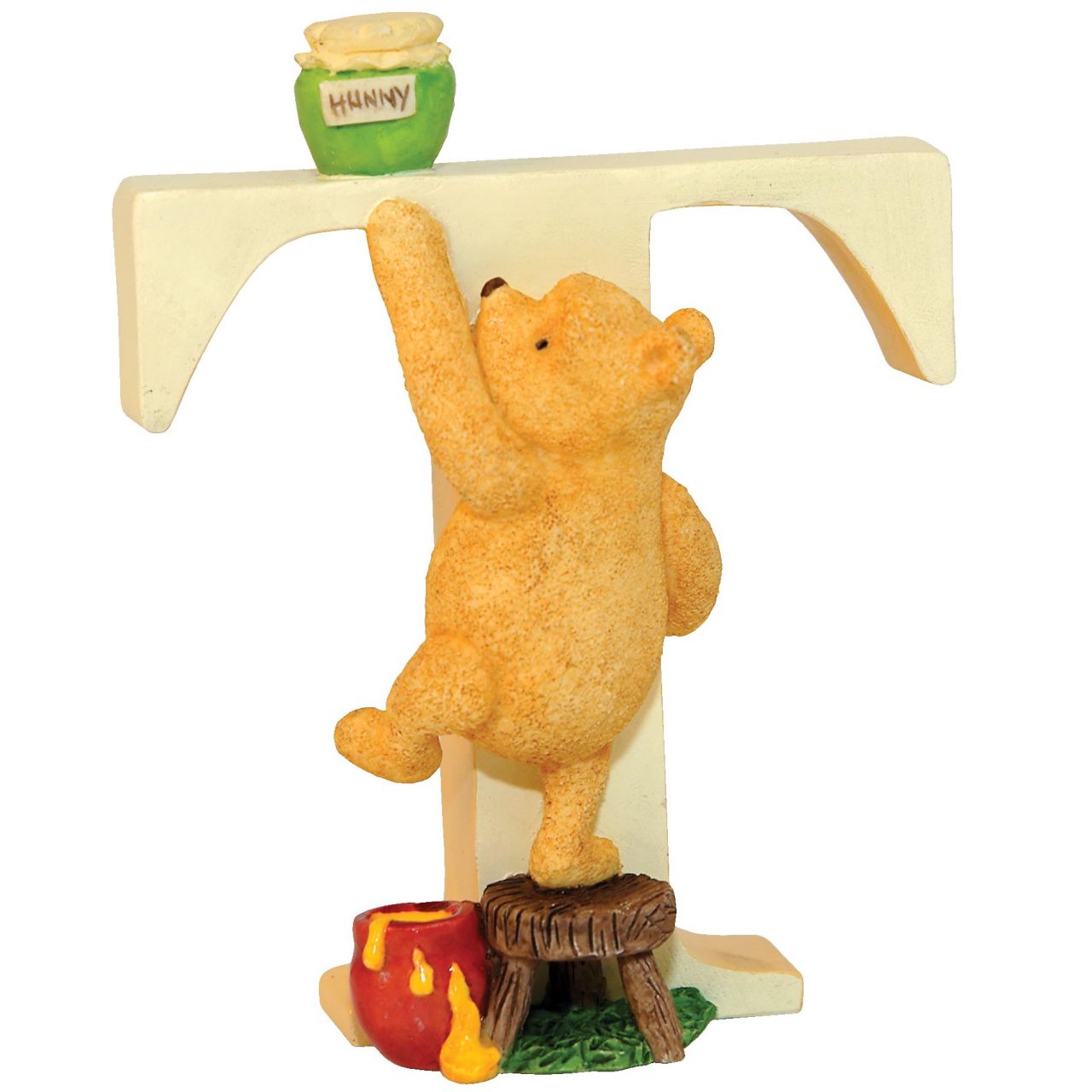
a6635-pooh-letter-T

Kate and Steve were expecting their third child, and since they received help at Waltzing More Than Matilda when naming #2, thought it was worthwhile to try us again.

If the baby was a boy, both Kate and Steve were keen on the name Ted for him. However, Kate’s mum didn’t think Ted was a “proper” name, and that a more formal option was necessary for the birth certificate.

Kate wondered whether her mum was right, but after writing into the blog she felt a lot more confident about their decision, and when their baby boy was born, he was named

TED WILLIAM,

baby brother to Madeline and Lewis.

Kate and Steve have had an overwhelmingly positive response to the name Ted; most people have been a little surprised by the name, but in a good way. The midwives at the hospital told Kate that they have seen a few Teds born lately, so Kate thinks it must be a name on the rise – I agree with the midwives, as I see it fairly regularly in birth notices now.

If Ted had been a girl, his name would have been Rose Eleanor, and Kate loves the name so much that she feels a tiny bit sad that they won’t be having any more children, because baby Ted has completed their family. There’s so often that name you never get to use!

Congratulations Kate and Steve! Ted is such a great name, and it sounds as if everyone else thinks so too.

(Picture shows Winnie-the-Pooh alphabet figurine)

Famous Name: Ava

17 Wednesday Dec 2014

Posted by A.O. in Famous Names

≈ 3 Comments

Tags

celebrity baby names, english names, famous namesakes, germanic names, modern classics, name history, name meaning, name popularity, name trends, Persian names, royal names, saints names, US name popularity

Poster - On the Beach (1959)_11

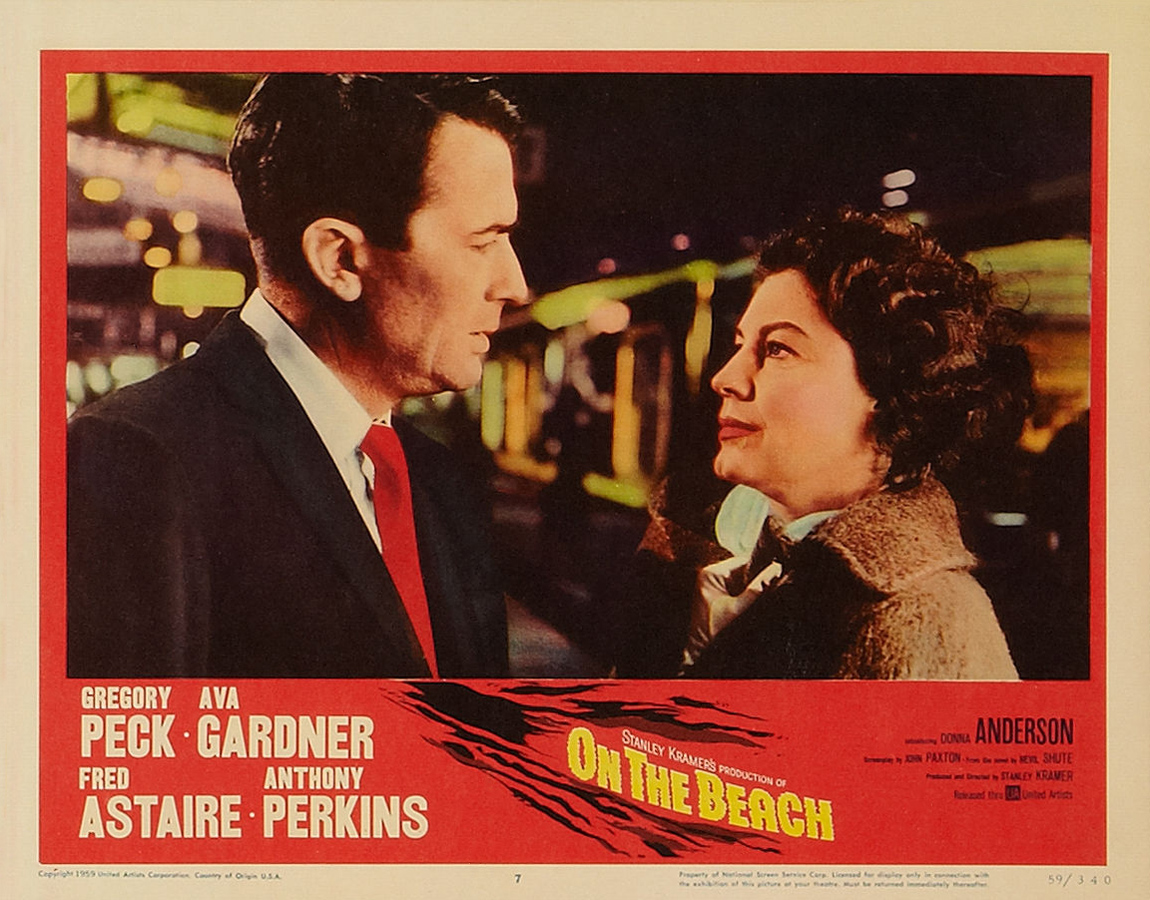
Today is the 55th anniversary of the release of Stanley Kramer’s On the Beach, starring Ava Gardner and Gregory Peck. Based on the novel by Nevil Shute, the film depicts the aftermath of a nuclear war, set in the near-future of the 1960s. With most of the world’s population dead, the film centres on a small group of people in Melbourne waiting for the lethal fallout to reach them.

Most of On the Beach was filmed on location, and a piece of local folklore is that Ava Gardner described Melbourne as “the perfect place to make a film about the end of the world”. Melbourne was a quiet little place in the 1950s, the first day of filming was abominably hot, and the media was horrible to Ava Gardner, so you could forgive her for being a bit grumpy. However, the quote was actually invented by a Sydney journalist with his tongue in cheek – whatever Ms Gardner’s thoughts about Melbourne, she was too professional to broadcast them publicly.

On the Beach made a financial loss, but was praised by critics, and has become a (slightly neglected) classic. The film created a ruckus in Melbourne, which went so crazy over seeing big Hollywood stars in their little city that they positively frightened most of the cast. Even the Australians cast as extras were mobbed as if they were A-listers. The film’s grim message was considered so traumatic that the Salvation Army, who play a small but significant role in the film, were on hand to provide counselling to people in cinemas.

Another of the film’s achievements was to bring attention to Waltzing Matilda, which is used to great effect during the closing scenes of On the Beach. It also opens the film, used to immediately signify an Australian setting. Waltzing Matilda became more popular after the film – not just in Australia, but overseas as well.

I read On the Beach as a young teenager, and found the story utterly compelling because for once the scenes of horror are set in Australia. The book has sometimes been criticised for showing the end of the world happening so quietly, and the characters going about their daily lives as calmly as possible. But I thought it made the story far more chilling, and far more real; many years later, the story is still vivid in my memory.

Ava was a medieval girl’s name, pronounced AH-vuh. It seems to have been a feminine form of the Germanic name Avo, originally a short form of names starting with Avi-. The meaning of it is much debated, but with no agreement reached. One theory is that it meant “desired”, to indicate a long wished-for child, but other ideas are that it came from aval, meaning “strength, power”, or from alfi, meaning “elf”.

In Norman English, the name produced Aveline, which evolved into Evelina, and is the basis for the surname Evelyn, also used as a first name. Another variant was Avis or Avice, which although it looks like the Latin for “bird”, is an elaboration of Ava. Av- names were quite fashionable in medieval times, thanks to Ava.

Two famous medieval Avas are Saint Ava, a Frankish princess who became a nun after being miraculously cured of blindness, and Ava of Melk, an anchorite and religious poet who was the first known female writer in the German language.

While Ava is still said AH-vuh in Germany and most European countries, in modern English it is usually pronounced AY-vuh. Some people see AY-vuh as a modern continuation of the medieval AH-vuh, while others see it as a completely separate modern English name, perhaps a variant of Eva.

While Ava may well have been understood as a form of Eva by some English-speakers, in continental Europe Ava was often understood as related to the Latin word Ave (said AH-veh), meaning “hail, greeting”, as in Ave Maria, or to similar words and names in modern languages. If we discount the English Ava (AY-vuh) on those grounds, then the European Ava (AH-vuh) must also be brought into question.

I don’t think it’s any coincidence that Ava has historically been more common in the United States than other English-speaking countries, because America has had significant immigration from Germany and Scandinavia. You could see the English pronunciation of Ava as the American pronunciation of the name. You’ve probably noticed that Americans tend to pronounce AY sounds rather than AH ones – for example, they often say the name Dana as DAY-nuh instead of DAH-nuh.

Just to add another layer, Ava is also a common Persian name for girls, meaning “voice, sound, call”, and said AH-vuh, making this a very multicultural name.

The name Ava was popularised in the United States in the 19th century by the Philadelphia socialite Ava Lowle Willing, who married John Astor IV (called Jack), from the prominent Astor family. They named their daughter Ava Alice Muriel Astor (born 1902), making this an early celebrity baby name. The Astors divorced, and not long after, Jack Astor was drowned during the Titanic disaster, making him the richest person to sail on the Titanic, and probably the richest person in the world at the time.

Ava Alice Muriel Astor married Prince Serge Obolensky (an admirer of Australian beauty Sheila Chisholm, and her husband’s cousin), and their wedding was the social event of the London season. Ava Astor went on to divorce and marry several more times in both England and the United States; pretty, supremely wealthy, and a patron of the arts, her name was well known on both sides of the Atlantic.

The actress Ava Gardner was born at the end of 1922, not long after Ava Astor had been photographed visiting Tutankhamen’s tomb in Egypt with her fiancé, Prince Obolensky. Unlike many other film stars, Ava Gardner never had to change her name to something more screen-worthy: it was already perfect – glamorous, fashionable, upper-class sounding, and not too common.

Ava Gardner’s film career did not make Ava a popular name in her lifetime. Continuously on the US Top 1000 since the late 19th century, and #751 in 1941 when Gardner first began getting parts in films, it peaked at #376 during the 1950s, at the height of Gardner’s success.

Ava left the US Top 1000 during the 1970s, when Gardner’s career had waned, but returned in the 1980s, after Ava Gardner suffered two strokes and became bedridden. Her serious health problems were widely publicised, putting her name back in the news, and no doubt there was genuine shock and sympathy for the Hollywood star’s condition.

The name Ava began rising after Ava Gardner’s death in 1990, and its popularity was further hastened by celebrities choosing it as a baby name, including Aidan Quinn, Heather Locklear, and Reese Witherspoon – in the last case at least, as a conscious tribute to the late Ava Gardner.

In Australia, the name Ava first ranked in the 1990s at #465, and rose so rapidly that it was in the Top 100 by 2003, debuting at #70. Bad luck to all those parents who called their baby girl Ava in the 1990s because they saw it an an underused name! Or maybe good luck that they jumped on the trend nice and early.

In 2005, Ava made a massive leap forward to #22, as this was the same year Hugh Jackman and his wife Deborra-Lee Furness welcomed their daughter Ava. In 2011 the name Ava joined the Top 10 at #9, the year after Lleyton Hewitt and Bec Cartright welcomed their youngest daughter and named her Ava.

Currently Ava is #3 nationally, #8 in New South Wales, #2 in Victoria, #8 in Queensland, #3 in Western Australia, #17 in Tasmania, #17 in the Northern Territory, and #2 in the Australian Capital Territory. It was one of the fastest-rising names at Baby Center Australia last year.

Ava is highly popular throughout the English-speaking world, being a Top 10 name in the United States, Canada, England/Wales, Ireland, Scotland, and New Zealand. However, it is slightly more popular in Australia than anywhere else, and has so far peaked higher here than in any other country.

Yes, Ava is very popular – so much so that some parents may be wary of choosing it. But it is also boosting the fortunes of other names, such as sound-alikes Ada, Avery, Aria, Arya and Ayla, and has risen in tandem with Eva, Evie, Evelyn and Ivy.

This modern classic has been very influential on contemporary girls’ name trends. Maybe you won’t use Ava because it is too popular, but you might use one of her style-sisters, like Isla or Maeve. Or perhaps something unusual like Alba, Avalon, Avril or Aveley now seems like a good choice, or an older name like Ida or Maida no longer seems fusty, but pretty and fresh.

The power of Ava is such that we will be hearing her echoes for many, many years to come.

POLL RESULTS
Ava received a respectable approval rating of 64%. 25% of people saw it as simple and elegant, but 19% thought it was too popular. Nobody thought the name Ava was ugly or tacky.

Famous Names: Heston and Tex

10 Wednesday Dec 2014

Posted by A.O. in Famous Names

≈ Comments Off on Famous Names: Heston and Tex

Tags

American names, birth notices, code names, controversial names, english names, famous namesakes, historical records, locational names, middle names, name history, name meaning, name popularity, name trends, names of American states, Native American names, nicknames, Old English names, rare names, screen names, surname names, UK name popularity, unisex names, US name popularity

653922-f8a752f2-67cc-11e4-b8fc-0b9f02c7ac0d

In 2014 Melbourne was named the world’s most liveable city by the Economist Intelligence Unit for the fourth year in a row. Their annual survey rates 140 cities out of 100 in healthcare, education, stability, culture and environment, and infrastructure, and Melbourne received 97.5 overall, with perfect scores in healthcare, education, and infrastructure.

To celebrate Melbourne’s continuing success, I thought we’d look at two names that have recently made the news there. Melbourne is not only a very cultured city, it’s also rather quirky, so I picked a couple of cultured, quirky guys.

HESTON
Heston Blumenthal is a multi award-winning British chef at the forefront of the “New Cookery”. Inspired by the playful nature of historic British cuisine, he follows a rigorously scientific approach to cooking, and has unleashed on an appreciative public such delicacies as snail porridge, chocolate wine, and bacon and egg ice cream.

Well known from his television shows, Heston has also been a celebrity chef on MasterChef Australia, been a guest at food festivals in Australia, and you can also buy his products through Coles (maybe you have already purchased one of his Christmas puddings). A great admirer of Australia, Heston has told Britons of Aussie food trends they should copy, including charcoal chicken, Tim Tams, quality beef, street food, and good coffee [article expired].

Early this year it was announced his triple Michelin-starred restaurant The Fat Duck, recognised as the best in Britain, will be temporarily relocated to Melbourne’s Crown Casino next February. He made a savvy move taking The Fat Duck to Melbourne, which has a marvellous foodie culture. The tasting menu is $525 per person (not including drinks), making The Fat Duck the most expensive eatery in Melbourne, more than twice as pricey as its current premier restaurant, Shannon Bennett‘s Vue du Monde.

Despite this hefty price tag, demand was so strong that a ballot system was introduced, with potential patrons having to register before the end of October. Unfortunately some scammers managed to hack into the ballot system, and are now scalping reservations for up to $1000 (you still have to pay for your food on top of that). However, never fear people with more than $1500 to spend on one meal, after six months the restaurant will morph into Dinner by Heston Blumenthal.

Heston is an English surname which comes from a place name; originally a Saxon village, Heston is now a suburb of west London. One of its claims to fame is that British prime minister Neville Chamberlain flew from Heston Aerodrome to Germany in 1938 for uselessly appeasing talks with Adolf Hitler. Naturalist Sir Joseph Banks, who discovered so many species of Australian plants and has the banksia flower named after him, is buried at St Leonards church in Heston.

Heston is usually thought to mean “enclosed settlement” in Old English, because it was part of an area surrounded by forest and woodland. For the same reason, another theory is that it meant “brushwood farm”.

The surname is strongly associated with Hollywood legend Charlton Heston, who starred in films such as The Ten Commandments, Ben-Hur, and Planet of the Apes. Born John Charles Carter, and known as Chuck or Charlie, he created his screen name by combining his mother’s maiden name, Charlton, with his stepfather’s surname.

Heston Blumenthal (who wasn’t rapt with his name as a child) asked his mother if he had been named after Charlton Heston, but she replied that she simply liked the name. When asked about the origins of his name, Blumenthal joked that perhaps his parents had a night out in London and parked at Heston Services (a motorway service station). The headline on the front cover of The Times was Top Chef Named After Parents’ Love of Motorway Services, requiring many apologies from Heston to his mum and dad.

Heston may be unusual, but it is by no means unique, being found thousands of times in historical records going back to the 16th century. There are a few examples of Heston being used as a first name in Australian records, although it is more common in the middle.

It’s a surname name for boys which is is rare yet on trend, and seems pretty cool, although I do think it will instantly remind everyone of the chef. Just like Mrs Blumenthal, you may be required to repeat that you just liked the name. Heston has also highlighted another issue with his name – American actress Tina Fey told him it translates as “shit on you” in Greek, so this is a name which does not travel well, at least not to Greece.

TEX
Tex Perkins is an Australian rock star, best known for fronting The Beasts of Bourbon and The Cruel Sea, but part of many other innovative musical acts. Recently he threw his hat in the ring as an independent candidate for the marginal seat of Albert Park in last month’s state election. His single policy? To get funding for the Palais Theatre in St. Kilda, a heritage-listed concert venue which needs a $40 million refurbishment.

Having gained the sitting Labor candidate’s promise of partial funding if he was elected, Tex directed his preferences to the ALP, then told people not to vote for him, but for Labor instead, and on election day, his How to Vote card instructed them to place the ALP first on the ballot paper. That’s taking self-effacement to a new level. His plan worked – Labor was elected, both in Albert Park and across the state. Let’s hope they honour their promise to the Palais. (Tex still got more than 1000 votes).

Tex is a nickname which is short for Texas, the US state. The state’s name comes from a Native American word in the Caddo language, tejas, meaning “friends, allies”. It was the name the Spanish called the Caddo, and the land they lived on, in today’s East Texas.

There is a Texas in Australia too, a town in southern Queensland. It is said that the name came about because of a territorial dispute between the owners of the land and some squatters – once the legalities were sorted out, the owners humorously called their land Texas because the United States and Mexico had a dispute over Texas, settled by the Mexican-American war. The town of Texas has featured in several country music songs, including one by James Blundell, who has spent quite a bit of time there.

The nickname Tex can be given to someone from the state of Texas, but can also be taken as a code name, and is a favourite for people with a cowboy, country, or Western persona, such as country music stars, cowboy actors, and rodeo promoters.

British soldier Keith “Tex” Banwell was the son of an Australian soldier, and lived in Australia for a few years as a child. A World War II hero who acted as General Montgomery’s double, he helped the Dutch Resistance, and was taken prisoner a few times, spending several months in Auschwitz after refusing to betray his friends. A character straight out of an adventure novel, Tex was his wartime code name.

Tex Morton (born Robert Lane) was a country music pioneer in New Zealand and Australia, and had a career that lasted from the 1930s to the 1970s. Dubbed the Singing Cowboy Sensation, the New Zealand-born yodelling whipcracker and sharpshooter performed at the Grand Old Opry and was a major contributor to the Australian country music scene. Tex Perkins (born Gregory Perkins) followed this lead, as he began in cowpunk, and has taken a Johnny Cash tribute show on the road.

Tex was in the US Top 1000 around the 1940s, but is now a rare name – only 11 boys were named Tex last year, although a further 11 were named Texas, perhaps called Tex on an everyday basis. It’s even less common in the UK, where less than three boys (maybe none) have ever been named Tex, although 19 girls (a meteoric rise) were named Texas, and maybe have Tex as a nickname.

In Victoria, 6 boys were named Tex in 2012, and it’s a name I see fairly regularly in birth notices; to me it seems as if the numbers might even have risen. Perhaps Tex Perkins is helping the name along, although I don’t know if any have actually been named in honour of the rock star. Tex is a great little nickname name, with a cool X-ending like Max, Rex, or Fox. It has a bit of a cowboy feel to it, although Tex Perkins makes it seem a bit rockstar too.

Two cool, charismatic boys names that are a little out of the ordinary – but which one do you prefer?

POLL RESULTS
Both Heston and Tex received approval ratings of 40%, but more people loved the name Tex.

(Picture shows Tex Perkins outside the Palais Theatre; photo from the Herald Sun)

Interesting Boys Names from the 2014 Birth Announcements

07 Sunday Dec 2014

Posted by A.O. in Name Themes and Lists

≈ 1 Comment

Tags

Anglo-Saxon names, Arabic names, Biblical names, birth notices, car names, celebrity baby names, english names, famous namesakes, fictional namesakes, Gaelic names, Greek names, hebrew names, Irish names, Japanese names, locational names, mythological names, name history, name meaning, name trends, names of herbs, names of horses, nature names, nicknames, Old English names, Old Norse names, Oscan names, Pictish names, plant names, rare names, regnal names, Roman names, royal names, saints names, Scottish names, surname names, Swedish names, unisex names

old

Do you worry there are no interesting names left for boys, or that only girls can have unusual names? Not so! For the final list of the year, here are a dozen rare names for boys that were recently used for real babies by Australian parents. 

Arion
In Greek mythology, Arion was an immortal talking horse who was the son of the sea god Poseidon, known for being extremely swift. The horse is referenced in the Percy Jackson fantasy series, and the Mistubishi Starion is meant to be a cross between star and Arion. There was a real person named Arion in Greek history – a famous poet and singer. However, even he became legend, as a folk tale sprung up that he had been kidnapped by pirates and miraculously rescued by dolphins, who were attracted by his beautiful singing and carried him safely to shore on their backs. The name may be from the Greek for “braver”, and is pronounced AR-ee-on. This name fits in well with the trend for AR names, has fashionable Ari as the nickname, and sounds similar to Aryan and Orion.

Basil
From the Greek name Basileios, meaning “king”. Saint Basil the Great was a 4th century bishop and one of the fathers of early Christianity. A great theologian and preacher, he cared for the poor and was one of the founders of monasticism. Recognised as a Doctor of the Church, in Greek tradition he brings gifts to children on New Year’s Day, making him an eastern version of Santa Claus. A common name in the east, there are numerous other saints named Basil (including Basil the Great’s father), and a few Byzantine rulers. Brought to Britain by the Crusaders, we often think of Basil as a particularly “English” name, thanks to actor Basil Rathbone, who played Sherlock Holmes, Basil Fawlty, and Basil Brush, and it has a rather old-school gentlemanly feel. The herb basil has the same meaning as the Greek name. Basil is also an Arabic name meaning “valiant, courageous”, so this would be an unexpected cross-cultural choice with the Australian nickname Baz or Bazza.

Cassius
Roman family name. The Cassii were of great antiquity, and said to be one of the noblest families in Rome; the Via Cassia in the city is named after them. They seem to have been from southern Italy, where they owned large estates, and their name may not be Latin in origin, but Oscan; the meaning of Cassius is probably not traceable. One of the best known of the family is the Cassius who instigated the plot to assassinate Julius Caesar. Famously, William Shakespeare writes of him as having “a lean and hungry look” in his tragedy Julius Caesar, while in Dante’s Inferno, he is chewed by Satan in the centre of Hell, alongside Judas Iscariot. Despite this, the name came to be associated with those who stood up to tyranny and injustice. There are two saints of the name – Cassius of Clermont, and Cassius of Narnia (are you able to resist a saint of Narnia?). The name is strongly associated with boxer Muhammad Ali, who was named Cassius Clay after his father, and his father was named in turn after a politician who worked for the abolition of slavery. Depending on how you pronounce it, you can use either Cass or Cash as the nickname, both of which are on trend.

Fenris
Norse mythology tells of a monstrous wolf who is the son of Loki and a giantess; Odin raised the wolf himself, but the gods kept him bound in fear of his power. It is foretold that at the end of the world, one of this wolf’s sons will swallow the sun, and the other swallow the moon. All fetters will break, and the great wolf will go free, with flames burning from his eyes and nose. In a great battle, he will swallow the god Odin, killing him, but Odin’s son will in turn slay the wolf. The wolf is called Fenrir, meaning “fen-dweller” (a fen is a type of wetland), or Fenrisúlfr, translated into English as Fenris Wolf. Fenris has appeared as a character in comic books and video games, and in fantasy novels such as Arthur Quinn and the Fenris Wolf. Norse mythology names are in fashion at present, and this one is very cool.

Fyfe
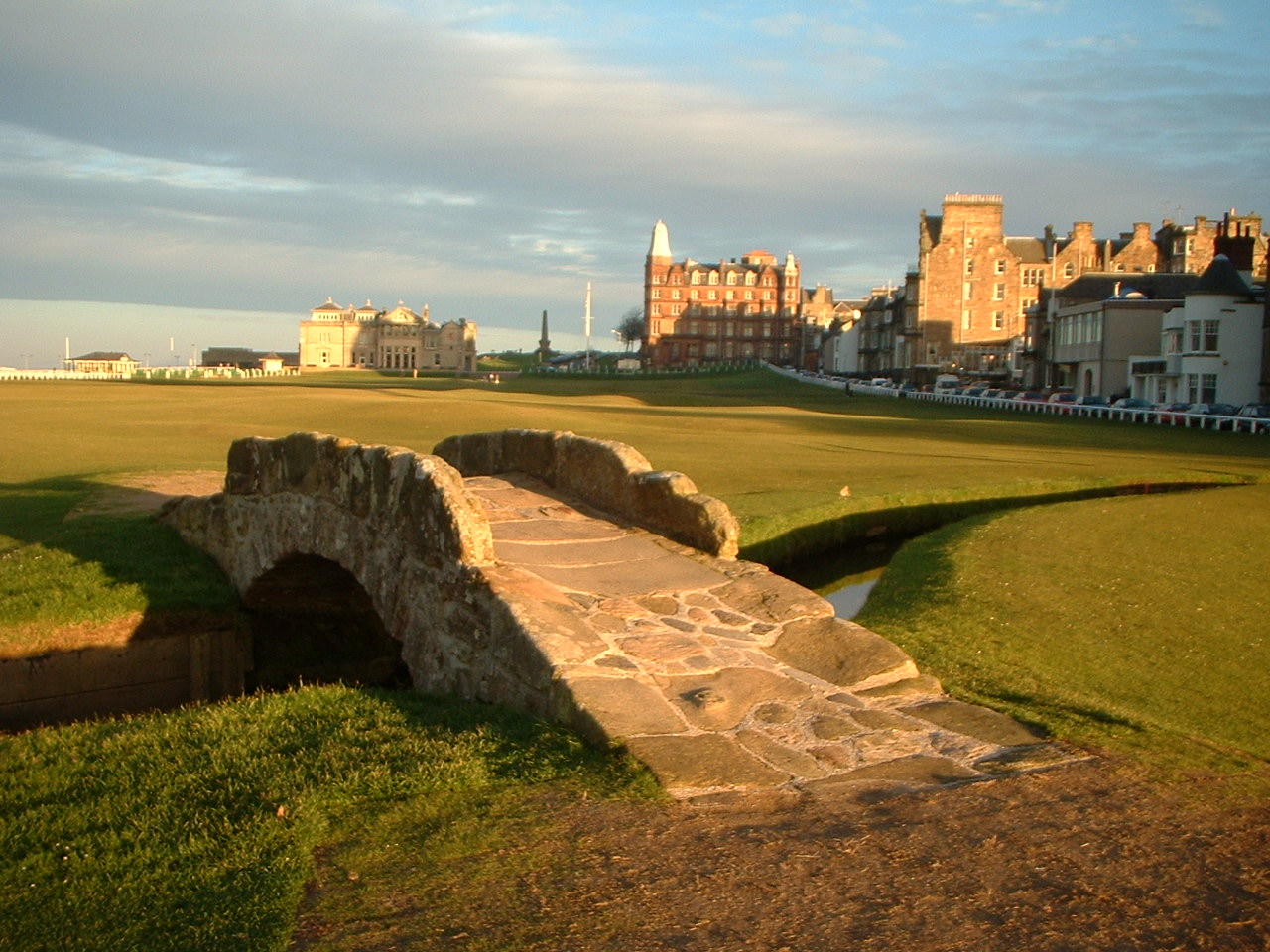
Scottish surname after the historic kingdom of Fife, on a peninsula in east Scotland between the Firth of Tay and the Firth of Forth. The region is one of the country’s historic counties, and is the location of St. Andrews. Once a Pictish stronghold, Fife became a politically important area, and until the 15th century, the Earl of Fife was the highest peer in Scotland, and had the privilege of crowning the nation’s monarchs. The meaning of Fife is not known – it was originally Fib, and according to legend, Fib was one of the sons of the founder of the Picts. The name Fyfe has nothing to do with the flute known as a fife, which comes from the German for “pipe”, although this does give it a rather musical feel. Known in Australia as the surname of AFL footballer Nat Fyfe, and cartoonist Andrew Fyfe, this is a handsome Scottish choice with plenty of history.

Joachim
From the Latinised form of Yehoyaqim, a Hebrew name meaning “established by Yahweh”. In the Old Testament, there was a king of Judah with this name, and his name is transliterated as Jehoiakim; it seems to be a throne name, because he was named Eliakim by his parents. According to early Christian tradition, Joachim was the name of the Virgin Mary’s father, and he is venerated as a saint in Christianity and honoured in Islam under the name Imran. Legend states that Joachim was a wealthy, pious man married to a woman named Anne; although they loved each other dearly, they were unhappy at their childless state, believing it to be a sign of God’s displeasure. At the climax of their story, an angel tells Anne that she is pregnant, and that her child will be known throughout the world. Anne joyfully rushes to meet her husband, embracing him at the city gate to tell him the glad tidings. The name Joachim has been more common in continental Europe than in English-speaking countries, and was used amongst royalty: a contemporary example is Prince Joachim of Denmark, the younger brother of Crown Prince Frederik. Strong and distinctive, this has familiar Joe as the obvious nickname.

Lazarus
From the Greek form of Eleazar, a Hebrew name meaning “God is my help”. In the New Testament, Lazarus of Bethany was the brother of Martha and Mary, and one of the followers of Jesus. He was famously brought to life by Jesus, four days after his death, and his story contains the shortest and perhaps most quoted sentence in the Bible: “Jesus wept”. This is the biggest miracle performed by Jesus in the New Testament, and one which leads directly to his own death and resurrection, which Lazarus foreshadows. Lazarus is regarded as a saint, and according to Christian tradition, he lived another thirty years after his raising, and never smiled again. Jesus also told a parable about a beggar covered in sores named Lazarus, and because of this, the name Lazarus became associated with the care of those with leprosy, with leper hospitals called lazar houses. It’s currently in the news as the surname of Glenn Lazarus or “the brick with eyes”, rugby league star turned senator. A name that embodies a spectacular miracle of hope, Lazarus is an eye-catching choice that fits in with current trends, and has Laz, Lazar, and Lazy as nicknames.

Makoto
Japanese name meaning “truth, faith, sincerity”, and pronounced mah-ko-to. It is unisex, but more common for boys. Makoto is often used in Japanese video games and manga, so may be reasonably familiar to some English-speakers. It’s an attractive boy’s name with a very positive meaning and easy to pronounce; exotic but not too strange. The baby I saw in a birth notice had Mako as his nickname; if this sounds similar to Marco, it would make the name seem like an appealing cross-cultural name choice.

Riordan
Anglicised form of the Irish surname O’Rioghbhardain, meaning “son of Rioghbhardan”. Rioghbhardan is a Gaelic byname meaning “royal bard”. Poets and singers were held in high regard in ancient Irish society; they were not mere entertainers, but also historians, scholars and advisers to the king. The O’Riordans came from Tipperary, and are strongly associated with Cork. Ballyrearden in Cork is named for them. The surname has recently become well known because of American novelist Rick Riordan, author of the Percy Jackson fantasy series, and others. Riordan is pronounced REER-dun, or REE-uh-dun, but the surname has taken on such a variety of pronunciations, like ROAR-den, ROY-uh-dun and RYE-uh-dun, that you might feel free to say it in almost any way you like. Rio could be used as the nickname.

Royce
English surname derived from Royse, a medieval form of Rose; it is thus one of those rare surnames taken from a female name rather than a male one, and could honour someone named Rose . The name is strongly associated with the luxury car brand Rolls-Royce, co-founded by English engineer Sir Frederick Royce. A famous Australian namesake is botanist Robert Royce, for whom the genus of shrubs Roycea is named. There are several famous sporting Royces in Australia, including former AFL star Royce Hart, who played for Richmond in the 1960s and ’70s. Roy names are bang on trend at the moment, and if you’re one of those people who get all het up about girls with masculine surnames like Addison and Mackenzie, here’s your chance to even the score slightly.

Stellan
Swedish name of obscure origin. The first known person with the name came to Sweden from Germany in the 16th century, so it may be from the German language, yet the name is not used in Germany, which casts doubt on that theory. It isn’t a particularly common name in Sweden, but has become known here because of Swedish actor Stellan Skarsgård, who has been in such films as Good Will Hunting, The Girl With the Dragon Tattoo, and Thor. Stellan became a celebrity baby name when actors Paul Bettany and Jennifer Connolly named their son Stellan after their friend Stellan Skarsgård. This is a handsome heritage choice which sounds to English-speakers like a masculine form of Stella, and so may be understood as having the same meaning – “star”.

Wulfric
Anglo-Saxon name meaning “wolf power, wolf ruler”, and pronounced with the first syllable to sound like the word wolf. Wolves were numerous in Anglo-Saxon times, and it’s not surprising that wulf was a common element in Old English names. The Anglo-Saxons saw the wolf as a symbol of warrior strength, and in stories wolves were protectors of the god Woden, and of royalty. The gloriously named Wulfric Spot was chief councillor to King Ethelred the Unready; his mother was a noble lady named Wulfrun, and the city of Wolverhampton is said to be named after her. Saint Wulfric of Haselbury was a 12th century hermit who managed to wield quite a bit of influence as a prophet and healer even over royalty; he correctly predicted the death of Henry I. Despite these interesting namesakes, Wulfric is a name more common in fiction than real life, and you may know it as one of the middle names of the wizard Albus Dumbledore in Harry Potter. An English name with plenty of history but little contemporary use, this fits in well with the current fashion for animal names. Despite its ferocious meaning, it seems eccentric and lovable to me.

POLL RESULTS
The public’s favourite names were Stellan, Cassius and Riordan, and their least favourite were Joachim, Royce and Makoto.

(Photo shows St Andrews golf course in Fife, recognised as the home of golf)

Famous Name: Caleb

19 Wednesday Nov 2014

Posted by A.O. in Famous Names

≈ Comments Off on Famous Name: Caleb

Tags

animal names, baby name books, Biblical names, controversial names, famous namesakes, fictional namesakes, hebrew names, modern classics, name history, name meaning, name trends, nicknames, popular names, saints names, tribal names

148170-a35f84fa-ca7d-11e3-9aee-4ab1c4ff1b91

Duckbour Caleb James Shang, known as Caleb, or by his Chinese name Lee, or the nickname “Charlie”, was one of the more unlikely heroes of World War I. Quiet, soft-spoken and shy, the slightly-built Queenslander from far north Cairns was 170 cm tall and weighed 51 kg. Furthermore, as the son of a Chinese-born father and Australian-born mother, nobody expected him to even enlist, as only those of European ancestry were considered eligible for military service at this time, and it was unusual for people of Asian ancestry to join the armed forces.

Yet both Caleb and his brother Sidney enlisted in 1916, and in 1917 Caleb joined the 47th Battalion in time to join heavy fighting in Flanders on the Western Front. He later fought on the Somme during the heaviest attack ever faced by Australian soldiers, and after his battalion was disbanded due to severe casualties, he served in the 45th Battalion during the Battle of Amiens. Here he was wounded, and evacuated to England before being sent back to Australia when the war was over.

Caleb was a runner, signaller, and scout, tirelessly running messages and bringing supplies at all hours, signalling while exposed to the enemy, constantly volunteering for dangerous missions into enemy territory, and attacking snipers in broad daylight. The runner’s job was one of the most dangerous on the Western Front, and had a terrifying casualty rate, yet for most of his war service, Caleb got through these perilous situations without a scratch.

Caleb’s outstanding endurance, contempt for danger, gallantry, skilful resourcefulness, and devotion to duty inspired those around him, and earned him the admiration of both the officers and men. The first Australian soldier of Chinese descent to be decorated, the most highly decorated Chinese Australian soldier of World War I, and the most highly decorated Queensland soldier of his time, he received the Distinguished Conduct Medal twice, and was awarded the Military Medal.

When he returned home to Cairns in 1919, Private Caleb Shang received a hero’s welcome, with 3000 people turning out to jubilantly greet him on the wharf at dawn. The mayor was there, as were the Returned Soldiers League, and the Cairns Citizen Brass Band played See the Conquering Hero Comes. The Cairns Post raised a subscription fund to start him off in civilian life, and more than £45 was raised by the townspeople.

During World War II, Caleb served with the Volunteer Defence Force in Cairns; during his service he suffered several head injuries, which may explain why he later spent time in a psychiatric hospital. In the 1940s, there was heightened anti-Asian feeling due to the war against Japan, and Caleb was sometimes the target of racist slurs, as few people knew of his distinguished war record and volunteer service. In 1943, he attended his only Anzac Day parade, apparently in response to the racism he encountered during World War II.

According to Caleb’s sister Alma, he never talked about the war to his family. In 2002, Caleb’s daughter Delta, then in her 70s, described her father as reserved, modest, understanding, kind and gentle, speaking very little about his war service. She could not guess what motivated him to enlist, but knew that her father loved a challenge.

Caleb Shang’s story is not completely unlike that of Caleb in the Bible. According to the Old Testament, Caleb was one of twelve spies sent out by Moses into the land of Canaan. Each spy was the head of one of the twelve tribes of Israel, and Caleb represented the tribe of Judah. Ten of the spies reported back that it would be impossible to conquer the land, but Joshua and Caleb brought back encouraging reports to Moses. Because of Caleb and Joshua’s courage and faith, they were the only two ancient Israelites allowed to reach the Promised Land, and Caleb was granted lands around Hebron, now in Palestine.

There is another Caleb mentioned in the Bible, the great-grandson of Judah. Jewish tradition says these two Calebs are the same person, which would explain why Caleb was the head of the tribe. However, biblical scholars find this unlikely – in fact, they are not even sure that Caleb the spy was an Israelite by birth, as the Bible indicates he was a Kenizzite, from a desert tribe. He might have been accepted into the tribe of Judah, and if so, becoming its head would have indicated someone of really superior ability. That’s more impressive than just inheriting the role from great-granddaddy.

Bible historians believe the story of Caleb represents the movement of a clan which invaded Palestine from the south, settled around Hebron, and became gradually absorbed into the tribe of Judah. According to Bible genealogies, the Calebites were descendants of Esau, twin brother to Jacob, so were closely related to the Israelites, and natural friends and allies. (Nabal, the grumpy first husband of the prophetess Abigail, was a Calebite). The Bible story is a way to explain how a non-Israelite desert people became part of the tribe of Judah.

The original Hebrew spelling of the name Caleb is identical with the Hebrew word kelev, meaning “dog”. Animal names are not unusual in the Old Testament, although nobody knows for sure why Caleb might have been called this. Considering his non-Israelite origins, it’s possible that his name was non-Hebrew, and just sounded like the Hebrew word for dog.

However, some scholars think it may have been given to indicate his original tribal totem as an ethnic signifier; if so, the totem would have referred to the Canaan dog. This is a breed of pariah dog which has existed since biblical times, and is one of the oldest breeds of dog in the world. The Old Testament makes several references to these dogs, both wild ones roaming in packs through the desert, and those which worked alongside humans. The Canaan dog is modern Israel’s national dog.

Canaan dogs are strong, athletic, agile and healthy, with a well-developed survival instinct. Highly intelligent and naturally defensive, they make excellent watch dogs, who bark readily as a warning. They are not aggressive towards humans, being cautious and even docile, and remain strongly attached and loyal to their owners. They are still used as sheep dogs by the Bedouins.

For a tribe to take the Canaan dog as their totem, they would have seen themselves as survivors in the harsh desert – not fighters ready to attack, but willing to defend their territory. Baby name books are generally reluctant to admit the meaning of “dog” to Caleb, and often gloss it as “faithful” or “devoted to God”. Although you can see the Caleb from the Bible story as having canine faithfulness, the original tribal totem seems much more likely to indicate a people tough enough to get through anything.

Caleb has a long history as a Christian name, because a 5th century king of Axum (around modern-day Ethiopia) was named Kaleb; he is considered a saint in the Orthodox tradition. Caleb has been used as an English name since at least the 16th century, and became much more common after the Protestant Reformation (Kaleb has been used almost as long by English-speakers, but not so widely).

A fictional namesake is the hero of William Godwin’s radical 18th century novel, Things as They Are, or The Adventures of Caleb Williams. A raging commercial success, the book was both condemned as dangerous anarchist propaganda, and glorified as an inspiring work of genius. Another is Caleb “Cal” Trask from John Steinbeck’s East of Eden, portrayed on film by James Dean. There have been many other Calebs in fiction, right up to the present, with Pretty Little Liars, and Divergent.

Caleb has charted since the 1970s, when it debuted at #443. It rose steeply until joining the Top 100 in 1996 at #83, but has never been higher than #50. Currently it is #72 nationally, #71 in New South Wales, #95 in Victoria, #66 in Queensland, #61 in Tasmania, where it was one of the fastest-rising boy’s names of last year, and #78 in the Australian Capital Territory.

This is a handsome modern classic – one of the Old Testament biblical names for boys which sounded fresher and more exotic than the familiar Bible classics. Despite being popular for many years, it has remained relatively stable in the bottom half of the Top 100, making it a safe choice. Perhaps the meaning has dogged its footsteps, but I can’t really see any problem as dogs are our beloved companions, known for their beautiful, faithful natures. Cal, Cale or Cabe can be used as nicknames.

POLL RESULTS
Caleb received an excellent approval rating of 84%, making it one of the highest-rated names of 2014. People saw the name Caleb as a modern classic with plenty of history (30%), strong and masculine (19%), and handsome or cute (13%). However, 9% thought it was too popular. 15% of people thought the possible meaning of “dog” wasn’t a problem, as dogs are faithful, smart, and loving, while 6% were really bothered by the canine connection. Nobody thought the name Caleb was harsh or ugly.

Name News – War Time Edition

13 Thursday Nov 2014

Posted by A.O. in Names in the News

≈ 1 Comment

Tags

baby name campaigns, birth notices, controversial names, Facebook, famous name trends, middle names, mythological names, name petitions, name trends, names of terrorist organisations, popular names, vintage names

Article Lead - narrow6119138610g24r1410499067381.jpg-300x0

Honour a War Veteran … With a Baby
ABC Radio publicised an interesting new campaign for the centenary of World War I. Martin Hamilton-Smith, the South Australian Minister for Veterans Affairs, has a plan to encourage new parents to give their children the names of World War I Anzac soldiers as a way to honour the country’s war veterans.

Martin’s own parents gave him the idea, because they bestowed on him the middle name of his paternal and maternal grandfathers, one of whom served on the Western Front in World War I, and the other who was a Rat of Tobruk in World War II. Martin followed their pattern, giving his son Thomas the middle name Theodore, which was the name of Martin’s great-uncle who was killed in France, and has been able to pass on to his son stories and letters about Theo.

He is calling on parents to consider giving their baby either the first or middle name of an ancestor who served in World War I, and to post their story to his Facebook page. He encourages those who don’t have a direct ancestor to go to a war memorial and pick the name of a soldier. Girls could be named after a nurse who served in World War I, or after a wife or mother bereaved by the war, or who cared for their returned loved ones, many of whom were left with injuries or post-traumatic stress.

The national secretary of the RSL thinks it’s a good idea, but wonders whether children will find it an honour, or a burden. In his wife’s family, a boy has been named after a great-uncle killed in World War I, and it doesn’t seem to have affected him in a negative way.

ABC Radio pictures the playgrounds of the near future filled with children named Bert, Clarry, Reg, Olive, and Edith, but Olive is already in the Top 100, and vintage names are on trend, so it may be difficult to gauge how much influence this campaign will wield on baby names.

POLL RESULTS
57% of people would consider naming their baby after a World War I veteran. 43% saw it as a way to connect their child to our history, while 14% saw it as a way to honour our heroes.
12% were in favour of the idea, but didn’t think it was suitable for their family.
19% of people were against the idea, with 17% saying that children deserved their own identity and a name all their own, while 2% thought it was too much of a burden.
12% weren’t sure how they felt about the idea.
Nobody thought that names from World War I were too old-fashioned for modern children.

Hot Baby Name Trend, 1914 Style
The Canberra Times had a column looking at the events of a century ago. Back in 1914, British army officer Earl Kitchener was the face of the war effort, and a popular subject for Toby jugs, statuettes, and souvenirs. The newspaper looked at the patriotic column of “Clio” in Melbourne’s humorous Punch magazine:

Do you know the baptismal names of Lord Kitchener?”

Not one person in a dozen does. Horatio Herbert. Perfectly appalling names, aren’t they? Shakespeare was perfectly right, you know, when he pertinently inquired, “What’s in a name?” for after all it is not the name but the man who bears it that matters most; and if Lord Kitchener bore any other names … he would still be the most splendid figure in English history to day.

Horatio Herbert is to be the fashionable name for boy babies this year. It is a curious medical fact that during war there are more boys born than girls, and mothers delight in choosing the name of some great soldier for their sons. And so this year the fad is in full swing. It began last week in the birth columns of a daily paper, when the announcement of the birth of a son was followed by his name in brackets (Earl Kitchener). But most mothers are quite content to drop the title, and bestow on their babies the plain names ‘Horatio Herbert.’

I did not find an Earl Kitchener born in 1914 (he might still be alive, or the story might refer to a British newspaper), but there were several born during World War I, and one born during the Boer War, where Earl Kitchener also played a leading role. I only found one Horatio Herbert, and he was born in the 1870s; however, Earl Kitchener went by his middle name, and there are quite a number of Herbert Horatios, and many Herbert Kitcheners. More than a hundred babies were given Kitchener as their middle name, and quite a few had Kitchener as their first name.

Note: “Clio” does not seem to have realised that there are always more boys born than girls, with an estimated 107 boys born for every 100 girls. There is some backing for their statement that more boys than usual are born during war-time, although the reason why is not known. However an Australian newspaper reported in 1941 that Australia bucked this trend, as numbers of boy babies decreased here during World War I, and the first years of World War II.

POLL RESULTS
People’s top choice to honour Earl Kitchener was to make Kitchener the middle name, with a third of respondents voting for it. The least favourite choice was the name combination Herbert Horatio, which got only one vote.

The First Casualties of War Are … Names
And on a very sombre note, a baby name which has been a casualty of war: Isis. The Daily Mail reports that an eight-year-old girl from Sydney named Isis Leskien has suffered the effects of her name.

I know it seems absolutely stupid (because it is), but since the terrorist group often referred to as ISIS has been in the news, people have been distancing themselves from her family, scared to be associated with her. Her brother Maximus has noticed that when they go to soccer together people stare when they hear the name Isis, and mum and dad Sheridan and Frank remember the days when people used to say, “What a beautiful name”, when they heard the name Isis; alas, not any more.

In the US, a petition has been started by a woman named Isis Martinez to ask media outlets to stop referring to the terrorist organisation as ISIS – it currently has more than 35 000 signatures, and the Leskiens are urging people to sign it. Whether it’s the petition or not, I have noticed that on the news here the organisation is now usually called ISIL or the Islamic State, but that may be slender comfort to people called Isis, as the name ISIS continues to be commonly used elsewhere.

POLL RESULTS
66% of people said they didn’t feel any differently about the name Isis
17% said the name Isis now made them feel very uncomfortable
15% said the name Isis now made them feel a little uncomfortable
2% said the name now made them feel so extremely uncomfortable that they would prefer to avoid someone named Isis

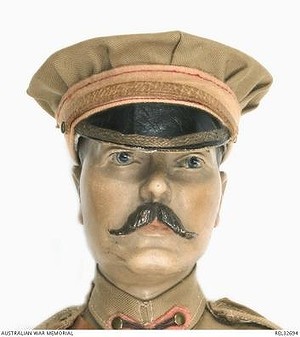
(Photo is of a statuette of Earl Kitchener, from the Australian War Memorial)

Boys Names From Native Australian Flowers

02 Sunday Nov 2014

Posted by A.O. in Name Themes and Lists

≈ 7 Comments

Tags

Australian slang terms, birth notices, celebrity baby names, classic names, controversial names, english names, famous namesakes, fictional namesakes, flower names, Gaelic names, Greek names, honouring, Irish names, Latin names, locational names, mythological names, name history, name meaning, name trends, names from songs, names from television, nature names, nicknames, patriotic names, plant names, popular names, rare names, scandinavian names, scientific names, Scottish names, sibsets, surname names, tree names, underused classics, unique names, unisex names, Welsh names

Millstream-Chichester-National-Park-2013-05-15-003

This follows on from Girls Names From Native Australian Flowers. If you thought it would be hard for me to find floral boys’ names, you were right, and many hours were spent poring over gardening books and field guides. I did notice that several of the names come from plants that are traditionally used as female names, so this might be a way to find a boy’s name which honours a Daisy, Iris, or Lily, for example.

Bailey
Acacia baileyana is the scientific name for Cootamundra Wattle, a small tree with silvery-green leaves and masses of golden blossom in the spring. It is native to New South Wales around the town of Cootamundra, which holds a Wattle Time Festival every year when the wattle blooms. However, it is extremely adaptable, and will grow almost everywhere – if anything it grows a little too well, and can escape into the bush and become an invasive weed. Its scientific name honours Frederick Manson Bailey, a colonial botanist in Queensland. Bailey is an occupational surname originally designating someone who was a bailiff, the officer executing the decisions of a lower legal court (these days such duties are usually carried out by local councils). It has been used as a personal name since at least the 18th century, and Bailey has charted in Australia since the 1990s, when it was catapulted straight into the Top 50 from almost nowhere, debuting at #32 in 1997. It peaked in 2004-2005 at #27, and is currently #77. Although only popular for boys, Bailey is sometimes used for girls. Bailey provides a way for boys as well as girls to be named after the patriotic acacia tree.

Carex
Carex is the scientific name for grass-like plants commonly known as true sedges. Sedges are common all over the world, and nearly always found in wetlands; if you’ve ever walked around a swamp or lake, sedge is the dense stiff grassy stuff along the edge which might cut your hands if you try to gather it. Although sedges are not usually thought of as terrifically exciting – hardly anyone hopes for a bouquet of sedges on Valentine’s Day – they are vitally important to the ecology of our wetlands. Anyone working on a project to save a wetlands area will need native sedges to plant along lakes and riverbanks to stabilise the soil, and they are also around dams and garden ponds. They bloom in spring; the flowers are tiny, and appear on short spikes. I have seen a boy named Carex in a birth notice, and this is a daring and environmentally aware choice that is on trend for boy’s names ending in -x, like Felix and Max.

Eric
Banksia ericifolia is the scientific name for Heath Banksia, a medium to large shrub with eye-catching orange or red flowers which bloom in autumn or winter. Banksias are famous for their flower spikes; each spike can have hundreds or even thousands of individual flowers, looking overall like a large brush. Banksia ericifolia was one of the original banksia species collected by botanist Sir Joseph Banks around Botany Bay, and the subspecies ericifolia is native to the area around Sydney. It has been adopted as the city’s official plant, and can be seen in parks and public spaces. Heath Banksia is reasonably easy to grow; if your garden is too small for a regular Heath Banskia, there is a dwarf cultivar called “Little Eric”. The eric in ericifolia comes from Ericaceae, the family of heath and heather. The name Eric is an English form of the Scandinavian name Erik, usually translated as “eternal ruler”. Although known in England since the Middle Ages, it didn’t become popular until the 19th century, after the publication of a moralising children’s book called Eric, or Little by Little. Eric is a classic which has never left the charts. It was #21 in the 1900s, and peaked in the 1910s at #19. It didn’t leave the Top 100 until th 1970s, when it hit its lowest point of #149. Since then, Eric has improved slightly in popularity, and remains stable in the 100s – an extremely safe choice.

Evan
The Hawkesbury Daisy (Brachyscome multifida) grows on the east coast; it has matted foliage with the daisy flowers rising above it in mauve, pink, or white, blooming in autumn and winter. They are very popular garden plants, as they are are quite hardy and look great in borders and mass plantings. One of its cultivars is “Evan”, which was named after the son of the founder of the Australian Daisy Study Group. “Evan” is mauve with small flowers and compact foliage, easy to grow, and perfect for rockeries and hanging baskets. The name Evan is the Anglicised form of Iefan, a Welsh form of John. Evan is an underused classic in Australia – it has never left the charts, but never reached the Top 100 either. The highest it has ever been is #103 in the 1980s, and it’s never been lower than it was in the 1900s at #194, making it a handsome, solid choice which hasn’t been out of the 100s for well over a century. Evan is the poster boy for “normal but not overused” names.

Heath
Common Heath (Epacris impressa) is a small shrub native to south-east Australia; it has red, pink, or white tubular flowers which bloom from late autumn to early spring. A pink-flowered form called “pink heath” is the floral emblem for the state of Victoria. Common Heath is tricky to grow in the garden, and perhaps best enjoyed in its natural setting. Heath is an English surname which can refer to someone who lived on or near a heath, or was from one of the many English towns called Heath. Heath is an underused modern classic which has charted consistently since the 1960s without ever becoming popular. It peaked in the 1970s at #101, possibly because of Heathcliff from Emily Bronte’s Wuthering Heights, serialised on television that decade, and a hit song by Kate Bush in 1978. Actor Heath Ledger, born in 1979, was named after Heathcliff, with his sister Kate named after Catherine from the novel. Heath dropped to its lowest level in the 1990s at #279, but picked up the next decade when Heath Ledger’s film career took off, and gained momentum from Dan Ewing‘s performance as Heath Braxton in Home and Away. Heath is a strong, simple nature name which has long been associated with intense, hunky guys.

Orestes
Caladenia orestes is the scientific name for the Burrinjuck Spider-orchid, native to New South Wales. These small, delicate flowers with dark red colouring are listed as vulnerable, so count yourself lucky if you ever find one in the bush. In Greek mythology, Orestes was the son of Agamemnon Greek commander during the Trojan War. Their family had been placed under a curse, so that their line was a rich source of Greek tragedy. Agamemnon sacrificed his daughter Iphigenia to obtain fair winds to Troy; when he got home from the Trojan War, Agamemnon’s wife Clytemestra murdered him in retribution. When Orestes grew into a young man, he murdered his mother to avenge his father’s death. According to legend, Orestes was pursued by the Furies in punishment for his crime, but he got a good lawyer in the goddess Athena, who put his case before the gods and got him acquitted (slightly rigged, as Athena was one of the judges). He was often seen by Greek writers as a dutiful son to his father, and an example of someone forced by circumstances to commit a terrible act. The name Orestes means “of the mountains”, which is the reason for the orchid’s name. An unusual and possibly controversial choice.

Paterson
Patersonia is the scientific name for the Australasian flower commonly called Native Iris. It was named in honour of William Paterson, the first Lieutenant Governor of New South Wales, and most species are from Western Australia. Patersonia has small flowers that are usually mauve, and can look very attractive in the garden. Paterson is a common Scottish surname which means “son of the follower of Saint Patrick“, and the Clan Paterson is from Lowland Scotland. Sir William Paterson founded the Bank of England, but perhaps the most famous episode in the Clan’s history is when Sir Hugh Paterson entertained Bonnie Prince Charlie, and his niece nursed the prince through a bad cold, becoming his mistress and bearing him an illegitimate daughter. The name Paterson could honour our national poet Banjo Paterson, and would naturally shorten to Paddy. A possible issue is another flower, the attractive but toxic purple weed commonly known as Paterson’s Curse.

Smith
Syzygium smithiim is the scientific name for the Lilly Pilly, an ornamental tree which is a member of the myrtle family; its name honours botanist Sir James Edward Smith. Lilly Pilly is native to the east coast of Australia, and has glossy leaves and cream or pink flowers which bloom in spring and summer. However, it is best known for the fruit which follows the flower – attractive edible berries with a deep pink colour. Smith is the most common English surname, and originated in northern England and Scotland. Although it later came to specifically refer to a blacksmith, the word means any craftsman in metal, hence goldsmith or swordsmith, and more generally, any creator, hence wordsmith. Metalworkers have historically been seen as magical in their skill to transform through fire, and there are several smith gods and heroes, such as Vulcan and Wayland; Cain is said to have been the father of metalsmiths. The name always reminds me of J.R.R. Tolkien’s bittersweet fairy tale, Smith of Wooton Major. Smith has often been thought too common a surname to be used as a personal name, but gained recent familiarity through Sex and the City’s handsome Smith Jerrod (real name Jerry Jerrod). Hawthorn’s Sam Mitchell has a son named Smith.

Sturt
Sturt’s Desert Pea (Swainsona formosa) is native to the deserts of inland Australia, and highly recognisable from its striking deep red pea flowers. According to an Aboriginal legend, the flowers sprang from the blood of two murdered lovers and their child. Sturt’s Desert Pea is the floral emblem of South Australia, and is a popular subject for arts, crafts, and decorative motifs. Although it grows in such profusion in the harsh desert, Sturt’s Desert Pea is difficult to establish in the garden. It is named after the explorer Captain Charles Sturt, who recorded seeing masses of the flower during his explorations. The surname Sturt comes from the Old English for a promontory – a raised mass of land with a sharp slope on one side – and this could be given to someone who lived near such a landmark, or from a town named after one. Similar to Stuart, this is a lesser-used surname which is given meaning by the flower.

Tucker
Tuckeroo (Cupaniopsis anacardioides) is an Australasian flowering tree in the soapberry family. It has greenish-yellow flowers which bloom in winter, followed by orange berries in the spring and summer which are a source of food for native birds. Tuckeroo is a popular ornamental tree for gardens which gives good shade and looks attractive all year round, and is often grown along streets in coastal towns of New South Wales and Queensland. The English surname Tucker is an occupational one referring to someone who softened cloth for the wool industry by tramping on it in water; the word comes from the Old English for “to torment (the cloth)”. As an Irish derivation, Tucker comes from the Gaelic O’ Tuachair, meaning “son of the brave one”. Tucker seems problematic as a first name, breaking the rule of “no names that rhyme with rude words”, but it does have a very Australian meaning, as it is slang for “food”, derived from “to tuck in”. Some people might think that’s another problem with the name in Australia. I’m not sure … any takers for Tucker?

POLL RESULTS
The public’s favourite names were Heath, Evan and Tucker, and their least favourite were Carex, Orestes and Sturt.

(Picture shows Sturt’s Desert Pea; photo from Our Naked Australia)

Famous Name: Dorrigo

29 Wednesday Oct 2014

Posted by A.O. in Famous Names

≈ 1 Comment

Tags

Australian Aboriginal names, fictional namesakes, locational names, name history, name meaning, name trends, nature names, nicknames, plant names, tree names, unique names

132.Richard Flanagan-The Narrow Road To The Deep North cover

Earlier this month, Tasmanian author Richard Flanagan was named the winner of the Man Booker Prize 2014 for his novel, The Narrow Road to the Deep North. The Man Booker Prize is a prestigious literary award open to all books published in English in the UK that year; until this year, it was only open to authors from Britain or the Commonwealth, but the rules have now been changed so that authors may be from any country. Other Australian authors who have won the Man Booker are Thomas Keneally, for Schindler’s Ark, Peter Carey, for Oscar and Lucinda, and The True Story of the Kelly Gang, and DCB Pierre, for Vernon God Little.

The Long Road to the Deep North is Richard Flanagan’s sixth novel, and an epic work of historical fiction. At its heart is the story of the Burma Railway during World War II, and the prisoners of war who suffered as forced labour to build it. The novel’s protagonist is a Tasmanian medical officer, very loosely modelled on military surgeon Colonel “Weary” Dunlop, who becomes a celebrated war hero, but feels doubtful and ambivalent about his fame; he is also haunted by a wartime love affair which he believes ended in tragedy. The novel’s title is taken from a famous 17th century haibun (journal in prose and haiku) by Japanese poet Matsuo Bashō.

Richard Flanagan’s father Arch was a Japanese prisoner of war, one of the legendary group led by Weary Dunlop who lived and died on the Burma Railway (he has written his own book on the subject called The Line, with another of his sons, sports journalist Martin Flanagan). For more than a decade, Richard felt that The Narrow Road to the Deep North was the novel he needed to write if he was going to continue writing. He wrote five different versions, until he realised that Arch, now in his nineties, was growing frail, and determined to complete the novel before his father died.

Richard drew on many of his father’s memories and experiences, and just before Anzac Day was able to tell his father that he had finished writing the book; that night Arch passed away. The Narrow Road to the Deep North is dedicated to “prisoner san byaku san ju go” – Arch Flanagan’s Japanese prison number, 335.

Winning the Man Booker has made a big difference for Richard Flanagan. Despite reviews describing it as “haunting and evocative“, and imbued with “extraordinary power“, the week before the Man Booker Prize the novel sold just over 300 copies in the UK. The week after winning it, The Narrow Road to the Deep North sold more than 10 000 copies. The £50,000 prize money will allow Richard to keep writing, because before the book was published, he was considering going to work in the mines up north to earn money to live on.

The central character of The Narrow Road to the Deep North is named Dorrigo Evans (christened Alvyn). Many of the novel’s characters have unusual names: Sheephead Morton, Chum Fagan, Yabby Burrows, Gallipoli von Kessler “Kes”. Richard Flanagan says simply that he “made them up“, and that the characters just didn’t work until he got the names right. He also uses a line from Tennyson’s Ulysses: “I am become a name”.

The name Dorrigo barely stands out in such company, and these are colourful Australian war era nicknames, with the reasoning behind them not always immediately obvious. Weary Dunlop himself had such a moniker, gained while at medical school. His first name was Ernest, and he went by his middle name of Edward – so why was he “Weary”? Because of his surname Dunlop, and Dunlop tyres: he was a Dunlop, so he must always be “tired”.

Dorrigo (pronounced DOR-ih-go) is in northern New South Wales. It’s an attractive small country town in an exceptionally beautiful natural setting; the heritage-listed Dorrigo National Park is right near the town with rainforest, waterfalls, stunning views,and a host of bird-life. Dorrigo has a thriving community, and a few years ago the townspeople showed they had a generous spirit in welcoming refugees, helping them to adjust to life in Australia.

Dorrigo was first settled by timber cutters; one of its early farming pioneers was Major Edward Parke. The town’s name was originally Don Dorrigo, and for many years it was fondly imagined that it was named after a Spanish general whom Major Parke fought alongside during the Peninsula War, which had Spain, Portugal and the United Kingdom fighting against the French Empire and Napoleonic Spain. However, subsequent research at the Spanish War Museum has revealed there is no record of any Don Dorrigo.

I have seen two closely related explanations for the name Don Dorrigo. One is that it is a corruption of the Gumbaynggirr word Dunn Dorriga, meaning “tallowwood tree”. Tallowwood (Eucalyptus microcorys) is a common tree in New South Wales and Queensland which grows in forests near coastal areas, so named because its bark has a slightly greasy feel. It is one of the trees on which koalas feed, and its nectar is prized for making honey. More commonly it is said that the word dundorrigo meant “stringybark tree”; stringybark is the generic name for any eucalyptus tree which has thick fibrous bark.

There are more woodsy associations for Dorrigo. The Dorrigo Plum (Endiandra introrsa) is a rare rainforest tree whose dark fruit resembles a plum, hence its name – it is in fact a member of the laurel family. The Dorrigo Pepper (Tasmannia stipitata) is a rainforest shrub which has fragrant leaves and dark blue berries; both leaves and fruit have a hot peppery flavour, and they are harvested as a seasoning.

I have not been able to find any examples of Dorrigo in use as a person’s name, making this a genuinely unique choice. It is a “real name” because of the New South Wales town, and it is from the local Aboriginal language with connections to our native trees, and timber industry.

Richard Flanagan’s award-winning novel gives it a distinguished literary history, and as other Australian Man Booker Prize winners have had their books turned into films, may become more accessible as a movie character’s name in the future. A possible issue with the character of Dorrigo Evans is that although he is a hero, he also has very human failings, and is a philanderer. I don’t know whether that would put people off using the name or not.

Although Dorrigo would be very unusual, I have seen Australian boys called Django and Diego, which don’t sound too much different. Dorrigo is a way to get a fashionable -o ending, and even a slightly exotic feel, while still being familiar and distinctively Australian.

POLL RESULTS
Dorrigo received a respectable approval rating of 60%. 25% of people thought it was cool and different, but 15% saw it as ugly or unattractive. Nobody thought it was too much like Dorothy for a boy’s name.

Girls Names From Native Australian Flowers

26 Sunday Oct 2014

Posted by A.O. in Name Themes and Lists

≈ 16 Comments

Tags

colour names, english names, famous namesakes, fictional namesakes, flower names, French names, Greek names, historical records, honouring, Latin names, locational names, middle names, mythological names, name history, name meaning, name popularity, name trends, names from television, nature names, nicknames, plant names, popular names, Portuguese names, rare names, retro names, Roman names, scientific names, Scottish names, surname names, vocabulary names

BoroniaHeterophyllaLipstickCu600

Now that it’s spring, I have been taking advantage of the warmer weather and lighter evenings to get out into the garden more. I love the spring flowers, which make me think of floral names, so here are some from our native blooms.

Boronia
Boronia (bor-OH-nee-uh) is a native shrub whose cup-shaped, pink or red-hued flowers give off the most exquisite sweet scent; boronias are related to citrus trees, and the fragrance of boronia is slightly lemony. It is a popular ingredient for perfumes and scented oils, but oddly enough, quite a few people are unable to smell boronia at all. Boronias grow in many parts of Australia, but the Brown Boronia, considered to have the most magnificent scent of all, is from Western Australia. Many people find boronia difficult to grow, and might enjoy this plant more by walking through the bush in spring. The plant has given its name to a pleasant suburb of Melbourne, while Boronia Heights is a suburb of Logan. The boronia is named after Francesco Borone, who was the servant of botanist Sir James Smith, but became his talented and valued field assistant. Francesco died in a bizarre accident when he sleep-walked out the window while recovering from illness. When Sir James discovered the boronia several years later, he named it in Borone’s memory. There are quite a few people with the name Boronia in Australian historical records, mostly as a middle name. Bo would make a charming nickname.

Correa
Correa (KOR-ree-uh) is a small shrub related to the boronia, but its bell-shaped flowers have no fragrance; instead it is the leaves which have a fruity smell when crushed. Correa reflexa is known as Native Fuchsia, because of its long tubular petals which are often a dusky pink colour, although correa can come in a range of colours. Correa grows all over Australia, and is an easy garden plant to grow; it blooms in autumn and winter, making it a great plant to brighten up your garden during the cold months. Correa is named in honour of the Portuguese botanist José Correia da Serra; the Correia part of his name is a common Portuguese surname meaning “leather strap”, originally given to those who worked in the leather trade. Correa is a rare find in Australian historical records, and would make a distinctively Australian alternative to names such as Cora.

Daisy
Daisies are simple little picture-book flowers common all over the world; they are symbolic of childhood innocence. There are many types of daisy native to Australia; one of the most popular is the Paper Daisy, called the Everlasting in Western Australia. Small with crisp, papery petals, they are pink and white, and very easy to grow. The word daisy comes from the Old English for “day’s eye”, as English Daisies open when the sun rises and close in the evening. Daisy has been used as a girl’s name since the 16th century, and became popular in the 19th, along with other floral names. It is also used as a nickname for Margaret, because the French name for the Ox-eye Daisy is the Marguerite. The name Daisy was #58 in the 1900s, and left the Top 100 in the 1920s. It dropped from the charts in the 1940s, made a minor come-back in the 1950s, then dropped out again the following decade. Daisy returned to the charts in the 1980s at #646, and climbed fairly steadily. It rejoined the Top 100 last year at #90, making it one of the fastest-rising names of 2013. Wholesome yet also sexy, retro Daisy still sounds fresh … as a fresh a daisy!

Dianella
Dianella is commonly known as Blue Flax-lily, found in all states of Australia. These woodland plants grow in clumps with small, deep blue flowers that bloom in spring and summer; they are popular garden plants being hardy as well as decorative. The Perth suburb of Dianella was named after the flower, which grew in abundance there before development. Dianella is named after the Roman goddess Diana, goddess of the hunt, because she is associated with woodlands; the name Diana may mean “heavenly, divine”. Dianella seems like an interesting way to honour a Diana or Diane, while giving a nod to native flora, and offering popular Ella as the nickname. The name Dianella shows up several times in Australian historical records, always in South Australia for some reason.

Laurina
Hakea laurina, also known as Pincushion Hakea, is a large upright shrub or small tree from south-west Western Australia. The flowers are very striking, being deep pink or red, and shaped like globes with cream spikes coming out of them; they have a mild fragrance, but are best known for producing nectar, which is very attractive to birds. Hakea laurina blooms in autumn and winter, and this popular garden plant is easy to grow, being both drought-tolerant and frost-hardy. Laurina is simply based on the Latin Laurus, as its leaves are similar to those of the laurel tree. The name Laurina dates to the 18th century, and is an elaboration of the name Laura. It has recently been brought to attention through “Melbourne princess” Laurina Fleure, who was a contestant on this season of The Bachelor: although portrayed as a villain by the show’s producers, she gained a fan following and has been dubbed “Australia’s Carrie Bradshaw”.

Lilac
Lilac (Syringa vulgaris) is a small tree native to the Balkans, famous for its pale purple flowers, which have a beautiful sweet fragrance. Australia has a plant which is sometimes called Native Lilac, or Lilac Vine, and that is Hardenbergia violacea, also known as Purple Coral Pea, as it is member of the pea family. It is a hardy and vigorous climbing vine, capable of growing twenty feet; some varieties are low-growing shrubs. In winter it produces masses of showy violet pea-flower blooms, and is an easy to grow garden plant, popular for training over fences and pergolas. Lilac is a word from the French, which ultimately goes back to the Sanskrit for “dark blue”; it has been used as a girl’s name since the 19th century, when other flower names came into fashion. Lilac has never been a common name, but it is very pretty, and would be right on trend, fitting in with popular Lily and Lila, while having its own distinctive sound. It would also make a lovely middle name to match all those girls’ names ending with -a or an EE sound.

Lotus
The lotus flower (Nelumbo nucifera), sometimes known as Sacred Lotus, Red Lily, or Lotus Lily, is an aquatic plant native to Tropical Asia and Northern Australia; it is thought that the plants were brought to Australia many centuries before European settlement. There are many different varieties and cultivars, with one of them being the Waltzing Matilda Lotus, which is small with pink flowers. Lotus flowers can be easily grown all over Australia, but the native lotus will only be happy in warm areas. The Lotus is a very symbolic plant – as it is a stunning flower which grows out of slimy mud, you can see it as a message that life can be beautiful no matter what your origins or circumstances. In Hinduism, a lotus is often used to indicate divine beauty and spiritual growth; in Buddhism it represents purity and non-attachment to the material world. Asian literature sees the lotus as the ideal of feminine grace, beauty, and elegance. The lotus is also a peace symbol, and Aboriginal people from the Top End held up lotus leaves to strangers to show they meant no harm. With so many wonderful meanings for this lovely flower, it’s surprising how little Lotus has been used as an English name. Many will see it as having a hippie vibe, while others may see it as a car name.

Orchid
Orchids are extremely diverse plants found almost everywhere in the world except on glaciers; they grow in the Arctic, and on Macquarie Island near Antarctica. There are hundreds of types of orchids native to Australia. Orchids are grown for their often beautiful flowers, and excite a passion in those who cultivate and collect them that amounts to an obsession. The Cooktown Orchid (Dendrobium phalaenopsis) is the state emblem of Queensland, and grows naturally in the state’s tropical far north. It is considered to be Australia’s showiest orchid, with beautiful mauve flowers that bloom in the dry season. With care, it can be grown outdoors as far south as Brisbane; any lower than that and you need a glasshouse. Orchid has been used as a girl’s name since the 19th century, and despite the beauty of the orchid flower, it has remained in rare use. This may be because the ORK sound at the start is not considered attractive, or because the flower’s name comes from the Greek for “testicle”. Orchid is an unusual, sophisticated floral choice that starts with the fashionable O, but sounds quite distinct from today’s popular names.

Pandorea
Pandorea (pan-DOR-ee-uh) are climbing vines native to Australasia. Pandorea pandorana, otherwise known as Wonga-wonga Vine, is a popular garden plant, being an easy to grow vigorous climber with glossy leaves. The flowers are bell-shaped, bloom profusely in spring, and are naturally creamy-white with maroon markings, but cultivars come in a very wide range of colours. Hardy and adaptable, Wonga-wonga Vine grows all down the east coast, as well as in the central deserts, and is also native to several Pacific Islands. The wood of the vine was used by Aborigines of central Australia to make spears, and it appears in their mythology as a group of women with very thin and flexible bodies. The plant’s scientific name is after Pandora from Greek mythology, who legend says had a container filled with all the world’s evils, which she opened out of curiosity. It is usually thought the name came about because the Pandorea vine grows a pod which opens to reveal a multitude of seeds; supposedly the plant’s namer was reminded of “Pandora’s box” by the seed pod. The name Pandora has a lovely meaning – “all gifts”. If you are attracted to the name Pandora, but have doubts about the myth, or worry it’s too Avatar, or don’t like the -dora sound at the end, why not consider Pandorea as a floral alternative?

Violet
Violets are small violet-blue flowers, which symbolise modesty – we call a shy person a “shrinking violet”, and connect the flowers with pure femininity. They are associated with death and resurrection in Greek myth, and can be used to denote death which comes too soon, such as for Ophelia in Shakespeare’s Hamlet. Violet Day was commemorated in Australia to remember those who died during World War I; the last Violet Day was held in 1970. There are a few species of violet native to Australia – a favourite for gardeners is Viola banksii, which grows naturally in New South Wales. It has striking purple and white flowers, and is very easy to grow, forming an attractive groundcover. The word violet comes by way of the Latin viola, and simply refers to the colour. Violet has been used as a name since the 16th century in Scotland, influenced by the French name Violette. Violet was #22 in the 1900s, and left the Top 100 in the 1940s, before dropping off the charts in the 1960s. It didn’t return until the early 2000s, when it was #569; this follows the publication of Lemony Snicket’s Series of Unfortunate Events, starring pretty teen inventor Violet Baudelaire. After becoming a celebrity favourite, and having a staggeringly swift rise, it made the Top 100 in 2009 at #85, and was #51 last year, being the fastest-rising name in both Western Australia and Tasmania. This is a dainty retro name that has a dark side: its similarity to the words violence and violate act as a counterweight to its maidenly timidity.

POLL RESULTS
The public’s favourite names were Violet, Daisy and Lilac, and their least favourite were Orchid, Boronia and Pandorea.

(Photo shows a Pink Boronia (Boronia heterophylla), Pink Lipstick variety)

Requested Names: Maida and Maeva

15 Wednesday Oct 2014

Posted by A.O. in Requested Names

≈ 6 Comments

Tags

aristocratic titles, dog names, english names, fictional namesakes, flower names, French name popularity, French names, Greek names, historical records, Irish names, Italian names, locational names, military events, mythological names, name history, name meaning, name trends, names of businesses, names of ships, nature names, plant names, polynesian names, rare names, Scottish names, Tahitian names, UK name popularity, US name popularity, vintage names, Waltzing More Than Matilda

agriturismo-costantino

Michelle’s partner has suggested the girls’ names Maida and Maeva to add to their name list. At first, Michelle thought these were “made up”, but once she discovered they were genuine names, became a lot more interested in using them, as she quite likes them. She’s asked that Maida and Maeva be featured on Waltzing More Than Matilda, so she can learn more about them.

Maida
This name was popularised in Britain during the 19th century because of the Battle of Maida, which was a British victory against the French during the Napoleonic Wars. It took place in the town of Maida, in Italy, and the British were able to inflict significant losses while incurring far fewer casualties on their side. Through the battle, the British were able to prevent a French invasion of Sicily.

The commander during the Battle of Maida was John Stuart, who was named Count of Maida by Ferdinand IV of Naples and Sicily in thanks for his efforts (the British knighted him, and gave him £1000 a year). Not long after his victory, he received another honour: a pub on the Edgeware Road in London was named The Hero of Maida, and when this area was developed for residential housing in the mid-19th century, it was named Maida Vale after the pub (and indirectly after Sir John Stuart). Maida Vale is now quite an affluent area.

Maida Vale in London has given its name to a suburb in outer Perth, which still has plenty of natural bushland. There is a rare wildflower unique to this area called the Maida Vale Bell (Blancoa canescans), which is a type of kangaroo paw with reddish bell-like flowers. Another Western Australian connection is that the pioneer Sir Richard Spencer took part in the Battle of Maida as a naval captain (the British navy captured a French vessel, and renamed it the Maida). After emigrating to Australia, Spencer ended his days on the heritage-listed Strawberry Hill Farm in Albany.

A Scottish connection is that Sir Walter Scott was given a deer-hound named Maida, reputedly his favourite dog. It was a gift from Sir Walter’s friend, Colonel Alexander MacDonnell of Glengarry, known as Glengarry after his estate. Glengarry’s brother, James MacDonnell, had led the 78th Highlanders Regiment of Foot at the Battle of Maida, and won a Gold Medal for his services. The 78th fought valiantly, and are said to have lost only one man: the name Maida has ever after had particular resonance in Scotland, and is still in some use.

The rural town of Maida, where the Battle of Maida was fought, is in Calabria in southern Italy: often identified as the “toe” of the country’s shape. The name of the town is derived from Greek, and may have the same source as the name Medea, familiar in Greek mythology as the wife of the hero Jason. Her name literally means “cunning”, but with connotations of “rule over, protect”, from an ancient root meaning “to measure, give advice, to heal”.

While the Battle of Maida was behind the name’s surge of popularity in 19th century Britain, it doesn’t explain the handful of times it was used prior to 1806, nor does it explain the name’s use in the United States, where the name Maida occasionally made the Top 1000 between 1880 and 1920. In such cases, the name may be a pet form of names such as Magdalene or Madeline; in Scotland, it could be seen as a variant of Maisie. It also can’t be ruled out that it was sometimes based on the English word maid, shorthand for maiden, meaning “young girl, virgin”.

A 20th century influence on the name in the United States was the Maida series of children’s books by Inez Haynes Irwin, a feminist and socialist author and journalist. The books revolve around a beautiful motherless little girl named Maida Westabrook who possesses both fabulous wealth and a fantastic personality, recovering from severe illness that has left her with a slight disability. It turns out some wholesome child labour and the friendship of a whole neighbourhood of ordinary kids is what she needs to put the roses in her cheeks, and further adventures follow with her posse of plebeian pals.

I read the first book online and was charmed: it’s an urban fairytale, and the sort of vintage book I would have loved reading when I was about nine. I can quite understand why this series of books, spanning from 1909 to 1955, has gained generations of loyal fans, and was not surprised to see several comments from people who had been named for the character or had named their daughters after her.

Last year there were 26 baby girls named Maida in the United States, and 18 in England/Wales. Maida doesn’t show up in recent Australian birth data, although is occasionally seen on older women. There are over a hundred Maidas in Australian historical records, mostly from the late 19th century to the early 20th century.

Maeva
This is from Tahiti, and means “welcome”; it is used as a word and a name in Polynesia, and is a Top 100 name in France, as Tahiti is part of France’s overseas territories. Maeva is pronounced mah-AY-va in Tahitian, but judging from one example on forvo, French people seem to say the name very much like MAY-va.

Maeva is used as a name in Australia too, appearing in historical records from the late 19th century. Most likely it was an elaboration of the Irish name Maeve rather than of Polynesian origin. Maeva was the middle name of Gladys Cumpston, who transcribed texts into Braille. If you look at Maevas in Australia currently, many seem to be French, although there are also Australians, including those of Islander heritage. Last year there were 34 babies named Maeva in the United States, and 4 in England/Wales.

* * * * * * * * * *

Michelle, what an intriguing pair of names your partner has suggested! I am very impressed by his style, because these are both very rare names which are nonetheless bang on for current trends. They fit in so beautifully with the trend for vintage names, and with names beginning with M, and with the AY sound, so that you’d have a baby name different from everyone else’s, without sounding too glaringly different.

Maeva in particular would blend in almost seamlessly, as it sounds like a mixture of Mae, and Maeve, and Ava. It would be very easy to explain to others as “Spelled like Maeve, but with an A at the end”, or “Pronounced like Ava, but with a M at the front”. You might even worry that it blended in a bit too easily, and could be confused with other names – there might be a few moments of “No, it’s Maeva, not Maeve”, although that doesn’t sound like a big deal.

Maida seems a bit more daring, although it reminded me a little of a contracted Matilda, or Maia with a D. I feel as if some people might be slightly taken aback by the Maid- part, as we use the word “maid” to mean “servant, serving girl”. But what a rich and interesting history the name Maida has, with so many layers of meaning and evocation. The more I learned about the name Maida and its many associations, the more I was mentally barracking for you to choose it.

I think these are both beautiful names, rare yet accessible, vintage but in line with current trends. What do you think of Maida and Maeva, readers?

POLL RESULTS
Maida received an approval rating of 56%, while Maeva did extremely well, with its approval rating of 76% making it one of the highest-rated names of 2014.

Thank you to Michelle for requesting Maida and Maeva be featured on Waltzing More Than Matilda

(Photo shows the farmland around the town of Maida in Italy)

← Older posts
Newer posts →

Enter your email address to follow this blog

Categories

Archives

Recent Comments

A.O.'s avatarwaltzingmorethanmati… on Zarah Zaynab and Wolfgang…
Madelyn's avatarMadelyn on Zarah Zaynab and Wolfgang…
JD's avatardrperegrine on Can Phoebe Complete This …
A.O.'s avatarwaltzingmorethanmati… on Rua and Rhoa
redrover23's avatarredrover23 on Rua and Rhoa

Blogroll

  • Appellation Mountain
  • Baby Name Pondering
  • Babynamelover's Blog
  • British Baby Names
  • Clare's Name News
  • For Real Baby Names
  • Geek Baby Names
  • Name Candy
  • Nameberry
  • Nancy's Baby Names
  • Ren's Baby Name Blog
  • Sancta Nomina
  • Swistle: Baby Names
  • The Art of Naming
  • The Baby Name Wizard
  • The Beauty of Names
  • Tulip By Any Name

RSS Feed

  • RSS - Posts

RSS Posts

  • Celebrity Baby News: Melanie Vallejo and Matt Kingston
  • Names from the TV Show “Cleverman”
  • Can Phoebe Complete This Sibset?
  • Zarah Zaynab and Wolfgang Winter
  • Baby, How Did You Get That Name?
  • Celebrity Baby News: Media Babies
  • Celebrity Baby News: Adelaide Crows Babies
  • Celebrity Baby News: Chris and Rebecca Judd
  • Names at Work: Name News From the World of Business and Employment
  • Celebrity Baby News: Sporting Round Up

Currently Popular

  • Rare Boys Names From the 1950s
  • Arlo Robert Galafassi: A Son for Toni Collette and Dave Galafassi, a Brother for Sage Florence
  • The Top 100 Names of the 1930s in New South Wales
  • Girls Names From Stars and Constellations
  • The Top 100 Names of the 1900s in New South Wales

Tags

celebrity baby names celebrity sibsets english names famous namesakes fictional namesakes honouring locational names middle names name combinations name history name meaning name popularity name trends nicknames popular names saints names sibsets surname names twin sets unisex names

Create a free website or blog at WordPress.com.

Privacy & Cookies: This site uses cookies. By continuing to use this website, you agree to their use.
To find out more, including how to control cookies, see here: Cookie Policy
  • Subscribe Subscribed
    • Waltzing More Than Matilda
    • Join 517 other subscribers
    • Already have a WordPress.com account? Log in now.
    • Waltzing More Than Matilda
    • Subscribe Subscribed
    • Sign up
    • Log in
    • Report this content
    • View site in Reader
    • Manage subscriptions
    • Collapse this bar
 

Loading Comments...