• About
  • Best Baby Names
  • Celebrity Baby Names
  • Celebrity Baby Names – Current
  • Celebrity Baby Names – Past
  • Featured Boys Names
  • Featured Girls Names
  • Featured Unisex Names
  • Links to Name Data
  • Waltzing on the Web

Waltzing More Than Matilda

~ Names with an Australian Bias of Democratic Temper

Waltzing More Than Matilda

Tag Archives: name popularity

Never Out of Season: Different Varieties of Classic Name

27 Sunday Oct 2013

Posted by A.O. in Your Questions Answered

≈ 5 Comments

Tags

Abby Sandel, classic names, Laura Wattenberg, name popularity, Nameberry, Nameberry Nine, popular names, The Baby Name Wizard

roberts_springtime

Classic baby names are a perpetual subject for discussion. This week Abby Sandel wondered in her Nameberry Nine column what makes a classic name, and Laura Wattenberg at The Baby Name Wizard shared her “magic formula” for turning classic names into pure gold (unfortunately her mathematical formula doesn’t work in Australia – either we don’t have a big enough population, or enough data, or both).

“Classic baby names” are a popular search term too, but it didn’t seem helpful to just write down a list of classic names. I sorted them into categories, so you can see what kind of classic each classic name is.

I counted as a classic any name which had charted in Australia for a century, never disappeared from the charts for more than a decade at a time, and never did so more than twice. After some experimentation, I found this was the most generous definition I could work with that didn’t become meaningless.

Contemporary Classics

These classics have a very modern feel to them, because they are more popular now than they were a century ago, and didn’t experience a peak of popularity in the middle. Choose one of these, and you get a name that feels both traditional and up to date.

  • Amelia
  • Charlotte
  • Ella
  • Emily
  • Eva
  • Grace
  • Hope
  • Isabella
  • Lily
  • Lucy
  • Sophia
  • Stella
  • Alexander
  • Angus
  • Darcy
  • Harry
  • Jack
  • Lachlan
  • Leo
  • Lewis
  • Marcus
  • Max
  • Oliver
  • Samuel
  • William

Up and Coming Classics

These classics are currently rising in popularity. It’s hard for a classic name to seem surprising or original, but these mostly manage to feel quite fresh. I think these classic names would make stylish choices – they’re names that we’re subconsciously primed to want more of.

  • Adele
  • Alice
  • Amelia
  • Angela
  • Audrey
  • Daisy
  • Elaine
  • Eva
  • Evelyn
  • Gloria
  • Irene
  • Josephine
  • Leah
  • Lillian
  • Rosalie
  • Rose
  • Sophia
  • Stella
  • Victoria
  • Vivienne
  • Arthur
  • Frank
  • John
  • Lawrence
  • Leo
  • Leon
  • Lewis and Louis
  • Patrick
  • Theodore
  • Vincent

Ready Steady Classics

Name nerds often talk about “timeless classics”, and these classic names are truly timeless. Their position has remained relatively stable, and over the course of the last century, they haven’t risen or fallen more than 250 places. I call them the Ready Steady Classics because they are maintaining a steady course, and ready to be used at any time. You can’t go wrong with a Ready Steady – they’re a very safe choice.

  • Angela
  • Annie
  • Catherine and Katherine
  • Christina
  • Claire
  • Elizabeth
  • Esther
  • Georgina
  • Josephine
  • Julia
  • Katie
  • Laura
  • Maria
  • Mary
  • Naomi
  • Rachel
  • Rebecca
  • Rose
  • Sarah
  • Adrian
  • Alexander
  • Andrew
  • Angus
  • Anthony
  • Charles
  • Christopher
  • Daniel
  • David
  • Edward
  • Eric
  • Harry
  • Hugh
  • George
  • Kevin
  • James
  • John
  • Joseph
  • Leon
  • Louis
  • Marcus
  • Mark
  • Martin
  • Matthew
  • Michael
  • Nicholas
  • Patrick
  • Paul
  • Peter
  • Raymond
  • Richard
  • Robert
  • Samuel
  • Stephen
  • Thomas
  • Timothy
  • Vincent
  • William

Underused Classics

These classic names have remained in use, yet haven’t become popular during the past century (the highest any has been is the very bottom of the Top 100). Choose one of these and you get a name which seems “normal”, but also slightly “unusual”. It’s a very attractive quality.

  • Adele
  • Beth
  • Bridget
  • Christina
  • Cecilia
  • Erica
  • Estelle
  • Faith
  • Georgina
  • Greta
  • Helena
  • Hope
  • Leila
  • Louisa
  • Lydia
  • Martha
  • Miriam
  • Rosa
  • Rosalie
  • Teresa and Theresa
  • Vivian and Vivienne
  • Carl
  • Duncan
  • Ivan
  • Leon
  • Lewis and Louis
  • Theodore
  • Wesley

Faded Classics

The Faded Classics have fallen more than 250 places since they peaked in popularity, and are currently at their lowest ebb. Is that any reason to reject these names? Definitely not! A classic never goes out of style, and as many of these names have hit the bottom of their cycle, they may be about to turn things around, and begin climbing in popularity in a decade or two. Some of these classics manage to have a funky vintage feel.

  • Clare
  • Linda
  • Louise
  • Marie
  • Mona
  • Nancy
  • Patricia
  • Ruth
  • Veronica
  • Shirley
  • Susan
  • Albert
  • Brian
  • Dennis
  • Edwin
  • Geoffrey and Jeffrey
  • Keith
  • Laurence
  • Leonard
  • Malcolm
  • Murray
  • Philip and Phillip
  • Roger

Under the Radar Classics

These classic names are not peaking, or rising, or fading, or maintaining a steady course. As a result, they may have escaped your attention. You may even be surprised to find some of these are classics. Don’t overlook them – these are all good names, and one of them may be perfect for you.

  • Alison
  • Amanda
  • Anna
  • Anne
  • Beatrice
  • Caroline
  • Eleanor
  • Ellen
  • Emma
  • Frances
  • Hannah
  • Helen
  • Iris
  • Isabel
  • Jacqueline
  • Jane
  • Joy
  • Joyce
  • Madeline
  • Margaret
  • Monica
  • Natalie
  • Sylvia
  • Valerie
  • Alan and Allan
  • Alfred
  • Bruce
  • Douglas
  • Francis
  • Frederick
  • Henry
  • Ian
  • Kenneth
  • Maxwell
  • Neil
  • Rex
  • Roy
  • Stanley
  • Victor

TRIVIA

  • The most contemporary of the Contemporary Classics are Sophia and Lachlan, who have the largest gap between their current position and their position in the 1910s. Sophia is 315 places higher, while Lachlan has gained 188 places.
  • The most up and coming of the Up and Coming Classics are Rosalie and Frank, who have risen highest in the last few years. Rosalie has risen 638 places since the mid-2000s, while Frank has risen 170 places.
  • The steadiest of the Ready Steady Classics are Elizabeth and James. Elizabeth has remained within 32 places throughout the past century, while James has remained within just 15 places.
  • The most underused of the Underused Classics are Estelle and Wesley. The highest Estelle has ever been is #222, and the highest Wesley has ever been is #165 – both in the 1920s.
  • The most faded of the Faded Classics are Susan and Keith, who have fallen the most from their peak. Susan went from #1 in the 1950s to its current position of 0, while Keith went from #8 in the 1920s to its present position of 0.

NOTE: I can’t guarantee I have included every classic name. If you believe one is missing, let me know.

POLL RESULTS

Question: What type of classic name do you like best?
Underused classic – 31%
Up and coming classic – 18%
Under the radar classic – 13%
Contemporary classic – 5%
Ready steady classic – 5%
Faded classics – 3%
None (classics are boring) – 3%
I can’t decide (I love so many) – 22%

(Painting shown is Springtime by the Australian artist Charles Conder – 1888)

Famous Names: Henry and Navy

23 Wednesday Oct 2013

Posted by A.O. in Famous Names

≈ 3 Comments

Tags

American names, classic names, colour names, english names, famous namesakes, germanic names, historical records, honouring, military terms, name history, name meaning, name popularity, nicknames, patriotic names, popular names, royal names, saints names, unisex names, vocabulary names

5000830-3x2-940x627

Early in October, the Royal Australian Navy International Fleet Review was held, celebrating the 100th anniversary of the first Royal Australian Navy fleet in Sydney Harbour, on October 4 1913. Around 40 warships from twenty countries, and 16 tall ships took part, with seven RAN ships symbolising the 1913 entry itself. A stunning fireworks display on the Harbour used huge projections on the Sydney Opera House to tell the story of our century-old navy.

Although the Governor General Quentin Bryce reviewed the Fleet as the Queen’s Representative, it is traditional to have a member of the royal family in attendance for the Review, and Prince Henry of England, otherwise known as Captain Wales, or Prince Harry, got the gig. It was his first official visit to Australia, and although only here for 36 hours, he made himself immensely popular.

The famous names this week are in honour of the Royal Australian Navy, and our royal visitor.

Henry is from the Germanic name Heimrich, meaning “home ruler”. It has been commonly used amongst European royalty, and there are many rulers of Germany, France, Spain and Portugal named Henry, or one of its equivalents. There have also been six Holy Roman Emperors named Henry, one of them a saint. Other saints named Henry include a legendary bishop of Sweden, and Henry of Coquet, a Danish hermit who lived on an island off the coast of Northumberland.

Henry is a traditional name in the British royal family, and there have been eight English kings named Henry. Henry I was the son of William the Conqueror, and probably named after his great-uncle, King Henry I of France. The last king named Henry was Henry VIII, who is best remembered for his six wives, and for the English Reformation, which saw the Church of England break away from the Roman Catholic Church and the pope’s authority. In his prime handsome and powerful, he is considered to be one of the most charismatic of English rulers.

There have been a few British princes named Henry, and Prince Harry may have been named after his great-uncle Prince Henry, the Duke of Gloucester, who was Governor-General of Australia, and married to Princess Alice, whose middle name was covered in Rare Royal Names for Girls.

Some people find it hard to understand why Harry is a short form of Henry. In the Middle Ages, Herry or Harry was how the name Henry was pronounced in England, so anyone named Henry was automatically a Harry once their name was said aloud. Today the medieval Harry is used as a pet form of Henry.

It is sometimes forgotten that Prince Harry’s official name is Henry, so that when he was introduced as an ambassador of the 2012 Olympic Games, some viewers wondered who this “Prince Henry” chap was. Bizarrely, one online news source (now removed) even reported that Prince Harry and Prince Henry of England attended the closing ceremony together (well, I guess they did, in a way).

Henry is a classic name in Australia which has never left the charts. It was #11 in the 1900s, and gradually fell until the left the Top 100 in the 1950s, hitting its lowest point in the 1970s at #265. Since then, it has gradually climbed, and was back on the Top 100 by the 1990s, where it has continued to increase in popularity. It isn’t shooting up dramatically, but making steady gains.

Currently it is #33 nationally, #27 in New South Wales, #23 in Victoria, #35 in Queensland, #17 in South Australia, #33 in Western Australia, #15 in Tasmania, #19 in the Northern Territory, and #10 in the Australian Capital Territory.

Henry is a handsome classic that seems intelligent and solidly unpretentious. It’s a popular name, and rising in popularity, but in a sensible, steady way. It seems unlikely at this point to match Prince Harry’s brother’s name, William, in the popularity stakes, and get to #1.

Navy is an English vocabulary name; the word navy refers to a fleet of military watercraft. Although navies have been used since ancient Greek and Roman times, navy is quite a modern word in English, dating back to around the 17th century, it is from the Old French meaning “fleet of ships” – ultimately from the ancient Greek for “ship”.

You can also see Navy as a colour name, since navy blue or navy is the very dark blue named after the traditional colour of naval uniforms.

Navy has been used as a personal name since the very late 18th century, and is first found in the United States, more specifically New England. The births of the first babies named Navy coincide with the establishment of the US Navy in 1794, so it seems to be a very patriotic name, and likely to be given to children of people connected with the navy itself.

Navy is much more common in the US than anywhere else, although rare in America too, and overall it has been given to boys and girls in fairly equal numbers. It is an extremely rare name in Australian historical records, and seems to be slightly more common as a girls name here; I have only ever seen Navy on girls, but so infrequently that it seems an entirely unisex name.

Rare, unisex, and rather modern, the name Navy would honour a naval connection in the family, or a family naval tradition.

POLL RESULTS: Henry received an astonishing approval rating of 95%. Navy received a more modest approval rating of 25%.

Brisbane Suburbs That Could Be Used as Boys Names

13 Sunday Oct 2013

Posted by A.O. in Name Themes and Lists

≈ 7 Comments

Tags

aristocratic names, Biblical names, english names, famous namesakes, fictional namesakes, French names, Gaelic names, hebrew names, Irish names, Latin names, locational names, middle names, name history, name meaning, name popularity, names from films, names from television, nicknames, Old English names, Old Norse names, popular names, rare names, Roman names, saints names, Scottish names, surname names, unisex names, US name popularity, Welsh names

857092-121013-wap-hamilton

Augustine

Augustine Heights is a new suburb of Ipswich, and gained its name from St Augustine’s Catholic Church and College. The name Augustine is from the Roman name Augustinus, derived from Augustus, meaning “great, venerable”. Its most famous namesake is the theologian Saint Augustine of Hippo, considered one of the most important Church Fathers. He describes his conversion to Christianity in his Confessions, which has become a classic of Christian literature. The name became popular in England in the Middle Ages because of Saint Augustine of Canterbury, a 6th century founder of the English church known as the Apostle to the English. It is probably because of him that there is an English form of Augustine – the popular Austin. In France, Augustine is a girls name, the feminine form of Augustinus.

Bowen

Bowen Hills is an inner-city suburb of Brisbane. It is named after Sir George Bowen, an Irishman who was the first Governor of Queensland. Tactful and democratic, with a great love of the outdoors, he made himself popular enough to be invited to serve two more years when his term had expired. There are a few places in Queensland named after Sir Bowen, including Bowen Park, a pleasure garden in Bowen Hills. The surname Bowen can be Welsh, meaning “son of Owen“, or it can be Irish, in which case it is an Anglicised form of the Gaelic O’Buadhachain, meaning “son of Buadhach”. The name Buadhach means “victory, triumph”. This name reminds me of the Bowen Technique, an alternative massage treatment developed by Australian Tom Bowen, although Bowen is a knight and dragon-slayer in the movie Dragonheart. Rarely seen here, Bowen is in the Top 1000 and rising for boys in the US. It gives the unisex nickname Bo, and for some reason I see this as a girls name just as much as a boys.

Chandler

Chandler is a semi-rural outer suburb of Brisbane. It is named after Sir John Beals Chandler, a successful businessman with a chain of electrical goods stores, and who owned several radio stations. He was elected to the Queensland Parliament in the 1940s, and Lord Mayor of Brisbane in the 1940s and early ’50s. Chandler is an English occupational surname, which denoted someone who made and sold candles, or someone who was responsible for the wax, soap, candles and lighting in a medieval great house. This name will remind many of Chandler Bing, from popular sit-com, Friends.

Crosby

Mount Crosby is an outer suburb of Brisbane adjoining the state forest. It is named after its dominant natural feature, Mount Crosby. The first settlers to this area were from the village of Crosby-on-Eden, near the Scottish border, and it seems likely that they named their new home after their original one. The surname Crosby is after the place name, a common one in northern England and southern Scotland. The name is of Old Norse origin, and means “settlement by the cross”; as we learned from Cruz, these stone crosses were often used as markers. Famous Crosbys include entertainer Bing Crosby and musician David Crosby. The name has recently begun charting in the US, after drama series Parenthood was shown on television there. The show has a character called Crosby Braverman, played by Dax Shephard, and the name must have resonated, because it went up 69 places last year. Crosby is rare in Australia (I’ve only seen it on a child once), but maybe Parenthood will have an effect here too.

Ebenezer

Ebenezer is a suburb of Ipswich. It had been a preaching place on the Methodist Church circuit since 1863, and by 1882 a church had been built named the Wesleyan Ebenezer Church. It is from this church that the suburb gets its name. In the Old Testament, Eben-Ezer is a place mentioned as the scene of battles between the Israelites and the Philistines; its modern day location is not known, but it is probably in Palestine or Arabic Israel. Eben-Ezer is from the Hebrew for “stone of help”, and it is theorised that a stone dedicated to Yahweh may have been located here to give it its name. Its most famous namesake must be Ebenezer Scrooge from Charles Dicken’s A Christmas Carol, the cold-hearted miser redeemed by three spirits of Christmas. I think the name Ebenezer sounds pretty hip now, and an Old Testament boys name which has been overlooked for too long. Eben and Ben would make good nicknames.

Hamilton

Hamilton is a hilly inner-city suburb of Brisbane on the Brisbane River which was built by convict labour. It soon became known for its upper-class country houses and estates, ornamental shade trees, picturesque location and fine views of the city. Hamilton is associated with “old money”, and has the highest mean income of any suburb in Queensland. It is named after the Hamilton Hotel, built in 1865 by Gustav Hamilton, a wealthy solicitor who owned most of the land in the area. It soon became known as a meeting place for the horse racing world, as the Turf Club is nearby, and is still popular today. Hamilton is an English and Scottish surname after the village of Hamilton in Leicestershire; its name means “crooked hill” in Old English. The aristocratic Hamilton family gained lands in Lanarkshire, Scotland, and gave their name to the town of Hamilton there. The Hamiltons married into the Scottish royal family, and the Duke of Hamilton and Brandon is the highest peer in Scotland. A famous person with the name is Hamilton Hume, an early Australian explorer of New South Wales who was a top-notch bushman and formed friendly relationship with Aboriginal peoples. This is a name with an impressive pedigree.

Logan

The city of Logan is halfway between Brisbane and the Gold Coast. It began as a penal settlement, and farming soon followed; it was developed for housing in the 1960s due to its laissez-faire planning laws. Logan is named after Captain Patrick Logan, the Scottish commandant of the original penal settlement, who had a reputation for being strict to the point of cruelty. He was a great explorer and was killed on one of his expeditions, most likely by Aborigines who had repeatedly told him to get off their land. News of his death was met with wild joy from the convicts. Logan is a Scottish surname; the Clan Logan comes from the “lands of Logan” in Ayrshire, which may be from the Gaelic for “hollow”, or even of Norman origin. In Ireland, it is considered to come from the Gaelic O’Leoghain, meaning “grandson of the warrior”. This name has many namesakes from popular culture, including the dystopian sci-fi film Logan’s Run, where Logan is played by Michael Yorke, and Logan aka Wolverine from the X-Men films, played by Hugh Jackman. Logan has charted since the 1970s (when Logan’s Run first screened), and ranked in the 1980s at #344. It climbed steeply through the 1990s and made the Top 100 by the 2000s. It is currently #38 nationally, #36 in New South Wales, #33 in Victoria, #65 in Queensland, #46 in South Australia, #28 in Western Australia, #17 in Tasmania, and #50 in the Australian Capital Territory.

Sherwood

Sherwood is a suburb on Oxley Creek. Its name comes from a farm which was named after Sherwood Forest in Nottinghamshire, England. A Royal Forest, and remnant of an older and much larger royal hunting forest, it is one of England’s most ancient, having survived since the end of the last Ice Age. It is famous for its association with legendary folk hero Robin Hood, who is supposed to have lived in Sherwood, according to some sources. Sherwood in Brisbane even made its own Sherwood Forest Park, which is now, less romantically, the Sherwood Arboretum. The name Sherwood means “shire wood”. A famous person with the name is American author Sherwood Anderson.

Tennyson

Tennyson is a riverside suburb named in honour of Alfred, Lord Tennyson. Tennyson was Poet Laureate of Great Britain and Ireland during Queen Victoria’s reign, and has the record for length of tenure as a Laureate at 42 years. Revered in his own time, he remains one of the popular English poets. One of his much-loved works is the Idylls of the King, a cycle of blank verse poems inspired by the legends of King Arthur; many of the streets in Tennyson have Arthurian names in compliment of the Idylls. For those amused by these coincidences, the Queensland Tennis Centre is located in Tennyson, and was once the Tennyson Tennis Centre. The English surname Tennyson means “son of Tenney”, with Tenney a pet form of the name Denis. Actor Russell Crowe has a son named Tennyson, after his favourite poet. This is a handsome and unusual name, with a great namesake, and would make an excellent middle name too.

Windsor

Windsor is an inner-city suburb of Brisbane, with many old homes, and containing several heritage-listed sites. It was named Windsor in 1887, most likely after Windsor Castle in Berkshire, England, as it was Queen Victoria’s Golden Jubilee Year. Windsor Castle was built by William the Conqueror, and was originally a fortification to protect the outskirts of London, with strategic views of the River Thames and access to the royal hunting forest of Windsor. Since the rule of Henry I, William’s son, it has been a royal residence, and is the largest inhabited castle and longest-occupied palace in Europe. Today it is a royal palace and weekend retreat for Elizabeth II, and state banquets and official entertainments are often held there – it is also a major tourist attraction. The castle is named after the nearby village of Windsor, once the site of a palace for the Saxon kings. Its name means “winding shores, winch shores” in Old English, because boats were pulled by windlass up the river. Famously, Windsor is the surname of the British royal family: the name was changed from Saxe-Coburg and Gotha by George V in 1917, due to anti-German sentiment during World War I. The final straw was when Germany used the Gotha G. IV aircraft to bomb London – just four months later, the Saxe-Coburg-Gothas had become the Windsors, the name taken from the royal palace. A famous person named Windsor is British actor Windsor Davies, best known as the sergeant on It Ain’t Half Hot Mum. Royal names are all the rage, and you can’t get any more royal than Windsor.

POLL RESULT: People’s favourite names were Tennyson, Augustine, and Windsor, and their least favourite were Sherwood, Hamilton, and Ebenezer.

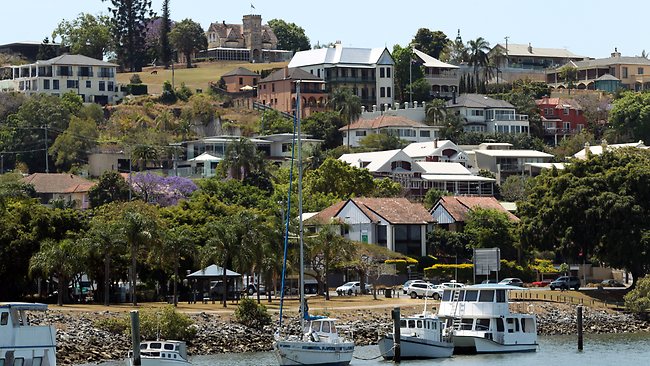
(Photo shows the suburb of Hamilton)

Brisbane Suburbs That Could be Used as Girls Names

06 Sunday Oct 2013

Posted by A.O. in Name Themes and Lists

≈ 9 Comments

Tags

animal names, Aramaic names, Australian Aboriginal names, Biblical names, birth notices, english names, fabric names, famous namesakes, fictional namesakes, Gaelic names, Gaulish names, German names, Greek names, historical records, Latin names, locational names, name history, name meaning, name popularity, names of farms, names of ships, names of spices, nicknames, Norman-French names, saints names, Sanskrit names, Scottish names, surname names, unisex names, virtue names, vocabulary names

15517831

Amity

Amity Point is a small town on North Stradbroke Island, 30 km south-east of Brisbane. The town is named after the Amity, a brig which carried the first European settlers to Queensland in 1824. The Amity was later wrecked near Tasmania, and today you can visit a full-size replica of the brig in Albany, because the Amity also took colonists to Western Australia. Amity is an English word which means “friendship”; it comes from the same Latin root as names such as Amy and Amabel, and has been used as a girls name since the 17th century. Amity is #551 in Victoria, and I often see it in birth notices: I think this pretty virtue name is gaining in popularity, and may become a replacement for Amy.

Bethania

Bethania is in Logan City, halfway between Brisbane and the Gold Coast. The suburb was founded by Germans in the 19th century, and has a large hobby farm area. The name Bethania comes from Bethanien, the German name for the town of Bethany near Jerusalem. In the New Testament, Bethany is mentioned as the home of siblings Mary, Martha, and Lazarus, and is said to be near the place where Lazarus was raised from the dead. The Biblical Bethany may be the same place as the city of al-Eizariya in Palestine – its name means “place of Lazarus”, although others say that the original village of Bethany was slightly higher up on the Mount of Olives, and that al-Eizariya sprung up around the traditional site of Lazarus’ resurrection. The meaning of Bethany has been much debated, but it is thought the most likely derivation is from the Aramaic beth anya, meaning “house of affliction, house of suffering”, with the conclusion being that it was a place for care of the sick and destitute. Although Bethania doesn’t have any connection to Elizabeth or Anne, it might seem like a way to connect these two names, and does give both Beth and Anya as nicknames.

Cashmere

Cashmere is an outer suburb of Brisbane in the foothills of a mountain range surrounded by dense forest, with a nearby lake. Cashmere is named after an early settler, James Cash, famous for his hospitality to passing travellers. Although Cash was not wealthy and lived in a simple shanty, no tramp ever passed his door without receiving a meal or a pot of tea. Because mere means “lake”, and James Cash’s farm was near Lake Samsonvale, the suburb’s name can be understood as “Cash’s land by the lake”. Cashmere is also a fine, high quality fibre taken from Cashmere goats. The name is after the Kashmir region of India, which has been making cashmere shawls for thousands of years. Kashmir’s name comes from the great sage Kashyapa, a legendary wise man whose name is from the Sanskrit for “tortoise”. With Cash a fashionable choice for boys, luxurious Cashmere seems like a way for girls to get the nickname Cash as well. In Australian records, both men and women named Cashmere can be found.

Corinda

Corinda is an older suburb of Brisbane, first settled in the 1860s as a farming community, and with many of its homes dating back to the colonial period. The name Corinda is believed to come from a local cattle station, which was named after a pastoral station in outback Queensland. The name is of Aboriginal origin, but its meaning is not known. Corinda has been used as an English girls name since the 18th century – perhaps based on the Greek name Kore, meaning “maiden”, with an elaborated ending common in 18th century poetic names like Melinda and Dorinda. This name seems elegant and literary, and not so different from familiar names such as Lucinda.

Inala

Inala is a suburb of Brisbane near the industrial estates. It was built in the post-war period to help with the housing shortage that followed World War II, and was one of the earliest and biggest Housing Commission projects in Queensland. Young architects such as Robin Boyd helped design the housing, which features simplicity and lack of ornamentation. In other words, it isn’t pretty, but cheap and efficient to install and maintain. It has an ethnically diverse community, with many migrants from Vietnam, New Zealand, and the Pacific Islands, amongst other places, settling there. The name Inala is believed to come from an Aboriginal expression meaning “peaceful place, happy place”, but it’s possible it actually means “place of the wind”. I saw a baby girl named Inala in a birth notice early this year, and ever since have been itching to cover this as a name – said ih-NAHL-ah, it fits in with names such as Ayla, Nyla, and even Isla.

Karalee

Karalee is a suburb of Ipswich; originally dairy and farm country, it began to be developed for residential purposes in the 1970s. It is thought that Karalee comes from an Aboriginal expressing meaning “grass around a waterhole”, although the City of Ipswich prefers the translation, “pretty hill beside the water”. This looks like a portmanteau of Kara and Lee, but has its own integrity, and is said KAR-a-lee, like an elaboration of Carol.

Lacey

Laceys Creek is a rural area in the outer suburbs of Brisbane, and was first settled as timber country, soon followed by dairy farming, pineapples, bananas, and bee-keeping. Lacey is an English surname of Norman-French origin. It comes from the village of Lassy in Normandy, which means “Lascius’ place”. The meaning of the Gaulish name Lascius is of unknown meaning. The de Laci family came to England with William the Conqueror, and one of their descendants was amongst the barons who forced King John to sign the Magna Carta. Lacey has been used as a girls name since the 17th century, and part of its feminine charm is that it sounds like the word lacy. Lacey is #234 in Victoria, and I believe this is another pretty girls name which is growing in popularity.

Lucia

St Lucia is an exclusive green and leafy inner-city suburb of Brisbane. It is focused around the University of Queensland, with the university itself, and residential colleges for students, taking up a large proportion of the suburb. There are many wealthy people living in St Lucia, with riverfront houses here costing in the millions. The area was first settled in the 1860s as sugar plantations, and was given its name by William Wilson, who bought and developed one of the plantations for housing in the 1880s. Wilson was born in St Lucia in the West Indies, and he named the housing estate St Lucia because the sugar plantations reminded him of his birthplace. The island of St Lucia is in the Caribbean, part of the Lesser Antilles group. It was named in honour of Saint Lucy by the French, who were the first European settlers to the region. Saint Lucy was a 4th century martyr, and she has become a popular saint, partly because her feast day of December 13 is near Christmas and originally coincided with the (northern hemisphere) Winter Solstice. Her name’s meaning of “light”, from the Latin lux, became a very appropriate one for a Festival of Light, heralding the Light of the World. Lucia has charted since the 1940s and had a minor peak in the 1960s at #283 before dropping to #808 in the 1990s. Since then it has climbed steeply, and peaked in 2010 at #115. Currently it is #122 in New South Wales and #177 in Victoria. This is an alternative to Lucy that has never become popular, although on the charts since the end of World War II.

Ripley

Ripley is a suburb of Ipswich, which currently has only 1000 residents. However, big things are planned for Ripley’s future, and once fully developed it is expected to be a city of 120 000 – one of the country’s largest pre-planned communities. It is named after the Ripley Valley where it is located; I am not sure if this is after someone named Ripley, or one of the towns named Ripley in England. The surname Ripley is from Ripley in Yorkshire – the town’s name means “farm whose land cuts a strip through the forest”, with the forest in question being the forest of Knaresborough. One of the most famous Ripleys must be Robert Ripley, who created Ripleys Believe It or Not! trivia series for newspapers, radio and television. The name may also remind you of tough Lieutenant Ellen Ripley from the Alien film series, played by Sigourney Weaver, or suave con artist Tom Ripley, from the crime novels, turned into a film, The Talented Mr. Ripley, played by Matt Damon. I have seen this name on both sexes.

Sinnamon

Sinnamon Park is an older suburb with some heritage-listed sites; the suburb is named for the pioneering Sinnamon family who settled in the district. Sinnamon is a Scottish surname; the Clan originated in Fife, and their name comes from their seat at Kinnimonth, which was granted to them by King William of Scotland. The name Kinnimonth comes from the Gaelic for “head of the hill”. Sinnamon sounds like the sweet spice Cinnamon, but has its own meaning and history – although the Sin- at the start may be problematic for some. I did find someone named Sinnamon from Queensland in the records, but can’t be sure whether they were male or female.

POLL RESULT: People’s favourite names were Amity, Lucia, and Bethania, and their least favourite were Inala, Sinnamon, and Karalee. Not one person liked the name Karalee.

(Photo shows the University of Queensland in St Lucia)

Why Your Child Will Hate Their Name

22 Sunday Sep 2013

Posted by A.O. in Your Questions Answered

≈ 21 Comments

Tags

baby name advice, baby name books, choosing baby names, classic names, created names, dated names, Google, honouring, name forums, name image, name popularity, name studies, names from television, popular names, pseudonyms

I-HATE-MY-NAME-815x1024

How can I pick a name my child won’t hate?

That’s the question somebody typed into a search bar, and Google knows how, ended up on my blog. Here’s the kicker: you can’t. There’s no name, no matter how tastefully chosen, that comes with a guarantee that your child won’t one day hate it to bits.

I know people with what I see as very nice names (nicer than mine, in my opinion) who hate them with a bewildering passion, while people who have what I consider very boring or even ugly names are deeply grateful to their parents for choosing them. We all have different tastes.

I do know quite a few people who hate their names, and if you hang out on name forums, you don’t have to look hard to find others who have become disgruntled with their names. While everyone has their own personal quirks, over the years I have noticed a few things they tended to have in common.

These are often not the things that baby name articles warn you about. For example, a popular belief is that a “weird name” is sure to be hated by the bearer, who will be teased in the playground and come to loathe their name, their parents, and probably the whole world.

I haven’t noticed this to be the case, with most owners of unusual names enjoying, or at least coming to terms with them. I have never met anyone with an unusual name who legally changed it to something more mundane, even those who professed to find it a bit of a pain sometimes. At most, they adopted a pseudonym when booking restaurants.

Another piece of advice often handed out is that a “bizarre” name spelling will be such a nuisance that the bearer will undoubtedly wish that their parents had gone with something more traditional. Again, I don’t find that to be generally true. Some people with unusually spelled names loathe them, while others are delighted by them.

I know someone with a very unintuitive name spelling (think Veeruyniiikkarh for Veronica), and she loves that every letter in her name was individually chosen by her mum, with each one having a specific personal meaning. I thought it would be the most tremendous nuisance to have to spell out every time, but she assures me that she doesn’t mind at all. “It makes me feel special that my name gets so much attention”. For her, holding up queues is an ego-massage.

As I can’t tell you how to pick a name your child won’t hate, I thought I would least explain why they may end up hating it.

They hate themselves

Research has shown that people with high self-esteem tend to like their own name, and the higher their sense of self-worth, the more they liked their name. That suggests that people who dislike their own name may suffer from self-esteem issues.

You might assume that someone who dislikes their name would arrogantly think it not good enough for them, but sometimes it seems to be the other way around – they don’t think they are good enough for their names.

“It’s a popular girl name, it’s just not me”; “It’s too pretty for me carry it off”; or the most tragic I heard, “It sounds like the name of a happy normal person”.

To give your child the best chance of liking their name, make sure that they have high self-esteem. Convince them that they are pretty, popular, happy and normal enough for their name.

Their name is going downhill

A lot of parents worry about popularity; nearly always that the name is “too popular” to use, or is going to be too popular in the future.

However, I’ve noticed that the majority of people who dislike their names were given names that were either falling in popularity when they were born, or hitting their peak, so that they had begun falling by the time they started school.

Not only that, but the level of dislike appears to correlate with how steeply the name rose and fell. Names with a very obvious peak and trough, dating them to a particular era, seem to be the most disliked.

It doesn’t necessarily seem to be the most popular names that are disliked so much as those which display this pattern. For example, Sarah was the #1 name of the 1980s, yet I rarely hear Sarahs complain bitterly about their name. Could that be because Sarah is a classic which is still in the Top 40, so we don’t think of it as a “typical 1980s name”?

I don’t often hear anyone identify the trajectory of their name’s popularity as the reason for their dissatisfaction. They all have what appear to be good reasons for their dislike: it’s unattractive, it’s boring, it doesn’t suit them. Yet somehow it seems to be names falling in popularity which are perceived as ugly, boring, and not suiting their owners.

People given names that were already dated and out of style at the time of their birth (“old people” names) usually say that they hated their name as a child, but now they’re grown up, they appreciate it’s different from the usual names of their generation.

That may because such names sometimes begin to come back into fashion when they are adults. For example, someone born in the 1980s named Florence would have had a dated name, as it peaked in the 1900s. But now it is fashionable and rising in popularity – suddenly Florence has a cool name.

I do think popularity is worth considering – but not to cross off a name because it’s hit a particular point in the charts. Of course, you can’t know how a name will perform in the future, but you can at least see how it’s doing now. Has it maintained its position over several decades? Has it suddenly “come out of nowhere”? Is it already falling steeply? This information might help you choose between different names.

They hate the reason you chose their name

If someone really loves their name, I don’t think a bad name story will seriously ruin it for them, but if someone is already lukewarm, a bad one can add insult to injury. The factors that seem to get people’s goats are a perceived randomness, casualness, or lack of thought in the way their name was selected.

When you tell your child how you chose their name, stress how important it was to you and how much you love their name. If you chose their name from a baby name book, or a TV show, for example, make sure they understand that it wasn’t just by chance you chose their name. Whatever it was that made you fall in love with the name, express it. And don’t wait until they’re a moody teen or resentful adult to share the good news – they should know from an early age how special you think their name is.

I know a lot of people who disliked their names, and were even thinking of changing them, until their parents explained how much love and care had gone into choosing it. Teenagers who thought their parents had unimaginatively picked a popular name found that they had been named after a much-loved relative. A “made up” name that seemed “random” was the result of putting together the initials of their parents’ best friends who introduced them. And sometimes just knowing it was a name their parents loved above all others was enough to reconcile someone to a name they had thought ordinary.

The bottom line: everyone wants their name to be meaningful. Show your child that theirs is.

You hate your name

In some cases, disliking names seems to run in the family. Quite a number of women I know who dislike their names tell me that their mother was also unhappy with her own name. This may be from parental modelling. Just as mothers who constantly moan about their flabby thighs tend to have daughters with body image problems, it could be that mothers who dislike their name unconsciously send the message to their children to focus on anything about their name that fails to please.

If you hate your own name, make peace with it. Don’t try to work out your own issues when choosing your child’s name. So many parents seem to think that because they hated being one of a dozen in their class their child’s name must be rare, or because they hated their nickname their child needs a “nickname proof” name.

It’s well intentioned, but the trouble is that you’ve made your child’s name story all about you. When you tell your child how you chose their name, the story shouldn’t include information about how you felt about your name. Don’t use your child’s name as an opportunity to fix the mistakes of the past.

They hate you

In rare but distressing cases, people reject their names because their relationship with their parents irretrievably breaks down. It’s not uncommon for them to change their names in order to signal a complete break from their family background, and it can also be so their parents can’t easily locate them.

I don’t think this is worth worrying about, because if it occurs, their name isn’t really the issue, and is the least of your problems.

POSTSCRIPT: I should add that most of my observations in regard to name dislike relate to women. It isn’t that I don’t know any men who dislike their names – I know a fair few who hated their name enough to legally change it, and I’ve read a lot of articles written by men on how much they dislike their name.

However, women and girls do seem to more openly express their feelings about their names, and it’s possible that they have subtler emotions toward their name, or are more likely to be analytical about them. Perhaps women are more likely to be “fussy” about their names than men. Whatever the reason, it seems to be easier to gather information about their feelings towards their names (at least for me).

POLL RESULTS
79% of people responding to the poll were generally satisfied with their name. 33% liked their name, 19% loved their name, 18% weren’t mad about their name, but could live with it, and 9% said that they used to dislike their name, but had changed their mind and now felt positive towards it.

However, 12% of people did hate their name, while 9% thought that hate was too strong a word to use, but they didn’t really like their names either.

The good news is, most of us have names that we are content with, and around 10% of people who don’t like their name will change their minds.

(Picture from Naver)

Famous Name: Jason

18 Wednesday Sep 2013

Posted by A.O. in Famous Names

≈ 3 Comments

Tags

Beyond Jennifer & Jason, Biblical names, famous namesakes, fictional namesakes, Greek names, hebrew names, historical records, honouring, Linda Rosenkrantz, mythological names, name history, name meaning, name popularity, name trends, names from movies, names from television, Pamela Redmond Satran, royal names, saints names, US name popularity

51WNMTYA9qL

A federal election was held on September 7, and we have had a change of government. Votes are still being counted, so the election isn’t over, and we may have some names from it when the process is complete.

However, in a much more frivolous political poll held in August, Cleo magazine rated the male politicians on their sex appeal, and decided that Labor MP Jason Clare, described as the “Rob Lowe of Australian politics”, was the winner. I can’t help thinking if a men’s magazine had rated female politicians like this it would be considered very wrong.

Jason Clare represents the seat of Blaxland in western Sydney, which he won in 2007, and until recently was the Federal Home Affairs Minister. Jason grew up in the western suburbs, made dux of his class, and completed a law degree while pursuing an interest in politics. While Labor lost the election with a significant swing against it, Jason managed to increase his hold over the electorate by 6%.

To show that he is not vain about his appearance, Jason modestly joked that his wife’s preference in the Cleo poll was for the runner-up, Stephen Smith. Hello ladies – he’s a smart, handsome law graduate and his wife doesn’t appreciate him! (is the message I think we’re meant to be receiving there).

Jason is from the Greek name Iason, derived from the Greek for “to heal”. Iaso was the Greek goddess of recuperation from illness, so you could see Jason as a masculine form of her name. Although Jason is often translated as “healer” or even “physician”, to me the meaning of the name is more about the body’s natural ability to heal itself.

The name is best known from the mythological prince of Thessaly, who led a hand-picked crew of heroes on the good ship Argo, in quest of the Golden Fleece, with the aid of the goddess Hera. Jason and the Argonauts had a series of adventures, in which they didn’t behave very nobly for much of the time, then arrived in Colchis, which today is in Georgia, on the Black Sea.

The Golden Fleece was owned by King Aeetes, and to obtain it, the king gave Jason three tasks which seemed impossible to perform. Hera arranged for Aeetes’ daughter Medea to fall in love with Jason, and as she was a great sorceress, she was able to use her knowledge of magic to help him succeed, after he promised her that they would get married.

Jason and Medea then fled with the Fleece and sailed away on the Argo, because King Aeetes knew that Jason could only have completed the tasks by cheating, and wanted his property back. He pursued them until Medea came up with the horrible plan to kill her own brother and throw him into the sea, piece by piece, to distract her father.

Medea’s interest in dismembering family members continued when she and Jason returned to Greece, and she arranged for his Uncle Pelias to get chopped up into soup. Pelias had tried to drown Jason as a baby, then sent him off on the dangerous Golden Fleece quest hoping he’d die, so she had her reasons. With her penchant for murdering relatives, you’d think that Jason would have been blissfully happy with Medea, but instead he betrayed her love by becoming engaged to another woman.

When Medea tried to point out that all Jason’s luck in life was because of her, and he was being very ungrateful, he replied, “Babe, you’re the one who got lucky when the gods made you fall in love with me”. Medea wasn’t the type to take this treatment lying down, and she promptly burned her rival to death before murdering the children she and Jason had had together. Although Jason was ungallant, Medea’s tendency to see her own flesh and blood as collateral damage is disturbing.

Because Jason had broken his vow to love Medea forever, the goddess Hera abandoned him, and he wound up lonely and miserable. He was killed when the Argo, now old and rotting, broke and fell on top of him while he was asleep – a suitably ironic finish.

A king of Thessaly named Jason was a contemporary of Alexander the Great‘s father. A successful and ambitious general, it is thought that he must have been at least one of the inspirations of the great Alexander himself. It seems very likely he was named after the Thessalian hero.

There is a Jason in the New Testament, one of the Seventy Disciples of Christ, who ran a “safe house” for Christians in Thessalonica, and was once arrested for it. Saint Paul appointed him bishop of Tarsus, and he is known as Saint Jason. Unusually for an early Christian saint, Jason lived to a ripe old age. The Jewish historian Josephus tells us that Hellenised Jews used the name Jason to replace Yeshua (Joshua or Jesus), and this may apply to Saint Jason too.

Being Biblical, Jason was acceptable for use as a Christian name, and can be found in the records from at least the 16th century. The name Jason became very popular in the 1970s, and it looks as if this was due to the original Jason, because the movie Jason and the Argonauts came out in 1963 (it cut out most of the revolting parts). A special effects tour de force, it’s a cult classic, and according to Tom Hanks, the greatest film ever made. It must have made a huge impression.

Jason was already rising in popularity at the time of the film’s release, but soon zoomed up the charts to make the US Top 100 three years later. It was Top 10 in the US for all of the 1970s, which coincides with popular TV series, The Waltons, having a Jason. Even in the late 1980s, when Jason was #27, Pamela Redmond Satran and Linda Rosenkrantz were urging parents to “go beyond Jennifer and Jason”. Despite their book’s success, Jason has still not left the Top 100 in the United States, so American parents only partially heeded their call.

Jason has charted in Australia since the 1950s, when it was #290 for the decade. By the 1960s it had climbed phenomenally to make the Top 50, at #43 for the decade. It peaked in the 1970s (when Jason Clare was born) at #3, was still #18 in the 1980s, and #35 in the 1990s. Did nobody feel like going beyond Jason? It finally left the Top 100 in the mid-2000s, and is currently #133 and stable – not popular any more, but by no means plummeting into obscurity.

Jason has been a real 1960s success story, and continues to influence popular names for boys, because parents are still attracted to similar names, such as Mason, Jacob, Jayden, Jackson, Jasper and Jordan. In fact, Jason is staging a comeback under the short form Jace – already Top 100 in the United States, and no doubt rising here too.

It turns out we’re not ready to go beyond Jason yet – at least, not very far.

POLL RESULT: Jason received an approval rating of 38%. People saw the name Jason as a “dad name” (30%), and common and boring (20%). However, 12% saw it as a “nice guy” name, and 10% thought it attractive. Nobody thought the name Jason was sexy.

Popular Here, There and Everywhere: International Name Trends

17 Tuesday Sep 2013

Posted by A.O. in Name Data

≈ 9 Comments

Tags

name popularity, name trends, popular names, UK name popularity, UK name trends, US name popularity, US name trends

The Most International Popular Names

These names are all within ten places of each other on the Top 100s of Australia, England/Wales, and the United States, and should be equally familiar in all countries.

Boys

Ethan, James, Joshua, William

Girls

Ava, Ella, Emily, Isabella, Layla, Mia, Olivia

James and Olivia are the most international popular names, being no more than 2 places apart between any two countries.

You Saw it Here First

These are names which are already popular in Australia, but still rising toward the Top 100 in England/Wales and the United States.

Boys

Archer, Beau, Braxton, Jasper

Girls

Mila, Olive

Archer and Olive are the Australian popular names furthest ahead of international trends.

(The freshest names from the UK are Theodore and Elsie, and the freshest trends from the US are Jeremiah and Josiah – no popular American girls names were ahead of the trends).

Never Gonna Give You Up

These are names which have already left the Top 100 in the UK and US, but still remain popular in Australia.

Boys

Ashton, Hayden, Marcus, Mitchell, Patrick

Girls

Chelsea, Jade

Mitchell and Chelsea are the Australian popular names most behind international trends.

(The stalest names in the UK are Kyle and Bethany, while in the US, Gavin and Kylie are furthest past their used-by date).

Australia was the furthest ahead of international trends, and the USA most behind international trends – surely an indication of our different population sizes.

The Least International Popular Names

These names are common in one country, but rarely used in the others.

Most Australian Name: Darcy for a boy – it is considered feminine in the UK and US

Most British Name: Mackenzie for a boy – it is considered feminine in Australia and the US

Most American Names: Easton (boy) and Genesis (girl)

Popular Here and There: Comparing the Shared Top 100 Names of Australia and New Zealand

12 Thursday Sep 2013

Posted by A.O. in Name Data

≈ 4 Comments

Tags

name popularity, New Zealand name popularity, popular names

GIRLS

Similar Level of Popularity (within 10 places of each other)

Abigail, Addison, Alexis, Alice, Amelia, Anna, Annabelle, Ava, Charlotte, Chloe, Elizabeth, Ella, Ellie, Emily, Emma, Eva, Grace, Hannah, Hayley, Isabel, Isabella, Isabelle, Isla, Jessica, Lauren, Lily, Lucy, Madison, Mia, Mikayla, Mila, Olivia, Poppy, Ruby, Sarah, Scarlett, Sofia, Sophia, Sophie, Willow, Zara, Zoe

More Popular in Australia (11-40 places higher)

Alexandra, Alyssa, Amy, Evelyn, Ivy, Kayla, Layla, Lilly, Lola, Mackenzie, Maddison, Phoebe, Piper, Rose, Sienna, Summer, Violet

Much More Popular in Australia (more than 40 places higher)

Evie, Matilda, Maya

More Popular in New Zealand (11-40 places higher)

Aaliyah, Amber, Bella, Eden, Georgia, Holly, Jade, Jasmine, Molly, Olive, Paige, Samantha, Stella

Much More Popular in New Zealand (more than 40 places higher)

Aria, Leah

Not on New Zealand Girls Top 100

Amelie, Angelina, Audrey, Caitlin, Charlie, Chelsea, Claire, Ebony, Eliza, Elise, Eloise, Eve, Gabriella, Heidi, Imogen, Indiana, Josephine, Lacey, Lara, Lillian, Madeleine, Mariam, Milla, Savannah, Skye, Tahlia, Victoria

Not on Australian Girls Top 100

Ashley, Ayla, Brooklyn, Daisy, Faith, Hazel, Indie, Kate, Keira, Khloe, Lucia, Maia, Maria, Millie, Nevaeh, Nina, Peyton, Pippa, Riley, Skyla, Taylor

BOYS

Similar Level of Popularity (within 10 places of each other)

Alexander, Angus, Ashton, Benjamin, Braxton, Charlie, Christopher, Cooper, Dominic, Dylan, Edward, Eli, Ethan, Harry, Hugo, Hunter, Isaac, Jack, Jackson, Jacob, James, Jasper, Jordan, Joshua, Levi, Liam, Logan, Lucas, Mason, Max, Michael, Noah, Oliver, Oscar, Ryan, Samuel, Tyler, William, Zac, Zachary

More Popular in Australia (11-40 places higher)

Adam, Aidan, Aiden, Archie, Beau, Flynn, Harrison, Hayden, Henry, Jake, Jaxon, Lachlan, Lincoln, Marcus, Riley, Thomas, Xavier

Much More Popular in Australia (more than 40 places higher)

Nate, Patrick, Sebastian

More Popular in New Zealand (11-40 places higher)

Alex, Austin, Blake, Caleb, Cameron, Charles, Connor, Daniel, David, Finn, Jayden, Joseph, Leo, Luca, Matthew, Nathan, Ryder, Toby

Much More Popular in New Zealand (more than 40 places higher)

George, John

Not on New Zealand Boys Top 100

Ali, Andrew, Anthony, Archer, Bailey, Callum, Chase, Christian, Darcy, Declan, Gabriel, Hamish, Hudson, Jesse, Jonathan, Kai, Luke, Mitchell, Muhammad, Nicholas, Owen

Not on Australian Boys Top 100

Aaron, Asher, Carter, Felix, Fletcher, Israel, Joel, Kayden, Kingston, Leon, Louis, Nathaniel, Phoenix, Quinn, Robert, Sam, Tyson, Zion

Australia shares 77 Top 100 girls name with New Zealand, with 42 of them at a similar level of popularity, and 80 Top 100 boys names, with 40 at a similar level of popularity. That is very close – close enough that I think it would be fair to talk about Trans-Tasman name trends.

However, even with this harmony between us and our Antipodean cousins, it’s interesting to see that we each have our own particular likes and dislikes of certain names. We have hung stubbornly on to names that New Zealand has tired of, and vice versa, and they have their favourite names which are rare here, and vice versa, but in general I would say that New Zealand is slightly ahead of the trends – probably due to their much smaller population size.

Discussion of New Zealand names often seems to focus on “wacky” names, and name laws, so I think there could be closer examination of their popular names.

Famous Name: Declan

11 Wednesday Sep 2013

Posted by A.O. in Famous Names

≈ 4 Comments

Tags

Baby Name Pondering, famous namesakes, historical records, Irish name popularity, Irish names, name history, name meaning, name popularity, Old Irish names, popular names, saints names, UK name popularity, US name popularity

5922793578_4acfc9253e_z

September 8 marked the 74th birthday of folk singer Declan Affley, who was born in Wales to parents of Irish descent. He joined the British navy at 16, and travelled to Japan and Australia; he jumped ship in Australia and based himself in Sydney. At a harbourside pub called the Royal George (now The Slip Inn), he discovered the libertarian movement known as the Sydney Push, and joined its folksinging scene.

He became a regular performer in the folk clubs of Sydney and Melbourne, and appeared at folk festivals. He also busked on the streets, and was occasionally censored for singing left-wing political material, but this encouraged rather than deterred him. He was invited to sing some of his political songs on ABC radio, and also appeared in the 1966 award-winning ABC documentary, The Restless Years, presenting Australian history through poems, stories and songs. He also contributed to films, including the 1970 version of Ned Kelly.

Declan regarded himself as a socialist with anarchist leanings, and was an active supporter of the New South Wales Builders Labourers’ Green Bans, Irish hunger strikers, and Aboriginal land rights. He taught music at the Eora Centre in Redfern as his contribution to the advancement of Australian Indigenous people. Irish people are often thought of as having the gift of the gab, and Declan loved to talk for hours about history, music, politics and sport over a beer.

He died unexpectedly at the age of 45 – a very great loss to the folk community. The Declan Affley Memorial Award for excellence in a young performer is awarded each year at the National Folk Festival.

Declan is an Anglicisation of the Irish name Declán or Deaglán; it is usually translated as coming from the Old Irish for “full of goodness”. The name is known because of Saint Declán of Ardmore, a 4th or 5th century Irish bishop credited with the Christianisation of southern Ireland before the arrival of Saint Patrick.

The village of Ardmore in County Waterford is believed to be the oldest Christian settlement in Ireland, and by tradition, Saint Declán built a monastry here. He has been steadily popular in Waterford, with many churches dedicated to him, and each year on his feast day of July 24, devotions are held in his honour. This year, a five-day pilgrimage walk was held in late July, on a 100 km path between Cashel in Tipperary and Ardmore, which Saint Declán is said to have taken.

There is a long tradition of Christians taking new names, or being given new names, to mark their new lives, and in particular many of the Irish saints have created descriptive names. Declan looks to be one of them, for the meaning “filled with goodness” seems to have Christian significance.

I can first find Declan in Irish records from the late 18th century, and they were all born in southern Ireland; in Munster, where Declan is the patron saint, and in Waterford, near his centre of Ardmore. That suggests very strongly that the name was given in honour of the saint, and that it had an element of local pride as well.

Declan was quite a popular name in Ireland during the mid-twentieth century, and as well as Declan Affley, is borne by several musicians. These include Declan de Barra, an Irish-born Australian punk-folk singer, English pop singer Declan Galbraith who covers traditional Irish tunes amongst his own work, Declan Nerney, an Irish country singer, and Declan Sinnot, an Irish folk-rock singer. You may also have heard of Declan MacManus, who performs under the name Elvis Costello.

Declan has charted in Australia since the 1980s, and ranked since the 1990s, when it debuted at #145. It has been Top 100 since the early 2000s, and last year it was in the top ten fastest rising boys names in Australia, when it rose 12 places on the national chart. Currently it is #84 nationally, #74 in Victoria, #60 in Queensland, #50 in Western Australia, #71 in Tasmania and #56 in the Australian Capital Territory.

Unusually for a name in the national Top 100, Declan hasn’t been Top 100 in New South Wales since 2010. We seem to be caught between international trends, with New South Wales following the lead of England/Wales, where Declan has left the Top 100 and is declining in popularity, and Victoria and other states, who appear to be following the United States, where Declan is still rising towards the Top 100. Declan has a similar popularity to us in Scotland, but isn’t Top 100 in either Ireland or Northern Ireland.

If you love the name Declan, you won’t find yourself alone in your preference, but it’s still a good Irish heritage choice. It’s a handsome name, with an attractive, lilting sound to it, and it’s not wildly popular. Brooke from Baby Name Pondering chose it as her favourite boys name in the Victorian Top 100, and tells me that she finds it really charming – great recommendation!

POLL RESULT: Declan received an approval rating of 70%. People saw the name Declan as a good Irish heritage choice (25%), handsome or attractive (23%), and sweet and charming (11%). However, 11% thought the name was too trendy, and destined to be the next Aidan or Liam.

(Photo is of Ardmore in Ireland, where Saint Declan is supposed to have lived and preached)

Popular Here and There: Comparing the Shared Top 100 Names of Scotland and Australia

10 Tuesday Sep 2013

Posted by A.O. in Name Data

≈ 1 Comment

Tags

name popularity, popular names, Scottish name popularity

We’ve already looked at the popular names Australia shares with the United States, and England/Wales, and Elea from British Baby Names suggested that it might be a good idea to compare the Top 100s of Australia and Scotland, in case they had more in common. So here we go.

BOYS

Similar Level of Popularity (within 10 places of each other)

Alex, Alexander, Archie, Caleb, Charlie, Declan, Ethan, Finn, Jack, James, Jayden, Liam, Luke, Mason, Max, Michael, Oliver, Ryan, Tyler

More Popular in Australia (11-40 places higher)

Angus, Benjamin, George, Harrison, Jacob, Jake, Joshua, Luca, Lucas, Noah, Oscar, Samuel, Thomas, William

Much More Popular in Australia (more than 40 places higher)

Blake, Cooper, Isaac, Jackson

More Popular in Scotland (11-40 places higher)

Aidan, Aiden, Christopher, Connor, Daniel, Dylan, Harry, Joseph, Kai, Leo, Logan, Matthew, Muhammad, Nathan, Owen, Riley, Zac

Much More Popular in Scotland (more than 40 places higher)

Adam, Andrew, Callum, Cameron, David, John

Not on Scottish Boys Top 100

Ali, Anthony, Archer, Ashton, Austin, Bailey, Beau, Braxton, Charles, Chase, Christian, Darcy, Dominic, Edward, Eli, Elijah, Flynn, Gabriel, Hamish, Hayden, Henry, Hudson, Hugo, Hunter, Jasper, Jaxon, Jesse, Jonathan, Jordan, Lachlan, Levi, Lincoln, Marcus, Mitchell, Nate, Nicholas, Patrick, Ryder, Sebastian, Toby, Xavier, Zachary

Not on Australian Boys Top 100

Aaron, Alfie, Arran, Ben, Blair, Brodie, Calum, Calvin, Cody, Cole, Euan, Evan, Ewan, Finlay, Fraser, Harris, Jamie, Jay, Josh, Jude, Kaiden, Kayden, Kian, Kieran, Kyle, Leon, Lewis, Mark, Murray, Ollie, Olly, Reece, Rhys, Robbie, Robert, Rory, Ross, Ruaridh, Sam, Scott, Sean, Shay

GIRLS

Similar Level of Popularity (within 10 places of each other)

Amelia, Ava, Chloe, Emily, Emma, Eva, Evie, Grace, Hannah, Layla, Lily, Mia, Olivia, Paige, Sofia, Sophia, Sophie, Summer

More Popular in Australia (11-40 places higher)

Abigail, Alexis, Alice, Alyssa, Bella, Charlotte, Elizabeth, Ella, Georgia, Isabella, Lilly, Madison, Maya, Rose, Ruby, Sarah, Zara, Zoe

Much More Popular in Australia (more than 40 places higher)

Imogen, Jasmine, Scarlett, Sienna, Willow

More Popular in Scotland (11-40 places higher)

Amelie, Caitlin, Elise, Eve, Holly, Isla, Jessica, Lola, Lucy, Molly, Poppy

Much More Popular in Scotland (more than 40 places higher)

Amber, Amy, Anna, Ellie, Kayla, Lacey, Lauren, Leah, Skye

Not on Scottish Girls Top 100

Aaliyah, Addison, Alexandra, Angelina, Annabelle, Aria, Audrey, Charlie, Chelsea, Claire, Ebony, Eden, Eliza, Eloise, Evelyn, Gabriella, Harper, Hayley, Heidi, Indiana, Isabelle, Ivy, Jade, Josephine, Lara, Lillian, Mackenzie, Maddison, Madeleine, Mariam, Matilda, Mikayla, Mila, Milla, Olive, Phoebe, Piper, Samantha, Savannah, Stella, Tahlia, Victoria, Violet

Not on Australian Girls Top 100

Abbie, Aimee, Ayla, Beth, Brooke, Cara, Carly, Daisy, Darcy, Eilidh, Emilia, Erin, Faith, Freya, Gracie, Hollie, Iona, Julia, Kara, Katie, Keira, Lexi, Lexie, Lois, Lucie, Maisie, Maria, Megan, Millie, Mirren, Mollie, Mya, Niamh, Nicole, Orla, Rachel, Rebecca, Robyn, Rosie, Taylor

As it turns out, Australia shares 56 boys names and 61 girls names in the Top 100 with Scotland. This means that our boys list is less Scottish that English or American, and our girls names more English than Scottish, but more Scottish than American.

The Scottish Top 100 certainly makes interesting reading – I think I was imagining it as much like England/Wales with some Gaelic names thrown in, but it has a flavour all its own, with quite a few surprises.

← Older posts
Newer posts →

Enter your email address to follow this blog

Categories

Archives

Recent Comments

A.O.'s avatarwaltzingmorethanmati… on Zarah Zaynab and Wolfgang…
Madelyn's avatarMadelyn on Zarah Zaynab and Wolfgang…
JD's avatardrperegrine on Can Phoebe Complete This …
A.O.'s avatarwaltzingmorethanmati… on Rua and Rhoa
redrover23's avatarredrover23 on Rua and Rhoa

Blogroll

  • Appellation Mountain
  • Baby Name Pondering
  • Babynamelover's Blog
  • British Baby Names
  • Clare's Name News
  • For Real Baby Names
  • Geek Baby Names
  • Name Candy
  • Nameberry
  • Nancy's Baby Names
  • Ren's Baby Name Blog
  • Sancta Nomina
  • Swistle: Baby Names
  • The Art of Naming
  • The Baby Name Wizard
  • The Beauty of Names
  • Tulip By Any Name

RSS Feed

  • RSS - Posts

RSS Posts

  • Celebrity Baby News: Melanie Vallejo and Matt Kingston
  • Names from the TV Show “Cleverman”
  • Can Phoebe Complete This Sibset?
  • Zarah Zaynab and Wolfgang Winter
  • Baby, How Did You Get That Name?
  • Celebrity Baby News: Media Babies
  • Celebrity Baby News: Adelaide Crows Babies
  • Celebrity Baby News: Chris and Rebecca Judd
  • Names at Work: Name News From the World of Business and Employment
  • Celebrity Baby News: Sporting Round Up

Currently Popular

  • Celebrity Baby News: Toby Allen and Darren Weller
  • Rare Boys Names From the 1950s
  • Girls Names From Native Australian Flowers
  • Girls Names of Australian Aboriginal Origin
  • The Top 100 Names of the 1920s in New South Wales

Tags

celebrity baby names celebrity sibsets english names famous namesakes fictional namesakes honouring locational names middle names name combinations name history name meaning name popularity name trends nicknames popular names saints names sibsets surname names twin sets unisex names

Create a free website or blog at WordPress.com.

Privacy & Cookies: This site uses cookies. By continuing to use this website, you agree to their use.
To find out more, including how to control cookies, see here: Cookie Policy
  • Subscribe Subscribed
    • Waltzing More Than Matilda
    • Join 517 other subscribers
    • Already have a WordPress.com account? Log in now.
    • Waltzing More Than Matilda
    • Subscribe Subscribed
    • Sign up
    • Log in
    • Report this content
    • View site in Reader
    • Manage subscriptions
    • Collapse this bar
 

Loading Comments...