• About
  • Best Baby Names
  • Celebrity Baby Names
  • Celebrity Baby Names – Current
  • Celebrity Baby Names – Past
  • Featured Boys Names
  • Featured Girls Names
  • Featured Unisex Names
  • Links to Name Data
  • Waltzing on the Web

Waltzing More Than Matilda

~ Names with an Australian Bias of Democratic Temper

Waltzing More Than Matilda

Tag Archives: name popularity

The Top 100 Baby Names in New South Wales for 2013

08 Tuesday Apr 2014

Posted by A.O. in Name Data

≈ 7 Comments

Tags

name popularity, name trends, popular names


GIRLS

  1. Charlotte
  2. Olivia
  3. Amelia
  4. Chloe
  5. Mia
  6. Emily
  7. Isabella
  8. Ava
  9. Sophie
  10. Ruby
  11. Sophia
  12. Ella
  13. Sienna
  14. Grace
  15. Lily
  16. Ivy
  17. Zoe
  18. Matilda
  19. Isla
  20. Emma
  21. Evie
  22. Hannah
  23. Harper
  24. Scarlett
  25. Lucy
  26. Eva
  27. Zara
  28. Abigail
  29. Layla
  30. Georgia
  31. Sofia
  32. Isabelle
  33. Willow
  34. Imogen
  35. Annabelle
  36. Savannah
  37. Sarah
  38. Maddison
  39. Jasmine
  40. Jessica
  41. Audrey
  42. Madison
  43. Elizabeth
  44. Evelyn
  45. Stella
  46. Chelsea
  47. Alexis
  48. Mackenzie
  49. Ellie
  50. Alice
  51. Bella
  52. Mila
  53. Summer
  54. Lara
  55. Addison
  56. Lilly
  57. Victoria
  58. Violet
  59. Poppy
  60. Anna
  61. Claire
  62. Phoebe
  63. Lola
  64. Alyssa
  65. Maya
  66. Aria
  67. Madeleine
  68. Eloise
  69. Eliza
  70. Alexandra
  71. Holly
  72. Eden
  73. Indiana
  74. Aaliyah
  75. Molly
  76. Rose
  77. Piper
  78. Caitlin
  79. Elsie
  80. Isabel
  81. Penelope
  82. Mikayla
  83. Samantha
  84. Lillian
  85. Hayley
  86. Paige
  87. Amelie
  88. Olive
  89. Gabriella
  90. Ariana
  91. Emilia
  92. Skye
  93. Leah
  94. Ayla
  95. Jade
  96. Daisy
  97. Harriet
  98. Zahra
  99. Eve
  100. Indie
BOYS

  1. William
  2. Oliver
  3. Jack
  4. Noah
  5. James
  6. Lucas
  7. Thomas
  8. Lachlan
  9. Cooper
  10. Liam
  11. Ethan
  12. Jacob
  13. Alexander
  14. Isaac
  15. Joshua
  16. Samuel
  17. Harrison
  18. Benjamin
  19. Mason
  20. Max
  21. Charlie
  22. Jayden
  23. Henry
  24. Daniel
  25. Hunter
  26. Ryan
  27. Oscar
  28. Levi
  29. Xavier
  30. Harry
  31. Riley
  32. Flynn
  33. Logan
  34. Sebastian
  35. Elijah
  36. Jackson
  37. Tyler
  38. Leo
  39. Archie
  40. Joseph
  41. Matthew
  42. Michael
  43. Zachary
  44. Adam
  45. Aiden
  46. Nicholas
  47. Patrick
  48. Hudson
  49. Jaxon
  50. Jake
  51. Braxton
  52. Christian
  53. Edward
  54. George
  55. Luke
  56. Hugo
  57. Eli
  58. Luca
  59. Nathan
  60. Chase
  61. Ashton
  62. Beau
  63. Blake
  64. Lincoln
  65. Dylan
  66. Marcus
  67. Hayden
  68. Finn
  69. Kai
  70. Archer
  71. Caleb
  72. Nate
  73. Toby
  74. Connor
  75. Ali
  76. Anthony
  77. Austin
  78. Louis
  79. Muhammad
  80. Jonathan
  81. Charles
  82. Angus
  83. Jordan
  84. Nathaniel
  85. Felix
  86. John
  87. Jasper
  88. Mitchell
  89. Dominic
  90. Owen
  91. Alex
  92. Ryder
  93. Aaron
  94. David
  95. Jett
  96. Darcy
  97. Bailey
  98. Gabriel
  99. Jesse
  100. Christopher

GIRLS NAME TRENDS

Biggest Risers
Lola (+23), Elsie (+22 at least), Imogen (+22), Ellie (+21), Penelope (+20 at least), Evelyn (+20), Aria (+19), Alexandra (+18), Lillian (+17 at least)

Biggest Fallers
Hayley (-34), Tahlia (-23 at least), Rose (-21), Kayla (-20 at least), Gabriella and Holly (-18)

New: Ariana, Ayla, Daisy, Elsie, Emilia, Harriet, Indie, Lillian, Penelope, Skye, Zahra

Gone: Amy, Angelina, Charlie, Elise, Heidi, Josephine, Kayla, Lauren, Mariam, Milla, Tahlia

Comment: Penelope hits the ground running to join yet another Top 100. Josephine’s great leap forward of 2012 turns out to be a statistical anomaly, while Lauren could not sustain her Olympian comeback.

BOYS NAME TRENDS

Biggest Risers
Hudson (+26), Louis (+23 at least), Archer (+22), Austin and Muhammad (+20), Nathaniel (+17 at least), Ashton (+17), Felix (+16 at least)

Biggest Fallers
Dylan (-33), Beau (-22), Andrew (-21 at least), Angus (-21), Blake (-18)

New: Aaron, Felix, Jett, Louis, Nathaniel, Ryder

Gone: Andrew, Callum, Cameron, Hamish, Zac

Comment: Cooper and Liam inch their way up to join the Top 10, while Scottish names take a definite tumble. Fun royal baby name fact: George, Alexander, and Louis all rose in popularity!


Names of Australian Birds for Boys

06 Sunday Apr 2014

Posted by A.O. in Name Themes and Lists

≈ 7 Comments

Tags

animal names, astronomical names, Biblical names, bird names, colour names, english names, fictional namesakes, German names, Greek names, historical records, Irish names, Latin names, modern classics, mythological names, name history, name meaning, name popularity, names of rivers, nature names, nicknames, Roman names, saints names, scientific names, Scottish names, surname names, unisex names

Wedge-tailed-Eagle

Aquil
Aquila is the scientific name for eagles; large, powerful raptors found all over the world which are often used as symbols of kingship and empire. The eagle was the bird sacred to Zeus, and it is recognised as a Christian symbol of strong, enduring spirituality. Australia’s best known eagle is the Wedge-tailed Eagle, one of the largest birds of prey in the world. Easily recognised by its size and diamond-shaped tail, Wedge-tails can weigh up to almost 13 kg (28 lb), and wingspans have measured more than 250 cm (over 9 feet). Fierce defenders of their territory, Wedge-tails have been known to attack small aircraft. The Wedge-tail Eagle is an emblem of the Northern Territory Parks and Wildlife Service, the New South Wales Police Force, the Northern Territory Correctional Services, La Trobe University, and the Royal Australian Air Force. Aquila is a Latin name meaning “eagle”; it was fairly common amongst the Romans, and was also the name of the Roman military standard. Aquila is mentioned as one of the early Christians in the New Testament, and he is regarded as a saint. I have seen Aquil a few times as a boy’s name, perhaps because Aquila might be misunderstood as feminine, and it can be said uh-KWIL or uh-KEEL. It’s a strong, masculine name after a noble bird.

Callum
Columba is the scientific name for pigeons and doves; the word comes from the Greek for “dive, swim”, because pigeons make a swimming motion in the air as they fly. Australia has many native pigeons, but only one of them belongs to the Columba genus, and that is the White-Headed Pigeon. There are several saints named Columba, most notably the Irish missionary credited with spreading Christianity in Scotland. Columba is a Latinisation of his Irish name Colm Cille, meaning “dove of the church”. In Scotland, his name became Calum, and the variant Callum is a common name. Callum first charted in Australia in the 1960s, and first ranked in the 1970s at #467. It soared to make the Top 100 in the 1990s and peaked in the early 2000s at #56; it has just left the Top 100. However, it is a handsome modern classic with a lovely meaning, and is one of the softer boy’s names.

Cygnus
Cygnus is the scientific name for swans; large, graceful water birds which often feature in myth and legend. Helen of Troy was born from a swan’s egg after her mother was seduced by Zeus in the disguise of a swan, while the sun god Apollo drove a chariot drawn by swans. Irish and Australian Aboriginal legends both tell of people transformed into swans, and Hans Christian Anderson wrote about an “ugly duckling” who discovered he was really a beautiful swan. Swans are seen as holy in Norse mythology, and in Hinduism are revered as sacred. It was a belief in classical literature that the swan would sing beautifully upon death (hence the phrase “swan song” to mean a final performance), and the poet Juvenal sarcastically said that a good woman was as rare as a black swan. Of course, in Australia, black swans are not rare at all, although that doesn’t mean good women are more common here. The black swan is the state emblem of Western Australia, and Perth’s river is named the Swan in its honour. There are several characters from Greek mythology named Cygnus, many of which were turned into swans: one was a musician who was placed among the stars as the constellation Cygnus. This is an unusual bird name that sounds a little like Sidney and Silas, and as swans are symbols of love and fidelity, has attractive associations.

Finch
There are many small Australian birds named finches, although they are unrelated to the finches of the northern hemisphere. One of the most common is the Zebra Finch, found across the continent in drier areas; they live in large flocks, mostly in grasslands. Zebra Finches are grey with black and white stripes, hence their name, and males can be distinguished by a chestnut patch on their cheek. Male Zebra Finches are loud, boisterous singers, with each male having a unique song, which he learns from his father, and then gives it his own variation, so that there are recognisable similarities between the songs of bloodlines. Their singing is used as part of courtship, and the uniqueness of their songs has made them a popular subject for scientific research. Their singing also makes Zebra Finches popular as pets. Finch has been used as a boy’s name since the 16th century, and the surname has probably been of significant help. Current use may be inspired by Atticus Finch from To Kill a Mockingbird, a worthy namesake.

Jaeger
The Skuas are a group of sea birds resembling large, dark gulls. They are strong, agile fliers, and aggressive in defending their nests. The American term for the three smaller species of Skua is Jaeger, which is a German word meaning “hunter”. In Australia, we seem to use the American term rather than the British Skua. Jaegers hail from the Arctic and tundra, but come to the southern hemisphere during the northern winter, when their homelands are covered in snow and ice. It’s quite exciting to see one, if only because they have travelled such a vast distance to be here. The Jaeger is pronounced YAY-ger in English, although the German word is said more like YEH-ger. However, Jaeger is a common surname too, and many people pronounce it JAY-ger (quite a few people say the bird the same way). Not only is the English form of Jaeger, Hunter, a popular name for boys, but when said JAY-ger, it doesn’t sound too different from Jagger. Although deciding on pronunciation could be an issue, this is an interesting choice that isn’t as unusual as it might first appear.

Kestrel
The Kestrel is a small, slender bird of prey which is found in many parts of the world. The Australian Kestrel, also called the Nankeen Kestrel, is amongst the smallest of the falcons, and one of the rare raptors which can hover over its prey. Kestrels are found all over Australia, and are in the top ten of the most common Australian birds; its adaptability to a wide variety of environments is the key to its continued success. Kestrel has been used as a personal name since the 19th century, and the earliest record I can find for it is from Australia, used as a man’s middle name. It has been used fairly equally for both sexes, and because kestrels are quite dainty falcons, seems just as good for a girl as for a boy.

Peregrine
The Peregrine Falcon is a bird of prey found all over the world; it is the most widespread raptor, and one of the most widely found bird species. It is faster than any other creature on the planet when it is diving towards its prey, reaching speeds of over 320 km (200 miles) per hour. Peregrines have been used as hunting birds for thousands of years, and during the Middle Ages, was considered the bird most appropriate for a prince to hunt with. The Peregrine Falcon can be found all over Australia, although it isn’t common, and it often nests on cliffs – it will even nest on high buildings in cities. The name Peregrine comes from the Latin for “to wander, to travel”, perhaps because Peregrines can travel widely, or because their nests are difficult to find. Peregrine is also the English form of the Latin name Peregrinus, meaning “wanderer, traveller”. There have been several saints named Peregrine, who no doubt chose the name because it can be understood as “pilgrim”. This is an aristocratic boy’s name that has the charming Perry as its short form.

Philemon
Philemon is the scientific name for the Friarbirds, which are native to Australasia. The most conspicuous of them is the Noisy Friarbird, which as its name suggests, can kick up a heck of a racket. Noisy Friarbirds are not considered beautiful, being dull brownish-grey with a bald black head, a little horn on its bill, and bright red eyes. They are often considered to be pests because of their constant cackling, and voracious love of fruit. Yet I love their comical ugliness and gregarious chatter. I even enjoy sharing our fruit with them, because they prefer the old fruit rotting on the ground, on which they become hilariously tipsy: it’s always a party with the Friarbirds. Philemon is a Greek name which means “loving, affectionate”, and in a fable by the Roman poet Ovid, Philemon was a old man of Ancient Greece. He and his wife Baucis showed great hospitality to the gods, despite their poverty, and as reward, were granted their dearest wish, which was to die together. When they did, they were transformed into two trees, which intertwined in a show of affection. There are two saints named Philemon, one of whom was a church leader in the New Testament. With Philomena and Phillipa hip names for girls, why not Philemon for a boy?

Robin
Australasian Robins look slightly similar to, but are not closely related to the European Robin, or to the American Robin (which is a thrush). Some Robins have a red or pink breast, like their northern hemisphere namesakes, while others are yellow, grey, or white-breasted. They are fairly common in suburbia, and charming because of their small size and bright colouring. Many are inquisitive and confident around humans, and will become quite tame. Robin was originally used as a pet form of Robert, and given to boys: it is well known because of the English folk hero Robin Hood, Batman’s sidekick, Robin the Boy Wonder, and Winnie-the-Pooh’s friend, Christopher Robin. It can be given to both sexes after the bird. Robin charted as a unisex name in Australia from the 1920s to the 1970s without reaching the Top 100 for either sex, but was markedly more popular for boys. It peaked for both sexes in the 1950s. Although it stopped charting for girls in the 1980s, it only left the charts for boys in the late 2000s. I have seen a few baby boys named Robin in recent birth notices, and this is a traditional, yet somewhat whimsical, name.

Teal
Teal are ducks found in several different areas in the world. There are two species of Teal native to Australia, and they can be found in wetlands, freshwater lakes, and marshes. Teal is also a blue-green colour, named after the Eurasian Teal which has this greenish colour around its eyes. Teal has been used as a personal name since the 18th century, and has been used for males and females in almost equal numbers. It was originally much more common for boys (I noted an Australian named Teal Wang on the blog, but don’t know whether it was a man or a woman). Ducks are charming and lovable birds, and teal is a beautiful colour – I think this is a nice, simple name for either sex.

POLL RESULTS
The public’s favourite names were Callum, Peregrine and Robin, and their least favourite were Aquil, Cygnus and Philemon.

(Photo shows a Wedge-tail Eagle in flight)

Requested Name: Eva

02 Wednesday Apr 2014

Posted by A.O. in Requested Names

≈ 9 Comments

Tags

Biblical names, classic names, European name popularity, famous namesakes, fictional namesakes, hebrew names, historical events, honouring, Irish names, Latinate names, name history, name meaning, name popularity, name trends, names of aeroplanes, New Zealand name popularity, nicknames, popular names, saints names, UK name popularity


Front1Eva is the Latinate form of Eve, a Hebrew name translated as “breath, life”. Eve is famous as the first woman in the Bible, and the companion of the first man, Adam. She shared Adam’s fate of being cast out of the Garden of Eden, and is regarded in the Bible as the mother of all humanity. Apart from the biblical figure, there is also a saint named Blessed Eva of Liege, a medieval holy recluse.

Eva is the most usual form of the name Eve in many countries around the world, and in Ireland and Scotland, can be used to Anglicise the Irish name Aoife, meaning “beauty”. In Australia, Eva has historically been often used by European immigrants, particularly amongst Catholics and Jews. This gives it considerable scope as a potential heritage choice.

Amongst English-speakers, the name received a boost of popularity in the 19th century after the publication of Harriet Beecher Stowe’s 1852 anti-slavery novel, Uncle Tom’s Cabin. In the book, Evangeline St. Clare, or “Little Eva” is an angelic little girl who inspires love in even the most heart-hardened, and in her final throes, converts all the slaves to Christianity with some locks of her hair. It is the pure goodness of Little Eva which changes the lives of all around her.

Uncle Tom’s Cabin created a wave of pro-slavery novels to combat its views, and one of them was Little Eva: the Flower of the South, in 1853. Quick to cash in on the Little Eva phenomenon, it features yet another angelic little girl called Little Eva, equally loving and lacking in prejudice – only in this book, Eva is so kind-hearted that when the slaves are set free, they elect to remain with her of their own free will. This idealistic dream of voluntary slavery never came to pass on a large scale.

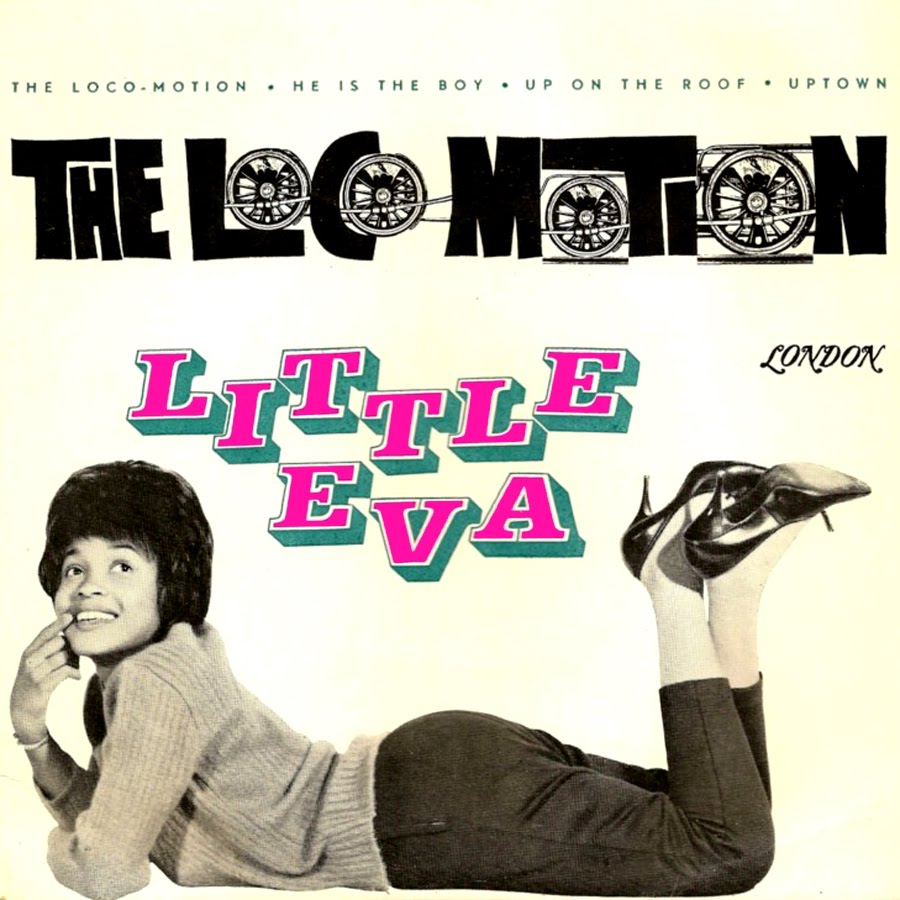
A real life Little Eva was the 1960s pop singer, born Eva Narcissus Boyd. She didn’t receive her moniker from either of these literary characters, but was called Little Eva by her family to distinguish her from her aunt, also named Eva. Little Eva is most famous for singing The Locomotion, later covered by Australian pop star Kylie Minogue. Little Eva apparently wasn’t too impressed by Kylie’s version.

Another Australian connection to Little Eva comes from World War II, when an American Air Force plane named the Little Eva got lost and crashed after a bombing mission in an isolated region of the Gulf of Carpentaria in Queensland. What happened to the survivors of the crash, and their desperate struggle against the dangers of the Australian outback, was made into a documentary called Aeroplane Dance, and is being developed into a feature film scheduled for release this year.

Eva is a classic name in Australia which has never left the charts. It was #37 in the 1900s, sinking until it left the Top 100 in the 1930s. It reached its lowest point in the 1980s at #425, then rose steeply during the 1990s to make the Top 100 for the late 2000s. Currently it is #24 nationally, #26 in New South Wales, #30 in Victoria, #31 in Queensland, #66 in Tasmania, and #27 in the Australian Capital Territory.

Eva is a very international name, being popular in all English-speaking countries, and all over Europe, including Eastern Europe and Scandinavia. It is most popular in Slovenia, at #2, and its popularity in Britain and New Zealand is almost identical to that in Australia.

Eva’s position in the Top 100 is stable, and it is now at its highest level of popularity ever. This makes it a Contemporary Classic – a traditional classic name which manages to feel modern and up-to-date. Because it is still rising, albeit gradually, it is also an Up and Coming Classic, so that it still seems rather fresh and stylish.

This all helps to make Eva an attractive choice. Furthermore, it fits in with the trend for short names ending in -a, such as Isla and Ella, and the V names, such as Ava, Ivy, Evie and Evelyn. This means that while Eva doesn’t stand out amongst its peers, neither does it sound particularly distinctive.

However, for those who care about such things, Eva has the advantage of being a classic, unlike Isla, Ella, Ava, Ivy and Evie, and also began rising before them, so that it cannot be accused of being a copycat. Eva is closest to the name Evelyn, which is also a classic that began rising in the 1990s – although Evelyn has yet to reach the popularity it enjoyed in the 1900s.

Eva is a beautiful classic name that is feminine without being frilly. Eva sounds intelligent as well as pretty, and it’s a name which ages well. It is easy to spell and pronounce, and is popular without being either extremely common or faddish. That makes it a baby name which might tick a lot of boxes on many people’s lists. The usual nicknames are Eve or Evie, but it is so short and simple that it doesn’t really need a nickname.

POLL RESULT
Eva received an excellent approval rating of 83%, making it one of the highest-rated names of 2014. People saw the name Eva as a stylish classic (23%), feminine yet not frilly (19%), beautiful or pretty (18%), and easy to spell and pronounce (17%). However, 6% thought it was too popular. Nobody thought the name Eva sounded too much like the word evil.

Thank you to Brooke for suggesting the name Eva be featured on Waltzing More Than Matilda

Top 20 Baby Names in the Northern Territory for 2013

01 Tuesday Apr 2014

Posted by A.O. in Name Data

≈ 1 Comment

Tags

name popularity, name trends, popular names


GIRLS

  1. Charlotte
  2. Olivia
  3. Amelia
  4. Ruby
  5. Chloe
  6. Matilda
  7. Mia
  8. Sophie
  9. Emily
  10. Evelyn
  11. Grace
  12. Isabella
  13. Jasmine
  14. Zoe
  15. Lily
  16. Madison
  17. Ava
  18. Ella
  19. Isla
  20. Savannah

BOYS

  1. William
  2. Cooper
  3. Oliver
  4. Lucas
  5. John
  6. Mason
  7. Noah
  8. Thomas
  9. Alexander
  10. Jack
  11. Michael
  12. Ethan
  13. Jaxon
  14. Logan
  15. Riley
  16. Xavier
  17. Isaac
  18. Jackson
  19. James
  20. Lachlan

GIRLS NAME TRENDS

Biggest Riser: Evelyn (+11 at least)

Biggest Faller: Sophia (-13 at least)

New: Evelyn, Isla, Lily, Madison, Savannah

Gone: Alice, Hannah, Layla, Maddison, Sophia


BOYS NAME TRENDS

Biggest Riser: Oliver (+18 at least)

Biggest Faller: James (-17)

New: Alexander, Isaac, Jaxon, John, Logan, Noah, Oliver, Xavier

Gone: Charlie, Daniel, Harrison, Henry, Levi, Liam, Ryan, Samuel, Tyler

NOTE: The Northern Territory only releases a Top 20 each year due to its very small population size.

Names of Australian Birds for Girls

30 Sunday Mar 2014

Posted by A.O. in Name Themes and Lists

≈ 4 Comments

Tags

Ancient Germanic names, animal names, Australian Aboriginal names, Australian slang terms, bird names, birth notices, brand names, english names, fictional namesakes, germanic names, Greek names, Irish names, Italian names, Latin names, locational names, middle names, mythological names, name history, name meaning, name popularity, nature names, nicknames, retro names, scientific names, unisex names


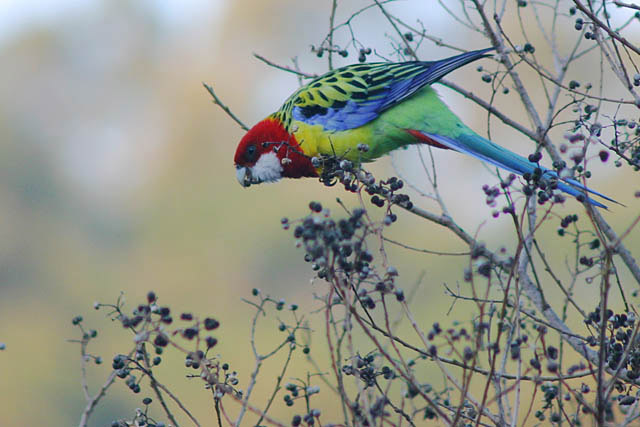
Eastern Rosella #40I seem to have covered several bird names on the blog recently, and that might be because our family was watching light-hearted bird documentary series, Hello Birdy, on the ABC, or maybe just because I love birds. Australia is lucky enough to have a staggering array of birds, many of them colourful, beautiful, intelligent, or unusual, and sadly, often under-appreciated. Here are some names that bring to mind a few of our feathered friends. Click on a likely link, and you will be taken to a YouTube video of each bird – there’s at least one for every entry.

Brahminy
The Brahminy Kite is a bird of prey and scavenger native to Australasia and Asia; in Australia they are found in coastal regions in the north. They are chestnut brown with a white head, breast, and tail tip, and typically nest in trees in mangrove swamps. The name Brahminy is due to their being found in India; it alludes to the Hindu Brahmin priestly caste, and is said BRAH-min-ee. The Brahminy Kite is the official mascot of Jakarta, in Indonesia, and in India is regarded as a representation of Garuda, the sacred bird of the supreme god Vishnu. I would not have considered this as a person’s name if I hadn’t seen a baby girl named Brahminy. It’s a bold choice, and its connection with a sacred bird is fascinating.

Corella
The Corella is a small, white cockatoo with a pink blush to its plumage. They are found from the central deserts to the eastern coastal plains, and are a familiar sight on farms and in cities. In some areas, Corellas have become so numerous they are considered a pest, being particularly destructive to trees and cereal crops. They congregate in large flocks, even up to several thousand, and make a high-pitched screeching noise which is ear-piercing when a flock all calls together, and can be heard for miles. Although they are noisy birds, they are very playful and have the joie de vivre that all parrots are blessed with. They are popular as pets, because they are good talkers, and excellent mimics. The word corella comes from the Wiradjuri language of central New South Wales. Corella has been used as a girl’s name since the 18th century, and is probably part of the Cor- group which is based on the Greek Kore, meaning “maiden”. The bird gives it a uniquely Australian flavour.

Dove
Here’s the dirty little secret about Doves: they’re just pigeons! Not only that, it’s unclear what makes some species of pigeons “doves”, because while we generally call smaller pigeons doves, that isn’t always the case. The confusion arises because the word pigeon is from Latin, and dove from Ancient Germanic, so they are two different words for the same thing (like autumn and fall). Nonetheless, their images are completely different: doves are symbols of peace, while pigeons are seen as disease-ridden pests (in fact, pigeons are no more disease-ridden than any other animal and pose no general health risk). Australia has a number of species identified as doves, and although we often think of doves as modest and grey, the Emerald Dove has striking green colouring, and the many varieties of Fruit Dove are likewise very colourful. There are also introduced species of dove, including those kept as pets. Dove has been used as a first name since the 17th century, and has been far more common for girls; a contemporary example is Disney actress Dove Cameron. Dove not only rhymes with love, but doves are used as symbols of love, since pigeons mate for life; the word dove can mean “sweetheart”. Perhaps because of this, doves were considered sacred to goddesses such as Venus. Another religious connection is that in Christian iconography, the Holy Spirit is often depicted as a dove.

Halcyon
Halcyon is the Latin name for the Tree Kingfishers, a large genus of birds found in Africa, Asia and Australasia, with Australasia having the most species. They are recognisable by their large heads and long pointed bills, and many are brightly coloured, often in iridescent blues and greens. The Laughing Kookaburra is a type of tree kingfisher, an iconic Australian bird with a raucous cackle that seems to epitomise the spirit of the bush. Halcyon is from the Greek for “kingfisher”, and is connected to a character from Greek mythology named Alcyone; the daughter of the winds, she married Ceyx, the son of the morning star. The pair were very much in love, and after Ceyx was lost at sea in a terrible storm, the unhappy Alcyone threw herself into the waves to end her life. The gods took pity on them, and changed both into kingfishers. According to legend, the “halcyon days” of midwinter, when storms cease, was when Alcyone laid her eggs, and her father restrained the winds so that she could do so safely. Because of this, the word halcyon (pronounced HAL-see-uhn) has come to mean “calm, serene, peaceful”, with our halcyon days those happy times we look back on with nostalgia. Halcyon has been used as a girl’s name since the 19th century: pretty and unusual, it gives Hallie as the nickname.

Lalage
Lalage is the scientific name for the Trillers, native to Asia and Australasia; they are small birds, usually coloured black, white and grey. They are called Trillers because during the breeding season, the males make a cheerful, almost continuous, trilling call. Lalage is derived from Greek, and means “to babble, to prattle”, or, in the case of birds, “to chirp”. The name became known from an ode by Roman poet Horace, where he speaks of his love for a young girl, his “sweetly laughing, sweet talking Lalage”. It has been used a few times since as a literary name, most notably in Kipling’s Rimini. Lalage has had occasional use, and in Britain seems to have a fairly upper-class image: contemporary examples are photjournalist Lalage Snow, and fashion designer Lalage Beaumont. In English, this name is usually pronounced LAL-a-gee or LA-la-ghee – just remember it’s three syllables, emphasis on the first, hard g like girl, not soft like germ. This fascinating name fits in with L-L names like Lillian, and as Lalage was a very young courtesan, almost seems like a posh version of Lolita! Lallie, Lollie, and Lala could be nicknames.

Lark
Larks are plain brown birds to look at, but their great beauty is in their voices, for they are famous for their melodious singing. This has made them a favourite subject for poets, such as Percy Bysshe Shelley’s, To a Skylark, and to say someone sings “like a lark” is a great compliment to the range and joyousness of their notes. Traditionally, larks are a symbol for dawn and daybreak, as in “getting up with the lark”, and this has given them religious overtones, for just as dawn is the passage between night and day, it can also be seen as that between heaven and earth. In Renaissance paintings, larks were sometimes used as a symbol of Christ. Although Australia has many birds with lark as part of their name, our only true lark is Horsfield’s Bushlark, widely found in grasslands and open woodlands. It is much smaller than larks in the northern hemisphere, and doesn’t have quite such an impressive voice, although its songs are still rich and varied, and it is a good mimic as well. The Eurasian Skylark which features in Shelley’s verse has been introduced here. Lark has been used as a name since the 18th century, and is historically more common for boys, but is often now thought of as more feminine than masculine. It’s a simple, non-frilly nature name laden with symbolism, and is more often found in the middle.

Maggie
Maggie is the affectionate name for the Australian Magpie. Although they look similar, it isn’t closely related to the European Magpie. Easily recognisable from their black and white plumage, magpies are very familiar in suburban life. Magpies are one of Australia’s favourite songbirds, because they have a complex, melodious warble, and will carol in chorus at dusk and dawn. They can also mimic other birds and animals, including human speech. Bold and sturdy, they are not typically wary of humans, and will happily accept (demand!) free food from us. They become unpopular in spring, as males can be so aggressive during breeding season that they swoop or even attack humans to warn them away. This is when feeding them pays off, as they can tell individual people apart, and won’t scare their buddies. The Magpie was a totem animal for the Indigenous people of the Illawarra, and is an official emblem of South Australia, appearing on the state flag. Magpies is a common name for sporting teams, and the cocky attitude of the Magpie is seen as indicative of the national character. Maggie is also a short form of Margaret. It was #174 in the 1900s, and was off the charts by the 1940s, returning in the 1970s. It has climbed steadily, and is currently in the 100s.

Oriole
Orioles are a large family of birds found throughout the world, which come in a variety of colours. Australian Orioles are green, perfect for blending in with the trees. They are fruit-eating birds, and the Figbird is one of the Orioles, although it doesn’t only eat figs. Orioles and Figbirds are attracted to backyards with small fruit trees and bushes, and which have native trees such as eucalypti and wattle; they are a fairly common sight in suburbia. The word oriole is derived from the Latin for “gold”, because the Eurasian Golden Oriole is a bright yellow. Oriole is related to names like Aurelia and Auriol, which are from the same derivation, and looks a lot like Oriel, which may be seen as a variant of Auriol, but also has Irish and Germanic origins. Oriole seems like a way to retain the golden meaning, while also referencing the bird.

Rainbird
The Rainbird is the colloquial name for the Pacific Koel, a species of migratory cuckoo which arrives here in spring from Papua New Guinea and Indonesia, and is found in north and eastern Australia. It’s called a Rainbird because of the belief that its rather mournful “whooping” call is a harbinger of wet weather. Males call for a mate during their breeding season, which coincides with the spring rains and the summer “wet season”, and are so loud they can be considered a nuisance. Like all cuckoos, Rainbirds lay their eggs in the nests of other species so that they can be raised by the unsuspecting hosts; however, unlike most other cuckoos, the baby Rainbird doesn’t kill the host chicks. Rainbirds are rather goofy-looking birds; the males have glossy black plumage and bright red eyes. I have seen Rainbird used as a girl’s middle name, and think it makes a wonderful name for a spring or summer baby. It would work equally well for boys.

Rosella
Rosellas are colourful parrots which are very familiar in suburbia. I think we might take them for granted, because they really are pretty, with a more pleasing range of calls than most parrots. Rosellas will be attracted to any garden that provides them with water, seeds and fruit, and can become so tame that they will eat out of your hand. This has led them to become common as pets, but in captivity they can become bored and aggressive, so I think it’s nicer to have them as backyard visitors. European settlers first saw Eastern Rosellas at Rose Hill (now called Parramatta), and called them Rosehill Parakeets; this evolved into Rosehillers, and eventually became Rosella. The Sydney suburb of Rozelle is named after them. Rosella is also a popular brand of tomato sauce, which sports an Eastern Rosella as its logo. By coincidence, Rosella is also an Italian name, an elaboration of Rosa, and looks like a combination of popular Rose and Ella.

POLL RESULTS
The public’s favourite names were Lark, Maggie and Rosella, and their least favourite were Brahminy, Oriole and Lalage.

(Photo shows an Eastern Rosella)

Top Baby Names in Tasmania for 2013

20 Thursday Mar 2014

Posted by A.O. in Name Data

≈ 7 Comments

Tags

modern names, name popularity, name trends, popular names, retro names, royal names

GIRLS

  1. Charlotte
  2. Ruby
  3. Amelia
  4. Ella
  5. Mia
  6. Lucy
  7. Sophie
  8. Zoe
  9. Grace
  10. Matilda
  11. Chloe
  12. Isla
  13. Isabella
  14. Olivia
  15. Ivy
  16. Lily
  17. Ava
  18. Emily
  19. Willow
  20. Stella
  21. Layla
  22. Sophia
  23. Evelyn
  24. Bella
  25. Evie
  26. Isabelle
  27. Maddison
  28. Sienna
  29. Violet
  30. Alice
  31. Ellie
  32. Addison
  33. Esther
  34. Savannah
  35. Scarlett
  36. Amber
  37. Phoebe
  38. Emma
  39. Imogen
  40. Bonnie
  41. Mackenzie
  42. Molly
  43. Paige
  44. Harper
  45. Heidi
  46. Holly
  47. Madison
  48. Maggie
  49. Millie
  50. Alexis
  51. Audrey
  52. Elsie
  53. Lacey
  54. Poppy
  55. Stephanie
  56. Summer
  57. Chelsea
  58. Florence
  59. Hannah
  60. Maya
  61. Annabelle
  62. April
  63. Brooke
  64. Eleanor
  65. Elizabeth
  66. Eva
  67. Georgia
  68. Jasmine
  69. Lillian
  70. Lilly
  71. Madeleine
  72. Madeline
  73. Mila
  74. Abigail
  75. Bronte
  76. Daisy
  77. Eden
  78. Eliza
  79. Harriet
  80. Hayley
  81. Mabel
  82. Nevaeh
  83. Olive
  84. Piper
  85. Rubi
  86. Sarah
  87. Zara
  88. Charli
  89. Claire
  90. Ebony
  91. Indy
  92. Jessica
  93. Kaylee
  94. Lola
  95. Abbie
  96. Abby
  97. Amy
  98. Annabel
  99. Charlie
  100. Dakota
  101. Eloise
  102. Estelle
  103. Eve
  104. Gabrielle
  105. Indiana
  106. Indianna
  107. Isabel
  108. Josie
  109. Lauren
  110. Macey
  111. Nina
  112. Peyton
  113. Tilly
  114. Trinity
BOYS

  1. Oliver
  2. Jack
  3. William
  4. Noah
  5. Thomas
  6. Hunter
  7. Charlie
  8. Mason
  9. Cooper
  10. Lucas
  11. Hamish
  12. Henry
  13. Lachlan
  14. Alexander
  15. Archie
  16. Harrison
  17. James
  18. Xavier
  19. Oscar
  20. Riley
  21. Hudson
  22. Jasper
  23. Logan
  24. Max
  25. Samuel
  26. Elijah
  27. Benjamin
  28. Ethan
  29. Flynn
  30. Edward
  31. Toby
  32. Jacob
  33. Joshua
  34. Liam
  35. Tyler
  36. Eli
  37. Harry
  38. Ryan
  39. Angus
  40. Connor
  41. Isaac
  42. Lewis
  43. George
  44. Jackson
  45. Levi
  46. Nate
  47. Owen
  48. Louis
  49. Daniel
  50. Fletcher
  51. Joseph
  52. Bentley
  53. Charles
  54. Jaxon
  55. Lincoln
  56. Luke
  57. Alex
  58. Archer
  59. Beau
  60. Blake
  61. Caleb
  62. Chase
  63. Jobe
  64. Jordan
  65. Michael
  66. Ryder
  67. Sebastian
  68. Tyson
  69. Zachary
  70. Hayden
  71. Jayden
  72. Mitchell
  73. Parker
  74. Ari
  75. Bailey
  76. Braxton
  77. Darcy
  78. Dylan
  79. Jake
  80. Jett
  81. Joel
  82. Koby
  83. Matthew
  84. Adam
  85. Campbell
  86. Declan
  87. Felix
  88. Jesse
  89. Leo
  90. Nicholas
  91. Reuben
  92. Seth
  93. Zane
  94. Elliot
  95. Heath
  96. Hugo
  97. Kai
  98. Kaiden
  99. Louie
  100. Luca
  101. Malachi
  102. Marcus
  103. Maxwell
  104. Nathaniel
  105. Rocco
  106. Spencer
  107. Theo

GIRLS NAME TRENDS

Biggest Risers

Violet (+86), Paige (+66), Evelyn (+63), Maggie and Savannah (+60)

Biggest Fallers

Jessica (-60), Hannah (-44), Zara (-38)

New: Abby, Annabel, Bronte, Daisy, Dakota, Elsie, Estelle, Florence, Indy, Josie, Kaylee, Lauren, Mabel, Macey, Nevaeh, Nina, Peyton, Rubi, Stephanie, Summer, Tilly, Trinity

Gone: Adele, Anna, Ayla, Faith, Freya, Gracie, Hailey, Indie, Isobel, Josephine, Kate, Leah, Lydia, Macy, Milla, Pippa, Rose, Rosie, Sofia, Tayla, Victoria, Zoey

Comment: Tasmania seems to embrace both the new and the retro with equal warmth. Where else can you see Mabel and Nevaeh side by side, or Maggie and Savannah growing at the same rate?

BOYS NAME TRENDS

Biggest Risers

Owen (+53), Hudson (+46), Lewis (+39), Ryder (+36), Caleb (+35)

Biggest Fallers

Seth (-54), Leo (-46), Jake and Jett (-38)

New: Ari, Charles, Heath, Jobe, Joel, Kai, Kaiden, Koby, Louie, Malachi, Marcus, Michael, Parker, Zane

Gone: Aaron, Aiden, Andrew, Ashton, Billy, Brax, Brock, Callum, Cameron, Finn, Gabriel, Jax, Patrick, Saxon, Vincent, Zac

Comments: Fun royal baby name fact – George, Alexander and Louis all rose in popularity in 2013!

NOTE: Because of its small population size, Tasmania’s top names are its complete name data. For the same reason, its charts are highly volatile.

Famous Name: Harmony

19 Wednesday Mar 2014

Posted by A.O. in Famous Names

≈ 4 Comments

Tags

english names, Greek names, holiday names, locational names, musical names, mythological names, name history, name meaning, name popularity, name trends, US name popularity, virtue names

harmony-day

This Friday, March 21, it will be Harmony Day. Harmony Day is a government initiative which began in 1999, inspired by the United Nation’s International Day for the Elimination of Racial Discrimination, which takes place every March 21 around the world. It is a public holiday in South Africa, commemorating those who lost their lives in the struggle against apartheid.

On Harmony Day, primary schools, workplaces and communities come together to celebrate diversity and learn respect for each other. The message of Harmony Day is Everyone Belongs, and people are encouraged to dress in orange or wear orange ribbons to show their support. Harmony Day is managed by the Department of Social Services, and is part of Diversity Week.

Australia is one of the most multicultural countries in the world, with people from more than 200 countries and more than 150 languages represented. More than a quarter of the population are migrants, and clearly we all need to learn to get along. Although studies find that Australia is a generally tolerant society, and most migrants feel that they are accepted as part of the community, that isn’t the same as a society where diversity is welcomed, and more needs to be done.

The English word harmony can mean either “agreement, accord” (as Our views on child rearing were in complete harmony), or “a pleasing combination of elements” (as in The harmony of colours in her decorating scheme gave the house a relaxed feel). It is especially connected with music, where harmony is the use of simultaneous notes or chords.

The word is from Old French harmonie, from the Latin harmonia, based on the Ancient Greek harmozo, meaning “to fit together, to join”. In former times, the word harmony was used to mean music itself.

Harmonia was the Greek goddess of harmony and concord. She was seen as the personification of harmonious love between all people, of social order and civic unity. She was married to the Phoenician prince Cadmus, the founder of the city Thebes, and is famous because of a magic gold necklace she received as a wedding present, in the shape of two serpents. Although the necklace made any woman who wore it eternally beautiful and youthful, it had the unpleasant feature of bringing grave misfortune to its owners.

The necklace was wrought by Hephaestus, the god of metalwork, who became enraged when he discovered his wife Aphrodite having an affair with Ares, the god of war. He vowed to wreak revenge by cursing the lineage of any children arising from the affair: Harmonia was the result, and so she was given the jewellery of doom. Harmonia and Cadmus were transformed into dragons as part of the curse, and all Harmonia’s female descendants had horrible times because of the necklace. One of her descendants was Queen Jocasta, the mother of Oedipus – a famous example of family life going terribly wrong.

Eventually, after generations of misery, someone stole the necklace to give to his mistress, upon which her son went mad and set fire to her house, killing her and mercifully burning all that she had possessed, including the necklace. Why no one thought to destroy the thing earlier is a mystery – I suppose looking eternally young and beautiful was too hard to give up.

Harmony has been used as a girls name since the 18th century; although originating in England, it quickly gained more use in the American colonies, and to this day is more popular in the United States than elsewhere. An American connection to the name is the Harmony Society, an esoteric Christian sect which came to the United States from Germany in the early 19th century, named their first commune Harmonie, and built several towns with the name Harmony.

A statue of the goddess Harmonia is in the Harmony Society Gardens in the Old Economy Village in Pennsylvania, showing the high esteem they held for the virtue of harmony – as I think all communes must do, otherwise communal life would soon become intolerable. However, when they built New Harmony in Indiana, they included a shrubbery maze, to indicate that the path to harmony was not easy.

Harmony is a misunderstood virtue: it is perhaps too easy to dismiss those aiming for harmony as submissive, or passive-aggressive, or to see harmony as stifling, controlling, dull, or even totalitarian. Maybe when we think of harmony, we imagine everyone repressing their individuality to conform, being insincerely “nice” to each other, and minimising differences between people.

But in a truly harmonious society, people would recognise and value each other’s individuality, taking pleasure in their differences. Harmony isn’t about us all shutting up so we can fit in, but allowing each other to express ourselves, so that the entire range of the notes of the human chord can be heard together.

In music, harmony occurs when there is a balance between tense moments and relaxed moments – and that’s good in harmonious relationships too. Harmony doesn’t mean that things are always mild, pleasant and bland: it means that there is a healthy balance between dissonance and concurrence, between conflict and peace. Of course, harmony is very subjective, with each of us having our own idea of what this healthy balance looks like: no wonder harmony is so difficult to attain!

Harmony is a pretty name, and extols an unusual virtue, which is secular rather than spiritual, and communal rather than personal in nature. It’s also a musical name, more fashionable than Melody, but less trendy than Cadence, and so a nice harmonious balance between them. It fits in with choices such as Harper and Harlow, and in Victoria is a similar popularity to Harlow, in the 200s.

POLL RESULT
Harmony received an excellent approval rating of 75%, making it one of the highest-rated names of 2014. People saw the name Harmony as pretty and sweet (29%), and a beautiful musical name (25%). However, 16% thought the name seemed unprofessional or lower class.

Famous Name: Samuel

12 Wednesday Mar 2014

Posted by A.O. in Famous Names

≈ 2 Comments

Tags

Biblical names, celebrity sibsets, classic names, english names, famous namesakes, hebrew names, name history, name meaning, name popularity, names of personifications, nicknames, popular names, saints names, sibsets

wide-LYS13-310-620x349

Last month, on Valentine’s Day, actor Samuel Johnson broke a world record by riding a unicycle more than 15 000 km on a zig-zagging route across Australia for 364 days. How did it all start? His sister Constance set him the toughest challenge she could think of. It started as a joke, and turned into a promise.

You see, Sam’s beloved sister Connie has cancer. She has fought it three times in her life, beginning from the age of 11, but now she is dying, and doesn’t have much time left. So Samuel promised he would raise a million dollars towards breast cancer, with his unicycle challenge dubbed Love Your Sister.

So far he has raised almost 1.5 million dollars for breast cancer research through the Garvan Institute, and plans to work full time for the charity. Even better, Connie’s cancer is stable, and her oncology team are surprised and very pleased with how well her treatment is going. They say there is a good chance she still has a year left, maybe more.

The reason I chose to cover this story, apart from the chance to record a key moment in unicycling history, and because I had been looking for an opportunity to feature the name Samuel, is because of the wonderful sibsets involved. Connie has two small boys named Willoughby “Wib” and Hamilton. Samuel’s two sisters are Constance and Hilde.

Samuel is a character from the Bible whose story starts before he is even conceived. His mother Hannah was barren, and prayed for a baby in the doorway of a religious shrine, vowing that if her prayer was answered, she would dedicate the child to God. A priest of the shrine named Eli heard her, and offered a blessing, suggesting that her prayer would be answered. Hannah gave birth to a son that she named Samuel; in fulfilment of her promise, she gave Samuel to Eli once the child was weaned (about the age of three).

Eli brought Samuel up to work in the shrine, where he proved a devoted and highly intelligent assistant. While still a child, Samuel woke up in the night to hear a voice calling his name. Thinking it was Eli calling him, he went to ask him what he wanted. After this happened a few times, Eli realised that it was God calling Samuel, and instructed him in how to respond, so he could hear the word of God.

God’s first message turned out to be a piece of unwelcome news for Samuel’s mentor Eli, because it was foretold that both his sons, who were corrupt priests, would come to a bad end. During Samuel’s youth, the Israelites were defeated by the Philistines, who took control of the land and ransacked the shrine. During the conflict, both of Eli’s sons were killed, and the old man, now blind and about ninety, died of shock when he heard the report.

Samuel became publicly recognised as a great prophet and seer, and after twenty years of oppression, he organised the Israelites into an army and led them in battle against the Philistines. There was a decisive victory for the Israelites, and for many years afterwards there was peace in the land. Samuel became a judge of the Israelites, and all went well for ten years, until the people demanded a king to rule over them instead. Samuel (after warning everyone what a terrible idea having a king was) anointed both Saul and David as the first and second kings of Israel.

Samuel was the last judge and the first prophet of the Hebrews, and the founder of a kingdom. He is revered in Judaism, Christianity, and Islam, and regarded as a saint in the Catholic and Orthodox faiths.

Samuel is the English form of the Hebrew name Shemu’el. The Bible tells us that the name Samuel means “asked of God”, which Hannah chose to indicate that Samuel was an answer to her prayer. However, this is not correct, and is rather the meaning of the name Saul. It would seem that the names of the first prophet and first king have got confused, and perhaps even their narratives have too.

Samuel can be translated as either “heard by God”, or “hearer of God” – the first one to suggest that Hannah’s prayers were heard and answered by God; the last one to signify his role as prophet. It can also be understood as “son of God”, which makes sense as Samuel was raised from early childhood in God’s shrine.

Although in some use in Britain in the late Middle Ages, Samuel became far more common after the Protestant Reformation. Famous English Samuels include lexicographer Dr Samuel Johnson, satirical poet Samuel Butler, and diarist Samuel Pepys. Samuel was one of the very earliest English names to travel to the American colonies, and famous American Samuels include Samuel Adams, one of the founding fathers of the United States, Samuel Morse, the inventor of Morse code, and Samuel Langhorne Clemens, otherwise known as the beloved author Mark Twain. The United States itself even became personified as a Samuel – Uncle Sam.

Samuel is a classic name which has never left the charts. It was #46 for the 1900s, and dropped out of the Top 100 during the 1930s. It reached its lowest level in the 1960s at #164, but was back in the Top 100 by the 1970s. It was #14 for the 1990s, and since then has remained extremely stable, hovering around that position.

Currently it is #12 nationally, #20 in New South Wales, #15 in Victoria, #12 in Queensland, #18 in Western Australia, #11 in Tasmania, #16 in the Northern Territory, and #14 in the Australian Capital Territory. It is of similar popularity in the UK and the US, and is a Top 100 name in many countries, making this a very international name.

Samuel is a handsome name which has strength, but also softness. A timeless classic, it is currently at its historic height of popularity, and has been stable for decades, making it a very safe choice. It is so commonly used around the world that it has no particular image attached to it. That means that when it comes to picturing a Samuel, he could be any age, of any appearance, and be anything; an athlete, writer, doctor, traveller, builder, or prime minister. The short form Sam is commonly used as a full name for boys, and is currently only just outside the Top 100.

POLL RESULT
Samuel received an outstanding approval rating of 88%, making it one of the highest-rated names of 2014, and the highest-rated boys name of the year. People saw the name Samuel as handsome and classic (27%), strong yet gentle (17%), ageing well (16%), a “nice guy” name (15%), and suiting a variety of people (13%). However, 6% thought it was too common and boring. Nobody thought that the name Samuel wasn’t masculine enough.

Famous Name: Henrietta

05 Wednesday Mar 2014

Posted by A.O. in Famous Names

≈ 6 Comments

Tags

birth notices, famous namesakes, French names, germanic names, honouring, name history, name popularity, name trends, nicknames, royal names, UK name popularity, US name popularity, vintage names

henrietta_dugdale-australian-feminist-suffrageThis Saturday, March 8, marks International Women’s Day. I haven’t covered a name specifically for Women’s Day before, but thought it would be a good opportunity to look at one of Australia’s early feminists.

Henrietta Dugdale was originally from London, and arrived in Melbourne in the early 1850s, becoming a pioneer of the women’s movement in Victoria in 1869, after separating from her second husband. She formed the Victorian Suffrage Society in 1884, and became its president; this was the first Australian organisation to work towards voting equality for women. By this time, women could vote on Norfolk Island, and South Australia had brought in limited female suffrage.

(It should be remembered that male suffrage was only introduced during the 1850s, so women weren’t so far behind, although obviously they didn’t want to be behind at all).

Henrietta was confident, passionate and quick-witted in her quest for an equal society, and believed in the possibility of a Utopian future which could be achieved through the use of reason, and co-operation between the sexes. She fought for female suffrage as an essential step towards female emancipation, and bitterly spoke against the Victorian courts, and their failure to protect women from violent crimes. She noted that women’s anger was compounded by the fact that those who inflicted violence on women had a share in making the laws, while their victims did not.

Henrietta believed that women’s lives could be improved through gaining access to the professions, sensible clothing, birth control, and harsh penalties for sexual assault. She was a proponent of temperance, universal education, a more equal distribution of wealth, and the eight hour day as means towards improving the lives of the working class. A member of the Secular Association, she saw Christianity as an oppressive force in women’s lives, and also opposed monarchy and imperialism.

In her private life, she was a wife, and mother to three sons. She made her own clothes, grew her own vegetables, was a skilled carpenter, and an excellent chess player. She outlived three husbands and was over 90 when she died – a good advertisement for teetotalism and fresh vegetables!

Henrietta was recognised as a pioneer of female suffrage when the Commonwealth gave women the vote in 1902, shortly after Federation. Australia was the second country in the world to grant women equal voting rights, after New Zealand, in 1893; however we were the first in the world to allow women to stand for parliament. Henrietta’s own state of Victoria was the last to grant women the vote, in 1908.

When you look at modern Australian society, there must be much of which Henrietta Dugdale would approve. Women can vote, and be elected to power; they can enter the professions, have access to birth control, and don’t have to wear corsets. Presumably she would give the thumbs up to state school education, Dry July, Family Planning clinics, the fall of the Empire, and the rise of secularism.

However, the fight against violence towards women still has a long way to go. 57% of Australian women have experienced physical or sexual violence. One in three will suffer violence in an intimate relationship. The incidence of sexual violence against women in this country is more than double the global average. In Victoria, domestic violence is the leading contributor of death, injury and illness amongst women aged 15-44. Almost every week, a woman will die at the hands of her spouse or partner.

The Dugdale Trust for Women & Girls in Victoria was set up last year to to reduce violence against women and girls, with women and men working to address the root causes of violence. It is proudly named in honour of Henrietta Dugdale, and I am sure she would applaud this initiative.

Henrietta is a feminine form of the Germanic Henry. Although a traditional name amongst European royalty, the name only became widely used in England after the marriage of Charles I to Henriette-Marie of France, the youngest sister of the future King Louis XIII. In England, her name was Anglicised to Henrietta Maria; the king called her Maria, and the English public thought of her as Queen Mary.

Henriette-Marie wasn’t a popular queen, due to her Frenchness, which included staunch Catholicism, and failure to learn English very well. Nonetheless her name made an impact, and she bestowed it on her daughter Princess Henrietta of England, who married the son of Louis XIII, Phillipe I, Duke of Orleans. Unlike her mother, Henrietta seemed popular in her adopted country, although she died young, possibly from poisoning.

Another (semi) royal Henrietta was the illegitimate daughter of King James II, an ancestor of Diana, Princess of Wales, and her sons William and Henry (Harry). The name Henrietta became commonly used amongst the English nobility, and still has a rather aristocratic air. It isn’t particularly common in English-speaking countries, and has been less popular in Australia than in either the United States, where it left the charts in the 1960s, or in England/Wales, where it has remained fairly stable since the 1990s, and is currently in the 500s.

In New South Wales, Henrietta was #158 in the 1900s, and fell in popularity so that it had left the charts altogether by the 1930s. You could call it a dated name, as it hasn’t charted for more than 80 years, but as it was never popular, I prefer to think of it as a vintage name. In Victoria, there were 7 babies named Henrietta in 2012.

Although Henrietta could never be accused of trendiness, it feels like a great time to give your daughter this name. Vintage and retro names are in style, four-syllable names for girls are popular, and there is a fresh appreciation for names associated with royalty. Princess Mary of Denmark has a daughter whose second name is Henrietta: not named for a queen or princess, but for Mary’s mother, Henrietta Donaldson.

This is a lovely dignified vintage name with a royal history and the attraction of never having become popular. The short form Etta is very fashionable (Henrietta Donaldson’s nickname), Hettie would be adorable, Hennie is sweet, and I have even seen a little girl named Henri in a birth notice.

POLL RESULT
Henrietta received an excellent approval rating of 77%, making it one of the highest-rated names of 2014. People saw the name Henrietta as strong and intelligent (21%), classy and dignified (17%), beautiful and charming (16%), and a vintage name ready for revival (16%). However, 7% of people thought it was ugly and frumpish.

Famous Name: Lincoln

26 Wednesday Feb 2014

Posted by A.O. in Famous Names

≈ 8 Comments

Tags

birth notices, British names, english names, famous namesakes, fictional namesakes, honouring, Latin names, locational names, modern classics, name history, name meaning, name popularity, names from movies, names from television, nicknames, popular names, surname names, UK name popularity, US name popularity

089717-port-lincoln

Today is the 210th anniversary of the naming of Port Lincoln, on the Eyre Peninsula in South Australia, on the shores of Boston Bay, which opens out into the Spencer Gulf. Port Lincoln is a regional city of around 15 000 people, and about 7% of the population are Indigenous, from the Nauo, Barngala, Wirangu, and Mirning peoples.

Two of Port Lincoln’s claims to fame are that it is said to have more millionaires per capita than any other place in Australia, and boasts the title of Seafood Capital of Australia, as it has the largest commercial fishing fleet in the country, which catch tuna and sardines, and a thriving aquaculture industry which farms tuna, yellowtail kingfish, abalone, mussels, oysters, seahorses, and lobsters.

Port Lincoln has produced more than its fair share of athletes and sportspeople, with many AFL footballers originally hailing from Port Lincoln. Netballer Lauren Nourse began her career in Port Lincoln, and Paralympic cyclist Kieran Modra was born there. Weightlifter Dean Lukin, who won gold at the 1984 Olympics, was a tuna fisherman, and upon his retirement returned to manage the family fishing business. Another with a connection to the fish industry is tuna farmer Tony Santic, the owner of Makybe Diva, the only horse to win the Melbourne Cup three times. There is a life-sized bronze statue of Makybe Diva on the town’s foreshore.

The scenic beauty of Port Lincoln attracts many tourists, who come here for yachting, scuba diving, and game fishing. The novel Blue Fin by Colin Thiele is set in Port Lincoln and revolves around the fishing industry; the movie was filmed in nearby Streaky Bay. Some of the scenes from Jaws and Gallipoli were filmed in Port Lincoln, and the reality television show Australian Survivor was filmed nearby.

British naval explorer Matthew Flinders discovered Boston Bay on February 26 1802, and named the body of water Port Lincoln, after his birthplace of Lincoln in England. Lincoln is believed to mean “settlement by the pool” in a blend of the British and Latin languages, with “the pool” referring to Brayford Pool, a natural lake in the city’s centre. The city of Lincoln is twinned with Port Lincoln in South Australia.

The surname Lincoln comes from the city of Lincoln, and the most famous bearer must surely be Abraham Lincoln, the 16th President of the United States. He led his nation through the American Civil War, and his Gettysburg Address became an iconic statement of American belief in the principles of liberty and democracy. His assassination in the final weeks of the Civil War made him a national martyr, and he is consistently ranked as one of the greatest US Presidents – often, the very greatest.

Lincoln has been used as a first name for boys since the 18th century, with most early bearers of the name born in Lincolnshire and surrounding districts. Although Lincoln was used as a name in the United States before Abraham Lincoln, its use soared during the years of the Civil War and just after it, and must often have been given in honour of the president.

A famous Australian with this name is actor Lincoln Lewis, the son of rugby league legend Wally Lewis. He has appeared in several television series, such as Home and Away and Neighbours, and had roles in films such as Tomorrow, When the War Began and After Earth. Lincoln is the brother of sportcaster Mitch Lewis, a celebrity dad on the blog in 2012.

The name Lincoln first charted in Australia in the 1960s, and first ranked in the 1970s, débuting at #207. It remained comfortably in the 200s for decades, then suddenly climbed at a dizzying speed during the latter half of the 2000s, and was in the Top 100 by 2009. The instigator of this surge of popularity was probably US television drama series Prison Break, starring Dominic Purcell as Lincoln Burrows. Dominic moved to Sydney from Britain as a baby, and studied acting at the Western Australian Academy of Performing Arts. He won an Australian Film Institute Award for his role in Prison Break.

Currently Lincoln is #67 nationally, #76 in New South Wales, #66 in Victoria, #40 in Queensland, #38 in Western Australia, #37 in Tasmania, and #66 in the Australian Capital Territory. Lincoln was one of the fastest-rising boys names of 2012 – the same year that the movies Lincoln, and Abraham Lincoln, Vampire Hunter were released. From the data that’s come in so far, Lincoln looks set to continue his ascent as one of the fastest-rising names of 2013.

Lincoln is a handsome, clean-sounding modern classic that may be more Aussie than you expected. It has certainly been warmly embraced in Australia, and is more popular here than in either the US or UK, where it isn’t even in the Top 100 (its similarity in sound to popular Lachlan can’t have hurt). Lincoln’s star is on the rise, and looks set to join the national Top 50 fairly soon: it’s already in my personal Top 50 for 2013.

Linc is the obvious nickname, with an attractive similarity to the word link, suggesting your little Linc could join the family together. I am spotting the short form more and more often in birth notices – perhaps because some parents are becoming reluctant to choose the popular Lincoln.

POLL RESULT
Lincoln received a respectable approval rating of 64%. People saw the name Lincoln as stylish and cool (16%), handsome and distinguished (15%), and strong and masculine (15%). However, 14% thought it was too trendy. Only one person thought the name Lincoln was too popular.

(Photo shows fishing boats in the marina at Port Lincoln)

← Older posts
Newer posts →

Enter your email address to follow this blog

Categories

Archives

Recent Comments

A.O.'s avatarwaltzingmorethanmati… on Zarah Zaynab and Wolfgang…
Madelyn's avatarMadelyn on Zarah Zaynab and Wolfgang…
JD's avatardrperegrine on Can Phoebe Complete This …
A.O.'s avatarwaltzingmorethanmati… on Rua and Rhoa
redrover23's avatarredrover23 on Rua and Rhoa

Blogroll

  • Appellation Mountain
  • Baby Name Pondering
  • Babynamelover's Blog
  • British Baby Names
  • Clare's Name News
  • For Real Baby Names
  • Geek Baby Names
  • Name Candy
  • Nameberry
  • Nancy's Baby Names
  • Ren's Baby Name Blog
  • Sancta Nomina
  • Swistle: Baby Names
  • The Art of Naming
  • The Baby Name Wizard
  • The Beauty of Names
  • Tulip By Any Name

RSS Feed

  • RSS - Posts

RSS Posts

  • Celebrity Baby News: Melanie Vallejo and Matt Kingston
  • Names from the TV Show “Cleverman”
  • Can Phoebe Complete This Sibset?
  • Zarah Zaynab and Wolfgang Winter
  • Baby, How Did You Get That Name?
  • Celebrity Baby News: Media Babies
  • Celebrity Baby News: Adelaide Crows Babies
  • Celebrity Baby News: Chris and Rebecca Judd
  • Names at Work: Name News From the World of Business and Employment
  • Celebrity Baby News: Sporting Round Up

Currently Popular

  • Celebrity Baby News: Toby Allen and Darren Weller
  • Girls Names From Native Australian Flowers
  • Girls Names of Australian Aboriginal Origin
  • The Top 100 Names of the 1920s in New South Wales
  • Rare Boys Names From the 1950s

Tags

celebrity baby names celebrity sibsets english names famous namesakes fictional namesakes honouring locational names middle names name combinations name history name meaning name popularity name trends nicknames popular names saints names sibsets surname names twin sets unisex names

Blog at WordPress.com.

Privacy & Cookies: This site uses cookies. By continuing to use this website, you agree to their use.
To find out more, including how to control cookies, see here: Cookie Policy
  • Subscribe Subscribed
    • Waltzing More Than Matilda
    • Join 517 other subscribers
    • Already have a WordPress.com account? Log in now.
    • Waltzing More Than Matilda
    • Subscribe Subscribed
    • Sign up
    • Log in
    • Report this content
    • View site in Reader
    • Manage subscriptions
    • Collapse this bar
 

Loading Comments...