• About
  • Best Baby Names
  • Celebrity Baby Names
  • Celebrity Baby Names – Current
  • Celebrity Baby Names – Past
  • Featured Boys Names
  • Featured Girls Names
  • Featured Unisex Names
  • Links to Name Data
  • Waltzing on the Web

Waltzing More Than Matilda

~ Names with an Australian Bias of Democratic Temper

Waltzing More Than Matilda

Tag Archives: locational names

Baby Names That Don’t Always Travel Well

12 Sunday Oct 2014

Posted by A.O. in Naming Issues

≈ 5 Comments

Tags

African names, banned names, brand names, classic names, controversial names, dog names, famous namesakes, fictional namesakes, international slang terms, locational names, names of businesses, Nancy's Baby Names, nicknames, Russian names, Scottish names, slave names, unisex names, Upswing Baby Names
suitcase-man-desert

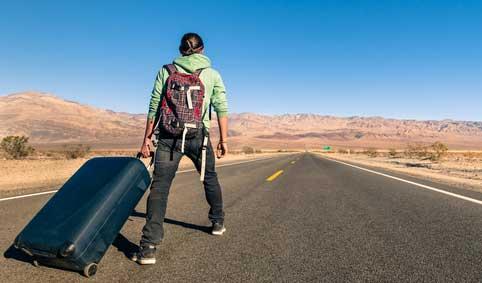
Last month I had an article on baby names that are widely popular all over the world, and this post is its opposite – a look at some baby names which are common or accepted in Australia, but can be problematic in other countries.

While an international name means that most people understand your name easily, these are names that not everyone are going to immediately “get”. They may need explanation, a thick skin, and in some cases, a nickname or more appropriate middle name to the rescue.

I often see Australians having a laugh at foreigners with “funny” names, so this is a reminder that one day your child could be the foreigner with the funny name!

BOYS

Banjo
It’s the name of our national poet, but let’s face it, it will sound weird to people in other countries.

Connor
Sounds very much like the French word connard, which is an extremely rude insult.

Duncan
In Australia this is an underused classic. However, in many parts of the world, the American company Dunkin’ Donuts makes people associate the name with sugary deep-fried dough. It’s enough for Nancy from Nancy’s Baby Names to consider the name unusable – she’s from New England, which is where Dunkin’ Donuts originated. Dunkin’ Donuts are rapidly expanding through the United States, and sold in many countries around the world. They used to be here too, and I can’t remember the name being an issue – maybe I didn’t eat enough doughnuts.

Hamish
Although popular here for decades, this is a very rare name in the United States, and according to Nameberry, is seen as “redolent of Olde Scotland”. Even Angela Mastrodonato from Upswing Baby Names sees Hamish as much too stereotypically Scottish for American use. In German, Hamish sounds just like the word hämisch, meaning “bitter, spiteful”.

Harry
In many parts of the United States, this name is commonly pronounced the same way as the word hairy. It is enough of a problem that the city of Fort Wayne in Indiana decided not to name a government building, or any streets, after a popular mayor named Harry Baals (Baals pronounced like the word “balls”). However, there is a Harry Ball [baseball] Field in Massachusetts which doesn’t seem to have caused any issues.

Kai
Kai is a common name for boys and girls in many countries of the world – but not New Zealand. Why? Because it’s the Maori word for “food”.

Kevin
This Australian classic that we were happy to elect to high public office seems to be the most internationally despised name, with Germans in particular discriminating against Kevins. They even have a word for it: Kevinism (like racism, but more socially acceptable). In the UK, it’s short form Kev is another word for chav.

Luke
In Russian it sounds the same as the word for man hole.

Ned
In Scotland, ned is very derogatory slang for “thug, lout”, and even in parts of England isn’t viewed favourably (rather in the fashion of Kevin).

Rex
A classic name in Australia, but considered to be a dog’s name in Central and Eastern Europe: in Germany, they cannot seem to disassociate it from German Shepherd star, Inspector Rex. We also have a tradition of dogs called Rex, and Inspector Rex is on here television here too. Go figure.

GIRLS

Allegra
An allergy medication in the United States – it’s sold as Telfast here.

Bebe
In French, this is the word for baby. Comedian Adam Hills has a daughter called Beatrice, nicknamed Bebe, and during this year’s comedy festival in (French-speaking) Montreal, he noted the puzzled and disdainful reactions he received when announcing his daughter’s name (much like here if you told people you’d called your baby, Baby). In Finland, a bebe is a type of cake.

Harriet
Harriet was one of the fastest-rising names of last year. But in Iceland it became a huge problem for one family, with the threat of Harriet’s passport being cancelled. Harriet doesn’t make sense grammatically in Icelandic, so it is on the list of banned baby names. Of course, that only applies to babies born to at least one Icelandic parent – it won’t stop someone named Harriet living in Iceland. However, English people who work in Iceland and have names that aren’t on the official list say their names have made communication very difficult, due to the problems with Icelandic grammar. I suspect that in countries which have official lists of names, anyone with a name that doesn’t make the list might be seen in a negative light, as they won’t have a “real name”.

Jemima
Fashionable Jemima is a “problem name” in the United States, where Aunt Jemima is a highly popular brand of breakfast foods. The image for Aunt Jemima is an African-American woman, originally a stereotyped figure from a minstrel show. Even though the modern icon of Aunt Jemima is quite different, many white Americans still feel uncomfortable about the brand’s racially-loaded history. They may also be discomfited that Jemima was a “slave name” – probably an Anglicisation of one of the many similar-sounding African names. African-Americans seem less conflicted about using the name Jemima, and can even feel positive towards the affirming side of the trademark.

Lola
Means “grandmother” in the Philippines – it’s the opposite problem to Bebe.

London
In Britain this is considered a “weird name”. Well fair enough – imagine if you met an Englishwoman named Canberra Smith! (I think it would be cool, but still weird).

Nikita
Although nearly always a female name here, in Russia and eastern Europe it is a male name. Rocking up and declaring yourself to be a girl named Nikita is the same as a woman in Australia explaining she’s named Nicholas.

Piper
Sounds very similar to the Dutch word pijpen, which literally means “playing the flute”, but is also vulgar slang for oral sex. Apparently sounds enough like it to be readily confused by Dutch speakers.

Pippa
This just entered the Top 100 in Australia, rising since the royal wedding in 2011. However, in Sweden it is a vulgar word for sexual intercourse, and in Italy, slang for masturbation or a hand job. In Poland, the word pipa is pronounced just like Pippa, and means “vagina”; as in English, this word can be used as an insult against a person.

Poppy
In German, Poppy sounds similar to poppen, a vulgar slang term for sexual intercourse. Names with a P-p sound seem to be a bit of an issue.

What names do you know of that might be a problem in other countries?

Names Spotted at Home and Abroad: Name Story Special (Spring 2014)

08 Wednesday Oct 2014

Posted by A.O. in Names Spotted at Home and Abroad

≈ 2 Comments

Tags

choosing baby names, famous namesakes, For Real Baby Names, Greek names, honouring, Japanese names, locational names, middle names, mythological names, name combinations, names of businesses, nicknames, popular names, rare names, Shakespearean names, sibsets, street names, surname names, The Best Gift ofLife, unisex names

our-family_10

When I looked through my name files, I saw I had quite a collection of stories explaining how babies had received their names. I thought it would be worthwhile to see how other parents go about choosing baby names, as some of their solutions have been quite creative. (You may remember some of these names from the weekly Birth Announcements).

Footy Fever
Baby Aish Barker of Adelaide was named after a famous footballing family where three generations have played for Norwood Football Club. Dad is a massive Norwood fan, and always knew that this child would be called Aish, a name chosen in advance of the birth, regardless of the baby’s gender. Aish is a girl, and her big sister is Teegan. The Aish family feel honoured to have a baby named after them.

Reality Check
Amity McIntosh was born last Easter in Toowoomba, a sister to Dylan. She is named after Amity Dry, who got her big break after appearing on renovation reality show, The Block, in 2003; she and her husband were the winners that year. Through exposure gained on the show, Amity Dry got a recording contract, and has released two albums, as well as writing a musical play. You might remember that the name Amity has just reached the Top 100 in Queensland, so even though Ms Dry is from Adelaide, her name seems to have been a big hit north of the border.

His Name is History
Ethan Forbes Thomas was born in Sydney last autumn, the great-great-great grandson of William Thomas, the first Lord Mayor of Forbes, in country New South Wales. His parents were originally going to use the name William to honour the family connection, but there were already a lot of Williams in their family. They still wanted a name connected to their revered great-great, so chose the name of the town instead. The Thomas family have a strong connection to their family heritage in Forbes, and planned to have Ethan baptised in Forbes in September. Forbes is a very interesting town historically, as it was a gold-rush town in the 19th century. The bushranger Ben Hall was shot near there, and Ned Kelly‘s sister Kate lived in Forbes: she drowned saving an Aboriginal child during a flood, and is buried in the town’s cemetery.

Gender Swap Baby
Sebastian Carvajal was born on Mother’s Day in Melbourne, and was a “surprise baby”, because his parents were told at their ultrasound scan that their baby was a girl. They had therefore painted the nursery pink, bought girl baby clothes, and picked out the name Olivia, not to mention planning trips to the nail salon and dance classes. I remember reading that parents who opt to find out the sex of their baby in advance tend to have very set ideas about gender roles, and this seems like a good example – pink and dance classes for girls, blue and hobby cars for boys! I was interested that they had Olivia chosen for a girl and Sebastian for a boy, because Olivia and Sebastian are a couple in Shakespeare’s Twelfth Night.

Named After Mum’s Cheeks
Rosie Lyn Killalea was born in June in Sydney, and she is named that because her mum’s childhood nickname was Rosie, as she had rosy-red cheeks. Her middle name Lyn is after her great-grandmother, who passed away a year before Rosie was born. Rosie has inherited her mum’s pink cheeks.

Two Grandmothers in One Name
Lana Rosanna Krause was born in Rockhampton in July. Her middle name was chosen because her mother’s mum is named Annette and her father’s mum is named Rose.

Greek Mystery
Aeson Carter Small was born in August in Gladstone, just as his parents returned from holiday. When his parents first decided to start trying for a baby, they discovered that his mother was pregnant just two days later. They picked the name Aeson, because they believed that it was a translation from the Greek for “meant to be”, but I think they must have got it from some dodgy name book, because the meaning of Aeson isn’t known. In Greek myth, Aeson was the father of Jason, and he came to an unfortunate end.

He’s Cruz, Not Acacia
Cruz Zion Petterson, of Sutherland Shire, was born in the car on the way to the hospital. The car was parked on Fauna Place, just off Acacia Road in Sutherland, and some people thought he should have been named Acacia; however the Pettersons didn’t think either Acacia or Fauna were viable options for their son. I wonder if Cruz would have been called Acacia if he was a girl? Cruz wasn’t born in a Holden Cruze, but in a Mitsubishi 380. Cruz has a big sister named Starr and a big brother named Phoenix.

Names From The Best Gift of Life

The Best Gift of Life is a blog that Sarah from For Real Baby Names put me onto. It has interviews with mums, many of whom have interests in fashion, photography, and interior design, about their lives and their babies. One of the interview questions is about how they chose their baby’s name, so I thought I’d share some from Australian families.

Bambi – parents Vanessa and Sean liked the name, and knew she would be the cutest little girl.

Johnny Jay – named after mum Shaunyl’s grandfather, John James. Johnny honours Johnny Cash, one of Shaunyl’s favourite singers.

Kawa Leaf – parents are Dee and Desmond. Kawa means “river” in Japanese. Dee lived in Japan in her early twenties, and the name resonated with her; she is of Chinese heritage, and in Chinese Kawa translates as “family” + “fine painting”. The middle name Leaf was chosen because at the time of Kawa’s conception and during the pregnancy, the family were living in a garden nursery called New Leaf.

Peaches Wilde – parents Tess and Caleb had the name picked out even while they were dating. Peachy was mum’s nickname, so dad thought Peaches was perfect. The middle name Wilde was chosen because dad is a “wild hearted” stuntman, so the name honours both parents.

Ravi and Nova – two brothers born a year apart to Camille and Dean. Ravi‘s name was chosen at the 14 week mark of pregnancy, but Nova‘s took longer as most of their favourite names got “swiped”. Both parents like unusual names, and Camille comes from a family which includes Afrika, Harmony, India, Nimue and Joaquin, so different names blend in better.

Seb – named after the Spanish city of San Sebastian which his parents Karrie-Anne and Brent fell in love with on holiday. They were never going to call him Sebastian, so used the short form, Seb.

(Picture is of Peaches Wilde with her mother Tess; photo from The Best Gift of Life)

Famous Name: Bruce

17 Wednesday Sep 2014

Posted by A.O. in Famous Names

≈ 7 Comments

Tags

aristocratic surnames, classic names, famous namesakes, fictional namesakes, locational names, name history, name meaning, name popularity, names from songs, names from television, Norman-French names, popular culture, royal names, Scottish names, surname names, UK popularity, US popularity

288848_1250988033522_full

When the name Acacia was featured for Wattle Day, I mentioned that Monty Python made gentle fun of our national flower with their Bruces Sketch, where all the philosophy faculty at the (fictional) University of Woolloomooloo are named Bruce. This seems to be the origin of the notion that Bruce is a particularly Australian name.

Barry Humphries has said that the inspiration for the Bruces Sketch was his Barry Mackenzie character, who began life as a comic strip in Private Eye. Barry Humphries’ television series, The Barry Humphries Scandals, was a precursor to Monty Python, and Eric Idle has cited Humphries as one of his comedy influences.

It’s rumoured, not implausibly, that Humphries himself suggested the name Bruce as an Australian signifier, either directly or indirectly. The name Bruce peaked in Australia in the 1930s, and in Britain slightly later, in the 1940s. Even at its height in the UK, it was only around the bottom of the Top 100, so it wasn’t nearly as common there.

Humphries was born in 1934, so had peers called Bruce. The most obvious example is Australian director Bruce Beresford (born 1940), who directed the Barry Mackenzie films. Like Barry Humphries, Bruce went to England in search of career opportunities, but was unable to break into the British film industry, and found success at home, with movies like Breaker Morant and Puberty Blues, and in North America with Driving Miss Daisy, and Black Robe.

The connection between Barry and Bruce continued when Humphries took the role of a great white shark named Bruce in the animated film, Finding Nemo. The American film-makers named Bruce, primarily not as an Australian reference, but after the shark in Jaws, whose models were all called Bruce after Steven Spielberg’s lawyer. Bruce the Shark does have an Australian accent though, and uses ockerisms like “Good on ya, mate!”.

From the United States, the name Bruce gained a different stereotype, being associated with homosexuality. The reasons are unclear, but one of the most popular theories is that it’s connected to the campy Batman television shows of the 1960s, as Batman’s real name is Bruce Wayne. Another is that it is from the 1960s parody song Big Bruce, where Bruce is a camp hairdresser.

Apart from these reasons, it does seem that the “tough guy” names of one generation are often seen as effeminate, dorky, or otherwise laughable by the next. Something to think about should you be considering one of today’s rugged baby names, such as Axel, Blade, Diesel, or Rowdy.

Bruce is a Scottish surname of Norman-French origin. The Clan Bruce are from Kincardine on the Firth of Forth in Scotland, and trace their origins from the French de Brus or de Bruis, coming from Breux in Normandy (now Brix), sometimes said to mean “the willow lands”. This history and etymology is now considered doubtful, due to lack of evidence.

The first of the family on record to come to Britain was Robert de Brus, who accompanied King Henry I there after the Battle of Tinchbray in 1106. He was granted large tracts of land in Yorkshire, and named 1st Lord of Annandale by King David I of Scotland in 1124. A family legend says that the first of their line was Robert de Brus, who came over with William the Conqueror but this is more wishful thinking than fact.

Of course the most famous member of Clan Bruce was Robert the Bruce, King of the Scots from 1306 to 1329, claiming royal blood as great-great-great-great grandson of David I. One of the most famous warriors of his generation, he led Scotland during the Wars of Scottish Independence against England. He fought successfully during his reign to regain Scotland’s place as an independent nation, with a great victory at the Battle of Bannockburn. Today he is remembered in Scotland as a national hero.

According to a popular legend, while on the run from the English, Robert the Bruce took shelter in a cave. Here he whiled away the lonely hours watching a spider trying to connect one area of the cave’s roof to another using its web. Each time the spider would fail, but kept trying until at last it succeeded Inspired by the plucky little arachnid, Robert the Bruce returned to defeat the English, winning more supporters, and eventual victory. If you ever read this story as a child, it probably ended by saying the moral was :”If at first you don’t succeed, try, try, and try again”.

This story was first told by Sir Walter Scott in in his Tales of a Grandfather: Being Stories of the History of Scotland (1828), and it is believed to have been adapted from a story about Sir James Douglas, Robert the Bruce’s ally and lieutenant. However, the story is very old, being similar to Jewish tales about King David, and Persian stories about Tamerlane and an ant. Apparently people love the idea of beleaguered rulers being inspired by small creatures with exoskeletons.

Robert the Bruce was the high point of the Clan Bruce, although Robert’s son David also became King of Scotland. Various Bruces did historically worthy things, and one of the most famous is Thomas Bruce, 7th Earl of Elgin, who was ambassador to the Ottoman Empire in the 18th and 19th centuries. He spent most of his fortune taking sculptures from the Parthenon in Athens, which was falling into ruins: today they are known as the Elgin Marbles, and on display in the British Museum.

Bruce has been used as a first name since the 17th century, and was used in both England and Scotland. Although it has plenty of history, Bruce didn’t become a huge success as a boy’s name until the 20th century, which gives it a rather modern feel.

In Australia, Bruce is a classic name which has never left the charts. It was #85 in the 1900s, and peaked in the 1930s at #22. It didn’t leave the Top 100 until the 1970s – perhaps Monty Python wasn’t a help to it, or perhaps after many decades its time of popularity was up. Although uncommon, Bruce has remained stable for years around the 400-500s.

So how Australian is the name Bruce really? Well, apart from the Monty Python sketch (which is, you know, fiction), it peaked earlier here than elsewhere, and peaked much higher than in Britain. However, it peaked only a little higher than in the US, where it is also a classic, and peaked at #25 during the 1950s. Its current popularity in Australia is little different to that in the UK and US, so possibly not quite as Australian as you might have thought!

POLL RESULTS
Bruce received an approval rating of 32%. People saw the name Bruce as too dated (25%), too stereotypically ocker (19%), and too boring (14%). However, 8% of people thought it was strong and handsome. Only one person thought the name Bruce was sexy.

(Photo shows Bruce from Finding Nemo)

Royal Baby Meltdown, Name Discrimination, and Other Name Stories in the News

11 Thursday Sep 2014

Posted by A.O. in Names in the News

≈ 1 Comment

Tags

bogan names, classic baby names, creative names, Essential Baby, famous namesakes, Kidspot, locational names, name studies, royal baby names

ImageResizer

Royal Baby 2.0
Yes, it’s another baby expected by the Duke and Duchess of Cambridge, due in April next year. The Internet goes wild, bookies make billions, name bloggers all collapse from guessing until our brains explode. So far, punters are gunning for a brown-haired girl, and the most popular names for the prince or princess, younger sibling to George, are James for a boy, and Elizabeth for a girl.

I am very sceptical of an Elizabeth, as the queen has apparently made it clear she is not interested in having a namesake (royal babies with Elizabeth as their middle name are supposedly named after the queen’s mother, not Elizabeth II). To me, George and James are too similar-sounding as brothers, and surely the heir to the throne needs a distinctive name, if only for publicity purposes? However, the Duke and Duchess may not agree with my name advice.

You can read plenty of baby name predictions online (most of them are just recycling their guesses for Prince George, with the name George removed). I won’t be doing anything in regard to the name until much closer to the royal birth, as I think it is far too early. They aren’t even at the twelve-week mark yet, and the duchess is ill with severe morning sickness. Give them some space, people!

Last time, my bizarre method of tracking royal baby names turned out to be unexpectedly successful (for a boy, anyway; it might have been totally wrong if George had been a girl), but next time we might try something completely different, and see how that goes.

Utter Drivel Bogan
Kidspot have brought out a rather cringe-making article on “bogan baby names”, which they pretend is all in good fun.

Clare asked on her Scoop page whether this was as controversial or potentially offensive as calling names “chavvy”? I would say, yes Clare, it is: it’s like an article about chavvy names, redneck names, ghetto names, and the like. Despite protestations to the contrary, articles like these are intended to be offensive, and they certainly seem mean-spirited.

Apart from being copied from other sources, the article has some real clangers, such as saying Zaiden is “made up”, when it’s an elaboration of the Arabic name Zaid. Or listing the name Princ’ess, which isn’t even allowed in Australia.

Jorja Fights Back!
One person who took exception to Kidspot’s article was Jorja Orreal, whose name happened to feature on the list of “bogan names”. She loves her name, and her mother says it is not bogan at all, but very pretty. Jorja was named thus because her mum noticed that best-selling author Sidney Sheldon dedicated several of his novels to his wife at the time, actress Jorja Curtright. As she points out, how could the man behind I Dream of Jeannie possibly be associated with something in poor taste?

Jorja believes her name actually looks like a name, rather than Georgia, which is also a country and an American state, and seems more feminine. Unfortunately, she then loses every bit of my sympathy she might have mustered by going on to trash the names that she thinks are really bogan. Thanks to her intervention, my comments on the Kidspot article were much less severe.

Reach the Top of Your Game with a Creative Name
Almost everyone agrees: “creative” names are a terrible idea. Received wisdom is that it’s better to be a Chloe than a Kloey, James looks more professional than Jaymezz, and a traditional name like Elizabeth or William will gain greater esteem than a modern concoction like Neveah or Latrell. Essential Baby examines this idea by seeing if it stands up in the modern workplace.

In fact, there’s a lot to be said for “creative” names, perhaps most of all that they tend to be memorable, and can also be a great ice-breaker. Interviews with a couple of creatively-named people in business demonstrate that their names have been an asset to their careers. It seemed to me that their attitude to their names was really important, because they expected people to have trouble spelling their names, and were relaxed about the idea that people might find them amusing. Could those people skills have been gained through constant negotiations with others over their names?

Paul Barbaro, a spokesman from a recruitment agency, believes the idea that a “classic” baby name has prestige is an old and outdated one, and that people today are much less judgemental, being used to a wide variety of names (someone alert Kidspot to this valuable information!). He suggests that unusual names are now the norm, and that it can be helpful to have a name that is a little different, or globally recognised.

However, language expert Roly Sussex, from the University of Queensland, appears to be unconvinced. He can’t think of many people in public life with an unusual name, and thinks it would be far better to have a name that everyone knows how to spell and pronounce. But perhaps his attitudes really are outdated.

Should You Change Your “Ethnic” Name?
Roly Sussex thought that people with ethnic names were more likely to be successful if they anglicised their names, or used a nickname.

While I’m not sure if it will help you become successful in the long-term, the sad news is that it will probably help you to get a foot in the door. Researchers from the Australian National University submitted 4000 fictitious CVs for entry level jobs, and found that people with a Middle Eastern name need to submit 64% more applications that one with an Anglo-Saxon name to gain a job interview, while those with Chinese names need to submit 68% more applications, Indigenous names 35% more, and Italian names 12% more.

The study also showed that name discrimination was not evenly applied, and there could be differences when other factors were changed. For example, men of all minority ethnic groupings found it harder to get interviews than women; waitstaff and data entry jobs were the most likely to discriminate against ethnic minority males.

The city the person is in makes a difference too, with Sydney the most biased city against people with ethnic names – a Chinese person in Brisbane must submit 57% more applications, while in Sydney, it is a whopping 92% more. There was no evidence of discrimination against Italians in Melbourne, which has a relatively high Italian population.

Middle Eastern job seekers fared better when they applied for jobs with a non-Anglo employer or in ethnically diverse neighbourhoods. Interestingly, while a Chinese employer was much more likely to give someone with a Chinese name a callback, Italian employers were significantly less likely to offer someone with an Italian name an interview!

The entry level job that appeared to have the least amount of discrimination was customer service: your name doesn’t seem to make much difference when it comes to getting an interview in this field.

And there is some good news to go along with this rather depressing research. A study conducted by the University of Melbourne this year found that ethnic minority jobseekers were much more discriminated against during the application process than they were once they had actually secured a position.

Some people who did use an English name or an English nickname to find work felt comfortable enough to revert back to their real name in the workplace, and some were even encouraged to do so by their fellow colleagues. So if you write Rick on your resume, it doesn’t mean you can’t become Rashid again once you have been successful in your interview.

Famous Name: Laniakea

10 Wednesday Sep 2014

Posted by A.O. in Famous Names

≈ 2 Comments

Tags

American names, astronomical names, Hawaiian names, locational names, name history, name meaning, nicknames, polynesian names

SPACE-TRIANGULUM-GALAXY-MESSIER 33

Do you remember being very young and beginning to discover how where you lived fit into the world? Maybe you realised the number on your front gate was part of your address, or found that the street you lived on was one of many streets in a suburb, and that suburb was in a city with thousands or even millions of people. Perhaps you saw Australia on a world map for the first time, and could see its relation to other countries – didn’t it look far away from anywhere else?

In time you learned that you were on a planet called Earth, and when you were taught about the solar system, discovered that the Earth was really quite small, and a long, long way away from other planets. And that we all revolved around a Sun which was a star, not a very big one, and one of around 100 thousand million in the Milky Way – one of more than a 100 billion galaxies in our universe.

I don’t know about you, but when I learned all this in astronomy class, it totally blew my mind. The same way it blew my mind when I was a toddler and began to gradually understand that our farm was one of many in our hamlet, and that we were all part of a town 25 km away, and the regional centre was 50 km away, and the state capital 300 km away, and the nation’s capital a great distance, and the next country even further than that, across the sea. It made me feel very small and a long way from everything.

And when you were little, did you ever write down your address in this fashion: My Bedroom, 11 Acacia Road, Seaforth, Manly, Northern Beaches, Sydney, Cumberland County, New South Wales, Australia, Oceania, Southern Hemisphere, The Earth, The Solar System, The Milky Way, The Universe? Now there’s an another element to add to the address.

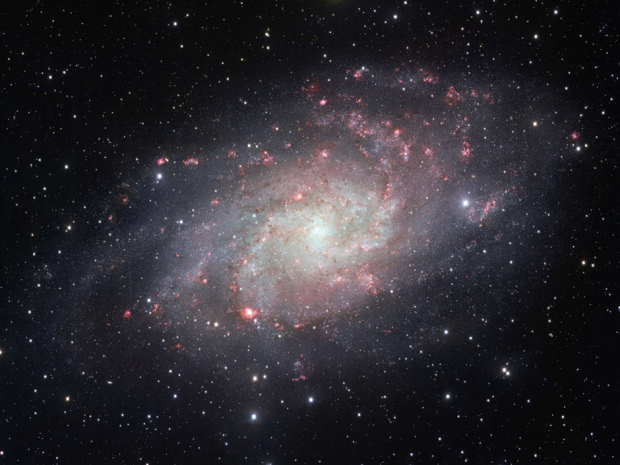
Astronomers have known for ages that the Milky Way is part of a larger cosmic structure, but it was too hard to figure where one group of galaxies ended and the next began. Recently a team of astronomers at the University of Hawaii, led by Brent Tully, have gathered measurements allowing scientists to define superclusters of galaxies. Their work, published this month in Nature, describes the vast group of galaxies to which the Milky Way belongs.

The name of our particular galactic supercluster is Laniakea, which is 520 million light years in diameter, and contains one hundred million billions Suns spread across 100 000 galaxies. The Milky Way is right on the fringes of Laniakea, on the edge of a vast empty region of space known as the Local Void, but we are constantly pulled towards a gravitational force in Laniakea’s centre which scientists have dubbed The Great Attractor.

Within the Laniakea Supercluster, we are part of the Virgo Local Supercluster, and beyond it are the neighbouring superclusters of Hercules, Coma, and Perseus-Pisces. Just as with the original problem of defining the edges of galaxies, it is not yet clearly known where the edges of Laniakea end and the edges of these other superclusters begin.

One surprise was that the Laniakea Supercluster is being pulled by a larger concentration of galaxies called the Shapley Supercluster, so we may be part of even greater structures that are yet to be discovered. Thus our universe expands as knowledge and comprehension grows.

Brent Tully, who has helped create our new map of the Milky Way’s environs, says: Seeing a map gives you a sense of place. For me, having that sense of place and seeing the relationship of things is very important in terms of understanding it. Thanks to Tully and his team, we have gained another insight into our place in the universe – and how small we are, and what a long way from everything.

The name Laniakea was suggested by Nawa’a Napoleon, associate professor of Hawaiian Language at Kapiolani Community College. The Hawaiian name can be translated in a number of ways, including “open skies”, “wide sky”, or “wide horizons”, but in this case it is understood as “immeasurable heavens”. The name was chosen to honour Polynesian navigators who studied the heavens in order to navigate the Pacific Ocean.

Laniakea is pronounced LAN-ee-uh-KAY-uh in the video from Nature I watched, although I have seen it written as la-NEE-uh-KAY-uh. It is well known in Hawaii, as it is the name of a surf beach famous for its sea turtles, and the name has been used for numerous businesses in the area. It does get very occasional use as a personal name, and although it is technically unisex, seems to have only been given to girls. Lani, Nia, and Kea are the obvious nicknames.

This is an elaborate Polynesian name which is unusual, but seems very usable in Australia, which has a significant Pacific Islander population, and where several Polynesian names are familiar. The short forms are very much on trend here.

While Laniakea has had some use as a Hawaiian name for girls, Hawaii has shared the name with the whole planet, and it now belongs to all of us. It’s not just a beautiful beach on the shores of a great ocean, but a multitude of galaxies whirling through the immensity of space, the “immeasurable heavens”. And it is our home.

POLL RESULTS
Laniakea received a very good approval rating of 72%. People saw the name Laniakea as beautiful or pretty (21%), having a cool cosmic connection (20%), and having a fantastic meaning (19%). However, 15% of people thought it was too long and complex. Only one person thought the astronomical background made the name Laniakea seem geeky.

Boys Names From Australian Children’s Literature

24 Sunday Aug 2014

Posted by A.O. in Name Themes and Lists

≈ 10 Comments

Tags

aristocratic names, aristocratic surnames, Australian slang terms, Biblical names, classic names, colour names, english names, famous namesakes, fictional namesakes, Gaelic names, German names, germanic names, Greek names, hebrew names, Irish names, Latin names, locational names, modern classics, mythological names, name history, name meaning, name popularity, names from songs, names from television, names of businesses, nature names, nicknames, Old Gaelic names, Persian names, plant names, popular names, retro names, royal names, saints names, Scottish names, surname names, tree names, underused classics, unisex names

Cyan Magenta Yellow Black

Darius
Odo Hirsch’s Darius Bell and the Glitter Pool (2009) tells the story of the Bells, a proud family fallen on hard times; plucky youngest son Darius must save the family’s estate. (Name nerd bonus info: Odo is the older form of the German name Otto). Darius is the Latin form of Dareios, the Greek form of the Persian name Dārayavahush, meaning “holding on to goodness”. This name was traditional amongst the Persian kings, and Darius I was known as Darius the Great, as he ruled over the Achaemenid Empire at the height of its power. Darius III was defeated by Alexander the Great, and there are a number of minor princes with the name. Darius is mentioned several times in the Old Testament, so it is a Biblical name as well (nobody is sure which historical Darius it means). Although rare, this name is known in Australia from NRL star Darius Boyd, while there is also a Darius in The Hunger Games trilogy. Darius is a cool-sounding name that might appeal to a broad range of people.

Felix
Terry Denton’s first picture book was Felix and Alexander (1985), about a little boy named Alexander who gets lost, and his toy dog Felix must find him. Felix is a Latin name meaning “fortunate”. It was first given as a nickname to the Roman general and statesman Lucius Cornelius Sulla, a free translation of the Greek nickname he acquired during his military campaigns – Epaphroditos, meaning “beloved of Aphrodite”. The Roman procurator Felix is mentioned in the New Testament, although not in a positive way – he imprisoned St Paul. Felix was a favourite name amongst early Christians, and there are heaps of saints named Felix, including the 7th century Felix of Burgundy, who introduced Christianity to East Anglia, and three popes. Two Australian connections are Felix the Cat, and Australia Felix, the name given to the lush farmland of western Victoria by explorer Sir Thomas Mitchell. Felix was #172 in the 1900s, and left the charts in the 1920s. It returned in the 1980s at #396 and climbed steadily; it’s been on and off the Top 100 since 2011. It’s now #86, and was one of the fastest-rising names last year. A hip retro favourite growing in recognition.

Harley
Sleepy Harley (2011), written by Karen Treanor and illustrated by Kelly Iveson, is a picture book about a cat named Harley who tries to find a place to nap in a Perth suburb. Harley is a surname which comes from a place name meaning “hare meadow” in Old English. The de Harley family were nobles whose history can be traced before the Conquest, and Sir Robert Harley, first Earl of Oxford, was from a prominent political family. One of them, William Cavendish-Bentinck, became British Prime Minister in the 18th and 19th centuries; he was the maternal great-great-great grandfather of Queen Elizabeth. The name will remind many of Harley-Davidson motorycles, giving Harley a pretty cool image. Harley was #212 in the 1900s, and went up and down before dropping off the charts in the 1950s. It returned in the 1970s at #462, and rose before peaking at #70 in 1992. It dropped again before starting to rise in the early 2000s, and is not far out of the Top 100. You could see Harley as an underused classic – in use for many years, but never very popular. I have occasionally seen Harley on girls as well.

Jude
Me and Jeshua (1984) by award-winning author Eleanor Spence is a historical novel about the childhood of Jesus of Nazareth, as seen through the eyes of his cousin Jude. Jude is a variant of the name Judas, Greek form of the Hebrew name Judah, meaning “praised”. In the New Testament, Jude is used for the Apostle whose name was Judas, to distinguish him from Judas Iscariot. Jude is also listed in the New Testament as one of the brothers of Jesus (Eleanor Spence follows a tradition they were cousins), but it is not clear if Jude the Apostle was Jesus’ brother. The Apostle Jude is usually connected with the Apostle Simon the Zealot, and according to tradition they were both martyred in Beirut. Jude is well known as the patron saint of lost causes, and this has made him one of the most venerated saints. Contemporary associations are the actor Jude Law, and the Beatles song Hey Jude. Jude can also be used as a girl’s name, short for Judith, as in the YA novel by Maureen McCarthy, Queen Kat, Carmel, and St. Jude Get a Life (1995). This attractive name has quietly been gaining in popularity, and last year joined the Top 100 in Victoria.

Leonard
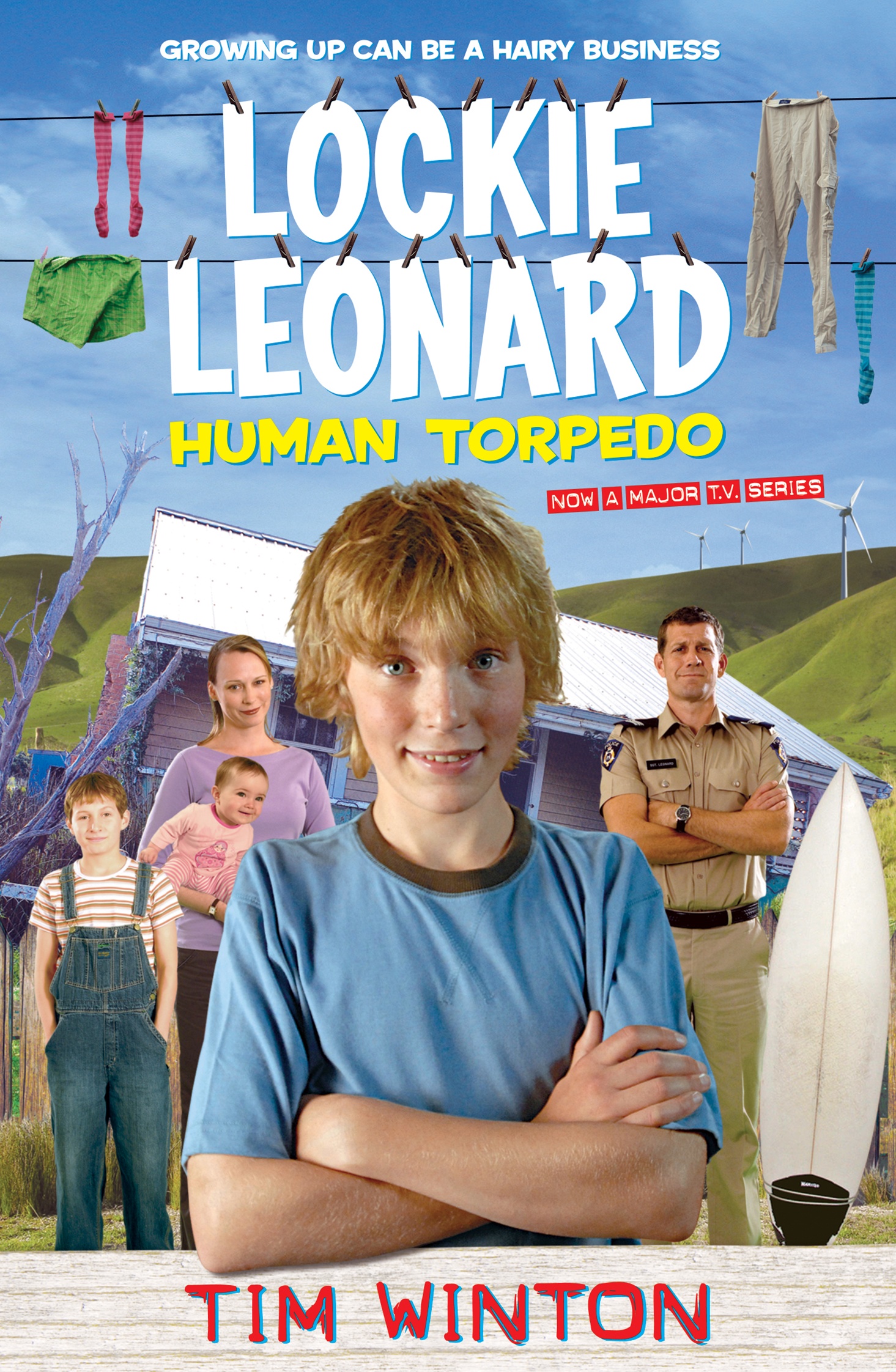
The Lockie Leonard series by Tim Winton (1990-97) stars a surf rat named Lachlan “Lockie” Leonard who moves to the Western Australian town of Angelus (based on Albany). Leonard is a Germanic name which can be translated as “brave lion” or “brave as a lion”. St Leonard is a legendary 6th century saint, a Frankish nobleman at the court of Clovis I who could liberate prisoners from their chains when invoked. The Normans brought the name to England, although it didn’t become particularly common until the 19th century. Famous Australians with the name include distinguished chemist Leonard Lindoy, and hard-hitting post-war cricketer Leonard “Jock” Livingston, also a talented rugby league footballer. Leonard has been a popular name amongst Jews in the past, including Jock Livingston: other examples are Canadian folk singer Leonard Cohen and actor Leonard Nimoy. Leonard was #39 in the 1900s, and peaked in the 1910s at #35. It didn’t leave the Top 100 until the 1960s, and remained in steady but low use until getting a little boost after The Big Bang Theory, with main character Leonard Hofstadter, began airing in the late 2000s. Clunky cool, this underused classic provides a way to get the popular nickname Lenny.

Nathaniel
In Isobelle Carmody’s YA novel The Gathering (1993), Nathaniel Delaney is a teenager who moves to a grim seaside town and finds himself locked in a battle between the forces of Light and Dark. Nathaniel is a variant of Nathanael, the Greek form of Hebrew Netan’el, meaning “God has given”, nearly always understood as “gift of God”. In the Bible, Nathaniel is usually identified with the Apostle Bartholomew; as Bartholomew means “son of Talmai”, it is taken to be Nathaniel’s surname. Nathaniel was in use as an English name by the 16th century, and became more common after the Protestant Reformation. It was used amongst the aristocracy, and also became a favourite in America, with author Nathaniel Hawthorne a notable bearer. Nathaniel was #179 in the 1900s, and left the charts the following decade. It returned in the 1970s at #296, and climbed steadily until it reached the Top 100 last year at #79, making it one of the fastest-rising names of 2013. A handsome retro name that gives the popular nickname Nate, it’s well known from Australian actor Nathaniel Buzolic, from The Vampire Diaries, and Australian singer-songwriter Nathaniel Willemse, who was on The X-Factor.

Rafferty
The Rafferty series by Joan Woodberry (1959-62) are the adventures of an English boy named Rafferty who moves to a fishing village on the Queensland coast. Rafferty is a common Irish surname, an Anglicised form of O’Raithbheartaigh, meaning “son of Rabhartach”. The Old Gaelic personal name Rabhartach means “wielder of prosperity”. The name has a particular Australian resonance, due to iconic Australian actor John “Chips” Rafferty. He was seen as the quintessential Australian, and took part in a marketing campaign convincing British people to migrate to Australia in the 1950s – this might explain the choice of Rafferty’s name in Woodberry’s books. Another Australian reference is the slang term Rafferty’s rules, meaning “no rules at all”. It gives the name Rafferty a pleasantly raffish, lawless feel. This name is around the 200s in Australia, and although it is rising in the UK, is more popular here than anywher else. I have also begun to see a few girls named Rafferty.

Rowan
The Rowan of Rin fantasy series by Emily Rodda (1993-2003) takes place in a fictional world. Rowan is the unlikely hero, considered a bit of a wimpy weakling by the sturdy villagers of Rin, but when danger strikes, his resourcefulness and courage saves the day. Rowan is a Scottish name that’s an Anglicised form of Ruadhán, a pet form of Ruadh, Gaelic for “red”, often given as a nickname to a man with red hair. You may remember that the red-headed Scottish outlaw Raibeart “Ruadh” MacGregor is known as Rob Roy by the English. Rowan can also be unisex when named after the rowan tree; its English name comes from the Germanic for “to redden”, because of the tree’s red berries, so either way the meaning has a connection with the colour. A pleasant association with the tree is that according to folklore it has the power to ward off evil. The name Rowan has charted for boys since the 1940s, debuting at #205, and climbing until it peaked in the 1980s at #164. It’s now around the 300s-400s. Rowan is an underused modern classic which alludes to a vibrant colour, and a magical tree.

Silvander
Norman Lindsay is famous for writing and illustrating The Magic Pudding (1918), a comic fantasy deservedly recognised as a classic. For some reason, his other children’s book, The Flyaway Highway (1936), is neglected, even though it’s just as funny and fantastical. I loved this story, which relates how Egbert and Muriel Jane meet a “bloke with horns and cows’ hooves” named Silvander Dan, who take them on a journey down the Flyaway Highway. As a child, I thought that the name Silvander was made up for the book (although I’m afraid I was already junior name nerd enough to know what it meant). However, I’ve since found that Silvander was a literary name in the 18th century, and in most of the sources I’ve read, characters named Silvander are untrustworthy bounders! The name is derived from Silvanus, the Roman god of woods and fields, from the Latin silva, meaning “wood, forest”. Although an extremely rare name, it is just enough like Silas and Alexander to not be completely outrageous, and has an agreeably silvery sound. For those who like Leander and Evander, here is another to consider.

Theodore
I told myself I would not choose more than one book from a single author, but was forced to make an exception for Odo Hirsch, from whose oeuvre I could happily fill two lists. Antonio S and the Mystery of Theodore Guzman (1997) is his first novel, a charming story about a boy who lives in a grand old house, and is fascinated by a reclusive actor. (Name nerd bonus info: Odo Hirsch is the pen name of Dr David Kausman). Theodore is from the Greek name Theodorus, meaning “God’s gift”. Theodorus wasn’t uncommon in ancient times; ironically one of its famous bearers was the 4th century BC philosopher Theodorus the Atheist. Because of its meaning, the name was a popular choice for early Christians, and saints named Theodore are numerous, including a 7th century Archbishop of Canterbury and two popes. Theodore was also traditional mongst the Byzantine Emperors, and the Russian Tsars. Theodore was #116 in the 1900s, and reached its lowest point in the 1970s at #383. It began rising steeply in the 1990s, and last year joined the Queensland Top 100 at #79, making it one of the state’s highest-rising names. A sophisticated classic name which comes with cool short forms Theo and Ted, I’d call this underused except I’m not sure how long it will stay that way.

POLL RESULTS
The public’s favourite names were Theodore, Jude and Felix, and their least favourite were Leonard, Darius and Harley.

(Picture shows cover of Lockie Leonard – Human Torpedo by Tim Winton)

Famous Name: Hope

13 Wednesday Aug 2014

Posted by A.O. in Famous Names

≈ 3 Comments

Tags

birth notices, classic names, english names, locational names, middle names, mythological names, name history, name meaning, name popularity, Old English names, saints names, surname names, underused classics, unisex names, virtue names, vocabulary names

z-wwi-centenary-candlelit-vigil-candles

Last week there were commemorations around the world for the centenary of the start of World War I. I chose the name Hope to mark this solemn occasion, because even during those dark days, when the “lamps went out all over Europe”, there still remained a glimmer of hope for eventual peace.

Britain declared war on Germany on August 4 1914, to take effect at 11 pm. Less than four hours later, the first shot was fired by the British Empire – not in Europe, but thousands of miles away at Point Nepean, near Melbourne.

On August 5 1914, at 12.45 pm, the German cargo ship SS Pfalz was in Port Phillip, desperately trying to leave Australian waters, for they were now in enemy territory. Just minutes after learning that war had been declared, Fort Queenscliff gave the order to Fort Nepean: “Stop her or sink her”.

The first shot was sent across the bow, fired by Sergeant John Purdue. The Australian pilot Captain Montgomery Robinson, who was guiding the Pfalz through the heads, tussled with the German captain for a little while, because Robinson was adamant the Pfalz must stop, or the next shot would go into the ship.

The Pfalz, which was carrying consular officials and contraband, surrendered and was requisitioned by the Australian navy. Her crew were captured and interned, so nobody was killed or even injured. So quietly began the war which would claim 16 million lives and change the world forever.

I also chose to feature Hope because it feels as if the world has become a darker place in the last twelve months. Every day I hear of war and strife, of fear and cruelty, of genocide and bloodshed, of my countrymen and women lying in foreign fields, or at the bottom of the sea.

At such times, all one can do is light a little candle against the darkness, and its flickering flame, which sometimes wavers, and sometimes leaps up tall and strong, is hope.

Hope is a familiar vocabulary word which suggests confident optimism and positivity, a belief that things will improve, or an expectation that a good outcome will be achieved.

Hope is one of the three theological virtues in Christianity, along with faith and love. It refers to the hope of attaining heaven, and means much more than a vague optimism – it’s a complete trust in God’s guidance, and a firm assurance of a reward in the next life.

Saint Hope is one of a trio of legendary martyred saints named Faith, Hope, and Charity, the daughters of Saint Sophia (Wisdom). Their story is very old, and they are clearly personifications of theological virtues. There is also a male Saint Hope, a 6th century Italian abbot.

Modern psychology also views hope in a very favourable light, with many seeing it as harnessing the power of positive thinking to overcome difficult circumstances. Like religion, it also sees hope as more than just optimism, being stronger, and more goal-oriented. While an optimistic person has a passive “something will turn up” attitude, a hopeful person actively works towards the attainment of their desires.

Hope makes an appearance in Greek mythology, in the story of Pandora, who curiously opened a jar which released all the evils of the world. When everything had gone, only Hope remained in the jar. The Greeks generally depicted Hope as a young woman carrying flowers in her hands, and the Romans worshipped her as a goddess, and a power which came from the gods.

Hope has been used as a girl’s name since the late 16th century, and although name sites often say it was first bestowed as a virtue name by the Puritans, there isn’t much evidence of that. In fact, early births suggest that it may have orignally been inspired by places, such as the Hope Valley in Derbyshire, or Hope Cove in Devon.

These place names don’t have anything to do with being hopeful, but are from an Old English word meaning “a small enclosed valley”; it’s one of the sources of the Hope surname. However, later on a Christian meaning does seem more obvious. The name Hope has sometimes been given to boys as well, and you may remember that war hero Hugo Throssell had Hope as one of his middle names.

The name Hope was #247 in the 1900s, and has been on the charts almost constantly, only dropping out for brief periods. It began rising in the 1970s, and seems to have peaked in 2010 at #177; currently it’s in the 200s.

Interestingly, the name seems to have gone down a little in popularity since the sitcom Raising Hope has been on the air; the baby who gives her name to the show’s title is called Hope Chance, and her father changed her name from Princess Beyonce, given to her by her serial killer mother. The eccentric Chance family may have dampened enthusiasm for the name.

I often see the name Hope in birth notices and newspaper stories, most often in the middle, and I think in almost every case, the name was given because the baby was conceived against the odds, or born in difficult circumstances. It adds an extra layer of meaning to the name Hope.

Hope isn’t as popular as Grace, or climbing in popularity like Faith, but that may make this underused classic virtue name all the more desirable. Simple, clean, sweet, and wholesome, it’s a pretty name evoking a state of mind almost magical in its power. May your little Hope glow like a candle in the darkness, may she shine like a star in the night sky.

POLL RESULTS

Hope received an outstanding approval rating of 86%, making it one of the highest-rated names of 2014, and the highest-rated Famous Name for girls of the year. People saw the name Hope as a simple and elegant classic (29%), sweet and wholesome (21%), beautiful or pretty (16%), and having a very positive meaning (13%). However, 6% thought it was tacky and downmarket. Nobody was put off the name by the TV show Raising Hope.

(Photo shows candlelit vigil for World War I centenary service)

Famous Names: Clyde and Campbell

06 Wednesday Aug 2014

Posted by A.O. in Famous Names

≈ 2 Comments

Tags

aristocratic surnames, birth notices, dated names, famous namesakes, Gaelic names, locational names, modern classics, name history, name meaning, name popularity, names of mascots, names of rivers, Scottish names, surname names, US name popularity

6388929879_8002efc401_z

The Glasgow Commonwealth Games ended on Sunday, a very friendly games where Glasgow gave everyone a warm welcome. It was the first time England had won since 1986, and those games were also held in Scotland. In fact, it was a great Games for the British, with England, Scotland (fourth), and Wales (thirteenth) all winning more medals than they ever had before, in something of an Olympian afterglow.

At the closing ceremony, the baton was passed on to Australia, because the next Commonwealth Games will be held on the Gold Coast in April 2018. Let’s hope we’ll have better uniforms for that. Oh and by the way – it poured with rain the last few days of the Glasgow Games, but our team was warm and dry in their jumpers and anoraks, so who’s laughing now?

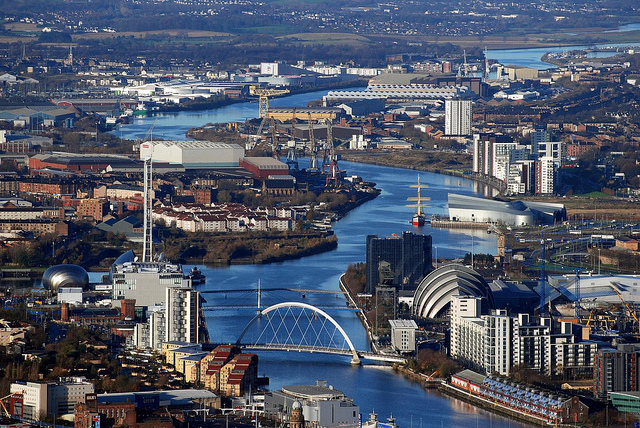
Now the Games are over for four more years, this is the end of our Scottish names. I picked the name Clyde because that was the mascot for the Glasgow Games, a cheery looking thistle named after the River Clyde, which flows through the city of Glasgow.

As an Australian reference, I picked Campbell for the Campbell sisters, Cate and Bronte, who did so well in the swimming. Between them they won five gold medals, so as many as Wales, and if they were a country they would have come fourteenth in the medal tally. They were also on the team which set a world record for the women’s freestyle relay.

Clyde is a Scottish surname, given to those who lived along the River Clyde. The Clyde is the third largest river in Scotland, and has its source in the Lowther Hills, in Scotland’s Southern Uplands. It meanders west across the country, and empties into the Firth of Clyde, the largest and deepest coastal waters of the British Isles.

The river’s Gaelic name is Chluaidh, which probably means “cleansing”. It may be related to the Latin cloaca, “sewer, drain”. Clyde has been used as a first name for boys since around the 18th century.

One of my favourite Australian Clydes is Clyde Fenton, a flying doctor in the years before WW II, who piloted his own plane as well as serving as a medical officer in the Northern Territory. Known for his kind and determinedly helpful nature, as well as his great resilience, he was famous for his daring rescues, lively escapades, and madcap pranks, which usually got him into trouble with the authorities. Although fairly indifferent to his own personal safety, he surprisingly lived into his eighties.

The name Clyde was #104 in the 1900s, when Clyde Fenton was born, and peaked in the 1910s at #96. It left the Top 100 in the 1920s, and hasn’t charted since the 1950s. Although it’s a dated name, it has never been really popular, and perhaps isn’t as tied to a particular era as you might think. Interestingly, this name just reached the Top 1000 again in the US, so seems to be having a comeback there.

The name sounds big and capable to me – perhaps because of Clydesdale horses. These Scottish horses were so important in colonial Australia they were called “the breed that built Australia”.

Campbell is a Scottish surname. The Clan Campbell are one of the largest of the Highlands clans, and became one of the most powerful families in Scotland. The Campbells had a reputation for being good soldiers and fighters, but lacking in diplomacy and cunning. The chief of the clan is the Duke of Argyll, in the Peerage of Scotland. The current Duke is Torquil Campbell, and his son and heir is Archibald Campbell, who is around ten years old – I think you will remember that Archibald is a traditional name in the Campbell family.

The name Campbell comes from Cam Beul, a Gaelic nickname meaning “crooked mouth, wry mouth”. The first person given this nickname is said to have been Dugald on Lochawe in the 12th century, who supposedly had a habit of talking out of one side of his mouth.

The name was originally Cambel, but as early as the 14th century it began to be spelled with a p, perhaps because the Norman knights at the Scottish court who were responsible for administration misunderstood it as from the Norman-French camp bello, “beautiful plain”. Campbell has been used as a (mostly male) first name since the 17th century.

Campbell began charting in the 1960s, debuting at #302. This is the decade British speed enthusiast Donald Campbell made several attempts in Australia to break land and water speed records, finally achieving success in 1964, when he broke both the land speed record on Lake Eyre in South Australia, and the water speed record on Lake Dumbleyung in Western Australia.

The popularity of the name Campbell went up steeply in the 1990s, the decade when sound-alike Cameron reached its height and began falling, and peaked in the early 2000s at #181. In New South Wales it seems to be somewhere in the 300s, but in Victoria it is around the high 100s. In the past, it has managed to be a Top 100 name in Tasmania.

It would be interesting to see how Queensland premier Campbell Newman affects the popularity of the name, since politicians generally don’t give names a boost, and Campbell Newman is extremely unpopular, according to the polls. In fact, it will be interesting to see whether he is still premier at the next Commonwealth Games. I do see Campbell quite frequently in birth notices, but not in Queensland, I must admit.

(Premier Newman was born in the 1960s, just as the name Campbell hit the charts, and a year before Donald Campbell broke the speed records in Australia, so his parents were naming trail-blazers.)

Campbell is a strong, handsome Scottish choice which has managed to become a modern classic without ever becoming popular. This makes it a desirable option for parents seeking a name that is familiar without being common.

Two Scottish surnames-as-first-names – but which one is better?

POLL RESULTS
Clyde received an approval rating of 41%, while Campbell did rather better at 59%.

(Picture shows the River Clyde in Glasgow, taken from the air)

Perth Suburbs That Could Be Used As Boys Names

20 Sunday Jul 2014

Posted by A.O. in Name Themes and Lists

≈ 4 Comments

Tags

animal names, aristocratic names, aristocratic titles, Australian slang terms, Biblical names, bird names, birth notices, British names, car names, celebrity baby names, Celtic names, english names, famous namesakes, fictional namesakes, Gaelic names, germanic names, hebrew names, historical records, Latin names, locational names, middle names, mythological names, name history, name meaning, name popularity, names from television, names of boats, nature names, nicknames, Puritan names, saints names, Scottish names, surname names, unisex names, US name popularity, US name trends

2725210-01

Ashby
Ashby is a residential northern suburb, first developed in the late 1990s. It is named after the original landowner, Mr E.E. Ashby, who lived here before World War I. Ashby is a surname which means “farm among the ash trees” in a mixture of Old English and Old Norse; it is more common in Lincolnshire, Leicestershire and the East Midlands, which have a history of Scandinavian influence. Ashby has been used as a name for boys since the 17th century, and seems to have been especially popular amongst Puritan families. The town of Ashby-de-la-Zouch in Leicestershire was an important centre for Puritan preaching and education, which may be an inspiration for the name. Ashby isn’t rare in Australian records, although more common as a middle name, and has occasionally been given to girls. I saw this is a boy’s middle name in a birth notice, and thought this might make an appealing Ash- name for boys, which seems more obviously masculine than Ashley. Unfortunately, it could easily be confused with Ashley too.

Bentley
Bentley is 8 km south of the city, and is the location of the main campus of Curtin University. The area has been settled since 1830, and was developed in the post-war period with government housing, including homes for returned servicemen. Today Bentley is very varied: it has a light industrial area, but part of it is still used for grazing. The suburb is named after John Bentley, a veteran of the Crimean War who arrived in the Swan River Colony as a pensioner guard, and supervised convicts building what is now the Albany Highway. Bentley is a surname after the common English place name, meaning “bent-grass meadow”; bent-grass refers to rushes or reeds. Bentley has been used as a boy’s name since the 17th century, and has recently leaped up the charts in the United States to become a Top 100 name. Its jump in popularity is attributed to a baby named Bentley on reality show 16 and Pregnant. In Australia, Bentley is around the high 100s, which is still a lot more popular than it is in the UK. People often connect the name to the luxury car company, founded in 1919 by W.O. Bentley.

Bertram
Bertram is a new suburb of the City of Kwinana, in Perth’s south (for more information, see Leda in Perth Suburbs That Could Be Used As Girls Names). It is named after an assisted migrant from the 1920s, who came here under the group settlement scheme. Bertram is a Germanic name which means “bright raven”; it was introduced to Britain by the Normans. A famous Australian namesake is Sir Bertram Stevens, who was Premier of New South Wales in the years before the Second World War. Bertram has been quite a popular name in fiction, including the main character of Shakespeare’s All’s Well That Ends Well. Unfortunately, Bertram is not, on the face of it, a very sympathetic character, although he gets his regulation happy ending anyway. Another fictional Bertram is Bertie Wooster, from P.G. Wodehouse’s Jeeves books; a good-natured idler, this Bertram is not without charm, although perhaps not the most sturdy namesake. The short form Bertie would be very cute though.

Carlisle
Carlisle is south of the CBD, and close enough to offer views of the city. Originally farmland, it was developed in the late 19th century, and is a fairly typical older suburb. The name Carlisle was chosen by the suburb’s ratepayers, who called it after the northern English city of Carlisle in Cumbria. Their logic was that just as Cumbrian Carlisle is famously near the border between England and Scotland, so was Australian Carlisle right on the border between the city of Perth and its suburbs. However, it is interesting to note that one of the landowners at the time was named Carlisle; it is possible his surname put the idea in the ratepayers’ minds. Carlisle is an ancient city which was one of the most heavily fortified towns of pre-Roman Briton: its name means “stronghold of the god Lugus”. Lugus was one of the most prominent of the Celtic gods, and the Romans identified him with Mercury, as he was known as a god of trade and skill. Carlisle has been used as a boy’s name since the 18th century, and was originally used most often in Cumbria. It has recently received some interest since the name was chosen for one of the more sympathetic vampires in the Twilight series.

Falcon
Falcon is one of the suburbs of Mandurah, a coastal city 45 km from Perth, within the metropolitan area. It is popular with tourists and retirees, making it the least affordable city in Australia. Falcon has a number of beaches, and is named after Falcon Bay, which is pronounced FAWL-kin, rather than FAL-kin – an earlier English pronunciation of the word. Falcon was a yacht whose crew won a silver medal at the 1956 Olympics in Melbourne, and many of Falcon’s streets are named for yachts. Falcon has been used as a boy’s name since medieval times – there is even an obscure St. Falcon, and Falcon was the middle name of Antarctic explorer Robert Scott. The name may be from the Latin Falco, meaning “falcon”, or derived from the Germanic name Fulco, meaning “people”. I did find a few Falcons born in Australia, and for some reason they were nearly all South Australian. In Australia, this name will remind people strongly of the car, the Ford Falcon, and perhaps also the slang term in rugby league for being accidentally hit in the head by the ball. I’m not sure whether the pronunciation will make any difference.

Murdoch
Murdoch is in the south, and the home of Murdoch University. The university is named in honour of Sir Walter Murdoch, a former chancellor of the University of Western Australia, and its founding Professor of English. Sir Walter was a essayist famous for his wit and intelligence, and an active proponent of international peace and justice, political freedom, women’s rights, and affordable childcare. His great-nephew is the media mogul Rupert Murdoch. The surname Murdoch is the Anglicised form of two Gaelic personal names that became conflated with one another, and were written as Muireadhach. One name was Muiredach, meaning “mariner”, and the other was Murchad, meaning “sea warrior”. Muireadhach was a traditional name amongst the Earls of Monteith, and Murdoch has seen particular use in their seat of Perthshire. Murdoch is commonly found in Australian records amongst Scottish families, but although we have enthusiastically embraced Lachlan, Murdoch has been less successful. Fun fact: Murdoch was an early name crush for a particular Australian blogger, which makes you wonder if this could have been a contender without the prominent Murdoch family.

Samson
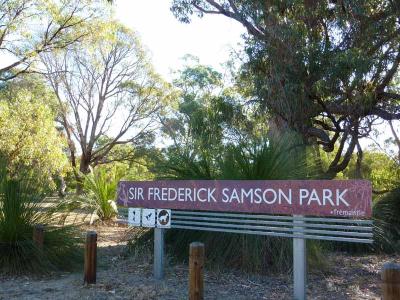
Samson is a small suburb of Fremantle, a southern port city in the Perth metropolitan area. The suburb was only developed in the 1970s, as before this it had belonged to the army, and was a military camp during World War II. The suburb is named after the Samson family, who have been prominent in the Fremantle area for nearly two centuries. Sir Frederick Samson was mayor of Fremantle for twenty years, from the 1950s to the 1970s, and his home, Samson House, is one of Fremantle’s landmarks. The suburb of Samson contains Sir Frederick Samson Park, Fremantle’s only bush reserve. Sir Frederick was the grandson of Lionel Samson, a wealthy Jewish merchant who settled in the Swan River Colony in 1829 and became one of its most successful pioneers. Popular for his charm and wit, respected for his integrity, the business he founded is still run by the Samson family, making it Western Australia’s oldest family business. Samson is one of the most famous characters in the Old Testament, a judge of the Israelites known for his superhuman strength. His name is from the Hebrew for “man of the sun”, leading some scholars to suspect he was originally a sun god, or demi-god. Samson was in use as an English name during the Middle Ages, and there is a Welsh St Samson, one of the Apostles of Brittany. This is a very masculine name which provides another way to get the popular short form Sam.

Sawyer
Sawyers Valley is on the eastern fringe of Perth’s outer suburbs, and 40 km from the city. Its name came about because it was originally a saw mill and timber processing area. It’s now a semi-rural suburb in the bush-covered hills surrounding Perth. Sawyer is an occupational surname for someone who sawed wood for a living – and in the days when most things were made of wood, an important trade. Sawyer has been used as a personal name since the 17th century, mostly as a male name. In Australian records, I can only find it as a man’s first name, although not unusual as a female middle name. Sawyer doesn’t chart in Australia, but has been in the US Top since 1991; it had a huge jump up the charts after Steven Spielberg chose the name for his son in 1992. In America, it is a unisex name, but more common for boys. Although it is in rare use here, I have seen it a few times, on both sexes. Its most famous namesake is Tom Sawyer, the young scamp from the stories by Mark Twain, while it has also been alias for Josh Holloway’s character on Lost.

Stirling
Stirling is a residential suburb 10 km north of the city. The area has a multicultural history, because in the 1920s it attracted retired Chinese miners from the goldfields, returned servicemen from the First World War, and many Italian migrant. It became a successful market gardening region producing almost every vegetable possible, some for export. Even after development in the 1960s and ’70s, the suburb remains one of Perth’s most ethnically diverse, with a third of the population having Italian heritage, and many from Macedonian, Greek and Asian backgrounds. The suburb is named after James Stirling, who was the first governor of Western Australia, and who lobbied for a colony to be founded on the Swan River. Stirling is a Scottish Clan name which comes from the city of that name in central Scotland; it is known as the “Gateway to the Highlands”. The meaning of its name is not known, although folk etymology says that it is from the Gaelic for “place of battle”. Another theory is that it is British, and means “dwelling place of Melyn”; the name Melyn is said to mean “yellow-skinned, sallow-skinned”. Stirling has been used as a boy’s name since the 18th century, and was first used this way in Stirlingshire. I have seen this name quite a few times in birth notices, and it’s one with a great deal of dignity.

Warwick
Warwick is in the northern suburbs of Perth, and a large section of it is still native bushland. It originally belonged to a railway company, and is named after Warwick Road, the major road which goes through it, and pre-dates the suburb’s development. It may have been inspired by Warwick Road in London. The name Warwick comes from the English city of Warwick in the Midlands; its name means “dwellings by the weir” in Old English, as the River Avon flows through it. It’s pronounced WOR-ik. The Earl of Warwick is one of the most prestigious titles in the British peerage, and Guy of Warwick a legendary English hero, which may help explain why Warwick has been used as a boy’s name since at least the 16th century. However, it seems to have originated in Devon, in the seat of a family named Warwick who belonged to the minor nobility. Warwick first charted in the 1910s at #203, joining the Top 100 in the 1940s, where it peaked at #80. It left the Top 100 in the 1960s, and hasn’t charted since the 1990s. Famous Australians with this name include the racing driver Warwick Brown, and flamboyant former AFL star, Warwick Capper.

POLL RESULTS
The public’s favourite names were Sawyer, Samson and Ashby, and their least favourite were Stirling, Warwick and Murdoch.

(Photo shows the entrance to Sir Frederick Samson Park, in Samson)

Perth Suburbs That Could Be Used As Girls Names

13 Sunday Jul 2014

Posted by A.O. in Name Themes and Lists

≈ 5 Comments

Tags

Anglo-Norman names, Anglo-Saxon names, Australian Aboriginal names, controversial names, english names, famous namesakes, French names, Gaelic names, historical records, Irish names, Italian names, Latin names, locational names, Lycian names, middle names, mottos, mythological names, name history, name meaning, name popularity, name trends, names of rivers, nicknames, Old English names, royal names, surname names, unisex names

quinns rocks beach

Aveley
Aveley is a neighbourhood of the town of Ellenbrook – an outer suburb in the north-east which is projected to be a future satellite city. Avely is named after a small town in Essex, where the Belhus estate was located: this stately home was once visited by Queen Elizabeth I, and had grounds landscaped in the 18th century by the famous Capability Brown. One of the early settlers to the Swan River Colony in 1829 was Edward Pomeroy Barrett-Lennard, the grandson of Lord Dacre, who owned Belhus. Edward Barrett-Lennard was assigned more than 13 000 acres in the Swan Valley, and his eldest son George purchased a large tract of land which he named Belhus after the family estate: it is this which eventually became Aveley. The name Aveley is Old English and means “Aelfgyth’s meadow”; Aelfgyth is an Anglo-Saxon woman’s name meaning “elf battle”. Avely is also a surname, and has been in rare use as a personal name since at least the 16th century. Historically more common for males, Aveley fits so well with current trends in female names that it seems more suitable for girls. Pronounced AV-uh-lee, this is a pretty, modern-sounding name with a feminine meaning and interesting history.

Carine
Carine is an affluent suburb 14 km north of the city. The area was once owned by the wealthy Hamsersley family, who came to the Swan River Colony in 1837, and before being developed in the 1960s, it was primarily used for farms and market gardens. The suburb’s name comes from the local wetlands, which are now known as Big Carine Swamp and Small Carine Swamp. Their names are a corruption of Careniup, the Noongar name for the wetlands, which means “the place where bush kangaroos graze”; it has the same origin as nearby Lake Karrinyup. The tranquil wetlands provide a home for rare water-birds and other native wildlife. Carine is already used as a girl’s name, the French form of Carina; it can be said in several different ways, but the Australian Carine is kuh-REEN. You would be hard pressed to find anything more Australian than “kangaroo” as part of a name’s meaning, and this is attractive, although perhaps slightly dated-sounding, due to its similarity to Karen, Caroline, and Corinne.

Floreat
Floreat is an exclusive suburb 8 km north-west of the city, close to beaches and filled with parkland. As well as swanky boutiques, it is also well known for its sporting facilities, including Perry Lakes Stadium, which was used for the 1962 Empire and Commonwealth Games, and has now been replaced with the Western Australian Athletics Stadium. The suburb’s name is Latin for “let it flourish, let it prosper”, which is the official motto for the City of Perth (and has been fulfilled, for the city has grown rich on the back of the mining boom). Floreat has been occasionally used as a unisex name since the 18th century. In Australian records, it has mostly been used as a middle name, and examples from Perth may have been named for the city’s motto. In Australia, Floreat has been more commonly used as a girl’s name, due to its similarity to Florence, which has the same Latin origins and meaning. With Florence now fashionable, and girl’s names ending with a T sound, like Charlotte and Violet, popular, Floreat seems a surprising choice as a name, but not an outrageous one.

Jindalee
Jindalee is a new outer suburb in Perth’s far north. Because development has only just begun, the beaches are almost untouched, and it is surrounded by bush, scrub, and heathland. The name Jindalee is believed to mean “a bare hill” in an unknown Aboriginal language of New South Wales; there is a town of Jindalee in New South Wales, and a suburb of the same name in Brisbane. The name may refer to Eglinton Hill in Jindalee, which provides views of the sea. I only found one person in Australian records with the name Jindalee, and it was in the middle; although he was a man, to me Jindalee seems feminine, and could be shortened to Jinny or Jindy. This is a lively name which seems quintessentially Australian in its flavour.

Kiara
Kiara is a quiet leafy suburb in Perth’s northern suburbs. Its name is from an Aboriginal word for “white cockatoo”, and it is not a Western Australian word, but one recorded in the Coffs Harbour region of New South Wales. The “white cockatoo” in question is probably the sulphur-crested cockatoo, a large, handsome, intelligent, curious, and very loud bird, native to the eastern states and far north of Australia. Australian parents seem to have a great fondness for girls’ names beginning with K, and this name sounds much like Italian Chiara, but with a distinctive Australian meaning. The name Kiara has charted since the 1980s, and first joined the Top 100 in 1999 at #67, peaking in 2005 at #49. It left the Top 100 in 2011, and is currently in the low 100s. It’s no longer popular, but still getting plenty of use.

Leda
Leda is one of the suburbs of the City of Kwinana, a coastal centre in Perth’s far south known as a working-class industrial area. Several of Kwinana’s suburbs are named for ships, and the brig Leda brought settlers to the Swan River Colony in 1830. The name was appropriate, because in Greek mythology, Leda was a queen of Sparta whose beauty attracted the attention of the god Zeus, who seduced her in the guise of a swan. Queen Leda didn’t have any unnatural interest in swans – the god-swan fell into her arms for protection while escaping from an eagle. Swans are one of the few birds which have a penis outside their body, like mammals do, and after this the specifics are left to our imaginations. Some artists and poets have depicted the act as a rape, while others show Leda as not just consenting, but positively enthusiastic. The same night, Leda lay with her husband, and from these biologically confused couplings, she gave birth to two eggs – one of which contained the ravishing Helen of Troy. Helen’s birth was commemorated by her father Zeus, who placed the constellation Cygnus, the Swan, in the sky. The meaning of the name Leda is not known for sure; it may be from the Lycian for “woman, wife”, and is pronounced LEE-duh. Simple and elegant, this is a name from Western Australian history which also references Perth’s Swan River.

Myaree
Myaree is a light industrial suburb 11 km south of the city. Its name is said to come from an Australian Aboriginal word meaning “plant leaves, foliage, greenery” (rather inaptly, given the suburb’s purpose). Myaree has been used as a baby name, although not apparently in Australia: it may have been an Anglicisation of an Arabic girl’s name, or a name created from other name elements. Apart from the pleasant meaning of Myaree, and its multicultural possibilities, in many ways it seems quite on trend, because of popular Maya, trendy Marley, and fashionable Myra. In other ways, it seems slightly dated, because of its similarity to names such as Maree and Nyree. To me it’s rather appealing and contemporary, while not unfamiliar in sound.

Quinn
Quinns Rocks is in the outer northern suburbs of Perth. It was first settled in the 19th century by a family of sheep farmers called the Clarksons, who used it as pasturage. In the 1930s it was a place for seaside holidays, with many people building beach shacks along the coast. It began to be developed as a residential area in the late 1950s, and was declared a town in the 1960s. The beautiful white beach is the suburb’s major feature, and still attracts holidaymakers. The suburb gets its name from an offshore reef, and is believed to have been called after Robert Quin, a 19th century government surveyor who made the first records of the area. Another theory is that it is named after Mick Quinn, one of the Clarksons’ shepherds who had a shack in the area. Why it should be named after this shepherd in particular is not related, and the congruence of names seems most likely. Quinn is a common Irish surname, an Anglicised form of the Gaelic mac Cuinn, meaning “son of Cuinn”. Cuinn (which is Anglicised to Conn) means “head, chief”. The surname’s originator is Art mac Cuinn, a High King of Ireland; according to legend, he and his father Conn of the Hundred Battles, also a High King, had dealings with a fairy woman. The Quins were one of the noble families of Ireland, but the line came to an end a few years ago. Quinn is rising rapidly as a unisex name, and currently seems to be almost equal between the genders, while also performing well as a middle name. Expect to see more Quinns in the future.

Serpentine
Serpentine is a small town on the very fringes of the metropolitan area, 55 km south-east of the city, on the railway line between Perth and Bunbury. The town is named after the nearby Serpentine River, so called because of its meandering course. Serpentine has been used sparingly as a name since the 19th century, and in Australian records is found mostly as a middle name, divided fairly evenly between males and females. Most of the Serpentines were from the Perth area, making me think they were named after the river. Serpentine is a problematic name, because while serpentine means “winding, curving” (like a serpent), it can also mean “crafty, deceitful”. The second meaning is an obvious allusion to the serpent in Genesis, who leads Eve into temptation. While this may give some people the jitters, serpents are also ancient symbols of wisdom and healing, and are often depicted guarding sacred places; a serpent holding its tail in its mouth is a symbol of eternity. In Australian Aboriginal myths, the Rainbow Serpent is a significant deity, symbolising life and fertility. Strong and mysterious, sinuous Serpentine may be easier to bear as a middle name.

Viveash
Viveash is a secluded riverside suburb in the city’s north-west. It is named after Dr Samuel Waterman Viveash, a prominent pioneer who arrived in the Swan River Colony in 1838, and took up farming. Viveash is an English surname whose origins are disputed; it may be Anglo-Norman, and come from the French vivace, meaning “lively, vigorous”. However, because it is pronounced like “five ash” with a V instead of an F at the start, it is often linked to places in southern England called Five Ash Trees. Viveash has been used as a personal name for both sexes, almost exclusively found in the middle position. Examples from Australian records are all from Western Australia, and nearly all from the Perth area, making it likely they were named in honour of Dr Viveash. Viveash is a very unusual name, but is vaguely similar to Vivian and Ashley, while having a distinct sound and feel of its own.

POLL RESULTS
The public’s favourite names were Quinn, Aveley and Leda, and their least favourite were Jindalee, Serpentine and Viveash.

(Photo is of the beach at Quinns Rocks)

← Older posts
Newer posts →

Enter your email address to follow this blog

Categories

Archives

Recent Comments

A.O.'s avatarwaltzingmorethanmati… on Zarah Zaynab and Wolfgang…
Madelyn's avatarMadelyn on Zarah Zaynab and Wolfgang…
JD's avatardrperegrine on Can Phoebe Complete This …
A.O.'s avatarwaltzingmorethanmati… on Rua and Rhoa
redrover23's avatarredrover23 on Rua and Rhoa

Blogroll

  • Appellation Mountain
  • Baby Name Pondering
  • Babynamelover's Blog
  • British Baby Names
  • Clare's Name News
  • For Real Baby Names
  • Geek Baby Names
  • Name Candy
  • Nameberry
  • Nancy's Baby Names
  • Ren's Baby Name Blog
  • Sancta Nomina
  • Swistle: Baby Names
  • The Art of Naming
  • The Baby Name Wizard
  • The Beauty of Names
  • Tulip By Any Name

RSS Feed

  • RSS - Posts

RSS Posts

  • Celebrity Baby News: Melanie Vallejo and Matt Kingston
  • Names from the TV Show “Cleverman”
  • Can Phoebe Complete This Sibset?
  • Zarah Zaynab and Wolfgang Winter
  • Baby, How Did You Get That Name?
  • Celebrity Baby News: Media Babies
  • Celebrity Baby News: Adelaide Crows Babies
  • Celebrity Baby News: Chris and Rebecca Judd
  • Names at Work: Name News From the World of Business and Employment
  • Celebrity Baby News: Sporting Round Up

Currently Popular

  • Celebrity Baby News: Nicki Gemmell and Andrew Sholl
  • Girls Names From Stars and Constellations
  • Rare Boys Names From the 1950s
  • Celebrity Baby News: Alicia Molik and Tim Sullivan
  • The Top 100 Names of the 1940s in New South Wales

Tags

celebrity baby names celebrity sibsets english names famous namesakes fictional namesakes honouring locational names middle names name combinations name history name meaning name popularity name trends nicknames popular names saints names sibsets surname names twin sets unisex names

Create a free website or blog at WordPress.com.

Privacy & Cookies: This site uses cookies. By continuing to use this website, you agree to their use.
To find out more, including how to control cookies, see here: Cookie Policy
  • Subscribe Subscribed
    • Waltzing More Than Matilda
    • Join 517 other subscribers
    • Already have a WordPress.com account? Log in now.
    • Waltzing More Than Matilda
    • Subscribe Subscribed
    • Sign up
    • Log in
    • Report this content
    • View site in Reader
    • Manage subscriptions
    • Collapse this bar
 

Loading Comments...