• About
  • Best Baby Names
  • Celebrity Baby Names
  • Celebrity Baby Names – Current
  • Celebrity Baby Names – Past
  • Featured Boys Names
  • Featured Girls Names
  • Featured Unisex Names
  • Links to Name Data
  • Waltzing on the Web

Waltzing More Than Matilda

~ Names with an Australian Bias of Democratic Temper

Waltzing More Than Matilda

Tag Archives: honouring

Waltzing with … Neville

24 Sunday Mar 2013

Posted by A.O. in Waltzing with ...

≈ 2 Comments

Tags

aristocratic names, dated names, english names, famous namesakes, fictional namesakes, Harry Potter names, honouring, locational names, middle names, name combinations, name history, name meaning, name popularity, nicknames, Old French names, sibsets, surname names

Bonner - 700_tcm16-37336Today is Palm Sunday, which commemorates the triumphal ride into Jerusalem by Jesus about a week before the Resurrection. The people hailed him as if he were a victorious king, laying palm branches in his path. We already know that James Cook named the Whitsunday Islands and Trinity Beach after important days in Easter-tide, and on Palm Sunday 1770, he named the Palm Islands in northern Queensland after the day. After World War I Palm Island became an Aboriginal settlement, where the government maintained a repressive control over the Indigenous population.

On March 28 it will be 91 years since Aboriginal activist and Jagera elder Neville Bonner was born, and another tie-in with this time of year is that Neville once lived on Palm Island. Born on a small Aboriginal island settlement in northern New South Wales, he never knew his father and received almost no formal education. After working as a farm labourer, he moved to Palm Island with his family in 1946, and became assistant overseer of the settlement.

His time on Palm Island gave him both an interest and experience in politics, and after moving to Ipswich in 1960, he became the president of moderate indigenous rights organisation One People of Australia League, and an office holder in the Liberal Party. He was the first indigenous Australian politician, and elected senator in his own right four times.

Neville was appointed to the board of the ABC, and the council of Griffith University, which also awarded him an honorary doctorate. In 1979 he was named Australian of the Year, and in 1984 appointed as Officer of the Order of Australia. After his death, the Neville Bonner Memorial Scholarship was created for Indigenous students to take honours in political science. There is a Queensland electorate and a Canberra suburb of Bonner, named after him.

Neville is an English surname which was introduced to Britain by the Normans, and refers to a French place name in Normandy, either Neuville or Neville. Both places mean “new settlement” in Old French, and are common names of towns in France.

The House of Neville is an aristocratic English family which can trace its lineage back to Anglo-Saxon times. Although they married into the Norman nobility and assumed a Norman surname, the male line of the family had been ruling landowners in Northumbria since before the Conquest, with their ancestral seat near Durham, and were already wealthy and powerful in their own region.

The Nevilles continued to gain power, often appointed to prestigious royal offices and administrative roles. Ralph Neville was one of the founding members of the Peerage of England, being one of those summoned to sit in the House of Lords when it was established in 1294, and by the 14th century the family owned large tracts of the north of England.

They married into the royal family, but lost a great deal of power by getting involved in the War of the Roses, and also backing the wrong horse by supporting Mary, Queen of Scots instead of Elizabeth I (the Nevilles also claimed descent from one of the royal families of Scotland). Although their glory days were over, the Nevilles continued gaining earldoms and baronies through a junior line of the family, and they are still members of the peerage.

Neville can be found used as a first name from the 16th century, but remained extremely rare until the 18th century. Given that the Nevilles were so powerful in the north, you might expect to find the name greatly more common there than in the southern counties, but that doesn’t seem to be the case. It did appear to originate in Lincolnshire though, which is one of the many areas where the Nevilles owned estates and had loyal political supporters.

In Australia, Neville just squeezed onto the Top 100 of the 1900s at #99. It continued rising and peaked in the 1920s (when Neville Bonner was born) at #30; it didn’t leave the Top 100 until the 1960s, missing out by only a few places at #104. Neville hasn’t charted at all here since the 2000s.

It is sometimes suggested that the character of Neville Longbottom from the Harry Potter books could help raise the popularity of this name; however, it seems that almost as soon as the first book was published, Neville disappeared from the charts altogether.

The trouble was that Neville Longbottom, although a good person and loyal Gryffindor, was not necessarily an attractive character to parents. Chubby, unpopular and low on self-esteem, he seemed to be dogged by the chronic bad luck suffered by the self-conscious and unconfident. He lost and forgot things, had minor accidents, was bullied by both students and teachers, and was a mediocre student except in Herbology.

In the fifth book, The Order of the Phoenix, it was revealed that Neville’s parents, brave and gifted warriors in the fight against Voldemort, had been tortured to madness and permanently institutionalised. Although this evoked enormous sympathy for Neville, it didn’t help to make his name seem more usable. Nobody was saying, “Yes, I’d love to name my child after a character with insane parents, I can really relate to that”.

With Harry’s encouragement, Neville’s skills as a wizard improve and his courage grows. Once out of Harry’s shadow, he becomes the leader of the resistance group at Hogwarts, the protector of those younger and weaker, and a vital part of Voldemort’s downfall. He is the story’s alternate hero – brave, noble, kind, selfless, and pure-hearted.

Is this late blooming enough to rehabilitate Neville as a name? Or will parents continue to think of the awkward klutz that Neville is for most of the book series?

Neville is a dated name, but we have seen other old-fashioned names come back into use and even become popular. It’s a little clunky, and a tad geeky, but also solid and dignified. I often see Neville used as a middle name to honour a great-grandparent, and I wonder when someone might feel brave enough to use it up front again. Older people will find it almost irresistible to use the long-popular nickname “Nifty” Neville, but the standard Nev still sounds surprisingly dashing.

Name Combinations for Neville

Neville Anthony, Neville Charles, Neville Frederick, Neville John, Neville Peter, Neville Winston

Brothers for Neville

Edwin, George, Harold, Ralph, Stanley, Theodore

Sisters for Neville

Cecily, Emma, Flora, Isabel, Peggy, Susan

POLL RESULT: Neville received an approval rating of 69%. 26% of people liked the name Neville, and only 4% hated it.

(Photo shows Senator Neville Bonner 1979; image from the National Archives of Australia)
Famous Name: Griffin

06 Wednesday Mar 2013

Posted by A.O. in Famous Names

≈ 7 Comments

Tags

Anglo-Saxon names, animal names, english names, famous namesakes, honouring, Irish names, mythological names, name history, name meaning, nicknames, surname names, vocabulary names, Welsh names

520px-Heraldic_figures_-_Griffin.svgOn March 12 the city of Canberra, Australia’s capital, will celebrate one hundred years since its foundation in 1913. Special events are planned for the entire year, with the major festivities taking place on the long weekend preceding the actual date.

A baby called Allegra Bluebelle Sofo born this year was named in honour of Canberra’s centenary – the royal bluebell is the floral emblem of the Australian Capital Territory. Her story was featured in The Canberra Times, and as further inspiration for potential Canberran baby-namers, the paper went on to make more suggestions for names with a Canberra connection, which you can read about on Nancy’s Baby Names blog.

I couldn’t help noticing that all the suggestions were for girls names, which seemed very unfair, given that boys will make up about half of all the babies born in Canberra during 2013, and an obvious suggestion is staring them in the face.

In 1911, King O’Malley held an international competition to find a designer for the layout of the new city, which was won by Chicago architect Walter Burley Griffin. Walter produced the design in colloboration with his wife and business partner, the architect Marion Mahony Griffin. The Griffins moved to Australia to oversee the project, and fell in love with the Australian landscape, becoming enthusiastic bushwalkers with a keen interest in botany and conservation. The building of a city set in bushland seemed perfect for their idealistic vision inspired by the Garden City movement.

Unfortunately, World War I put a dent in everyone’s plans, and Walter Burley Griffin was treated shamefully by bureaucrats, who undermined him to further their own interests, eventually forcing him to resign. Many of his ideas were discarded or altered, but the basic plan of the central city is undeniably that drawn up by Walter Burley Griffin.

It wasn’t until the 1960s that the artificial lake he had envisioned was built in the heart of Canberra (not to his plans, it must be said), and in the first kind gesture Canberra had made toward its designer, Prime Minister Robert Menzies refused to have the lake named after himself, and insisted it be called Lake Burley Griffin. Australians had rather cluelessly misunderstood American naming conventions, and imagined that Burley must be part of Walter’s surname, rather than his middle name, so the lake doesn’t even have his correct name.

It’s never been rightfully re-named Lake Griffin, which would also have honoured co-designer Marion, but it’s the only monument that Walter Burley Griffin has in Australia. One was planned in the 1960s, and an American architect hired, but a change of government left it shelved indefinitely.

With so little appreciation during his lifetime (Walter died in 1937), why not name your son Griffin to honour the man and his wife who helped bring the city of Canberra into being?

The surname Griffin has several sources. It can be a Latinised form of the Welsh name Gruffud, which is also Anglicised as Griffith. There was also an Anglo-Saxon name Griffin, derived from High German grifan, meaning “snatch, grab”, and an allusion to dragons. The Irish surname is taken from the Gaelic name Grioghtha, meaning “griffin”.

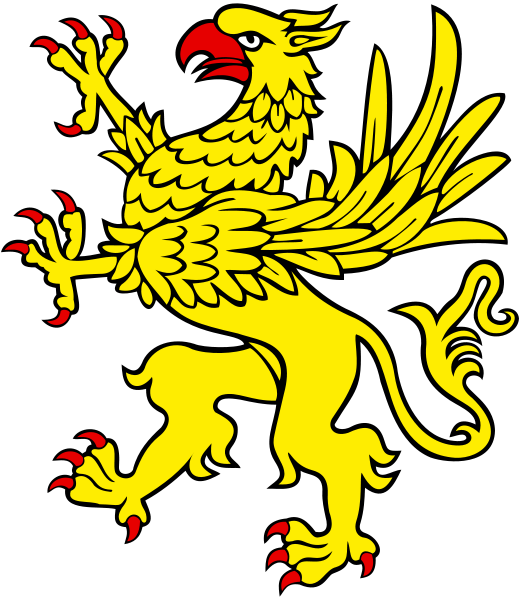
This legendary animal (also spelled gryphon or griffon) is a combination of an eagle and a lion, thus blending the king of the beasts with the king of the birds. How this combination was achieved was a matter to be decided by the artist, but by accepted convention the griffin has the body, tail and hindquarters of a lion, with the head, wings and talons of an eagle, and has prominent pointed ears. The word griffin is derived from the Greek for “hook”, possibly denoting the creature’s hooked beak or curved talons.

Griffins were prominent in the art and design of Ancient Greece, where they were seen as powerful protectors against evil. Greek writers described the griffin as native to mountainous areas of Asia, sacred to the sun, and a hoarder of gold. Other ancient legends tell of the griffin’s prodigious strength and intelligence, its hatred of horses, and wars against the Amazons. The griffin seems to be a symbol of good, of light, and of the masculine principle.

You will sometimes see griffins carved into old churches and cathedrals, because during the medieval era, the griffin was considered a symbol of Christ, who, like the griffin, has dominion over both the heavens and the earth. It was also thought that the winged cherubim mentioned in the Bible could have been griffins, as they are described as having the face of a lion and an eagle (although this ignores the fact cherubim also have the face of a man and an ox). It is possible that the legends of cherubim and griffins had the same source – the winged beasts of ancient Middle Eastern art.

Just to confuse things, the griffin was also associated with Satan, probably in the belief that anything so fierce must be up to no good (the hoarding of gold might have looked sinfully avaricious as well). This miserable idea doesn’t seem to have persisted, probably because it doesn’t make sense, since griffins were always noble, majestic, and on the side of good.

Griffins are a popular symbol in heraldry, with the first known person to have a griffin on his coat of arms being Richard de Redvers, the Earl of Exeter, in 1167 (the coat of arms was much older than that). A symbol of strength and vigilance, the griffin is said to be the perfect emblem for a hero in battle. For some reason, male griffins are always shown in heraldry without wings, but adorned with spikes denoting the sun’s rays. They are less common than winged female griffins. Canberra doesn’t have any griffins on its coat of arms, which I think would have been an appropriate choice.

Griffins are often found in fantasy literature, and the first one appears to be Lewis Carroll’s Alice’s Adventures in Wonderland. You may also read stories that involve griffins in the works of Frank Stockton, Diana Wynne Jones, Tamora Pierce, Neil Gaiman, Mercedes Lackey, Patricia A. McKillip and Rick Riordan. Readers of the Harry Potter series will remember that Harry’s house at school was Gryffindor. These fantasy novels had a noble forerunner, because the poet Dante sees Beatrice in a chariot drawn by a griffin in The Divine Comedy.

Griffin is a strong, handsome and very masculine name which can either be taken as Celtic or English. The legendary creature gives it many layers of mystical associations, nearly all of them extremely positive. You could use either Griff or Finn as nicknames.

POLL RESULT: Griffin received a worthy approval rating of 77%. People saw the name Griffin as strong and handsome (33%), cool (18%), noble and chivalrous (13%), and cute and brainy (13%). However, 9% thought the connection to mythological griffins made the name seen ridiculous – half as many as those who thought the mythological connection made the name cool.

(Picture shows a heraldic griffin)

She’s Having Last Minute Doubts About Their Baby Name

02 Saturday Feb 2013

Posted by A.O. in Naming Assistance

≈ 4 Comments

Tags

choosing baby names, classic names, famous namesakes, fictional namesakes, honouring, name popularity, nicknames, popular culture, popular names, Twilight names

Just before deadlineSarah and Rupert are expecting a baby girl, due in only a few days. They always agreed that their first daughter would be named Isabella, which is a traditional name in Sarah’s family. However, as time went on, the name Isabella became extremely popular, and also associated with the Twilight phenomenon, so Sarah grew less enthusiastic about using it.

Sarah’s solution was to use the name Isabel, which is traditional on the other side of her family. She and Rupert like its simplicity, and they plan to use another family name in the middle position.

However, with just a few days to go, Sarah is wondering if they have chosen the right name for their daughter. Although Isabel is towards the bottom of the Top 100, if you add up all the Isabellas and Isabelles, that makes quite a few girls called Issy or Bel. Sarah wonders if the name Isabel is really distinctive enough.

Sarah likes names in the style of Sibella, Arabella and Violet; Rupert prefers names like Molly, Ebony and Lila. As such, they haven’t really agreed on many names. The only other names Sarah and Rupert have agreed on are Camilla and Clementine. The Duchess of Cornwall puts Sarah off using Camilla, and for some indefinable reason, she can’t quite commit to Clementine.

Sarah wonders whether a personal meaning or family association is more important than popularity, and whether they should just stop discussing it and go with Isabel. She wants something classic and unique, yet can’t quite find it … and if she started meeting lots and lots of little Isabels she wouldn’t be happy about it.

Sarah has a very popular name, and it never bothered her, and Rupert loves his unusual name, so they know that children can be content with their name whether its common or rare. Sarah and Rupert have a nice solid one-syllable surname, such as Mack or Holt.

Sarah’s sisters, who have children already, tell her that once the baby arrives, she won’t give a thought to any of these worries, but right now they feel like genuine concerns!

~ ~ ~ ~ ~ ~

The last few days before a baby arrives can be quite frustrating, and there’s so many “What ifs …?” involved. Some of us worry that the car will break down and we won’t be able to get to the hospital; some of us worry that we’ve packed completely useless things in our little bag; and some of us worry that we’ve picked the wrong baby name. I expect all these little worries are a coping mechanism to keep our minds off the really big worries that we could be having instead!

I think that you might just be having last-minute jitters. Like someone getting nervous before their wedding, you may be slightly anxious about committing to the name Isabel for life. You wonder if you’ve made the right choice – what if things don’t work out the way you hoped? And could there be a better name out there that you haven’t thought of yet?

The good news is that you are in a much better position than someone having doubts about their wedding. Unlike a wedding, you get to have the baby first and then decide if the name seems right. You don’t have to make any commitment until the baby arrives, and you get a good long time to make your mind up after the birth. Most importantly, the name Isabel won’t be heartbroken if you decide to go with another name instead.

At this stage, I believe it’s too late to be actively searching for, and arguing about, a different baby name. I think Isabel [Middle Name] [Surname] is a really delightful combination: one that’s a nice balance between pretty and feminine, and neat and sensible, and could belong to a wide variety of girls. It doesn’t sound like a name that someone has to live up to, or pull off, or get used to. To me it seems like a name that isn’t boring, but would be easy to live with.

Let’s take a good look at Isabel:

  • Isabel is a name both you and Rupert like You’ve only managed to agree on three girl’s names in the past nine months, so let’s face it – your chances of finding another name you both like in the next couple of days aren’t that high.
  • You haven’t come up with anything better The only other names you could use just don’t seem quite right. It’s not impossible you’ll change your mind once the baby is born, but for now they don’t seem like viable options.
  • Isabel fits both your requirements You like pretty, feminine names for girls like Arabella and Violet; Rupert prefers simple fuss-free names like Molly and Lila. Isabel seems like a perfect fit – as elegant as Arabella, with the clean lines of Lila.
  • Isabel honours your family heritage Isabel is a name from one side of your family, while also providing a distant nod to the Isabellas on the other side. As you don’t want to use Isabella any more (and it doesn’t seem possible to have both), Isabel appears to be a great solution to your dilemma.
  • Isabel is a classic that has never been common There is no such thing as a name which is both classic and unique, so I’m not surprised you haven’t managed to find one! The closest you could get would be an underused classic – one that has never left the charts, but never been popular. Isabel fits reasonably well, because it’s a classic, but never got any higher in popularity than the bottom quarter of the Top 100.
  • Isabel is falling in popularity That makes the chances of you running into lots of little Isabels in the future less likely. And as you can’t control what other parents name their children anyway, I wouldn’t give it another thought.
  • Popularity isn’t that big a deal anyway I do think that personal meaning and family associations are more important than popularity. You’ve eliminated Isabella for being too well known, which is fair enough, and Isabel seems like an excellent replacement. You know from having a popular name yourself that it doesn’t necessarily cause a child any problems – and your name is much more popular than Isabel.
  • If Isabel is not distinctive enough, what is? If you look at names for girls, there are certain family resemblances between them. Once a certain sound becomes popular, you tend to see it in other names too. I think you’d have trouble choosing something which sounded nothing like any other baby name being used – and still like it.
  • Isabel does not have to be an Issy or a Bel You could make her name distinctive by giving her a different nickname. There are old-fashioned nicknames for Isabel such as Isa, Ibby or Tibby, and more unexpected choices like Sabel, Tizzy, Whizz, Zibby or Zsa Zsa. Or you could not use any nickname at all.

My advice would be not to think any more about the name. Wait until the baby is born and then see how you feel about calling her Isabel. Once you have a baby to hold in your arms, it all becomes a lot more real. I truly believe that if Isabel is not the right name for your daughter, the perfect name will come to you by the time she arrives.

NAME UPDATE: The baby’s name is Isabel!

POLL RESULT: Most respondents thought Sarah should stick with the name Isabel, with 60% giving this as their answer. Another 33% thought that Sarah should wait until the baby’s birth before deciding. The rest thought that Sarah should keep looking for another baby name, or consider their suggestions.

Diesel and Dusty

01 Friday Feb 2013

Posted by A.O. in Birth Announcements

≈ 4 Comments

Tags

honouring, name combinations, sibsets, twinsets

907745-130127-sandgateTwins

Annabelle Ruby and Teresa Irene (Lincoln, Michael)

William George “Will” and Finlay Jack “Fin”


Girls

Adley Isabelle (Evie)

Alice Polly Frances

Allegra Bluebelle (Daniel, Adam, James, Olivier, Charles, Oscar) – named in honour of Canberra’s centenary; the bluebell is their floral emblem

Asher Calliope

Chanel Jenna

Clementine Quinn (Charlotte)

Elektra Sue (Myles, Julian, Ewan, Gabriel, Raphael)

Elizabeth Ottilie Grace (Noah, Isaac, Levi)

Estella Violet (Jasper)

Isabella Jessie Jan Jean

Isla Antoinette (Xanthe)

Kitty Alice (Annabelle)

Lottie Harriet (Archie)

Sydney Elise

Varnya Lee (Anastasia)


Boys

Aspen Logan David

Callum Cave

Daelin Chevy (Zayne, Mannix)

Diesel James (Tyler, Amelia, Lilianna)

Dusty Mason (Willow, Taj)

Edward Charles Montgomery “Charlie”

Felix Theodore

Heiko Kadier

Jed Brok

Joel Sparks

Karnak Jay (Sharna-Lee, Teri-Jean, Rachel, Matthew, Jasmin)

Paddy Banjo (Madylin)

Rupert Lyell (Tom)

Stephen Danger

Talon Kai


Most popular names this week

Girls: Chloe

Boys: Liam

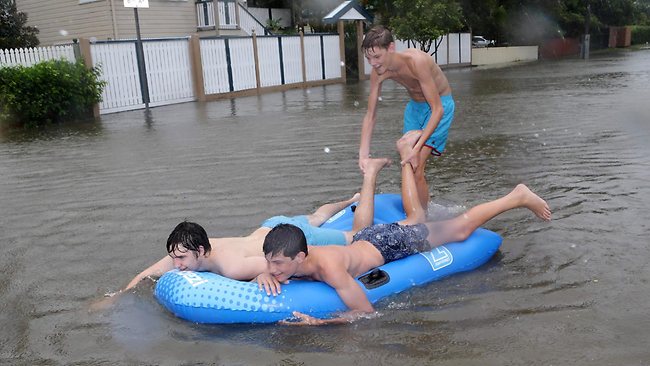
(Photo shows boys playing in the floodwaters of suburban Brisbane, January 2013)

Name Update: Master Lewis Waltzes In!

28 Monday Jan 2013

Posted by A.O. in Name Updates

≈ 2 Comments

Tags

classic names, honouring, sibsets

chocolate-names-lewisKate and Steve didn’t think they’d ever be able to choose a baby name, because she liked old-fashioned names, and he preferred something more modern. However, within a few weeks of writing into the blog, they were able to agree on both a girl name and a boy name.

Kate had a strong hunch that she was going to have a boy, and it turns out she was right. Their son was born early and unexpectedly, but in good health, on January 8, and his name is

LEWIS JOHN

little brother to Madeline.

Kate saw the name Louis amongst the celebrity baby name announcements on Waltzing More Than Matilda, and thought that an anglicised Lewis would make a better fit with Madeline. Both names are English versions of French names, and both are classics in Australia, with a similar level of popularity. The middle name is a family name, chosen to honour a loved one.

Congratulations on your baby boy, Kate and Steve, and for not only reaching agreement on a baby name, but finding one which is such a perfect match with his sister.

(Picture is the name Lewis written in chocolate)

The Historical Naming of British Monarchs

23 Sunday Dec 2012

Posted by A.O. in Naming Issues

≈ 11 Comments

Tags

choosing baby names, famous namesakes, historical records, honouring, Mer de Noms, middle names, names of piercings, Nook of Names, regnal names, Robin Hood, royal names, royal naming traditions, saints names, You Can't Call It "It"!

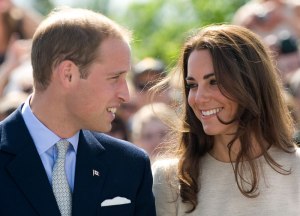
william-kate-canada-love5With the announcement early this month that Prince William and the Duchess of Cambridge are expecting their first child, the baby name blogosphere went slightly gaga. A few people even had a go at predicting the name of the royal baby, with Lou at Mer de Noms and Elisabeth at You Can’t Call It “It”! doing a great job. Of course, Kay at Nook of Names got a jump on all of us, and did her excellent analysis more than a year ago.

I’m going to admit right now that I don’t know what the royal baby will be named, and I can’t guess. I haven’t even been able to guess the baby names chosen by family and close friends, and these are people I know well.

But what I can do is to look at the names of the ruling monarchs of Britain and England (back to William the Conqueror), see how they were named, and then see what the royal baby might be called if the same principles were applied this time. As this gives a wide selection of choice, I have eliminated those names which seem  unlikely as they are still in use by other members of the royal family who have the title Prince or Princess, or which are too obviously “foreign”.

Although this doesn’t actually tell us what the baby will be called, as I studied the names of past monarchs, a few things stood out as to how they weren’t named.

  • Monarchs could be named for someone from several generations back, but almost none were named after a ruler from long ago in history. This makes the idea that the royal baby might be named after someone from many hundreds of years ago, such as Edmund or Matilda, seem rather fanciful.
  • Apart from being named after one of their parents, monarchs were almost never named after a relative who was still alive. For the baby princess to be named Elizabeth, for example, is by no means impossible, but would be historically unusual.
  • The Duchess of Cambridge is not the only commoner to marry a British royal, as the mother of Queen Anne was one. Although royal babies could be named after their commoner mother, they were not named after her relatives. If the royal baby is named after one of the Middletons, it would be a genuine break with tradition, and a sign we have entered a new age.
  • Only one female monarch was given a feminine form of a man’s name, with Queen Victoria named Alexandrina after her godfather, Alexander I of Russia (she didn’t keep the name after she became queen). The idea that the princess could be named Charlotte after Prince Charles, or Phillipa after Prince Phillip, would thus be a very unusual one.
  • The most obvious: nearly all English and British monarchs are named after a relative. The only two I could find who weren’t were Edward I and John. Edward I was named after Saint Edward the Confessor, which was considered wildly eccentric at the time, although Edward is now a traditional royal name. John was named after St. John the Baptist. Very much a younger son, he was not expected to rule, and interestingly his name was shunned by subsequent royalty – there was never a John II.
  • Apart from the occasional deceased uncle or foreign godparent, monarchs were nearly all named after a direct ancestor – a parent, grandparent or great-grandparent, for example. It’s fun looking through the royal family tree and wondering if the royal baby might be given the name of a great-great-great-aunt, or one of Queen Victoria’s sons, but this seems a very distant hope.

Now, with our expectations in check, let’s see what names are available, if we follow history.

POTENTIAL PRINCESSES

Alice

This seems to be almost everyone’s #1 choice for a baby princess, who would be named after her great-great grandmother, Princess Alice of Battenberg, the mother of Prince Philip. There have been four British princesses named Alice, but no queens – in fact, there are many more Queen Alices in fiction than in real life, giving this sweet name a distinct fairy-tale quality on a modern-day monarch.

Elizabeth

Elizabeth is seen as a front-runner, presumably because it’s thought Queen Elizabeth would happily endorse a tiny namesake. Princess Elizabeth would be named after both her great-grandmother and great-great grandmother, and as a bonus, Elizabeth is the middle name of the Duchess of Cambridge. There have been five English queens named Elizabeth, two of them rulers in their own right, and one Scottish Queen Elizabeth. However, as Queen Elizabeth II is still alive, this would be a historically unusual choice.

Diana

The favourite choice of the gossip magazines, and the name of the baby’s grandmother. When the royal couple visited our region, they were asked in an interview if they would call their first daughter Diana, and William said it would be one of her middle names. I actually think it would be nice if Diana was left for Prince Harry to use for his daughter’s first name, since Prince William got his mother’s engagement ring.

Mary

A solid choice that many are tipping, with the princess to be named after her great-great-great-great grandmother, Mary of Teck. There have been six British princesses named Mary, and four queens, two of them rulers; it’s also been used amongst Scottish royalty. Historically speaking, Mary stacks up extremely well.

Victoria

Another favourite choice for the baby princess, who would be named after her great-great-great-great-great grandmother, Queen Victoria. There has only ever been one queen with this name, but eight British princesses called Victoria – in fact it’s the birth name of Alice of Battenberg. A Victoria II would probably go down well with the British populace, although the Crown Princess of Sweden (related to the royal family) will be one day be Queen Victoria as well.

Catherine

Few seem enthusiastic about a baby Princess Catherine, but historically, it’s the most likely option. Eighteen monarchs have been named after a parent, and of the three queens who have ruled Britain, two of them were named after their mother – and the third one took her mother’s name, Victoria, as her regnal name. Queen Elizabeth II herself is named after her mother, Lady Elizabeth Bowes-Lyons. There have been five English queens named Catherine, and at least one of them, Catherine of Aragon, was deeply loved by her subjects.

Margaret

Margaret is a name from Scottish royalty, and a medieval Queen Margaret is one of the patron saints of Scotland. There has been only one English Queen Margaret, and she came to a sad end. A Princess Margaret would be named after Queen Elizabeth’s sister, and I somehow feel that this namesake, who attracted much scandal (whether deserved or not), would not be a help. However, one of Prince Philip’s sisters was named Margarita, and this is the English form of her name too.

Charlotte

A Princess Charlotte would be named after her great-great-great-great-great grandmother, Princess Charlotte of Denmark, whose birth name was Louise. There have been two British princesses called Charlotte; one of them went on to become a queen, but not of Britain. Lady Diana’s brother Charles had a daughter named Charlotte last year, who will be the royal baby’s second-cousin.

Henrietta

Queen Victoria is the only ruling queen to be named after a man – her godfather. We don’t know who will be the royal baby’s godfather, but traditionally the best man from the wedding is chosen as one of them, which makes Prince Harry a shoo-in. Could the princess be given the feminine form of his name? Unlikely, although there has been both a Queen and Princess Henrietta of Britain.

Augusta

A Princess Augusta would be named after her great-great-great-great-great grandmother, Princess Augusta of Hesse-Kassel (who was married to a Duke of Cambridge). There have been five British princesses named Augusta, and although a few of them were in line to one day become queen, by mischance none of them made it that far, giving this name an unlucky feeling for a monarch. This seems very unlikely as a possible royal baby name.

POSSIBLE PRINCES

George

Everyone’s #1 choice for a prince, and you can see why. It’s not only a traditional royal name, held by six British kings and three princes, but also one of the patron saints of England. Prince George could be named in honour of his great-great grandfather, King George VI, although that monarch’s birth name was Albert. The name is also a traditional one in the Spencer family, and Prince William has a cousin named George on the Spencer side, as well as a relative called George on the royal side, the Earl of St Andrews.

Alexander

This name was a traditional one in the monarchy of Scotland, but has never been used in England. The Prince could be named after his great-great-great-great grandfather, Prince Alexander of Hesse and by Rhine, and his great-great-great-great-great grandfather, Duke Alexander of Württemberg. There are two minor royals with this name, Alexander Windsor and Alexander Ogilvy, and a Spencer cousin, Alexander Fellowes, reportedly close friends with Princes William and Harry.

Louis

This is thought to have a reasonable chance of being selected, as Louis is one of Prince William’s middle names, and it’s a traditional one in the British royal family, although more often connected to the French monarchy. Prince Louis could be named after his great-great-great grandfather, Louis Mountbatten (formerly Prince Louis of Battenberg), and his great-great-great-great-great grandfather, Louis IV, Grand Duke of Hesse. However, some royal-watchers think that Louis Lopes, the toddler grandson of Camilla, Duchess of Cornwall, may scupper Louis as a royal name.

Frederick

This is sometimes mentioned as a possible baby name, because it is a traditional one in the royal family. Although there are three princes named Frederick in British history, there are no kings. Lord Frederick Windsor is the son of Prince and Princess Michael of Kent and there is a Spencer cousin named Frederick (the heir to the earldom); another family connection is that the Duchess of Cornwall has a baby grandson named Freddy. Prince Frederick could be named after his great-great-great-great-great grandfather, Friedrich, Duke of Schleswig-Holstein-Sonderburg-Glücksburg. Friedrich is an ancestor of both Queen Elizabeth and Prince Philip.

Francis

This would greatly appeal to fans of Lady Diana, as it is the masculine form of her middle name, Frances. As such, it may not meet with the approval of Queen Elizabeth. However, the prince could be named after his great-great-great-great grandfather, Francis, Duke of Teck – the duke’s son is the only Prince Francis the royal family have had.

Nicholas

Very much an outside chance, for there has never been an English king or prince named Nicholas. There is a minor royal named Nicholas Windsor, but he is not in line to the throne. Prince Nicholas could be named after his great-great-great-great-great grandfather, Nicholas I of Russia.

Joseph

I consider this a very unlikely choice for the royal baby, who would be named after his great-great-great-great-great grandfather, Joseph, Duke of Saxe-Altenburg.

Albert

Queen Victoria longed to have a King Albert on the throne, but her dream was never realised, as even royals called Albert have preferred to take another regnal name. The prince could be named after his great-great grandfather, or after his great-great-great-great-great grandfather, Prince Albert of Saxe-Coburg, and as a bonus to Lady Diana fans, Albert was the name of her grandfather. I fear the genital piercing of this name has ruined the chances of another Prince Albert for some time.

Adolphus

Prince Adolphus was the great-great-great-great-great grandfather of the royal baby to be. Let’s face it – this name would go down like a lead balloon. It’s not happening.

John

Count John Hauke was another great-great-great-great-great grandfather. The British royal family avoid the name John, as it is supposedly an unlucky one for them. King John is a storybook villain, thanks to Robin Hood, and two Prince Johns died young. Diana wanted to call her eldest son John, after her father, but she was not allowed to because of this royal tradition.

What would you like the prince or princess to be named? And do you want the royal family to continue their naming traditions, or start creating new ones?

NOTE: Thank you to Elea from British Baby Names for explaining where King John got his name from.

Names Spotted at Home and Abroad (Spring Edition)

22 Saturday Dec 2012

Posted by A.O. in Names Spotted at Home and Abroad

≈ 12 Comments

Tags

adult name changes, backwards names, brand names, car names, choosing baby names, classic names, controversial names, created names, english names, famous namesakes, fictional namesakes, French names, gemstone names, Greek names, guinea pig names, honouring, linguistic terms, Maori names, meteorological names, name combinations, name meaning, name sociology, names from movies, names of art styles, names of musical styles, names of pets, names of wines, naming traditions, nature names, plant names, saints names, Sanskrit names, sibsets, tree names, Twitter, unisex names, virtue names, vocabuary names

528324_419521648119669_1365182918_nA nurse saved the life of her daughter’s guinea pig Snowflake by giving it mouth-to-mouth. Her little girl is named Fauve, which in French literally means “wild beast”. In the early twentieth century, les Fauves were avant-garde artists whose style was characterised by wild brushstrokes and vibrant colours. Fauve as a name is as bold as the art it is named after, but still seems on trend.

A bittersweet baby story. Nei Nei Anderson, daughter of Pippin, is just about to have her first Christmas, but she never got to meet her father Jahminn, who died from cancer before she was born. Nei Nei is named after her Maori grandmother; neinei is the Maori word for a New Zealand tree whose Latin name is Dracophyllum traversii. These small trees can live up to 500-600 years.

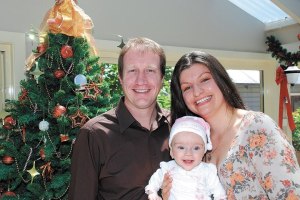
Elvina Robson [pictured] was born very prematurely, and her little life hung in the balance for a while, but she is ready for her first Christmas too. Elvina’s mum and dad are Emma and Brendan, and her siblings are Marguerite, 16, Gilbert, 12, Lucy, 10, Walter, 4, Angelique, 3 and Stella (deceased). A very lovely and original sibset.

A baby who arrived in a great hurry was named Patience Mezzino. Her name was chosen before her birth, and turned out to be rather ironic.

I have been hoping to see a baby Diamond born in the Queen’s Diamond Jubilee Year, and finally I have. Diamond Andre Thomas Thompson arrived very unexpectedly, but that did not stop his mum Regine from attending her graduation ceremony the next day. Regine now has a Masters in Maritime and Logistics Management. Diamond’s dad is named Paul, and his big sister is Herleen, aged 3.

Hermione Quinn Penning was born just outside the local rubbish tip. Not the most glamorous start to life, but what a beautiful name parents Kelly and Travis picked out. Hermione’s older sister is Elena, aged 3.

Kellie-Anne, and her ex-partner Trent Ford, came up with their son’s name when they saw the back of of a Holden Commodore ute with Storm written on the back of it. They couldn’t afford the ute, but they could name their son after it, so they named him Storme Hunter Ford. Storme’s younger brother is Levi Ryder, who was named after a pair of jeans. Name inspiration can be found everywhere!

A gym for babies aged 2 months and over has opened on the Sunshine Coast. One of its first clients was a baby boy named Horizen Earle. The name seems to ask that he reach for the horizon – but in a totally Zen way. It somehow seems very Sunshine Coast!

A couple who each run their own winery have welcomed their first child, and their daughter is named Peggy Mignonne. Mignonne is French for “cute”, and I think this is an adorable name combination. Charles Mignon is a famous brand of French champagne, and Peggy’s Hill is a wine produced in Australia, but I don’t know whether they put two wine names together or not.

A gorgeous sibset I saw in the paper – Sebastian, Raphael and Augustine, sons of Emily and Mark Wolfenden. Emily and Mark have both donated kidneys to save Sebastian and Raphael’s lives; unfortunately Augustine did not survive.

Names of Adults

Peter Drouyn was a champion surfer in the 1960s and 1970s, but always felt different. Today she is Westerly Windina – she chose her new name because she had such happy memories of surfing in westerly winds. Ms Windina is now a lawyer.

Supreme Court Judge, Justice Emilios Kyrou, has a name which came as a shock to his parents. Born in a small Greek village, it was tradition there that the godparent would choose the baby name and have it baptised, and the name would be kept secret from the parents until announced by the local priest. Traditionally, the first-born son would be named after his paternal grandfather. However, Emilios’ godmother had other ideas, and named him after the hero of a best-selling romantic novel. Parents not pleased. His younger brother, now a doctor, was named Theodoros after grand-dad instead.

Names from Television

Did you watch Life at 7 on the ABC? The series has been following a group of children since they were babies, and now in this series they are seven years old, and for the first time, speak for themselves to us as they learn to navigate the world. The boys are Wyatt, Declan, Joshua, Jara’na and Daniel, and the girls are Haleema, Shine, Anastasia, Sofia and Loulou.

On the news, there was a young man who was the unfortunate victim of some white collar crime. He was called Armand d’Armagnac, and he was as romantic and exotic-looking as his name – but his Australian accent made it clear he probably wasn’t a French count after all.

Another news story: it was announced that the new head of Swimming Australia was a businessman named Barclay Nettlefold. His first name is said BARK-lee, like the British bank founder. I feel that just by telling you his name, you automatically know he is from a prominent family and a keen yachtsman.

Names from Real Life

I was persuaded to escort two young ladies to a posh hotel which throws children’s high tea parties each afternoon during the school holidays. I was informed by some mummy blog or other that only the hippest mothers and their progeny would be there (fathers, and most sons, seem to give it a miss). I was interested to see what the cool people are naming their kids; mostly they just seemed to have the same names as everyone else. However, I did manage to overhear a Bee/Bea, an Aspen, and a pair of sisters named Cleo/Clio and Isis. A rare and very small boy was named Roland.

Two brothers I met elsewhere were called Ziggy and Dash, which struck me as pleasingly zippy.

I also encountered a baby boy named Urban; I was too shy to ask his parents if he was named after the popes, or the cityscape, or the musical style, or Keith Urban.

Do some baby names seem controversial to you? I met a little boy named Aryan, which simply means “noble”, and is related to the Sanskrit name Arya. It refers to the Indo-Iranian languages, which together have one billion speakers, stretching from Russia to Sri Lanka. It really shouldn’t be any different from calling your daughter India or Persia. And yet …

I did part of my Christmas shopping with my friend Claire, who is in her 30s. As we joined the queue to pay, we heard someone talking to their baby girl in her stroller – the baby’s name was Claire. The plump grey-haired lady who served us had a name badge that said “Claire”. When I got home, I switched on the news and a pretty young reporter named Claire was covering the story. And the name Claire suited ALL of them perfectly! Go classic names.

On Twitter, Name Sociology mentioned the name Evolet, which is a character from the movie 10, 000 BC, and is “t(h)e love” written backwards. It reminded me of a woman I used to work with whose name was Evol, which is Love backwards. Sounds like a nice idea, except that until I saw her name written down, I thought she was called Evil.

Names of Babies Born to People I Know or Know Of:

Girls: Mary, Phoebe, Roma, Sanna

Boys: Boaz, Castel, Phoenix

If you are able to read this, it means the world probably hasn’t ended, yay! However, something has started – Christmas holidays – and I won’t be around much until January 7. Have a very merry Christmas season, and a happy New Year!

(Photo from The Blue Mountains Gazette Facebook page)

Famous Names: Neptune and Taylor

12 Wednesday Dec 2012

Posted by A.O. in Famous Names

≈ 1 Comment

Tags

astronomical names, english names, Etruscan names, fairy tales, famous namesakes, historical records, honouring, Indo-European names, Irish names, Italian names, Latin words, locational names, mythological names, name combinations, name history, name meaning, name popularity, names of ships, nicknames, Roman names, surname names, UK name popularity, unisex names, US name popularity

seals on neptuneAt the end of November, the Premier of South Australia announced that the Neptune Islands Group Marine Park would be renamed the Neptune Islands Group (Ron and Valerie Taylor) Marine Park. This is no mere change of name, for a network of 19 marine parks has taken effect in order to protect the seas from over-fishing. The premier noted that the southern oceans had more diversity than the Great Barrier Reef, and contained many plants and animals that cannot be found anywhere else.

The marine park has been named in honour of Ron and Valerie Taylor; divers, film-makers, shark experts, and conservationists who were ardent proponents of preserving marine habitats. Their skills in underwater filming were used on such films as Jaws and The Blue Lagoon, but more importantly, they wrote books and made documentaries to highlight the beauty and fragility of marine ecology. They won many awards for both photography and conservation. Ron passed away this year, and Valerie continues to be an advocate for marine protection.

The Neptune Islands, near Port Lincoln, were named by the navigator and cartographer Matthew Flinders in 1802. Rugged and remote, they seemed to him inaccessible, as if they would would always belong to King Neptune.

Neptune is the English form of Neptunus, the Roman god of fresh water springs, lakes, rivers, and the sea; he is the Roman equivalent of the Greek god Poisedon. He was worshipped in a festival that fell at the height of summer, when rainfall was at its lowest, and water most needed and valuable. As you know, his name has been given to the eighth planet from the Sun.

The meaning and origin of his name is obscure, with etymologists in disagreement over which language/s Neptune might be derived from. The general view is that it means something like “moistness”, “damp, wet”, “clouds, fog”, or “to water, irrigate”.

Another theory is that it is from the Italian town of Nepi, north of Rome, which was anciently known as Nepet or Nepete. This town is famous for its mineral springs, and traditionally connected to the god Neptune, who would presumably have approved of its watery wonders.

The town’s name is Etruscan, from the Etruscan name for Neptune, which was Nethuns. This may be related to the Irish god Nechtan, who had a sacred well, and thus another liquid connection. In fact there are several Indo-European deities with similar names and aqueous roles, and it is speculated that their names may go back to an ancient word meaning “nephew, grandson”.

One of the ships of the Second Fleet was called Neptune, and unfortunately it had the worst reputation of all for its appalling mistreatment of convicts.

Neptune sounds as if it should be ultra rare in Australian name records, but there are quite a few from the 19th century – at least quite a few more than I expected to find. It was mostly used in the middle, such as Cecil Neptune, and Samuel Caesar Neptune, but you can also find men named Neptune Persse and Neptune Frederick. Two of them rejoiced in the full names of Neptune Love and Neptune Blood; I believe the name Neptune is traditional in the Blood family.

Neptune would be very unusual as a baby name today, and I can’t quite imagine what you would use as a nickname – Neppy sounds too much like “nappy” to me. At the very least, please not Tuna.

A complete change of pace brings us to the name Taylor, a very common English surname referring to someone who made clothes as their occupation; the word tailor is ultimately from the Latin talea, meaning “a cutting”. In the Middle Ages, tailoring was a high-status craft, as only the wealthy could afford to have their clothing professionally made, and tailors could command good fees. Both men and women were employed as tailors.

There are many folk tales and fairy stories about tailors, and nearly always the tailor is depicted as being extremely clever, and confidently able to outwit others. Tailors having to be so precise and painstaking in their work, and no doubt with plenty of diplomatic skill to handle their rich clients, they must have gained a reputation for being as sharp as pins and as smooth-talking as silk.

The earliest Taylor-as-a-first-name I can find in the records is from the 16th century, and it was on a female. This may be an error in transcription, as subsequent early Taylors seem to be male (with plenty of girls who had Taylor as a middle name). In the United States, Taylor has always charted as a boy’s name, and only charts for girls from the late 1970s onwards, but is currently Top 100 for girls, and in the 300s for boys. In the UK, it only charts for boys, where it is barely on the Top 100 and falling.

In Australia, Taylor has charted for both boys and girls since the 1980s, when it was #383 for boys and #785 for girls. It peaked for both sexes in the 1990s, when it was #38 for girls and #130 for boys. At the moment, Taylor is only just outside the Top 100 for girls at #108, is #251 for boys, and falling for both sexes.

So that’s a quick survey of Taylor popularity around the world: Top 100 for girls in the US, Top 100 for boys in the UK, and not on the Top 100 at all in Australia.

Here are two very different names which evoke the sea and honour its protectors, as well as having a strong connection to the history of South Australia.

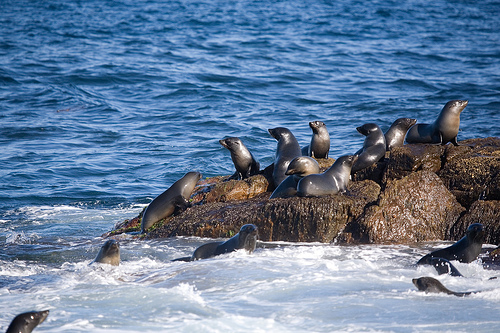
(Picture shows seals on Neptune Island; photo from Flickr)

Celebrity Baby News: Anneliese Seubert and Robert O’Farrell

11 Tuesday Dec 2012

Posted by A.O. in Celebrity Baby News

≈ 2 Comments

Tags

celebrity baby names, honouring, middle names

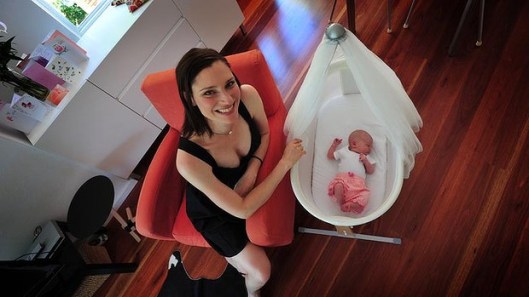
art729-model3-620x349Model Anneliese Seubert, and her partner Robert O’Farrell, welcomed their daughter Camille Winter on December 2, just before midnight. Camille’s middle name is a twist on her great-grandmother’s name, Winifred; it was Robert who came up with Winter.

Anneliese is originally from Germany, coming to Australia as a child. She began modelling at 15, after reaching the finals of the Dolly Covergirl Competition. At 17, she won the 1990 Ford Supermodel of the World competition, winning a contract with Ford Models. Since then she has modelled for designers such as Christian Dior, Karl Lagerfeld, and Yves Saint-Laurent.

Robert is a public servant, and he and Anneliese met three years ago on a blind date; they moved to Canberra two years ago.

We recently had another celebrity baby named after her great-grandmother, Rubika Johnson, and these two babies show the different ways you can honour loved ones, depending on whether you prefer style or sentiment.

Celebrity Baby News: Mitchell Johnson and Jessica Bratich-Johnson

08 Saturday Dec 2012

Posted by A.O. in Celebrity Baby News

≈ 4 Comments

Tags

celebrity baby names, honouring, nicknames

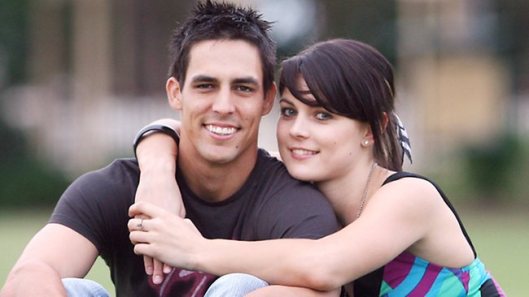
mitchell jessicaCricketer Mitchell Johnson, and his wife Jessica Bratich-Johnson, welcomed their first child on December 6 and have named their daughter Rubika Anne. It is understood that her first name is after her great-grandmother.

Mitchell has been playing international cricket since he was a teenager, and made his Ashes Test debut in 2007. He won the McGilvray Medal in 2008, and was named the ICC Cricketer of the Year in 2009. He currently plays for the Western Australia Warriors and the Mumbai Indians.

Jessica is a former model and karate black belt who now designs handbags. Mitchell and Jessica were married last year.

Although Rubika is unusual, it has the popular Ruby as a nickname.

← Older posts
Newer posts →

Enter your email address to follow this blog

Categories

Archives

Recent Comments

A.O.'s avatarwaltzingmorethanmati… on Zarah Zaynab and Wolfgang…
Madelyn's avatarMadelyn on Zarah Zaynab and Wolfgang…
JD's avatardrperegrine on Can Phoebe Complete This …
A.O.'s avatarwaltzingmorethanmati… on Rua and Rhoa
redrover23's avatarredrover23 on Rua and Rhoa

Blogroll

  • Appellation Mountain
  • Baby Name Pondering
  • Babynamelover's Blog
  • British Baby Names
  • Clare's Name News
  • For Real Baby Names
  • Geek Baby Names
  • Name Candy
  • Nameberry
  • Nancy's Baby Names
  • Ren's Baby Name Blog
  • Sancta Nomina
  • Swistle: Baby Names
  • The Art of Naming
  • The Baby Name Wizard
  • The Beauty of Names
  • Tulip By Any Name

RSS Feed

  • RSS - Posts

RSS Posts

  • Celebrity Baby News: Melanie Vallejo and Matt Kingston
  • Names from the TV Show “Cleverman”
  • Can Phoebe Complete This Sibset?
  • Zarah Zaynab and Wolfgang Winter
  • Baby, How Did You Get That Name?
  • Celebrity Baby News: Media Babies
  • Celebrity Baby News: Adelaide Crows Babies
  • Celebrity Baby News: Chris and Rebecca Judd
  • Names at Work: Name News From the World of Business and Employment
  • Celebrity Baby News: Sporting Round Up

Currently Popular

  • Rare Boys Names From the 1950s
  • Celebrity Baby News: Toby Allen and Darren Weller
  • Girls Names of Australian Aboriginal Origin
  • The Top 100 Names of the 1920s in New South Wales
  • Celebrity Baby News: Queensland Babies

Tags

celebrity baby names celebrity sibsets english names famous namesakes fictional namesakes honouring locational names middle names name combinations name history name meaning name popularity name trends nicknames popular names saints names sibsets surname names twin sets unisex names

Blog at WordPress.com.

Privacy & Cookies: This site uses cookies. By continuing to use this website, you agree to their use.
To find out more, including how to control cookies, see here: Cookie Policy
  • Subscribe Subscribed
    • Waltzing More Than Matilda
    • Join 517 other subscribers
    • Already have a WordPress.com account? Log in now.
    • Waltzing More Than Matilda
    • Subscribe Subscribed
    • Sign up
    • Log in
    • Report this content
    • View site in Reader
    • Manage subscriptions
    • Collapse this bar
 

Loading Comments...