• About
  • Best Baby Names
  • Celebrity Baby Names
  • Celebrity Baby Names – Current
  • Celebrity Baby Names – Past
  • Featured Boys Names
  • Featured Girls Names
  • Featured Unisex Names
  • Links to Name Data
  • Waltzing on the Web

Waltzing More Than Matilda

~ Names with an Australian Bias of Democratic Temper

Waltzing More Than Matilda

Tag Archives: honouring

Waltzing with … Augusta

15 Sunday Sep 2013

Posted by A.O. in Waltzing with ...

≈ 3 Comments

Tags

epithets and titles, famous namesakes, fictional namesakes, historical records, honouring, imperial titles, Latin names, middle names, name combinations, names of boats, nicknames, Roman names, royal names, sibsets

Lady Augusta_steamer

September 17 marks the maiden voyage of the first paddle-steamer down the Murray River, in 1853. The Murray is Australia’s longest river at 2508 km long; it has its source in the Alps, meanders across the southern inland plains where it forms most of the border between Victoria and New South Wales, and ends at Lake Alexandrina in South Australia, which empties into the Southern Ocean near Goolwa.

Europeans first discovered the Murray in 1824, and Captain Charles Sturt became the first explorer to follow the river’s course down to Lake Alexandrina, in 1828-29. In 1851, the South Australian government offered 2000 pounds reward to the first steamship to reach the junction of the Murray and Darling Rivers, at Wentworth.

The Scottish explorer Francis Cadell, who had already navigated part of the Amazon and sailed to China and Singapore by this time, heard about the reward in 1852. Nobody had claimed the money yet, and Cadell was determined to give it a shot. He had a steamer built in Sydney, and during its construction, did a test run on the Murray in a canvas boat.

Just to make things more exciting, a British-born Australian named William Randell who had lived near the Murray River also threw his hat in the ring. He built his own steamboat in 1852, even though he had no experience in boat construction, and had never seen a paddle-steamer before. He was the first person to actually put a steamboat in the river. Randell didn’t even know about the reward until later – it was a personal goal.

Cadell had much greater flair for public relations. While Randell named his craft Mary Ann after his mother, Cadell cannily called his the Lady Augusta, in honour of the South Australian governor’s wife, Lady Augusta Sophia Young (the town of Port Augusta in South Australia is also named after this lady). On the Lady Augusta‘s maiden voyage, Cadell took as his passengers the governor and his wife, members of the Legislative Council, and a journalist to give him a good write-up.

Cadell set out from Goolwa on August 25 1853. For most of the way he and Randell were neck-and-neck; however, on September 17, the Lady Augusta arrived in Swan Hill a few hours before the Mary Ann.

Swan Hill is 1000 miles from the sea, and although they were still ages from Wentworth, the governor decided the contest was over, and Cadell had won. He was deemed the first person to successfully navigate the Murray River in a practicable steamboat, and the governor arranged for gold medals to be awarded to Cadell, the Legislative Council, and himself. He then gave Cadell another 2000 pounds to build another boat.

William Randell kept going, and although he didn’t reach Wentworth either, he went further than Cadell. Due to a general feeling that Randell had been treated unjustly, he was given 300 pounds, and then another 400 when public sentiment continued to mutter about it. In fact neither Cadell or Randell had fulfilled the requirements of the contest, and this must surely rank as one of the unfairest competitions of all time.

Both Francis Cadell and William Randell attracted investors and went into business running steamships on the Murray, and because of their efforts, the Murray was opened up as an avenue of transportation. Perhaps it doesn’t really matter that Francis Cadell was the first official steamboat navigator of the Murray River in the Lady Augusta. I still think it stinks though.

Augusta is the feminine form of Augustus, from the Latin for “great, venerable, majestic”. Just as Augustus was used as a title by the Roman emperors, Augusta was a title bestowed upon some women attached to the imperial families of Rome and the Greek dynasties. It was the highest honour that could be conferred, signalling not only power, but a goddess-like status – indeed, many goddesses were given the title of Augusta.

The first woman to receive the title was Livia Drusilla, the widow of the Emperor Augustus, who became known as Julia Augusta. By all accounts she was very proud and regal, with a commanding personality. She had a lot of political influence, and enjoyed wielding power and being showered with honours. She was a direct ancestor of a dynasty of emperors, including Tiberius (her son), Caligula, Claudius and Nero.

The name Augusta was introduced to Britain in the 18th century through the Hanoverian rulers. George III gave the name Augusta to his sixth child and second daughter, Augusta Sophia. The town of Augusta on Western Australia’s south-west coast is named after her, and I fancy that Lady Augusta might have been too. Princess Augusta was named after her grandmother, Princess Augusta of Saxe-Gotha – Augusta, Georgia, in the United States, which hosts The Masters golf tournament, is named after her.

Augusta has been a traditional name in the British royal family, and was common amongst the aristocracy. However, we often think of it as a comically “difficult” old lady name. Oscar Wilde may have begun it, in his comedy, The Importance of Being Earnest, where Lady Bracknell is the main characters’ haughty Aunt Augusta.

Growing up, it seemed that every second children’s book had an Aunt Augusta in it, who would be crabby, or eccentric, or snooty, or fun-suppressing. The name almost seemed to be code for such an aunt, in the same way you would expect a fictional lab assistant named Igor to be hunch-backed and attached to a mad scientist. J.K. Rowling followed this English kidlit tradition by giving Neville Longbottom a dominating, hard-to-please grandma named Augusta.

And before I could even read anything much, life followed (or preceded?) art by giving me a Great Aunt Augusta who, in true literary fashion, was stern and austere, hated noise, mess and light, thought that children should be neither seen or heard, and scared the stuffing out of me when I was four.

For ages it didn’t seem possible to me that you could name a baby Augusta; it didn’t seem so much an “old lady name” as an “old bag name”. But Augusta was once an elegant young lady’s name, and could be again. With August a stylish choice for boys and girls, and Gus a fashionable name for boys, Augusta’s chances look better than they have in a long time.

Augusta isn’t the right choice for me as a family name, but maybe it is for you. Maybe your Great-Aunt Augusta was warm and loving and made you cinnamon buns, or cool and funny and gave you rides on her motorbike, you lucky punk. Point is, it could be the perfect name for someone else.

Augusta is a rare vintage name which still seems patrician and dignified, but comes with spunky nicknames Gus and Gussie, and the quirky Augie and Oggy. It would also make a sensational middle name. I don’t think Augusta’s everyone cup of tea and biscuit, but I imagine those who are drawn to it would be passionate supporters. You can’t fall halfheartedly in love with Augusta – she’s too strong for that.

Name Combinations for Augusta

Augusta Caroline, Augusta Geraldine, Augusta Harriet, Augusta Florence, Augusta Mabel, Augusta Ottilie

Brothers for Augusta

Charles, Ernest, Frederick, Henry, Leopold, Octavius

Sisters for Augusta

Beatrice, Cecilia, Elizabeth, Georgiana, Helena, Victoria

Note: The name combinations are from Australian historical records, while the siblings are from the British royal family.

POLL RESULT: Augusta received an approval rating of 77%. 29% of people loved the name, and a further 29% liked it.

(Photo is of the Lady Augusta on the Murray River; image from the State Library of South Australia)

Rare Royal Names for Girls

01 Sunday Sep 2013

Posted by A.O. in Name Themes and Lists

≈ 11 Comments

Tags

Anglo-Saxon names, Christmas names, Danish names, english names, famous namesakes, fictional namesakes, French names, germanic names, Greek names, honouring, Latin names, locational names, middle names, mythological names, name history, name meaning, names from television, nicknames, Old English names, Old Norse names, rare names, Roman names, royal names, saints names, scandinavian names, Star Trek

Berengaria

Royal babies have been on everyone’s mind lately, and we recently saw two babies born in the royal family within less than a month of each other.

Not only have been people been doing web searches for Prince George and Maud Windsor, they’ve been searching for royal baby names in general, uncommon royal names, and royal names that nobody else is using.

So here is a list of queens and princesses connected to English royal houses by either birth or marriage, whose names aren’t popular or common in Australia (although I can’t promise nobody else will use them).

Adeliza

Adeliza of Louvain married Henry I, and became queen of England. She was considered pretty, but didn’t manage to produce any royal heirs. However, after Henry’s death she re-married, and had seven children; she is an ancestor of many of the noble English families. William the Conqueror had a daughter called Adeliza, named after his sister – the name wasn’t uncommon amongst Norman-French aristocracy. Adeliza is a medieval English form of Adelais, a short form of Adelheidis, the original old Germanic form of Adelaide. It’s pronounced ad-uh-LEE-za. Although it doesn’t have any connection to the name Elizabeth, it looks like a combination of Adele and Eliza, and might feel like a way to honour relatives who have variants of these names. It’s rare, but doesn’t seem unfamiliar.

Berengaria

Berengaria of Navarre was Queen of England through her marriage to Richard I, “the Lionheart”. She is the only English queen never to set foot in the country, since she only visited England after her husband’s death, when she was no longer queen. Richard himself spent only a few months in England during his marriage, as he was busy Crusading. Richard and Berengaria never had any children, and it is not known if their marriage was ever consummated, as they spent so much time apart. Richard’s family seem to have liked her, and there are a few other royal English Berengarias, perhaps named after her. Berengaria was a traditional name amongst Spanish royalty, and is the feminine form of Berengar, an ancient Germanic name meaning “bear spear”. It is pronounced behr-en-GAR-ee-uh, and the name has been bestowed upon a planet in the Star Trek universe inhabited by dragon-like creatures. This doesn’t sound like any currently popular names, and the nickname Berry is appealing.

Christabel

Christabel was the middle name of Princess Alice, wife of Prince Henry, Duke of Gloucester, a son of George V. Princess Alice was born into the aristocracy on both sides of her family, and was a direct descendant of Charles II, through an illegitimate line. She is related to Sarah, Duchess of York, the wife of Alice’s great-nephew, Prince Andrew. Just after the Second World War, Prince Henry was appointed Governor-General of Australia, and he and Princess Alice lived in Canberra for two years. The name Christabel is a combination of Christina with a -bel suffix, but Princess Alice was given this name because was born on December 25, and the name suggests Christmas bells. Her niece Princess Alexandra was also born on Christmas Day, and shares the middle name Christabel. Apart from the Christmas connection, this pretty name might seem like a good way to honour a Christine and an Isobel (for example) simultaneously.

Elfreda

Elfreda was one of the wives of Edgar I, and she was the first king’s wife to be crowned and anointed as Queen of England. Beautiful and powerful, she was unfortunately linked with the murder of her stepson Saint Edward the Martyr, and ever after appears in medieval history in the role of evil stepmother. Her own son, replacement to the martyred Edward, was Ethelred the Unready, only a child when he took the throne. Elfreda was a traditional name amongst Anglo-Saxon royalty, and Alfred the Great of Wessex had a daughter named Elfreda, an ancestor of Queen Matilda, the wife of William the Conqueror; through Matilda, the monarchs of England are descendants of the House of Wessex. There is a Saint Elfreda, an Anglo-Saxon princess. Elfreda is a modern spelling of the Anglo-Saxon name Ælfþryð, meaning “elf strength”. The name went out of use after the Norman Conquest, but was revived in the 19th century, although it never became popular. Freda would make a good nickname – unfortunately, sweet Elfie would probably be misheard as Alfie, leading to confusion.

Eugenie

Eugenie was the second name of Victoria Eugenie, a grand-daughter of Queen Victoria who married Alfonso XIII and became Queen of Spain. Her grandson Juan Carlos I is the current king of Spain. Unfortunately, her marriage to Alfonso wasn’t particularly happy, and she didn’t enjoy great popularity with the Spanish people – she was greeted with an assassination attempt on her wedding day. After the Republicans gained power, Victoria Eugenie went into exile with the rest of the Spanish royal family. Queen Victoria Eugenie’s middle name was in honour of her godmother, Maria Eugenia “Eugénie” de Montijo, empress consort to Napoleon III. Eugénie was a member of the Spanish nobility, and after the defeat of the Second French Empire, she lived in England, where she became friendly with the British royal family. The name remains well-known because of Princess Eugenie of York, daughter of Prince Andrew, who was named after Victoria Eugenie. Eugenie is the Anglicisation of Eugénie, the French form of Eugenia, which is the feminine form of Greek Eugenius, meaning “well born, of noble birth”. This elegant name is said yoo-JEE-nee, and Gina or Genie could be used as nicknames.

Marina

Princess Marina of Greece and Denmark was a cousin of Prince Philip. Like her cousin, she married into the British royal family when she wed Prince George, the Duke of Kent, an uncle of Queen Elizabeth II; she was the last foreign-born princess to marry into the British royal family. Princess Marina was attractive and stylish, earning her a place in the International Best Dressed List Hall of Fame, and her favourite shade of blue-green became known as “Marina blue”. Princess Marina’s mother was the grand-daughter of Tsar Alexander II of Russia, and Marina may have been named after Princess Marina of Russia. Princess Marina and the Duke of Kent were married in 1934, and a year later, Swiss water-ski champ Marina Doria was born, which looks more than coincidental. Oddly enough, Marina Doria also became Princess Marina, when she married a prince of Naples. Marina’s name has been passed down to her grand-daughter, Maud Elizabeth Daphne Marina Windsor, and I have seen a birth announcement for a Scarlett Marina this week. Marina is the feminine form of the Roman name Marinus, which may be from the Latin for “of the sea”. There are two saints named Marina, and it’s also the name Saint Margaret is known by in the Orthodox church. Marina is a very beautiful name, and familiar in Australia due to entertainer Marina Prior.

Melita

Princess Victoria Melita was a grand-daughter of both Queen Victoria and Tsar Alexander II, making her Princess Marina’s great-aunt. Her love life was one of great turmoil, because she fell in love with her cousin Kirill, Grand Duke of Russia, but was forced to marry her cousin Ernest, Grand Duke of Hesse instead. The marriage wasn’t a success, as Victoria Melita preferred Kirill, and Ernest preferred young boys. Soon after Victoria and Ernest ‘s divorce, Kirill was almost killed during the Russo-Japanese War, and this brush with death made him realise that nothing was more important than being with his true love. He defied his family, and married Victoria Melita, much to his parents’ rage and disgust. Although their marriage and family life was happy, the Russian Revolution and subsequent exile was a setback, and the couple rather naively supported the Nazi Party. More emotional pain followed for Victoria when Kirill was unfaithful to her, which she never got over. Her life contained some bitterness, but Victoria Melita’s middle name has a sweet meaning. Melita is the Latin name for the island of Malta, thought to come from its Greek name, Melite, meaning “sweet as honey”; Malta was famous for its honey production. This doesn’t sound out of place next to popular names like Mila and Layla, and would be a great way to honour Maltese ancestry; you could use Millie or Lita as nicknames.

Sibylla

Princess Sibylla (born Sibylle) was a great-granddaughter of Queen Victoria who married her second-cousin Prince Gustaf Adolf (known as “Edmund”) of Sweden; her son Carl XVI Gustaf is the current king of Sweden. The couple don’t seem to have been very popular in Sweden, being plagued by rumours of Nazi sympathising, of which there is no proof. Unfortunately, Sibylla did have quite a few relatives in the Nazi Party in Germany, who threw her a big fat Nazi wedding, and this can’t have been a help at soothing suspicions. The name Sibylla (or Sybilla) has been used amongst European royalty and nobility since the Middle Ages, and has been connected with the British royal family from early on. William the Conqueror’s son Robert was married to a Sybilla, and Henry I had an illegitimate daughter named Sybilla, who married Alexander I of Scotland. Sibylla is from the Greek word for a female prophet of the ancient world who uttered divine revelations in a state of frenzy; the word became sibyl in English. During the Middle Ages, it was thought that the Greek and Romans sybils had been precursors to Christian prophecy, and therefore gained respectability as a Christian concept and name. This name (and its variants), though uncommon, is quite trendy in Australia, being known from actress Sibylla Budd, and the heroine of My Brilliant Career, Sybylla Melvyn, whose name inspired feminist publishing house, Sybylla Press.

Sigrid

The splendidly-named Sigrid the Haughty was supposedly the wife of Sweyn Forkbeard, who ruled England before the Conquest, in the days when the Danish royal house held the throne. It’s not clear if Sigrid was her real name, because it seems that Sweyn’s wife was actually Polish rather than Scandinavian, and in fact we can’t be sure if “Sigrid the Haughty” even existed. She may well be a fictional character, but her story is compelling. Beautiful and proud, Sigrid was a woman of great political power, who tended to wreak terrible revenge on those who annoyed her, and is supposed to have burned two of her suitors to death to discourage others. It could be that this fascinating lady of legend was tacked on to a real Polish woman who married Sweyn, and became the mother of King Canute the Great. Sigrid is from the Old Norse name Sigríðr, meaning “beautiful victory”. This is another name familiar in Australia because of an actress – the very famous Sigrid Thornton. The usual nicknames are Siri and Sigi.

Thyra

Thyra was the daughter of Sigrid and Sweyn Forkbeard, the sister of Canute the Great. She was married to Godwin, the first Earl of Essex, the father of King Harold who fell at the Battle of Hastings. She didn’t live very long, and she and Godwin didn’t have any children together, so she’s rather a footnote in the history books. She may have been named after Thyra, the wife of King Gorm the Old of Denmark; they were the parents of Harald Bluetooth, the father of Sweyn Forkbeard. According to at least one source, Queen Thyra was English, the daughter of King Ethelred of Wessex. She was said to be a smart and sensible woman who led an army against the Germans, and was described as the “pride of Denmark”. According to legend, one of Thyra’s daughters was captured by trolls and carried off to their kingdom in the far north. Thyra is from the Old Norse name Þýri, derived from the name of the god Thor, and possibly meaning “Thor’s war”. The name is pronounced TEE-rah, and I think it’s attractive and contemporary-sounding, although pronunciation may be an issue, with people trying to say it THY-rah.

POLL RESULT: People’s favourite names were Marina, Adeliza, and Christabel, and their least favourite were Elfreda, Thyra, and Berengaria.

(Picture is a drawing of Queen Berengaria)

Celebrity Baby News: Jason Gann and Alejandra Varela

29 Thursday Aug 2013

Posted by A.O. in Celebrity Baby News

≈ 2 Comments

Tags

Brazilian names, celebrity baby names, honouring, middle names, nicknames

Premiere Screening Of FX's "American Horror Story: Asylum" - Arrivals

Actor and comedy writer Jason Gann, and his wife Alejandra Varela, welcomed their first child on August 13, and have named their son Xano William. Xano is a Brazilian short form of Alexandro, a masculine form of Alejandra’s name, while William is Jason’s own middle name. The name is pronounced SHAH-no.

Jason first gained national attention when his short film Wilfred won Best Comedy and the People’s Choice Award at Tropfest in 2002, while Jason himself gained Best Actor in that year and the next. He went on to write and star in 52 episodes of TV sketch show The Wedge, as well its spin-off show, Mark Loves Sharon.

In 2007 he wrote and starred in the TV series Wilfred, based on his short film. Both seasons won awards at Tropfest, and he received AFI Awards for Best Comedy and Best Screenplay in a Television Series. In 2010, Wilfred was sold to a US TV network and redeveloped for the American market, with Jason co-starring with Elijah Wood.

Alejandra is a Spanish-born actress and model; she and Jason were married in February this year.

Celebrity Baby News: Celebrity Baby Round Up

29 Thursday Aug 2013

Posted by A.O. in Celebrity Baby News

≈ 7 Comments

Tags

celebrity baby names, celebrity sibsets, honouring, middle names

465981-basil-zempilas-baby

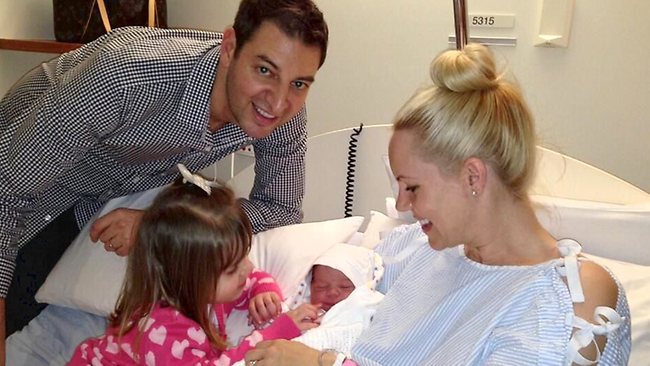
Media personality Basil Zempilas, and his wife Amy, welcomed their daughter Chloe Margaret on August 29. The middle name is in honour of Amy’s grandmother, Margaret. Chloe Zempilas weighed 3.17 kg (7 lb), and measured 50 cm long; she joins big sister Ava, aged 2. Ava’s birth was announced on the blog. ~ Thanks to Ebony for this celebrity baby tip!

Golfer Marc Leishman, and his wife Audrey, welcomed their son Oliver on August 18, a brother for Harvey. Marc currently plays on the PGA Tour, and in 2009 he became the first Australian to win the Rookie of the Year award. He won his first tournament last year at the Traveler’s Championship, becoming the second Australian to win after Greg Norman in 1995.

Tennis player Casey Dellacqua, and her partner Amanda, welcomed their son Blake Benjamin a few weeks ago. Blake’s birth was announced at the US Open, which was also the first public acknowledgement that Casey is gay and has a partner. Casey has ranked as high as 39 in the world, and won her first Grand Slam Title at the French Open in 2011, playing mixed doubles.

Soccer coach Michael Brown, and his wife Louise, welcomed their son Tyler not long ago. Michael is a coach at the Ipswich Knights.

Reality TV contestants Josh Maldenis and Andi Thomas welcomed their son Harry Joshua on August 6. Josh and Andi entered the last season of cooking show My Kitchen Rules, and withdrew from the competition when they discovered that Andi was pregnant. Tagged on the show as “dating hipsters”, Josh is a business development manager and Andi is a fashion buyer.

NRL player David Gower, and his wife Erika, recently welcomed their daughter Amelia. Amelia’s birth was announced on The Footy Show, when David and Erika took part in the “Perfect Partners” quiz segment. David has been playing rugby league professionally since 2006, and has been with the Manly Sea Eagles since this season. He has also played rugby league in England.

NRL player Craig Gower, and his wife Amanda Flynn, welcomed their daughter Freya Rose on July 23, a sister to Lola, aged 4. Freya was born just a few hours after Prince George, but because of the time zone difference, they don’t share a birthday. Craig has been playing professional rugby league since 1996, and is currently with the Newcastle Knights. He has been selected for the national squad, New South Wales, and City. Craig has also played rugby union in France and Italy. Amanda is a model, media personality, and former Penrith Panthers cheerleader. Craig and David Gower are not related, as far as I know.

NRL player Josh Hoffman, and his wife Emma, welcomed their daughter Leilani Grace in July. The middle name is in honour of Josh’s mother, Grace, who passed away unexpectedly in 2009. Josh has played for the Brisbane Broncos since 2008, and has also been selected for the New Zealand national team. He is related to retired rugby league star Wendell Sailor, and to Dane Gagai and Travis Waddell, who play for the Newcastle Knights. Emma is a registered nurse.

Cricketer Sarah Elliott, and her husband Rob, welcomed their son Samuel, known as “Sam“, about nine months ago. Sarah made her debut for Victoria Spirit during the 2000-01 season, and made her debut on the women’s national team in 2005, against England. During the Women’s Ashes series this month in England, Sarah became the first Australian mother to make a century. Rob is a cricket coach at the Northern Territory Institute of Sport, and accompanied Sarah and Sam on tour.


An Interview with Linda Rosenkrantz from Nameberry

25 Sunday Aug 2013

Posted by A.O. in Blog Reviews

≈ 3 Comments

Tags

baby name blogs, baby name books, Berry Juice, Beyond Jennifer & Jason, celebrity baby names, changing names, Glamour magazine, honouring, Linda Rosenkrantz, Nameberry, Pamela Redmond Satran, popular names, rare names, The Baby Name Bible, US name popularity

pamlinda8486

The baby name world changed forever when Pamela Redmond Satran and Linda Rosenkrantz penned their seminal work, Beyond Jennifer & Jason, back in the 1980s. Many more books were to follow, and along the way they educated a generation of parents on naming babies, and made it possible to admit to being interested in names – even obsessed with them. Now they have the Nameberry website, which provides a massive amount of information and opinion on names, creates a space for name nerds everywhere to meet up with other devotees, and inspires many a name blogger. Pam and Linda are the fairy godmothers of the baby name community, and you can link with them on Facebook and Twitter too.

Linda has been kind enough to take some time from her busy schedule to be interviewed on names, writing Jennifer & Jason, creating Nameberry, and how their love of names changed all our lives.

What is your name? 

Linda Rosenkrantz aka Linda Ruth Rosenkrantz Finch.

Have you ever changed your name?

This is a story that I’ve told in a Nameberry blog. It’s about how I was give a name at birth, but never called by that name. I was so traumatised when I began kindergarten and was called by that unfamiliar name that my wise mother allowed me to pick a new one for myself at the age of 5 or 6.

When did you first become interested in baby names?

I would say names in general rather than just baby names have always been a passion of mine from a very early age – a shrink might say it dates back to that kindergarten experience. And being a compulsive list-maker, I was constantly making lists of names, including names for fictional characters, names of prospective husbands, and of course, future children.

How did you and Pam meet?

A mutual friend brought her over for dinner to where I was then living, in Greenwich Village [in New York City], and we hit it off immediately – bonding, in part, over our mutual love for and attitudes towards names. Strangely enough, that was one of the few times we lived in the same city – she later moved to England, then the Bay area [of San Francisco], and then New Jersey. I settled in Los Angeles.

What made you decide to write Beyond Jennifer & Jason together, and how did the process of writing and publishing go?

Pam had been frustrated at the fact that there were no good name books around when she was naming her first child, Rory, and I had the idea of writing an article about the subject for Glamour magazine where Pam was an editor. We both realized that this had the makings of a book that would be a perfect project for a collaboration.

We wrote a very short outline of Beyond Jennifer & Jason and brought it to an agent, who thought it was so original – no one had ever looked at names this way, taking in their contemporary social context and categorising them – that he was sure he could sell it. It was bought by St. Martin’s Press, who published all ten of our name books, all edited by the excellent Hope Dellon.

Over the years, we have gone from communicating via thermal faxes to the internet – I’d say we email an average of 25 times a day, plus phone confabs and New York meeting several times a year. Responsibilities have been divided along the lines of our various strengths. But when it comes to working on some large project, we might split the boys and girls, then switch and edit each others’ efforts. It’s been a remarkably congenial, long-term marriage.

How did the success of your first book change your lives? Did you wake up one morning and discover you were now international baby name gurus?

First of all, here’s Pam’s answer to this question:

The first book changed my life in that it allowed me to quit my full-time job as an editor at “Glamour”, work at home as a writer full-time, and spend more time with my children – at that time, my oldest was only three years old. Although “Beyond Jennifer & Jason” was a big hit, we didn’t feel like international baby name gurus. Just writing books, you have so much less relationship with your readers, and it was difficult for us to tell how much influence our work really had. Our books were not published outside the US until the early 2000s, so we certainly didn’t feel like we were having an international impact overnight … or for a really long time.

Yes, it was a gradual process – and, although our books were successful in the UK, it wasn’t until the internet hit that we expanded into international “gurus”. Cumulatively, it has changed my life completely – widening my world in all sorts of ways, providing immense gratification. And it’s also been VERY HARD WORK.

When did you and Pam start the Nameberry website?

We started off with a smaller site, based on our book The Baby Name Bible. (We were fortunate enough to retain the digital rights to all our books – which is a very unusual situation). Nameberry began in 2008; we were excited to expand the word to a larger audience. We had no idea at the time that such a huge community of name lovers would form around the forums and blogs – an incredible group of informed, helpful people – now reaching two million people a month!

Do you have a favourite blog post that you have written for Nameberry?

Hard to come up with one post, but I especially enjoy those that require a lot of research, and feel good when I can come up with a topic that hasn’t been touched on before. (Which gets harder and harder with all the input we’re now getting from our great Berry Juice bloggers.)

There’s been some new developments on the site recently – what else is in the pipeline?

We are working on some new features, but we’re most excited about two new e-books – best girls’ names and best boys’ names.

What are some of your favourite names?

Pam and I did a slideshow of our faves on Nameberry, which includes several names I never tire of – Barnaby, Mirabella, Dinah, Duncan, and Araminta.

What names do you dislike?

Herman and Sherman.

Are there any names you love that don’t seem practical in real life?

That area is definitely narrowing. Some of the multi-syllabic and exotic names that once seemed too heavy for a baby to carry now seem perfectly wearable – like Persephone, Peregrine, Zinnia, Amaryllis and Peridot. The baby-naming climate is so much more “anything goes” than it was when Pam and I started.

What are your favourite names in the US Top 100?

Girls: Amelia, Lydia and Violet. Boys: Josiah, Julian and Lucas.

What are your favourite names in the rest of the US Top 1000?

Girls: Ivy, Maeve, Paloma and Arabella. Boys: Declan, Edison, Finnegan and Jedidiah.

What are your favourite names that have never been in the US 1000?

Verity, Boaz and Barnaby.

What is your child’s name?

Chloe Samantha (the Samantha was for my father, Samuel, who had recently died).

Did you and your husband agree easily on a baby name together?

Since my husband is British, we had some varying perceptions of names, especially boys names – and in fact never did find a boy’s name we both really loved. But when we hit on Chloe, there was instant agreement.

What is something that we may not know about you?

That I’ve written books on subjects ranging from Old Hollywood to collectibles to the history of telegrams to animation art to memoir to fiction. And Pam is a New York Times best-selling writer of fiction and humorous books.

(Photo of Linda and Pam from Nameberry; Linda is on the left)

Royal Baby News: Lord Frederick Windsor and Sophie Winkleman

19 Monday Aug 2013

Posted by A.O. in Celebrity Baby News

≈ 3 Comments

Tags

celebrity baby names, honouring, royal baby names, royal names

Lord+Frederick+Windsor+Sophie+Winkleman+Wedding+jA4beGI3Bwrl

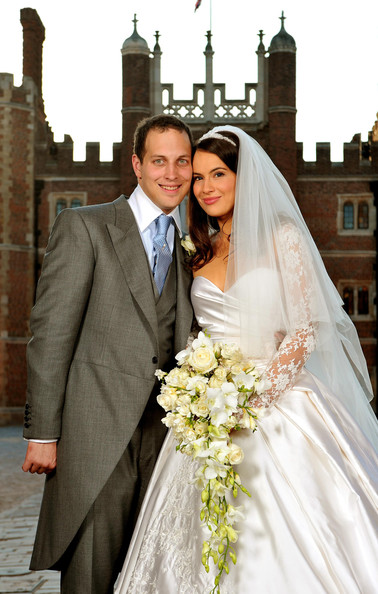
Lord and Lady Frederick Windsor welcomed their first child on August 15, and have named their daughter Maud Elizabeth Daphne Marina. Maud Windsor was born at Ronald Reagan UCLA Medical Center in Los Angeles, and weighed 7 lb (3.2 kg). The baby is 42nd in line to the throne.

Lord Frederick is the only son of Prince and Princess Michael of Kent. Prince Michael is a cousin of Queen Elizabeth, so Lord Frederick is a first cousin once removed to the queen. Through his maternal grandmother, he is a first cousin twice removed to Prince Philip. Lord Frederick is a financial analyst at JP Morgan bank in Los Angeles.

Lady Frederick Windsor is an English actress known professionally as Sophie Winkleman; she is the daughter of children’s author Cindy Black. Her career includes work on stage, television, film and radio, and she has had a recurring role on US sit-com Two and a Half Men. Lord and Lady Windsor were married in Hampton Court Palace in 2009.

Maud is a traditional name in the royal family, with the most recent being Princess Maud of Fife (Countess of Southesk upon her marriage), a grand-daughter of Edward VII, niece of George V and cousin of George VI. She was named after Princess Maud of Wales, the youngest daughter of Edward VII, who later became the Queen of Norway, through her marriage to Haakon VII.

Elizabeth is in honour of Queen Elizabeth II.

Daphne is in honour of Lady Frederick’s grandmother, who she was very close to.

Marina is in honour of Princess Marina, Duchess of Kent, the mother of Prince Michael of Kent, and the baby’s great-grandmother. Princess Marina, who was born Princess Marina of Greece and Denmark, was the most recent foreign-born princess to marry into the British royal family, which occurred in 1934. She was known for her great sense of fashion and style.

Celebrity Sibset: Wendy Harmer

17 Saturday Aug 2013

Posted by A.O. in Sibsets in the News

≈ 4 Comments

Tags

baby name advice, celebrity baby names, celebrity sibsets, choosing baby names, classic names, famous namesakes, fictional namesakes, honouring, Irish names, locational names, name popularity, popular names, products with human names, surname names

8487-1_n

Wendy Harmer is a highly successful comedian, who for many years has entertained on stage, television and radio. She was the first woman in Australia to host her own comedy show, The Big Gig, in 1989, and for more than a decade she was co-host of a top-rating breakfast show on 2-Day FM, when she became one of the nation’s highest paid entertainers.

Wendy is a prolific and successful author, having written humour for adults, chick lit novels, teen fiction, kid’s books, two plays, and the libretto for an opera. Her best-selling children’s series, Pearlie the Fairy, has been turned into an animated TV show. She is also editor of The Hoopla, a women’s news and opinion site.

Wendy is married to Brendan Donohoe, and has two children. Her son is named Marley (aged about 15), and her daughter is named Maeve (aged about 13).

Wendy appears to be yet another star of radio with a bee-lined bonnet in regard to baby names, because she has written an article about them for The Hoopla. It’s one of those “names not to call your baby” lists, which I must admit I don’t usually care for, because they don’t seem to really be helpful to parents so much as bullying anyone who happens to have different tastes and opinions from yourself.

Interestingly, Rule Number 2 on the list states that you shouldn’t use a famous person’s surname as your child’s name. Her son is named after Bob Marley. Okaaaay. Number 4 is that you musn’t name all your children with same letter. Mmmmm.

This article is an “update” of an earlier one, where one of the pieces of advice was that the pronunciation of your child’s name should be clear from the way it is spelled. Even now, when the name is quite well-known, some people don’t know how to pronounce Maeve from its spelling, and think that it must be MAY-vee or mah-EEV.

I do notice that so often when parents criticise baby names, the same criticisms could be levelled at their own children’s names. The most obvious example is that rather ghastly woman who said that place names as baby names were lower-class, when her own daughter was named after a country in Asia. I guess we all have mother-blindness about our baby names, and I have been guilty of the same thing myself – it’s an easy trap to fall into, but luckily I didn’t do it on TV or anything.

When we come up with rules on naming babies which we ourselves cannot stick to, it may be a sign that the rules aren’t all that useful. Just a thought!

Wendy doesn’t like her own name, which peaked at #15 in the 1950s, when Wendy was born. Part of her disappointment is that her mother chose the name out of a knitting pattern book, when the layette she was knitting was called the “Wendy”. She imagined that she had been named after Wendy Darling from Peter Pan, so being named after a knitting pattern didn’t seem so special.

Wendy much prefers her father’s choice for her name, which was Claire, the name of her beloved great-aunt. In the 1950s, Claire was #224; it rose steeply in popularity during the 1960s and ’70s, and has been in the Top 100 since the 1980s.

Now I think that’s really useful naming advice taken from real life. It may not be the best idea to choose a baby name peaking in popularity and about to fall and become dated, or select one virtually at random.

A better choice could be a classic which is lower in popularity and about to start rising, to become very popular in the long-term future. And it’s probably preferable to honour a beloved family member than to name your baby after a product – it’s nice to have a name which has some significance.

Think about the name story you are going to pass on to your child – a knitting pattern clearly doesn’t cut it. And sometimes dad knows best.

PS Wendy did manage to give the name Claire to one of her characters, the heroine of her novel, Farewell My Ovaries.

(Picture of Wendy and her family taken some years ago at Uluru; photo from Body + Soul)

Waltzing with … Benedict

11 Sunday Aug 2013

Posted by A.O. in Waltzing with ...

≈ 6 Comments

Tags

famous namesakes, honouring, Latin names, middle names, name combinations, nicknames, papal names, rare names, saints names, sibsets

StateLibQld_1_80007_Ben_Chifley

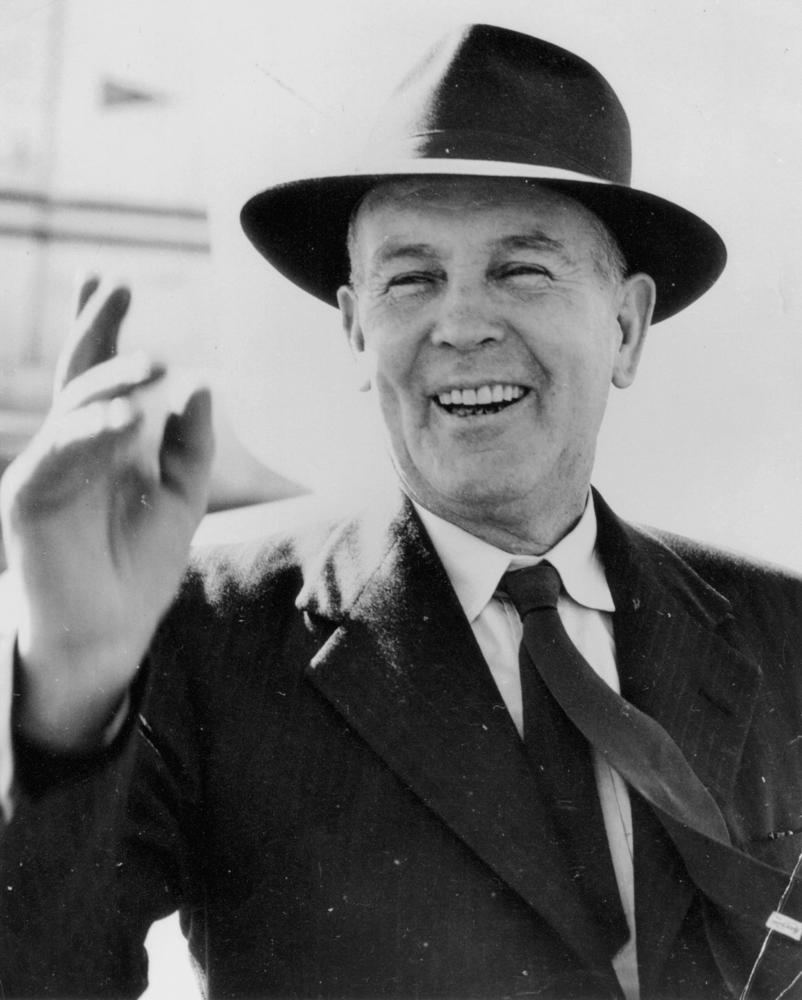
On Thursday August 15, it will be Victory in the Pacific Day, which commemorates the day that Japan surrendered in 1945, effectively ending World War II. In Australia, Labor leader and Prime Minister Ben Chifley announced the news in a radio broadcast at 9.30 am on Wednesday August 15 1945, with the words, Fellow citizens, the War is over. Australian cities and towns erupted into spontaneous celebration, and by evening, the jubilant crowds were the largest to have ever gathered in the nation’s history.

One of Australia’s iconic images from history is the “dancing man” who was filmed by MovieTone News dancing happily in Elizabeth Street in Sydney on August 15 1945. Several men have claimed to be the Dancing Man, and the image remains an enduring symbol of the nation’s joy that the war was over at last. A well-attended church service of thanksgiving was held in the Domain that afternoon, and with the next two days declared holidays, there were Victory parades all over the country.

When Ben Chifley announced the war was over, he had only been Prime Minister for a month. He led Australia into the post-war era, with the promise of “sane and progressive government” and was successful in moving us to a peace-time economy. Servicemen and women were eased back into civilian life, and public works such as the Snowy Mountains Hydro-electricity Scheme meant that unemployment was virtually nil. This demand for labour opened the door for assisted migration schemes, which were to change Australia forever.

Chifley brought in many welfare initiatives, including unemployment benefits, sickness benefits, fairer pensions and, against a legal challenge by doctors, what was to become the Pharmaceutical Benefits Scheme, which subsidises the cost of essential medicines. His promises to improve equality in wealth, income and opportunities came to fruition during the prosperity of the 1950s and ’60s.

Ben’s full name was Joseph Benedict Chifley, and his second name was suggested by the Mother Superior of Saint Benedict’s Convent in Queanbeyan, where his mother Mary had worked as a servant. He grew up in a Catholic community, but defied the papal decree that Catholics could not marry outside their religion when he wed Elizabeth McKenzie, a Presbyterian. Although he continued attending mass, he considered himself to be outside the Catholic church, and labour politics became his true religion – one which he followed with an evangelical zeal.

He is most famous for his “Light on the Hill” speech, which he gave at a Labor conference in 1949, towards the end of his term as Prime Minister (and not long before his life ended). He spoke of the many people in the labour movement, including himself, who worked not for personal gain, but in order to bring better conditions for others.

He said: I try to think of the Labor movement … as a movement bringing something better to the people, better standards of living, greater happiness to the mass of people. We have a great objective – the light on the hill – which we aim to reach by working for the betterment of mankind.

For his idealism, his humanity, and his vision, Ben Chifley is counted amongst the nation’s greatest Prime Ministers. So much of the Australia we know today began with Chifley’s aspirations for a future he would never live to see.

Benedict is derived from the Latin name Benedictus, meaning “blessed”. It was a name commonly chosen by Christians for its meaning, and there are several saints named Benedictus or Benedict.

The most famous of these is Benedict of Nursia, a 6th century saint, who, according to tradition, was the son of a Roman noble. While still a very young man, he turned away from the pleasures of the world and became a hermit in a cave in the Subiaco region. He attracted many disciples, and eventually founded the famous monastery of Monte Cassino, which is in the mountains halfway between Rome and Naples.

Near the end of his life, he wrote his Rule of Benedict, which lays down the precepts for the organisation of communities of monks under an abbot. Compared to other works of this nature, Benedict’s is notable for its moderation and practicality, which made it very popular. He wrote a Monasteries for Beginners, and (unlike more zealous Rules which barely allow food or sleep), his Rule is possible for anyone to follow.

Benedict’s Rule has been used for 1500 years; the foundational document for thousands of religious communities in the Middle Ages, it is still in use today, and is the most common Rule used by monastries and monks. As the father of Western monasticism, Benedict’s importance to history can hardly be overstated. During the early medieval period, monasteries became respositories for learning, and centres of education. Because of Benedict’s influence, when the Middle Ages ended, there was enough knowledge retained to build on for the future.

Due to Saint Benedict of Nursia’s importance, many others entering the religious life (especially Benedictines) chose Benedict as their name, and it has been a favourite choice for popes. There have been sixteen Pope Benedicts, the most recent being the current Roman Pontiff Emeritus, Benedict XVI, who chose his papal name in honour of Benedict of Nursia, and of Pope Benedict XV, who had worked for peace during the First World War.

Pope Benedict said in one of his early sermons that with his life and work, Saint Benedict exercised a fundamental influence on the development of European civilisation and culture, and helped Europe emerge from “the dark night of history” that followed the fall of the Roman empire. For his role of preserving European culture, Saint Benedict was named patron protector of Europe by Pope Paul VI in 1964.

Benedict has never charted in Australia, so if you would like a rare name with a positive meaning that can mingle with the crowds as simple Ben, then Benedict seems like a good choice. It’s weighty and dignified, and honours one of the great Prime Ministers, who changed Australia, as well as a saint who changed western civilisation. It’s a name heavy with significance and history, yet actor Benedict Samuel reminds us how well this name can suit a young person.

Name Combinations for Benedict

Benedict Alexander, Benedict Jude, Benedict Leonard, Benedict Nathaniel, Benedict Sebastian, Benedict Vincent

Brothers for Benedict

Constantine, Dominic, Felix, Gabriel, Ignatius, Xavier

Sisters for Benedict

Agnes, Caroline, Eloise, Genevieve, Lucia, Margaret

POLL RESULT: Benedict received an approval rating of 80%. 33% of people liked it, and 27% of people loved it.

Is August a Boy’s Name, or the Name of a Month?

10 Saturday Aug 2013

Posted by A.O. in Naming Assistance

≈ 8 Comments

Tags

celebrity baby names, choosing baby names, famous namesakes, fictional name, honouring, middle names, name combinations, names from movies, names from television, nicknames, scandinavian names, sibsets, types of boats

august2013

Olivia and Dale are from New Zealand, and they are expecting their third child towards the end of the year. Their son is named Innes, and their daughter is Abigail, and they have a fairly common surname beginning with C and ending with N eg Charlton.

Olivia likes male names which are generally softer in sound, such as Henry, Abel, Arlo, Eli, Miller and Soren, but Dale has vetoed all these ideas.

Dale, who is of Swedish heritage, would prefer a Scandinavian-style name, and only likes three names for a boy: Lachlan, Stellan, and August. Although Olivia likes Lachlan, she feels that it is too popular for their common surname, and Stellan is the cat’s name.

By elimination, that leaves August as their front-runner, but they have had mixed reactions when they have asked for people’s opinions. Some love it, while to others, August is a month, not a boy’s name. The Charltons live in an area where boys tend to have unspectacular names, and Olivia wonders whether August is too far out.

The middle names they are thinking of using are Leander and James. Leander has special significance for them, because Olivia and Dale were both in the navy, and met on a Leander class frigate. Olivia suggested Leander as the first name, but Dale vetoed it. James is a family name, but it was mostly chosen because it flows well with Leander.

Olivia wants to know whether August Leander James C_____n works as a name, and if there are any other soft-sounding Scandinavian-style boy’s names they might like.

~ ~ ~ ~ ~ ~ ~ ~ ~ ~

You’ve already discovered that some people love the name August, and I guess you can add one more, because I adore August. I think it’s handsome and stylish, and it seems perfect for you. It honours Dale’s Swedish heritage, it’s a softer boy’s name, and you get fashionable nicknames from it like Gus and Augie. It sounds fantastic with the middle names you’ve chosen, and I would count August Leander James as one of the nicest boy’s names I’ve heard recently.

It may not sound like the boy’s names in your area, but our childrens’ names don’t have to fit in with the neighbours. It would be foolish to make them so when you could relocate later, new people could move to your area, and your son is unlikely to live in the same place for his entire life – and even if he did, the demographics of the area would change over time.

I suspect this isn’t really a huge concern for you, since Innes isn’t exactly a run of the mill name either, and I’m sure everyone around you has coped with it. I think Innes and August are really well-suited as brothers, by the way.

You’ve had some mixed reactions to the name August, but it doesn’t sound as if the mixture is people who love it and people who hate it – it seems more as if people either love it, or it confuses them. They hear August, and think, But August is a month … I know you can call girls April or May, but can you call boys after a month? And why is his name going to be August when he’s due late in the year?

If people seem a bit taken aback or confused when you tell them your son is named August, I would just briefly explain that it is the Scandinavian form of Augustus, and that Dale has Swedish heritage. And if they still seem a bit hesitant, maybe you could mention a famous August, so they have something concrete to attach to the name.

I would pick whatever August you think people you know would most readily connect to. So – August, like the Swedish playwright August Strindberg, or August, like Nicolas Cage’s dad, or August, like in that film “August Rush”, or August, like August Booth from “Once Upon a Time”. Or you could mention some celebrities who have sons named August, like Mariska Hargitay and Jeanne Tripplehorn.

I think that explanation would satisfy 95% of people, and the other 5% either need more time to get used to it, or they are just stuck on August being a month, and can’t, or won’t, get past it.

Other Softish-Sounding Boys Names

  • Ari
  • Bo
  • Elias
  • Hugo
  • Lars
  • Magnus
  • Matthias
  • Oscar
  • Theo
  • Tobias

These names either have a Scandinavian origin, or are currently popular in Sweden (like August), or have a history of use there. However, I honestly prefer August to any of these names.

Olivia and Dale, you’ve plenty of time to change your minds if you come up with a name you like better, but I’m kind of hoping you don’t, because I think August is a brilliant choice. Please let us know what you decided on once your little boy arrives!

NAME UPDATE: The baby’s name is August Leander James!

POLL RESULTS: Most people (69%) said they wouldn’t assume the name August was after the month, with 22% assuming August was derived from the name Augustus, and 47% refusing to make any assumptions at all. 16% of people said they would assume August was after the month, but nearly all of them thought that would be cool. Only one person (less than 1%) thought August was an odd name because of the month.

The name August Leander James received an overwhelmingly positive response, with 81% of people giving it a thumbs up. 55% thought it was a fantastic choice, while 26% said it was nicely put together. Not one person thought there was something seriously wrong with it.

A Sibling Name for Harper

03 Saturday Aug 2013

Posted by A.O. in Naming Assistance

≈ 5 Comments

Tags

birth notices, choosing baby names, honouring, middle names, modern names, name combinations, name popularity, names of businesses, nature names, nicknames, popular names, rare names, sibsets, surname names, unisex names, US name popularity, vocabulary names

tumblr_mndd1obcEF1rrnekqo1_1280

Carissa and Nick Taylor are expecting their second child towards the end of the year, and they have a daughter named Harper Joy – Harper’s middle name is a family name.

If Harper had been a boy, the name they had picked out was Jensen, so that seemed an obvious choice for a boy’s name. However, they seem to be gradually losing interest in Jensen, and are now thinking of Carson instead. The only thing that bothers Carissa is that she wonders if Carson is too close in sound to her own name. The middle name for a boy will be Carissa’s maiden name, Fero.

They are having real problems deciding on a girl name that will match Harper. They love Avery, but dislike the idea of Ava as the nickname, and Carissa is concerned that the name will always remind her of Avery the stationery company.

They also love Quinn, but when they try to match it with a feminine middle name, it sounds too much like Queen ____. For example, Quinn Mary = Queen Mary. If they go with a more unisex middle name, it sounds “too American” to them. The middle names they are likely to use for a girl are Grace, May or Poppy (family names).

The Taylors don’t have any problems with popular names, but nothing in the Top 100 happens to appeal to them – except Willow, which isn’t possible for them to use for personal reasons.

~ ~ ~ ~ ~ ~ ~ ~ ~ ~

Name for a Boy

I get the feeling that Jensen is slipping away from you – part of the reason is probably that you think of it as Harper’s-name-if-she-had-been-a-boy, so it’s now hard for you to get enthusiastic about it on a new baby.

To me, Carson and Carissa sound similar, but not too similar, but I think this is something you have to decide for yourself. It might be a good idea to have Nick call out “Carson!” and then call out “Carissa!” and see if you can easily tell which one is your name from a distance (say, out in the back yard).

There’s nothing like road-testing a name for a week, so start using the name Carson in sentences all the time and see if it feels right to you. Talk to each other about Carson – “Carson came top of his class in maths this term; I think that extra tutoring is really helping” or “Carson has this weird rash on his left ankle. If I take him to the doctor, will they think I’m over-reacting?”.

Talk to Carson as if he’s there and already been part of your family for years. Call him to dinner, tell him to take those muddy football boots outside, talk to him about the family holiday you’re planning, ask him what colour he’d like his room to be painted. Does Carson sound like a name you can imagine saying for a lifetime? Is it a name that feels like it fits into your family? Can you imagine saying, “These are my children, Harper and Carson”?

You asked whether Jensen or Carson was more popular: Jensen is #149 in Victoria, and Carson doesn’t chart at all in Australia, although it is a Top 100 name in the US. I see Jensen fairly often in birth notices, but I can only remember seeing Carson a couple of times – once as a girl’s middle name. If popularity is a factor for you, then Carson is definitely the less common name.

Name for a Girl

If you had asked me to pick a sister for Harper, with no other information given, my top two suggestions would have been Avery and Quinn, so I think you have two excellent choices there.

Avery

It never occurred to me until you wrote it that Ava could be a nickname for Avery. While it’s hard to control what nicknames people will bestow on your child, I do feel as if Ava is the type of nickname which is not likely to take off if the parents don’t approve of it and give it their blessing. If I knew a little girl called Avery, and her mum and dad always referred to her as Ava, then I might call her that too, but I’d never think of just deciding to call her Ava on my own – maybe because I’d figure that if they’d wanted the name Ava, they would have chosen it in the first place.

As far as the stationery company goes, how often do you come across Avery? Do you have to use their products every day at work, or is it more that you’ll sometimes buy a box of labels for your Christmas cards? If you love the name Avery, I really don’t think you’ll be reminded of the stationery company once your baby girl arrives – Avery will be your daughter, and that will be it. Stationery isn’t a horrible association, and buying from Avery might even give you a bit of a buzz – seeing her name on a box of labels will probably be a thrill for a little girl named Avery anyway.

While Avery Grace or Avery May sounds nice, I think your own middle name would be lovely with Avery – Avery Elizabeth. If you were willing to share it, I think that one’s a winner.

Quinn

I see what you mean about the middle name issue with Quinn, which does make it slightly trickier for a girl’s name. I see girls named Quinn quite often in birth announcements, and what I’ve noticed is that they tend to be paired with a fairly modern or slightly gender-ambiguous middle name. Some from the blog are Quinn Eden, Quinn Gracyn, Quinn Cedar, and Quinn Brielle. I don’t think these sound “too American” – they just sound modern.

I don’t think Quinn sounds awful with any of the middle names on your list, but I wonder whether you might prefer it with a nature name eg Quinn Aspen, Quinn Autumn, Quinn Maple, Quinn Meadow, Quinn Saffron, Quinn Winter? To me, that solves the problem of Quinn + Girl Name, but at the same time, nearly everyone would recognise Quinn Meadow as a female name. It also fits in with Harper, who has a vocabulary word as her middle name.

If your heart is set on a family name, I like Quinn Poppy best, as it’s a nature name. You might also want to separate the names with another middle name, such as Quinn Winter Poppy.

Other Unisex Names for Girls

  • Arden
  • Ariel
  • Aubrey
  • Emerson
  • Fallon
  • Frankie
  • Marley
  • Morgan
  • Peyton
  • Remy

These names are all unisex, but more common on girls (like Avery), or fairly equally given to boys and girls (like Quinn). The one which appeals to me most is Arden, but I admit that might make a boy named Carson seem less usable down the track.

Well I hope that’s given you some food for thought. You’re still quite a way from your due date, so feel free to write in again as more ideas come to you!

NAME UPDATE: The baby was a boy, and his name is Jensen!

(Picture shows a vintage card with a female harpist)

← Older posts
Newer posts →

Enter your email address to follow this blog

Categories

Archives

Recent Comments

A.O.'s avatarwaltzingmorethanmati… on Zarah Zaynab and Wolfgang…
Madelyn's avatarMadelyn on Zarah Zaynab and Wolfgang…
JD's avatardrperegrine on Can Phoebe Complete This …
A.O.'s avatarwaltzingmorethanmati… on Rua and Rhoa
redrover23's avatarredrover23 on Rua and Rhoa

Blogroll

  • Appellation Mountain
  • Baby Name Pondering
  • Babynamelover's Blog
  • British Baby Names
  • Clare's Name News
  • For Real Baby Names
  • Geek Baby Names
  • Name Candy
  • Nameberry
  • Nancy's Baby Names
  • Ren's Baby Name Blog
  • Sancta Nomina
  • Swistle: Baby Names
  • The Art of Naming
  • The Baby Name Wizard
  • The Beauty of Names
  • Tulip By Any Name

RSS Feed

  • RSS - Posts

RSS Posts

  • Celebrity Baby News: Melanie Vallejo and Matt Kingston
  • Names from the TV Show “Cleverman”
  • Can Phoebe Complete This Sibset?
  • Zarah Zaynab and Wolfgang Winter
  • Baby, How Did You Get That Name?
  • Celebrity Baby News: Media Babies
  • Celebrity Baby News: Adelaide Crows Babies
  • Celebrity Baby News: Chris and Rebecca Judd
  • Names at Work: Name News From the World of Business and Employment
  • Celebrity Baby News: Sporting Round Up

Currently Popular

  • Girls Names of Australian Aboriginal Origin
  • Celebrity Baby News: Virginia Trioli and Russell Skelton
  • Rare Boys Names From the 1950s
  • The Top 100 Names of the 1930s in New South Wales
  • Celebrity Baby News: Toby Allen and Darren Weller

Tags

celebrity baby names celebrity sibsets english names famous namesakes fictional namesakes honouring locational names middle names name combinations name history name meaning name popularity name trends nicknames popular names saints names sibsets surname names twin sets unisex names

Blog at WordPress.com.

Privacy & Cookies: This site uses cookies. By continuing to use this website, you agree to their use.
To find out more, including how to control cookies, see here: Cookie Policy
  • Subscribe Subscribed
    • Waltzing More Than Matilda
    • Join 517 other subscribers
    • Already have a WordPress.com account? Log in now.
    • Waltzing More Than Matilda
    • Subscribe Subscribed
    • Sign up
    • Log in
    • Report this content
    • View site in Reader
    • Manage subscriptions
    • Collapse this bar
 

Loading Comments...