• About
  • Best Baby Names
  • Celebrity Baby Names
  • Celebrity Baby Names – Current
  • Celebrity Baby Names – Past
  • Featured Boys Names
  • Featured Girls Names
  • Featured Unisex Names
  • Links to Name Data
  • Waltzing on the Web

Waltzing More Than Matilda

~ Names with an Australian Bias of Democratic Temper

Waltzing More Than Matilda

Tag Archives: flower names

Interesting Girls Names From the 2014 Birth Announcements

30 Sunday Nov 2014

Posted by A.O. in Name Themes and Lists

≈ 2 Comments

Tags

Arabic names, Biblical names, birth notices, celebrity baby names, controversial names, Disney names, epithets and titles, famous namesakes, fictional namesakes, flower names, French names, German names, germanic names, Greek names, hebrew names, Indian names, Latin American names, Latin names, locational names, mythological names, name history, name meaning, names from ballet, names from films, names of businesses, names of cocktails, nature names, nicknames, plant names, rare names, Roman names, saints names, Sanskrit names, Spanish names, surname names, unisex names, yoga names
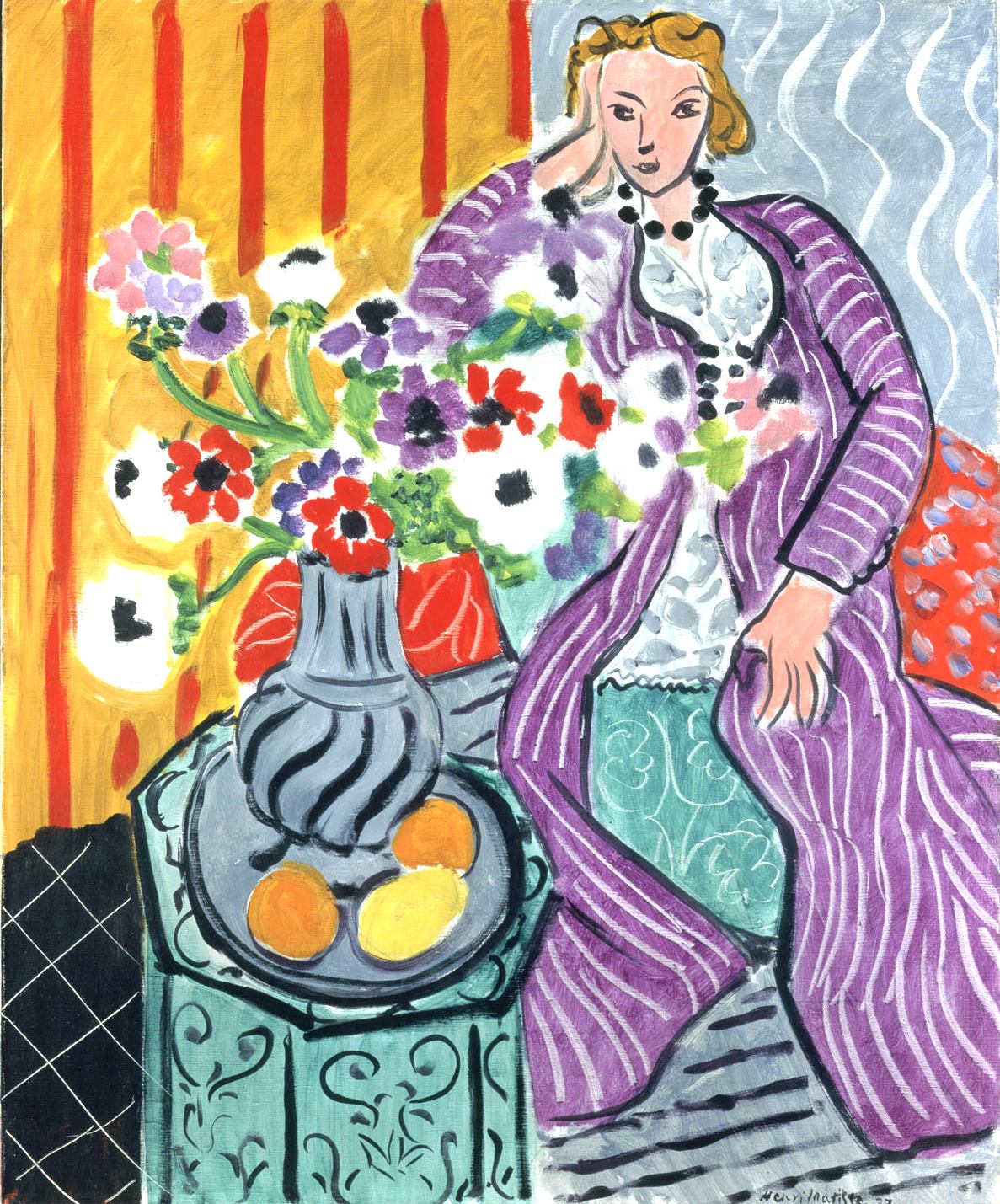
ArtworkGraphic19PurpleRobe

I’m always on the look-out for unusual names in the birth notices, and here are a dozen that are little used, but have intriguing histories. If you are looking for a rare yet genuine name, but fear choosing something too strange, you can take heart that these names have all been recently used by real life Australian parents.

Anjali
Sanskrit name meaning “divine offering”, from the word anj, meaning “to honour, to celebrate”. The Añjali Mudrā is a gesture of respect used in India as a greeting, where the palms join over the heart. If you go to yoga classes, you may greet each other with an Añjali Mudrā; it’s also part of several yoga positions. Anjali is quite a common name in India, and you may know the name as that of the wife of Indian cricket star, Sachin Tendulkar. A pretty Indian name that works very well in English-speaking countries, it is usually pronounced UN-juh-lee, although English-speakers may prefer an-JAH-lee.

Cataleya
Latin American form of cattleya, a type of South American tropical orchid with large, showy flowers. The orchid is named after English horticulturist William Cattley, who was the first European to successfully bring one into bloom. His surname comes from Catley in Herefordshire, meaning “wildcat wood”. Readers of Marcel Proust may recall that in Swann’s Way, the courtesan Odette wore a cattleya as decoration on her gown one evening, and her lover Swann removed it for her. As one thing led to another, they used cattleya as a private word between them for lovemaking. Cataleya was the highest-rising girls’ name in the United States last year, rocketing into the Top 500 from nowhere. The reason is the 2011 action film Colombiana, where the heroine is the assassin Cataleya, who leaves a cattleya as her calling card. Exotic and with a tough girl namesake, it is pronounced kah-tah-LAY-uh.

Damaris
In the New Testament, a woman named Damaris is mentioned as a convert of Saint Paul in Athens. Very little is known about her, although it is assumed she was a woman of high social status, but she is recognised as a saint in the Orthodox faith, and there is a street named after her in Athens. Her name is a matter of debate: the most popular theory is that is from the Greek word damalis, which literally means “heifer”, but is understood as “young girl”. Another is that it is derived from damar, the Greek word for “wife”. Once fashionable in 17th century England, this is a little-used biblical name that has gained modern glamour by American swimsuit model Damaris Lewis. The name is pronounced DAM-uh-ris.

Esperanza
Spanish form of the Latin name Sperantia, meaning “to hope”; esperanza is the Spanish vocabulary word for “hope”. The name got some publicity in 2010 because of Campamento Esperanza (“Camp Hope”), set up in Chile by friends and relatives after a cave-in at a mine; many weeks later their prayers were answered when all 33 miners were rescued. The following year, jazz singer Esperanza Spalding was named Best New Artist at the Grammy Awards. The name also has a motherly vibe, for Esperanza is the wife of Zorro, and mother of his beloved daughter Elena in The Mask of Zorro, while the mare who gives birth to the stallion Spirit in the animated movie is named Esperanza. Another famous mum is Oscar Wilde’s mother, who wrote under the pen name Speranza. Esperanza is a cool name that’s unusual, but not unfamiliar.

Farrah
Variant of Farah, a unisex Arabic name meaning “joy”. The name is well known because of the glamorous 1970s actress Farrah Fawcett, who passed away a few years ago. Farrah Fawcett posed for an iconic photograph wearing a red Speedo swimsuit, so there is an Australian connection to her. More recently, Farrah King from the hip hop outfit Cherish has given it fresh publicity. Soft and pretty, Farrah is an Arabic name which works well cross-culturally.

Fauve
Modern French name, which is pronounced to rhyme with the word mauve. Fauve literally means “wild beast” in French, referring to beasts of prey, and especially the big cats, such as lions and tigers. The word has a very artistic heritage, because in the early twentieth century, les Fauves were a group of modern artists who were known for their bold use of bright colours; they got their name because their work was criticised as looking like something a wild beast would produce. Henri Matisse is one of the most famous of this group. However, fauve has another meaning in French, and that is “yellowish-brown” – a tawny lion colour which would suit someone with dark blonde hair. Fauve is an uncommon name in France, and a rare one here, although not unheard of. It’s very daring, but also on trend.

Jerusha
In the Old Testament, Jerusha was the daughter of a high priest, and a queen of Judah, the wife of King Uzziah. Uzziah was considered one of the greatest rulers of the kingdom, but he became too proud, and began to usurp the role of the priests. Struck down with a disfiguring skin disease, he was replaced by his son Jotham, who is listed as one of the ancestors of Jesus in the New Testament. The name means “possession” in Hebrew, in the sense of something precious, and is said jeh-ROO-sha. A literary namesake is the teenage girl in the children’s book Daddy Long-Legs: she goes by the name Judy, although Roo would be a very Australian nickname.

Odette
French name which is a pet form of the Germanic names Oda or Odilia. These names may both be feminine forms of names which became the German name Otto, meaning “wealth”, although Odilia might instead mean “fatherland”. The name is forever associated with swans, because Princess Odette is the White Swan in the ballet Swan Lake; a sweet, gentle girl, she has been transformed into a swan, and can only take human form at night. Only true love can break the spell, but thanks to nefarious scheming by the baddies, Odette’s story ends in tragedy. Odette is a dated name in France, but to English-speakers, sounds glamorous and romantic. The Disney movie The Swan Princess, based on the ballet, makes it more accessible as well.

Persephone
In Greek mythology, Persephone was the daughter of the agriculture goddess Demeter, and she is central to one of the oldest myths. Legend says that Demeter kept her daughter hidden away from the other gods, so the two could live in companionship with nature. Hades, the god of death, fell in love with Persephone, and one day when she was gathering flowers, he kidnapped her and took her to live in the Underworld as his wife. Demeter was so grief-stricken that she neglected the earth, and nothing would grow: seeing that people were starving to death, Zeus demanded that Persephone be returned. However, Persephone had eaten a few pomegranate seeds in the Underworld, and having tasted its food, was obliged to spend several months of the year with Hades. While Persephone is underground, Demeter mourns for her, and it is winter: when she returns in spring, life is renewed. This ancient myth of death and rebirth comes from the Near East: many rituals and mystery traditions are associated with it, with special significance for girls and women. The name Persephone is interpreted as “female thresher of corn”, because she is an agricultural goddess, but another theory is that her name means “bringer of death”, as she is goddess of the Underworld. The Greeks had so many forms of her name that it would seem they had trouble pronouncing it, suggesting that her name was pre-Greek; it is said per-SEF-uh-nee. Beautiful and elaborate, primal to the human urge for life everlasting, this would be a wonderful choice for someone who thought that Penelope had become too popular to use.

Reeva
Variant of Riva, a pet form of Rivka, modern Hebrew form of the familiar name Rebecca. This comes from the Hebrew word ribhquh, which literally means “a connection”; it can thus be understood as “joining together, securing”. Reeva is also used as a name in India, a variant of Reva, which is Sanskrit for “one who moves”, and often translated as “swift, agile”. It is one of the epithets of Rati, the Hindu goddess of love. The name came into the public eye in a shocking way when South African model Reeva Steenkamp was shot and killed by her boyfriend, world renowned paralympian Oscar Pistorius, now serving a prison sentence for culpable homicide. Due to the notoriety of the high-profile legal trial, Reeva became the fastest-rising girls’ name in England and Wales last year. Reeva fits in with popular names like Ava and Eva, but the very public tragedy of Reeva Steenkamp’s death may make some parents uneasy about using it.

Sephora
Greek form of Zipporah, variant of the Hebrew name Tzipporah, meaning “bird”. In the Old Testament, Zipporah is mentioned as the daughter of the priest Jethro, and the wife of Moses. When Moses fled Egypt after killing an Egyptian man, he took refuge in the desert country of Midian, on the Arabian Peninsula. When Zipporah and her sisters went to water their flocks, they were driven off by shepherds who wanted the water for themselves, and Moses went to their defence. Moses ended up living with Jethro and working for him, and was given Zipporah in marriage. Zipporah had problems with the in-laws, because Moses’ sister Miriam criticised him for marrying a dark-skinned woman, but she was struck down with leprosy in punishment, showing that God approved of the marriage. Sephora is more popular in France than elsewhere, because of the Parisian cosmetics company of that name, but this lovely name isn’t common anywhere.

Vesper
Roman form of the Greek name Hesperus. In Greek mythology, Hesperus was the personalification of the Evening Star (the planet Venus as seen in the evening); his half-brother Phosphorus was the Morning Star. Vesper can be intepreted as “evening, supper time, west”, and Vespers is the name for the evening prayer service in the Christian church. You may know the poem Vespers by A.A. Milne, about Christopher Robin saying his nightly prayers: it was made part of the minature library collection for Queen Mary’s Doll House. Although a rare name in real life, Vesper has had several outings in the world of fiction. Vesper Lynd was James Bond’s lover in Casino Royale, played by Eva Green in the 2006 movie; her parents gave her the name because she was born on a “dark and stormy night”. The famous “shaken not stirred” martini that Bond invents is named the Vesper after her. Vesper has been picked used as a celebrity baby name – one is the daughter of American rock musician Sam Farrar, whose parents are Australian.

POLL RESULTS
The public’s favourite names were Persephone, Odette and Vesper, and their least favourite were Cataleya, Damaris and Jerusha.

(Picture shows Purple Robe and Anemones by Fauvist Henri Matisse – 1937)

Boys Names From Native Australian Flowers

02 Sunday Nov 2014

Posted by A.O. in Name Themes and Lists

≈ 7 Comments

Tags

Australian slang terms, birth notices, celebrity baby names, classic names, controversial names, english names, famous namesakes, fictional namesakes, flower names, Gaelic names, Greek names, honouring, Irish names, Latin names, locational names, mythological names, name history, name meaning, name trends, names from songs, names from television, nature names, nicknames, patriotic names, plant names, popular names, rare names, scandinavian names, scientific names, Scottish names, sibsets, surname names, tree names, underused classics, unique names, unisex names, Welsh names

Millstream-Chichester-National-Park-2013-05-15-003

This follows on from Girls Names From Native Australian Flowers. If you thought it would be hard for me to find floral boys’ names, you were right, and many hours were spent poring over gardening books and field guides. I did notice that several of the names come from plants that are traditionally used as female names, so this might be a way to find a boy’s name which honours a Daisy, Iris, or Lily, for example.

Bailey
Acacia baileyana is the scientific name for Cootamundra Wattle, a small tree with silvery-green leaves and masses of golden blossom in the spring. It is native to New South Wales around the town of Cootamundra, which holds a Wattle Time Festival every year when the wattle blooms. However, it is extremely adaptable, and will grow almost everywhere – if anything it grows a little too well, and can escape into the bush and become an invasive weed. Its scientific name honours Frederick Manson Bailey, a colonial botanist in Queensland. Bailey is an occupational surname originally designating someone who was a bailiff, the officer executing the decisions of a lower legal court (these days such duties are usually carried out by local councils). It has been used as a personal name since at least the 18th century, and Bailey has charted in Australia since the 1990s, when it was catapulted straight into the Top 50 from almost nowhere, debuting at #32 in 1997. It peaked in 2004-2005 at #27, and is currently #77. Although only popular for boys, Bailey is sometimes used for girls. Bailey provides a way for boys as well as girls to be named after the patriotic acacia tree.

Carex
Carex is the scientific name for grass-like plants commonly known as true sedges. Sedges are common all over the world, and nearly always found in wetlands; if you’ve ever walked around a swamp or lake, sedge is the dense stiff grassy stuff along the edge which might cut your hands if you try to gather it. Although sedges are not usually thought of as terrifically exciting – hardly anyone hopes for a bouquet of sedges on Valentine’s Day – they are vitally important to the ecology of our wetlands. Anyone working on a project to save a wetlands area will need native sedges to plant along lakes and riverbanks to stabilise the soil, and they are also around dams and garden ponds. They bloom in spring; the flowers are tiny, and appear on short spikes. I have seen a boy named Carex in a birth notice, and this is a daring and environmentally aware choice that is on trend for boy’s names ending in -x, like Felix and Max.

Eric
Banksia ericifolia is the scientific name for Heath Banksia, a medium to large shrub with eye-catching orange or red flowers which bloom in autumn or winter. Banksias are famous for their flower spikes; each spike can have hundreds or even thousands of individual flowers, looking overall like a large brush. Banksia ericifolia was one of the original banksia species collected by botanist Sir Joseph Banks around Botany Bay, and the subspecies ericifolia is native to the area around Sydney. It has been adopted as the city’s official plant, and can be seen in parks and public spaces. Heath Banksia is reasonably easy to grow; if your garden is too small for a regular Heath Banskia, there is a dwarf cultivar called “Little Eric”. The eric in ericifolia comes from Ericaceae, the family of heath and heather. The name Eric is an English form of the Scandinavian name Erik, usually translated as “eternal ruler”. Although known in England since the Middle Ages, it didn’t become popular until the 19th century, after the publication of a moralising children’s book called Eric, or Little by Little. Eric is a classic which has never left the charts. It was #21 in the 1900s, and peaked in the 1910s at #19. It didn’t leave the Top 100 until th 1970s, when it hit its lowest point of #149. Since then, Eric has improved slightly in popularity, and remains stable in the 100s – an extremely safe choice.

Evan
The Hawkesbury Daisy (Brachyscome multifida) grows on the east coast; it has matted foliage with the daisy flowers rising above it in mauve, pink, or white, blooming in autumn and winter. They are very popular garden plants, as they are are quite hardy and look great in borders and mass plantings. One of its cultivars is “Evan”, which was named after the son of the founder of the Australian Daisy Study Group. “Evan” is mauve with small flowers and compact foliage, easy to grow, and perfect for rockeries and hanging baskets. The name Evan is the Anglicised form of Iefan, a Welsh form of John. Evan is an underused classic in Australia – it has never left the charts, but never reached the Top 100 either. The highest it has ever been is #103 in the 1980s, and it’s never been lower than it was in the 1900s at #194, making it a handsome, solid choice which hasn’t been out of the 100s for well over a century. Evan is the poster boy for “normal but not overused” names.

Heath
Common Heath (Epacris impressa) is a small shrub native to south-east Australia; it has red, pink, or white tubular flowers which bloom from late autumn to early spring. A pink-flowered form called “pink heath” is the floral emblem for the state of Victoria. Common Heath is tricky to grow in the garden, and perhaps best enjoyed in its natural setting. Heath is an English surname which can refer to someone who lived on or near a heath, or was from one of the many English towns called Heath. Heath is an underused modern classic which has charted consistently since the 1960s without ever becoming popular. It peaked in the 1970s at #101, possibly because of Heathcliff from Emily Bronte’s Wuthering Heights, serialised on television that decade, and a hit song by Kate Bush in 1978. Actor Heath Ledger, born in 1979, was named after Heathcliff, with his sister Kate named after Catherine from the novel. Heath dropped to its lowest level in the 1990s at #279, but picked up the next decade when Heath Ledger’s film career took off, and gained momentum from Dan Ewing‘s performance as Heath Braxton in Home and Away. Heath is a strong, simple nature name which has long been associated with intense, hunky guys.

Orestes
Caladenia orestes is the scientific name for the Burrinjuck Spider-orchid, native to New South Wales. These small, delicate flowers with dark red colouring are listed as vulnerable, so count yourself lucky if you ever find one in the bush. In Greek mythology, Orestes was the son of Agamemnon Greek commander during the Trojan War. Their family had been placed under a curse, so that their line was a rich source of Greek tragedy. Agamemnon sacrificed his daughter Iphigenia to obtain fair winds to Troy; when he got home from the Trojan War, Agamemnon’s wife Clytemestra murdered him in retribution. When Orestes grew into a young man, he murdered his mother to avenge his father’s death. According to legend, Orestes was pursued by the Furies in punishment for his crime, but he got a good lawyer in the goddess Athena, who put his case before the gods and got him acquitted (slightly rigged, as Athena was one of the judges). He was often seen by Greek writers as a dutiful son to his father, and an example of someone forced by circumstances to commit a terrible act. The name Orestes means “of the mountains”, which is the reason for the orchid’s name. An unusual and possibly controversial choice.

Paterson
Patersonia is the scientific name for the Australasian flower commonly called Native Iris. It was named in honour of William Paterson, the first Lieutenant Governor of New South Wales, and most species are from Western Australia. Patersonia has small flowers that are usually mauve, and can look very attractive in the garden. Paterson is a common Scottish surname which means “son of the follower of Saint Patrick“, and the Clan Paterson is from Lowland Scotland. Sir William Paterson founded the Bank of England, but perhaps the most famous episode in the Clan’s history is when Sir Hugh Paterson entertained Bonnie Prince Charlie, and his niece nursed the prince through a bad cold, becoming his mistress and bearing him an illegitimate daughter. The name Paterson could honour our national poet Banjo Paterson, and would naturally shorten to Paddy. A possible issue is another flower, the attractive but toxic purple weed commonly known as Paterson’s Curse.

Smith
Syzygium smithiim is the scientific name for the Lilly Pilly, an ornamental tree which is a member of the myrtle family; its name honours botanist Sir James Edward Smith. Lilly Pilly is native to the east coast of Australia, and has glossy leaves and cream or pink flowers which bloom in spring and summer. However, it is best known for the fruit which follows the flower – attractive edible berries with a deep pink colour. Smith is the most common English surname, and originated in northern England and Scotland. Although it later came to specifically refer to a blacksmith, the word means any craftsman in metal, hence goldsmith or swordsmith, and more generally, any creator, hence wordsmith. Metalworkers have historically been seen as magical in their skill to transform through fire, and there are several smith gods and heroes, such as Vulcan and Wayland; Cain is said to have been the father of metalsmiths. The name always reminds me of J.R.R. Tolkien’s bittersweet fairy tale, Smith of Wooton Major. Smith has often been thought too common a surname to be used as a personal name, but gained recent familiarity through Sex and the City’s handsome Smith Jerrod (real name Jerry Jerrod). Hawthorn’s Sam Mitchell has a son named Smith.

Sturt
Sturt’s Desert Pea (Swainsona formosa) is native to the deserts of inland Australia, and highly recognisable from its striking deep red pea flowers. According to an Aboriginal legend, the flowers sprang from the blood of two murdered lovers and their child. Sturt’s Desert Pea is the floral emblem of South Australia, and is a popular subject for arts, crafts, and decorative motifs. Although it grows in such profusion in the harsh desert, Sturt’s Desert Pea is difficult to establish in the garden. It is named after the explorer Captain Charles Sturt, who recorded seeing masses of the flower during his explorations. The surname Sturt comes from the Old English for a promontory – a raised mass of land with a sharp slope on one side – and this could be given to someone who lived near such a landmark, or from a town named after one. Similar to Stuart, this is a lesser-used surname which is given meaning by the flower.

Tucker
Tuckeroo (Cupaniopsis anacardioides) is an Australasian flowering tree in the soapberry family. It has greenish-yellow flowers which bloom in winter, followed by orange berries in the spring and summer which are a source of food for native birds. Tuckeroo is a popular ornamental tree for gardens which gives good shade and looks attractive all year round, and is often grown along streets in coastal towns of New South Wales and Queensland. The English surname Tucker is an occupational one referring to someone who softened cloth for the wool industry by tramping on it in water; the word comes from the Old English for “to torment (the cloth)”. As an Irish derivation, Tucker comes from the Gaelic O’ Tuachair, meaning “son of the brave one”. Tucker seems problematic as a first name, breaking the rule of “no names that rhyme with rude words”, but it does have a very Australian meaning, as it is slang for “food”, derived from “to tuck in”. Some people might think that’s another problem with the name in Australia. I’m not sure … any takers for Tucker?

POLL RESULTS
The public’s favourite names were Heath, Evan and Tucker, and their least favourite were Carex, Orestes and Sturt.

(Picture shows Sturt’s Desert Pea; photo from Our Naked Australia)

Girls Names From Native Australian Flowers

26 Sunday Oct 2014

Posted by A.O. in Name Themes and Lists

≈ 16 Comments

Tags

colour names, english names, famous namesakes, fictional namesakes, flower names, French names, Greek names, historical records, honouring, Latin names, locational names, middle names, mythological names, name history, name meaning, name popularity, name trends, names from television, nature names, nicknames, plant names, popular names, Portuguese names, rare names, retro names, Roman names, scientific names, Scottish names, surname names, vocabulary names

BoroniaHeterophyllaLipstickCu600

Now that it’s spring, I have been taking advantage of the warmer weather and lighter evenings to get out into the garden more. I love the spring flowers, which make me think of floral names, so here are some from our native blooms.

Boronia
Boronia (bor-OH-nee-uh) is a native shrub whose cup-shaped, pink or red-hued flowers give off the most exquisite sweet scent; boronias are related to citrus trees, and the fragrance of boronia is slightly lemony. It is a popular ingredient for perfumes and scented oils, but oddly enough, quite a few people are unable to smell boronia at all. Boronias grow in many parts of Australia, but the Brown Boronia, considered to have the most magnificent scent of all, is from Western Australia. Many people find boronia difficult to grow, and might enjoy this plant more by walking through the bush in spring. The plant has given its name to a pleasant suburb of Melbourne, while Boronia Heights is a suburb of Logan. The boronia is named after Francesco Borone, who was the servant of botanist Sir James Smith, but became his talented and valued field assistant. Francesco died in a bizarre accident when he sleep-walked out the window while recovering from illness. When Sir James discovered the boronia several years later, he named it in Borone’s memory. There are quite a few people with the name Boronia in Australian historical records, mostly as a middle name. Bo would make a charming nickname.

Correa
Correa (KOR-ree-uh) is a small shrub related to the boronia, but its bell-shaped flowers have no fragrance; instead it is the leaves which have a fruity smell when crushed. Correa reflexa is known as Native Fuchsia, because of its long tubular petals which are often a dusky pink colour, although correa can come in a range of colours. Correa grows all over Australia, and is an easy garden plant to grow; it blooms in autumn and winter, making it a great plant to brighten up your garden during the cold months. Correa is named in honour of the Portuguese botanist José Correia da Serra; the Correia part of his name is a common Portuguese surname meaning “leather strap”, originally given to those who worked in the leather trade. Correa is a rare find in Australian historical records, and would make a distinctively Australian alternative to names such as Cora.

Daisy
Daisies are simple little picture-book flowers common all over the world; they are symbolic of childhood innocence. There are many types of daisy native to Australia; one of the most popular is the Paper Daisy, called the Everlasting in Western Australia. Small with crisp, papery petals, they are pink and white, and very easy to grow. The word daisy comes from the Old English for “day’s eye”, as English Daisies open when the sun rises and close in the evening. Daisy has been used as a girl’s name since the 16th century, and became popular in the 19th, along with other floral names. It is also used as a nickname for Margaret, because the French name for the Ox-eye Daisy is the Marguerite. The name Daisy was #58 in the 1900s, and left the Top 100 in the 1920s. It dropped from the charts in the 1940s, made a minor come-back in the 1950s, then dropped out again the following decade. Daisy returned to the charts in the 1980s at #646, and climbed fairly steadily. It rejoined the Top 100 last year at #90, making it one of the fastest-rising names of 2013. Wholesome yet also sexy, retro Daisy still sounds fresh … as a fresh a daisy!

Dianella
Dianella is commonly known as Blue Flax-lily, found in all states of Australia. These woodland plants grow in clumps with small, deep blue flowers that bloom in spring and summer; they are popular garden plants being hardy as well as decorative. The Perth suburb of Dianella was named after the flower, which grew in abundance there before development. Dianella is named after the Roman goddess Diana, goddess of the hunt, because she is associated with woodlands; the name Diana may mean “heavenly, divine”. Dianella seems like an interesting way to honour a Diana or Diane, while giving a nod to native flora, and offering popular Ella as the nickname. The name Dianella shows up several times in Australian historical records, always in South Australia for some reason.

Laurina
Hakea laurina, also known as Pincushion Hakea, is a large upright shrub or small tree from south-west Western Australia. The flowers are very striking, being deep pink or red, and shaped like globes with cream spikes coming out of them; they have a mild fragrance, but are best known for producing nectar, which is very attractive to birds. Hakea laurina blooms in autumn and winter, and this popular garden plant is easy to grow, being both drought-tolerant and frost-hardy. Laurina is simply based on the Latin Laurus, as its leaves are similar to those of the laurel tree. The name Laurina dates to the 18th century, and is an elaboration of the name Laura. It has recently been brought to attention through “Melbourne princess” Laurina Fleure, who was a contestant on this season of The Bachelor: although portrayed as a villain by the show’s producers, she gained a fan following and has been dubbed “Australia’s Carrie Bradshaw”.

Lilac
Lilac (Syringa vulgaris) is a small tree native to the Balkans, famous for its pale purple flowers, which have a beautiful sweet fragrance. Australia has a plant which is sometimes called Native Lilac, or Lilac Vine, and that is Hardenbergia violacea, also known as Purple Coral Pea, as it is member of the pea family. It is a hardy and vigorous climbing vine, capable of growing twenty feet; some varieties are low-growing shrubs. In winter it produces masses of showy violet pea-flower blooms, and is an easy to grow garden plant, popular for training over fences and pergolas. Lilac is a word from the French, which ultimately goes back to the Sanskrit for “dark blue”; it has been used as a girl’s name since the 19th century, when other flower names came into fashion. Lilac has never been a common name, but it is very pretty, and would be right on trend, fitting in with popular Lily and Lila, while having its own distinctive sound. It would also make a lovely middle name to match all those girls’ names ending with -a or an EE sound.

Lotus
The lotus flower (Nelumbo nucifera), sometimes known as Sacred Lotus, Red Lily, or Lotus Lily, is an aquatic plant native to Tropical Asia and Northern Australia; it is thought that the plants were brought to Australia many centuries before European settlement. There are many different varieties and cultivars, with one of them being the Waltzing Matilda Lotus, which is small with pink flowers. Lotus flowers can be easily grown all over Australia, but the native lotus will only be happy in warm areas. The Lotus is a very symbolic plant – as it is a stunning flower which grows out of slimy mud, you can see it as a message that life can be beautiful no matter what your origins or circumstances. In Hinduism, a lotus is often used to indicate divine beauty and spiritual growth; in Buddhism it represents purity and non-attachment to the material world. Asian literature sees the lotus as the ideal of feminine grace, beauty, and elegance. The lotus is also a peace symbol, and Aboriginal people from the Top End held up lotus leaves to strangers to show they meant no harm. With so many wonderful meanings for this lovely flower, it’s surprising how little Lotus has been used as an English name. Many will see it as having a hippie vibe, while others may see it as a car name.

Orchid
Orchids are extremely diverse plants found almost everywhere in the world except on glaciers; they grow in the Arctic, and on Macquarie Island near Antarctica. There are hundreds of types of orchids native to Australia. Orchids are grown for their often beautiful flowers, and excite a passion in those who cultivate and collect them that amounts to an obsession. The Cooktown Orchid (Dendrobium phalaenopsis) is the state emblem of Queensland, and grows naturally in the state’s tropical far north. It is considered to be Australia’s showiest orchid, with beautiful mauve flowers that bloom in the dry season. With care, it can be grown outdoors as far south as Brisbane; any lower than that and you need a glasshouse. Orchid has been used as a girl’s name since the 19th century, and despite the beauty of the orchid flower, it has remained in rare use. This may be because the ORK sound at the start is not considered attractive, or because the flower’s name comes from the Greek for “testicle”. Orchid is an unusual, sophisticated floral choice that starts with the fashionable O, but sounds quite distinct from today’s popular names.

Pandorea
Pandorea (pan-DOR-ee-uh) are climbing vines native to Australasia. Pandorea pandorana, otherwise known as Wonga-wonga Vine, is a popular garden plant, being an easy to grow vigorous climber with glossy leaves. The flowers are bell-shaped, bloom profusely in spring, and are naturally creamy-white with maroon markings, but cultivars come in a very wide range of colours. Hardy and adaptable, Wonga-wonga Vine grows all down the east coast, as well as in the central deserts, and is also native to several Pacific Islands. The wood of the vine was used by Aborigines of central Australia to make spears, and it appears in their mythology as a group of women with very thin and flexible bodies. The plant’s scientific name is after Pandora from Greek mythology, who legend says had a container filled with all the world’s evils, which she opened out of curiosity. It is usually thought the name came about because the Pandorea vine grows a pod which opens to reveal a multitude of seeds; supposedly the plant’s namer was reminded of “Pandora’s box” by the seed pod. The name Pandora has a lovely meaning – “all gifts”. If you are attracted to the name Pandora, but have doubts about the myth, or worry it’s too Avatar, or don’t like the -dora sound at the end, why not consider Pandorea as a floral alternative?

Violet
Violets are small violet-blue flowers, which symbolise modesty – we call a shy person a “shrinking violet”, and connect the flowers with pure femininity. They are associated with death and resurrection in Greek myth, and can be used to denote death which comes too soon, such as for Ophelia in Shakespeare’s Hamlet. Violet Day was commemorated in Australia to remember those who died during World War I; the last Violet Day was held in 1970. There are a few species of violet native to Australia – a favourite for gardeners is Viola banksii, which grows naturally in New South Wales. It has striking purple and white flowers, and is very easy to grow, forming an attractive groundcover. The word violet comes by way of the Latin viola, and simply refers to the colour. Violet has been used as a name since the 16th century in Scotland, influenced by the French name Violette. Violet was #22 in the 1900s, and left the Top 100 in the 1940s, before dropping off the charts in the 1960s. It didn’t return until the early 2000s, when it was #569; this follows the publication of Lemony Snicket’s Series of Unfortunate Events, starring pretty teen inventor Violet Baudelaire. After becoming a celebrity favourite, and having a staggeringly swift rise, it made the Top 100 in 2009 at #85, and was #51 last year, being the fastest-rising name in both Western Australia and Tasmania. This is a dainty retro name that has a dark side: its similarity to the words violence and violate act as a counterweight to its maidenly timidity.

POLL RESULTS
The public’s favourite names were Violet, Daisy and Lilac, and their least favourite were Orchid, Boronia and Pandorea.

(Photo shows a Pink Boronia (Boronia heterophylla), Pink Lipstick variety)

Requested Names: Maida and Maeva

15 Wednesday Oct 2014

Posted by A.O. in Requested Names

≈ 6 Comments

Tags

aristocratic titles, dog names, english names, fictional namesakes, flower names, French name popularity, French names, Greek names, historical records, Irish names, Italian names, locational names, military events, mythological names, name history, name meaning, name trends, names of businesses, names of ships, nature names, plant names, polynesian names, rare names, Scottish names, Tahitian names, UK name popularity, US name popularity, vintage names, Waltzing More Than Matilda

agriturismo-costantino

Michelle’s partner has suggested the girls’ names Maida and Maeva to add to their name list. At first, Michelle thought these were “made up”, but once she discovered they were genuine names, became a lot more interested in using them, as she quite likes them. She’s asked that Maida and Maeva be featured on Waltzing More Than Matilda, so she can learn more about them.

Maida
This name was popularised in Britain during the 19th century because of the Battle of Maida, which was a British victory against the French during the Napoleonic Wars. It took place in the town of Maida, in Italy, and the British were able to inflict significant losses while incurring far fewer casualties on their side. Through the battle, the British were able to prevent a French invasion of Sicily.

The commander during the Battle of Maida was John Stuart, who was named Count of Maida by Ferdinand IV of Naples and Sicily in thanks for his efforts (the British knighted him, and gave him £1000 a year). Not long after his victory, he received another honour: a pub on the Edgeware Road in London was named The Hero of Maida, and when this area was developed for residential housing in the mid-19th century, it was named Maida Vale after the pub (and indirectly after Sir John Stuart). Maida Vale is now quite an affluent area.

Maida Vale in London has given its name to a suburb in outer Perth, which still has plenty of natural bushland. There is a rare wildflower unique to this area called the Maida Vale Bell (Blancoa canescans), which is a type of kangaroo paw with reddish bell-like flowers. Another Western Australian connection is that the pioneer Sir Richard Spencer took part in the Battle of Maida as a naval captain (the British navy captured a French vessel, and renamed it the Maida). After emigrating to Australia, Spencer ended his days on the heritage-listed Strawberry Hill Farm in Albany.

A Scottish connection is that Sir Walter Scott was given a deer-hound named Maida, reputedly his favourite dog. It was a gift from Sir Walter’s friend, Colonel Alexander MacDonnell of Glengarry, known as Glengarry after his estate. Glengarry’s brother, James MacDonnell, had led the 78th Highlanders Regiment of Foot at the Battle of Maida, and won a Gold Medal for his services. The 78th fought valiantly, and are said to have lost only one man: the name Maida has ever after had particular resonance in Scotland, and is still in some use.

The rural town of Maida, where the Battle of Maida was fought, is in Calabria in southern Italy: often identified as the “toe” of the country’s shape. The name of the town is derived from Greek, and may have the same source as the name Medea, familiar in Greek mythology as the wife of the hero Jason. Her name literally means “cunning”, but with connotations of “rule over, protect”, from an ancient root meaning “to measure, give advice, to heal”.

While the Battle of Maida was behind the name’s surge of popularity in 19th century Britain, it doesn’t explain the handful of times it was used prior to 1806, nor does it explain the name’s use in the United States, where the name Maida occasionally made the Top 1000 between 1880 and 1920. In such cases, the name may be a pet form of names such as Magdalene or Madeline; in Scotland, it could be seen as a variant of Maisie. It also can’t be ruled out that it was sometimes based on the English word maid, shorthand for maiden, meaning “young girl, virgin”.

A 20th century influence on the name in the United States was the Maida series of children’s books by Inez Haynes Irwin, a feminist and socialist author and journalist. The books revolve around a beautiful motherless little girl named Maida Westabrook who possesses both fabulous wealth and a fantastic personality, recovering from severe illness that has left her with a slight disability. It turns out some wholesome child labour and the friendship of a whole neighbourhood of ordinary kids is what she needs to put the roses in her cheeks, and further adventures follow with her posse of plebeian pals.

I read the first book online and was charmed: it’s an urban fairytale, and the sort of vintage book I would have loved reading when I was about nine. I can quite understand why this series of books, spanning from 1909 to 1955, has gained generations of loyal fans, and was not surprised to see several comments from people who had been named for the character or had named their daughters after her.

Last year there were 26 baby girls named Maida in the United States, and 18 in England/Wales. Maida doesn’t show up in recent Australian birth data, although is occasionally seen on older women. There are over a hundred Maidas in Australian historical records, mostly from the late 19th century to the early 20th century.

Maeva
This is from Tahiti, and means “welcome”; it is used as a word and a name in Polynesia, and is a Top 100 name in France, as Tahiti is part of France’s overseas territories. Maeva is pronounced mah-AY-va in Tahitian, but judging from one example on forvo, French people seem to say the name very much like MAY-va.

Maeva is used as a name in Australia too, appearing in historical records from the late 19th century. Most likely it was an elaboration of the Irish name Maeve rather than of Polynesian origin. Maeva was the middle name of Gladys Cumpston, who transcribed texts into Braille. If you look at Maevas in Australia currently, many seem to be French, although there are also Australians, including those of Islander heritage. Last year there were 34 babies named Maeva in the United States, and 4 in England/Wales.

* * * * * * * * * *

Michelle, what an intriguing pair of names your partner has suggested! I am very impressed by his style, because these are both very rare names which are nonetheless bang on for current trends. They fit in so beautifully with the trend for vintage names, and with names beginning with M, and with the AY sound, so that you’d have a baby name different from everyone else’s, without sounding too glaringly different.

Maeva in particular would blend in almost seamlessly, as it sounds like a mixture of Mae, and Maeve, and Ava. It would be very easy to explain to others as “Spelled like Maeve, but with an A at the end”, or “Pronounced like Ava, but with a M at the front”. You might even worry that it blended in a bit too easily, and could be confused with other names – there might be a few moments of “No, it’s Maeva, not Maeve”, although that doesn’t sound like a big deal.

Maida seems a bit more daring, although it reminded me a little of a contracted Matilda, or Maia with a D. I feel as if some people might be slightly taken aback by the Maid- part, as we use the word “maid” to mean “servant, serving girl”. But what a rich and interesting history the name Maida has, with so many layers of meaning and evocation. The more I learned about the name Maida and its many associations, the more I was mentally barracking for you to choose it.

I think these are both beautiful names, rare yet accessible, vintage but in line with current trends. What do you think of Maida and Maeva, readers?

POLL RESULTS
Maida received an approval rating of 56%, while Maeva did extremely well, with its approval rating of 76% making it one of the highest-rated names of 2014.

Thank you to Michelle for requesting Maida and Maeva be featured on Waltzing More Than Matilda

(Photo shows the farmland around the town of Maida in Italy)

Waltzing With … Acacia

31 Sunday Aug 2014

Posted by A.O. in Waltzing with ...

≈ 9 Comments

Tags

english names, flower names, Greek names, historical records, name history, name meaning, name popularity, nature names, patriotic names, plant names, saints names, tree names

Floral Emblem Golden Wattle

Tomorrow is the official first day of spring, which means it is also Wattle Day. The Golden Wattle (Acacia pycnantha) is Australia’s official national flower, proclaimed as our floral emblem on September 1 1988, and marked by planting a Golden Wattle in the National Botanic Gardens by then Prime Minister’s wife, Hazel Hawke. Four years later, September 1 was officially declared National Wattle Day, and it is traditional to celebrate by wearing a sprig of wattle (any type of wattle; it doesn’t have to be Golden Wattle).

Long before that date, wattle had been an unofficial national flower by popular choice. A wreath or sprig of wattle appears on many official government documents, including the Commonwealth Coat of Arms, the Order of Australia, and the Governor-General’s crest. Our national colours of green and gold (so difficult to co-ordinate on sporting uniforms) are inspired by the green leaves and golden bloom of the wattle.

Wattle is a symbol of remembrance for us too. During World War I, mothers sent their sons sprigs of wattle as a reminder of all they were fighting for back home, and has been used to mourn and remember loss of Australian life, such as in ceremonies for the victims of the Bali bombings. You may have noticed that when the first victims of MH17 were brought to the Netherlands, the Australian Governor-General’s wife wore a sprig of wattle.

As early as 1838, Tasmania encouraged wearing Silver Wattle (Acacia dealbata) sprigs to celebrate the discovery of its island. In the nationalistic fervour which preceded Federation, a Wattle Club was founded by naturalist Archibald Campbell, promoting a Wattle Day demonstration each September 1. Outings into the bush to revel in the glories of an Australian spring were part of his plan, and patriotic Wattle Days continued to be celebrated until World War II.

Australian love of wattle has been satirised in Monty Python’s Flying Circus, with the immortal lines of the Australian philosopher Bruce: “This here’s the Wattle, the emblem of our land. You can stick it in a bottle, you can hold it in your hand.” These words have been used to promote a Wattle Day Festival in Victoria this year!

Acacia is the genus which contains wattle trees and shrubs. Its name, pronounced uh-KAY-shuh, comes from the Greek akis, “thorn”, because most acacia species outside Australia are thorny, although nearly all Australian acacias don’t have thorns. There are around 1300 species of acacia, and almost a thousand of them are native to Australia, with over 98% of these unique to Australia. The others can be found in all continents except Europe and Antarctica; they are particularly widespread in Africa, and were first observed by Europeans along the Nile River.

Acacia is not just an important symbol to Australia. According to Easton’s Bible Dictionary, acacia may have been the “burning bush” Moses encountered in the wilderness, and a table of acacia wood was part of the Tabernacle he built for the Ark of the Covenant. In Egyptian mythology, acacia is the Tree of Life, and in Christian tradition, the crown of thorns worn by Jesus Christ were made from acacia. Freemasonry uses acacia as a symbol of resurrection and immortality, while in Asia, acacia incense is believed to drive away ghosts and demons.

It’s powerful stuff. In fact, it is said that the first plant to bloom in Hiroshima after its bombing in 1945 was a wattle tree. Resurrection indeed! Every Wattle Day, Hiroshima’s Acacia Appreciation Society sends hundreds of yellow ribbons to the Australian National Botanic Gardens as a gesture of friendship and appreciation.

The name wattle comes from Old English, the word Anglo-Saxons gave to interlaced branches and twigs used to form fences, walls, and roofs. Wattle and daub is a construction technique, used since prehistoric times, for filling the spaces between the wattle with a combination of wet soil, clay, sand, animal dung, and straw, which is then allowed to dry until it hardens.

When British settlers to Sydney made their own wattle and daub buildings, they used acacia trees as the wattle, so gave the name to the plants. (I remember reading about wattle and daub houses in Neolithic Britain when I was in primary school history class, and wondering where they got the wattle trees from!). The uses of acacia are too many to list, but one worth mentioning is that Australian Aborigines often make boomerangs from its wood.

Wattles grow all over Australia, and are numerous in the desert, although uncommon in dense rainforest and alpine regions. In southern Australia, wattles tend to flower in springtime, while in the north, many species come into bloom in the autumn and winter. Because of this, it is said that on any given day in Australia, there will be a wattle blossoming somewhere.

Acacia has a long history as a personal name, for it is the feminine form of the Greek name Acacius. This comes from a different Greek derivation – akakia, meaning “without guile, innocent”. Byzantine emperors held a purple silk roll filled with dust called the akakia: it symbolised human mortality. There are several saints named Acacius, and quite a number of other notables from the early Christian era. Acacia has been a particular favourite amongst Spanish-speaking people, who bestowed it as a saint’s name.

Acacia came into use as an English name in the 19th century, when flower and plant names were the fashion. Golden and Silver Wattle was introduced to Europe in the mid-19th century; Silver Wattle became a great favourite in the south of France, where it blooms around Candlemas and is a harbinger of spring and golden sunshine. Outside Australia, wattle is often known as mimosa.

There are several people named Acacia in Australian records, going back to the mid-19th century, and it is almost certain their names were given patriotically – one is even named Acacia Golden, as if to signify Golden Wattle. Another is named Marginata Acacia; marginata is a species of eucalyptus tree. That reminds me that I saw a woman named Acacia Silver on the news, which reminded me of Silver Wattle: as she was an environmentalist, her name was so appropriate that I wondered if she’d chosen it herself.

In Australia, the name Acacia is around the 300-400s, while in England/Wales it is #1639 (18 babies last year), and in the US, 80 baby girls were named Acacia, the same number as ones called Adah, Jazlene, Legacy, Saoirse, Story, and Zarah. While Acacia isn’t a bizarre name in other English-speaking countries, it’s definitely far better known and higher-charting in Australia, which makes perfect sense. As with the trees, Acacia isn’t uniquely Australian, but is more widely found here, and has a particular meaning to us.

Wattles are perhaps not the most beautiful of trees – rather than being slender and elegant, or solid and imposing, most of them are short and scrubby. And yet when they come into bloom, there is no more cheering sight on a grey late winter’s day than their riotous mass of bright yellow fuzzy blossom. I cannot help but smile when I see a wattle tree in full fragrant bloom abuzz with bees, a promise of the sunshine that is soon to come. That’s why I have Golden Wattle as my avatar, and Silver Wattle decorating my blog: to keep me smiling every day.

Familiar without being common, the name Acacia has a rich and interesting history, and is a very patriotic choice. It evokes the beauty of spring and the Australian bush, it’s a remembrance for those we mourn, and rises from the ashes of death with new life and hope. Pretty and floral, bright and burning, silver and golden – could this sunshiney name hit your personal sweet spot?

POLL RESULT
Acacia received an excellent approval rating of 84%. 34% of people loved the name Acacia, and 30% liked it. Only 2% of people hated the name.

Girls Names from Australian Children’s Literature

17 Sunday Aug 2014

Posted by A.O. in Name Themes and Lists, Requested Names

≈ 10 Comments

Tags

astronomical names, Babylonian names, Biblical names, classic names, english names, Etruscan names, fictional namesakes, flower names, French names, Greek names, hebrew names, Irish names, Italian names, Latin names, Median names, middle names, month names, mythological names, name history, name meaning, name popularity, name trends, names from television, nature names, nicknames, plant names, popular names, retro names, Roman names, royal names, Semitic names, Shakespearean names, underused classics, underused names, unisex names

HarrietYoullDriveMeWild01

This week it is Children’s Book Week, which is run by the Children’s Book Council of Australia. Librarians and teachers everywhere will be thinking up exciting new ways to encourage children to read, while the CBC has awarded prizes to the best new Australian children’s books. I thought it would be fun to join in the celebrations, and many of the books chosen are classics and award winners.

Amaryllis
I know two characters with this name. One is Amaryllis “Ryl” Mereweather, from H.F. Brinsmead’s Pastures of the Blue Crane (1964), about a teenage girl who inherits an old shack in northern New South Wales. (Name nerd bonus info: H.F. Brinsmead stands for Hesba Fay – Hesba is derived from the Greek hesperus, meaning “western”). The other is in Sally Odger’s fantasy Amy Amaryllis (1992), about an ordinary Australian girl named Amy Day who switches identities with a girl named Amaryllis Loveday, from a magical world named Ankoor. Amaryllis is a Greek name meaning “to sparkle”, perhaps to suggest sparkling eyes. In Virgil’s pastoral poems, The Eclogues, Amaryllis is a beautiful shepherdess, and the poet makes a play on words to suggest that her name comes from Latin amor, “love”. The amaryllis flower is often known as “Easter lily” in Australia; it is named after the literary character, so this is not just a simple flower name. Unusual and lovely, Amaryllis comes with a host of possible nicknames, including Amy, Ryl, Rylla, Lily, Lissy, and Mary.

Beatrice
In Playing Beatie Bow (1980) by Ruth Park, Beatie Bow is a local legend, a game that children play to frighten each other. But when teenage loner Abigail watches the game, she is brought to the Sydney of one hundred years earlier by a strange girl named Beatrice “Beatie” Bow. This classic is a YA time-travel historical mystery adventure with a dash of romance, and so firmly grounded in The Rocks area of Sydney that you can follow every step of Abigail’s journey. (Name nerd bonus info: Abigail’s parents named her Lynette, but when her parents separate, she chooses Abigail for herself, because it’s an “old witch” name). Beatrice is the Italian form of Beatrix, very famous because of the beautiful muse in Dante’s Divine Comedy. The name has been used in England since the Middle Ages, including by royalty; Princess Beatrice of York was named after a daughter of Queen Victoria, but itwas used in the royal family long before. It’s also a Shakespearean name, because in the comedy Much Ado About Nothing, Beatrice is the witty heroine. Beatrice was #50 in the 1900s, and left the Top 100 in the 1930s; by the 1960s it had left the charts. It made a modest comeback in the 1990s, after the birth of Princess Beatrice, and has remained around the 500-600 level. This is an elegant retro name which has long remained underused. Bea is the usual nickname, although Beatrice Prior from the Divergent series goes by Tris.

Blossom
Little Ragged Blossom is one of the main characters in May Gibbs‘ Snugglepot and Cuddlepie series (1918-40), featuring her plump “gum nut babies”. Blossom is a poor little gum-blossom girl, alone in the world until she gains the friendship and protection of gum-nut boys Snugglepot and Cuddlepie. From then on, she is part and parcel of their adventures, and not infrequently plays the role of damsel in distress, such as when she needs rescuing from the wicked Banskia Men. Even now, I cannot see a gum tree in bloom without imagining the flowers as little blossom girls … The word blossom is used for flowers that grow in masses and clusters, especially on trees, and evokes spring and freshness. Blossom has been used as a girl’s name since the 18th century, and is probably more common as a nickname, such as aviation engineer Maxine “Blossom” Miles, or a middle name, such as jazz singer (Margrethe) Blossom Dearie. On television, Blossom was one of the Powerpuff Girls, and Blossom Rosso the floppy-hatted heroine of sitcom Blossom. Ultra-feminine, quirky and cool, could Blossom be the ultimate flower name?

Celia
Feeling Sorry for Celia (2000) is Jaclyn Moriarty’s side-splittingly comic début epistolary YA novel. Private school girl Elizabeth spends most of her time fretting over her best friend Celia, whose life is one self-caused drama after another. However, a pen-pal programme with the local public school teaches Elizabeth how real friendship works. Celia is the feminine form of Caelius, a Roman family name traditionally derived from caelum, Latin for “heaven”. However, the Caelii traced their ancestry to the Etruscan hero Caeles Vibenna, so the name probably isn’t Latin in origin. It may come from Cel, the Etruscan earth goddess who is the equivalent of Gaia; her name means “honoured”, and the Etruscans named the month of Celi (September) after her. I like the idea of an earthy goddess becoming connected with heaven. Shakespeare used the name for an attractive, serious character in As You Like It, and Ben Jonson wrote the poem Song to Celia, which became Drink To Me Only With Thine Eyes. These writers sparked interest in Celia as an English name in the 17th century. This literary name is both rare and traditional, and doesn’t seem out of place next to popular names like Olivia and Sienna.

Dot
Ethel C. Pedley’s posthumous novel Dot and the Kangaroo (1899) is about a five-year-old girl named Dot who wanders off into the bush and gets lost. She is befriended by a kangaroo who has lost her joey, and gives Dot some magic berries that allow her to understand the speech of animals. It has a strong conservationist message in regard to our native flora and fauna, which is still very much needed. The book was the first to show Australian animals in a genuine Australian setting, and became an immediate favourite. Dot is a short form of Dorothy which dates to medieval times, and has been used as an independent name at least since the 17th century. This adorably pert little name could honour a Dorothy, and also works well in the middle.

Esther
Ethel Turner’s Seven Little Australians (1894) is the only Australian book to be continuously in print for more than a century. Featuring a family of mischievous, lovable army brats who live in Sydney’s outer suburbs, it is surprising how little it has dated. Blended families, teen rebellion, obsession with body image, schoolgirl crushes, and discipline problems … all topics of interest more than a hundred years ago too. The seven little Australians are Meg, Pip, Judy, Nell, Bunty, Baby, and The General; their father is stern Captain Woolcot and stepmother (The General’s mother) is Esther. Esther is beautiful and sweet, but barely older than her eldest step-children, and incapable of really mothering them. Hilarious, heart-warming, and tragic, this is one of Australia’s best-loved children’s books. In the Bible, Esther was a Jewish queen of a Persian king; her story is the basis for the Jewish holiday of Purim. The meaning of Esther is much debated. It may be from a Semitic word meaning “star, morning star”, or a Median word meaning “myrtle” (the translation of her Hebrew name, Hadassah). Another theory is that it comes from the Babylonian fertility goddess Ishtar (Ishtar also represents the morning star, Venus). Esther was #73 in the 1900s, and left the charts in the 1920s. It reached its lowest point in the 1950s and ’60s at #379, but has climbed since then, and isn’t far outside the Top 100 in Victoria. This underused classic is very much on trend at present.

Harriet
Harriet, You’ll Drive Me Wild (2000) is a picture book written by kidlit doyenne Mem Fox, illustrated by Marla Frazee. Harriet Harris is a toddler who doesn’t mean to be naughty, but trouble follows in her wake without her even trying. Harriet’s mother is a calm woman who doesn’t like to yell, but Harriet pushes her to breaking point. The book helps explain to littlies why parents lose their cool. (Name nerd bonus info: Mem Fox’s full name is Merrion, but she has always gone by Mem). Harriet is the English form of Henriette, the feminine form of French Henri, and thus a feminine form of Harry. Harriet was #122 in the 1900s, and left the charts in the 1930s. It returned in the 1970s, and has been climbing ever since. Last year it was one of the fastest rising names of 2013, and joined the Top 100 at #89. Cute and spunky, it can be shortened to Hallie or Hattie – Hattie is a hen in Mem Fox’s Hattie and the Fox (1986).

Josie
Josephine Alibrandi, known as Josie to her friends, features in Melina Marchetta’s breakthrough YA novel, Looking for Alibrandi (1992). A coming of age story, its smart-mouth heroine is in her last year of school, dealing with boys, family, exams, mean girls, and her father, who left when she was a baby and has suddenly reappeared in her life. Looking for Alibrandi was an instant success upon publication, and has been called “the most stolen library book”. Josie is a short form of Josephine, used as an independent name since the 16th century. It has sometimes been given to boys, as a short form of Joseph or Josiah. Josie first ranked in the 1920s at #291, and left the charts in the 1940s. It returned in the 1970s, and climbed before peaking in 2009 at #175. This is an underused retro name which doesn’t sound old-fashioned, but sassy and stylish.

Liesel
Liesel Meminger is the young girl in Markus Zusak’s The Book Thief (2005), set in Nazi Germany during World War II, and narrated by Death himself. Liesel is illiterate at the start of the story, but through learning to read, discovers a lifelong love of words, and finds solace in stealing books to share with others. Against a backdrop of fear and horror, the story shows that books can feed the soul even in our darkest hours. The story does end up having an Australian connection, and a specific Australian setting is used in a very unexpected way. Liesel is a German pet form of Elisabeth, pronounced LEE-zel. Although it’s never charted in Australia, this charming name is very familiar because of Liesl from The Sound of Music, and swimmer Leisel Jones.

Norah
Norah Linton is the heroine of Mary Grant Bruce’s Billabong series (1910-42). Making her début in A Little Bush Maid at the age of twelve, Norah lives at Billabong Station in northern Victoria. She’s a hardy, spirited tomboy who loves horse-riding, camping, and fishing, and is a total daddy’s girl. The books haven’t aged too well, but Norah is an ancestor of other feisty, independent Australian heroines, such as Ryl Merewether and Josie Alibrandi. Norah is a variant of Nora, a pet form of names such as Honoria and Eleanor. It’s often thought of as particularly Irish, and records show many Norahs of the 18th century were born in Ireland. Hip and arty, Norah is fast growing in popularity in both the UK and US, and already popular in Europe, but almost unknown in Australia. It deserves serious consideration by those keen to get ahead of the trends.

Thank you to Manday for suggesting the name Liesel be featured on Waltzing More Than Matilda, and for recommending The Book Thief be added to this list.

POLL RESULTS
The public’s favourite names were Beatrice, Harriet and Norah, and their least favourite were Josie, Blossom and Dot.

(Picture shows cover of Harriet, You’ll Drive Me Wild, from Mem Fox’s website)

What Would You Name a Sister for Allegra?

14 Saturday Jun 2014

Posted by A.O. in Naming Assistance

≈ 6 Comments

Tags

celebrity baby names, choosing baby names, flower names, honouring, Italian names, middle names, rare names, sibsets, underused names

IRISES-SAINT-REMY-C-1889_03

Imogen and Charles are expecting their second child later this year, and while they have had no difficulty choosing a boy’s name, they are struggling with girls’ names.

The couple already have a daughter named Allegra, and her name was always such a stand out for them that nothing else ever had a chance. Now they wish they could find that perfect name again: one that is strong, but still feminine, and not in the Top 100. It also has to be something that isn’t overshadowed by Allegra. Allegra has two family names as her middle names, one of which is Claire.

Imogen and Charles’ Short List

  • Iris
  • Clara
  • Margot
  • Greta
  • Greer

Other names they like (as an idea of their tastes):

  • Celine
  • Viola
  • Virginie
  • Sloane
  • Inneka

Charles favours the name Margot, while Imogen prefers Clara, Greta, and Greer. However, they have recently come up with Iris together, and at the moment this is their front runner.

Claire is a middle name which all the women in Imogen’s family carry, and they will use it again, unless they choose Clara as the first name. Their surname begins with H and ends with an -ee sound eg Hillary, Hardesty.

Imogen would love to know what people think of their name list, and if they have suggestions for other names they might like.

* * * * * * * * * *

This is such a common problem with a second baby – the name you chose for your first child was so utterly perfect it didn’t need to be thought about, but the name for the second doesn’t come as easily. Of course you want your second daughter to have a name as equally beautiful, distinctive and loved as her elder sister, and it will happen, even if it takes a bit more work to get there.

Iris
I went for a walk this morning, and saw a garden where there were some winter-blooming blue irises; I thought what beautiful flowers irises are, and what a lovely name Iris makes. I know Iris is your front-runner at the moment , and it’s probably my favourite on your list too. It does seem both strong and feminine, and I don’t believe it’s overshadowed by Allegra – it has its own style, and a beauty all it own. I also like that it’s a name you both chose together.

Clara
This is one of my favourite names, but I’m not sure about it with Allegra. You probably know that Allegra was the daughter of the poet Lord Byron, and her name was actually Clara Allegra – she went by her middle name. To me the two names seem a bit too much as sisters, especially as poor little Clara Allegra didn’t have a long life.

Margot
This is interesting, because just a few weeks ago a couple wrote in to the blog considering the name Margot for their second daughter. Margot suddenly feels like a name of the moment! No wonder, as it’s such a beautiful, stylish choice, and a great favourite with the public too, if the poll attached to the earlier post is anything to go by. I do like the way Margot sounds with your surname, and Allegra and Margot are gorgeous together.

Greta
Greta is definitely a strong name, and isn’t overshadowed by Allegra. Somehow when I say the two names together, they sound rather alike to me … They both have a strong GR and short e sound in them, and end with an -a sound. Some people really like similar-sounding sibling names like this, but I must admit to preferring them to sound more distinctive.

Greer
You seem to really like the GR sound in names! In theory, Greer should be the best match with Allegra as neither of them have ever charted, but to me this has the same issue as Greta, but even more so. Allegra and Greer almost seem to run into each other, as if Greer is the final syllable in Allegra given a little twist.

Other names you might like

  • Beatrice or Beatrix
  • Celia or Cecilia
  • Cora (a little like Clara)
  • Cosima (another Italian name, like Allegra)
  • Dahlia (another flower name like Iris)
  • Genevieve
  • Ingrid or Sigrid (other GR names)
  • Isadora
  • Marguerite (as you seem to like “Margaret” names)
  • Miriam
  • Pearl (literal meaning of Margaret)
  • Saskia
  • Seraphina or Sapphira
  • Theodora or Thea
  • Vivian or Vivienne

To me, all these names are very feminine, but still have strength to them, and they don’t seem mis-matched as sisters to Allegra. None of them are any more popular than the 200s; most are lower than that, and many don’t chart at all or have never charted.

However, I wonder if you have already picked out the perfect name? Good luck with your name search, and do let us know what name you eventually choose.

Readers, what do you think of the names Imogen and Charles are considering, and do you have any suggestions of names they might like?

UPDATE
The baby was a boy, and his name is Fitzpatrick!

POLL RESULTS
People’s favourite choice for a girl’s name to go with Allegra was Iris, with 39% of the vote, and Margot was close behind at 35% of the vote.

(Painting shown is Irises by Vincent Van Gogh, 1889)

Famous Names: Azalea and Amethyst

04 Wednesday Jun 2014

Posted by A.O. in Famous Names

≈ 16 Comments

Tags

Anne of Green Gables, birth notices, dog names, english names, famous namesakes, flower names, gemstone names, Greek names, locational names, name history, name meaning, nature names, pet names, plant names, rap names, screen names, stage names, street names, US name trends

May-purpleazalea

Australian rapper and model Iggy Azalea has been in the news recently, as she performed at the Billboard Music Awards last month. Her song Fancy recently reached #1 on the Billboard Top 100 in the same week that Ariana Grande’s Problem, which features Azalea, made #2. This makes Iggy Azalea the first act to reach #1 and #2 simultaneously since the Beatles did it in 1964 with I Wanna Hold Your Hand, and She Loves You.

Iggy grew up in the hippie town of Mullumbimby in northern New South Wales, and began rapping at the age of fourteen after developing an obsession with Tupac when she was eleven. Unsuccessful and unpopular at school, Iggy dropped out. Shortly before her sixteenth birthday, she left for a “holiday” in the United States, during which she phoned her parents and broke it to them that she wasn’t coming home, but going to seek her fortune as a professional rapper. She lived in the southern states, and developed a southern American accent for professional purposes.

As a rapper in America, Iggy was at first unsuccessful and unpopular, but Mullumbimby had accustomed her to this, and it didn’t faze her. Later she moved to Los Angeles, and began uploading her own videos to YouTube: her career began to grow when her first official music video, for her song Pu$$y, went viral. Her first studio album, The New Classic, was released in April this year and debuted at #3 on the Billboard charts, also making #1 on Billboard’s Top R&B/Hip-Hop albums, and Top Rap Albums. She is the first non-American female rapper to reach the summit of these charts.

We are told that screen names are no longer necessary in Hollywood, but stage names are still common in the world of rap and hip-hop. Iggy Azalea invented hers using the old chestnut of combining her pet dog’s name with the name of the street she grew up on (her family still lives on Azalea Street in Mullumbimby). While some people might use this method and end up with something uninspiring, like Pickles Main or Mr. Bunny Wunny Commercial Estate, Iggy Azalea got pretty lucky with hers, although her real name of Amethyst Kelly seems marketable enough.

I have been seeing quite a few Azaleas and Amethysts in birth notices in the past few years, and wonder whether Amethyst Kelly aka Iggy Azalea has had an effect? I haven’t seen any girls named Iggy though.

The azalea is a flowering ornamental shrub native to Asia, Europe and North America; it is a member of the rhododendron family. Azaleas bloom in the spring, and have beautiful frilly flowers in shades of pink, purple, and white.

Its name comes from the Greek for “dry”, because it grows in dry soil and is tough enough to thrive in harsh conditions. In Chinese culture, azaleas are a symbol of womanhood and love for the home. Azalea festivals are held in Japan, China, Korea, and in many cities of the United States; the azalea is the state wildflower of Georgia in the US.

Azalea has been used as a girl’s name since the 18th century, originating in both Britain and the US. Although there is some dispute as to when azaleas were introduced to England from the Americas, they were definitely imported by the early 18th century. Azalea first turns up in Ohio in the US, where there is a small town named Azalea, so it can be seen as a place name. The name Azalea is currently rising in popularity in the United States.

As a name, Azalea seems flouncy and feminine, and also quite tough – the “dry” meaning seems very appropriate in Australia. It can be pronounced either uh-ZAY-lee-uh or uh-ZAYL-yuh, and fits in with trendy names such as Zalia and Zahlia, so that it seems a little exotic but doesn’t sound particularly strange. Zay or Zaylie could be used as short forms.

An amethyst is a semi-precious gemstone which is a violet-shaded quartz, ranging from a pinkish colour to a deep purple. The name comes from Greek, and means “not intoxicated”, due to a belief that amethysts were a protection against drunkenness.

The ancient Greeks and Romans drank wine from cups made from amethyst, thinking this would stop them being affected by alcohol. In medieval times, amethyst amulets were worn in battle, in the belief that they had healing properties, and kept the wearer cool-headed; they are supposed to have the ability to dispel illusions.

Amethysts are mined all over the world, with the highest quality coming from Brazil and Sri Lanka. You can fossick for amethysts yourself in Australia, with the most promising locations being in northern Queensland. You can also find “desert amethysts” – very old glass bottles which have baked in the sun until they turn a pretty violet colour.

Amethysts seem to capture the imagination of writers, and there are many stories and poems about them, even in ancient times. If you have read the Anne of Green Gables books by L.M. Montgomery, you will remember that as a child, Anne thought that diamonds would be “purply-sparkling” like amethysts and was disappointed to find they were colourless. One of her fancies was that amethysts were the souls of good violets.

Amethyst has been used as a personal name since the 19th century, when other gemstone names were fashionable; it can be shortened to Amy. Although amethysts are not rare or valuable, there is something pure and wholesome about them, even spiritual. As Anne says: “I think amethysts are just sweet”.

Two pretty nature names starting with A, both belonging to the same person. Which one do you prefer?

POLL RESULT
Azalea received a very good approval rating of 74%, but people were less enthusiastic about Amethyst, which had an approval rating of 43%.

azalea-st

(Top photo shows purple azalea flowers; bottom photo shows Azalea Street in Mullumbimby)

Famous Name: Tigerlily

19 Wednesday Feb 2014

Posted by A.O. in Famous Names

≈ 3 Comments

Tags

brand names, celebrity baby names, Disney names, english names, fictional namesakes, flower names, name history, name meaning, nature names, nicknames, plant names, rare names, vocabulary names

Lilia_tygrysiaLilium_lancifoliumLilium_tigrinum

Last week we looked at the name of actor Orpheus Pledger, who was in the Channel Nine telemovie, Schapelle. As it turned out, ratings for it were only average, with almost twice as many people tuning in to watch Channel Seven’s mini-series, INXS: Never Tears Us Apart. In fact, since the screening, an INXS album has reached #1 in the charts for the first time since 1990.

Watching the mini-series reminded me of Michael Hutchence’s daughter Heavenly Hiraani Tiger Lily, who was given one of the “crazy celebrity baby names” of the 1990s. It’s interesting how much less “crazy” crazy celebrity baby names seem as the years go by: once Cruz, Maddox, River, Rocco, Banjo, Jett, Sunday and Coco were considered outrageous, but now they’re mainstream. I have to admit that the Heavenly Hiraani part still seems offbeat 17 years later, but Tiger Lily is pretty rocking – a spunky nature name combining flora and fauna.

The Tiger Lily (Lilium lancifolium) is native to China, Korea and Japan, and its common name came about because its flowers are large and bright orange with black markings – although they don’t literally have tigerish stripes, but spots. Introduced to England in the early 19th century, it became naturalised in some parts of the United States (just to confuse things, Americans refer to some native lilies as “Tiger Lilies”).

Easy to grow, the Tiger Lily is edible, and the roots used in Chinese cooking. There is a legend that a Korean hermit took an arrow from the foot of a wounded tiger, and after its death, the tiger transformed into the Tiger Lily, so that he could remain with his human friend. When the hermit died, the flower spread widely, searching for the hermit. The Tiger Lily is said to symbolise wealth, perhaps because its spots reminded people of coins. A funny superstition related to these spots is that if you smell a Tiger Lily, you will end up with freckles!

There is a graceful tiger-lily in Lewis Carroll’s Through the Looking Glass, a passionate and rather bossy bloom which tries to keep all the flowers in line (with the ferocity of a tiger). When Alice wishes to herself that the flowers could talk, the tiger-lily is the first to respond, with “We can talk, when there’s anybody worth talking to”.

The first human character in fiction named Tiger Lily I can think of is the “redskin princess” of the Piccaninny tribe in J.M. Barrie’s Peter Pan. Beautiful and brave, Tiger Lily’s life was saved by Peter Pan, so that her tribe became his allies. As a result, the flirtatious yet aloof Tiger Lily harbours (futile) romantic feelings for Peter, and refuses to marry. Barrie gives her cringe-inducing dialogue, such as “Me Tiger Lily. Peter Pan save me, me his velly nice friend”, and her tribe call Peter The Great White Father – Barrie’s preference for the book’s title, which his publishers’ fortunately didn’t think was a good idea.

In the 1953 Disney film of Peter Pan, this dialogue is embarrassing enough that Tiger Lily doesn’t speak at all, and her role was eliminated in later films, lest the stereotypes of Native Americans should give offence. Because of this, she has never become a Disney princess (in fact, calling her a “princess” would be a whole other cultural controversy).

Another exotic Tiger Lily from children’s fiction is a little girl of Chinese heritage in the Rupert Bear comic strips and television show. A rather mysterious figure of royal blood, her father is a Conjurer, and she has quite a bit of magical knowledge herself, which helps Rupert in several adventures. Not nearly as controversial as Barrie’s Tiger Lily, her role was nonetheless phased out in the 1990s, presumably for similar reasons.

In Australia, Tigerlily is a swimwear fashion label started by designer Jodhi Meares, which gives the name an expensively casual, beachy feel. If you look at the models used by Tigerlily, and at its Facebook page, the ideal “Tigerlily girl” is not some blonde beach bunny with a banging bod, but sophisticated and well-travelled, yet relaxed and confident enough to be in search of the perfect bikini.

Tigerlily is a rare name, but there is something rather magnificent about it. We usually think of lilies as pale and demure, yet here are these flamboyant tiger-cat lilies – big, bright, and bold, growing wild and untamed, or bringing a garden to life with glorious colour. Tigerlily sounds gorgeous and fierce, exotic and feminine, freckled and free-spirited, full of passion and vivacity. It could be seen as whimsical and hippie, but because of the expensive fashion label, also seems quite posh.

Worried that Tigerlily is too big a name for a little girl? Miss Hutchence Geldof goes by Tiger, but you could also use Ty, Tige, Tig, Tiggy, Tilly, Iggy, Lily, Lil, and TL.

POLL RESULT
Tigerlily received an approval rating of 56%. People saw it as a beautiful, whimsical nature name (26%), and wild and bold (19%). However, 13% believed it was still a wacky celebrity baby name, and 12% saw it as too hippy-dippy.

True Blue Names for Girls

19 Sunday Jan 2014

Posted by A.O. in Name Themes and Lists

≈ 6 Comments

Tags

animal names, Australian idioms, Biblical names, bird names, celebrity baby names, colour names, english names, fictional namesakes, flower names, French names, gemstone names, German names, Greek names, middle names, modern classic names, name history, name meaning, name popularity, name trends, names from movies, nature names, nicknames, Norman-French names, Persian names, plant names, popular names, surname names, unisex names

bluewren-male

It will be Australia Day in a week’s time, and rather than cover just one name, I am suggesting names with a “blue” theme, in honour of Australia, where the phrase “true blue” has taken on its own patriotic meaning.

Azura

The name Azura is an elaboration of the colour name Azure. Azure is an intense light blue, the colour of a clear sky on a hot summer’s day. In the patriotic Song of Australia, the lyrics describe how all about is azure bright, and the bird called the azure kingfisher is native to Australia. The English word azure comes from French azur, and is taken from the blue mineral lapis lazuli – lapis means “stone” in Latin, while lazuli is from lāžaward: the Persian name for the mineral, derived from Lazhward, a place where it was mined. According to Jewish tradition, Azura was one of the daughters of Adam and Eve, and the wife of her brother Seth. Azura is a popular name in science fiction and fantasy, most notably in Skyrim, where Azura is the Lady of Twilight who rules over the realm of Moonshadow. Last year, NRL star Anthony Minichiello, and designer Terry Biviano, welcomed their daughter Azura. This is pretty and exotic while still similar to names like Arya and Zara.

Bluebell

The bluebell is a type of hyacinth; a spring bulb which grows wild in the woodlands of Europe and is also a popular garden plant. Its name comes from its violet-blue colour, and mass of bell-like petals. Several other unrelated flowers around the world are named bluebell, and in Australia we have the Royal Bluebell (Wahlenbergia gloriosa). This deep violet wildflower grows abundantly in the Australian Alps, and is the floral emblem of the Australian Capital Territory. Summer flowering, it is hardy and easily grown in the garden; however, it is protected in the wild, and cannot be picked or collected. Bluebell came into use as a girls name during the 19th century, along with other flower names, but doesn’t have a Victorian vintage vibe – it seems hip and funky. I have seen this a few times as a middle name, but would love to see it boldly upfront.

Delphine

Delphine is the French form of Delphina, which can be understood as meaning “from Delphi”. However, the name reminds me of dolphins, whose scientific family name is Delphinidae, from the Greek delphus, meaning “womb”, to indicate that although they look fish-like, as mammals, they bear live young. The Greek town of Delphi, the home of the famous Delphic Oracle in ancient times, is also said to mean “womb”, as it was meant to be the navel of the earth goddess Gaia. The grey-blue colouring of the dolphin suggested this name to me, and there are several species of dolphin which live in, or migrate to, the waters surrounding Australia. Since ancient times, people have been fascinated by dolphins, and there are many stories of wild dolphins rescuing people, helping surfers and swimmers in trouble, or even protecting humans from shark attacks. Their high intelligence and playful behaviour make them appealing companions, and there are several places in Australia where you can swim with and interact with wild dolphins. Delphine is a pretty dolphin-related name for anyone who loves these free-spirited sea creatures, and has Dell and Fifi as potential nicknames.

Indigo

Indigo is one of the seven colours of the rainbow, a dark shade of blue. It was Sir Isaac Newton who introduced indigo as one of the colours of the spectrum, because in the mid-17th century, when he began his work with prisms, the East India Company had begun importing indigo dye to Britain, where it was used to colour clothing a deep blue. Indigo dye comes from the plant Indigofera tinctoria, native to tropical Asia, and the word indigo comes from the Greek, meaning “Indian dye”. Indigo is a rather controversial colour, because Sir Isaac Newton decided there had to be seven colours to match the seven notes of a scale and seven days of the week, and scientists question whether indigo is really a colour of the spectrum, or just the point where blue deepens. Even more confusingly, Sir Isaac Newton seems to have used the word indigo to mean the colour we call blue. Indigo has strong New Age associations, because it is seen as a particularly spiritual colour connected to psychic power. Indigo is a rather trendy girls name in Australia, a favourite choice of celebrities; rising with other Ind- names, it is #137 in Victoria.

Jasmine

I would not have considered this for a list of Blue Names, except that while writing it, Australian actress Cate Blanchett won a Golden Globe for her role in the film Blue Jasmine. There are about twelve species of jasmine native to Australia; these climbing vines come from tropical and subtropical areas of Queensland and northern New South Wales. The flowers are delicate and white, and have a sweet, intoxicating scent; they are both fragile and strong. The word jasmine comes from the Latinised Persian yasamen, meaning “gift from God” – there really is something quite heavenly about jasmine. The name Jasmine is a modern classic which has charted here since the 1960s, and soared during the 1970s to make the Top 100 for the 1980s. It peaked in the early 2000s at #14, and is still stable in the Top 100. It is #36 nationally, #33 in New South Wales, #28 in Victoria, #41 in Queensland, #31 in South Australia, #24 in Western Australia, #59 in Tasmania, #15 in the Northern Territory and #20 in the Australian Capital Territory.

Sailor

This name occurred to me because the Royal Australian Navy winter uniform is dark blue (and the summer uniform has dark blue trim); Sailor could be used as a name to honour a family naval tradition. Sailor has been used as a first name since at least the 19th century, and was used for both sexes, although more common for boys. It received greater recognition in the 1990s, when American model Christie Brinkley gave the name to her daughter, and since then has been overwhelmingly seen as a girls name – perhaps partly because it fits in so well with the trend for names such as Kayla, Layla and Tayla. Weatherman Grant Denyer named his daughter Sailor in 2011, his wife Cheryl a fan of the name ever since Christie Brinkley’s choice. The name Sailor probably came originally from the occupational surname, in which case it can be from the German seiler, and mean “ropemaker”, or English, where it means “dancer, acrobat”, from the Norman French sailleor, meaning “dancer, leaper”. The German origin seems to be more common, and as sailors once worked with ropes, still seems to fit as a sailing name.

Sapphira

A Greek name meaning “sapphire”, which simply means “blue stone”. However, it is likely that the ancient Greeks were referring to lapis lazuli when they used the word – it comes from the Hebrew sappir, meaning “lapis lazuli”. In the New Testament, Sapphira was an early Christian who, along with her husband, was struck dead for concealing money from the church and lying about it. It’s hard not to think that they were executed, although the Biblical account is vague on the details. It’s one of the creepier and more troubling parts of the Bible, and doesn’t really show the early church in a good light. A more pleasant connection is the intelligent and loyal blue dragon named Saphira in Christopher Paolini’s Inheritance series of fantasy novels. Crime novelist Tara Moss chose the name Sapphira for her baby daughter in 2011, apparently because she had blue eyes. Sapphira is an exceptionally beautiful and elegant name which can also reference the sapphire mining trade in Australia.

Sky

The atmosphere as it appears from Earth; the word comes from the Norse word for “cloud” (you can see our ancestors came from a place where skies tended to be cloudy!). On a clear day the sky appears blue because air scatters blue sunlight more than it scatters red. Because of this, we give as a truism that the sky is blue, even though it appears in a range of colours depending on the conditions, and there is a colour named sky blue because of that. Blue skies are symbolic of happiness and good times ahead, and blue skying is to think creatively – to think that the sky is the limit, to reach for the sky. Although there are blue skies all over the world, in Australia the strong sunlight and lack of cloudiness mean we see a lot of blue sky, and intensely blue skies – the patriotic song Awake! Awake, Australia! mentions our “bright blue skies”. Sky is a unisex name which has never charted in Australia, but its similarity to Skye and Skyla will make it seem feminine here.

True

An English word which can be understood as meaning “genuine, trusty, faithful”, ultimately from an ancient root meaning “steady, firm”. A common saying in Australia is to describe someone as a true blue Aussie, as featured in the John Williamson song, True Blue. The phrase true blue goes back to medieval times, when the colour blue symbolised faith and constancy. Although theories abound as why this was so, the most likely explanation is that it’s from the blue-dyed cloth produced in the town of Coventry, famous for not fading with washing, and thus remaining “true”. Later on, the phrase became associated with the Presybterian Church, and later still, the Tory Party, and their “true blue supporters”. In Australia, far from “true blue” having these conservative associations, in the 19th century it was used to describe those working class men who remained true to their labour principles, and was thus a left-wing term. Gradually, true blue came to mean anyone loyal to Australia and its values. True can be used as a name for either sex; on a girl, it seems as if it could be short for Trudy and similar names.

Wren

Australian wrens are similar in appearance, but unrelated to the wrens of Europe and the Americas. In some species, such as the Superb Fairywren and Splendid Fairywren, the breeding male has a very distinctive and beautiful blue plumage in contrast to the grey-brown tones of the females and juniors. In other species and subspecies, both males and females are bright blue, or have blue patches. Because they are tiny, pretty, and have an attractive range of birdsongs, we love it when fairywrens visit our gardens. Seeing a group of colourful wrens flutter through the bushes is the closest thing to having fairies in the garden that most people will experience. Another charming fairywren fact is that the male will present brightly coloured flower petals when courting a female, which to human eyes looks like bringing a bouquet of flowers. Wren has been used as a first name since the 17th century, and from the beginning was unisex, given roughly equally to both sexes, and possibly influenced by the surname, which comes directly from the bird. Today it is usually thought of a girls name, and although I can see it on a boy, the fairywren seems to render it more feminine than masculine. Elsewhere Wren might seem a humble choice as a name, while here I think it’s much brighter and more cheerful.

POLL RESULTS
The public’s favourite names were Wren, Indigo and Delphine, and their least favourite were Sailor, True and Sky.

← Older posts
Newer posts →

Enter your email address to follow this blog

Categories

Archives

Recent Comments

A.O.'s avatarwaltzingmorethanmati… on Zarah Zaynab and Wolfgang…
Madelyn's avatarMadelyn on Zarah Zaynab and Wolfgang…
JD's avatardrperegrine on Can Phoebe Complete This …
A.O.'s avatarwaltzingmorethanmati… on Rua and Rhoa
redrover23's avatarredrover23 on Rua and Rhoa

Blogroll

  • Appellation Mountain
  • Baby Name Pondering
  • Babynamelover's Blog
  • British Baby Names
  • Clare's Name News
  • For Real Baby Names
  • Geek Baby Names
  • Name Candy
  • Nameberry
  • Nancy's Baby Names
  • Ren's Baby Name Blog
  • Sancta Nomina
  • Swistle: Baby Names
  • The Art of Naming
  • The Baby Name Wizard
  • The Beauty of Names
  • Tulip By Any Name

RSS Feed

  • RSS - Posts

RSS Posts

  • Celebrity Baby News: Melanie Vallejo and Matt Kingston
  • Names from the TV Show “Cleverman”
  • Can Phoebe Complete This Sibset?
  • Zarah Zaynab and Wolfgang Winter
  • Baby, How Did You Get That Name?
  • Celebrity Baby News: Media Babies
  • Celebrity Baby News: Adelaide Crows Babies
  • Celebrity Baby News: Chris and Rebecca Judd
  • Names at Work: Name News From the World of Business and Employment
  • Celebrity Baby News: Sporting Round Up

Currently Popular

  • Celebrity Baby News: Jacinta Allan and Yorick Piper
  • Celebrity Baby News: Jacinta Allan and Yorick Piper
  • Celebrity Baby News: Josh and Amie Frydenberg
  • The Top 100 Names of the 1940s in New South Wales
  • Rare Boys Names From the 1950s

Tags

celebrity baby names celebrity sibsets english names famous namesakes fictional namesakes honouring locational names middle names name combinations name history name meaning name popularity name trends nicknames popular names saints names sibsets surname names twin sets unisex names

Blog at WordPress.com.

Privacy & Cookies: This site uses cookies. By continuing to use this website, you agree to their use.
To find out more, including how to control cookies, see here: Cookie Policy
  • Subscribe Subscribed
    • Waltzing More Than Matilda
    • Join 517 other subscribers
    • Already have a WordPress.com account? Log in now.
    • Waltzing More Than Matilda
    • Subscribe Subscribed
    • Sign up
    • Log in
    • Report this content
    • View site in Reader
    • Manage subscriptions
    • Collapse this bar
 

Loading Comments...