• About
  • Best Baby Names
  • Celebrity Baby Names
  • Celebrity Baby Names – Current
  • Celebrity Baby Names – Past
  • Featured Boys Names
  • Featured Girls Names
  • Featured Unisex Names
  • Links to Name Data
  • Waltzing on the Web

Waltzing More Than Matilda

~ Names with an Australian Bias of Democratic Temper

Waltzing More Than Matilda

Tag Archives: fictional namesakes

Famous Name: Tigerlily

19 Wednesday Feb 2014

Posted by A.O. in Famous Names

≈ 3 Comments

Tags

brand names, celebrity baby names, Disney names, english names, fictional namesakes, flower names, name history, name meaning, nature names, nicknames, plant names, rare names, vocabulary names

Lilia_tygrysiaLilium_lancifoliumLilium_tigrinum

Last week we looked at the name of actor Orpheus Pledger, who was in the Channel Nine telemovie, Schapelle. As it turned out, ratings for it were only average, with almost twice as many people tuning in to watch Channel Seven’s mini-series, INXS: Never Tears Us Apart. In fact, since the screening, an INXS album has reached #1 in the charts for the first time since 1990.

Watching the mini-series reminded me of Michael Hutchence’s daughter Heavenly Hiraani Tiger Lily, who was given one of the “crazy celebrity baby names” of the 1990s. It’s interesting how much less “crazy” crazy celebrity baby names seem as the years go by: once Cruz, Maddox, River, Rocco, Banjo, Jett, Sunday and Coco were considered outrageous, but now they’re mainstream. I have to admit that the Heavenly Hiraani part still seems offbeat 17 years later, but Tiger Lily is pretty rocking – a spunky nature name combining flora and fauna.

The Tiger Lily (Lilium lancifolium) is native to China, Korea and Japan, and its common name came about because its flowers are large and bright orange with black markings – although they don’t literally have tigerish stripes, but spots. Introduced to England in the early 19th century, it became naturalised in some parts of the United States (just to confuse things, Americans refer to some native lilies as “Tiger Lilies”).

Easy to grow, the Tiger Lily is edible, and the roots used in Chinese cooking. There is a legend that a Korean hermit took an arrow from the foot of a wounded tiger, and after its death, the tiger transformed into the Tiger Lily, so that he could remain with his human friend. When the hermit died, the flower spread widely, searching for the hermit. The Tiger Lily is said to symbolise wealth, perhaps because its spots reminded people of coins. A funny superstition related to these spots is that if you smell a Tiger Lily, you will end up with freckles!

There is a graceful tiger-lily in Lewis Carroll’s Through the Looking Glass, a passionate and rather bossy bloom which tries to keep all the flowers in line (with the ferocity of a tiger). When Alice wishes to herself that the flowers could talk, the tiger-lily is the first to respond, with “We can talk, when there’s anybody worth talking to”.

The first human character in fiction named Tiger Lily I can think of is the “redskin princess” of the Piccaninny tribe in J.M. Barrie’s Peter Pan. Beautiful and brave, Tiger Lily’s life was saved by Peter Pan, so that her tribe became his allies. As a result, the flirtatious yet aloof Tiger Lily harbours (futile) romantic feelings for Peter, and refuses to marry. Barrie gives her cringe-inducing dialogue, such as “Me Tiger Lily. Peter Pan save me, me his velly nice friend”, and her tribe call Peter The Great White Father – Barrie’s preference for the book’s title, which his publishers’ fortunately didn’t think was a good idea.

In the 1953 Disney film of Peter Pan, this dialogue is embarrassing enough that Tiger Lily doesn’t speak at all, and her role was eliminated in later films, lest the stereotypes of Native Americans should give offence. Because of this, she has never become a Disney princess (in fact, calling her a “princess” would be a whole other cultural controversy).

Another exotic Tiger Lily from children’s fiction is a little girl of Chinese heritage in the Rupert Bear comic strips and television show. A rather mysterious figure of royal blood, her father is a Conjurer, and she has quite a bit of magical knowledge herself, which helps Rupert in several adventures. Not nearly as controversial as Barrie’s Tiger Lily, her role was nonetheless phased out in the 1990s, presumably for similar reasons.

In Australia, Tigerlily is a swimwear fashion label started by designer Jodhi Meares, which gives the name an expensively casual, beachy feel. If you look at the models used by Tigerlily, and at its Facebook page, the ideal “Tigerlily girl” is not some blonde beach bunny with a banging bod, but sophisticated and well-travelled, yet relaxed and confident enough to be in search of the perfect bikini.

Tigerlily is a rare name, but there is something rather magnificent about it. We usually think of lilies as pale and demure, yet here are these flamboyant tiger-cat lilies – big, bright, and bold, growing wild and untamed, or bringing a garden to life with glorious colour. Tigerlily sounds gorgeous and fierce, exotic and feminine, freckled and free-spirited, full of passion and vivacity. It could be seen as whimsical and hippie, but because of the expensive fashion label, also seems quite posh.

Worried that Tigerlily is too big a name for a little girl? Miss Hutchence Geldof goes by Tiger, but you could also use Ty, Tige, Tig, Tiggy, Tilly, Iggy, Lily, Lil, and TL.

POLL RESULT
Tigerlily received an approval rating of 56%. People saw it as a beautiful, whimsical nature name (26%), and wild and bold (19%). However, 13% believed it was still a wacky celebrity baby name, and 12% saw it as too hippy-dippy.

Famous Name: Boris

05 Wednesday Feb 2014

Posted by A.O. in Famous Names

≈ 2 Comments

Tags

Bulgar names, Bulgarian names, famous namesakes, fictional namesakes, name history, name meaning, nicknames, royal names, Russian names, saints names, Slavic names, Turkic names, UK name popularity, US name popularity

604458-23038244-860c-11e3-8f28-96b14e4a5093

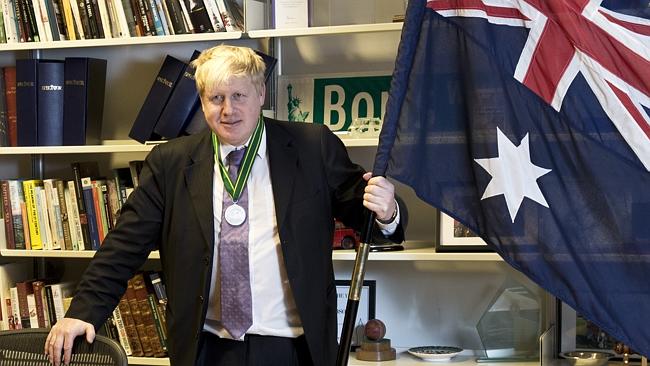
Last week we covered the name of the Australian of the Year for 2014, and here we have another name associated with the Australia Day Foundation awards. At an Australia Day dinner in London, Boris Johnson, the Mayor of London, was declared Honorary Australian of the Year for 2014.

The flamboyant mayor confessed to being a “bit baffled” by his unexpected award, which he received for promoting Australian interests, and campaigning to create visa-free labour and migration between Australia and the United Kingdom. You’ve probably heard on the news that the numbers of Antipodeans in the UK has dropped significantly, partly because of new restrictions on Australians in gaining visas and employment. It’s hard to believe that Londoners want more Australians, but Mayor Johnson will endeavour to get them more anyway.

In case you are dubious about Boris Johnson’s qualifications for being an Australian (even an honorary one), he spent a working holiday in Australia as a teenager, and seems to have had a pretty good time, and he has relatives here. He also points out that as there are more than 200 000 Australians living in London, he can be counted as mayor of the 12th largest Australian city.

Boris is a Bulgar name derived from the Turkic nickname Bogoris, usually interpreted as “short, small”, although other suggestions are “wolf” and “snow leopard, lynx, tiger”. Another theory is that the name ultimately comes from an Iranian source, and may mean “god-like”. Boris can also be used as a short form of the Slavic name Borislav, meaning “one who fights for glory”.

The first person known to history with this name is Prince Boris I, a 9th century ruler of the First Bulgarian Empire who converted to Christianity and adopted the name Mikhail. Boris seems to have converted chiefly for diplomatic and political reasons, for as a Christian ruler he could make more alliances and expand his personal power. However, his conversion also appears to be have been sincere, and at the end of his reign he abdicated to become a monk: he kept having to come out of monkish retirement to quash pagan rebellion and help out with major crises. After his death, he became known as the first Bulgarian saint.

The name Boris became particularly associated with Russia, because Boris II, the great-grandson of Boris I, formed an alliance with the Rus’ Slav prince, Sviatoslav I of Kiev. Sviatoslav’s son Vladimir the Great had a son named Boris – it is conjectured that his mother may have been Bulgarian, possibly even Boris II’s sister. The Kievan Rus’ converted to Christianity, and Boris (son of Vladimir) was later martyred and canonised, becoming one of the Russian Orthodox Church’s most revered saints. The name Boris became used in surrounding countries, and was a traditional name amongst royalty and nobility.

Boris is often seen by English-speakers as an almost comically stereotypical Russian name, and is a favourite choice for fictional villains. This may be a hangover from the Cold War, when Russians were generally portrayed as menacing “baddies”, or it may be because of the English movie star Boris Karloff (real name William Pratt), best known for playing sinister roles in Hollywood horror films such as Frankenstein and The Mummy.

Despite the name being familiar due to high profile Borises such as German former tennis champ Boris Becker, Russian author Boris Pasternak who wrote Dr Zhivago, former Russian President Boris Yeltsin, and Boris Johnson himself, Boris continues to sound rather exotic.

Boris is one of my early name loves, and I think this is because of the novels for young people by Mary Rodgers called Freaky Friday and A Billion For Boris (there’s another book in the series, but my school library didn’t have it). I liked A Billion For Boris better than Freaky Friday, probably because the idea of a psychic television which can make you rich was more appealing to me than swapping lives with my mother (an incredibly selfless workaholic whose life would be daunting for me to take on even as an adult).

Boris is (as you may remember) the tomboyish Annabel’s neighbour, childhood playmate and proto-boyfriend, and as you may also recall, during the course of Freaky Friday, it transpires that Boris’ name is actually Morris – he just has a nasally voice and says his Ms as Bs. Perhaps Mary Rodgers intended this to be a Oh thank goodness – he has a totally normal name! moment, but I was horrified.

To me, Morris was a hideous old man name, reeking of mothballs and uncoolness. Maybe in America in the early 1970s, Morris was considered an okayish name for a nerdy teenager (it only left the US Top 1000 in the 1990s), but by the time I got to read the books, it was nausea-invoking. Luckily, everyone continues to call Morris Boris for the rest of the books.

I thought then, and still tend to think now, that Boris is an awesomely hip yet huggable name, with a lot going for it. Interestingly, the name Boris has risen in popularity in the UK since the 1990s, and last year it made the Top 1000 again at #901 – it debuted there in 2004 at #999.

Political figures are not usually helpful to the popularity of their own names, yet Boris Johnson does not seem to have negatively affected the name Boris. Its rise in the UK may have more to do with the growing number of emigrants to Britain from Russia and Slavic countries though. Indeed, Boris Johnson has Russian ancestry, and describes himself as a “one man melting pot”, so melting a bit of Australian into the pot won’t be any great stretch for him.

POLL RESULT
Boris received an approval rating of 21%. 40% of people saw it as ugly and lumpy, 17% thought it was only suitable for people with Russian or Slavic heritage, and 12% preferred the name Morris. Only 5% of people thought the name Boris was handsome and exotic. 7% were put off the name by Boris Johnson.

True Blue Names for Boys

26 Sunday Jan 2014

Posted by A.O. in Name Themes and Lists

≈ 10 Comments

Tags

animal names, Arabic names, Australian idioms, Biblical names, celebrity baby names, colour names, english names, fabric names, famous namesakes, fictional namesakes, fish names, geographic names, Greek names, hebrew names, historical records, metal names, modern classic names, mythological names, name history, name meaning, name popularity, names from movies, names from television, nature names, popular names, Roman names, surname names, tree names, unisex names, vocabulary names

016

Happy Australia Day! Here are ten names for boys which are associated with the colour blue, in honour of the saying, a true blue Aussie.

Bay

A bay is a scoop in the shoreline, much prized for providing safe anchorage and opportunities for fishing. Having a long coastline, Australia has many bays, including the Great Australian Bight which forms the southern edge of the continent, and Botany Bay in Sydney – there is even a Blue Bay on the Central Coast of New South Wales. Although bay also describes the colour of a horse’s coat (coppery brown with black markings), and bay tree is another word for a laurel bush, I tend to think of the name Bay as being influenced more by the geographic term, at least in Australia. Bay can also be from the surname – the first English people with the surname Bay took their name from baille, an enclosed courtyard as part of a Norman castle’s fortifications. Although Bay can be used for both sexes, I have only ever seen it on boys, perhaps because it sounds as if could be short for Bailey.

Blue

Blue is a colour of the spectrum, and a primary colour. Because it is the colour of the sky, it has often been seen as representing heaven and divinity. It has been connected to the “blue collar” working class, but also with the wealthy, and “blue blooded” nobility. Blue is a popular colour for uniforms, and the navy, air force, and police traditionally wear blue. Blue can also mean “sad, melancholy”; hence blues music, which arose out of suffering. The Australian flag and Eureka flag are both blue, blue heelers are tough, loyal Australian cattle dogs, and it is an Australian irony that a red-headed man is called Blue or Bluey – some say because of the redhead’s reputation for temper, as a blue is Australian slang for a fight. Since World War II, blue has been seen as the colour for boys (with pink for girls), giving the name Blue a boyish feel – although celebrity baby Blue Carter shows it works well for girls too.

Dean

The Blue Mountains are to the west of Sydney, part of the Great Dividing Range down the eastern side of Australia. Their name comes from the blue-grey haze which can be seen when the mountains are viewed from a distance, believed to be caused by the diffusion of eucalyptus oils from the trees. One of the most prominent is the Mountain Blue Gum (Eucalptus deanei), a tall forest tree. Its scientific name comes from Henry Deane, an Australian engineer who first collected specimens in the late 19th century. The English surname Dean or Deane comes from dene, meaning “valley” – the Mountain Blue Gum grows in sheltered valleys. Dean has been used as a boys name since the 17th century, and seems to have been initially most popular amongst non-Anglican Protestants. Dean first ranked in Australia in the 1950s, probably because of Hollywood star James Dean; it debuted at #134. By the following decade it had reached the Top 50, and peaked in the 1970s at #34. It didn’t leave the Top 100 until the early 2000s, and since then has gently declined into the mid-100s. It has recently got some exposure via Dean Winchester from the television show Supernatural, played by Jensen Ackles; the character is named after Dean Moriarty, from Jack Kerouac’s On the Road. A simple, clean modern classic, this still has a touch of Hollywood.

Drake

Drake has been used as a boys name since the late 16th history in honour of the heroic sea captain, Sir Francis Drake – the first babies with this name were born around the time of Sir Francis’ death. His surname is from the Old English nickname Draca, meaning “dragon, serpent, sea serpent”, coming from the Latin draco. The word goes back to an ancient root meaning “to see” – perhaps suggesting that dragons had a mesmerising gaze. In European mythology, dragons are serpentine rather than lizard-like, so the word drake covers a range of creatures. The name would have been given to someone who was very bold and fierce, for dragons were generally viewed as evil. They were often shown guarding a hoard of treasure with avaricious ferocity. In the post-Christian era, they became associated with Satan, but in modern fantasy stories, dragons nearly always seem to be noble and friendly. Although dragons are cool, this name reminds me of the watery Rainbow Serpent of Indigenous cultures, depicted as a blue serpent on Sydney’s coat of arms.

Levi

Levi Strauss was the German-American businessman who founded the first company to manufacture blue denim jeans, which gain their colour from indigo dye. Originally sturdy workwear for labourers, jeans became iconic fashion items, and are now essential clothing for almost everyone. In the Old Testament, Levi was the son of Jacob and Leah, and the founder of the Tribe of Levi. The Levites became the priestly caste of the Hebrews – perhaps the most famous members of the Tribe of Levi are Moses, and his siblings Aaron and Miriam. The name Levi is traditionally understood as “he will join”, because Jacob joined with Leah to produce Levi, but Biblical scholars believe it simply means “priest”, and comes from Arabic. Levi has charted in Australia since the 1970s – this was the decade that Levi jeans were first manufactured in Australia, and the brand name probably had more impact than the Biblical figure. Levi was #243 for the 1980s, and climbed steeply to make the Top 100 by the early 2000s, where it remains stable. It is #26 nationally, #31 in New South Wales, #30 in Victoria, #24 in Queensland, #40 in South Australia, #22 in Western Australia, #23 in Tasmania, #13 in the Northern Territory, and #53 in the Australian Capital Territory.

Marlin

Blue marlin are one of the world’s largest fish, blue-black with a silvery white underside, and an elongated upper jaw. They can reach more than 500 kg in weight, and have few predators, apart from humans. Because of their size, power, and elusiveness, they are considered to be one of the most highly prized targets for sports fishing. Found in many oceans of the world, blue marlin have been captured as far south as Tasmania. However, the greatest numbers have been caught off the Gold Coast in Queensland, and the largest ones in Bateman’s Bay, on the south coast of New South Wales. Blue marlin are considered be a threatened species, due to overfishing, and most anglers in Australia use the tag and release method. If you would like to use Marlin as a boy’s name, it doesn’t seem too different from Marlon in sound. The word marlin is short for marlinspike fish, as a marlinspike is a pointed tool used by sailors to separate strands of rope; it comes from the Dutch for “fasten, secure”. Like to use this as a girl’s name? What about Makaira, the Latin name for marlin?

Ocean

Australia is entirely surrounded by ocean, and more than 80% of our population live near the sea. 71% of the planet is covered by ocean, which holds most of Earth’s water. Integral to life on the planet, it is believed that life first arose in its waters. It is not known where all the water on our planet came from, but it must have played a major role in cooling it and making it possible for anything to live here. It still continues to moderate our climate and weather patterns, so we can keep living here. From space, Earth appears to be a marbled blue colour, earning it the moniker The Blue Planet. The word ocean comes from Oceanus, which the ancient Greeks and Romans believed was an enormous river encircling the world. In Greek mythology, this world-ocean was personified as a Titan, depicted as a large, muscular man with a long beard and horns, having a serpent for his lower body. He is the father of the ocean nymphs, and all the rivers, fountains and lakes of the world. Despite these masculine origins, the name Ocean is given to both boys and girls.

River

Although it has around a hundred of them, Australia cannot be said to be a land of great rivers – river beds are often dry, and even our largest rivers tend to be on the thin side. Of course, this means that every single one of them is especially precious. It seems slightly cheating to include them on a list of Blue Names, as every river I have seen here was brown or green in colour. However, rivers are marked in blue on maps, and if you saw one from a distance with a quantity of blue sky reflected in it, from the right angle it would probably look blue-ish. The word river is Anglo-Norman, from the Latin for “riverbank, shore”; it is ultimately from an ancient root meaning “scratch, tear, cut”. River has been used as a first name since the 17th century, and from the beginning seems to have been used with the geographic term in mind, since people named River Banks and River Jordan turn up quite early in the records. The name is unisex, but historically much more common for boys – in Australia, it seems to be more than twice as common for boys as for girls.

Steel

Steel is an alloy of iron and carbon. Steel production began on an experimental basis in Australia in the 19th century, but didn’t really get going until World War I, when BHP opened the first steelworks in Newcastle. Its boom years were after World War II, but since the 1980s our steel production has decreased significantly due to global competition. During its heyday, steelworks provided mass employment and were a source of great pride for workers; it was from the steelworkers that the modern working class emerged. Blue steel is steel that has been given a dark finish, in order to increase toughness. Although we often connect blue steel with guns and other weapons, it is used in many useful capacities, such as on the steel-capped toes of work boots. It gives its name to a colour – steel blue, a shade of blue-grey. Last year I saw several boys named Steel or Steele in birth notices, after the release of the Superman movie, Man of Steel.

Suede

Suede is a soft napped leather, popular for making accessories such as shoes and handbags. It was originally used for women’s gloves, and the word comes from the French gants de Suède, meaning “gloves from Sweden”, since this is where the gloves were imported from. Suede features in the Carl Perkins song, Blue Suede Shoes, considered one of the first rockabilly records, and the first million-selling country song to hit the R&B charts. Perkins wrote the song based on a suggestion from Johnny Cash, and a real life encounter with a man who didn’t want anyone stepping on his blue suede shoes. It was soon afterwards recorded by Elvis Presley, who made it a hit all over again, and the song has gone on to become a rock and roll classic. I have met a little boy named Suede, and once I got used to it, found it rather cool and rockabilly. Suede was named in honour of the song, as his parents are Elvis fans. They probably attended the recent Elvis Presley Festival in Parkes.

POLL RESULTS
The public’s favourite names were Levi, River and Bay, and their least favourite were Ocean, Steel and Suede.

True Blue Names for Girls

19 Sunday Jan 2014

Posted by A.O. in Name Themes and Lists

≈ 6 Comments

Tags

animal names, Australian idioms, Biblical names, bird names, celebrity baby names, colour names, english names, fictional namesakes, flower names, French names, gemstone names, German names, Greek names, middle names, modern classic names, name history, name meaning, name popularity, name trends, names from movies, nature names, nicknames, Norman-French names, Persian names, plant names, popular names, surname names, unisex names

bluewren-male

It will be Australia Day in a week’s time, and rather than cover just one name, I am suggesting names with a “blue” theme, in honour of Australia, where the phrase “true blue” has taken on its own patriotic meaning.

Azura

The name Azura is an elaboration of the colour name Azure. Azure is an intense light blue, the colour of a clear sky on a hot summer’s day. In the patriotic Song of Australia, the lyrics describe how all about is azure bright, and the bird called the azure kingfisher is native to Australia. The English word azure comes from French azur, and is taken from the blue mineral lapis lazuli – lapis means “stone” in Latin, while lazuli is from lāžaward: the Persian name for the mineral, derived from Lazhward, a place where it was mined. According to Jewish tradition, Azura was one of the daughters of Adam and Eve, and the wife of her brother Seth. Azura is a popular name in science fiction and fantasy, most notably in Skyrim, where Azura is the Lady of Twilight who rules over the realm of Moonshadow. Last year, NRL star Anthony Minichiello, and designer Terry Biviano, welcomed their daughter Azura. This is pretty and exotic while still similar to names like Arya and Zara.

Bluebell

The bluebell is a type of hyacinth; a spring bulb which grows wild in the woodlands of Europe and is also a popular garden plant. Its name comes from its violet-blue colour, and mass of bell-like petals. Several other unrelated flowers around the world are named bluebell, and in Australia we have the Royal Bluebell (Wahlenbergia gloriosa). This deep violet wildflower grows abundantly in the Australian Alps, and is the floral emblem of the Australian Capital Territory. Summer flowering, it is hardy and easily grown in the garden; however, it is protected in the wild, and cannot be picked or collected. Bluebell came into use as a girls name during the 19th century, along with other flower names, but doesn’t have a Victorian vintage vibe – it seems hip and funky. I have seen this a few times as a middle name, but would love to see it boldly upfront.

Delphine

Delphine is the French form of Delphina, which can be understood as meaning “from Delphi”. However, the name reminds me of dolphins, whose scientific family name is Delphinidae, from the Greek delphus, meaning “womb”, to indicate that although they look fish-like, as mammals, they bear live young. The Greek town of Delphi, the home of the famous Delphic Oracle in ancient times, is also said to mean “womb”, as it was meant to be the navel of the earth goddess Gaia. The grey-blue colouring of the dolphin suggested this name to me, and there are several species of dolphin which live in, or migrate to, the waters surrounding Australia. Since ancient times, people have been fascinated by dolphins, and there are many stories of wild dolphins rescuing people, helping surfers and swimmers in trouble, or even protecting humans from shark attacks. Their high intelligence and playful behaviour make them appealing companions, and there are several places in Australia where you can swim with and interact with wild dolphins. Delphine is a pretty dolphin-related name for anyone who loves these free-spirited sea creatures, and has Dell and Fifi as potential nicknames.

Indigo

Indigo is one of the seven colours of the rainbow, a dark shade of blue. It was Sir Isaac Newton who introduced indigo as one of the colours of the spectrum, because in the mid-17th century, when he began his work with prisms, the East India Company had begun importing indigo dye to Britain, where it was used to colour clothing a deep blue. Indigo dye comes from the plant Indigofera tinctoria, native to tropical Asia, and the word indigo comes from the Greek, meaning “Indian dye”. Indigo is a rather controversial colour, because Sir Isaac Newton decided there had to be seven colours to match the seven notes of a scale and seven days of the week, and scientists question whether indigo is really a colour of the spectrum, or just the point where blue deepens. Even more confusingly, Sir Isaac Newton seems to have used the word indigo to mean the colour we call blue. Indigo has strong New Age associations, because it is seen as a particularly spiritual colour connected to psychic power. Indigo is a rather trendy girls name in Australia, a favourite choice of celebrities; rising with other Ind- names, it is #137 in Victoria.

Jasmine

I would not have considered this for a list of Blue Names, except that while writing it, Australian actress Cate Blanchett won a Golden Globe for her role in the film Blue Jasmine. There are about twelve species of jasmine native to Australia; these climbing vines come from tropical and subtropical areas of Queensland and northern New South Wales. The flowers are delicate and white, and have a sweet, intoxicating scent; they are both fragile and strong. The word jasmine comes from the Latinised Persian yasamen, meaning “gift from God” – there really is something quite heavenly about jasmine. The name Jasmine is a modern classic which has charted here since the 1960s, and soared during the 1970s to make the Top 100 for the 1980s. It peaked in the early 2000s at #14, and is still stable in the Top 100. It is #36 nationally, #33 in New South Wales, #28 in Victoria, #41 in Queensland, #31 in South Australia, #24 in Western Australia, #59 in Tasmania, #15 in the Northern Territory and #20 in the Australian Capital Territory.

Sailor

This name occurred to me because the Royal Australian Navy winter uniform is dark blue (and the summer uniform has dark blue trim); Sailor could be used as a name to honour a family naval tradition. Sailor has been used as a first name since at least the 19th century, and was used for both sexes, although more common for boys. It received greater recognition in the 1990s, when American model Christie Brinkley gave the name to her daughter, and since then has been overwhelmingly seen as a girls name – perhaps partly because it fits in so well with the trend for names such as Kayla, Layla and Tayla. Weatherman Grant Denyer named his daughter Sailor in 2011, his wife Cheryl a fan of the name ever since Christie Brinkley’s choice. The name Sailor probably came originally from the occupational surname, in which case it can be from the German seiler, and mean “ropemaker”, or English, where it means “dancer, acrobat”, from the Norman French sailleor, meaning “dancer, leaper”. The German origin seems to be more common, and as sailors once worked with ropes, still seems to fit as a sailing name.

Sapphira

A Greek name meaning “sapphire”, which simply means “blue stone”. However, it is likely that the ancient Greeks were referring to lapis lazuli when they used the word – it comes from the Hebrew sappir, meaning “lapis lazuli”. In the New Testament, Sapphira was an early Christian who, along with her husband, was struck dead for concealing money from the church and lying about it. It’s hard not to think that they were executed, although the Biblical account is vague on the details. It’s one of the creepier and more troubling parts of the Bible, and doesn’t really show the early church in a good light. A more pleasant connection is the intelligent and loyal blue dragon named Saphira in Christopher Paolini’s Inheritance series of fantasy novels. Crime novelist Tara Moss chose the name Sapphira for her baby daughter in 2011, apparently because she had blue eyes. Sapphira is an exceptionally beautiful and elegant name which can also reference the sapphire mining trade in Australia.

Sky

The atmosphere as it appears from Earth; the word comes from the Norse word for “cloud” (you can see our ancestors came from a place where skies tended to be cloudy!). On a clear day the sky appears blue because air scatters blue sunlight more than it scatters red. Because of this, we give as a truism that the sky is blue, even though it appears in a range of colours depending on the conditions, and there is a colour named sky blue because of that. Blue skies are symbolic of happiness and good times ahead, and blue skying is to think creatively – to think that the sky is the limit, to reach for the sky. Although there are blue skies all over the world, in Australia the strong sunlight and lack of cloudiness mean we see a lot of blue sky, and intensely blue skies – the patriotic song Awake! Awake, Australia! mentions our “bright blue skies”. Sky is a unisex name which has never charted in Australia, but its similarity to Skye and Skyla will make it seem feminine here.

True

An English word which can be understood as meaning “genuine, trusty, faithful”, ultimately from an ancient root meaning “steady, firm”. A common saying in Australia is to describe someone as a true blue Aussie, as featured in the John Williamson song, True Blue. The phrase true blue goes back to medieval times, when the colour blue symbolised faith and constancy. Although theories abound as why this was so, the most likely explanation is that it’s from the blue-dyed cloth produced in the town of Coventry, famous for not fading with washing, and thus remaining “true”. Later on, the phrase became associated with the Presybterian Church, and later still, the Tory Party, and their “true blue supporters”. In Australia, far from “true blue” having these conservative associations, in the 19th century it was used to describe those working class men who remained true to their labour principles, and was thus a left-wing term. Gradually, true blue came to mean anyone loyal to Australia and its values. True can be used as a name for either sex; on a girl, it seems as if it could be short for Trudy and similar names.

Wren

Australian wrens are similar in appearance, but unrelated to the wrens of Europe and the Americas. In some species, such as the Superb Fairywren and Splendid Fairywren, the breeding male has a very distinctive and beautiful blue plumage in contrast to the grey-brown tones of the females and juniors. In other species and subspecies, both males and females are bright blue, or have blue patches. Because they are tiny, pretty, and have an attractive range of birdsongs, we love it when fairywrens visit our gardens. Seeing a group of colourful wrens flutter through the bushes is the closest thing to having fairies in the garden that most people will experience. Another charming fairywren fact is that the male will present brightly coloured flower petals when courting a female, which to human eyes looks like bringing a bouquet of flowers. Wren has been used as a first name since the 17th century, and from the beginning was unisex, given roughly equally to both sexes, and possibly influenced by the surname, which comes directly from the bird. Today it is usually thought of a girls name, and although I can see it on a boy, the fairywren seems to render it more feminine than masculine. Elsewhere Wren might seem a humble choice as a name, while here I think it’s much brighter and more cheerful.

POLL RESULTS
The public’s favourite names were Wren, Indigo and Delphine, and their least favourite were Sailor, True and Sky.

Famous Names: Rhonda and Ketut

15 Wednesday Jan 2014

Posted by A.O. in Famous Names

≈ 4 Comments

Tags

Balinese names, dated names, fictional namesakes, locational names, name history, name meaning, name popularity, names from songs, names of rivers, unisex names, Welsh names

aami-remix-642-380

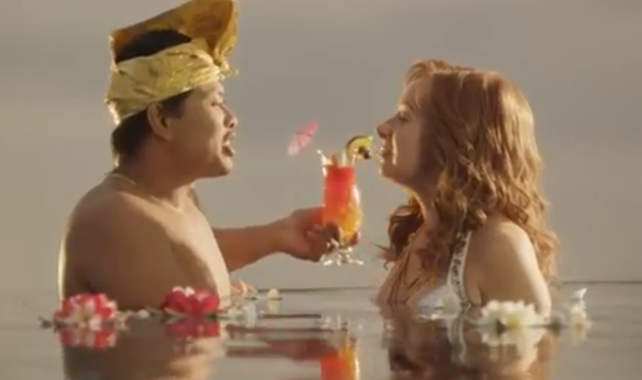
For months, Australia has been avidly following the unfolding romance between a redheaded Australian woman who meets a flirtatious local on a Balinese beach, a younger man working as a waiter. Sparks fly, there is unmistakable chemistry … and something surely happens between them. Or has Rhonda read too much into the situation, her brain fevered from multiple viewings of Eat, Pray, Love?

It sounds like the plot of a soap opera, but we’ve actually been watching a clever series of car insurance commercials from AAMI. Rhonda saved so much money on car insurance that she was able to take a holiday, and it was here that the handsome Ketut pressed exotic drinks on her, and who knows what else. Back home, she found herself gaining the attentions of smooth Trent Toogood at her high school reunion, leaving us wondering if her destiny was Trent or Ketut … or if Ketut was nothing more than a fantasy.

The advertisements have captured the public’s imagination, with several fan pages on Facebook to Rhonda and Ketut’s relationship, and tribute tee-shirts being sold in Bali, reading Rhonda is Mine, and Kiss Me Ketut. Lines such as “beautiful brake foot” and “hot like a sunrise” have entered the popular consciousness, and according to Twitter denizens, if you’re australian and rhonda and ketut aren’t your otp there is something v wrong with u.

The public were invited to vote on whether Rhonda should find eternal bliss with either Trent or Ketu (happy singledom not an option). There wasn’t much doubt that there was nothing v wrong with us and that Team Ketu would win, and Rhonda finally found the happy ever after to her unexpected holiday romance.

AAMI have sensibly said they aren’t going to continue Rhonda and Ketut’s story in case people get sick of it, so the loved-up couple won’t be buying home insurance together or honeymooning in Fiji with all the money they saved on life insurance. AAMI increased its sales by almost 22% during the Rhonda-Ketut story line, so it’s a happy ending for them as well.

Rhonda is a modern Welsh name taken from the Rhondda Valley, once a coal mining area with strong community ties. It has been used since the 19th century, and Rhondda seems to be the older spelling in Wales. Rhondda may be from the Welsh for “recite, recount”, related to the Old Irish for “speech”, with the suggestion that the River Rhondda is speaking aloud (in the sense that we say a river is “babbling”). The meaning is usually glossed as “noisy”.

Rhonda first charted in the 1920s, debuting at #371. It soared in popularity during the 1930s, and made the Top 100 by the 1940s. It peaked in the 1950s at #29, then declined; even the Beach Boys song Help Me Rhonda doesn’t seem to have aided it in the 1960s (it may have possibly damaged the name’s popularity). It was out of the Top 100 by the 1970s, and hasn’t charted since the 1990s.

Rhonda is a dated name, with even the Rhonda in the AAMI commercials given the name when it was already out of fashion (the character is 39). Yet there’s something rather appealing about Rhonda – it’s not glamorous, but seems honest, friendly and good-hearted. I don’t think the advertising campaign is likely to boost Rhonda, but it’s a likeable 1950s name with plenty of warmth.

Ketut (keh-TOOT) is a common Balinese name meaning “fourth-born”; like all Balinese names, it is unisex. It’s a suitably humble name for Rhonda’s hunky waiter, but both characters have names which reference cars – Ketut sounds like the toot of a horn, while Rhonda has Honda in it.

We fell in love with Rhonda and Ketut – but do we love their names?

POLL RESULTS
Rhonda received an approval rating of 44%, and Ketut was further behind with 34%.

Names Spotted at Home and Abroad, Spring 2013

14 Tuesday Jan 2014

Posted by A.O. in Names Spotted at Home and Abroad

≈ 4 Comments

Tags

changing a baby's name, changing your name as an adult, fictional namesakes, honouring, names of dolls, virtue names

Rachel

I apologise for the extreme lateness of this entry – apart from being bulldozed by Christmas preparations, I have long been unsure about where to begin and end each season. However, I’ve made a decision, so hopefully will be better organised now.

A commercial site for weight loss after having a baby featured a client named Delight from the Northern Territory who had lost 22 kg on the program. Delight is one of the most interesting of virtue names, and one I have only seen before in old books. I think it’s pretty, but admit it does remind me of Turkish delight a little bit (not that that’s bad). Delight’s youngest daughter is named Halle.

South Grafton High School in New South Wales ran a Maybe Baby program for Community and Family Studies, where students took care of a simulated baby for three days and nights to show what’s involved in caring for an infant. One of the students, Selina, named her baby Wilfred – a top baby name of the future, perhaps? Other high schoolers were Briana, Lertisha, Cheyenne and Brielle. I would have loved to know what names they all chose.

Changing Names

The radio and television presenter Andrew Günsberg (best known from hosting Australian Idol), once nicknamed Spidey, and known by the stage name Andrew G, has changed his name to Osher Günsberg. He was advised by an Israeli shaman that he could change his life energy and life path by changing his name. The name he chose was that of the coolest dude he’d ever met, an Israeli cameraman. Since becoming Osher, he tells us that his life has changed completely, and he now believes that at last he has a name that feels right, and that he owns completely. Osher’s parents have both changed their first names too.

Blogger and editor Alana House relates that one of her Facebook pals had just realised she’d made a terrible mistake with her daughter’s name, and wonders if age two is too old to change her name. The friend’s surname is Nutter, and her daughter’s name is Mia. Uh oh. Alana points out that her own name is the tease-worthy A. House, and she’s grown to like it, so predicts that Mia Nutter will also cope. However, do say the full name out loud at least a few times before whacking it down on the registration form.

Stories on Honouring Names

A story from Ballarat on its fertility rate showed a woman named Vicky who had had a baby during Ballarat’s baby boom year of 2009 [pictured]. Her daughter is named Rachel Scarlett, and she is named after a doll that Vicky had as a little girl. The middle name, Scarlett, is from Gone with the Wind – which hypothetically could be her favourite book as a teen. If I named a daughter after my favourite doll and book character from childhood, her name would be Bridget Cassandra. What would yours be called?

A fun run to raise money for spinal muscular atrophy was held in Tasmania, with one of the participants baby Tylan, named in honour of his sister Taylin, who passed away from the disease several years ago. It’s a lovely way to connect him to the sister he will never meet.

A businessman described as a “traffic king” with the imposing name of Ron Conquest was named after his grandfather, and when his first son arrived this spring, he was also named Ron. Been seeing a lot of babies named Ron or Ronnie lately – but no Ronalds. Is Ron Burgundy making Ron cool? Mrs Conquest’s name is Rana, by the way.

Luke Douglas is a rugby league footballer for the Gold Coast Titans. His dad is named Archibald, and that is Luke’s middle name – I guess in the 1980s, Archibald was a no-go for a baby’s first name. However, I’m interested to see that Luke plans to name a future son Archibald to carry on the family tradition – Archibald is acceptable, now that it can shortened to popular Archie. A good reason to leave “unusable” family names in the middle, because they might be perfect for the next generation to carry on.

And a story from real life. I met a lady with a little girl named Poppy, who told me that her daughter was named after her grandfather. Slightly confused, I asked what grand-dad’s name had been, and she told me, “John. But we always called him Poppy” … I don’t think she knew what made me laugh, but she was perfectly good natured about it.

More Baby Names From Real Life

Kitana: A sexy princess video game character from Mortal Kombat. Could be shortened to Kit or Kitty.

Bly (for a boy): a surname meaning “blithe”; could be seen as a specifically masculine form of Blythe.

Brothers named Aurelius and Evander. Very grand.

A friend who still has small children tells me that at her local daycare centre, there are two boys named Odin, and a Loki. No Thors though. However, the big name for her area is Taylor, with three girls and two boys at daycare with the name. There’s also a Tyler (boy), and Tyla (girl).

Name Update: Nameless No Longer

26 Thursday Dec 2013

Posted by A.O. in Name Updates

≈ 4 Comments

Tags

celebrity baby names, choosing baby names, fictional namesakes, honouring, middle names, name combinations, nicknames, sibsets

AnneGreenGables27

Nina wrote in to the blog because she and her husband Hamish had a six-week-old baby daughter who still didn’t have a name, and the date for registration was growing closer each day.

Nina had her heart set on Annie, but at the last minute Hamish said he wanted the baby to be named Sarah, after his mother. The longer it took them to resolve their differences, the more other people felt they could offer their own opinions on the matter, which made the decision seem even more complicated.

After the couple compromised by agreeing on the name Anne, Nina wrote in again to ask for help on choosing a middle name.

Just before Christmas, Nina posted off the registration forms for their child’s name, so they got in before the deadline with about a week to spare, and their daughter’s name is

ANNE ELIZABETH KATE “ANNIE”,

baby sister to Edie and Alistair “Mac”.

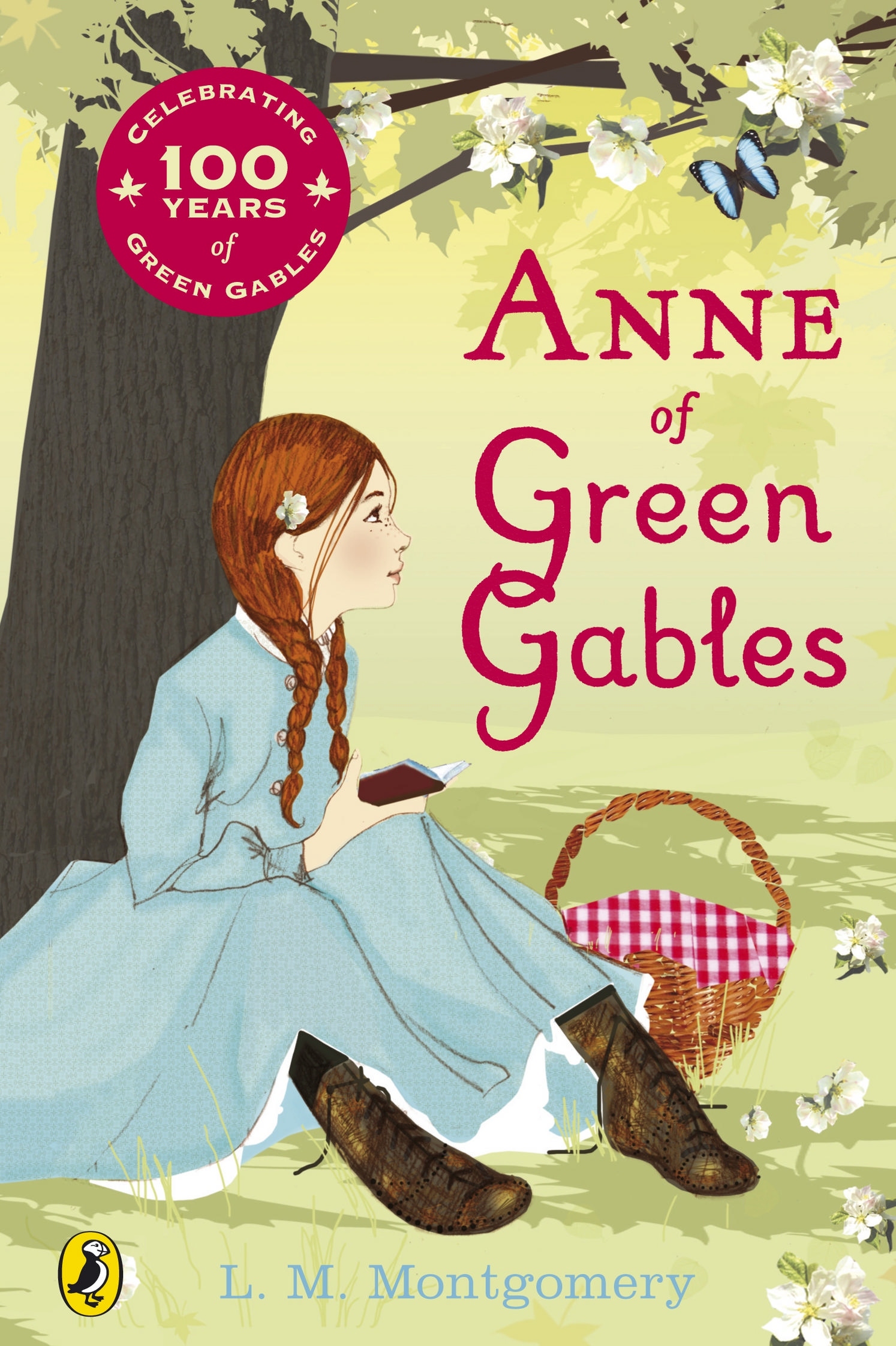
Anne is the middle name of Hamish’s mum, so they found a way to honour his mother and still get to the nickname Annie. Nina is pleased, because she loved the Anne of Green Gables books as a child (as well as the musical Annie).

Nina chose the middle name Elizabeth because so many people suggested that they name the baby “what she looks like”, and Nina thinks her youngest daughter looks most like an Elizabeth – a name they had also considered. If Anne ends up going by her middle name and being a Betsy, Nina won’t mind that at all.

Kate is a family name that had also been on their list, and was the middle name she favoured for a baby Annie.

Nina says she wasn’t brave enough to use as many middle names as Clive Palmer – and there wasn’t enough space on the form anyway!

They have had mixed reactions from family and friends, with most people saying they should have just gone with Annie as the official name. However, Nina loves her baby’s name and thinks it is perfect for her.

At the moment, it is not entirely sure whether Anne will be called Annie or not. Mac hasn’t been able to pronounce the name Annie yet, and sometimes calls his little sister Peg. Nina still just calls her Baby. However, Nina recently discovered that Annie was the middle name of her great-grandmother, so maybe it is fate that she be an Annie in the future!

Congratulations to Nina and Hamish on their new daughter! I think Anne Elizabeth Kate is a lovely simple, unpretentious classic name that is perfectly familiar, but these days, not common at all.

Remember that you have sixty days to name a baby, so don’t be afraid to take longer to find the perfect name if you need to. You will get there in the end, even if it doesn’t feel like it at times.

Celebrity Baby News: Clive and Anna Palmer

23 Monday Dec 2013

Posted by A.O. in Celebrity Baby News

≈ 2 Comments

Tags

celebrity baby names, celebrity sibsets, fictional namesakes, honouring, middle names, names from comics, names from songs

691088-clive-and-anna-palmer

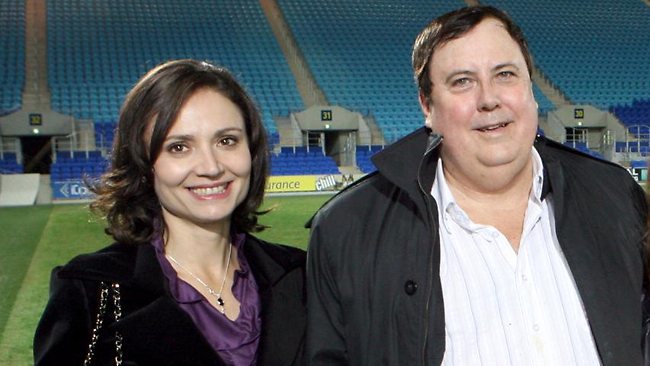
Billionaire MP Clive Palmer, and his wife Anna, welcomed their second daughter together on December 18 and named her Lucy Diamond Stelina Mary Anna Nancy. Lucy Palmer joins big sister Mary, aged 5. Clive has two adult children named Michael and Emily from his first wife, Susan, to whom he was married for 22 years.

Clive was raised on Queensland’s Gold Coast, and holds many interests in mining, including Mineralogy, which has 160 billion tonnes of iron ore in the Pilbara region of Western Australia, Waratah Coal, Queensland Nickel and the Palmer Nickel and Cobalt Refinery. He has also owned a football team, Gold Coast United, and is Adjunct Professor of Management at Bond University on the Gold Coast. He is secretary-general of the World Leadership Alliance, which promotes democracy and includes members such as Bill Clinton and Aung San Suu Kyi; Clive is also president of the alliance’s business chapter, the World Economic Council. He recently opened the Palmersaurus dinosaur park, and has plans to launch a modern-day replica of the RMS Titanic, to be named Titanic II. Clive has been active in conservative politics since the 1970s, and this year won the seat of Fairfax on the Gold Coast for his Palmer United Party. In 2012 he was named a National Living Treasure by the New South Wales branch of the National Trust of Australia.

Anna is originally from Bulgaria, and came here in the early 1990s. She was married to Clive’s friend Andrew Topalov; Clive walked Anna down the aisle at her first wedding when her parents were unable to attend. Many years later, Clive lost his wife Sue to cancer in 2005, and Anna’s husband passed away from melanoma the following year. Shared grief brought Clive and Anna together, and they were married in 2007.

Before his second daughter’s birth, Clive said that if the baby was a boy, he would like to name him Charlie, after Charlie Brown in the Peanuts strip – apparently a favourite comic of his. I wonder if Lucy‘s name is after Lucy Van Pelt from Peanuts?

The Diamond seems like a reference to the Beatles song, Lucy in the Sky with Diamonds, although it also reminds me of the famous blue diamond in the movie Titanic!

Mary and Anna are the baby’s sister and mother, Nancy is the name of Clive’s mother, and I wonder if Stelina could be Anna’s mother’s name? With this many middle names, I suspect the Palmers are not planning on having more children.


The People’s Choice of Boys Names

22 Sunday Dec 2013

Posted by A.O. in Name Themes and Lists

≈ 9 Comments

Tags

African names, Akkadian names, Albanian names, Arabic names, Armenian names, celebrity baby names, Christmas names, english names, epithets and titles, famous namesakes, fictional namesakes, Finnish names, French names, Greek names, Hawaiian names, hebrew names, Indian names, Irish names, Kurdish names, Latin names, Maori names, mythological names, name history, name meaning, name popularity, name trends, nicknames, Old Norse names, polynesian names, saints names, scandinavian names, Semitic names, Slavic names, surname names, unisex names

3 kings

A selection of boys names that have been searched for several times to reach the blog. I chose names from different backgrounds that aren’t on the Top 100.

Ari

This little name has several origins. It is a Hebrew name meaning “lion”, an Armenian name meaning “brave”, a Scandinavian name from Old Norse, meaning “eagle”, an Albanian name meaning “bear”, a Maori name meaning “clear, visible”, or an Indian name meaning either “sun-like” or “free from sin”. It is also a Finnish form of Aaron and Adrian, a Kurdish short form of the name Arian, meaning “Aryan”, and is commonly used as a short form of any name begining with Ari-, such as Aristotle. There have been quite a few characters named Ari in popular culture, starting way back in the 1950s, with Ari Ben Canaan as the hero of Leon Uris’ novel Exodus, about the founding of the state of Israel; based on Israeli military leader Moshe Dayan, in the movie he was played by Paul Newman. This simple multicultural name is rising like other Ar- names such as Archer, Arlo and Arthur, and is #135 in Victoria.

Balthazar

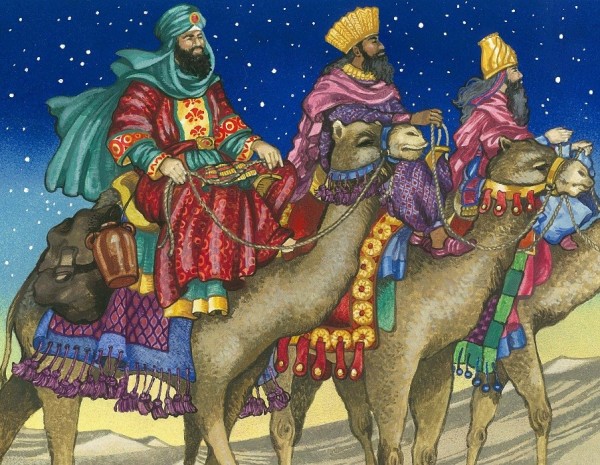
Variant of Belshazzar, the Hebrew form of the Akkadian name Bel-sarra-usur, meaning “Ba’al protect the king”. Ba’al is a Semitic title for any god, meaning “lord, master”, and in the Old Testament, the early Hebrews used the term to apply to the God of Israel. Later the term became seen as a heretical one, with a clear divide drawn between the Hebrew Yahweh and the Phoenician Ba’al. In Christian legend, Balthazar is the name given to one of the Magi – the three wise men who followed a mysterious star to visit the baby Jesus, bringing him gifts. The story appears in the New Testament, but no name (or even number) is ascribed to the Magi in the Bible. According to some traditions, Balthazar was an Arabian or Ethiopian scholar who brought the gift of frankincense to symbolise Christ’s role as a high priest. He is usually depicted as middle-aged and dark-skinned. One story is that Balthazar later converted to Christianity and was ordained a bishop; like the other Magi, he is regarded as a saint. Usually pronounced BAL-ta-zar in Australia, this is a seriously cool Christmas name.

Dragan

Slavic name meaning “precious, dear one”. It is usually pronounced DRAH-gahn, although I have heard people give it the same pronunciation as the word dragon. This reminds me that there is a sympathetic character named Dragan in the novel, Girl With a Dragon Tattoo; in the American film version, he is played by Croatian actor Goran Višnjić. Dragan Roganović is the real name of award-winning Serbian-Australian DJ Dirty South, and unfortunately the name has had a bit of bad publicity in Australia due to accused Serbian-Australian war criminal Dragan Vasiljković “Captain Dragan”, currently imprisoned in Australia awaiting extradition to Croatia. Despite this, Dragan is an attractive heritage choice with a very sweet meaning.

Kalani

Unisex Hawaiian name meaning “the sky, the heavens”. It’s a name often connected with surfing, because of Hawaiian surfers Kalani Robb, Kalani Chapman, Kalani Vierra and Kalani David, and young Australian surfer Kalani Ball. Mark Gasnier, former NRL player for the St George Illawarra Dragons, welcomed a son named Kalani two years ago. These are all guys, but surfer Kalani Miller, girlfriend of Kelly Slater, is a reminder that it’s a girl’s name as well – in fact, Kalani seems more common as a girl’s name in Australia, making #570 for girls in Victoria and not ranking as a boy’s name. Then again, Victoria is not famous for its surf culture – in northern New South Wales or Queensland, boys named Kalani may be more common. It’s a great name for either sex.

Leander

Greek name meaning “lion man”, featured in the tragic tale of Hero and Leander. Hero was a priestess of Aphrodite who lived in a tower in Sestos, on the European side of the Dardanelles, while her lover Leander was from Abydos, on the other side of the strait. Leander swam across the Hellespont every night to be with Hero, while she lit a lantern at the top of her tower to guide his way. Their love affair lasted all through the summer nights, but winter weather proved an obstacle to swimming. Desperate to be with his sweetheart, Leander braved the icy waters and was drowned during a storm, while the savage winds blew out Hero’s lantern. The distraught Hero plunged from her tower into the waves to join him in his watery grave. The story has inspired many writers, including Ovid, John Donne, Christopher Marlowe, and John Keats. Lord Byron recreated the swim by crossing from Sestos to Abydos, a distance of just over 1 km, which he turned into a poem; although he did it in May, according to his poem it was still difficult and he ended up with a chill. Leander was obviously made of sterner stuff. This is a handsome and romantic name with a very masculine meaning.

Mandela

The surname of inspirational world leader Nelson Mandela, his surname the name of his grandfather, the son of a king. Mandela was a lawyer and prominent campaigner against the apartheid government when he was arrested and sentenced to life imprisonment for crimes against the state. He served more than 27 years, released in 1990 after an international campaign had lobbied the South African government on his behalf. He joined negotiations to abolish apartheid and establish multiracial elections, becoming South Africa’s first black president. Deeply loved in his own country, where he was called Tata, or “father””, he was a respected figure on the world stage. He received more than 250 awards and honours during his lifetime, including the Nobel Peace Prize; he was appointed Honorary Companion of the Order of Australia in 1999. His passing this month at the age of 95 after a long illness has only highlighted the global reverence he attained. This is a worthy namesake whose name I have seen given to a boy – a name that Africa has given to the world.

Oisin

Anglicised form of Oisín, an Irish name translated as”young deer”. In Irish mythology, Oisín was a warrior and the greatest poet in Ireland. He was the son of the hero Fionn mac Cumhaill, and a woman named Sadbh, who had been turned into a deer by a malevolant druid. Fionn caught Sadbh as a deer, and she turned back into a human; all was well until the druid caught up with her and made her a deer while she was still pregnant. Sadhbh returned to the wild, and gave birth to Oisín while in deer form – hence his name. Eventually Fionn got to meet his son, and Oisín joined dad’s band of warriors. Oisín’s most famous adventure is when he fell in love with a fairy queen named Niamh, who took him to live in the Land of Youth. Although he thought he only lived with her for three years, three centuries passed in Ireland during his absence. Acording to some tales, Oisín lived long enough to meet Saint Patrick and tell him of his exploits. Oisín, or Ossian, is the narrator of the famous poem series by Scottish author James Macpherson, who made the Gaelic myths so popular in the 18th century. Pronounced OSH-een or USH-een, this a popular name in Ireland and would be well-received in Australia.

Remy

Anglicised form of Rémy, French form of the Latin name Remigius, meaning “oarsmen”. Saint Remigius was a 5th century Gallo-Roman bishop, a highly-educated man of noble blood. According to tradition, he converted and baptised Clovis, the King of the Franks. Clovis was baptised on Christmas Eve; such was his status that 3000 Franks were baptised that day with him. Because of this story, Saint Remigius is credited with France becoming a Christian country, and there are numerous places named Saint-Rémy his honour, as well as Saint-Rémy being a French surname. The name can also be spelled Rémi, and in France the second one is more popular. In Australia, both Remy and Remi are unisex, and roughly even for both sexes (Remy – 19 girls and 14 boys in Victoria; Remi – 11 boys and 7 girls). Although some get upset about Remy and Remi being used for girls, the names could just as easily be short forms of Remigia – the feminine form of Remigius. In Australia, they are usually pronounced RAY-mee or REH-mee.

Wyatt

English surname derived from the personal name Wyot, the medieval form of the Old English name Wigheard, meaning “brave in battle”. The Wyatt family were a prominent one in Britain; the Tudor poet Thomas Wyatt was one of their number. Sir Francis Wyatt was another, and he became Governor of Virginia, so the surname became well known in the United States as well. As a first name, Wyatt is famous because of Western lawman Wyatt Earp, who was Deputy Marshal of Tombstone in Arizona, and is known for the Gunfight at the O.K. Corall, in which three outlaw cowboys were killed. Wyatt was never injured in a gunfight, adding to his mystique, and after his death he gained legendary status as the toughest and deadliest gunman in the West. The name had a boost from popular culture through the television series Charmed, where Wyatt Halliwell was the son born to Piper and her White-Lighter husband Leo; the baby was named from his father’s earthly surname, and seems like a play on the word white, in the sense of “good, angelic”. Wyatt is #252 in Victoria.

Zayd

Arabic name meaning “abundance, growth, increase”. This name is important in Islam, because Zayd ibn Harithah was from an Arabian tribe, and after being abducted, sold into slavery while only a young boy. He was eventually sold to one of the wives of the Prophet Muhammad, and when she married, she gave Zayd to Muhammad as a wedding present. The Prophet became very fond of Zayd, even calling him “the beloved”. One day Zayd’s grieving family managed to track him down, and Muhammad asked him to choose his fate; Zayd told his family he did not want to leave his owner. Zayd’s family accepted his choice, and Muhammad legally adopted him as a son, making him a free man. After Muhammad received his divine revelations from the angel Gabriel, Zayd was one of the first converts to Islam, the only one of Muhammad’s companions who are mentioned by name in the Qur’an, and the first Muslim to be killed fighting for Islam on foreign soil. The name can also be spelled Zaid, and elaborated as Zayden or Zaiden – which fits right in with the -ayden trend. Zayd is #650 in Victoria, while Zaid is #648.

POLL RESULT: People’s favourite names were Ari, Leander and Remy, and their least favourite were Dragan, Kalani and Mandela.

(Picture shows the Magi travelling to see the infant Jesus)

Name News Round Up

17 Tuesday Dec 2013

Posted by A.O. in Names in the News

≈ 4 Comments

Tags

Baby Center Australia, birth data, birth registries, celebrity names, choosing baby names, fictional namesakes, French names, Kidspot, middle names, name meaning, name trends, names from television, naming laws, popular names, rare names, Starts at Sixty

News

Baby Center Australia has released its most popular names for 2013, with Oliver and Charlotte taking the #1 positions. Names with a strong V featured prominently, including Ava, Evie and Ivy, and X, with Jaxon and Jaxson included along with Jackson. Less common names from the site: Blue, Chevy, Blip and Daxx.

Meanwhile, News Limited looked at data from birth registries all over Australia to see how popular culture is affecting name choices. Some names from Game of Thrones, Breaking Bad, Dexter, Downton Abbey, Mad Men, NCIS, How I Met Your Mother, and The Big Bang Theory are up, or appearing for the first time. There’s some rubbery figures, with whole groups of names being counted together, and even quite common names like Abby and Catelyn being counted as “pop culture”. Numbers are statistically significant, but overall very low, so no need to panic in regard to popularity. Most interesting factoid: Dexter peaked in 2010 at 67 births, so the chances of this name hitting the Top 100 are slipping away. Also the fairly ridiculous assertion that “popular culture” names will put your child in hospital … Health Department, please release a health warning on names!

Sabrina Rogers-Anderson from Kidspot is French Canadian by origin, and wanted a French middle name for her daughter, so she and her husband chose Fée – French for “fairy”, and pronounced FAY. Unfortunately, when they went to register the baby’s name in New South Wales, they were told that all accents and diacritical marks were forbidden. Rather than name their baby Arabella Fee, they changed the spelling and went with Fae. However, Sabrina believes that the rule is culturally insensitive, as it disallows valid names and spellings from other countries.

Rebel Wylie from Kidspot is expecting baby number three, a boy, and finds that all is not going well in choosing the name. In her tongue-in-cheek article, she claims her husband Andy is not playing fair in the baby name discussions, because he rejects every name she comes up with, but never suggests anything himself. After moaning about it to her girlfriends, it turns out The Sisterhood believes that the mother gets automatic naming rights as the one bonus of an otherwise miserable pregnancy. Rebel enthusiastically becomes a supporter of this theory, and chooses the name herself. She says Andy only gets a say-so if he can come up with something (she likes) better. A lot of angry comments from people who didn’t find it funny, but some interesting ones too.

Starts at Sixty website looked at the top baby names of 1950, with Jennifer and Peter leading the pack. The author of the article opines that in the past, parents were much more interested in tradition and the meanings of names, and chose accordingly, while today parents choose names from favourite places, TV stars, and brand names. I’m not convinced that parents don’t care about name meaning today – I get so many search terms from people looking for a name with a particular meaning. Lots of interesting comments from the 60+ crowd on how their names were chosen – including a Julie who had her name picked out of a hat (meaning and tradition?!) There were also plenty named after film stars, showing that celebrity name inspiration is no new phenomenon.

The Logan Reporter mourns the days when Sally, Jane, David and Brian were popular names. Newsflash from Logan – the 1960s are over. They’re still coping with the time-lag, including some problems with multicultural Australia. Oh dear.

← Older posts
Newer posts →

Enter your email address to follow this blog

Categories

Archives

Recent Comments

A.O.'s avatarwaltzingmorethanmati… on Zarah Zaynab and Wolfgang…
Madelyn's avatarMadelyn on Zarah Zaynab and Wolfgang…
JD's avatardrperegrine on Can Phoebe Complete This …
A.O.'s avatarwaltzingmorethanmati… on Rua and Rhoa
redrover23's avatarredrover23 on Rua and Rhoa

Blogroll

  • Appellation Mountain
  • Baby Name Pondering
  • Babynamelover's Blog
  • British Baby Names
  • Clare's Name News
  • For Real Baby Names
  • Geek Baby Names
  • Name Candy
  • Nameberry
  • Nancy's Baby Names
  • Ren's Baby Name Blog
  • Sancta Nomina
  • Swistle: Baby Names
  • The Art of Naming
  • The Baby Name Wizard
  • The Beauty of Names
  • Tulip By Any Name

RSS Feed

  • RSS - Posts

RSS Posts

  • Celebrity Baby News: Melanie Vallejo and Matt Kingston
  • Names from the TV Show “Cleverman”
  • Can Phoebe Complete This Sibset?
  • Zarah Zaynab and Wolfgang Winter
  • Baby, How Did You Get That Name?
  • Celebrity Baby News: Media Babies
  • Celebrity Baby News: Adelaide Crows Babies
  • Celebrity Baby News: Chris and Rebecca Judd
  • Names at Work: Name News From the World of Business and Employment
  • Celebrity Baby News: Sporting Round Up

Currently Popular

  • Rare Boys Names From the 1950s
  • Celebrity Baby News: Toby Allen and Darren Weller
  • Girls Names of Australian Aboriginal Origin
  • The Top 100 Names of the 1920s in New South Wales
  • Celebrity Baby News: Queensland Babies

Tags

celebrity baby names celebrity sibsets english names famous namesakes fictional namesakes honouring locational names middle names name combinations name history name meaning name popularity name trends nicknames popular names saints names sibsets surname names twin sets unisex names

Create a free website or blog at WordPress.com.

Privacy & Cookies: This site uses cookies. By continuing to use this website, you agree to their use.
To find out more, including how to control cookies, see here: Cookie Policy
  • Subscribe Subscribed
    • Waltzing More Than Matilda
    • Join 517 other subscribers
    • Already have a WordPress.com account? Log in now.
    • Waltzing More Than Matilda
    • Subscribe Subscribed
    • Sign up
    • Log in
    • Report this content
    • View site in Reader
    • Manage subscriptions
    • Collapse this bar
 

Loading Comments...