• About
  • Best Baby Names
  • Celebrity Baby Names
  • Celebrity Baby Names – Current
  • Celebrity Baby Names – Past
  • Featured Boys Names
  • Featured Girls Names
  • Featured Unisex Names
  • Links to Name Data
  • Waltzing on the Web

Waltzing More Than Matilda

~ Names with an Australian Bias of Democratic Temper

Waltzing More Than Matilda

Tag Archives: famous namesakes

A Baby for Jandamarra O’Shane

16 Tuesday Aug 2011

Posted by A.O. in Babies in the News

≈ 3 Comments

Tags

Aboriginal names, famous namesakes, Maori names, name history

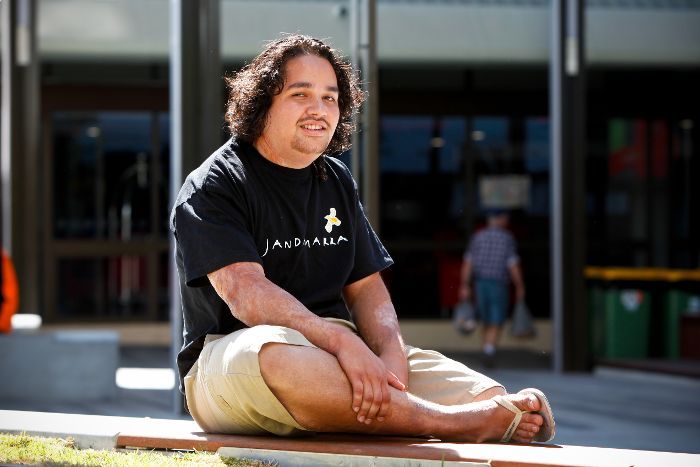
Jandamarra O’Shane is the nephew of magistrate Pat O’Shane, and Aboriginal and Torres Strait Islander Commissioner Terry O’Shane.

When he was six years old, he became the victim of a terrible attack. Paul Streeton, a charity worker in his mid-twenties who was a stranger to the O’Shane family, entered Jandamarra’s school with a tin of petrol, and set the small child on fire with a cigarette lighter. With burns to 70% of his body, Jandamarra was not expected to live. He spent long periods in hospital and needed extensive skin grafts.

Streeton was arrested and convicted for the attack, being sentenced to life in prison for attempted murder. During the trial, Streeton revealed he had been planning to burn someone at his former school since Year 2, because of the bullying he had endured there. It is not known why he singled out Jandamarra as his target.

The horrific injury he sustained, the seemingly random nature of the attack, and Jandamarra’s young age made him an immediate focus for an outpouring of public sympathy. There was a fundraising appeal on Channel 7, and rock band Midnight Oil held a benefit concert. Boxer Lionel Rose gave Jandamarra his World Title belt, hoping to lift his spirits. At the age of 10, he was chosen to take part in the Torch Relay for the 2000 Summer Olympics.

By his 18th birthday, Jandamarra said publicly that he had forgiven Streeton for the attack, and even considered visiting him in prison. Part of the reason he felt able to forgive is because he was bullied at school himself, due to the scars all over his body from the burns.

Yesterday, Jandamarra celebrated his 21st birthday. He says that forgiving his attacker was necessary for he and his parents to move on, so that it wouldn’t be an obstacle in his way all his life. He would like to meet Paul Streeton when he is released from prison to let him know he forgives him.

Jandamarra and his partner Tara recently had a baby boy called Raupena. Raupena is a Maori name, but I’m not sure of its meaning. I consulted a Maori dictionary, and learned that if you read each syllable separately, it means “to gather and cherish” which certainly sounds nice, but may be a coincidence. There’s a Maori name Reupena, which is a form of Reuben, and I wonder whether Raupena is a variant spelling of that?

Jandamarra’s own name has an interesting history. He was named after Tjandamurra (the name can be transliterated both ways), a 19th century tracker, warrior and resistance fighter from the Kimberley region of Western Australia. In Indigenous culture, he is a folk hero, sometimes said to be the Aboriginal equivalent of Ned Kelly. As far as I can work out, his name may mean something like “moving hands” (but if so, probably has a deeper metaphorical significance); the name is not uncommonly given to Aboriginal boys because of its cultural resonance. It’s a name of charismatic power.

Jandamarra O’Shane’s parents may have wanted him to possess some of the warrior spirit of his famous namesake, and he has certainly proved himself strong and brave. Jandamarra goes by the name Janda in everyday life.

Apart from the story of someone overcoming horrendous circumstances, I just thought it would be good to show a couple of less common names from different cultures – not everyone is called Jack or Lachlan! It also seems to show that it’s hard to find information on Aboriginal and Maori names, and I would very much like someone to bring out a large and comprehensive dictionary of names from these language groups.

(Story and photo from abc.net.au, August 12 2011)

Waltzing With … Mary

07 Sunday Aug 2011

Posted by A.O. in Waltzing with ...

≈ 10 Comments

Tags

Biblical names, classic names, Egyptian names, famous namesakes, fictional namesakes, French names, hebrew names, Irish name popularity, Latin names, name history, name meaning, name popularity, royal names, saints names, UK name popularity, US name popularity

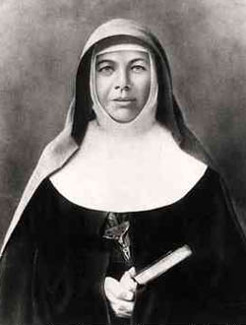
A050199_246x550This blog post was first published on August 7 2011, and revised and updated on August 13 2015.

Famous Namesake
Tomorrow is the solemnity of Saint Mary of the Cross, otherwise known as Saint Mary MacKillop. It’s a special day for Australian Catholics, because Mary MacKillop is the only Australian to have ever been canonised as a saint.

Born in 1842, she was a nun who founded the order of the Sisters of Saint Joseph of the Sacred Heart, as well as several schools and welfare organisations across South Australia, Queensland and New South Wales. She had a special interest in educating the poor, especially in rural areas, but the Josephites also cared for parentless and neglected children, unmarried mothers, women escaping domestic violence, the elderly, and the dying, as well as prisoners and juvenile delinquents. The Josephites did not live in convents, but amongst the community, living as they did, and sharing their hard lives. The brown habits they wore gave them the very Australian nickname, “The Brown Joeys”.

Church politics often caused her stress, including a period of a few months when she was excommunicated for speaking out against child sex abuse within the church. During this time, she lived with a Jewish family and was sheltered by Jesuit priests. There was also an ugly smear campaign against her, including accusations that she was a drunkard. In fact, in an age where pain medication options were limited, she took alcohol on doctor’s orders for severe menstrual pain that left her bedridden for days each month.

Even during her lifetime, Mary MacKillop was regarded as a saint for her holiness and charitable works, and after she died on August 8 1909, people took earth from around her grave as a relic, until her remains were placed in a vault in a memorial chapel in Sydney, paid for by an admiring Presbyterian friend.

In 1925 the long process of having Mary MacKillop declared a saint was begun; she was beatified in 1995, and canonised on October 17 2010. She is the patron saint of Australia, and of the city of Brisbane.

Whatever your beliefs, it’s hard not to admire Mary MacKillop for her altruism and determination. She was greatly beloved by the poor, and accepted by the Aboriginal community as one of themselves. She was a fiery-tempered yet affectionate Scottish redhead with big blue eyes who believed in social justice and equality for all, and whose catchphrase was, “Never see a need without doing something about it”.

Name Information
Mary has long been a favourite for girls, due to it being the name of the mother of Jesus. In fact, there are a confusing number of women named Mary in the New Testament, because it was a name used in the royal family of Judea at the time, and extremely common. Mary is an English translation of the Latin and Greek forms of the Hebrew name Miryam.

The original Miryam was the older sister of Moses and Aaron in the Old Testament. It was she who hid Moses in the bullrushes when he was a baby to save his life, and then watched the Pharaoh’s daughter discover and adopt him. She cleverly suggested to this adoptive mother that she hire Miryam’s mother as a nurse, so that Moses was raised within his own family.

As Miryam was born in Egypt, it’s been suggested that her name comes from the Egyptian word for “love” or “beloved”, or even possibly from the Egyptian name Meritamen, meaning “beloved of Amun” – Amun being the chief god of the Egyptians. So this name, now seen as very Christian, may have ancient pagan roots.

Although Mary is a traditional English name, it didn’t become widely used in Britain until after the Conquest, when the Normans introduced the idea of using names of saints as personal names; before that, they were seen as too holy for an ordinary person to bear. It was introduced in the Latin form Maria and the French form Marie; only as the Middle Ages came to an end did Mary became standard.

The name gained royal credentials, with Mary I the first woman to successfully claim the throne of England, and rule as a king as well as queen – she was known as Bloody Mary for her brutal persecution of Protestants. Several kings had queens named Mary, and Mary, Queen of Scots, was an attractive and romantic figure who earns admiration for the brave manner she faced imprisonment and execution. Queen Mary II, of William and Mary fame, was named after her. Australia has its own royal Mary – Mary, Crown Princess of Denmark, born Mary Donaldson in Hobart.

Mary was the #1 name of the 1900s and 1910s, and remained in the Top 10 until the 1940s. It left the Top 50 in 1971, and the Top 100 in 1995. Since then, it has remained relatively stable, and is apparently not far out of the Top 100. That makes Mary a very safe choice – a classic name still in common and regular use without being popular.

Mary was even more popular in the US, remaining at #1 from the late 19th century to the early 1960s – a really staggering run of hypersuccess. It left the Top 10 in the 1970s, and the Top 50 in the early 2000s, dropping off the Top 100 in 2009. It is currently #120 and stable, a similar popularity to here.

In the UK, Mary was the #1 name from the middle of the 19th century to the 1920s, and remained in the Top 10 until the 1960s. It left the Top 50 during the 1970s, and was out of the Top 100 by the middle of the 1990s. Mary has fallen slightly faster in the UK than here or in the US, and is now #244, although still relatively stable. The only country where Mary is still popular is Ireland, where it is #81 and falling steadily.

Mary is gracious enough to be at ease in every level of society, as suitable for a saint or a princess as it is for a scientist or a politician, a soprano or a photographer, a sportswoman or a pilot. While it’s unlikely that your daughter will ever be a saint or a princess, it’s nice to think that if she does, her name will sound just fine with either title in front of it.

This is a timeless classic which sounds wonderful whatever your age, from wee baby Mary to great-grandma Mary. It’s short and simple without seeming cutesy or insubstantial, and is strong, wholesome, dignified, and completely unpretentious. As Australian author P.L. Travers taught us in Mary Poppins, it’s a name that carries just a hint of magic and mystery, and is practically perfect in every way!

POLL RESULT
Mary received an excellent approval rating of 85%, making it one of the highest-rated names of 2011. 34% of people loved the name Mary, and only 5% hated it.

The Winning Baby With a Famous Dad

04 Thursday Aug 2011

Posted by A.O. in Babies in the News

≈ 4 Comments

Tags

celebrity baby names, famous namesakes, Spanish names, surname names, unisex names

Universal Royalty is a Texas-based company which runs glitz-style beauty pageants for children, and is familar from the reality TV series, Toddlers and Tiaras. When it was announced that Universal Royalty were bringing their glitzy pageantry to Australia, it caused an enormous controversy here, and prompted the Pull the Pin campaign on social media as a bid to stop them.

Those against child beauty pageants say they are exploitative and potentially psychologically damaging. Those in favour say that they are harmless fun, and promote self-esteem. Ironically, the huge media furore ensured that the pageants received many more contestants than they otherwise would have.

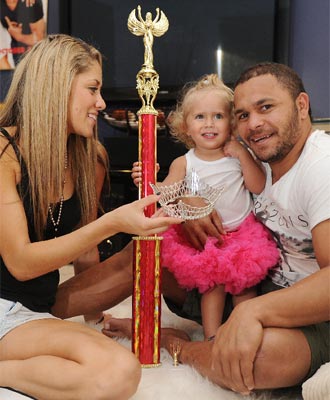
The pageant in Melbourne was held at the end of July, and people must have brought their tots far and wide to compete. The winner for the 13-23 months division was Diaz Bowen, the daughter of Queensland NRL star Matt Bowen.

Matt was brought up on an Aboriginal mission on Cape York in the far north of Queensland, played rugby league for his school, and was signed by the North Queensland Cowboys while still a teenager. He plays fullback, and this year broke the record for most games played with the Cowboys.

Matt’s partner, Rudie Doyle, says she entered Diaz in the beauty pageant because she loves playing dress up, and Rudie was looking for something relaxing they could do together in order to bond as mother and daughter. She says that there were no pushy mothers at the pageant, and that Diaz had a lot of fun being on stage.

Diaz is a common Spanish surname that means “son of Diego”. Diego is thought to be a short form of Santiago, meaning “St James”; Saint James the Greater is said to have preached in Iberia, and is the patron saint of Spain. In the Middle Ages, Diego was Latinised as Didacus to make it look as though it was derived from the Greek for “wise, learned”.

Diaz is probably best known to us as the surname of Hollywood actress Cameron Diaz, and I imagine that this was the inspiration behind Matt and Rudie picking this unusual name for their daughter.

(Story and picture from The Townsville Bulletin, August 2 2011).

Boys Names That Only Chart in Australia

31 Sunday Jul 2011

Posted by A.O. in Name Themes and Lists

≈ 28 Comments

Tags

Arabic names, Biblical names, celebrity baby names, english names, famous namesakes, Gaelic names, hebrew names, honouring, Irish names, literary namesakes, locational names, name data, name history, name meaning, name popularity, nicknames, popular names, Scottish names, surname names

Campbell

This is a Scottish surname, which was originally a Gaelic nickname, Caimbeul, meaning “wry, twisted or crooked mouth”. A p was later added to the spelling in the belief the name was from the French for “beautiful field”. I suppose that meaning seemed a lot more appealing. The Clan Campbell was one of the largest and most powerful of the Highland clans, and the chief of the clan became Duke of Argyll. There are many prominent Australians with this surname. Campbell is #60 in Tasmania, which is very proud of its Scottish heritage, and has a historic town called Campbell. Campbell is on the US Top Top 1000, but only as a girl’s name. As a boy’s name, it has appeared only sporadically, peaked in 1885 at #700, and hasn’t been seen there since 2005.

Darcy

An English surname, from a French place name meaning “town of the bear”, which was introduced by the Normans as the surname of one of William the Conqueror’s barons. It can also be interpreted as an anglicised form of a Gaelic surname meaning “son of the dark one”, and this is a more likely origin in Australia. Although romantics cannot help connecting this to Mr Fitzwilliam Darcy from Jane Austen’s Pride and Prejudice, the most famous Australian with this surname is probably Les Darcy, the folk hero boxer. There are a number of notable Australian men called Darcy, including D’Arcy Niland, the roving novelist, Darcy Ward, the motorcyclist, Darcy Lussick, the rugby league player, and Darcy Dugan, the notorious bank robber. As you can see, although Darcy is unisex, it’s a very manly name here, and only Top 100 for boys. It’s #94 in New South Wales, #57 in Victoria, #97 in South Australia, #75 in Tasmania and #54 in the ACT. Darcy as a male name hasn’t been on the US Top 1000 since 1970, and it peaked in 1968 at #868.

Eamon

The Irish form of Edmund, this is pronounced AY-muhn. It’s use today is probably influenced by the sprint swimmer Eamon Sullivan (pictured). An Olympic athlete, Eamon is not only a good-looking underwear model, he also proved he was a fantastic cook by winning Celebrity Master Chef. Little wonder that he then went on to claim Cleo‘s Bachelor of the Year Contest. It’s #71 in the ACT, and has never charted in another country.

Flynn

An Irish surname meaning “son of Flann”; the name Flann means “red” and was the name of a 9th century Irish king. In Australia, it’s most strongly associated with the Tasmanian-born Hollywood film legend, Erroll Flynn. His name was bestowed upon Disney prince Flynn Rider in honour of Erroll Flynn, as the character has much in common with the actor. As this name has been given to Miranda Kerr and Orlando’s Bloom’s son, Flynn Christopher Bloom, I can see it gaining further in popularity. It’s #94 in Victoria, #79 in Tasmania and #80 in the ACT. It’s never charted in another country.

Hamish

This is the anglicised form of Seumas, which is the Scottish form of James; it’s pronounced HAY-mish. Its current popularity is almost certainly due to a well-known comedian who stars on both radio and television, called Hamish Blake. Multi-award winning, he was recently voted the most recognisable celebrity, and will be included in this year’s issue of Who’s Who. The name is #60 in New South Wales, #49 in Victoria, #45 in South Australia, #28 in Tasmania and #34 in the ACT. Hamish only just made it onto the list – it’s only recently left the Top 100 for Scotland.

Jai

A Hindi name which means “victory”, it can apparently be pronounced either JAY or JY. Jai has been in use in Australia since the 1970s. Jai Abberton is a former pro surfer who is a member of the notorious Bra Boys Gang. Jai Koutrae is an actor who’s appeared in several popular soap operas. Jai Ayoub plays rugby for Western Harbour. Jai Larkan is the lead singer of folk-rock band, The Wishing Well. Jai Taurima is a retired athlete who won silver at the 1998 Commonwealth Games. Lots of guys called Jai! It’s currently #98 in Victoria and #95 in South Australia. It only ever seems to have charted in Australia.

Jed

The short form of the Hebrew name Jedidiah, which means “beloved of Yahweh”. In the Bible, this was a term of endearment given to King Solomon by the prophet Nathan. In use in Australia since the 1980s, there are a number of athletes with this name, including AFL player Jed Adcock (who this year welcomed a daughter named Lily Rose). There’s also some rock singers with the name Jed, including Jed Kurzel, who did the music for the film Snowtown. It’s #99 in Tasmania, whose rural population seems suited to the rustic charms of this name. Jed was on the US Top 1000 from 1947-1989; it peaked in 1978 at #481.

Lachlan

This is a Highland Scottish name from the Gaelic Lochlann, which was used as a nickname for someone from Norway – “the land of the lochs (lakes)”. It’s pronounced LOHK-luhn. There was a strong relationship between the neighbouring lands of Norway and Scotland during the Middle Ages, as both battled for control of the Western Isles of Scotland. There were diplomatic missions between the two nations, and even intermarriage between the royal houses. The name Lachlan has a long history in Australia, owing much to Lachlan Macquarie, a British military officer from the Hebrides who served as Governor of New South Wales from 1810-21, in the period when it was transitioning from a penal colony to a free settlement. He therefore played a major role in the shaping of Australian society, and his liberal views toward ex-convicts and lavish expenditure on public works had a great impact on New South Wales. There are 30 places in Australia named after him, and 6 named after his wife, Elizabeth; on his tomb in Scotland he is called “The Father of Australia”. (American readers may be interested to know that he fought very successfully during the American War of Independence – on the British side of course). When media magnate Rupert Murdoch chose Lachlan as his eldest son’s name, he was perhaps drawing on his own Scottish heritage and honouring a great man from Australian history. Forty years later, this name is still going strong, and there is another generation of well-known Lachlans giving it new impetus, such as soap actor Lachlan Buchanan, and fullback for the Penrith panthers, Lachlan Coote. The name is #6 in New South Wales, #13 in Victoria, #5 in South Australia, #5 in Queensland, #12 in Tasmania and #3 in the ACT. It’s never charted in any other country.

Nate

A short form of Nathan, which is a Hebrew name from the verb “to give”; it can be interpreted as “given”, in the sense that God has given a child. Less persnickety baby name sites often interpret it as meaning “gift”, or “gift from God”, which is a more user-friendly way of putting it. The short form has proved very popular here recently, and I can’t help wondering if that’s partly because Australian baby name sites sometimes list Nate as meaning “little gift”, which I think is taking looseness of interpretation a bit far! Nate has a similar level of popularity to Nathan, and if you’re wondering why I don’t mention Nathaniel as a source of Nate, that’s because it’s not well enough known here to have a nickname yet. A famous Nate is Nate Myles, who plays for the Sydney Roosters in the NRL. It’s #60 in Victoria, #52 in South Australia, #44 in Western Australia, #58 in Tasmania and #50 in the ACT. It’s never charted in any other country.

Taj

An Arabic name meaning “crown”, it’s probably best known from the Taj Mahal in India, the name meaning “crown of buildings”. Taj Burrow is an Australian surfer, and as he’s from Western Australia, it’s not surprising that the name is #42 in that state. Taj has only been on the US Top 1000 twice, in 1976 and 1998, and never got higher than #951.

Zac

The short form of Zachary, the English form of Hebrew name Zechariah, meaning “Yahweh remembers”. In the New Testament, Zechariah is the father of John the Baptist. This seems to have done particularly well as a full name here. It’s been around long enough to have some famous Zacs already, such as Zac Dawson, who plays for St Kilda in the AFL, and Zac Drayson, an actor on the popular soap opera, Home and Away. American actor Zac Efron probably isn’t doing it any harm either. Early this year, V8 ute racer Craig Dontas named his second son Zac Michael. It’s #76 in New South Wales, #52 in Victoria, #77 in South Australia and #80 in Tasmania. It hasn’t charted in any other country.

Close But No Cigar

These names don’t make the top 1000 in the United States, but do chart in countries besides Australia

Angus – #75 in Scotland

Archie – #24 in England/Wales, #43 in Scotland

Reuben – #67 in N. Ireland, #71 in England/Wales

Tom – #10 in France, #18 in Belgium, #38 in Netherlands, #62 in Ireland, #93 in N Ireland

Harvey – #47 in England/Wales

NOTE

Please also read Girls Names That Only Chart in Australia, as it contains information relevant to this blog entry. Since then, the 2010 list for England/Wales has been released.

Famous Name: Cadel

25 Monday Jul 2011

Posted by A.O. in Famous Names

≈ 15 Comments

Tags

famous namesakes, fictional namesakes, name history, name meaning, name popularity, rare names, Roman names, surname names, UK name popularity, US name popularity, Welsh names

This blog post was first published on July 25 2011, and revised and updated on July 23 2015.

Famous Namesake
On July 25 2011, Cadel Evans became the first Australian to win the Tour de France in the race’s 108-year history, only the second non-European to officially win it, and at 34, the oldest winner since World War II.

This gruelling 3 600 km (2 200 miles) cycle race lasts for three weeks, and finishes in Paris, with the climax of the final stage along the Avenue des Champs-Élysées. Traditionally the overall winner wears a ceremonial yellow jersey.

This was a great moment in our sporting history, and in Cadel’s home state of Victoria, everyone was urged to wear yellow to work as a show of support. When Cadel returned to Australia in August, there was a huge homecoming parade for him in Melbourne’s Federation Square, with tens of thousands of people dressed in yellow or waving yellow flags. He was also honoured with a state reception.

Cadel was made a Member of the Order of Australia in 2013, and has also been featured on the blog as a celebrity dad. In February 2015, he took part in the inaugural Cadel Evans Great Ocean Road Race and finished fifth, announcing his retirement as soon as the race finished. He is currently Global Ambassador for the BMC Racing Team.

Name Information
As you can probably tell from Cadel’s surname, he is of Welsh ancestry – his great-grandfather was from Wales. Cadel is a variant of the Welsh name Cadell, which is based on cad, the Welsh word for “battle”; there are several related names, such as Cadwalader, meaning “battle leader”. There is a recent fancy that the name is a Welsh form of the Roman name Catallus, although there doesn’t seem to be much evidence to support it.

There were several medieval Welsh kings and princes called Cadell. Cadell Ddyrnllwg was driven from his father’s kingdom by Irish pirates during the chaos of the 5th century. He lived amongst the peasants until a visit from Saint Germanus changed his fortunes. Saint Germanus laid siege to the capital, as it was held by Irish pagans, and Cadell offered the saint his humble hospitality. Saint Germanus had a premonition of disaster, and warned Cadell and his friends to get out of the city. That night the palace was struck by lightning and the resulting fire burned everyone alive, so without any annoying questions from insurance investigators, Cadell was able to regain his throne.

There is a famous explorer in Australian history with the surname Cadell – a Scotsman called Francis Cadell who was the first to explore and navigate the Murray River by steamship. A man who lived a life of adventure, he took part in the New Zealand land wars, where he staged a mutiny against his captain, and also was one of the first to explore the Northern Territory (where Cadel Evans was born), where the Cadell Strait bears his name. Later in life, he took up whaling, pearling, and trading in the East Indies, and was murdered near New Guinea; a fittingly violent end to an exciting life.

A fictional namesake is Cadel Piggot, the protagonist of the Evil Genius series of young adult books by Australian author Catherine Jinks. It’s about a boy who is very small with curly blonde hair and baby blue eyes, and an evil genius with a passion for IT. The series follows his exploits from the ages of 7 to 15 as he gradually develops a sense of right and wrong.

Since Cadel Evans’ historic win at the Tour de France, I have seen quite a few baby boys named Cadel, although the name is still rare in Australia. In the UK, there were 4 baby boys named Cadel in 2013, the name apparently rising slightly after Cadel Evans’ victory. In the US, there were 10 baby boys named Cadel in the US in 2014, down from 19 in 2012 and 17 in 2011. It seems that Cadel Evans did give the name a boost in the US after the 2011 Tour de France, but it has faded, as the name Cadel is now less used than it was in 2010, when there were 12 boys named Cadel.

Cadel fits in quite well with current trends in boy names, looking similar to Caden and Cade. Although at the start of his career, Cadel Evans had his name mispronounced as KAY-del, to sound like cradle without the R, I think by now everyone knows he says his name kuh-DEL (like Adele with a K at the front). This isn’t the British pronunciation, which is more like KAD-el. However, now that Evans has retired, it is unclear whether the name Cadel will continue gathering steam, or run out of puff.

POLL RESULTS
Cadel received an approval rating of 60%. 16% of people thought it was handsome or attractive, but an equal number believed it was too closely associated with Cadel Evans, and felt like a “one person name”. Few were willing to predict the name’s fortunes – 2% thought the name Cadel would continue growing in popularity, while 5% were fairly sure the name was a flash in the pan that would soon be forgotten.

Girls Names That Only Chart in Australia

24 Sunday Jul 2011

Posted by A.O. in Name Themes and Lists

≈ 29 Comments

Tags

African names, Arabic names, Australian Aboriginal names, celebrity baby names, colour names, created names, english names, famous namesakes, fictional namesakes, Greek names, hebrew names, holiday names, Indian names, Irish names, Latin names, locational names, Mer de Noms, mythological names, name data, name history, name meaning, name popularity, nature names, nicknames, plant names, popular culture, popular names, saints names, Sanskrit names, surname names, Swahili names, unisex names, vocabulary names

Recently, Lou at Mer de Noms has had a couple of articles on names that are in the UK Top 150, but fail to make the US Top 500. It’s an interesting look at differences in name popularity between the two countries. I thought about doing the same thing from an Australian perspective, but found the list became too long for my purposes. So I made my conditions a bit tighter – these are names that are on a Top 100 list in Australia, but don’t make the Top 100 in any other country, and aren’t on the US Top 1000.

Asha

Asha has two different origins and meanings. It can be seen as an Indian name from the Sanskrit for “hope, wish, desire”, or an East African name from the Swahili word for “life”. Either way it has a beautiful meaning, and both Indian and Swahili names are becoming fashionable in Australia. It fits in well with other popular Ash- names, such as Ashley, Ash, Asher and Ashton. There’s an attractive TV presenter in Australia called Asha Kuerten (pictured), which has probably helped it gain momentum here. Asha is currently #89 in Victoria, #77 in South Australia, and #68 in the ACT. It’s never been higher than #794 on the US Top 1000 (in 1989), and hasn’t charted there since 2003.

Bridie

This is a pet form of the Irish name Brighid or its anglicised form, Bridget, which means “exalted one”. In Irish mythology, Brighid was the goddess of fire, poetry and wisdom. There was a 5th century Irish saint called Brigid, who is the patron saint of Ireland, and whose feast day on February 1 coincides with the pagan festival of Imbolc (possibly this day was sacred to the goddess of the same name). As around 30% of Australians claim Irish heritage, the name Bridie isn’t too unusual here, and there are several well-known women with this name, including Bridie Carter, a popular soap actress. Bridie is #70 in Tasmania, which has a particularly strong Irish community. It doesn’t chart in any other country.

Ebony

This is from the English word for the valuable black wood which comes from the ebony tree; different species are native to India, Sri Lanka, Indonesia, Mauritius, and West Africa. Although Ebony is often said to be used mostly by African-Americans in the United States, in Australia it is not connected to a person’s skin tone and is just seen as another colour name, like Ruby, Jade or Amber, or a plant name, like Rose or Holly. The exoticism of this name seems to have possessed a strange fascination for Australian parents, and it has been a Top 100 name since the early 1980s. Perhaps popular songs from that decade, such as Ebony Eyes and Ebony and Ivory, helped give it a boost. It’s #63 in South Australia and #55 in Tasmania. In the United States, Ebony got as high as #132 in 1982, and hasn’t been on the Top 1000 since 2005.

Indiana

The name of an American state, it means “land of the Indians”, because of the high Native American population in the area at the beginning of the 19th century (unfortunately, not to last). Indiana was used as a girl’s name (at least in fiction) before the American state was founded: Fanny Burney’s 1795 classic novel, Camilla, features a beautiful but shallow character called Indiana Lynmere. Possibly the name was intended as an elaboration of India, then part of the British Empire. French author George Sand also gave a character this name in her first novel, Indiana (1832). In this book, Indiana is a beautiful, romantic Creole from Reunion, of part-Indian descent. Here, there is a young TV actress called Indiana Rose Evans, and early this year, former NRL player Glenn Hall had a daughter named Indiana Maree. This name has only been Top 100 since last year, and it’s #98 in Victoria. Indiana has not been on the US Top 1000 since the late 19th century.

Jorja

The name Georgia, also an American state name (the state is named after King George II), is more popular in Australia than anywhere else in the world, hovering around the #20 mark on most lists, and Top 100 since the early 1980s. The phonetic spelling Jorja has also proved popular here. It’s currently #88 in Tasmania. Jorja has only been on the US Top 1000 once, in 2006, when it was at #976.

Lucinda

This is an elaboration of the Latin name Lucia, meaning “light”. Always a rather literary name, it was created by Miguel de Cervantes for his 1605 novel, Don Quixote for a character in a farcical romantic subplot. The 17th century Spanish poet Lope de Vega wrote love sonnets to a woman he called “Lucinda” to protect her identity. In more recent fiction, Lucinda is the rather silly fairy godmother in the children’s novel Ella Enchanted, later made into a movie. Australian novelist Peter Carey’s Oscar and Lucinda won the 1988 Booker Prize, and was made into a film directed by Gillian Anderson. Another Australian connection is that Lucinda is the name of a small coastal town in Queensland. As Lucy is so popular, Lucinda seems like a pretty alternative which will allow Lucy/Lucie as a nickname. It was chosen for the name of lifesaver and reality TV star Dean Gladstone’s daughter Lucinda May. It’s # 67 in Tasmania. Lucinda hasn’t been on the US Top 1000 since 1987, and peaked in 1881 at #153.

Tahlia

The name Talia can come from a range of origins. It’s a variant of the Hebrew name Talya, which means “dew from God”; it’s the Italian form of Greek Thalia, which means “to blossom” (Thalia was one of the nine Muses); and it can also be a short form of Natalia, a Latin name which means “Christmas Day”. However, In Australia, Talia is often taken as coming from an Aboriginal word meaning “near water”. Talia has become hugely popular in many parts of Australia; it has a certain patriotic flavour, and is pleasingly multicultural, suiting a variety of backgrounds. Yet it is not found consistently on the Top 100 because it has so many variant spellings. Tahlia is the most common of these variants, and is beginning to overtake Talia because it makes the favoured pronunciation more clear. It’s #47 in New South Wales, #41 in Victoria, #39 in South Australia, #35 in Western Australia, #84 in Tasmania, and #52 in the ACT. Tahlia has never charted in any other country.

Tayla

A specifically feminine form of the popular unisex name Taylor, this may have been coined in imitation of Kayla and related names. However, I can’t help thinking it’s taking off in Australia partly because it looks similar to Talia and Tahlia. It’s #68 in South Australia, #40 in Western Australia, and #94 in Tasmania. Tayla has only been on the US Top 1000 twice – in 1998 and 2006, and was never higher than #924.

Zahra

This is an Arabic name usually translated as “radiance”. The meaning is gorgeous, and Arabic names are becoming increasingly fashionable here with our growing Islamic population. However, almost certainly the reason for its popularity in Australia is due to its similarity to the name Zara. Zara has been used in Britain since the 18th century, where it is the English form of the French name Zaïre, created by the author Voltaire in 1732 for his hugely successful play of the same name, and possibly based on the name Zahra. The drama was soon translated as Zara: A Tragedy, and proved a big hit with English audiences too, being staged well into the 19th century. For some reason, Zara has been a favourite in Australia for over a century, and there are several famous women from Australian history called Zara, including the glamorous wife of former Prime Minister Harold Holt. Zara is more popular in Australia than in any other country, and Zahra is rising on the basis of its success. It’s #82 in the ACT. Zahra has never charted in the United States.

Also Qualifying

Bronte and Lara, which were covered on earlier Name Lists – Bronte in Sydney Suburbs That Can Be Used as Girls Names, and Lara in Girls Names from Video Games. Bronte is #68 in Tasmania. Lara is #43 in New South Wales, #80 in Victoria, #79 in Tasmania and #52 in the ACT. Neither has ever charted in another country.

Close But No Cigar

These names don’t make the top 1000 in the United States, but do chart in countries besides Australia

Freya – #19 in Scotland, #21 in England/Wales, #68 in Ireland, #70 in N. Ireland

Harriet – #89 in England/Wales

Imogen – #32 in England/Wales, #77 in Scotland

Maisie – #34 in England/Wales, #36 in Scotland

Milla – #48 in Norway

Poppy – #22 in England/Wales, #47 in Scotland, #60 in N. Ireland

NOTE

There are some serious statistical issues facing anyone doing comparisons between countries. Australia doesn’t produce a national Top 100, states and territories have different population sizes, not all states and territories provide their Top 100, and one has refused to divulge any of its name data. Countries don’t all release their popularity charts for the year at the same time, so we are still waiting for the ones from England/Wales, for example, and I had to use the one for 2009. I used popularity charts from Behind the Name, and sometimes they are slow in updating their data as well. Not only that, but there is no data available for many countries.

So rather than getting into a mathematical tangle, this is only intended to be of general interest and show a few broad trends.

Bonds Baby Search 2011 – Names from the Shortlist

22 Friday Jul 2011

Posted by A.O. in Baby Contests

≈ 16 Comments

Tags

Arabic names, Celtic names, famous namesakes, French names, Gaelic names, germanic names, Hawaiian names, Irish names, Japanese names, locational names, name combinations, nicknames, Persian names, polynesian names, Roman names, saints names, Sanskrit names, scandinavian names, surname names, Swedish names, unisex names

Girls

Alexandra

Alira

Annabella

Anika

Ava Lily

Brooke

Claire

Daisy

Drisana

Grace

Gwyneth Chloe

Harvey

Ke’ala

Keela

Isabella

Mia

Mikayla

Montanna

Paige

Tully Belle

Boys

Beau

Bodie

Chace Tyler

Charles

Eskander

Isaac

James

Jensen

Jeremiah

Kooper

Leo

Maximus

Mekai

Oliver

Oscar

Remy

Riley

Sandon

Shaun

Taj

Tommy

Tyler

Zachariah/Zakkariah

Not sure (hard to tell on a bub!)

Marley (boy?)

Milan (girl?)

Osh (boy?)

Midweek Sibset: The Frugal Family

20 Wednesday Jul 2011

Posted by A.O. in Sibsets in the News

≈ 3 Comments

Tags

famous namesakes, Greek names, Latin names, locational names, name history, name meanings, sibsets

It’s been reported in the news a lot recently that Australians, after years of going crazy on credit, have finally started saving money.

Morning television show, Sunrise, featured a story July 15  on a Brisbane family who went on a “financial fast”. Worried by their spiralling credit card debt, Michelle Taylor and her husband, John Tweedy, decided not to use their credit card for a year, and only spent money on essential items, such as food and health needs. During that year they didn’t buy anything new, and by the end of the 12 months, had saved $12 000, which they plan to spend on a backyard swimming pool in order to enjoy more family time together.

Michelle and John have picked our rather interesting names for their three daughters. Lily, aged 12; Scotia, aged 9; and Sappho, aged 3.

While we’re all familiar with popular Lily, the names Scotia and Sappho are more unusual.

Scotia, pronounced SKOH-sha, is the Latin name for Scotland; probably best known from the name of the Canadian province Nova Scotia (Latin for “New Scotland”). It comes from the name that the Romans gave a particular Gaelic tribe who emigrated from Ireland to Scotland, the Scoti. It’s not known what the name means, but “renegade, breakaway, outcast” has been one suggestion. Another is that it comes from the Greek word for “darkness”.

Sappho, pronounced SAFF-oh, is the name of a famous lyric poet from Ancient Greece, born on the island of Lesbos. Most of her poetry has been lost, but it was greatly admired during her own time, and enough survives that her reputation as a brilliant poet continues. She wrote many poems to gods and goddesses for religious purposes, and also wedding poems and love poems which still manage to stun us with their clarity and passion. It’s possible that her name comes from the Greek for “sapphire”.

I find all three names rather beautiful in their different ways, and think this sibset sounds great. Scotia and Sappho both start with the same letter and have a strong OH sound in them, and I think Lily is just one of those names that sounds good with almost any type of sibset.

Whether you want something that sounds old-fashioned (Arthur, Lily and Constance), classic (Henry, Charles and Lily), modern (Lily, Sierra, Jett and Chase), nature-themed (River, Lily and Autumn), cutesy (Beau, Lily, Bella and Toby), or offbeat (Cosette, Blaze, Lily and Phadra), Lily just seems to naturally mix and match. She’s the Universal Sibling.

You can see a video of the family here – just click this link and then press play when the video comes up.


Hazel, What’s With the Retro Name?

11 Monday Jul 2011

Posted by A.O. in Guest Bloggers

≈ 13 Comments

Tags

celebrity baby names, colour names, famous namesakes, fictional namesakes, gemstone names, Hazel Edwards, plant names, retro names, vocabulary names

Best known for There’s a Hippopotamus on Our Roof Eating Cake, which was recently translated into Chinese, Hazel Edwards writes across media, for adults and children. Pocket Bonfire Production’s Hippo film premiered at St Kilda Film festival for the 30th anniversary, and is screening internationally at Edinburgh Film Festival and beyond. As ambassador, Hazel is involved with the 2012 National Year of Reading, and the Victorian Premier’s Reading Challenge.Hazel has two grandsons, for whom she writes stories each birthday. Her latest books include ‘Sir Edward ‘Weary Dunlop’ (Aussie Heroes series) and ‘f2m:the boy within.

(This was first written in 2004/05 and read on ABC Radio LifeMatters)

My name is Hazel.

Until now, I’ve been in a fairly select name grouping. Ex-PM’s wife Hazel Hawke and I have been a minority with the name Hazel. But there are a couple of other authors called Hazel Edwards; one writes Mills & Boon romance novels, and another is an English historian. There’s also a Hazel Edwards’ gravestone image on Google. And I’ve been “dead” a couple of times.

To quote from news of actor Julia Roberts’ twins being called Hazel and Phinnaeus:

“…Hazel is retro by at least a couple of generations. The world stopped having Hazels around the time it stopped having Berthas and Gladyses and Mildreds. The last time Hazel was heard from was 1961, when Shirley Booth played a busybody maid of that name in a sitcom of that name, based on a cartoon strip of that name. Phinnaeus is even more retro, as in Old Testament retro, and more obscure than such OT running mates as Methuselah and Obadiah.

But that’s probably the point. Celebrity baby names these days are very … different. We say this not to pass judgment, but to point out one more way celebrities are not like the rest of us….”

I’ve never thought of myself as retro nor a celebrity. I was named after my mother who was Hazel Grace, but known as Grace. My father suggested they use one of her names for their only daughter, so I became Hazel. That was lucky because I’m NOT graceful but neither was my mother. Names are not always accurate.

As a children’s author, I’m conscious of names for my characters, and tend to choose either symbolic ones, or those which are common with the age group and that they can pronounce. Ironically, Grace is the most popular girls’ name with the under-fives. My Hand Me Down Hippo character called Mini was illustrated by Mini Goss, who has a young daughter called Hazel, so that’s another coincidence and a “young” Hazel.

My neighbour alerted me to the Happy Hazel Society which meets annually at Hervey Bay, and these Hazels are mainly in their 70s, married to Rons, and sing I’m a Happy Hazel to the tune of I’m a Little Teapot. I don’t fit that group either, nor the shortened version Haze which sounds like a fog.

My husband Garnet is named after an uncle, and his name is a semi precious stone. Recently I spoke with a dentist mother of five daughters who had named each after a stone, and intended giving the appropriate jewel on each daughter’s 21st birthday. Garnet was one of her daughters. Opal, Ruby, Emerald and Topaz were the others. Being given hazelnuts on a significant birthday doesn’t have quite the same flair.

Also it was pointed out that Garnet and Hazel were both colours, a fact which had escaped us for decades.

I’ve always loved the name Quentin, but my husband doesn’t agree, so my character “Bad Luck Quentin” scored that one. It was a trade-off so our daughter would NOT be called Brunhilda after Wagner’s opera. But our son gained the real middle name Quest.

While I was a guest on ABC National talkback on the ‘Hazel’ issue of names, a caller rang with the following anecdote.

At the christening, the Irish priest asked the parents for the baby’s name.

“Hazel,” they said.

The priest’s reply was, “With 365 saints names available for each day of the year, you have to call your daughter after a nut?”

P.S.

    • In the newspaper babies’ names of 2005, Hazel was very popular and grouped with other colours like Ruby and Scarlet. I didn’t anticipate that.
    • In 2007, my mature aged College of Advanced Education students “exies” gave me a “Hazelnuts Roast” which was a satirical afternoon of fun, the name taken from an earlier student publication, A Bunch of Hazelnuts. We drank hazelnut coffee.

My view is that you should ‘lease’ your parent- given name until 21, and then be allowed to trade it in for your own choice. But after 21, that would be your label for life. But I do have a shared pseudonym, A.K. Aye, for crime writing.

Hazel Edwards

Email: hazel@hazeledwards.com

Website: www.hazeledwards.com

Midweek Sibset: The Gender-Neutral Sibset

06 Wednesday Jul 2011

Posted by A.O. in Sibsets in the News

≈ 5 Comments

Tags

english names, Estonian names, famous namesakes, fictional namesakes, locational names, mythological names, name history, name meaning, Nigerian names, surname names, unisex names

There has been an international brouhaha over the decision by Canadian couple Kathy Witterick and David Stocker not to reveal the sex of their baby, Storm. As brother Jazz enjoys wearing pink dresses and pigtails, Kathy and David decided it would be better if their child’s sex remained private to their family to avoid any more societal gender issues.

This story got plenty of media time in Australia, as in other countries, and mostly people were very much against the idea of raising a “genderless baby”. This opinion piece in the The Age says that the parents are selfishly putting their own ideological agenda before their child’s welfare, while more forthright articles suggested the parents’ idea was just absurd.

However, Emma Jane in The Australian was one of those who took a more sympathetic view. She believes that gender stereotyping of babies and toddlers has reached a ridiculous level, where even new-born infants are dressed in either pink frills or solid workmanlike blue.

She dressed her daughter Alice in boy’s clothes and gender-neutral primary colours as a baby, which was declared to be “child abuse” by a concerned onlooker. Now 4 years old, Alice can make her own choices, which, it turns out, means a wardrobe full of pink and girly outfits.

Sydney couple Jay Black and Scott Collins are supporters of Witterick and Stocker’s choice to raise a “genderless child”. (I think Jay and Scott are a female-male couple). Jay and Scott are trying to raise their sons, Poe, 4, and Ilo, 22 months, without gender stereotypes. Their boys have ambiguous haircuts, play with dolls, and are supported if they choose to wear skirts and dresses.

In line with this lack of gender demarcation, Poe and Ilo have been given unusual unisex names.

Poe is a surname, most famous as that of the American Gothic writer, Edgar Allen Poe. His surname is a variant of the early English name Peacock, which began as a nickname for someone who was vain or dandified, or from someone who bred peacocks. In a few cases, it may have come from a house distinguished by the sign of a peacock. Poe Ballantine is an American novelist, while Poe is the stage name of American rock singer Anne Danielewski. Poe is also a raven character in the TV series Ruby Gloom.

Ilo is such a rare name that information on it is scarce, and I have turned to Appellation Mountain to discover that it’s the name of an Estonian goddess dedicated to feasting whose name may mean “pleasure”, and possibly a Nigerian boy’s name meaning “joy”. Sylvia Plath’s teenage diaries rather fervently describe a blonde Estonian refugee called Ilo Pill; he was male, so even in Estonia the name of the goddess seems to have been used for both boys and girls. In addition, Ilo is a lake in North Dakota, USA, and a port town in Peru, so you may take it as a geographic name as well. It’s so neutral that you can’t even tell which country the name is from, or what it means! It can either be pronounced EYE-low, or EE-loh (I believe).

← Older posts
Newer posts →

Enter your email address to follow this blog

Categories

Archives

Recent Comments

A.O.'s avatarwaltzingmorethanmati… on Zarah Zaynab and Wolfgang…
Madelyn's avatarMadelyn on Zarah Zaynab and Wolfgang…
JD's avatardrperegrine on Can Phoebe Complete This …
A.O.'s avatarwaltzingmorethanmati… on Rua and Rhoa
redrover23's avatarredrover23 on Rua and Rhoa

Blogroll

  • Appellation Mountain
  • Baby Name Pondering
  • Babynamelover's Blog
  • British Baby Names
  • Clare's Name News
  • For Real Baby Names
  • Geek Baby Names
  • Name Candy
  • Nameberry
  • Nancy's Baby Names
  • Ren's Baby Name Blog
  • Sancta Nomina
  • Swistle: Baby Names
  • The Art of Naming
  • The Baby Name Wizard
  • The Beauty of Names
  • Tulip By Any Name

RSS Feed

  • RSS - Posts

RSS Posts

  • Celebrity Baby News: Melanie Vallejo and Matt Kingston
  • Names from the TV Show “Cleverman”
  • Can Phoebe Complete This Sibset?
  • Zarah Zaynab and Wolfgang Winter
  • Baby, How Did You Get That Name?
  • Celebrity Baby News: Media Babies
  • Celebrity Baby News: Adelaide Crows Babies
  • Celebrity Baby News: Chris and Rebecca Judd
  • Names at Work: Name News From the World of Business and Employment
  • Celebrity Baby News: Sporting Round Up

Currently Popular

  • Celebrity Baby News: Mick and Angie Molloy
  • Girls Names From Stars and Constellations
  • Girls Names of Australian Aboriginal Origin
  • Rare Boys Names From the 1950s
  • The Top 100 Names of the 1940s in New South Wales

Tags

celebrity baby names celebrity sibsets english names famous namesakes fictional namesakes honouring locational names middle names name combinations name history name meaning name popularity name trends nicknames popular names saints names sibsets surname names twin sets unisex names

Create a free website or blog at WordPress.com.

Privacy & Cookies: This site uses cookies. By continuing to use this website, you agree to their use.
To find out more, including how to control cookies, see here: Cookie Policy
  • Subscribe Subscribed
    • Waltzing More Than Matilda
    • Join 517 other subscribers
    • Already have a WordPress.com account? Log in now.
    • Waltzing More Than Matilda
    • Subscribe Subscribed
    • Sign up
    • Log in
    • Report this content
    • View site in Reader
    • Manage subscriptions
    • Collapse this bar
 

Loading Comments...