• About
  • Best Baby Names
  • Celebrity Baby Names
  • Celebrity Baby Names – Current
  • Celebrity Baby Names – Past
  • Featured Boys Names
  • Featured Girls Names
  • Featured Unisex Names
  • Links to Name Data
  • Waltzing on the Web

Waltzing More Than Matilda

~ Names with an Australian Bias of Democratic Temper

Waltzing More Than Matilda

Tag Archives: famous namesakes

Waltzing With … Daisy

16 Sunday Oct 2011

Posted by A.O. in Waltzing with ...

≈ Comments Off on Waltzing With … Daisy

Tags

Aboriginal names, english names, famous namesakes, floral names, name history, name meaning, name popularity, names from songs, nature names, nicknames, plant names, retro names, UK name popularity, US name popularity
76610

This blog post was first published on October 16 2011, and completely rewritten on October 15 2015.   

Famous Namesake
Today it is the 152nd birthday of ethnographer Daisy Bates, who was born October 16 1859. Daisy migrated to Australia from Ireland as a young woman, and like many other immigrants, took the opportunity to reinvent herself. Her story was that she was born as Daisy O’Dwyer into a wealthy Irish Protestant family, and after being orphaned, was brought up to be a “lady” by her grandmother. Adopted by an aristocratic family, she seemed destined to lead a life of leisure, until a brush with TB sent her to Australia in order to recover her health.

In fact she was Margaret Dwyer, born into a poor Irish Catholic family, and brought up in an orphanage, where she was educated to be a governess. It may have been a sexual scandal that sent her across the world to Australia, and she seems to have been keen to seek a husband. Good looking with lovely dark eyes, a lively manner, and the gift of the gab, Daisy had little trouble attracting men, and she married three of them in rapid succession, including “Breaker” Morant (she didn’t bother getting divorced, so she was a serial bigamist). She took the surname of her second husband, Bates.

An unplanned pregnancy resulted in her son, and the process was so traumatic that she ever after had only distant relations with her husband and child. Her husband became even more estranged from her when she developed what was considered a bizarre interest in Aboriginal culture, and she finally left him to take up what was to be her life’s work.

Daisy spent forty years studying Aboriginal language, history, rituals, beliefs, and customs, and for much of that time lived in isolated areas, apparently always dressed in heavy dark Edwardian clothing. The usefulness (and even truthfulness) of her anthropological work has been much debated, but she was a pioneer in the field, being one of the first to live among the people she was studying and observe them at first hand, without trying to “educate” them or convert them to her own beliefs.

Although she was never sentimental or high-minded in any way about it (she was brutally frank that her interest in Aboriginal culture was a sport more than anything else), she did work towards Aboriginal welfare. She wrote with great feeling of their suffering at the hands of Europeans, and was able to identify that much of their misery was compounded by a lack of cultural awareness towards them.

She helped pave the way for greater attention to Indigenous health, and was prepared to defend Aboriginal women from sexual exploitation by white males, with a gun if necessary. She could be kind and generous towards Aboriginal people, paying for their needs from her own limited funds. Most importantly, her work has been an invaluable resource for those seeking Native Title claims.

In her lifetime, Daisy Bates was famous, but also seen as a stubborn, publicity-seeking eccentric, and remains a deeply controversial figure to this day. Many of her ideas about Indigenous Australians were paternalistic – one of her books is titled My Natives and I. She also saw Aborigines as a doomed race, and had an appalling hatred of people with mixed black and white ancestry, believing them to be completely worthless.

A staunch monarchist and imperialist, and a social-climbing, gossipy old snob, she loathed feminists, socialists, Catholics, and Germans – her views, not abnormal for her time, are now so out of fashion that they have alienated many, and this has helped lead to her neglect.

An interesting question is what the Aboriginal people themselves thought of her. She claimed that they called her Kabbarli, a word that can be translated as “grandmother”, to suggest a relationship that was both affectionate and respectful. It can also be translated as “crazy old bat”.

Name Information
Daisies are members of the aster family which grows widely over the world – everywhere except the polar regions. The word daisy comes from the Old English for “day’s eye”, as the English Daisy (Bellis perennis) opens when the sun rises, and closes in the evening. An English saying is that spring has not arrived until you can set your foot on a dozen daisies, while a Celtic tradition says that daisies are formed whenever a child dies so that they might comfort their grieving parents.

A well known divination is to discover if someone truly loves you by plucking daisy petals: he loves me, he loves me not, he loves me! Daisies were the flower of the love goddesses Freya and Venus, and it may not be a coincidence that daisies and daisy chains have long been gifts between sweethearts. In Roman legend, the wood nymph Belides transformed herself into a daisy to escape the attentions of Vertumnus, the god of seasons and plants, so that daisies are associated with chastity.

A Christian legend says daisies sprung from the tears wept by Mary Magdalene when she was forgiven of her sins. In Christian iconography, daisies symbolise the Virgin Mary; they were a favourite in medieval paintings and tapestries of the Virgin. Later they were used to symbolise the Christ Child. The purity of the Virgin Mary and the passion of Venus often seem to combine in medieval literature, so that daisies were used to symbolise the “good woman” who was equally sweet and sensual.

Daisy has been used as an independent girl’s name since at least the 17th century, and became popular in the 19th, along with other floral names. It is also used as a nickname for Margaret, because the French name for the Ox-eye Daisy is the marguerite. Because of this, it was used as a royal device by Marguerite de Navarre, the sister of Francis I of France, Margaret of Anjou, the wife of Henry VI, and Margaret Beaufort, the mother of Henry VII. King Louis IX of France wore a daisy engraved on his ring as a tribute to his wife, Marguerite of Provence.

Daisy was quite a popular nickname among the upper classes during the Edwardian era, as evidenced by Princess Margaret “Daisy” of Connaught, who became the queen of Sweden; society beauty Mary “Daisy”, Princess of Pless; fashion icon and heiress Marguerite “Daisy” Fellowes; and Frances “Daisy” Greville, the mistress of the Prince of Wales (later Edward VII), whose love for the bicycle craze of the 1890s is popularly believed to have inspired the music hall song about Daisy with a bicycle built for two.

Literary Daisys include Daisy Buchanan who arouses a life-long obsession in F. Scott Fitzgerald’s The Great Gatsby, and the enigmatic Annie “Daisy” Miller, from Henry James’ novella. Sweet Meg from Little Women is sometimes called Daisy, and when she has a daughter named Margaret, she is known as Daisy to differentiate her from her mother. All these fictional Daisys are American, and two more American sweethearts are Disney’s Daisy Duck and sassy Southern belle Daisy Duke, from the Dukes of Hazzard.

The name Daisy was #58 in the 1900s, and left the Top 100 in the 1920s. It dropped from the charts in the 1940s, made a minor come-back in the 1950s, then dropped out again the following decade. Daisy returned to the charts in the 1980s at #646, and climbed fairly steadily. It rejoined the Top 100 in 2013 at #90, making it one of the fastest-rising names of that year. Last year it left the national Top 100, although it still made the Top 100 in Queensland and Tasmania.

Daisy is most popular in the UK. It was in the Top 100 there from 1880 until the 1930s, then made a comeback in the 1990s, peaking in 2010 at #15. Currently it is #24. In the US, Daisy has never left the Top 1000. It was in the Top 100 from 1880 to 1908, and reached its lowest point in 1972 at #629. It is currently #180. Australia’s Daisy popularity may be closer to New Zealand, where Daisy has made the bottom of the Top 100 a few times without any signs of climbing.

Daisy is a wholesome retro name which manages to sound both pure and innocent, and cute and spunky. There is something demure about little Daisy, but also rather sexy: Venus has given her a certain sweetness that blows like a fresh spring breeze across the fields. Daisies may be common flowers, but the name Daisy is not overused, and shows no signs of shooting up in popularity. You may use Daisy as a nickname, but it is just fine as a name in its own right.

POLL RESULT
Daisy received an approval rating of 88%, making it one of the highest-rated names of 2011. 37% of people loved the name Daisy, and only one person hated it.

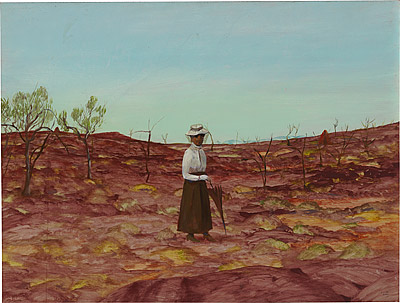
(Painting is Daisy Bates at Ooldea, by Sidney Nolan, 1950)
Unique Boys Names from Tasmania, 2010

09 Sunday Oct 2011

Posted by A.O. in Name Themes and Lists

≈ 12 Comments

Tags

astronomical names, Australian Aboriginal names, celebrity baby names, created names, Danish names, famous namesakes, fictional namesakes, German names, Greek names, hebrew names, Irish names, Latin names, Maori names, mythological names, name history, name meaning, nature names, Old English names, place names, popular culture, saints names, surname names, Tibetan names, unique names, vocabulary names

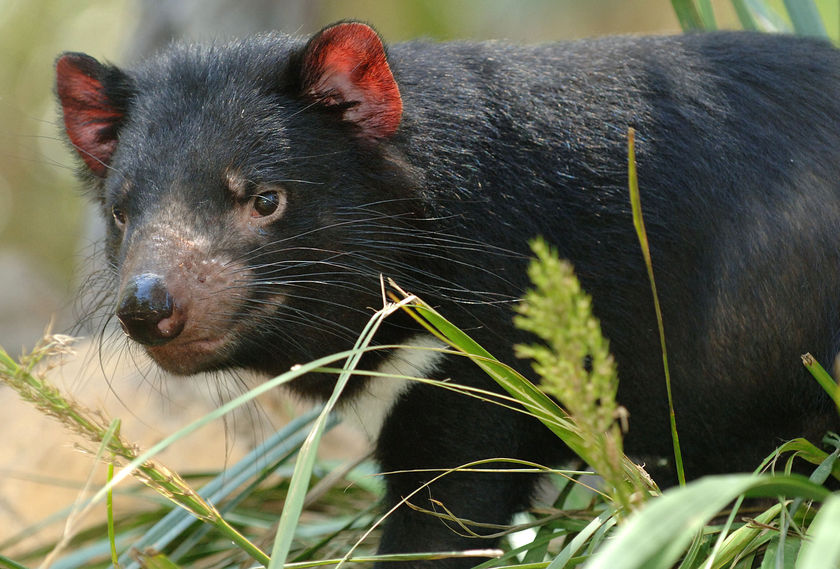
This follows on the previous list, Unique Girls Names from Tasmania, 2010. Please read the notes attached to that to see how names were chosen. Although there were fewer unique names for boys, they were much more likely to be genuine names, and not just variant spellings of common names. Whether you like these names or not, it’s nice to know that not everyone calls their children by names from the Top 100. There’s a lot of variety out there once you start looking. (If you are unsure what the animal in the photo is, it is a Tasmanian devil). 

Ambrose

This is the English form of a Latin name derived from the Greek, meaning “immortal”. It is connected linguistically to ambrosia, the food or drink of the gods in mythology, and is said to not only taste delicious, but to have a delightful aroma. In fact, it has been argued that ambrosia means “fragrant”, rather than “immortal”. If ambrosia had any basis in reality, it may be describing a honey product, although another theory is that it refers to the hallucinogenic mushroom, Amanita muscaria. The most famous namesake is probably Saint Ambrose of Milan, a 4th century Doctor of the Church who converted Saint Augustine. Interestingly, according to legend, bees swarmed on Ambrose’s face as a baby, leaving behind a drop of honey; this does seem to link the saint with the mythical ambrosia. An old-fashioned name, this fits in with the antique name revival, and the S/Z-ending for boys names. The meaning, and its associations with divine sweetness, is also hard to resist.

Other Latin names: Adrian, Augustus, Cassius, Ignatius, Maxmilian, Roman, Rufus, Silas, Sylvester

Anakin

This is the name of a Jedi knight in the Star Wars movies, father of Luke and Leia Skywalker, who crossed over to the Dark Side, and went on to become the heavy-breathing evil villain known as Darth Vader. Annikkin Starkiller was the name that George Lucas has originally chosen for Luke Skywalker, and when there was a major plot change and Darth Vader became Luke’s dad, a slight change of spelling meant that Darthy could have Luke’s old name. It’s sometimes claimed that George Lucas took Anakin’s name from his friend, Brtish film director Ken Annakin, but Lucas denies this. Although it’s tempting to give this name all number of foreboding meanings, we should remember it was originally planned as the hero’s name. It wasn’t clear in the beginning what kind of person the protagonist was going to be, and in one version it was an old man, and in another, a woman, so the name predates the character and the plot. Most likely, George Lucas just made it up.

Other sci-fi names: Auron, Draven, Grayson, Jango, Lex, Navi, Neo, Obi, Quillam

Bon

This is the name of the Scottish-born Australian rock musician, Bon Scott, who was the lyricist and lead singer for AC/DC, until his death in 1980, aged 34. AC/DC dedicated their next album, Back in Black, to him, which is the best-selling rock album of all time. Bon Scott is regarded as one of the greatest lead vocalists, has been inducted posthumously into the Rock and Roll Hall of Fame, and been honoured in both his home town of Fremantle, Western Australia, and his birthplace of Kirriemuir, Scotland. Bon was born Ronald Belford Scott, and his nickname was given to him in primary school. As there was already a classmate called Ronald, and as Scott had recently emigrated from “Bonnie Scotland”, he was dubbed Bon. The Scottish word bonnie means “beautiful, fair, fine”, and is taken from the French word bon, meaning “good”. Not only honouring a rock legend, this name seems similar to Beau in meaning and origin.

Other celebrity names: Cadel, Cassidy, Denzel, Dre, Elvis, Hammond, Joaquin, Keanu, Leland, Maddox, Makaveli, Orlando, Otis, Sylvain, Tander, Tex, Ziggie Other Scottish names: Dougal, Jock

Clancy

This is from an Irish surname meaning “son of Flannchadh”, with Flannchadh being a Gaelic name meaning “red warrior”. The name is well known in Australia, because of the poem Clancy of The Overflow, by Banjo Paterson; The Overflow is the name of a station where Clancy, a drover, works. It’s based on the true story of Paterson, a lawyer, sending a letter to Thomas Gerald Clancy of The Overflow, and imagining Clancy’s enviable life in the bush, under the “glory of the everlasting stars”. The reply that he received to his letter – “Clancy’s gone to Queensland droving and we don’t know where he are” – delighted Paterson, and was included in the poem. Clancy also appears briefly in The Man from Snowy River, and when that poem was made into a movie, the role of Clancy was played by Jack Thompson. Clancy of the Overflow is a romanticised image of bush life as dreamed of by the city dweller, and probably seems a patriotic choice as a name.

Other Irish names: Fionbharr, Niall, Rafferty, Ronan, Sullivan

Diesel

This is the name for the fuel used in diesel engines, which are named after their inventor, French-born Rudolf Diesel. His German surname is said to be based on a short form of either Matthias or Dietrich. As it sounds quite tough and butch, and has connotations of being able to keep going like a mechanical engine, it’s been a popular nickname or assumed name, for celebrities such as American actor Vin Diesel, Australian rock singer Diesel, American basketball player Shaquille “The Diesel” O’Neill, and AFL player Greg “Diesel” Williams. Diesel is also a popular name for dogs, and with “dog names” for boys in style, Diesel seems very usable. US Olympian softabller, Jennie Finch, called her second son Diesel Dean Daigle, so now it’s a celebrity baby name as well.

Other vocabulary names: Ace, Buddy, Gray, Spike Other car-related names: Holden, Jag

Esmond

An Old English name meaning “gracious protection”, this fell out of use after the Norman Conquest, and became best known as a surname. Thackery’s History of Henry Esmond is a historical novel set in the time of Queen Anne, where the hero spends the whole book in love with his foster-sister and cousin, but marries his foster-mother instead (also his cousin). This surname is part of Australian history, because James Esmond was an Irish-Australian who was one of the first people to find gold during the Victorian goldrush. He was also politically prominent in the miner’s organisation, and commanded a section of miners in the Eureka Stockade rebellion. It’s tempting to wonder if baby Esmond is a descendant of James, or whether the name was chosen in honour of this famous rebel.

Other Old English names: Bede, Edgar, Edwin, Winston

Iluka

This is a small coastal town on the Clarence River in New South Wales, and its name is derived from an Aboriginal word meaning “by the sea”. It is pronounced eye-LOO-ka. Iluka is a popular tourist destination, blessed with beaches and rainforest, and people who live in the chilly southern parts of Australia may enjoy spending their winters here. Maybe the parents of Iluka spent a happy holiday in the town? It’s easy to see the appeal of it as a name, because it is so similiar to the popular Luka, but has a distinctive Australian meaning.

Other place names: Carlisle, Clyde, Griffith, Hamilton, Maitland, Memphis, Meredith, Nelson, Preston, Ripley, Weston, Wilson, Windsor Other Aboriginal names: Wirra

Manuka

This is the name of a small tree or shrub native to New Zealand and south-east Australia – including, of course, Tasmania. It’s scientific name is Leptospermum scoparium, and it’s also called tea tree (not the same tea tree that tea tree oil is made from). The name manuka is Maori, and comes from history, where one of the sea-going canoes that brought the Maoris to New Zealand is said to have been called Mānuka. It’s pronounced mahn-OO-ka. Manuka honey is not only delicious, but recently it’s been discovered to have powerful antibacterial properties, and you can now buy medical-grade manuka honey to apply to wounds. There is a town in Tasmania near Hobart called Tea Tree, which may be named after this useful plant.

Other nature names: Aspen, Brae, Nullah, Reef, Stone, Sunny, Tiger Other Polynesian names: Loti, Kalani, Tavita

Namkha

Meaning “sky, heaven” in Tibetan, a namkha is a yarn or thread cross used in Buddhism as a sacred weaving, used in ritual or placed on an altar. “Thread” is the literal translation of the word tantra, and the threads of the mankha symbolise the warp and weft of time and space. A famous bearer is Tibetan Buddhist teacher, Rigdzin Namkha Gyatso Rinpoche.

Other Asian names: Anshuman, Arjuna, Ba, Dravid, Khan, Omita, Yang, Yasir, Zusong

Shem

One of Noah’s sons in the Old Testament, Shem is Hebrew for “name”. It can refer to someone’s fame and reputation, and also to their essential nature and being. While Noah is one of the most popular boy’s names, the names of his sons, Shem, Ham and Japeth, have had only occasional use. This may be because from early on, these three men were seen as the progenitors of the various races (as that vague and inaccurate word was understood at the time). Different writers have claimed Shem as the source of either the “Semitic” peoples, all Europeans, Germans, Greeks, Persians, or Indians; some texts even say that God made Shem brown skinned, Japeth fair skinned and Ham dark skinned. These ideas on race and ethnicity now look rather embarrassing, or even offensive; at the very least, we know them to be scientifically wrong. In the Bible, Shem is said to be an ancestor of Abram, who founded the Abrahamic religions. The name is pronounced SHAYM, and although uncommon, sounds not unlike familiar names such as Sean, Sheamus and Shane.

Other Biblical names: Abel, Amos, Elihu, Gideon, Hezekiah, Jairus, Jotham, Matthias, Raphael, Simeon

Soren

This is an anglicised form of the Danish name Søren, which is a form of the Roman name family Severinus, derived from the personal name Severus, meaning “stern” in Latin. Certain Harry Potter fans may see this as a way of using the name of grim Potions Master, Professor Snape, without actually calling their son Severus. The name has been used several times in recent popular culture; most notably the vampire Soren in the Underworld films. In the Charlie and Lola books and TV series, Soren Lorensen is little Lola’s imaginary friend. If these namesakes seem a bit lightweight, Søren Kierkegaard was a 19th century philosopher and theologian who has been enormously influential in shaping our ideas of the self and subjectivity. It’s pronounced SOH-ren.

Other Scandinavian names: Anders, Thor

Titan

According to Greek mythology, the Titans were a race of gods that ruled in the legendary Golden Age. They were the Elder Gods who were overthrown by the Olympians; this myth of a “war in heaven”, where one group of gods replaces another, exists in many cultures across Europe and the Middle East. The meaning of their name is uncertain, but is often intepreteted as “to stretch”; the Greek poet Hesiod refers to them as “the Stretchers”, because they stretched out their power. Other scholars believe it comes from the Greek for “white earth, white clay, gypsum”; they believe that this white dust was used in ancient shamanistic rituals, and it is from these almost-forgotten rites that the myth of the Titans grew. The name has been given to a moon of Saturn, and inspired the name of the element, titanium. The Titans, often imagined as gigantic figures, are part of popular culture, and you may find Titans in comic books, science fiction movies, and video games, as well as sports teams – including the Gold Coast Titans. Although the name may seem too big for a little boy, it sounds similar to names such as Tate, Tyrone and Titus.

Other Greek names: Constandinos, Eugene, Leonidas, Orion

Unique Girls Names from Tasmania, 2010

02 Sunday Oct 2011

Posted by A.O. in Name Themes and Lists

≈ 18 Comments

Tags

astronomical names, Australian Aboriginal names, english names, famous namesakes, fictional namesakes, Flemish names, Greek names, Irish names, Latin names, locational names, musical names, mythological names, name history, name meaning, name popularity, nature names, Nook of Names, Old Norse names, popular culture, royal names, Sanskrit names, surname names, unique names, virtue names, vocabulary names

Many parents say that they are looking for a “unique” name, but what they mean by that seems to differ from person to person. Some say it’s a name you don’t see every day; others define it as any name not in the Top 100; and still others refuse to say what it means to them, but will “know it when they see it”. According to the dictionary, “unique” means that only one person possesses it, and names of which the world holds but one example are few and far between. However, names do not have to be particularly strange or rare to be unique in a certain context. For example, the name Savannah is unique within the British royal family. Here are some names from baby girls born in Tasmania last year; in each case, only one child was given these names. For their state, and in the year they were born, these girls possess unique names. I usually do ten names per list, but this time there was so much choice I did twelve; I’ve also listed other unique names from the same state and year that are similar in some way to the main entry.

Bird

Not only referring to our feathered friends, a “bird” is English slang for a woman, although in the 19th century it was slang for a man, which makes it seem unisex. Another slang term is to “give someone the bird”, meaning to raise the middle finger in an obscene gesture; this has been a favoured way of insulting others since the time of the Ancient Greeks, at least. Being a bird-lover, I find this name simple and homely, and it does remind me of birdsong.

Other nature names: Acacia, Autumn, Clover, Fern, Honey, Maple, Misty, Opal, Pearl, Rosemary, Sage, Storm

Capri

This is the name of an island off the coast off Naples, famous for its stunning natural beauty. Inhabited since prehistoric times, it was a pleasure resort during the days of the Roman Empire, but the first modern tourist didn’t arrive until the 17th century. It was a popular place for artists and writers in the 19th century, and also a haven for gay men and women who formed a community where they could feel more open. A popular 1930s romantic song was The Isle of Capri, which was covered by The Gaylords, aptly enough. Capri pants were all in the rage in the 1950s as cool beachwear suitable for this resort island. No doubt the Ford Capri was also meant to suggest insouciant summer fun. The name of the island may mean either “wild boar” (from Greek) or “goats” (from Latin); there’s even a tiny possibility it means “rocky” (from Etruscan). But clearly it’s the history and associations of the name that are more important than the meaning. It’s a name that spells beauty, romance, art, fashion and freedom.

Other place names: Arizona, Baltimore, Bethany, Cheyenne, Florence, Ireland, Israel, Italia, London, Olympia, Petra, Sierra

Faithful

The virtue name Faith is familiar, but the adjective Faithful is one new to me as a name for a real person. Faithful is a (male) character in John Bunyan’s classic work, The Pilgrim’s Progress. He’s a friend of the protagonist who is executed as a martyr. He is meant to be represent those Christians who remain faithful to their beliefs, even should that lead to death. The Latin for “I am faithful” is Fido, traditionally given to dogs – apparently after Abraham Lincoln gave this name to his canine companion. As a child, I read the YA novel, Cinnamon and Nutmeg, by Anne de Roo, about a young girl growing up on a farm. The heroine wrote a story for school called “Old Faithful” about the touching death of her beloved dog. Unfortunately, she spelled “Faithful” as Fatful, and the teacher read her story mockingly to the class, with every “faithful” replaced by fatful, so that the children screamed with laughter at the tale of her dog dying. As a youngster, this struck me as the epitome of cruelty, and today makes me hope that nobody mis-spells little Faithful’s name.

Other adjective name: Innocent

Fritha

This is an Old Norse name often translated as “love, peace”, but more accurately it refers to the harmonious social order which leads to peace. It was a rare name during the Viking era, and only seems to have become commonly used in Scandinavia after the coming of Christianity – which suggests that it was connected to Christian ideals of peace and brotherhood. Fritha is a main character in the novella, The Snow Goose, by American author Paul Gallico; a sentimental tale of friendship blooming against the backdrop of World War II which was very popular in England. There was a British actress called Fritha Goodey who you may have caught a glimpse of in the movie About a Boy, starring Hugh Grant. Sadly, she died a few years ago in tragic circumstances while still quite young. There’s also a musician, Fritha Jenkins, who played with UK pagan heavy metal band, Skyclad. Because of these associations, Fritha seems like a very “English” name, despite its origins, and also quite artsy.

Other Scandinavian name: Inka

Halle

This is famous for being the name of gorgeous award-winning Hollywood actress, Halle Berry. Ms Berry’s birth name was Maria Halle Berry, but legally switched around to Halle Maria Berry when she was five. Her parents chose the name Halle from Halle Brother’s department store, a local landmark at that time in her home town of Cleveland, Ohio. Founded in the 19th century by Samuel and Salmon Halle, it became an upmarket emporium, but was liquidated in the 1980s. The brothers’ surname is originally Flemish, and is after the village of Halle in Belgium. Of Old Norse origin, Halle means “manorial hall”, and is the equivalent of the English surname Hall. Pronounced HAL-ee, it sounds the same as the girl’s name Hallie, a short form of Harriet.

Other celebrity names: Angelina, Gwyneth, Jolie, Shakira

Justice

This can either be seen as an occupational surname meaning “judge”, or an English vocabulary word. Some people see this name as a Christian virtue name, referring to God’s righteousness; others connect it with social justice; others see it as simply describing the person as fair-minded and honourable. I remember Kay at Nook of Names got rather alarmed at Australian naming laws and thought the name Justice wouldn’t be permitted here, so I wanted to reassure her that it definitely is, even though not a common name.

Other virtue names: Constance, Honor, Prudence, Temperance, Verity

Namaha

This is a Sanskrit word which is an element of sacred Vedic mantras. It means “to surrender with love”, and literally, “to bow (in a gesture of homage and respect)”. It is a negation of one’s ego, and an affirmation of the greater Self becoming one with the Cosmic Soul. It is pronounced nah-ma-hah, with unstressed syllables.

Other Asian names: Jaya, Megumi, Mika, Nilu, Palpasa, Sakura

Nerida

This Australian Aboriginal name means “waterlily”, and features in a legend from Victoria. Nerida and Berwain are two young lovers, about to marry. Wahwee, the spirit of thunder who lives in the mud pool where the couple meet to gather mussels, develops an overpowering desire for Nerida. Because she will not give herself to him, he transforms her into a waterlily, and her lover Berwain into rushes. A superstition is that if you pick a waterlily, you must also pick the rushes growing nearby so that Nerida and Berwain never be divided in death. The waterlily is used as a food source by Aborigines as a traditional bush food; the roots can be roasted, and the stem and seeds eaten raw. Nerida was used as a female name by Aborigines, and also by Europeans, who may have been charmed by the fact it is so similar to Nereida, the name of a nymph in Greek mythology (the scientific name for waterlily is Nymphaea, another pleasing coincidence). Pronounced NEHR-uh-duh, it’s a bit old-fashioned now, but clearly still in use.

Pallas

The epithet of the Greek goddess Athena, this may mean “maiden”. The original Pallas was the daughter of sea-god Triton, and foster-sister to Athena. During a friendly fight between the two goddesses, Athena received divine protection from her father Zeus, but she mortally wounded Pallas. Out of her deep sadness, she created the palladium, a statue made in the likeness of Pallas, which was given to the city of Troy to act as its protector and guardian. This sacred statue was stolen by the Greeks during the Trojan War, otherwise they could never have conquered it. Some stories say that the palladium became the property of Rome, and there are rumours that it was transferred to Constantinople. Pallas is also one of the largest asteroids, and the name of one of the Moon’s craters. Sailor Pallas is a character in the Sailor Moon manga who is named after the asteroid as well the Greek goddess, so it is an astronomical name and one from popular culture.

Other classical names: Athena, Camilla, Cassandra, Lucia, Melanie, Melissa, Octavia, Olympia, Penelope, Sylvia, Valentine, Veronica, Xanthe, Zephyr

Saoirse

This modern Irish name means “freedom”, and came into use in Northern Ireland during the 1920s as a Republican political slogan. Depending on your accent, you can pronounce it SEER-sha, SAIR-sha or SOR-sha, with SEER-sha being the Northern Irish way of saying it, and therefore (some would argue) the “correct” one. Although spelling and pronunciation may be an issue for some, the name sounds enough like names such as Sasha and Sarah to not seem out of place. Its recent use probably owes a lot to young actress Saoirse Ronan, who has impressed critics with her sensitive performances in movies such as Atonement and The Lovely Bones. Saoirse Ronan pronounces her name SUR-sha, just to confuse things further. I suspect the political and religious implications of this name have not been considered much outside Ireland.

Other Irish and British names: Arwen, Ciara, Cordelia, Fiona, Maeve, Sabrina, Shona, Sian, Una

Satanica

This is the Latinised feminine form of the word “satanic”, which can either literally mean giving veneration to Satan, or more generally, suggestive of being diabolical in nature. Satan is from the Hebrew, meaning “the adversary, the opposer, the obstructor”, and in the Hebrew portion of the Bible, Satan is an agent of God whose thankless task it is to tempt humankind and then accuse it before Heaven. In Christianity, he is seen as the Devil, the personification of all evil. Satanica is often used in black metal music as a title, and there is band with this name. There is also a manga series called La Satanica, so it can be seen as a name from popular culture. Satanica cannot help but be controversial as a baby name, and I think it is a heavy burden to place on a child; this name even made me feel depressed just thinking about it, which almost never happens.

Other Latinate names: Amanda, Clementine, Felicia, Mirabella

Tango

This is a dance which arose in the working class neighbourhoods of Buenos Aires, Argentina, in the mid-19th century. It is claimed that the tango is a mixture of South American popular dances influenced by the African community, and by European immigrants. Although the word tango could be Spanish in origin, it may very well come from Nigeria, where temgu means “to dance” in the Ibibio language. The tango arrived in Paris early in the twentieth century, and soon spread to other world capitals, where it was thought to be shockingly intimate (as nearly all new dances seem to be thought). Another tango reference is the scandalously erotic film, Last Tango in Paris, starring Marlon Brando. Even though tango, as a dance form, is dark and sensual, the name Tango isn’t – it sounds chipper and bouncy, and I’m sure has been given as a name to more animals than humans.

Other musical names: Allegra, Aria, Melody Other verb names: Cherish, Treasure Other O-enders: Indigo, Marlo

NOTE: I didn’t count variant spellings of more common names as unique, and I also disqualified double names, as well as names that had also been given to boys.

Saturday Sibset: Brodie Holland’s Twin Boys

01 Saturday Oct 2011

Posted by A.O. in Sibsets in the News

≈ 9 Comments

Tags

celebrity baby names, celebrity sibsets, famous namesakes, honouring, nicknames, popular culture, surnames, twin sets

This week twins appeared to be in. Elisabeth at You Can’t Call It “It”! asked people to help name twin girls; should the parents choose the names they love most, or go for something less popular, and how could they honour family members in the process? Lou at Mer de Noms pondered why parents of boy-girl twin sets so often give a more mainstream name to the male twin. My midweek sibsets featured families with twins, including a woman who had given birth to three sets of twins during her life.

So it makes sense that today’s sibset should also be a family with twins, and as I’ve been a bit slack with the celebrity sibsets, it’s time to feature another famous Australian and their family.

Brodie Holland is a former AFL footballer who is best known for playing with the Collingwood Magpies. He retired in 2008, and now plays suburban football. He has taken part on Dancing with the Stars, where he made the final four, has appeared in advertisements, been a panellist on the AFL Footy Show, and made the obligatory cameo appearance in soap opera, Neighbours.

Brodie married Sarita Stella, a former model from game show, The Price is Right, in 2008, and in 2010 they had a daughter named Stevie.

In March, Sarita gave birth to their identical twin boys, Kip and Bowie, who were 10 weeks premature. Since that time, the boys have been in and out of hospital.

Kip was born with anaemia, and required open-heart surgery, and Bowie was at risk because he received too many red-blood cells while in the womb; this condition is called twin anaemia-polycythemia sequence (TAPS), and affects one-in-twenty identical twins who share the same placenta.

After a long stay in ICU, Kip had to be rushed back to hospital when he stopped breathing due to severe reflux. Later, both babies were admitted to hospital with bronchitis.

Clearly, it’s been a testing time for the Holland family; Brodie says he and Sarita are both positive thinkers by nature, but they couldn’t help but consider the possibility their sons might not make it. Their daughter Stevie was less than 11 months old when the twins were born, so they had three children under the age of one to take care of – just like Sam and Lyndall Mitchell, who also had twins in March with health complications, and a baby less than one year old.

Kip and Bowie are now doing well, putting on weight, and only require monthly check-ups. Brodie says that they feel very lucky, and even though the feeding and changing seems never-ending, he loves every minute of it.

Kip is a short form of Christopher, or any name beginning with Kip-, such as Kipling. Although the word kip is used to identify moves in sports such as dancing, gymnastics and trampolining, it’s most familiar as British slang meaning to have a little sleep (like nap, it is both a noun and a verb).

Bowie seems to be in honour of influential British pop star David Bowie, whose real name is David Jones. He chose his stage name from the 19th American frontiersman, Jim Bowie; Jim Bowie died at the Alamo, and gave his name to the Bowie hunting knife. You could also see Bowie as short for names such as Bowen, or a variant of Beau.

I think Kip and Bowie Holland is a very sprightly twin set – the cute perkiness of Kip makes a nice contrast to the star power of Bowie. I like the way each of the Holland children has a different vowel-sound in their name: short I in Kip, round O in Bowie, and long E in Stevie.

As Bowie is connected with singer David Bowie, and Stevie with singer Stevie Nicks, it does make you wonder if Kip is named after a popular singer from that era as well. I can only think of heavy metal vocalist, Kip Winger, or Kip Herring from punk band, The Vibrators, who don’t have quite the stature of either Bowie or Nicks.

(Story and photo from the Herald Sun, September 5 2011)

Celebrity Baby News: Daniel and Kelly Giansiracusa

27 Tuesday Sep 2011

Posted by A.O. in Celebrity Baby News

≈ 6 Comments

Tags

celebrity baby names, celebrity sibsets, famous namesakes

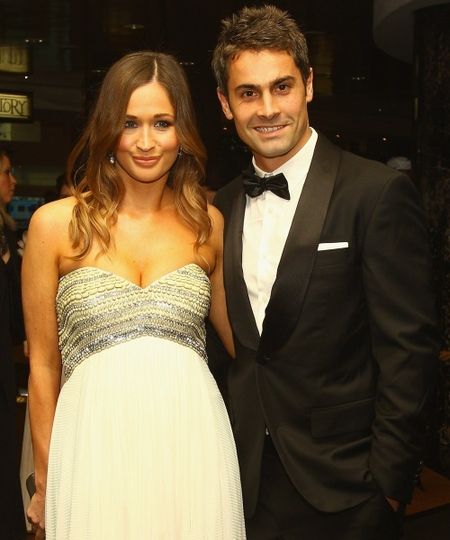
AFL player, Daniel Giansiracusa, and his wife, Kelly, welcomed their son Otis, on September 8. Otis joins big sister Ruby Iris, who is nearly 3, and his birth was announced on Twitter.

Intriguingly, Otis Giansiracusa was born the day before Otis Redding’s birthday, but I don’t know if that was a factor in the choice of his name.

Daniel plays for the Western Bulldogs, and he and Kelly were married in December 2007.

Ruby Anne Susie Murch: A Daughter for Cathy Freeman and James Murch

25 Sunday Sep 2011

Posted by A.O. in Celebrity Baby Names

≈ 10 Comments

Tags

celebrity baby names, english names, famous namesakes, French names, honouring, name popularity, nicknames, popular names, vocabulary names

Cathy Freeman’s daughter was one of the most anticipated babies to be born this year, because Cathy is not only one of our greatest athletes, but also one of our most loved. Australia has been blessed with more than its fair share of fast runners, but Cathy did more than run fast – she has that charisma that draws people to her, and a smile that can light up, not just a room, but an entire stadium.

Her sporting achievements are well-known and add up to a stellar career. She began running aged five, won her first gold medal at the age of eight in Brisbane, and was encouraged by her family to pursue her dream of becoming an Olympic athlete. She won her first international gold medal for the women’s relay at the Commonwealth Games in Auckland, 1990; this made her not only the first Aboriginal gold medal winner at a Commonwealth Games, but also the youngest, as she was only 16. To commemorate her achievement, she was awarded Young Australian of the Year in 1990. In her acceptance speech, she said that she ran for all Australians, but particularly for Aboriginal Australians, whom she hoped to inspire to reach their own goals.

Cathy’s childhood dream came true in 1992, when she became the first Aboriginal Australian to compete at an Olympics Games, in Barcelona. She won double gold at the 1994 Commonwealth Games, and in 1996 received her first Olympic medal when she won silver in the 400 metres in Atlanta. Three subsequent Grand Prix victories and her taking first place at the 1997 World Track and Field Championships in Athens confirmed her status as world champion over 400 metres. In 1998, she received the Australian of the Year Award for her athletic achievements. To date, she is the only person who has ever been awarded both Young Australian of the Year and Australian of the Year.

The 2000 Olympics in Sydney were expected to be the jewel in her crown, and she was chosen to light the Olympic flame at the opening ceremony. Cathy didn’t disappoint, as she won her first Olympic gold medal for the 400 metres, and after the race, did her victory lap carrying both the Australian and Aboriginal flags as a symbol of national reconciliation. This had to gain the special permission of the International Olympic Committee, because although the Aboriginal flag is officially recognised in Australia, it isn’t a national flag, and isn’t recognised by the IOC. Cathy later explained that the carrying of both flags was the culmination of a promise that she had made to herself when she was 16, and just beginning her international career.

Further honours came her way: she received the Olympic Order, the Arthur Ashe Courage Award, the Laureus Sportswoman of the Year Award, and the Order of Australia Medal all in the same year, 2001. After her retirement, she devoted herself to many charitable causes, most notably the Cathy Freeman Foundation, which encourages indigenous children to stay in school and succeed academically.

Catherine Astrid Salome Freeman had become not just an athlete, not just an Olympian, not just a gold medallist, but also a spokesperson, a community leader, a role model, an icon, an inspiration, a star. Her success was beyond the wildest dreams of the little girl who had won primary school sports day races in Queensland.

A couple of years ago I watched an episode of genealogy show, Who Do You Think You Are?, featuring Cathy Freeman. She already knew that her grandfather, Frank Fisher, was a famous rugby league player from an Aboriginal mission, known for being a fast sprinter and a fierce competitor on the field, but was surprised to find her great-grandfather, Frank Fisher senior, served in World War I as a member of the Light Horse. She discovered that she had both English and Chinese ancestry on her mother’s side, and that her mother’s family had been sent to a Palm Island penal settlement for being too independent. They were to remain there for four generations – a place so strictly controlled that Cathy’s mother Cecelia was not allowed to visit family members for Christmas; this was in 1963.

As Cathy read the documents connected with her family history, she shed tears of rage and frustration on behalf of her ancestors. She said that if she had known all this when she was an athlete, she would have run even faster, and her running would have been fuelled by anger. Cathy has a tattoo on one bicep that reads Cos I’m Free, and she realised that her freedom was a historically recent thing.

Despite her magnificent public success, her private life was filled with drama, turmoil and even scandal. But as Cathy explained in an interview: “I might be a champion athlete but that doesn’t make me a champion person. Why shouldn’t my personal life be just as difficult and troublesome as any other woman’s? God, the mistakes I have made and the tears I’ve shed . . . Apart from a certain God-given talent I firmly believe the reason I achieved so much is that running was my escape from a chaotic personal life. Athletics was my refuge, something I could lose myself in.”

Fortunately, her chaotic love life got a lot happier and more stable when she met fund manager James Murch at a charity ball – a man that Cathy describes as “fantastic, fabulous, sexy, beautiful, gorgeous”, and also her best friend. In April 2009, Cathy and James were married in a Ba’hai wedding ceremony that included traditional indigenous elements. They were very open about wanting children as soon as possible, and said they were willing to adopt if necessary.

Cathy dropped a hint that she might be pregnant in September last year, during a ceremony to mark the tenth anniversary of the Sydney Olympic Games. She made a comment about her memory living on through her “unborn children and their children”. After she was questioned what she meant by that, her thought was, “Oh dear, what have I said?”. Pictures of her looking plumper, and a suddenly cancelled charity run across Sydney Harbour Bridge only fuelled speculation.

The pregnancy was officially announced in February, and it was also revealed that pregnancy had triggered gestational diabetes, which is said to run in Cathy’s family, and which Aboriginal women have a higher risk of getting. She had to inject herself with insulin four times a day, and after always being so fit and healthy, it was hard for her to adjust to the idea of her body failing her. In fact, in photos taken during the last few months of her pregnancy, Cathy looks noticeably tired and unwell, although she was able to continue going to the gym.

Her daughter Ruby Anne Susie was born on July 8, and we are told that the delivery went smoothly and both mother and baby were healthy. On July 11, she posted photos of Ruby on her website, and said on Twitter that she was recovering well and loving being a new mum. By the end of July, she was back at work promoting children’s sport.

Ruby was the #1 name last year in Victoria, where the Murch family live, and Cathy and James may well have picked it simply because they love it. However, this pretty gemstone has historically been often used as a name in the indigenous community, and there are several famous Aboriginal women called Ruby, including singer-songwriter, Ruby Hunter; political activist Ruby Langford Ginibi; and Ruby Hammond, the first Aboriginal woman political candidate in South Australia.

I think the middle name Anne may be in tribute to Cathy’s older sister, Anne-Marie, who was born with severe cerebral palsy and spent most of her life in a home for the disabled. Cathy always said that she had to run so fast because Anne-Marie couldn’t move her hands and feet at all, and that Anne-Marie has been a constant inspiration in her life – not just the wind beneath her wings, but a tornado. Anne-Marie died when Cathy was sixteen. The second middle name, Susie, is after James’ mother, who sadly passed away before she could ever meet Cathy.

I must confess that I admire Cathy Freeman a great deal, and basically I would have loved any name she chose for her daughter. I think Ruby Anne Susie is a bright, smiley, sunshiney name that’s cute as a button and also honours loved ones – two completely biased thumbs up!

(Photo from Cathy’s Freeman’s website)

Famous Name: Nancy

06 Tuesday Sep 2011

Posted by A.O. in Famous Names

≈ 9 Comments

Tags

celebrity baby names, classic names, english names, famous namesakes, fictional namesakes, name history, name popularity, name trends, nicknames, UK name popularity, US name popularity

2829044-3x4-700x933

This blog post was first published on September 6 2011, and revised and updated on September 24 2015.

Famous Namesake
On August 7 2011, Australia’s most decorated servicewoman of World War II died. Nancy Wake was born in New Zealand in 1912, and her family moved to Australia when she was a baby. Not long after, her father abandoned the family and went back to New Zealand, selling their house in the process, thus leaving his wife and six children homeless and destitute.

Life must have been tough for young Nancy, but she was clearly a born survivor. A girl of spirit, she ran away from home at the age of 16 and worked as a nurse. When an aunt left her a £200 inheritance, she travelled to New York, and then London, where she became a journalist.

During the 1930s, she settled in Paris, and worked for the Hearst newspapers as European correspondent. One of her first assignments was to interview Adolf Hitler. She also witnessed first-hand the brutal persecution of Jews by the Nazis in Vienna, and vowed that if she could ever do something about it, she would.

In 1939 Nancy married Henri Fiocca, a handsome and wealthy French industrialist who she described as the love of her life. Six months later, Germany invaded France, and Henri and Nancy both joined the French Resistance. Nancy worked as a courier, smuggling food and messages to Resistance agents in Spain, and was able to assist more than a thousand escaped prisoners of war and Allied fliers out of France.

By 1942, the Gestapo had become aware of a significant Resistance agent who was proving a thorn in their side, and code-named her The White Mouse. She was #1 on the Gestapo’s “Most Wanted” list, and had a 5 million franc bounty on her head. Nancy escaped to England, where she trained as a spy in the French section of the British Special Operations Executive, who worked with local resistance groups in German-occupied territories.

She parachuted back into France in 1944 to help with D-Day preparations, and after D-Day was in charge of an army involved in combat against German troops. Never one to back down from a hard task, she once cycled 500 km in three days, crossing several German checkpoints, to find an operator to radio Britain and request new radio codes.

Attractive, vivacious and feisty, she drew admiration for being an “Australian bombshell” who was a crack shot with a cheerfully never-say-die attitude. One of her comrades, Henri Tardivat, said of her: She is the most feminine woman I know, until the fighting starts. Then she is like five men.

At the end of the war, Nancy discovered that her beloved husband Henri had been captured, tortured and executed by the Gestapo in 1943 for refusing to disclose her location. She never ceased to regret leaving France, and blamed herself for his death, believing that if she had stayed with him, he would have survived.

After the war, she was showered in international honours, including the George Medal, the Croix de Guerre, the Medaille de la Resistance, the Chevalier de Legion d’Honneur, and the US Medal of Freedom. Further honours came to her throughout her life, but none from Australia for many years. At first she refused all Australian recognition, then there was some bureaucratic tangles because technically Nancy was still a citizen of New Zealand.

Nancy probably didn’t help the process by getting unsuccessfully involved in Australian politics, and by telling them to stick their medals somewhere unmentionable. Rather belatedly, she was awarded the Companion Order of Australia in 2004; by that time she had left Australia permanently to live in London, after being widowed once more (this time after 40 years of marriage).

Nancy died three weeks away from her 99th birthday. On March 10 2013, her ashes were taken to the village of Verneix near Montluçon, in central France – the region she had used as her base while a Resistance fighter. Here the ashes were scattered in a private ceremony attended by close friends, in accordance with her wishes.

She said of herself: I hate wars and violence, but if they come, I don’t see why we women should just wave our men a proud goodbye and then knit them balaclavas.

Name Information
Nancy was originally a short form of Annis, the medieval English form of Agnes, and in use since the Middle Ages. However, by the time Nancy became commonly used as an independent name in the 18th century, it was derived from Nan, a short form of Ann or Anne.

There are many famous namesakes for this name. Anne “Nancy” Regan, former US First Lady; Nancy Astor, the first female MP in the British Parliament; boot-stomping singer Nancy Sinatra; witty author Nancy Mitford; voice actress of Bart Simpson, Nancy Cartright; punk lover Nancy Spungen; nobbled skater Nancy Kerrigan. It’s interesting how often famous Nancys end up being controversial in some way.

Fictional Nancys are just as strong characters as their real world counterparts. Smart girl detective Nancy Drew, an inspiration to powerful women such as Hilary Clinton. Piratical tomboy Nancy Blackett from Swallows and Amazons; her real name is Ruth, but pirates must be ruthless! Dreamworld heroine Nancy Thompson, who takes on the nightmarish Freddy Kruger. Poor degraded Nancy from Oliver Twist, who performs a noble act to save another, though it risks her own life.

Nancy is a classic name which has been almost continuously on the charts. It was #114 in the 1900s, joined the Top 100 the following decade, and peaked in the 1920s at #26. It left the Top 100 in the 1950s and has fallen gradually; currently it is around the 500s.

In the United States, Nancy was a Top 100 name in the late 19th century, and then again from the 1920s to the end of the 1970s – a very good run. It is has fallen steadily since then and is now #752. In the UK, Nancy was on the top 100 from the mid-19th century until World War II. In 1996 it was #251, and generally making upward progress. It joined the Top 100 again last year, and is currently #90. UK Prime Minister David Cameron has a daughter named Nancy, born in 2004.

Nancy is a wholesome yet spunky name which faded too quickly in Australia compared to other countries. It fits in perfectly with the current trend for cute short form names such as Maggie and Kitty, while having a clean classic feel. This is a spirited choice, suitable for those who want their daughters to be in the thick of the fight, not just waving and knitting on the sidelines.

POLL RESULT
Nancy received an approval rating of 56%. 30% of people thought the name was too dated and old-fashioned, but 16% said it was sweet and wholesome. Nobody was affected by the “nasty Nancy” label given to Nancy Spungen, but 6% were concerned about the phrase “negative Nancy”, and 4% were really bothered that “nancy” is slang for a homosexual or effeminate man.

(Image of Nancy Wake c 1945  from The Australian War Memorial, which houses the collection of all her war medals)

Boys Names from the National Rugby League

04 Sunday Sep 2011

Posted by A.O. in Name Themes and Lists

≈ 14 Comments

Tags

Arabic names, astronomical names, celebrity baby names, english names, famous namesakes, French names, Gaelic names, germanic names, Hungarian names, Indian names, Irish names, Latin names, locational names, mythological names, name history, name meaning, nicknames, polynesian names, saints names, Sanskrit names, surname names, Tongan names, unisex names, Welsh names

Bodene (Thompson) – Gold Coast Titans

Bodene Thompson was born in New Zealand, and began playing rugby league in high school after his family moved to Australia. He made his début with the Titans in 2009, and last year he played for the New Zealand Maori team against England. His name is something of a mystery to me. It may be a variant of the Germanic surname Boden, taken from the Frisian for “messenger”. On the other hand, I have seen some people using Bodene as a form of the surname Beaudoin, a French form of Baldwin. It’s also hard not to wonder if it’s been chosen as a portmanteau of Beau and Dean – which make the obvious nicknames for this country-sounding name.

Braith (Anasta) – Sydney Roosters

Braith Anasta was born in Sydney, and is of Greek-Australian heritage (his surname was originally Anastasakis). He made his début in 2000, and first played for the Roosters in 2005. He is currently captain of his team. He is eligible to play for Greece internationally, but has done so only once, playing for Australia four times. He has played for New South Wales nine times, and for City six. He won the Dally M Rookie of the Year medal in 2001, the Jack Gibson Medal, and the Supporters Club Player of the Year in 2007, the Players Player of the Year in 2008, and last year won the Dally M Captain of the Year. Braith is a unisex Welsh name meaning “speckled”; however I’m not clear on the Welsh pronunciation. Braith pronounces his name BRAYTH. Braith can also come from the Gaelic word for “British” and the Old Norse for “broad”; both these words appear in various English surnames and place names, such as Braithwaite and Gilbraith, and these are exactly as Anasta’s name is said. Brief and brusque, this seems a name born to command, although it does sound a touch lispy.

Bronx (Goodwin) – St George Illawarra Dragons

Bronx Goodwin was born in the country town of Parkes in New South Wales. He made his début in 2007, and joined the St George Illawarra Dragons last year. He played for the New Zealand Maori side in 2008. The Goodwin family are well known for their involvement in, and success at, rugby league over several generations in the Illawarra region. Bronx’s name is taken from the borough of New York City called The Bronx. It receives its name from the Bronx River, which was named for an early settler from Sweden called Jonas Bronck. His surname is a variant of Brink, from the Low German meaning “edge, slope, waterside grazing land”, and would have been given to someone who lived on the edge of a waterway (rather appropriate for a river). The Bronx is an area known for its cultural diversity, and has a tough image. The name Bronx is blunt and masculine and sounds very sturdy; it has the X at the end which has become such a name trend. Bronx was born many years before Pete Wentz and Ashlee Simpson named their son Bronx Mowgli, so the Goodwins were obviously ahead of their time.

Constantine (Mika) – Newcastle Knights

Constantine Mika is a New Zealander of Samoan descent. He didn’t have any luck at getting into the New Zealand first grade team, so moved to Australia and joined the Knights in 2009. The name Constantine is well known from history due to Constantine the Great, famously the first Roman Emperor to convert to Christianity. Although historians are divided as to just how “Christian” Constantine was, and whether he had a dramatic conversion or not, there is no doubt that his rule was a significant turning point in history. He also moved the capital of the empire from Rome to Byzantium, in the east; the city was renamed Constantinople in his honour (today it is known as Istanbul, in Turkey). Constantine is venerated as a saint in Eastern Orthodoxy and the Eastern rites of the Roman Catholic church. His name is from the Latin for “constant, steadfast”. This is a very rich and indeed, imperial-sounding name, redolent of Byzantine marble and gold. Constantine Mika uses the usual Con as the short form, but Stan would also work well.

Drury (Low) – Canberra Raiders

Drury Low is originally from New Zealand and grew up in Melbourne. He made his début in 2010 with the Canberra Raiders, and was also chosen for the Junior Kiwis (New Zealand’s second national team) the same year. His name is an English surname from an Old French word meaning “love, friendship”; by the 12th century it meant a love token or a sweetheart. Sir William Drury was an English statesman and soldier in the time of Elizabeth I, and his house in London gave its name to the famous street, Drury Lane. It has theatrical associations, for the name of the street is often used to refer to The Theatre Royal, which has been located in Drury Lane since the 17th century; it’s shown popular works from Shakespeare to Monty Python, and currently showcases West End musicals. You may also know this street as the home of The Muffin Man in the nursery rhyme, which was made familiar in the Shrek movies, but also makes an appearance in Jane Austen’s Persuasion. Drury is a small town near Auckland in New Zealand, but I don’t know whether this was the inspiration for Low’s name.

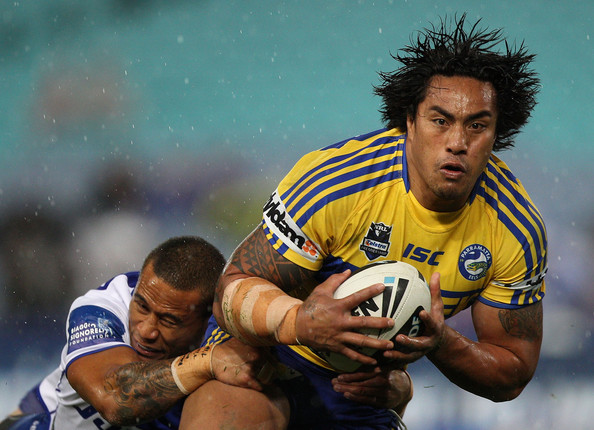
Fuifui (Moimoi) – Parramatta Eels

Fuifui Moimoi was born in Tonga and grew up in New Zealand (pictured). He made his début for Parramatta Eels in 2004, and has proved himself a valuable player. He is eligible to play rugby league for Tonga, Australia, New Zealand, the United States and Samoa, but so far has only played for Tonga and New Zealand. While watching a game recently, I heard the commentator explain that Fuifui’s name means “love love” in the Tongan language (as if to say, doubly loved). Not only is this a fantastic meaning for a name, but Fuifui Moimoi is without doubt the funnest name to say I have ever heard. Fuifui’s name is pronounced FOO-EE FOO-EE MOY MOY; you say it quickly and all the syllables have equal emphasis. It’s a name that you can’t help but smile as you say it. Fuifui goes by Fui in everyday life.

Krisnan (Inu) – New Zealand Warriors

Krisnan Inu was born in Auckland, New Zealand, to Samoan parents, and grew up in the western suburbs of Sydney. He made his debut in 2007, and began playing for the Warriors this season. He also plays for the New Zealand national team. A devout Mormon, he decided to forgo becoming a missionary, believing he can accomplish more for the church as a role model by remaining in the NRL. Krisnan is a variant of the Indian name Krishna, which means “black, dark, dark blue” in Sanskrit. Krishna is a central figure in Hinduism, believed to be the earthly manifestation of the supreme deity, Vishnu. He is said to have written the Hindu scriptures, the Bhagavad Gītā. Krisnan Inu calls himself Kris, and he has an interesting middle name too – Nevada!

Sandor (Earl) – Penrith Panthers

Sandor Earl was raised in the eastern suburbs of Sydney, and attended St Gregory’s College, a famous “nursery” for rugby league, where it is the dominant sport. Sandor made his début in 2009, and went to the Panthers last year, where he was named the club’s top rookie player. In 2010 he was part of the New Zealand Maori team which played against England, and is also reportedly eligible to play for Russia. Off the field, he works part-time as an underwear model. Sandor’s name is a Hungarian form of Alexander, and is pronounced SHAHN-dor. This is a form of the popular Alexander you don’t hear every day; it sounds like an exotic alternative to Xander to me.

Shea (Moylan) – Brisbane Broncos

Shea Moylan just made his début for the Brisbane Broncos this season. Shea is an Anglicised form of the Irish name Seaghdha, said to mean “hawk-like” in Old Gaelic, with connotations of being brave and fierce, and is pronounced SHAY. Although Seaghdha is a masculine name, the Anglicised form must sound slightly feminine to some people, as it is listed as a unisex name. However, I have personally only ever seen this name on boys, with Australian parents usually opting to use feminised creations such as Shaylie or Shayla for girls. I have also witnessed a wide range of variant spellings, including Shae, Shay, Shaye, Sheye and Shai. Although this has been a reasonably well-known name here, I get the impression it’s not being used as much as it was. It’s an attractive name, pleasantly soft, and sounds enough like Shane and Sean to seem familiar to most people.

Tariq Sims – North Queensland Cowboys

Tariq Sims is from Gerringong, in the Illawarra area of New South Wales, and is of part-Fijian descent. He made his début with the North Queensland Cowboys this season; his brothers Ashton and Korbin also play rugby league. Tariq is an Arabic name translated as “he who knocks on the door”, related to the Arabic word for “nightcomer” (in the sense that someone who comes by night will need to knock on the door to wake you up). Tariq is also the name given to the Morning Star, because it comes at the end of the night, but this star (planet) is also used as a metaphor for a great man or chieftain. In the Qur’an, the Morning Star is used to refer to the Prophet Mohammad. Tariq ibn-Ziyad was a military leader who conquered Spain for the Moors; Gibralter is named after him, for it is the Spanish derivation of “mountain of Tariq”. Tariq Sims pronounces his name tuh-REEK. This name has a mysterious meaning with positive associations and interesting namesakes; it’s exotic, but not difficult to spell or say. The Sims were ahead of the curve with Ashton and Korbin – Tariq may be next to become popular.

A very happy Father’s Day to all the dads! Here’s hoping you get spoiled rotten, and may your name suggestions always be taken seriously.

Saturday Sibset: Russell Crowe’s Rush to Start a Family

03 Saturday Sep 2011

Posted by A.O. in Sibsets in the News

≈ 5 Comments

Tags

celebrity baby names, celebrity sibsets, english names, famous namesakes, name meaning, surname names

Russell Crowe is a New Zealand-born Australian actor who began his career on Australian soaps, and he won the Australian Film Industry Best Actor Award for his role in Romper Stomper in 1992. In 1997 he gained the attention of Hollywood when he took a leading part in LA Confidential, and since then has starred in movies such as The Insider, Gladiator, Cinderella Man, and A Beautiful Mind.

He also has a less-publicised but doggedly determined career as a rock singer. An enthusiastic sports fan who follows team sports in Australia, the UK, the US and Canada, he is also the owner of the South Sydney Rabbitohs team in the National Rugby League.

Russell Crowe is married to former actress and current singer-songwriter, Danielle Spencer, who he met in 1990 when they both had roles in the Australian film, The Crossing. In an interview, Danielle revealed that their relationship was slow to get going, and that they remained friends for several years before romance eventually bloomed. Neither was Danielle in any hurry to settle down, and they didn’t get married until April 2003.

Danielle wasn’t sure whether she wanted children or not, and says that she could have kept procrastinating about it, but Russell was already certain that he wanted children, and according to his wife, once he gets an idea in his head, he’s pretty tenacious. Danielle says:

“I fell pregnant on our honeymoon, and the decision was made for me”.

Russell and Danielle’s son Charles Spencer Crowe (called Charlie) was born in December 2003, showing that Russell didn’t have to wait too long at all after his wedding to have the family he wanted. And in July 2006, Charlie was joined by his younger brother, Tennyson Spencer Crowe, so Danielle must have been well and truly talked into the having kids lark by then.

Tennyson Crowe is named after English poet Alfred, Lord Tennyson. Oddly enough, Lord Tennyson has a connection with Australia, because his son Hallam became the second Governor-General of Australia. He was popular with Australians, who were impressed with his modest manner and frugal ways (his predecessor had been considered a spendthrift), and there are several places in Australia named after him. His wife Audrey was also well-liked. The English surname Tennyson simply means “son of Tenney”; Tenney is a medieval form of the name Denis.

Alfred Tennyson’s older brother was called Charles Tennyson Turner; he was also a poet, and the two were very close. Charles married the sister of Alfred’s wife, so they were brothers-in-law as well as brothers, fellow-poets, and close friends. If you’re wondering why they have different surnames, Charles changed his surname to Turner when he inherited the property of his uncle, the Rev. Samuel Turner.

Even though Charles is such a well-known name, and Tennyson a rare one, somehow this sibset really works. The connections within the Tennyson family and the connection with Australia makes this very meaningful, with echoes of an earlier pair of brothers speaking to us.

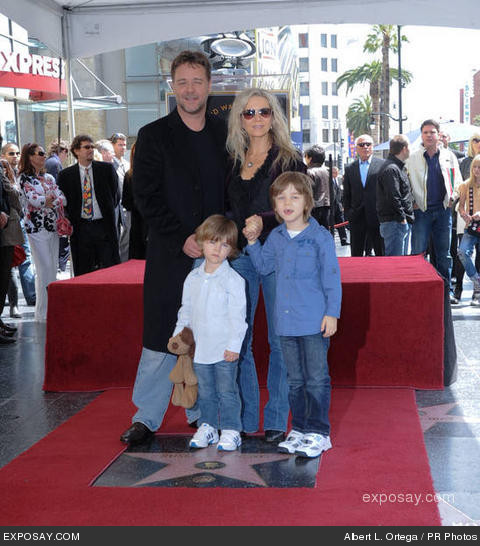
(Story from babycenter.com, photo from exposay.com; picture shows the Crowe family April 12 2010, when Russell was honoured with a star on the Hollywood Walk of Fame)

Boys Names from the Australian Football League

28 Sunday Aug 2011

Posted by A.O. in Name Themes and Lists

≈ 13 Comments

Tags

Biblical names, Egyptian names, english names, famous namesakes, fictional namesakes, German names, hebrew names, Irish names, mythological names, name history, name meaning, nicknames, popular culture, surname names, vocabulary names, Welsh names

Writer, critic and broadcaster, Clive James, wrote in his “Unreliable Memoirs” that Australian boys tend to be named after athletes. Although much has changed since his birth during World War II, and naming practices have considerably broadened, plenty of baby boys are named after sportsmen in Australia even now. In the period leading up until Father’s Day, we’re going to have lists of boys names from the two main (rival?) football codes to look at some of the less common names found amongst the players. (Don’t worry – at some point we’ll have two lists of girls names to balance it).

Alwyn (Davey) – Essendon Bombers

Alwyn Davey is from Darwin in the Northern Territory, and his tribal ancestry can be traced to the Kokatha Mula people from the Eyre Peninsula in South Australia. He was a late starter to professional football, being considered a bit short. He was picked up by Essendon in 2007, and at 22, was thought to be a little old to make of a success of it. He quickly gained a cult following due to his explosive speed, and won the AFL Army Award (for bravery) in the year of his debut. Alwyn was named after his father, and surely must have a connection with Wales, for his full name looks very Welsh. Alwyn is said to be derived from the name of the River Alwen, which may mean “winding and fair”, but could also be influenced by the name of a Celtic god of healing and prophecy, Alaunos. The meaning of the god’s name is extremely unsure, and may mean “pale, faded”, “brilliant white”, “dark grey”, or possibly “treasure”. A soft and lilting name, this sounds a bit like Alan and Alvin, and is easily shortened to Al or Ally, although personally I like Wyn.

Amon (Buchanan) – Brisbane Lions

Amon Buchanan is from the country town of Colac, west of Melbourne, and his brother Liam plays cricket for the state team. He made his debut in 2002, and was traded to the Lions in 2009. In Egyptian mythology, Amon is a fertility god who was believed to be father of all the Pharoahs. So popular was he that he became combined with the sun god Re into the supreme solar deity Amon-Re, and was worshipped devotedly as a protector of the poor and weak. His name means “the hidden one”, and is pronounced AH-mun. Amon is also the Greek form of a Hebrew name meaning “skilled workman”. In the Old Testament, Amon was one of the kings of Judah, and gets a bad rap for idolatry and general depravity. However, in the New Testament he is listed as one of the ancestors of Jesus. Amon has a bit of baggage, and might seem slightly overweening, but it’s a nice simple name that doesn’t sound too different from Harmon, Eamon or Aidan.

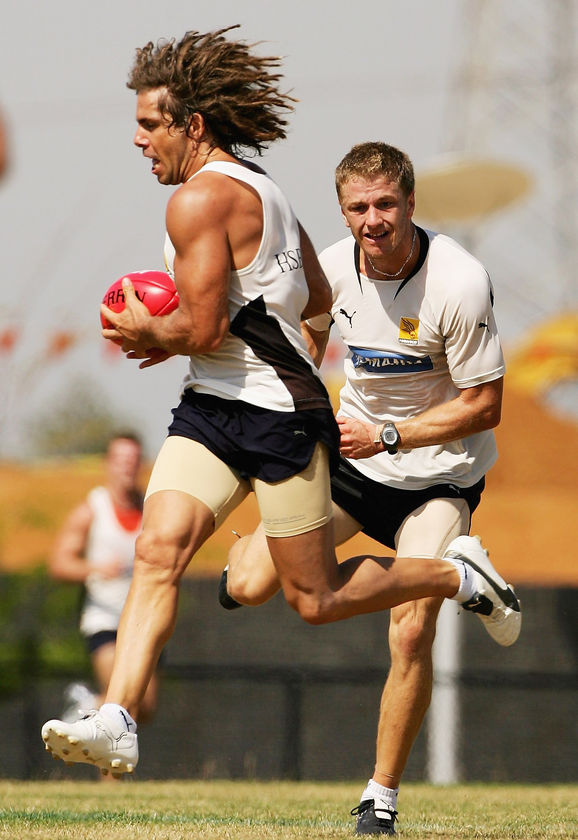
Chance (Bateman) – Hawthorn Hawks

Chance Bateman is from Perth in Western Australia (pictured). He was Hawthorn’s first indigenous player to play 100 games, the first Aboriginal life member, and the club’s longest-serving recruit from WA. He is one of Hawthorn’s most valuable players because of his speed and hardness. He is notable for his dreadlocks, which he once cut off for charity and donated to the Rioli Fund for Aboriginal health. Chance is a surname of Old French origin, derived from a nickname given to someone blessed with good fortune. The English word “chance” can mean a stroke of luck or good opportunity, but now also has connotations of accident or randomness. This is one of those names that people tend to either love or hate, find cool or ridiculous. Nearly always the name is given meaningfully, and boys called Chance often have a story attached to how their name was chosen.

Maverick (Weller) – Gold Coast Suns

Maverick Weller is a young player from Burnie in Tasmania, and made his debut this season. The word “maverick” refers to someone unconventional, independent or even controversial in their thinking; someone who follows their own rules. The word comes from the name of Samuel Maverick, a Texas lawyer who refused to brand his cattle. (In reality, Samuel wasn’t so much an independent thinker as uninterested in ranching). His surname may be Welsh, and derived from the Gaelic name Muirgheas, meaning “seafarer”, or from the Welsh Mawr-rwyce, meaning “valiant hero”. It’s been used as the title of both a Western TV series starring James Garner and a Western movie starring Mel Gibson, so still has rather a “cowboy” image. Maverick Weller seems to have been named after Tom Cruise’s callsign in the movie Top Gun, as he has a tattoo of his namesake. It’s another vocabulary name that can draw strong opinions from people – no doubt, just like the original Mister Maverick!

Kade (Simpson) – Carlton Blues

Kade Simpson is from Melbourne, and was drafted by Carlton in 2002. He has the club record for most consecutive games played, and won the Jim Stynes Medal in 2008 for best player on the Australian national team. His name is a variant of Cade, a surname which began as a form of the personal name Cada, coming from the Germanic for “swelling, lump”. This slightly unflattering name may have begun life as a nickname for someone overly plump, but to me it almost sounds like a “womb name” – the sort of epithet you might fondly give the baby swelling your belly out (“my little lumpkin”). The surname has another source, the Old French word cade meaning “barrel”; although this also has connotations of stoutness, it’s an occupational name for someone who made barrels, and thus is the same as Cooper. There is another meaning which parents might find more appealing: a cade is a baby farm animal reared by hand; these pet lambs and calves tend to be cossetted and well-fed little darlings. It’s a name filled with cute, cuddly, childish and chubby connotations; however I’m guessing most people will assume it’s a short form of Kaden.

Kepler (Bradley) – Fremantle Dockers

Kepler Bradley is from West Australia, was drafted in 2003, and began playing for Fremantle in 2007. Tall and agile, he won the Lark Medal for players 18 and under in 2003. Kepler is a German surname meaning “hooded cloak”; it’s an occupational name for someone who made such garments. The name is given in honour of Johannes Kepler, a mathematician, astronomer and astrologer. A key figure in the 17th century scientific revolution, his laws of planetary motion helped set the stage for Isaac’s Newton’s laws on gravity. A devout Lutheran who had considered becoming a church minister before his obvious talent for mathematics pushed him into an academic career, he was banished from Graz for refusing to convert to Catholicism, but found refuge in tolerant Linz. His mother was a herbalist who was imprisoned as a witch, but Kepler’s extensive defense got her released, adding “legal mastermind” to his already impressive list of accomplishments. This is a strong, unusual name that celebrates a hardworking polymath of powerful imagination, known for his cheerful and affectionate nature. Kip is the obvious nickname.

Marlon (Motlop) – Port Adelaide Power

Marlon Motlop is from the Northern Territory, and traces his tribal ancestry to the Larrakia people, from the Darwin area. He was drafted in 2007 and is the youngest player drafted to Port Adelaide. He won the Allan McLean Medal for players under 16 in 2006. The name Marlon is another surname, this time coming from place names called Moreland, common in the north of England and southern Scotland, meaning “moor land”. The name is strongly associated with American screen legend Marlon Brando, who starred in movies such as A Streetcar Named Desire and On the Waterfront. Actor Marlon Brando was named after his father; of German-Dutch origins, the family surname was originally Brandeau. It’s also the name of Michael Jackson’s older brother, singer Marlon Jackson, who gave the name Marlon to his youngest son, Marlon Jackson Jnr. This name may seem almost too famous to use, but it’s a name that’s been good enough to be handed down from father to son at least twice, and you can also use Marley as a nickname, thus honouring another famous singer.

Sharrod (Wellingham) – Collingwood Magpies

Sharrod Wellingham is from Western Australia, and was selected for the 2006 rookie draft. Since 2008, he has become a valuable asset for Collingwood. Sharrod looks like a cross between Sharon and Jarrod, but is yet another surname. This could be a variant of either of two different surnames. One is Sherrard, which has been found in Ireland from the 17th century onwards. The meaning is unknown, but has been interpreted as a combination of English and French meaning “bright, fair”. Another possibility is Sherrod, based on the French surname Cherot, meaning “wagoner”. Sherrard, Sherrod and Sharrod have all been used in the past as personal names, but mostly in the United States. In fact, there is an American basketball player called Sharrod Ford only a few years older than Sharrod Wellingham, so the name seems to have floating around in the public consciousness during the 1980s.

Tadhg (Kennelly) – Sydney Swans

Tadhg Kennelly is from County Kerry in Ireland, and already had a background in Gaelic football when he signed with the Sydney Swans in 1999. He made his debut in 2001, and became a high-profile player, writing articles for the Swans’ website entitled Talking with Tadhg. After the death of his father, Tadhg returned to Ireland in 2009 where he won a National Football League medal, but came back to Australia in the 2010 season. Tadhg is an Irish name that means “poet”; Tadhg was a medieval king of Connacht. The name does have pronunciation issues in Australia, where people tend to want to say it to sound like the word tie, or the name Ty. However, it is pronounced TIEG, like the first syllable in the word tiger. Australia has a great fondness for Irish names and Irish culture, and I think this name would be accepted and admired once people understood the pronunciation. It has a romantic meaning, yet sounds masculine, and it’s short without being cute.

Zephaniah (Skinner) – Western Bulldogs

Zephaniah Skinner is a young player from the Kimberley region of Western Australia who moved to Darwin, and was drafted last year. Zephaniah is a Hebrew name that means “Yahweh has hidden, Yahweh has concealed”, or slightly more ominously, “Yahweh lies in wait”. There are several people of this name in the Old Testament, the best known being a minor prophet who features in the very brief Book of Zephaniah. These three chapters give the teachings of Zephaniah, who seemed pretty keen on a universal Judgement Day, and as is usual with prophets, warned that widespread repentence is necessary to avoid this catastrophe. Another famous namesake is British Rastafarian poet, Benjamin Zephaniah. He supports veganism, animal rights, anti-racism, a British Republic, a change to the first-past-the-post voting system, and the UK Green Party. Boys names from the Old Testament are very popular at the moment, and although Zephaniah is quite rare, it isn’t any more unusual-sounding than Zachariah. Zeph or Zeff seems like a pretty cool nickname as well.

← Older posts
Newer posts →

Enter your email address to follow this blog

Categories

Archives

Recent Comments

A.O.'s avatarwaltzingmorethanmati… on Zarah Zaynab and Wolfgang…
Madelyn's avatarMadelyn on Zarah Zaynab and Wolfgang…
JD's avatardrperegrine on Can Phoebe Complete This …
A.O.'s avatarwaltzingmorethanmati… on Rua and Rhoa
redrover23's avatarredrover23 on Rua and Rhoa

Blogroll

  • Appellation Mountain
  • Baby Name Pondering
  • Babynamelover's Blog
  • British Baby Names
  • Clare's Name News
  • For Real Baby Names
  • Geek Baby Names
  • Name Candy
  • Nameberry
  • Nancy's Baby Names
  • Ren's Baby Name Blog
  • Sancta Nomina
  • Swistle: Baby Names
  • The Art of Naming
  • The Baby Name Wizard
  • The Beauty of Names
  • Tulip By Any Name

RSS Feed

  • RSS - Posts

RSS Posts

  • Celebrity Baby News: Melanie Vallejo and Matt Kingston
  • Names from the TV Show “Cleverman”
  • Can Phoebe Complete This Sibset?
  • Zarah Zaynab and Wolfgang Winter
  • Baby, How Did You Get That Name?
  • Celebrity Baby News: Media Babies
  • Celebrity Baby News: Adelaide Crows Babies
  • Celebrity Baby News: Chris and Rebecca Judd
  • Names at Work: Name News From the World of Business and Employment
  • Celebrity Baby News: Sporting Round Up

Currently Popular

  • Celebrity Baby News: Mick and Angie Molloy
  • Girls Names From Stars and Constellations
  • Rare Boys Names From the 1950s
  • The Top 100 Names of the 1940s in New South Wales
  • Girls Names of Australian Aboriginal Origin

Tags

celebrity baby names celebrity sibsets english names famous namesakes fictional namesakes honouring locational names middle names name combinations name history name meaning name popularity name trends nicknames popular names saints names sibsets surname names twin sets unisex names

Blog at WordPress.com.

Privacy & Cookies: This site uses cookies. By continuing to use this website, you agree to their use.
To find out more, including how to control cookies, see here: Cookie Policy
  • Subscribe Subscribed
    • Waltzing More Than Matilda
    • Join 517 other subscribers
    • Already have a WordPress.com account? Log in now.
    • Waltzing More Than Matilda
    • Subscribe Subscribed
    • Sign up
    • Log in
    • Report this content
    • View site in Reader
    • Manage subscriptions
    • Collapse this bar
 

Loading Comments...