• About
  • Best Baby Names
  • Celebrity Baby Names
  • Celebrity Baby Names – Current
  • Celebrity Baby Names – Past
  • Featured Boys Names
  • Featured Girls Names
  • Featured Unisex Names
  • Links to Name Data
  • Waltzing on the Web

Waltzing More Than Matilda

~ Names with an Australian Bias of Democratic Temper

Waltzing More Than Matilda

Tag Archives: famous namesakes

Names Spotted at Home and Abroad: Name Story Special (Spring 2014)

08 Wednesday Oct 2014

Posted by A.O. in Names Spotted at Home and Abroad

≈ 2 Comments

Tags

choosing baby names, famous namesakes, For Real Baby Names, Greek names, honouring, Japanese names, locational names, middle names, mythological names, name combinations, names of businesses, nicknames, popular names, rare names, Shakespearean names, sibsets, street names, surname names, The Best Gift ofLife, unisex names

our-family_10

When I looked through my name files, I saw I had quite a collection of stories explaining how babies had received their names. I thought it would be worthwhile to see how other parents go about choosing baby names, as some of their solutions have been quite creative. (You may remember some of these names from the weekly Birth Announcements).

Footy Fever
Baby Aish Barker of Adelaide was named after a famous footballing family where three generations have played for Norwood Football Club. Dad is a massive Norwood fan, and always knew that this child would be called Aish, a name chosen in advance of the birth, regardless of the baby’s gender. Aish is a girl, and her big sister is Teegan. The Aish family feel honoured to have a baby named after them.

Reality Check
Amity McIntosh was born last Easter in Toowoomba, a sister to Dylan. She is named after Amity Dry, who got her big break after appearing on renovation reality show, The Block, in 2003; she and her husband were the winners that year. Through exposure gained on the show, Amity Dry got a recording contract, and has released two albums, as well as writing a musical play. You might remember that the name Amity has just reached the Top 100 in Queensland, so even though Ms Dry is from Adelaide, her name seems to have been a big hit north of the border.

His Name is History
Ethan Forbes Thomas was born in Sydney last autumn, the great-great-great grandson of William Thomas, the first Lord Mayor of Forbes, in country New South Wales. His parents were originally going to use the name William to honour the family connection, but there were already a lot of Williams in their family. They still wanted a name connected to their revered great-great, so chose the name of the town instead. The Thomas family have a strong connection to their family heritage in Forbes, and planned to have Ethan baptised in Forbes in September. Forbes is a very interesting town historically, as it was a gold-rush town in the 19th century. The bushranger Ben Hall was shot near there, and Ned Kelly‘s sister Kate lived in Forbes: she drowned saving an Aboriginal child during a flood, and is buried in the town’s cemetery.

Gender Swap Baby
Sebastian Carvajal was born on Mother’s Day in Melbourne, and was a “surprise baby”, because his parents were told at their ultrasound scan that their baby was a girl. They had therefore painted the nursery pink, bought girl baby clothes, and picked out the name Olivia, not to mention planning trips to the nail salon and dance classes. I remember reading that parents who opt to find out the sex of their baby in advance tend to have very set ideas about gender roles, and this seems like a good example – pink and dance classes for girls, blue and hobby cars for boys! I was interested that they had Olivia chosen for a girl and Sebastian for a boy, because Olivia and Sebastian are a couple in Shakespeare’s Twelfth Night.

Named After Mum’s Cheeks
Rosie Lyn Killalea was born in June in Sydney, and she is named that because her mum’s childhood nickname was Rosie, as she had rosy-red cheeks. Her middle name Lyn is after her great-grandmother, who passed away a year before Rosie was born. Rosie has inherited her mum’s pink cheeks.

Two Grandmothers in One Name
Lana Rosanna Krause was born in Rockhampton in July. Her middle name was chosen because her mother’s mum is named Annette and her father’s mum is named Rose.

Greek Mystery
Aeson Carter Small was born in August in Gladstone, just as his parents returned from holiday. When his parents first decided to start trying for a baby, they discovered that his mother was pregnant just two days later. They picked the name Aeson, because they believed that it was a translation from the Greek for “meant to be”, but I think they must have got it from some dodgy name book, because the meaning of Aeson isn’t known. In Greek myth, Aeson was the father of Jason, and he came to an unfortunate end.

He’s Cruz, Not Acacia
Cruz Zion Petterson, of Sutherland Shire, was born in the car on the way to the hospital. The car was parked on Fauna Place, just off Acacia Road in Sutherland, and some people thought he should have been named Acacia; however the Pettersons didn’t think either Acacia or Fauna were viable options for their son. I wonder if Cruz would have been called Acacia if he was a girl? Cruz wasn’t born in a Holden Cruze, but in a Mitsubishi 380. Cruz has a big sister named Starr and a big brother named Phoenix.

Names From The Best Gift of Life

The Best Gift of Life is a blog that Sarah from For Real Baby Names put me onto. It has interviews with mums, many of whom have interests in fashion, photography, and interior design, about their lives and their babies. One of the interview questions is about how they chose their baby’s name, so I thought I’d share some from Australian families.

Bambi – parents Vanessa and Sean liked the name, and knew she would be the cutest little girl.

Johnny Jay – named after mum Shaunyl’s grandfather, John James. Johnny honours Johnny Cash, one of Shaunyl’s favourite singers.

Kawa Leaf – parents are Dee and Desmond. Kawa means “river” in Japanese. Dee lived in Japan in her early twenties, and the name resonated with her; she is of Chinese heritage, and in Chinese Kawa translates as “family” + “fine painting”. The middle name Leaf was chosen because at the time of Kawa’s conception and during the pregnancy, the family were living in a garden nursery called New Leaf.

Peaches Wilde – parents Tess and Caleb had the name picked out even while they were dating. Peachy was mum’s nickname, so dad thought Peaches was perfect. The middle name Wilde was chosen because dad is a “wild hearted” stuntman, so the name honours both parents.

Ravi and Nova – two brothers born a year apart to Camille and Dean. Ravi‘s name was chosen at the 14 week mark of pregnancy, but Nova‘s took longer as most of their favourite names got “swiped”. Both parents like unusual names, and Camille comes from a family which includes Afrika, Harmony, India, Nimue and Joaquin, so different names blend in better.

Seb – named after the Spanish city of San Sebastian which his parents Karrie-Anne and Brent fell in love with on holiday. They were never going to call him Sebastian, so used the short form, Seb.

(Picture is of Peaches Wilde with her mother Tess; photo from The Best Gift of Life)
Waltzing With … Lucius

05 Sunday Oct 2014

Posted by A.O. in Waltzing with ...

≈ 3 Comments

Tags

aristocratic names, Arthurian names, Biblical names, Etruscan names, famous namesakes, fictional namesakes, Harry Potter names, imperial names, Latin names, name history, name meaning, name popularity, papal names, rare names, Roman names, royal names, royal titles, saints names, Shakespearean names, UK name popularity, US name popularity

y_Daybreak

Today is the start of Daylight Saving Time in New South Wales, Victoria, South Australia, Tasmania, and the Australian Capital Territory. Clocks went forward at 2 am this morning, so if you forgot, you are now an hour behind.

Because daylight saving becomes more pointless the closer you are to the equator, states which have tropical regions do not have daylight saving, and this means Queensland, Western Australia, and the Northern Territory. For everyone else, it’s a reminder we are moving towards summer and increasing hours of daylight, so it seems the perfect opportunity to look at a name connected with light.

Lucius was the most common name in ancient Rome times across all classes; it is usually said to be derived from the Latin word lux, meaning “light”. One theory is that it was given to children who were born at dawn, but the sheer number of people called Lucius makes this untenable. Another theory connects it to loukus, which originally meant “bright, shining”, although by the classical period it had come to mean “a cleared grove”.

Lucius is the name ascribed to an early Roman king, but it is probably a misunderstanding of Lucumo, the Etruscan word for “king”, which would be his title; the name Lucius was traditional in his family, suggesting another origin for the name. The Roman dictator Sulla, who served as an inspiration for Julius Caesar, was named Lucius Cornelius Sulla Felix. There were at least two Roman Emperors named Lucius: Lucius Dominitius Aurelianus (called Aurelian), and Lucius Aurelius Commodus (called Commodus).

Commodus was the son of the emperor Marcus Aurelius, and grandson of an emperor: he was the first emperor to be “born in the purple” (during his father’s reign). He is probably best known to us as the wicked emperor in the movie Gladiator, killed by Russell Crowe in the role of Maximus: although a fictional story, the real Commodus was eccentric and cruel, and assassinated by his wrestling partner, Narcissus.

The name Lucius was a favourite choice amongst early Christians because of the meaning of “light”, and there are several saints with the name. Saint Lucius of Cyrene is mentioned in the New Testament as a founder of the church in Antioch. There have been three popes named Lucius, and Pope Lucius I is also a saint.

Another Saint Lucius is a legendary 2nd century King of the Britons, who tradition credits with introducing Christianity to Britain by writing to the pope asking to be converted. His story became well known after it was included in the histories of Venerable Bede, and embellished by Geoffrey of Monmouth. For centuries it was an important myth of British Christianity, and although there’s no solid evidence he existed, some feel there must be a grain of truth to the legend. The church of St Peter Under Cornhill in London claims St Lucius as its founder.

The Roman philosopher and statesman known to us as Seneca had the full name Lucius Annaeus Seneca. He wrote many of his famous works while in exile, and later became an advisor to the Emperor Nero. This didn’t end well for him, as he was (probably wrongly) implicated in a plot against Nero, and forced to commit suicide. Early Christians greatly approved of him, and virtually hailed him as a humanist saint. According to medieval legend, he was converted to Christianity by Saint Paul, and is mentioned by writers such as Dante and Chaucer.

Despite all this heavy-duty Christian background, and even a British connection, Lucius has never been a common English name. It does seem to have had some history of use in Yorkshire, which has strong ties to the legendary Saint Lucius.

The name Lucius is a traditional one in the aristocratic Cary family, who bear the title Viscount Falkland. The 2nd Viscount fought on the Royalist side in the English Civil War and was killed in action. The current Viscount Falkland is named Lucius, and so is his son (a writer who goes by his middle name, Alexander), and his grandson.

Lucius has probably been used more often in America, and there are a number of famous politicians from the United States bearing this name. It’s also known from American writer and bon vivant, Lucius Beebe, and American sci-fi author Lucius Shepard.

Lucius isn’t too unusual a name in Australian historic records. Dr William Harvey, who was featured on the blog earlier this year, had a father named Lucius who was also a doctor, and it was his father’s death from tuberculosis which led Dr Harvey into specialising in thoracic medicine. A famous Australian with the name is musician Lucius Borich, the son of Kevin Borich, who was in the band The Party Boys.

Lucius doesn’t chart in Australia. 14 baby boys were named Lucius in England/Wales last year, while in the US (where Lucius peaked at #257 in the 19th century), 125 boys were named Lucius in 2013 – the same number as those called Hollis and Zephaniah.

If there seems a lack of real life Luciuses, fiction has stepped into the breach, for they abound in books, movies, TV programs, and video games. It’s no new phenomenon, for Lucius is the narrator of The Golden Ass by African author Apuleius; written in Latin in the 1st century, this comedy is sometimes regarded as the world’s first novel. Lucius is also in Arthurian legend, a fictional Emperor of Rome who King Arthur defeats, thus becoming not just King of Britain, but Emperor over all the West.

Lucius has been used as a character name twice by William Shakespeare, in Titus Andronicus and Julius Caesar. In fact, pretty much anyone who writes a story set in Roman times will include a Lucius somewhere, as it was the #1 name.

One of the best known fictional Luciuses of contemporary times is the slippery Lucius Malfoy from the Harry Potter series. Upper crust, corrupt, bigoted, and ready to slip over to the Dark Side whenever convenient, Lucius is a dyed-in-the-wool villain and general Mr Nastypants for most of the series. Only towards the end does he receive a lukewarm redemption.

His name, although suitably aristocratic, brings to mind Lucius from The Golden Ass, which is a book about witchcraft and magic – not to mention someone (literally) making an ass of themselves. However, just as Malfoy’s son’s name, Draco, means “serpent” and reminds us of the Devil, Lucius’ name is reminiscent of Lucifer, a name related to Lucius, meaning “light-bringer”, and which is often understood by Christianity as Satan’s name before his fall.

Unfortunately, some people think Lucius and Lucifer sound too similar for comfort. Stories that make the connection don’t help, such as the video game Lucius, Son of Lucifer, or the horror novel The Haunting of Sister Mary Francis, which has a character named Lucius Lucifer. On the plus side, that gives Lucius a bit of a “bad boy” edge.

An alternative is Lucian, which is derived from Lucius. Lucian is more popular in Australia than Lucius, being around the 500s, and fits in with the trend for boy’s names ending in N – Lucian almost seems like a fancier version of Lachlan.

Lucius can be pronounced either LOO-see-us, or LOO-shus. The ancient Romans said it more like LOO-ki-us, which perhaps suggests the three syllable pronunciation is more “correct”. Obvious nicknames are Lucky, Luke, Luc, Luca, Luce, Loosh, Lou, and Louie. I have seen a baby Lucius nicknamed Luci or Lucy by his family, which startled me, even though it makes perfect sense.

Handsome, intelligent, and with a rather upper-class image, Lucius does have a few issues, but seems like a name that someone could really fall in love with. It’s quite seductive – even luscious! I’ve noticed this name is often favoured by dads, suggesting that many guys appreciate the richness and power that stand behind it.

This is a rare boy’s name that is perfectly balanced between elegance and strength, brightness and darkness, history and magic, with lashings of Ancient Roman street cred and a bit of sex appeal to boot. Lucius could well be the name that lights up your life.

POLL RESULT
Lucius received a very good approval rating of 77%. 37% of people loved the name Lucius, while 25% of people didn’t mind it. Only around 5% of people hated the name.

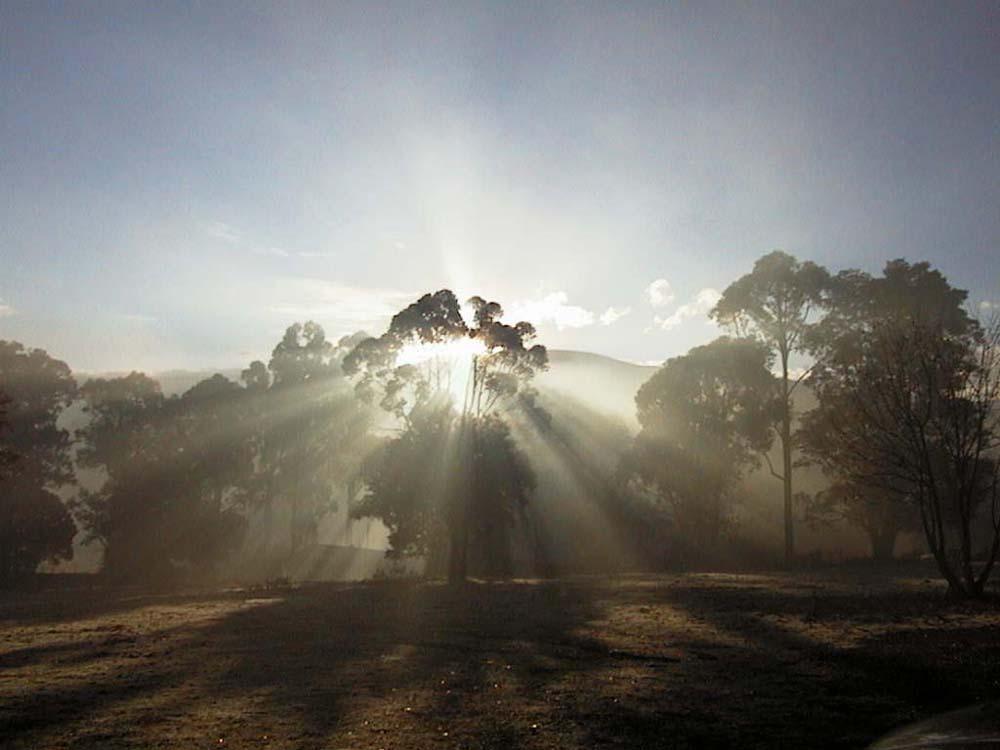
(Photo shows daybreak at Delderfield, Marysville, in country Victoria)


Shortened Names for Boys – 2

28 Sunday Sep 2014

Posted by A.O. in Name Themes and Lists

≈ 2 Comments

Tags

celebrity baby names, famous namesakes, fictional namesakes, Irish names, middle names, modern classic names, name history, name meaning, name popularity, names from television, names of mascots, nicknames, popular names, Scottish names, skateboarding terms, slang terms, surname names, UK name trends, underused modern classics, unisex names, US name trends

Zeke_06_s

Alby
Can be an Anglicised form of the Irish name Ailbhe, a unisex name which is also Anglicised to Alva and Elva. In Ireland particularly, Alby seems to have been used for girls quite frequently. In Australia, Alby is almost always understood as a short form of Albert, and is accepted as a boy’s name: it seems to be more familiar in Australia than in other English-speaking countries. A famous namesake is Albert “Alby” Lowerson, who was awarded the Victoria Cross for bravery during the Battle of Mont St. Quentin on the Western Front during the First World War. Adventure travel film-maker Alby Mangels, who made documentaries in the 1970s and ’80s, is originally from the Netherlands and his birth name is Albertus. Alby was fairly common as both a full name and a nickname in the late 19th century, and is currently having a revival, being around the 200s. It can also be spelled Albie, and this spelling is around the 500s.

Bobby
Pet form of Bob, which is short for Robert; it can also be used as a short form of Roberta, although far more common as a male name. Bobby has been used as an independent name since the 18th century, and is one of those names which seem part of our childhood, as it is such a popular name for characters in books for small children. There’s also the nursery rhyme, Bobby Shafto, and the sweet story of Greyfriars Bobby, the wee Scottish dog who stayed by his master’s grave for years and years. It has a fun meaning in Australia, because in old-fashioned slang, a bobby dazzler is something which is excellent or awesome (it’s probably from Northern English dialect, where bobby meant “well-presented, cheerful”). This year radio host Tim Ross welcomed a son named Bobby Arrow. A bouncy, breezy little name with vintage style, Bobby is around the 300s.

Charlie
Unisex nickname for either Charles or Charlotte. Charlie has been used as an independent name since the 17th century, and as a female name since the 18th century, where it seemed to have a particular usage for girls in Scotland. The big Scottish connection to this name is of course Bonnie Prince Charlie, the Jacobite pretender to the throne, who has remained a figure of romance in some eyes, and appears in Sir Walter Scott’s novel Waverley. It’s interesting that he seems to have inspired the use of Charlie as a girl’s name. There’s tons of famous Charlies, including actors Charlie Chaplin and Charlie Sheen, and musicians Charlie Parker and Charlie Watts, not to mention Charlie Bucket from Charlie and the Chocolate Factory, and Charlie Townsend from Charlie’s Angels. Charlie has charted for boys since the 1950s, and began rising in the 1990s before joining the Top 100 in the early 2000s. It’s currently #20, and fairly stable. As a girl’s name, Charlie joined the charts in the 1990s, and made the Top 100 in 2011. Although it’s not on the Top 100 for girls now, if you add it together with Charli and Charlee, it makes #71.

Freddie
Pet form of Fred, short for Frederick or Frederic, and related names, such as Frederico. It can also be used as a pet form of Alfred, as in the English actor Alfred “Freddie” Highmore, who played Charlie Bucket in Charlie and the Chocolate Factory. It also seems to be used as a nickname to match a surname starting with F, such as with English cricketer Andrew “Freddie” Flintoff, and rugby league player Brad “Freddy” Fittler. One of the most famous namesakes is Freddie Mercury, lead singer of rock band Queen; he was born Farrokh Bulsara, and had used the nickname Freddie since his school days. An independent name since the 18th century, Freddie is very popular in the UK, yet doesn’t chart at all here as a full name; neither does the variant spelling Freddy. It’s a bit puzzling since we’re fine with so many other boyish short forms, but Freddie is an insouciant charmer that I feel will win a few hearts yet.

Jimmy
Pet form of Jim, short for James. Jimmy has been used as an independent name since the 18th century, and is a more modern form of the medieval Jemmy. Famous namesakes include American president Jimmy Carter, actor Jimmy Stewart, rock star Jimmy Page, singer Jimmy Buffet, comedy hosts Jimmy Kimmel and Jimmy Fallon, and comedian Jimmy Carr. Musical Australian Jimmys include Jimmy Chi, who wrote the Aboriginal musical Bran Nue Day, Jimmy Barnes, lead singer of rock band Cold Chisel, and Aboriginal singer and actor Jimmy Little. Jimmy entered the charts in the 1950s at #344, and peaked in the 1990s at #233. It hit its lowest point in 2009 at #474, and since then seems to have been climbing steeply, although still around the 200s. This is a cheery underused modern classic that still has a touch of Everyboy about it.

Kit
Unisex nickname which can be short for the boy’s name Christopher, or the girl’s name Kitty (a pet form of Katherine). Kit is historically much more common for boys, and as an independent name, dates to the 18th century for both sexes. One of its most famous namesakes is American frontiersman Kit Carson, while British actor Kit Harington plays popular character Jon Snow on Game of Thrones, and British writer Kit Pedler created the Cybermen for Doctor Who. In Australia, Kit Denton was a writer and broadcaster who wrote the novel The Breaker, about Breaker Morant; he is the father of comedian and television host Andrew Denton. Media personality Chrissie Swan welcomed a son named Kit in 2011. A cute meaning is that a kit is a baby animal in many species, including rabbits and foxes, and is the name for a group of pigeons. This is a cool and casual name that works well as either a first or middle name.

Lenny
Traditionally a pet form of Leonard, although these days it is often used as a pet form of the fashionable Lennox. Some famous men named Lenny include rock singer Lenny Kravitz, and comedians Lenny Bruce and Lenny Henry. Australian namesakes include AFL star Lenny Hayes from St Kilda, who just retired this year, NRL player Lenny Magey from the North Queensland Cowboys, crime novelist Lenny Bartulin, and Len “Lenny” Pearce from Justice Crew, who was featured as a celebrity dad on the blog. There are famous Australian female Lennys too – Olympic badminton player Lenny Permana, who was born in Indonesia, and children’s author Lenny Pelling. Lenny has been chosen as a baby name by Australian celebrities AFL footballer Michael Firrito, and comedian Mick Molloy, and is used as a nickname for Lennox by radio host Ryan Fitzgerald and racing driver Jason Bright. A favourite in Australia (France is the only country where it’s more popular), Lenny is around the 100s, and could easily go Top 100.

Monty
Short for names such as Montgomery or Montague; surname names where the Mont- part is from the French for “mountain”. Monty became very well known as the nickname of Field Marshal Bernard Montgomery, who served with distinction in both world wars, but is especially famous as the decorated commander of the successful North African campaign in the Western Desert during World War II; Viscount Montgomery spent part of his childhood in Tasmania. His nickname was the inspiration for the British comedy group Monty Python, who found it amusing, and in their turn, Monty Python inspired the character of Dr Montgomery Montgomery, or Uncle Monty, a snake researcher in A Series of Unfortunate Events. Field Marshal Montgomery is rumoured to be behind the phrase the full monty, meaning “everything, the works, the whole kit and caboodle”, although it may actually refer to a complete suit from tailors Montague Burton (the phrase is familiar from the film, The Full Monty). Very much in line with British trends, Monty is around the 400s.

Ollie
Usually seen as a short form of Oliver, but could be a nickname for Olivia or Olive as well, and is sometimes used as a surname-based nickname, such as Australian composer Ian “Ollie” Olsen. Other famous Australians named Ollie include celebrity chef Ollie Gould, who was named Young Chef of the Year in 2013, and Ollie McGill, who is in the band The Cat Empire. Famous sporting namesakes include Ollie Wines, who plays for Port Adelaide in the AFL, Ollie Hoskins, who plays for the Western Force in Super Rugby, and Ollie Atkins, who used to play for the Waratahs in Super Rugby, and is currently signed with Edinburgh. Ollie has a connection with sports, because in skateboarding, an ollie is an oft-used trick where both rider and board jump into the air without the use of hands. It is named after its originator, Alan Gelfand, whose nickname is Ollie. An Australian sporting connection is Olly the Kookaburra, one of the mascots of the 2000 Sydney Olympics – his name was short for Olympic, and he symbolised the Olympic spirit. Ollie is around the 300s, and is in line with British trends, while having a strong Australian feel.

Zeke
Short for Ezekiel, a Hebrew name meaning “God strengthens”; it has more history of use in the United States, where the name Ezekiel has been far more common. It’s well known from popular culture, such as the Big Bad Wolf in Disney cartoons, skater boy Zeke Falcone from Disney sitcom Zeke and Luther, and baking-obsessed basketballer Zeke Baylor in High School Musical. Zeke is the name of the farmhand in The Wizard of Oz movie, who is also in the role the Cowardly Lion (this might explain why some people see Zeke as a “cowpoke” name). Famous Australian namesakes include former Olympic snowboarder Zeke Steggall, the brother of alpine ski champion Zali Steggall, and DJ Zeke Ugle. Zeke was also the nickname of Corporal Roy Mundine, an Indigenous soldier who served with distinction in the Vietnam War, and was severely wounded in the line of duty. Fictional namesakes include the teenage boy whose drawings on his magic electronic pad come to life on cartoon Zeke’s Pad, and the character Zeke Kinski from soap opera Neighbours. This is a cool alternative to Zack in line with American name trends, and is around the 400s.

POLL RESULTS
The public’s favourite names were Charlie, Kit and Alby, and their least favourite were Jimmy, Lenny and Bobby.

(Picture shows Zeke from Zeke’s Pad, a Canada-Australia co-produced animated TV show)

Diminutive Names for Girls – 2

21 Sunday Sep 2014

Posted by A.O. in Name Themes and Lists

≈ 6 Comments

Tags

aristocratic names, celebrity baby names, famous namesakes, fictional namesakes, French names, Greek names, international name trends, Italian names, mythological names, name history, name meaning, name popularity, name trends, names from movies, names from television, names of mascots, popular names, retro names, royal names, saints names, Spanish names, unisex names

907393-underbelly-razor

It’s been more than a year since we had a list of short form names, and as this is a huge growth area, it’s time for another.

Ada
Short form of Adelaide and related names. It has been an independent name since the Middle Ages, and was used by royalty and the nobility; an example is the Ada who was reputedly the sister of Charlemagne. There is also a 7th century St Ada, who was a French nun and abbess. Ada was especially popular during the 19th century, and a famous namesake from this era is (Augusta) Ada King, Countess of Lovelace, a daughter of Lord Byron and his only child born in wedlock – nearly always known as Ada Lovelace. Ada was a gifted mathematician who produced an algorithm designed to be used by a machine; in effect, the first computer program. A famous contemporary example is Australian actress Ada Nicomedou. Ada was #40 in the 1900s, and left the Top 100 in the 1920s; it was off the charts by the 1950s. Ada made a comeback in the 1990s at #845, and is currently around the 300s. Fitting in perfectly with the trend for short simple names like Ava, and for traditional old-fashioned names like Elsie, this is a hip retro short form that not too many people are using.

Bella
Short form of Isabella, and other names ending in -bella, such as Annabella or Arabella. However, many people connect it to the Italian word for “beautiful”, and understand it that way. Bella has been an independent name since the Middle Ages, and has had particular use by Jewish families from Russia and Central Europe – two examples are American feminist Bella Abzug, and writer Bella Rosenfeld, the wife of Russian-French artist Marc Chagall. A famous Australian namesake is actress Bella Heathcote, best known for her role on Neighbours a few years ago. Bella first joined the charts in the 1990s at #541, rising on the heels of Isabella, which began its impressive ascent in the 1980s. Bella entered the Top 100 in 2002, debuting at #99; it peaked in 2010 at #41, and is currently #48 nationally. Like Isabella, Bella’s success is often attributed to the Twilight series, although as you can see, it was rising and even popular before the first novel was released in 2005. Stephenie Meyer’s Bella Swan (an irritating character name because it describes the story’s outcome) probably did help though, if only by increasing visibility.

Demi
Short form of the Greek name Demetria, the feminine form of Demetrius, which is derived from the name of the agricultural goddess Demeter. The goddess’ name is often translated as “earth mother” or “barley mother”. Demi is also sometimes connected with the French word demi, meaning “half”, to suggest “small” (as in half-pint). This name has a big dose of star power, thanks to Hollywood actress Demi Moore, and from a generation younger, pop singer and actress Demteria “Demi” Lovato. The name is usually pronounced duh-MEE, but English-speakers sometimes prefer it to be said to rhyme with Emmie. Demi is around the 500s in Australia, and is rising in the US, but falling in the UK, so international trends are at odds on this one.

Ellie
Short form of any name starting with El-, such as Eleanor, Ellen, Elizabeth, or Eloise, and long used as an independent name. It is well known from British pop singer Elena “Ellie” Goulding, and a favourite in the world of fiction. Fictional namesakes include the dainty little girl in The Water Babies, Ellie Linton, heroine of John Marsden’s Tomorrow When the War Began, Eleanor “Ellie” Arroway, brainy heroine of Carl Sagan’s Contact, adventurous Ellie Frederickson from Up, the woolly mammoth from the Ice Age series, and strong matriarch Eleanor “Miss Ellie” Ewing, from Dallas. Ellie joined the charts in the 1980s at #349, and was in the Top 100 as early as 1993, at #98. It managed to get in again a decade later in 2003, at #72, and has remained fairly stable in the bottom half of the Top 100 ever since. Currently it is #56. Ellie fits in perfectly with popular names like Ella, and is well-used without being overly common or rising alarmingly.

Frankie
Unisex nickname that in the case of boys is a pet form of Francis, Francesco, Francisco, Frank, or Franklin, and in the case of girls, of Frances, Francesca, Francisca, or Francine. Famous male Frankies include American crooner Frankie Valli, British comedian Frankie Howerd, American actor Frankie Muniz, who played the title role in Malcolm in the Middle, and Australian kick-boxer Frankie Georgi. A famous female Frankie is British pop singer Frankie Sandford, and the name has been chosen for their daughters by several celebrities, including Drew Barrymore, and in Australia by rugby league star Johnathan Thurston, weather presenter Sara Cumming, and news presenter Rebecca Morse. In the US, Frankie only charts for boys, while in the UK, it charts for both sexes, but is only popular as a boy’s name. In Australia, Frankie is a unisex name, and significantly more common for girls. The reason for its increasingly feminine image here is no doubt because of the hip women’s fashion magazine, frankie.

Gigi
French nickname for any name with a G sound, such as Georgine or Ghislaine. Its most famous namesake is the charming Parisian schoolgirl in Colette’s 1942 novella, Gigi, who is being trained to be a courtesan by her family. Their plans go awry when the gamine Gigi attracts a wealthy older man, and becomes his wife instead of his mistress. It has been turned into a musical and a couple of films, including the 1958 Hollywood production starring Leslie Caron as Gigi, which is surprisingly faithful to the book, except for discreetly upping Gigi’s age from twelve to around sixteen, and adding songs like Thank Heavens For Little Girls. Gigi’s name is short for Gilberte, by the way. In Italy it is a male nickname, short for Luigi. An Australian with this name is actress Gigi Edgely, who has starred in Farscape. A flirty French Lolita, Gigi is currently a hip girl’s name in the style of Coco. It was recently chosen as a celebrity baby name by swimmer Geoff Huegill.

Millie
Short for any name with a mil sound, such as Millicent, Mildred, Camilla, Emilia, or Amelia, and is also spelled Milly. You can see Millie as a vintage charmer, all bonnets and hoop skirts, but there’s also something a little Swinging Sixties about it, thanks to My Boy Lollipop, sung by Millie Small, and the 1967 film Thoroughly Modern Millie, starring Julie Andrews. It has a very Australian connection as Millie the Echidna was one of the official mascots for the Sydney Olympics (her name is short for Millenium). Millie was #196 in the 1900s, and left the charts in the 1930s. It returned in the 1990s at #501, had a definite upsurge after the 2000 Olympics, and in 2011 was only just outside the Top 100, its highest point ever gained. It fits in perfectly with popular names like Milla and Mila, and is right on trend for sprightly vintage names, so it feels as if popularity must be just around the corner for suddenly modern-again Millie.

Stevie
Unisex nickname for either the boys’ name Stephen or Steven, or the girl’s name Stephanie; these are Greek in origin, and mean “crown”. Stevie has been an independent name since the Middle Ages, and although you might think of it as very modern for girls, it’s been a female name since the 18th century. Famous male Stevies include Stevie Wonder, Stevie Ray Vaughan, and Australia’s first international pop star, Stevie Wright. A famous female one is English novelist and confessional poet Stevie Smith, whose real name was Florence, and who gained her nickname from a perceived resemblance to jockey Steve Donaghue. However, the most well known female example is singer-songwriter Stevie Nicks, and it is no doubt her popularity in the 1970s and 1980s which made Stevie seem more feminine. In Australia, Stevie can be only be found in current use as a girl’s name, and it’s around the 300s. While writing this, I realised what a musical name Stevie is – look at all those namesakes from the world of pop and rock!

Tess
Short form of Teresa or Theresa, a rather mysterious name, because the various meanings suggested for it are always Greek, but the name itself is of Spanish origin. Nobody has been able to explain this to my satisfaction. Tess has a very famous literary namesake, the beautiful, tormented title character of Thomas Hardy’s rural tragedy, Tess of the D’Urbervilles. Tess Harding is the celebrated journalist trying to cope with marriage as well as a career in rom-com classic Woman of the Year (1941), with Tess played by Katharine Hepburn in her first outing with Spencer Tracy. Another Tracy connection is the adorably-named Tess Trueheart, eventual wife of comic strip detective, Dick Tracy. Tess Mcleod is one of the sisters in Australian drama series McLeod’s Daughters, played by the popular Bridie Carter. Last year comedian Dave Hughes welcomed a daughter named Tess Clementine, voted the most popular celebrity baby name of 2013. Tess joined the charts in the 1980s at #352, and peaked in the early 2000s at #209. Simple yet strong, pert and practical, Tess is a short and stylish choice.

Tilly
Short for Matilda, this can also be spelled Tillie. Apart from being a short form of a patriotic name, Tilly has a notorious namesake in Australia. Tilly Devine was an infamous figure of the Sydney underworld between the two world wars, who became known first as a prostitute, then as a brothel madam and gang member. Her wealth was legendary – she owned real estate, luxury cars, gold and diamonds, threw lavish parties, and always travelled first class. Operating out of Woolloomooloo, Tilly was known as the “Queen of the ‘Loo”, and in the 1953 travelled to London for the coronation of Queen Elizabeth II. Tilly’s story, and her violent gang war with rival vice queen Kate Leigh, was covered in Channel Nine’s drama series, Underbelly: Razor. Tilly is around the 100s in Australia, so not rare at all, while Tillie does not chart. It is something of a puzzle as to why Millie is preferred to Milly, but Tilly preferred to Tillie. Tilly is a sweet and spunky short form in line with British name trends, with an Australian identity all its own.

Thank you to Brooke for suggesting the name Millie be featured on Waltzing More Than Matilda.

POLL RESULTS

The public’s favourite names were Ada, Tess and Millie, and their least favourite were Frankie, Stevie and Bella.

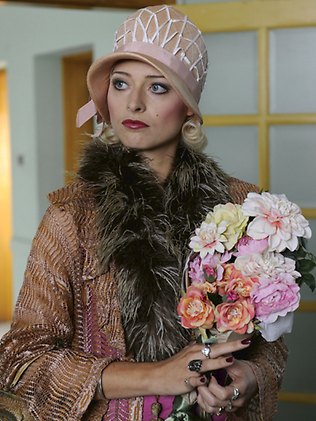
(Photo shows New Zealand actress Chelsie Preston Crayford as Tilly Devine in Underbelly: Razor)

Famous Name: Bruce

17 Wednesday Sep 2014

Posted by A.O. in Famous Names

≈ 7 Comments

Tags

aristocratic surnames, classic names, famous namesakes, fictional namesakes, locational names, name history, name meaning, name popularity, names from songs, names from television, Norman-French names, popular culture, royal names, Scottish names, surname names, UK popularity, US popularity

288848_1250988033522_full

When the name Acacia was featured for Wattle Day, I mentioned that Monty Python made gentle fun of our national flower with their Bruces Sketch, where all the philosophy faculty at the (fictional) University of Woolloomooloo are named Bruce. This seems to be the origin of the notion that Bruce is a particularly Australian name.

Barry Humphries has said that the inspiration for the Bruces Sketch was his Barry Mackenzie character, who began life as a comic strip in Private Eye. Barry Humphries’ television series, The Barry Humphries Scandals, was a precursor to Monty Python, and Eric Idle has cited Humphries as one of his comedy influences.

It’s rumoured, not implausibly, that Humphries himself suggested the name Bruce as an Australian signifier, either directly or indirectly. The name Bruce peaked in Australia in the 1930s, and in Britain slightly later, in the 1940s. Even at its height in the UK, it was only around the bottom of the Top 100, so it wasn’t nearly as common there.

Humphries was born in 1934, so had peers called Bruce. The most obvious example is Australian director Bruce Beresford (born 1940), who directed the Barry Mackenzie films. Like Barry Humphries, Bruce went to England in search of career opportunities, but was unable to break into the British film industry, and found success at home, with movies like Breaker Morant and Puberty Blues, and in North America with Driving Miss Daisy, and Black Robe.

The connection between Barry and Bruce continued when Humphries took the role of a great white shark named Bruce in the animated film, Finding Nemo. The American film-makers named Bruce, primarily not as an Australian reference, but after the shark in Jaws, whose models were all called Bruce after Steven Spielberg’s lawyer. Bruce the Shark does have an Australian accent though, and uses ockerisms like “Good on ya, mate!”.

From the United States, the name Bruce gained a different stereotype, being associated with homosexuality. The reasons are unclear, but one of the most popular theories is that it’s connected to the campy Batman television shows of the 1960s, as Batman’s real name is Bruce Wayne. Another is that it is from the 1960s parody song Big Bruce, where Bruce is a camp hairdresser.

Apart from these reasons, it does seem that the “tough guy” names of one generation are often seen as effeminate, dorky, or otherwise laughable by the next. Something to think about should you be considering one of today’s rugged baby names, such as Axel, Blade, Diesel, or Rowdy.

Bruce is a Scottish surname of Norman-French origin. The Clan Bruce are from Kincardine on the Firth of Forth in Scotland, and trace their origins from the French de Brus or de Bruis, coming from Breux in Normandy (now Brix), sometimes said to mean “the willow lands”. This history and etymology is now considered doubtful, due to lack of evidence.

The first of the family on record to come to Britain was Robert de Brus, who accompanied King Henry I there after the Battle of Tinchbray in 1106. He was granted large tracts of land in Yorkshire, and named 1st Lord of Annandale by King David I of Scotland in 1124. A family legend says that the first of their line was Robert de Brus, who came over with William the Conqueror but this is more wishful thinking than fact.

Of course the most famous member of Clan Bruce was Robert the Bruce, King of the Scots from 1306 to 1329, claiming royal blood as great-great-great-great grandson of David I. One of the most famous warriors of his generation, he led Scotland during the Wars of Scottish Independence against England. He fought successfully during his reign to regain Scotland’s place as an independent nation, with a great victory at the Battle of Bannockburn. Today he is remembered in Scotland as a national hero.

According to a popular legend, while on the run from the English, Robert the Bruce took shelter in a cave. Here he whiled away the lonely hours watching a spider trying to connect one area of the cave’s roof to another using its web. Each time the spider would fail, but kept trying until at last it succeeded Inspired by the plucky little arachnid, Robert the Bruce returned to defeat the English, winning more supporters, and eventual victory. If you ever read this story as a child, it probably ended by saying the moral was :”If at first you don’t succeed, try, try, and try again”.

This story was first told by Sir Walter Scott in in his Tales of a Grandfather: Being Stories of the History of Scotland (1828), and it is believed to have been adapted from a story about Sir James Douglas, Robert the Bruce’s ally and lieutenant. However, the story is very old, being similar to Jewish tales about King David, and Persian stories about Tamerlane and an ant. Apparently people love the idea of beleaguered rulers being inspired by small creatures with exoskeletons.

Robert the Bruce was the high point of the Clan Bruce, although Robert’s son David also became King of Scotland. Various Bruces did historically worthy things, and one of the most famous is Thomas Bruce, 7th Earl of Elgin, who was ambassador to the Ottoman Empire in the 18th and 19th centuries. He spent most of his fortune taking sculptures from the Parthenon in Athens, which was falling into ruins: today they are known as the Elgin Marbles, and on display in the British Museum.

Bruce has been used as a first name since the 17th century, and was used in both England and Scotland. Although it has plenty of history, Bruce didn’t become a huge success as a boy’s name until the 20th century, which gives it a rather modern feel.

In Australia, Bruce is a classic name which has never left the charts. It was #85 in the 1900s, and peaked in the 1930s at #22. It didn’t leave the Top 100 until the 1970s – perhaps Monty Python wasn’t a help to it, or perhaps after many decades its time of popularity was up. Although uncommon, Bruce has remained stable for years around the 400-500s.

So how Australian is the name Bruce really? Well, apart from the Monty Python sketch (which is, you know, fiction), it peaked earlier here than elsewhere, and peaked much higher than in Britain. However, it peaked only a little higher than in the US, where it is also a classic, and peaked at #25 during the 1950s. Its current popularity in Australia is little different to that in the UK and US, so possibly not quite as Australian as you might have thought!

POLL RESULTS
Bruce received an approval rating of 32%. People saw the name Bruce as too dated (25%), too stereotypically ocker (19%), and too boring (14%). However, 8% of people thought it was strong and handsome. Only one person thought the name Bruce was sexy.

(Photo shows Bruce from Finding Nemo)

Royal Baby Meltdown, Name Discrimination, and Other Name Stories in the News

11 Thursday Sep 2014

Posted by A.O. in Names in the News

≈ 1 Comment

Tags

bogan names, classic baby names, creative names, Essential Baby, famous namesakes, Kidspot, locational names, name studies, royal baby names

ImageResizer

Royal Baby 2.0
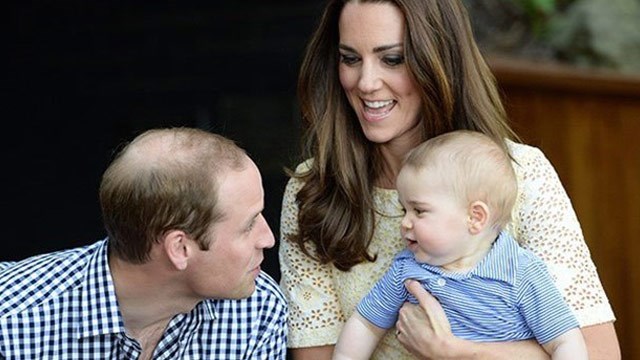
Yes, it’s another baby expected by the Duke and Duchess of Cambridge, due in April next year. The Internet goes wild, bookies make billions, name bloggers all collapse from guessing until our brains explode. So far, punters are gunning for a brown-haired girl, and the most popular names for the prince or princess, younger sibling to George, are James for a boy, and Elizabeth for a girl.

I am very sceptical of an Elizabeth, as the queen has apparently made it clear she is not interested in having a namesake (royal babies with Elizabeth as their middle name are supposedly named after the queen’s mother, not Elizabeth II). To me, George and James are too similar-sounding as brothers, and surely the heir to the throne needs a distinctive name, if only for publicity purposes? However, the Duke and Duchess may not agree with my name advice.

You can read plenty of baby name predictions online (most of them are just recycling their guesses for Prince George, with the name George removed). I won’t be doing anything in regard to the name until much closer to the royal birth, as I think it is far too early. They aren’t even at the twelve-week mark yet, and the duchess is ill with severe morning sickness. Give them some space, people!

Last time, my bizarre method of tracking royal baby names turned out to be unexpectedly successful (for a boy, anyway; it might have been totally wrong if George had been a girl), but next time we might try something completely different, and see how that goes.

Utter Drivel Bogan
Kidspot have brought out a rather cringe-making article on “bogan baby names”, which they pretend is all in good fun.

Clare asked on her Scoop page whether this was as controversial or potentially offensive as calling names “chavvy”? I would say, yes Clare, it is: it’s like an article about chavvy names, redneck names, ghetto names, and the like. Despite protestations to the contrary, articles like these are intended to be offensive, and they certainly seem mean-spirited.

Apart from being copied from other sources, the article has some real clangers, such as saying Zaiden is “made up”, when it’s an elaboration of the Arabic name Zaid. Or listing the name Princ’ess, which isn’t even allowed in Australia.

Jorja Fights Back!
One person who took exception to Kidspot’s article was Jorja Orreal, whose name happened to feature on the list of “bogan names”. She loves her name, and her mother says it is not bogan at all, but very pretty. Jorja was named thus because her mum noticed that best-selling author Sidney Sheldon dedicated several of his novels to his wife at the time, actress Jorja Curtright. As she points out, how could the man behind I Dream of Jeannie possibly be associated with something in poor taste?

Jorja believes her name actually looks like a name, rather than Georgia, which is also a country and an American state, and seems more feminine. Unfortunately, she then loses every bit of my sympathy she might have mustered by going on to trash the names that she thinks are really bogan. Thanks to her intervention, my comments on the Kidspot article were much less severe.

Reach the Top of Your Game with a Creative Name
Almost everyone agrees: “creative” names are a terrible idea. Received wisdom is that it’s better to be a Chloe than a Kloey, James looks more professional than Jaymezz, and a traditional name like Elizabeth or William will gain greater esteem than a modern concoction like Neveah or Latrell. Essential Baby examines this idea by seeing if it stands up in the modern workplace.

In fact, there’s a lot to be said for “creative” names, perhaps most of all that they tend to be memorable, and can also be a great ice-breaker. Interviews with a couple of creatively-named people in business demonstrate that their names have been an asset to their careers. It seemed to me that their attitude to their names was really important, because they expected people to have trouble spelling their names, and were relaxed about the idea that people might find them amusing. Could those people skills have been gained through constant negotiations with others over their names?

Paul Barbaro, a spokesman from a recruitment agency, believes the idea that a “classic” baby name has prestige is an old and outdated one, and that people today are much less judgemental, being used to a wide variety of names (someone alert Kidspot to this valuable information!). He suggests that unusual names are now the norm, and that it can be helpful to have a name that is a little different, or globally recognised.

However, language expert Roly Sussex, from the University of Queensland, appears to be unconvinced. He can’t think of many people in public life with an unusual name, and thinks it would be far better to have a name that everyone knows how to spell and pronounce. But perhaps his attitudes really are outdated.

Should You Change Your “Ethnic” Name?
Roly Sussex thought that people with ethnic names were more likely to be successful if they anglicised their names, or used a nickname.

While I’m not sure if it will help you become successful in the long-term, the sad news is that it will probably help you to get a foot in the door. Researchers from the Australian National University submitted 4000 fictitious CVs for entry level jobs, and found that people with a Middle Eastern name need to submit 64% more applications that one with an Anglo-Saxon name to gain a job interview, while those with Chinese names need to submit 68% more applications, Indigenous names 35% more, and Italian names 12% more.

The study also showed that name discrimination was not evenly applied, and there could be differences when other factors were changed. For example, men of all minority ethnic groupings found it harder to get interviews than women; waitstaff and data entry jobs were the most likely to discriminate against ethnic minority males.

The city the person is in makes a difference too, with Sydney the most biased city against people with ethnic names – a Chinese person in Brisbane must submit 57% more applications, while in Sydney, it is a whopping 92% more. There was no evidence of discrimination against Italians in Melbourne, which has a relatively high Italian population.

Middle Eastern job seekers fared better when they applied for jobs with a non-Anglo employer or in ethnically diverse neighbourhoods. Interestingly, while a Chinese employer was much more likely to give someone with a Chinese name a callback, Italian employers were significantly less likely to offer someone with an Italian name an interview!

The entry level job that appeared to have the least amount of discrimination was customer service: your name doesn’t seem to make much difference when it comes to getting an interview in this field.

And there is some good news to go along with this rather depressing research. A study conducted by the University of Melbourne this year found that ethnic minority jobseekers were much more discriminated against during the application process than they were once they had actually secured a position.

Some people who did use an English name or an English nickname to find work felt comfortable enough to revert back to their real name in the workplace, and some were even encouraged to do so by their fellow colleagues. So if you write Rick on your resume, it doesn’t mean you can’t become Rashid again once you have been successful in your interview.

Popular Here, There and Everywhere: Baby Names That Travel Well

07 Sunday Sep 2014

Posted by A.O. in Naming Issues

≈ 8 Comments

Tags

Arabic names, Behind the Name, Essential Baby, famous namesakes, international name trends, Nancy's Baby Names, popular names, Russian names, short forms, Turkish names

images

Happy Father’s Day! Because dads mean the world to us, today we’ll be looking at names that are popular in many parts of the world.

While some people shy away from popular names, there’s a lot to be said for having a name that is familiar in many countries. It makes travel and working overseas that little bit easier, and if you have a particular cultural background, it’s nice to know relatives in your country of origin will be easily able to understand your child’s name. Even if your child never leaves Australia’s shores, it’s a global village, and they will most likely meet, study, and work with people who have come here from other countries.

To me, a name with high international recognition needed to be popular in as many regions as possible, so that as a mimimum, it needed to be Top 100 in the English-speaking countries of Australia, New Zealand, England/Wales, Scotland, Northern Ireland, Ireland, Canada, and the USA. It also needed to be popular in Western Europe, Eastern Europe, and Northern Europe (Scandinavia).

I’ve included common and popular international variants of names, as long as I thought an English-speaker could easily identify them, and short forms as well. You need to remember that even in cases where the name is spelled identically, it probably won’t be said in exactly the same way, but most people are fine with that. In many countries, my name is said AHN-ah, rather than AN-a, and to me this is not only perfectly comprehensible, but makes my name sound warmer and more exotic.

International name data came from Behind the Name, Essential Baby, and Nancy’s Baby Names.

BOYS

Alexander/Alexandar/Aleksander
I have treated these variants as the same name, because certain countries regard them so in their popularity charts. This means that Alexander is popular in the English-speaking world, as well as in Western Europe, including Austria and the Netherlands. It is a favourite in Eastern Europe, solidly popular across most of Scandinavia, and a familiar name in South America. Alexander is Top 10 in Belarus, Bulgaria, Germany, Iceland, Malta, Norway, Scotland, Sweden, and the USA, and most popular in Russia, where it is #2. So far so good, but what makes Alexander such an international winner is the widespread popularity of its short forms and variants. Just look at Alex, which is popular in Australia, Belgium, Bulgaria, Czech Republic, England/Wales, Hungary, Ireland, New Zealand, Northern Ireland, Scotland, Slovenia, South America, Spain, and Sweden, and Top 10 in Armenia and Catalonia, while Xander is popular in Belgium. Alejandro is popular in Catalonia and South America, and Top 10 in Spain. Alexandre is popular in Belgium and France, and Alessandro Top 10 in Italy and Switzerland. Further east, Alexandru is Top 10 in Moldova, while Iskander and Eskandar are familiar names in Iran and Arabic countries. Credit Alexander the Great, who conquered the known world more than 2000 years ago, and whose name is famous in both east and west.

Daniel
As well as being popular in the English-speaking world, all-rounder Daniel is popular right across Europe, where it performs well in Eastern Europe, and is Top 100 in every Scandinavian country. It’s also a popular name in South America. Daniel is Top 10 in Iceland, Ireland, Latvia, Moldova, Northern Ireland, Russia, Scotland, South America, and the USA, and is the #1 name in Spain. Short form Danny is popular in Ireland and Northern Ireland, Danijel is popular in Croatia, while Daniil, the Russian form, is Top 10 in Belarus.

David
David is popular in the English-speaking world, and widely across Western Europe, including Belgium, France, and the Netherlands. It also does well in Eastern Europe, and is popular in two Scandinavian countries, Norway and Sweden. Furthermore, it is a popular name in South America. David is Top 10 in Austria, Croatia, Hungary, Spain, and Switzerland, and most popular in Moldova and Brazil, making #2 in two hemispheres. When it comes to international variants, Dawid is popular in Poland, Davide is Top 10 in Italy, while Davit is the #1 name in Armenia.

Adam
Being the oldest name in the Book does give you widespread recognisability, which is why you can find Adam fairly evenly through the English-speaking world, and in many countries of Western, Eastern, and Northern Europe. Adam is Top 10 in Belgium, the Czech Republic, Hungary, and Ireland, and is most popular in Malaysia at #3. The Turkish form Adem is popular in Turkey, and in Bosnia and Herzegovina.

Samuel
Samuel is popular in the English-speaking, and widely across Western Europe, including Austria, France, Malta, the Netherlands, and Spain. In Eastern Europe it’s popular in the Cezch Republic and Hungary, while in Scandinavia Samuel is popular in Finland, Norway, and Sweden. Samuel is Top 10 in New Zealand and South America as a whole, and most popular in Canada, where it is #5. Short form Sam is popular in Belgium, Ireland, the Netherlands, New Zealand, Northern Ireland, Scotland, and Sweden. Of its international variants, Samuele is Top 10 in Switzerland, and Samvel is Top 10 in Armenia.

Runners-up: Benjamin, Oliver, and Liam.

GIRLS

Sophia/Sofia
I have treated Sophia and Sofia as one name, since several countries do so when calculating their most popular names – including Australia. Sophia/Sofia is the queen of international names; poular around the globe, and familiar in a host of countries. As well as the English-speaking world, it is popular right across Europe, the whole of South America, and in Malaysia as well. Sophia/Sofia is a Top 10 name in Australia, Canada, Chile, Finland, Germany, Malaysia, Moldova, Norway, Spain, and Switzerland, and is the #1 name in Brazil, Denmark, Italy, Latvia, Russia, South America as a whole, and the USA. Furthermore, it has several international variants, such as Zsofia, which is Top 10 in Hungary, and Zofia, which is Top 10 in Poland. It sounds similar to the unrelated Arabic name Saafiya, giving it a very high recognition factor.

Emma
Emma is popular in the English-speaking world, and across the whole of Europe, including France, Germany, Italy, and Spain. It charts in several Eastern European countries and is Top 100 in every part of Scandinavia. It is also highly popular in South America. Emma is Top 10 in Austria, Canada, Denmark, Iceland, Ireland, Italy, Malta, South America as a whole, and the USA, and is # 1 in Belgium, Finland, France, Norway, and Switzerland. Its international variant Ema, often pronounced exactly the same way as Emma, is popular in Bosnia and Herzegovina, and the Czech Republic, and Top 10 in Croatia and Slovenia.

Anna
Popular in the English-speaking world, and in Western Europe, where it charts in France, Germany, Italy, the Netherlands, and Spain. Anna also does well in Scandinavia, and is a particular favourite in Eastern Europe. Top 10 in Armenia, Belarus, the Czech Republic, Germany, Hungary, Iceland, Latvia, and Russia, it makes #1 in Austria. The international variant Ana is popular in Bosnia and Herzegovina, Catalonia, Spain, and South America as a whole, and is Top 10 in Croatia and Slovenia. The many international variants and pet forms give this a high recognition factor, and there are several similar-sounding names in Arabic and Asian languages as well.

Ella
Ella is popular in the English-speaking world, and in Europe, including Austria, Belgium, the Netherlands, Croatia, the Czech Republic, Slovenia and Demark. It is Top 10 in Canada, Finland, Ireland, Northern Ireland, New Zealand, Norway, Scotland, and Sweden, and #1 in Malta. The similar Ela, often pronounced the same way, is popular in Bosnia and Herzegovina, Croatia, and Slovenia, as well in Turkey, where it means “hazel-coloured, honey-brown”.

Eva
Eva is popular in the English-speaking world, and in several European countries, including Austria, France, the Netherlands, Spain, Croatia, Iceland, and Norway. It is a Top 10 name in Northern Ireland and Switzerland, and most popular in Slovenia, at #2.

Runners-up: Mia, Olivia, and Sarah/Sara

Looking at the names, you can see certain themes at work. The big tip to finding an internationally popular girls name seems to be something short and simple that is easily pronounced in a variety of languages and accents. For boys’ names, the Bible is a unifying factor. In her recent interview at Baby Names from the Bible, Clare noted that one of the appealing things about biblical names is that so many people around the world share in a tradition of names handed down for thousands of years.

POLL RESULTS: People’s favourite international names were Alexander and Anna. Alexander received more than 50% of the vote, while Anna received more than 30% of the vote.

Famous Name: Abigail

27 Wednesday Aug 2014

Posted by A.O. in Famous Names

≈ 2 Comments

Tags

Baby Center Australia, Biblical names, famous namesakes, hebrew names, modern classics, name history, name meaning, name popularity, name trends, nicknames, popular names

240445686_2a7e0eaeb7

This month marks 37 years since the soap opera Number 96 left Australian television. It was wildly popular in the 1970s, and one of the country’s most controversial TV shows, featuring nudity and sex scenes, and covering topics such as racism, drug use, rape, adultery, and homosexuality. It was the world’s first TV show to depict a long-term gay male relationship as normal and a “non-issue”.

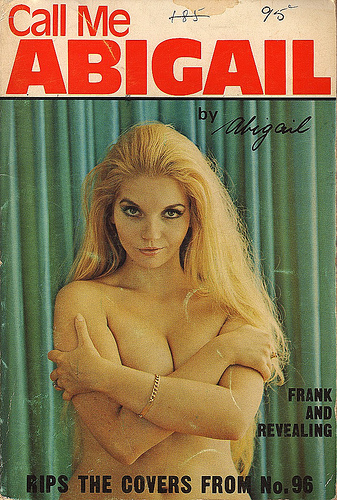
All the cast of Number 96 became household names, and one of its biggest drawcards was actress Abigail Rogan, who was originally from England, and always known by just her first name. Sultry, blonde, and curvaceous, she was Australia’s #1 sex symbol of the 1970s. She left the show in 1973, and although her acting career lasted another twenty years, she was never again the big star that Number 96 made her.

Having recently covered the classic children’s novel Playing Beatie Bow in the Girls Name from Australian Children’s Literature list, you might remember the main character was named Lynette, but chose a new name for herself. Because her grandmother says she looks like “a little witch”, she asks her mother to suggest “an old witch name” for her, and eventually her mum says Abigail, which is accepted. Her mother reacts with horror, saying Abigail is “so plain, so knobbly, so … so awful”.

Playing Beatie Bow was published in 1980, and the story takes place in 1973, so it seems strange Abigail is seen as a plain, knobbly, awful name suitable for an old witch. Presumably the “witch” comment is because of Abigail Williams in Arthur Miller’s play The Crucible, but the actress Abigail, in the top-rating TV show of the day, had given it a sex kitten image by 1973. Even today, I sometimes hear older people say that Abigail is “too sexy” a name for a little girl.

In the Old Testament, Abigail was the beautiful wife of Nabal, a wealthy but surly man who owned land and livestock around the town of Carmel in Judea. At the time, David, who was destined to be king, was living in the wilderness with a band of men. They had all been outlawed by King Saul, and provided protection to the local shepherds.

During the festivities surrounding the sheep shearing season, David sent a small group of men to Nabal to remind him that his profits from the wool trade were so great partly because of the protection they had been giving his shepherds, along with many fine compliments as to Nabal’s nobility and high lineage, and asking for provisions. Nabal didn’t feel like ponying up the protection food to the Outlaw Mafia, and sent back an extremely rude reply.

Uh oh. Nobody insults Don David, the Sheep Father! Seeing things were going to get sticky, one of David’s men privately saw Nabal’s wife Abigail, telling her of the situation, and explaining what a great job they’d been doing protecting the shepherds (for food out of the kindness of their hearts ). Being not only beautiful, but also intelligent, Abigail saw what a stupendous goof Nabal had made.

While David was on the march with 400 armed men, ready to give Nabal what for, Abigail went to meet him with a retinue of servants laden with provisions. She pleaded with David to accept the gifts she had brought with her, asking that there be no bloodshed, offering to take the blame for Nabal’s actions on herself, and telling David that God would make his dynasty long-lasting, and that David was both sinless, and divinely protected.

Because of her intervention, David realised he was about to commit a terrible deed, and sent Abigail home with many blessings for her advice. Abigail did not tell Nabal what she had done until the following day, as Nabal had been carousing a little too heavily at the sheep-shearing festival to be able to listen. When she did tell him the news, the shock (or the carousing) gave him a heart attack or a stroke, and he died ten days later.

When David heard about Nabal’s death, he realised that God had struck him dead in punishment, and asked Abigail to marry him. She replied by bowing to him with her face on the floor and saying, “Let your handmaid be a servant to wash the feet of the servants of my lord”. Let’s hope he didn’t take that literally; I feel a simple “Yes please that will be lovely” would have sufficed. Because she called herself a handmaid, abigail became a common term for a waiting woman, in use from around the 17th century to the early 20th century.

The Bible praises Abigail for her beauty and brains, and she is seen as a prophet because she recognised David as a future king. She was certainly very brave in confronting a vengeful man leading his own personal army, and a skilled diplomat who had a way with words (a necessary knack for the wife of a grouch like Nabal). Abigail’s name also has a beautiful meaning: it’s from the Hebrew avi (“father”), and gil (“joy”), and can be translated as “father’s joy”.

Abigail first joined the Australian charts in the 1960s, debuting at #652. It rose in the 1970s (a boost from the actress?), then fell to #686 in the 1980s, its lowest point. It began rising steeply in the 1990s, and joined the Top 100 in 2001 at #88. By 2007 it was in the Top 50 at #48, and peaked in 2010 at #24. Currently it is #28 nationally, #28 in New South Wales, #27 in Victoria, #24 in Queensland, #27 in Western Australia, #74 in Tasmania, and #23 in the Australian Capital Territory.

Gail, a short form of Abigail, was on the charts from the 1930s to the 1980s, peaking in the 1950s at #26. However, it is the Ab- shortenings which have been successful more recently, as Abby, Abbie, and Abbey all began charting in the 1980s. Abbey reached highest, rising steeply to peak in the early 2000s at #39, while Abby peaked at the same time at the more modest #75 (but Abby is now the more popular). Abbie peaked at #144 in 2009, and if all spellings were added together, Abigail short forms would be in the Top 50, so a lot more popular than they might otherwise seem.

A while back, I picked Abigail as having the potential to eventually reach #1 – with the data I now have at hand, I can see that probably isn’t going to happen, as it has already peaked. Just to confuse things though, Abigail was one of the fastest-rising names at Baby Center Australia last year, so if you’re in that demographic, you may indeed feel there are more baby Abigails around lately.

But isn’t it interesting that Abigail is popular at all? So many of the popular girls names now are soft and fluid, and yet Abigail is quite strong-sounding, perhaps even harsh to some ears, while Abigail is few people’s chosen Bible heroine.

Strangely enough, in some ways Roxanne, which was covered last week and doesn’t chart at all, seems more like the currently fashionable girl’s names than Abigail! Although Abigail is a beautiful and sophisticated choice, I suspect it’s mostly because of Abigail’s cute short forms that it’s managed to become such a favourite.

POLL RESULTS
Abigail received an excellent approval rating of 75%, making it one of the highest-rated names of 2014. People saw the name Abigail as beautiful or pretty (24%), strong and wholesome (18%), and intelligent and professional (17%). However, 8% of people thought it was harsh and ugly. Nobody thought the name Abigail was “too sexy”.

(Picture shows cover of Abigail’s 1973 best-selling “scandalous” autobiography, Call Me Abigail; copies can now sell for hundreds of dollars to collectors)

Boys Names From Australian Children’s Literature

24 Sunday Aug 2014

Posted by A.O. in Name Themes and Lists

≈ 10 Comments

Tags

aristocratic names, aristocratic surnames, Australian slang terms, Biblical names, classic names, colour names, english names, famous namesakes, fictional namesakes, Gaelic names, German names, germanic names, Greek names, hebrew names, Irish names, Latin names, locational names, modern classics, mythological names, name history, name meaning, name popularity, names from songs, names from television, names of businesses, nature names, nicknames, Old Gaelic names, Persian names, plant names, popular names, retro names, royal names, saints names, Scottish names, surname names, tree names, underused classics, unisex names

Cyan Magenta Yellow Black

Darius
Odo Hirsch’s Darius Bell and the Glitter Pool (2009) tells the story of the Bells, a proud family fallen on hard times; plucky youngest son Darius must save the family’s estate. (Name nerd bonus info: Odo is the older form of the German name Otto). Darius is the Latin form of Dareios, the Greek form of the Persian name Dārayavahush, meaning “holding on to goodness”. This name was traditional amongst the Persian kings, and Darius I was known as Darius the Great, as he ruled over the Achaemenid Empire at the height of its power. Darius III was defeated by Alexander the Great, and there are a number of minor princes with the name. Darius is mentioned several times in the Old Testament, so it is a Biblical name as well (nobody is sure which historical Darius it means). Although rare, this name is known in Australia from NRL star Darius Boyd, while there is also a Darius in The Hunger Games trilogy. Darius is a cool-sounding name that might appeal to a broad range of people.

Felix
Terry Denton’s first picture book was Felix and Alexander (1985), about a little boy named Alexander who gets lost, and his toy dog Felix must find him. Felix is a Latin name meaning “fortunate”. It was first given as a nickname to the Roman general and statesman Lucius Cornelius Sulla, a free translation of the Greek nickname he acquired during his military campaigns – Epaphroditos, meaning “beloved of Aphrodite”. The Roman procurator Felix is mentioned in the New Testament, although not in a positive way – he imprisoned St Paul. Felix was a favourite name amongst early Christians, and there are heaps of saints named Felix, including the 7th century Felix of Burgundy, who introduced Christianity to East Anglia, and three popes. Two Australian connections are Felix the Cat, and Australia Felix, the name given to the lush farmland of western Victoria by explorer Sir Thomas Mitchell. Felix was #172 in the 1900s, and left the charts in the 1920s. It returned in the 1980s at #396 and climbed steadily; it’s been on and off the Top 100 since 2011. It’s now #86, and was one of the fastest-rising names last year. A hip retro favourite growing in recognition.

Harley
Sleepy Harley (2011), written by Karen Treanor and illustrated by Kelly Iveson, is a picture book about a cat named Harley who tries to find a place to nap in a Perth suburb. Harley is a surname which comes from a place name meaning “hare meadow” in Old English. The de Harley family were nobles whose history can be traced before the Conquest, and Sir Robert Harley, first Earl of Oxford, was from a prominent political family. One of them, William Cavendish-Bentinck, became British Prime Minister in the 18th and 19th centuries; he was the maternal great-great-great grandfather of Queen Elizabeth. The name will remind many of Harley-Davidson motorycles, giving Harley a pretty cool image. Harley was #212 in the 1900s, and went up and down before dropping off the charts in the 1950s. It returned in the 1970s at #462, and rose before peaking at #70 in 1992. It dropped again before starting to rise in the early 2000s, and is not far out of the Top 100. You could see Harley as an underused classic – in use for many years, but never very popular. I have occasionally seen Harley on girls as well.

Jude
Me and Jeshua (1984) by award-winning author Eleanor Spence is a historical novel about the childhood of Jesus of Nazareth, as seen through the eyes of his cousin Jude. Jude is a variant of the name Judas, Greek form of the Hebrew name Judah, meaning “praised”. In the New Testament, Jude is used for the Apostle whose name was Judas, to distinguish him from Judas Iscariot. Jude is also listed in the New Testament as one of the brothers of Jesus (Eleanor Spence follows a tradition they were cousins), but it is not clear if Jude the Apostle was Jesus’ brother. The Apostle Jude is usually connected with the Apostle Simon the Zealot, and according to tradition they were both martyred in Beirut. Jude is well known as the patron saint of lost causes, and this has made him one of the most venerated saints. Contemporary associations are the actor Jude Law, and the Beatles song Hey Jude. Jude can also be used as a girl’s name, short for Judith, as in the YA novel by Maureen McCarthy, Queen Kat, Carmel, and St. Jude Get a Life (1995). This attractive name has quietly been gaining in popularity, and last year joined the Top 100 in Victoria.

Leonard
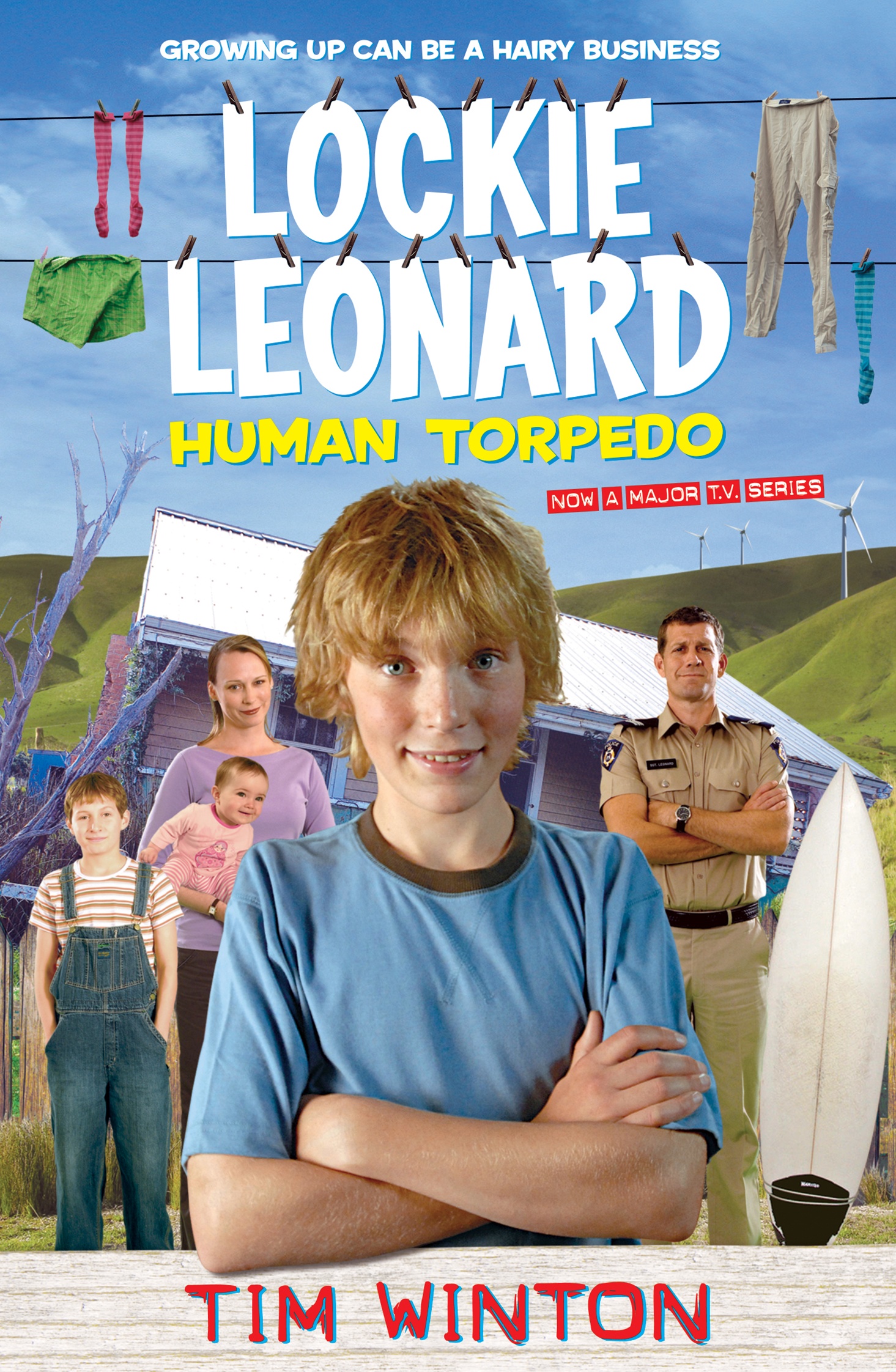
The Lockie Leonard series by Tim Winton (1990-97) stars a surf rat named Lachlan “Lockie” Leonard who moves to the Western Australian town of Angelus (based on Albany). Leonard is a Germanic name which can be translated as “brave lion” or “brave as a lion”. St Leonard is a legendary 6th century saint, a Frankish nobleman at the court of Clovis I who could liberate prisoners from their chains when invoked. The Normans brought the name to England, although it didn’t become particularly common until the 19th century. Famous Australians with the name include distinguished chemist Leonard Lindoy, and hard-hitting post-war cricketer Leonard “Jock” Livingston, also a talented rugby league footballer. Leonard has been a popular name amongst Jews in the past, including Jock Livingston: other examples are Canadian folk singer Leonard Cohen and actor Leonard Nimoy. Leonard was #39 in the 1900s, and peaked in the 1910s at #35. It didn’t leave the Top 100 until the 1960s, and remained in steady but low use until getting a little boost after The Big Bang Theory, with main character Leonard Hofstadter, began airing in the late 2000s. Clunky cool, this underused classic provides a way to get the popular nickname Lenny.

Nathaniel
In Isobelle Carmody’s YA novel The Gathering (1993), Nathaniel Delaney is a teenager who moves to a grim seaside town and finds himself locked in a battle between the forces of Light and Dark. Nathaniel is a variant of Nathanael, the Greek form of Hebrew Netan’el, meaning “God has given”, nearly always understood as “gift of God”. In the Bible, Nathaniel is usually identified with the Apostle Bartholomew; as Bartholomew means “son of Talmai”, it is taken to be Nathaniel’s surname. Nathaniel was in use as an English name by the 16th century, and became more common after the Protestant Reformation. It was used amongst the aristocracy, and also became a favourite in America, with author Nathaniel Hawthorne a notable bearer. Nathaniel was #179 in the 1900s, and left the charts the following decade. It returned in the 1970s at #296, and climbed steadily until it reached the Top 100 last year at #79, making it one of the fastest-rising names of 2013. A handsome retro name that gives the popular nickname Nate, it’s well known from Australian actor Nathaniel Buzolic, from The Vampire Diaries, and Australian singer-songwriter Nathaniel Willemse, who was on The X-Factor.

Rafferty
The Rafferty series by Joan Woodberry (1959-62) are the adventures of an English boy named Rafferty who moves to a fishing village on the Queensland coast. Rafferty is a common Irish surname, an Anglicised form of O’Raithbheartaigh, meaning “son of Rabhartach”. The Old Gaelic personal name Rabhartach means “wielder of prosperity”. The name has a particular Australian resonance, due to iconic Australian actor John “Chips” Rafferty. He was seen as the quintessential Australian, and took part in a marketing campaign convincing British people to migrate to Australia in the 1950s – this might explain the choice of Rafferty’s name in Woodberry’s books. Another Australian reference is the slang term Rafferty’s rules, meaning “no rules at all”. It gives the name Rafferty a pleasantly raffish, lawless feel. This name is around the 200s in Australia, and although it is rising in the UK, is more popular here than anywher else. I have also begun to see a few girls named Rafferty.

Rowan
The Rowan of Rin fantasy series by Emily Rodda (1993-2003) takes place in a fictional world. Rowan is the unlikely hero, considered a bit of a wimpy weakling by the sturdy villagers of Rin, but when danger strikes, his resourcefulness and courage saves the day. Rowan is a Scottish name that’s an Anglicised form of Ruadhán, a pet form of Ruadh, Gaelic for “red”, often given as a nickname to a man with red hair. You may remember that the red-headed Scottish outlaw Raibeart “Ruadh” MacGregor is known as Rob Roy by the English. Rowan can also be unisex when named after the rowan tree; its English name comes from the Germanic for “to redden”, because of the tree’s red berries, so either way the meaning has a connection with the colour. A pleasant association with the tree is that according to folklore it has the power to ward off evil. The name Rowan has charted for boys since the 1940s, debuting at #205, and climbing until it peaked in the 1980s at #164. It’s now around the 300s-400s. Rowan is an underused modern classic which alludes to a vibrant colour, and a magical tree.

Silvander
Norman Lindsay is famous for writing and illustrating The Magic Pudding (1918), a comic fantasy deservedly recognised as a classic. For some reason, his other children’s book, The Flyaway Highway (1936), is neglected, even though it’s just as funny and fantastical. I loved this story, which relates how Egbert and Muriel Jane meet a “bloke with horns and cows’ hooves” named Silvander Dan, who take them on a journey down the Flyaway Highway. As a child, I thought that the name Silvander was made up for the book (although I’m afraid I was already junior name nerd enough to know what it meant). However, I’ve since found that Silvander was a literary name in the 18th century, and in most of the sources I’ve read, characters named Silvander are untrustworthy bounders! The name is derived from Silvanus, the Roman god of woods and fields, from the Latin silva, meaning “wood, forest”. Although an extremely rare name, it is just enough like Silas and Alexander to not be completely outrageous, and has an agreeably silvery sound. For those who like Leander and Evander, here is another to consider.

Theodore
I told myself I would not choose more than one book from a single author, but was forced to make an exception for Odo Hirsch, from whose oeuvre I could happily fill two lists. Antonio S and the Mystery of Theodore Guzman (1997) is his first novel, a charming story about a boy who lives in a grand old house, and is fascinated by a reclusive actor. (Name nerd bonus info: Odo Hirsch is the pen name of Dr David Kausman). Theodore is from the Greek name Theodorus, meaning “God’s gift”. Theodorus wasn’t uncommon in ancient times; ironically one of its famous bearers was the 4th century BC philosopher Theodorus the Atheist. Because of its meaning, the name was a popular choice for early Christians, and saints named Theodore are numerous, including a 7th century Archbishop of Canterbury and two popes. Theodore was also traditional mongst the Byzantine Emperors, and the Russian Tsars. Theodore was #116 in the 1900s, and reached its lowest point in the 1970s at #383. It began rising steeply in the 1990s, and last year joined the Queensland Top 100 at #79, making it one of the state’s highest-rising names. A sophisticated classic name which comes with cool short forms Theo and Ted, I’d call this underused except I’m not sure how long it will stay that way.

POLL RESULTS
The public’s favourite names were Theodore, Jude and Felix, and their least favourite were Leonard, Darius and Harley.

(Picture shows cover of Lockie Leonard – Human Torpedo by Tim Winton)

Famous Name: Roxanne

20 Wednesday Aug 2014

Posted by A.O. in Famous Names

≈ 3 Comments

Tags

Appellation Mountain, Babynameobsessed, Bactrian names, celebrity baby names, famous namesakes, fictional namesakes, French names, Iranian names, Latinised names, name history, name meaning, name popularity, names from movies, names from songs, names from television, royal names

tumblr_mdn8en8PGI1qa13pro1_1280Ebony at Babynameobsessed has a series called Names From My Childhood, and Abby recently had a post on girls names from 1980s television at Appellation Mountain. So I thought I would cover a 1980s name from my TV-watching childhood.

I was slightly hampered as a young television viewer, because I grew up in a rural area which only had one channel, and my family’s home was in some kind of TV black spot which meant we couldn’t get any television reception at all. However, I had friends and relatives within walking and cycling distance, so rather than get home from school and slump in front of the box, I got home from school, jumped on my bike, pedalled furiously, then slumped in front of the box.

Of course, I had to pretty much watch whatever other people had on, and my young cousins used to tune in to the long-running puppet show Mr Squiggle, where a cheery pencil-nosed man from the moon turned children’s squiggles into recognisable pictures. Mr Squiggle had a human assistant, and as it was on air for fifty years, you can tell someone’s age from the assistant they watched. Baby Boomers loved Miss Pat, Gen Xers were Miss Jane fans, while for my cousins it was Roxanne all the way.

Slightly embarrassing to admit, but while Abby was (apparently) watching Dallas and Dynasty, I was enjoying kiddie puppet shows!

Roxanne is a variant of Roxane, a French form of Roxana. Roxana is the Latinised form of the name Roshanak; a Bactrian name derived from the Avestan language of East Iran, meaning “bright, shining, radiant”. It can be understood as “luminous beauty”, “lovely flame”, or “shining star”, and this is one of the many names which have the meaning of “light” behind them. Roshanak is still a common girl’s name in Iran.

The name has become well known to us due to one woman – a Bactrian princess who became the wife of Alexander the Great. Roxana was from the ancient city of Balkh, now a small town in northern Afghanistan, and she met Alexander when he conquered the fort she was hiding in.

It is said that Alexander fell for Roxana on sight, and according to the Macedonians she was the one of the loveliest women they had seen in Asia. Despite strong opposition from his generals, Alexander married Roxana.

Instead of marrying purely for political ends, Alexander married for love, because he is said to have been infatuated with the beautiful Roxana. For her part, Roxana was pleased that her new husband didn’t force himself upon her at once, but actually made an effort to get to know her as a person (which tells you what marriage in the ancient world was generally like).

After Alexander died, Roxana bore him a posthumous son, also Alexander. To protect her position and that of her son, she murdered Alexander’s second wife Stateira, married for reasons of diplomacy, and probably his third wife as well, who was Stateira’s cousin. Roxana and her son were assassinated themselves in the power struggles following Alexander’s death.

Roxana’s romantic story was told in Nathaniel Lee’s 17th century tragedy, The Rival Queens, or the Death of Alexander the Great. The play was a huge hit right into the 19th century, and actresses who were jealous of each other were often cast in the lead roles, to add extra spice to the performance.

The name received a further boost from Daniel Defoe’s 18th century novel, Roxana, about a woman who falls into prostitution but gains freedom by marrying for money. Although a murderer and a prostitute/gold digger may not seem like appealing namesakes, they were strong, independent female characters, and Roxana became established as an English name in the 18th century.

The French form became well known through Edmond Rostand’s 19th century play Cyrano de Bergerac, where Roxane is the beautiful woman Cyrano longs for and woos for another, falsely believing she could never love an “ugly” man like himself.

Roxanne first ranked in the charts in the 1950s, after the 1950 film version of Cyrano de Bergerac, with Mala Powers in the role of Roxane; Roxanne debuted at #364 that decade. Roxanne was #282 in the 1960s, sank to #424 in the 1970s, and peaked in the 1980s at #272.

The 1980s put the focus on the name Roxanne for a few reasons. The hit song Roxanne was recorded by The Police in 1978 and re-released in 1979; Sting was inspired to write the song by the prostitutes around the band’s hotel in Paris. An old poster for Cyrano de Bergerac was hanging in the hotel’s foyer, which is where the name Roxanne came from. Not only popular in the charts of 1979-80, the pop classic Roxanne has been inducted into the Grammy Hall of Fame, and was remixed into El Tango de Roxanne in Moulin Rouge.

In the mid-1980s, the world of hip-hop went through The Roxanne Wars, where a series of “answer records” were released, inspired by UTFO’s Roxanne, Roxanne. Because of UTFO’s non-appearance at a show, teenager (Lolita) Roxanne Shante brought out Roxanne’s Revenge in answer. There were perhaps as many 100 answer records during the Roxanne Wars, and even a dance, as referenced in Do the Roxanne. So chances are you know at least one 1980s song with Roxanne in the title!

You might not think that a prostitute and a (rather silly and contrived) musical rivalry would be of much help to a name’s popularity, but as we’ve seen, a prostitute and a rather silly and contrived stage rivalry is exactly how Roxana became established in the 18th century. History repeats.

And keeps repeating. Towards the end of the 1980s, the movie Roxanne came out with Daryl Hannah in the title role: a clever rom-com remake of Edmond Rostand’s Cyrano de Bergerac, which gave the tragedy an upbeat ending. In the movie, Roxanne is a brainy astronomer.

After the 1980s, the name Roxanne plummeted, and left the charts completely in the early 2000s. You might say this name is dated, and could claim it as a trendy name, but as Roxanne never became popular, it still seems usable – in fact celebrity parents Toby Allen and Darren Weller chose it as their daughter’s name.

Roxanne has a fashionable X in it, while the -anne at the end makes it seem like one of the many Anne names. I have seen a couple of babies named Roxy, maybe influenced by celebrity mum Roxy Jacenko, and Rocky would make a cool tough-girl nickname.

POLL RESULTS
Roxanne received an approval rating of 51%. 16% of people saw Roxanne as too dated and 1980s, but 15% thought it was strong and sexy.


← Older posts
Newer posts →

Enter your email address to follow this blog

Categories

Archives

Recent Comments

A.O.'s avatarwaltzingmorethanmati… on Zarah Zaynab and Wolfgang…
Madelyn's avatarMadelyn on Zarah Zaynab and Wolfgang…
JD's avatardrperegrine on Can Phoebe Complete This …
A.O.'s avatarwaltzingmorethanmati… on Rua and Rhoa
redrover23's avatarredrover23 on Rua and Rhoa

Blogroll

  • Appellation Mountain
  • Baby Name Pondering
  • Babynamelover's Blog
  • British Baby Names
  • Clare's Name News
  • For Real Baby Names
  • Geek Baby Names
  • Name Candy
  • Nameberry
  • Nancy's Baby Names
  • Ren's Baby Name Blog
  • Sancta Nomina
  • Swistle: Baby Names
  • The Art of Naming
  • The Baby Name Wizard
  • The Beauty of Names
  • Tulip By Any Name

RSS Feed

  • RSS - Posts

RSS Posts

  • Celebrity Baby News: Melanie Vallejo and Matt Kingston
  • Names from the TV Show “Cleverman”
  • Can Phoebe Complete This Sibset?
  • Zarah Zaynab and Wolfgang Winter
  • Baby, How Did You Get That Name?
  • Celebrity Baby News: Media Babies
  • Celebrity Baby News: Adelaide Crows Babies
  • Celebrity Baby News: Chris and Rebecca Judd
  • Names at Work: Name News From the World of Business and Employment
  • Celebrity Baby News: Sporting Round Up

Currently Popular

  • Girls Names From Stars and Constellations
  • Rare Boys Names From the 1950s
  • Celebrity Baby News: Mick and Angie Molloy
  • The Top 100 Names of the 1940s in New South Wales
  • The Top 100 Names of the 1920s in New South Wales

Tags

celebrity baby names celebrity sibsets english names famous namesakes fictional namesakes honouring locational names middle names name combinations name history name meaning name popularity name trends nicknames popular names saints names sibsets surname names twin sets unisex names

Create a free website or blog at WordPress.com.

Privacy & Cookies: This site uses cookies. By continuing to use this website, you agree to their use.
To find out more, including how to control cookies, see here: Cookie Policy
  • Subscribe Subscribed
    • Waltzing More Than Matilda
    • Join 517 other subscribers
    • Already have a WordPress.com account? Log in now.
    • Waltzing More Than Matilda
    • Subscribe Subscribed
    • Sign up
    • Log in
    • Report this content
    • View site in Reader
    • Manage subscriptions
    • Collapse this bar
 

Loading Comments...