• About
  • Best Baby Names
  • Celebrity Baby Names
  • Celebrity Baby Names – Current
  • Celebrity Baby Names – Past
  • Featured Boys Names
  • Featured Girls Names
  • Featured Unisex Names
  • Links to Name Data
  • Waltzing on the Web

Waltzing More Than Matilda

~ Names with an Australian Bias of Democratic Temper

Waltzing More Than Matilda

Tag Archives: aristocratic names

German Names For Boys

30 Sunday Aug 2015

Posted by A.O. in Name Themes and Lists

≈ 3 Comments

Tags

Ancient Germanic names, animal names, aristocratic names, Biblical names, birth notices, European name popularity, famous namesakes, fictional namesakes, German name popularity, German names, Greek names, hebrew names, imperial names, Latin names, name history, name meaning, name popularity, names from songs, nature names, rare names, Roman names, royal names, saints names

Wolf_Howling

Andreas
Latinised form of the Greek form of Andrew, meaning “manly”. Saint Andreas of Alexandria was an early martyr. The name has been used in Germany since the Middle Ages; a famous medieval namesake is Andreas Osiander, a Lutheran mystic and theologian, while a contemporary one is the German opera singer Andreas Scholl. The name Andreas was used in Britain too, although probably the name was still pronounced the same way as Andrew in everyday life. There is an Old English poem called Andreas about Saint Andrew, which turns him into an Old English warrior, battling the forces of evil. Another English literary connection is the 12th century author Andreas Capellanus (Andrew the Chaplain), who wrote a satirical treatise on the courtly love. Just outside the Top 100 in Germany, Andreas is a popular name in Austria and Scandinavia. It’s not often seen here, perhaps because of fears it will be be confused with its feminine counterpart, Andrea. Pronounced something like ahn-DRAY-ahs in Germany, this German classic seems like a fresh update to flagging Andrew, and has recently had some publicity from the disaster movie San Andreas.

Anton
The equivalent of Antony, used throughout Europe since the Middle Ages, and a traditional name amongst European nobility and royalty. Famous namesakes include the Austrian composer Anton Bruckner, and Russian writer Anton Chekhov. A famous Australian namesake is SBS journalist and anchorman Anton Enus, who was born in South Africa. Antons in fiction tend to be baddies, which isn’t a help to the name’s image. One exception is the American children’s book Summer of My German Soldier, where Anton is an escaped German POW who befriends a little Jewish girl. Anton is a popular name in Germany, and around the 400s here. A suave multicultural choice – and even the many villainous Antons in fiction give it a bit of an edge.

Florian
From from the Roman name Florianus, derived from Florus, which is from the Latin for “flower”. Florianus, or Florian, was one of the Roman emperors, and the noble von Blumenthal family from Brandenburg claimed descent from him via an imaginative legend whereby his sons fled to northern Germany, and taught everyone how to make wine. Saint Florian was a Roman soldier whose duties included organising fire brigades; he was martyred by drowning in a river which is now in Austria, and he is a favourite saint in central Europe. Saint Florian is the patron of Poland, and the city of Linz in Austria, and in Austria and Germany, Florian is used as a call sign for fire engines and stations. With such imperial, noble, saintly, patriotic, and rather butch firefighting associations, it’s little wonder Florian is a common name in Germany, and still on the Top 100. It’s rare here, but the rise of Florence in some ways gives it more familiarity, and I have seen an Australian baby named Florian. It seems hip and elegant.

Johannes
Latin form of Ioannes, the Greek form of the Hebrew name Yochanan, which in English is John. Famous German namesakes are seriously heavy duty achievers. Johannes Gutenberg, who introduced the printing press to 15th century Europe – it began a cultural revolution which changed the world and is largely responsible for most of us being able to read. Astronomer Johannes Kepler, a key figure in the 17th century scientific revolution whose works provided the foundations for the theory of gravitational force. Johannes Brahms, one of the great composers of the 19th century, honoured in the German hall of fame. A famous Australian namesakes is former Queensland premier Sir Johannes “Joh” Bjelke-Petersen, husband to Florence, and a force in conservative politics; he was of Danish descent. Popular in central Europe and Scandinavia, Johannes is #56 in Germany. It doesn’t chart here, but I do see it sometimes in birth notices. In Germany it’s pronounced yo-HAHN-nes, while here it may be pronounced in order to give the nickname Joe. A strong, handsome, intelligent classic.

Justus
Latin name meaning “just”. A Christian named Jesus Justus is mentioned by St Paul in the New Testament, while Joseph Justus is a disciple of Christ considered as a possibility to become an Apostle to replace Judas – he is venerated as St Justus of Eleutheropolis. There are quite a number of saints named Justus, including a Pope and an Archbishop of Canterbury. One of the most influential is a legendary one named Justus of Beauvais, who was beheaded as a child and went for a stroll holding his head: one of those fashionable saintly miracles which sent you straight to the top of the medieval pops for some reason. A famous German namesake is Justus Perthes, an 18th century publisher who founded the Almanach de Gotha, a directory of European royalty and nobility. An Australian namesake is Justus Jorgensen, who founded an artist’s colony in Melbourne called Montsalvat which is still open. Justus is #99 in Germany, and is on the US Top 1000. It seems like a solid alternative to the English virtue name Justice, although pronounced quite differently in Germany.

Karsten
German form of Christian. It is more common as a surname than a first name in Germany, and is rare here as well, but I do see it occasionally in birth notices, and one of the athletes we sent to the 2012 Olympics was named Karsten. That makes it seem unusual but normal, and it’s very much like familiar names such as Carson and Carter.

Klaus
Short form of Nikolaus, a German form of Nicholas. The patron saint of Switzerland is Saint Nicholas of Flüe, affectionately known as Brother Klaus. There are many famous German people with this name, including Klaus Neumann, Luftwaffe flying ace, artist and musician Klaus Voormann, who designed album covers for bands like The Beatles, Klaus Badelt, who composed the film score to the 2003 version of Ned Kelly, singer Klaus Meine from The Scorpions, and actor Klaus Kinski, father to Natassja Kinski. There are famous fictional characters with this name too, such as teen bookworm Klaus Bauldelaire from A Series of Unfortunate Events, vampire-werewolf hybrid Klaus Mikaelson from The Vampire Diaries, and Olympian athlete-cum-goldfish Klaus Heissler from American Dad. Slightly dated in Germany, this charming name is very rare in English-speaking countries, probably because it reminds people of Santa Claus. Klaus is said to rhyme with house though.

Otto
Modern form of the ancient Germanic name Audo or Odo, originally short forms of names beginning with aud-, meaning “wealth, riches, fortune”. A name in common use by German royalty and nobility, there have been four Holy Roman Emperors named Otto. Otto I, or Otto the Great, was the son of Saint Matilda, and married an English princess. Otto IV was the son of Matilda of England, the daughter of Henry II. Two famous writers had dads named Otto: Anne Frank and Sylvia Plath. The name might also remind you of statesman Otto von Bismarck or film director Otto Preminger. In fiction, Otto has often been used as a comedic or joke name, but “Big Otto” Delaney from Sons of Anarchy is an example of it being both serious and powerful. Currently #320 in Germany, Otto is popular in Scandinavia and gaining popularity in both the US and UK. It’s around the 200s here, and seems hip and rather quirky.

Rudolf
Modern form of the ancient Germanic name Hrodulf, translated as “famous wolf”. It was commonly used by German royalty and nobility, and Rudolf II was a Holy Roman Emperor. Although not generally considered a successful ruler, his patronage of the arts made him a key player in the Renaissance, while his interest in the occult and alchemy helped bring about the scientific revolution – there would be no chemists without alchemists! A famous namesake of modern times is the great ballet dancer Rudolf Nureyev, who partnered Margot Fonteyn. Another is the Austrian philosopher Rudolf Steiner, who sought to find a system of thought which would be both scientific and spiritual in nature. Anthony Hope’s novel, The Prisoner of Zenda, is about two men named Rudolf – one a European king, the other his distant cousin visiting from England who must impersonate him. Despite all these interesting Rudolfs, the name is rarely used here as it reminds people of the Christmas song, Rudolph the Red Nosed Reindeer. Rather a shame, as this name is strong and rather charismatic. I do know someone named Rudolf who has never been bothered by the song though.

Wolf
Short form of names such as Wolfgang (“wolf path) and Wolfram (“wolf raven”), sometimes used as an independent name. A famous Australian namesake is Wolf Blass, a German immigrant who founded the famous winery in South Australia; his name was short for Wolfgang. The word wolf is the same in English and German (although pronounced differently), and you can also see this as a vocabulary name referring to the animal. Humans have always been fascinated by wolves, and in various mythologies they can be symbols of both danger (such as in the fairy tale Red Riding Hood) and nurturing (like the wolf mother who suckled the twins Romulus and Remus). A common thread in many legends from around the world is that of humans descended from wolves, or humans in wolf form, including werewolves. The power of the wolf makes this an attractive name, and it’s right on trend along with other animal names.

POLL RESULTS
People’s favourite names were Otto, Wolf and Anton, and their least favourite were Justus, Johannes and Rudolf.

German Names for Girls

23 Sunday Aug 2015

Posted by A.O. in Name Themes and Lists

≈ 9 Comments

Tags

Arabic names, aristocratic names, celebrity baby names, famous namesakes, fictional namesakes, German name popularity, German names, germanic names, honouring, international name trends, name history, name meaning, name popularity, name trends, names from fairy tales, names of boats, nicknames, pet names, royal names, saints names, screen names, stage names, vintage names

tumblr_loe3tdMJXq1qj5qvfo1_500

Germans have lived in Australia since the beginning of European settlement in 1788, and at least 73 of the convicts were German. Many more came to Australia as free settlers during the 19th century, often fleeing revolution or increased militarism in their homeland. By 1900, Germans were the fourth largest ethnic group in Australia, behind English, Irish, and Scots. Today almost a million Australians classify themselves as having German ancestry, about 4.5% of the population. That’s only a little less than the number of Australians with Italian ancestry, yet it is far more common to see Italian names in birth notices than German ones. Two world wars didn’t help, and neither does the clunkiness of some traditional German names, which are out of date in their country of origin. Yet here clunky is beginning to be cool again, and there are many cute and spunky German short forms that are right on trend.

Amalia
Latinised form of the name Amala, a short form of names beginning with the German element amal, meaning “vigour, courage”, with connotations of hard work and fertility. It is thus an older or more obviously German variant of Amelia. The name was traditional among German aristocracy and royalty, and is still used by modern European royals: Prince Felix of Luxembourg had a daughter named Princess Amalia last year. Although a popular name in Continental Europe since the Middle Ages, Amalia only became commonly used in Britain in the 18th century once Amelia had been introduced by the Hanoverian rulers. Amalia is around the 300s and seems to be gaining more use; it’s not only an alternative to popular Amelia, but is boosted by the trend for names such as Mahli and Mahlia. Rising in the US, Amalia is only just outside the Top 100 in Germany, and feels as if it is going places. It’s said the same way in Germany as here: ah-MAH-lee-uh.

Anneliese
Combination of the names Anna and Liese, a short form of Elisabeth. It’s been in use since the 18th century in Germany, and came into common use in the English-speaking world in the 20th century. A famous Australian namesake is the model Anneliese Seubert, who was born in Germany and moved here as a child; Anneliese has been a celebrity mum on the blog. Anneliese doesn’t chart in Australia, with parents preferring Annalise, which is around the 300s – the same spelling as the Australian model Annalise Braakensiek. The name has numerous spelling variants, including the name of the famous wartime diarist Annelies “Anne” Frank. This name is very pretty, and would be a good alternative to popular names like Anna and Annabelle, while also suitable for honouring an Anne and an Elizabeth at the same time. Germans say this name ah-na-LEE-zuh, but Australians may prefer AN-uh-lees or AN-uh-leez.

Gretel
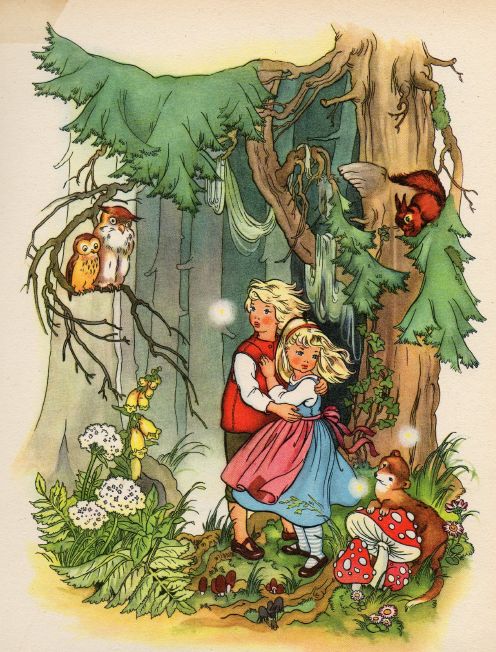
Pet form of Grete, short for Margarete, a German form of Margaret. It’s probably best known from the Grimm’s fairy tale Hansel and Gretel. In the story, Hansel and Gretel are brother and sister whose impoverished father and stepmother abandon them in the woods. The hungry children are caught by a witch once they start nibbling her yummy-looking gingerbread house, and Gretel rescues her brother from being eaten with cleverness and courage. There’s been a recent reboot in the horror movie Hansel & Gretel: Witch Hunters, with Gemma Arteron as Gretel. A famous Australian namesake is heiress Gretel Packer, the sister of James Packer; Gretel is named after her grandmother, wife of media mogul Sir Frank Packer (Sir Frank entered yachts named Gretel in the America’s Cup in his wife’s honour). Another namesake is television presenter Gretel Killeen, who writes children’s books. Gretel seems like a cute yet sophisticated choice.

Leni
Short form of Helene or Magdalena. A famous namesake is the pioneering German film director Helene “Leni” Riefenstahl who made propaganda films for the Nazis during the 1930s. German supermodel Heidi Klum has a young daughter named Helene, who is called Leni. Leni is a popular name in Germany, and around the 300s here. It’s very much on trend, fitting in with cute short names like Evie, and L names like Layla. English-speakers tend to pronounce the name LAY-nee, which isn’t too different to how Germans say it: Laney and Lainey are variant spellings. It can be used as a nickname for names such as Eleni and Elena. Some parents pronounce it LEN-ee, and treat it as a feminine form of the male name Lenny.

Lulu
Pet form of Luise, the German form of Louise. It’s also an Arabic name meaning “pearls”, which may be written Lu’lu and is sometimes given as a nickname. Lulu is the main character in two plays by German playwright Frank Wedekind often combined into one called Lulu; they inspired the silent film Pandora’s Box with Louise Brooks as Lulu, the opera Lulu by Alban Berg, and was made into a film again in Germany in the 1960s. In the stories, Lulu is a prostitute and femme fatale. Lulu is often chosen as a stage name, such as the Scottish singer Lulu (born Marie Lawrie), or a nickname, such as Australian china painter Lucie “Lulu” Shorter. However, singer-songwriter Lulu Simon, daughter of Paul Simon, has Lulu as her full name. Lulu is around the 200s here – a cute, sexy, hip little name that gives Lola a run for its money. Can be used as a nickname for any name with a LU sound in it, from Lucinda to Eloise.

Mitzi
Pet form of Maria. Famous namesakes include Hollywood star Mitzi Gaynor (born Francesca Gerber), and child star Mitzi Green (born Elizabeth Keno), who was in the 1932 version of Little Orphan Annie. A famous Australian namesake is teenage actress Mitzi Ruhlmann from Home and Away and Dance Academy. Although in Germany Mitzi is more popular for cats and dogs than humans, itsy-bitsy Mitzi is a bright vintage charmer that will appeal to those wanting something a little different while still fitting in with current trends.

Ottilie
Modern form of the ancient Germanic name Odilia. This is often said to be a feminine form of Otto, but may actually be from the Germanic odal, meaning “fatherland”. There is a medieval Saint Odilia (one of those long-suffering young girl saints who are given a disturbingly hard time by their horrible fathers), and Ottilie was a traditional name among the German aristocracy during the Middle Ages. The name has been something of a favourite in fiction, being chosen by the authors Goethe, Truman Capote, John Wyndham, and Robert Louis Stevenson – in all these works, the woman named Ottilie is an object of desire in some way. You can say Ottilie in various ways, but OT-uh-lee and o-TILL-ee are probably the most common in Australia, and Tilly is a favoured nickname here. The German pronunciation is more like o-TEE-lee-uh.

Thea
Short form of Dorothea or Theodora. Famous German namesakes include Thea von Harbou, who wrote the screenplay for the silent film classic Metropolis, and Thea Rasche, Germany’s first female aerobatics pilot. Famous Australian namesakes include author Thea Astley, and artist Althea “Thea” Proctor, both distinguished in their respective fields. You might also know of Thea Slatyer, a retired footballer who played for the Matildas, and Dame Thea Muldoon, wife of New Zealand prime minister Sir Robert Muldoon. Simple yet substantial, Thea is gaining in popularity around the world. Just outside the Top 100 in Germany, Thea is popular in Scandinavia and New Zealand, and rising sharply elsewhere in the English-speaking world. It has been boosted here by a celebrity baby, daughter of model Kelly Landry. Usually said THEE-uh in Australia, but the German pronunciation is TEE-uh.

Wilhelmina
Feminine form of Wilhelm, the German equivalent of William. In the form Wilhelmine this was a traditional name amongst German royalty. A famous Australian namesake is Wilhelmina “Mina” Wylie, one of Australia’s first two female swimmers in the Olympics; she won silver in 1912, and received 115 swimming champion titles in all. Another is Wilhelmina “Mina” Rawson, who wrote books on cooking and household management, and was also the first swimming teacher in central Queensland. A great name for swimmers! For many years this name has been seen as too clunky, but popular Willow helps make it seem a lot more usable. Dignified yet quirky, Wilhelmina has a host of adorable nicknames, including Billie, Willa, Mina, Minnie, and Minka. This is a favourite name of Ebony from Babynameobsessed, and as she is a teenage name enthusiast, it bodes well for Wilhelmina’s future.

Zella
Short form of Marcella, a feminine form of the name Marcus. There are several famous musical namesakes from America: singer-songwriter Zella Day, country singer Zella Lehr, and gospel singer Zella Jackson Price. In the late 19th century, Zella fitted in with other names from that era, such as Zelda and Zelie; today it sounds like Zoe + Ella, or perhaps Zahli + Stella. A vintage name which now blends in seamlessly with current trends.

POLL RESULTS
People’s favourite names were Thea, Ottilie and Anneliese, and their least favourite were Gretel, Lulu and Mitzi.

(Picture shows an illustration from Hansel and Gretel by Felicitas Kuhn-Klapschy)

Suburbs of Adelaide and Hobart Which Could Be Used as Boys Names

26 Sunday Jul 2015

Posted by A.O. in Name Themes and Lists

≈ 2 Comments

Tags

Anglo-Saxon names, aristocratic names, aristocratic surnames, astronomical names, car names, colour names, dated names, english names, famous namesakes, fictional namesakes, gemstone names, germanic names, honouring, locational names, middle names, mythological names, name history, name meaning, name popularity, names from movies, names of animals, names of ships, nature names, nicknames, Old French names, plant names, popular names, rare names, retro names, Roman names, royal names, saints names, Scottish names, surname names, tree names, unisex names, vocabulary names


OLYMPUS DIGITAL CAMERAAustin
Austins Ferry is a suburb of Hobart, named after convict James Austin. Austin and his cousin was transported to Australia in 1803, and after their sentences expired, were given small land grants on the River Derwent near Hobart. In 1818 they established a ferry service across the river, and became very wealthy. You can still visit James Austin’s original cottage. Austin is an Old French shortening of the name Agustin, the equivalent of the English Augustine, and the surname Austin has the same source. Austin was #108 in the 1900s, and left the charts in the 1950s. It returned in the 1990s at #196, the decade of the Austin Powers spy comedies with Mike Myers in the title role. Groovy, baby! It climbed steeply and joined the Top 100 in 2011. It is currently #61, and was the fastest-rising name in Queensland and a fast-rising name in South Australia last year. It was a fast-rising name in New South Wales in 2013 too, so this retro name is doing very well for itself, and is now more popular than it has ever been before.

Cornelian
Cornelian Bay is a suburb of Hobart, whose bay on the River Derwent provides anchorage for yachts; there are boathouses and a waterside restaurant along its foreshore. The first English navigator to explore the Derwent was Lieutenant John Hayes; he came ashore here in 1793, and named the bay after the semi-precious cornelian stones which he found on the beach. Cornelian (also known as carnelian) is a dark red mineral whose name is from the Latin for the cornel cherry, a flowering dogwood tree which has small dark red fruit just the colour of the gemstone. Cornelian was used in Roman times for signet rings used to seal important documents, as hot wax doesn’t stick to it. It was a gemstone often associated with courage and good luck. Cornelian has been in very rare use as a personal name since the 17th century, and overall has been given fairly evenly to both boys and girls. Not many gemstones work well as boys’ names, but this sounds very similar to Cornelius, yet seems much more up-to-date. This would also make a great middle name, and is suitable for both sexes.

Fitzroy
Fitzroy is an inner-city suburb of Adelaide, and an exclusive area overlooking the North Adelaide Parklands. The houses are mostly 19th century mansions along a few tree-lined streets, as this is where the upper class settlers lived in the city’s early days. It may have been named after Fitzroy in Melbourne, which is named after Sir Charles FitzRoy, the governor of New South Wales in the mid 19th century. Another suggestion is that it was named for historic Fitzroy Square in London, whose name comes from Charles FitzRoy, 2nd Duke of Grafton, an 18th century politician who was a distant ancestor of Diana, Princess of Wales. The English surname Fitzroy (or FitzRoy) comes from the Old French for “son of the king”, and was traditionally given to illegitimate sons and daughters of a monarch, and could be inherited as a surname by their descendants. For example, the father of the 2nd Duke of Grafton was an illegitimate son of King Charles II by his mistress Barbara Villiers. Fitzroy has been used as a personal name since the 18th century, and was sometimes used to indicate a family relationship with illegitimate royalty. Roy- (and royal) names are on trend, and this is one you could consider that has Fitz or Fitzy as the nickname.

Hobart
Hobart is the capital of Tasmania; it is Australia’s second-oldest capital city after Sydney, and is our most southern capital city, serving as a hub for Australian and French Antarctic operations. It is located on an estuary of the Derwent River at the foot of Mount Wellington, and more than half of the city is taken up with bushland, so it contains much natural beauty. A small city with many historical buildings from its colonial past, Hobart has a great deal of charm. Hobart was named after Robert Hobart, 4th Earl of Buckinghamshire: Lord Hobart was the Colonial Secretary at the beginning of the 19th century. The surname Hobart is derived from the personal name Hubert, meaning “bright mind”. Hobart has long use as a personal name, and can be found often in historical records, with it being a bit of a favourite in Tasmania – indeed one example I found was Tasman Hobart. The Ho- at the beginning is rousing yet problematic, but you could use Bart or Barty as a nickname. A patriotic choice that may work better as a middle name.

Holden
Holden Hill is an inner-city suburb of Adelaide. It was named after a road extension called Halden’s Hill in the mid 19th century, as the land the road ran through was owned by a Mr Halden. The name was corrupted into Holden Hill. Holden is an English surname after a small village in Lancashire; it comes from the Anglo-Saxon meaning “deep valley”. Its most famous literary namesake is Holden Caulfield from J.D. Salinger’s Catcher in the Rye. It’s quite likely that Salinger named the character after a friend called Holden Bowler he met while they were both working on a ship. Mr Bowler went on to run his own advertising business and was godfather to singer Judy Collins. In Australia Holden will remind people of the car company, its name coming from South Australian manufacturer Sir Edward Holden (although it is owned by General Motors). Sadly, Holden will cease production in Australia in 2017. A very uncommon name in Australia because of the car.

Jupiter
Jupiter Creek is a semi-rural suburb of Adelaide which was once part of a gold-mining area, and still a place to go fossicking. Its name was given by gold-miners, possibly after a bull named Jupiter who was fond of running away to graze there. In Roman mythology, Jupiter is king of the gods, and the god of the sky and thunder, the equivalent of the Greek god Zeus. Ruler of the heavens, he was a divine witness to oaths and the protector of the state and justice; his symbols were the oak tree, the eagle, and the thunder bolt. His name is from an ancient root meaning “O Father Sky-god”, so his name is an invocation: to speak the name of Jupiter aloud is to call upon the god. The Romans named the largest planet in the solar system after Jupiter, and believed those born under its influence to be especially fortunate. As Juno is a hip name for girls, and so is Juniper, Jupiter for boys doesn’t seem too strange. A possible issue is the movie Jupiter Ascending, which has Mila Kunis as a heroine named Jupiter.

Linden
Linden Park is an affluent suburb of Adelaide. It was named after a house and estate which was built by Sir Alexander Hay in 1861. Linden trees (Tilia) are also called lime trees, although they are not closely related to the tree which produces lime fruit. They are tall, shady trees that have great significance in Germany and Eastern Europe, where they were seen as sacred; in German folklore, the linden is said to be the tree of lovers. Lindens have often featured in stories and poems, often as a symbol of love, protection, or resurrection. In Marcel Proust’s Swann’s Way, the narrator dips his madeleine cake into a cup of lime-flower tea, which opens up a flood of memories. The word linden is from an ancient Germanic root which may mean “mild, soft”: the timber of the linden tree is soft and easily worked, making it ideal for carving. Linden has been used as a name since the 18th century, overwhelmingly for boys, and is found in Australian records quite often, mostly from around the late 19th and early 20th centuries, although I know a few men around my age named Linden. I haven’t seen it on a young child, but this is a handsome, soft-sounding tree name, not so different in sound from popular Lincoln.

Montrose
Montrose is a northern suburb of Hobart. It is named after Montrose House which was built in 1813 by a Scottish settler named Robert Littlejohn, a renowned painter, botanist and teacher. It is the third oldest house in the state, and is named after Montrose, on Scotland’s east coast. A picturesque resort town, it is regarded as a cultural centre, and known for its sculpture. The town’s name is usually thought to be from the Gaelic monadh, meaning “moor”, and ros, meaning “peninsula”. Folk etymology understands it as “mount of roses”, and the town’s Latin motto is Mare Didat, Rosa Decorat, meaning “the sea enriches, the rose adorns”. Montrose is also a surname, and the Duke of Montrose is a title in the Scottish peerage, held by the Graham family. Montrose has been used as personal name since the 18th century, and first used by the Grahams. It has been used for both sexes, but is more common as a male name. Scottish and aristocratic, this is like a cross between Montgomery and Ambrose, and has Monty as the obvious nickname.

Sorell
Sorell is a historic market town north-east of Hobart, now a dormitory suburb of the city. It is named after William Sorell, the state’s third Lieutenant-Governor. William Sorell did a good job of cleaning up the colony, which he had found in a fairly lawless and untidy position. The English surname Sorell is from the Old French nickname Sorel, meaning “chestnut”, and given to someone with reddish-brown hair. It has been in rare use since the 19th century, and is given to both sexes, although more common overall as a male name. It may be known from Sir Julian Sorell Huxley, biologist and brother of Aldous Huxley. An interesting, intelligent name that may sound too close to the word sorrow for some parents.

Stuart
Mount Stuart is a suburb of Hobart on a ridge with the wonderful name of Knocklofty. The suburb is named because of Mountstuart Elphinstone, a Scottish statesman and historian who was Governor of Bombay (now Mumbai). A ship named in the governor’s honour as the Mountstuart Elphinstone visited Hobart in 1836, bringing the welcome news that the cruel and unpopular Lieutenant-Governor George Arthur was ordered to return to London. In celebration of getting rid of him, two roads were named Mount Stuart Road and Elphinstone Road, and eventually the area became known as Mount Stuart. Mountstuart Elphinstone was probably named after Mount Stuart House on the Isle of Bute in Scotland, the seat of the Stuarts of Bute. They are descended from Robert II of Scotland, the first of the Stuart kings (the Elphinstones are related to the Stuarts). The name of the Stuart dynasty comes from Stewart, the Scottish form of steward, meaning a governor. The first of this surname was Walter Stewart of Dundonald, High Steward of Scotland. The Stuart dynasty ended up ruling Great Britain for more than a century, and it’s because of them that Stuart was used as a personal name. Stuart was #135 in the 1900s, joined the Top 100 in the 1940s and peaked in 1969 at #31. It left the Top 100 in the 1990s and hasn’t charted since 2010. Stewart was less popular, never reached the Top 100, and hasn’t charted since the early 2000s.

POLL RESULTS
People’s favourite names were Linden, Austin and Holden, and their least favourite were Montrose, Jupiter and Hobart.

(Photo shows Hobart)

Famous Name: Humphrey

10 Wednesday Jun 2015

Posted by A.O. in Famous Names

≈ Comments Off on Famous Name: Humphrey

Tags

animal names, aristocratic names, Disney names, famous namesakes, fictional bears, fictional namesakes, germanic names, honouring, Irish names, name history, name meaning, names from television, nicknames, Old English names, rare names, royal names, saints names, Shakespearean names, surname names, UK name popularity, US name popularity, vintage names

PH_greenguideJAN2_wide_networking-20140101124709427910-620x349

Famous Namesake
May 24 marked the 50th anniversary of Humphrey B. Bear‘s first television appearance, on the Channel Nine’s children’s program, Here’s Humphrey in 1965. I cannot say it was Humphrey’s birthday, because he is eternally four years old, and can never age.

He was originally named Bear Bear, but feeling that this perhaps lacked some imagination, the makers of the show ran a competition, and he was renamed Humphrey B. Bear, with his middle initial standing for Bear. I’m not sure whether the contest winner had ever heard of Walt Disney’s Humphrey Bear (who debuted in 1950), but the coincidence is remarkable.

In the show, the honey-loving Humphrey lives in a tree-house in the middle of the magic forest, and loves to explore, play, dance, spend time with friends, and use his imagination. Humphrey is prone to accidents and often makes mistakes – as the theme song says, He’s a funny old fellow who gets in all manner of strife. Humphrey never speaks, but has a companion and assistant who serves as narrator.

Here’s Humphrey is one of the most successful programs for preschoolers in Australia, and is second only to Playschool for longevity. It won Logies for Best Children’s Series, and Humphrey himself has won a number of awards, including Citizen of the Year in 1994. He still makes frequent public appearances, including to sick children in hospitals, and to promote road safety.

Humphrey made generations of children smile, but there was an inner sadness to the outwardly happy bear. The first performer to play Humphrey, often considered the best of all time, was a talented actor, dancer and playwright named Edwin Duryea – aptly nicknamed “Teddy”.

Constrained by the anonymity of the role, he came to resent it, and led a lonely life. Teddy died a few years ago, and with no known family, was given a pauper’s funeral (Channel Nine wouldn’t pay to bury the actor who had made Humphrey a star). There are no photos of Edwin as Humphrey, as it is considered sacrilege to dispel the illusion that Humphrey isn’t “real”.

There is no doubt that playing Humphrey could be challenging: the bear suit is very hot, just for a start. That may not be a problem in Humphrey’s future, as discussions are underway to turn Humphrey B. Bear into an animated series – and if it goes ahead, he will have a voice at last!

Name Information
Humphrey is derived from the ancient Germanic name Hunfrid, which probably means “to grant peace”, but is often translated as “peaceful warrior”.

There is a 9th century French saint called St Hunfrid, and because of him the name Humphrey was introduced to England by the Normans, where it quickly overtook the Old English form, Hunfrith. In Ireland, it was used to Anglicise Amhlaoibh, which is the Irish form of Olaf.

The name Humphrey was a common one amongst the Norman aristocracy, and one of the first bearers to come to England was the strikingly named Humphrey with the Beard, who fought at the Battle of Hastings. His nickname came about because it was unusual for Normans to have a beard at that time – the fashion was for a clean-shaven look. Bearded Humphrey was the founder of the noble de Bohun family, and his name became traditional amongst the Bohuns.

One of their line was Humphrey of Lancaster, called the “son, brother, and uncle of kings”. He was the son of King Henry IV by his wife Mary de Bohun, the brother of Henry V, and the uncle of Henry VI. Romantic and chivalrous, he was a successful military strategist and diplomat, and a scholarly patron of the arts. Popular with the public, he was disgraced when his second wife was found guilty of witchcraft (she consulted an astrologer and sought herbal fertility treatment). He appears as a character in Shakespeare’s Henry VI – one of the few historical people to be shown in an almost completely positive light.

A famous namesake of modern times is American film star Humphrey Bogart, an iconic leading man of the 1940s who appeared in such classics as The Maltese Falcon and Casablanca. He usually played a cynical tough-guy character, who would prove in the end to have his heart generally in the right place. A true screen legend, he is often regarded as the greatest Hollywood actor of all time. Humphrey Bogart was named for his mother’s maiden name – he was the son of artist Maud Humphrey.

The name Humphrey is a favourite for all kinds of animals, both in real life and in fiction. One example is the cat Humphrey, who was chief mouser at Number 10 Downing Street for many years, until apparently ousted by the Blairs. Cat Humphrey was named after Sir Humphrey Appleby, the urbanely Machiavellian bureaucrat from Yes, Minister and Yes, Prime Minister. The name has also been given to a real life humpback whale, and a camel on The Simpsons, because the name starts with the word hump.

Although never going out of use, the name Humphrey peaked in the 19th century, and isn’t very common. It has never charted in Australia, and is rarely seen today, although there are many examples in historical records. In England/Wales, Humphrey peaked in the 1860s in the mid-100s; in 2013, 20 baby boys were named Humphrey. In the US, Humphrey peaked in 1893 at #650, leaving the Top 1000 a year or two later. Last year less than 5 babies received the name Humphrey in the US.

Humphrey is a rare vintage name, and one that seems rather cuddly and lovable – which is probably why it’s often been chosen for animals, such as friendly bears! It’s an interesting, upper class, and somehow quite a sweet name, but I’m not sure if Humphrey B. Bear is much help to it. Apart from the familiar song about the “funny old fellow”, there has been a rather mean tendency to poke fun at the iconic bear, and even to make lewd jokes at his expense. With the possibility of Humphrey returning in animated form, will this help give the name more publicity, or make it less appealing?

POLL RESULTS
Humphrey received an approval rating of 32%. People saw the name Humphrey as old-fashioned and comical (19%) and too strongly associated with Humphrey B. Bear (15%), while 18% found the “hump” in the name off-putting. However 8% of people thought it was a vintage charmer.

Famous Names: Guy and Vienna

27 Wednesday May 2015

Posted by A.O. in Famous Names

≈ 1 Comment

Tags

aristocratic names, Celtic names, famous namesakes, fictional namesakes, French names, germanic names, Italian names, Latin names, locational names, name history, name meaning, name popularity, Norman-French names, saints names, surnames names, UK name popularity, US name popularity

AUSTRIA EUROVISION SONG CONTEST 2015

This year was the 60th anniversary of Eurovision, hosted by last year’s winner, Austria, and the finals held in Vienna on May 23. The contest was won by Sweden, with heavily favourited Måns Zelmerlöw’s Heroes storming to victory, the sixth time Sweden has been the winner. Austria was the wooden spooner this time, with not a single point – the first time a host country has received zero points. (Seriously what happened, the song wasn’t that bad?).

The big excitement for Australia was that we were finally allowed to compete, chosen as a wildcard entrant, and being given an automatic slot in the final (if you’re wondering how you receive this honour, you pay for it, with SBS stumping up the costs). We sent pop star (and twice-time celebrity dad) Guy Sebastian, performing Tonight Again, written especially for Eurovision. We came a creditable fifth, and Tonight Again is tearing up the iTunes chart in Europe, predicted to be one of the biggest hits of the northern summer.

In fact, Australia impressed enough that they haven’t ruled out asking us back next year. The theme of Eurovision 2015 was “Building Bridges”, and maybe they can build a bridge all the way to Oz.

GUY
Guy is the Norman-French form of the Germanic name Wido, a short form of names such as Witold and Widukind, based on the word witu, meaning “wood”. It was introduced to England by the Normans, and was a fairly popular name. There are a couple of saints named Guy, and the name was also used to Anglicise the name of Saint Vitus, whose Latin name means “life”.

Another influence may have been the legendary medieval hero Guy of Warwick. In the story, Guy falls in love with a fair lady named Felice, who is much posher than him. In order to win her, he must prove his worth by battling dragons, giants, huge wild boars, and a particularly savage cow. After marrying Felice, he soon feels remorseful for his acts of violence, and goes on pilgrimage to the Holy Land, eventually ending his long life as a hermit in a cave. It all sounds a bit pointless to us cynical moderns, but Guy was greatly admired, and the name Guy became traditional in the Beauchamp family, the earls of Warwick.

The name had already become relatively uncommon when it was chosen for Guy Fawkes in the 16th century, and it is conjectured that the name was slightly more popular in Yorkshire because of a famous local judge named Sir Guy Fairfax (records show Guy was still getting some use in Warwick, because of the legendary hero, and was a particular favourite in Gloucestershire, where there was a noble family named Guy – whose surname came, not from the personal name, but from the French place name Guise).

Guy Fawkes is infamous for his role in the Gunpowder Plot, where a small group of Catholics planned to assassinate the Protestant King James I and his government by blowing up Parliament House with gunpoweder. They would then kidnap King James’ nine-year-old daughter, Princess Elizabeth, and place her on the throne as a Catholic monarch (Elizabeth Stuart was a Protestant, but the conspirators planned to raise her as a Catholic and marry her to a Catholic when she was old enough).

It was an outrageous plan, fortunately foiled by the Plotters themselves, when they sent out letters to Catholic parliamentarians, telling them to stay away lest they get blown sky high. The letters were thought to be a hoax, but the king ordered the cellars under the parliament to be searched just in case, and Guy Fawkes was discovered there shortly after midnight on November 5 in 1605, along with enough gunpowder to reduce the House of Lords to rubble, and a fuse ready for lighting.

At first Fawkes was steadfast in his refusal to name his co-conspirators, or to reveal his identity, earning the king’s admiration. However he didn’t admire him enough not to have him tortured, and after several days of it Fawkes was eventually broken. The Plotters were all found guilty of high treason and sentenced to be hung, drawn, and quartered. Fawkes asked forgiveness of the king and the state before breaking his neck on the noose before he could be hung.

The first Guy Fawkes Night was held on November 5, when the people were encouraged to light bonfires to celebrate the king’s escape from assassination, and it went swimmingly enough that it was officially designated a day of thanksgiving until the mid 19th century. Bonfires were later supplemented by fireworks, and the custom was to burn an effigy (often of the pope). In modern times, effigies have included unpopular public figures, such as Margaret Thatcher, but the classic “guy” is of Guy Fawkes himself.

You would think that would-be domestic terrorist Guy Fawkes would have doomed the name Guy for good and all, but in fact the name became more popular after his death. It received a boost from William Harrison Ainsworth’s popular 1841 historical novel Guy Fawkes, which showed Fawkes in a sympathetic light, and urged toleration of faith at a time of anti-Catholic sentiment.

After this, Guy Fawkes often appeared as an action hero in pulp fiction, and the Fawkes mask has become a symbol of protest against tyranny, used by the Occupy movement, Anonymous, and WikiLeaks, amongst others. In Ray Bradbury’s Fahrenheit 451, the protagonist is named Guy, a state book-burner who eventually rebels. In the Harry Potter series, Fawkes was a phoenix, the pet of Dumbledore, and extremely loyal; the Order of the Phoenix is a secret organisation headed by Dumbledore intended to fight the tyrannical reign of Voldemort.

Guy’s name has entered the English language – originally a bizarrely-dressed person was called a guy, after the effigies on Guy Fawkes Day, dressed in old clothes. Now a guy just means any man, a bloke, a dude, a feller. More generally, it can just mean a person, because it’s possible to address a group of people of either or both genders as “you guys”.

The name Guy was #201 in the 1900s, and left the charts in the 1920s, not returning until the 1940s, at #224; perhaps British World War II hero Guy Gibson, of “dam busters” fame, was a help. Guy peaked in the 1970s at #113, and then steadily fell. It hasn’t charted since the late 2000s. Guy has similarly fallen out of fashion in the UK and US; it was #560 in England/Wales in 2013, while last year 156 boys were named Guy in the US.

Guy is a handsome name, but the word guy to mean a man or a person has not been a help to its dwindling use. However, this is an underused traditional name, connected with heroes and antiheroes alike, and has a rebellious, even bad boy, link. Give your son this name, and he might just consider himself the luckiest Guy in the world.

VIENNA
Vienna is the capital of Austria, and one of the great cities of Europe. Vienna is called The City of Music, for many great composers have lived and worked here, including Mozart, Haydn, Beethoven, Schubert, Brahms, and Mahler. It is also called The City of Dreams, as the home of pioneering psychoanalyst Sigmund Freud. A beautiful baroque city and major cultural centre, it has been ranked as the city with the world’s best quality of life.

The name English-speakers use for the city is Vienna, the Italian form of the official German name Wien. As the site of Vienna was settled by Celts, it is thought to come from the Celtic root windo, meaning “white, fair” (the basis for the Irish Fionn and the Welsh Gwyn). Another theory is that it comes from the Celtic Vedunia, meaning “forest stream” – the stream would presumably be the River Wien which runs through Vienna. Others believe that it comes from the Roman settlement, fortified in 15 BC and given the Celtic name Vindobona, which might mean something like “white land, fair land”.

The name Vienna must have been in some use in the Middle Ages, for St Francis of Paola’s mother was named Vienna da Fuscaldo. It’s been in use as an English name since the 18th century, and can be found in Italy at the same time, probably because of the saintly connection. Modern namesakes include Joan Crawford’s gutsy saloon-keeper character in the 1950s western, Johnny Guitar, and American indie singer-songwriter Vienna Teng (real name Cynthia Shih).

Vienna is around the 600s in Australia. In 2013, Vienna ranked #882 in England/Wales, while in the US, 253 girls were named Vienna last year – not too far removed from the Top 1000.

While Vienna is by no means common, there’s a feeling that it is on its way up – and you can see why. Pretty and elegant, this is a modern-sounding multicultural name that actually has a long history. Fitting in with the trend for V names, it sounds like an updated version of Sienna, and seems like a choice that might be widely admired. Could Eurovision give it a boost?

POLL RESULTS
Guy received an approval rating of 42%. 47% of people weren’t keen on the name Guy, while 15% loved it.

Vienna received a slightly higher approval rating of 48%. 39% of people weren’t keen on the name Vienna, while 13% loved it.

(Photo of Guy Sebastian at Eurovision from SBS)

Famous Name: Diana

20 Wednesday May 2015

Posted by A.O. in Famous Names

≈ Comments Off on Famous Name: Diana

Tags

aristocratic names, Biblical names, European name popularity, famous namesakes, honouring, Latin names, modern classics, mythological names, name history, name meaning, name popularity, rare names, Roman names, royal names, Shakespearean names, UK name popularity, US name popularity

168

Famous Namesake
The birth of Princess Charlotte Elizabeth Diana has many people wondering if Charlotte can get to #1 – it would be an easy feat in Australia, as its just been deposed by Olivia, and could regain its throne by going up just one spot in the rankings. It feels as if I am already seeing more Charlottes in birth notices, so who knows!

The princess’ name also invites the question of whether her middle name, Diana, may become more popular as either a first or a middle name. It is well known that the name Diana honours Princess Charlotte’s grandmother Diana, Princess of Wales – Lady Diana Spencer before her marriage, and dubbed “Lady Di” by the press.

Famous for her beauty and charisma, Diana gained respect for her charity work, and sympathy for her unhappy marriage and divorce. Her life, lived under intense scrutiny, ended shockingly in a car crash, leading to an outpouring of public grief. Years later, her memory is still fresh, and she continues to be a subject of fascination for the media.

Diana’s name is a traditional one in the Spencer family, and she was named after a distant 18th century ancestor, who was also Lady Diana Spencer. Tall, fair, charismatic, and attractive, it was hoped this earlier Lady Diana would marry the Prince of Wales, Frederick, the son of King George II. These plans came to naught, and she married a future Duke of Bedford instead.

The parallels between these two namesakes are striking: both grew up at the stately home of Althorp, both socialised with the royal family, both were intended brides of a Prince of Wales, and both unexpectedly died young – the earlier Lady Diana of TB at 25.

Another Lady Diana Spencer born in the 18th century was known as Lady Di, and a Lady of the Bedchamber to Queen Charlotte. A talented artist, she was most famous for the unhappiness of her first marriage, which was marked by infidelity, and ended in divorce. Days later, she married again, to a celebrated wit who was a great-grandson of King Charles II. It was out of the frying pan and into the fire, as her second husband was evil-tempered, a drug fiend, and extremely filthy in his habits. He died begging her pardon for the life of misery he had given her.

While Princess Charlotte’s first two names connect her equally to her royal and commoner families, her third name is a link to her famous grandmother, not just a style icon and People’s Princess, but a beloved mother still deeply missed by her sons. It’s also a connection to her aristocratic Spencer line. Diana has already been used as a middle name twice to honour Diana, Princess of Wales – for Princess Charlotte, and for Diana’s niece, Charlotte Diana Spencer – and perhaps there will be more family namesakes in the future.

Name Information
In Roman mythology, Diana is the goddess of the hunt, having power over wild animals. Associated with countryside and woodlands, oak groves are sacred to her. She is a goddess of the moon, the twin sister of the sun god Apollo. Diana is also a goddess of women, childbirth and midwifery, although a maiden goddess. She is the Roman equivalent of Artemis.

On the one hand, Diana is inaccessible like the chill light of the moon, ever virgin, dwelling far away on sacred mountains, deep in the woods. On the other, she bestowed divine authority onto kings, with her own priest taking the role of King of the Grove. Women worshipped her when they wished to become pregnant, and during pregnancy, as they prayed to her for an easy delivery. Thus this seemingly cold distant goddess helped the survival of humanity.

Diana was one of the most widely worshipped and ancient of the Roman gods, pre-dating the city, and originating amongst the Latin tribes of the Alban Hills. She was the especial patron of the lower classes, with slaves being able to claim asylum in her temples. Diana is portrayed as young and beautiful, often dressed for the hunt in a short tunic and boots, carrying her bows and arrows, and accompanied by a deer or hunting dogs.

The name Diana is believed to come from the Latin dius, meaning “sky”, from an ancient root meaning “bright sky, daylight”. Related to it are the Latin words deus, meaning “god”, die, meaning “day, daylight”, and diurnal, meaning “day time”. The name is usually translated as “divine, deity”.

The goddess Diana is mentioned in the New Testament, because of Ephesus in present-day Turkey, the location of The Temple of Diana. It was one of the Seven Wonders of the Ancient World, and the man who compiled the list considered the Temple of Diana to be the greatest of them all, outstripping the pyramids of Egypt and the hanging gardens of Babylon in its beauty and brilliance.

In the Acts of the Apostles, the Ephesian craftsmen who earned their living making shrines of the goddess felt their livelihoods threatened by St Paul’s preaching of Christianity, and organised a spirited protest march, shouting the catchy slogan, Great is Diana of the Ephesians! In the short term, the situation by was smoothed over by a city bureaucrat.

In the long term, Christianity didn’t do the worship of Diana any favours, although when the Temple of Diana was eventually destroyed, it was by pagan Goths, not Christians. However, worship of the goddess Diana is alive and well, and still practised in various strains of modern Wicca and witchcraft.

Diana has been a favourite in the arts for centuries, featured in many paintings and sculptures. Referenced numerous times in Shakespeare, she actually appears in both Pericles and All’s Well That Ends Well. Neither has her fame diminished. Her myth was the basis for Wonder Woman, and she is a character in the Sailor Moon series, as well as featuring in several video games.

Diana has been used as an English name since at least the 16th century. It has been something of a favourite amongst the English aristocracy, with a famous example being Lady Diana Cooper (nee Manners). Beautiful, witty, and glamorous, her parents hoped that she would one day marry the Prince of Wales (later Edward VIII) – what is it with Dianas being matched up with Princes of Wales? Instead she married a future ambassador to France. Lady Diana had a glittering career as a socialite, writer, and actress, and was often referenced in Jazz Age literature.

The name Diana first charted in the 1910s, debuting at #301; this was the decade when Lady Diana Cooper first came to prominence as a member a group of aristocrats and intellectuals, and coincides with the publication of Anne of Green Gables, where Diana Barry is Anne’s pretty and loyal best friend. It rose steadily, and joined the Top 100 in the 1930s, peaking the following decade at #59 – the time when Lady Diana Cooper became a celebrated hostess in postwar France.

The name remained stable through the 1950s and ’60s, under the influence of sexy British actresses, Diana Dors and Diana Rigg, but left the Top 100 in the 1970s, and continued falling – Diana, Princess of Wales, did not halt its downward progress. The name had a slight boost in 2009, the year after Diana’s inquest found there was no evidence of foul play in her death, but hasn’t charted since 2011.

Diana is still only #297 in the US, although falling, while in the UK it is #358, and rose in 2013. A popular name in Spain and Poland, it is most popular in Hungary, at #75.

Diana is a beautiful, elegant name, with a history that is divine, noble, and even royal. It seems to have become prematurely dated in Australia, as the name remains in use in other countries, and is popular in Europe. I wonder if the name has become too firmly attached to Diana, Princess of Wales, with her luminous fame and life tragically cut short. Will the baby princess help give Diana a boost, or will it merely underline it as a name reserved for Diana’s family?

POLL RESULTS
Diana received a decent approval rating of 60%. 19% of people thought the name Diana was beautiful and elegant, but 15% believed it was too strongly associated with Diana, Princess of Wales. Nobody thought the name Diana was ugly and frumpy.

Rare Boys Names from the 1940s

12 Sunday Apr 2015

Posted by A.O. in Name Themes and Lists

≈ 7 Comments

Tags

animal names, aristocratic names, car names, Cornish names, english names, famous namesakes, fictional namesakes, flower names, French names, germanic names, Greek names, honouring, Italian names, locational name, musical names, mythological names, name history, name meaning, names from comics, nature names, nicknames, Old English names, Old Norse names, papal names, plant names, rare names, saints names, scientific names, Scottish names, surname names, twin sets, unisex names, vintage names

P01022.021

The most popular boys names of the 1940s were John, Peter, Robert, and David, but what were the least popular names? Here are ten names which were only chosen once in any year between 1944 and 1949 in South Australia, making them unique names for their time and place. Still rare, some feel surprisingly contemporary, while one or two have perhaps had their day.

Aston
English surname of multiple origins. It can be from a common place name meaning “east settlement”, to indicate a village to the east of a larger town, although occasionally it seems to be a corruption or variant of Ashton, meaning “settlement near the ash trees”. It can also mean “at the stone”, to indicate someone who lived near a prominent stone. Finally, it can be a contraction of a personal name such as Aethelstan, meaning “noble stone”, and there are examples of men with Aston as a first name in the Middle Ages from this derivation. Sir Aston Cockayne, 1st Baronet, was a 17th century writer who was on the Royalist side during the English Civil War, and a close friend of the future Charles II. The name might remind you of Aston Villa Football Club, in the English Premier League, or Aston Martin luxury cars – both familiar in the 1940s as well. I see the name Aston name sometimes in birth notices, perhaps inspired by Aston Merrygold from English boy band JLS.

Bramwell
English surname from an unknown place name meaning “stream surrounded by broom” – broom is a hardy European shrub with yellow flowers. The name has a strong connection with the Salvation Army, because Bramwell Booth was the second General of the Salvation Army who served during World War I, the eldest son of its founder, William Booth. We know the name was used by Salvationists, because Bramwell Tillsley, a Canadian who was the son of British Salvationists, was the 14th General of the Salvation Army. The Salvation Army has a strong history in South Australia, with the first official Salvation Army corps formed in Adelaide in 1880. Booth was also used as a baby name during the 1940s, with the Salvation Army’s support of the troops being greatly appreciated. Bramwell is an attractive, little-used surname that has the appealing nickname Bram.

Cosmo
Form of the Greek name Kosmas, meaning “order”, and thus the opposite of “chaos”. The Greeks also used the word to mean “the world”, because they believed the world was perfectly put in order. We use the word cosmos to mean “the universe, all of creation”. According to tradition, Saint Cosmas was a skilled doctor; along with his twin brother Damian, he performed many miraculous cures before his martyrdom. The name Cosmo was introduced to Britain by the Scottish peer Alexander Gordon, 2nd Duke of Gordon, when he named his son Cosmo in 1720. Cosmo’s name was in honour of his father’s close friend Cosimo di Medici – Cosimo is the Italian form of Kosmas. The name has always had a rather exotic and aristocratic image, and Scottish associations. There were several famous Cosmos that could have inspired the name in the 1940s, including popular British playwright Cosmo Hamilton, and Archbishop of Canterbury Cosmo Lang. Cosmos is also a type of daisy, whose name comes from the same Greek origin, so with some imagination, the name Cosmo could honour someone named Daisy.

Denzil
Variant of Denzel, a Cornish surname. The name was traditional in the aristocratic Holles family, with one of the earliest and most famous of their number to bear the name Denzil Holles, 1st Baron Holles, a 17th century statesman who is best known for being part of a group who attempted to arrest King Charles I, sparking the Civil War, but also took a leading role in bringing about the Restoration. The Denzel spelling came first, as Denzil Holles’ grandfather was Denzel Holles. These Denzils and Denzels were named in honour of their ancestor John Denzel, who had large estates in Cornwall in the 16th century and was Attorney-General to Elizabeth of York, queen of Henry VII. John Denzel took his surname from the Denzell manor house in St Mawgan, Cornwall, and the meaning of its name is not known for sure, although perhaps from the Celtic for “hill fortress in open view”. A 1940s Australian namesake is Sir Denzil Macarthur-Onslow, a World War II general regarded as a “cracker of a bloke”. Denzil still seems contemporary because of American actor Denzel Washington, and is very usable.

Everard
Derived from the ancient Germanic name Eberhard, often translated as “brave as a wild boar”. The name was introduced by the Normans to Britain, where there was already an Old English form of the name, Eoforheard. A famous namesake is Sir Everard Digby, who was executed for his part in the failed Gunpowder Plot, and another was Everard Calthrop, a railway engineer who helped develop the modern parachute. Although in use since the Middle Ages, modern usage has probably been influenced by the surname, as the Everards are an aristocratic family who have been created baronets in both Ireland and England. Everard Park is a suburb of Adelaide, named after the prominent pioneer Sir Charles Everard, said to have the best orchard in the colony, giving this a strong South Australian feel. Everard is an interesting twist on classic Evan, and the trend for girls’ names starting with Ev- may also be a help.

Garfield
English surname referring to someone living near a triangular field; the word gar means spear in Old English, and a gar field is one that is shaped like the point of a spearhead. The surname is well known in the United States, as their 20th president was James A. Garfield, and his sons also went on to have illustrious public careers – there is a town in Victoria named Garfield in honour of the American president. A namesake from the 1940s was Hollywood  actor John Garfield, while one with Garfield as his first name is Garfield “Gar” Wood, an American inventor, showman, and record-breaking motorboat racer – the first to travel over 100 miles an hour on water. An Australian namesake from this era is Sir Garfield Barwick, a barrister who came to prominence during a 1943 court case involving the Archibald Prize. He later became a Liberal MP, Attorney-General, and Chief Justice of the High Court of Australia. He was the legal advisor to Sir John Kerr during the controversial dismissal of Prime Minister Gough Whitlam (an old enemy of Barwick’s), so he well and truly made history. Garfield would be a charming and unusual vintage name, except for one thing – the obese cartoon cat!

Linus
In Greek mythology, Linus was a Thracian prince who was so musically talented that he was said to have been the son of Apollo, god of music, and Calliope, the muse of epic poetry. According to legend, Linus invented melody and rhythm, and taught music to his brothers Orpheus and Heracles. Unfortunately, Heracles didn’t appreciate the music lessons, and killed Linus with his own lyre after he tried to give Heracles some constructive criticism. Although the meaning of the name is not certain, there was a type of dirge in classical Greece called a linos, and it’s possible that the mythological character was a personification of this song of mourning. The name has a Christian association because Linus is said to have been a Bishop of Rome in the early church, and is listed as the second pope. The name Linus is especially popular in Scandinavia, although many people will connect it to Linus Pauling, the American scientist who won both the Nobel Chemistry Prize and the Nobel Peace Prize, and whose work was aleady known by the 1940s. The name might also remind you of security blanket-hugging philosopher Linus from the Peanuts comics. A sweet, smart name with a mythological musical connection.

Neon
Greek name meaning “new”. It wasn’t an unusual name in ancient Greece, and there are several prominent men named Neon from history. However, in modern times the name is strongly associated with neon lighting – bright electrified glass tubes often used for signs. They are named after neon gas, which is used to give off a bright orange light, but other gases provide different colours. Neon has has the same meaning as the name Neon. Neon lighting was invented in 1910, and was in its heyday between 1920 and 1940, the bright colours suddenly bringing dark streets to life. It’s probably not a coincidence that the name Neon peaked in the 1940s and ’50s, usually given to boys. Neon feel both space age and vintage, and has been used as a comic book hero name, for both a male and female character. As neon is often used in an artistic context today, you might think of this as an arty name, and it’s otherwise bright and energetic.

Revel
A revel is a festive celebration, while to revel is to make merry. The word comes from Old French, and is directly related to the Latin rebello, from which our word (and name) Rebel is derived. This is probably because we think of celebrations as tending to be rather unruly or disorderly, and sometimes they can even get out of hand! This fun-loving word has been used as a personal name since the Middle Ages in both England and France, and was also given as a nickname to people who were known for partying particularly hard. It is from this that the surname derives, and it is especially associated with Yorkshire. A famous Australian namesake is Western Australian Indigenous artist Revel Cooper, whose career began in the 1940s. Although he was just a child then, he was one of a number of children in state care who were given specialised art training, and their artwork exhibited in Perth, New Zealand, India, and Europe. Unlike many of the children, Revel continued his art career into adulthood. Revel is a boisterous medieval boys’ name that still sounds contemporary.

Rollo
Rollo was a powerful 9th century Viking leader who was the founder and first ruler of the area of France now known as Normandy. He was the great-great-great grandfather of William the Conqueror, and through William, is the ancestor of the present day British royal family, as well as all current European monarchs. His name is a Latinised form of the Old Norse name Hrólfr, which in modern times is known as Rolf. It’s a shortened form of Hrodulf, now known as Rudolf, meaning “famous wolf”. Rollo is also a Scottish surname, the Clan Rollo being descended from the Normans, and in particular the nephew of William the Conqueror, Erik Rollo. Because the Lords Rollo is a title in the Scottish peerage, the name gains further aristocratic credentials. Rollo fitted in well with 1940s name trends, when Rolf and Roland were fashionable, and Australian artist Rollo Thompson flourished in this decade. Like Cosmo, it fits in with current trends for boys names ending in -o, and this is a fun yet blue-blooded choice.

POLL RESULTS
People’s favourite names were Linus, Aston and Bramwell, and their least favourite were Neon, Denzil and Garfield.

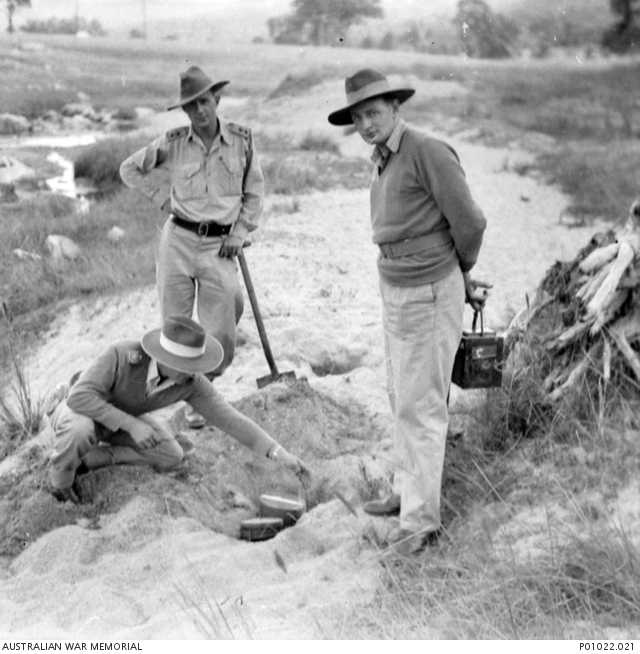
(Picture shows Denzil Macarthur-Onslow, on the right, supervising a training exercise in Queensland in 1942; photo from the Australian War Memorial)

Boys Names from the Top 100 of the 1940s

08 Sunday Mar 2015

Posted by A.O. in Name Themes and Lists

≈ 4 Comments

Tags

Anglo-Saxon names, animal names, aristocratic names, aristocratic surnames, aristocratic titles, Biblical names, Breton names, CB radio voice procedures, classic names, english names, ethnonyms, fictional namesakes, French names, Gaelic names, germanic names, Greek names, Irish names, Latin names, locational names, mythological names, name history, name meaning, name trends, names from television, names from video games, names of flags, nicknames, Norse names, papal names, Roman names, royal names, saints names, Scottish names, slang terms, surname names, US name trends, Welsh names

AUGUST-15-1945-Ern-Hill-the-Dancing-Man-in-Eliza-5741858

Alan
Breton name, common amongst aristocracy, introduced to England by the Normans, where it became one of the most popular names. The meaning is uncertain – the word alan was used in Brittany to mean “fox”, but evidence suggests it originally meant “deer”. The two meanings may both refer to someone with red hair, or to indicate speed. There is also an Irish name Ailin, meaning “little rock”, very similar to the Irish/Scots Gaelic word alainn, meaning “handsome”, while the Welsh Alun may mean either “nurturing” or “wandering”. When the Normans brought Alan with them, the name spread to Scotland as Breton lords gained lands there – perhaps partly because the Scots already had similar names. Another theory is that the name comes from the Alans, Indo-Iranian peoples who settled in parts of France and Brittany in the Middle Ages; their name has the same origin as Aryan, meaning “noble”. There are several saints named Alan. Alan is a classic name which has never left the charts. It was #55 in the 1900s, and peaked in the 1940s at #20, leaving the Top 100 in the 1980s. It has recently had a small rise in popularity, and is around the 300s. Surname variants Allan and Allen have also been popular; Allen is back on the charts, while Allan has disappeared. I have seen a few babies named Alan and Allen lately.

Cecil
English form of the Roman family Caecilius. The Caecilii traced their ancestry back to the mythical figure Caeculus, a son of the smith god Vulcan. According to legend, Caeculus had mastery over fire, and was unharmed by it, although the smoke damaged his eyes, which were smaller than usual – his name means “little blind boy” in Latin. Another story is that the Caecilii were descended from Caecas, a follower of the legendary Roman hero Aeneas: his name means “blind” as well, although it also can be translated as “dark, secret”. Of course both these tales are just folklore. The name Cecil has been used since the Middle Ages, and it was also given in honour of the noble Cecil family, whose surname comes from the name Seisyll, Welsh form of the Roman name Sextilius, from Sextus, meaning “sixth”. Cecil was #18 in the 1900s, and was #89 in the 1940s. It left the Top 100 the following decade, and dropped off the charts in the 1970s. I recently saw a baby Cecil, and I think this name seems pretty hip.

Clifford
English surname, from a village in Herefordshire meaning “ford at the cliff”. The Cliffords are a noble family who originally came over with the Normans, and were prominent in medieval England. One of their members was Rosamund Clifford, “The Fair Rosamund”, who was the mistress of Henry II. Clifford has been used as a first name since at least the 16th century. Clifford was #61 in the 1900s, peaking in the 1910s and 1920s at #59. It was #92 in the 1940s, left the Top 100 the following decade, and was off the charts by the 1990s. This name will remind many parents of the classic children’s book series, Clifford the Big Red Dog. It seems strong and solid.

Desmond
Anglicised form of the Irish surname O’Deasmhumhnaigh, meaning “son of the man from Desmond”. Desmond is the original name for South-West Munster, and means “south Munster”. Munster means “land of Muma”; Muma was a goddess associated with writing. Desmond became prominent as an aristocratic title, as the Earls of Desmond were lords of Ireland, related to royal houses in England and France. Their family name was FitzGerald, and US President J.F. Kennedy is believed to have been descended from them. Desmond has been used as a personal name since the 18th century, and originated outside Ireland. Desmond was #127 in the 1900s, joined the Top 100 in the 1920s, and peaked in the 1940s at #66. It left the Top 100 in the 1960s, and dropped off the charts in the early 2000s. This name is rising in popularity in the US, and I wonder if that could happen here too? Desmond Miles from the Assassin’s Creed video game series, and Desmond from Lost are contemporary namesakes.

Gregory
From the Greek name Gregorios, meaning “watchful”. Because the Latin for “flock” is grex, it became understood as “shepherd”, the idea being that the shepherd would keep watch over his flock. Because of this, it became a popular name for monks and bishops to adopt, and there have been dozens of saints and 16 popes with the name Gregory. Pope Gregory I was known as Gregory the Great, and he is famous for sending Christian missionaries to England to covert the Anglo-Saxons, and for the Gregorian chant, which is attributed to and named after him. Because of him, Gregory has been a common English name since the Middle Ages. Gregory is a classic name which has never left the charts. It was #143 in the 1900s, and joined the Top 100 in the 1930s. It was #34 in the 1940s, and peaked in the 1950s at #7 (when Gregory Peck was big in Hollywood). It didn’t leave the Top 100 until the 1990s, and is currently around the 600s and fairly stable. It may not be stylish, but this is a solid choice.

Maurice
French form of Roman name Mauritius, derived from Maurus, meaning “man from Mauretania”. Mauretania was a region of the Roman Empire where north Africa is today, so the name is often understood as “dark-skinned”, and sometimes translated as “a Moor” (the old name for someone from northern Africa). The name became commonly used because of St Maurice, a 3rd century Egyptian who served in the Roman army. According to legend, he was part of a Christian legion who refused to kill other Christians, and were martyred together. As a Roman soldier, St Maurice was patron of the Holy Roman Emperors and many of the royal houses of Europe, so his name became used by royalty and nobility. Prince Maurice of Battenberg was Queen Victoria’s youngest grand-child; he was killed in action during World War I. Maurice was #71 in the 1900s and peaked in the 1920s at #52. It was #82 in the 1940s, and left the Top 100 the following decade; it dropped off the charts in the 1990s. Maurice has a rather nerdy image, although AFL fans may be reminded of footballing great Maurice Rioli. It can be said muh-REES or MOR-is, with Reese or Morrie as the nicknames.

Norman
Germanic nickname or surname meaning “north man”, referring to Vikings. The Normans were descendants of Vikings who had taken over and settled the region of northern France now known as Normandy. Later a Norman duke named William conquered England, so that the Normans became an important part of British history and culture. The name Norman or Normant was used in England even before the Conquest, and became more common after 1066, although dropped off again in the late Middle Ages. It never went out of use, but became much more popular in the 19th century, due to the Victorian love of anything antique-sounding. In Scotland, it was used to Anglicise the Norse/Gaelic name Tormod, meaning “courage of Thor”. Norman was #19 in the 1900s, and peaked in the 1920s at #14. It was #46 in the 1940s, left the Top 100 in the 1960s, and disappeared from the charts in the 1990s. There are many Australian namesakes, from artist Norman Lindsay to comedian Norman Gunston to pop star Normie Rowe. Many people still remember Norm, from the Life. Be in it fitness campaign, representing a pot-bellied man as “the norm”.

Raymond
The Germanic name Raginmund is composed of ragin, meaning “advice, counsel” and mund, “protection”; it is sometimes translated as “protected by good counsel”. The Normans introduced it to England in the form Reimund, where it became very common in the Middle Ages. It was a traditional name amongst medieval nobility, and there are several medieval saints called Raymond. Never out of use, Raymond is a classic name which has always remained on the charts. It was #33 in the 1900s, and peaked in the 1940s at #9. It left the Top 100 in the 1990s, and hit its lowest point in 2009 at #326. Since then it has improved its popularity ranking, and is currently in the 200s. With Roy- names so fashionable, Ray- names cannot help getting a boost as well, and Raymond is not only a solid classic choice, but one which has recently gained some cachet. Plenty of parents love Raymond!

Roger
From a Germanic name meaning “famous spear”. The Normans introduced the name to England in the form Rogier, where it replaced the Anglo-Saxon form, Hroðgar or Hrothgar, which is found in the poem Beowulf as the name of a Danish king. The name was common in medieval England, heavily used by the aristocracy, and there are a couple of saints named Roger. It has never gone out of common use, even though roger was a slang term for “penis” – possibly because of the spear connection. More recently, roger has become understood as “to have sexual intercourse”. It has often been chosen for comic characters, such as the Beano‘s Roger the Dodger, Roger Ramjet, Roger Rabbit, Roger the alien from American Dad, and Roger the Shrubber from Monty Python’s Holy Grail (not to mention “Welease Woger” in The Life of Brian). Roger was #155 in the 1900s, joined the Top 100 in the 1930s and peaked in the 1940s at #57. It left the Top 100 in the 1970s, and dropped off the charts in the late 2000s, albeit with a sudden burst of use in 2009, when it got up to #384. Although perhaps too many jokes have been made at its expense, the pirate flag of the Jolly Roger, and radio procedure call of Roger give it a rollicking feel.

Stephen
English form of the Greek name Stephanos, meaning “wreath, crown”, to denote the laurel wreath worn by those who achieved victory in contests. In the New Testament, St Stephen was a deacon of the early church who was martyred by stoning. As the first martyr, St Stephen’s name seems apt, and he is often said to have won his martyr’s crown. There are several other saints with the name, and nine popes. The name Stephen became more popular in England after the Norman Conquest, and although it is a common name for royalty in eastern Europe, there has only ever been one English king with the name. Stephen of Blois was a grandson of William the Conqueror who took the throne in controversial circumstances; his rule marked a period of anarchy as he fought the Empress Matilda for the right to rule. In the end he failed, and his name has never been used again for a British king. Never out of common use, Stephen is a classic name which has remained on the charts. It was #72 in the 1900s, was #36 in the 1940s, and peaked in the 1950s at #5. It didn’t leave the Top 100 until the early 2000s, and is currently fairly stable around the 300s. The variant Steven, in use since the Middle Ages, is more popular than Stephen, around the 200s.

POLL RESULTS
People’s favourite names were Desmond, Stephen and Gregory, and their least favourite were Roger, Maurice and Norman.

(Picture shows the famous “dancing man” from the joyous celebrations in the streets of Sydney which marked the end of World War II in August 1945)

Girls Names from the Top 100 of the 1940s

01 Sunday Mar 2015

Posted by A.O. in Name Themes and Lists

≈ 10 Comments

Tags

animal names, aristocratic names, Biblical names, classic names, colour names, controversial names, created names, dated names, english names, fictional namesakes, French names, gemstone names, German names, Greek names, hebrew names, Latin names, middle names, mythological names, name history, name meaning, name popularity, nature names, nicknames, plant names, rare names, retro names, royal names, saints names, Spanish names, underused classics, unisex names, vocabulary names

029692

These are names of babies born during World War II, and the first baby boomers, born in the years just after the war. If you are an older parent, your own mother might have been born in this decade, while young parents may see 1940s names as “grandma” names. For those wanting a name that’s ahead of the curve, there are rich pickings from this time period.

Coral
Coral is a gemstone made from the polished shells or exoskeletons of coral polyps – originally, and typically, Corallium rubrum, from the Mediterranean. Because this species has a pink or red colouring, the word coral also refers to a pinkish colour. The ancient Romans believed coral would protect children, and it was common for baby toys and teething rings to be made from coral, even in the 19th century. Coral jewellery has been worn since prehistoric times, although it was the Victorian era which made coral fashionable. Today, with greater awareness of the environmental impact of harvesting coral, many jewellers will no longer sell coral items, and consumers are urged to boycott jewellery made from coral. The name Coral was #194 in the 1900s, and joined the Top 100 in the 1930s. It peaked in the 1940s at #79, left the Top 100 the following decade, and was off the charts by the 1980s, perhaps partly due to growing environmental concerns. Leaving aside the gemstone, you could see this name as a way to celebrate our beautiful coral reefs, and marine environment.

Daphne
In Greek mythology, Daphne was a naiad; a nymph of fresh water, and daughter of a river god. Acording to legend, she was so beautiful that the god Apollo pursued her. Just as he was about to catch her, she pleaded with her father to help her, and he turned her into a laurel tree – Daphne literally means “laurel”, and it’s also the scientific name for the plant. The laurel became sacred to Apollo, and wreaths of laurel were traditionally given to those who had achieved victory. The name Daphne has been use since the 18th century, when classical names became fashionable, but only became common in the 19th, because of the interest in botanical names. Daphne was #82 in the 1900s, and peaked in the 1920s at #22. It was #76 in the 1940s, left the Top 100 the following decade, and was off the charts by the 1970s. Recently it been in the charts again, and is around the 300s. Charming retro Daphne makes a distinguished choice, not a daffy one.

Frances
Feminine form of Francis, often given in tribute to St Francis of Assisi, although St Frances of Rome provides a medieval female saintly namesake. The name was commonly used by the British aristocracy, with examples such as Frances Cobham, a close friend of Elizabeth I, and Frances Grey, the mother of queen-for-nine-days Lady Jane Grey. The great Restoration beauty Frances Stewart, Duchess of Richmond and Lennox, drove King Charles II batty with desire, but she refused to become his mistress. Her lovely face was used as the model for Brittania on coins, medals, and statues, and can still be seen today. In common use since the 16th century at least, Frances is a classic name which has never disappeared from the charts. It was #52 in the 1900s, and peaked in the 1940s at #47, leaving the Top 100 in the 1970s. It sank into obscurity in the late 2000s, but had a boost at the start of this decade which saw it move into the 500s, and is now around the 200s. More solid than Francesca, Frances is a quiet achiever which gets royal glamour from being the middle name of Diana, Princess of Wales, and offers the cool nickname Frankie.

Irene
From the Greek Eirene, meaning “peace”. In Greek mythology, Eirene was the personification of peace, depicted as a beautiful young girl carrying symbols of plenty. Another mythological Eirene was a daughter of Poisedon. The name was in use in ancient Greece, and one Eirene was a famous artist. There are a number of saints named Irene, with Irene of Thessalonica martyred with her sisters Love and Purity, so personifications of theological virtues. Originally more popular in eastern Christianity, it was the name of a Byzantine Empress, and has been used by European royalty. The name was originally pronounced e-REE-nee, but is usually said IE-reen now. Irene is a classic name which has never left the charts. It was #19 in the 1900s, and peaked the following decade at #17. It was #56 in the 1940s, and left the Top 100 in the 1960s. It reached its lowest point in the late 2000s at #684, and since then become more popular, perhaps because it’s been used for several fictional characters in the past few years. Currently it’s around the 400s. This is a hip, underused classic with a lovely meaning.

Lois
In the New Testament, Lois was the pious grandmother of Saint Timothy. It’s not known what the name means: it may be from the Greek meaning “more desirable, more agreeable”, and understood as “the most beautiful, the best”. However, as Lois was Jewish, it could be an attempt to Hellenise a Hebrew name. Lois is also a male name – an Occitan and Galician form of Louis. The female name Lois has been in use since the 16th century, and was used by Puritan families. Lois Lane, Superman’s love interest, has given the name publicity for many decades, but more recently it has become a “mum name” on TV, with Lois Wilkerson from Malcolm in the Middle, and Lois Griffin from Family Guy. Lois joined the charts in the 1910s, debuting at #181. It joined the Top 100 in the 1930s, when it peaked at #84, and was #93 in the 1940s. It left the Top 100 the following decade, and was off the charts by the 1970s. Soft sounding Lois would make an interesting alternative to popular names such as Eloise.

Marlene
German name combining Maria/Marie and Magdalene, so it commemorates Mary Magdalene from the New Testament, the chief female disciple of Jesus Christ. The German pronunciation is mahr-LE-nuh, but it is often said MAHR-leen in English. The name became well known in the English speaking world because of iconic German-American film star Marlene Dietrich, whose real name was Marie Magdalene. The name Marlene rocketed into the Top 100 from nowhere in the 1930s when Dietrich became a star after appearing as the uberdesirable Lola Lola in Josef von Sternberg’s movie The Blue Angel. It both debuted and peaked at #63 in the 1930s. The name Marlene was #68 in the 1940s, when Dietrich did valuable war work, such as performing for the troops and raising war bonds. By the 1950s, when Dietrich became a cabaret star, the name Marlene had left the Top 100. It left the the charts in the 1980s, when Dietrich’s career was over. Despite being a dated name which spiked in popularity only briefly, Marlene still seems glamorous and sexy, fitting in with modern names such as Marley and Elena.

Pamela
Created by Sir Philip Sidney for his 16th century epic, the Arcadia; in the story, Pamela is an attractive main character. It is usually thought that Sidney based the name on the Greek for “all sweetness”. The name was given publicity by Samuel Richardson’s best-selling 18th century novel, Pamela, where a lovely teenaged maidservant is threatened with rape by her employer, but she successfully resists him, and is rewarded for her virtue by being allowed to marry him. Not only are there so many things wrong with that sentence, it was apparently based on a true story. Pamela was originally pronounced pa-MEE-luh, but PAM-eh-luh is more usual now. Pamela has been used since the 17th century, and an early namesake was Lady Edward Fitzgerald; although her real name was Stephanie, she named her eldest daughter Pamela. Pamela joined the charts in the 1910s, debuting at #310, and peaked in the 1940s at #9. It left the Top 100 in the 1970s, and hasn’t been on the charts since the early 2000s. This is an elegant literary name which is dated, but still seems very usable.

Ruth
In the Old Testament, Ruth was the loyal widowed daughter-in-law of Naomi, who famously offered to follow her mother-in-law wherever she went. Naomi married Ruth to one of her relatives, who called Ruth a “noble character”; she is one of the nicest people in the Bible, blessed with a loving spirit. Her name comes from the Hebrew ru’at, meaning “friend, companion” – it seems chosen for the story, as she was such a good friend to Naomi. Ruth is also an English word meaning “mercy, compassion” – it’s one of those words which only seems to be used in its negative form, as we often describe people as ruthless, but rarely ruthful. Ruth has been in common use throughout the modern era, and is a classic name which has never left the charts. It was #66 in the 1900s, and peaked in the 1920s at #41. It was #58 in the 1940s, and left the Top 100 in the 1970s. It’s currently around the 500s. An underused classic with two lovely meanings and a sweet namesake, this is a great name. After all, you can’t spell truth without Ruth!

Thelma
Popularised by Marie Corelli’s 1887 novel Thelma; in Corelli’s romance, Thelma is an enchantingly beautiful, snow-pure Norwegian princess who marries an English nobleman. The name Thelma had been in use since at least the 18th century, but the meaning is not known. One theory is that it is based on the Greek word thelema, meaning “will”, but there is no evidence to support it. It may be a variant of Selma, since Selma is a common name in Scandinavia even today, and Thelma was used in Norway before the novel was published. The name Thelma was also used in Spanish-speaking countries before Corelli’s novel, and Anselma (the long form of Selma) is a Spanish name. Thelma was #18 in the 1900s and peaked the following decade at #9. It was #96 in the 1940s, left the Top 100 by the following decade, and was off the charts by the 1970s. With the name Selma now receiving a boost from the film, could its clunky sister Thelma be in with a chance?

Valerie
English form of the French name Valérie, from the Latin name Valeria, the feminine form of Valerius, meaning “strong, healthy”. It comes from the same source as the name Valentine. St Valerie was a legendary French saint who was martyred by beheading, then went for a walk carrying her head. This was a popular thing for French saints to do in medieval legends, so the name Valerie got quite a boost. Valerie is a classic name which has never left the charts. It was #180 in the 1900s, and joined the Top 100 the following decade. Peaking in the 1930s at #12, it was #38 in the 1940s. It left the Top 100 in the 1960s, and has remained in uncommon use. It had a small boost at the start of this decade, when it was in the 400s. Valerie is a classic with a rather luscious feel to it. It makes a great middle name too.

POLL RESULTS
People’s favourite names were Daphne, Coral and Frances, and their least favourite were Marlene, Thelma, and Pamela.

(Picture shows members of the Women’s Auxiliary Air Force working on a RAAF plane; photo from the Australian War Memorial)

Famous Name: Georgina

18 Wednesday Feb 2015

Posted by A.O. in Famous Names

≈ 3 Comments

Tags

aristocratic names, birth notices, classic names, famous namesakes, fictional namesakes, honouring, middle names, names from television, nicknames, royal names, UK name popularity, underused classics, US name popularity

708662-gina-rinehart

Famous Namesake
The Channel 9 mini-series House of Hancock has just come to an end, having enjoyed a certain amount of notoriety and controversy. The series is based on one of Australia’s real life soap operas: the family of wealthy Western Australian mining magnate Lang Hancock.

The main focus of the mini-series is on the relationship between Lang and his daughter Georgina (called Gina), brought under pressure when the teenaged Gina married a man old enough to be her father, which is increased when freshly-widowed Lang married his Filipina maid, who was young enough to be his daughter. The story then follows Gina’s relentless rise to wealth and power as Lang’s heiress, accompanied by family ructions.

Gina Rinehart is the chair of Hancock Prospecting, founded by her father Lang. She is the richest person in Australia, and a few years ago was the world’s richest woman, but is now only the sixth-richest. She was named after her father, who has George as one of his middle names, while her middle name Hope is her mother’s name.

Mrs Rinehart took legal action against the makers of House of Hancock, with her lawyer calling the program “almost entirely fiction”, “replete with falsehoods”, and its depiction of true events as “twisted.” Part of her legal team’s argument was that actors in House of Hancock breached consumer law against misleading and deceptive conduct by pretending to be someone else. I can only think a lot of actors, if not all of them at some time or another, have similarly breached consumer law.

Her lawyers were successful: Gina was granted access to the second episode before it went to air, and certain cuts were hastily made to key scenes before the show went to air, leading to a very abrupt ending. Despite all the cuts, House of Hancock was a hit, attracting more than 25% of the audience, or nearly 2 million viewers per episode. Actress Mandy McElhinney (Rhonda from the AAMi commercials) has garnered praise for her outstanding performance.

Although the details haven’t been made public, apparently one of the things Gina objected to was her father’s ghost coming back to chat with her, which she assures us did not happen. I for one believe her story, and don’t need a lawyer to convince me. She also says that she never fought with her stepmother, and in fact never spoke to her at all, painting a picture of happy family life in the process.

Despite making sure that House of Hancock came with a disclaimer that it had been fictionalised for dramatic purposes and was not a documentary, Gina Rinehart is still fuming, and will now sue Channel Nine for defamation. No stranger to the courtroom, she mounted an eleven-year legal battle against her stepmother Rose Porteous, claiming that she had hastened Lang Hancock’s death (the coroner determined he had died of natural causes). In turn, Gina has been in a long-running legal feud with her children over the family trust.

So that’s Georgina Rinehart – large, in charge, rich as filth, and liable to sue you if you claim she talks to ghosts and her stepmother.

Name Information
Georgina is a feminine form of George. Like its male counterpart, it has been in use for many centuries, but only gained prominence after the House of Hanover began to rule Britain in the 18th century, with George becoming a traditional royal name.

Georgina has been used as a middle name in the royal family – an example is Princess Maud of Fife, grand-daughter of Edward VII. It’s also been used by the aristocracy: Georgina Ward, Countess of Dudley, was one of the great beauties of the Victorian era, while Georgina Gascoyne-Cecil, Marchioness of Salisbury, was the wife of British prime minister, Lord Robert Cecil.

Georgina has been rather a favourite for characters in children’s literature, with the best known perhaps Georgina Kirrin from Enid Blyton’s Famous Five series. Georgina is a tomboy who is always called “George”. In the TV series Gossip Girl, the character of Georgina Sparks has been turned into one of the show’s villains; she goes by “Georgie”.

Georgina is an underused classic name which has never left the charts, yet never been popular. It was #171 in the 1900s, and hit its peak in the 1970s at #109 – it may not be a coincidence that the Famous Five series was on TV in that decade. Currently it is around the mid-200s, and I see the name Georgina quite often in birth notices.

Georgina is more popular in the UK, where it is #173 and falling, but doesn’t chart in the US. This gives it a rather “British” feel, although it’s used internationally, including in Spain, the Netherlands, and Central and Eastern Europe.

This is a stylish yet solid choice which has all the advantages of a classic name that doesn’t feel dated, without any popularity to worry about. It has a rather upper middle class image in Australia, but has a number of breezy, carefree nicknames to go by, including George, Georgie, Gia, Gina, Ginny, Gigi, and Nina.

POLL RESULTS
Georgina received a creditable approval rating of 73%. People saw the name Georgina as familiar without being common (21%), and stylish and classy (16%). However, 10% were put off the name by Gina Rinehart.

(Photo of Gina Rinehart from news.com.au)

← Older posts
Newer posts →

Enter your email address to follow this blog

Categories

Archives

Recent Comments

A.O.'s avatarwaltzingmorethanmati… on Zarah Zaynab and Wolfgang…
Madelyn's avatarMadelyn on Zarah Zaynab and Wolfgang…
JD's avatardrperegrine on Can Phoebe Complete This …
A.O.'s avatarwaltzingmorethanmati… on Rua and Rhoa
redrover23's avatarredrover23 on Rua and Rhoa

Blogroll

  • Appellation Mountain
  • Baby Name Pondering
  • Babynamelover's Blog
  • British Baby Names
  • Clare's Name News
  • For Real Baby Names
  • Geek Baby Names
  • Name Candy
  • Nameberry
  • Nancy's Baby Names
  • Ren's Baby Name Blog
  • Sancta Nomina
  • Swistle: Baby Names
  • The Art of Naming
  • The Baby Name Wizard
  • The Beauty of Names
  • Tulip By Any Name

RSS Feed

  • RSS - Posts

RSS Posts

  • Celebrity Baby News: Melanie Vallejo and Matt Kingston
  • Names from the TV Show “Cleverman”
  • Can Phoebe Complete This Sibset?
  • Zarah Zaynab and Wolfgang Winter
  • Baby, How Did You Get That Name?
  • Celebrity Baby News: Media Babies
  • Celebrity Baby News: Adelaide Crows Babies
  • Celebrity Baby News: Chris and Rebecca Judd
  • Names at Work: Name News From the World of Business and Employment
  • Celebrity Baby News: Sporting Round Up

Currently Popular

  • Celebrity Baby News: Alisa Camplin and Oliver Warner
  • Rare Boys Names From the 1950s
  • Sad Celebrity Baby News (contents may cause distress)
  • Celebrity Baby News: Nicki Gemmell and Andrew Sholl
  • Celebrity Baby News: Jacinta Allan and Yorick Piper

Tags

celebrity baby names celebrity sibsets english names famous namesakes fictional namesakes honouring locational names middle names name combinations name history name meaning name popularity name trends nicknames popular names saints names sibsets surname names twin sets unisex names

Create a free website or blog at WordPress.com.

Privacy & Cookies: This site uses cookies. By continuing to use this website, you agree to their use.
To find out more, including how to control cookies, see here: Cookie Policy
  • Subscribe Subscribed
    • Waltzing More Than Matilda
    • Join 517 other subscribers
    • Already have a WordPress.com account? Log in now.
    • Waltzing More Than Matilda
    • Subscribe Subscribed
    • Sign up
    • Log in
    • Report this content
    • View site in Reader
    • Manage subscriptions
    • Collapse this bar
 

Loading Comments...