Celebrity Baby News: Elly-May Barnes and Liam Conboy

Tags

,

main_jimmy_barnes_grandson_1a4qq4b-1a4qq5f

Former child performer Elly-May Barnes, and her partner Liam Conboy, welcomed their first child on September 23 and have named their son Dylan James. Dylan’s middle name may be in honour of his grandfather.

Elly-May is the youngest daughter of rock star Jimmy Barnes, front man for Cold Chisel, and his wife Jane Mahoney (born Jane Dejakasaya in Thailand). Elly-May suffered a brain haemorrhage after being born prematurely, which left her with cerebral palsy, giving her chronic pain and a limp in one leg. As a child, Elly-May was a member of the children’s pop group the Tin Lids, along with her sisters Mahalia, Eliza-Jane, and Jackie. They released three albums in the early 1990s. Elly-May’s partner Liam works in the hospitality industry.

(Photo shows Elly-May holding Dylan, accompanied by her dad, Jimmy)

Celebrity Baby News: Sporting Babies

Tags

, , ,

Bw40HfTCIAAh8-y

Rugby union player Saia Fainga’a, and his fiancée Alicia Antico, welcomed their first child on September 5 and have named their daughter Sienna. Saia made his Super 14 debut in 2006 with the Canberra Brumbies, and currently plays for the Queensland Reds. He has been a member of the national team, the Wallabies, since 2010. Saia’s twin brother Anthony, and his younger brothers Vili and Colby are also professional rugby footballers.

Soccer player Besart Berisha, and his wife Sumea, welcomed their daughter Isra on September 21; Isra is an Arabic name meaning “night journey”. Besart is an Albanian football player who has played professionally in Albania, Germany, Denmark, the UK, and Norway before signing with Brisbane Roar for the 2011 season. This year he signed with Melbourne Victory for two seasons as their International Marquee player.

Wagga Wagga racehorse trainer Brad Witt, and his partner Rebekah West, welcomed their first child on October 14 and have named their daughter Amelia.

(Picture shows Saia Fainga’a and his daughter Sienna; photo from Twitter)

Girls Names From Native Australian Flowers

Tags

, , , , , , , , , , , , , , , , , , , , , , , , , , , , ,

BoroniaHeterophyllaLipstickCu600

Now that it’s spring, I have been taking advantage of the warmer weather and lighter evenings to get out into the garden more. I love the spring flowers, which make me think of floral names, so here are some from our native blooms.

Boronia
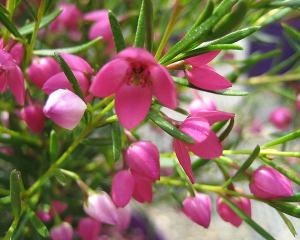
Boronia (bor-OH-nee-uh) is a native shrub whose cup-shaped, pink or red-hued flowers give off the most exquisite sweet scent; boronias are related to citrus trees, and the fragrance of boronia is slightly lemony. It is a popular ingredient for perfumes and scented oils, but oddly enough, quite a few people are unable to smell boronia at all. Boronias grow in many parts of Australia, but the Brown Boronia, considered to have the most magnificent scent of all, is from Western Australia. Many people find boronia difficult to grow, and might enjoy this plant more by walking through the bush in spring. The plant has given its name to a pleasant suburb of Melbourne, while Boronia Heights is a suburb of Logan. The boronia is named after Francesco Borone, who was the servant of botanist Sir James Smith, but became his talented and valued field assistant. Francesco died in a bizarre accident when he sleep-walked out the window while recovering from illness. When Sir James discovered the boronia several years later, he named it in Borone’s memory. There are quite a few people with the name Boronia in Australian historical records, mostly as a middle name. Bo would make a charming nickname.

Correa
Correa (KOR-ree-uh) is a small shrub related to the boronia, but its bell-shaped flowers have no fragrance; instead it is the leaves which have a fruity smell when crushed. Correa reflexa is known as Native Fuchsia, because of its long tubular petals which are often a dusky pink colour, although correa can come in a range of colours. Correa grows all over Australia, and is an easy garden plant to grow; it blooms in autumn and winter, making it a great plant to brighten up your garden during the cold months. Correa is named in honour of the Portuguese botanist José Correia da Serra; the Correia part of his name is a common Portuguese surname meaning “leather strap”, originally given to those who worked in the leather trade. Correa is a rare find in Australian historical records, and would make a distinctively Australian alternative to names such as Cora.

Daisy
Daisies are simple little picture-book flowers common all over the world; they are symbolic of childhood innocence. There are many types of daisy native to Australia; one of the most popular is the Paper Daisy, called the Everlasting in Western Australia. Small with crisp, papery petals, they are pink and white, and very easy to grow. The word daisy comes from the Old English for “day’s eye”, as English Daisies open when the sun rises and close in the evening. Daisy has been used as a girl’s name since the 16th century, and became popular in the 19th, along with other floral names. It is also used as a nickname for Margaret, because the French name for the Ox-eye Daisy is the Marguerite. The name Daisy was #58 in the 1900s, and left the Top 100 in the 1920s. It dropped from the charts in the 1940s, made a minor come-back in the 1950s, then dropped out again the following decade. Daisy returned to the charts in the 1980s at #646, and climbed fairly steadily. It rejoined the Top 100 last year at #90, making it one of the fastest-rising names of 2013. Wholesome yet also sexy, retro Daisy still sounds fresh … as a fresh a daisy!

Dianella
Dianella is commonly known as Blue Flax-lily, found in all states of Australia. These woodland plants grow in clumps with small, deep blue flowers that bloom in spring and summer; they are popular garden plants being hardy as well as decorative. The Perth suburb of Dianella was named after the flower, which grew in abundance there before development. Dianella is named after the Roman goddess Diana, goddess of the hunt, because she is associated with woodlands; the name Diana may mean “heavenly, divine”. Dianella seems like an interesting way to honour a Diana or Diane, while giving a nod to native flora, and offering popular Ella as the nickname. The name Dianella shows up several times in Australian historical records, always in South Australia for some reason.

Laurina
Hakea laurina, also known as Pincushion Hakea, is a large upright shrub or small tree from south-west Western Australia. The flowers are very striking, being deep pink or red, and shaped like globes with cream spikes coming out of them; they have a mild fragrance, but are best known for producing nectar, which is very attractive to birds. Hakea laurina blooms in autumn and winter, and this popular garden plant is easy to grow, being both drought-tolerant and frost-hardy. Laurina is simply based on the Latin Laurus, as its leaves are similar to those of the laurel tree. The name Laurina dates to the 18th century, and is an elaboration of the name Laura. It has recently been brought to attention through “Melbourne princess” Laurina Fleure, who was a contestant on this season of The Bachelor: although portrayed as a villain by the show’s producers, she gained a fan following and has been dubbed “Australia’s Carrie Bradshaw”.

Lilac
Lilac (Syringa vulgaris) is a small tree native to the Balkans, famous for its pale purple flowers, which have a beautiful sweet fragrance. Australia has a plant which is sometimes called Native Lilac, or Lilac Vine, and that is Hardenbergia violacea, also known as Purple Coral Pea, as it is member of the pea family. It is a hardy and vigorous climbing vine, capable of growing twenty feet; some varieties are low-growing shrubs. In winter it produces masses of showy violet pea-flower blooms, and is an easy to grow garden plant, popular for training over fences and pergolas. Lilac is a word from the French, which ultimately goes back to the Sanskrit for “dark blue”; it has been used as a girl’s name since the 19th century, when other flower names came into fashion. Lilac has never been a common name, but it is very pretty, and would be right on trend, fitting in with popular Lily and Lila, while having its own distinctive sound. It would also make a lovely middle name to match all those girls’ names ending with -a or an EE sound.

Lotus
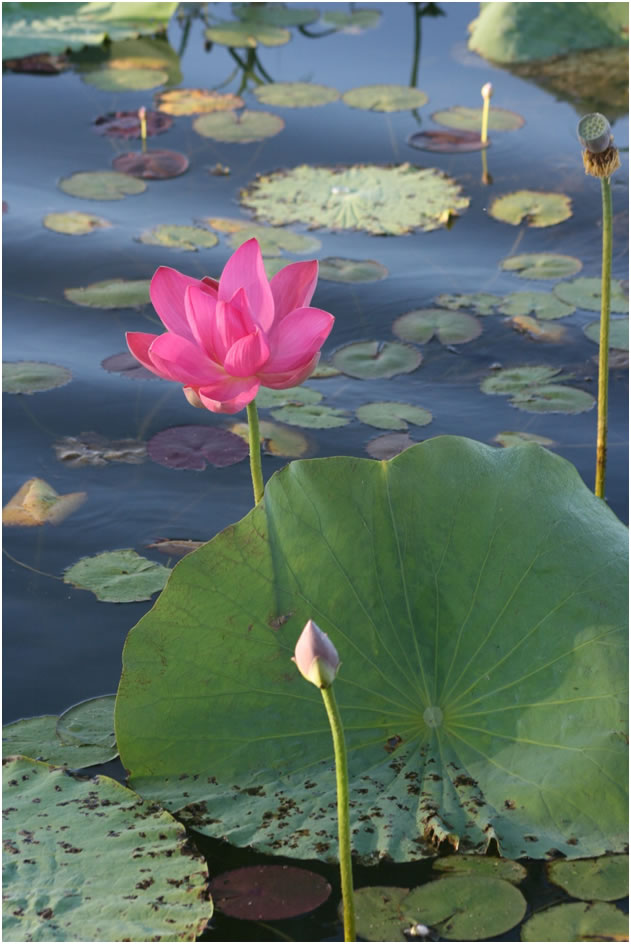
The lotus flower (Nelumbo nucifera), sometimes known as Sacred Lotus, Red Lily, or Lotus Lily, is an aquatic plant native to Tropical Asia and Northern Australia; it is thought that the plants were brought to Australia many centuries before European settlement. There are many different varieties and cultivars, with one of them being the Waltzing Matilda Lotus, which is small with pink flowers. Lotus flowers can be easily grown all over Australia, but the native lotus will only be happy in warm areas. The Lotus is a very symbolic plant – as it is a stunning flower which grows out of slimy mud, you can see it as a message that life can be beautiful no matter what your origins or circumstances. In Hinduism, a lotus is often used to indicate divine beauty and spiritual growth; in Buddhism it represents purity and non-attachment to the material world. Asian literature sees the lotus as the ideal of feminine grace, beauty, and elegance. The lotus is also a peace symbol, and Aboriginal people from the Top End held up lotus leaves to strangers to show they meant no harm. With so many wonderful meanings for this lovely flower, it’s surprising how little Lotus has been used as an English name. Many will see it as having a hippie vibe, while others may see it as a car name.

Orchid
Orchids are extremely diverse plants found almost everywhere in the world except on glaciers; they grow in the Arctic, and on Macquarie Island near Antarctica. There are hundreds of types of orchids native to Australia. Orchids are grown for their often beautiful flowers, and excite a passion in those who cultivate and collect them that amounts to an obsession. The Cooktown Orchid (Dendrobium phalaenopsis) is the state emblem of Queensland, and grows naturally in the state’s tropical far north. It is considered to be Australia’s showiest orchid, with beautiful mauve flowers that bloom in the dry season. With care, it can be grown outdoors as far south as Brisbane; any lower than that and you need a glasshouse. Orchid has been used as a girl’s name since the 19th century, and despite the beauty of the orchid flower, it has remained in rare use. This may be because the ORK sound at the start is not considered attractive, or because the flower’s name comes from the Greek for “testicle”. Orchid is an unusual, sophisticated floral choice that starts with the fashionable O, but sounds quite distinct from today’s popular names.

Pandorea
Pandorea (pan-DOR-ee-uh) are climbing vines native to Australasia. Pandorea pandorana, otherwise known as Wonga-wonga Vine, is a popular garden plant, being an easy to grow vigorous climber with glossy leaves. The flowers are bell-shaped, bloom profusely in spring, and are naturally creamy-white with maroon markings, but cultivars come in a very wide range of colours. Hardy and adaptable, Wonga-wonga Vine grows all down the east coast, as well as in the central deserts, and is also native to several Pacific Islands. The wood of the vine was used by Aborigines of central Australia to make spears, and it appears in their mythology as a group of women with very thin and flexible bodies. The plant’s scientific name is after Pandora from Greek mythology, who legend says had a container filled with all the world’s evils, which she opened out of curiosity. It is usually thought the name came about because the Pandorea vine grows a pod which opens to reveal a multitude of seeds; supposedly the plant’s namer was reminded of “Pandora’s box” by the seed pod. The name Pandora has a lovely meaning – “all gifts”. If you are attracted to the name Pandora, but have doubts about the myth, or worry it’s too Avatar, or don’t like the -dora sound at the end, why not consider Pandorea as a floral alternative?

Violet
Violets are small violet-blue flowers, which symbolise modesty – we call a shy person a “shrinking violet”, and connect the flowers with pure femininity. They are associated with death and resurrection in Greek myth, and can be used to denote death which comes too soon, such as for Ophelia in Shakespeare’s Hamlet. Violet Day was commemorated in Australia to remember those who died during World War I; the last Violet Day was held in 1970. There are a few species of violet native to Australia – a favourite for gardeners is Viola banksii, which grows naturally in New South Wales. It has striking purple and white flowers, and is very easy to grow, forming an attractive groundcover. The word violet comes by way of the Latin viola, and simply refers to the colour. Violet has been used as a name since the 16th century in Scotland, influenced by the French name Violette. Violet was #22 in the 1900s, and left the Top 100 in the 1940s, before dropping off the charts in the 1960s. It didn’t return until the early 2000s, when it was #569; this follows the publication of Lemony Snicket’s Series of Unfortunate Events, starring pretty teen inventor Violet Baudelaire. After becoming a celebrity favourite, and having a staggeringly swift rise, it made the Top 100 in 2009 at #85, and was #51 last year, being the fastest-rising name in both Western Australia and Tasmania. This is a dainty retro name that has a dark side: its similarity to the words violence and violate act as a counterweight to its maidenly timidity.

POLL RESULTS
The public’s favourite names were Violet, Daisy and Lilac, and their least favourite were Orchid, Boronia and Pandorea.

(Photo shows a Pink Boronia (Boronia heterophylla), Pink Lipstick variety)

Lotus and Lakyn

Tags

,

Kakadu from a blog

Girls
Abbie Margaret Helen (Ebonnie, Kiel, Sean, Tim, Taff)
Alexandra Darinka (Eva)
Agnes Isabel
Aria Moya Ann
Bella Doreen
Clara Rose (Emma, Jordan, Lachlan)
Codi Lee (Mahli)
Dempsey Grace (Patterson, Mackinnon)
Georgina Molly (Lily, Hattie, Ruby)
Haiden Jayne Kean
Imogen Maeve (Amelia)
Isla Kate Dianne (Matilda)
Jovie
Kitt Amanda (Tess)
Lila Roslyn (Leo, Fletcher)
Lottie Catherine (Alexis, Phoebe, Jett)
Lotus Lyn (Nemi, Zeke, Sierra)
Lucy Sibella
Matilda Victoria Joan (Arabella, Freddie)
Mia Natasa (Ana)
Niamh Emily
Penelope May
Sally Louise (Jamie)
Sienna-Beth
Violet Mary

Boys
Alastair George (Charlie, Madeleine, Sullivan)
Antonio José Rino
Arlo Vaiden (Zahli, Kael)
Benjamin Rex (Sam)
Bo Patrick (Ty)
Brae Ranginui
Brodie Clinton (Dayne)
CJ
Fletcher Jack Naman
Freddie (Billy)
James Stuart Stanley (Chanelle)
Jonty Kenrick
Jye Benjamin
Karter River
Lakyn Reid
Malakai Walter
Marco Nicholas (Gabriella, Luca)
Monty John
Orlando Anthony-James (Alessio)
Paxton Jedd (Zara)
Rylan Andrew (Claire, Amelie)
Seth Maxwell
Simba
Tex William
Thomas Pasquale (Isla, Charli)

(Picture shows a lotus flower in Kakadu National Park, in the Northern Territory; photo from The Tent, the Trailer, the Caravan)

Famous Names: Buddy and Sonny

Tags

, , , , , , , , , , , , , , , ,

928474-lance-franklin

It’s spring, which means that football season is definitely over now. If you’re a sad case like me, the second the Grand Final is over, you begin looking forward to next season, which is about five months away. You might also spend time looking back on the season which has just passed.

“Buddy” Franklin and “Sonny Bill” Williams are two footballing names I heard repeatedly throughout the 2014 season; every time I watched a sports update on television, or heard it on radio, it seemed as if either Buddy or Sonny would be mentioned at some point.

Lance “Buddy” Franklin is an AFL star, and the brother of netballer Bianca Giteau, who has been featured on the blog twice as a celebrity mum. Not only a leading goal-kicker and multiple medallist, Buddy has tons of celebrity glamour, due to dating Miss Universe Australia winner and model Jesinta Campbell.

The big story that had him constantly in the sporting news was that he swapped clubs, from Hawthorn to the Sydney Swans, and proved one of the Swan’s best players. In a nail-biting finish, Hawthorn and Sydney played each other in the Grand Final – could Hawthorn win without their star player?

Sonny William Williams, or Sonny Bill Williams, is a New Zealand rugby player and former boxer who has code-swapped into rugby league at times. He also has glamour for his many endorsements from fashion labels, and is one of Australia’s most marketable athletes. Last year he signed with the Sydney Roosters for two seasons, and helped take the Roosters to Premiership victory. Could he once again become a premiership winner in his last NRL season?

In the end, all the hype ended in a bit of a fizzle – the Sydney Swans lost, and although the Roosters were the Minor Premiers, they were knocked out during the finals and did not make it to another Grand Final.

Buddy is a slang word meaning “friend, companion” – the equivalent of the Australian favourite, mate. It may be an affectionate alteration of the word brother, but there is an 18th and 19th century English and Welsh dialect word butty, meaning “work-mate”, which was used by coal-miners, which seems more likely. This goes back to the 16th century term booty fellow, given to a partner that you share your booty or plunder with; booty of course means “gains, prizes”, often with connotations of being ill-gotten. Interestingly, we still sometimes jokingly introduce a friend as our partner in crime.

Buddy has been used as a (mostly male) personal name since at least the 18th century, and seems to have historically been much more popular in America. It isn’t always possible to tell from historic records whether Buddy was the person’s name, or a common-law nickname, but in at least several cases, it was the name they were christened with. There are a number of Buddys in Australian historical records, but in most (maybe all?) cases it seems to be either a nickname or a middle name.

Famous people named Buddy nearly always have it as a nickname, such as rock and roll pioneer Charles “Buddy” Holly, or NRL player Yileen “Buddy” Gordon. Fictional Buddys include Buddy Hobbes, the man who thought he was one of Santa’s elves in the Christmas comedy Elf, and Buddy Love, the arrogant alter ego in The Nutty Professor.

Buddy has been chosen as a baby name by two TV chefs – Bartolo “Buddy” Valastro from American show Cake Boss has a son named Buddy after his own nickname, and British chef Jamie Oliver welcomed his son Buddy Bear Maurice in 2010 (the name chosen by Jamie’s model wife Jools). Buddy Oliver still manages to make the occasional “crazy celebrity baby name list”, although his sisters Poppy Honey Rosie, Daisy Boo Pamela and Petal Blossom Rainbow are usually thrown in as a sort of package deal. Australian cricketer Michael Hogan has a son named Buddy.

Buddy has never charted in Australia, but I do see it in birth notices fairly often, mostly from Victoria. In the United States, Buddy peaked at #202 in the 1930s and left the charts in 1989; last year just 21 boys were named Buddy – the same number as those called Trigger. But in 2013, Buddy was #356 in England/Wales; the numbers began climbing the same year Buddy Oliver was born, although it seems to have slackened off slightly.

Sonny is even more straightforward as a slang term than Buddy, as it is a casual or affectionate way to address a young boy, from the word son. As a baby name, you could see Sonny meaning “my son”, or even as another form of Junior.

Sonny has been used as a boy’s name since at least the 17th century, and as with Buddy, it isn’t always possible to know whether it was the person’s given name or their nickname, but it does seem to have been the name they were christened with in many cases. There are many more Sonnys in Australian historical records than Buddys, and often it was a common-law nickname. This seems to have been given humorously in the case of a Thomas Fogg, who was dubbed Sonny Fogg. Sonny Day and Sonny Love may have been real names, however.

Sonny is a popular nickname amongst famous musicians, such as jazz legend Theodore “Sonny” Rollins, rapper Paul “Sonny” Sandoval from Christian metal band P.O.D., and Flower Child era pop singer Salvatore “Sonny” Bono, who was half of Sonny & Cher before becoming a conservative politician. However, Sonny is the real name of blues guitarist Sonny Landreth, and DJ Sonny Moore, who performs under the stage name Skrillex. Even in fiction, Sonny has a musical heritage, because James Baldwin’s story Sonny’s Blues centres on a young jazz musician.

Sonny has been chosen as a baby name by Sophie Ellis-Bextor from English rock band The Feeling, and by Noel Gallagher, from Britpop band Oasis. American actor Jason Lee also has a little boy named Sonny. Australian comedian Hamish Blake welcomed his son Sonny Donald last year, and NRL player Todd Lowrie welcomed son Sonny in 2011.

Sonny is not an unusual name in Australia, being around the mid-100s. In the United States, Sonny has been solidly on the Top 1000 since the 1920s, and peaked at #428 in the 1970s (perhaps under the influence of Sonny Bono, as Sonny & Cher became household names in this decade due to their successful variety shows on television). Currently Sonny is #842 in the US, and relatively stable. In England/Wales, Sonny became a Top 100 name last year, debuting at #90. It is possible it could also make the Top 100 here one day.

These are two cute, friendly, upbeat, boyish nicknamey names that have gained celebrity support and are very much in line with British trends. Some may see the names as a little too snuggly and huggable, but I think they could also seem cool, or even a bit bad boy.

POLL RESULTS
Buddy received an approval rating of 21%, while Sonny was better received with an approval rating of 53%.

(Picture shows Lance Franklin; photo from the Herald Sun)


You Asked About … The Weekly Birth Announcements

Tags

, , , , , , , , , , , , , ,

woman-reading-newspaper

I’ve been publishing the Birth Announcements category every Friday for almost three years now, and by now I’ve received quite a few questions about them. Here’s the answers to them, plus the answers to questions you haven’t asked, but you might have wondered.

Why do you publish the Birth Announcements?
I read birth notices for my own interest every week, and have done so for several years. Like any collector, I felt like sharing my finds.

What benefits do you imagine other people would receive from reading the Birth Announcements?
Australia doesn’t have much name data past the Top 100, so it’s a way to show the variety of baby names being used by real people, right now. And there’s no data on middle names at all. People might also see names, or name combinations, they admire and consider using themselves. Or they might just be interested generally.

Where do you get the names from?
The bulk of them are from birth notices in newspapers – I read 22 different newspapers for the birth notices, many of them from regional areas. Brooke from Baby Name Pondering contributes names from the Herald Sun, so that’s 23 papers. I also scan hospital announcements – many newspapers publish photographs of babies born in their local hospital that week or month. There’s also baby competitions, such as Bonds Baby Search, stories about new babies in newspapers and magazines, parenting and photography blogs, and even a few babies that readers have seen in real life.

How do you choose the names – do you just pick your favourite names each week?
No, I definitely don’t just pick names that I really like; that would be very boring and repetitive (not to mention a fairly short list). I try to get a good variety of names, and although there’s no set way of choosing names, I generally look out for:

* unusual, rare, and unique names (especially ones that are new to me)
* daring and darling middle names
* popular names matched with eye-catching middles
* names I have featured on the blog (especially the more unusual ones, to show people do use them)
* interesting and appealing twin sets and multiples
* sibsets that seem well-matched, or strangely-matched
* intriguing sibling names (if a name seems ho-hum, check its brother or sister …)
* names from a diversity of cultures (even if that isn’t always obvious from the name)
* unisex names for both genders
* names that aren’t popular, but are on trend
* hip and fashionable names
* names that show up again and again, as a heads-up how well-used they are
* names that are particularly Australian, especially patriotic ones
* names that somehow seem very typical of their time and place
* name combinations that I think will be crowd-pleasers and appeal to other people
* potentially controversial names that I think will get a strong reaction from other people
* and yes – my own personal favourites!

How do you choose the headline names?
I generally look for two names which seem to go together in some way, usually that are in a similar style (like Odette and Raphaelle), or have a connecting theme (like Elvis and Memphis). Names which can easily be matched with a picture are favourites of mine, hence the amount of vocabulary names like Rose, River, Robin, and Rain.

How do you choose the profile pictures?
It’s varied over time. At the moment, I try to find a picture suggested by the headline names in some way, and if that isn’t possible, I might choose one related to the season (like a snowman for winter), or look for ones of children and young people that somehow remind me of the names. For example, last Friday the names were Brinley and Saige, who I could imagine as surfers.

Is it hard to find enough interesting names each week?
No, I usually have too many names, and have to hold some over for the following week. It can be hard to find an equal number of boy and girl names – some weeks it feels as if all the boys have really cool names, and all the girls are named Charlotte Anne and Emily Louise, and then the next week it will be the girls with exciting names, and the boys all called William Thomas and Lachlan James. But I figure that helps give a chance for the more “normal” names to shine.

Any other difficulties?
It can be hard to make sure the names that week aren’t too much alike. Girls names especially seem to be very similar to each other, so that I will have a Mae, a Maeve, a Maya, a Mia, and a Mila all in one week, not to mention six names with Grace as the middle name. In these cases, I will also hold names over for another week.

Are you getting bored with doing this?
Nope.

Shouldn’t you publish all the names you see in a week, instead of filtering them for us?
Hm, interesting suggestion. To me it seems as if 100+ names will just blend in with one another, but my final Birth Announcement for the year will have all the names from  that week, so you can see what it would look like.

Do you publish any of the names so that people can make fun of them?
Definitely not, and I’d be disappointed if people used them as an opportunity to be mean: these aren’t Hollywood celebrities; they’re basically our friends and neighbours. I deliberately don’t tend to choose names that are often targets of name bullying, such as common names with outrageous spellings (apart from anything else, I don’t find them interesting). Having said that, I can never resist a name or name combination which strikes me as comical; I love them.

I don’t remember publishing my child’s name on the Internet – where did you see it?
I don’t make a note of where I see every name, but I will do my best to track it down for you.

You spelled my child’s name incorrectly!
I am but human. Let me know, and I will edit the post.

I don’t want my child’s name published on your blog
Oh dear. Are you sure? It will make me very sad, but I can remove it.

Are you stalking me, or my children?
No, really I’m not. Look at all the newspapers and blogs I have to read – I don’t have time to stalk individual families for their names. I know it looks suspicious that half the kids from your mother’s group were in one set of announcements, or your daughter’s name was in a set of announcements with your kids’s school as the profile picture for it, or your first child’s name was published 18 months ago, and now I just published your second child’s name as well. It’s just that it’s a small world, and you go to a hip mother’s group, and you live in a small town with not many photo opportunities, and you have great taste so both your kids ended up on the blog. I promise these are all by chance, and not by design.

I saw a fantastic name in the Birth Announcements and used it for my baby!
Yay!

What happens if I see a name or a sibset that I think is the bee’s knees?
Leave a comment to that effect (either on the blog itself, Twitter or Facebook), and eventually they will get voted on so we can see which names everyone likes the most.

Aren’t the name polls just a popularity contest?
Like most things in life, yes. I wouldn’t take it too seriously – we’re not voting on the Nobel Prizes here.

Don’t you think there’s too many names to vote on for most of the polls?
Yes. Next year there will be a monthly poll, which hopefully will make them more manageable. In the beginning, I worried not enough people would nominate names, but due to Sarah’s example at For Real Baby Names, I’m now confident enough to nominate names myself if nobody else bothers.

I have developed an addiction to birth notices, and your weekly round up is no longer enough for me – I need more birth announcements!
Completely understandable. Ebony at Babynameobsessed publishes birth notices from Western Australia, then there’s Elea at British Baby Names, who has weekly birth notices from the UK, plus historical birth notices from The Times. Kara at The Art of Naming has birth notices, I think from her local area, and Clare’s Name News provides links to several European blogs that have birth notices from non-English speaking countries. Then of course there’s the motherlode – For Real Baby Names, where Sarah posts names from birth notices several times a week. Plenty of places to get your fix!

Celebrity Baby News: AFL Babies

Tags

,

728645-9b3f283c-4f68-11e4-abaa-e04620637eb8

Trent Cotchin, and his wife Brooke, welcomed their first child last month, and have named their daughter Harper Foxx. Trent is the captain of the Richmond Tigers, and has played for them since 2008.

Paddy Ryder, and his wife Jess, welcomed their son Harlan almost a year ago, a brother for Liliana. Paddy played for Essendon from 2006-2014, but has signed with Port Adelaide for next season; before joining the AFL, Paddy had a successful career in the WAFL, playing for East Fremantle. His father Revis also played for East Fremantle.

Brent Stanton, and his partner Sonja Roberts, welcomed their son Connor almost a year ago. Brent has played for Essendon since 2006.

(Photo shows Paddy, Jess, Liliana, and Harlan)

Brinley and Saige

Tags

,

r0_0_1889_1063_w1200_h678_fmax

Girls
Amaya Jean
Amber Kate
Charlotte Oliana
Eloise Wynne (Seb)
Florence Maggie (Sonny)
Genevieve Claire (Olivia)
Heidi Rose Daniela (Ashlynn)
Ida Myrtle
Indiana Skye
Jerusha (Jared, Brianna, Martin, Abisjah, Hannah, Elisheba, Sarah, Archer, Caleb)
Joscelyn May (Sophia)
June (Pearl, Edie)
Keira Elizabeth (Riley, Savannah, Caelan, Diesel)
Larissa Jane
Lola Remy (Macey, Isabella, Elka)
Lucy Estelle (Brittney)
Maya Ellen (Aidan, Tate, Taylah, Logan)
Molly Susannah (Amy, Jennifer, Sam, Paul, Elizabeth)
Olivia Joan Gladys (George, Hugh)
Poppy Adelaide (Flynn, Connor, Max)
Samantha Cornelia
Shyla Lee (Rheanna, Mikayla, Cayden)
Tiarnah Nevaeh
Winifred Margaret “Winnie” (Daisy)
Zara Sage (Harry)

Boys
Alvaro Shane
Asher Clancy (Curtis, Matilda)
Astyn Terrence (Alyvia, Ethan)
Blake Casella (Harrison, Charlize)
Brinley Mason (Addison, Bailey)
Callum Leonardus Royce (Sydney, Kristina, Connor, Anthony, Nicholas, Vanessa, Melissa)
Dorian John
Drew Edwin William
Edward Sidney “Teddy”
Jagger Jack (Cruz)
James Oliver Spry
Joel Harvey (Katie, Brendan, Kade, Jaycob, Ethan)
Louie Anthony (Joseph, Charlie)
Maddox Riley
Mitchell Alexander (Rawdon)
Nathaniel Reid
Oliver Geoffrey (Roland)
Ryder Owen James (Jacob, Zeke)
Saige Kane (Harmonni, Maddison)
Scott Thomas
Stefan Matthew (Lily)
Theodore Anson
William Harry (Oliver, Edward)
Xavier Pete

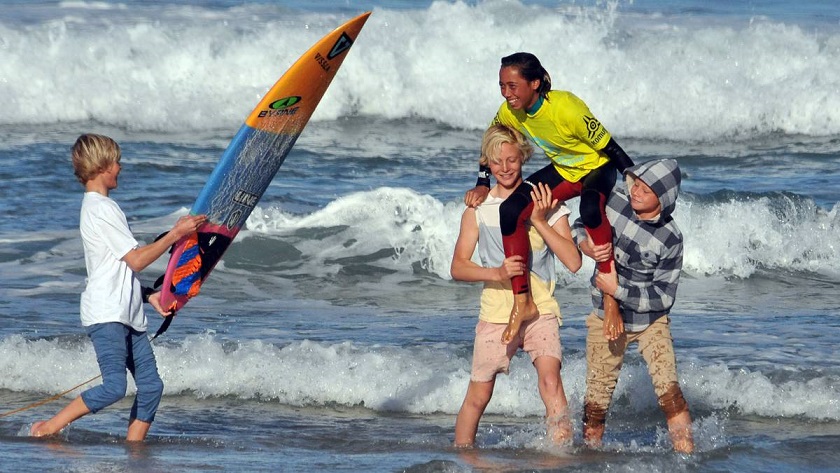
(Picture shows boys at the 2014 NRMA NSW Junior Surfing Titles in Port Macquarie; photo from Port Macquarie News)


Celebrity Baby News: Claire Hooper and Wade

Tags

,

Claire-Hooper

Comedian Claire Hooper, and her husband Wade, welcomed their daughter Penelope in February. Penelope’s original nickname was Fat Tony, presumably after the character from The Simpsons, but this seems to have been a “baby nickname”, rather than what they intended to call her permanently. Elsewhere she is referred to as Penny.

Claire graduated from Curtin University in Perth with a degree in Theatre Studies, and worked in theatre as both an actor and a director, including youth theatre. In 2004 she won the Western Australian finals of Triple J’s Raw Comedy, and in 2005 was selected for the Melbourne International Comedy Festival, and won Best and Fairest at the National Improvisation Championships in Sydney. As well as working in stand up, Claire has often appeared on television, including Stand Up Australia, Rove Live, How the Quest Was Won, The Sideshow, and Good News Week. In 2010 she released her first book, Love Bites: 101 Tips for Dating Guys With Fangs. Recently Claire ran a half-marathon at the Medibank Melbourne Marathon Festival, finishing in two hours and thirty-five minutes.

Does an Australian celebrity choosing the name Penelope give Australian Penelope-lovers the willies? Or have so many celebrities chosen it now that one more doesn’t make any difference?

Requested Names: Maida and Maeva

Tags

, , , , , , , , , , , , , , , , , , , , , , , , , , , ,

agriturismo-costantino

Michelle’s partner has suggested the girls’ names Maida and Maeva to add to their name list. At first, Michelle thought these were “made up”, but once she discovered they were genuine names, became a lot more interested in using them, as she quite likes them. She’s asked that Maida and Maeva be featured on Waltzing More Than Matilda, so she can learn more about them.

Maida
This name was popularised in Britain during the 19th century because of the Battle of Maida, which was a British victory against the French during the Napoleonic Wars. It took place in the town of Maida, in Italy, and the British were able to inflict significant losses while incurring far fewer casualties on their side. Through the battle, the British were able to prevent a French invasion of Sicily.

The commander during the Battle of Maida was John Stuart, who was named Count of Maida by Ferdinand IV of Naples and Sicily in thanks for his efforts (the British knighted him, and gave him £1000 a year). Not long after his victory, he received another honour: a pub on the Edgeware Road in London was named The Hero of Maida, and when this area was developed for residential housing in the mid-19th century, it was named Maida Vale after the pub (and indirectly after Sir John Stuart). Maida Vale is now quite an affluent area.

Maida Vale in London has given its name to a suburb in outer Perth, which still has plenty of natural bushland. There is a rare wildflower unique to this area called the Maida Vale Bell (Blancoa canescans), which is a type of kangaroo paw with reddish bell-like flowers. Another Western Australian connection is that the pioneer Sir Richard Spencer took part in the Battle of Maida as a naval captain (the British navy captured a French vessel, and renamed it the Maida). After emigrating to Australia, Spencer ended his days on the heritage-listed Strawberry Hill Farm in Albany.

A Scottish connection is that Sir Walter Scott was given a deer-hound named Maida, reputedly his favourite dog. It was a gift from Sir Walter’s friend, Colonel Alexander MacDonnell of Glengarry, known as Glengarry after his estate. Glengarry’s brother, James MacDonnell, had led the 78th Highlanders Regiment of Foot at the Battle of Maida, and won a Gold Medal for his services. The 78th fought valiantly, and are said to have lost only one man: the name Maida has ever after had particular resonance in Scotland, and is still in some use.

The rural town of Maida, where the Battle of Maida was fought, is in Calabria in southern Italy: often identified as the “toe” of the country’s shape. The name of the town is derived from Greek, and may have the same source as the name Medea, familiar in Greek mythology as the wife of the hero Jason. Her name literally means “cunning”, but with connotations of “rule over, protect”, from an ancient root meaning “to measure, give advice, to heal”.

While the Battle of Maida was behind the name’s surge of popularity in 19th century Britain, it doesn’t explain the handful of times it was used prior to 1806, nor does it explain the name’s use in the United States, where the name Maida occasionally made the Top 1000 between 1880 and 1920. In such cases, the name may be a pet form of names such as Magdalene or Madeline; in Scotland, it could be seen as a variant of Maisie. It also can’t be ruled out that it was sometimes based on the English word maid, shorthand for maiden, meaning “young girl, virgin”.

A 20th century influence on the name in the United States was the Maida series of children’s books by Inez Haynes Irwin, a feminist and socialist author and journalist. The books revolve around a beautiful motherless little girl named Maida Westabrook who possesses both fabulous wealth and a fantastic personality, recovering from severe illness that has left her with a slight disability. It turns out some wholesome child labour and the friendship of a whole neighbourhood of ordinary kids is what she needs to put the roses in her cheeks, and further adventures follow with her posse of plebeian pals.

I read the first book online and was charmed: it’s an urban fairytale, and the sort of vintage book I would have loved reading when I was about nine. I can quite understand why this series of books, spanning from 1909 to 1955, has gained generations of loyal fans, and was not surprised to see several comments from people who had been named for the character or had named their daughters after her.

Last year there were 26 baby girls named Maida in the United States, and 18 in England/Wales. Maida doesn’t show up in recent Australian birth data, although is occasionally seen on older women. There are over a hundred Maidas in Australian historical records, mostly from the late 19th century to the early 20th century.

Maeva
This is from Tahiti, and means “welcome”; it is used as a word and a name in Polynesia, and is a Top 100 name in France, as Tahiti is part of France’s overseas territories. Maeva is pronounced mah-AY-va in Tahitian, but judging from one example on forvo, French people seem to say the name very much like MAY-va.

Maeva is used as a name in Australia too, appearing in historical records from the late 19th century. Most likely it was an elaboration of the Irish name Maeve rather than of Polynesian origin. Maeva was the middle name of Gladys Cumpston, who transcribed texts into Braille. If you look at Maevas in Australia currently, many seem to be French, although there are also Australians, including those of Islander heritage. Last year there were 34 babies named Maeva in the United States, and 4 in England/Wales.

* * * * * * * * * *

Michelle, what an intriguing pair of names your partner has suggested! I am very impressed by his style, because these are both very rare names which are nonetheless bang on for current trends. They fit in so beautifully with the trend for vintage names, and with names beginning with M, and with the AY sound, so that you’d have a baby name different from everyone else’s, without sounding too glaringly different.

Maeva in particular would blend in almost seamlessly, as it sounds like a mixture of Mae, and Maeve, and Ava. It would be very easy to explain to others as “Spelled like Maeve, but with an A at the end”, or “Pronounced like Ava, but with a M at the front”. You might even worry that it blended in a bit too easily, and could be confused with other names – there might be a few moments of “No, it’s Maeva, not Maeve”, although that doesn’t sound like a big deal.

Maida seems a bit more daring, although it reminded me a little of a contracted Matilda, or Maia with a D. I feel as if some people might be slightly taken aback by the Maid- part, as we use the word “maid” to mean “servant, serving girl”. But what a rich and interesting history the name Maida has, with so many layers of meaning and evocation. The more I learned about the name Maida and its many associations, the more I was mentally barracking for you to choose it.

I think these are both beautiful names, rare yet accessible, vintage but in line with current trends. What do you think of Maida and Maeva, readers?

POLL RESULTS
Maida received an approval rating of 56%, while Maeva did extremely well, with its approval rating of 76% making it one of the highest-rated names of 2014.

Thank you to Michelle for requesting Maida and Maeva be featured on Waltzing More Than Matilda

(Photo shows the farmland around the town of Maida in Italy)