Famous Name: Douglas

Tags

, , , , , , , , , , , , ,

doulass

This blog post was first published on December 3 2011, and substantially revised and reposted on December 10 2015.

Famous Namesake
Yesterday marked one hundred years since the Australasian Antarctic Expedition set sail from Hobart in the SY Aurora on December 2, 1911. It arrived at an unexplored region of Antarctica on January 8, 1912, and set up base camp. The site proved to be unrelentingly windy, with constant blizzards that made things hellish for the intrepid explorers.

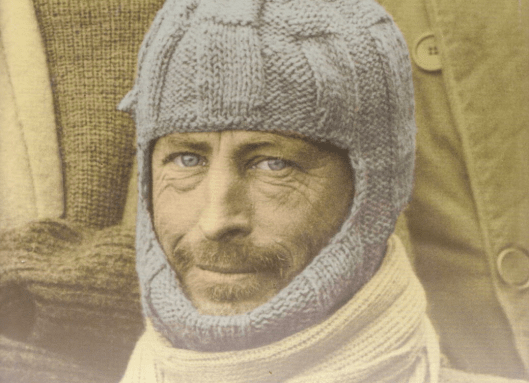
Douglas Mawson was one of the leaders on the expedition. A geologist and lecturer from the University of Adelaide, he had been asked to join Robert Scott’s British expedition to find the South Pole (Scott was famously beaten to the punch by Norwegian Roald Amundsen). Mawson turned him down, as he thought it would be better to take his own team, and lead an expedition to the unexplored bits of Antarctica, which was most of it.

Douglas was part of a three-man sledging team called the Far-Eastern Party, which included Belgrave Ninnis, the son of a British arctic explorer, and Swiss mountaineer Xavier Mertz.

The group was making excellent progress when Ninnis fell into a snow-covered crevasse that the other two men crossed without incident; he took with him six huskies, a tent, most of the food and other essential supplies, and was never seen again. The glacier they were traversing is now called Ninnis Glacier in his honour.

Mawson and Mertz continued their frozen nightmare, forced to eat their huskies to supplement their scant rations. Although both men were unwell, Mertz became seriously ill and died in less than a week. It is thought that he may have died of an overdose of Vitamin A from eating husky liver, which Mawson solicitously fed him, in the fond belief that he was giving Mertz the best of the provisions.

Other theories are that Mertz died from hypothermia, from the shock of eating meat after being a vegetarian, or from the psychological stresses of the journey – especially the death of Ninnis, as the two men had been exceptionally good friends.

In the days before he died, Mertz became weak, exhausted, dizzy and delirious, even biting off the tip of one of his own fingers. He had dysentery, nausea, and stomach pain; his skin peeled away and his hair fell out – not surprisingly, another of his symptoms was depression. Whatever he died from, his demise caused him terrible suffering.

Douglas Mawson sledged the last 100 miles alone, falling into a crevasse on the way and having to climb out using the harness, only to see the boat he was to have returned on disappearing over the horizon. He had to spend another year in Antarctica.

Douglas was knighted in 1914 and The American Geographical Society awarded him a medal in 1916. The work he did was ground-breaking, and led to Australia getting its own portion of Antarctica, from where we still do important research.

For decades Sir Douglas Mawson was regarded unquestioningly as a hero, and his image is on the snow-white Australian $100 note. More recently his part in the expedition has been scrutinised, and attracted criticism. However there is no doubting his strength, courage, and determination to survive against all odds. He is remembered as an enthusiastic and kind man who never boasted of his remarkable exploits.

Name Information
Douglas is an Anglicisation of Scottish surname Dubhghlas meaning “dark river”. It originally belonged to the Douglas Water, which is a river in South Lanarkshire in southern Scotland. On its shores is a village named Douglas after the river, and the Douglas family took the village’s name as their surname when they moved here in the 12th century.

The Clan Douglas was one of the most powerful families of Scotland in the Middle Ages, often holding the real power behind the throne. The heads of the House of Douglas held the titles of the Earl of Douglas and the Earl of Angus, sometimes known as the Black Douglas and the Red Douglas. Their family estate was Castle Douglas, which Sir Walter Scott fictionalised as Castle Dangerous in his novel of the same name.

The Douglases are said to be descended from a Flemish knight, and fought with William Wallace and Rober the Bruce in the Wars of Independence. Sir James Douglas was the first to be labelled the Black Douglas by the English for what they considered his dark deeds: it was a title taken up with pride. The Douglases intermarried with the House of Stuart, gaining a royal connection.

The Douglases became so powerful they were seen as a threat. In 1440 the teenaged William Douglas, the 16th Earl of Douglas, and his younger brother were invited to dine with the ten-year-old King James I of Scotland. While they ate, a black bull’s head – symbol of death – was placed before the young earl. The Douglas boys were then dragged outside, given a mock trial and beheaded, so Clan Douglas lay siege to Edinburgh Castle. Called the Black Dinner, it is the inspiration for the Red Wedding in Game of Thrones.

Douglas has been used as a personal name at least since the 16th century, and seemingly originates in England rather than Scotland. It was originally a unisex name, given equally to boys and girls, and by the 17th century was primarily a female name. A famous example is Douglas Sheffield, Baroness Sheffield, who had an affair with Robert Dudley, the favourite of Queen Elizabeth I, and had a son by him. In the 18th century Douglas became more common for males than females, so this is an example of a name that went from the girls to the boys.

The name is a traditional one in the Hamilton family, which married into the Douglases in the 17th century; although the Hamiltons’ surname is now Hamilton-Douglas, they are actually Douglases by descent. The head of Clan Douglas today is the Duke of Hamilton, Alexander Douglas Douglas-Hamilton.

Douglas was #59 in the 1900s, and peaked in the 1920s at #28, during the career peak of actor Douglas Fairbanks, known as The King of Hollywood in that era. It remained on the Top 100 until the 1970s, and disappeared from the charts in 2010, although returning the following year. It is apparently now in rare use.

In the US Douglas has always been on the Top 1000. It was on the Top 100 from the end of the 1920s to the end of the 1980s. It peaked in 1942 at #23 – two wartime namesakes are General Douglas Macarthur, and Douglas Fairbanks son, Douglas Fairbanks Jr, who became a highly decorated naval officer. It is currently #598 and falling.

In the UK, Douglas was on the Top 100 from the 1880s to the 1970s, peaking in the 1920s. Although it got as low as 508 in 2008, it has been climbing ever since, and is now #276. A current famous namesake is the handsome British actor Douglas Booth.

Douglas is a strong and rugged sounding classic name that is no longer in fashion, but still in use. British trends suggest that it is due for a comeback, and thanks to Douglas Booth, perhaps we can once again see Douglas as a romantic, dashing name, as it was in the 1920s because of Douglas Fairbanks. The nickname Doug seems very dated, but Dougie is cute, and even Gus seems possible.

POLL RESULTS
Douglas received an approval rating of 49%. 22% of people thought it wasn’t ready for a comeback, and 15% saw it as dorky and nerdy, although 17% saw it as strong and rugged. In contrast, 10% of people thought it was ready for a comeback, and saw it as a hip choice most parents weren’t clued into yet.
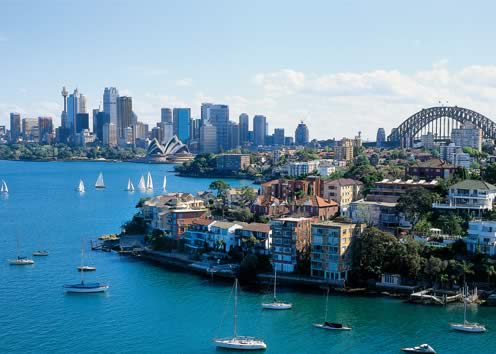
Odessa and Cezar – Birth Announcements from the “Sydney Morning Herald” (November)

Tags

,

Girls

Amber McLeod (Jack)

Annaliese Deborah (Lara)

Camilla Rose (Georgia, Ellen)

Charlotte Rosie (Harrison)

Indigo Sally

Mollie Bee (Jesse)

Odessa Joan

 Boys

Andrew David (Abbie)

Atticus Hunter

Benjamin Lucas

Cezar Habib (Elias, Robbie)

Charles Campbell (William, Heidi)

Indy

Jack (Ashley, Jocelyn, Chloe, Keira)

Lachlan James (Madeline, Josephine)

Luca Giuseppe

Tyson Leigh (Sophie)

Lewy Digger – Birth Announcements from the “Canberra Times” (November)

Tags

,

Girls

Allira Skye

Amelie Graceborn

Anna Kate Margaret

Arabella Joan

Asher Lilly (Sam)

Dannika Evelyn

Evelyn Mercy Jean

Korey Madison McCauley (Mason)

Sienna Bella (Zak, Tayla)

Violet Ellen

 Boys

Billy Edward (Casey)

Cameron Lyal (Logan)

Dylan Eddie Monday

Flynn Bradford Malin

Julian Anthony Paul

Levi Dan (Madison)

Lewy Digger

Perry Edgar

Rhys Myles Desmond

Zachary Arthur

Celebrity Baby News: Mark and Kelly Knowles

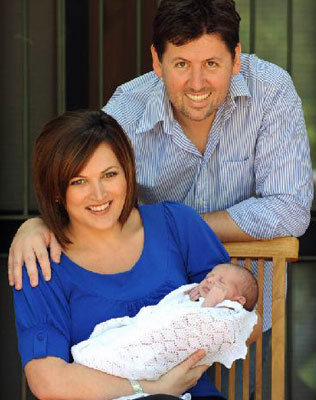
Hockey star Mark Knowles, and his wife Kelly, welcomed their first child on November 26. Their son is named Flynn William, and he weighed 2.86 kg (6 and a half pounds) when he was born. Mark’s sponsor has already sent baby Flynn a tiny hockey stick so he can start practicing.

Mark is a member of the national men’s hockey team, the Kookaburras, and says that the birth of his son ranks right up with winning a gold medal at the 2004 Olympics in Athens.

Flynn Knowles is the second celebrity baby called Flynn this year – the first one was Flynn Bloom.

(Story and photo from The Morning Bulletin, December 1 2011)

See the Real Deal at For Real Baby Names

Tags

, , , , , , , , ,

Have you ever looked at a simple, yet highly successful, invention and thought, “I could have done that”? I sometimes wonder what genius came up with the idea of sticking a cute image onto a magnet so that we could attach things to our refrigerators. (Wikipedia says a man named William Zimmerman did, but provides no sources). I mean, who even knew we needed fridge magnets? And I can’t survive a day without them.

The point is, you think you could have invented these things, but you didn’t. You didn’t come up with the fridge magnet, the post-it note, play-doh, stop signs, Cubism, the snuggie, or the all-you-can-eat buffet. Someone with more brains, creativity, business sense, or plain old gumption got in there first and pipped you.

That’s kind of how I feel when I read Sarah’s blog, For Real Baby Names. The subtitle is All names on this site are names of actual babies, and it consists of lists of baby names culled from recent birth announcements in newspapers. It’s such a perfectly simple concept that only an absolute genius could have come up with it, and yet once you see it, you immediately think, “Why didn’t I think of that?”

If I sound a bit envious, there’s a good reason for that: I am. Out of the name blogs I have reviewed so far, this is the one I’m most jealous of. Even though Abby is so famous, and Lou so young and vibrant, and Isadora so beloved, it’s Sarah’s blog that I wish I’d thought of first.

As far as I know, For Real Baby Names is a unique concept in the blogosphere. Some name blogs include birth announcements in their entries, but this is one just of birth announcements. I have also seen name blogs consisting of birth announcements, but they exist as a springboard for the blogger to vaunt their own opinions. These names, the blogger will insist, are horrible and vulgar, while this list of names shows class and breeding. These names are tasteful; this lot over here, trashy. Emulate these names; eschew those. For Real Baby Names has a purity of intention and a clarity of purpose that these birth announcement name blogs lack, and Sarah exhibits a remarkable restraint in not providing a commentary on every list of names.

I stumbled upon For Real Baby Names quite early in my blogging career, and was immediately struck by the difference between it, and most other name blogs. There was no advice as to what you should name your baby; no suggestions as to the correct spelling of a name; no opinions as to whether the name would be better for a girl or a boy. This was baby names at their most fundamental and authentic. While other name blogs tell you what people should name their children, For Real Baby Names tells you what people actually do name their children. The gap between the two is sometimes quite arresting. I can’t think of any blog that would advocate naming your child Delightful Unique, but nevertheless someone chose this name.

As someone who has long collected names out of newspapers and magazines, I was drawn to this blog like a Trekkie to a sci-fi convention that’s handing out free Spock tee-shirts. And instead of warning me to stay off her turf, Sarah was generous enough to encourage me to share some of the names I was collecting on my blog.

Sarah has been blogging on WordPress for two years, and by now she has a huge collection of baby names from around the world. Entries are organised by area, so you can see baby names from London, the United Kingdom, Scotland, Ireland, Australia, New Zealand, Canada, and many states of the US, from Alaska to California to Kansas to Georgia to New York to Hawaii and more. These are headed with attractive little pictures so you know where you are, and often make me want to dash off to whatever country is on offer.

I must admit to being a little sceptical about these lists at first – I couldn’t help wondering if Sarah had selected names for each region with the view of making them fit a particular stereotype of that area. Was she deliberately choosing “southern-sounding” names for Georgia, or sweetly old-fashioned yet whimsical names for Ireland? However, the names listed for Australia are, I think, very typical of those names which are popular or fashionable now – many of the Australian baby names are the names of my friends’ and relatives’ children.

This convinces me that the name lists from most areas are probably representative of the type of baby names you will encounter there. You do begin to pick up on national or regional tastes on names, so that Alaska often has daring name choices, Arizona seems fond of nature names, Canada is quirky, and Hawaii mellifluous. I have seen a couple of familiar names in the Australian listings, including Jed Hardy – the name of one of our celebrity babies.

There is a good mix of crowd-pleasers, such as Cressida Blueberry; modern names such as Destin Ryder; interesting names, such as Bronze Quinten; contemporary standards, such as Scarlett Bella; old-fashioned names such as Mabel Olive; grand names such as Henry Leonidas Tiberius; sweet names such as Pixie Rose; tough names, such as Jake Buster; weird names such as Boo!; and plain awful names such as Charley Willard Horse Dick. Whether you wish to admire, criticise, be amazed, or gasp in horror, you will find names to revile and revel in.

For Real Baby Names also has posts on particular topics, such as this one on surprising middle names or this one on celebrity baby names. Each Sunday is a post listing names which Sarah appears to have found pleasing or interesting, and occasionally there is a Pop Quiz, on which I usually do rather badly. There are also Name Round Ups, which list unusual names, often grouped around a particular topic. These give Sarah an opportunity to share some of her thoughts on individual names, and her opinions on naming in general; her musings can often be witty, but they are never snide, or an excuse to start name bullying.

As you can imagine, this blog is very popular, and Sarah has many dedicated followers who enjoy commenting on the names. For Real Baby Names is a fun blog, and a big part of that is seeing what names other people love, hate, are bemused or baffled by, and sharing your own opinions for others to agree or disagree with. Sarah is very conscientious about answering comments, and even your most throw-away line will probably get a courteous response. You may also follow her on Twitter.

At the beginning of this review, I made a differentiation between regular baby name blogs as espousing an idealistic view of baby naming, whereas For Real Baby Names demonstrates the reality of naming practice. However, that’s an overly simplistic view of things. Real life baby Luella Hummingbird has a middle name that any name nerd would be proud to add to their blog, and one of the first entries on For Real Baby Names was for Seven Miller, whose name has been often covered on blogs this year, thanks to famous babe Harper Seven Beckham. I have seen real babies called Anjali and Tigerlily – names that have featured on Appellation Mountain and Nook of Names.

If you are interested in baby names, this blog is recommended reading; if you have a name blog of your own, For Real Baby Names is essential reading. Not only do you get a digest of baby names being used around the English-speaking world, you will learn many new names, see naming trends in action, and get a feel for what kinds of names and name combinations parents have a fondness for. Best of all, you will be exposed to a staggering variety of names, and understand that almost no baby name can be called “unusable”.

For Real Baby Names is addictive, and if you have even a passing interest in baby names, you will soon be impatiently waiting for the next instalment to be released. You didn’t know you needed it, and now you can’t live without it.

Q& A with Sarah

Name: My name is Sarah Elizabeth, the most popular Sarah combination it seems. I see my full name all the time when searching through birth announcements.  Plus, I tend to ask every Sarah I meet, “What is your middle name?”,  and it’s usually Elizabeth.

Name you would like to have: I’ve always liked Elizabeth more than Sarah so I used to write to penpals as a kid, and always signed them Elizabeth. I tried to switch over once, but it didn’t take. I guess I wasn’t persistent enough. Now, I would probably keep Sarah, but go by Sadie.

What began your interest in names?: I can’t remember exactly what started it. I do remember my first day of fourth grade. I changed schools that year and remember looking at the new class list on the wall and picking out who I would be friends with based solely on which names I liked.  🙂  It (of course) didn’t work out that way. 🙂

How did you start blogging?: I have always kept a list of names I saw in birth announcements that I liked, names I had never seen before, and the crazy and outrageous ones.  Once Nameberry started, and I found the blogs You Can’t Call It It! and Appellation Mountain, I realised I wasn’t the only one interested in names.  I thought maybe there would be others who would want to see which names were actually being used, so I decided to share them.

Your favourite blog entry on For Real Baby Names: Chisel and Wave (unexpected word names). I love word names and I’m always interested in what people use and why some words are more acceptable as names than others, so this one is my favourite.

Your pet naming peeve: I don’t like the sites that just trash baby names. Any name that isn’t Biblical or had a 100+ years of use, is deemed ridiculous, trashy or stupid, and will ruin the baby’s life.  I don’t think that is true.

Your favourite names: My naming style is all over the place.  I like names like Matilda, Henry, and August, like a good name nerd; but I also love names like Sawyer, Fenway, Wilder, Everly, Belle, and Forest (for a girl).

Names you dislike: I don’t like when names are a joke.  I don’t think your baby’s name should be a laughing matter, so I don’t care for names like Sudden Lee, Sincere Leigh, Merry Christmas, or Stormy Sea Waters.

Names you love, but can’t use: I love Isabella, Lily, and Emma, but in the 9th grade I was in school with seven girls called Jennifer, and I swore I would never use a popular name. Years ago, I dreamt once that I had a daughter named Fable, but I’m not sure if I’m cool enough to use such a bold name.

Your future children’s names: I have loved the name Matilda for a long time. This was my “for sure” name until I mentioned it to my Mom.  She said okay, but they would just call her Mattie, so now I’m not so sure.  I’ve dated two boys named Matthew and called Matt, and I do not love Mattie, so now my girl name is still under construction.  I think if I had a boy today, his name would be Sawyer or August.

The one piece of advice you would give to someone choosing a name for their baby: Give the baby a name you love. No matter what.  Don’t listen to other people. A name chosen from the heart could never be a wrong choice. It doesn’t matter if it is too popular, too unusual, or unheard of. If you love it, use it.

Celebrity Baby News: Kate Dimond and Sam Cavanagh

Tags

,

Radio host Kate Dimond, and her partner, radio producer Sam Cavanagh, welcomed their first child on November 22 – a son named Baxter. Baxter Dimond Cavanagh was born at 7 am weighing 3.1 kg (7 pounds) , and his parents, who both use short forms of their own names, apparently already refer to him as “Bax”.

Kate, nicknamed “Monty”, is the presenter of Saturday Morning Monty on Nova Radio. Sam is the producer of the Hamish & Andy Show on Fox FM; he has been friends with Hamish Blake since they were both in high school.

(Story from Digital Spy, November 24 2011 and Herald Sun, November 24 2011)

Celebrity Baby News: Rosanna Mangiarelli and Andrew Oborn

Tags

,

Current affairs host Rosanna Mangiarelli, and her husband, television producer Andrew Oborn, welcomed their second daughter on November 22, named Olivia Rose. Olivia Oborn was born weighing 3.2 kg (7 pounds 1 ounce). Olivia joins big sister Emma Marie, who is nearly three. Emma suggested the name Rapunzel, which has been covered on Bewitching Names, but although being named by your sibling is a new celebrity trend, her wishes were ignored.

Rosanna is the host of Channel 7’s Today Tonight, and Andrew is a producer at Channel 10.

(Story from The Advertiser, November 23 2011; photo from The Advertiser, February 12 2009, photo shows Rosanna and Andrew with Emma)

Celebrity Baby News: Curtis Stone and Lindsay Price

Tags

Celebrity chef Curtis Stone, and his partner, American actress Lindsay Price, welcomed a son on November 6, who is believed to have been named Hudson. Hudson Stone was born in the United States.

Curtis Stone has worked in restaurants around the world, and presented cooking programmes in Australia, the UK and the US. He is currently the host of American reality TV show Top Chef Masters, and is the face of Coles supermarkets.

Lindsay Price is probably best-known for her role as Janet Sosna on teen drama series Beverley Hills 90210, although she has been in several familiar soaps and comedy series, such as The Bold and the Beautiful and How I Met Your Mother.

Curtis and Lindsay have been dating since 2009 and are currently based in Los Angeles.

(Story and photo from The Herald Sun, November 22 2011)

Waltzing With … Taiga

Tags

, , , , ,

This post was first published on November 20 2011, and heavily edited and reposted on November 25 2015.

It’s been a little more than eight months since Japan was hit by the terrible earthquake off its eastern coastline – with a magnitude of 9.0, it was the strongest earthquake to ever hit Japan, and one of the five most powerful in the world since modern record-keeping began in 1900.

The earthquake triggered a massive tsunami, with waves reaching more than 40 metres (133 feet) high; as well as bringing destruction to life and property, the tsunami caused a number of nuclear accidents, which meant that hundreds of thousands of people had to be evacuated.

This could not help but evoke a response from people all around the world. We were shocked and appalled as we saw it unfold on our TV screens, and deeply moved by the plight of the Japanese people, who reacted so calmly and bravely to their national tragedy.

We had recently suffered a summer of terrible cyclones and floods, and the disaster in Japan put our own problems in perspective; suddenly things didn’t seem quite so terrible, suddenly we realised that things could have been a lot worse for us. Australia was one of the many countries who went to Japan’s assistance during the crisis, and one of the few that Japan specifically asked for help from.

Things are still pretty bad in the coastal regions of Japan which suffered the worst during the catastrophe. There are whole towns that have been evacuated, and it may be years before it is safe for people to return. Nuclear contamination is still a major issue, and people worry about whether food is safe to eat or not. There are many farming districts in the nuclear-affected areas of Japan, and it’s been devastating for the agricultural economy there.

Taiga is a name I heard of from Japanese families who had fled the disaster zone to live in Australia, although later on I met an Australian family with a small boy named Taiga in memory of an extended visit to Japan.

Note: Since 2011, the areas of Japan worst affected by the tsunami are still struggling to rebuild, and the path to recovery looks likely to be a very long and painful one.

Name Information
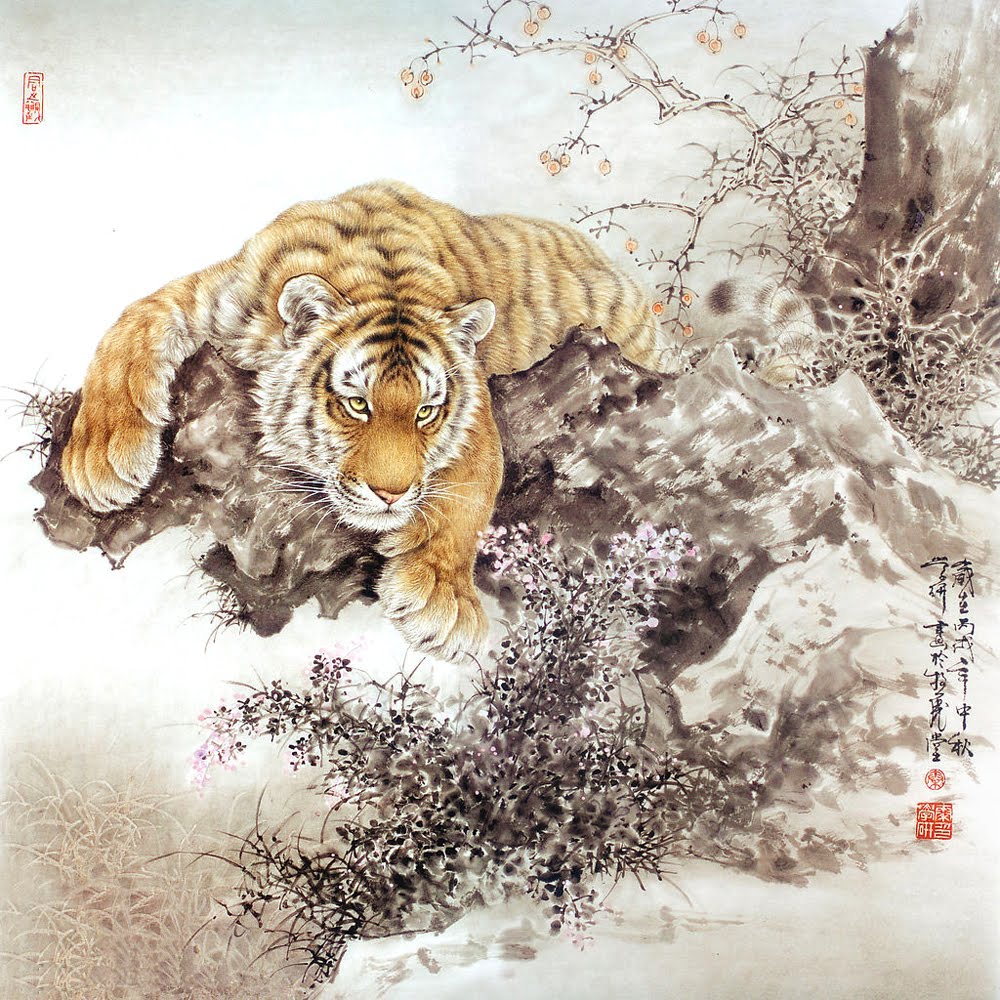
Taiga is a common name for boys in Japan. In Japanese, Taiga is pronounced TAH-ee-gah, but in English it is said TIE-gah. The Japanese are aware that it sounds similar to the English word tiger, and this may even be an attraction for some.

Depending on the kanji used, the name can be given a range of meanings, but the most commonly given is “large and graceful”, or “big and gracious”. It can also be translated as “big river”, and is the Romanised form of “tiger”. Despite these different meanings, when you put them together the overall impression is of something large and powerful, yet with all the majestic beauty and grace of a great river or a tiger.

By coincidence, taiga is also a word for the large coniferous forest areas which cover the far north of the planet, in Alaska, northern Canada, Russia, Poland, Scandinavia, northern Kazakhstan, northern Mongolia, and even the far north of Japan. The word for this is Russian, and ultimately from Turkic or Mongolian. Sometimes taiga is specifically used to designate the more barren part of the forested area. It’s pronounced TIE-guh.

I’m not sure how many Japanese girls are named Taiga, but there is a manga series for young readers called Toradora! where the lead female is a junior high school girl named Taiga. Beautiful yet very short, clumsy and socially maladept, her name is given to her in the sense of the word tiger – lovely, but very fierce!

This gives it a slight chance as a unisex name – if used as the Japanese transliteration of the word tiger, this makes it a different name than the Japanese boy’s name Taiga. And there’s no reason why a girl can’t be named after the forest area anyway, as forests are not intrinsically male or female in nature.

Taiga seems a very usable name – it sounds similar to an English word, and even references that word without actually being that word. Taiga can be a way to get the same sound and even the same meaning from a different spelling and origin.

I think Taiga is a far more interesting name than Tiger, as it has so many layers of meaning. It reminds me of the popular name Kai, which similarly has a European and a Japanese origin, although Taiga manages to bring the two cultures closer together.

Taiga gives the nickname Tai, which links it with other popular boy’s names like Tyson and Tyler; Taiga is unusual, yet a Tai in the playground will blend right in with the other boys named Ty and Tye.

POLL RESULTS
Taiga received an approval rating of 82%, making it one of the most highly-regarded names of 2011. 41% of respondents thought it was okay, and only 6% of people disliked it. The number of people who loved or hated it was exactly the same – 12%.

Celebrity Baby News: Two Champion Sportswomen

Tags

,

Former hockey champion Bianca Pritchard, and her husband Michael, welcomed their fourth child around February this year – a boy named Sebastien. Sebastien joins older siblings Oliver, aged 8; Oscar, aged 6; and Stella, aged 4.

Bianca, then Bianca Langham, was selected for the national hockey team in 1994, and was a member of the 1996 and 2000 Olympic training squads. In 1998 she won gold in both the Commonwealth Games and the World Cup, where she scored the wining goal over the Netherlands. She was recently voted #18 on a list of greatest Tasmanian sportspeople. She and her husband were married in December 2000.

Bianca suffered from postnatal depression after the birth of Oliver and found it hard to adjust to life as a mother. However, she’s now very happy, and so comfortable with motherhood that the whole family went on a caravan trip around Australia when Stella was only a few days old.

She recently launched a Bubs and Bubbles mothers social group in Hobart to combat social isolation amongst mothers of young children. Any money raised by the group will go to the Royal Hobart Hospital Paediatric Unit.

(Story and photo from The Mercury, November 2 2011)

Lawn bowls champion Stacey Collier, and her partner, welcomed their third child at the start of the year; a girl named Indiana. Indiana joins older siblings Bailey, aged 7, and Declan, aged 4.

Stacey has played for Australia, and also for her home state of Victoria. Tomorrow will be her first Victorian Open. Last week Stacey won the Mooroopna Club Championship, after only three weeks back playing sport after the birth of Indiana.

(Story from Shepparton News, November 19 2011)