Twins Amethyst and Brahminy: Birth Announcements from Melbourne’s “Herald Sun” (March)

Tags

, ,

Twins

Amethyst Artesia and Brahminy Roseae (Ishmael, Mercy)

Elisha Savannah and Natalia Lynette

James Leigh and Luke David


Girls

Arabella India Michelle

Chantelle Olivia Isla (Arabella)

Cheyenne May (Jordan, Tahlia, Tyla, Bailee)

Clara Florence

Edith Joy (Henry)

Gabrielle Zara Louise (Amelie)

Greta Louise (Olivia, Jamie, Elliot, Fletcher)

Gwendoline Fay (Zali, Bruce, Rhett, Clancy, Owen)

Havana Quinn

Holly Irene Rose (Jannon, Bryce)

Ita Myrtle (Jethro)

Jemima Lou (Molly, Finn, Oliver, Isaac, Samuel)

Kyeisha Ella (Tahlia)

Lacey Kate

Macey Elwyn (Lachlan, Thomas, Liam, Patrick)

Mackenzie Rose Audrey

Marcy Margaret (Archer)

Nikita Carmen (Aiden)

Ruby Enid

Saffron Norma Anne (Spencer)


Boys

Ace Dushan (Aaron)

Brody Orlando (Sienna)

Campbell John

Coby Jace

Edward Gregory

Flynn Jack Charles (Tige)

Frederick George (Margaret)

Harrison George

Hunter Lytton (Georgia, Harrison)

Jyi Grant John (Taylah)

Keith William (Lauren, Tali)

Luca Marshall (Amali)

Mark Anthony

Max Eoin

Nash Alistair (Minnie)

Quinn Vernon

Slater Hugh (Matthew, Jason, Cooper)

Tate Jude (Devon)

Tom Finn

Will Archie (Joshua)

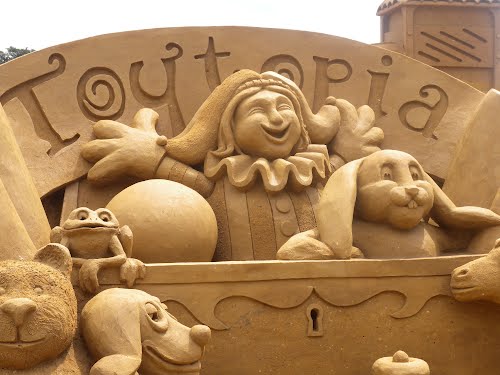
(Picture: The Toytopia Sand Sculpture exhibition takes place from Boxing Day to ANZAC Day, on the waterfront at Frankston, within the Greater Melbourne area)

Emily and William – #1 in the Northern Territory

Tags

, ,

In 2010, Emily did not even make the Top 20, and last year she made the #1 position. In 2009 she was at #7. Isabella and Olivia were joint winners of 2010, and last year they were bumped down to #9 and #6 respectively.

The biggest riser was Amelia, who went up 7 places. Chloe, Ruby and Lily also rose significantly, while Mia and Sophie made modest gains.

The name which fell the most was Isabella; Charlotte and Olivia also fell several places, while Ava, Hannah and Matilda fell slightly.

Grace and Ella were the only names which remained stable.

There were several new names on the list. Sienna, Bella and Scarlett are Top 20 for the first time, while Zoe was last seen in 2009, and Hayley reappeared after five year’s absence.

Layla, Jessica, Alexis, Lucy, Isla and Jade disappeared from the Top 20.

A familiar pattern for the boys, with Jack being toppled from first place, to be overtaken by William; we’ve seen this in several other states also.

Liam rose the most, at 5 places, with William and Ethan also rising.

Jacob was the anti-Liam, falling 5 places (Jacob and Isabella falling the most! Please insert Twilight theory here!). Lachlan fell slightly.

Much more stability on the boy’s list, with Jack, James, Thomas, Lucas, Noah, Ryan and Cooper remaining stable, and Joshua and Samuel not changing position at all.

Although there were several new names on the list, only Alexander was appearing for the first time. Oliver and Tyler were last seen in 2009, Cameron in 2007 and John and Benjamin all the way back in 2005.

Gone from the list are Charlie, Isaac, Max, Riley, Xavier and Michael. Another area where Riley did poorly; however, the Northern Territory is unusual that Charlie fell here. Could both names now seem too feminine?

The Northern Territory may be the most conservative of all states and territories when it comes to boy’s names, with far less change than on the girl’s list – the opposite to most states and territories, who seem to be hanging onto girls’ names and changing their minds when it comes to boys.

With the publication of the Northern Territory data and the Top 100 for Australia being released, that’s it for the 2011 name data! Now to wait and see what 2012 will bring.

If you are still hungry for name data and want more, the US will release theirs in the next few weeks, I believe.

NOTE: I used absolute positions based on overall births when analysing the data for the Northern Territory, due to the small population and many names sharing position.


Lily and William – #1 in Australia

Tags

, , ,

McCrindle Research has released its Top 100 baby names for 2011, a project which has been in abeyance for a few years; its return is very much welcomed.

They basically take all the data released by each state and territory and collate it into a national Top 100.

McCrindle count combined spellings, and as you can see, although Lily and Lilly are both declining, once you add the two together, Lily/Lilly is the most popular name for girls in Australia. I believe this is also the case in England/Wales, when spellings are combined.

Unfortunately, they have also combined Mila and Milla, which are two separate names – yet Jackson and Jaxon are not combined.

William is the #1 boy name, so there is a strong ILL sound in both top names.

After reading all the state and territory Top 100s, I don’t think much on this list will come as a huge surprise, but it is fantastic to have everything collected into one list, and this is an invaluable reference tool.

I have uploaded the original document onto the Links to Name Data page as a permanent resource.


Top 100 Baby Girl Names in Australia for 2011

Tags

,

1. Lilly/Lily
2. Ruby/Rubi
3. Chloe
4. Mia
5. Olivia
6. Isabella
7. Charlotte
8. Sophie
9. Sienna
10. Ella
11. Emily
12. Ava
13. Amelia
14. Grace
15. Sofia/Sophia
16. Zoe
17. Madison/Maddison
18. Isabel/Isabelle
19. Matilda
20. Lucy
21. Hannah/Hanah
22. Emma
23. Isla
24. Georgia
25. Scarlett
26. Jessica
27. Eva
28. Abigail
29. Evie
30. Jasmine
31. Zara
32. Summer
33. Chelsea
34. Sarah
35. Holly
36. Alexis
37. Layla
38. Ivy
39. Maya
40. Imogen
41. Hayley
42. Stella
43. Mila/Milla
44. Savannah
45. Charli/Charlie
46. Alice
47. Addison
48. Elizabeth
49. Bella
50. Molly
51. Paige
52. Willow
53. Harper
54. Ellie
55. Alyssa
56. Annabelle
57. Mackenzie
58. Poppy
59. Mikayla/ Makayla
60. Claire
61. Madeline/Madeleine
62. Indiana/Indianna
63. Tahlia
64. Amber
65. Audrey
66. Jade
67. Piper
68. Violet
69. Eliza
70. Phoebe
71. Evelyn
72. Lara
73. Lola
74. Anna
75. Samantha
76. Alexandra
77. Eden
78. Amelie
79. Amy
80. Abbey/Abbie/Abby
81. Aaliyah
82. Rose
83. Lillian
84. Caitlin
85. Alana
86. Victoria
87. Leah
88. Kayla
89. Eve
90. Erin
91. Heidi
92. Madeline
93. Eloise
94. Angelina
95. Tayla/Taylah/Taylor
96. Natalie
97. Gabriella
98. Ashley
99. Stephanie
100. Rachel

Top 100 Baby Boy Names in Australia for 2011

Tags

,

  1. William
  2. Jack
  3. Ethan
  4. Oliver
  5. Lucas
  6. Noah
  7. Lachlan
  8. Cooper
  9. Thomas
  10. James
  11. Joshua
  12. Liam
  13. Jacob
  14. Samuel
  15. Benjamin
  16. Riley
  17. Max
  18. Alexander
  19. Charlie
  20. Xavier
  21. Tyler
  22. Mason
  23. Aidan/Aiden
  24. Ryan
  25. Jayden
  26. Harrison
  27. Harry
  28. Levi
  29. Isaac
  30. Daniel
  31. Oscar
  32. Henry
  33. Jake
  34. Jackson
  35. Luke
  36. Blake
  37. Matthew
  38. Logan
  39. Hunter
  40. Sebastian
  41. Connor
  42. Eli
  43. Hayden
  44. Michael
  45. Elijah
  46. Nate
  47. Flynn
  48. Zachary
  49. Joseph
  50. Dylan
  51. Patrick
  52. Mitchell
  53. Archie
  54. Nicholas
  55. Jordan
  56. Hamish
  57. Caleb
  58. Chase
  59. Angus
  60. Ashton
  61. Finn
  62. Bailey
  63. Edward
  64. Beau
  65. Jaxon
  66. Nathan
  67. Andrew
  68. Leo
  69. Ryder
  70. George
  71. Owen
  72. Adam
  73. Jett
  74. Charles
  75. Luca
  76. Adam
  77. Jasper
  78. Cameron
  79. Alex
  80. Austin
  81. Marcus
  82. David
  83. Christian
  84. Zac
  85. Toby
  86. Lincoln
  87. Hugo
  88. Jesse
  89. Anthony
  90. Gabriel
  91. Archer
  92. Seth
  93. Hudson
  94. Darcy
  95. Andrew
  96. Declan
  97. Dominic
  98. Aaron
  99. Jonathan
  100. John

Requested Name: Anzac

Tags

, , , , , , , , , , ,

Today is ANZAC Day, one of the most solemn and significant days on the Australian and New Zealand calendars. Originally a commemoration for the Australian and New Zealand Army Corps (ANZACs) who fought at Gallipoli during World War I, today it also honours all those who served and died for their country during military operations.

It marks the anniversary of the first major military action fought by Australian and New Zealand forces in 1915, as part of World War I. The Gallipoli Campaign took place on a peninsula near the Dardanelles in what is now Turkey, and was an attempt by the British and French to capture Constantinople (now Istanbul), and secure a safe route to Russia. The attempt was a failure for the Allies, and resulted in the loss of many lives.

While great military victories are often commemorated as national days of celebration, Australia and New Zealand instead remember this bitter military failure. Although Australia had been independent for thirteen years, and New Zealand for seven, when World War I broke out, many in both countries still thought of themselves as British (they had been, only a few years previous), and had a great deal of faith in the British Empire.

The miserable failure of the Gallipoli Campaign did much to shake that faith in British superiority. The stories of courage and heroism from the ANZACs bolstered a feeling of national pride, and a national identity which until then had been lacking. It is popularly said that although Australia officially became a nation in 1901, we only psychologically separated ourselves from Britain in 1915.

There is a long tradition of giving children a name to honour military events, and Anzac is another of these. Although the name Anzac is protected by the government to ensure it is not misused, it is permitted to use it on people. It would make a very patriotic name, especially for a child born on or near ANZAC Day.

Through reading the historical records, Anzac seems to have been most often given as a middle name. When used as a first name, it was almost always given to boys. As a middle name, it was much more even, but still more often given to boys than girls.

Although there seems to be have been a spate of baby Anzacs after the Gallipoli Campaign, it is a name still in use today, and I last saw a baby named Anzac in a birth announcement less than two years ago (a boy). For girls, Anne or Annie could be used as a nickname, and Zac seems most likely for a boy.

Some Anzac Name Combinations From the World War I Era

Female

Alma Anzac Myrtle

Annie Anzac

Anzac Cavel Vardon

Clover Anzac

Dardandella Anzac

Maple Anzac

Verdun Anzac Jane


Male

Anzac Gallipoli Claude

Anzac Kitchener

Lalbert Anzac

Valentine Anzac

Vivian Anzac Jasper

William Anzac France

Winston Anzac

Thank you to Larkin for suggesting the name Anzac back in early December, and waiting so patiently for ANZAC Day to arrive so that it could be covered!

(Image shows the Beach Cemetery at Anzac Cove, containing the remains of allied troops who died during the Battle of Gallipoli. Most of the graves are from the Australian Imperial Forces, and the first graves were dug here on the day of landing, April 25 1915)

Baby Name Dilemma: They Love a Name That Nobody Else Does

Tags

, , , , , , , , , , , , ,

I recently received an e-mail from a father-to-be and blog-reader named Gabriel; technically I’m still on holiday, but this was urgent enough to bring me back early!

Gabriel and his wife Theresa are expecting a baby boy in only two weeks; unfortunately, the name they have picked out has met with a cool reception from family and friends.

The couple first met on Bondi Beach, and, like many Australians living near the coast, are strongly drawn to the ocean, which is cleansing and refreshing, and for a city-dweller especially, washes away the fatigue that comes from modern life. They want a name with a meaning connected to the beach and the sea. They are also very keen to use an Aboriginal Australian word for a name, feeling that this is a perfect way to honour their homeland.

They immediately fell in love with the idea of using Daku as a name. This is a name given to boys meaning “sand”, and apparently it is from one of the languages of north-west Western Australia. Not only did they love the sound of it, but the meaning seemed ideal. Not only did they meet and fall in love at the beach, but sand itself conveys the power of water, which gradually over millions of years wears down great rocks and boulders into fine grains. It therefore holds connotations of patience and persistence – qualities which they hope their son will learn to possess.

When they shared their choice with family and friends, others saw the name quite differently, and thought it was a choice which would lead to teasing. Basically their objections amounted to this:

  • Daku might be okay for a boy growing up in a hippie commune, but isn’t suitable for one growing up in a big city
  • It sounds like the phrase “dack you” – which in Australian slang, means that you are pulling someone’s pants down in a playful or spiteful manner
  • Daku is an Indian girl’s name, which could cause confusion further down the line
  • In Portuguese, daku is supposedly some sort of unsavoury slang (or maybe sounds similar to it)

Their families would much prefer a name which is clearly European and Christian – something along the lines of John, Paul, Daniel, or Xavier.

Gabriel and Theresa now have a dilemma on their hands: do they ignore everything their families and friends say and follow their hearts, or do they choose another name which will cause less controversy? With only a couple of weeks to go, they are starting to get a little stressed over it.

*********************************************************

Everyone has a particular bias in a debate, and I should declare mine straight away. I believe that it is the parents who get to choose their child’s name, not extended family, relatives, friends, or well-wishers.

I believe that loved ones have a perfect right to their own opinion, they have the right to (politely) make suggestions and share their concerns before the birth, and they have the right to be listened to respectfully. However, the final decision must lie with the parents.

Now you could take your story onto any name forum, and you will be able to find at least a dozen people who will advise you to just tell your family to butt out, shut up, and mind their own business in no uncertain terms, then move interstate so you don’t have to deal with them ever again. It’s easy advice to give, but I’m not sure it’s necessarily the best advice to follow.

For a start, obviously you love your family and don’t want to alienate them or cause a big family drama just as a baby is about to born and you need support more than ever. Second, occasionally the objections that family and friends offer have some validity, or make some sense. If you were planning to name your child Freddie Hoff or Penelope Ophelia Overton, a friendly hint might help you realise the mistake you were about to make. At the very least, they give you a taste of how others might see that name, and what response it could get. It’s better to have that information in advance.

As far as I can see, these are the choices the two of you have before you:

1. Go ahead with your original plan, and name your son Daku

Pros: You son will receive a name that you both love, and love hearing – moreover, a name which is a constant reminder of your love for each other. That’s incredibly special. You will have a wonderful story to share with your son when he asks, “Mum and dad, why did you call me Daku?” Maybe one day you can take him to Bondi and show him where his own unique life story and name story began, and when he hits a difficulty in life, perhaps you can show him the sand on the beach that he’s named after, and explain how it could only be made through the sea patiently grinding it down day after day, and never giving up.

Cons: Your family may not be happy with the choice you have made, or feel slighted that their dire warnings were not heeded. However, you have listened to everything they said and taken it on board, and you have also chosen his middle name, Rudolf, after Theresa’s father. You have pretty much already done your family duty. It’s not uncommon for family members to become reconciled or at least used to a “strange” name once they see it on their adorable grandson or nephew, and they may come up with their own pet name for him anyway.

I do feel that your family and friends have gone straight to the “worst case scenario” for the name, and some of their ideas are probably a little silly. I think Sydney is cosmopolitan enough to cope with the name Daku, and the slang issues seem a bit overboard to me.

“Dack you” is pretty dated slang now (although boys do seem to hang onto old slang more than girls), and in any case, most names sound a bit like something else. I find it hard to believe your son will suffer horribly because of his name, although naturally I can’t guarantee he will never be teased because of it. I must say that the name didn’t remind me of the phrase dack you.

The Portuguese slang term isn’t one I was able to find a reference to online, so doesn’t seem to be in general circulation. Unless you are planning to ship him to Portugal at some point, or you associate with many Portuguese people, perhaps this isn’t the big problem you fear.

Although Daku is a girl’s name in India, it’s a word and name used all over the world in many different cultures and in different contexts. In Japan it means “embrace, hug”; in Fiji it can mean “cousin”, and is also a place name; in Malay it means “I, me, myself”; in Hindi it can mean “bandit, pirate”; in Swahili it is related to the word “grasp, seize”; in ancient Sumerian it meant “executed”. It’s also a word in an invented language in the game World of Warcraft (no idea what it means).

When a word has this many meanings, it’s hard to get too worried if one or two are less pleasant than others. As well as a girl’s name, Daku is also a surname used all over the world, by people from a variety of ethnic backgrounds.

Realistically, what you will face with the name Daku is people not being sure how to spell it or stumbling over the pronunciation. When your son is very small, people may be unsure whether he’s a girl or a boy. People will say, “What an unusual name! Where does it come from?”.

I’m pretty sure once you explain it’s an Australian Aboriginal name meaning “sand”, 90% of people will just go, “Oh right then”. 10% will be interested enough to ask for more information (Most likely, “Do you have any Aboriginal heritage?” or “Why did you choose it?”). I do feel once they know the origin and meaning, most criticism they may have offered will be quashed.

I know that parents who have chosen unusual names find that although they do sometimes get some aggressive or rude comments, they also find many people who say, “Oh that’s a fantastic name”, “It’s so different”, “What a great meaning” and so on. It does tend to stick in people’s memories. You don’t usually get this kind of attention and enthusiasm if your child’s name is Daniel or John.

2. Please your family by choosing a standard European-style name

Pros: Your son will have a name that blends right in with everyone else’s. People will know how to say it and spell it. He won’t be questioned about his background or his name. His name will be in a style which fits in with his family and community.

I’d love to be able to say that your family will appreciate your sacrifice forever and shower you with praise and devotion, but they probably won’t. They may secretly despise you for giving in; they may resent you for resisting them until the last minute; they may figure that if you caved in on such a big issue, you will always cave in on smaller ones; some of them may still dislike the name you choose. They may forget all about the disagreements during the pregnancy, and in ten years will assume his name was always going to be Paul. If you try to remind them what a sacrifice you made, they may roll their eyes about the “big fuss” you keep making about it.

Cons: He will miss out on hearing that wonderful name story. When he asks, “Why did you name me Xavier?” you will say, “We did have another name picked out, but ended up going with something your grandma liked. The name we chose was meant to inspire you to always be persistent; ironically, we didn’t persist with the idea”.

3: Pick another name that is similar to Daku, but causes less family friction

You did say that if your son had been a girl, he would have been named Iluka, an Aboriginal word and place name said to mean “by the sea”.

You may not have realised this, but in Australia Iluka is generally accepted as a male name. It’s usually listed as a boy’s name in baby name books (although giving it to a girl would be fine). Because it sounds like the popular boy’s name Luca, it’s often taken as a native elaboration of that name, and is given the nicknames Luke or Lukey.

Iluka has a similar sound, origin and meaning to Daku, but it might be something your family could accept more readily, as it sounds like popular names Luca, Lucas and Luke, and has the same nicknames as them.

If you were worried about using a name you were reserving for a future sister, there are many, many pretty sea-oriented names for girls from Aboriginal languages.

If you were feeling very bold, you could give either a son or a daughter the name Bondi, which means “the sound of water breaking over rocks”. It’s one I saw given to a baby girl in the Bonds Baby Search, but seems unisex to me, and rare enough to be up for grabs by either gender.

The word used in the Sydney area for beach sand was marrang, and I’m afraid that’s all the beach-related Aboriginal words which sound like masculine names I can think of. I suggest that you buy a copy of Macquarie Aboriginal Words, which would make a useful reference tool.

I can’t make the choice for you, that is your privilege. I hope you at least feel a bit less stressed seeing your choices laid out in print with some possible outcomes attached.

Once your little boy arrives and is safely settled in, please please please let us know what you chose, and how it’s gone down with everyone on a real baby!

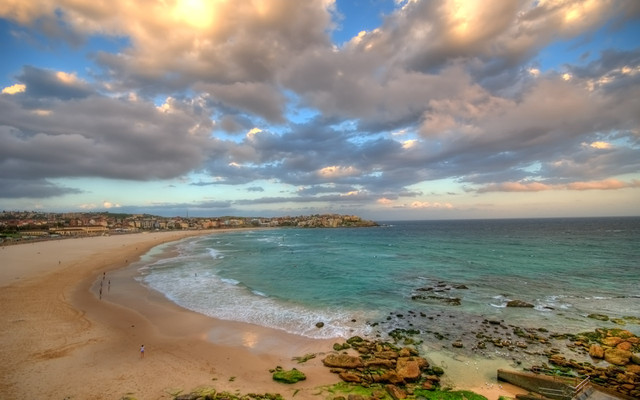
(Image of Bondi Beach from Beach Wiki)

MYTH: Your Child is More Likely to be Successful if They Have a Name Similar to That of Successful People

Tags

, , , ,

Several months ago, I read a baby name blog (can’t recall where) which had re-posted a list of names of the most common names of CEOs around the world. As it often takes a long time to become a CEO, these tended to be slightly dated sounding names such as Don, Janet, Bill and Cheryl.

This particular blogger went on to say that it showed successful people all had “regular” names. Their suggestion was that you utilise this list to give your children solid citizen names like Bruce and Sally to ensure their future worldly success. (The original report made no such claim, I should point out).

Now I’m not going to try to bust this myth, but I did think I might give it a little tweak of my own. It occurred to me that the successful people of the future probably won’t all be named Debra and Ron, but will have names that were current in the year they happened to be born. It also occurred to me that while being a CEO is one measure of success, it isn’t the only one, and that it would really be more interesting to look at people who had gained fame, wealth, and success in a range of careers.

So I took ten Australian men and women who are successful in their chosen fields, noted how popular their name was when they were born, and then looked up what the popularity equivalent was for 2011. To make it slightly more fun, I decided to choose famous Australians who had been mentioned on my blog, and for data gathering purposes, restricted it to Australians born in this country after 1928, but before 1982, who are still living.

And so, just for laughs if you will, here are the names of the famous Australians of the future; the babies born last year who will become celebrities, gain awards, win hearts, and reach the top.

MEN

Father Robert “Bob” Maguire b. 1934 Victoria

  • Claim to fame: Retired Catholic priest with his own charity, also a popular media personality
  • Honours: The Order of Australia, Victorian of the Year
  • Popularity of name when born: #2
  • Current popularity: Stable in the mid 100s
  • Today’s equivalent: ETHAN or “Father Eeth”

Albert “Bert” Newton b. 1938 Victoria

  • Claim to fame: Showbiz icon with a lifetime entertaining people on stage, radio and TV.
  • Honours: Order of Australia, Order of the British Empire, Hall of Fame, four Gold Logies
  • Popularity of name when born: #46
  • Current popularity: Stable in the low 300s
  • Today’s equivalent: MICHAEL or “Mick”

Russell Morris b. 1948 Victoria

  • Claim to fame: Rock musician with ground-breaking hit The Real Thing (1969)
  • Honours: Hall of Fame
  • Popularity of name when born: #29
  • Current popularity: In rare use
  • Today’s equivalent: HARRISON

Kevin Rudd b. 1957 Queensland

  • Claim to fame: Politician for the Australian Labor Party
  • Honours: Elected 26th Prime Minister of Australia in 2007
  • Popularity of name when born: #22
  • Current popularity: Stable in the mid 100s
  • Today’s equivalent: HARRISON or “The Honourable Harrison”

Glenn Stevens b. 1958 New South Wales

  • Claim to fame: Economist who has held many important government positions
  • Honours: Currently the Governor of the Reserve Bank
  • Popularity of name when born: #40
  • Current popularity: In rare use
  • Today’s equivalent: JACKSON

Hugh Jackman b. 1968 New South Wales

  • Claim to fame: Singer, dancer and actor on stage and screen
  • Honours: Hollywood Walk of Fame, Tony, Emmy, voted Sexiest Man Alive
  • Popularity of name when born: #175 for that decade
  • Current popularity: Stable in the mid 100s
  • Today’s equivalent: VINCENT (also a classic in the 100s, although I could have used Hugh again)

Anthony Bell b. 1972 New South Wales

  • Claim to fame: Known as the “accountant to the stars”
  • Honours: Net worth of $70 million, BRW Young Rich List
  • Popularity of name when born: #15
  • Current popularity: #66 and gently declining
  • Today’s equivalent: LIAM

Darren Lockyer b. 1977 Queensland

  • Claim to fame: Former rugby league player, considered the greatest player of all time
  • Honours: Team of the Century, life-sized bronze statue, road named after him
  • Popularity of name when born: #37
  • Current popularity: Gently declining in the low 400s
  • Today’s equivalent: AIDEN

Harold “Harry” Kewell b. 1978 New South Wales

  • Claim to fame: International soccer star
  • Honours: UEFA Champions League, Oceania Footballer of the Year
  • Popularity of name when born: #482 for the decade
  • Current popularity: In rare use.
  • Today’s equivalent: WESLEY or “Wes” (also in low 400s)

Hamish Blake b. 1981 Victoria

  • Claim to fame: Popular comedian on radio and television
  • Honours: Logie, Gold Logie, Comedian of the Year, Most Powerful Celebrity, Who’s Who
  • Popularity of name when born: #187 for the decade
  • Current popularity: #50 and rising
  • Today’s equivalent: RORY (also a British-style name in the 100s)

Future famous trends: We can expect to see today’s Irish-influenced boy’s names, such as Liam and Aiden, on tomorrow’s celebrities. Old Testament names for boys are very “in”, but to my surprise Ethan was the only one which turned up on a future famous person. Hugh is apparently evergreen, and romantic Vincent seems like a worthy successor for a Hollywood heartthrob. Harrison was the surprise celebrity success, being used on both a rock star and a Prime Minister. If you named your baby son Harrison last year, you may well see him leading the country one day.

WOMEN

Hazel Hawke b. 1929 Western Australia

  • Claim to fame: Former Prime Minister’s former wife, social advocate, and patron of the arts
  • Honours: Order of Australia
  • Popularity of name when born: #41
  • Current popularity: Rising steeply in the low 300s
  • Today’s equivalent: ADDISON OR MIKAYLA

Barbara Thiering b. 1930 New South Wales

  • Claim to fame: Historian and scholar who wrote the bestseller Jesus the Man (1993)
  • Honours: Professorship, many government positions, Jesus Seminar fellowship
  • Popularity of name when born: #21
  • Current popularity: In rare use
  • Today’s equivalent: EVA

Ita Buttrose b. 1942 New South Wales

  • Claim to fame: Journalist, former editor of Cleo and The Australian Woman’s Weekly
  • Honours: Order of the British Empire, Order of Australia, Centenary Medal
  • Popularity of name when born: Not on the charts
  • Current popularity: Not on the charts.
  • Today’s equivalent: AOIFE (a similar-sounding Irish name that is unranked)

Maureen Caird Jones b. 1951 New South Wales

  • Claim to fame: Olympic athlete specialising in sprint hurdles
  • Honours: World record, Olympic gold medal
  • Popularity of name when born: #29
  • Current popularity: Unranked since the 1980s
  • Today’s equivalent: JASMINE

Eleanor “Elle” Macpherson b. 1964 New South Wales

  • Claim to fame: Supermodel, actress, producer and businesswoman
  • Honours: Listed by Forbes as having assets of over $60 million
  • Popularity of name when born: #456 for the decade
  • Current popularity: Rising sharply in the mid to low 100s
  • Today’s equivalent: ROSEMARY or “Romy” (another retro-style name in the mid 400s)

Kylie Minogue b. 1968 Victoria

  • Claim to fame: Pop diva and actress
  • Honours: Ordre de Arts et des Lettres, Order of the British Empire, Hall of Fame, numerous awards
  • Popularity of name when born: #48
  • Current popularity: In rare use
  • Today’s equivalent: LAYLA

Mary Donaldson b. 1972 Tasmania

  • Claim to fame: Crown Princess of Denmark and Duchess of Monpezat
  • Honours: Order of the Elephant, Order of Saint Olav, Order of the Polar Star
  • Popularity of name when born: #70
  • Current popularity: Stable in the low 100s
  • Today’s equivalent: INDIANNA or “Her Royal Highess Indianna”

Lucinda Dunn b. 1974 New South Wales

  • Claim to fame: Principal artist with The Australian Ballet, the company’s longest-serving ballerina
  • Honours: Australian Dance Award, Green Room Award, multiple scholarships
  • Popularity of name when born: #264 for the decade
  • Current popularity: Stable in the low 100s
  • Today’s equivalent: KATHERINE (also in the 260s)

Amelia Farrugia b. 1977 Victoria

  • Claim to fame: Opera singer with the Metropolitan Opera of New York
  • Honours: NSW Young Achiever of the Year, numerous awards
  • Popularity of name when born: #249 for the decade
  • Current popularity: #8 and rising gently
  • Today’s equivalent: SERENA (also in the mid 200s)

Roxanne “Roxy” Jacenko b. 1980 New South Wales

  • Claim to fame: Started her own PR company at the age of 24
  • Honours: Business now worth many millions
  • Popularity of name when born: #270 for the decade
  • Current popularity: In rare use
  • Today’s equivalent: JESSIE or “Jess” (also in the high 200s)

Future famous trends: Much more variety with the names of famous women of tomorrow, but the current trend for plant and flower names will be evident, as well as short forms and the -ayla names. Although there were one or two unisex names, in general the future famous women will have quite feminine names, and you don’t need to fear that the pretty name you have chosen for your daughter will hinder her success. Famous women seemed to be more likely than famous men to have a non-popular name, so you may be better off choosing a name in the 200s to 400s.

In fact, very popular names were rare on the famous of both sexes – bad news for the Jacks and Mias of today. Equally rare were names in the second half of the Top 100 – the #15-#50 bracket seemed to be where the bulk of names of famous people came from.

Now you may be sceptical of a Prime Minister named Harrison, a Governor of the Reserve Bank named Jackson, or a European princess named Indianna. But consider this: it is just as likely as a Prime Minister named Kevin, a Governor of the Reserve Bank named Glenn, and a Tasmanian princess named Mary – and they all happened!

You may also think this whole entry is rather silly – in which case, that means the original theory of using successful people’s names as a guide is too, which possibly means that this myth is … BUSTED.

On the other hand, I can’t refute the blogger’s assertion that all these famous people’s names, past and present, are “regular” names – nearly all of them are on the popularity charts, for example. In that case, you may decide that the blogger’s theory is PLAUSIBLE.

So what do you think? Busted or plausible?

Note: For reasons of space I could only show ten names of each sex, but I did examine perhaps 30-50 famous men and women from my blog, and found the same patterns existing. In other words, I chose typical rather than extraordinary examples. Harrison actually turned up a third time, and I edited it out in case it should stretch credulity. I suggest keeping your eye on that name!

DISCLAIMER: Results entirely for entertainment purposes; has not been tested under lab conditions; giving your child a name which conforms to popularity of famous people’s names may or may not have desired effect. There is no connection between Baby Name Mythbusters and the TV show “Mythbusters”.

Lucija and Cilliam: Birth Announcements from the “Canberra Times” (March)

Tags

,

Girls

Audrey Lillian

Eliza Margaret Marie

Evelyn Marguerite

Georgia Jane (Emma)

Isla May (Alysse, Murray)

Lola Jeanne

Lucija Rose (Isi, Joseph)

Mae Isabel

Matilda Susan Kaye (Pandora)

Peggy Kate


Boys

Arthur Thomas (Sam, Henry)

Cade Stephen (Callum Kai)

Cilliam Francis

Dominic Krisztian Oliver (Kymatha, Ashleigh, Jayden, Tahlia, Dorian)

Giles Stanley (Isaac, Chloe)

Logan Peter David

Marcus Edward

Mateo Francisco (Allegra, Javier)

Saxon Joseph

Xavier John Lee (Zachary)

(Image: The Balloon Spectacular was part of the Canberra Festival, held during March)