Serene and Artiki: Birth Announcements from Brisbane and Darwin (June/July)

Tags

, ,

Twins

Callum Edward and Reece Philip


Girls

Alexis Fay

Caroline Margaret Camille

Cate Hallie

Crystal Nicole (Justin, Tyler, Catherine, Chloe, Brent)

Emily Mackenzie Jean

Evie Audrey (Jayden, Toby, Layla)

Indy Rae (Cade)

Lily-May Harper

Serene Rose

Tahlia Louise


Boys

Artiki John Jackson

Aston Jett

Chayce Shaylen Jamie (Dawson, Gianni, McLeod)

Harry Glyndon (Ben)

Jordan Daly

Kiernan Philip David (Alyciana)

Marley Joseph

Maxim Alexander (Mikaela, Eva)

Tasman Richard (Quinn)

William Arthur (Angus, Charlie)

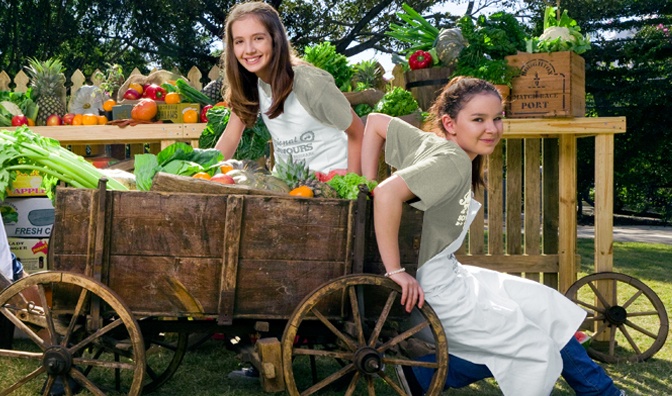
(Picture is from the Regional Flavours festival, which was held in Brisbane at the end of July)

Celebrity Baby News: NRL Babies

Tags

Dane Tilse from the Canberra Raiders, and his wife Katie, welcomed their first child on August 13, and have named their daughter Ila Rose. Ila Tilse was born at Calvary Hospital at 6.20 pm, weighing 3.6 kg (7 pounds), and 49 cm long.

Isaac de Gois from the Cronulla Sharks, and his wife, welcomed their daughter Lilah Rose on August 6.

(Picture shows Dane Tilse with his daughter Ila)

Celebrity Baby News: Victoria Samba and Mitch Hoare

Tags

,

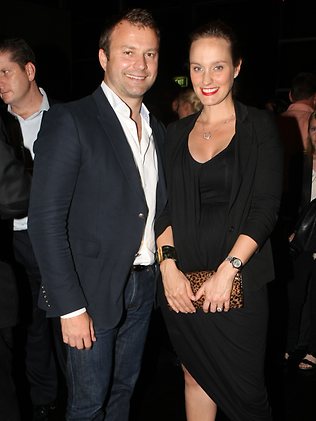
Victoria Samba, daughter of racing identity Les Samba, and her husband, Mitch Hoare, welcomed their son Fergus on August 1 (coincidentally, August 1 is also the official birthday for horses). Fergus Hoare joins big sister Hilary, aged 4. Hilary is the daughter of Victoria’s first husband, jockey Danny Nikolic.

Victoria’s father Les Samba was a high-profile trainer of thoroughbred horses with a lifetime in the racing industry; he had been the strapper for Rain Lover when it won the Melbourne Cup in 1969. Last February, Les was gunned down in Melbourne, and his killer has still not been found. However, during the police investigation, corruption in the racing industry, and links with organised crime were uncovered, which may prove pertinent to the case. Victoria Police have offered a $1 million reward for information which leads to the arrest of the person or people involved.

Victoria and Mitch were married a few weeks ago.

Famous Names: Sally and Malcolm

Tags

, , , , , , , , , , , , ,

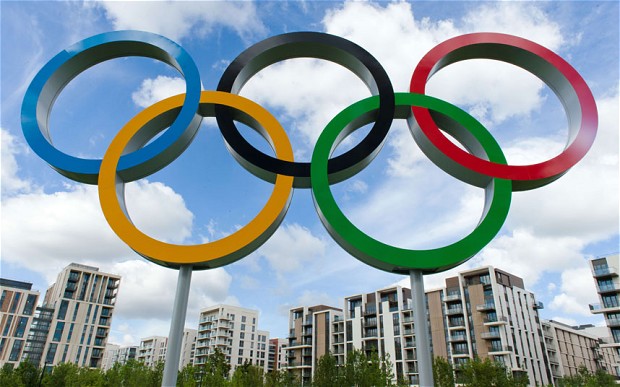
The 2012 Olympics came to an end on the weekend, and today our athletes came home, to be met by huge crowds at the airport, which included the Prime Minister and Leader of the Opposition. Although the London Olympics had many critics and doubters before they began, from the stunning Opening Ceremony onwards, all was forgotten as everyone agreed that London had done a bang-up job hosting the Summer Olympics.

Everything had gone smoothly, athletes were well taken care of, the historic capital looked grand and stately, the weather was good, and the wonderful volunteers ensured that, above all, it was a friendly and fun Olympics where people felt free to relax and enjoy themselves. No wonder that Rio has said that it watched and learned from London, as it prepares for its own hosting gig in 2016.

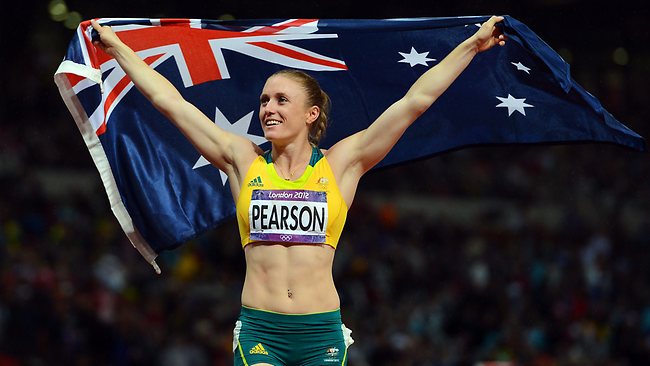
There were so many memorable moments from the Olympics, but from an Australian perspective, I am choosing two athletes who, for me, were the stand outs from our team. The first is hurdler Sally Pearson, simply because her race, which ended in a photo-finish, was nail-bitingly close. Nearly everyone I’ve spoken to has nominated Sally’s gold medal win as the most exciting of the Olympics. Sally not only set an Olympic record, she joined a select group of athletes who were world champions when they won at the Olympics, and is the first Australian woman to win Olympic gold in athletics since Cathy Freeman.

The other is sailor Malcolm Page, because our sailing team did so well at the Olympics, and it’s obvious their training regime really paid off. Malcolm is the first Australian sailor to win two gold medals at consecutive Olympic Games, and he was chosen as the Australian flag-bearer for the Closing Ceremony. Just as Sally was named the IAFF Female Athlete of the Year in 2011, Malcolm was inducted into the Australian Institute of Sport’s “Best of the Best”. Two sportspeople at the top of their game, and here’s a closer look at their names.

The name Sally is a pet form of Sarah, a Hebrew name meaning “princess”. It’s been used as an independent name since the 16th century, and seems to have been first used in the southern coastal areas of England. Since then, it has become a short form of almost any similar name, including the Italian male name Salvatore. It is also, by coincidence, an English vocabulary word, for sallies is an old word for “willow trees”, as in the W.B Yeats poem, Down by the Salley Gardens (the Latin for “willow” is Salix). In military terms, a sally is a sudden attack on an enemy, and we use this word to also mean to attack someone verbally in a witty way. To sally also means to rush off or venture out – very suitable for a sportswoman!

Like Jack, Sally is a name we are familiar with from dozens of cultural references. Sally has appeared in many popular songs, from the nursery rhyme Sally Goes Round the Sun, the traditional Sally in Our Alley, to the blues song Mustang Sally to the rock and roll Long Tall Sally. There is the traditional English fairground game, Aunt Sally, in which a ball is thrown to knock off a wooden woman’s head. We know many a fictional Sally, from wayward Sally Bowles in Cabaret, to Charlie Brown’s sister in the Peanuts cartoon, to the good-looking but annoying Sally Hayes in Catcher in the Rye, the Sally who was met by Harry in the romantic comedy, and the little sister of Dick and Jane in the vintage reading books.

Sally first entered the charts in the 1920s, and was Top 100 by the 1950s; it peaked in the 1970s at #53, and left the Top 100 in the 1990s. Currently it’s #492, and fell last year after a sharp rise in 2010. Sally is one of the most popular names Googled to reach my blog, and I can see the attraction – it’s a fresh, spunky little name that seems clean and wholesome, but not exactly goody-two-shoes. It’s girlish without being girly, and a fuss-free way to wear a princess name without sounding the slightest bit princessy.

Malcolm is the Anglicised form of the Scottish name Máel Coluim, meaning “devotee of Saint Columba”. Columba is a Latin name meaning “dove”. It was a common name amongst medieval royalty in Scotland, which has a long line of King Malcolms. The most well known is Malcolm III, for it is claimed that he is the historical person on which the character of Malcolm in Shakespeare’s Macbeth is based, and who becomes king of Scotland after Macbeth is killed. Although his second wife, Margaret, is recognised as a saint, King Malcolm does not seem to have been very religious.

Scottish-born Malcolm Young is famous in Australia as the brains behind rock band AC/DC, but although the name of his younger brother Angus is a popular favourite, Malcolm’s name has languished. Malcolm was #81 for the 1900s, and peaked in the 1950s at #52. It left the Top 100 in the 1980s, and hasn’t charted since 2009.

Part of the reason may be that Malcolm is a name well known in politics, which rarely seems to do a name any favours. Liberal Party Prime Minister Malcolm Fraser came to power in 1975, a time which saw a definite plummet in popularity for the name Malcolm. In recent times, Malcolm Turnbull has been the Liberal Party Leader of the Opposition, and is currently Shadow Minister for Communications and Broadband. He is known for being Australia’s wealthiest parliamentarian, and is the only sitting politician to make the BRW Rich List. Since he was elected in 2004, the name Malcolm has gone out of regular use altogether.

So although Scottish names for boys continue to be fashionable choices in Australia, the related name Callum, which is the Scottish form of Columba, has taken over from Malcolm – soaring in popularity during the 1980s as Malcolm sank. Is it purely coincidence that the 1980s was a decade in which Malcolm Fraser’s party suffered the worst defeat of a non-Labour party since Federation, and he was discovered in a confused condition in a seedy hotel in Memphis, wearing only a towel? I cannot help but feel neither of these things improved the prospects of the name Malcolm.

Names of Australian Female Olympic Medalists

Tags

, , , , , , , , , , , , , , , , , , , , , , , , , , , , , , , , , , , , , , ,

Chantal (Meek)

Chantal Meek is originally from Britain, and won a bronze medal in 2008 for sprint canoeing. The name Chantal was originally given in honour of Saint Jane Frances de Chantal (her non-saint name was Jeanne-Françoise Frémiot, Baronne de Chantal). Jeanne-Françoise was of the nobility, and married a baron; she devoted herself to prayer and charity, and later in life founded a religious order. Not only kind and sensible, she was known for her great sense of humour. The place name Chantal is from Old Provençal cantal, meaning “stony”, but people often imagine it is from the French word chant, meaning “song”. Chantal was first used as a personal name in France in the 1920s, and was most popular there during the 1940s-60s. The name entered the US Top 100 in 1968, the same year Marie-Chantal Miller was born to American millionaire and socialite, Robert Warren Miller (Marie-Chantal later became Crown Princess of Greece). Chantal (shan-TAHL) has never charted in Australia, with the preference here being for the variant Chantelle (shan-TEL).

Clover (Maitland)

Clover Maitland has won gold twice for hockey, in 1996 and 2000. Although usually thought of as a nature name, Clover was originally from the surname. It was an occupational name given to an official mace-bearer (a mace was called a clavia), or to a timber-worker, with the origin being from the word cleave. This accounts for boys named Clover. The plant of this name plays a role in folklore, for it is said that to find a four-leafed clover is lucky. The shamrock is a clover variety which is one of the symbols of Ireland, and proudly displayed on Saint Patrick’s Day. The word clover ultimately goes back to a Proto-Indo-European word meaning “sticky” – quite apt, as white clover flowers make excellent honey. Clover is also used in farming and gardening to enrich the soil, and so good for stock to eat that we say someone is living in clover if their life is one of ease and prosperity. So many positive things attached to this fresh green plant – another one is that it contains the word love. Clo, Cloey, Clove and Lola could all be used as nicknames.

Maree (Fish)

Maree Fish is a hockey player who won gold at the 1988 Olympics. The name Maree is typically Australasian, and so little known elsewhere that Abby at Appellation Mountain even asked about it, as she was puzzled why so many baby girls in Australian birth announcements had Maree in their names. There are several possibilities. The original pronunciation of Maree was MAH-ree, so it could be an Anglicisation of the Scottish Màiri, which is a form of Mary, and can be pronounced the same way. On the other hand, MAH-ree is how the name Marie was pronounced in England until the early twentieth century, and is also a common Gaelic and Irish pronunciation of the name. There is a Loch Maree in the Scottish Highlands, named after Saint Maree – however, he was a man, and his name is the Anglicised form of Máel Ruba, which roughly means “red haired monk” (sometimes it’s Anglicised as Rufus). These days, Maree is usually pronounced muh-REE, as a variant spelling of Marie. Maree entered the charts in the 1920s and was Top 100 by the 1940s. It peaked in the 1960s at #62, and left the Top 100 the following decade. It hasn’t charted since 2009. Like Marie, it’s much more common as a middle name.

Nova (Peris-Kneebone)

Nova Peris began her sporting career in hockey, becoming the first Indigenous Australian to win an Olympic gold medal when the Australian team won at the 1996 Olympics. She then switched to athletics, and although she won gold twice at the Commonwealth Games as a runner, she never received another Olympic medal. The name Nova is from the Latin word for “new”, and the word nova is well known in astronomy to describe a nuclear explosion in a white dwarf star. This makes it another “star” name. Although a rare name here, it has been on the US Top 1000 since the 1880s, and last year returned at #882, after not being seen there since before World War II. It now seems very usable, with its fashionable O and V sounds – it fits right in with popular girls’ names such as Ava and Eva, and can also be seen as an unusual nature name. It may remind some Australians of the radio station, Nova FM, but I’m unsure whether that would bother anyone.

Rohanee (Cox)

Rohanee Cox is a basketball player with the national women’s team who won silver at the 2008 Olympics. She is the first Indigenous Australian to win an Olympic medal in basketball. She has been awarded many sporting honours, including NAIDOC Sportsperson of the Year in 2010. Rohanee, pronounced ro-HAH-nee, is an Indian girl’s name which is a variant of Rohane, based on Rohana, meaning “sandalwood”. Sandalwood trees are native to southern India, and incense made from the tree is used in Hindu ceremonies, while devotees wear a paste made from it on their bodies, so the name has spiritual connotations. Another person with the name is Rohanee Walters, the sister of actor Brandon Walters, who served as his stand-in during the making of Baz Luhrmann’s Australia. Like Ms Cox, Miss Walters is from Broome in Western Australia, and I think is young enough to have been named after local sports star Rohanee Cox – although I don’t know if that’s what happened.

Shirley (Strickland)

Shirley Strickland is one of our most famous athletes, gaining more Olympic medals than any other Australian woman in track and field. She won silver and two bronze at the 1948 London Olympics, gold and bronze at the 1952 Olympics, and two gold at the Melbourne Olympics in 1956. Shirley is a surname from a common English place name meaning “bright clearing”. It was a rare male name until Charlotte Brontë’s 1848 novel Shirley was published. In the story, the lively young heiress Shirley Keeldar has been given a boy’s name, because her parents had no son to pass the family name on to. The US Top 1000 shows Shirley as a unisex name from the 1880s onwards, with 1957 being the last year it appears as a male name. The name began steadily rising just before World War I, coinciding with the 1908 publication of L.M. Montgomery’s novel, Anne of Green Gables, with its imaginative red-haired heroine, Anne Shirley (in a later book, Anne calls her youngest son Shirley). In Australia, Shirley was in rare use in the 1900s, and skyrocketed in popularity to be #10 for the 1920s. It peaked in the 1930s at #3, and had left the Top 100 by the 1960s. It hasn’t charted since 2009.

Taryn (Woods)

Taryn Woods was a member of the women’s water polo team which won gold a the 2000 Sydney Olympics. Taryn is a name popularised by Hollywood matinee idol, Tyrone Power, and his second wife, Linda Christian. They gave the name to their second daughter in 1953, and the name Taryn first appears on the US Top 1000 in 1955. Her name is presumed to be a feminised form of the name Tyrone, which is the name of an Irish county. Taryn is found in ultra-ultra-rare use before that as a unisex name, and similar-sounding names such as Taren, Terrian, Toreen and Torunn were common in the 1940s and ’50s, so the Powers did seem to be tapping into a mid-century zeitgeist. Many of these names look to be inspired by Scandinavian links to the Norse god of thunder, Thor, or perhaps combinations of names, such as Terri and Karen. Taryn first entered the Australian charts in the 1960s, and peaked in the 1980s, at #230. It hasn’t charted since 2009. The name seems to have been more popular in Australia than anywhere else, although its only tenuous Aussie connection is that Linda Christian was one of Erroll Flynn’s lovers.

Tatiana (Grigorieva)

Tatiana Grigorieva was a national hurdler in Russia, but when she migrated to Australia in 1997 she took up pole vaulting. Within a year of picking up a pole for the first time, she won a medal at an international competition. After winning silver at the 2000 Sydney Olympics, she became a household name, and her blonde good looks made her very marketable. Tatiana is the feminine form of Tatianus, derived from the Roman family name Tatius. The name may be of Sabine origin, and the meaning is unknown. Saint Tatiana is supposed to have been a 3rd century Roman Christian who was martyred for her faith. She was venerated in Orthodox Christianity, and her name has been commonly used in Russia and surrounding areas. Although Tatiana is unusual in Australia, its forms Tania and Tanya both peaked in the 1970s in the Top 100. Last year, NRL star Akuila Uate welcomed a baby girl named Tatianna, and its short form Tiana peaked in the early 2000s.

Virginia (Lee)

Virginia Lee is a rower who won bronze at the 1996 Olympics. The name Virginia is the feminine form of the Roman family Verginius; the meaning may be “bend, turn toward”, but modern writers often spell it Virginius, to make it seem as if it is derived from virgo, Latin for “virgin”. According to legend, Verginia was a beautiful Roman girl murdered by her father to protect her honour. Virginia was the name of the first English colony in North America. In 1584, Sir Walter Raleigh’s expedition to what is now North Carolina brought word of a Native American chief named Wingina. The first Native American leader to meet English settlers, he died by their hand soon after, setting an unhappy precedent for future cultural relations. Queen Elizabeth I called the new colony Virginia in her own honour, due to her status as Virgin Queen; it is thought that Wingina’s name may have helped inspire her choice. The original colony stretched from North Carolina into Canada, but the modern American state of Virginia is of more modest proportions. The first child born in the Americas to English parents was Virginia Dare, named after the colony, and her fate is a mystery, for all the colonists disappeared a few years later. Because of its origins, Virginia has been more popular in the United States than elsewhere. In Australia, it first charted in the 1920s, and peaked in the 1950s at #94 – the decade when Virginia McKenna starred in A Town Like Alice. It hasn’t ranked since the early 2000s.

Wendy (Schaeffer)

Wendy Schaeffer is an equestrian who won gold in eventing at the 1996 Olympics. The early history of the name Wendy is rather murky, and it’s usually suggested that it began as a pet form of Gwendoline or Wanda. Unfortunately for this theory, the first Wendy I can find was born in 1615 in Cambridgeshire, and was male. He may have been named after the Cambridgeshire hamlet of Wendy, meaning “island on the river bend”. In fact, boys named Wendy in 18th century England did tend to come from Cambridgeshire. The earliest woman named Wendy I can find died in Essex, and is estimated to have been born around 1711. Wendy is also a surname which is most commonly found in Essex – as this county is next to Cambridgeshire, could it be inspired by the place name? Leaving aside this mysterious origin, the name’s popularity is due to author J.M. Barrie. He knew a wee lass called Margaret Henley, and she called Barrie “fwendy”, as a childish way of saying “friend”. Margaret died aged five, and Barrie named the heroine of his 1904 play, Peter Pan, Wendy Darling; the novelisation of the play was published in 1911. In Australia, Wendy first entered the charts in the 1920s, and was Top 100 by the following decade. It peaked in the 1950s at #15, and left the Top 100 in the 1980s. It is still in rare use.

(Photo shows Tatiana Grigorieva after winning silver at the Sydney Olympics in 2000)
Marilyn and James Dean: Birth Announcements from Melbourne (July)

Tags

, ,

Twins

Archer and Eddy (Lenny)

Joshua Joseph and Alex Kerry – both boys


Girls

Billie Joy

Cadence Jaye (Tyra, Blaire, Jewel)

Clare Agnes (Emily)

Davina Mae (Una)

Frankie Rose

Georgette Dorothy (Alexandra, Clementine)

Hermione Frances

Kyla Janet

Leni Therese (Phoenix)

Lisbeth Marie (Zeke, Imi)

Luella Rose

Marilyn Eve

Maya Valerie Lynn

Niamh Marie Elsie

Penelope Kate (Lily, Elsie)

Priya Grae (Anika)

Samantha Yuuki

Suske (Ollie, Merin)

Tessa Jane Florence (Arden, Harvey)

Zelda Gypsy Jane


Boys

Angus Dixon (Henry, Stella)

Bodhi Roderick (Skylah-Michelle, Cooper, Chanel)

Cruz Deni (Mikayla, Mia)

Dali Alan

Denver Anton (Daniel, Alex)

Frankie John (Billy, Ethan)

Griffin Kai (Ethan, Declan, Indigo)

Hamish Pipp (Thomas)

Henry Richard (Beatrice)

Jackson Lauel

James Dean

Jasper Quinn (Jeremiah, Felix, Ezra, Hugo)

Jordie Reginald

Leo Jamie (Johnathon, Isabella, Oscar)

Louis Alain Gaston (Ava)

Maximus Jeremy (Juliette)

Nathaniel Jude

Oliver Robert Louis

William James Gray (Madeleine, Thomas)

Zane Colin

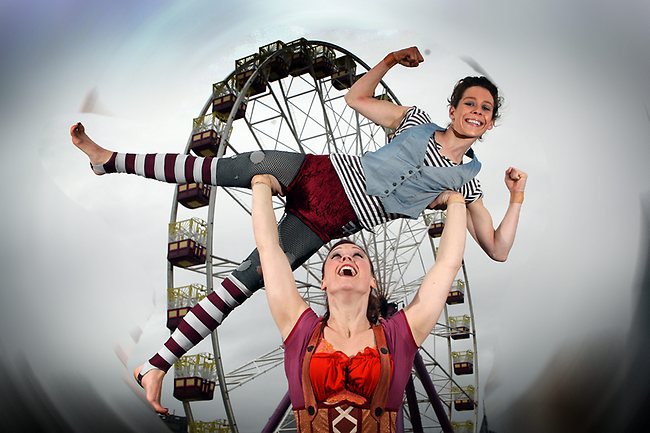
(Picture shows performers from Circus Oz, who were on tour in Melbourne during July 2012)

First Names of All Female Australian Athletes at the 2012 London Olympics

Tags

,

Abby

Alana (2)

Alethea Nevada

Alexandra

Alicia (2)

Amanda

Amy (2)

Angie

Anastasia

Anna (2)

Annabelle

Annette

Ash

Ashlee

Ashleigh (2)

Becchara

Beki

Belinda (3)

Benita

Bianca

Blair

Brittany (2)

Bronte (2)

Bronwen (2)

Brooke

Carmen

Carli

Caroline

Casey (2)

Cate

Claire

Chloe (2)

Dana

Dani

Dina

Edwina

Elisa

Elise

Elizabeth (2)

Eloise (2)

Emily (4)

Emma (2)

Erin

Frankie

Gemma

Georgia (2)

Genevieve

Glencora

Hannah (3)

Hayley

Holly

Hope

Jade (3)

Jaele

Jane

Janine

Jarmila

Jenna

Jennifer

Jenny-Lynn

Jess

Jessica (3)

Jessicah

Jian Fang

Jo

Jodie

Josephine

Julia

Kaarle

Kaila

Kate (3)

Kathleen

Kathryn

Kerry

Kim

Kimberley

Kobie

Kristi

Kristy

Krystal

Kylie

Lalita

Larrissa

Laura

Lauren (4)

Lauryn

Leanne

Leisel

Leiston

Libby

Lisa-Jane

Liz

Loudy

Louise

Lucinda (2)

Lyndal

Lyndsie

Madonna

Mary

Meagen

Megan

Mel

Melanie

Melissa (4)

Miao

Naomi

Naomi-Lee

Nicola

Nina

Olia

Olivia

Pauline

Phoebe

Rach

Rachel (2)

Rebecca

Regan

Renee

Renuga

Robyn (2)

Rowie

Sally (3)

Samantha (3)

Sarah (3)

Seen

Shara

Sharleen

Sophie

Stephanie

Suzanne

Suzy

Tamika

Tamsin

Tarren

Teneal

Tess

Tessa

Toni

Victoria (2)

Vivian

Yolane

Zoe

First Names of All Male Australian Athletes at the 2012 London Olympics

Tags

,

Aaron

Adam (4)

Aden

Aidan (2)

Aleks

Alex

Andrew (4)

Anthony (2)

Arnie

Aron

Ben (2)

Benjamin

Benn

Bernard

Billy (2)

Blake

Brad (2)

Brendan (3)

Brenton

Brian

Brodie

Bryn

Cadel

Cameron (3)

Chris (2)

Christian

Christopher (3)

Clayton

Clive

Collis

Courtney

Craig

Dale

Damian

Damon

Dane Kevin

Daniel (6)

Dave

David (5)

Drew

Eamon

Ed

Edward

Ethan

Farzad

Fergus

Francis

Gavin

Glenn (3)

Grigory

Harrison

Hayden

Henry

Iain

Ibrahim

Igor

Isaac

Ivo

Jack

Jackson Darren

Jacob

Jai Tapu

Jake (2)

James (8)

Jamie (2)

Jared

Jarrod (2)

Jayden

Jeff

Jeffrey (2)

Jesse (2)

Joe

Joel (3)

Johan

John

Johnno

Joshua (4)

Julian

Justin

Karsten

Keith

Ken

Kenrick

Khalen

Kiel

Kieran

Ky

Kynan

Liam

Lincoln Alexander

Lleyton

Luke (3)

Malcolm

Mark (3)

Martin

Matson

Matt (5)

Matthew (6)

Matthew Harley

Michael (4)

Mitch

Mitchell

Murray

Nat

Nathan (4)

Ned

Nicholas

Nick

Patrick

Peter

Rhys

Richie

Robert

Robin

Roderick

Rohan

Ross

Russell (2)

Ryan (2)

Safwan

Sam (3)

Samuel (2)

Scott (3)

Sebastian

Shane

Simon (2)

Stephen

Steven (2)

Stuart

Tate

Taylor

Thomas (5)

Tim (2)

Timothy

Tobias

Todd

Tom

Tommaso

Travis

Tristan

Warren

Warwick

William (3)

Youcef

Celebrity Baby News: Musical Babies

Tags

, ,

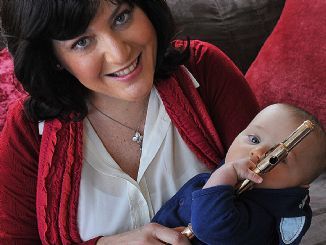
Flautist Bridget Bolliger, and her husband Anthony Heinrichs welcomed a son named Luca Raphael on January 31. Luca Heinrichs joins big brother Benjamin, aged 11.

Bridget studied music at the Sydney Conservatorium High School, then continued her studies at the Basel Music Academy in Switzerland. While still a student, she won several awards for music, and two prestigious scholarships. She lived and worked abroad from 1987-2003, and has been Principal Flute with the Gustav Mahler Youth Orchestra, the Schleswig Holstein Festival Orchestra, and guest principal with the European Community Youth Chamber Orchestra. She has also been appointed Principal Flute with the St Gallen Symphony Orchestra and the Sao Paulo Symphony Orchestra, and played Principal Flute with the Basel Symphony Orchestra, The Zurich Opera Orchestra, the Zurich Chamber Orchestra, the Australian Opera and Ballet Orchestra and the Queensland Orchestra. She has performed as a soloist and been recorded for radio and television throughout Europe, Brazil, and Australia. Bridget currently teaches at the Sydney Conservatorium of Music and freelances with Australian orchestras. She is a founding member of the New Sydney Wind Quintet, and the flute and guitar duo, Flutarre. She is also the founder and Artistic Director of the Sydney Chamber Music Festival, and last year was appointed Music Director of the Manly Music Club.

Anthony has been playing trumpet since he was ten, and at the age of 14 became a member of the West Australian Youth Orchestra. He studied at the West Australian Conservatorium of Music, and then later in Canberra, Japan, and Germany. He worked regularly with the West Australian Symphony Orchestra and has been Principal Trumpet with the Australian Youth Orchestra, Camerata Australia, the Canberra Symphony Orchestra, and the Pacific Music Festival, and has performed with the Frankfurt and Saarbrucken Radio Symphony Orchestras. He has been Principal Cornet with the Australian Opera and Ballet Orchestra. He has taught in Sydney and Newcastle, and has been with the Sydney Symphony Orchestra since 1995.

Another city, another state:

Cellist Tim Nankervis, and his wife Jacqui, welcomed a daughter named Mietta Susan on February 2.

Tim has been a cellist with Melbourne’s Seraphim Trio since 1994. They won a prize at the 2001 Australian National Chamber Music Competition, and since then have performed internationally and around Australia. The trio is regularly broadcast on ABC Classic FM.

Name tips from classical musicians: Stylish and Italian, with fashionable middle names.

Famous Name: Gale

Tags

, , , , , , , , , , , , , , , , , , , , ,

On August 6 the Curiosity rover, which had been launched by NASA at the end of November last year, successfully landed on the planet Mars. As with the 1969 moon landing, Australian scientists played a crucial role in this international endevour, and NASA administrator Charlie Balden made special mention of the Canberra Deep Space Communications Complex at Tidbinbilla, which is part of NASA’s Deep Space Network. Tidbinbilla was the only space station which was facing Mars for the descent, making it uniquely positioned to transit data from Mars to the Earth.

Curiosity landed on the Gale crater, which is believed to be more than 3 billion years old. The main goal of the mission is to determine whether life could ever have existed on Mars, and it is thought by some scientists that the Gale crater could have contained water at some point. If they are correct, this would make life on Mars a real possibility.

The Gale crater is named after Walter Frederick Gale, an early twentieth century amateur astronomer from Sydney. A banker by profession, Walter Gale made several important astronomical observations, including discovering seven comets. He also examined the surface of Mars, and was a keen supporter of the idea that the planet could contain life.

The surname Gale can be from an Old English nickname for someone who was cheerful, merry or fun-loving by nature. The Normans had a male personal name Geil, meaning the same thing, and that can be another source of the name. Another possibility is that is from the Norman-French word for “gaol”, perhaps denoting someone who worked as a gaoler, or even lived near a gaol. The surname Gale is mostly found in the southern coastal areas of England, but it is also commonly found in Yorkshire, leading to the possibility that there it may be from the Norse word geil, meaning “deep ravine”.

As a vocabulary word, gale has more meanings than you may suspect. It is an old dialect word meaning “to sing”, with connotations of “charm, enchant”, but also referring to birdsong. Gale Day is an old legal term, meaning the day that a tenant’s rent was due to be paid. Sweet gale is another name for the bog myrtle (Myrica gale); a shrub which typically grows in peat bogs. Its sweet scent has seen it used to flavour beer, and to make perfumes, and it’s one of the plants traditionally used in Royal wedding bouquets.

Of course, when we hear the word gale, we most likely think of a strong wind, especially those which feature in storms. It may also remind us of the phrase gales of laughter, which seems to tie in pretty neatly with its original meaning of “cheerful, merry”.

Gale was originally a male name, and taken directly from the surname. It isn’t found as a female name on the US charts until the 1930s – not surprisingly, this correlates with the rise in popularity of the female Gail, used as a short form of Abigail (Gail was also used for boys as a variant of Gale). In the US, despite the popularity of Gail as a girl’s name, male and female Gales existed together until the name disappeared from the charts for both sexes around the same time – 1969 for boys, and 1970 for girls.

In Australia, Gail was a popular girl’s name which peaked in the 1950s at #26, and I suspect for people born around that era, and perhaps a decade or so later, Gale would sound feminine to their ears. However, Gail hasn’t been on the charts since the 1990s, and Abby is the popular short form of Abigail today. If you look on the current Top 100 for the name that sounds most like Gale, it’s a male one – Gabriel.

Gale is an interesting name that by meanings, associations and sound, manages to present itself as both masculine and feminine, depending on how you think of it. I do like the idea of using it as a boy’s name, because English names are lacking male forms which have connotations of joy and happiness, compared to the numbers of female ones. Perhaps also because the Gale Crater is on the planet Mars, a name associated with masculinity for thousands of years.

However, this name is up for grabs by both genders, and does honour a great Australian star-gazer. If you can only think of this as meaning “a strong wind”, it would be on trend as one of the one-syllable nature name, which go so well in the middle position.

UPDATE: Blue Juniper from Baby Name Ponderings has reminded me that of course, Gale Hawthorne is one of the main characters in The Hunger Games trilogy. The best friend and hunting partner of protagonist Katniss Everdeen, Gale is played by Australian actor Liam Hemsworth in the film version. (Liam is the younger brother of Chris Hemsworth).

As Blue Juniper points out, this gives a current-day Gale much more of a masculine edge.