Tags
GIRLS
|
BOYS
|
Like to see what comes next? There are 786 girls names and 748 boys names in all. For the full data set, go to the E-books page and follow the link.

31 Thursday Mar 2016
Posted in Name Data
≈ Comments Off on The Waltzing More Than Matilda Top 100 for 2015
Tags
GIRLS
|
BOYS
|
Like to see what comes next? There are 786 girls names and 748 boys names in all. For the full data set, go to the E-books page and follow the link.
31 Thursday Mar 2016
Last year I tabulated every example of a particular baby name I saw, combining spellings to give an idea of how common a name actually was. Examples were taken from birth announcements in newspapers, hospital announcements from websites and newspapers, newborn photography and parenting blogs, stories about babies from newspapers and magazines, and some babies I saw in real life. It also includes all the Australian celebrity babies from that year, all birth announcements on the blog, and birth announcements from Western Australia, supplied by Ebony on her blog babynameobsessed.
Combining spellings is a problematic exercise, as there is no way to determine how the parents pronounce the name. I tried to guess the most likely pronunciation, based on how most people would pronounce the name. In cases where a name could have more than one pronunciation, when possible I dealt with them as separate names, so that Louis/Lewis is differentiated from Louis/Louie. Of course this can provide only the most general information.
This also means that completely different names were combined together because they sound the same, such as the English name May and the Chinese name Mei. In cases where I wasn’t sure whether separate names should be regarded as homophones, I relied upon the “playground test” – not saying the names quietly and distinctly, but screaming them aloud, as if calling a child outdoors. Although I would say the names Amelia and Emilia very slightly differently in my normal speaking voice, when I shrieked them urgently across a paddock, they sounded virtually identical.
It was not practicable to show all the possible variant spellings given to a name, and I have only shown the traditional spelling, or in some cases, dominant spellings. Occasionally this gave slightly misleading results – for example, out of the babies I saw named Alicia, not one of them had their name actually spelled Alicia!
Where there was only a single example of a name and it had a very idiosyncratic spelling, I gave it the traditional spelling in case it should be unrecognisable at first sight. I did this especially with vocabulary names and place names, which might otherwise go unnoticed.
Not all the babies were born in 2015, as I took names of all babies up to 12 months old, so that many would have been born the previous year. (Where a baby had a very unusual name, I could not resist including it, even if was slightly older than 12 months). Neither are all the babies born in Australia, as Australians living abroad often put birth announcements for their children in the newspapers here, or have their stories covered in the media (this includes those Australian celebrity babies born overseas).
In no way is this intended to replace the current national Top 100, which will come out soon, or to provide an ad hoc full data set for Australia – it should be considered as a survey only. It does give some idea of the diversity of names used in Australia, and might provide baby name inspiration, or reassurance that an uncommon name is used more often than you might have thought (or at all).
If you would like a copy of the complete data in Microsoft Excel format for the Waltzing More Than Matilda Name Survey (includes both boy and girl names), please go to the E-books page and follow the prompt.
30 Wednesday Mar 2016
Posted in Famous Names
Tags
aristocratic names, aristocratic surnames, Austrian name popularity, classic names, english names, European name popularity, famous namesakes, Latin names, locational names, name history, name meaning, nicknames, royal names, saints names, South American name popularity, surname names, UK name popularity, US name popularity

On March 27 it was the thirtieth anniversary of the Russell Street bombing in Melbourne, in which a gang of criminals blew up the city’s Police Headquarters Complex in an apparent revenge attack. That day in 1986 was Easter Thursday, and the bomb was timed to go off at 1 pm, when the street would be crowded with police and court room staff breaking for lunch.
Constable Angela Rose Taylor, aged 21, was on duty in the watch house at the old Magistrates Court when she tossed a coin with her workmate as to who would collect their sandwiches. Constable Taylor lost. She was on her way to the canteen when a stolen car packed with 50 to 60 sticks of gelignite exploded on Russell Street.
Constable Taylor was just one metre away from the car at the point of detonation, and she was thrown across the street in a fireball, her clothes blown off her body, her shoelaces alight, and her police hat melting. She suffered horrific burns to over 70% of her body and died in hospital on April 20, becoming the first Australian policewoman to die in the line of duty.
Twenty-two other people were injured in the blast, and over one million dollars worth of damage was done to the Police Headquarters, which is now an apartment block. Two men were sentenced to life in prison for the murder of Constable Angela Taylor and other crimes, one without a parole period.
Constable Angela Taylor received a posthumous service medal from Victoria Police, there is a plaque in her honour on Russell Street, a unit at the Royal Melbourne Hospital is dedicated to her, the Angela Taylor Memorial Scholarship offers grants for police to study, the Angela Taylor Memorial Run/Walk commemorates her life, and the dux of each graduating squad receives the Angela Taylor Award. Four of the Taylors’ grand-children are named in her honour – Brooke Angela, Laura Angela, Alyssa Rose, and Alex Jasmine Rose. In these ways does her name live on.
ANGELA
Angela is the feminine form of the Latin name Angelus, meaning “angel”. Angels are mentioned in the Old Testament as spiritual beings who bring communications from God; the word angel is derived from the Greek for “messenger”. Angels play a much bigger role in the New Testament, where they make several important announcements, including the birth and resurrection of Christ.
Angela has been used as a name since the Middle Ages, and given impetus by St. Angela of Foligno, one of the great medieval mystics and a spiritual teacher; later St. Angela Merici specialised in the education of young girls.
The name Angela was most common in Italy, Spain (from where it spread early to Latin America), Germany and Central Europe. Although the name was known in Britain too, it didn’t come into common use in English-speaking countries until the 18th century, aided by Spanish immigration in England. In the US, the name spread via the Hispanic population, and immigration from Germany and Italy.
Famous Australians named Angela include mining heiress Angela Bennett, the second richest woman in the country after Gina Rinehart; actress Angela Punch McGregor, who starred in classic films such as The Chant of Jimmie Blacksmith and We of the Never Never; British-Australian novelist Angela Thirkell, who was the god-daughter of J.M. Barrie; scriptwriter Angela Webber, who created the successful children’s show Mortified; and veteran radio broadcaster Angela Catterns.
Angela is a classic name which has never left the charts. It was #268 in the 1900s, joining the Top 100 in 1957 at #87. Famous namesakes from this era include actresses Angela Lansbury and Angie Dickinson. Angela peaked in 1976 at #12, and didn’t leave the Top 100 until 2003. Use has remained stable, and it is not far outside the Top 100 even now.
Angela is also a classic in the United States which has charted in the Top 1000 since the late 19th century, and almost never been lower than the Top 200 during the 20th century. It joined the Top 100 in 1956, and hit its peak in the mid-1970s at #5, when Angela Lansbury was wowing Broadway audiences in Gypsy, while Angie Dickinson starred in TV drama Police Woman. Angela left the Top 100 in 2003; it is now #191 and reasonably stable.
In the UK, Angela joined the Top 100 earlier, during the 1930s. It had been a fashionable choice among the aristocracy earlier in the century, with a notable example being Elizabeth Bowes-Lyon, later the Queen Mother, who had Angela as a middle name. The name Angela peaked in the 1960s, and was off the Top 100 by the mid-1990s. It is far less popular in England/Wales than in Australia or the US, being #516 and fairly stable.
Angela is a Top 100 name in Spain, Portugal, and Latin America, and is most popular in Spain, where it is #39.
No longer popular, Angela is an enduring classic with a beautiful meaning that is still in reasonable use. Pretty and sweet, it works well cross-culturally and makes a good choice for parents who want a familiar name which is neither very common for new babies, nor rising in popularity, without being particularly dated. Ange or Angie are the usual nicknames.
RUSSELL
Russell is an English surname of Norman origin. The aristocratic Russell family claim descent from Hugue de Roussel, who came over with the Conqueror as a high-ranking attendant and was granted land in Dorset. The Russells trace their surname from Roussel in Normandy, whose name comes from the Old French for “stream, brook”.
The Scottish Clan Russell trace their descent from an English baron named Rozel, whose name is perhaps derived from the Norman nickname Rous, meaning “red” and given to someone with red hair or ruddy skin. It was common amongst the Normans, and Latinised to Rufus, as with William Rufus, the son of William the Conqueror, who was blond with a florid complexion. This is another possible source for the surname.
The Russell family is one of the most famous in Britain, among the richest landowners in the country, and a powerful dynasty in Whig politics. They are descended from John Russell, a royal minister in the Court of Henry VIII, and the 1st Earl of Bedford, ancestor of all subsequent Earls and Dukes of Bedford.
Sir John Russell was British Prime Minister during the 19th century – it is he who Russell Street in Melbourne is named after. Others members of this prominent family include Bertrand Russell, the 20th century philosopher, humanist, peace activist, and Nobel Prize winner, and Bertrand’s son, historian Conrad Russell. Anne Russell was a literary patron and one of Elizabeth I’s closest friends, niece to the writer Anne Clifford; Anne’s mother Elizabeth Russell was a noted poet herself, so the family has long had a literary connection.
Famous Australian Russells include distinguished artist Russell Drysdale; World War II fighter pilot Russell Fosket; controversial politician Russell Hinze; New Zealand-Australian actor Russell Crowe; film director Russell Mulcahy who created the cult classic Highlander; and rock star Russell Morris, who sang the 1960s classic The Real Thing.
Russell has been used as a personal name since at least the 16th century, most likely in honour of the aristocratic family, and in some cases perhaps to demonstrate kinship with it. By the 18th century it shows up in Scotland, as by that time the Scottish Russells had a baronetcy and were distinguishing themselves in military service.
The name Russell was #94 in the 1900s, and peaked in 1956 at #45 (just as Angela was joining the Top 100). It left the Top 100 in the 1980s, and hasn’t charted since 2009. It is still in occasional use.
In the US, Russell has never been off the Top 1000, and was a Top 100 name from the late 19th century until 1983. Currently it is #408, and relatively stable. In the UK Russell was a Top 100 name from the 1960s until the 1980s. It has been on a fairly steep overall decline, and is now #959 and reasonably stable.
Russell is certainly not fashionable, but doesn’t seem horribly dated either – British comedian Russell Brand is perhaps helping to give it a rather livelier image. Although not a nature name it almost seems like one, as it sounds like the words russet and rustle, conjuring up images of autumn leaves. The usual nicknames are Russ and Rusty.
POLL RESULTS
Angela received an approval rating of 45%. 50% of people weren’t keen on it, and 5% thought it was a terrible name. Russell had a very similar approval rating of 46%. 48% of people weren’t keen on it, and 7% thought it was a terrible name.
(Photo of Constable Angela Taylor’s memorial service from the Daily Mail)
22 Tuesday Mar 2016
Posted in Naming Assistance
Tags
animal names, choosing baby names, Facebook, honouring, matching names with surnames, middle names, name trends, nature names, nicknames, rare names

Tara and Andor are expecting their first child in a few months, and easily thought of plenty of girls names they both liked. However, they only agreed on one boy’s name that they both liked equally and felt was the right fit for them. As it happened, they discovered they were having a boy, and now that one name seems very real.
The one boy’s name they have both agreed on is Fox. Tara admits this possibly wasn’t a good idea, but she mentioned the name to her mother and sister, who were surprised by it and not very impressed.
Her mum thought it sounded “too Mills & Boone”, and was concerned that if their son had red hair (which runs in the family), the name Fox might seem rather cruel. She also didn’t like the connotations of being sly that the word fox has.
Tara’s sister just didn’t like it, as her taste in names is much more traditional. Tara is too sensible to worry overmuch about her family’s reactions, and hopes that they come around once the baby has actually been born (and is a super cute and cuddly grandson and nephew for them).
The main thing that is holding Tara back from committing to the name Fox is that the baby will have a one-syllable occupational surname, such as Clark, and she feels that Fox Clark doesn’t flow particularly well. She also wonders if it might be a bit too unusual, as Fox seems to be gaining popularity as a middle name rather than a first name.
What Tara and Andor would most like in a name is something which isn’t highly popular, and will be suitable for all stages of their son’s life. Tara likes older style names, and both of them love nature names as well. Tara is a teacher, and has ruled out many names too strongly associated with past students.
Andor has an unusual name, and both he and Tara like that it’s out of the ordinary – they both like the name Oliver, nicknamed Ollie, but have ruled it out because it’s the #1 name. Archie is also becoming a name they are seeing too often on other people’s children to keep on their list.
Other names they have thought of are Felix, Arlo, Louis, Banjo, and Sonny. Tara really likes Theodore, nicknamed Teddy or Theo, or just Theo as the full name, but she hasn’t been able to convince Andor. The baby’s middle name will be Steven, which honours a loved family member.
Tara wants to know – is Fox too short for a one-syllable surname, and is it too out there as a first name?
* * * * * * * * * * * *
Last year a mum-to-be wrote in to the blog because she and her husband had agreed on only one name for their daughter – Grace. Because they had a one-syllable surname, like Cooke, she was worried that they couldn’t give their baby girl a short name to match it. When their daughter was born, they decided that Grace was the perfect name for her after all.
Just as I couldn’t see anything horribly wrong with Grace Cooke, I don’t believe Fox Clark is too dreadful. More than that, I actually like it – I enjoy that it has a snappy, brisk sound, like the bark of a fox. I also like the juxtaposition of the two nouns in the name Fox Clark, which is very evocative. The name sounds smart to me – clever and wise, rather than cunning and sly.
I found a young man on Facebook with the name “Fox Clark”, so someone else has used it. I had a very clear picture in my mind as to what someone named Fox Clark would be like, and this man (unsurprisingly!) looked completely different – and yet I at once thought, “Oh yes, he looks exactly right for a Fox Clark”. And I’m sure I could see another Fox Clark, and another, and they would all suit their name in different ways.
As to whether Fox is too unusual a name or not, that comes down to opinion. It’s certainly not a common name, but nature names and animal names are on trend, and so are names for boys ending in an X like Tex or Hendrix. The name Fox is also rising steeply in the UK and US, so I think you can safely assume there are more Foxes being born here too.
You’re right that the name is much more common in the middle, but rising names often start out in middle name territory. Parents like them, but don’t feel bold enough to use such a “different” name in the first position: not yet, anyway. Short names like Fox also appeal as middle names because they sound good with longer first names.
But what you probably wonder is whether other people will think that Fox is too weird, especially after your family’s reaction. The feeling I most get about Fox when I talk to people about it is that it’s a “cool name” – one that’s different, but in an interesting way.
If you look at people’s opinions online, so often they say Fox is a guilty pleasure name: one they wish they were brave enough to use. Sure, you might have a few people who don’t care for the name Fox, or think it’s strange, but I think there will also be some admirers, and secret admirers, out there.
Even your mum’s comment that it’s a “Mills & Boone” name suggests that she thinks it sounds sexy and bad boy. She might not like it, or perhaps thinks it’s inappropriate, but it’s interesting that she immediately connected the name to romance and fantasy. Perhaps when you met Andor, you likewise found his name intriguing: I like that Andor has an unusual name too, so it feels like the start of a family tradition.
Fox is an up and coming name that isn’t widely familiar yet. That’s an attraction for a teacher, for as yet you haven’t had many (perhaps any?) students named Fox to colour the name for you.
That means it doesn’t have an ageless quality but eventually children grow up, and their names inevitably grow with them – at some point, Arlo will be your doctor and Sonny will handle your insurance claim. Once upon a time, Clarence was a “little boy” name that people could no doubt never picture as a lawyer, journalist, or old man in a nursing home.
If you continue to have nagging doubts about naming your son Fox, perhaps you could use it as a nickname. Looking at your name list, you have considered the name Felix, which seems the easiest to turn into a long form of Fox – “His name’s Felix, but we call him Fox for short”. Really, Fox seems like the kind of name where you could choose any name you wanted and add, “… but we call him Fox”.
However, I must say I hope you decide to stick with Fox. It’s a name you both like equally, and the only name you have both agreed on so far, so it just might be the right name for you.
POLL RESULTS
87% of people thought Fox was okay to use with a one-syllable surname. 48% thought it sounded quite good, 21% that it sounded okay, and 18% that it didn’t flow particularly well, but was still usable. However 11% of people thought it was too awkward to be usable, and 2% weren’t sure.
85% of people thought that was Fox wasn’t too weird to be usable as a baby name. 30% thought it was a bit unusual, but that others would soon get used to it. 20% didn’t think it was very unusual as it fits in so well with current trends. 15% said it was too unusual for them to use, but they would find it interesting on someone else’s child. 13% thought it was very unusual, but that was a positive thing as it made the name cool and different. 7% of people didn’t think it was unusual in the least. 11% thought maybe it was too unusual as they couldn’t imagine it on a real person, while 4% were convinced it was an extremely weird name.
21 Monday Mar 2016
Posted in Name Updates
Jane and Dylan were less than two weeks away from welcoming their second child when Jane wrote into the blog having last-minute name nerves. They had more or less decided on Finn for a boy and Eve for a girl, but Jane didn’t feel 100% sure they had chosen the right names.
Jane and Dylan’s second daughter was born a week ago, and they had no problem at all in naming her
EVE ERIN,
sister to Lila.
Jane feels very comfortable with the choice they made, and everyone has commented on what a lovely name it is and how great Lila and Eve sound together. A few people said they had seen a movie on Netflix called Lila and Eve (Jennifer Lopez plays Eve), so obviously the film-maker thinks the names sound good together as well!
Congratulations to Jane and Dylan on their baby girl, and thank you to everyone for voting on the polls and leaving comments. That validation really helped Jane feel better about her decision.
20 Sunday Mar 2016
Posted in Name Data
≈ Comments Off on The Top 100 Names in Tasmania for 2015
Tags
GIRLS
|
BOYS
|
GIRLS
Fastest Risers
Harriet (+87 at least), Paige, (+82 at least), Jasmine (+78 at least), Estelle (+67 at least), Florence (+63 at least), Penelope (+62), Madeleine (+60 at least), Sofia (+58 at least), Ivy (+54), Chelsea (+53)
Fastest Fallers
Sarah (-94 at least), Savannah (-88 at least), Skyla (-83 at least), Elizabeth and Esther (-62), Brooke (-60 at least), Josie (-58 at least), Nevaeh (-57 at least), Bonnie (-56 at least), Zoey (-54 at least)
New
Harriet, Paige, Jasmine, Estelle, Florence, Penelope, Madeleine, Sofia, Charli, Maya, April, Clara, Marli, Indi, Charlie, Bethany, Skylah, Lacey, Zara, Kaylee, Pippa, Remi
Gone
Elizabeth, Savannah, Sarah, Skyla, Tilly, Mikayla, Amber, Brooke, Josie, Nevaeh, Bonnie, Claire, Zoey, Isabel, Taylor, Josephine, Claudia, Anna, Eve, Samantha, Lexi, Eloise
BOYS
Fastest Risers
Luke (+93 at least), Vincent (+81 at least), Theodore (+79 at least), Rory (+78 at least), Parker (+76), Harvey (+70), Ari (+61 at least), Charles (+56 at least), Axel (+55 at least), Nixon (+50 at least)
Fastest Fallers
Chase (-77 at least), Robert (-74 at least), Hayden (-73), Brock (-68 at least), Benjamin (-67), Aiden (-62 at least), Cameron (-58), Nathaniel (-56 at least), Carter (-53 at least), Billy (-47 at least)
New
Harvey, Luke, Vincent, Theodore, Rory, Parker, Louis, Ari, Tyson, Ashton, Matthew, Tom, Charles, Axel, Nixon, Rylan, Jax, Bentley
Gone
Chase, Robert, Hayden, Brock, Cameron, Michael, Christopher, Aiden, Abel, Sonny, Nathaniel, Carter, Reuben, Billy, Hugh, Nicholas, Joel
Note: Because of its small population size, Tasmania’s Top 100 is most of its complete data. For the same reason, movement up and down the chart is extremely volatile.
19 Saturday Mar 2016
Posted in Naming Assistance
Bianca and Daniel are expecting their second child in a few months, a brother or sister for their son Arlo. They have a name list in place which they are pretty set on, but as the pregnancy progresses, Bianca finds herself thinking them over more and more, until she begins to wonder if she is overthinking them.
They have several possible names for boys selected, including Eli, Ezra, Remy, and Chet. Daniel loves the name Eli, and that’s the name they will probably choose. However, Bianca worries that Arlo and Eli might be too matchy as a sibset. Bianca likes the sound of Ezra with Arlo, but is worried about people’s reactions to it, as she thinks it is very uncommon in Australia.
For girls, they love the name Elke, but now Bianca is starting to worry about spelling and pronunciation issues. Bianca likes the traditional spelling of Elke, but not the traditional pronunciation, which is rather like EL-ka – she prefers EL-kee.
Bianca wonders how most Australians will read the name Elke if they see it written down – as EL-ka, or EL-kee? Should they change the spelling to Elkie to avoid confusion? And does Elkie look okay, and not like a made up name?
Other girl names considered are Nell, Edie, Romy, and Ayla. Nell has been Bianca’s favourite name for many years; Daniel won’t agree to it, however. Bianca also likes Edie, and thinks it might be a better option than Elke. However, Bianca and Daniel have a niece with a name that ends in -die, such as Sadie, and she wonders if Edie and Sadie might be too much alike.
Bianca isn’t quite sure about Romy, but does love its spunkiness. She worries it might sound a bit funny with their surname (which is slightly similar in sound to Google), and Daniel isn’t quite sure about it. Daniel loves the name Ayla, but Bianca isn’t quite as keen, and feels it is too close to Arlo.
Bianca would love some suggestions for more girls’ names, as she isn’t sure about any of their choices. Her favourite girls’ names are short, simple, and sweet – and not too common.
* * * * * * * * * * * *
Gee Bianca, I would love to tell you that you’re over-thinking things and to stop worrying about it all. The trouble is that would be very hypocritical, because if I was in your position, I would be thinking and worrying about exactly the same things. Maybe I’m an over-thinker as well (a blog on the subject could very well be a symptom of that).
I can see what you mean about Arlo and Eli – they both start and end with a vowel, and have an L sound in the middle, so they sound a little alike. However, I don’t think they necessarily sound too matchy, and from what I’ve seen, parents who like Arlo often like Eli as well, so I wouldn’t be surprised if there are other brothers named Arlo and Eli out there.
I tend to agree with you that Arlo and Ezra are an awesome match. They sound great together, and have a cool, intelligent vibe that’s rather hip. Ezra isn’t that uncommon in Australia – it’s not popular, but you definitely see it around. It’s already Top 100 in New Zealand, and is rising very steeply in the US and UK, so it feels ready to take off (maybe like Arlo a few years ago?). I can’t promise you will never get any negative reactions to it, but I think overall it might be better received than you think.
However, if Daniel loves the name Eli then it might be hard to get him to change his mind. And I wouldn’t blame him – if I really loved a baby name, and my spouse and I had both agreed on it, I would be a bit miffed if the name was changed to something else. Loving a baby name is something that could trump a name being hipper or making a better match: giving your child a name that you love over all others is a wonderful gift.
So that’s something for you and Daniel to discuss together, but I think either Eli or Ezra would be fine. You can’t go wrong whichever you pick.
I can see that Elke is giving you some problems with spelling and pronunciation, and I’m not really sure which pronunciation is more common in Australia. I often see people spelling the name Elka or Elkah, as if they’re more worried about people trying to put an EE sound on the name. It’s less common for me to see the name spelled Elkie but I have a few times. I don’t think it looks terrible or anything, but to me it looks as if Elkie means “little elk”.
The trouble is that you prefer the Elke spelling, and I can imagine it might grate on you to see your daughter’s name spelled in a way that seems wrong to you. On the other hand, having people sometimes pronounce it EL-ka would no doubt be an annoyance to you.
I must admit that my own prejudices are at work here, because I’m the sort of person who doesn’t mind names with alternative spellings, but balks at ones with alternative pronunciations. I wouldn’t have any problems explaining again and again that it’s Stephen not Steven or Isobel not Isabelle, but would become almost instantly stressed about Louis said like Louie or Emmeline to rhyme with Caroline. In my experience, people are much more likely to not understand or “hear” a pronunciation they’re not familiar with, or even to tell you that “you’re saying it wrong”.
If you decide that Elke is too much of a hassle, I think Edie would be an excellent alternative. It’s a sweet, hip little name, and makes a great match with Arlo. I don’t think a cousin called Sadie or Bridie should be an issue – it’s hard enough trying to co-ordinate sibling names without having to worry about “cousin sets”! However if the cousin is named Addie, that might be just close enough in sound to Edie to cause some mix ups.
I also love Romy as a match with Arlo, and I can’t see anything wrong with Romy Google. I agree it’s very spunky. To me Arlo and Ayla are perhaps a little too much alike – I can see that Daniel really likes vowel-heavy names with a strong L though, but not Alice!
Some other girls’ names that seem like a nice match with Arlo:
Thea – last year blog readers voted Thea and Arlo their favourite baby names from the Name List category. I have to admit, they seem like natural siblings.
Willa – it’s another name with a L sound in it, but less vowel-y. It seems hip to me, but might occasionally be confused with popular Willow.
Nora or Norah – I think Arlo and Nora sound adorable together. I guess another set of parents did too, because when I did a web search for “Arlo + Nora”, I found that Arlo Guthrie has a sister named Nora, a music producer. At least you know it works in real life!
Iris – I love the sweetness of Iris, and how it sounds with Arlo. I wonder if it’s too much like Alice for Daniel?
Sylvie – another sweet name I’m seeing more and more of. It’s another name with an L in the middle. Arlo and Sylvie almost seem characters from an urban fairy tale.
Elva – this vintage name is coming back into fashion. It has an Irish connection, like Arlo, and struck me as a possible alternative to Elke. Etta would also be nice, but I wonder if Arlo and Etta is too much of a musical theme for you – it feels as if the next child has to be Miles or Lulu.
Well Bianca, I don’t know if I’ve helped with your over-thinking, or just given you more things to think about! I think you are pretty much right for boys’ names, having two good choices at least, while I agree that you might need to consider girls’ names a bit longer. Luckily you have a few months to make a final decision.
UPDATE: The baby was a boy, and his name is Ezra!
POLL RESULTS
80% of respondents didn’t think Arlo and Eli were too matchy as brothers. 47% thought they were a bit matchy but still usable, 20% thought they were hardly matchy at all, and 13% thought they weren’t matchy in the least. One-fifth of people were sure that this combination was too matchy, and overall that made 67% of people who leaned towards thinking it was matchy to some extent.
There was a slight majority of people who preferred to say the name Elke as EL-kee, and it didn’t make a huge amount of difference whether you were Australian or not. 59% of Australians said EL-kee, while 41% said EL-ka; 53% of non-Australians said EL-kee, while 47% said EL-ka.
The public’s choice for Arlo’s sibling was Ezra for a boy, which gained 53% of the vote, and Edie for a girl, which got 43% of the vote.
18 Friday Mar 2016
Posted in Birth Announcements

Twins
Delaney Mae and Piper Bonnie
Girls
Annalise Nikita
Artemis
Audrey Lucia
Aylah Mira Irene (Joel, Noah, Tayte)
Bonnie Louise (Duke)
Charlotte Quinn
Chloe Pearl (Corban)
Eadie Mae (Charlie, Millie, Henry)
Emilia Kate
Evelyn Ann (Evan)
Gabriella Ivy (Ariana)
Katherine Faye
Kenzi Anna (Kianah)
Matilda Marjorie Helen (Aria)
Neve Margaret (Ethan, Oscar)
Queenie
Savannah Raine
Skye Ellen Linda
Sophia Florence
Tara Jade
Boys
Andrea Peter
Arturo William
Astin David John
Beau Henry (Thomas, Jake)
Cameron Manny (Alex)
Clancy James (Lucy, Fletcher)
Emerson Damien Anthony
Eric Louis Carl
Ezra Glenn
Hugo Alexander
James Fletcher
Jimmi Barry
Judd Douglas
Lennox Harry
Maxwell Ross
Oakley Benjamin (Jaxon)
Obadiah Phillip Thomas (Albert, Jemimah)
Rafferty Francis (Harper, Scarlett)
Ryan Arnold
Zachary Trevor
(Photo shows Queens Gardens, Perth)
16 Wednesday Mar 2016
Posted in Famous Names
≈ Comments Off on Famous Name: Patrick
Tags
British names, classic names, english names, Irish names, name history, name meaning, name popularity, popular names, Roman names, saints names, Scots Gaelic names, UK name popularity, US name popularity, Welsh names
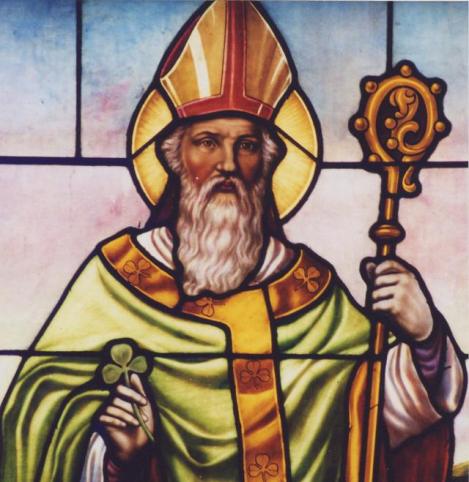
Tomorrow is St Patrick’s Day, a worldwide celebration of Irish culture. With such a strong Irish heritage in Australia, you would think that St Patrick’s Day would be special here, and you would be right. As early as 1795, Irish convicts were celebrating March 17 in raucous fashion, and these later became more respectable dinners held by colonials of Irish descent. Parades began to be organised in the 1800s, and had become established institutions by the 1920s.
St Patrick is the patron saint of Ireland, and people are sometimes surprised to learn he wasn’t Irish; he was a 5th century Romanised Briton from an aristocratic family on the west coast of Britain. Although his father was a deacon and his grandfather a priest in the Christian church, as a youngster Patrick wasn’t very interested in religion.
According to his own testimony, when he was a teenager he was kidnapped by pirates and taken as a slave to Ireland, where he worked taking care of farm animals in what he describes as a very cold and wet climate. During this time he learned the Irish language and converted to Christianity; after six years he managed to escape and return to his family.
Patrick wrote that a few years after his return, he had a vision of the Irish people begging him to help them. After training as a priest, he went as a missionary to Ireland and became a bishop. Here he converted many people, not only slaves and the poor, but also noblemen and women who became monks and nuns (this may not seem very liberating to us, but the church provided an attractive career path for educated medieval women).
Very little is actually known about Patrick’s life and work, and doubt has even been cast upon his claim of enslavement in Ireland. He wasn’t the first missionary to Ireland – that was St Palladius. Some of the details of Palladius’ Irish mission seem to have got mixed up with Patrick’s story, and Palladius’ role in Ireland may have been minimised to give Patrick the spotlight.
However where facts are thin on the ground, myths and legends flourish. A favourite is that St Patrick used the three-leafed shamrock to illustrate the Trinity, so that the shamrock is a popular symbol on St Patrick’s Day. Another is that St Patrick banished all the snakes from Ireland – an incredibly easy miracle to perform, as they were never there. It is even said that he introduced whiskey to Ireland, and used the drink as a teaching aid: thus drinking alcohol is traditional on St Patrick’s Day.
St Patrick overcame his slightly boring saintliness to become a colourful figure of folklore, and over the centuries a symbol of Irish identity and culture that transcends Catholicism, and even Christianity. And that’s why we all feel just a little bit Irish on St Patrick’s Day!
Name Information
In his autobiography, St Patrick always refers to himself as Patricius, a Roman name meaning “nobleman” (it is the source of the word patrician). It is possible that he chose this himself, because the name is linked with the Latin for “father” – pater – to suggest he was the father of his people. However, Patricius was in regular use among the Romans, and in fact the name of St Augustine’s dad.
It is often said that Patrick’s birth name was Maewyn Succat, a British translation of the Roman name Magonus Succetus, and translated with great optimism as “famous war god”. (Succetus was supposedly a Celtic god of war, although nobody seems to have heard of him, which doesn’t help the translation overmuch).
This already seems like something his followers might have invented, and looks even less convincing as it appears that the name comes from British and means “servant swine-herd” – a clear reference to Patrick’s period of slavery. If St Patrick had another name as a child, we do not know it.
Patrick is the Anglicised form of Patricius, with the Irish form being Pádraig, the Scots Gaelic Phádraig, and the Welsh Padrig. Due to the fame of St Patrick, Patrick was used in Britain by the Middle Ages (sometimes with Patricius as the official name), where it was especially popular in the north of England. It was also taken up with enthusiasm in the west of Scotland, where it was seen as a form of Peter.
Although we think of Patrick as a typically Irish name, it did not come into common use in Ireland until the 17th or perhaps even 18th century, when it was introduced by Scots immigrants to northern Ireland. Before this, the Irish felt that the name of their national saint was far too sacred to be given as a baby name, although they did use names such as Gilla Pátraic, meaning “servant of St Patrick”.
However, once the Irish gave in to peer pressure and decided Patrick was okay to use, it became a great favourite. Patrick was so popular as a boy’s name in Ireland by the 19th century that the nickname Paddy became a (rather disparaging) term for an Irishman.
With strong Irish immigration to Australia, there have been many Australian Patricks. Some examples include the Nobel Prize-winning author Patrick White; pioneering farmer Patrick Durack, who founded the famous Durack dynasty; Patrick Hannan, whose discovery of gold sparked the gold rush in Western Australia; Presbyterian minister Patrick Murdoch, progenitor of the famous Murdoch dynasty; and Patrick Sullivan, creator of Felix the cartoon cat.
It thus comes as little surprise that the name Patrick is a solid classic in Australia, never out of the Top 100, and rarely out of the Top 50. It was #36 in the 1900s, and reached its lowest point in 1978 at #71. Its peak was in 1994, when it reached #30. It is now stable around the lower end of the Top 50.
Currently it is #40 nationally, #51 in New South Wales, #26 in Victoria, #46 in Queensland, #36 in South Australia, #46 in Western Australia, #46 in Tasmania, and #29 in the Australian Capital Territory. In 2014 it was the fastest-rising name in Tasmania, and one of the fastest-rising in South Australia.
In the US, Patrick has constantly charted on the Top 1000, and never been lower than #166, which it reached in 1919. It was a Top 100 name at the turn of the 20th century, and again from 1936 to 2003, peaking at #30 in the 1960s. Currently it is #153 and fairly stable.
In the UK, Patrick has likewise been a long-time favourite. It was in the Top 100 from the mid-19th century until 2006, and is now #115 and stable. Patrick is a Top 100 name in New Zealand, and in Northern Ireland, where its popularity is similar to Australia’s. It is most popular in Ireland, where it is in the Top 20, and very stable.
Patrick is a strong, handsome name that is a timeless classic while remaining stylish. It’s popular, but has always been so, and its position on the charts is is extremely stable. It’s a traditional name with ties to Irish history and culture, and in Australia often considered a rather upper class choice. Traditional nicknames like Pat, Patsy and Patty are out of favour, but Paddy is still going strong, and Patch perhaps deserving of a mention.
POLL RESULTS
Patrick received an approval rating of 79%, making it one of the highest-rated names of 2016. People saw the name as handsome and charming (24%), a stylish classic (21%), and a name which ages well (17%). However 9% thought it was too common and boring. Only 1 person thought Patrick from Spongebob Squarepants made the name too embarrassing to use.
14 Monday Mar 2016
Posted in Name Data
≈ Comments Off on The Top 51 Names in South Australia for 2015
Tags
GIRLS
|
BOYS
|
GIRLS
Fastest Risers
Violet (+26 at least), Evie (+19), Evelyn (+17), Emma (+16), Mila (+12 at least)
Fastest Fallers
Madison (-26), Lily (-16), Imogen (-14), Mackenzie (-13 at least), Sophia (-13)
New
Violet, Mila, Maya, Piper, Paige
Gone
Mackenzie, Addison, Elsie, Poppy
BOYS
Fastest Risers
Elijah (+16), Angus (+15 at least), Nate (+15), Logan (+14), George (+12)
Fastest Fallers
Blake (-20 at least), Jackson (-16), Austin (-14 at least), Jacob (-11), Hunter (-10)
New
Angus, Hamish, Luca, Connor, Eli, Hugo
Gone
Blake, Austin, Lincoln, Ashton, Chase

