• About
  • Best Baby Names
  • Celebrity Baby Names
  • Celebrity Baby Names – Current
  • Celebrity Baby Names – Past
  • Featured Boys Names
  • Featured Girls Names
  • Featured Unisex Names
  • Links to Name Data
  • Waltzing on the Web

Waltzing More Than Matilda

~ Names with an Australian Bias of Democratic Temper

Waltzing More Than Matilda

Category Archives: Famous Names

Famous Name: Ariel

16 Wednesday Dec 2015

Posted by A.O. in Famous Names

≈ 1 Comment

Tags

angel names, Biblical names, Christmas names, Disney names, Disney princesses, famous namesakes, fictional namesakes, hebrew names, international name popularity, locational names, name history, name meaning, name trends, names of horses, nicknames, Shakespearean names, UK name popularity, unisex names, US name popularity

the-little-mermaid

As we head towards Christmas holidays and hot weather, you might be planning to put The Little Mermaid on for the kids, or take them to the beach so they can swim like fish. I know lots of people (big and small) who love the spirited redhead Ariel from the Disney film, so I am covering the name as a summery choice.

Name Information
Ariel is a Hebrew name that means “lion of God”. Although it mentioned in the Old Testament as the name of several men, it is best known as a designation for the city of Jerusalem, and was also used in reference to the altar of the city’s temple (in this context, perhaps best understand as “hearth of God”).

In Jewish, Christian and Gnostic mysticism, Ariel is also the name of an angel. It is something of a mystery where the name came from, but it may be influenced by the archangel Uriel, or the Zoroastrian destructive spirit Ahriman. In several sources, Ariel is shown as an angel with power over Hell, and for this reason John Milton makes him one of the rebel angels who fight on Satan’s side in Paradise Lost.

Another image of Ariel is that it is the name for the Creator God, and in mysticism was often depicted as a lion-headed deity with power over the Earth. Others call him the Spirit of Air, the Angel of the Waters, or Wielder of Fire.

You can see the attraction of Ariel for writers: he is morally ambiguous, and has enormous yet extremely vague powers. In Shakespeare’s play The Tempest, Ariel is a spirit of the air under the control of the magician Prospero. It is not clear whether he is a good sprite, but because he refused to work for an evil sorceress, he is at least not demonic. The angel Ariel may have been as inspiration, or perhaps Shakespeare chose the name because it is similar to the word aerial, meaning “of the air”.

It is through Ariel’s magical agency, by the command of Prospero, that the action of the play progresses and reaches its conclusion. Because of this, it is very easy to see him as a metaphor for creativity – artists are all Prosperos, who work magic by bringing under their control that elusive and puckish spirit of inspiration.

In Alexander Pope’s poem The Rape of the Lock, Ariel is the guardian sylph of the heroine: a spirit of air who watches over young maidens. Pope edited the works of Shakespeare, and must have taken the name from The Tempest. Percy Bysshe Shelley identified Ariel as a symbol of the poet, and his songs with poetry. Poor poets – enslaved by the Prospero of their own creative genius!

T.S. Eliot published The Ariel Poems, and Sylvia Plath has a collection titled Ariel. In Plath’s case, although Ariel was literally a horse she rode, the poem Ariel is about her identity as a poet, and she takes the Shelley-approved “tortured soul oppressed by own genius” line. Although the Ariel of the poem is a stallion, Plath refers to herself as “God’s lioness”, feminising the meaning of the name.

The name of the mermaid Ariel in the Disney film is inspired by the ending of the fairy tale by Hans Christian Anderson. Although it does not form part of the movie’s plot, the original little mermaid becomes one of the Daughters of Air who may gain a human soul after 300 years of good deeds, and gain entrance to heaven. Like Ariel in The Tempest, the mermaid becomes a spirit of the air – but one whose goodness is quite obvious.

In the Old Testament, Ariel is a man’s name, with its feminine form transliterated as Ariela, Ariella, or Arielle. However, you can see quite a bit of gender ambiguity in the name. Even in the Old Testament, it was used to denote the city of Jerusalem and the temple altar, which already begins to disassociate it from its original context.

Then as the name of an angel it begins to seem further removed from being strictly male, since angels cannot have gender, and once Shakespeare used it for a spirit of the air, this trend continued.

The role of Ariel in The Tempest was almost always taken by female actors from the 1600s until the 1930s; since then it has been played by both men and women, but often with an androgynous slant. This must have made a difference to how people saw the name, and the connection with poetry heightens its feminine image.

Famous men named Ariel include former Israeli prime minister Ariel Sharon; Brazilian model Ariel Donida; writer and activist Ariel Dorfman; American music-producer Ariel Rechtshaid who has worked with big names like Adele and Madonna; and American film-maker Ariel “Rel” Schulman, best known for the Catfish documentary and TV series.

Famous women named Ariel include American actress Ariel Winter, from Modern Family; American model Ariel Meredith, and Australian actress Ariel Kaplan, who is on Neighbours. Russian-born American historian Ariel Durant, the wife and writing partner of historian Will Durant, was born Chaya Kaufman (Ada or Ida her English name), but was called Ariel as a pet name, and eventually she changed it legally.

Ariel has been used as a male name in Europe since at least the 16th century. It didn’t come into common use in the English-speaking world until the 18th century, when The Tempest became a theatre staple: it was used for both sexes, but much more often given to boys. By the 19th century, it was fairly evenly unisex.

Ariel has been on the US Top 1000 for boys since the late 1960s, shortly after the posthumous publication of Sylvia Plath’s Ariel. It has been on the US Top 100 for girls since the late 1970s, just after Ariel Durant and her husband won the Presidential Medal of Freedom. It made the Top 100 for girls in 1990, a year after The Little Mermaid, and peaked for both sexes in 1991, a year after The Little Mermaid was released on video. It reached #361 for boys, and #66 for girls. Currently it is #133 for girls and #738 for boys, and last year made small gains for both sexes.

In the UK, Ariel shows up in the data as a name for both boys and girls, although it has performed more consistently as a male name. Last year there were 32 girls and 20 boys named Ariel, and the name is rising for both sexes, but more steeply as a boy’s name. Ariel is popular for boys in Israel and Latin America.

In Victoria in 2012, Ariel was almost equally given to both sexes – 11 girls and 12 boys. However that may not be typical, because in South Australia in 2013 there were 2 girls named Ariel and no boys, and in Tasmania in 2010, 1 girl Ariel and no boys.

In Australia, the spelling Arielle seems more common for girls, in contrast to the UK, where numbers of female Ariels and Arielles are roughly even, and the US, where Ariel is a much more common girl’s name than Arielle. It’s possible that some Australian parents feel that Ariel, even if not strictly a boy’s name, does not seem quite feminine either.

Strong and attractive, with a wonderful meaning, Ariel is on trend for names with a strong AR sound, and you would think should be rising, along with fashionable choices like Arlo and Aria. Although suitable for both sexes, some parents may prefer the feminised spelling Arielle for a girl, which helps disassociate it from its mermaid namesake. Pronunciation is an issue, as people say this name AR-ee-el, AH-ree-el, and AIR-ee-el (the third one makes me think of TV antennas). Possible nicknames include Ari, Arik, Elle, Ellie, and Rel/Relle.

You might be wondering why I’m covering Ariel at the end of the year – shouldn’t I be doing Noel, or Joy, or something equally festive? The reason is because of the poet T.S. Eliot, who I mentioned as the author of the Ariel Poems.

Ariel was a series of illustrated poetry pamphlets from Faber and Faber, named after the airy sprite from The Tempest (perhaps they were suggesting they were putting their poets to work, as Prospero made the enslaved Ariel toil for him). Put out at the end of the year, they were sold as fancy Christmas cards.

In line with the theme, Eliot wrote poems for Ariel on the subject of Christmas, including The Journey of the Magi. Later they were collected as The Ariel Poems, and another added: The Cultivation of Christmas Trees.

So I’m suggesting Ariel as an unexpected name for the Christmas season, tied to its literary namesake, and connected to the beauty and magic of poetry – didn’t someone once say that every baby is a poem? They are certainly our most wondrous creations.

POLL RESULTS
As a girl’s name, Ariel received an approval rating of 46%. 30% of people were put off the name because of the connection to the Disney movie, but 28% thought Ariel was either pretty or beautiful. Only one person thought Ariel was too masculine for a girl.

As a boy’s name, Ariel received a lower approval rating of 28%. 35% of people thought the Disney film made the name seem too feminine for a boy, and 22% preferred the name Ari. 9% of people thought Ariel was only suitable for Jewish and Hispanic boys. However, 8% of people thought Ariel was a handsome name for a boy.

69% of people thought Ariel was more suitable as a name for girls, and 18% said it was equally suitable for both sexes. 13% saw it as more suitable for boys.

(Picture shows Ariel from The Little Mermaid)

Famous Name: Martin

11 Wednesday Nov 2015

Posted by A.O. in Famous Names

≈ 2 Comments

Tags

classic names, European name popularity, famous nameksakes, French names, honouring, international name popularity, locational names, mythological names, name history, name meaning, name popularity, Roman names, saints names, surname names, UK name popularity, US name popularity

GPO-1

Famous Location
Today is Remembrance Day, when we remember all those in the armed forces who have laid down their lives in the line of duty. It marks the end of hostilities of World War I, when by the terms of an armistice, fighting formally ceased at the eleventh hour on the eleventh day of the eleventh month. Remembrance Day takes place on same day as the feast of Saint Martin, a patron of soldiers, so it seemed like a good opportunity to look at the name connected with this day.

If you would like to see the Anzac Cenotaph in Sydney honouring those who fell in World War I, you must go to Martin Place in the heart of the city, named for three-times New South Wales Premier and Chief Justice of the Supreme Court, Sir James Martin. It is here that Anzac Day parades and commemorations are traditionally held in Sydney.

The reason this spot was chosen for the Cenotaph was because conscription rallies were held here during World War I, and it was at the old General Post Office across from the Cenotaph that so many soldiers enlisted. As the GPO’s telegraph office was where important news first arrived, people gathered here to learn of significant events, and where the Cenotaph now stands, crowds formed waiting for the end of World War I to be announced.

The General Post Office was really the beginning of Martin Place, its Victorian-era neo-classical grandeur making it the largest building in Sydney when it was first built, and its granite and sandstone arcade providing a link between George and Pitt Streets. It demanded a public space around it, and by the 1970s Martin Place had become a major pedestrian mall.

Martin Place is the centre of the city’s business and finance sector, with the head offices of major banks and insurance corporations, and the Reserve Bank. Still a centre for news distribution, it is where Channel Seven’s Sydney news station is located.

Crowds continue to gather in Martin Place, for the annual Christmas tree concert, for festivals and performances, for major sporting events shown on huge screens, for political protests such as the Occupy Sydney movement, and as a backdrop in television programs and films, including The Matrix series.

Its very centrality and importance made it a target for violence during the hostage siege crisis last year, and a focus for remembrance and healing afterwards when Martin Place was transformed into a “field of flowers”. Martin Place is a place to remember, to celebrate, to mourn, and to heal.

Name Information
Martin is from the Roman name Martinus, derived from Martis, which means “belonging to Mars”. In Roman mythology Mars was the god of war, and etymologists dispute the origin of his name. It must come from some older god, but quite who it was, whether they were Oscan or Etruscan, and what their name signified, is something lost in the mists of time.

The name Martin has become well known to us because of Saint Martin of Tours, a Christian soldier conscripted into the Roman army who felt that a military life was incompatible with his faith and turned conscientious objector. He became a disciple of St Hilary in France, and then a hermit before he was elected bishop of Tours by popular acclaim.

There are many stories about Saint Martin. One is that he was so reluctant to become bishop that he hid in a barn full of geese, but their cackling gave him away (this legend shows that the mythology of the god Mars may have got involved here, because geese were sacred to Mars in pagan Gaul). Another famous story is while still a soldier he used his military sword to cut his cloak in half to give to a ragged beggar shivering in the depths of winter. That night he dreamed of Jesus wearing the half cloak, which convinced him he was on the right path by following the Christian faith.

Saint Martin was enormously popular in France during the Middle Ages, and was adopted by the royal houses of France. Saint Martin is not only a patron of soldiers, but of France itself, and Martin is the most common French surname. Saint Martin has been called upon during many modern conflicts in France, including World War I, and when his feast day of November 11 was chosen as the day to sign the Armistice, the French saw it as a sign of his intercession.

Saint Martin’s Day was widely celebrated in Europe, and in Britain was known as Martinmas. Occuring at the beginning of the coldest months, it was the traditional day to slaughter animals for the winter, with a feast naturally following – goose was often served, and wine drunk liberally, as Saint Martin is also the patron of the grape harvest and winemaking. Martinmas was a Christian successor to the pagan feast of Samhain, which took place on October 31/November 1. It was formerly seen as the beginning of the lead-up to Christmas.

There are several other saints named Martin in his honour, and popes as well. The famous theologian Martin Luther was named after the saint, and he was baptised on November 11, Saint Martin’s Day. The great Civil Rights leader Rev. Martin Luther King Jr gained his name from Martin Luther – his father had been a pastor named Michael King, but changed his name to Martin Luther King after becoming inspired by the life of Martin Luther on a trip to Germany. One way or another, the name wields a powerful spiritual clout.

Martin is a classic name which has never left the charts. It was #93 in the 1900s, and left the Top 100 the following decade. It began climbing during the 1940s (perhaps the war brought this military name to the fore). By the 1950s Martin was in the Top 100 again, peaking in 1967 at #41 (around the time of the Rev. Martin Luther King Jr’s greatest publicity). It left the Top 100 in the 1900s, and is now around the 200s.

In the US, Martin was a Top 100 name from the late 19th century until 1970, and reached its peak in 1880 at #44. Its highest point in the twentieth century was #63 in 1964, the year after Martin Luther King’s famous I Have a Dream speech. It is now #261 and very stable, even rising slightly last year – in 2014 the film Selma was released, with David Oyelowo as Martin Luther King Jr.

In the UK, Martin was in the Top 100 from the mid 19th century until the 1990s, peaking in the 1960s at #18. It is now #247 and stable, and as in the US, numbers went up last year. Martin is still a popular name in Europe, including Ireland, and is a particular favourite in Spain and Latin America. It is rising in Spain, where it is #8, and in France, where it is #46, so the French are still backing their patron saint.

With Martin you get a classic name seems both strong and gentle – a warrior under Mars, and a man of firm principles and the power of his convictions, like Saint Martin, Martin Luther and Martin Luther King Jr. It’s a traditional name that isn’t common, and yet isn’t disappearing into obscurity either: it’s stable and even had a small boost. A surprisingly safe choice that’s possibly just a little cooler than you might think.

POLL RESULTS
Martin received an approval rating of 57%. 21% of people believed it was old-fashioned and dated, while 16% saw it as geeky or dorky. However, 13% thought it was a strong yet gentle name for a boy. The tease names of Martian or Fartin’ Martin each bothered 2% of people, while only one person thought it was too closely connected to alcohol because of Remy Martin cognac or the martini cocktail.

(Photo shows the GPO at 1 Martin Place)

Famous Name: Michelle

05 Thursday Nov 2015

Posted by A.O. in Famous Names

≈ 3 Comments

Tags

celebrity sibsets, famous nameksakes, French names, hebrew names, international name popularity, modern classics, name history, name meaning, name popularity, UK name popularity, US name popularity

a1d750383c0098d953e5c4c6056de19d

Famous Namesake
It was the Melbourne Cup on Tuesday, and the surprise winner was New Zealand-bred bay Prince of Penzance, whose odds were 100 to 1. Only four horses have ever won the Melbourne Cup at such long odds; the other three were The Pearl in 1871, Wotan in 1936, and Old Rowley in 1940. A great race for those punters who always put a bet on the outsider.

Prince of Penzance was ridden by Michelle Payne, the first female jockey to ever win the Melbourne Cup. As the Melbourne Cup has been going for 155 years this looks a bit slack on the part of women, but Michelle is only the fourth female jockey to ever compete in the Cup, giving women riders a 25% success rate so far. Of course it would be even more encouraging to see women chosen to ride the favourites, rather than outsiders with long odds ….

Michelle’s background story is one which has gained a lot of interest, because she is from country Victoria and has nine older siblings. Michelle lost her mother when she was only six months old, and was raised as the “baby” of the family by her father and older sisters.

Seven of the Paynes have gone on to work in the racing industry, and for those interested in large sibsets, Michelle’s siblings are Andrew, Cathy, Stephen, Brigid, Margaret, Bernadette, Maree, Patrick, and Therese (Brigid passed away suddenly a few years ago). Michelle’s brother Stevie, who has Downs Syndrome and works as a strapper, has also proved a crowd favourite for his support of his sister.

A girl from the country made good, a single dad with ten children, a big close family touched by tragedy, an inspirational brother who kept believing, the race that stops a nation, a win against the odds, and a photogenic heroine who cheerfully tells everyone that didn’t think she was good enough to “get stuffed” … it’s surely only a matter of time before this becomes an Aussie battler movie evoking laughter and tears, in the style of The Castle or Red Dog.

Name Information
Michelle is a variant of Michèle, the feminine form of Michel, the French form of Michael, a Hebrew name meaning “who is like God?”. In use in medieval France, by at least the 17th century the name had been brought to England by French Protestant refugees. Michelle didn’t become common for English-speakers until the 20th century, so that although this is an old name, we tend to think of it as very modern.

Michelle first joined the charts in the 1940s, debuting at #248 – part of the post-war trend for French girls names. It rose swiftly, and was a Top 100 name by the 1950s, making #52 for that decade. By 1960 it was #18, and was in the Top 10 by 1961. Michelle reached #1 in 1967, which was the same year that the Beatles song Michelle won the Grammy Award for Song of the Year. It also coincides with the period that (Holly) Michelle Phillips was in The Mamas and the Papas.

Overall, Michelle was the #2 name of the 1960s, and it made #1 again in 1974 and 1975, coinciding with Michelle Phillips’ success as a solo artist, and her foray into acting. Michelle was the overall #1 girls name of the 1970s, while Michael was the #1 boys names of the 1970s – the only time that male and female versions of the same name have been #1 at the same time. Michelle left the Top 100 in 2003, after half a century as a popular name. Currently it’s around the 200s, so it is still in reasonable use and comfortably positioned as a modern classic.

In the US, Michelle has been a Top 1000 name since the late 1930s, and was in the Top 100 from the 1950s until the late 2000s. It peaked at #2 during the late 1960s and early 1970s, so that although its popularity is very similar to that in Australia, it never quite managed to make it to #1 in the US. Currently it is #187 and falling. In the UK, Michelle was a Top 100 name from the 1960s until the 1980s, and Top 10 during the 1970s; it is currently #289 and steadily falling. Michelle is still popular in Switzerland and Latin America, but considered very dated in France.

The name has been kept in the public eye by all the now grown-up Michelles who have gone on to succeed in various fields. These include singers Michelle Branch and Michelle Featherstone, Michelle Williams from Destiny’s Child, actresses Michelle Pfeiffer and Michelle Williams, Michelle Dockery from Downton Abbey, and figure skater Michelle Kwan. One of the most famous is American First Lady Michelle Obama, who was serenaded by Paul McCartney with the song Michelle after he received the 2010 Gershwin Prize for Popular Song.

Peaking in the 1960s and ’70s, pretty French Michelle may seem like a dated name – a mum name, or even a grandma name. However this modern classic is still getting reasonable use, and could appeal to parents wanting a name that seems “normal”, with many successful namesakes. It also works very well as a middle name.

POLL RESULTS
Michelle received an approval rating of 41%. 34% of people thought the name was too dated for a baby, but 10% saw it as a nice normal name that’s easy to wear. Only one person thought Michelle seemed evil because it contained the word hell, and just one thought it was only suitable as a middle name.

(Photo of Michelle Payne on Prince of Penzance from The Australian)

Famous Names: Hugh and Margot

28 Wednesday Oct 2015

Posted by A.O. in Famous Names

≈ 1 Comment

Tags

aristocratic names, celebrity baby names, classic names, famous namesakes, Gaelic names, germanic names, Irish name popularity, name popularity, name trends, Old French names, royal names, saints names, UK name popularity, US name popularity

CMefIomWgAE2ttG

Last week I covered an Australian actor who hit the big time during Hollywood”s Golden Age. So I thought we would finish the month by looking at the names of two contemporary Hollywood film stars born in Australia.

Hugh Jackman had a career in stage musicals and on Australian television before he got the breakout role of Wolverine in the 2000 X-Men film. As well as gaining success with this franchise, he has continued in musical threatre, most famously portraying Australian singer-songwriter Peter Allen in The Boy From Oz.

Among his other major roles are the heroic Jean Valjean in the musical film Les Misérables, and leading man Drover in Baz Luhrmann’s romantic epic Australia – it came out in 2008, and in the same year Hugh was named Sexiest Man Alive by People magazine. Most recently he appeared in box office flop Pan as the wicked pirate Blackbeard. Not even super trouper Hugh could save this stinker.

Margot Robbie got her start on soap opera Neighbours – something which was offered to Hugh Jackman at the start of his career, but he turned down. Playing the kooky Donna Freedman for three years made Margot a household name in Australia and Britain, but her dream was always to go to Hollywood.

Her breakout year was 2013, when she appeared in About Time, and The Wolf of Wall Street. In both these films, her character was a focus of desire, and her stock soared. Next year we will see her as comic book villain Harley Quinn. She has just been named the Sexiest Actress Alive by Glamour Magazine – getting on a “sexiest list” was good publicity for Hugh, and hopefully for Margot too.

HUGH
English form of Hugues, Old French form of the Germanic name Hugo, meaning “mind, thought, sense, understanding”.

An early namesake is Hugh the Great, a 10th century Duke of the Franks and Count of Paris; his son Hugh Capet became the first King of France, forging the powerful House of Capet who were to produce thirteen generations of French kings. This royal seal of approval made the name popular amongst the Frankish nobility in the Middle Ages.

The name Hugh was brought to England by the Normans, where it was in common use for the Norman aristocracy – the English spelling comes from the Picardy form of the name. The name Hugh was used to Anglicise the Gaelic names Aodh and Uisdean, making it common in Scotland and Ireland as well.

The name was boosted by the popular St Hugh of Lincoln, a French nobleman who became bishop of Lincoln in the 12th century. He had an attractive personality, did many charitable works, tried to protect Jews from persecution, and was a great animal lover who befriended a wild swan. As a result, he is one of the most popular of the English saints. St Hugh’s College at Oxford University is named after him, as the college’s founder was the daughter of a Bishop of Lincoln.

Hugh is a classic name which has never left the charts. It was #65 in the 1900s, and left the Top 100 in the 1930s, reaching its lowest point in the 1970s at #212. After that it rose until it made a minor peak at #136 in 2009 (the year after Hugh Jackman starred in Australia) and is now around the mid-100s and fairly stable.

The name Hugh was been almost constantly on the US Top 1000, and was most popular in the late 19th century. It dropped off the charts in 2008, and is currently #869 and fairly stable. In the UK, Hugh had a solid run in the Top 100 from the middle of the 19th century until the 1960s, and has never been out of the Top 400. Currently it is #352 and stable. Hugh is probably most popular in Ireland, where it has been on and off the Top 100 in recent years.

Hugh is a classic name that has been in use for over a thousand years. Although it hasn’t been popular for almost a century, it’s barely been out of the Australian Top 200, and has been stable for years. That makes it a very reliable choice, quite different to the swift-rising popular Hugo. Of royal origin, Hugh is aristocratic, yet comfortably unassuming, and under the radar.

MARGOT
Pet form of Marguerite, the French form of Margaret, meaning “pearl”.

Margot was used amongst royalty and aristocracy: a famous example is the 16th century Margaret of France, who was named Marguerite, but called Margot. Beautiful and fashionable, Margot was queen both of France and Navarre, and wrote her memoirs during 18 years imprisonment by her brother. She helped inspire Shakespeare’s comedy, Love’s Labour Lost, and is the subject of Alexandre Dumas’ historical novel, La Reine Margot.

Margot first entered the charts in the 1930s at #233, when Dame Margot Fonteyn began her career at the Vic-Wells Ballet School, and was appointed principal dancer. It peaked in the 1950s at #218, and left the charts in the 1980s, when Dame Margot had retired, and no longer presenting TV shows on ballet. Margot was more popular in Victoria, where it made the Top 100 in the 1930s.

In the US, Margot has been on and off the Top 1000 several times without ever getting into the Top 500. Its most successful period was between 1929 and 1955, correlating with the peak of Dame Margot Fonteyn’s career: it reached its highest point in 1938 at #586. It returned to the Top 1000 in 2013, the year of Margot Robbie’s Hollywood success. Currently it is #747, and apparently rising.

In the UK, Margot has generally been on the rise since 1996, and had a significant boost into the Top 1000 in 2009, around the time Margot Robbie joined the cast of soap opera Neighbours. It began rising steeply in 2013, and is currently #415.

In 2012, Margot was in the 600s in Victoria, but seeing the very strong international trends, it would be remarkable if the name had not risen significantly in 2013 as it did in other countries, and is in all likelihood still rising.

This is another French royal name, but has quite a different feel to solid Hugh – far more glittering, and with a fashionable O-sound ending. Ushered onto the charts by a supremely talented dancer, it has again been brought into the spotlight, and given further starpower by being chosen as a celebrity baby name. Little wonder that parents are wondering just how popular Margot will become in the future.

As Margot Robbie has been such a strong influence on the name, it will be interesting to see how the elegant name Margot fares once Suicide Squad is released, with Margot Robbie playing the crazed super-villain Harley Quinn. Will it gain an ever wider audience of fans?

POLL RESULTS
Hugh received an excellent approval rating of 84%, making it one of the highest-rated names of 2015. 51% of people thought Hugh was a good name, and only one person thought it was terrible.

Margot received a very good approval rating of 75%, making it one of the highest-rated names of 2015. 45% of loved the name Margot, and 8% thought it was terrible.

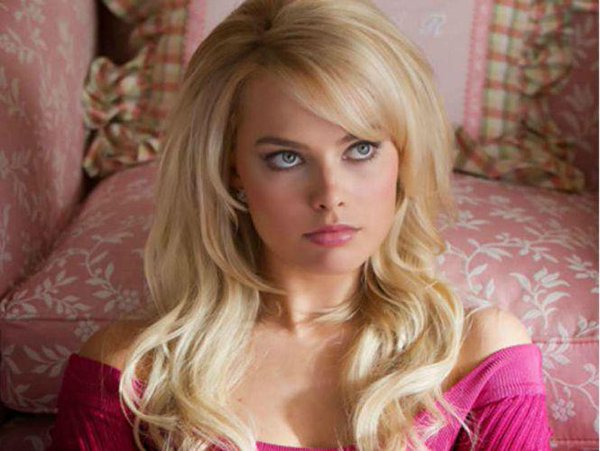
(Photo shows Margot Robbie in The Wolf of Wall Street)

Famous Name: Errol Flynn

22 Thursday Oct 2015

Posted by A.O. in Famous Names

≈ 2 Comments

Tags

aristocratic titles, Disney names, Disney princes, famous namesakes, Irish names, locational names, name history, name meaning, name popularity, names from films, Old English names, popular names, Scottish names, surname names, Turkish names, Welsh names

Errol-Flynn

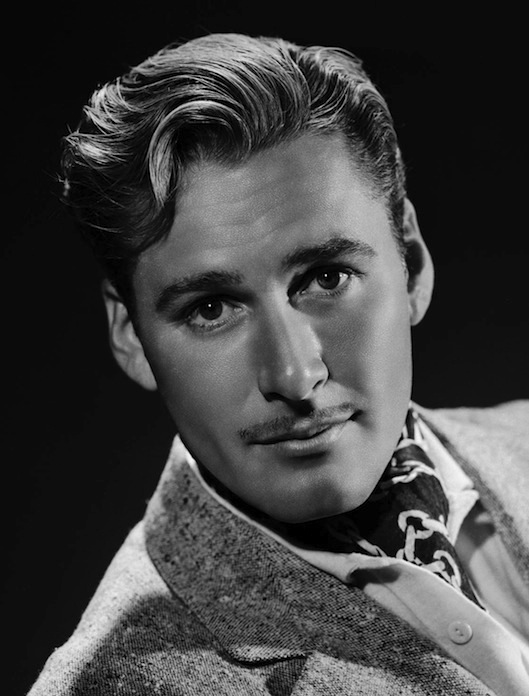
Errol Flynn is one of Australia’s most famous actors, even though he died more than 50 years ago, on October 14 1959. Born in Hobart in 1909, he is seen as a particularly Tasmanian export, although in Hollywood he passed himself off as Irish before he became an American citizen (he also said he was a descendant of a Bounty mutineer, which wasn’t true either).

Flynn became an immediate sensation in Hollywood from his very first role – a 17th century pirate in the 1935 film Captain Blood, although other stand out roles were as Fletcher Christian and Robin Hood. He was typecast as a derring-do swashbuckling action hero, famous for his well-choreographed sword fighting scenes. At the height of his career he was one of the most popular actors in America, and was roguishly handsome, with a dashing, debonair, devil-may-care image.

His reputation was as a womaniser, a highly-sexed, caddish, unscrupulous seducer. The expression in like Flynn is said to have been inspired by the ease at which Flynn was able to obtain women, and dates to 1942, when Flynn was up on charges of statutory rape. Accused of raping two 17-year-old girls, Flynn was acquitted by a jury made of mostly of women: during the trial he flirted with a teenager who he went on to respectably marry, after carefully verifying she was over 18.

Flynn was blunt about his proclivities, saying I like my scotch old and my women young. He was tickled enough by the slang expression that he tried to call his autobiography In Like Me, but the publishers changed it to My Wicked, Wicked Ways.

The rape trial didn’t seriously damage Flynn’s reputation, earning a round of backslaps and you-rascal-yous. He did face criticism for not serving in the US military during World War II. The studio kept secret that he had failed his medical, as their supposedly athletic star was in terrible physical shape. He had multiple heart problems, recurrent malaria, chronic back pain, chronic tuberculosis, and a dizzying array of sexually transmitted diseases.

To self-medicate these various ills, he drank heavily, and sometimes used morphine and heroin. When his career went downhill and he lost most of his money, he became old and bloated, sailing around on his yacht developing hepatitis and cirrhosis of the liver. However, he still managed to get a 15-year-old mistress to sail around with (Orry-Kelly had been their go-between), and planned to marry her except that she was barely 17 when he died. She never stopped loving him.

Whatever he had – charm, charisma, sex appeal – he never lost it. Controversial to the end, he became a figure of which almost anything could be believed, and biographies have variously suggested that he was a closet bisexual, a Nazi, a Communist, a sexual predator, a paedophile, a murderer, and a drug-runner (the Nazi claim is definitely debunked; the others are unsubstantiated).

Flynn was one of the original Hollywood bad boys, celebrated in film and song, and still making headlines today. Love him or loathe him, he was unforgettable.

ERROL
Scottish surname, usually said to be from the village of Errol in Perthshire, the meaning of whose name is lost in the mists of time. However, the surname came into use late enough as to cast some doubt on this theory, and it may be a corruption of an earlier surname.

Errol has been used as a first name since the 18th century, originating in Scotland. One of the factors helping its use was probably the aristocratic title the Earl of Erroll, in the Scottish peerage since the Middle Ages. Erroll is the older spelling of the village of Errol, and the first Earl was William Hay, who was born in Errol. The title is still in the Hay family.

Errol was #160 in the 1900s when Errol Flynn was born, and peaked in the 1940s at the height of his career – just outside the Top 100 at #103. After the rape trial, the name fell sharply, and left the charts in the 1970s.

The name has been a favourite in the Caribbean, with a famous example being British singer Errol Brown, who was born in Jamaica. The first prime minister of Barbados was Errol Barrow, an enormously popular leader regarded as a hero of his country, although Errol Flynn lived in Jamaica in the 1950s and was a great boost to the island’s tourism.

Errol joined the US Top 1000 in 1936, the year after Errol Flynn’s Hollywood career began. It peaked in 1941 at #355 – the 1942 rape charges may not have killed off his career, but it did damage his brand as a namesake for babies. It hasn’t been in the Top 1000 since 1985, and last year 20 baby boys were named Errol. In the UK, there were 11 baby boys named Errol in 2014, and numbers are actually rising.

Errol is well known to Harry Potter fans as the name of the Weasley family’s owl. J.K. Rowling may have had in mind the Latin word erro, meaning “to go astray, to wander about, to go amiss”, as Errol is a feeble old owl who often gets lost while delivering the Weasley’s mail. It’s the basis for the English word error.

Errol seems rather vintage and cool, while still lovably eccentric. It could work well cross-culturally, as its similar to the Old English name Eorl, meaning “earl”, the Welsh name Eryl, meaning “a look out post”, and the Turkish name Erol, meaning “brave”.

FLYNN
Irish surname which is an Anglicised form of Ó Floinn, meaning “son of Flann”; the name Flann means “reddish, ruddy of complexion”.

Flann Fína mac Ossu was a 7th century king of Northumbria who was the son of an Anglo-Saxon king and an Irish princess – his English name was Aldfrith. Flann Sinna was a 9th century High King of Ireland, and there are also medieval Irish poets with the name. Flynn has been used as a personal name since the 18th century, mostly for boys: from the beginning the name was used in Ireland as well as other English-speaking countries.

The name Flynn began charting in the 1990s, and was #342 for the decade, although it made the Top 100 in 1997 at #93. This was the year after Flynn was released, a film about the early life of Errol Flynn with Guy Pearce in the title role. Coincidentally, it was also the year that Sean Flynn, the grandson of Errol Flynn, began his acting career.

In 2001 Flynn was back in the Top 100 at #98 – this was the year after David Bret published a salacious biography about Errol Flynn called Satan’s Angel. It had a burst of popularity in 2004, getting to #73: the year before, Flynn’s 1959 autobiography My Wicked Wicked Ways was republished, and the 1938 film The Adventures of Robin Hood was released on DVD.

The next jump for the name was in 2011, when it got to #51: this was the year after the Disney film Tangled, with the Disney prince Flynn Rider based on Errol Flynn himself, and named in his honour. It was also the same year that model Miranda Kerr chose the name Flynn for her son. The name peaked in 2013 at #32 (the same year that Kerr separated from her husband, British actor Orlando Bloom).

Last year Flynn was #45 nationally, #40 in New South Wales, #38 in Victoria, #34 in Queensland, #40 in Western Australia, #37 in Tasmania, and #42 in the Australian Capital Territory.

Flynn is only popular in Australia and New Zealand – it is #48 and stable across the Tasman. It is #137 in the UK, and has been rising steadily since Tangled and the birth of Flynn Bloom, while in the US it joined the Top 1000 in 2011, and is currently #659 and still rising. It will be interesting to see how it fares in other countries since reaching its peak here.

Flynn is a popular name with a strong Australian connection. Unlike Errol, it has gained a cool Disney namesake and become a celebrity baby name, giving it a significant boost. No longer rising in Australia, Flynn seems to have settled in, perhaps on its way to becoming a modern classic. Handsome, Irish, Australian, on trend, and stable, Flynn seems like a popular yet safe choice.

POLL RESULTS
Errol received an approval rating of 27%. 53% of people weren’t keen on Errol, and 8% loved it.

Flynn did much better, receiving an excellent approval rating of 82%, making it one of the top-rated names of 2015. 44% of people thought Flynn was a good name, while only 4% thought it was a terrible one.

Famous Name: David

23 Wednesday Sep 2015

Posted by A.O. in Famous Names

≈ 4 Comments

Tags

Biblical names, classic names, famous namesakes, hebrew names, international name popularity, mythological names, name history, name meaning, name popularity, popular names, royal names, saints names, Semitic names, US name popularity

David_Unaipon

Famous Namesake
Next week it will be the 143rd birthday of David Unaipon, who was born September 28 1872 – Unaipon is an Anglicised form of the name Ngunaitponi. David was a writer, mythologist, inventor, motivational speaker, lecturer, religious leader, and political activist; in his lifetime he was hailed as a genius. Yet he was given no schooling after the age of 13, and was often denied service because of the colour of his skin.

Born on a South Australian mission, his high intelligence was obvious even as a child. Frustrated by the scarcity of career paths open to him, and almost complete lack of educational ones, after work he would devour books on literature, science and philosophy until the early hours of the morning. He became obsessed with the idea of inventing a perpetual motion machine (a hot topic of the day), and this led to his first patented invention: an innovative design for shearing machines which is the basis for modern mechanical shears.

In all, David took out 19 provisional patents on his inventions, but could not afford to fully patent them: he made no money from his inventions, and received no credit apart from one newspaper article. His other inventions include a centrifugal motor, a multi-radial wheel, and a mechanical propulsion device. One of his ideas was a basic design for a helicopter in 1914, based on the spinning motion of a boomerang; this earned him the title of “Australia’s Leonardo”. A recognised authority on ballistics, he also had a great interest in lasers which he foresaw might one day have military applications – this was some years before Einstein’s pioneering work on lasers.

David worked as a lay preacher and missionary, but was also keen to educate white people on Indigenous mythology and culture. David compiled his versions of Aboriginal legends, influenced by his study of classical and Egyptian mythology, and written in a style reminiscent of John Milton. They were published in a series of booklets and articles, and eventually commissioned as Myths and Legends of the Australian Aboriginals in 1930: David was paid $150 for his work, but received no credit. He was the first Indigenous Australian writer to be published.

Urbane and cultured, dignified in bearing, formal of manner, and fastidious in speech, David defied the stereotypes then held about Aboriginal Australians, and confounded expectations. Even when sympathetic, the newspapers spoke of him in ways which now make us squirm.

He was not just a genius: he was a “black genius” or “Australia’s cleverest darkie”. One journalist calls him “a remarkably intelligent specimen of primitive man”, and writes that people can barely believe he is a “full blooded Aborigine”. “An outstanding representative of the primitive race”, and “remarkably able … even amongst superior whites”, it was made clear that he was an exception to every rule, and one fine shining hour for a people who were inevitably dying out.

David lived to the age of 94, packing many lifetimes into his generous span of years; he continued working on his inventions into old age, and right to the end remained determined to discover the secret of perpetual motion.

He had lobbied the government on Aboriginal rights, been the first Aboriginal person to attend a royal levee, and received a Coronation Medal. The David Unaipon Literary Award is given to an unpublished Indigenous author each year, and the David Unaipon College of Indigenous Education And Research at the University of South Australia is named after him. You may also have David in your wallet – he is on the $50 note.

An extraordinary Australian with an original mind, he was neither mute nor inglorious, yet his story is one of undeveloped potential. Howard Florey was sent to Oxford University as a Rhodes Scholar, and he changed the world: what might David Unaipon have done if given similar opportunities and advantages?

Name Information
David is derived from the Hebrew name Dawid, from the Semitic root dwd, meaning “to love”. It is usually translated as “beloved” or “my darling”. There were a number of Semitic deities with names from the same source, and it is possible the name David was originally given in honour of these gods, or came to be understood as “beloved of God”.

The name has come into common use because of the character from the Bible. In the Old Testament, David was an armour-bearer to Saul, the first king of Israel. David was a talented musician, and whenever Saul was feeling particularly wretched, David would play the lyre to him until he felt better. David was a great warrior, and Saul made him commander over his armies: eventually he became so popular that after Saul’s death David was anointed king.

A popular story from the Bible is about David’s youth. Saul’s armies were facing those of the Philistines, and their opponents sent their largest warrior to fight someone in single combat – a huge giant named Goliath (around six foot nine, or just over 2 metres tall). Everyone was afraid to take on the big boy, until David stepped forward and accepted the challenge. He brought Goliath down with a slingshot, then cut off his head using the giant’s own sword. In modern parlance, a David and Goliath battle is one where the underdog wins, and we all love a story where the “little guy” is victorious over someone more powerful.

King David is a central figure in Judaism, a symbol of Jewish kingship. According to the Hebrew canon, a descendant of King David will one day sit on the throne of Israel, heralding an era of global peace. Christianity views David as a divinely appointed king, and the ancestor of Jesus Christ. In Islam, David (Dāwūd) is revered as one of the great prophets.

David has been a popular figure in art and literature, most notably Michelangelo’s statue of him as a young man, the epitome of masculine strength and beauty. In the Bible, David is described as a handsome youth with beautiful eyes, and ruddy in colour. This has often been taken to mean David was red-haired (Jewish tradition makes David a redhead), but the word used refers to the same coppery-brown skin tone assigned to Adam. There is another connection between these two characters: Adam is the first name in the Bible, while David is the last.

David has been used as an English name since the Middle Ages; in medieval Europe, David was seen as the ideal chivalrous hero, and a model for kingship. Saint David is the patron saint of Wales, and his icons include the leek, a Welsh national symbol. A Welsh short form of his name, Taffy, was used to refer to a Welshman (often insultingly) for many years, just as a Paddy meant an Irishman. King Edward VIII went by David, which was his final middle name, given in honour of the national saint.

The name David also has a strong history in Scotland, as David I was a powerful medieval Scottish king who supported his niece, the Empress Matilda, in her claim to the English throne. A defender of the Scottish church’s independence from the English church, contemporary historians describe him as pious and just. He is regarded as a saint in Roman Catholicism.

David is a solid classic which has never left the Top 100. It was #28 in the 1900s, and peaked at #1 through most of the 1960s, making it the most popular boy’s name for that decade. Currently it is #91 nationally, #92 in New South Wales, #76 in Queensland (where it was one of the fastest rising names of last year), #98 in Tasmania, and #83 in the Australian Capital Territory.

Thanks to the fame of King David, David is a popular name around the world, including in eastern and western Europe, Scandinavia, and Latin America. It is most popular in Croatia, at #4. It is popular in all English-speaking countries, and most popular in the United States, at #18. It is still a popular name in Israel, and seems a patriotic choice as the national flag has a Star of David on it.

David is an attractive classic name with a beautiful meaning. An ancient name with a heroic royal namesake, it has never gone out of style and remains popular. Widely recognised around the world, it travels well and can work cross-culturally. A beloved name for thousands of years, it would not be surprising if this name was perfect for your darling son.

POLL RESULTS
David received a creditable approval rating of 70%. People saw the name David as a timeless classic which would never go out of style (27%), clean and wholesome (19%), and handsome or attractive (16%). However, 21% thought it was too common and boring. Only person thought David seemed too mature to give to a little boy, and just one thought it was too biblical.

(The photo of David Unaipon is the same one used for the bank note).

Famous Name: Eleanor

16 Wednesday Sep 2015

Posted by A.O. in Famous Names

≈ 3 Comments

Tags

aristocratic names, British Baby Names, classic names, created names, Eleanor Nickerson, famous namesakes, flower names, French names, germanic names, Greek names, honouring, name history, name meaning, name popularity, popular names, Provencal names, royal names, Sanskrit names, Sindarin names, UK name popularity, US name popularity

dsc04745

Famous Namesakes
Last month was the 114th birthday of author Eleanor Dark, who was born August 26 1901. Her most famous novel is The Timeless Land, published in 1941, the first in a trilogy about early European settlement. Sympathetic towards Aboriginal people and meticulously researched, the book was part of the high school curriculum for many years and is now considered an Australian classic. It even inspired the famous historian Manning Clark. It was turned into a successful TV series in 1980.

When Eleanor married Eric Dark, a widowed doctor, she asked for three things: an equal partnership, a child, and the freedom to write. Eleanor got a studio in the garden where she could write in peace, a maid to help with the housework, and emotional support and encouragement for her writing. Her other wish was granted when she and Eric had a son named Michael; they already had a son named John, from Eric’s first marriage.

Thoughtful and generous, the Darks shared progressive ideals. An active member of the Labor left, Eric wrote political books and pamphlets which attracted attention from the anti-communist Menzies government and ASIO, and the entire Dark family was probably under surveillance. Although she considered herself apolitical, Eleanor’s socialist and feminist views permeate her work, and she was a scathing critic of middle-class suburbia.

The Darks moved to Katoomba in the Blue Mountains in 1923, and enjoyed bush walking, camping, climbing, and exploring. Eleanor was one of the first gardeners to grow Australian native plants as well as exotics. In her novels, the Australian landscape is not just a backdrop but almost another character. She believed that as people change the environment, the environment also changes us, and that we are part of the country in both mind and body. In her books are some of the most beautiful and loving evocations of the bush; its scents and sounds, its silence and spirit.

After Eleanor died in 1985, her son Michael gave the Dark family home in Katoomba to the Eleanor Dark Foundation. Named Varuna after the Hindu god of the ocean, the night sky, and the underworld, the house sits on a ridge overlooking the valleys of the Blue Mountains. Varuna is now a residential retreat, where authors can find a room of their own, and uninterrupted writing time; Eleanor’s studio is still in use. It was a wonderful gift for Eleanor as an author, and now for many others too.

Name Information
Eleanor is the modern form of Éléonore, the Old French form of the Provençal name Aliénor. Eleanor of Aquitaine (born around 1122) is often identified as the first bearer of the name Aliénor, and a popular story is that her name came about because she was christened Aénor, and as her mother’s name was also Aénor, she was known as alia Aénor, meaning “the other Aénor”. This suggestion was labelled “ridiculous” by a French scholar in the 17th century, but is still going strong.

There were earlier women with similar names – Eleanor of Aquitaine’s own great-grandmother is listed as Aleanor. However, the records for these early Eleanors post-date Eleanor of Aquitaine, so their names could have been conveniently translated into Eleanor (or Alienor or Aleanor) by later writers.

Eleanor of Aquitaine’s great-grandmother’s name seems to have been more like Adenorde, sometimes written as Ainor. It would be a reasonable assumption that Aénor was a variant of this name, and Aliénor was too. The origin of Adenorde is obscure, but looks to be Germanic.

Eleanor “Elea” Nickerson from British Baby Names suggests it could be from the Germanic name element adal, meaning “noble”, or from ald, meaning “old, mature, grown up”. The norde looks like the Germanic for “north. Another of Eleanor Nickerson’s suggestions is that it could be related to those Germanic names starting with aud-, meaning “wealth, riches”.

Another popular theory is that Eleanor is a Provençal form of Helen, Ellen, or Elena – also of ancient and obscure origin. Helen is usually said to be from the Greek for “light, bright”, although it may be ultimately from Sanskrit and mean “running, swift” (quite suitable for a runaway bride like Helen of Troy!). The reason for the Eleanor = Helen idea is probably because Eleanor of Aquitaine had her name Latinised as Helienordis. At the very least it is possible that the name Eleanor was influenced by the various Helen names, becoming fused (or confused?).

At least everyone agrees that Eleanor of Aquitaine popularised the name Eleanor. One of the wealthiest and most influential women of the Middle Ages, Eleanor was Duchess of Aquitaine in her own right, making her such an eligible bride that she was snapped up by both Louis VII and Henry II, so she became a queen of France, then of England. She was the mother of Richard the Lionheart and King John, and one of her daughters was named after her – Eleanor who became queen of Castile, and was a similarly powerful figure.

Eleanor of Aquitaine was clever, charming, sophisticated, and high-spirited, and contemporary sources all agree that she was very beautiful. She survived into her eighties, and outlived both husbands and most of her children. She was perhaps more woman than most medieval men could handle, and she was let go by her first husband, and imprisoned for years by her second.

The name Eleanor became common amongst both French and English royalty and nobility. King John named one of his daughters Eleanor after his mother, and French noblewoman Eleanor of Provence married Henry III, becoming the mother of Edward I. Edward married Eleanor of Castile, who was named after her great-grandmother, the daughter of Eleanor of Aquitaine. In turn, Edward I named his eldest daughter Eleanor, and her daughter was given the name Eleanor; Edward II also named a daughter Eleanor after Eleanor of Aquitaine.

Eleanor is a classic name which has never left the charts. It was #98 in the 1900s, and reached its lowest point in the 1960s at #454. It climbed steadily until the 1990s, after which it levelled off for many years, remaining stable in the 100s. Eleanor joined the Top 100 for the first time since the 1900s last year, climbing 31 places to reach #84, the second-highest rise in rank after Ariana. It is #82 in New South Wales, where it was one of the fastest-rising names for the year, #77 in Queensland, where it was one of the fastest-rising names, #54 in Tasmania, and #45 in the Australian Capital Territory.

Eleanor also joined the US Top 100 last year, and is #78 there. It was popular in the US from the end of the 19th century until World War II, and peaked in 1920 at #25. Long-serving First Lady Eleanor Roosevelt gave it a lot of publicity; her first name was Anna, but she went by her middle name. Eleanor was popular in the UK from the middle of the 19th century until the 1930s, and returned to the Top 100 in the 1980s. It peaked at #18 in 1999, and is currently #60 in England/Wales.

Up until this year, I would have said that Eleanor was a perfect, classic, underused choice. It was too perfect and classic to remain underused forever, as it has now become a Top 100 name. You can understand why, as it has both strength and elegance, a marvellous royal namesake, and the option of nicknames such as Elle, Ella, Ellie, Elea, Nell, Nellie, and Nora.

Spelling variants such as Elinor and Ellanore are not unusual; the name Elanor is from The Lord of the Rings and means “sun star” in the invented Sindarin language – in Tolkien’s universe, an elanor was a small yellow pimpernel-like flower, and the name was given to Sam Gamgee’s golden-haired daughter. In Australia, Eleanor is usually said EL-uh-nawr, similar to the American pronunciation, although you will sometimes hear a British pronunciation here, which is more like EL-en-uh.

POLL RESULTS
Eleanor received an outstanding approval rating of 91%, making it the highest-rated Famous Name for girls in 2015, and the highest-rated Famous Name overall. People saw the name Eleanor as elegant and refined (28%), dignified and intellectual (23%), and beautiful or attractive (17%). However 5% thought it was too popular. Only one person thought Eleanor seemed snobbish or elitist, and likewise just one was bothered by the number of spellings and pronunciations.

(Photo of the Blue Mountains near Varuna from Hook to Book by Christine Bell; Christine gives a wonderful insight into what life is like as a writer at Varuna).

Famous Name: Howard

10 Thursday Sep 2015

Posted by A.O. in Famous Names

≈ 2 Comments

Tags

aristocratic surnames, dated names, english names, famous namesakes, fictional namesakes, germanic names, name history, name meaning, name popularity, names from films, names from television, nicknames, Old English names, Old Norse names, saints names, surname names, UK name popularity, US name popularity, vintage names

62-tvrrevbbc

Famous Namesakes
On September 24 it will be the 117th birthday of Howard Florey, the Australian scientist who was part of the team which developed penicillin for medical use. Although it was Sir Alexander Fleming who discovered the antibiotic properties of penicillin in 1928, it was Howard Florey and his research team who actually made penicillin into an effective medication.

While Professor of Pathology at Oxford, Howard and his team treated their first patient with penicillin in 1941. A police constable named Albert Alexander had been accidentally scratched with a rose thorn in his mouth, and was now suffering from severe infection, to such an extent that one of his eyes had to be removed. Within a day of receiving penicillin Albert began to recover, but due to the difficulties of making enough penicillin to continue treating him, he relapsed and died.

Let’s just take a moment to think about that. When did you ever hear of someone you knew who died from a scratch from a rose thorn? That was what the world was like before antibiotics – simple things like cuts, abrasions, and burns could kill you in prolonged, painful, and particularly nasty ways. If you somehow survived, you might be left chronically ill, crippled, or missing an eye or a limb.

It was too late to save Albert Alexander, but he hadn’t died in vain. Howard interested pharmaceutical companies in the United States in mass-producing quantities of penicillin, and the first patient was successfully treated for septicemia in 1942. By the end of World War II, penicillin had made a significant difference in saving the lives of wounded Allied forces, and Australia was the first country to make penicillin available for civilian use after the war.

In 1944 Howard was made a Knight Bachelor, and in 1945 shared the Nobel Prize for Physiology and Medicine with his fellow researcher Sir Ernst Chain, and with Sir Alexander Fleming. That same year he received the Lister Medal for contributions to surgical science, and in 1948 the US awarded him the Medal of Merit. Elected to the Royal Society in 1941, he became its president in 1958. In 1962 he became provost of Queen’s College at Oxford, and the college’s residential Florey Building was named in his honour.

In 1965 he was appointed a life peer, and became Baron Florey, as well as being appointed a Member of the Order of Merit. From that year until his death three years later, he was Chancellor of the Australian National University, and after he died he was given a memorial service at Westminster Abbey. The one thing that his discoveries didn’t bring him was money – he never patented penicillin, being advised that it would be unethical.

The discoveries of Howard Florey, along with Alexander Fleming and Ernst Chain, are estimated to have saved more than 82 million lives. Long-serving Australian Prime Minister Sir Robert Menzies said: In terms of world well-being, Florey was the most important man ever born in Australia.

I have particular reason to be grateful to Howard Florey, as one of that club with 82 million members. When I was a child, I contracted a serious lung infection, and only just pulled through, even with the assistance of modern antibiotics. Without them, I would have been toast. So if you enjoy reading this blog, give thanks to Howard Florey! It couldn’t exist without him.

Name Information
The English surname Howard could be derived from Huard or Heward: related to the name Hugh, it combines the Germanic elements hug, meaning “mind, heart, spirit” and hard, meaning “brave, tough”. It could thus be translated as “brave heart”. Another possibility is that it is from Haward, an English form of the Old Norse Hávarðr, meaning “high guardian, chief guardian”. The surname Howard is first found in Norfolk.

The Howards are an aristocratic family which have been in the English Peerage since the 15th century, and remain the Premier Dukes of the Realm. The Howard family holds the Dukedom of Norfolk, as well as numerous earldoms and baronies. They hold the title of Earl Marshal, the highest hereditary position in the United Kingdom outside the Royal Family, responsible for organising coronations, state funerals, and the State Opening of Parliament.

The family’s founder was John Howard, 1st Duke of Norfolk: on his father’s side he was descended from King John, and on his mother’s from King Edward I. John Howard was the great-grandfather of two English queens: Anne Boleyn and Catherine Howard, both married to King Henry VIII. Queen Elizabeth I was the first English monarch to be descended from John Howard, and Queen Elizabeth II the first British monarch to be one of his descendants.

After the English Reformation, many of the Howards remained in the Catholic faith, and they are still the highest profile Catholic family in England. Philip Howard, 20th Earl of Arundel, has been canonised as a saint and martyr: he was imprisoned for ten years by his second cousin Queen Elizabeth I, and died in the Tower of London. Philip’s grandson William Howard, 1st Viscount Stafford, was falsely implicated in a fictitious conspiracy to assassinate King Charles II, and executed: he has been beatified as a Catholic martyr.

The Howards dubiously claim descent from Hereward the Wake, a semi-legendary hero who led a resistance against the Normans after the Conquest. Hereward is an Old English name meaning “guardian of the army”. A possibly dodgy old pedigree says the Howards are descended from the Howarth family of Yorkshire – this surname means either “homestead on the hill” or “homestead with hawthorn hedges”. Howard has been used as a boy’s name since at least the 16th century, most likely due to the aristocratic family.

Famous namesakes include Howard Carter, the British archaeologist who discovered Tutankhamen’s tomb; classic film director Howard Hawks; and eccentric tycoon Howard Hughes. Fictional Howards tends to be dads (such as Howard Cunningham on Happy Days, Howard “Ward” Cleaver from Leave it to Beaver, and Howard Stark, the father of Iron Man superhero Tony Stark), or offbeat (like Howard the Duck, Howard Wolowitz from The Big Bang Theory, and Howard Moon from The Mighty Boosh).

In Australia, Howard was #122 in the 1900s, and peaked in the 1940s at #101; it hasn’t charted since the 1980s. In the UK, Howard was in the Top 100 from the late 19th century until the 1920s, but never got very high; in 2013 there were 16 babies named Howard born in England/Wales. The name has been much more popular in the United States: it was in the Top 100 from the late 19th century to 1958, peaked during World War I at #25, and has only been off the Top 1000 once, in 2013; it returned last year and is currently #986.

Howard is a dated name, although it has never been popular and might more properly be described as vintage. It sounds sturdy and dependable, has a good meaning, and can be shortened to either Howie or Ward. An issue in Australia is that it’s strongly associated with former conservative Prime Minister John Howard, whose term was from 1996 to 2007, often called the Howard Years or Howard Era; it may not be pure coincidence that the name disappeared from the charts in the 1980s when John Howard was Federal Treasurer.

POLL RESULTS
Howard received an approval rating of 51%. 18% of people thought the name Howard was too dated, while 16% were put off the name by former prime minister John Howard. However, 14% saw it as old-fashioned yet charming.

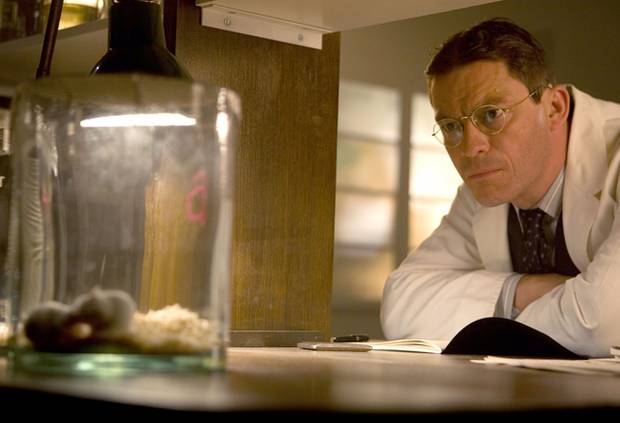
(Picture shows a scene from the 2009 film Breaking the Mould, with Dominic West as Howard Florey)

Famous Name: Ceridwen

02 Wednesday Sep 2015

Posted by A.O. in Famous Names

≈ 1 Comment

Tags

Arthurian names, famous namesakes, fictional namesakes, mythological names, name history, name meaning, nicknames, rare names, Welsh names

194057-97833464-59ad-11e4-bb41-d2d878d2a380

Famous Namesake
Author Ceridwen Dovey was born in South Africa, raised both there and Australia, and was educated at Harvard University, doing postgraduate work at New York University. Living in Sydney, Ceridwen says Australia feels like home, but South Africa remains part of her, and she has ties to the United States as well.

Ceridwen’s book Only the Animals was published last year, has just come out in the UK, and will be released in the US later this month. It’s very unusual, with the souls of ten animals who have died in human conflicts telling their own stories. Each beast also pays tribute to a particular writer who has written about animals, from Henry Lawson to Virginia Woolf to Ted Hughes, and these can be playful as well as moving (imagine a mussell’s journey to Pearl Harbour in the style of Jack Kerouac, for example).

Only the Animals has been shortlisted for numerous awards, and won the Steele Rudd Award for a short story collection at the 2014 Queensland Literary Awards. It’s a beautiful, wise book which really gets under your skin and remains with you, long after you turn the last page. Hopefully it will be appreciated overseas as well.

Name Information
In Welsh legend, Ceridwen was an enchantress. According to a medieval tale, Ceridwen had a son named Morfran who was hideously ugly, and she sought to make him wise since he was never going to coast along on his looks.

She mixed up a magical potion in her cauldron which would give the gift of wisdom and poetic inspiration, and a long drawn-out process it was. The potion had to be boiled for a year and a day, and she outsourced the workload, having the fire tended by a blind man while a young boy named Gwion kept stirring it. Only the first three drops of the potion would confer wisdom: all the rest was deadly poison.

Three drops of the hot potion spilled onto Gwion’s hand as he stirred, and instinctively he put his thumb in his mouth to cool the burning. As soon as he did, he gained all the wisdom and knowledge that had been meant for Morfran. The first piece of knowledge he gained was that he’d better scram as Ceridwen was going to be peeved beyond belief. Correct! She was furious.

Gwion turned himself into a hare so he could run fast, but Ceridwen became a greyhound and ran even faster. He jumped into a river to swim away as a fish, but she transformed into an otter. When he turned into a bird to fly away, as quick as thought she was an eagle chasing after him.

Finally he turned himself into a grain of wheat. I know what you’re thinking: all the wisdom in the world, and the best he can come up with is wheat? I mean, come on, at least turn invisible or something. For some reason, Ceridwen turned herself into a chicken and ate the wheat. Not sure why she had to be a chicken to eat wheat; probably showing off.

When Ceridwen became pregnant, she knew it was that crafty little Gwion growing inside her. (I know wheat doesn’t go into your uterus when you eat it; you have to throw all rational thought out the window, because magic). Ceridwen planned to kill the baby as soon it was born, but he was so beautiful that she just couldn’t do it. Due to her wonderful nurturing instincts, she chucked him into the ocean instead, wrapped in a bag.

The bag washed up on shore, and a prince who was fishing caught him instead of a salmon, and took him home. He knew the kid was something special, because he recited poetry all the way back to the castle. He named him Taliesin, and Taliesin became the greatest of the Welsh bards, and later the chief bard at King Arthur’s court.

Ceridwen never bothered making another potion for Morfran, but if you’ve been worried about him all this time, don’t be. He became one of King Arthur’s warriors, had a beautiful white horse, and survived Arthur’s final battle because he was so hideous that people thought he must be a demon, and ran away in panic.

The oldest known version of the name is Cyrridven, translated as “crooked woman”, because cyrrid means “crooked, bent, hooked”, and ben or ven means “woman, female”. A popular theory is that the name is a corruption of cerdd, meaning “poetry, music”, and gwyn, meaning “white, blessed”, to be understood as “sacred poetry”. I find this etymology too convenient to modern sensibilities to be convincing.

In many ancient traditions, travelling in a crooked or winding path is considered a powerfully magical thing to do (think of labyrinths, for example), so “crooked woman” might be understood as meaning “woman of magic power” – spot on for an enchantress.

Ceridwen is a very magical figure, and her story has several ties to mythology. The thumb sucking leading to great, yet unlooked for, wisdom, reminds us of the Irish hero Finn McCool, who sucked hot oil off his thumb while cooking the Salmon of Knowledge. Is it just coincidence that the prince caught Taliesin while fishing instead of a salmon?

Another is the magical duel, where two sorcerers turn themselves into a succession of creatures until one takes a form the other cannot defeat. There is a faint echo of shamanism here, and it might remind you of the Irish legend of Fintan the Wise, who was able to turn himself into a salmon in order to escape the Great Flood. Another connection to salmon and wisdom!

Ceridwen really appealed to people’s imaginations, and she became seen as not just an enchantress but a goddess of poetry and wisdom. The Victorians identified her as an early pagan goddess, and in modern Paganism she is a goddess of rebirth, knowledge, and inspiration. This is a meaningful modern mythology for Ceridwen, although Welsh scholars tend to get a bit sniffy about it as a 19th century invention.

While the character was known in medieval literature, the name was not used in everyday life, and the form Ceridwen dates to the 16th century. Ceridwen has only been in use since the 19th century revival of old British names, and originated in Wales.

The name Ceridwen features is the novel How Green Was My Valley; Ceridwen is the narrator’s sister. The book is set in the Victorian era, and it is barely possible that a Welsh girl of that time would be called Ceridwen, as it was just coming into use. The author Ceridwen Dovey is named after the literary character.

Ceridwen is in sporadic use as a baby name in the UK, and in 2013 less than three babies were given the name Ceridwen. In the US last year, less than five babies were named Ceridwen.

Ceridwen is a genuine but rare name, and something of a contradiction, as it has medieval origins but is essentially modern – something which causes no end of trouble for the Renaissance Fair crowd, or at least the bodies which approve their names.

To me it seems like a “cool mum” name, which sounds wild and artistic on someone of around my generation, but is hard for me to imagine on a new baby. Perhaps it’s because it fits in so well with the name trends of the 1960s and ’70s, as it sounds rather like a cross between Kerry and Bronwen.

However, this is a name from Welsh legend which will appeal to those wanting a strong, unusual girl’s name which is magical and imaginative. The pronunciation is ker-ID-wen, but English-speakers may prefer KER-id-wen, which gives the obvious nickname Ceri.

POLL RESULTS
Ceridwen received a very good approval rating of 70%. 18% of people thought the pronunciation of Ceridwen was too much of an issue, but 17% saw it as wild and magical, 15% as powerful yet feminine, and a further 15% as a great Welsh heritage choice.

(Photo of Ceridwen Dovey from The Australian)

Requested Famous Name: Obelia

26 Wednesday Aug 2015

Posted by A.O. in Famous Names, Requested Names

≈ 5 Comments

Tags

animal names, fictional namesakes, Greek names, historical records, name history, name meaning, nature names, rare names

tumblr_loadw9U9UE1qmho1lo1_500

We have already covered the classic children’s writer and illustrator, May Gibbs, and her adorable floral creation, Little Ragged Blossom. This is another of her characters in the Snugglepot and Cuddlepie series, who can be found in the 1921 picture book Little Obelia.

Instead of being set in the Australian bush amongst the gum trees, Little Obelia continues the undersea adventures first encountered in the previous book of the series, Little Ragged Blossom.

May Gibbs wrote: I always had an absolute love for the underwater things …. I used to look into the clear water from the boats … we used to do a lot of boating in Perth … And one day I thought how lovely it would be to have a little town under the water.

So just as the gumnut babies were born from her childhood experiences in the Western Australian bush, Little Obelia was inspired by boating in Perth. It’s probably not a coincidence that she saw the undersea world as a “town”, and thought of it while in the city.

In the stories, the undersea world is in stark contrast to the bush. While the bush folk, like our gum-nut trio, are generally simple and egalitarian, the world of the sea is one of class difference. It is not long before we encounter a “grand affair” where one may meet Lord Giant Boarfish, the aristocratic Long Tom, the Honourable Mrs Rock Whiting, and Lady Garfish.

In other words, the bush stands in for the country or suburbia, while the sea is the city … glittering, exotic, a carefully structured society in an environment which is ever-shifting and sometimes hard to navigate.

There are many mysteries regarding the sea (one of them is how the gum-nuts manage to easily breathe underwater), and Little Obelia a rather mysterious figure.

Obelia is apparently a type of gum-nut baby too, but instead of growing up in the bush she lay sleeping in a pearl at the bottom of the sea for “years and years”. As she slept, her mind became imbued with great wisdom, although she physically did not age a day, remaining a tiny baby.

One day the pearl burst open into a beautiful white flower, which was found by Ragged Blossom and Snugglepot. After that, Obelia grew very quickly until she was the same size as Ragged Blossom, but so wise that even the cleverest of the Fish Folk would travel many miles to seek her advice.

As you can see, there are a lot of unanswered questions here! How does a baby get inside a pearl? How does sleeping for years and years make you wise? How long is years and years – ten years or ten thousand? How does a pearl blossom into a flower? And so forth.

Like all great oracles, there is much about Obelia which is veiled in mystery and secrets, until she almost takes on the mantle of a nymph or marine goddess.

Obelia’s name comes from the “beautiful Obelia seaweeds” which grew all around her pearl as she lay sleeping. Obelia are not really seaweeds or even plants: they are a genus of simple animals, related to jellyfish and coral, and extremely ancient. They do however grow in colonies which resemble seaweed, with fragile stems and branches.

Obelia are common around the world, and only live in shallow coastal water such as in rockpools, often forming a delicate growth upon rocks and jetties. May Gibbs must have often seen them at the beach – part of that clear underwater world she viewed from boats. Obelia don’t live in the deep sea, so we know that Little Obelia’s pearl must have been in quite shallow water, close to shore.

The name Obelia is from the ancient Greek obelas, meaning “a round loaf or cake”, I guess because colonies of Obelia can form a big mound. The cake’s name is from obelos, meaning “a spit, a spike, a nail”, because they were toasted on spits.

This is also the origin of the word obelisk, those tall tapered pillars ending in a pyramid made by the ancient Egyptians, who called them tekhenu. The Greeks must have seen them and thought they looked like sharp spits.

Obelisks symbolised the sun god Ra, and were so impressive that several countries had Egyptian obelisks shipped over for public display (Rome went slightly obelisk crazy, and you can see the world’s largest obelisk in the Piazza di San Giovanni). Possibly the most famous is Cleopatra’s Needle on London’s Victoria’s Embankment, although of course it is far older than Queen Cleopatra. The obelisk shape is still a favourite design for war memorials.

I’m not sure whether Obelia was used as a woman’s name in ancient Greece, but it’s been in uncommon use as a girl’s name in the English speaking world since the 18th century, and overwhelmingly more common in the United States. It appears likely that the obelisk was the inspiration behind the name, with connotations of both strength and slenderness. The name remains rare, with no sightings of Obelia in either UK or US name data for 2014.

I found only a very few women named Obelia in Australian records, but the Australian writer Drusilla Modjeska has a stepdaughter named Obelia, and there is an architect named Obelia Tait, and a designer called Obelia McCormack. I have also come across several women and girls in Australia with the name, and I’m guessing most, if not all, were named with Little Obelia in mind. I also found Obelia on this lady’s name list, to give you an idea of what other names might be in Obelia’s style.

This is an intelligent, elegant and even hip literary name which is very unusual, but not unfamiliar, and doesn’t seem bizarre in Australia. It doesn’t seem too markedly different from popular names like Olivia, Amelia, and Isabella, and I think would make a good choice for someone who loved the sound of Ophelia, but worried about Ophelia’s unhappy fate. Even the literal meaning of Little Obelia’s name is not a problem, as it doesn’t seem much different from the name Coral. A great way to celebrate both Australian literature and Australia’s love of the sea.

POLL RESULTS
Obelia received a decent approval rating of 65%. People saw the name Obelia as magical and mysterious (25%), beautiful and elegant (13%), and hip and highbrow (11%). However 11% thought it was an ugly name, and another 11% viewed it as too weird.

Thank you to Siobhan for requesting the name Obelia be featured on Waltzing More Than Matilda

(Picture shows an illustration from Little Obelia by May Gibbs)

← Older posts
Newer posts →

Enter your email address to follow this blog

Categories

Archives

Recent Comments

A.O.'s avatarwaltzingmorethanmati… on Zarah Zaynab and Wolfgang…
Madelyn's avatarMadelyn on Zarah Zaynab and Wolfgang…
JD's avatardrperegrine on Can Phoebe Complete This …
A.O.'s avatarwaltzingmorethanmati… on Rua and Rhoa
redrover23's avatarredrover23 on Rua and Rhoa

Blogroll

  • Appellation Mountain
  • Baby Name Pondering
  • Babynamelover's Blog
  • British Baby Names
  • Clare's Name News
  • For Real Baby Names
  • Geek Baby Names
  • Name Candy
  • Nameberry
  • Nancy's Baby Names
  • Ren's Baby Name Blog
  • Sancta Nomina
  • Swistle: Baby Names
  • The Art of Naming
  • The Baby Name Wizard
  • The Beauty of Names
  • Tulip By Any Name

RSS Feed

  • RSS - Posts

RSS Posts

  • Celebrity Baby News: Melanie Vallejo and Matt Kingston
  • Names from the TV Show “Cleverman”
  • Can Phoebe Complete This Sibset?
  • Zarah Zaynab and Wolfgang Winter
  • Baby, How Did You Get That Name?
  • Celebrity Baby News: Media Babies
  • Celebrity Baby News: Adelaide Crows Babies
  • Celebrity Baby News: Chris and Rebecca Judd
  • Names at Work: Name News From the World of Business and Employment
  • Celebrity Baby News: Sporting Round Up

Currently Popular

  • Girls Names of Australian Aboriginal Origin
  • The Top 100 Names of the 1900s in New South Wales
  • Rare Boys Names From the 1950s
  • The Top 100 Names of the 1940s in New South Wales
  • Celebrity Baby News: Toby Allen and Darren Weller

Tags

celebrity baby names celebrity sibsets english names famous namesakes fictional namesakes honouring locational names middle names name combinations name history name meaning name popularity name trends nicknames popular names saints names sibsets surname names twin sets unisex names

Blog at WordPress.com.

Privacy & Cookies: This site uses cookies. By continuing to use this website, you agree to their use.
To find out more, including how to control cookies, see here: Cookie Policy
  • Subscribe Subscribed
    • Waltzing More Than Matilda
    • Join 517 other subscribers
    • Already have a WordPress.com account? Log in now.
    • Waltzing More Than Matilda
    • Subscribe Subscribed
    • Sign up
    • Log in
    • Report this content
    • View site in Reader
    • Manage subscriptions
    • Collapse this bar
 

Loading Comments...