• About
  • Best Baby Names
  • Celebrity Baby Names
  • Celebrity Baby Names – Current
  • Celebrity Baby Names – Past
  • Featured Boys Names
  • Featured Girls Names
  • Featured Unisex Names
  • Links to Name Data
  • Waltzing on the Web

Waltzing More Than Matilda

~ Names with an Australian Bias of Democratic Temper

Waltzing More Than Matilda

Category Archives: Famous Names

Famous Names: Ellen and Portia

28 Thursday Mar 2013

Posted by A.O. in Famous Names

≈ 1 Comment

Tags

Arthurian names, car names, changing names, classic names, english names, fairytale names, famous namesakes, fictional namesakes, German names, Latin names, mythological names, name history, name meaning, name popularity, name trends, nicknames, Roman names, Shakespearean names, surname names, William Shakespeare
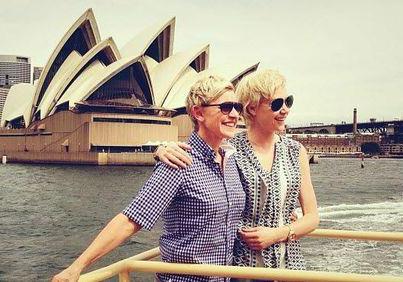
531523_10151298153817261_581124430_nAmerican chat show host, Ellen DeGeneres, was in Australia this week. She follows in the footsteps of Oprah Winfrey, another American chat show host who brought her show to Australia, in 2010. However, while Oprah managed to get around quite a bit, Ellen (who was recovering from ‘flu), just popped in to Sydney and Melbourne.

She did seem to take a bit of a shine to Melbourne, saying it reminded her of Boston and New Orleans, and even said that it was possible she and Portia would live there one day. Ellen is practically an Australian-in-law, because her wife, model and actress Portia de Rossi, is from Australia.

Portia was born Amanda Lee Rogers in Geelong. She changed her name as a teenager to sound more exotic and interesting – Portia is after the heroine of Shakespeare’s The Merchant of Venice, and de Rossi is an Italian surname, which probably means “red” (like Russell).

Portia de Rossi is the name of the mother of famous Italian poet Torquato Tasso, but I’m not sure whether the young Amanda Rogers was aware of that. Since her marriage, Portia has legally changed her name to Portia Lee James DeGeneres. I don’t know where the James comes from.

The name Ellen is a medieval form of Helen, making it the English equivalent of Elaine. Ellen was a fairly common name in the Middle Ages, and features in the English fairy tale Childe Rowland, where Burd Ellen is Rowland’s sister, who must be rescued from Elfland. Childe and Burd don’t mean how they sound – childe was a title given to the eldest son in a noble family, while burd means “lady, maiden”. In some versions of the tale, they are the children of Queen Guinevere, and Merlin also plays a significant role in the story.

Ellen is a classic name in Australia, which was at its most popular in the 1900s, when it was #20. It remained on the Top 100 until the 1950s, and made its way back there in the 1990s, when it reached #92. It’s been fairly stable for a few years now, and in 2011 rose slightly from #517 to #470. Although this looks like quite a jump, it represents just two more babies named Ellen.

With Ella and Ellie in the Top 100, and Elle, Eleanor and Elena rapidly gaining in popularity, and retro Nelly, Nellie, Nella and Nelle becoming increasingly hip name choices, Ellen seems extremely usable, with a host of cute and fashionable nicknames. Simple, pretty and unpretentious, I feel that we will see more of this name in years to come.

Portia is a variant of Porcia, the feminine form of the Roman family name Porcius, from the Latin for “pig”. A lot of people have problems with this name meaning, but the Fabii were named after the broad bean, and perhaps the Porcii gained their name from pig farming.

Another possibility is that in many parts of the ancient world, pigs were sacred animals of the Underworld, fertility and the moon, and there may have been some religious connotations to the name (and in fact pig farming itself had a distinctly religious side, as the Romans were very fond of sacrificing pigs to the gods). Many ancient gods and goddesses were connected with swine, such as Osiris, Adonis, Attis, Demeter, Persephone, Freya and Ceridwen. They were beasts of a mysterious and ancient power, and held in awe.

The most illustrious branch of the Porcius family were the Catones, which included Cato the Elder and his great-grandson, Cato the Younger. Cato the Younger had a beautiful, intelligent daughter named Porcia, and she married her cousin, Marcus Junius Brutus – famous for being one of the key people in the assassination plot against Julius Caesar. Porcia was the only woman who knew of the conspiracy, and as such she plays a role in William Shakespeare’s play, Julius Caesar.

However, when we think of Portia, we automatically think of Portia from Shakespeare’s Merchant of Venice, a beautiful and brilliantly intelligent lady who manages to get her own way while still showing obedience. She steals the show and saves the day in a gripping cross-dressing courtroom drama as her fine legal mind swoops in on a loophole in the law. Even now we sometimes call a gifted female lawyer a Portia. The role of Portia was once famously played by actress Ellen Terry.

Portia is an elegant literary name, with historical and fictional namesakes who have both beauty and brains. People seem to either love it, or find it pretentious. Another issue is that it sounds like the name of the car company, Porsche. (Porsche is a German surname derived from the name Boris). Because some people do use Porsche as a girl’s name, a certain type of parent does worry that a daughter named Portia will have her name confused with little girls named Porsche.

So Portia is not without her issues as a baby name, but still a very lovely one nonetheless.

POLL RESULT: Ellen received an approval rating of 46%, and Portia a rating of 31%.

(Photo shows Ellen and Portia on Sydney Harbour)
Famous Name: Gabriel

21 Thursday Mar 2013

Posted by A.O. in Famous Names

≈ 3 Comments

Tags

angels names, Biblical names, famous namesakes, fictional namesakes, French names, hebrew names, Italian names, name history, name meaning, name popularity, names from movies, nicknames, popular names, saints names, unisex names

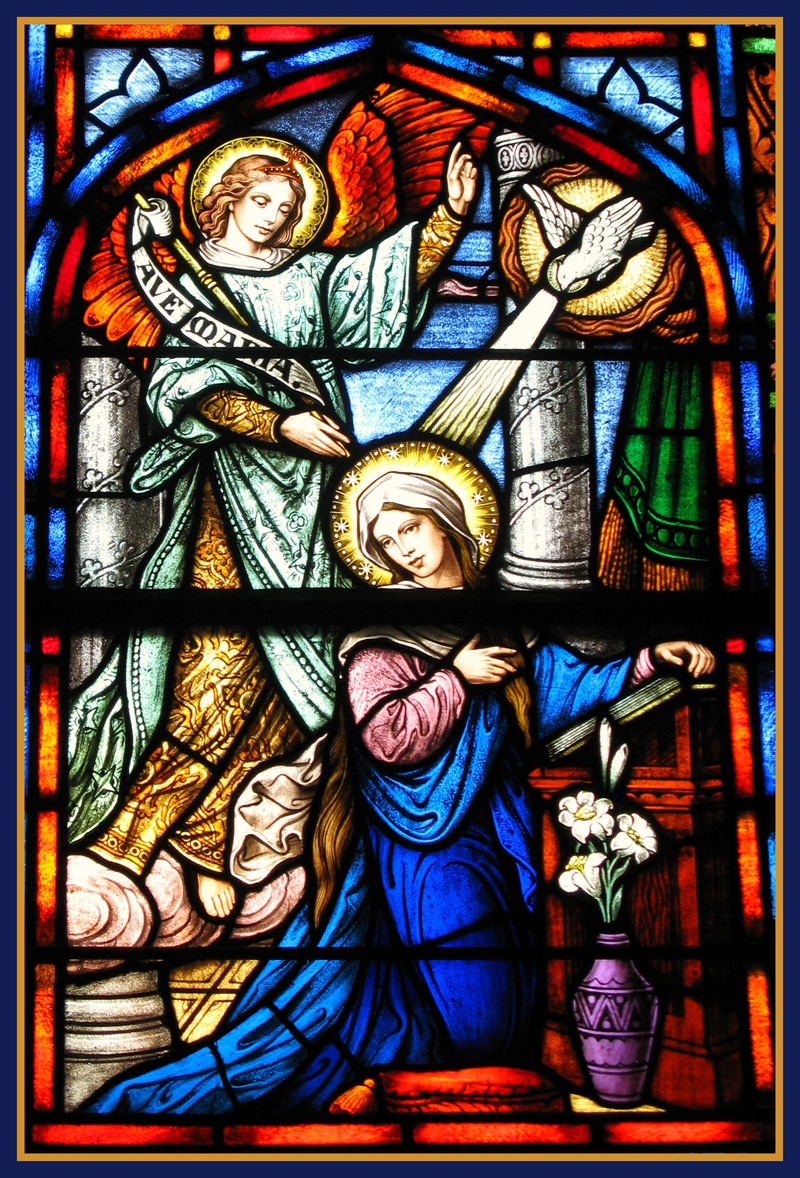
The AnnunciationOn Monday March 25, it will be the Feast of the Annunciation, which celebrates the angel Gabriel announcing to the Virgin Mary that she will conceive a son; Gabriel also tells her that the child is to be called Jesus. This was staggering enough news, but the big shock for her was that this would happen through the Holy Spirit and not via the usual route to conception.

This is the story told in Luke, while Matthew tells the story from a different angle. According to this gospel, Mary found herself pregnant and her betrothed, Joseph, was considering breaking things off. But then an angel came to him in a dream, and explained the situation to him.

Although the Bible doesn’t say so, it’s generally assumed that this angel was also Gabriel. Further assumptions are that he was the angel who appeared to the shepherds at the Nativity, and the one who came to Jesus to give him strength as he prayed in the garden before the Crucifixion.

The Feast of the Annunciation is held nine months before Christmas, to symbolise the length of a pregnancy. It is also called Lady Day, and until 1752, it was New Year’s Day in Britain. It’s obviously a hard habit to break, because in the UK they still start the financial year on April 6, which is Lady Day on the old (Julian) calendar.

The Annunciation isn’t Gabriel’s first appearance in the Bible, or even in the New Testament. In the Book of Daniel he interprets Daniel’s visions for him, and earlier in the Gospel of Luke he appears to Zachariah, a priest, and the husband of the Virgin Mary’s kinswoman. He tells Zachariah that his wife Elizabeth, for many years barren, would bear a son named John; this would be John the Baptist, who was to prepare the way for Jesus.

According to Islamic teachings, the angel Gabriel dictated the Koran to Muhammad, and led him on his “Night Journey”, or great spiritual vision of the heavens. So the angel is important to all three Abrahamic religions.

There is a tradition that Gabriel will blow his trumpet to announce Judgement Day, which comes from John Milton’s Paradise Lost. In Jewish legend, Gabriel is said to pluck new souls from the Tree of Life so that they may be conceived as new babies. So you can see Gabriel as both the beginning and end of Life – although the end is only to make way for a new beginning.

Gabriel is the English form of the Hebrew name Gavri’el, which is variously interpreted as “man of God”, “strong man of God”, “hero of God”, “champion of God”, “warrior of God”, or “strength of God”. The image you get from it is of a mighty being, using their immense strength to serve God. In the Old Testament, words such as great, might, power and strength are used to describe Gabriel, and in Jewish tradition he is an angel of judgement and punishment.

However, Christian tradition sees Gabriel differently. As he appears in the New Testament to bring people news of great joy, and to bring comfort to those burdened by great worry, he is viewed as an angel of mercy and consolation.

Angels are spiritual beings, not physical, so they cannot be said to have a sex, although in the Bible they always take on the appearance of human males when communicating with people. However, you might say that in Jewish tradition, Gabriel gives off a very masculine “energy”, while Christians get more of a feminine “vibe” from the angel. (If you doubt this, consider how many Nativity plays you’ve seen where a female plays the role of the announcing angel).

Because of this certain level of gender ambiguity, Gabriel has, for centuries, sometimes been used as a female name in the English-speaking world, and in fact Tom Waterhouse’s mother, the horse trainer Gai Waterhouse, is named Gabriel (in case you were wondering what Gai was short for). There are also specifically feminine forms of the name we have imported from other languages, such as French Gabrielle and Italian Gabriella.

The name Gabriel has charted in Australia since the 1960s, and joined the Top 100 in 2001 at #97. I’m not sure if this was an influence, but it joined the Top 100 a year after the movie The Patriot came out, starring Australian actor Heath Ledger as Gabriel Martin. It peaked in 2009 at #60, and since then has been on a decline. Last year it made #88.

Two feminine forms of the name have been more successful. Gabrielle has charted since the 1920s, and joined the Top 100 in the 1990s, when it peaked at #49. It left the Top 100 in 2010, and in 2011 was at #111, still only just outside the Top 100.

Gabriella has charted since the 1940s, but didn’t begin really climbing until the 1980s. It joined the Top 100 in 2006 at #89 (there were just as many baby girls named Gabriella as Gabrielle that year). It peaked the same year as Gabriel, in 2009, and only one place higher, at #59. However, its decline has been more gentle, and last year it made #71.

I do think the greater success of Gabrielle and Gabriella has not been helpful to the popularity of the male name Gabriel. I have noticed that many people hear the name Gabriel as Gabrielle, or think that the two names are so alike as to make Gabriel sound “feminine”. I have to admit this annoys me, because I much prefer Gabriel to either of his sister-names.

Gabriel seems to be more appealing to mothers as a baby name than it is to fathers, with many women complaining that their partner strongly vetoed the name Gabriel for their sons, even as a middle name.

I think it might suffer a little from what we might call The Valentino Factor – women are more likely to find the name Gabriel handsome, charming and even sexy, while men are more likely to find it foofy and irritatingly ornate.

Another issue is the nickname, because the standard shortening is Gabe, and many parents dislike it. Some worry it sounds too much like the word gay or the word babe, others think that it sounds dim-witted or redneck, and others just find it ugly.

It would be easy to suggest some other nickname, but chances are he’s going to get called Gabe once he leaves the house anyway, if he gets a nickname at all. Personally I don’t think Gabriel needs any nickname.

Gabriel is a beautiful, indeed, a heavenly name. It’s a name of great masculinity and strength, yet at the same time has a wonderful sweet tenderness as well. One thing that occurs to me is that there is a theme of the angel Gabriel bringing joyful news of unexpected pregnancies, and a miraculous childbirth. I think it would make a great name for someone expecting a baby they never thought they would ever have, a baby which defied all logic to make his way into the world.

For those who never thought their miracle baby would ever arrive, Gabriel says, Fear not, for behold, I bring you good tidings of great joy!

POLL RESULT: Gabriel received a very good approval rating of 76%. People saw the name Gabriel as strong yet tender (23%), handsome and heavenly (19%), sexy (12%), and powerful (11%). However, 9% thought the name was a little bit girly, and 7% that it didn’t have any good nicknames.

(Picture shows The Annunciation on a window at St Mary’s Church, Denville, New Jersey)

Famous Name: Mason

14 Thursday Mar 2013

Posted by A.O. in Famous Names

≈ 4 Comments

Tags

english names, famous namesakes, name history, name meaning, name popularity, popular names, surname names

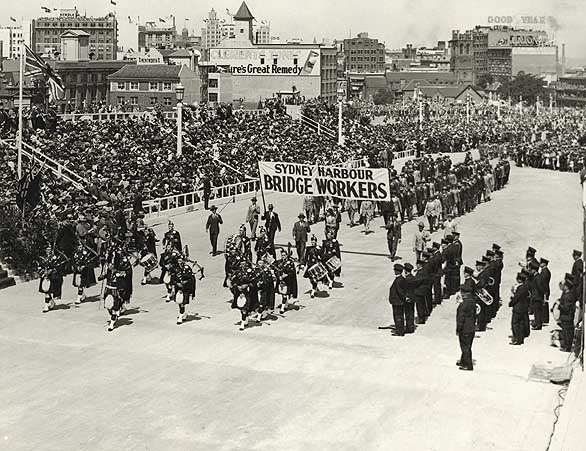
pngviewerOn March 19 this year, it will be the 81st anniversary of the opening of the Sydney Harbour Bridge. It’s an iconic symbol of Sydney, and of Australia itself; Sydneysiders refer to it with affection as “The Coathanger”, and more respectfully as “The Grand Old Lady”. The place where the bridge stands today is where Europeans first set foot on Australian soil, back in 1788.

There are many famous names connected with the bridge that I could cover, but when I think of its history, I see its true heroes as the workers who toiled long hours to build it, without any modern safety equipment, often risking their own lives in the process. So I dedicate this blog entry to the stonemasons who worked on the Sydney Harbour Bridge.

The bridge’s pylons are 89 metres high, made of concrete and faced with granite. While much of the steel for the bridge was imported from Britain, the materials for the pylons are all Australian, with most of the granite quarried from the seaside town of Moruya, 300 km south of Sydney. The pylons were designed by Thomas Tait of Scotland, and many of the stonemasons who worked in the quarry were from Scotland and Italy, as well as Australia.

There were perhaps 300 masons in all, who cut and dressed 40 000 stones for the pylons, with just two stonemasons facing them with granite. The stonemasons also built the Cenotaph in Martin Place, which commemorates all those who died during the Anzac campaign. You can read more about the building of the bridge and those who worked on it in this little booklet from The Pylon Lookout.

When the bridge was opened in 1932, the foreman stonemason, Jock McKay, proudly led 100 workers at the start of the Bridge Parade. We’ve already learned that it was the Stonemasons Association which first campaigned for an eight-hour working day, so this was another landmark day for them.

Mason is an English surname which is easy to understand, as it refers to the occupation of being a stonemason. It comes from the Old French word masson, introduced by the Normans; the word is derived from an ancient Germanic word meaning “cut, hew”. Mason is one of the oldest English surnames, being found from the early 12th century.

The trade of masonry is likewise one of the the most ancient, dating back to the Stone Age and the dim beginnings of civilisation. Indeed, when we think of the great works of civilisations, we tend to focus on their building projects, such as Egyptian pyramids, Greek temples or Roman aqueducts. During the Middle Ages, when the surname Mason first began to be used, masons were in demand for building castles and cathedrals, and they had a high status as skilled craftsmen.

I think from its earliest beginnings, stonemasonry had a spiritual or religious side, for the first large structures seem to nearly always be temples or other places of worship. It seems probable that the building of such temples would involve knowledge of spiritual symbols and motifs to be worked into their designs, and even the mathematics necessary to design such a temple may have seemed almost a magical art – it certainly required high intelligence, and greater knowledge than the average person.

The organisation of Freemasonry, or the Masons, seems to draw on myths that stonemasons were given secret knowledge that was handed down through the generations. These always seem to go back to the architect of King Solomon’s Temple of ancient Jerusalem, but includes Euclid, Pythagoras, Moses, the Essenes, and the Culdees, with Noah, the ancient Egyptians, the Knights Templar and the Druids thrown in for good measure. Even Jesus Christ is claimed as a Freemason, with his assertion of being the prophesied “cornerstone” a supposed indication.

These myths seem very far-fetched to me, but I can see how they might have an extremely tiny grain of truth to them, and they do add a bit of intrigue to stonemasonry and the name Mason.

Mason has been used as a first name for boys since at least the 16th century, and seems to have originated in East Anglia. It’s much more common in the United States than elsewhere, and that may partly be because of the distinguished Mason family of Virginia, which has played a prominent role in American history and politics. George Mason IV is considered one of the Founding Fathers of the United States, and an author of the Bill of Rights.

In Australia, although Martin Mason was one of our first pioneers, I tend to think of it as a rather sporty name, because of hockey player James Mason, cricketer Scott Mason, NRL star Willie Mason, and AFL player Mason Wood, from the North Melbourne Kangaroos.

Mason first charted here in the 1980s, debuting at #429 for the decade, and rose steadily to make the Top 100 by 2005. The year after Kourtney Kardashian welcomed her son Mason in 2009, Mason jumped 36 places in the charts, and rapidly ascended to #24 in New South Wales for 2012. (Although often connected with the Kardashians, Mason is quite the favourite amongst celebrity baby namers).

Name data for 2012 in so far shows Mason as one of the fastest rising names in Queensland, Western Australia and the Australian Capital Territory, and Top 20 in Queensland, Western Australia and Victoria.

Mason is a name which denotes physical strength applied skilfully, and even has quite a spiritual side to it. It would be a great name to honour a tradition of stonemasonry in your family history, or a tradition of skilled craftsmen. Although we think of it as quite a modern name, it has a very long history, and is far older than most surname names. It is rising in popularity, but mostly not soaring like a trendy name; more the solid progress of a name set to be a modern classic.

There is plenty to appreciate about the name Mason, but one thing you can’t hope to do is keep it to yourself.

POLL RESULT: Mason received an approval rating of 26%. People saw the name Mason as too trendy (23%), too popular (21%), too much of a celebrity baby name (10%), and rising too quickly in popularity (9%). However, 7% thought the name was strong and handsome.

(Photo of the bridge opening from State Records NSW)

Famous Name: Griffin

06 Wednesday Mar 2013

Posted by A.O. in Famous Names

≈ 7 Comments

Tags

Anglo-Saxon names, animal names, english names, famous namesakes, honouring, Irish names, mythological names, name history, name meaning, nicknames, surname names, vocabulary names, Welsh names

520px-Heraldic_figures_-_Griffin.svgOn March 12 the city of Canberra, Australia’s capital, will celebrate one hundred years since its foundation in 1913. Special events are planned for the entire year, with the major festivities taking place on the long weekend preceding the actual date.

A baby called Allegra Bluebelle Sofo born this year was named in honour of Canberra’s centenary – the royal bluebell is the floral emblem of the Australian Capital Territory. Her story was featured in The Canberra Times, and as further inspiration for potential Canberran baby-namers, the paper went on to make more suggestions for names with a Canberra connection, which you can read about on Nancy’s Baby Names blog.

I couldn’t help noticing that all the suggestions were for girls names, which seemed very unfair, given that boys will make up about half of all the babies born in Canberra during 2013, and an obvious suggestion is staring them in the face.

In 1911, King O’Malley held an international competition to find a designer for the layout of the new city, which was won by Chicago architect Walter Burley Griffin. Walter produced the design in colloboration with his wife and business partner, the architect Marion Mahony Griffin. The Griffins moved to Australia to oversee the project, and fell in love with the Australian landscape, becoming enthusiastic bushwalkers with a keen interest in botany and conservation. The building of a city set in bushland seemed perfect for their idealistic vision inspired by the Garden City movement.

Unfortunately, World War I put a dent in everyone’s plans, and Walter Burley Griffin was treated shamefully by bureaucrats, who undermined him to further their own interests, eventually forcing him to resign. Many of his ideas were discarded or altered, but the basic plan of the central city is undeniably that drawn up by Walter Burley Griffin.

It wasn’t until the 1960s that the artificial lake he had envisioned was built in the heart of Canberra (not to his plans, it must be said), and in the first kind gesture Canberra had made toward its designer, Prime Minister Robert Menzies refused to have the lake named after himself, and insisted it be called Lake Burley Griffin. Australians had rather cluelessly misunderstood American naming conventions, and imagined that Burley must be part of Walter’s surname, rather than his middle name, so the lake doesn’t even have his correct name.

It’s never been rightfully re-named Lake Griffin, which would also have honoured co-designer Marion, but it’s the only monument that Walter Burley Griffin has in Australia. One was planned in the 1960s, and an American architect hired, but a change of government left it shelved indefinitely.

With so little appreciation during his lifetime (Walter died in 1937), why not name your son Griffin to honour the man and his wife who helped bring the city of Canberra into being?

The surname Griffin has several sources. It can be a Latinised form of the Welsh name Gruffud, which is also Anglicised as Griffith. There was also an Anglo-Saxon name Griffin, derived from High German grifan, meaning “snatch, grab”, and an allusion to dragons. The Irish surname is taken from the Gaelic name Grioghtha, meaning “griffin”.

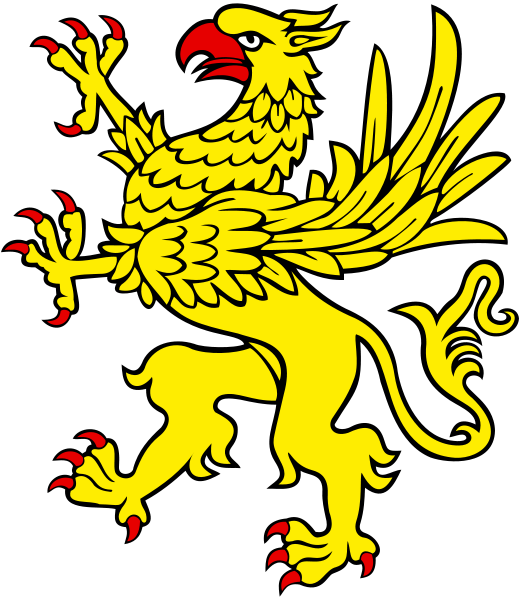
This legendary animal (also spelled gryphon or griffon) is a combination of an eagle and a lion, thus blending the king of the beasts with the king of the birds. How this combination was achieved was a matter to be decided by the artist, but by accepted convention the griffin has the body, tail and hindquarters of a lion, with the head, wings and talons of an eagle, and has prominent pointed ears. The word griffin is derived from the Greek for “hook”, possibly denoting the creature’s hooked beak or curved talons.

Griffins were prominent in the art and design of Ancient Greece, where they were seen as powerful protectors against evil. Greek writers described the griffin as native to mountainous areas of Asia, sacred to the sun, and a hoarder of gold. Other ancient legends tell of the griffin’s prodigious strength and intelligence, its hatred of horses, and wars against the Amazons. The griffin seems to be a symbol of good, of light, and of the masculine principle.

You will sometimes see griffins carved into old churches and cathedrals, because during the medieval era, the griffin was considered a symbol of Christ, who, like the griffin, has dominion over both the heavens and the earth. It was also thought that the winged cherubim mentioned in the Bible could have been griffins, as they are described as having the face of a lion and an eagle (although this ignores the fact cherubim also have the face of a man and an ox). It is possible that the legends of cherubim and griffins had the same source – the winged beasts of ancient Middle Eastern art.

Just to confuse things, the griffin was also associated with Satan, probably in the belief that anything so fierce must be up to no good (the hoarding of gold might have looked sinfully avaricious as well). This miserable idea doesn’t seem to have persisted, probably because it doesn’t make sense, since griffins were always noble, majestic, and on the side of good.

Griffins are a popular symbol in heraldry, with the first known person to have a griffin on his coat of arms being Richard de Redvers, the Earl of Exeter, in 1167 (the coat of arms was much older than that). A symbol of strength and vigilance, the griffin is said to be the perfect emblem for a hero in battle. For some reason, male griffins are always shown in heraldry without wings, but adorned with spikes denoting the sun’s rays. They are less common than winged female griffins. Canberra doesn’t have any griffins on its coat of arms, which I think would have been an appropriate choice.

Griffins are often found in fantasy literature, and the first one appears to be Lewis Carroll’s Alice’s Adventures in Wonderland. You may also read stories that involve griffins in the works of Frank Stockton, Diana Wynne Jones, Tamora Pierce, Neil Gaiman, Mercedes Lackey, Patricia A. McKillip and Rick Riordan. Readers of the Harry Potter series will remember that Harry’s house at school was Gryffindor. These fantasy novels had a noble forerunner, because the poet Dante sees Beatrice in a chariot drawn by a griffin in The Divine Comedy.

Griffin is a strong, handsome and very masculine name which can either be taken as Celtic or English. The legendary creature gives it many layers of mystical associations, nearly all of them extremely positive. You could use either Griff or Finn as nicknames.

POLL RESULT: Griffin received a worthy approval rating of 77%. People saw the name Griffin as strong and handsome (33%), cool (18%), noble and chivalrous (13%), and cute and brainy (13%). However, 9% thought the connection to mythological griffins made the name seen ridiculous – half as many as those who thought the mythological connection made the name cool.

(Picture shows a heraldic griffin)

Requested Famous Name: Naomi

27 Wednesday Feb 2013

Posted by A.O. in Famous Names, Requested Names

≈ 3 Comments

Tags

Biblical names, classic names, famous namesakes, hebrew names, Japanese names, name history, name meaning, name popularity, unisex names

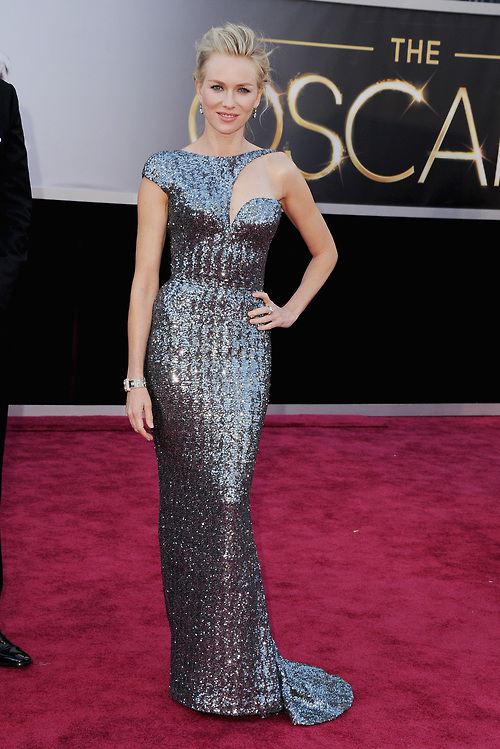
85th Annual Academy Awards - Arrivals

Name in the News
The 85th Academy Awards ceremony was held on February 24, and as with every year at this time, there was intense speculation in the Australian media as to whether any Australians would manage to win an Oscar.

One who was under consideration was actress Naomi Watts, who was born in England and came to Australia as a teenager, where she attended high school in Sydney (Nicole Kidman was one of her classmates). Her first acting jobs were in Australia, gaining experience in film and television. In the 1990s she moved to Los Angeles to continue her career; her big break came when she was chosen as the star of Mulholland Drive.

This year, she was nominated for the Academy Award for Best Actress, for her role of Maria Bennett in The Impossible. She lost to Jennifer Lawrence, but has won several other awards for the film, as well as being judged one of the best-dressed on the red carpet at the Oscars.

Name Information
Naomi is a Hebrew name interpreted as “pleasant, agreeable, sweet”. In the Old Testament, Naomi is a central character in The Book of Ruth, and despite the lovely meaning of her name, things went so wretchedly for her that she told others to call her Mara, meaning “bitterness”.

Because of a famine in Judea, Naomi and her family travelled to the land of Moab, where her husband and both her sons died, leaving her alone with her daughters-in-law Orpah and Ruth. Although her daughters-in-law were foreigners and pagans, they did not desert Naomi, and when she told them she was going back to her own people at Bethlehem, both girls offered to accompany her.

Naomi managed to convince Orpah that she should return to her family and her own customs, but Ruth famously says:

Entreat me not to leave thee, or to return from following after thee: for whither thou goest, I will go; and where thou lodgest, I will lodge: thy people shall be my people, and thy God my God: Where thou diest, will I die, and there will I be buried: the LORD do so to me, and more also, if ought but death part thee and me.

Naomi must have been a pretty wonderful mother-in-law to have evoked such love and loyalty. As mother-in-laws tend to get a bad rap, she really stands out as something special.

When Naomi returned to Bethlehem with Ruth (the famine was over by then), both of them were destitute, and poverty and misery had changed Naomi’s appearance so much that she was barely recognisable; no wonder that she felt she had been treated bitterly and deserved a bitter name.

However, she made lemonade from the lemons life had given her. She arranged for one of her husband’s relatives to marry Ruth, and after the happy couple had a child, she became the little boy’s nanny, caring for him as devotedly as if he had been her own son. I hope the rest of her life was as pleasant as her name.

Naomi is a Japanese name too, most frequently translated as “honest and beautiful” or “beautiful above all”. It is said differently to the Hebrew name, for while we generally pronounce Naomi as nay-OH-mee, the Japanese name is said something like NOW-mee. Although it is a unisex name, it seems to be much more common as a female name in Japan. You will often see Naomi suggested as a cross-cultural baby name for couples where one person is Japanese and the other from an English-speaking country.

Naomi is a classic girl’s name in Australia which has never left the charts. In rare use in the 1900s, it reached the Top 100 in the 1970s, and peaked in the 1980s at #67. It left the Top 100 in the early 2000s, and since then has been up and down the popularity charts in the 100s – most recently up, when it reached #152 in 2011.

As Naomi peaked in the 1970s and ’80s, it would be easy to dismiss it as a “mum” name. However, it never reached the Top 50, and is still in the 100s; it hasn’t been lower than the 100s since the 1950s. I think it manages to avoid being dated by never becoming highly popular, nor uncommon, so it seems very usable. I feel as if this name could belong to someone of almost any age group.

Despite being a familiar name, Naomi still seems slightly unusual, even exotic. It doesn’t sound like other Old Testament girls’ names which have reached the Top 100, like Deborah, Sarah, Rachel, Rebecca or Hannah. These seem solid and homely, perhaps to some ears, even stodgy. If you had never heard the name Naomi before, I wonder if you would guess it to be a name from the Bible? I might have picked it as Polynesian or Native American, if I didn’t know otherwise.

Naomi is a classic name with a distinctive sound and even a distinctive narrative, for the Old Testament Naomi has a Bible story quite unlike other Biblical heroines. I think this is a great choice of baby name for someone who wants something slightly different, yet not at all obscure.

Thank you to Brooke for suggesting Naomi as a featured name.

POLL RESULT
Naomi received an excellent approval rating of 84%, making it one of the best-liked names of the year. The name Naomi was seen as beautiful and distinctive (24%), still suitable as a baby name (17%), a good cross-cultural choice (15%), having an inspiring Bible story (15%), and a pretty classic (13%). However, 9% were put off by the fact that the name is “I moan” backwards. Nobody thought the Bible story of Naomi was depressing.

(Picture shows Naomi Watts at the 2013 Oscars)

Requested Famous Name: Banjo

14 Thursday Feb 2013

Posted by A.O. in Famous Names, Requested Names

≈ 10 Comments

Tags

aliases, Australian Aboriginal names, Australian names, Australian slang terms, english names, famous namesakes, historical records, musical instruments, name history, name meaning, names of horses, nicknames, patriotic names, pen names, pseudonyms, vocabulary names

146168-banjp-paterson-grapphicOn Sunday February 17 this year it will be the 149th birthday of Andrew Barton Paterson, affectionately known as “Banjo” Paterson. To celebrate, The Orange and District Historical Society will be throwing him a birthday party, with a car rally, picnic lunch in Banjo Paterson Park, poetry readings, stories of Banjo’s life, and walk around the historic property where he was born.

Because this is a name blog, I feel obliged to explain that Paterson was named Andrew after his Scottish-born father, and his middle name Barton was a family name from his mother’s side; he was related to Edmund Barton, who would later become Australia’s first prime minister. Because he and his dad had the same name, Paterson went by his middle name, and was always known as Barty to his friends and family.

Paterson lived with his grandmother while he was attending the prestigious Sydney Grammar School, and she encouraged in him a love of poetry. He was 21 when he first began submitting poems to The Bulletin, under the pseudonym of “The Banjo” (sometimes shortened to a simple “B”). Full of fierce nationalism and a desire for a fairer society, he had some aspirations to write fiery polemic, and had even written a political pamphlet. However, The Bulletin had other ideas.

In the late 19th century, there was a movement towards the British colonies of Australia becoming one country, a feeling that Australia should be a united nation, and Australians a united people. In the effort to provide Australia with a unifying mythology that would instil nationalistic pride, it seemed that the Australian bush and outback would be the symbol to draw everyone together.

The Bulletin suggested that Banjo Paterson try his hand at bush poetry in line with its nationalist editorial policy. Banjo had been born in the Central West, but spent most of his childhood and youth growing up on the family property near Yass, north of Canberra. It was here he learned to ride, and watched the horsemen from the Murrumbidgee River and Snowy Mountains country play polo and take part in picnic races. He gained a great love of horses, and an admiration for horsemanship.

When he wrote The Man from Snowy River, it was a poem of reckless horse-riding heroism which immediately captured the nation’s imagination, and which still has our heart. It made his name, and his first poetry collection, under the title The Man from Snowy River, is the most-sold collection of Australian bush poetry ever, and is still reprinted today. During his lifetime, Banjo Paterson was second only to Rudyard Kipling in popularity among living poets writing in English.

Banjo Paterson was a colleague and friend of Henry Lawson, but had a very different way of seeing the bush. In Banjo Paterson poems, the bush is a place of adventure, romance and beauty, populated by heroes who live in freedom amongst the gum trees, honest freckle-faced youths, and characters with funny names and odd yarns about them.

Australia is the Outback, and pioneers, and songs around the campfire under the starry sky, and swagmen camped by billabongs. It’s a country of warmth and humour, and although it never quite existed, like all good mythology it lives in our hearts and minds. Banjo Paterson gave us a dream of Australia – one from which we have never truly awakened.

When it comes to names from history, often times there is a tinge of tragedy to them; some sadness attached to the real person who bore them, or even a whiff of scandal. There is no darkness to the name Banjo – Paterson was a decent, highly intelligent man who cared very much about the less fortunate, but he was essentially a happy person who was popular and sociable, and liked sport and the outdoors.

He wore his fame easily, remained modest about his talents, and never had any scandal attached to him. He was able to fulfil many of his dreams, and those that were denied him didn’t set him back. He enjoyed the ordinary love of friends and family, as well as the extraordinary love and devotion given to him by his nation. He is the model of what we hope for and expect from our celebrities.

The equine-loving Paterson took his pen name name of The Banjo from that of a horse owned by his family. This always seems to be described as “a favourite horse”, or even “his favourite horse”, but I cannot find any original source for this. Paterson himself simply describes it, no doubt with affection, as a “so-called racehorse“.

The origin of the horse’s name is apparently lost to history, but the word banjo has a history as a slang word in Australia. Slang dictionaries suggest as possible meanings “frying pan”, and “shoulder of mutton”. Another meaning was “shovel used for mining”, which during World War I, became used for any military entrenching tool – in other words, there are some correlations between the slang terms banjo and digger!

A banjo is military slang for a bacon and egg roll, because the motion of constantly dealing with crumbs while eating is reminiscent of someone playing the banjo. And Banjo Paterson himself has added another slang term – a banjo is a $10 note, because Paterson’s picture is on it, along with the words to The Man from Snowy River (Henry Lawson was on the old $10 note).

The banjo is the descendant of musical instruments brought to Colonial America by African slaves, and long seen as a staple of country music, the music of the poor and downtrodden (the kind of people that Banjo Paterson cared about). It is not known where the word banjo comes from, but the most likely source is West Africa, where it may be the same word they used for bamboo.

There are quite a few men named Banjo in Australian records, with the name most common as a nickname or alias. Many must have been named in honour of the poet, with some families named Paterson apparently finding it hard to resist having their own “Banjo Paterson”. The name isn’t unusual in Aboriginal communities, where it is given as a nickname.

The name Banjo gained fresh impetus when actress Rachel Griffiths named her son Banjo Patrick in 2003; since then the name has received more use, with 12 baby boys named Banjo last year in Victoria alone.

Banjo is an uniquely Australian name; one which seems strange in other countries, yet cosy and familiar in our own. It’s patriotic and honours one of our most beloved national poets. It’s cute, cool, and has a very Aussie nickname too – Joey.

Thank you to Brooke for suggesting Banjo as a featured name.

POLL RESULT: Banjo received an approval rating of 86%, making it one of the most highly esteemed names of the year. It was seen as uniquely Australian and patriotic (36%), cool and different (30%), and cute and spunky (20%). The remaining 14% of people thought it was over the top, weird, or ridiculous.

(Picture shows Banjo Paterson with the score to Waltzing Matilda)

Famous Name: Miriam

06 Wednesday Feb 2013

Posted by A.O. in Famous Names

≈ 10 Comments

Tags

Ancient Egyptian names, Biblical names, classic names, famous namesakes, hebrew names, mythological names, name history, name meaning, name popularity, names in songs, nicknames, underused classics

4485672-3x2-940x627On Australia Day this year, more than 17 000 people from 145 countries took the pledge and became Australian citizens. Prime Minister Julia Gillard, presiding over a ceremony in Canberra, told the crowd that the first citizenship ceremony was in 1949, and since then more than 4 million people had sworn loyalty to Australia. In fact, Ms Gillard was one of them – she was born in Wales and moved to South Australia as a child.

Amongst the 17 000-odd people becoming Australian citizens was British-born actress, Miriam Margolyes. Miriam has long been a mainstay in film, television and theatre, delighting audiences in such favourites as Blackadder, Little Dorrit, Babe, the Harry Potter films (she played Professor Sprout), and Wicked. A massive Charles Dickens tragic, Miriam has taken her one-woman show, Dickens’ Women, all over the world.

Miriam apparently got a bit of a crush on Australia when she was only a child, and kept on meeting wonderful Australian people, until at last, in 1968, she met her Australian partner Heather, which cemented the deal for good and all. She bought a house in the southern highlands of New South Wales around the time she was in Babe, and for many years now has been based in Australia.

Miriam promised that she hasn’t become Australian just for the beach and barbies, she wants to make a contribution to Australian society. Although she loves her country, she plans to use her democratic right to protest and speak out against things that need to change, and also wants to learn more about disadvantaged Australians. In other words, she will be a fantastic Aussie citizen.

Miriam is the original name on which the familiar Mary is based. In the Old Testament, Miriam is the older sister of Moses, and it is she who came up with the clever plan to save her baby brother’s life. Because Pharoah had decreed that newborn Hebrew boys were to be killed, she took Moses and hid him by the side of a river. She secretly watched as Pharoah’s daughter found and adopted him, then suggested that the princess use Miriam’s mother as a wet nurse, so that Moses was cared for in his infancy by his own family.

The Old Testament depicts Miriam as a strong, outspoken woman, and a leader amongst the Hebrews. One of the oldest parts of the Bible tells how she led the women in triumphant song and dance after the crossing of the Red Sea, the female chorus echoing the men, who were led by Moses. She was a prophetess, with the Bible implying that God spoke to her through dreams; the Bible speaks of the prophets Moses, Aaron and Miriam as if all three of them played vital roles in the Hebrews’ escape from Egypt.

According to Jewish tradition, the Hebrews were blessed by a well which followed them through the desert due to Miriam’s righteousness. When she died and was buried (in present-day Syria), God caused a spring of abundant fresh water to open up for the people. The spring was called Meribah, which means “quarrelling”, as everyone was grumpy from thirst. This story is very similar to another where the Hebrews were suffering from severe water shortage, only to find a well filled with bitter water. Moses turned the brackish water sweet with a particular tree, but the well was still called Marah – “bitterness”.

These two stories probably help to explain two suggested Hebrew etymologies for the name Miriam – “rebellious”, and “bitterness”. These are generally thought to be unpleasant meanings for a girl’s name, but as you can see, the stories were positive ones, although they don’t actually have anything to do with Miriam. In fact, it’s unlikely that Miriam’s name was Hebrew at all – she was born and raised in Egypt, and it is believed that both her brothers’ names were of Egyptian origin.

Miriam may be derived from the Ancient Egyptian word for “love” or “beloved”, or it could be a form of the Ancient Egyptian name Meritamen which means “beloved of Amun” – Amun was the chief god of the Ancient Egyptians, and his name means “hidden”. For this reason you will sometimes see Miriam and Mary translated as “beloved by God”, even though it doesn’t mean the God of the Abrahamic religions.

Miriam has never disappeared from the charts, but never been in the Top 100. It was #133 in the 1900s, which is the highest point it ever reached; its current rank of #458 is the lowest it has ever reached. After climbing steeply in 2009, the name Miriam fell dramatically in 2011 – although in real terms, that equates to just ten fewer babies called Miriam than there were in 2009.

I think the name Miriam has much to recommend it. It’s an underused classic, which means it’s familiar to everyone, yet rarely encountered. It is feminine, strong, sounds quite intellectual, and suits any age. In Jewish tradition Miriam was associated with water, and I do think Miriam has a liquid feel to it – cool and deep. It has a range of possible nicknames, including Mim, Mimi, Mima, Minnie, Mirri, Mirra, Mira, Mia, Mitzi and Remi.

Even a murderous Norah Jones sang that Miriam was “such a pretty name“. When your most vengeful enemy admits you’ve got a nice name, that takes some beating.

POLL RESULT: Miriam received an astounding 91% approval rating, making it one of the highest-rated names of the year. Miriam was praised for being strong and intelligent (45%), pretty and feminine (23%), having great nickname options (15%), and a desirable level of popularity (8%). However, 8% thought the name was too old-fashioned. Nobody thought that the name Miriam was “too Jewish”.

(Photo shows Miriam Margolyes receiving her citizenship certificate from Prime Minister Gillard)

Famous Name: Greta

30 Wednesday Jan 2013

Posted by A.O. in Famous Names

≈ 4 Comments

Tags

famous namesakes, German names, Hungarian name popularity, Italian name popularity, Latinate names, literary names, locational names, name popularity, nicknames, Old Norse names, Sir Walter Scott, Swedish name popularity, UK name popularity, US name popularity

11/11/2011 NEWS: Greta. Ned Kelly Burial.On January 20 this year, the story of bushranger Ned Kelly reached a conclusion, with his dying wish fulfilled, and his remains buried in the cemetery at Greta, in Victoria’s north-east. As a convicted murderer, Kelly was denied burial in consecrated ground after his execution in November 1880. His headless body was dumped in a pit and covered in lime.

A Requiem Mass was held at St Patrick’s in Wangaratta the preceding Friday; there are about 450 descendants of Ned Kelly, and many of them attended the church. During the homily, Monsignor John White said that some people had written to object to Ned Kelly receiving a public liturgy, but that the service was not to make judgement, but to bring closure. The service ended with In the Sweet By-and-By, the hymn Kelly is said to have sung in his cell the night before he was hanged.

Under a marquee, Ned Kelly was privately buried next to the unmarked gravesite of his mother Ellen; his brother Dan, and Steve Hart, one of his gang-members, also lie in unmarked graves in Greta cemetery. Ned’s coffin was adorned with a wreath of native Australian flowers and the green sash he was awarded in his youth for saving a boy from drowning. The coffin was buried deep, and surrounded by concrete to prevent looting. There are also five mounds of earth instead of one, to deter grave robbers.

The district of Greta is deep in “Kelly country“, the region of rural Victoria where Ned Kelly was born, grew up, and fought. His famous last stand at Glenrowan was less than 10 miles from Greta. Many of the Kelly family still live in the area, and the Ned Kelly legend remains compelling, with almost every local having their own Kelly-related tale to tell.

The district is thought to be named after the River Greta in Cumbria, England, part of the background to Rokeby, a poem by Sir Walter Scott which was popular at the time. The river’s name is Old Norse, and means “rocky river”. It is pronounced GREE-ta.

This is somewhat embarrassing to admit, but for a long time I thought the girl’s name Greta was also said GREE-ta. I knew it was short for the German name Margareta, and assumed it was said to rhyme with Rita, which is short for the Latinate name Margarita (both names of course are relatives of the name Margaret).

I was in my early twenties before I met someone named Greta, and discovered the name is (as I’m sure you all know) said GRET-uh. As the Greta I met happened to be in the public eye, the fact that I was ignorant how her name was pronounced seemed even more embarrassing.

One of the most famous women with this name was the Swedish-born Hollywood star Greta Garbo, famed for her austere beauty and luminous screen presence. Mysterious and reclusive, she shunned publicity and lived a very private life. Here we also know the Italian-born Australian actress Greta Scacchi, who grew up in Perth, but has lived and worked in England for many years – although she visits Australia from time to time.

As you see, this is a name at home in several countries, and Greta is a Top 100 name in Sweden, Hungary and Italy. In the United States it is #684 and fairly stable, and in the UK it is #586 and climbing.

In Australia, Greta was in rare use in the 1900s, and has enjoyed a very uneven career. The highest it ever got was #206 in the 1930s (at the apex of Ms Garbo’s success), and it disappeared altogether in the 1950s and 1960s. It has also hit lesser peaks in the 1910s, the 1970s and the 1990s. The name hasn’t charted since 2009 – but given the way it has jumped up and down the charts, you can expect to see it again before too long (but not too much of it).

In other words, this is a name with plenty of history in Australia, but not tons of use, and has never come anywhere close to being popular. As such, it retains something of the mystique that Greta Garbo radiated – cool, reserved, exclusive; a name selected by discerning parents. Make no mistake, Greta is a very hip choice.

Greta is the cosseted darling of name nerds, who believe it to be beautiful, dignified and sadly neglected by those who fail to appreciate her (these are the same name nerds who would drop Greta like a hot potato if masses of parents actually took their advice and called their daughters Greta, so it became Top Ten. Then Greta would be “Such a nice name – but simply ruined by everyone using it”).

So here’s another embarrassing admission. I’m not a huge fan of the name Greta, which to me has a rather harsh sound, reminding me of words such as grim, grisly, groan, gritty, grizzle, gross, grotty, granite, grumpy, grouch, grate, grasp, growl, grovel, grubby, gruff, gruesome, grumble, grump, grunt and regret. Somehow it never seems to remind me of graceful, gratitude, greetings, grand, great, groovy and egret! Which is manifestly unfair.

Perhaps if I could play psychoanalyst to myself, I might theorise that the real reason I don’t care for Greta is that it is inextricably linked in my subconscious to the embarrassment of not knowing how to pronounce a celebrity’s name when meeting them – and that even the Greta I met being very beautiful and extremely charming could not wipe out my feelings of shame. Indeed, perhaps that made them worse.

In other words, don’t pay any attention to my opinions about this name. It’s not Greta, it’s me.

POLL RESULT: Greta received a very creditable 76% approval rating. The name Greta was seen as beautiful and dignified (32%), and cool and European (18%), although 16% thought it was frumpy and harsh. 8% thought the name Greta was neglected and needed to be used more, while 6% noted that if it was used more, it would no longer be hip. A besotted 3% insisted they would still use Greta even if it was the #1 name. Only one person preferred the pronunciation GREE-ta.

(Picture shows Greta cemetery in Victoria)

Famous Name: Jackson

23 Wednesday Jan 2013

Posted by A.O. in Famous Names

≈ 5 Comments

Tags

ACT name data, english names, famous namesakes, historical records, holiday names, locationa names, name history, name meaning, name popularity, name trends, nicknames, patriotic names, popular names, Scottish names, surname names, Victoria name data

Sydney_Harbour_Bridge_from_the_airOn Saturday January 26 it will be Australia Day, so we are looking forward to the long weekend. In Sydney, there will be many events in and around the harbour, with one of the most popular the Ferrython, where the Sydney ferries race against each other. Chartering a boat to spend Australia Day on the harbour, basking in sunshine under blue skies, must be one of the most perfect ways to spend Australia Day in Sydney.

It’s also very appropriate, because the early history of Sydney is centred on its harbour. The size of Port Jackson, in which Sydney Harbour is located, was one of the main things which convinced the British to set up base in this area. You may recall that Captain Arthur Phillip rated Port Jackson as “the finest harbour in the world”.

I was always taught that Port Jackson was the largest natural harbour in the world, but it turns out that this is a matter of disagreement. In fact, what with the difficulties in deciding what is classed as a harbour, and whether you count size by square kilometres, length of coastline, or water volume, it doesn’t seem possible to declare any natural harbour the largest in the world – although Port Jackson must be one of the world’s largest, at least.

Sydneysiders still firmly believe that Port Jackson is the finest natural harbour in the world, and many that it is the world’s most beautiful – and as beauty is very much in the eye of the beholder, this claim at least is difficult to dispute. I expect other cities feel the same way about their own harbours.

The first known European to come here was James Cook in 1770. Not being of a gushing nature, there is nothing in his ship’s log to indicate that he thought the harbour fine or beautiful, only recording that it “appeared to be a safe anchorage”.

He named it after Sir George Jackson, a fellow Yorkshireman, and Cook’s friend and patron. Jackson later got married and changed his surname to his wife’s, becoming Sir George Duckett. I can’t help but be thankful that this happened after the naming of Port Jackson, as Port Duckett doesn’t have quite the same ring to it – although like the island of Nantucket, it would no doubt be a boon to the authors of limericks.

Jackson is an English and Scottish surname meaning “son of Jack“, which must be one of the most straightforward name meanings. The surname Jackson can be found from the 14th century onwards, and was historically most common in the north of England.

Jackson was first used as a personal name in the early 17th century, and in the United States, may sometimes have been given in honour of the seventh president, Andrew “Stonewall” Jackson – before he was president, he was a national hero for defending New Orleans from the British. He had such a reputation for toughness  that his nickname was “Old Hickory”.

Although there are many examples of men named Jackson in Australian records, the name did not begin charting in Australia until the 1970s – around the time American teen idols, The Jackson 5, became a big hit. Jackson climbed steeply to make the Top 100 by the 1990s, and peaked in the early 2000s at #29. Since then it has gently declined in popularity, and was #40 in NSW for 2011.

Early results from 2012 name data in the ACT and Victoria suggest that Jackson is falling as the variant spelling Jaxon takes off. This spelling (also a legitimate surname), takes advantage of the fashionable X, while suggesting Jax as the nickname, rather than Jack.

While Jackson may not be quite as popular as it once was, this name makes a great one for a boy born on Australia Day, and is much more subtle than last year’s suggestion.

POLL RESULT: Jackson received an approval rating of 62%. More than half of people (56%) said the name Jackson was fine and handsome, although 22% believed it was too popular, and 17% saw it as boring. Nobody preferred the spelling Jaxon, or thought of Jackson as a patriotic name.

Famous Name: Rose

16 Wednesday Jan 2013

Posted by A.O. in Famous Names

≈ 14 Comments

Tags

classic names, English idioms, english names, flower names, French name popularity, French names, germanic names, Latin names, middle names, mythological names, name history, name meaning, name popularity, nature names, Norman names, plant names, popular names, Scottish name popularity, UK name popularity, vocabulary names

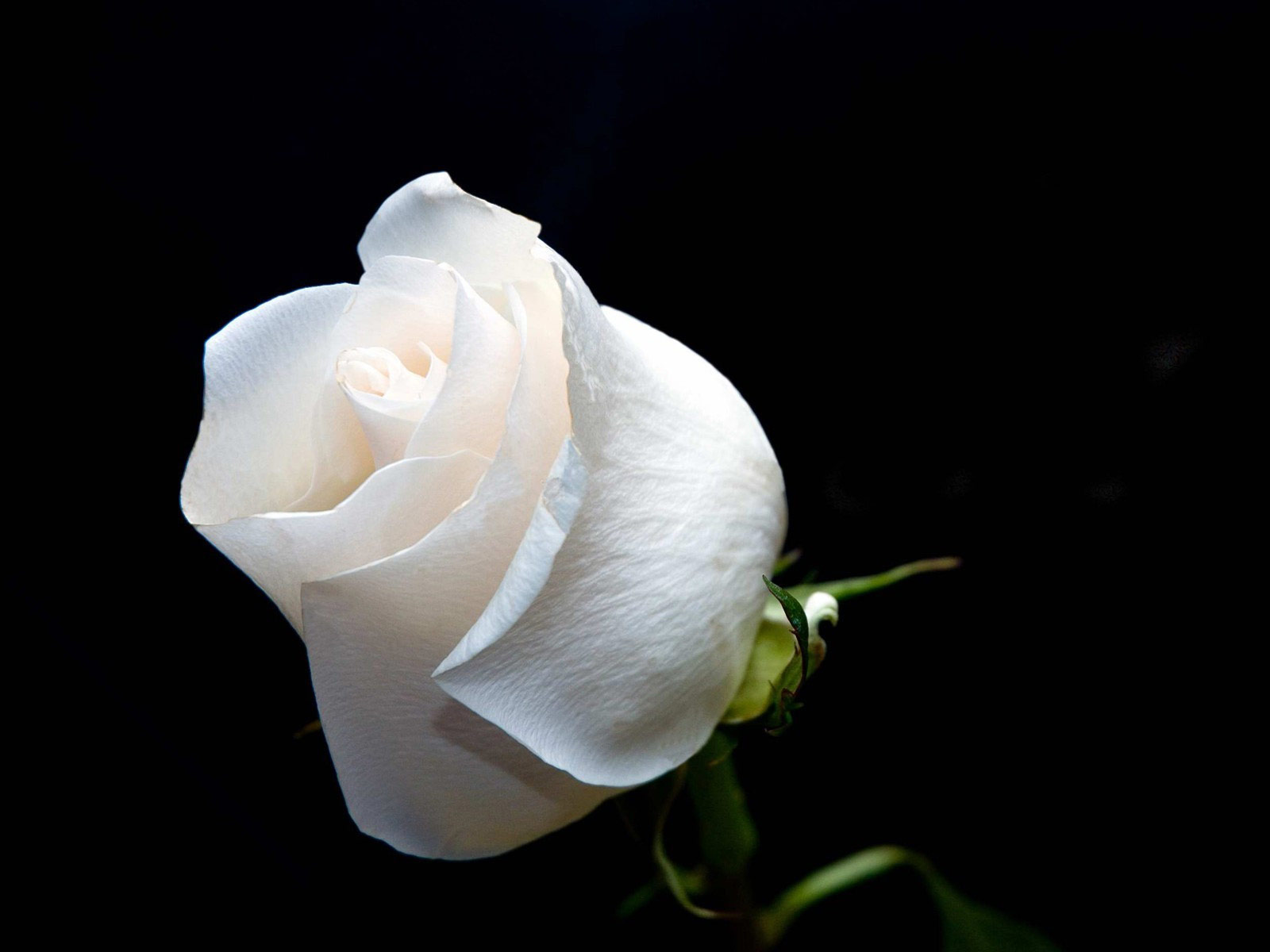
Gift_white_rosesThis Friday will be The Day of the Roses, which sounds lovely, but has a tragic meaning. January 18 this year marks the 36th anniversary of the Granville train  disaster, when a crowded train was derailed in a suburb of western Sydney, and hit the supports of a railway bridge. The bridge collapsed onto the train carriages, crushing the passengers inside. 83 people were killed, and more than 200 injured; it was then Australia’s worst peace time disaster, and is still the worst rail accident in Australian history.

The Granville Memorial Trust was established to commemorate the victims and to campaign for improvements to rail safety. Since the disaster, there has been a substantial increase in money spent maintaining the railways, and standards have improved. Each year on the anniversary of the crash, the Trust organises a memorial service, in which a bell rings 83 times, and 83 roses are thrown onto the railway tracks – one for each of the victims.

Rose is not the simple flower name it at first appears, for it began life as the Germanic name Hrodohaidis or Hrodheid, meaning “bright kind, famous kind” (kind in the sense of type, sort). It was the Normans who introduced it to Britain in the forms Roes, Rohais, Roheis and Rohese. The name Rohese was a fairly common one amongst the Norman nobility in England after the Conquest.

The form Rose began to be used by the early 1200s – even this early it was already being associated with the flower, whose name is French, derived from the Latin rosa. It goes back to an ancient word meaning “sweetbriar” (a wild rose also known as the eglantine rose).

Roses are tens of millions of years old, and have been grown in gardens for thousands of years – perhaps first in China, although they were grown in Persia, Babylon and ancient Egypt as well. The flower was sacred to the goddess Isis, and later the Greeks and Romans identified it with Aphrodite or Venus, so that it became seen as a blossom of beauty and eternal love – which is one reason why you are more likely to receive roses on Valentine’s Day than daisies or sweetpeas.

In medieval Christianity, roses became associated with the Virgin Mary, were carefully cultivated by monks, and in both Christian and Islamic mysticism, the rose can be a symbol of divine love. The rose is the national flower of England and the floral emblem of the United States; the red rose is the symbol of socialism; the white rose of peaceful resistance. The Romans used it as a symbol of secrecy, and to alchemists it meant balance and unity.

This ancient flower speaks to our hearts on so many different levels, and the rose has a richness of beauty we cannot help but admire. Yet it is mysterious too, and its thorns urge us to keep our distance, even while its loveliness attracts. Roses are by no means vain beauties, because they can be used to make perfumes, skin care products and medicines; rose hips can be made into jams, syrups and teas (in fact I am drinking a cup of it as I write). Rose petals are also edible.

We often think of Rose as being a quintessentially English name, and a beautiful Englishwoman is even called an “English rose”. Yet the name is also French, and Rose is Top 100 in France, as well as in England/Wales and Scotland.

In Australia, Rose is a classic which has always charted. It was #55 in 1900, and gradually fell until it left the Top 100 in the 1930s. It reached its lowest point in the 1970s, at #287, and after that began a stately rise, with its sharpest increase in the late 2000s. By 2008 it was near the bottom of the Top 100, and each year has continued to steadily gain. In 2011 it was #66 in New South Wales, and in Victoria and the ACT it has proved to be one of the names with the most growth during 2012. Rose is also extremely popular as a middle name.

Rose is an overwhelmingly feminine name, yet isn’t frilly. It’s both sensual and sensible, possessing the ripeness of a mature woman rather than a frivolous girl. It’s a short name, yet doesn’t seem abrupt or harsh but rather, soft and velvety as one of its own petals. Despite being an English word, there are many international variants of Rose, and it is easily understood in other countries. It is a name from fairy tale, reminding us of Briar Rose, the sleeping beauty, and Rose-Red, the vivid sister of fair Snow-White – and yet it also has a practical and wholesome appeal.

Increasing numbers of parents are choosing the name Rose for their daughters. In The Little Prince, the prince, who is in love with the only rose on his planet, cries in dismay when he comes to Earth and sees dozens of rose bushes; he has given his heart to something special, and found it commonplace. But a wise fox teaches him that his rose is unique, because it is the only one that he loves. There may be a garden of Roses in the world, but only one Rose who blooms there will be the one in your heart.

POLL RESULT: Rose received an approval rating of 86%, making it one of the most highly esteemed names of the year. The name Rose was judged to be beautiful and feminine (54%) and pretty and wholesome (21%), although 7% thought it was better left in the middle position. Nobody thought that the name Rose was boring.

← Older posts
Newer posts →

Enter your email address to follow this blog

Categories

Archives

Recent Comments

A.O.'s avatarwaltzingmorethanmati… on Zarah Zaynab and Wolfgang…
Madelyn's avatarMadelyn on Zarah Zaynab and Wolfgang…
JD's avatardrperegrine on Can Phoebe Complete This …
A.O.'s avatarwaltzingmorethanmati… on Rua and Rhoa
redrover23's avatarredrover23 on Rua and Rhoa

Blogroll

  • Appellation Mountain
  • Baby Name Pondering
  • Babynamelover's Blog
  • British Baby Names
  • Clare's Name News
  • For Real Baby Names
  • Geek Baby Names
  • Name Candy
  • Nameberry
  • Nancy's Baby Names
  • Ren's Baby Name Blog
  • Sancta Nomina
  • Swistle: Baby Names
  • The Art of Naming
  • The Baby Name Wizard
  • The Beauty of Names
  • Tulip By Any Name

RSS Feed

  • RSS - Posts

RSS Posts

  • Celebrity Baby News: Melanie Vallejo and Matt Kingston
  • Names from the TV Show “Cleverman”
  • Can Phoebe Complete This Sibset?
  • Zarah Zaynab and Wolfgang Winter
  • Baby, How Did You Get That Name?
  • Celebrity Baby News: Media Babies
  • Celebrity Baby News: Adelaide Crows Babies
  • Celebrity Baby News: Chris and Rebecca Judd
  • Names at Work: Name News From the World of Business and Employment
  • Celebrity Baby News: Sporting Round Up

Currently Popular

  • Rare Boys Names From the 1950s
  • The Top 100 Names of the 1940s in New South Wales
  • Girls Names From Stars and Constellations
  • Celebrity Baby News: Livinia Nixon and Alistair Jack
  • Celebrity Baby News: Jacinta Allan and Yorick Piper

Tags

celebrity baby names celebrity sibsets english names famous namesakes fictional namesakes honouring locational names middle names name combinations name history name meaning name popularity name trends nicknames popular names saints names sibsets surname names twin sets unisex names

Blog at WordPress.com.

Privacy & Cookies: This site uses cookies. By continuing to use this website, you agree to their use.
To find out more, including how to control cookies, see here: Cookie Policy
  • Subscribe Subscribed
    • Waltzing More Than Matilda
    • Join 517 other subscribers
    • Already have a WordPress.com account? Log in now.
    • Waltzing More Than Matilda
    • Subscribe Subscribed
    • Sign up
    • Log in
    • Report this content
    • View site in Reader
    • Manage subscriptions
    • Collapse this bar
 

Loading Comments...