• About
  • Best Baby Names
  • Celebrity Baby Names
  • Celebrity Baby Names – Current
  • Celebrity Baby Names – Past
  • Featured Boys Names
  • Featured Girls Names
  • Featured Unisex Names
  • Links to Name Data
  • Waltzing on the Web

Waltzing More Than Matilda

~ Names with an Australian Bias of Democratic Temper

Waltzing More Than Matilda

Monthly Archives: August 2014

Waltzing With … Acacia

31 Sunday Aug 2014

Posted by A.O. in Waltzing with ...

≈ 9 Comments

Tags

english names, flower names, Greek names, historical records, name history, name meaning, name popularity, nature names, patriotic names, plant names, saints names, tree names

Floral Emblem Golden Wattle

Tomorrow is the official first day of spring, which means it is also Wattle Day. The Golden Wattle (Acacia pycnantha) is Australia’s official national flower, proclaimed as our floral emblem on September 1 1988, and marked by planting a Golden Wattle in the National Botanic Gardens by then Prime Minister’s wife, Hazel Hawke. Four years later, September 1 was officially declared National Wattle Day, and it is traditional to celebrate by wearing a sprig of wattle (any type of wattle; it doesn’t have to be Golden Wattle).

Long before that date, wattle had been an unofficial national flower by popular choice. A wreath or sprig of wattle appears on many official government documents, including the Commonwealth Coat of Arms, the Order of Australia, and the Governor-General’s crest. Our national colours of green and gold (so difficult to co-ordinate on sporting uniforms) are inspired by the green leaves and golden bloom of the wattle.

Wattle is a symbol of remembrance for us too. During World War I, mothers sent their sons sprigs of wattle as a reminder of all they were fighting for back home, and has been used to mourn and remember loss of Australian life, such as in ceremonies for the victims of the Bali bombings. You may have noticed that when the first victims of MH17 were brought to the Netherlands, the Australian Governor-General’s wife wore a sprig of wattle.

As early as 1838, Tasmania encouraged wearing Silver Wattle (Acacia dealbata) sprigs to celebrate the discovery of its island. In the nationalistic fervour which preceded Federation, a Wattle Club was founded by naturalist Archibald Campbell, promoting a Wattle Day demonstration each September 1. Outings into the bush to revel in the glories of an Australian spring were part of his plan, and patriotic Wattle Days continued to be celebrated until World War II.

Australian love of wattle has been satirised in Monty Python’s Flying Circus, with the immortal lines of the Australian philosopher Bruce: “This here’s the Wattle, the emblem of our land. You can stick it in a bottle, you can hold it in your hand.” These words have been used to promote a Wattle Day Festival in Victoria this year!

Acacia is the genus which contains wattle trees and shrubs. Its name, pronounced uh-KAY-shuh, comes from the Greek akis, “thorn”, because most acacia species outside Australia are thorny, although nearly all Australian acacias don’t have thorns. There are around 1300 species of acacia, and almost a thousand of them are native to Australia, with over 98% of these unique to Australia. The others can be found in all continents except Europe and Antarctica; they are particularly widespread in Africa, and were first observed by Europeans along the Nile River.

Acacia is not just an important symbol to Australia. According to Easton’s Bible Dictionary, acacia may have been the “burning bush” Moses encountered in the wilderness, and a table of acacia wood was part of the Tabernacle he built for the Ark of the Covenant. In Egyptian mythology, acacia is the Tree of Life, and in Christian tradition, the crown of thorns worn by Jesus Christ were made from acacia. Freemasonry uses acacia as a symbol of resurrection and immortality, while in Asia, acacia incense is believed to drive away ghosts and demons.

It’s powerful stuff. In fact, it is said that the first plant to bloom in Hiroshima after its bombing in 1945 was a wattle tree. Resurrection indeed! Every Wattle Day, Hiroshima’s Acacia Appreciation Society sends hundreds of yellow ribbons to the Australian National Botanic Gardens as a gesture of friendship and appreciation.

The name wattle comes from Old English, the word Anglo-Saxons gave to interlaced branches and twigs used to form fences, walls, and roofs. Wattle and daub is a construction technique, used since prehistoric times, for filling the spaces between the wattle with a combination of wet soil, clay, sand, animal dung, and straw, which is then allowed to dry until it hardens.

When British settlers to Sydney made their own wattle and daub buildings, they used acacia trees as the wattle, so gave the name to the plants. (I remember reading about wattle and daub houses in Neolithic Britain when I was in primary school history class, and wondering where they got the wattle trees from!). The uses of acacia are too many to list, but one worth mentioning is that Australian Aborigines often make boomerangs from its wood.

Wattles grow all over Australia, and are numerous in the desert, although uncommon in dense rainforest and alpine regions. In southern Australia, wattles tend to flower in springtime, while in the north, many species come into bloom in the autumn and winter. Because of this, it is said that on any given day in Australia, there will be a wattle blossoming somewhere.

Acacia has a long history as a personal name, for it is the feminine form of the Greek name Acacius. This comes from a different Greek derivation – akakia, meaning “without guile, innocent”. Byzantine emperors held a purple silk roll filled with dust called the akakia: it symbolised human mortality. There are several saints named Acacius, and quite a number of other notables from the early Christian era. Acacia has been a particular favourite amongst Spanish-speaking people, who bestowed it as a saint’s name.

Acacia came into use as an English name in the 19th century, when flower and plant names were the fashion. Golden and Silver Wattle was introduced to Europe in the mid-19th century; Silver Wattle became a great favourite in the south of France, where it blooms around Candlemas and is a harbinger of spring and golden sunshine. Outside Australia, wattle is often known as mimosa.

There are several people named Acacia in Australian records, going back to the mid-19th century, and it is almost certain their names were given patriotically – one is even named Acacia Golden, as if to signify Golden Wattle. Another is named Marginata Acacia; marginata is a species of eucalyptus tree. That reminds me that I saw a woman named Acacia Silver on the news, which reminded me of Silver Wattle: as she was an environmentalist, her name was so appropriate that I wondered if she’d chosen it herself.

In Australia, the name Acacia is around the 300-400s, while in England/Wales it is #1639 (18 babies last year), and in the US, 80 baby girls were named Acacia, the same number as ones called Adah, Jazlene, Legacy, Saoirse, Story, and Zarah. While Acacia isn’t a bizarre name in other English-speaking countries, it’s definitely far better known and higher-charting in Australia, which makes perfect sense. As with the trees, Acacia isn’t uniquely Australian, but is more widely found here, and has a particular meaning to us.

Wattles are perhaps not the most beautiful of trees – rather than being slender and elegant, or solid and imposing, most of them are short and scrubby. And yet when they come into bloom, there is no more cheering sight on a grey late winter’s day than their riotous mass of bright yellow fuzzy blossom. I cannot help but smile when I see a wattle tree in full fragrant bloom abuzz with bees, a promise of the sunshine that is soon to come. That’s why I have Golden Wattle as my avatar, and Silver Wattle decorating my blog: to keep me smiling every day.

Familiar without being common, the name Acacia has a rich and interesting history, and is a very patriotic choice. It evokes the beauty of spring and the Australian bush, it’s a remembrance for those we mourn, and rises from the ashes of death with new life and hope. Pretty and floral, bright and burning, silver and golden – could this sunshiney name hit your personal sweet spot?

POLL RESULT
Acacia received an excellent approval rating of 84%. 34% of people loved the name Acacia, and 30% liked it. Only 2% of people hated the name.

Should They Pick Eva or Ivy? And What Do You Think About Lulu?

30 Saturday Aug 2014

Posted by A.O. in Naming Assistance

≈ 11 Comments

Tags

choosing baby names, honouring, middle names, nicknames, sibsets

images

Anne and Kenneth are expecting a baby girl in a few weeks, and as Anne has had some pregnancy complications, there is a possibility the baby could come early. Apart from her other concerns, she’s worried that they are running out of time to choose a baby name. Anne and Ken already have a son named Will.

After lengthy discussions, the only names Anne and Ken have agreed on are Eva and Ivy. Anne likes pretty, feminine names that have a cute nickname attached. That’s why Eva seems like a good option, because both Anne and Ken like the short form Evie, but want a formal name for it. Anne loves Ivy, but doesn’t like that it has no nickname – just as Will’s name doesn’t. It’s not a deal-breaker, but it does mean that she’s still considering other options.

Ken has always liked Lily, but it’s too similar to Will in sound to consider using. However, they like the idea of using it as a middle name for Eva – Eva Lily.

Other names Anne likes that have been vetoed by Ken:

Everly
Luella
Audrey
Layla
Sybella

Names that Ken likes which have been vetoed by Anne:

Aerin (because the spelling will need constant explanation)
Georgina (the name of a friend’s daughter)
Lily (clashes with Will)
Harper (Anne worries it’s a short-term name trend)

Both Anne and Ken like the name Lulu, but don’t think they could use it as a formal name as it seems so youthful. That’s why Anne suggested Luella, but Ken doesn’t care for it.

Will has a family name for his middle name, and ideally Anne would like their daughter to have a family name in the middle as well. The problem is that there aren’t too many family names that really work with the names they are considering. Her mother’s nickname is Cally, which might work, while her sister’s middle name, Elizabeth, seems like a possibility. Another family name under consideration is Amy. Anne hates her own name, both first and middle, and definitely doesn’t want it used.

However, Anne’s willing to give up on the idea of a family name if it doesn’t work out. She also wonders what people think about using two middle names?

Some name combinations she likes with Ivy are:

Ivy Lulu
Ivy Harper
Ivy Luella
Ivy Elizabeth

Neither Anne or Ken are happy with their own names, which is why they are so anxious to get their daughter’s name right. Their surname begins with C and ends with L eg Caldwell.

* * * * * * * * * *

Anne, I’m sorry to hear that you’ve had pregnancy complications, but try not to add running out of time to your list of worries. We get a really generous amount of time (60 days) to register a baby’s name in Australia after the birth, so nobody should need to feel panicked about finding a baby name.

And it sounds as if you and Ken are making great progress – you’ve agreed on Eva and Ivy, and you’ve both agreed that you like Lulu as a nickname, but would need a formal name for it. That gives you two definite front-runners, and the possibility of having a “Lulu-providing” name.

Eva Lily seems absolutely perfect for you, as it has a nickname, Evie, that you both like, and you can also use Ken’s choice of Lily in the middle, while Ivy Lily is problematic. Eva sounds lovely with your surname, and seems like a natural sister to Will. Eva was featured on the blog earlier this year, and was judged by voters as a stylish classic, feminine but not frilly, beautiful or pretty, and easy to spell and pronounce. That’s a big thumbs up from the public, and a thumbs up from me as well.

Although Ivy doesn’t have a nickname, I notice that you write that you LOVE the name Ivy, while you say that you LIKE Eva. Now maybe you didn’t want to keep using the same word to describe your feelings for each name, but that was enough to make me pause.

I wonder whether you prefer Ivy to Eva, and it’s the lack of a nickname that is stopping you from committing to it? Because if you’re a naturally nicknamey person, it seems as if almost child can have a nickname, no matter what it has on the birth certificate. I know a little girl named Mary-Ann, and she goes by … Sunny! Because has such a sunny smile. Nicknames don’t have to come from the name, they can be bestowed for any number of reasons.

Apologies if I’m reading too much into this, but Ivy is also a lovely name that sounds nice with your surname, and seems like it could easily be Will’s sister. And if Eva ends up being Evie most of the time, there really isn’t a lot of difference between Evie and Ivy.

I like the middle names you are considering for Ivy. Ivy Elizabeth is a nice way to honour your sister, and Elizabeth has tons of nickname options if you wanted a nickname – including Lily, and at a small stretch, Lulu. There was a celebrity baby named Ivy Elizabeth this year, which got a “perfect” rating from more than 60% of the public. Ivy Lillian also occurs to me. Ivy Harper is fresh and modern, but doesn’t sound quite right to me – maybe because it makes me picture someone trying to play the harp on a clump of ivy …

Ivy Luella seems like a good compromise with Ken (in the same way Eva Lily is a compromise on his name choice), and naturally gives you a Lulu nickname. Ivy Lulu is even more straightforward, if you can both agree on it as a middle name. I’m sure you’ve already thought of these, but names such as Lucinda, Louisa, Luna, and Eloise could also give the nickname Lulu, either at the front or in the middle.

I think Lulu is one of those cute nicknames that can be given simply as a mark of affection, like Mimi or Coco or Bunny. If you’re both really keen on Lulu, but can’t agree on a name which leads to Lulu, why not use it anyway? Ivy, nickname “Lulu”? Short for “Love u little ‘un” or anything you like, really!

As far as using two middle names, I’m totally in favour if it makes everything easier for you. For example, suppose you weren’t 100% happy with Ivy Elizabeth, or with Ivy Harper, but Ivy Elizabeth Harper just sounded perfect to you. Or you felt that Eva Lily was too short, but Eva Lily Amabel was a lovely balance, and also honoured Amy, or Ivy Luella Amabel gave you the option of Lulu Belle as a nickname, which idea pleased you. Then two middle names make perfect sense.

But if trying to co-ordinate two middle names and choose a first name as well stresses you out and makes you more anxious about everything, then forget about it. Keep it simple – and sometimes two middle names does actually simplify things.

Basically this what you have to do now:

– Choose between Eva nn “Evie” and Ivy. Focus on which one you love more, rather than which one seems most convenient.
– Possibly decide how committed you are to using Lulu, and think of ways you could get there, such as by middle name, or just using it because you want to. Don’t be afraid to be creative.
– Choose a middle name, or two middle names, to go with the name of your choice. If slotting a family name in causes you too much of a headache, then by all means don’t worry about it. I guarantee that in later life Will won’t be taunting his younger sister with, “I’ve got a family name as my middle name, and you’ve only got a middle name mum and dad really liked that co-ordinates well with your first name, so nyah, nyah nyah!”

That’s pretty much it. And there’s no real reason why you have to lock in all these decisions before your daughter is born. If you have a pretty good idea of the two or three names you will probably end up choosing between, the final decision can be made at the hospital, or even after taking her home and getting to know her for a bit. There’s a chance you’ll look at her and immediately know she’s an Eva and not an Ivy, or an Ivy and not an Evie, and if that doesn’t happen, then you’re still pretty much on track.

I know you don’t want your daughter to dislike her name, and although I can’t promise anything in that regard, you’re not making any obvious errors that I can see. Both names you are considering are pretty and stylish, and I don’t think her life is going to be any different whether you choose Eva or Ivy. In fact, they are so equally good, you could probably toss a coin over this.

I have no doubt at all that if you went into labour right this second, you would have very little drama in choosing a baby name once she was born. And if the worst happens, and you take her home and still can’t choose, write in to the blog again and we’ll have an emergency baby naming brainstorm!

UPDATE: The baby’s name was Ivy!

POLL RESULTS: The public were evenly divided between Ivy and Eva, with 50% of the vote going to both. Their choice for a middle name with Ivy was Ivy Elizabeth, which gained 60% of the vote – more than twice as much as the next name combination.

As far as the nickname Lulu went, 52% of people thought you needed a name such as Lucinda or Louisa to be nicknamed Lulu, 23% thought that it could be a nickname which had no relation to the name on the birth certificate, 19% thought that Lulu could be a nickname which came from the middle name, and 7% thought that the first name needed to be only vaguely alike, such as Elizabeth or Lillian, in order to receive the nickname Lulu.

(Picture is a poster for the Little Lulu TV show)

Chace Less and Rush McLaren

29 Friday Aug 2014

Posted by A.O. in Birth Announcements

≈ 8 Comments

Tags

name combinations, sibsets, twin sets

redfern25607_wideweb__470x312,0

Twins
Chloe Marylin and Wesley Reginald
Kade Dean and Rylan Charles
Mali and Sierra-Leone

Girls
Amity June
Annabelle Lily
April Eloise
Arialla Mary
Ayla Sulana-Jean (Charlotte, Jack)
Belinda Emily (Jessica)
Brielle Stacey
Henley Jane (Isabella)
Eadie Monica
Elsie Margaret (Hunter, Milla)
Estelle Francesca (Rylan)
Eve Lila
Georgina Rose (Matilda Dolly)
Iona Elizabeth (William)
Isobel Sydney
Katerina (Emmanuel, Angela, Vassiliki)
Luella Joan
Madison Jude (Kadence)
Molly Amelia Mae
Poppy Faith
Wilma Grace (Alice)

Boys
Art Liam
Boston Jagger Gordon
Chace Less (Abby, Brodie)
Coast Jaxon
Dexter John (Roxanna)
Eddie Ryder (Jamie, Layla)
Fidelis
Fletcher Marcus (Jameson Ronald)
Franklin Haydn (Max, Eleanor)
George Hindley Francis
Jacoby Philip
Jock William (Isobel)
Kai Andres
Lachlan Tomadini
Roman James (Scarlett)
Rush McLaren
Sidney Desmond (Angus)
Sonny Abel (Noah)
Taidhg Riley (Naisen, Lewis)
Tate Cullen (Bodie)
Zander Zayne (Amaya)

(Picture shows a young player from the Redfern All Blacks, the oldest Aboriginal Rugby League Football Club in the country, believed to date back to the 1930s; photo from the Sydney Morning Herald)

Royal Baby News: Lord and Lady Nicholas Windsor

28 Thursday Aug 2014

Posted by A.O. in Celebrity Baby News

≈ 3 Comments

Tags

honouring, royal baby names, royal sibsets, saints names

lord-nicholas-windsor--a

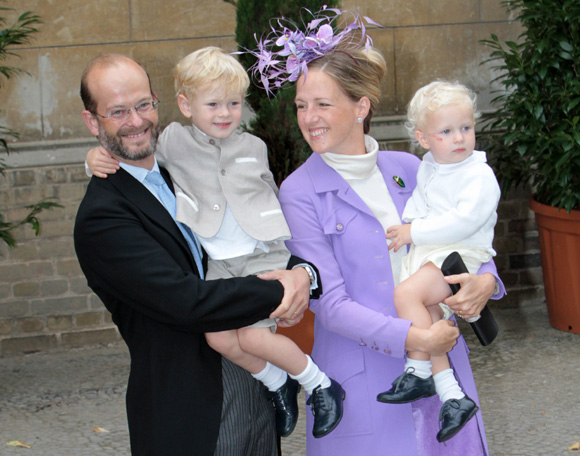
Lord and Lady Nicholas Windsor welcomed their third child on May 27 and named their son Louis Arthur Nicholas Felix. Louis’ older brothers are Albert Louis Philip Edward, aged nearly seven, and Leopold Ernest Augustus Guelph, aged nearly five. Louis is 37th in line to the throne, and is to be known as Mr Louis Windsor.

Lord Nicholas is the youngest son of the Duke and Duchess of Kent, and a great-grandson of King George V. Prince Edward, the Duke of Kent, is a cousin of Queen Elizabeth, so Lord Nicholas is a first cousin once removed of the queen. In 2001, Lord Nicholas was received into the Roman Catholic Church, following the lead of his mother Katharine, who converted in 1994. This makes him the first male member of the blood Royal to convert to Catholicism since King Charles II. Because of his conversion, he forfeited the right of succession to the British throne, but is still in the line of succession to the Dukedom of Kent.

Lady Nicholas Windsor was born Paola Doimi de Lupis de Frankopan; her father is a member of the Croatian and Italian nobility, while her mother is a distinguished Professor Emeritus at Stockholm University. Under her maiden name Paola Frankopan, she writes for The Tatler, where she is a contributing editor. She and Lord Nicholas were married on September 4 2006 in Vatican City, making Lord Nicholas the first member of the Royal Family to marry at the Vatican, and the first to marry in a Catholic ceremony since the Reformation. By having Louis shortly before her 45th birthday, Lady Nicholas became the oldest royal to give birth.

Louis is most likely in honour of Lady Nicholas’ father, Louis, Prince de Frankopan, Count Doimi de Lupis, a barrister and businessman. The children’s maternal grandfather was earlier honoured by having Louis as Albert’s middle name. Louis also has a Catholic saint’s name, like his brothers Albert and Leopold.

Arthur has previously been used in the royal family; most recently by Prince Arthur of Connaught, the son of Prince Arthur, son of Queen Victoria. Perhaps coincidentally, Arthington is a name traditionally used in the family of Lord Nicholas’ mother Katharine, whose maiden name was Worseley.

Nicholas is after the baby’s father. It is one of the middle names of Prince Edward, Duke of Kent, the father of Lord Nicholas, and Prince Nicholas of Greece and Denmark was Prince Edward’s grandfather, the father of Princess Marina, Duchess of Kent. Lady Nicholas’ brother is also named Nicholas, so it’s a name from both sides of the family.

Felix may be in honour of Lord Nicholas’ great-uncle, Sir Felix Brunner, 3rd Baronet, the uncle of his mother Katharine (and her godfather) The meaning of “lucky” seems apt, because the Windsors were not expecting to have any more children, and felt very fortunate to be blessed with a child; indeed Louis has been hailed as a “miracle baby”.

(Photo of Lord and Lady Nicholas Windsor with their two eldest sons from Hello!)

Celebrity Baby News: Vince Colosimo and Diana Glenn

28 Thursday Aug 2014

Posted by A.O. in Celebrity Baby News

≈ 1 Comment

Tags

celebrity baby names, celebrity sibsets, Italian names, name trends

Diana Glenn and Vince Colosimo.

Actor Vince Colosimo, and his girlfriend, actress Diana Glenn, welcomed their first child together in April, and have named their son Massimo. Vince is also father to Lucia, his daughter with former partner, actress Jane Hall.

Vince has been a familiar face in Australian film and television since 1983, when he was chosen to star in Moving Out. He won the AACTA Award for Best Actor in a Supporting Role in the film Lantana in 2001, and has had roles in The Wog Boy and The Wog Boy 2, Chopper, The Nugget, Take Away, Body of Lies, Daybreakers, and The Great Gatsby, amongst others. A television mainstay, he has been seen in many popular series, including A Country Practice, Something in the Air, The Secret Life of Us, Kath and Kim, Underbelly, and Janet King. As well as his acting career, Vince owns a Melbourne cafe, and his business partner is also named Vince. Vince was selected for Who’s Who in Australia a few years ago.

Diana has appeared in Neighbours, Home and Away, The Secret Life of Us, The Elephant Princess, Secrets and Lies, Underbelly, and The Slap. She played the title role in crime series Carla Cametti PD, where Vince also had a key role. Her movie roles include Oyster Farmer and Black Water.

Massimo was covered on the blog last year as part of a list of Italian Names for Boys, where I noted that it was one of the most common Italian boys’s names spotted in birth notices – Massimo Colosimo seems to be another good example of this trend in Italian heritage choices. It was also chosen by the public as one of their favourite Italian names for boys.

(Photo of Vince and Diana from the Sydney Morning Herald)

Famous Name: Abigail

27 Wednesday Aug 2014

Posted by A.O. in Famous Names

≈ 2 Comments

Tags

Baby Center Australia, Biblical names, famous namesakes, hebrew names, modern classics, name history, name meaning, name popularity, name trends, nicknames, popular names

240445686_2a7e0eaeb7

This month marks 37 years since the soap opera Number 96 left Australian television. It was wildly popular in the 1970s, and one of the country’s most controversial TV shows, featuring nudity and sex scenes, and covering topics such as racism, drug use, rape, adultery, and homosexuality. It was the world’s first TV show to depict a long-term gay male relationship as normal and a “non-issue”.

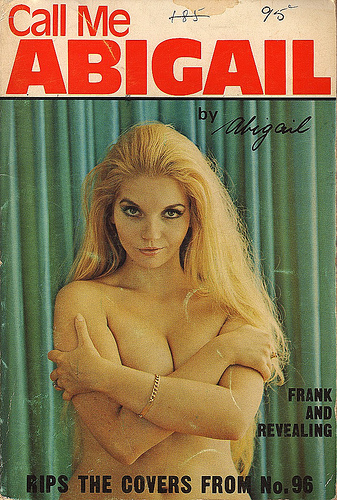
All the cast of Number 96 became household names, and one of its biggest drawcards was actress Abigail Rogan, who was originally from England, and always known by just her first name. Sultry, blonde, and curvaceous, she was Australia’s #1 sex symbol of the 1970s. She left the show in 1973, and although her acting career lasted another twenty years, she was never again the big star that Number 96 made her.

Having recently covered the classic children’s novel Playing Beatie Bow in the Girls Name from Australian Children’s Literature list, you might remember the main character was named Lynette, but chose a new name for herself. Because her grandmother says she looks like “a little witch”, she asks her mother to suggest “an old witch name” for her, and eventually her mum says Abigail, which is accepted. Her mother reacts with horror, saying Abigail is “so plain, so knobbly, so … so awful”.

Playing Beatie Bow was published in 1980, and the story takes place in 1973, so it seems strange Abigail is seen as a plain, knobbly, awful name suitable for an old witch. Presumably the “witch” comment is because of Abigail Williams in Arthur Miller’s play The Crucible, but the actress Abigail, in the top-rating TV show of the day, had given it a sex kitten image by 1973. Even today, I sometimes hear older people say that Abigail is “too sexy” a name for a little girl.

In the Old Testament, Abigail was the beautiful wife of Nabal, a wealthy but surly man who owned land and livestock around the town of Carmel in Judea. At the time, David, who was destined to be king, was living in the wilderness with a band of men. They had all been outlawed by King Saul, and provided protection to the local shepherds.

During the festivities surrounding the sheep shearing season, David sent a small group of men to Nabal to remind him that his profits from the wool trade were so great partly because of the protection they had been giving his shepherds, along with many fine compliments as to Nabal’s nobility and high lineage, and asking for provisions. Nabal didn’t feel like ponying up the protection food to the Outlaw Mafia, and sent back an extremely rude reply.

Uh oh. Nobody insults Don David, the Sheep Father! Seeing things were going to get sticky, one of David’s men privately saw Nabal’s wife Abigail, telling her of the situation, and explaining what a great job they’d been doing protecting the shepherds (for food out of the kindness of their hearts ). Being not only beautiful, but also intelligent, Abigail saw what a stupendous goof Nabal had made.

While David was on the march with 400 armed men, ready to give Nabal what for, Abigail went to meet him with a retinue of servants laden with provisions. She pleaded with David to accept the gifts she had brought with her, asking that there be no bloodshed, offering to take the blame for Nabal’s actions on herself, and telling David that God would make his dynasty long-lasting, and that David was both sinless, and divinely protected.

Because of her intervention, David realised he was about to commit a terrible deed, and sent Abigail home with many blessings for her advice. Abigail did not tell Nabal what she had done until the following day, as Nabal had been carousing a little too heavily at the sheep-shearing festival to be able to listen. When she did tell him the news, the shock (or the carousing) gave him a heart attack or a stroke, and he died ten days later.

When David heard about Nabal’s death, he realised that God had struck him dead in punishment, and asked Abigail to marry him. She replied by bowing to him with her face on the floor and saying, “Let your handmaid be a servant to wash the feet of the servants of my lord”. Let’s hope he didn’t take that literally; I feel a simple “Yes please that will be lovely” would have sufficed. Because she called herself a handmaid, abigail became a common term for a waiting woman, in use from around the 17th century to the early 20th century.

The Bible praises Abigail for her beauty and brains, and she is seen as a prophet because she recognised David as a future king. She was certainly very brave in confronting a vengeful man leading his own personal army, and a skilled diplomat who had a way with words (a necessary knack for the wife of a grouch like Nabal). Abigail’s name also has a beautiful meaning: it’s from the Hebrew avi (“father”), and gil (“joy”), and can be translated as “father’s joy”.

Abigail first joined the Australian charts in the 1960s, debuting at #652. It rose in the 1970s (a boost from the actress?), then fell to #686 in the 1980s, its lowest point. It began rising steeply in the 1990s, and joined the Top 100 in 2001 at #88. By 2007 it was in the Top 50 at #48, and peaked in 2010 at #24. Currently it is #28 nationally, #28 in New South Wales, #27 in Victoria, #24 in Queensland, #27 in Western Australia, #74 in Tasmania, and #23 in the Australian Capital Territory.

Gail, a short form of Abigail, was on the charts from the 1930s to the 1980s, peaking in the 1950s at #26. However, it is the Ab- shortenings which have been successful more recently, as Abby, Abbie, and Abbey all began charting in the 1980s. Abbey reached highest, rising steeply to peak in the early 2000s at #39, while Abby peaked at the same time at the more modest #75 (but Abby is now the more popular). Abbie peaked at #144 in 2009, and if all spellings were added together, Abigail short forms would be in the Top 50, so a lot more popular than they might otherwise seem.

A while back, I picked Abigail as having the potential to eventually reach #1 – with the data I now have at hand, I can see that probably isn’t going to happen, as it has already peaked. Just to confuse things though, Abigail was one of the fastest-rising names at Baby Center Australia last year, so if you’re in that demographic, you may indeed feel there are more baby Abigails around lately.

But isn’t it interesting that Abigail is popular at all? So many of the popular girls names now are soft and fluid, and yet Abigail is quite strong-sounding, perhaps even harsh to some ears, while Abigail is few people’s chosen Bible heroine.

Strangely enough, in some ways Roxanne, which was covered last week and doesn’t chart at all, seems more like the currently fashionable girl’s names than Abigail! Although Abigail is a beautiful and sophisticated choice, I suspect it’s mostly because of Abigail’s cute short forms that it’s managed to become such a favourite.

POLL RESULTS
Abigail received an excellent approval rating of 75%, making it one of the highest-rated names of 2014. People saw the name Abigail as beautiful or pretty (24%), strong and wholesome (18%), and intelligent and professional (17%). However, 8% of people thought it was harsh and ugly. Nobody thought the name Abigail was “too sexy”.

(Picture shows cover of Abigail’s 1973 best-selling “scandalous” autobiography, Call Me Abigail; copies can now sell for hundreds of dollars to collectors)

Celebrity Baby News: Kate Ritchie and Stuart Webb

27 Wednesday Aug 2014

Posted by A.O. in Celebrity Baby News

≈ 1 Comment

Tags

celebrity baby names, Instagram

1488076_401497443286533_1122382438_n

Actress Kate Ritchie, and her husband Stuart Webb, welcomed their first child on August 17, and recently announced that their daughter’s name is Mae.

Kate began her acting career at the age of 7, and joined the cast of soap opera Home and Away just before her ninth birthday, playing the role of Sally Fletcher. She remained with the show for twenty years, becoming a fan favourite and household name in the process; she won the Gold Logie for most popular personality in 2007 and 2008. In 2008 she began her new career as a radio host, and this year joined the Nova FM drive show with Tim Blackwell and Marty Sheargold; you may recall Tim as a celebrity dad on the blog.

Stuart is a former rugby league player for the St George Illawarra Dragons, and is currently coach at the Helensburgh Tigers. He and Kate were married on the Quamby country estate in Tasmania in 2010.

Late in her pregnancy, Kate posted a list of possible baby names on Instagram that were suggested by some young friends of hers, apparently named Cleo and Ivy. The names for girls were Molly, Lilly, Matilda, Madeline, and Georgina, and for boys William, Hugo, Harry, Joshua, and Lucas. They do seem to have been on the money with an M name, anyway.

Molly was actually the first character that Kate ever played, a little girl in the mini-series Cyclone Tracy.

(Photo of Kate and Stuart from Facebook)

Celebrity Baby News: NRL Babies

25 Monday Aug 2014

Posted by A.O. in Celebrity Baby News

≈ 1 Comment

Tags

animal names, bird names, celebrity baby names, celebrity sibsets, nature names, surname names

695974-michael-ennis-and-family

Michael Ennis and his wife Simone recently welcomed their fourth child, and have named their daughter Evelyn Swan. Evelyn joins big brothers Jack and Randy Wolfe, and big sister Koby Fox (or Koby-Fox, or Kobyfox – I have all seen all three reported as her name). The animal spirits continue! Evelyn’s birth was reported on Thursday night’s televised NRL game, and the commentators began bickering about whether Swan was a “person’s name” or “just a surname”. Michael’s family has been previously featured on the blog, and he is signed with the Cronulla Sharks for next year.

Heath L’Estrange and his wife Jess welcomed their first child in October last year, and named their daughter Grace. Heath has played professional rugby league since 2004, and spent four years with the Bradford Bulls in the UK. He signed with the Sydney Roosters this season.

(Photo of Michael and Simone with their three eldest children from the Herald Sun)

Celebrity Baby News: AFL Babies

25 Monday Aug 2014

Posted by A.O. in Celebrity Baby News

≈ Comments Off on Celebrity Baby News: AFL Babies

Tags

celebrity baby names, celebrity sibsets

10525877_825800024105781_3354167441748542069_n

Jake Stringer and his partner Abby Gilmore welcomed their first child on August 21, and have named their daughter Milla Jane Maree. Jake plays for the Western Bulldogs, and made his debut last year. He is the nephew of Jamie Bond, who played for Hawthorn and Fitzroy.

Daniel Merrett and his wife Sarah welcomed their daughter Matilda Jean on July 2. Daniel has played for the Brisbane Lions since 2005.

Nathan Lovett-Murray, and his partner Janalli Brown, welcomed their daughter Harmony Mary May on June 1. Harmony joined big brothers Nyawi, aged 10, and Mara, aged 5. Nathan played 145 games for Essendon from 2004-13, and comes from a sporting family. He is the grandson of Sir Douglas Nicholls, who played for Fitzroy, and a cousin of former Essendon player, Andrew Lovett. Nathan’s sister Jessica is married to Carlton player Jeff Garlett.

The blog featured the name Harmony for Harmony Day in March this year, and I wonder if Harmony Day also inspired the choice of baby Harmony’s name?

(Photo shows Jake and Abby with daughter Milla)

Boys Names From Australian Children’s Literature

24 Sunday Aug 2014

Posted by A.O. in Name Themes and Lists

≈ 10 Comments

Tags

aristocratic names, aristocratic surnames, Australian slang terms, Biblical names, classic names, colour names, english names, famous namesakes, fictional namesakes, Gaelic names, German names, germanic names, Greek names, hebrew names, Irish names, Latin names, locational names, modern classics, mythological names, name history, name meaning, name popularity, names from songs, names from television, names of businesses, nature names, nicknames, Old Gaelic names, Persian names, plant names, popular names, retro names, royal names, saints names, Scottish names, surname names, tree names, underused classics, unisex names

Cyan Magenta Yellow Black

Darius
Odo Hirsch’s Darius Bell and the Glitter Pool (2009) tells the story of the Bells, a proud family fallen on hard times; plucky youngest son Darius must save the family’s estate. (Name nerd bonus info: Odo is the older form of the German name Otto). Darius is the Latin form of Dareios, the Greek form of the Persian name Dārayavahush, meaning “holding on to goodness”. This name was traditional amongst the Persian kings, and Darius I was known as Darius the Great, as he ruled over the Achaemenid Empire at the height of its power. Darius III was defeated by Alexander the Great, and there are a number of minor princes with the name. Darius is mentioned several times in the Old Testament, so it is a Biblical name as well (nobody is sure which historical Darius it means). Although rare, this name is known in Australia from NRL star Darius Boyd, while there is also a Darius in The Hunger Games trilogy. Darius is a cool-sounding name that might appeal to a broad range of people.

Felix
Terry Denton’s first picture book was Felix and Alexander (1985), about a little boy named Alexander who gets lost, and his toy dog Felix must find him. Felix is a Latin name meaning “fortunate”. It was first given as a nickname to the Roman general and statesman Lucius Cornelius Sulla, a free translation of the Greek nickname he acquired during his military campaigns – Epaphroditos, meaning “beloved of Aphrodite”. The Roman procurator Felix is mentioned in the New Testament, although not in a positive way – he imprisoned St Paul. Felix was a favourite name amongst early Christians, and there are heaps of saints named Felix, including the 7th century Felix of Burgundy, who introduced Christianity to East Anglia, and three popes. Two Australian connections are Felix the Cat, and Australia Felix, the name given to the lush farmland of western Victoria by explorer Sir Thomas Mitchell. Felix was #172 in the 1900s, and left the charts in the 1920s. It returned in the 1980s at #396 and climbed steadily; it’s been on and off the Top 100 since 2011. It’s now #86, and was one of the fastest-rising names last year. A hip retro favourite growing in recognition.

Harley
Sleepy Harley (2011), written by Karen Treanor and illustrated by Kelly Iveson, is a picture book about a cat named Harley who tries to find a place to nap in a Perth suburb. Harley is a surname which comes from a place name meaning “hare meadow” in Old English. The de Harley family were nobles whose history can be traced before the Conquest, and Sir Robert Harley, first Earl of Oxford, was from a prominent political family. One of them, William Cavendish-Bentinck, became British Prime Minister in the 18th and 19th centuries; he was the maternal great-great-great grandfather of Queen Elizabeth. The name will remind many of Harley-Davidson motorycles, giving Harley a pretty cool image. Harley was #212 in the 1900s, and went up and down before dropping off the charts in the 1950s. It returned in the 1970s at #462, and rose before peaking at #70 in 1992. It dropped again before starting to rise in the early 2000s, and is not far out of the Top 100. You could see Harley as an underused classic – in use for many years, but never very popular. I have occasionally seen Harley on girls as well.

Jude
Me and Jeshua (1984) by award-winning author Eleanor Spence is a historical novel about the childhood of Jesus of Nazareth, as seen through the eyes of his cousin Jude. Jude is a variant of the name Judas, Greek form of the Hebrew name Judah, meaning “praised”. In the New Testament, Jude is used for the Apostle whose name was Judas, to distinguish him from Judas Iscariot. Jude is also listed in the New Testament as one of the brothers of Jesus (Eleanor Spence follows a tradition they were cousins), but it is not clear if Jude the Apostle was Jesus’ brother. The Apostle Jude is usually connected with the Apostle Simon the Zealot, and according to tradition they were both martyred in Beirut. Jude is well known as the patron saint of lost causes, and this has made him one of the most venerated saints. Contemporary associations are the actor Jude Law, and the Beatles song Hey Jude. Jude can also be used as a girl’s name, short for Judith, as in the YA novel by Maureen McCarthy, Queen Kat, Carmel, and St. Jude Get a Life (1995). This attractive name has quietly been gaining in popularity, and last year joined the Top 100 in Victoria.

Leonard
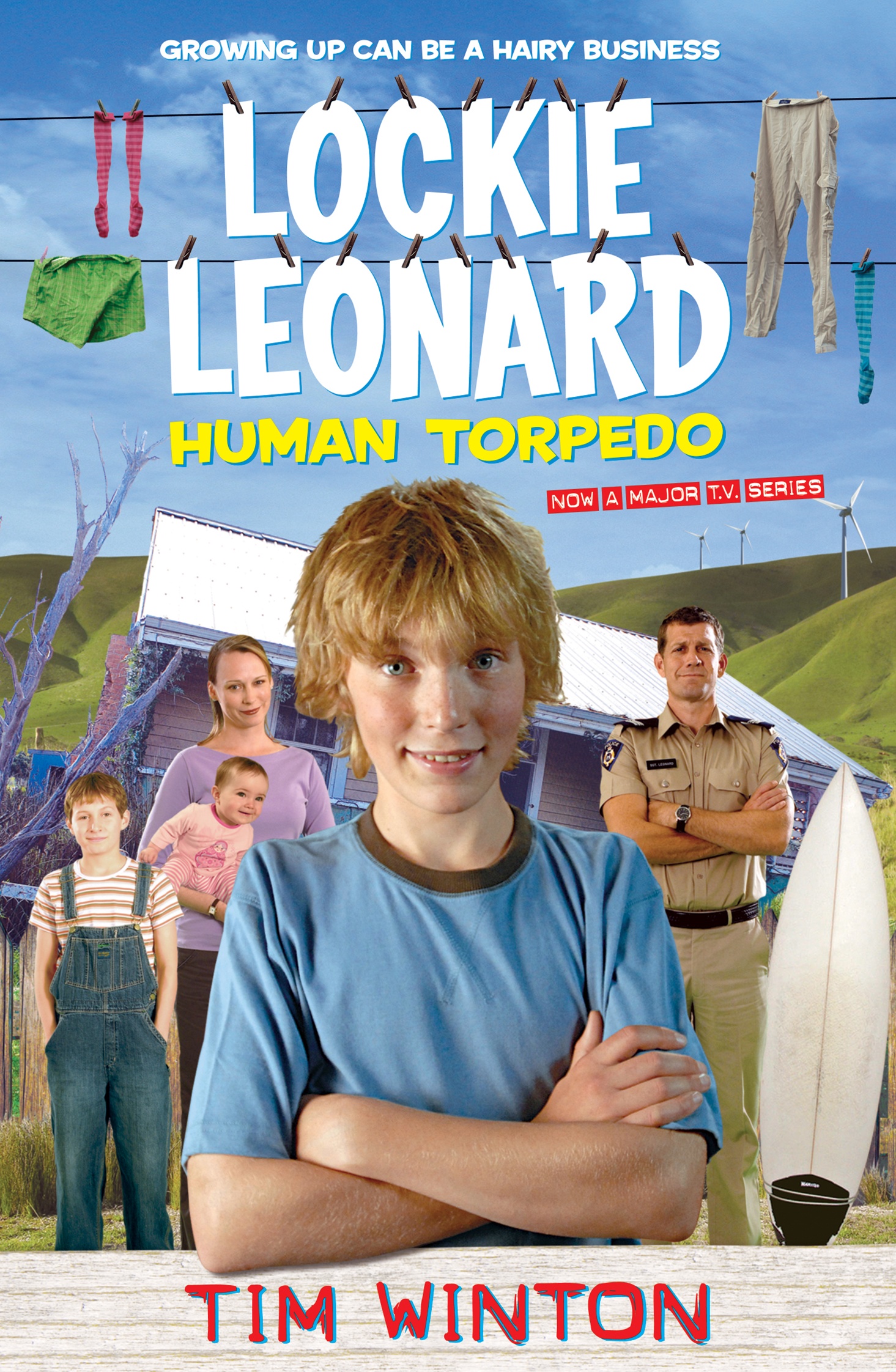
The Lockie Leonard series by Tim Winton (1990-97) stars a surf rat named Lachlan “Lockie” Leonard who moves to the Western Australian town of Angelus (based on Albany). Leonard is a Germanic name which can be translated as “brave lion” or “brave as a lion”. St Leonard is a legendary 6th century saint, a Frankish nobleman at the court of Clovis I who could liberate prisoners from their chains when invoked. The Normans brought the name to England, although it didn’t become particularly common until the 19th century. Famous Australians with the name include distinguished chemist Leonard Lindoy, and hard-hitting post-war cricketer Leonard “Jock” Livingston, also a talented rugby league footballer. Leonard has been a popular name amongst Jews in the past, including Jock Livingston: other examples are Canadian folk singer Leonard Cohen and actor Leonard Nimoy. Leonard was #39 in the 1900s, and peaked in the 1910s at #35. It didn’t leave the Top 100 until the 1960s, and remained in steady but low use until getting a little boost after The Big Bang Theory, with main character Leonard Hofstadter, began airing in the late 2000s. Clunky cool, this underused classic provides a way to get the popular nickname Lenny.

Nathaniel
In Isobelle Carmody’s YA novel The Gathering (1993), Nathaniel Delaney is a teenager who moves to a grim seaside town and finds himself locked in a battle between the forces of Light and Dark. Nathaniel is a variant of Nathanael, the Greek form of Hebrew Netan’el, meaning “God has given”, nearly always understood as “gift of God”. In the Bible, Nathaniel is usually identified with the Apostle Bartholomew; as Bartholomew means “son of Talmai”, it is taken to be Nathaniel’s surname. Nathaniel was in use as an English name by the 16th century, and became more common after the Protestant Reformation. It was used amongst the aristocracy, and also became a favourite in America, with author Nathaniel Hawthorne a notable bearer. Nathaniel was #179 in the 1900s, and left the charts the following decade. It returned in the 1970s at #296, and climbed steadily until it reached the Top 100 last year at #79, making it one of the fastest-rising names of 2013. A handsome retro name that gives the popular nickname Nate, it’s well known from Australian actor Nathaniel Buzolic, from The Vampire Diaries, and Australian singer-songwriter Nathaniel Willemse, who was on The X-Factor.

Rafferty
The Rafferty series by Joan Woodberry (1959-62) are the adventures of an English boy named Rafferty who moves to a fishing village on the Queensland coast. Rafferty is a common Irish surname, an Anglicised form of O’Raithbheartaigh, meaning “son of Rabhartach”. The Old Gaelic personal name Rabhartach means “wielder of prosperity”. The name has a particular Australian resonance, due to iconic Australian actor John “Chips” Rafferty. He was seen as the quintessential Australian, and took part in a marketing campaign convincing British people to migrate to Australia in the 1950s – this might explain the choice of Rafferty’s name in Woodberry’s books. Another Australian reference is the slang term Rafferty’s rules, meaning “no rules at all”. It gives the name Rafferty a pleasantly raffish, lawless feel. This name is around the 200s in Australia, and although it is rising in the UK, is more popular here than anywher else. I have also begun to see a few girls named Rafferty.

Rowan
The Rowan of Rin fantasy series by Emily Rodda (1993-2003) takes place in a fictional world. Rowan is the unlikely hero, considered a bit of a wimpy weakling by the sturdy villagers of Rin, but when danger strikes, his resourcefulness and courage saves the day. Rowan is a Scottish name that’s an Anglicised form of Ruadhán, a pet form of Ruadh, Gaelic for “red”, often given as a nickname to a man with red hair. You may remember that the red-headed Scottish outlaw Raibeart “Ruadh” MacGregor is known as Rob Roy by the English. Rowan can also be unisex when named after the rowan tree; its English name comes from the Germanic for “to redden”, because of the tree’s red berries, so either way the meaning has a connection with the colour. A pleasant association with the tree is that according to folklore it has the power to ward off evil. The name Rowan has charted for boys since the 1940s, debuting at #205, and climbing until it peaked in the 1980s at #164. It’s now around the 300s-400s. Rowan is an underused modern classic which alludes to a vibrant colour, and a magical tree.

Silvander
Norman Lindsay is famous for writing and illustrating The Magic Pudding (1918), a comic fantasy deservedly recognised as a classic. For some reason, his other children’s book, The Flyaway Highway (1936), is neglected, even though it’s just as funny and fantastical. I loved this story, which relates how Egbert and Muriel Jane meet a “bloke with horns and cows’ hooves” named Silvander Dan, who take them on a journey down the Flyaway Highway. As a child, I thought that the name Silvander was made up for the book (although I’m afraid I was already junior name nerd enough to know what it meant). However, I’ve since found that Silvander was a literary name in the 18th century, and in most of the sources I’ve read, characters named Silvander are untrustworthy bounders! The name is derived from Silvanus, the Roman god of woods and fields, from the Latin silva, meaning “wood, forest”. Although an extremely rare name, it is just enough like Silas and Alexander to not be completely outrageous, and has an agreeably silvery sound. For those who like Leander and Evander, here is another to consider.

Theodore
I told myself I would not choose more than one book from a single author, but was forced to make an exception for Odo Hirsch, from whose oeuvre I could happily fill two lists. Antonio S and the Mystery of Theodore Guzman (1997) is his first novel, a charming story about a boy who lives in a grand old house, and is fascinated by a reclusive actor. (Name nerd bonus info: Odo Hirsch is the pen name of Dr David Kausman). Theodore is from the Greek name Theodorus, meaning “God’s gift”. Theodorus wasn’t uncommon in ancient times; ironically one of its famous bearers was the 4th century BC philosopher Theodorus the Atheist. Because of its meaning, the name was a popular choice for early Christians, and saints named Theodore are numerous, including a 7th century Archbishop of Canterbury and two popes. Theodore was also traditional mongst the Byzantine Emperors, and the Russian Tsars. Theodore was #116 in the 1900s, and reached its lowest point in the 1970s at #383. It began rising steeply in the 1990s, and last year joined the Queensland Top 100 at #79, making it one of the state’s highest-rising names. A sophisticated classic name which comes with cool short forms Theo and Ted, I’d call this underused except I’m not sure how long it will stay that way.

POLL RESULTS
The public’s favourite names were Theodore, Jude and Felix, and their least favourite were Leonard, Darius and Harley.

(Picture shows cover of Lockie Leonard – Human Torpedo by Tim Winton)

← Older posts

Enter your email address to follow this blog

Categories

Archives

Recent Comments

A.O.'s avatarwaltzingmorethanmati… on Zarah Zaynab and Wolfgang…
Madelyn's avatarMadelyn on Zarah Zaynab and Wolfgang…
JD's avatardrperegrine on Can Phoebe Complete This …
A.O.'s avatarwaltzingmorethanmati… on Rua and Rhoa
redrover23's avatarredrover23 on Rua and Rhoa

Blogroll

  • Appellation Mountain
  • Baby Name Pondering
  • Babynamelover's Blog
  • British Baby Names
  • Clare's Name News
  • For Real Baby Names
  • Geek Baby Names
  • Name Candy
  • Nameberry
  • Nancy's Baby Names
  • Ren's Baby Name Blog
  • Sancta Nomina
  • Swistle: Baby Names
  • The Art of Naming
  • The Baby Name Wizard
  • The Beauty of Names
  • Tulip By Any Name

RSS Feed

  • RSS - Posts

RSS Posts

  • Celebrity Baby News: Melanie Vallejo and Matt Kingston
  • Names from the TV Show “Cleverman”
  • Can Phoebe Complete This Sibset?
  • Zarah Zaynab and Wolfgang Winter
  • Baby, How Did You Get That Name?
  • Celebrity Baby News: Media Babies
  • Celebrity Baby News: Adelaide Crows Babies
  • Celebrity Baby News: Chris and Rebecca Judd
  • Names at Work: Name News From the World of Business and Employment
  • Celebrity Baby News: Sporting Round Up

Currently Popular

  • Celebrity Baby News: Radio Babies
  • The Top 100 Names of the 1920s in New South Wales
  • Rare Boys Names From the 1950s
  • Saturday Celebrity Sibset: A Taste of Scotland - Leigh McClusky and Simon Haigh
  • Girls Names of Australian Aboriginal Origin

Tags

celebrity baby names celebrity sibsets english names famous namesakes fictional namesakes honouring locational names middle names name combinations name history name meaning name popularity name trends nicknames popular names saints names sibsets surname names twin sets unisex names

Create a free website or blog at WordPress.com.

Privacy & Cookies: This site uses cookies. By continuing to use this website, you agree to their use.
To find out more, including how to control cookies, see here: Cookie Policy
  • Subscribe Subscribed
    • Waltzing More Than Matilda
    • Join 517 other subscribers
    • Already have a WordPress.com account? Log in now.
    • Waltzing More Than Matilda
    • Subscribe Subscribed
    • Sign up
    • Log in
    • Report this content
    • View site in Reader
    • Manage subscriptions
    • Collapse this bar
 

Loading Comments...