• About
  • Best Baby Names
  • Celebrity Baby Names
  • Celebrity Baby Names – Current
  • Celebrity Baby Names – Past
  • Featured Boys Names
  • Featured Girls Names
  • Featured Unisex Names
  • Links to Name Data
  • Waltzing on the Web

Waltzing More Than Matilda

~ Names with an Australian Bias of Democratic Temper

Waltzing More Than Matilda

Tag Archives: vocabulary names

Girls Names That Only Chart in Australia

24 Sunday Jul 2011

Posted by A.O. in Name Themes and Lists

≈ 29 Comments

Tags

African names, Arabic names, Australian Aboriginal names, celebrity baby names, colour names, created names, english names, famous namesakes, fictional namesakes, Greek names, hebrew names, holiday names, Indian names, Irish names, Latin names, locational names, Mer de Noms, mythological names, name data, name history, name meaning, name popularity, nature names, nicknames, plant names, popular culture, popular names, saints names, Sanskrit names, surname names, Swahili names, unisex names, vocabulary names

Recently, Lou at Mer de Noms has had a couple of articles on names that are in the UK Top 150, but fail to make the US Top 500. It’s an interesting look at differences in name popularity between the two countries. I thought about doing the same thing from an Australian perspective, but found the list became too long for my purposes. So I made my conditions a bit tighter – these are names that are on a Top 100 list in Australia, but don’t make the Top 100 in any other country, and aren’t on the US Top 1000.

Asha

Asha has two different origins and meanings. It can be seen as an Indian name from the Sanskrit for “hope, wish, desire”, or an East African name from the Swahili word for “life”. Either way it has a beautiful meaning, and both Indian and Swahili names are becoming fashionable in Australia. It fits in well with other popular Ash- names, such as Ashley, Ash, Asher and Ashton. There’s an attractive TV presenter in Australia called Asha Kuerten (pictured), which has probably helped it gain momentum here. Asha is currently #89 in Victoria, #77 in South Australia, and #68 in the ACT. It’s never been higher than #794 on the US Top 1000 (in 1989), and hasn’t charted there since 2003.

Bridie

This is a pet form of the Irish name Brighid or its anglicised form, Bridget, which means “exalted one”. In Irish mythology, Brighid was the goddess of fire, poetry and wisdom. There was a 5th century Irish saint called Brigid, who is the patron saint of Ireland, and whose feast day on February 1 coincides with the pagan festival of Imbolc (possibly this day was sacred to the goddess of the same name). As around 30% of Australians claim Irish heritage, the name Bridie isn’t too unusual here, and there are several well-known women with this name, including Bridie Carter, a popular soap actress. Bridie is #70 in Tasmania, which has a particularly strong Irish community. It doesn’t chart in any other country.

Ebony

This is from the English word for the valuable black wood which comes from the ebony tree; different species are native to India, Sri Lanka, Indonesia, Mauritius, and West Africa. Although Ebony is often said to be used mostly by African-Americans in the United States, in Australia it is not connected to a person’s skin tone and is just seen as another colour name, like Ruby, Jade or Amber, or a plant name, like Rose or Holly. The exoticism of this name seems to have possessed a strange fascination for Australian parents, and it has been a Top 100 name since the early 1980s. Perhaps popular songs from that decade, such as Ebony Eyes and Ebony and Ivory, helped give it a boost. It’s #63 in South Australia and #55 in Tasmania. In the United States, Ebony got as high as #132 in 1982, and hasn’t been on the Top 1000 since 2005.

Indiana

The name of an American state, it means “land of the Indians”, because of the high Native American population in the area at the beginning of the 19th century (unfortunately, not to last). Indiana was used as a girl’s name (at least in fiction) before the American state was founded: Fanny Burney’s 1795 classic novel, Camilla, features a beautiful but shallow character called Indiana Lynmere. Possibly the name was intended as an elaboration of India, then part of the British Empire. French author George Sand also gave a character this name in her first novel, Indiana (1832). In this book, Indiana is a beautiful, romantic Creole from Reunion, of part-Indian descent. Here, there is a young TV actress called Indiana Rose Evans, and early this year, former NRL player Glenn Hall had a daughter named Indiana Maree. This name has only been Top 100 since last year, and it’s #98 in Victoria. Indiana has not been on the US Top 1000 since the late 19th century.

Jorja

The name Georgia, also an American state name (the state is named after King George II), is more popular in Australia than anywhere else in the world, hovering around the #20 mark on most lists, and Top 100 since the early 1980s. The phonetic spelling Jorja has also proved popular here. It’s currently #88 in Tasmania. Jorja has only been on the US Top 1000 once, in 2006, when it was at #976.

Lucinda

This is an elaboration of the Latin name Lucia, meaning “light”. Always a rather literary name, it was created by Miguel de Cervantes for his 1605 novel, Don Quixote for a character in a farcical romantic subplot. The 17th century Spanish poet Lope de Vega wrote love sonnets to a woman he called “Lucinda” to protect her identity. In more recent fiction, Lucinda is the rather silly fairy godmother in the children’s novel Ella Enchanted, later made into a movie. Australian novelist Peter Carey’s Oscar and Lucinda won the 1988 Booker Prize, and was made into a film directed by Gillian Anderson. Another Australian connection is that Lucinda is the name of a small coastal town in Queensland. As Lucy is so popular, Lucinda seems like a pretty alternative which will allow Lucy/Lucie as a nickname. It was chosen for the name of lifesaver and reality TV star Dean Gladstone’s daughter Lucinda May. It’s # 67 in Tasmania. Lucinda hasn’t been on the US Top 1000 since 1987, and peaked in 1881 at #153.

Tahlia

The name Talia can come from a range of origins. It’s a variant of the Hebrew name Talya, which means “dew from God”; it’s the Italian form of Greek Thalia, which means “to blossom” (Thalia was one of the nine Muses); and it can also be a short form of Natalia, a Latin name which means “Christmas Day”. However, In Australia, Talia is often taken as coming from an Aboriginal word meaning “near water”. Talia has become hugely popular in many parts of Australia; it has a certain patriotic flavour, and is pleasingly multicultural, suiting a variety of backgrounds. Yet it is not found consistently on the Top 100 because it has so many variant spellings. Tahlia is the most common of these variants, and is beginning to overtake Talia because it makes the favoured pronunciation more clear. It’s #47 in New South Wales, #41 in Victoria, #39 in South Australia, #35 in Western Australia, #84 in Tasmania, and #52 in the ACT. Tahlia has never charted in any other country.

Tayla

A specifically feminine form of the popular unisex name Taylor, this may have been coined in imitation of Kayla and related names. However, I can’t help thinking it’s taking off in Australia partly because it looks similar to Talia and Tahlia. It’s #68 in South Australia, #40 in Western Australia, and #94 in Tasmania. Tayla has only been on the US Top 1000 twice – in 1998 and 2006, and was never higher than #924.

Zahra

This is an Arabic name usually translated as “radiance”. The meaning is gorgeous, and Arabic names are becoming increasingly fashionable here with our growing Islamic population. However, almost certainly the reason for its popularity in Australia is due to its similarity to the name Zara. Zara has been used in Britain since the 18th century, where it is the English form of the French name Zaïre, created by the author Voltaire in 1732 for his hugely successful play of the same name, and possibly based on the name Zahra. The drama was soon translated as Zara: A Tragedy, and proved a big hit with English audiences too, being staged well into the 19th century. For some reason, Zara has been a favourite in Australia for over a century, and there are several famous women from Australian history called Zara, including the glamorous wife of former Prime Minister Harold Holt. Zara is more popular in Australia than in any other country, and Zahra is rising on the basis of its success. It’s #82 in the ACT. Zahra has never charted in the United States.

Also Qualifying

Bronte and Lara, which were covered on earlier Name Lists – Bronte in Sydney Suburbs That Can Be Used as Girls Names, and Lara in Girls Names from Video Games. Bronte is #68 in Tasmania. Lara is #43 in New South Wales, #80 in Victoria, #79 in Tasmania and #52 in the ACT. Neither has ever charted in another country.

Close But No Cigar

These names don’t make the top 1000 in the United States, but do chart in countries besides Australia

Freya – #19 in Scotland, #21 in England/Wales, #68 in Ireland, #70 in N. Ireland

Harriet – #89 in England/Wales

Imogen – #32 in England/Wales, #77 in Scotland

Maisie – #34 in England/Wales, #36 in Scotland

Milla – #48 in Norway

Poppy – #22 in England/Wales, #47 in Scotland, #60 in N. Ireland

NOTE

There are some serious statistical issues facing anyone doing comparisons between countries. Australia doesn’t produce a national Top 100, states and territories have different population sizes, not all states and territories provide their Top 100, and one has refused to divulge any of its name data. Countries don’t all release their popularity charts for the year at the same time, so we are still waiting for the ones from England/Wales, for example, and I had to use the one for 2009. I used popularity charts from Behind the Name, and sometimes they are slow in updating their data as well. Not only that, but there is no data available for many countries.

So rather than getting into a mathematical tangle, this is only intended to be of general interest and show a few broad trends.

Hazel, What’s With the Retro Name?

11 Monday Jul 2011

Posted by A.O. in Guest Bloggers

≈ 13 Comments

Tags

celebrity baby names, colour names, famous namesakes, fictional namesakes, gemstone names, Hazel Edwards, plant names, retro names, vocabulary names

Best known for There’s a Hippopotamus on Our Roof Eating Cake, which was recently translated into Chinese, Hazel Edwards writes across media, for adults and children. Pocket Bonfire Production’s Hippo film premiered at St Kilda Film festival for the 30th anniversary, and is screening internationally at Edinburgh Film Festival and beyond. As ambassador, Hazel is involved with the 2012 National Year of Reading, and the Victorian Premier’s Reading Challenge.Hazel has two grandsons, for whom she writes stories each birthday. Her latest books include ‘Sir Edward ‘Weary Dunlop’ (Aussie Heroes series) and ‘f2m:the boy within.

(This was first written in 2004/05 and read on ABC Radio LifeMatters)

My name is Hazel.

Until now, I’ve been in a fairly select name grouping. Ex-PM’s wife Hazel Hawke and I have been a minority with the name Hazel. But there are a couple of other authors called Hazel Edwards; one writes Mills & Boon romance novels, and another is an English historian. There’s also a Hazel Edwards’ gravestone image on Google. And I’ve been “dead” a couple of times.

To quote from news of actor Julia Roberts’ twins being called Hazel and Phinnaeus:

“…Hazel is retro by at least a couple of generations. The world stopped having Hazels around the time it stopped having Berthas and Gladyses and Mildreds. The last time Hazel was heard from was 1961, when Shirley Booth played a busybody maid of that name in a sitcom of that name, based on a cartoon strip of that name. Phinnaeus is even more retro, as in Old Testament retro, and more obscure than such OT running mates as Methuselah and Obadiah.

But that’s probably the point. Celebrity baby names these days are very … different. We say this not to pass judgment, but to point out one more way celebrities are not like the rest of us….”

I’ve never thought of myself as retro nor a celebrity. I was named after my mother who was Hazel Grace, but known as Grace. My father suggested they use one of her names for their only daughter, so I became Hazel. That was lucky because I’m NOT graceful but neither was my mother. Names are not always accurate.

As a children’s author, I’m conscious of names for my characters, and tend to choose either symbolic ones, or those which are common with the age group and that they can pronounce. Ironically, Grace is the most popular girls’ name with the under-fives. My Hand Me Down Hippo character called Mini was illustrated by Mini Goss, who has a young daughter called Hazel, so that’s another coincidence and a “young” Hazel.

My neighbour alerted me to the Happy Hazel Society which meets annually at Hervey Bay, and these Hazels are mainly in their 70s, married to Rons, and sing I’m a Happy Hazel to the tune of I’m a Little Teapot. I don’t fit that group either, nor the shortened version Haze which sounds like a fog.

My husband Garnet is named after an uncle, and his name is a semi precious stone. Recently I spoke with a dentist mother of five daughters who had named each after a stone, and intended giving the appropriate jewel on each daughter’s 21st birthday. Garnet was one of her daughters. Opal, Ruby, Emerald and Topaz were the others. Being given hazelnuts on a significant birthday doesn’t have quite the same flair.

Also it was pointed out that Garnet and Hazel were both colours, a fact which had escaped us for decades.

I’ve always loved the name Quentin, but my husband doesn’t agree, so my character “Bad Luck Quentin” scored that one. It was a trade-off so our daughter would NOT be called Brunhilda after Wagner’s opera. But our son gained the real middle name Quest.

While I was a guest on ABC National talkback on the ‘Hazel’ issue of names, a caller rang with the following anecdote.

At the christening, the Irish priest asked the parents for the baby’s name.

“Hazel,” they said.

The priest’s reply was, “With 365 saints names available for each day of the year, you have to call your daughter after a nut?”

P.S.

    • In the newspaper babies’ names of 2005, Hazel was very popular and grouped with other colours like Ruby and Scarlet. I didn’t anticipate that.
    • In 2007, my mature aged College of Advanced Education students “exies” gave me a “Hazelnuts Roast” which was a satirical afternoon of fun, the name taken from an earlier student publication, A Bunch of Hazelnuts. We drank hazelnut coffee.

My view is that you should ‘lease’ your parent- given name until 21, and then be allowed to trade it in for your own choice. But after 21, that would be your label for life. But I do have a shared pseudonym, A.K. Aye, for crime writing.

Hazel Edwards

Email: hazel@hazeledwards.com

Website: www.hazeledwards.com

Girls Names from the Top 100 of the 1930s

19 Sunday Jun 2011

Posted by A.O. in Name Themes and Lists

≈ 37 Comments

Tags

Anglo-Saxon names, Biblical names, celebrity baby names, Christmas names, classic names, english names, European name popularity, famous namesakes, fictional namesakes, flower names, French names, Greek names, honouring, Italian names, Latin names, locational names, middle names, military events, mythological names, name history, name meaning, name popularity, name trends, names from movies, names from songs, nature names, nicknames, plant names, popular names, retro names, Roman names, royal names, saints names, Scottish names, Shakespearean names, Tatar names, unisex names, virtue names, vocabulary names

This blog post was first published on June 19 2011, and revised and updated on June 12 2015.

Alma
May be derived from the Latin almus, meaning “nourishing” – an epithet given to several Roman goddesses, including Ceres. Alma mater, meaning “nurturing mother”, is a Latin term often used to refer to one’s college or university: it was originally a title given to mother goddesses, and later to the Virgin Mary. The obscure 4th century Romano-British saint Alma Pompea, married to the semi-legendary King Hoel of Brittany, is an early example of the name. The name was given a boost after being used in Sir Edmund Spenser’s 1590 poem, The Faerie Queen; he seems to have been influenced by the Renaissance Italian word alma, meaning “soul”. The name became popular in the 19th century, after the Crimean War began with the Battle of Alma, when Anglo-French forces defeated the Russians near the River Alma – the river’s name is from a Tatar word meaning “wild apple”. After this date, babies of both sexes (but mostly girls) were named Alma in honour of the military victory. Alma was #24 in the 1900s, and #97 in the 1930s, leaving the Top 100 the following decade, and the charts in the 1960s. Alma made a mild comeback in 2011, and seems very contemporary, as it has been used in Brokeback Mountain and The Hunger Games. Already popular in Europe, Alma would make an interesting alternative to names such as Amelia, Anna, or Emma.

Audrey
Pet form of the Anglo-Saxon name Etheldreda, meaning “noble strength”; it was the name of a 7th century English princess and saint whose feast day is June 23. It became less common after the Middle Ages, because St Audrey Day Fairs sold low-quality necklaces that were disparagingly called tawdries – which is where we get the word for something cheap and tacky from. Audrey was revived in the 19th century when the Victorians rediscovered many Anglo-Saxon names. The name was already familiar, as Audrey is the simple but honest country girl in Shakespeare’s As You Like It. The Victorians were also in the middle of a Shakespeare revival, so Audrey was a dead cert for a comeback. Audrey was #156 in the 1900s, and peaked in the 1920s at #32. The name was #36 in the 1930s, but plummeted so that it was off the Top 100 by the following decade. It fell to a low of 0 in the 1980s, but climbed after the death of Audrey Hepburn until it reached the Top 100 again in 2008. Once tawdry Audrey now seems charming and stylish, and is currently #44 and climbing.

Elsie
Often said to be a pet form of Elizabeth, but technically a pet form of Elspeth, the Scottish form of the name, and was originally Elspie. The name Elsie can be found in songs and poems dating to the 17th century, and became a 19th century favourite. Elsie was #7 in the 1900s, #59 in the 1930s, and left the Top 100 in the 1940s. Elsie left the charts in the 1970s, but returned in the early 2000s at #731. It joined the Top 100 in 2013 at #91, and last year rose 26 places to #65 – an impressive performance. Sweet and unpretentious, Elsie is very much back in the game.

Hazel
Named for the hedgerow tree or shrub which produces edible nuts; the Celts equated hazelnuts with wisdom and poetic inspiration, and the Druids made staffs from hazel branches. It was considered to be one of the trees belonging to the fairies, and folk tales tell of its ability to protect from evil. Hazel has been used as a personal name since the 17th century, mostly for girls, and became popular in the 19th century when plant names were fashionable. Hazel was #45 in the 1900s, and peaked in the 1910s at #18; by the 1930s it was #55. Hazel left the Top 100 in the 1940s, and the charts by the 1970s, making a return in the late 2000s at #477, after Julia Roberts named her daughter Hazel. Last year Hazel had an outstanding debut as the fastest-rising name of 2014, rising #63 places to #88. One factor must surely be the romantic film The Fault in Our Stars, with its heartbreaking heroine Hazel Lancaster, although there have also been Hazels in the Heroes of Olympus series, and Gossip Girl.

Iris
Greek personification of the rainbow who served as messenger to the gods, and linked them to humanity. The name literally means “rainbow”, which is where the colourful iris flower got its name from – and the colourful irises in our eyes. Irises were used in the Middle Ages as a symbol of monarchy, as the fleur-de-lis pattern depicts. Religious pictures from the medieval period show the Virgin Mary holding an iris to symbolise purity and chastity. Filled with meaning and associations, the name was used by the 19th century British aristocracy for both females and males (because the Greeks called the iris flower a “hyacinth”, and Hyacinth was a male name), but quickly became used by all classes, and nearly always for girls. Iris was #62 in the 1900s, and peaked in the 1910s at #31; it was #72 by the 1930s. Iris left the Top 100 in the 1940s, and left the charts in the 1970s, although it returned in the 1980s at #748. Off the charts in the 1990s, Iris came back in the early 2000s at #551, and is now around the mid-200s and apparently stable. Almost always on the charts, Iris manages to be a “normal” name that is still underused. Hip and artistic, it has slightly dark or even punk undertones. It’s a floral name with a bit of bite.

Josephine
Anglicised form of Joséphine, a pet form of Joséphe, a French feminine form of Joseph; by the 19th century Joséphine had become the standard form of the name. It has been used by several of the royal houses of Europe, and is famous as the first wife of Napoleon Bonaparte, and thus the first Empress of the French. Joséphine was born Marie Joséphe, so it was the pet form of her middle name. Classic Josephine has always been on the charts. It was #86 in the 1900s, peaked in the 1910s at #76, and by the 1930s was #78. It left the Top 100 in the 1940s, and sunk to its lowest level in 2011 at #199, so it has never been out of the 200s. In 2012 it made an appearance again in the Top 100 at #93 after the birth of Princess Josephine, the daughter of Australian-born Princess Mary of Denmark, but has since stabilised into its usual place around the mid-100s. Josephine is a solid stayer with royal blood whose nicknames range from the sensible Jo to the cute Josie to the tomboy Joey to the froufrou Fifi to the cool Joss.

Joy
Refers to the emotion of extreme happiness and gladness. It was originally a Puritan virtue name dating from the 16th century, referring to rejoicing for the salvation of God – perhaps most famous from the hymn, Joy to the World, now often used as a Christmas carol. In fact, joy and Christmas have become so entwined that you could even see Joy as a name suitable for a baby born around late December. However, the name Joy has become secularised, and often linked to the joyful experience of welcoming a child into the world: babies have even been called “bundles of joy”. Joy entered the charts in the 1910s at #205, and was in the Top 100 by the following decade. It peaked in the 1930s and ’40s at #60, and left the Top 100 in the 1960s. Joy reached its lowest point in the 1990s at #802, but then increased slightly in popularity, and was stable in the 500s for some time. Its current position is not known for sure, but is in at least occasional use. Quite common in the middle position, Joy is a strong, simple name with a beautiful meaning, and the current trend for virtue names mean that it would be refreshing to see it up front.

Lillian
Most likely a pet form of Elizabeth dating to the Middle Ages: there is a medieval Scottish ballad about a lady named Lillian. The name became greatly more popular in the 19th century, to the point where it could be seen as another Victorian revival of a medieval name, and may have been understood as an elaboration of Lily, which also became fashionable in the 19th century as a flower name. Lillian is a classic name which has never left the charts. It was #35 in the 1900s, reached #86 by the 1930s, and left the Top 100 in the 1940s. It reached its lowest point in the 1970s at #562, and then climbed steeply, following in the footsteps of Lily, until it reached the Top 100 again in 2008 at #81. It is currently #86, so its position is stable. However, the high number of Lilys and Lillys (not to mention the Laylas and Lolas) mean that lovely Lillian may feel almost too on trend for some.

Marie
French form of Maria: in France it has sometimes used for males, especially as a middle name, but in English-speaking countries is almost always feminine. The name often reminds people of Queen Marie Antoinette, whose first two baptismal names were Maria Antonia – she was Austrian by birth. In the Middle Ages, Marie was commonly used in England, and predates the use of Mary. The medieval poet Marie de France lived and worked in England, possibly at the court of King Henry II – it is even thought that she may have been Henry’s own half-sister. The traditional English pronunciation of the name was MAH-ree (still used in the 20th century), but it is now usually said muh-REE. A name never out of common use for centuries, Marie was #71 in the 1900s, and peaked in the 1930s at #11 – perhaps Irving Berling’s hit song Marie, sung by Rudy Vallee, was an influence on its success at this time. Marie left the Top 100 in the 1960s, and fell off the charts in 2011. It is now only in occasional use, although a common middle name. Marie is still popular in Europe, and this is a pretty, traditional name that still seems very wearable.

Olive
English form of the Roman name Oliva, which refers to both the olive tree and its fruit. There is a legendary Italian martyr called Saint Oliva, known as Blessed Olive. The Crusaders introduced the name Olive to England in the 12th century; returning from the Holy Land, they often gave their children names of Biblical import in honour of their religious duty. Olives play a major role in the Bible, from the dove bringing an olive branch to Noah after the Flood, to Christ ascending to Heaven from the Mount of Olives. It was a name used for both males and females, and in fact I have seen a baby boy named Olive in the past few years – but overall Olive has been more common for girls. Olive became popular in the 19th century, along with other plant names. Olive was #26 in the 1900s, and was #73 by the 1930s. It left the Top 100 in the 1940s, and was off the charts by the 1960s. It returned in the late 2000s, after Australian actress Isla Fisher chose the name Olive for her eldest daughter. After a smooth rise, Olive joined the Top 100 in 2012, debuting at #94. It is currently #76, so rising sedately rather than steeply. Buoyed by the success of Olivia and Oliver, and with a V in the middle like other popular names, Olive should continue to do well.

POLL RESULTS
People’s favourite names were Hazel, Iris and Josephine, and their least favourites were Joy, Marie and Alma.

(Painting is Moira Madden, later Moira Hallenstein by Arthur Challen (1937); from the State Library of Victoria.

Sydney Suburbs That Could Be Used as Boy’s Names

22 Sunday May 2011

Posted by A.O. in Name Themes and Lists

≈ 19 Comments

Tags

Anglo-Saxon names, aristocratic titles, Australian Aboriginal names, birth notices, British names, celebrity baby names, english names, famous namesakes, fictional namesakes, French names, Gaelic names, honouring, Irish names, literary names, locational names, modern classics, name history, name meaning, name popularity, names of businesses, nicknames, Old English names, Old Norse names, Old Welsh names, popular culture, saints names, Scottish names, surname names, unisex names, US name popularity, vocabulary names

KyleBay

This blog post was first published on May 22 2011, and substantially revised and updated on May 14 2015.

Auburn
Auburn is in Sydney’s western suburbs. The commercial district contains many Middle Eastern and Asian shops and restaurants, and is a focal point for migrant groups. Auburn has the oldest Hindu temple in Australia, which opened in 1977, and one of its busiest mosques – the Auburn Gallipoli Mosque, built by the Turkish community in honour of the Gallipoli conflict of 1915. Auburn is named after an Irish village in Oliver Goldsmith’s poem The Deserted Village; the first line of the poem is, Sweet Auburn, loveliest village of the plain. Auburn was a tiny place near Athlone in Westmeath, and doesn’t seem to exist any more – perhaps it was too deserted. Auburn simply means “red-brown”, and usually refers to dark red hair colours. Auburn has been used as a personal name since the 17th century, more often given to boys. It sounds similar to Aubrey, Aubin, and Auberon, and seems quite distinguished, while its literary ancestor gives it a sentimental air.

Bexley
Bexley is a suburb in Sydney’s south, in the St George area. It was originally a land grant to Thomas Sylvester in the 1810s, who sold it to James Chandler in 1822. Lydham Hall, the oldest residence in the area, was part of the 1822 sale. Chandler got fed up with the bushrangers, escaped convicts and other undesirables who infested his personal paradise, and sold it to Charles Tindell. By 1856 Tindell was subdividing the land into lots for homes, and by the late 19th century, Bexley was a thriving town. Its best days are behind it, for this suburb has been on the decline since the 1980s. James Chandler named it Bexley after his birthplace in London; the name comes from the Old English, meaning “box tree meadow”. In uncommon use as a personal name since the 16th century, mostly for boys, Bexley has the fashionable X-factor.

Camden
Camden is a historic town in the Macarthur Region, in the far south of Sydney. It’s pretty and semi-rural with a “gentleman farmer” atmosphere. The Camden area originally belonged to the Gandangara people; European explorers first arrived in 1795. In 1805, Governor King rather begrudgingly gave 5000 acres to John Macarthur, who had been promised land by Secretary of State, Lord Camden. (The descendants of John Macarthur still live in their ancestral home at Camden Park). Macarthur’s wool industry was so successful, a town was necessary in order to support it. Founded in 1840, by the 1880s it was a thriving concern. Camden was named after its sponsor, Lord Camden – his title is from a Gloucestershire place name meaning either “enclosed valley” or “valley of encampments” in Old English. In use since the 17th century, Camden sounds like familiar choices such as Cameron and Caden, while retaining a hint of its aristocratic past. It is in the Top 100 in the US, and I am seeing it more frequently in birth notices here.

Carlton
Carlton is the next suburb to Bexley. It is most famous for being the home of the St George Illawarra Dragons National Rugby League team. Carlton was originally heavily timbered, and given as a land grant to Captain John Towson in 1808. When the railway opened in 1884, the land was subdivided and people began moving to the area. Carlton is named after a suburb of Nottingham; I’m not sure why, but assume that it was Captain Towson’s birthplace. The place name Charlton is very common in the UK, and is a linguistic mix of Anglo-Saxon and Old Norse meaning “settlement of free men”. In use since the 17th century, this is a spin on classic Charles, and a variant of Charlton, that I have seen a bit of lately. Like popular Cooper, it is the name of an Australian brewery.

Colebee
Colebee is a fairly new suburb in Sydney’s far west. It is named after an Aboriginal guide, the son of a tribal chief, who assisted William Cox when he surveyed the land across the Blue Mountains. Colebee also tried to bring a peaceful resolution to the years of conflict that existed between Aborigines and white settlers in the area. For his efforts as a geographer and diplomat, he received the first grant of land that the British made to an indigenous person. He received 30 acres on the South Creek; an area which would later become known as Blacktown, and the location of the suburb of Colebee. The meaning of Colebee is not certain, but I have read a theory that it came from the local word for sea eagle (gulbi). Europeans were struck by the fact it sounded exactly like the English name Colby. If you are considering the name Colby, this spelling not only gives the nickname Cole, but is an important part of Sydney’s history.

Kyle
Kyle Bay is a tiny picturesque suburb in Sydney’s south, in the St George area, and takes its name from the bay on the north shore of the Georges River. It is named after local shipbuilder Robert Kyle, who was granted land here in 1853. Kyle is a Scottish surname from the district of Kyle in Ayrshire. The name is from a common place name, usually translated as from the Gaelic word caol, meaning “narrows, channel, strait”. As there are no channels or straits in this district, the name may come instead from the legendary British king Coel Hen (“Coel the Old”), otherwise known as Old King Cole. His name is possibly from the Old Welsh coel, meaning “belief, omen”. In use as a personal name since the 18th century at least, it was originally given to both sexes in its native Scotland, but is now considered to be a male name. Kyle first charted in the 1960s, debuting at #233; its use seems to be heavily influenced by the female name Kylie, which was popular in that decade. Rising swiftly, Kyle was a Top 100 name by 1980, peaked at #27 in 1998, and left the Top 100 in 2006 – the year after obnoxious shock jock Kyle Sandilands became a judge on Australian Idol. It’s now around the 200s, so it’s a modern classic still in reasonable use.

Miller
Miller is a south-west suburb in the Liverpool area. It was part of the Green Valley Housing Estate built in the 1960s, and the suburb was established in 1965. It is named after Peter Miller, an Irish immigrant who was one of the first settlers in the Green Valley area. His surname of Miller is an occupational one, indicating the bearer worked at or managed a corn mill. In use as a first name since at least the 16th century, it has mostly been given to boys, although I have occasionally seen it given to girls because it is a homophone of the popular girls’ name Milla. Miller is around the mid-200s for boys, so not an unusual choice as a name, although not common either, meaning it might very well hit that sweet spot between “too strange” and “too popular”.

Nelson
Nelson is a suburb in the north-west of Sydney, in the affluent Hills District. Governor William Bligh received a land grant in this area, and the suburb is named after Admiral Horatio Nelson, as Bligh served under his command during the Battle of Copenhagen in 1801. Just in case he hadn’t made it clear enough how much he admired Nelson, he called his property Copenhagen Farm in his further honour. Either Nelson had really impressed him, or he was a total crawler. The surname Nelson means “son of Neil” – Neil being from a Gaelic name which may mean either “champion” or “cloud”. It has been in use as a name for boys since at least the 16th century, but Horatio Nelson helped give the name a boost in the 19th. World leader Nelson Mandela and philanthropist Nelson Rockefeller give this heroic name a lot of clout.

Oran
Oran Park is a suburb of Camden, once the colonial estate of John Douglas Campbell, and for many years the home of the Oran Park Raceway, which regularly hosted major motorsport events. Since 2011 it has been developed for residential housing. Oran Park is named after the village of Oran in Scotland; its name comes from the Scottish Gaelic word for “song”. Oran is also an Anglicised form of the Irish boys’ name Odhran, meaning “sallow, pale green”. Saint Odhran was a follower of St Columba, associated with the island of Iona. There is a strange legend which says he willingly allowed himself to be sacrificed by being buried alive, in what sounds like a pagan ceremony to ensure a chapel could be built, and then popped his head out to tell everyone there was no heaven or hell! St Columba hastily covered Odhran more securely in earth before he gave any more alarming information about the afterlife, or lack thereof. Said like Orange without the ge (OR-an), this attractive Scottish or Irish heritage choice may appeal to nostalgic motorsport fans.

Richmond
Richmond is a historic town to the north-west of Sydney, on the Hawkesbury River flats near the foot of the Blue Mountains. The Darug people lived in this area when Europeans arrived in 1788; in 1789 it was explored by the British. The first settlers came to live here in 1794, and by 1799 it was providing half the grain produced in the colony. Because of its long history, Richmond has many heritage-listed buildings, and the University of Western Sydney dates back to 1891. Richmond was named by Governor Phillip, in honour of Charles Lennox, the Duke of Richmond, who was Master General of Ordance in the British government. His title comes from a town in Yorkshire, which was named after the town of Richemont in Normandy; its name simply means “rich hill”. Similar to both Richard and Edmond, this name has a casually expensive feel, and works well in the middle position.

POLL RESULTS
People’s favourite names were Miller, Camden and Nelson, and their least favourites were Colebee, Kyle and Carlton.

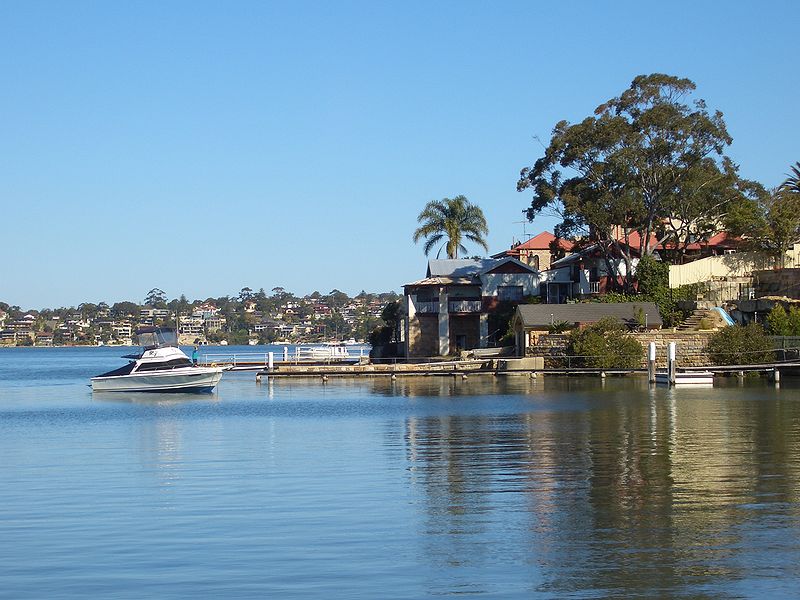
(Photo is of the waterfront at Kyle Bay)

Boys Names from Video Games

17 Sunday Apr 2011

Posted by A.O. in Name Themes and Lists

≈ 10 Comments

Tags

Anglo-Saxon names, animal names, Arabic names, aristocratic titles, astronomical names, bird names, celebrity baby names, controversial names, english names, famous namesakes, fictional namesakes, Greek names, hebrew names, Irish names, Japanese names, Latin names, mythological names, name history, name meaning, name trends, names from video games, nature names, nicknames, Roman names, slang terms, Spanish names, surname names, tree names, unisex names, vocabulary names

This post was first published on April 17 2011, and heavily edited on April 23 2015.

Altair
Altaïr Ibn-La’Ahad is the protagonist of the first game in the Assassin’s Creed series. Born in the Holy Land in 1165 to an Arabic Muslim father and Italian Christian mother, he joins the medieval secret society of the Assassins. Due to his superior abilities, he quickly gains the title of Master Assassin, but Altaïr becomes overconfident and arrogant, and must be taken down a peg or two. He goes on to have further adventures in later games. Mysteriously cloaked and hooded, he is dark, rather handsome, and has an intense expression. Altair is Arabic for “the flying eagle”, and it is the name of the brightest star in the Aquila constellation. It is pronounced al-TAH-yir, but English-speakers will probably prefer al-TARE instead, and this pronunciation is accepted by astronomers as equally correct. Not only an extremely popular name for people and places in video games, Altair is commonly used to name aeroplanes and rockets too, adding to its flighty, space-age image.

Ash
Ash Ketchum is the main protagonist of the Pokémon (“Pocket Monsters”) series; a ten-year old boy with shaggy dark hair covered by a baseball cap, brown eyes, and a snub nose. A true Pokémon obsessive, he always has a fanatical look in his eyes. He has no other interests apart from Pokémon, and only makes friends with children and adults who share his hobby. His original Japanese name was Satoshi (“clear-thinking, wise”), after creator Satoshi Tajiri. The character is based on Tajiri’s memories of himself as a child, when he was a keen insect collector. The English name Ash was taken from one of the possible default names that can be chosen in the original Pokémon game. Ash can be short for names such as Ashley, Asher, or Ashton, a vocabulary name for the residue of something burned, or a nature name after the ash tree. As the Professors in the Pokémon universe all have tree names (Oak, Juniper, Rowan etc), I think the game-makers probably had the last option in mind. This is a simple, attractive nature name, and although it is technically unisex, I have only seen it on boys so far.

Kain
Kain is an arrogant nobleman who becomes a vampire lord in the Legacy of Kain series, an anti-hero who is morally ambivalent at best, yet provides his world’s only hope. There has been a trend in popular culture to present male vampires as romantically desirable, but Kain is not a pretty-boy vamp, but the stuff of nightmares, and not suitable for taking to senior prom. Kain is the Greek form of the Hebrew name Cain, which is used in the Greek version of the Old Testament. In the Old Testament, Cain was a son of Adam and Eve, and committed the first murder by killing his brother Abel in a fit of furious jealousy. This theme also plays a role in the Legacy of Kain story. In the Bible the name Cain is interpreted as “begotten, acquired”, but modern etymologists think it is most likely from an ancient South Arabian word for “metalsmith”. In the Bible, Cain is said to have been the ancestor of a nation who became the first metalworkers, so that does mesh with the Biblical narrative. Although Cain is a controversial character, this name fits in so well with current name trends that it has had reasonable use over the years: a big help is that it’s a homophone of Kane, the Anglicised form of Irish Cathan, meaning “battle”. Famous Australian namesakes include fantasy writer Kain Massin, and actor Kain O’Keefe.

Link
Link is the hero of The Legend of Zelda game series [pictured]. Usually he is young with fair hair and blue eyes, and he is always dressed in green tights and tunic, and has pointed ears. Link is humble, polite and brave, as befits a true hero, and is possessed with a burning sense of justice. He travels through the land, defeating creatures, evil forces, and baddies in order to save Princess Zelda and her kingdom. Despite having minimal facial expression and speaking mostly in grunts, Link is one of the most popular video game characters of all time. Creator Shigeru Miyamato wanted to call him Chris or Christo after his godfather, but this was changed by Nintendo (I wonder if it seemed too Messianic for them?). Instead Link was chosen, because the character is the player’s link to the world of the video game. You might also think of a baby Link as being the link that brings your family together. The name Link doesn’t seem that unusual, because it is already used as a short form of Lincoln.

Maximo
In the Maximo duology, Maximo is a gallant knight who goes out into the world leaving his castle and kingdom in the care of a trusted friend. Unfortunately, little does he know that his pal is, in fact, an evil super-villain. While Maximo tools around in blissful ignorance, this dastardly creep takes over Maximo’s kingdom, and forces Maximo’s girlfriend, Princess Sophia, into marriage with him. Maximo returns home to find his kingdom and his life in ruins. It’s a completely awful day for him, but rather than sit at home crying and eating chocolate, he bravely goes in search of his lost love.
Maximo is the Spanish form of the Roman family name Maximus, from the Latin for “greatest”. Although the Spanish pronunciation is MAHK-see-mo, I’m guessing most English-speakers would say it MAKS-uh-mo, and use the popular Max as a nickname. A Spanish heritage choice that puts a cool spin on fashionable Maximus.

Raiden
Raiden is a thunder god in the Mortal Kombat series, an immortal with many supernatural abilities, and a distinctly hands-on approach. He looks like an enormous, muscular man with eyes filled with lightning and long iron-grey hair. Raiden is a variant of Raijin, the name for the god of thunder and storms in the Shinto religion and Japanese mythology. His name means “thunder god”. He is a popular folk figure who appears in many stories, and his name has been used in several other Japanese video games. The name is pronounced RAH-ee-den, but in English, is meant to be said RY-den. However, the temptation to pronounce it RAY-den, to fit in with the trend for Aiden, Braden, Caden and Hayden type names, is often too strong to resist. I have seen this name used quite a bit on boys in Australia, and mostly their parents have gone with the RAY-den pronunciation.

Ryu
Ryu is the lead character of the Street Fighter series, and an enormously strong Japanese martial artist. Powerful and uber-masculine with huge muscles, his karate outfit is casually tattered. During the game series, it turns out that Ryu has a touch of evil in his psychological make-up which can be exploited by the bad guys. However, Ryu is mentally strong enough to fight off their brainwashing attempts. What a trouper. Naturally he is far too butch to hang out with girls or anything wet like that, but he does have a rather super chum called Ken. Ryu is Japanese for “dragon”, and it is also a suffix to denote a particular school of thought, usually used for martial arts. It’s a popular name in Japanese video games. Ryu is difficult for English-speakers to pronounce correctly. It’s said as one-syllable – RYOO. I have seen this name used on several Australian boys in honour of the game character, but they have either been called RY-oo or ROO (like a kangaroo). This does fit in with familiar names such as Ryan and Reuben.

Snow
Snow Villiers is the leader of an anti-government rebel group in Final Fantasy XIII who gets engaged to a cute pink-haired girl. Their wedding plans are put on ice once his fiancée is turned into a block of crystal. He has to save the world and his sweetheart, while trying to convince his future sister-in-law he’s a decent bloke. Snow is a Nordic giant – 6 foot 7 with a powerful physique, fair skin, pale blond hair, blue eyes, and a light stubble beard. Despite his wintry appearance, he is warm-hearted, fiery-tempered, and optimistic. In the game, the name Snow denotes the character’s affinity for water and ice spells. Snow is a nature name and surname in use as a personal name since the 16th century, and is one of those rare names that has been almost equally given to boys and girls over time. Names connected with the winter and cold are currently on trend, and this one works for both sexes, and as either a first or middle name. It’s a hip alternative to fashionable Winter, but a possible drawback is that it is also a slang term for cocaine.

Sparrow
In Fable II, Sparrow is a poor orphan child who finds out they are descended from a heroic line. Sparrow can be played as either a male or female character, so the name is deliberately unisex. The name Sparrow is after the small brown bird, one of the most familiar birds in the world. Sparrows are often used to denote something common, or of low value, and they are the emblem of the London Cockneys. The New Testament tells us that God cares even for the worthless sparrow, so we know the most insignificant person is valued and worthy of divine love, and Saint Francis preached sermons to these birds. According to the ancient Greeks, sparrows were sacred to the goddess Aphrodite and a symbol of enduring love, while in Christian legend, the sparrow was the only bird who witnessed the Crucifixion. Sparrow has been used as a name since the 17th century, and is historically more common for boys; Pirates of the Caribbean has given it a swashbuckling air. It became a celebrity baby name when Nicole Richie and Joel Madden had a son called Sparrow in 2009. A humble name that’s on trend, and has more behind it than at first glance.

Thane
In Mass Effect 2, Thane Krios is a member of an alien species who are humanoid with reptilian features. An expert assassin dying of an incurable lung disease, he joins an apparent suicide mission to give purpose to what’s left of his life and atone for all the murder he’s committed. Despite his chosen profession, he is a deeply spiritual man following a polytheistic religion. The name Thane is an Anglo-Saxon title of nobility, and is from the Old English thegn meaning “servant, retainer”. A thane was an attendant to a king or noble lord who had military duties as part of their service (similar to a knight). In medieval Scotland it was the name for a hereditary tenant of the Crown; Macbeth held this title in Shakespeare’s play. The name has been used since the 16th century, and a famous namesake is English actor and dancer Thane Bettany, father-in-law to Jennifer Connolly, and step-uncle to Sophie Rhys-Jones, the wife of Prince Edward. This is one of those rare names that have a strong history, and don’t sound strange, being similar to familiar names like Dane and Zane.

POLL RESULTS
People’s favourite names were Ash, Sparrow, and Link, and their least favourite were Kain, Raiden, and Ryu.

Faith Margaret Kidman Urban: A Daughter for Nicole Kidman and Keith Urban, a Sister for Sunday Rose

03 Sunday Apr 2011

Posted by A.O. in Celebrity Baby Names

≈ 3 Comments

Tags

celebrity baby names, english names, Greek names, honouring, virtue names, vocabulary names

Faith Urban is the most surprising celebrity baby of 2011, because until she had actually arrived, we didn’t know of her existence.

Her mother, red-haired Hollywood actress Nicole Kidman, has a well-known history of medical problems related to fertility and childbirth. Married to high-profile American actor Tom Cruise for ten years, Nicole suffered an ectopic pregnancy early in her marriage, and then miscarried soon after her separation from Tom in 2001. During Nicole and Tom’s marriage, they adopted two children – Isabella Jane and Connor Anthony – who still live with their father.

Nicole married New Zealand-born country singer Keith Urban in 2006, after meeting him at a G’day LA event the previous year. (G’day LA is an event where Australian celebrities are honoured in Los Angeles around Australia Day).

In July 2008, Nicole gave birth to their daughter, Sunday Rose, at the age of 41. According to an interview in The Australian Women’s Weekly magazine, she never expected to become pregnant or have a baby, and described Sunday’s birth as a “miracle”. She attributed her pregnancy to the mystical properties of the waters at Kunnunurra in far-north Western Australia, where she swam while making the Baz Luhrman film, Australia. Apparently seven women working on the movie conceived after swimming in the waterfalls, and of the babies subsequently born, six were girls. Sceptics pointed out that Sunday’s birth might have had a little to do with the IVF programme the Urbans were reportedly using, although that doesn’t explain the other six pregnancies.

They chose Sunday Rose’s name with care. Sunday is the day of the week that Nicole and Keith were married on, and Sunday is also the day the week that they consider their “special” day, when they spend time as a couple away from their busy work schedules. Rose is the name of Keith Urban’s late grandmother.

While the public may have assumed that the Urbans’ family was now complete, Keith and Nicole had other plans, but kept them a secret from outsiders. Keith may have dropped a tiny hint when he released his latest album, Get Closer, in November last year.

In the dedication, he wrote: “I continue to be brought to my knees by this love of ours … I am in awe of how this blessed family we are creating stretches and fearlessly opens my vulnerable heart … and I just want to be a better man, for you, and father for our heavenly Sunday Rose and have you go to sleep every night knowing that no one has ever, or will ever, love you as much as I do … and all we need is faith.” (my italics).

If this dedication was intended as a private allusion to their soon-to-be-born baby between he and his wife, it probably indicates that they had already chosen Faith’s name at least six weeks before her birth.

Faith Margaret was born on December 28 2010 at Centennial Women’s Hospital in Nashville, Tennessee. On January 17 2011, her birth was announced on Keith Urban’s website:

“Our family is truly blessed, and just so thankful, to have been given the gift of baby Faith Margaret. No words can adequately convey the incredible gratitude that we feel for everyone who was so supportive throughout this process, in particular our gestational carrier”.

When Sunday Rose was born, the media was intrigued by her name and why her parents had chosen it. However, at the news of Faith Margaret’s birth, all anyone could talk about was the method by which she had been born.

They wondered what genetic relation she was to Keith and Nicole (she is their biological child, but carried and delivered by a third party). They wondered who organised the baby’s conception and birth (The Center for Surrogate Parenting, in Los Angeles). They wondered what Faith Margaret had cost them ($150 000, with 20% going to the woman who gave birth to her). They wondered who the surrogate had been (strictly confidential). They wondered why the Urbans used the term “gestational carrier” rather than the usual “surrogate mother” (probably because it’s a term common in the US, where the surrogacy and birth were arranged).

Australia has a long and not-very-proud tradition of criticising Nicole Kidman. Everything from her appearance (too thin, too pale, hair too difficult) to her lifestyle choices (too American, too much Botox, married a Scientologist with a reputation for weirdness). For the past few years, criticism had died down to a low rumble, but Faith Margaret’s birth reignited it as a storm of controversy raged over the method of her birth.

In general, there has been a lot of disapproval directed at the Urbans. Much of it is because paid surrogacy is illegal in Australia. Altruistic surrogacy is permitted in most states, but only medical expenses can be paid to the surrogate. In Nicole Kidman’s home state of New South Wales, recent legislation has been passed that also makes it illegal for residents to procure paid surrogacy overseas. The penalty for breaking the law will be a $100 000 fine and up to two years in prison. The law will not be retrospective, so the Urban family do not need to worry about being charged over Faith’s birth.

Many people have also expressed shock, outrage or even horror at the term “gestational carrier”, which to them seems degrading, too much like legalese, or just plain creepy. Others think it distasteful and unethical for a wealthy movie star to rent another woman’s uterus for her own convenience, and some believe the whole process to be unnatural, and reminiscent of Brave New World. However, there are also many people sympathetic to her desire for another child who feel it is her right to have one by whatever means she chooses, and a few who believe that our surrogacy laws are too strict.

Although Faith’s birth has re-opened the surrogacy debate in Australia, thankfully those issues are outside the scope of this blog, so I don’t need to offer any opinions or suggest any solutions, and can get back to discussing her name.

Nicole Kidman gave a brief interview to E! News Online at the 17th Screen Actors Guild Awards on January 30 2011, where she explained how Faith’s name was chosen.

Her name is Faith because Keith and Nicole needed to maintain their faith throughout the entire pregnancy, and because they never gave up faith that they would have another child together, even though that seemed unlikely because of Nicole’s age and medical history. After Sunday’s birth, Nicole told People magazine that they would have more children if it was part of God’s plan. So Faith’s name refers not only to their personal confidence that they could have another child, but also to the trust they placed in God as part of that process.

The middle name Margaret honours Nicole’s grandmother, who gave birth to her last child at the age of 49. “She’s my inspiration,” says Nicole at the end of the interview. (Keith used the SAG Awards as an opportunity to proudly show off pictures of baby Faith on his mobile phone).

You can see that Faith Margaret’s parents used the same naming formula they used for her sister: vocabulary name with personal meaning + name of relative.

From polling and suveying people online, most baby name enthusiasts thought that Faith was a nice name, and Margaret a lovely classic one. There was less enthusiasm for the combination of the two, with respondents almost evenly divided between people who thought it was a good sensible name, and those who thought it dull and plain. However, almost nobody really disliked it.

I don’t think that Faith Margaret is the prettiest name in the world; to my mind there is something slightly frumpy about it. But I think it is a good name, because it was chosen with a personal meaning in mind, and connected to the name of a beloved or even “inspirational” relative. Both Sunday Rose and Faith Margaret have names with a story attached to them, and that makes them more special than just picking a name that is “cute” or “sounds nice”.

Because of that, I’m giving Faith Margaret Urban thumbs up, and congratulations to her parents, who always knew that you’ve got to have faith.

ACKNOWLEDGEMENTS

Information on how the surrogacy was arranged from Adelaide Now 23/1/11

http://www.adelaidenow.com.au/ipad/nics-150000-bundle-of-joy/story-fn6bqphm-1225992969053

Information on current surrogacy laws in Australia from The Australian 19/1/11

http://www.theaustralian.com.au/news/nation/nic-and-keiths-baby-news-sparks-surrogacy-debate/story-e6frg6nf-1225990575722

Suggestion that Faith was secretly mentioned on Keith Urban’s latest album from Herald Sun 8/3/11

http://www.heraldsun.com.au/ipad/first-pictures-of-keith-urban-and-nicole-kidmans-surrogate-baby-faith/story-fn6bn80a-1226017890670

Interview from E! Online 31/1/11

http://au.eonline.com/uberblog/b223446_Nicole_Kidman_Spills_on__quot_Secret_quot__Baby_No__2.html

Waltzing With … Autumn

20 Sunday Mar 2011

Posted by A.O. in Waltzing with ...

≈ 4 Comments

Tags

American names, birth notices, Canadian name popularity, english names, famous namesakes, name combinations, name history, name meaning, name popularity, nature names, royal names, season names, UK name popularity, US name popularity, US name trends, vocabulary names

This post was originally published on March 20 2011, and almost entirely rewritten on March 26 2015.

Tomorrow is the Autumn Equinox, ushering in my favourite season of the year. The searing heat of summer finally retreats, leaving us with a long stretch of sunny days with blue skies, white fluffy clouds, and invigorating fresh breezes, coupled with cool nights where we can finally turn off the fan and pull the covers over us for a deep, refreshing sleep at last.

After a blazing heatwave or a devastating cyclone season, the cool air of autumn comes as a relief. Following a dry summer, autumn rain can be a blessing. I love watching the leaves of the deciduous trees turn red and gold, the clear blue skies and mellow warm days followed by crisp doona-snuggling nights. And then later, the thick grey mists, sparkling frosts, and drifts of brown leaves brought down by the cold wind.

Not all of Australia experiences autumn, with the tropics having just a Wet Season and a Dry, and only a small portion of south-eastern Australia having the classic picture postcard four seasons, crisply demarcated from each other.

Indigenous Australians had their own seasons, which differed from region to region, and which began and ended, not with a particular date on the calendar, but according to observations of the natural world. In the area which is now the Greater Sydney Basin, the Illawarra, and the Southern Highlands, the D’harawal people (who had seven seasons in all) marked the beginning of Marrai’gang around this time of year when the marrai’gang (quoll) began mating and the lilly-pilly fruit started to ripen on the trees.

Other countries may have more spectacular autumns than Australia, with more brilliant colours, but so often there is a melancholy that goes with it, a feeling that the natural world is winding down for the year, and corresponding brooding thoughts of our own mortality.

Here there is no tinge of sadness, and far from the woods bearing “bare ruined choirs”, our native trees almost never lose their leaves. Many native plants begin flowering in the autumn, so that the bush is filled with the bright colours of banksia, grevillea, and correa, as well as the purple lilly-pilly. Some species of bird migrate from the mountains to the coast during autumn, with flocks of thousands making an amazing sight. The loveliness of an Australian autumn is quiet and subtle.

While other seasons have their own beauty, they also seem to have their drawbacks. Winter – too cold! Summer – too hot! Spring – too changeable! Only autumn seems perfectly balanced, with the right amount of warm days and cool days, delightfully dry days and welcome wet days, each marching smoothly and evenly from the blues and golds of March, through the browns and yellows of April, to the greys and greens of May.

Name Information
The word autumn is from the French automne, taken from the Latin autumnus. This is derived from the Etruscan, relating to the passing of the year, ultimately from an ancient root meaning “cold”.

North Americans have two words for the season – autumn and fall. The reason is because the words autumn and fall both came into common use in the 16th and 17th centuries, and as English people began successfully migrating to North America in the early 17th century, they took both words with them. While the word fall for the season aptly fell out of use in Britain, it became the dominant word in the United States.

While autumn is from French, fall is from Old English, and refers to the falling of leaves, as well as the year falling away. It’s a word that makes a lot of linguistic sense, because it’s the exact opposite of spring in meaning (thus North Americans get the handy little mnemonic for the start and end of daylight saving time – spring forward and fall back an hour).

North Americans use autumn and fall interchangeably, and can do so even within the same sentence. However, although personal preference plays a part, in general they seem to use fall in a more practical way, while autumn is literary and formal. So children go back to school in the fall, but fashions come in autumn tones; TV networks bring out their fall schedules, but beloved grandfathers enter their autumn years. In other words, autumn is not just the word for the season, but a poetic or elegant description of the season.

The interesting thing is why there are two words for autumn anyway – it’s not as if winter and summer have other names. The truth is, autumn is a modern concept. In the medieval period, the year was divided into just two seasons, winter and summer. The time of year closest to what we call autumn was known as harvest, and it seems to have corresponded with late summer/early autumn.

By the 16th century, people had begun moving away from a rural way of life, and harvest was no longer an appropriate name for the time of year. I guess people felt awkward clattering up the cobbled streets of London, dodging carriages and chamber pots, telling each other that they would catch up next harvest. Both autumn and fall were tried out as descriptions of the transition from the heat of summer to the cold of winter, and by the 18th century they had both superseded the rustic word harvest. However, by the 19th, fall was no longer used in Britain, and it became seen as American usage only.

(This explains why fall never became part of the Australian vocabulary – as we weren’t settled by the British until the late 18th century, autumn was already the accepted word for the season. It would have been a very inappropriate name on this continent anyway, as there are few native trees here whose leaves fall in the autumn, or ever.)

So even though we might think of the season of autumn as ancient, timeless, and natural, it is in fact not just a modern construct, but a specifically urban one.

Knowing the history of the word autumn, it will not come as any surprise that use of Autumn as a personal name for girls is quite recent, dating back only to the 19th century. Nor will it seem at all strange that its use was in the beginning almost entirely North American, because on that continent autumn was not the standard word for the season, but one imbued with a certain archaic charm.

This trend continues, because in the US, Autumn has been in the Top 1000 since 1969, giving it a “hippie name” vibe. Currently it is in the Top 100 and gently rising, being #69 in 2011 and #65 in 2013. It is also a Top 100 name in some Canadian provinces.

In England/Wales, Autumn was in the 500s until Princess Anne’s son Peter Phillips began dating a Canadian named Autumn Kelly in 2002, upon which the name Autumn began climbing in the UK, with a steeper ascent after Autumn and Peter’s wedding in 2008. After peaking at #179 in 2011, just after Autumn Phillips had given birth to her first child Savannah, the name has since levelled off and is now #197.

In Australia, the name Autumn is rarely found in historical records, and it has never charted here. In 2013, 3 baby girls were named Autumn in South Australia, in 2012, 9 baby girls were given the name Autumn in Victoria, and in Tasmania in 2010 there was only one baby called Autumn. The royal connection does not seem to have helped it here, as it has in the UK, and I only see it occasionally in Australian birth notices.

Autumn is a modern nature name for girls that is pretty without being frilly, and may appeal to some Australian parents by dint of being underused here. It celebrates a beautiful time of year, and could suit a child born in autumn, or with autumn-toned colouring. With Autumn, you get that attractive combination of a name that is completely “normal” and familiar, while not being at all common. That alone makes Autumn seem like a pretty awesome choice!

POLL RESULT
Autumn received an extraordinary approval rating of 92%, making it one of the highest rated names of the year. 38% of people loved the name Autumn, while not a single person hated it.

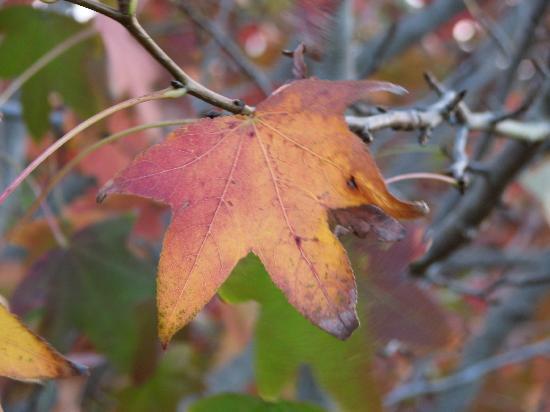
(Photo shows an autumn leaf in the Aurora Valley of Bangalow, New South Wales)

Newer posts →

Enter your email address to follow this blog

Categories

Archives

Recent Comments

A.O.'s avatarwaltzingmorethanmati… on Zarah Zaynab and Wolfgang…
Madelyn's avatarMadelyn on Zarah Zaynab and Wolfgang…
JD's avatardrperegrine on Can Phoebe Complete This …
A.O.'s avatarwaltzingmorethanmati… on Rua and Rhoa
redrover23's avatarredrover23 on Rua and Rhoa

Blogroll

  • Appellation Mountain
  • Baby Name Pondering
  • Babynamelover's Blog
  • British Baby Names
  • Clare's Name News
  • For Real Baby Names
  • Geek Baby Names
  • Name Candy
  • Nameberry
  • Nancy's Baby Names
  • Ren's Baby Name Blog
  • Sancta Nomina
  • Swistle: Baby Names
  • The Art of Naming
  • The Baby Name Wizard
  • The Beauty of Names
  • Tulip By Any Name

RSS Feed

  • RSS - Posts

RSS Posts

  • Celebrity Baby News: Melanie Vallejo and Matt Kingston
  • Names from the TV Show “Cleverman”
  • Can Phoebe Complete This Sibset?
  • Zarah Zaynab and Wolfgang Winter
  • Baby, How Did You Get That Name?
  • Celebrity Baby News: Media Babies
  • Celebrity Baby News: Adelaide Crows Babies
  • Celebrity Baby News: Chris and Rebecca Judd
  • Names at Work: Name News From the World of Business and Employment
  • Celebrity Baby News: Sporting Round Up

Currently Popular

  • Celebrity Baby News: Alisa Camplin and Oliver Warner
  • Rare Boys Names From the 1950s
  • The Top 100 Names of the 1930s in New South Wales
  • Sad Celebrity Baby News (contents may cause distress)
  • The Top 100 Names of the 1940s in New South Wales

Tags

celebrity baby names celebrity sibsets english names famous namesakes fictional namesakes honouring locational names middle names name combinations name history name meaning name popularity name trends nicknames popular names saints names sibsets surname names twin sets unisex names

Blog at WordPress.com.

Privacy & Cookies: This site uses cookies. By continuing to use this website, you agree to their use.
To find out more, including how to control cookies, see here: Cookie Policy
  • Subscribe Subscribed
    • Waltzing More Than Matilda
    • Join 517 other subscribers
    • Already have a WordPress.com account? Log in now.
    • Waltzing More Than Matilda
    • Subscribe Subscribed
    • Sign up
    • Log in
    • Report this content
    • View site in Reader
    • Manage subscriptions
    • Collapse this bar
 

Loading Comments...