• About
  • Best Baby Names
  • Celebrity Baby Names
  • Celebrity Baby Names – Current
  • Celebrity Baby Names – Past
  • Featured Boys Names
  • Featured Girls Names
  • Featured Unisex Names
  • Links to Name Data
  • Waltzing on the Web

Waltzing More Than Matilda

~ Names with an Australian Bias of Democratic Temper

Waltzing More Than Matilda

Tag Archives: UK name popularity

Famous Names: Heston and Tex

10 Wednesday Dec 2014

Posted by A.O. in Famous Names

≈ Comments Off on Famous Names: Heston and Tex

Tags

American names, birth notices, code names, controversial names, english names, famous namesakes, historical records, locational names, middle names, name history, name meaning, name popularity, name trends, names of American states, Native American names, nicknames, Old English names, rare names, screen names, surname names, UK name popularity, unisex names, US name popularity

653922-f8a752f2-67cc-11e4-b8fc-0b9f02c7ac0d

In 2014 Melbourne was named the world’s most liveable city by the Economist Intelligence Unit for the fourth year in a row. Their annual survey rates 140 cities out of 100 in healthcare, education, stability, culture and environment, and infrastructure, and Melbourne received 97.5 overall, with perfect scores in healthcare, education, and infrastructure.

To celebrate Melbourne’s continuing success, I thought we’d look at two names that have recently made the news there. Melbourne is not only a very cultured city, it’s also rather quirky, so I picked a couple of cultured, quirky guys.

HESTON
Heston Blumenthal is a multi award-winning British chef at the forefront of the “New Cookery”. Inspired by the playful nature of historic British cuisine, he follows a rigorously scientific approach to cooking, and has unleashed on an appreciative public such delicacies as snail porridge, chocolate wine, and bacon and egg ice cream.

Well known from his television shows, Heston has also been a celebrity chef on MasterChef Australia, been a guest at food festivals in Australia, and you can also buy his products through Coles (maybe you have already purchased one of his Christmas puddings). A great admirer of Australia, Heston has told Britons of Aussie food trends they should copy, including charcoal chicken, Tim Tams, quality beef, street food, and good coffee [article expired].

Early this year it was announced his triple Michelin-starred restaurant The Fat Duck, recognised as the best in Britain, will be temporarily relocated to Melbourne’s Crown Casino next February. He made a savvy move taking The Fat Duck to Melbourne, which has a marvellous foodie culture. The tasting menu is $525 per person (not including drinks), making The Fat Duck the most expensive eatery in Melbourne, more than twice as pricey as its current premier restaurant, Shannon Bennett‘s Vue du Monde.

Despite this hefty price tag, demand was so strong that a ballot system was introduced, with potential patrons having to register before the end of October. Unfortunately some scammers managed to hack into the ballot system, and are now scalping reservations for up to $1000 (you still have to pay for your food on top of that). However, never fear people with more than $1500 to spend on one meal, after six months the restaurant will morph into Dinner by Heston Blumenthal.

Heston is an English surname which comes from a place name; originally a Saxon village, Heston is now a suburb of west London. One of its claims to fame is that British prime minister Neville Chamberlain flew from Heston Aerodrome to Germany in 1938 for uselessly appeasing talks with Adolf Hitler. Naturalist Sir Joseph Banks, who discovered so many species of Australian plants and has the banksia flower named after him, is buried at St Leonards church in Heston.

Heston is usually thought to mean “enclosed settlement” in Old English, because it was part of an area surrounded by forest and woodland. For the same reason, another theory is that it meant “brushwood farm”.

The surname is strongly associated with Hollywood legend Charlton Heston, who starred in films such as The Ten Commandments, Ben-Hur, and Planet of the Apes. Born John Charles Carter, and known as Chuck or Charlie, he created his screen name by combining his mother’s maiden name, Charlton, with his stepfather’s surname.

Heston Blumenthal (who wasn’t rapt with his name as a child) asked his mother if he had been named after Charlton Heston, but she replied that she simply liked the name. When asked about the origins of his name, Blumenthal joked that perhaps his parents had a night out in London and parked at Heston Services (a motorway service station). The headline on the front cover of The Times was Top Chef Named After Parents’ Love of Motorway Services, requiring many apologies from Heston to his mum and dad.

Heston may be unusual, but it is by no means unique, being found thousands of times in historical records going back to the 16th century. There are a few examples of Heston being used as a first name in Australian records, although it is more common in the middle.

It’s a surname name for boys which is is rare yet on trend, and seems pretty cool, although I do think it will instantly remind everyone of the chef. Just like Mrs Blumenthal, you may be required to repeat that you just liked the name. Heston has also highlighted another issue with his name – American actress Tina Fey told him it translates as “shit on you” in Greek, so this is a name which does not travel well, at least not to Greece.

TEX
Tex Perkins is an Australian rock star, best known for fronting The Beasts of Bourbon and The Cruel Sea, but part of many other innovative musical acts. Recently he threw his hat in the ring as an independent candidate for the marginal seat of Albert Park in last month’s state election. His single policy? To get funding for the Palais Theatre in St. Kilda, a heritage-listed concert venue which needs a $40 million refurbishment.

Having gained the sitting Labor candidate’s promise of partial funding if he was elected, Tex directed his preferences to the ALP, then told people not to vote for him, but for Labor instead, and on election day, his How to Vote card instructed them to place the ALP first on the ballot paper. That’s taking self-effacement to a new level. His plan worked – Labor was elected, both in Albert Park and across the state. Let’s hope they honour their promise to the Palais. (Tex still got more than 1000 votes).

Tex is a nickname which is short for Texas, the US state. The state’s name comes from a Native American word in the Caddo language, tejas, meaning “friends, allies”. It was the name the Spanish called the Caddo, and the land they lived on, in today’s East Texas.

There is a Texas in Australia too, a town in southern Queensland. It is said that the name came about because of a territorial dispute between the owners of the land and some squatters – once the legalities were sorted out, the owners humorously called their land Texas because the United States and Mexico had a dispute over Texas, settled by the Mexican-American war. The town of Texas has featured in several country music songs, including one by James Blundell, who has spent quite a bit of time there.

The nickname Tex can be given to someone from the state of Texas, but can also be taken as a code name, and is a favourite for people with a cowboy, country, or Western persona, such as country music stars, cowboy actors, and rodeo promoters.

British soldier Keith “Tex” Banwell was the son of an Australian soldier, and lived in Australia for a few years as a child. A World War II hero who acted as General Montgomery’s double, he helped the Dutch Resistance, and was taken prisoner a few times, spending several months in Auschwitz after refusing to betray his friends. A character straight out of an adventure novel, Tex was his wartime code name.

Tex Morton (born Robert Lane) was a country music pioneer in New Zealand and Australia, and had a career that lasted from the 1930s to the 1970s. Dubbed the Singing Cowboy Sensation, the New Zealand-born yodelling whipcracker and sharpshooter performed at the Grand Old Opry and was a major contributor to the Australian country music scene. Tex Perkins (born Gregory Perkins) followed this lead, as he began in cowpunk, and has taken a Johnny Cash tribute show on the road.

Tex was in the US Top 1000 around the 1940s, but is now a rare name – only 11 boys were named Tex last year, although a further 11 were named Texas, perhaps called Tex on an everyday basis. It’s even less common in the UK, where less than three boys (maybe none) have ever been named Tex, although 19 girls (a meteoric rise) were named Texas, and maybe have Tex as a nickname.

In Victoria, 6 boys were named Tex in 2012, and it’s a name I see fairly regularly in birth notices; to me it seems as if the numbers might even have risen. Perhaps Tex Perkins is helping the name along, although I don’t know if any have actually been named in honour of the rock star. Tex is a great little nickname name, with a cool X-ending like Max, Rex, or Fox. It has a bit of a cowboy feel to it, although Tex Perkins makes it seem a bit rockstar too.

Two cool, charismatic boys names that are a little out of the ordinary – but which one do you prefer?

POLL RESULTS
Both Heston and Tex received approval ratings of 40%, but more people loved the name Tex.

(Picture shows Tex Perkins outside the Palais Theatre; photo from the Herald Sun)
Waltzing With … Constance

09 Sunday Nov 2014

Posted by A.O. in Waltzing with ...

≈ 3 Comments

Tags

aristocratic names, famous namesakes, fictional namesakes, French name popularity, Latin names, name history, name meaning, name popularity, nicknames, Old French names, Puritan names, rare names, Roman names, royal names, Shakespearean names, UK name popularity, US name popularity, virtue names

9-2508527-bun230914key1c_fct667x500x4.0x98.0_t620

This Tuesday is Remembrance Day, so today we will remember a World War I heroine. The Australian nurses who served in World War I have not always received the full recognition they deserve, but the award-winning television miniseries Anzac Girls, based on their stories, has brought these “other Anzacs” attention this year.

More than 5000 Australian nurses served during World War I, many of them in the sort of unofficial capacity that meant they are barely remembered today. They worked under gruelling conditions, underpaid, under-resourced, and often forced to improvise. They shared many of the soldiers’ hardships, including illness, physical danger, and psychological trauma.

Nurses were a vital part of the war effort, taking care of wounded soldiers, and offering comfort and cheer, giving them the courage to go back to the battlefield. No matter what horrors they saw, nurses had to remain cheerful, because the men depended on them. Many nurses became friends with their patients, meaning that losing one in battle brought deeper emotional strain. The Allied soldiers often commented that Australian nurses were amongst the kindest and most caring, and their professional standards were high.

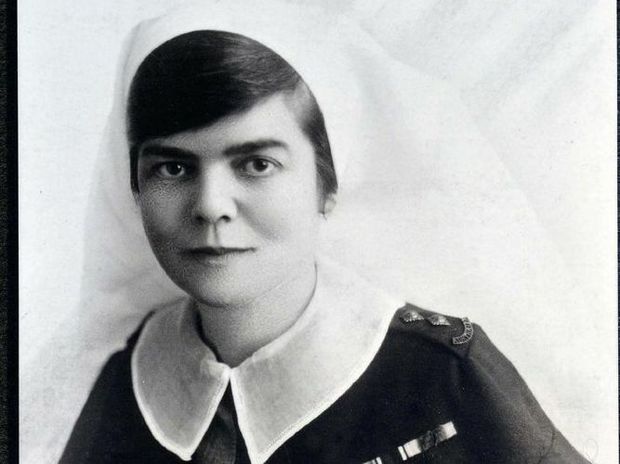
Sister Constance Keys has been on the blog twice before – she was amongst a group of nurses whose photo was used for Girls Names from the 1910s, and a quote from one of her letters was used for the entry on Gallipoli. Constance Keys was a Brisbane nurse who enlisted in the Australian Army Nursing Service in 1914, serving in Egypt, England, France, and Belgium.

Constance treated casualties from Gallipoli, and for most of 1918 was right near the front line in northern France, where her nursing station was heavily bombed more than once. Conditions were wet and cold, greatly increasing the suffering of her patients, and making movement difficult. She and her staff treated those who had been gassed, coped with influenza outbreaks, and had many casualties who suffered from exhaustion as well as wounds.

Sister Keys was discharged from the AIF in 1920 as one of the most highly decorated nurses in the AANS. Twice mentioned in dispatches for bravery, she received the Royal Red Cross, first and second class, and was awarded the Médaille des Epidémies in recognition of her work for French refugees. After the war, she became a hospital matron, and married a Gallipoli veteran; during World War II she trained Red Cross volunteers and entertained soldiers.

After her death, her wartime diaries and letters came to light, as well as her autograph book, in which she managed to get the signature of King George V. They give a clear picture of a young woman who was not only courageous and compassionate, but determined to remain in good spirits.

Under fire, Constance was “only afraid of being afraid”, and in the English fogs, “apart from the constant feeling of loss, quite well”. She writes of her little troubles, such as not having enough food, her hair falling out, and being a “bushwhacker” in regard to fashion, all in bright and amusing terms. She was a caring nurse who wrote letters and postcards to soldiers with no mail, felt guilty that she could only afford to shout ten men to lemonade and not everyone, and took time to make mud pies with a “little French kid”.

Connie also enjoyed those moments of pleasure and fun that came her way, such as buying a lovely pair of buttoned boots in England, seeing exquisite Oriental artefacts in Cairo shop windows, a mess room in Belgium with a sweet-toned piano for her to play, going on leave in Cannes to wake up to eucalypts and wattles outside her window. But she always remained a Queensland girl who had forgotten the taste of mango, and longed for a slice of passionfruit cake.

Constance is the medieval Old French form of the Roman name Constantia, the feminine form of Constantius, derived from the name Constans. This Latin name means “constant, steadfast”, referring to someone steady and faithful in their purpose or feelings. It is the basis for the English word constancy.

Traditional amongst European royalty and nobility, this name literally came over with the Conqueror, because Constance was one of the children of William I, said to have been the most gifted of his daughters. Princess Constance was her mother’s favourite child, so she wasn’t offered in marriage until she was positively ancient by medieval standards – in her mid to late twenties. She married a duke of Brittany, but died not long afterwards, reputedly poisoned by her servants.

Constance has often been used by the British aristocracy. One example is Lady Constance Bulwer-Lytton, a suffragette who went by the alias Jane Warton so she wouldn’t receive special treatment. A vegetarian, campaigner for birth control, prison reformist, and supporter of Morris dancing, she never married, as her mother would not allow her to marry a man from a lower social class. She died from a heart attack and series of strokes in her fifties; it is thought from the force-feedings she endured while hunger-striking in prison.

Other upper-class Constances include the pacifist writer Lady Constance Malleson, who performed as an actress under the name Colette O’Niel, Lady Constance Gaskell, Lady in Waiting to Princess Marina, and (Constance) Gwladys Robinson, Marchioness of Ripon, a patron of the arts and friend of celebrities such as Oscar Wilde and Nellie Melba. This reminds me that Oscar Wilde’s wife was named Constance too.

Constance is a favourite choice for aristocrats in English fiction, such as P.G. Wodehouse’s imposing Lady Constance Keeble, and Lady Constance Chatterley who forms a close connection with her husband’s gamekeeper in D.H. Lawrence’s Lady Chatterley’s Lover. It is also a Shakespearean name, because the historical character Constance, Duchess of Brittany, who married a son of Henry II, appears in King John.

But Constance was not just a name for dames, duchesses, and dowagers. Being a virtue name, it was appreciated by the Puritans, and Constance Hopkins was a teenaged girl who sailed on the Mayflower as a pilgrim: she was a sister of the baby boy Oceanus who was born on the voyage, and often mentioned in name blogs. Constance married and had twelve children, who provided her with seventy four grand-children; she has many living descendents. So the name Constance has plenty of history in America too.

Constance left the US Top 1000 in 2000, is still falling, and last year there were 103 baby girls named Constance – the same number as those called Arwen. It is much more popular in the UK, where Constance is #267 and stable. Constance is most popular in France, where it is just outside the Top 100 and rising.

In Australia, Constance was #83 in the 1900s, and peaked in the 1920s at #76, before leaving the Top 100 in the 1930s. It dropped off the charts in the 1960s, and made a minor come-back in the 1990s at #751. I rarely see a baby named Constance, but it does get a bit of use as a middle name, where it makes a wonderful alternative to the popular Grace.

Constance is a beautiful, elegant traditional name; a strong, brave name for a woman, yet also modest and sensible. It’s in rare use now, but that may be a drawcard for those parents wanting a familiar name that isn’t common. The nickname Connie sounds dated, which probably helps explain its lack of popularity, but you could use something more modern, like Coco or Tansy. However, Constance doesn’t need a nickname in my opinion – it’s lovely all on its own.

POLL RESULT
Constance received an outstanding approval rating of 88%, making it the highest-rated of the featured names of the “Waltzing” category in 2014. 34% of people liked the name Constance, while 30% didn’t mind it. Only 1% (1 person) hated the name the Constance.

(Photo of Sister Constance “Connie” Keys from the Bundaberg News Mail)

Famous Names: Buddy and Sonny

22 Wednesday Oct 2014

Posted by A.O. in Famous Names

≈ 4 Comments

Tags

birth notices, British name trends, celebrity baby names, celebrity sibsets, english names, famous namesakes, historical records, honouring, name history, name meaning, name popularity, nicknames, rare names, slang terms, UK name popularity, US name popularity, vocabulary names

928474-lance-franklin

It’s spring, which means that football season is definitely over now. If you’re a sad case like me, the second the Grand Final is over, you begin looking forward to next season, which is about five months away. You might also spend time looking back on the season which has just passed.

“Buddy” Franklin and “Sonny Bill” Williams are two footballing names I heard repeatedly throughout the 2014 season; every time I watched a sports update on television, or heard it on radio, it seemed as if either Buddy or Sonny would be mentioned at some point.

Lance “Buddy” Franklin is an AFL star, and the brother of netballer Bianca Giteau, who has been featured on the blog twice as a celebrity mum. Not only a leading goal-kicker and multiple medallist, Buddy has tons of celebrity glamour, due to dating Miss Universe Australia winner and model Jesinta Campbell.

The big story that had him constantly in the sporting news was that he swapped clubs, from Hawthorn to the Sydney Swans, and proved one of the Swan’s best players. In a nail-biting finish, Hawthorn and Sydney played each other in the Grand Final – could Hawthorn win without their star player?

Sonny William Williams, or Sonny Bill Williams, is a New Zealand rugby player and former boxer who has code-swapped into rugby league at times. He also has glamour for his many endorsements from fashion labels, and is one of Australia’s most marketable athletes. Last year he signed with the Sydney Roosters for two seasons, and helped take the Roosters to Premiership victory. Could he once again become a premiership winner in his last NRL season?

In the end, all the hype ended in a bit of a fizzle – the Sydney Swans lost, and although the Roosters were the Minor Premiers, they were knocked out during the finals and did not make it to another Grand Final.

Buddy is a slang word meaning “friend, companion” – the equivalent of the Australian favourite, mate. It may be an affectionate alteration of the word brother, but there is an 18th and 19th century English and Welsh dialect word butty, meaning “work-mate”, which was used by coal-miners, which seems more likely. This goes back to the 16th century term booty fellow, given to a partner that you share your booty or plunder with; booty of course means “gains, prizes”, often with connotations of being ill-gotten. Interestingly, we still sometimes jokingly introduce a friend as our partner in crime.

Buddy has been used as a (mostly male) personal name since at least the 18th century, and seems to have historically been much more popular in America. It isn’t always possible to tell from historic records whether Buddy was the person’s name, or a common-law nickname, but in at least several cases, it was the name they were christened with. There are a number of Buddys in Australian historical records, but in most (maybe all?) cases it seems to be either a nickname or a middle name.

Famous people named Buddy nearly always have it as a nickname, such as rock and roll pioneer Charles “Buddy” Holly, or NRL player Yileen “Buddy” Gordon. Fictional Buddys include Buddy Hobbes, the man who thought he was one of Santa’s elves in the Christmas comedy Elf, and Buddy Love, the arrogant alter ego in The Nutty Professor.

Buddy has been chosen as a baby name by two TV chefs – Bartolo “Buddy” Valastro from American show Cake Boss has a son named Buddy after his own nickname, and British chef Jamie Oliver welcomed his son Buddy Bear Maurice in 2010 (the name chosen by Jamie’s model wife Jools). Buddy Oliver still manages to make the occasional “crazy celebrity baby name list”, although his sisters Poppy Honey Rosie, Daisy Boo Pamela and Petal Blossom Rainbow are usually thrown in as a sort of package deal. Australian cricketer Michael Hogan has a son named Buddy.

Buddy has never charted in Australia, but I do see it in birth notices fairly often, mostly from Victoria. In the United States, Buddy peaked at #202 in the 1930s and left the charts in 1989; last year just 21 boys were named Buddy – the same number as those called Trigger. But in 2013, Buddy was #356 in England/Wales; the numbers began climbing the same year Buddy Oliver was born, although it seems to have slackened off slightly.

Sonny is even more straightforward as a slang term than Buddy, as it is a casual or affectionate way to address a young boy, from the word son. As a baby name, you could see Sonny meaning “my son”, or even as another form of Junior.

Sonny has been used as a boy’s name since at least the 17th century, and as with Buddy, it isn’t always possible to know whether it was the person’s given name or their nickname, but it does seem to have been the name they were christened with in many cases. There are many more Sonnys in Australian historical records than Buddys, and often it was a common-law nickname. This seems to have been given humorously in the case of a Thomas Fogg, who was dubbed Sonny Fogg. Sonny Day and Sonny Love may have been real names, however.

Sonny is a popular nickname amongst famous musicians, such as jazz legend Theodore “Sonny” Rollins, rapper Paul “Sonny” Sandoval from Christian metal band P.O.D., and Flower Child era pop singer Salvatore “Sonny” Bono, who was half of Sonny & Cher before becoming a conservative politician. However, Sonny is the real name of blues guitarist Sonny Landreth, and DJ Sonny Moore, who performs under the stage name Skrillex. Even in fiction, Sonny has a musical heritage, because James Baldwin’s story Sonny’s Blues centres on a young jazz musician.

Sonny has been chosen as a baby name by Sophie Ellis-Bextor from English rock band The Feeling, and by Noel Gallagher, from Britpop band Oasis. American actor Jason Lee also has a little boy named Sonny. Australian comedian Hamish Blake welcomed his son Sonny Donald last year, and NRL player Todd Lowrie welcomed son Sonny in 2011.

Sonny is not an unusual name in Australia, being around the mid-100s. In the United States, Sonny has been solidly on the Top 1000 since the 1920s, and peaked at #428 in the 1970s (perhaps under the influence of Sonny Bono, as Sonny & Cher became household names in this decade due to their successful variety shows on television). Currently Sonny is #842 in the US, and relatively stable. In England/Wales, Sonny became a Top 100 name last year, debuting at #90. It is possible it could also make the Top 100 here one day.

These are two cute, friendly, upbeat, boyish nicknamey names that have gained celebrity support and are very much in line with British trends. Some may see the names as a little too snuggly and huggable, but I think they could also seem cool, or even a bit bad boy.

POLL RESULTS
Buddy received an approval rating of 21%, while Sonny was better received with an approval rating of 53%.

(Picture shows Lance Franklin; photo from the Herald Sun)


Requested Names: Maida and Maeva

15 Wednesday Oct 2014

Posted by A.O. in Requested Names

≈ 6 Comments

Tags

aristocratic titles, dog names, english names, fictional namesakes, flower names, French name popularity, French names, Greek names, historical records, Irish names, Italian names, locational names, military events, mythological names, name history, name meaning, name trends, names of businesses, names of ships, nature names, plant names, polynesian names, rare names, Scottish names, Tahitian names, UK name popularity, US name popularity, vintage names, Waltzing More Than Matilda

agriturismo-costantino

Michelle’s partner has suggested the girls’ names Maida and Maeva to add to their name list. At first, Michelle thought these were “made up”, but once she discovered they were genuine names, became a lot more interested in using them, as she quite likes them. She’s asked that Maida and Maeva be featured on Waltzing More Than Matilda, so she can learn more about them.

Maida
This name was popularised in Britain during the 19th century because of the Battle of Maida, which was a British victory against the French during the Napoleonic Wars. It took place in the town of Maida, in Italy, and the British were able to inflict significant losses while incurring far fewer casualties on their side. Through the battle, the British were able to prevent a French invasion of Sicily.

The commander during the Battle of Maida was John Stuart, who was named Count of Maida by Ferdinand IV of Naples and Sicily in thanks for his efforts (the British knighted him, and gave him £1000 a year). Not long after his victory, he received another honour: a pub on the Edgeware Road in London was named The Hero of Maida, and when this area was developed for residential housing in the mid-19th century, it was named Maida Vale after the pub (and indirectly after Sir John Stuart). Maida Vale is now quite an affluent area.

Maida Vale in London has given its name to a suburb in outer Perth, which still has plenty of natural bushland. There is a rare wildflower unique to this area called the Maida Vale Bell (Blancoa canescans), which is a type of kangaroo paw with reddish bell-like flowers. Another Western Australian connection is that the pioneer Sir Richard Spencer took part in the Battle of Maida as a naval captain (the British navy captured a French vessel, and renamed it the Maida). After emigrating to Australia, Spencer ended his days on the heritage-listed Strawberry Hill Farm in Albany.

A Scottish connection is that Sir Walter Scott was given a deer-hound named Maida, reputedly his favourite dog. It was a gift from Sir Walter’s friend, Colonel Alexander MacDonnell of Glengarry, known as Glengarry after his estate. Glengarry’s brother, James MacDonnell, had led the 78th Highlanders Regiment of Foot at the Battle of Maida, and won a Gold Medal for his services. The 78th fought valiantly, and are said to have lost only one man: the name Maida has ever after had particular resonance in Scotland, and is still in some use.

The rural town of Maida, where the Battle of Maida was fought, is in Calabria in southern Italy: often identified as the “toe” of the country’s shape. The name of the town is derived from Greek, and may have the same source as the name Medea, familiar in Greek mythology as the wife of the hero Jason. Her name literally means “cunning”, but with connotations of “rule over, protect”, from an ancient root meaning “to measure, give advice, to heal”.

While the Battle of Maida was behind the name’s surge of popularity in 19th century Britain, it doesn’t explain the handful of times it was used prior to 1806, nor does it explain the name’s use in the United States, where the name Maida occasionally made the Top 1000 between 1880 and 1920. In such cases, the name may be a pet form of names such as Magdalene or Madeline; in Scotland, it could be seen as a variant of Maisie. It also can’t be ruled out that it was sometimes based on the English word maid, shorthand for maiden, meaning “young girl, virgin”.

A 20th century influence on the name in the United States was the Maida series of children’s books by Inez Haynes Irwin, a feminist and socialist author and journalist. The books revolve around a beautiful motherless little girl named Maida Westabrook who possesses both fabulous wealth and a fantastic personality, recovering from severe illness that has left her with a slight disability. It turns out some wholesome child labour and the friendship of a whole neighbourhood of ordinary kids is what she needs to put the roses in her cheeks, and further adventures follow with her posse of plebeian pals.

I read the first book online and was charmed: it’s an urban fairytale, and the sort of vintage book I would have loved reading when I was about nine. I can quite understand why this series of books, spanning from 1909 to 1955, has gained generations of loyal fans, and was not surprised to see several comments from people who had been named for the character or had named their daughters after her.

Last year there were 26 baby girls named Maida in the United States, and 18 in England/Wales. Maida doesn’t show up in recent Australian birth data, although is occasionally seen on older women. There are over a hundred Maidas in Australian historical records, mostly from the late 19th century to the early 20th century.

Maeva
This is from Tahiti, and means “welcome”; it is used as a word and a name in Polynesia, and is a Top 100 name in France, as Tahiti is part of France’s overseas territories. Maeva is pronounced mah-AY-va in Tahitian, but judging from one example on forvo, French people seem to say the name very much like MAY-va.

Maeva is used as a name in Australia too, appearing in historical records from the late 19th century. Most likely it was an elaboration of the Irish name Maeve rather than of Polynesian origin. Maeva was the middle name of Gladys Cumpston, who transcribed texts into Braille. If you look at Maevas in Australia currently, many seem to be French, although there are also Australians, including those of Islander heritage. Last year there were 34 babies named Maeva in the United States, and 4 in England/Wales.

* * * * * * * * * *

Michelle, what an intriguing pair of names your partner has suggested! I am very impressed by his style, because these are both very rare names which are nonetheless bang on for current trends. They fit in so beautifully with the trend for vintage names, and with names beginning with M, and with the AY sound, so that you’d have a baby name different from everyone else’s, without sounding too glaringly different.

Maeva in particular would blend in almost seamlessly, as it sounds like a mixture of Mae, and Maeve, and Ava. It would be very easy to explain to others as “Spelled like Maeve, but with an A at the end”, or “Pronounced like Ava, but with a M at the front”. You might even worry that it blended in a bit too easily, and could be confused with other names – there might be a few moments of “No, it’s Maeva, not Maeve”, although that doesn’t sound like a big deal.

Maida seems a bit more daring, although it reminded me a little of a contracted Matilda, or Maia with a D. I feel as if some people might be slightly taken aback by the Maid- part, as we use the word “maid” to mean “servant, serving girl”. But what a rich and interesting history the name Maida has, with so many layers of meaning and evocation. The more I learned about the name Maida and its many associations, the more I was mentally barracking for you to choose it.

I think these are both beautiful names, rare yet accessible, vintage but in line with current trends. What do you think of Maida and Maeva, readers?

POLL RESULTS
Maida received an approval rating of 56%, while Maeva did extremely well, with its approval rating of 76% making it one of the highest-rated names of 2014.

Thank you to Michelle for requesting Maida and Maeva be featured on Waltzing More Than Matilda

(Photo shows the farmland around the town of Maida in Italy)

Waltzing With … Lucius

05 Sunday Oct 2014

Posted by A.O. in Waltzing with ...

≈ 3 Comments

Tags

aristocratic names, Arthurian names, Biblical names, Etruscan names, famous namesakes, fictional namesakes, Harry Potter names, imperial names, Latin names, name history, name meaning, name popularity, papal names, rare names, Roman names, royal names, royal titles, saints names, Shakespearean names, UK name popularity, US name popularity

y_Daybreak

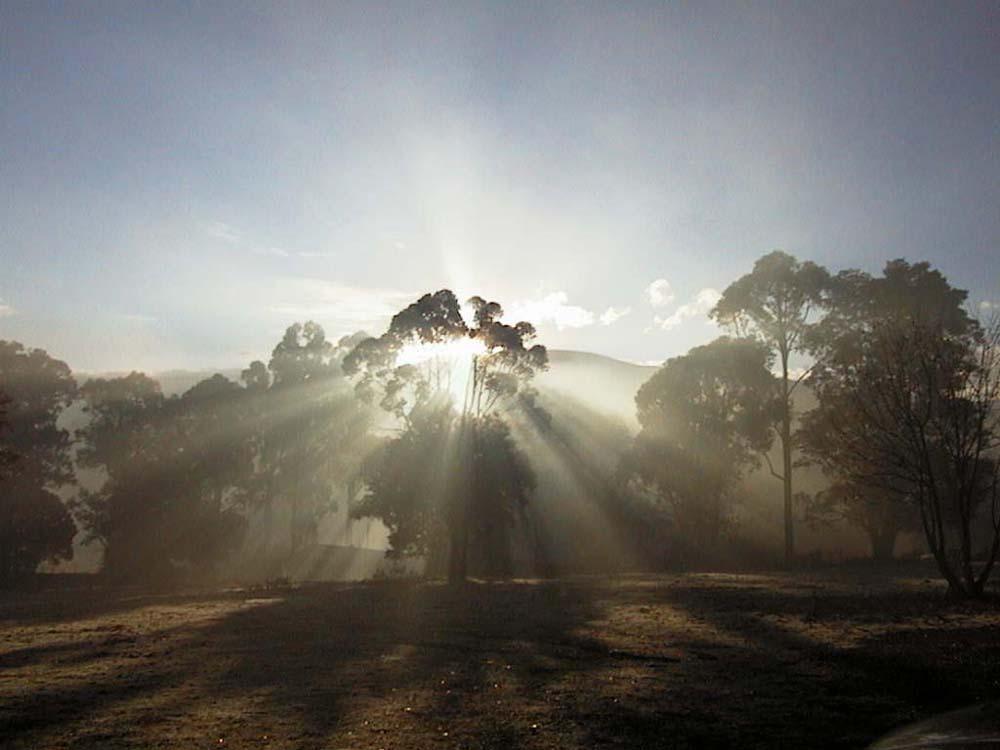
Today is the start of Daylight Saving Time in New South Wales, Victoria, South Australia, Tasmania, and the Australian Capital Territory. Clocks went forward at 2 am this morning, so if you forgot, you are now an hour behind.

Because daylight saving becomes more pointless the closer you are to the equator, states which have tropical regions do not have daylight saving, and this means Queensland, Western Australia, and the Northern Territory. For everyone else, it’s a reminder we are moving towards summer and increasing hours of daylight, so it seems the perfect opportunity to look at a name connected with light.

Lucius was the most common name in ancient Rome times across all classes; it is usually said to be derived from the Latin word lux, meaning “light”. One theory is that it was given to children who were born at dawn, but the sheer number of people called Lucius makes this untenable. Another theory connects it to loukus, which originally meant “bright, shining”, although by the classical period it had come to mean “a cleared grove”.

Lucius is the name ascribed to an early Roman king, but it is probably a misunderstanding of Lucumo, the Etruscan word for “king”, which would be his title; the name Lucius was traditional in his family, suggesting another origin for the name. The Roman dictator Sulla, who served as an inspiration for Julius Caesar, was named Lucius Cornelius Sulla Felix. There were at least two Roman Emperors named Lucius: Lucius Dominitius Aurelianus (called Aurelian), and Lucius Aurelius Commodus (called Commodus).

Commodus was the son of the emperor Marcus Aurelius, and grandson of an emperor: he was the first emperor to be “born in the purple” (during his father’s reign). He is probably best known to us as the wicked emperor in the movie Gladiator, killed by Russell Crowe in the role of Maximus: although a fictional story, the real Commodus was eccentric and cruel, and assassinated by his wrestling partner, Narcissus.

The name Lucius was a favourite choice amongst early Christians because of the meaning of “light”, and there are several saints with the name. Saint Lucius of Cyrene is mentioned in the New Testament as a founder of the church in Antioch. There have been three popes named Lucius, and Pope Lucius I is also a saint.

Another Saint Lucius is a legendary 2nd century King of the Britons, who tradition credits with introducing Christianity to Britain by writing to the pope asking to be converted. His story became well known after it was included in the histories of Venerable Bede, and embellished by Geoffrey of Monmouth. For centuries it was an important myth of British Christianity, and although there’s no solid evidence he existed, some feel there must be a grain of truth to the legend. The church of St Peter Under Cornhill in London claims St Lucius as its founder.

The Roman philosopher and statesman known to us as Seneca had the full name Lucius Annaeus Seneca. He wrote many of his famous works while in exile, and later became an advisor to the Emperor Nero. This didn’t end well for him, as he was (probably wrongly) implicated in a plot against Nero, and forced to commit suicide. Early Christians greatly approved of him, and virtually hailed him as a humanist saint. According to medieval legend, he was converted to Christianity by Saint Paul, and is mentioned by writers such as Dante and Chaucer.

Despite all this heavy-duty Christian background, and even a British connection, Lucius has never been a common English name. It does seem to have had some history of use in Yorkshire, which has strong ties to the legendary Saint Lucius.

The name Lucius is a traditional one in the aristocratic Cary family, who bear the title Viscount Falkland. The 2nd Viscount fought on the Royalist side in the English Civil War and was killed in action. The current Viscount Falkland is named Lucius, and so is his son (a writer who goes by his middle name, Alexander), and his grandson.

Lucius has probably been used more often in America, and there are a number of famous politicians from the United States bearing this name. It’s also known from American writer and bon vivant, Lucius Beebe, and American sci-fi author Lucius Shepard.

Lucius isn’t too unusual a name in Australian historic records. Dr William Harvey, who was featured on the blog earlier this year, had a father named Lucius who was also a doctor, and it was his father’s death from tuberculosis which led Dr Harvey into specialising in thoracic medicine. A famous Australian with the name is musician Lucius Borich, the son of Kevin Borich, who was in the band The Party Boys.

Lucius doesn’t chart in Australia. 14 baby boys were named Lucius in England/Wales last year, while in the US (where Lucius peaked at #257 in the 19th century), 125 boys were named Lucius in 2013 – the same number as those called Hollis and Zephaniah.

If there seems a lack of real life Luciuses, fiction has stepped into the breach, for they abound in books, movies, TV programs, and video games. It’s no new phenomenon, for Lucius is the narrator of The Golden Ass by African author Apuleius; written in Latin in the 1st century, this comedy is sometimes regarded as the world’s first novel. Lucius is also in Arthurian legend, a fictional Emperor of Rome who King Arthur defeats, thus becoming not just King of Britain, but Emperor over all the West.

Lucius has been used as a character name twice by William Shakespeare, in Titus Andronicus and Julius Caesar. In fact, pretty much anyone who writes a story set in Roman times will include a Lucius somewhere, as it was the #1 name.

One of the best known fictional Luciuses of contemporary times is the slippery Lucius Malfoy from the Harry Potter series. Upper crust, corrupt, bigoted, and ready to slip over to the Dark Side whenever convenient, Lucius is a dyed-in-the-wool villain and general Mr Nastypants for most of the series. Only towards the end does he receive a lukewarm redemption.

His name, although suitably aristocratic, brings to mind Lucius from The Golden Ass, which is a book about witchcraft and magic – not to mention someone (literally) making an ass of themselves. However, just as Malfoy’s son’s name, Draco, means “serpent” and reminds us of the Devil, Lucius’ name is reminiscent of Lucifer, a name related to Lucius, meaning “light-bringer”, and which is often understood by Christianity as Satan’s name before his fall.

Unfortunately, some people think Lucius and Lucifer sound too similar for comfort. Stories that make the connection don’t help, such as the video game Lucius, Son of Lucifer, or the horror novel The Haunting of Sister Mary Francis, which has a character named Lucius Lucifer. On the plus side, that gives Lucius a bit of a “bad boy” edge.

An alternative is Lucian, which is derived from Lucius. Lucian is more popular in Australia than Lucius, being around the 500s, and fits in with the trend for boy’s names ending in N – Lucian almost seems like a fancier version of Lachlan.

Lucius can be pronounced either LOO-see-us, or LOO-shus. The ancient Romans said it more like LOO-ki-us, which perhaps suggests the three syllable pronunciation is more “correct”. Obvious nicknames are Lucky, Luke, Luc, Luca, Luce, Loosh, Lou, and Louie. I have seen a baby Lucius nicknamed Luci or Lucy by his family, which startled me, even though it makes perfect sense.

Handsome, intelligent, and with a rather upper-class image, Lucius does have a few issues, but seems like a name that someone could really fall in love with. It’s quite seductive – even luscious! I’ve noticed this name is often favoured by dads, suggesting that many guys appreciate the richness and power that stand behind it.

This is a rare boy’s name that is perfectly balanced between elegance and strength, brightness and darkness, history and magic, with lashings of Ancient Roman street cred and a bit of sex appeal to boot. Lucius could well be the name that lights up your life.

POLL RESULT
Lucius received a very good approval rating of 77%. 37% of people loved the name Lucius, while 25% of people didn’t mind it. Only around 5% of people hated the name.

(Photo shows daybreak at Delderfield, Marysville, in country Victoria)


Famous Name: Sheila

24 Wednesday Sep 2014

Posted by A.O. in Famous Names

≈ 4 Comments

Tags

allegorical names, Australian slang terms, dated names, Gaelic names, Irish names, Irish slang, mythological names, name history, name meaning, name popularity, saints names, UK name popularity, US name popularity

GP-cover1-20140122172117554563-496x620

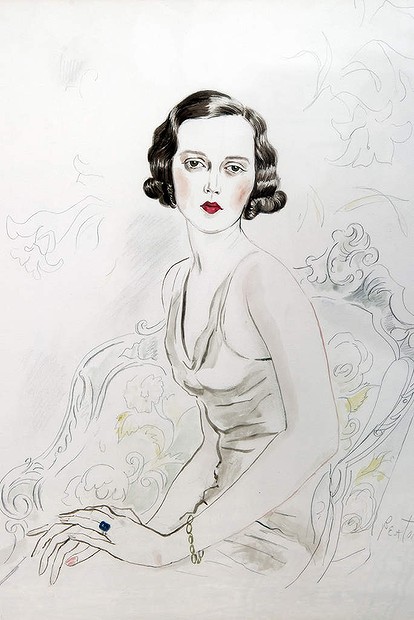
September 9 marked the 119th birthday of Sheila Chisholm (named Margaret, and always known by her middle name). It was a century ago that Sheila left Sydney for her grand tour of Europe. A striking beauty with short auburn hair, lovely complexion, and big hazel eyes, she had grown up on a sheep station in country New South Wales, and was an accomplished horsewoman, and daring swimmer, popular as a good dancer with a sense of humour.

Once arrived in England, Sheila barely had time to “come out” for her first London Season before war was declared, and she headed off to Cairo to nurse wounded soldiers. During the war, she married the eldest son of a Scottish earl, Lord Loughborough (“Luffy”), and became a fixture of smart London society in the Prince of Wales set, admired for her languorous beauty, calm presence, and exotic colonial background.

Her marriage deteriorated, as Luffy was a gambling addict and unfaithful (both were considered acceptable for a man of his class). Sheila also took lovers, amongst them Prince Albert, known to his friends as Bertie. Bertie was entranced by Sheila as soon as they met, and the two became inseparable. King George V naturally wasn’t thrilled, and demanded that Bertie end it: his obedience was rewarded with a dukedom, and he soon married Lady Elizabeth Bowes-Lyon. Bertie later became King George VI, the father of the present queen.

Sheila also received attention from married Russian prince Serge Obolensky, American billionaire Vincent Astor (Serge was his brother-in-law), and film star Rudolph Valentino. However, after her divorce she married English baronet Sir John Milbanke (“Buffles”), and continued her ascent in society. She threw lavish parties, and was friends with celebrities like actor Fred Astaire, socialites Lady Diana Cooper and Wallis Simpson, and writers Noel Coward, Nancy Mitford, and Evelyn Waugh (she gave Waugh the idea for The Loved One).

In the post-war years, after being widowed, she not only became a millionaire businesswoman in the travel industry, but married an exiled Russian prince who was the cousin of her old flame, Obolensky. Sheila was very happy in her marriage to Dmitri Romanoff, so ended her amazing life as a princess.

Sheila’s biography, by journalist Robert Wainwright, is called Sheila: The Australian beauty who bewitched British society. Just published this year, the author has hinted of a possible TV deal – “It’s Downton (Abbey) meets Neighbours“. Keep an eye out!

Sheila is an Anglicised form of the Irish name Síle or Sìle, a medieval Gaelic form of the name Celia (although often understood as a form of Cecilia). It has several variant spellings, including Sheelagh and Shelagh. Rather confusingly, the name Sheila has historically been hyper-Anglicised to Julia.

The name Sheila has a special place in Ireland’s history, because in the patriotic traditions of the 17th century, it was one of the allegorical female names used to stand for Ireland (like Erin and Kathleen). In ballads, Sheelagh is a feminine personification of Ireland, a sovereignty goddess who is wasting away as she lacks a royal suitor. In political pamphlets, Sheelagh was a lady whose health suffered due to the violence inflicted on her by “Mr Bull”.

According to folklore, Sheelah was the name of St Patrick’s wife, or in other traditions, his mother. Irish communities celebrated St Sheelah’s Day on March 18: some say it was a day to sober up, while others saw it as a chance to continue the celebrations. St Sheelah’s health was to be drunk in whiskey, and the shamrock was worn on her day also. St Sheelah’s Day has been associated with snow storms, and in many stories she becomes an old crone, who quarrels with St Patrick and puts a spell of bad weather on the country out of spite. This makes St Sheelah seem more of a weather goddess than anything else – she is certainly not very saintly!

Another Irish connection to the name is the mysterious Sheela na Gig – grotesque carvings of a naked woman displaying an exaggerated vulva. They are all over Europe, but particularly in Ireland; they are often found on churches, and like gargoyles, their hideous appearance is said to drive away evil spirits. The name Sheela na Gig is usually translated as something like “Sheela showing her vagina”.

It is thought that Sheela na Gig represents a Celtic pagan goddess, perhaps a divine hag, or fertility figure. It is hard not to be struck by the coincidence of a “hag” named Sheela and the crone-like St Sheelah, and many note the similarity in sound between Sheela and the Gaelic word sidhe (pronounced SHEE), referring to a race of fairy-like beings who are the remnants of gods and goddesses. All very evocative and enigmatic.

Another riddle is how the name Sheila became Australian slang to mean “woman, girlfriend”. The first use of the slang dates to 1822, and the usual explanation is that Sheila was a common Irish name, and so widespread amongst Irish emigrants to Australia that it became a de facto term to mean “Irish woman”, the female equivalent of Paddy for an Irish man.

However Dr Dymphna Lonergen, an academic who specialises in the Irish language in Australia, notes that this makes little sense. Sheila isn’t a common Irish name, and not even a single woman called Sheila was transported to Australia in the 18th century. There were much larger numbers of Irish emigrants to Britain and America than to Australia, and Sheila never became a generic term for an Irishwoman there – in the US, the term for an Irishwoman is Biddy, short for Bridget.

She suggests that the term derives from Irish slang, where Sìle was used as a derogatory term for a man judged to be weak or effeminate, overly fond of female society and domestic pursuits, or a homosexual (this last sense is a “taboo” word, or underworld slang). Presumably the slang quickly became transferred from “womanish men” to actual women.

Whether the word remained derogatory is still up for debate! However, Robert Wainwright says that the phrase “good looking sheila” dates to the 1920s – the time when Sheila Chisholm first became well known in society. Could this stunning, vivacious Australian woman have inspired its use? If so, it seems like a great compliment.

The name Sheila was #236 in the 1900s, but joined the Top 100 in the 1910s at #83. It peaked in the 1920s at #67, and by the 1930s was already out of the Top 100. It hasn’t charted since the 1950s, and can be seen as a “trendy” name of the 1910s and ’20s (the time when Sheila Chisholm was most in the Australian society pages, and before sheila became widely used slang).

Although it’s often thought as very Australian, the name Sheila enjoyed more popularity in the United States, where it was Top 100 from the 1940s to the 1970s, and peaked higher at #50. It only left the charts in the late 2000s. In the UK, it was far more popular still, and Top 100 from the 1920s (when Sheila Chisholm entered the social scene) to the 1960s (when she died), and peaked at #6 in the 1930s. Last year 10 baby girls in England/Wales were named Sheila, a number which has held steady since 1996.

Disappointed that nobody much in Australia seems to have been named Sheila since around the ’50s? Fear not, because modern variants of Sheila abound here, such as Shayla, Shaylah, Shailah, Shyla, and Shylah, influenced by names like Kayla and Skyla. If they were all added together as one name (even though they sound different), Sheila would be somewhere in in the 100s, so not really that rare at all.

POLL RESULTS
The name Sheila received an approval rating of 31%. People saw the name Sheila as too closely associated with the slang term (27%), and too dated (17%). However, 14% thought it seemed cool, retro, and deserving of a comeback. Only one person thought Sheila made a geat Irish heritage choice.

(Portrait of Sheila Chisholm by Cecil Beaton, held by the National Portrait Gallery in London, courtesy of the Rosslyn Family Estate)

Requested Famous Name: Annabelle

23 Wednesday Jul 2014

Posted by A.O. in Famous Names, Requested Names

≈ 3 Comments

Tags

aristocratic names, famous namesakes, honouring, Latin names, modern classic names, name history, name meaning, name popularity, name trends, names of boats, popular names, portmanteau names, Scottish names, UK name popularity, US name popularity

Annabelle_Rankin

Famous Namesake
On July 28, it will be the 106th birthday of pioneering stateswoman Dame Annabelle Rankin, who was the first woman from Queensland to sit in the Parliament of Australia, the second female Australian Senator, and second female parliamentarian for the Liberal Party.

Annabelle was the daughter of Colin Rankin, a Scottish-born Queensland politician who served in both the Boer War and First World War; Annabelle was named after her mother. Her father encouraged her to travel, and when she left school, she went to China, Japan, England, Scotland, and continental Europe. With a background in community involvement, she worked in the slums of London, and with refugees from the Spanish Civil War.

Back in Australia, Annabelle was a volunteer during World War II, serving at air raid shelters and hospitals, and organised the YWCA’s welfare efforts for servicewomen. Her responsibilities involved travelling to military bases in Queensland and New South Wales, and she accompanied Eleanor Roosevelt, First Lady of the United States of America, and Lady Gowrie, wife of the governor-general, on their visits to the troops.

After the war, she stood as a candidate for the Liberal-Country Party, and entered the Senate on July 1 1947. Annabelle was the first woman in the British Commonwealth to be appointed as an opposition whip, and was the whip in the Senate from 1951 to 1966.

Dame Annabelle was appointed Minister for Housing in 1966, becoming the first woman in Australia to administer a government department. As minister, she worked to provide housing for old age pensioners, and introduced a housing system for Aboriginal Australians and new migrants. As a newspaper of the time helpfully noted: “She tackles men’s problems too”.

After retiring from parliament in 1971, Dame Annabelle was appointed high commissioner to New Zealand – the first woman in Australian to lead a diplomatic mission. She supported several community organisations, including the Australian Red Cross Society, Country Women’s Association, Girl Guides, Victoria League, and Royal Commonwealth Society.

She was for many years the President of the Queensland branch of the Children’s Book Council of Australia, and the Dame Annabelle Rankin Award for services to children’s literature in Queensland is given in her honour. Another of her namesakes is the Annabelle Rankin, one of the ferries on Sydney Harbour.

Dame Annabelle was easily recognisable from her auburn hair and warm brown eyes, and combined a cheerful, friendly demeanour with a strong, uncompromising will, and apparently tireless energy. She was an excellent orator, and very capable of handling the occasional heckler (by no means were all the hecklers male, either).

While researching the name Annabelle, I noticed quite a few people seemed to think that the name Annabelle sounded “unprofessional”, and predicted that a woman named Annabelle could never be taken seriously in public life. If nothing else, the career of Annabelle Rankin proves this to be completely untrue.

Name Information
Annabelle is a variant of the name Annabel, which originated in Scotland during the Middle Ages. Although it is sometimes treated as a cross between Anna and Belle, this isn’t plausible as it pre-dates the common use of the name Anna in Scotland.

It’s assumed to be a variant of the Latin name Amabel, meaning “lovable” – the long form of Mabel, and close relation to familiar Amy. It may have been influenced by the name Agnes (“pure”), which was said (and often spelled) Annas at that time.

The Annabelle spelling probably has been influenced by Anna and Belle in the modern era, and is often understood as meaning “graceful and beautiful”. Although this isn’t very good etymology, the name is a bit of a hodge-podge, and you might feel free to translate it as you wish.

The names Annabel and Annabelle have long been favourites with the British peerage, both English and Scottish, which gives them a rather aristocratic air. I tend to feel that Annabel is a bit more “posh”, while others may think that the Frenchified Annabelle seems more stylish and “finished”.

Annabelle has charted in Australia since the 1970s, when it debuted at #580. Since the 1980s it has risen steeply, and it entered the Top 100 in 2000, at #92. It entered the Top 50 in 2007, when it reached #46, and although it wobbled a little here and there, it is now at the highest point it has ever been.

Currently it is #44 nationally, #35 in New South Wales, #50 in Victoria, #43 in Queensland, #47 in Western Australia, #61 in Tasmania, and #36 in the Australian Capital Territory.

Annabelle is also Top 100 and climbing in the US and the UK, but is more popular here than anywhere else, making Annabelle one of those unexpectedly Australian names. Annabelle is also Top 100 in New Zealand, but isn’t rising in popularity.

Annabel has charted in Australia since the 1960s, entering the rankings at #420, but while it also rose steeply during the 1980s, hasn’t become popular, and is still in the 100s. Annabel is only just outside the Top 100 in the UK, but is stable rather than rising, which is probably similar to the situation here. In the US, it is rising steeply, but only in the high 400s, so a long way off popularity.

Annabelle is a pretty, elegant, ultra-feminine name that’s well on its way to becoming a modern classic (while Annabel is already there). It fits in so smoothly with the trend for -belle and -bella names that it’s become quite popular, and may become more so.

Although it wasn’t originally linked to the names Anna and Belle, it might be used to honour people with those names, or similar names. Possible short forms abound, but all the the Annabelles I’ve ever met have only used their full name – it strikes me as one of those relatively long names that are somewhat nickname-resistant. There’s plenty to love about adorable Annabelle!

Thank you to Brooke for suggesting the name Annabelle to be featured on Waltzing More Than Matilda

POLL RESULTS
Annabelle received an approval rating of 62%. 20% of people preferred the name Annabel, but 16% thought Annabelle was beautiful and feminine. Only person thought the name Annabelle was too popular. I wonder if Annabel would have done better – perhaps we will feature it another time.

(Photo is of Dame Annabelle Rankin)

Requested Name: Eva

02 Wednesday Apr 2014

Posted by A.O. in Requested Names

≈ 9 Comments

Tags

Biblical names, classic names, European name popularity, famous namesakes, fictional namesakes, hebrew names, historical events, honouring, Irish names, Latinate names, name history, name meaning, name popularity, name trends, names of aeroplanes, New Zealand name popularity, nicknames, popular names, saints names, UK name popularity


Front1Eva is the Latinate form of Eve, a Hebrew name translated as “breath, life”. Eve is famous as the first woman in the Bible, and the companion of the first man, Adam. She shared Adam’s fate of being cast out of the Garden of Eden, and is regarded in the Bible as the mother of all humanity. Apart from the biblical figure, there is also a saint named Blessed Eva of Liege, a medieval holy recluse.

Eva is the most usual form of the name Eve in many countries around the world, and in Ireland and Scotland, can be used to Anglicise the Irish name Aoife, meaning “beauty”. In Australia, Eva has historically been often used by European immigrants, particularly amongst Catholics and Jews. This gives it considerable scope as a potential heritage choice.

Amongst English-speakers, the name received a boost of popularity in the 19th century after the publication of Harriet Beecher Stowe’s 1852 anti-slavery novel, Uncle Tom’s Cabin. In the book, Evangeline St. Clare, or “Little Eva” is an angelic little girl who inspires love in even the most heart-hardened, and in her final throes, converts all the slaves to Christianity with some locks of her hair. It is the pure goodness of Little Eva which changes the lives of all around her.

Uncle Tom’s Cabin created a wave of pro-slavery novels to combat its views, and one of them was Little Eva: the Flower of the South, in 1853. Quick to cash in on the Little Eva phenomenon, it features yet another angelic little girl called Little Eva, equally loving and lacking in prejudice – only in this book, Eva is so kind-hearted that when the slaves are set free, they elect to remain with her of their own free will. This idealistic dream of voluntary slavery never came to pass on a large scale.

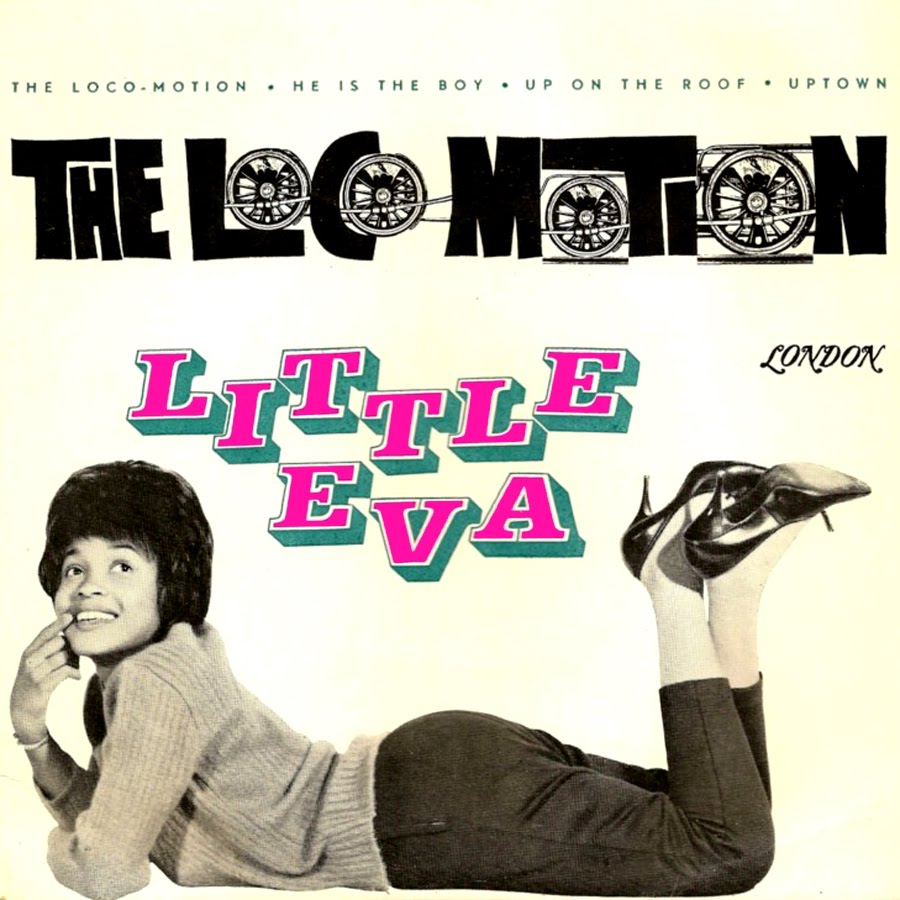
A real life Little Eva was the 1960s pop singer, born Eva Narcissus Boyd. She didn’t receive her moniker from either of these literary characters, but was called Little Eva by her family to distinguish her from her aunt, also named Eva. Little Eva is most famous for singing The Locomotion, later covered by Australian pop star Kylie Minogue. Little Eva apparently wasn’t too impressed by Kylie’s version.

Another Australian connection to Little Eva comes from World War II, when an American Air Force plane named the Little Eva got lost and crashed after a bombing mission in an isolated region of the Gulf of Carpentaria in Queensland. What happened to the survivors of the crash, and their desperate struggle against the dangers of the Australian outback, was made into a documentary called Aeroplane Dance, and is being developed into a feature film scheduled for release this year.

Eva is a classic name in Australia which has never left the charts. It was #37 in the 1900s, sinking until it left the Top 100 in the 1930s. It reached its lowest point in the 1980s at #425, then rose steeply during the 1990s to make the Top 100 for the late 2000s. Currently it is #24 nationally, #26 in New South Wales, #30 in Victoria, #31 in Queensland, #66 in Tasmania, and #27 in the Australian Capital Territory.

Eva is a very international name, being popular in all English-speaking countries, and all over Europe, including Eastern Europe and Scandinavia. It is most popular in Slovenia, at #2, and its popularity in Britain and New Zealand is almost identical to that in Australia.

Eva’s position in the Top 100 is stable, and it is now at its highest level of popularity ever. This makes it a Contemporary Classic – a traditional classic name which manages to feel modern and up-to-date. Because it is still rising, albeit gradually, it is also an Up and Coming Classic, so that it still seems rather fresh and stylish.

This all helps to make Eva an attractive choice. Furthermore, it fits in with the trend for short names ending in -a, such as Isla and Ella, and the V names, such as Ava, Ivy, Evie and Evelyn. This means that while Eva doesn’t stand out amongst its peers, neither does it sound particularly distinctive.

However, for those who care about such things, Eva has the advantage of being a classic, unlike Isla, Ella, Ava, Ivy and Evie, and also began rising before them, so that it cannot be accused of being a copycat. Eva is closest to the name Evelyn, which is also a classic that began rising in the 1990s – although Evelyn has yet to reach the popularity it enjoyed in the 1900s.

Eva is a beautiful classic name that is feminine without being frilly. Eva sounds intelligent as well as pretty, and it’s a name which ages well. It is easy to spell and pronounce, and is popular without being either extremely common or faddish. That makes it a baby name which might tick a lot of boxes on many people’s lists. The usual nicknames are Eve or Evie, but it is so short and simple that it doesn’t really need a nickname.

POLL RESULT
Eva received an excellent approval rating of 83%, making it one of the highest-rated names of 2014. People saw the name Eva as a stylish classic (23%), feminine yet not frilly (19%), beautiful or pretty (18%), and easy to spell and pronounce (17%). However, 6% thought it was too popular. Nobody thought the name Eva sounded too much like the word evil.

Thank you to Brooke for suggesting the name Eva be featured on Waltzing More Than Matilda

Waltzing with … Bran

09 Sunday Mar 2014

Posted by A.O. in Waltzing with ...

≈ 2 Comments

Tags

animal names, Arthurian names, bird names, British names, english names, epithets and titles, fictional namesakes, Game of Throne names, germanic names, Irish names, mythological names, name combinations, name history, name meaning, nicknames, Old English names, saints names, sibsets, surname names, UK name popularity, Welsh names

360029

There always seems to be lots of crows and ravens around at the end of summer, finishing off the remains of those creatures who have not survived the blazing heat and drought – a very important job that we don’t appreciate as much as we should. This put me in mind to write about a name connected to these highly intelligent birds, who feature in many mythologies, for as carrion birds, they are often seen as harbingers of death, with mysterious knowledge of the afterlife.

Brân the Blessed is a heroic figure from Welsh mythology; a giant, probable god, and High King of Britain. Legends tell of how he travelled to Ireland with a host of warriors in order to rescue his sister Branwen, who was being mistreated by her husband, an Irish king. The battle was brutal, and only seven men from the rescue party survived: Branwen herself died of a broken heart.

Brân was mortally wounded in the foot, and told his men to cut off his head, so that it could be returned to Britain. They took the head to “White Hill”, thought to be where the Tower of London now stands. The head was buried there, facing France, because as long as it remained, Britain would be protected from invasion. King Arthur later dug the head up, declaring that only his strength was needed to protect the land. This was seen as a disastrous decision, because when Arthur had gone, the land was invaded by the Saxons.

Brân is connected to many figures from British legend. He is seen as a forerunner to King Arthur as High King of Britain, and many have noted his similarity to the mysterious Fisher King of Arthurian legend, who is sometimes identified as a man named Bron. The Fisher King had a wounded leg, and in some tales, the Grail he possessed had the power to restore the fallen – a parallel with Brân, who had a cauldron that could bring warriors back to life. Some stories report that Percivalfound a severed head in the Fisher King’s castle instead of the Grail.

Others scholars see Brân as connected to the Irish hero Bran mac Febail, who embarked on a journey to the Otherworld, and when he returned, so many years had passed that the Irish people know him only as a legend. After telling his story, he sailed away across the sea, never to return. The tale was an apparent inspiration for the Voyage of Saint Brendan, a legendary quest the saint undertook to the Isle of the Blessed, or Saint Brendan’s Isle. Although this may not immediately remind you of Brân the Blessed, in British legends, a voyage to Ireland (in the west) is often an allegory for a journey to the Otherworld – and Brân did die there.

The severed head of Brân the Blessed is important, because some believe the human head played a significant role in Celtic religion. Greek historians tell how Celtic warriors could cut off the heads of their enemies in battle, and that these heads would be embalmed and placed on display. Archeologists theorise that ownership of a head gave one power over the dead person, or that the head was venerated as the seat of the soul and a symbol of the Otherworld.

The head of Brân the Blessed possessed powers of mystical protection, and some connect this to the ravens in the Tower of London, because the name Brân means “crow, raven” in Welsh. There are seven ravens at the Tower, and according to tradition, they protect the Crown and the Tower. Superstition warns that should the ravens of the Tower be lost or fly away, the Crown will fall and Britain with it.

Supposedly the ravens have been kept at the tower since the 17th century, but historical evidence points to them being a Victorian innovation, possibly a gift from an earl with links to Druidic scholarship who consciously chose them as representations of Brân the Blessed. Another theory is that they were simply pets of the 19th century Tower staff. And alas for the superstition, the Tower records show that just after World War II, there were no ravens left (an apparent crow-napping), yet the monarchy and Britain have managed to soldier on.

The Welsh name Bran, from Brân, is said BRAHN, while the Irish Bran, of the same derivation and meaning, is said BRAN. The name Brendan, the saint whose legend was influenced by that of Bran mac Febail, comes from the Welsh word for “prince”. This is rather interesting, because another theory about Brân the Blessed was that his name was actually a title: to be understood as meaning The Raven in the sense of The Prince, The Chieftain (as King Arthur’s father was known as The Pendragon, head dragon or war leader).

A character named Bran from contemporary fiction is Bran Stark, from George R.R. Martin’s A Song of Fire and Ice; in the television drama series A Game of Thrones, he is played by Isaac Hempstead-Wright. Despite his mythologically rich name, Bran is just short for Brandon, an English surname which comes from several places named Brandon in the United Kingdom.

Most of these come from the Old English for “gorse hill”, although Brandon in Lincolnshire means “steep hill”. However, there are places in Ireland with Brandon in their name, and these are said to be connected to Saint Brendan, although they don’t seem to have contributed to the surname. The surname Brandon also exists in continental Europe, and in these cases, it may be derived from the Germanic name Brando, meaning “sword”. The English surname does seem to be older than these though, and predates the Norman Conquest.

Bran is a strong, simple name from legend and literature with layers upon layers of evocative meaning and association. It has limited use in the UK, and is elsewhere almost unknown. If you are worried that it is too much like the cereal husks, you can use the Welsh pronunciation, or even the Arthurian Bron. Another possibility is the Irish surname name Brannan or Brannon, which in some cases means “son of Bran”. The girls name Branwen (sister of Bran) means “fair raven”.

POLL RESULT
Bran received a respectable approval rating of 69%. 28% of people liked the name, while 20% loved it.

(Photo is of an Australian raven, one of several Corvid species native to Australia)

Famous Name: Henrietta

05 Wednesday Mar 2014

Posted by A.O. in Famous Names

≈ 6 Comments

Tags

birth notices, famous namesakes, French names, germanic names, honouring, name history, name popularity, name trends, nicknames, royal names, UK name popularity, US name popularity, vintage names

henrietta_dugdale-australian-feminist-suffrageThis Saturday, March 8, marks International Women’s Day. I haven’t covered a name specifically for Women’s Day before, but thought it would be a good opportunity to look at one of Australia’s early feminists.

Henrietta Dugdale was originally from London, and arrived in Melbourne in the early 1850s, becoming a pioneer of the women’s movement in Victoria in 1869, after separating from her second husband. She formed the Victorian Suffrage Society in 1884, and became its president; this was the first Australian organisation to work towards voting equality for women. By this time, women could vote on Norfolk Island, and South Australia had brought in limited female suffrage.

(It should be remembered that male suffrage was only introduced during the 1850s, so women weren’t so far behind, although obviously they didn’t want to be behind at all).

Henrietta was confident, passionate and quick-witted in her quest for an equal society, and believed in the possibility of a Utopian future which could be achieved through the use of reason, and co-operation between the sexes. She fought for female suffrage as an essential step towards female emancipation, and bitterly spoke against the Victorian courts, and their failure to protect women from violent crimes. She noted that women’s anger was compounded by the fact that those who inflicted violence on women had a share in making the laws, while their victims did not.

Henrietta believed that women’s lives could be improved through gaining access to the professions, sensible clothing, birth control, and harsh penalties for sexual assault. She was a proponent of temperance, universal education, a more equal distribution of wealth, and the eight hour day as means towards improving the lives of the working class. A member of the Secular Association, she saw Christianity as an oppressive force in women’s lives, and also opposed monarchy and imperialism.

In her private life, she was a wife, and mother to three sons. She made her own clothes, grew her own vegetables, was a skilled carpenter, and an excellent chess player. She outlived three husbands and was over 90 when she died – a good advertisement for teetotalism and fresh vegetables!

Henrietta was recognised as a pioneer of female suffrage when the Commonwealth gave women the vote in 1902, shortly after Federation. Australia was the second country in the world to grant women equal voting rights, after New Zealand, in 1893; however we were the first in the world to allow women to stand for parliament. Henrietta’s own state of Victoria was the last to grant women the vote, in 1908.

When you look at modern Australian society, there must be much of which Henrietta Dugdale would approve. Women can vote, and be elected to power; they can enter the professions, have access to birth control, and don’t have to wear corsets. Presumably she would give the thumbs up to state school education, Dry July, Family Planning clinics, the fall of the Empire, and the rise of secularism.

However, the fight against violence towards women still has a long way to go. 57% of Australian women have experienced physical or sexual violence. One in three will suffer violence in an intimate relationship. The incidence of sexual violence against women in this country is more than double the global average. In Victoria, domestic violence is the leading contributor of death, injury and illness amongst women aged 15-44. Almost every week, a woman will die at the hands of her spouse or partner.

The Dugdale Trust for Women & Girls in Victoria was set up last year to to reduce violence against women and girls, with women and men working to address the root causes of violence. It is proudly named in honour of Henrietta Dugdale, and I am sure she would applaud this initiative.

Henrietta is a feminine form of the Germanic Henry. Although a traditional name amongst European royalty, the name only became widely used in England after the marriage of Charles I to Henriette-Marie of France, the youngest sister of the future King Louis XIII. In England, her name was Anglicised to Henrietta Maria; the king called her Maria, and the English public thought of her as Queen Mary.

Henriette-Marie wasn’t a popular queen, due to her Frenchness, which included staunch Catholicism, and failure to learn English very well. Nonetheless her name made an impact, and she bestowed it on her daughter Princess Henrietta of England, who married the son of Louis XIII, Phillipe I, Duke of Orleans. Unlike her mother, Henrietta seemed popular in her adopted country, although she died young, possibly from poisoning.

Another (semi) royal Henrietta was the illegitimate daughter of King James II, an ancestor of Diana, Princess of Wales, and her sons William and Henry (Harry). The name Henrietta became commonly used amongst the English nobility, and still has a rather aristocratic air. It isn’t particularly common in English-speaking countries, and has been less popular in Australia than in either the United States, where it left the charts in the 1960s, or in England/Wales, where it has remained fairly stable since the 1990s, and is currently in the 500s.

In New South Wales, Henrietta was #158 in the 1900s, and fell in popularity so that it had left the charts altogether by the 1930s. You could call it a dated name, as it hasn’t charted for more than 80 years, but as it was never popular, I prefer to think of it as a vintage name. In Victoria, there were 7 babies named Henrietta in 2012.

Although Henrietta could never be accused of trendiness, it feels like a great time to give your daughter this name. Vintage and retro names are in style, four-syllable names for girls are popular, and there is a fresh appreciation for names associated with royalty. Princess Mary of Denmark has a daughter whose second name is Henrietta: not named for a queen or princess, but for Mary’s mother, Henrietta Donaldson.

This is a lovely dignified vintage name with a royal history and the attraction of never having become popular. The short form Etta is very fashionable (Henrietta Donaldson’s nickname), Hettie would be adorable, Hennie is sweet, and I have even seen a little girl named Henri in a birth notice.

POLL RESULT
Henrietta received an excellent approval rating of 77%, making it one of the highest-rated names of 2014. People saw the name Henrietta as strong and intelligent (21%), classy and dignified (17%), beautiful and charming (16%), and a vintage name ready for revival (16%). However, 7% of people thought it was ugly and frumpish.

← Older posts
Newer posts →

Enter your email address to follow this blog

Categories

Archives

Recent Comments

A.O.'s avatarwaltzingmorethanmati… on Zarah Zaynab and Wolfgang…
Madelyn's avatarMadelyn on Zarah Zaynab and Wolfgang…
JD's avatardrperegrine on Can Phoebe Complete This …
A.O.'s avatarwaltzingmorethanmati… on Rua and Rhoa
redrover23's avatarredrover23 on Rua and Rhoa

Blogroll

  • Appellation Mountain
  • Baby Name Pondering
  • Babynamelover's Blog
  • British Baby Names
  • Clare's Name News
  • For Real Baby Names
  • Geek Baby Names
  • Name Candy
  • Nameberry
  • Nancy's Baby Names
  • Ren's Baby Name Blog
  • Sancta Nomina
  • Swistle: Baby Names
  • The Art of Naming
  • The Baby Name Wizard
  • The Beauty of Names
  • Tulip By Any Name

RSS Feed

  • RSS - Posts

RSS Posts

  • Celebrity Baby News: Melanie Vallejo and Matt Kingston
  • Names from the TV Show “Cleverman”
  • Can Phoebe Complete This Sibset?
  • Zarah Zaynab and Wolfgang Winter
  • Baby, How Did You Get That Name?
  • Celebrity Baby News: Media Babies
  • Celebrity Baby News: Adelaide Crows Babies
  • Celebrity Baby News: Chris and Rebecca Judd
  • Names at Work: Name News From the World of Business and Employment
  • Celebrity Baby News: Sporting Round Up

Currently Popular

  • The Top 100 Names of the 1940s in New South Wales
  • Celebrity Baby News: Jacinta Allan and Yorick Piper
  • Rare Boys Names From the 1950s
  • The Top 100 Names of the 1930s in New South Wales
  • Celebrity Baby News: Jason Morrison and Heidi Tiltins

Tags

celebrity baby names celebrity sibsets english names famous namesakes fictional namesakes honouring locational names middle names name combinations name history name meaning name popularity name trends nicknames popular names saints names sibsets surname names twin sets unisex names

Blog at WordPress.com.

Privacy & Cookies: This site uses cookies. By continuing to use this website, you agree to their use.
To find out more, including how to control cookies, see here: Cookie Policy
  • Subscribe Subscribed
    • Waltzing More Than Matilda
    • Join 517 other subscribers
    • Already have a WordPress.com account? Log in now.
    • Waltzing More Than Matilda
    • Subscribe Subscribed
    • Sign up
    • Log in
    • Report this content
    • View site in Reader
    • Manage subscriptions
    • Collapse this bar
 

Loading Comments...