
• About
  • Best Baby Names
  • Celebrity Baby Names
  • Celebrity Baby Names – Current
  • Celebrity Baby Names – Past
  • Featured Boys Names
  • Featured Girls Names
  • Featured Unisex Names
  • Links to Name Data
  • Waltzing on the Web

Waltzing More Than Matilda

~ Names with an Australian Bias of Democratic Temper

Waltzing More Than Matilda

Tag Archives: slang terms

Less Commonly Used Boys Names

10 Sunday Jun 2012

Posted by A.O. in Name Themes and Lists

≈ 9 Comments

Tags

Anglo-Norman names, Apache names, Australian vocabulary words, celebrity baby names, english names, fabric names, famous namesakes, fictional namesakes, germanic names, Hindi names, Indian names, Italian names, Latin names, locational names, mythological names, name data, name history, name meaning, name popularity, Native American names, nicknames, popular culture, Roman names, saints names, slang terms, surname names, unisex names, US name popularity, vocabulary names, Welsh names, Yorkshire dialect names

This follows on from Less Commonly Used Girls Names. The names are from the bottom of the popularity charts in New South Wales, Victoria, Queensland and Tasmania, and in each case, the name was used less than ten times in 2011.

There seems to be a lot of musical references in this entry, so I’ve linked relevant names to YouTube videos of the person performing.

Atticus

This Roman name means “man from Attica” – Attica being the area of Greece surrounding the city of Athens. This name wasn’t uncommon in the ancient world; there is a Platonist philosopher called Atticus, and there is also a Saint Atticus, a soldier who died a martyr by being burned at the stake. However, today it is most associated with Atticus Finch, the principled lawyer and loving single father in Harper Lee’s novel, To Kill a Mockingbird. Atticus Finch, who defends a black man on a rape charge in a small Southern town during the 1930s, is considered a folk hero in legal circles. In the 1962 film adaptation, Atticus is played by Gregory Peck, who was a civil rights activist; Peck won an Academy Award for his performance, and in 2003 the American Film Institute voted his character the greatest hero in American film. It is that decent, understated heroism of Atticus Finch that makes him such a beloved character in literature and film. The character has inspired the names of both a clothing line run by musicians and an alternative rock band. It’s a hip choice which has been burning up the US popularity charts since 2004.

Bryn

Bryn is a modern Welsh name which means “hill”; as well as being a man’s name, it is also a common place name in Wales and England. A famous person with this name is Welsh opera star Bryn Terfel, a bass-baritone best known for his roles in the works of Mozart and Wagner. Apparently he applied to study music in Cardiff, but was so annoyed when they assumed he was a woman that he ended up studying in London instead. Bryn Terfel, whose first language is Welsh, is a patron of Welsh language and culture, and hopefully by now everyone in Wales recognises his name as male. Even though Bryn isn’t a common name in Australia, I don’t think it would seem too out of place either, as there are several boy’s name beginning with Br-, such as Brent and Brody. It looks rather like a cooler version of Irish Brian, which may have a similar meaning.

Corbin

Corbin is an English surname which started as a nickname based on the Anglo-Norman word for “raven”. It may have been given to someone who had raven-black hair, although less flattering possibilities also come to mind. Corbinus, the Latinised form, is found as a first name in the Domesday Book, so it has a long history of use. Despite being an old English name, this tends to be thought of as a modern American one, because it’s been solidly Top 500 in the US since the late 1980s. This may be because of television actor Corbin Bernsen, who began playing lawyer Arnold Becker on LA Law in 1986 and remained on the show until it finished in 1994. Another famous namesake is Corbin Harney, an elder and shaman of the West Shoshone people. He devoted his life to spreading a message about the dangers of nuclear energy, and the environmental issues facing the world. You may also know the name from Corbin Bleu, who was in High School Musical. This name is apparently so unusual in Australia that the article the information came from described it as a “bizarre” choice, although it seems a perfectly nice, normal name to me.

Denim

The fabric denim was originally called serge de Nîmes, after the French city where the tough cotton material was originally made by the Andre family. This was eventually shortened to denim. Denim is inextricably linked with jeans, which began life as sturdy clothing for workers, and then became fashion icons which symbolised teen rebellion. Today they are worn by pretty well everybody. Denim is an interesting name choice; it’s not really a “bad boy baby name” like Axe or Vandal, because while denim is worn by rebel icons like rock stars and bikers, it’s also worn by suburban mums and little kids. Also fabrics are usually thought of as girls names, like Velvet and Paisley, but denim is tough and hard-wearing. It’s definitely an ambiguous sort of name – one that, like the fabric, may grow with the person better than you’d expect. It’s also a soundalike with the surname and place name Denham.

Jagger

This English surname originated in Yorkshire, and means “hawker, carrier”, the word jagger being Yorkshire dialect for someone who carries a pack or load. It is claimed that most people with this surname are descended from a single family who came from Staniland, near Halifax. There was a high concentration of people named Jagger in Yorkshire, compared to the rest of England. The most famous person with this surname is undoubtedly Sir Michael “Mick” Jagger from The Rolling Stones, whose mother was born in Australia. I don’t know if this is correct, but Mick Jagger is said to be distantly related to Joseph Jagger, the 19th century British engineer famous for being “the man who broke the bank at Monte Carlo”. Joseph Jagger was indeed from Halifax in Yorkshire. The name Jagger is almost always given in relation to The Rolling Stones frontman, and may have been given a boost in 2011 from the Maroon 5 song, Moves Like Jagger, which is a tribute to Sir Mick. The number of baby boys named Jagger went from 5 to 8 in Queensland last year.

Naiche

Naiche was the last hereditary chief of the Chiricahua band of Apache Native Americans. He was an ally, protege and relative by marriage of Geronimo, the famous Apache leader and war chief. Naiche and Geronimo successfully went to war together in the 1880s, but Naiche ended up being imprisoned. Although he had resisted the process of being moved onto an “Indian Reservation”, eventually he was forced to give in, and ended his days on an Apache reservation in New Mexico. He lived only six years after moving there, and his descendants are still on the reservation. The name Naiche means “meddlesome one, mischief-maker” and it can apparently be pronounced NAY-chee, but I’m not sure if that’s the correct Apache pronunciation, or even whether it depends on which Apache accent you’re using. Naiche is for sure a very unusual name in Australia, but it has a fascinating namesake, and actually sounds slightly like Nate and Nathan. Pronunciation and spelling seem like they would be an issue.

Occy

Occy is the nickname of Australian surfer Marco “Mark” Occhilupo. Occy is short for his Italian surname, which means “eyes of the wolf”. At the same time, it is a play on the Australian word occy straps, short for octopus straps – those stretchy cords which are used by surfers to tie their surfboards onto their car’s roof rack. Mark Occhilupo was a precocious teenage surf god of the 1980s who lost his way for several years as his life spiralled out of control. In the mid-1990s, he made a comeback, and stunned everyone when he won a world title in 1999 at the age of 33. He considered retiring in 2005, but realised he still had a lot left in him. Now aged 45, he only competes part-time, but this year he made it into the final four of the Telstra Drug Aware Pro semi-finals, defeating top-ranked surfers to do so. Mark, also dubbed The Raging Bull, is an inspirational sporting icon who teaches us that mature experience can be more important than youthful talent, and that things are never over until you give up. Although Occy is a nickname and a slang term, it means so much more.

Pax

Pax is the Latin word for “peace”, and the Romans recognised a goddess of this name who symbolised peace, and was associated with the spring. The word pax also means “treaty, accord”, and the Pax Romana is the name given to the two-century period (approximately 27 BC to 180 AD) of stability and minimal military expansion in the Roman Empire. For the Romans, peace wasn’t about everyone holding hands and singing Imagine together in a field of daisies – it described that period during war when all your opponents had been thoroughly beaten and were no longer able to resist. It denoted ultimate military victory, rather than co-operation and unity. Today we see peace rather differently, and the name is probably given with the modern concept in mind rather than the ancient Roman one. In 2007, Angelina Jolie adopted a son from Vietnam and named him Pax Thien. Pax may be the name of a goddess, but this one has very much gone to the boys, as it fits so well with popular male names such as Max and Jax.

Veer

Veer is an Indian name meaning “bravest of the brave” in Hindi. Veer (“valour”) is one of the nine rasas of ancient Hindu philosophy. These emotional states are repositories of energy drawn from our life force, and by learning to master these energies, we gain emotional balance. The rasa of Veer stops us from running away from our problems, and instead face them head on; it also gives us the courage to not allow adversity to defeat us, but to get up after a fall, and continue on. It also allows us to have the healthy confidence and self-esteem needed to achieve in life. Veer Teja Ji is an Indian folk hero and saint, and the highly successful 2004 Bollywood film Veer-Zaara is about the star-crossed romance between Indian Air Force Squadron Leader, Veer Pratap Singh, and a wealthy Pakistani woman, Zaara Haayat Khan. Veer has a very positive meaning, and looks the same as the English word veer, meaning “to swerve”. It’s also a homonym of the English name Vere, so both sound and spelling are familiar to English-speakers, and it seems a very usable heritage choice.

Ziggy

Ziggy is a nickname for Germanic names such as Sigmund, but in practice is used for a variety of names starting with Z. It is famous as the name of pop star David Bowie’s alter ego, Ziggy Stardust. Bowie based the name on a London tailor’s shop called Ziggy’s that he saw from a train one day. The surname Stardust was taken from American country and western singer Norman Carol Odom, a weird novelty act billed as The Legendary Stardust Cowboy. Norman appealed to Bowie because he had a crazy band of misfits who barely understood music, and was unconsciously hilarious. The character of Ziggy was based on pioneering English rocker Vince Taylor, who modelled himself on Elvis Presley. Like so many after him, drugs proved his downfall, and he ended up believing he was the son of God, and existing solely on eggs. Bowie got to know him, and was impressed by his magnificent repertoire of dottiness. So Ziggy Stardust was a mixture of fashion, madness, outsider art, and rock and roll excess. Ziggy is also the nickname of Bob Marley’s son David, although in his case it was a drug reference. Cute name, with a solid musical background.

(Photo shows David Bowie’s final performance as Ziggy Stardust at the Hammersmith Odeon in London, 1973)
Baby Name Dilemma: They Love a Name That Nobody Else Does

24 Tuesday Apr 2012

Posted by A.O. in Naming Assistance

≈ 23 Comments

Tags

Australian Aboriginal names, Bonds Baby Search, honouring, Indian names, locational names, Macquarie Aboriginal Words, middle names, name advice, name history, name meaning, nicknames, slang terms, surname names, unisex names

I recently received an e-mail from a father-to-be and blog-reader named Gabriel; technically I’m still on holiday, but this was urgent enough to bring me back early!

Gabriel and his wife Theresa are expecting a baby boy in only two weeks; unfortunately, the name they have picked out has met with a cool reception from family and friends.

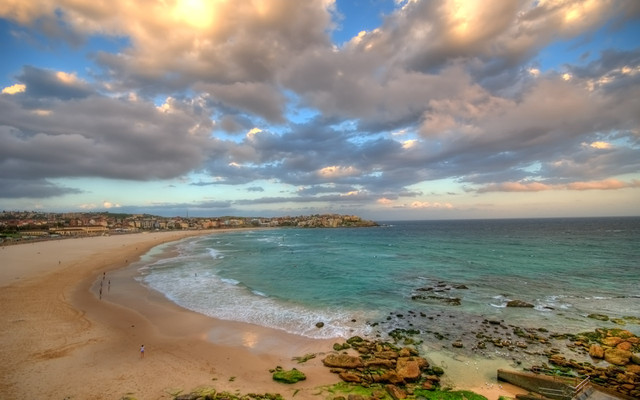
The couple first met on Bondi Beach, and, like many Australians living near the coast, are strongly drawn to the ocean, which is cleansing and refreshing, and for a city-dweller especially, washes away the fatigue that comes from modern life. They want a name with a meaning connected to the beach and the sea. They are also very keen to use an Aboriginal Australian word for a name, feeling that this is a perfect way to honour their homeland.

They immediately fell in love with the idea of using Daku as a name. This is a name given to boys meaning “sand”, and apparently it is from one of the languages of north-west Western Australia. Not only did they love the sound of it, but the meaning seemed ideal. Not only did they meet and fall in love at the beach, but sand itself conveys the power of water, which gradually over millions of years wears down great rocks and boulders into fine grains. It therefore holds connotations of patience and persistence – qualities which they hope their son will learn to possess.

When they shared their choice with family and friends, others saw the name quite differently, and thought it was a choice which would lead to teasing. Basically their objections amounted to this:

  • Daku might be okay for a boy growing up in a hippie commune, but isn’t suitable for one growing up in a big city
  • It sounds like the phrase “dack you” – which in Australian slang, means that you are pulling someone’s pants down in a playful or spiteful manner
  • Daku is an Indian girl’s name, which could cause confusion further down the line
  • In Portuguese, daku is supposedly some sort of unsavoury slang (or maybe sounds similar to it)

Their families would much prefer a name which is clearly European and Christian – something along the lines of John, Paul, Daniel, or Xavier.

Gabriel and Theresa now have a dilemma on their hands: do they ignore everything their families and friends say and follow their hearts, or do they choose another name which will cause less controversy? With only a couple of weeks to go, they are starting to get a little stressed over it.

*********************************************************

Everyone has a particular bias in a debate, and I should declare mine straight away. I believe that it is the parents who get to choose their child’s name, not extended family, relatives, friends, or well-wishers.

I believe that loved ones have a perfect right to their own opinion, they have the right to (politely) make suggestions and share their concerns before the birth, and they have the right to be listened to respectfully. However, the final decision must lie with the parents.

Now you could take your story onto any name forum, and you will be able to find at least a dozen people who will advise you to just tell your family to butt out, shut up, and mind their own business in no uncertain terms, then move interstate so you don’t have to deal with them ever again. It’s easy advice to give, but I’m not sure it’s necessarily the best advice to follow.

For a start, obviously you love your family and don’t want to alienate them or cause a big family drama just as a baby is about to born and you need support more than ever. Second, occasionally the objections that family and friends offer have some validity, or make some sense. If you were planning to name your child Freddie Hoff or Penelope Ophelia Overton, a friendly hint might help you realise the mistake you were about to make. At the very least, they give you a taste of how others might see that name, and what response it could get. It’s better to have that information in advance.

As far as I can see, these are the choices the two of you have before you:

1. Go ahead with your original plan, and name your son Daku

Pros: You son will receive a name that you both love, and love hearing – moreover, a name which is a constant reminder of your love for each other. That’s incredibly special. You will have a wonderful story to share with your son when he asks, “Mum and dad, why did you call me Daku?” Maybe one day you can take him to Bondi and show him where his own unique life story and name story began, and when he hits a difficulty in life, perhaps you can show him the sand on the beach that he’s named after, and explain how it could only be made through the sea patiently grinding it down day after day, and never giving up.

Cons: Your family may not be happy with the choice you have made, or feel slighted that their dire warnings were not heeded. However, you have listened to everything they said and taken it on board, and you have also chosen his middle name, Rudolf, after Theresa’s father. You have pretty much already done your family duty. It’s not uncommon for family members to become reconciled or at least used to a “strange” name once they see it on their adorable grandson or nephew, and they may come up with their own pet name for him anyway.

I do feel that your family and friends have gone straight to the “worst case scenario” for the name, and some of their ideas are probably a little silly. I think Sydney is cosmopolitan enough to cope with the name Daku, and the slang issues seem a bit overboard to me.

“Dack you” is pretty dated slang now (although boys do seem to hang onto old slang more than girls), and in any case, most names sound a bit like something else. I find it hard to believe your son will suffer horribly because of his name, although naturally I can’t guarantee he will never be teased because of it. I must say that the name didn’t remind me of the phrase dack you.

The Portuguese slang term isn’t one I was able to find a reference to online, so doesn’t seem to be in general circulation. Unless you are planning to ship him to Portugal at some point, or you associate with many Portuguese people, perhaps this isn’t the big problem you fear.

Although Daku is a girl’s name in India, it’s a word and name used all over the world in many different cultures and in different contexts. In Japan it means “embrace, hug”; in Fiji it can mean “cousin”, and is also a place name; in Malay it means “I, me, myself”; in Hindi it can mean “bandit, pirate”; in Swahili it is related to the word “grasp, seize”; in ancient Sumerian it meant “executed”. It’s also a word in an invented language in the game World of Warcraft (no idea what it means).

When a word has this many meanings, it’s hard to get too worried if one or two are less pleasant than others. As well as a girl’s name, Daku is also a surname used all over the world, by people from a variety of ethnic backgrounds.

Realistically, what you will face with the name Daku is people not being sure how to spell it or stumbling over the pronunciation. When your son is very small, people may be unsure whether he’s a girl or a boy. People will say, “What an unusual name! Where does it come from?”.

I’m pretty sure once you explain it’s an Australian Aboriginal name meaning “sand”, 90% of people will just go, “Oh right then”. 10% will be interested enough to ask for more information (Most likely, “Do you have any Aboriginal heritage?” or “Why did you choose it?”). I do feel once they know the origin and meaning, most criticism they may have offered will be quashed.

I know that parents who have chosen unusual names find that although they do sometimes get some aggressive or rude comments, they also find many people who say, “Oh that’s a fantastic name”, “It’s so different”, “What a great meaning” and so on. It does tend to stick in people’s memories. You don’t usually get this kind of attention and enthusiasm if your child’s name is Daniel or John.

2. Please your family by choosing a standard European-style name

Pros: Your son will have a name that blends right in with everyone else’s. People will know how to say it and spell it. He won’t be questioned about his background or his name. His name will be in a style which fits in with his family and community.

I’d love to be able to say that your family will appreciate your sacrifice forever and shower you with praise and devotion, but they probably won’t. They may secretly despise you for giving in; they may resent you for resisting them until the last minute; they may figure that if you caved in on such a big issue, you will always cave in on smaller ones; some of them may still dislike the name you choose. They may forget all about the disagreements during the pregnancy, and in ten years will assume his name was always going to be Paul. If you try to remind them what a sacrifice you made, they may roll their eyes about the “big fuss” you keep making about it.

Cons: He will miss out on hearing that wonderful name story. When he asks, “Why did you name me Xavier?” you will say, “We did have another name picked out, but ended up going with something your grandma liked. The name we chose was meant to inspire you to always be persistent; ironically, we didn’t persist with the idea”.

3: Pick another name that is similar to Daku, but causes less family friction

You did say that if your son had been a girl, he would have been named Iluka, an Aboriginal word and place name said to mean “by the sea”.

You may not have realised this, but in Australia Iluka is generally accepted as a male name. It’s usually listed as a boy’s name in baby name books (although giving it to a girl would be fine). Because it sounds like the popular boy’s name Luca, it’s often taken as a native elaboration of that name, and is given the nicknames Luke or Lukey.

Iluka has a similar sound, origin and meaning to Daku, but it might be something your family could accept more readily, as it sounds like popular names Luca, Lucas and Luke, and has the same nicknames as them.

If you were worried about using a name you were reserving for a future sister, there are many, many pretty sea-oriented names for girls from Aboriginal languages.

If you were feeling very bold, you could give either a son or a daughter the name Bondi, which means “the sound of water breaking over rocks”. It’s one I saw given to a baby girl in the Bonds Baby Search, but seems unisex to me, and rare enough to be up for grabs by either gender.

The word used in the Sydney area for beach sand was marrang, and I’m afraid that’s all the beach-related Aboriginal words which sound like masculine names I can think of. I suggest that you buy a copy of Macquarie Aboriginal Words, which would make a useful reference tool.

I can’t make the choice for you, that is your privilege. I hope you at least feel a bit less stressed seeing your choices laid out in print with some possible outcomes attached.

Once your little boy arrives and is safely settled in, please please please let us know what you chose, and how it’s gone down with everyone on a real baby!

(Image of Bondi Beach from Beach Wiki)

Waltzing With … Billy

08 Sunday Apr 2012

Posted by A.O. in Waltzing with ...

≈ 5 Comments

Tags

Easter names, english names, famous namesakes, fictional namesakes, Irish name popularity, name history, name meaning, name popularity, nicknames, rhyming slang, slang terms, UK name popularity, unisex names, US name popularity, vocabulary words

This article was first published on April 8 2012, and revised and re-posted on March 9 2016.

Fictional Namesake
The blog entry for Pasco looked at a religious side to Easter, so this one will be about a secular aspect of the holiday.

One of the most popular symbols of the season is the Easter Bunny; this was an old German custom, and originally a hare rather than a rabbit (which is why the word bunny is used, to cover both creatures). Hares and rabbits are famous for being prolific breeders, so they make obvious fertility symbols for a festival which occurs in the northern spring and celebrates new life.

However in Australia, this prolificness of the rabbit has made it an invasive pest and an environmental disaster. Rabbits first arrived on the First Fleet and were bred for food in hutches, but don’t seem to have become a problem in mainland Australia until 1859.

In this fateful year, some bright spark named Thomas Austin thought it would be utterly spiffing to release 24 English rabbits onto his country property in Victoria so that he could continue the rabbit hunting lifestyle he had enjoyed in England. Austin opined the rabbits would do little harm, and might provide a touch of “home”.

Austin released both wild grey rabbits and domestic rabbits; the two varieties intermingled to become an extremely hardy and resilient Super Rabbit. Even then it might not have been such a mess, except that all the landowners living around Austin got in on this new fad, and released stacks of rabbits onto their own farms.

Within a decade, there were so many rabbits that 2 million could be killed each year without making the slightest difference to their numbers. By Federation in 1901, they were already holding a Royal Commission to see how the “rabbit problem” could be brought under control.

Rabbits are thought to be the most significant factor in loss of native species. They kill young trees, compete with native animals for resources, and cause horrific soil erosion which takes centuries to recover. They cost the agricultural sector millions of dollars in damages each year.

During the 1980s and ’90s, the environmental movement in Australia made a stand by using a new Easter symbol – the Easter Bilby. Bilbies (pictured) are cute native marsupials with a long muzzle and long ears, and they are an endangered species. The Foundation for a Rabbit-Free Australia used the Easter Bilby to educate people about the damage that feral rabbits do to our delicate ecology.

Haigh’s Chocolates got on board by stopping making chocolate bunnies, and making the very first chocolate bilbies. Darrell Lea also make chocolate bilbies, with part of the profits going to the Save the Bilby Fund. You can buy cheap chocolate bilbies from supermarkets as well, but it’s probably a toss-up whether any of the money you spend will go towards helping real bilbies.

The campaign has been successful, because thirty years ago there was no such thing as a chocolate bilby, and now they are an established part of Easter. Schools and school holiday programs often use the Easter Bilby for egg hunts and other activities, as an opportunity to teach kids about the environment as they play games and munch chocolate. Buying a bilby instead of a bunny feels patriotic and environmentally responsible.

There have been many picture books about the Easter Bilby, but the first one, and the first mention of the Easter Bilby, was Billy the Aussie Easter Bilby, by Queensland children’s author Rose-Marie Dusting, in 1979. Rose-Marie’s first version of the story was written in 1968, when she was only nine years old. Most likely, Rose-Marie chose the name Billy because it sounds like the word bilby.

Name Information
Billy is a pet form of Bill, which is short for William; it has been used an an independent name since the 18th century. People often ask how Bill became short for William (which doesn’t start with a B), but nobody seems to know for sure. It is presumed to be part of that medieval initial letter swapping which saw Richard become Dick, and Robert become Bob.

Billy is also a vocabulary word which has a particular resonance in Australia – a billy is a cooking pot used to boil water on a campfire. It’s thought that the word billycan comes from the large cans used to transport bully beef (corned beef) on ships sent to Australia or during exploration in the outback.

It’s a word which reminds us of the outback and our history, and even now some older Australians will say they are going to put the billy on for tea, when they just mean the kettle. Billy Tea is a brand of strong tea which has been sold since the late 19th century, and many arcane methods are suggested for making the perfect brew of tea over a campfire. You can read of billies in the poems of Henry Lawson and Banjo Paterson, the most famous reference being the jolly swagman in Waltzing Matilda, who sang as he watched and waited ’til his billy boiled.

A billy lid is not just a lid for a billy, but also affectionate rhyming slang for “kid” (child). There’s also the Puffing Billy steam train network near Melbourne, a major tourist attraction, and billy buttons, a type of native daisy.

One of the most famous Australian men who went by the name was Billy Blue, the first Australian convict to become a celebrity. Described in the records as a “Jamaican Negro”, Billy claimed to be a freed slave with some Native American heritage who had fought with the British during the War of Independence. When convicted, he was living in London, and had stolen sugar to use in his chocolate-making business.

In Australia, he became popular with the government and the public for his whimsical personality and witty banter. When he completed his sentence, he became a ferryman, and was granted 80 acres of land in the North Sydney area – Blues Point and William Street are two of several local landmarks named after him.

Other namesakes include Billy the Native, a bushranger who passed into folklore as “the traveller’s friend”; Billy Lynch, an Aboriginal community leader in the Katoomba area with hundreds of proud descendants; Billy Sing, a Chinese-Australian soldier who served with distinction in the Gallipoli Campaign; Billy Thorpe, rock singer from the 1960s and 70s; Billy Elliot, the jockey who rode Phar Lap to victory seven times; and NRL star Billy Slater.

Billy entered the Australian charts in the 1970s at #427, and began climbing steeply. It hasn’t reached the national Top 100, but is often seen around the bottom of popularity charts in certain states, and would not be far off. William is a very popular name, and it is possible that some of those Williams also go by Billy.

In the US (home of Billy the Kid and fictional sailor Billy Budd), Billy has been almost continually on the charts, and was a Top 100 name from the early 1920s until the end of the 1970s, peaking in the 1930s at #20. After that very impressive run, it has been on the decline and is now #794. It also charted as a girl’s name (a variant of Billie) from the 1920s until the 1940s, peaking in 1930 at #527.

In the UK (home of Billy Idol and fictional schoolboy Billy Bunter), Billy was a Top 100 name in the 1990s; it left the Top 100 in 2009 and is currently #122, and has been occasionally used for girls. Billy is still a popular name in Ireland. In Australia, Billy has never had a long run of popularity as in other English-speaking countries, so feels a bit fresher here.

Billly is an environmentally-friendly Easter creation; a name from history; a name from poetry; a name from the landscape; the name of a host of colourful Australian characters. Billy is a name which says, “I’m coming at you world, ready or not!” He’s a true blue wild colonial boy who is cute as a button, and sweet as a chocolate bilby.

POLL RESULTS
Billy received an approval rating of 78%, making it one of the highest-rated names of 2012. 42% of people thought the name Billy was okay, while 11% hated it.

Famous Name: Gunner

22 Wednesday Feb 2012

Posted by A.O. in Famous Names

≈ 8 Comments

Tags

dog names, english names, famous namesakes, military terms, scandinavian names, slang terms, stage names, vocabulary names

Sunday February 19 marked the 70th anniversary of the bombing of Darwin by the Japanese. Both the first and the single largest attack against Australia by a foreign power, it is often referred to as “Australia’s Pearl Harbor”. However, Darwin was bombed more heavily than Pearl Harbor, and almost 100 air raids were to follow. Numbers of the dead are disputed, but the official toll is just under 300, with maybe 300 to 400 injured. Amongst the casualties were men on the USS Peary, whose memorial President Obama visited in Darwin last year.

One of the lesser-known heroes of the Darwin air raids was a young black and white kelpie, who was found distressed and with a broken leg under a bombed mess hut on February 19 1942. He was taken to a field hospital, and immediately inducted into the Australian Air Force so that he could receive medical treatment. He was named Gunner, and given the serial number 0000.

Leading Aircraftman Percy Westcott, one of two men who found Gunner, became the dog’s master and handler. I think Gunner was just expected to be a pet and a mascot for the air base, and probably a much-needed distraction for the men. However, about a week after he came to live with them, Gunner began to demonstrate his remarkable hearing skills.

Time and time again, Gunner would whine and jump whenever he heard Japanese aircraft approaching. Long before the air raid siren sounded, Gunner would become agitated and head for shelter. He was able to warn Air Force personnel that the Japanese planes were coming up to 20 minutes before they appeared on the radar, and was so reliable that Percy was given permission to sound an alarm whenever Gunner gave his signal.

You’d think that living on an airbase, Gunner would soon get used to the sound of planes taking off and landing, but he only behaved like this when he heard Japanese planes – Allied ones didn’t faze him at all.

Gunner was accepted as a full member of the Air Force: he slept under Percy’s bunk, showered with the men, attended the movies with them, and regularly went up with pilots during practice flights.

Percy was posted to Melbourne 18 months later, and Gunner remained with the RAAF in Darwin, being cared for by the Air Force butcher, who had access to plenty of meat to feed Gunner. It’s not known what happened to Gunner when the war ended; I hope he lived a long happy life.

In the Air Force, the gunner is the person who operates the machine gun or cannon during air battles, although a Gunner is also any non-commissioned member of the air force in a Regiment. It’s often used as a slang term in several different ways, including in sport – for example, the word Gunner describes a certain specialist in gridiron, and the Gunners is a nickname for Arsenal Football Club. Gunners is also slang for a fans of the rock band Guns ‘n’ Roses.

Gunner has been used as a stage name in professional wrestling, such as by Gunner Scott (real name Brent Albright). It also sounds like the Scandinavian name Gunnar, which combines the elements for “war” and “warrior” together, to sound extra-warlike.

I’m not sure I would have suggested this as a possible baby name, except that I saw a baby called Gunner Phoenix in an Adelaide birth announcement last month.

I can see this as a wonderful way to honour a military connection in a family. Gunner sounds all boy … although according to some people, it sounds all dog! But we have established that the line between dog and human names has become increasingly blurred, and if you were going to give your baby the name of a dog, then what cooler canine than an Australian kelpie who became a wartime hero?

(Gunner’s story appears in the book Animal Heroes, by Anthony Hill. Photo of Gunner with Percy held by the Australian War Memorial)

Boys Names from Video Games

17 Sunday Apr 2011

Posted by A.O. in Name Themes and Lists

≈ 10 Comments

Tags

Anglo-Saxon names, animal names, Arabic names, aristocratic titles, astronomical names, bird names, celebrity baby names, controversial names, english names, famous namesakes, fictional namesakes, Greek names, hebrew names, Irish names, Japanese names, Latin names, mythological names, name history, name meaning, name trends, names from video games, nature names, nicknames, Roman names, slang terms, Spanish names, surname names, tree names, unisex names, vocabulary names

This post was first published on April 17 2011, and heavily edited on April 23 2015.

Altair
Altaïr Ibn-La’Ahad is the protagonist of the first game in the Assassin’s Creed series. Born in the Holy Land in 1165 to an Arabic Muslim father and Italian Christian mother, he joins the medieval secret society of the Assassins. Due to his superior abilities, he quickly gains the title of Master Assassin, but Altaïr becomes overconfident and arrogant, and must be taken down a peg or two. He goes on to have further adventures in later games. Mysteriously cloaked and hooded, he is dark, rather handsome, and has an intense expression. Altair is Arabic for “the flying eagle”, and it is the name of the brightest star in the Aquila constellation. It is pronounced al-TAH-yir, but English-speakers will probably prefer al-TARE instead, and this pronunciation is accepted by astronomers as equally correct. Not only an extremely popular name for people and places in video games, Altair is commonly used to name aeroplanes and rockets too, adding to its flighty, space-age image.

Ash
Ash Ketchum is the main protagonist of the Pokémon (“Pocket Monsters”) series; a ten-year old boy with shaggy dark hair covered by a baseball cap, brown eyes, and a snub nose. A true Pokémon obsessive, he always has a fanatical look in his eyes. He has no other interests apart from Pokémon, and only makes friends with children and adults who share his hobby. His original Japanese name was Satoshi (“clear-thinking, wise”), after creator Satoshi Tajiri. The character is based on Tajiri’s memories of himself as a child, when he was a keen insect collector. The English name Ash was taken from one of the possible default names that can be chosen in the original Pokémon game. Ash can be short for names such as Ashley, Asher, or Ashton, a vocabulary name for the residue of something burned, or a nature name after the ash tree. As the Professors in the Pokémon universe all have tree names (Oak, Juniper, Rowan etc), I think the game-makers probably had the last option in mind. This is a simple, attractive nature name, and although it is technically unisex, I have only seen it on boys so far.

Kain
Kain is an arrogant nobleman who becomes a vampire lord in the Legacy of Kain series, an anti-hero who is morally ambivalent at best, yet provides his world’s only hope. There has been a trend in popular culture to present male vampires as romantically desirable, but Kain is not a pretty-boy vamp, but the stuff of nightmares, and not suitable for taking to senior prom. Kain is the Greek form of the Hebrew name Cain, which is used in the Greek version of the Old Testament. In the Old Testament, Cain was a son of Adam and Eve, and committed the first murder by killing his brother Abel in a fit of furious jealousy. This theme also plays a role in the Legacy of Kain story. In the Bible the name Cain is interpreted as “begotten, acquired”, but modern etymologists think it is most likely from an ancient South Arabian word for “metalsmith”. In the Bible, Cain is said to have been the ancestor of a nation who became the first metalworkers, so that does mesh with the Biblical narrative. Although Cain is a controversial character, this name fits in so well with current name trends that it has had reasonable use over the years: a big help is that it’s a homophone of Kane, the Anglicised form of Irish Cathan, meaning “battle”. Famous Australian namesakes include fantasy writer Kain Massin, and actor Kain O’Keefe.

Link
Link is the hero of The Legend of Zelda game series [pictured]. Usually he is young with fair hair and blue eyes, and he is always dressed in green tights and tunic, and has pointed ears. Link is humble, polite and brave, as befits a true hero, and is possessed with a burning sense of justice. He travels through the land, defeating creatures, evil forces, and baddies in order to save Princess Zelda and her kingdom. Despite having minimal facial expression and speaking mostly in grunts, Link is one of the most popular video game characters of all time. Creator Shigeru Miyamato wanted to call him Chris or Christo after his godfather, but this was changed by Nintendo (I wonder if it seemed too Messianic for them?). Instead Link was chosen, because the character is the player’s link to the world of the video game. You might also think of a baby Link as being the link that brings your family together. The name Link doesn’t seem that unusual, because it is already used as a short form of Lincoln.

Maximo
In the Maximo duology, Maximo is a gallant knight who goes out into the world leaving his castle and kingdom in the care of a trusted friend. Unfortunately, little does he know that his pal is, in fact, an evil super-villain. While Maximo tools around in blissful ignorance, this dastardly creep takes over Maximo’s kingdom, and forces Maximo’s girlfriend, Princess Sophia, into marriage with him. Maximo returns home to find his kingdom and his life in ruins. It’s a completely awful day for him, but rather than sit at home crying and eating chocolate, he bravely goes in search of his lost love.
Maximo is the Spanish form of the Roman family name Maximus, from the Latin for “greatest”. Although the Spanish pronunciation is MAHK-see-mo, I’m guessing most English-speakers would say it MAKS-uh-mo, and use the popular Max as a nickname. A Spanish heritage choice that puts a cool spin on fashionable Maximus.

Raiden
Raiden is a thunder god in the Mortal Kombat series, an immortal with many supernatural abilities, and a distinctly hands-on approach. He looks like an enormous, muscular man with eyes filled with lightning and long iron-grey hair. Raiden is a variant of Raijin, the name for the god of thunder and storms in the Shinto religion and Japanese mythology. His name means “thunder god”. He is a popular folk figure who appears in many stories, and his name has been used in several other Japanese video games. The name is pronounced RAH-ee-den, but in English, is meant to be said RY-den. However, the temptation to pronounce it RAY-den, to fit in with the trend for Aiden, Braden, Caden and Hayden type names, is often too strong to resist. I have seen this name used quite a bit on boys in Australia, and mostly their parents have gone with the RAY-den pronunciation.

Ryu
Ryu is the lead character of the Street Fighter series, and an enormously strong Japanese martial artist. Powerful and uber-masculine with huge muscles, his karate outfit is casually tattered. During the game series, it turns out that Ryu has a touch of evil in his psychological make-up which can be exploited by the bad guys. However, Ryu is mentally strong enough to fight off their brainwashing attempts. What a trouper. Naturally he is far too butch to hang out with girls or anything wet like that, but he does have a rather super chum called Ken. Ryu is Japanese for “dragon”, and it is also a suffix to denote a particular school of thought, usually used for martial arts. It’s a popular name in Japanese video games. Ryu is difficult for English-speakers to pronounce correctly. It’s said as one-syllable – RYOO. I have seen this name used on several Australian boys in honour of the game character, but they have either been called RY-oo or ROO (like a kangaroo). This does fit in with familiar names such as Ryan and Reuben.

Snow
Snow Villiers is the leader of an anti-government rebel group in Final Fantasy XIII who gets engaged to a cute pink-haired girl. Their wedding plans are put on ice once his fiancée is turned into a block of crystal. He has to save the world and his sweetheart, while trying to convince his future sister-in-law he’s a decent bloke. Snow is a Nordic giant – 6 foot 7 with a powerful physique, fair skin, pale blond hair, blue eyes, and a light stubble beard. Despite his wintry appearance, he is warm-hearted, fiery-tempered, and optimistic. In the game, the name Snow denotes the character’s affinity for water and ice spells. Snow is a nature name and surname in use as a personal name since the 16th century, and is one of those rare names that has been almost equally given to boys and girls over time. Names connected with the winter and cold are currently on trend, and this one works for both sexes, and as either a first or middle name. It’s a hip alternative to fashionable Winter, but a possible drawback is that it is also a slang term for cocaine.

Sparrow
In Fable II, Sparrow is a poor orphan child who finds out they are descended from a heroic line. Sparrow can be played as either a male or female character, so the name is deliberately unisex. The name Sparrow is after the small brown bird, one of the most familiar birds in the world. Sparrows are often used to denote something common, or of low value, and they are the emblem of the London Cockneys. The New Testament tells us that God cares even for the worthless sparrow, so we know the most insignificant person is valued and worthy of divine love, and Saint Francis preached sermons to these birds. According to the ancient Greeks, sparrows were sacred to the goddess Aphrodite and a symbol of enduring love, while in Christian legend, the sparrow was the only bird who witnessed the Crucifixion. Sparrow has been used as a name since the 17th century, and is historically more common for boys; Pirates of the Caribbean has given it a swashbuckling air. It became a celebrity baby name when Nicole Richie and Joel Madden had a son called Sparrow in 2009. A humble name that’s on trend, and has more behind it than at first glance.

Thane
In Mass Effect 2, Thane Krios is a member of an alien species who are humanoid with reptilian features. An expert assassin dying of an incurable lung disease, he joins an apparent suicide mission to give purpose to what’s left of his life and atone for all the murder he’s committed. Despite his chosen profession, he is a deeply spiritual man following a polytheistic religion. The name Thane is an Anglo-Saxon title of nobility, and is from the Old English thegn meaning “servant, retainer”. A thane was an attendant to a king or noble lord who had military duties as part of their service (similar to a knight). In medieval Scotland it was the name for a hereditary tenant of the Crown; Macbeth held this title in Shakespeare’s play. The name has been used since the 16th century, and a famous namesake is English actor and dancer Thane Bettany, father-in-law to Jennifer Connolly, and step-uncle to Sophie Rhys-Jones, the wife of Prince Edward. This is one of those rare names that have a strong history, and don’t sound strange, being similar to familiar names like Dane and Zane.

POLL RESULTS
People’s favourite names were Ash, Sparrow, and Link, and their least favourite were Kain, Raiden, and Ryu.

Boys Names From Songs

13 Sunday Mar 2011

Posted by A.O. in Name Themes and Lists

≈ 20 Comments

Tags

classic names, created names, english names, famous namesakes, fictional namesakes, Gaelic names, germanic names, Greek names, hebrew names, Italian names, meteorological names, modern classics, name popularity, names from fairy tales, names from nursery rhymes, names from songs, names from television, nicknames, Old English names, Persian names, popular names, royal names, saints names, Scottish names, Shakespearean names, slang terms, underused modern classics, unisex names


This blog post was first published on March 13 2011, and heavily edited and updated on March 20 2015. Not being psychic, I did not know then of the vile crimes that Rolf Harris would be imprisoned for, otherwise he would not have been included.

Duncan
Slim Dusty’s country song Duncan is one of his two hits which went to #1.The song describes the great enjoyment experienced drinking at the atmospheric Town and Country pub with his mate Duncan. Although the narrator also drinks with Colin, Kevin, Patrick, and Robert to obtain similar effects, it is Duncan who will always be remembered as the mate Slim would “love to have a beer with”. Duncan is the Anglicised form of the Gaelic name Donnchadh; it may mean either “brown-haired warrior”, or “brown-haired chieftain”. A traditional name amongst Scottish nobility and royalty, there have two medieval Scottish kings named Duncan, with Duncan I the original of William Shakespeare’s King Duncan in Macbeth. Unlike in the play, Duncan was a young king, and not assassinated by his war leader Macbeth, but killed in battle against him. Saint Duncan was of royal blood too, and an abbot of Iona. Duncan was #134 in the 1900s, and peaked in the 1970s at #122. It doesn’t seem to have charted since 2009, so this is a handsome underused Scottish choice.

Erasmus
Erasmus is a 2006 song by alternative rock band You Am I, a nostalgic remembrance of the 1990s. Erasmus is derived from the Greek for “beloved”. Saint Erasmus of Formia was a bishop who, according to tradition, was martyred for his faith in the 4th century. He is more commonly known as Saint Elmo, the old Italian form of his name, and St Elmo’s Fire is named after him – the glowing electrical discharge that can appear around tall, pointed structures during thunderstorms. As it was known for appearing around the masts of ships in the days of sail, Saint Erasmus is a patron of sailors. A famous namesake is Erasmus of Rotterdam, a Catholic priest, theologian, and classical scholar of the Renaissance who is known as “The Prince of Humanists”. Charles Darwin‘s grandfather was Erasmus, named after an ancestor, and Charles’ brother also had the same name. This rare name has geek chic, with history, strength, bags of brain power, and of course, a beautiful meaning. Rasmus and Raz could be used as nicknames.

Harry
Lazy Harry’s, or, The Road to Gundagai is a traditional folk song with a connection to Banjo Paterson, as he was the first to have it published, in 1905. The song tells of two shearers from a Riverina station who set out for Sydney to spend their pay cheques, but get no further than Lazy Harry’s pub between Wagga Wagga and Gundagai before they’ve spent the lot. Harry is a medieval English form of Henry which has never gone out of use. It has also been used as a pet form of Henry and Harold, and more recently, of Harrison. Harry is a classic name which has never left the charts. It was #32 in the 1900s, left the Top 100 in the 1950s, and reached its lowest point in the 1970s at #234. It began rising in the 1980s after the birth of Prince Henry, always known by his nickname Harry, and joined the Top 100 in the early 1990s. It continued rising through the 2000s, along with the popularity of boy wizard Harry Potter, and peaked in 2010 at #27, although by 2013 it had only dropped one place, to #26. Classic Harry is royal and magical, yet also friendly and casual.

Henry
Henry Lee is Nick Cave & The Bad Seeds’s 1996 version of an English folk song called Young Hunting, which in the United States is usually titled Love Henry or Henry Lee. It is a macabre tale of sexual jealousy; a man tells his mistress that he is leaving her for another woman, and while offering him a farewell kiss, she stabs him and throws his body in a well. P.J. Harvey sings the woman’s part of this eerie duet. Henry is from the Germanic name Heimrich, meaning “home ruler”. It has been commonly used amongst European royalty, and there are many rulers of Germany, France, Spain and Portugal named Henry, or one of its equivalents. There have also been six Holy Roman Emperors named Henry, one of them a saint. Henry is a traditional name in the British royal family, and there have been eight English kings named Henry. Henry is a classic name which has never left the charts. It was #11 in the 1900s, and left the Top 100 in the 1950s, hitting its lowest point in the 1970s at #265. It was back on the Top 100 by the 1990s, and had reached #23 by 2013. Henry is a handsome classic which is slowly rising in popularity.

Jack
Adam Harvey’s 2001 country song The House That Jack Built went to #1. It’s inspired by the nursery rhymes The House That Jack Built and Jack and Jill, while giving them a modern twist. Jack is a short form of Jackin, which began as Jankin, a medieval pet form of John. It has been used as an independent name since the Middle Ages, and was so popular in that era that it became a slang word to mean “man, male”. Jack is a fairytale hero, such as Jack and the Beanstalk and Jack the Giant Killer, and a trickster figure, like a jack-in-the-box and the knave in a deck of cards. Jack has a particularly British association, because of the Union Jack which is on our flag. Suffice to say I could talk about Jack until you were completely jack of it! Jack is a classic name which has never left the charts. It was #24 in the 1900s, and left the Top 100 in the 1940s. It hit its lowest point in the 1960s at #277, and was Top 100 again by the 1980s. It hit its peak in the 2000s at #1 name, when there were many heroes on film and TV named Jack. By 2013 it had only fallen two places, to #3, so it has been extremely stable as well as extremely popular. Jack the lad is an everyman name, and a nickname with its own rich history.

Jake
Jake the Peg is a 1965 novelty song by Rolf Harris, based on the Dutch-Canadian song Ben van der Steen. It’s a simple tale of an unfortunate man born with three legs, and Harris performed it onstage with a theatrical prop which left the audience guessing as to which of the three legs was fake. It has been voted one of the best Australian singles of all time. Jake is a medieval variant of Jack, but today is often used as a short form of popular Jacob. Jake first joined the charts in the 1970s at #392, the same decade as Jacob, and just after the song’s release. It joined the Top 100 in the 1980s and peaked in the 1990s at #6. In 2013 it was #43. More boyish than Jacob, more rakish than Jack, this name lets you know that everything is “jake”.

Jessie
Rick Springfield’s pop song Jessie Girl was an instant hit, reaching #1 on the Billboard Hot 100 of 1981, and winning a Grammy. According to Springfield, Jessie’s Girl was inspired by a real-life admiration he had for his friend Gary’s girlfriend. He considered using Gary’s real name, until he saw a girl wearing a softball jersey with the name Jessie on it. The song has been featured in movies and TV shows, and named one of the best songs of the 1980s. As a boy’s name, Jessie is a variant of the Hebrew name Jesse, which may mean “gift”. It’s also a girl’s name which was originally a Scottish pet form of Jean, but also used as a pet form of Jane, and more recently, of Jessica. In Australia, Jessie charted as a unisex name until the 1950s, but since the 1970s and the rise of Jessica, has only charted for girls. It made the Top 100 in the 1990s, when Jessica was the #1 name, and is currently in the 300s. Still usable for boys, although the popular Jessica has given it a pink vibe.

Johnny
Men at Work’s 1982 rock song Be Good Johnny is an obvious reference to Chuck Berry’s Johnny B. Goode. The song is about a young boy, a seemingly troubled daydreamer who can’t relate to or listen to adult authority. It could be the anthem for ADHD kids, and in fact a cover version of the song is the theme tune to the reality TV series Supernanny. Johnny is a pet form of John, long used as an independent name. There’s been heaps of famous Johnnys in Australia – Johnny Diesel, Johnny O’Keefe, Johnny Young, Johnny Lewis and Johnny Warren, to name a few. Johnny has charted since the 1950s, when it debuted at #265. It has not yet become popular, and is currently in the 200s. Modern classic Johnny seems like it has a lot of potential to go further.

Normie
Rak Off Normie was written as a sequel to comedian Bob Hudson’s satirical narrative, The Newcastle Song, which was at #1 for four weeks in 1975. The Newcastle Song is about a young man called Normie looking for a date, and pokes fun at the working class youth culture in the city of Newcastle. Eager for further success, Bob Hudson rapidly penned Rak Off Normie from the point of view of the girl Normie is attracted to, and Maureen Elkner was chosen to sing it. The song reached #6 on the charts. Normie is a pet form of Norman, used as an independent name since the 19th century. It is well known in Australia from 1960s pop star Normie Rowe, and will probably only make a comeback if Norman does.

Sam
Olivia Newton-John’s Sam reached #1 on the Billboard Easy Listening chart of 1977. It’s a song about two people who have been (apparently deservedly) dumped by their respective lovers and are now lonely; the song implies that the two of them may get together in order to comfort each other. Sam can be used as a short form of names such as Samuel or Samson, and as short for the female name Samantha. It is also a Persian name meaning “very dark”, and is familiar from Frodo’s companion in The Lord of the Rings, whose name is short for Samwise (samwise is the Old English for “half-wise, half-wit”). Sam has long been used as an independent name, overwhelmingly given to boys. Sam first joined the charts in the 1950s at #301, and was Top 100 by 1986. It peaked at #62 in 1991, left the Top 100 in 2011, and is still only just outside the Top 100. Well known from Welsh children’s TV show Fireman Sam, which has an Australian rescue pilot in it, this is a modern classic with boyish charm.

POLL RESULTS
People’s favourite names were Jack, Harry, and Duncan, and their least favourite were Johnny, Jake, and Normie.

Newer posts →

Enter your email address to follow this blog

Categories

Archives

Recent Comments

A.O.'s avatarwaltzingmorethanmati… on Zarah Zaynab and Wolfgang…
Madelyn's avatarMadelyn on Zarah Zaynab and Wolfgang…
JD's avatardrperegrine on Can Phoebe Complete This …
A.O.'s avatarwaltzingmorethanmati… on Rua and Rhoa
redrover23's avatarredrover23 on Rua and Rhoa

Blogroll

  • Appellation Mountain
  • Baby Name Pondering
  • Babynamelover's Blog
  • British Baby Names
  • Clare's Name News
  • For Real Baby Names
  • Geek Baby Names
  • Name Candy
  • Nameberry
  • Nancy's Baby Names
  • Ren's Baby Name Blog
  • Sancta Nomina
  • Swistle: Baby Names
  • The Art of Naming
  • The Baby Name Wizard
  • The Beauty of Names
  • Tulip By Any Name

RSS Feed

  • RSS - Posts

RSS Posts

  • Celebrity Baby News: Melanie Vallejo and Matt Kingston
  • Names from the TV Show “Cleverman”
  • Can Phoebe Complete This Sibset?
  • Zarah Zaynab and Wolfgang Winter
  • Baby, How Did You Get That Name?
  • Celebrity Baby News: Media Babies
  • Celebrity Baby News: Adelaide Crows Babies
  • Celebrity Baby News: Chris and Rebecca Judd
  • Names at Work: Name News From the World of Business and Employment
  • Celebrity Baby News: Sporting Round Up

Currently Popular

  • Celebrity Baby News: Jacinta Allan and Yorick Piper
  • Celebrity Baby News: Jacinta Allan and Yorick Piper
  • Celebrity Baby News: Craig Thomson and Zoe Arnold
  • The Top 100 Names of the 1940s in New South Wales
  • Celebrity Baby News: Ed Husic and Bridget Tilley

Tags

celebrity baby names celebrity sibsets english names famous namesakes fictional namesakes honouring locational names middle names name combinations name history name meaning name popularity name trends nicknames popular names saints names sibsets surname names twin sets unisex names

Create a free website or blog at WordPress.com.

Privacy & Cookies: This site uses cookies. By continuing to use this website, you agree to their use.
To find out more, including how to control cookies, see here: Cookie Policy
  • Subscribe Subscribed
    • Waltzing More Than Matilda
    • Join 517 other subscribers
    • Already have a WordPress.com account? Log in now.
    • Waltzing More Than Matilda
    • Subscribe Subscribed
    • Sign up
    • Log in
    • Report this content
    • View site in Reader
    • Manage subscriptions
    • Collapse this bar
 

Loading Comments...