• About
  • Best Baby Names
  • Celebrity Baby Names
  • Celebrity Baby Names – Current
  • Celebrity Baby Names – Past
  • Featured Boys Names
  • Featured Girls Names
  • Featured Unisex Names
  • Links to Name Data
  • Waltzing on the Web

Waltzing More Than Matilda

~ Names with an Australian Bias of Democratic Temper

Waltzing More Than Matilda

Tag Archives: saints names

Less Commonly Used Boys Names

10 Sunday Jun 2012

Posted by A.O. in Name Themes and Lists

≈ 9 Comments

Tags

Anglo-Norman names, Apache names, Australian vocabulary words, celebrity baby names, english names, fabric names, famous namesakes, fictional namesakes, germanic names, Hindi names, Indian names, Italian names, Latin names, locational names, mythological names, name data, name history, name meaning, name popularity, Native American names, nicknames, popular culture, Roman names, saints names, slang terms, surname names, unisex names, US name popularity, vocabulary names, Welsh names, Yorkshire dialect names

This follows on from Less Commonly Used Girls Names. The names are from the bottom of the popularity charts in New South Wales, Victoria, Queensland and Tasmania, and in each case, the name was used less than ten times in 2011.

There seems to be a lot of musical references in this entry, so I’ve linked relevant names to YouTube videos of the person performing.

Atticus

This Roman name means “man from Attica” – Attica being the area of Greece surrounding the city of Athens. This name wasn’t uncommon in the ancient world; there is a Platonist philosopher called Atticus, and there is also a Saint Atticus, a soldier who died a martyr by being burned at the stake. However, today it is most associated with Atticus Finch, the principled lawyer and loving single father in Harper Lee’s novel, To Kill a Mockingbird. Atticus Finch, who defends a black man on a rape charge in a small Southern town during the 1930s, is considered a folk hero in legal circles. In the 1962 film adaptation, Atticus is played by Gregory Peck, who was a civil rights activist; Peck won an Academy Award for his performance, and in 2003 the American Film Institute voted his character the greatest hero in American film. It is that decent, understated heroism of Atticus Finch that makes him such a beloved character in literature and film. The character has inspired the names of both a clothing line run by musicians and an alternative rock band. It’s a hip choice which has been burning up the US popularity charts since 2004.

Bryn

Bryn is a modern Welsh name which means “hill”; as well as being a man’s name, it is also a common place name in Wales and England. A famous person with this name is Welsh opera star Bryn Terfel, a bass-baritone best known for his roles in the works of Mozart and Wagner. Apparently he applied to study music in Cardiff, but was so annoyed when they assumed he was a woman that he ended up studying in London instead. Bryn Terfel, whose first language is Welsh, is a patron of Welsh language and culture, and hopefully by now everyone in Wales recognises his name as male. Even though Bryn isn’t a common name in Australia, I don’t think it would seem too out of place either, as there are several boy’s name beginning with Br-, such as Brent and Brody. It looks rather like a cooler version of Irish Brian, which may have a similar meaning.

Corbin

Corbin is an English surname which started as a nickname based on the Anglo-Norman word for “raven”. It may have been given to someone who had raven-black hair, although less flattering possibilities also come to mind. Corbinus, the Latinised form, is found as a first name in the Domesday Book, so it has a long history of use. Despite being an old English name, this tends to be thought of as a modern American one, because it’s been solidly Top 500 in the US since the late 1980s. This may be because of television actor Corbin Bernsen, who began playing lawyer Arnold Becker on LA Law in 1986 and remained on the show until it finished in 1994. Another famous namesake is Corbin Harney, an elder and shaman of the West Shoshone people. He devoted his life to spreading a message about the dangers of nuclear energy, and the environmental issues facing the world. You may also know the name from Corbin Bleu, who was in High School Musical. This name is apparently so unusual in Australia that the article the information came from described it as a “bizarre” choice, although it seems a perfectly nice, normal name to me.

Denim

The fabric denim was originally called serge de Nîmes, after the French city where the tough cotton material was originally made by the Andre family. This was eventually shortened to denim. Denim is inextricably linked with jeans, which began life as sturdy clothing for workers, and then became fashion icons which symbolised teen rebellion. Today they are worn by pretty well everybody. Denim is an interesting name choice; it’s not really a “bad boy baby name” like Axe or Vandal, because while denim is worn by rebel icons like rock stars and bikers, it’s also worn by suburban mums and little kids. Also fabrics are usually thought of as girls names, like Velvet and Paisley, but denim is tough and hard-wearing. It’s definitely an ambiguous sort of name – one that, like the fabric, may grow with the person better than you’d expect. It’s also a soundalike with the surname and place name Denham.

Jagger

This English surname originated in Yorkshire, and means “hawker, carrier”, the word jagger being Yorkshire dialect for someone who carries a pack or load. It is claimed that most people with this surname are descended from a single family who came from Staniland, near Halifax. There was a high concentration of people named Jagger in Yorkshire, compared to the rest of England. The most famous person with this surname is undoubtedly Sir Michael “Mick” Jagger from The Rolling Stones, whose mother was born in Australia. I don’t know if this is correct, but Mick Jagger is said to be distantly related to Joseph Jagger, the 19th century British engineer famous for being “the man who broke the bank at Monte Carlo”. Joseph Jagger was indeed from Halifax in Yorkshire. The name Jagger is almost always given in relation to The Rolling Stones frontman, and may have been given a boost in 2011 from the Maroon 5 song, Moves Like Jagger, which is a tribute to Sir Mick. The number of baby boys named Jagger went from 5 to 8 in Queensland last year.

Naiche

Naiche was the last hereditary chief of the Chiricahua band of Apache Native Americans. He was an ally, protege and relative by marriage of Geronimo, the famous Apache leader and war chief. Naiche and Geronimo successfully went to war together in the 1880s, but Naiche ended up being imprisoned. Although he had resisted the process of being moved onto an “Indian Reservation”, eventually he was forced to give in, and ended his days on an Apache reservation in New Mexico. He lived only six years after moving there, and his descendants are still on the reservation. The name Naiche means “meddlesome one, mischief-maker” and it can apparently be pronounced NAY-chee, but I’m not sure if that’s the correct Apache pronunciation, or even whether it depends on which Apache accent you’re using. Naiche is for sure a very unusual name in Australia, but it has a fascinating namesake, and actually sounds slightly like Nate and Nathan. Pronunciation and spelling seem like they would be an issue.

Occy

Occy is the nickname of Australian surfer Marco “Mark” Occhilupo. Occy is short for his Italian surname, which means “eyes of the wolf”. At the same time, it is a play on the Australian word occy straps, short for octopus straps – those stretchy cords which are used by surfers to tie their surfboards onto their car’s roof rack. Mark Occhilupo was a precocious teenage surf god of the 1980s who lost his way for several years as his life spiralled out of control. In the mid-1990s, he made a comeback, and stunned everyone when he won a world title in 1999 at the age of 33. He considered retiring in 2005, but realised he still had a lot left in him. Now aged 45, he only competes part-time, but this year he made it into the final four of the Telstra Drug Aware Pro semi-finals, defeating top-ranked surfers to do so. Mark, also dubbed The Raging Bull, is an inspirational sporting icon who teaches us that mature experience can be more important than youthful talent, and that things are never over until you give up. Although Occy is a nickname and a slang term, it means so much more.

Pax

Pax is the Latin word for “peace”, and the Romans recognised a goddess of this name who symbolised peace, and was associated with the spring. The word pax also means “treaty, accord”, and the Pax Romana is the name given to the two-century period (approximately 27 BC to 180 AD) of stability and minimal military expansion in the Roman Empire. For the Romans, peace wasn’t about everyone holding hands and singing Imagine together in a field of daisies – it described that period during war when all your opponents had been thoroughly beaten and were no longer able to resist. It denoted ultimate military victory, rather than co-operation and unity. Today we see peace rather differently, and the name is probably given with the modern concept in mind rather than the ancient Roman one. In 2007, Angelina Jolie adopted a son from Vietnam and named him Pax Thien. Pax may be the name of a goddess, but this one has very much gone to the boys, as it fits so well with popular male names such as Max and Jax.

Veer

Veer is an Indian name meaning “bravest of the brave” in Hindi. Veer (“valour”) is one of the nine rasas of ancient Hindu philosophy. These emotional states are repositories of energy drawn from our life force, and by learning to master these energies, we gain emotional balance. The rasa of Veer stops us from running away from our problems, and instead face them head on; it also gives us the courage to not allow adversity to defeat us, but to get up after a fall, and continue on. It also allows us to have the healthy confidence and self-esteem needed to achieve in life. Veer Teja Ji is an Indian folk hero and saint, and the highly successful 2004 Bollywood film Veer-Zaara is about the star-crossed romance between Indian Air Force Squadron Leader, Veer Pratap Singh, and a wealthy Pakistani woman, Zaara Haayat Khan. Veer has a very positive meaning, and looks the same as the English word veer, meaning “to swerve”. It’s also a homonym of the English name Vere, so both sound and spelling are familiar to English-speakers, and it seems a very usable heritage choice.

Ziggy

Ziggy is a nickname for Germanic names such as Sigmund, but in practice is used for a variety of names starting with Z. It is famous as the name of pop star David Bowie’s alter ego, Ziggy Stardust. Bowie based the name on a London tailor’s shop called Ziggy’s that he saw from a train one day. The surname Stardust was taken from American country and western singer Norman Carol Odom, a weird novelty act billed as The Legendary Stardust Cowboy. Norman appealed to Bowie because he had a crazy band of misfits who barely understood music, and was unconsciously hilarious. The character of Ziggy was based on pioneering English rocker Vince Taylor, who modelled himself on Elvis Presley. Like so many after him, drugs proved his downfall, and he ended up believing he was the son of God, and existing solely on eggs. Bowie got to know him, and was impressed by his magnificent repertoire of dottiness. So Ziggy Stardust was a mixture of fashion, madness, outsider art, and rock and roll excess. Ziggy is also the nickname of Bob Marley’s son David, although in his case it was a drug reference. Cute name, with a solid musical background.

(Photo shows David Bowie’s final performance as Ziggy Stardust at the Hammersmith Odeon in London, 1973)

Waltzing With … Chrysanthe

13 Sunday May 2012

Posted by A.O. in Waltzing with ...

≈ 1 Comment

Tags

famous namesakes, flower names, French names, Greek names, name combinations, name history, name meaning, nature names, nicknames, plant names, rare names, saints names, unisex names

This blog post was first published on May 13 2012, and revised and re-posted on March 23 2015

Today is Mother’s Day, which is a special day for anyone who is a mother, or has ever had a mother or mother figure to care for them – hopefully that’s all of us.

Celebrations of motherhood are not a new idea; the ancient Greeks and Romans had festivals in honour of the mother goddess Cybele, and the Christian Church commemorates Mothering Sunday on the fourth Sunday in Lent. Although the mother being honoured on this day is the Virgin Mary, traditionally it was a day for people to spend with their own mum, and bring her flowers and cake.

The Mother’s Day we celebrate in May was started in the United States, and came out of the women’s peace movement. In 1868, Ann Jarvis tried to promote a pacifist Mother’s Day, and when she died in 1904, her vision was still just a dream. Ann’s daughter Anna Jarvis was determined to continue her mother’s campaign, and by 1914, US Congress had passed a law proclaiming the second Sunday in May would be called Mother’s Day.

Unfortunately for Anna and all her hard work, she soon became horrified by the commercialisation of Mother’s Day; greeting cards and boxes of chocolates were not at all what she had had in mind. For the rest of her life, she protested against it, and in the process was arrested for disturbing the peace. Anna spent all her savings trying to stop what she had accomplished, and died in poverty in 1948.

The tradition of giving gifts on Mother’s Day was begun in Australia by a Sydney woman named Janet Heyden. In 1924, Mrs Heyden made a visit to someone in a state women’s home, and was saddened to find so many neglected mothers. To cheer them up, she organised schoolchildren to help bring them gifts donated by local businesses.

Janet was also disappointed by the commercialism of her idea, but sensible enough to realise that more good than harm would come of it. She continued visiting lonely mothers and cheering their days until she died in 1960.

Name Information
The traditional flower to give your mum for Mother’s Day in Australia is the chrysanthemum, because it is an autumn flower, suitable for the season, and ends in mum. The flowers originate in China, where they symbolise cleansing and health, and when they were introduced to Europe, they were named chrysanthemums, meaning “golden flower” in Greek. The Ancient Greeks also had this flower name, but they used it to refer to the daisy-like weed we call the corn marigold, which has been brought to Australia and grows wild here too.

Chrysanthos or Chrysanthus is an Ancient Greek name meaning “golden flower”. Saint Chrysanthus was an early Christian martyr, the husband of the supposed Vestal Virgin named Daria who converted to Christianity. That part of the legend can’t be true, but nonetheless Chrysanthus and Daria were very popular saints, and the name was well known. There was a Roman governor in Britain in the 4th century named Chrysanthus, and Chrysanthos has been used in modern Greece.

Chrysanthe is the feminine form of Chrysanthus, and can also be spelled Chrysanthi (the more obviously Greek spelling). The name is pronounced kri-ZAN-thee. Chrysanthe is also the French form of Chrysanthus, so has been used as a male name in French-speaking countries, including French Canada.

Chrysanthe is a rare name, and has mostly been used in Greece, and by those of Greek heritage. It doesn’t show up in the data in either the US or the UK. However I have seen it used in Australia, and not only on people from a Greek background. A famous contemporary namesake is American/Australian composer and violinist Chrysanthe Tan, who is of Greek heritage, and may be giving the name some publicity.

There’s something a little extravagant about Chrysanthe – it’s gilded, artistic and showy. Yet it doesn’t sound much different to the more familiar Christina, Anthea, and Xanthe. It is tied by sound and meaning to the chrysanthemum flower, which makes it an ideal name for a daughter born on, or near, Mother’s Day.The traditional nickname is Chryssa, but you could also use Chrys, Chryssie, Thea, or Zan.

POLL RESULT
Chrysanthe received an approval rating of 65%. Opinions on the name were fairly evenly divided – 25% of people thought it was an okay name, while 18% of people hated it.

Popular Names for Boys

06 Sunday May 2012

Posted by A.O. in Name Themes and Lists

≈ 23 Comments

Tags

Aramaic names, band names, Biblical names, car names, celebrity baby names, classic names, english names, famous namesakes, fictional namesakes, French names, germanic names, Greek names, hebrew names, honouring, Latin names, locational names, name history, name meaning, name popularity, nicknames, Old Norse names, popular culture, popular names, royal names, saints names, Scottish names, surname names

Follows on from Popular Names for Girls.

William

William is a solidly classic name which has never left the Top 50. It was the #1 name of the 1900s, and gradually decreased in popularity, hitting its lowest point during the 1970s, at #48. However, its fortunes were soon to recover, because in 1982, heir to the British throne Prince Philip, and his then wife, Diana, Princess of Wales, welcomed their first child and eldest son, William Arthur Philip Louis. Prince William was named after his father’s cousin and personal hero, Prince William of Gloucester, who died in an air crash ten years earlier. Prince William made his first visit to Australia as a baby, and this was an immediate help to the name’s popularity. By the time Prince William began university in 2001, the name was already in the NSW Top 10. It reached #1 in 2009, the year after Catherine Middleton began accompanying Prince William to official functions, and there it has remained. In 2011, Prince William made a much-appreciated visit to flood-affected areas of Australia, and shortly afterwards treated the world to a slap-up royal wedding. It’s likely this princely name will remain at the top for at least another year.

Jack

Jack is a classic name which has never left the charts. Top 100 during the 1900s-30s, it sunk to its lowest point in the 1970s, at #269. However, so rapid was its growth that it joined the Top 100 again during the 1980s – the same decade that pop singer John Farnham released his Whispering Jack album. Whispering Jack went to #1, and is the highest-selling album ever in Australia, having gone platinum 24 times over. By the 1990s, Jack was already Top 10, a decade when Leonardo di Caprio played water-logged lover Jack Dawson in the romantic movie Titanic, and teen heartthrob Daniel Amalam played bad boy Jack Wilson in soapie Home and Away. By the start of the 2000s, Jack was #2. It made #1 by 2004, the year that the TV show LOST began, with its hero Dr. Jack Shephard, and the year after Johnny Depp played Captain Jack Sparrow in the first Pirates of the Caribbean film. Jack remained in first place until 2008, the year that AC/DC released their single Big Jack. Jack the Lad may have had his day, but won’t be going anywhere fast, and is still the #1 name in some states.

Ethan

Ethan is a name from Hebrew which means “solid, enduring”. In the Old Testament, Ethan is said to have been a very wise man who wrote Psalm 89. Ethan first entered the charts in the 1970s, and took off during the 1980s, as film-maker Ethan Coen began his career, working in tandem with his brother Joel. At the end of the 1980s, actor Ethan Hawke got his big break in Dead Poets’ Society. By the 1990s, Ethan was a Top 100 name, and it was in this decade that Tom Cruise first played Ethan Hunt, the hero of the Mission Impossible films, Ethan Philips joined the cast of TV show Star Trek, and Ethan Rayne was introduced as a character on Buffy the Vampire Slayer. It was also during the 1990s that surfing champ Wendy Botha welcomed a son named Ethan. In 2006, Ethan joined the Top 10 – the year after the Ethan Group, an Australian IT company, won the BRW Fast 100. Singer Dannii Minogue, Kylie’s sister, welcomed a son named Ethan in 2010, and that probably won’t hurt the chances of this strong yet gentle-sounding name going higher still.

Oliver

Oliver is the English form of French name Olivier, but it’s unclear whether it’s the Norman form of Germanic Alfher, meaning “elf warrior”, or Old Norse Aleifr, meaning “ancestor’s descendant” (related to Olaf). The spelling was altered to make it seem as if the name came from the Latin oliva, meaning “olive tree”. A classic which has never left the charts, Oliver was Top 100 in the 1900s, but then sank into rare use. It recovered during the 1970s, the decade after the release of Oliver!, the musical based on Dickens’ novel, Oliver Twist. In this decade, actress Goldie Hawn welcomed a son named Oliver. The name gained ground during the 1980s, and was Top 100 during the 1990s. Late in the ’90s, the first Harry Potter book was published, featuring Harry’s Quidditch captain, Oliver Wood. In the 2000s, the books were turned into films, with Oliver Phelps playing the role of George Weasley. By 2006, the debut of TV show Hannah Montana, where Oliver Oken is the best guy-friend of the heroine, it was Top 20, and by 2008 it was Top 10. By 2010 it was Top 5; Oliver may go higher if you want some more.

Lucas

Lucas is the Latin form of Greek Loukas, on which English Luke is based. Lucas first entered the charts in the 1950s. There was noticeable growth during the 1970s, the decade that George Lucas made the first Star Wars movie, and then it remained stable for several decades in the very low 100s. However, in the 2000s it made the Top 100, and at this point it fairly raced up the charts. A possible help to the name was the television drama series, One Tree Hill, in which Chad Michael Murray plays the main protagonist, Lucas Scott. This brooding, blue-eyed, sporty yet bookish hero proved something of a hit with the female demographic. Meanwhile, Lucas Holden on Australian soap Home and Away was also a literary teenager, who ended up having a controversially steamy scene with his onscreen girlfriend. By 2006, the year that soccer star Lucas Neill played for Australia in the World Cup, it was in the Top 50. By 2007 it was Top 20, and by 2010 it was Top 10. The 2000s were kind to Lucas, and at this point, lucky Lucas seems almost certain to go to #1.

Noah

Noah is derived from the Hebrew name Noach, meaning “rest, comfort”. Noah is well known from the Old Testament story, where he builds an ark which saves his family and the animals of all species to survive the Great Flood, sent by God as a one-off punishment to wicked humanity. The name Noah entered the charts in the 1980s, the decade when Noah Hathaway gave an award-winning performance as boy-warrior Atreyu, in the fantasy film, The Neverending Story. Also in the 1980s, Australian actor Noah Taylor made his film debut as the main character in the critically acclaimed The Year My Voice Broke. Noah climbed steadily, then suddenly shot up during the 1990s, the decade that Boris Becker welcomed a son named Noah, so that it was in the Top 50 by the 2000s. Noah joined the Top 20 in 20005, the year after Ryan Gosling played the young version of Noah Calhoun, the devoted lover from romantic film, The Notebook. In 2006, Noah was in the Top 10. However, Noah has remained reasonably stable, with no signs of moving significantly up or down, and we must wait to see whether it sinks or swims.

Lachlan

Lachlan is a Scottish name which began as a nickname for someone from Norway. In Scotland, Norway was known as the “the land of the lochs”, or Lochlann. Lachlan Macquarie was born in the Hebrides, and became Governor of New South Wales in 1809. To the British government of the time, Australia was a penal colony for offloading the dregs of their society; convicts must be treated cruelly, former convicts exploited, and little money spent. The government fretted as Macquarie pardoned convicts, employed freed convicts in important positions, put up beautiful Georgian buildings, and spent lavishly on public works. Eventually the British booted him, but for giving us a future and sticking up for us, he is considered the father of our nation. Lachlan has been almost continuously in the charts, only dropping out in the 1930s, but was in rare use until it began rising in the 1960s. In 1971, media magnate Rupert Murdoch chose this name for his eldest son, and the name rose significantly. It was Top 100 by the 1980s, Top 20 by the 1990s, and Top 5 by the early 2000s. The position of this patriotic favourite has been stable for more than a decade.

Cooper

Cooper is an English surname which means “barrel-maker”. One of the most famous rivers in Australia is Cooper Creek, where doomed explorers Burke and Wills met their end, and Australian racing car driver Jack Brabham drove for the Cooper Car Company. Cooper first entered the charts in the 1980s, and made good ground during the 1990s, a decade when Bill Murray and Hugh Hefner both welcomed sons named Cooper. By the 2001, the name was in the Top 50, and then it soared. It got some serious sporting muscle as Quade Cooper joined the national men’s rugby union team, the Wallabies, and Cooper Cronk joined the national rugby league team. Cronk was also part of the Melbourne Storm team which won five Premierships or Minor Premierships within four years. Originally from Brisbane, he plays for the Queensland state side, which insists on winning the State of Origin series every year. Handsome, athletic and an extremely talented player, Mr Cronk seems like a big part of the reason the name Cooper is #1 in Queensland. Cooper made the Top 10 in 2007, and the Top 5 the following year, but now seems to be falling without reaching the top spot.

Thomas

Thomas is from an Aramaic word meaning “twin”, and in the New Testament, Saint Thomas was one of the Twelve Apostles. Thomas was his nickname; his real name was Judas. Presumably he was the twin of someone in the Biblical stories, or just a lookalike or kindred soul, but frustratingly, the Bible neglects to explain whose “twin” he was. People who like logical explanations for things often cite Thomas as their favourite Apostle, because when he heard that Jesus had been resurrected, he refused to believe it until he could see and touch Jesus for himself – hence the phrase, Doubting Thomas for a sceptical person. Thomas is a classic which has never left the Top 100. In the Top 5 of the 1900s, it gradually declined, and reached its lowest point in the 1970s, at #68. It climbed smoothly through the 1980s, the decade that saw Tom Cruise and Tom Hanks become stars. By the 1990s, it was in the Top 5, and maintained position in the 2000s as Tom Felton played Draco in the Harry Potter films, making many a teen girl switch to Team Slytherin. However, it may be very gradually going down now.

James

James is the Latinised form of Jacob, and must be one of the most successful names from the New Testament. The name of two of the apostles, this doubly saintly name is also a royal one in Britain, where there have been seven Scottish kings called James. The King James Version of the Bible was commissioned by King James I of England (James VI of Scotland), giving it yet another tie to this sacred book. In Australia, the most famous James is Captain James Cook, the explorer who discovered our continent. A classic which has never left the Top 20, James reached its lowest point in the 1960s and ’70s at #19. Recovery was so swift that it was Top 10 in the 1980s, and Top 5 in the 1990s. Since the 1970s, there have been many Jameses in the public eye, real and fictional. Actors James Woods, James Spader, James Marsters, and James Phelps; singers James Blundell, James Morrison and James Blunt (not to mention the band James); Captain James Kirk from Star Trek; and the inimitable James Bond. James is the name of Harry Potter’s father – his mum’s name Lily is also Top 10. Cool James is falling again, at glacial speed.

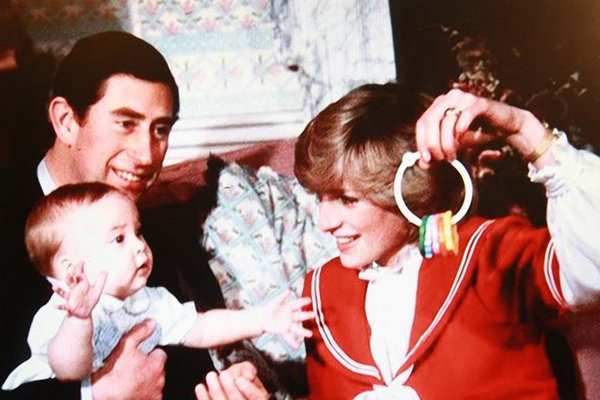
(Picture shows Prince William as a baby with his parents, Prince Philip and Diana, Princess of Wales; image from Royal Wedding)

Boys Names from the Top 100 of the 1900s

01 Sunday Apr 2012

Posted by A.O. in Name Themes and Lists

≈ 12 Comments

Tags

Appellation Mountain, celebrity baby names, classic names, ethnonyms, famous namesakes, fictional namesakes, French names, German names, germanic names, Latin names, locational names, name data, name history, name meaning, name popularity, name trends, nicknames, Norman-French names, Old English names, Old Norse names, popular culture, popular names, Roman names, royal names, Sabine names, saints names, surname names, tribal names

This follows on from Girls Names from the Top 100 of the 1900s. Once again, I’ve tried to get a balance between those names coming back into fashion, and those which haven’t charted for a while; once again, it is based on data from New South Wales. If you are attracted to names like these for boys, you should check out Abby’s two parter at Appellation Mountain – Fetching Names: The Nevilles, as many of her suggestions are very much in tune with this style.

Albert

This is derived from the Germanic name Adalbert, meaning “noble and bright”, which was common amongst German royalty. It was introduced to England by the Normans, where it readily overtook the Old English form, Æðelbeorht. A rare name by the 17th century, it came back in the 19th, as Prince Albert was the name of Queen Victoria’s dearly loved husband, born in Germany. Famous Australians with this name include Albert Matthews, the last Gallipoli veteran to die, in 1997, and popular long-time entertainer, Bert Newton. Albert is a classic name which has never been out of use; it was #12 in the 1900s, and didn’t leave the Top 100 until the 1950s. It’s remained relatively stable for several decades, and is currently in the low 300s. Albert is one of those names which sound slightly “grandpa” while remaining steadily in use. It’s a good reliable choice, and Alby, Bertie and Bert all make cute nicknames.

Aubrey

The Norman-French form of Germanic Alberich, meaning “elf power” or “elf ruler”, which replaced the Old English equivalent, Ælfrīc. The name was used for both sexes during the Middle Ages, especially amongst the aristocracy, but gradually fell out of use. It was revived in the 19th century, possibly influenced by the surname. There have been a few famous men in Australia named Aubrey, including motorcycle racer Aubrey Lawson, and Australian rules footballer, Aubrey Mackenzie. Aubrey was #59 in the 1900s, and left the Top 100 in the 1930s. It hasn’t charted since the 1950s. Aubrey may seem old-fashioned and effete to some people; others may think it sounds feminine, due to the popularity of similar-sounding girls’ name, Audrey. However, this unisex name is certainly in use as a boys’ name, and I have actually seen it on more boys than girls, with parents of girls often preferring specifically feminine spellings such as Aubree or Aubrie. I think it sounds handsome and dashing, and Jack Aubrey from Master and Commander (played by Russell Crowe in the film) even helps give it a nautical air. The usual nickname is Aub or Auby.

Claude

The French form of the Roman family name Claudius. The Claudii interpreted their name as from the Latin claudus, meaning “lame, crippled”, but according to legend, the first of their house was not Roman, but Sabine, and his family name was Clausus or Closus. When he joined the Romans, his name was Latinised. The Claudii were very proud of their Sabine heritage, very powerful, and had a reputation for arrogance and haughtiness. The name Claude became common in France during the Middle Ages due to the 7th century Saint Claude of Besancon, a monk to whom many miracles are ascribed. The name was brought to Britain by the aristocratic Hamilton family of Scotland in the specifically male form Claud; being Scottish they naturally had ties to France. Australian Claude Choules was the last surviving male World War I veteran in the world until his passing last year. Claude was #49 in the 1900s, left the Top 100 in the 1930s, and hasn’t charted since the 1970s. The name still packs a patrician punch, and namesakes such as painter Claude Monet and composer Claude Debussy make it seem quite artistic as well.

Frank

Used as a short form of Francis or Franklin, but is a name in its own right, referring to the Germanic tribe of the Franks. They conquered most of Gaul, which was later named France in their honour. A powerful tribe, they were the ultimate founders of what would later become the Holy Roman Empire, controlling much of Europe. The meaning of their name is disputed; it may mean “javelin” after their weapon of choice (although the weapon might have been named after them, not the other way around). Another theory is that it meant “bold, fierce”; the Romans sometimes addressed or referred to them as “the fierce people”. The English word frank, meaning “free, honest” is named after the Franks, and is not the source of the name. The most well-known Australian called Frank is probably charming comedian Frank Woodley. Frank’s a classic that has never been off the charts; #27 in the 1900s, it didn’t leave the Top 100 until the 1970s. It’s currently having a growth spurt in the low 400s. Brisk, sensible Frank is a worthy choice for someone wanting an old-style replacement for popular Jack. The usual pet form is Franky.

Harold

Derived from the Old English name Hereweald, meaning “army leader”; the Old Norse form Haraldr was also common amongst Scandinavian settlers in England. It was popular amongst the royal houses of Norway and Denmark, and the two kings of England named Harold were of mixed Scandinavian and Anglo-Saxon ancestry. It was Harold II who was defeated and killed at the Battle of Hastings, leading to the Norman Conquest. Not surprisingly, the name died out almost immediately, but was revived by the Victorians. The most famous Australian with this name is former Prime Minister Harold Holt, who disappeared in 1967 at the beach, and is presumed drowned, although many conspiracy theories have existed. Oddly enough, there is a swimming centre named after him. Harold was #13 in the 1900s, peaked in the 1910s, left the Top 100 in the 1940s, and remained in (rare) use until the early 2000s, with a dampener put on it by Mr Holt’s watery demise. Until recently, I would have said Harold made a great way to get the popular nickname Harry – unfortunately, Harry is rapidly falling. It’s got some challenges, but I do like this noble and besieged name.

Reginald

From the Germanic name Raginald, meaning something like “well-advised ruler”. The Normans brought it to Britain in the forms Reinald and Reinold; there were already Old English and Norse forms in use there. Reginald is the Latinised form of all these variants, and is another of those names from the Middle Ages which made a comeback in the Victorian era. There are many well known Australian Reginalds, including popular actor Reg Livermore, and Sir Reginald Ansett, the founder of Ansett Airlines. Reginald was #20 in the 1900s, and left the Top 100 in the 1960s. It hasn’t charted since the 1980s. Reginald may seem very fusty and pompous – then again, that’s exactly what people would have said about Archibald a few years ago, and now it’s quite fashionable as a way to the nickname Archie. I don’t really see what makes Reggie any different from Archie, Alfie or Freddie, which makes Reginald a genuine contender.

Rupert

A German form of Robert, this was introduced to Britain in the 17th century by Prince Rupert of the Rhine, a nephew of King Charles II of England. When still young, he was appointed commander of the Royalist cavalry during the English Civil War; after the Restoration he returned and became a senior naval commander. Prince Rupert was a man of fashion who also was one of the founders of the Royal Society and a patron of the arts – he made the name seem distinctly aristocratic, and perhaps slightly flamboyant. Famous Australians with the name include artist Rupert Bunny and media mogul Sir Rupert Murdoch. Rupert was #97 in the 1900s, and left the Top 100 the following decade; it left the rankings in the 1940s. Very recently, it has entered the charts again, and is currently climbing in the 400s. Rupert seems to be making a comeback – perhaps Rupert Grint from the Harry Potter movies has given it a more likeable, down-to-earth image. It’s certainly handsome, and Ru would make a cute nickname.

Stanley

An English surname meaning “stony meadow”; it comes from the place name Stoneley in Staffordshire. It has quite an aristocratic heritage, for the Stanleys were Earls and Barons, prominent in the Conservative Party, and at times, one of the richest landowning families in Britain. Members of the Stanley family have held high political office, including Prime Minister, been connected to royalty, and generally a force through the pages of British history. Sir Lyulph Stanley was part of this august clan; he was Governor of Victoria and held several other important posts in Australia. Great men called Stanley from our nation include tennis champion Stanley Doust, and legendary cartoonist Stanley Cross; the Stanley Award for cartoonists is named in his honour. A classic which has never left the charts, Stanley was #22 in the 1900s and left the Top 100 in the 1950s. It has remained stable since the 1960s. It’s an oldie but goodie, made to seem quite cool since Dido gave her son this name last year, named after the song Stan, by American rapper Eminen. It seems eminently usable, and sturdy nickname Stan is right on trend.

Vincent

This is from the Roman name Vincentius, derived from the Latin for “to conquer”. Its meaning made it popular amongst early Christians, who no doubt wished to indicate that they were ready to conquer sin, and there are several martyrs of the church with this name. A later saint with this name is the 16th century French priest famous for his works of charity, St Vincent de Paul. Vincent was used in Britain in the Middle Ages, but didn’t become common until the 19th century. Vince Jones is an Australian jazz artist, and Vince Melouney was one of the founding members of Billy Thorpe & The Aztecs, so it’s a very musical name. Handsome and romantic, Vincent is a classic which has never left the charts or been out of the Top 200. It was #47 in the 1900s, and left the Top 100 in the 1950s; the lowest it’s ever been is #179 in the 1970s. It’s usage has been erratic, but generally improving since then, and it’s currently in the mid 100s. Prince Vincent of Denmark, son of Princess Mary, may help it along further. Vin, Vince and Vinnie are all used as nicknames.

William

From the Germanic name Willahelm, meaning something like “willing helmet”, or “strong-minded protection”. William of Gellone was a cousin of Charlemagne, and an 8th century Norman count who defeated an army of Moors and forced them to retreat to Spain; his deeds are immortalised in the epic poem, Chanson de Guillaume (Song of William). In case this didn’t make him famous enough, he founded a monastery, gave it a piece of the True Cross, and became a monk, being declared a saint after his death. This made William a favourite name amongst the Normans, and when a Duke of Normandy called William invaded England in 1066 and was crowned king, it became the most commonly-used name in his kingdom. There have been four kings of England/Britain called William, and if Prince William attains the throne, he will be William V. Australia has had two Prime Ministers named William – Hughes and McMahon. Solid classic William has never left the Top 50; it was the #1 name of the 1900s and is #1 today. This never out fashion name is very versatile, because although William is so dignified, its nicknames Will, Bill and Billy are simple and unpretentious.

(The picture is of a prospector on the gold fields in 1904; image held by Museum Victoria).

Girls Names From the Top 100 of the 1900s

25 Sunday Mar 2012

Posted by A.O. in Name Themes and Lists

≈ 18 Comments

Tags

Anglo-Saxon names, Arabic names, classic names, famous namesakes, fictional namesakes, flower names, gemstone names, germanic names, Google, honouring, Italian names, K.M. Sheard, Latin names, locational names, mythological names, name data, name history, name meaning, name popularity, name trends, nature names, nicknames, Old English names, Old French names, Old Norse names, plant names, popular names, retro names, royal names, saints names, Shakespearean names, Victorian names

There have been many Googled requests for names from the 1900s, so this is my selection of ten girls names that were Top 100 in the 1900s which I think are usable today. I’ve tried to get a balance between names which are currently rising in popularity, and those which haven’t charted for many decades. All the data comes from New South Wales – the only state which has made public its data kept since Federation.

Amelia

A variant of Amalia, the Latinised form of Germanic Amala, a pet form of any name beginning with Amal-, and meaning “work”. This was one of the many names introduced to Britain by the Hanoverians; part of its easy acceptance was that it was considered a variant of the unrelated Emilia, and indeed Princess Amelia of Hanover was called Emily in everyday life. In the 1900s, Amelia was #95, and it had left the Top 100 by the following decade. It has been on the rankings almost continuously, dropping out in the 1940s and ’50s. Rejoining in the the 1960s, it grew steadily in popularity, until it was in the Top 100 by the 1990s. It’s currently stable at #10. Famous Australians named Amelia include Amelia Best, who was one of the first women elected to the Tasmanian House of Assembly, and opera singer Amelia Farrugia. Amelia was under-appreciated for many years, but is now extremely popular, with a host of nicknames such as Amy, Melia, Millie, Mia and Lia. Pretty and unpretentious, it has a ready-to-wear quality that makes it a handy choice.

Bessie

A short form of the name Elizabeth, in use since the 16th century. The name Bessie was #78 in the 1900s, and grew in popularity during the 1910s. It took a nosedive in the 1920s, left the Top 100, and hasn’t been in the rankings since the 1940s. Famous Australians named Bessie include portrait painter Bessie Davidson, who was celebrated in France in the pre-war era, and Bessie Guthrie, a designer of the 1920s who was an ardent feminist and early proponent of solar energy and ecological balance. She founded the Viking publishing house, and in later life was a crusader for the rights of abused children, before finally, in old age, being able to join a movement of feminist political protest she had waited all her life for. Bessie is such a sweet yet spunky name for a girl, and one I saw recently mentioned as having been given to a baby in 2011. I think it’s one which is ready to shed its “old lady” image and be used once more.

Edith

Based on the Old English name Eadgyð, meaning “rich war”, this was popular amongst Anglo-Saxon royalty; Saint Edith was the illegitimate daughter of King Edgar the Peaceful, and Edith of Wessex was the wife of King Edward the Confessor. Unlike many Anglo-Saxon names, it remained in use after the Norman Conquest, and didn’t fall out of favour until the 16th century. It was revived in the 19th century by the Victorians. The most famous Australian with this name was Edith Cowan, the social campaigner and first woman elected to parliament; she was part of the group which helped give women the vote in 1899 (her picture is now on the $50 note). The name Edith was #16 in the 1900s, and remained Top 100 until the 1940s, leaving the rankings in the 1970s. Very recently, it has had a revival, and is now increasing in popularity in the 500s. Strong, patriotic, and still aristocratic-sounding, it’s fast becoming a fashionable favourite. The short form Edie seems to be even more popular.

Ida

This name was introduced to England by the Normans; it may come from the Old Norse word for “work”, or be related to the Norse goddess of youth, Iðunn. Folklorist Jakob Grimm theorised that her name may come from idis, a divine female being in Germanic mythology, meaning “respected woman”. Ida died out in the Middle Ages, but was revived in the 19th century. This may have been partly inspired by Alfred, Lord Tennyson’s poem on female education, The Princess, where the heroine is named Ida. Gilbert and Sullivan parodied the poem in their operetta, Princess Ida. Tennyson probably took the name from Mount Ida; there is one in Crete and one near ancient Troy, and both were sacred to the Mother Goddess Rhea or Cybele. According to K.M. Sheard, the name is from the Greek for “woodland”. Ida was #42 in the 1900s and fell rapidly, leaving the Top 100 in the 1920s. It hasn’t been on the charts since the 1950s. Ida Standley was a pioneering schoolteacher in Central Australia. Ida is similar to popular names such as Ivy, Eva and Ava; it can also be used as a form of the Irish name Ita.

Leila

This variant of the Arabic name Layla was introduced to English-speakers by Lord Byron, who used it in his poems The Giaour and Don Juan. In Don Juan, Leila is a little Turkish girl rescued and adopted by the hero; in The Giaour, Leila is a member of a Turkish harem who falls in love with a non-Muslim, and is punished for adultery by being sent to a watery grave (vampires also get a mention). As such, it seems exotic, romantic, Gothic, and literary. Leila was barely Top 100 in the 1900s at #99, but has remained in continuous use, although very rare in the 1950s and ’60s. It’s never managed to join the Top 100 since, but has been climbing sharply since the 1990s, and is currently only just outside it in the very low 100s. Famous Leilas include Leila Hayes, who was in soap opera Sons and Daughters, and Leila Mackinnon, Channel 9 journalist. Leila fits perfectly with current related favourites Layla and Lila, and I wouldn’t be surprised if it was back in the Top 100 soon. Pronunciations vary, and as far as I’m aware, LAY-luh, LY-la and LEE-la are all considered correct.

Louisa

A Latinate feminine form of Louis, this was another name introduced to Britain in the 18th century by the Hanoverian royal family. The most famous woman named Louisa from Australian history is undoubtedly Louisa Lawson, the mother of national poet, Henry Lawson. A poet and publisher in her own right, Louisa was also a leading feminist who was called The Mother of Suffrage in New South Wales, and helped bring women in her state the vote. It is generally believed that she is the prototype for all the kind, capable, and hard-working country women who appear in Henry Lawson’s stories. Louisa manages to be a classic, remaining constantly on the charts, while being underused, for it has not been Top 100 since the 1900s, when it was #79. It’s currently around the #500 mark. You really can’t go wrong with Louisa – it’s never been in vogue, yet never been out of style either, so it doesn’t sound old-fashioned. It’s pretty and sensible, and honours one of Australia’s heroines. Nicknames can range from brisk Lou, to cutesy Lulu, and anything in between.

Maud

This is another form of Matilda. The Old Germanic Mahtild became Maheud in Old French, and Anglicised as Maud. Matilda was thus the Latin and written form of the name, while Maud was the way the name was said aloud. For example, Matilda of England, the first female ruler of the English kingdom (her reign was brief), was known as Maud in everyday life. Although the name may remind you of the word maudlin, that is actually from the name Madeline (its original pronunciation). Maud became rare at the end of the Middle Ages, but was another old name which Alfred, Lord Tennyson helped revive, due to his tragic and enigmatic love poem, Maud. Maud McCarthy was a nurse who served with distinction during the Boer War and World War I, receiving several medals. Maud was #94 in the 1900s, and slipped off the Top 100 the following decade. It hasn’t charted since the 1930s. It’s a genuine antique, and if you are determined on Maddie as a pet name, Maud would make a far more distinguished “proper name” than Madison.

Myrtle

Myrtles are graceful, fragrant flowering evergreen bushes, which in ancient times were sacred to Aphrodite or Venus, the goddess of love. Perhaps because of this, they are traditionally included in wedding bouquets; they are always used at weddings amongst the British royal family, a custom began by Queen Victoria. Myrtle has been used as a name since the 19th century, when other flower and plant names became the fashion. A famous person with this name is Myrtle White, who wrote books describing her life on a remote outback station. Myrtle was #47 in the 1900s, and had left the Top 100 by the 1930s. It hasn’t charted since the 1950s. I added Myrtle to the list, not only because we have myrtle species native to Australia, but because Baz Luhrman’s remake of The Great Gatsby will be released soon. There is a character named Myrtle in it, and this may give the name a new image than that of Moaning Myrtle from the Harry Potter books and films.

Pearl

Pearls are produced by molluscs such as oysters and mussels; they are essentially calcium carbonate or limestone in crystalline form. Ones occurring naturally in the wild are very rare, so that they are considered extremely valuable gemstones. Pearl became used as a name in the 19th century, when other gemstone names became fashionable. It probably also had religious connotations, because pearls are mentioned in the Bible, and Jesus compares the Kingdom of Heaven to “a pearl of great price”. Australia still has a significant pearling industry in Broome, Western Australia. A famous Australian with this name is Pearl Gibbs, an Aboriginal leader and activist who focused on women’s and children’s rights. Pearl was #87 in the 1900s, and left the Top 100 the following decade. It did not chart in the 1960s and ’70s, but staged a comeback in the 1980s, and has been climbing precipitously in recent years. It’s currently in the mid 200s, and this name from the sea still has plenty of lustre. It’s similar to the more popular Ruby, but seems more delicate and lady-like.

Sylvia

A variant of the Latin Silvia, meaning “of the woods”. The mother of the legendary Romulus and Remus was called Rhea Silvia (Rhea of the woods), because it was supposedly in the woods that she was seduced by the god Mars. Saint Silvia was the mother of Pope Gregory the Great, famous for her great piety; according to her portrait made during her lifetime, she was beautiful with large blue eyes. A common name in Italy, Silvia was introduced to England by Shakespeare, in his play The Two Gentlemen of Verona. Famous Australians with this name include Sylvia Harper, a tennis champion of the 1920s, and Sylvia Breamer, who was a Hollywood actress from the silent film era. Sylvia is a classic which has never left the charts. It was #58 in the 1900s, and didn’t leave the Top 100 until the 1950s. It hit its lowest point in the early 2000s, and is currently gently rising in the 500s. It’s lovely seeing this pretty name gaining in use; it almost seems like a nature name, because of its woodsy meaning and silvery bell-like sound.

(Photo used is of a bride in 1906; image is held by Culture Victoria)

Famous Names: Sebastian and Jenson

21 Wednesday Mar 2012

Posted by A.O. in Famous Names

≈ 8 Comments

Tags

Disney names, english names, fictional namesakes, Google, honouring, Latin names Greek names, locational names, Mer de Noms, name history, name meaning, name popularity, nicknames, popular names, pseudonyms, royal names, saints names, Shakespearean names, surname names, UK popularity

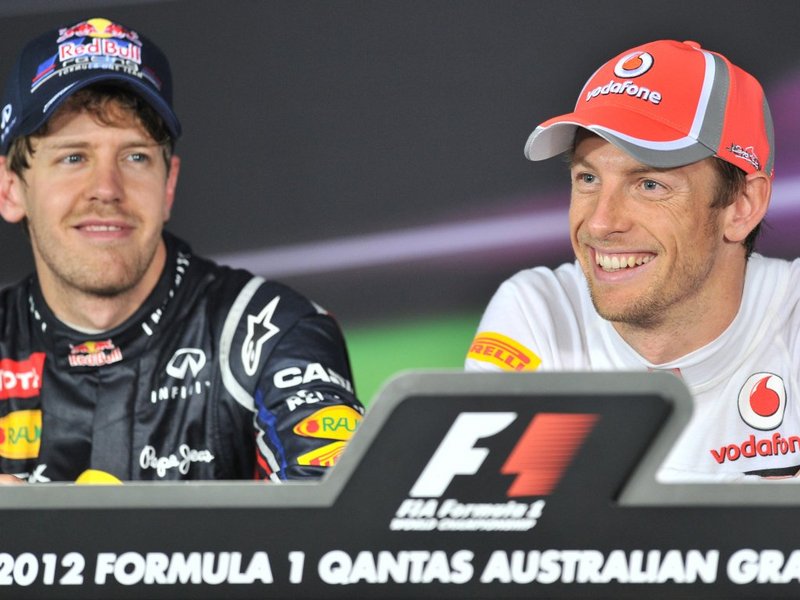
The Australian Grand Prix was held in Melbourne on the weekend, and before the event there was plenty of buzz in the media around German Sebastian Vettel, and British Jenson Button. These glamorous visitors from Europe always get a lot of attention, for both are handsome and charming; Vettel amusing and slightly mysterious, Button affable and quietly confident. In the end, Button opened the F1 season with a victory, winning comfortably against Vettel with a 2.2 second margin. It is his third Australian Grand Prix victory. (Picture has Vettel on the left in black).

I thought we’d take a look at the names of both these Formula One champions, because Sebastian and Jenson are Googled often to reach my blog, and so far I haven’t added any requested boys names to the Featured Names list, while I’ve been quite conscientious about adding the girls.

Sebastian is from the Latin name Sebastianus, which means “from Sebaste”. There were several places called Sebaste, because it is the Greek form of Augusta, named in honour of the Emperor Augustus. His adopted name meant “great, majestic, venerable”. There are towns in modern-day Turkey and Palestine with this name (or a version of it), still with ancient Roman ruins which can be visited.

The name became well known because of Saint Sebastian, a 3rd century Roman soldier originally from southern France. Skilled at converting people, according to legend he was shot through with arrows, yet did not die, so had to be martyred twice. He became popular in the Middle Ages because he was said to protect people from the plague, and also began to be depicted as a beautiful, semi-nude young man. (In early pictures, he looks like an ordinary bearded fully-clothed saint).

The name was popular amongst Continental royalty and nobility, and still retains a slightly upper-class image. Sebastian is Viola’s twin brother in Shakespeare’s gender-switching romantic comedy, Twelfth Night. Lord Sebastian Flyte is one of the main characters in Evelyn Waugh’s novel, Brideshead Revisited; beautiful and rather fey, the TV series and film makes it clear Sebastian is homosexual, although this is left ambiguous in the novel. Indeed, Saint Sebastian himself is considered a gay icon (for pretty flimsy reasons), and the name was a code for homosexuality; Oscar Wilde’s pseudonym was Sebastian Melmoth. So far, so androgynous.

However, the name got a watery overhaul when the name Sebastian was given to a Jamaican lobster in the Disney film, The Little Mermaid. Sebastian is a court composer, and a good friend and adviser to Ariel, the mermaid of the title. A Rastafarian who can lay down a reggae beat, he has given the name a new level of cool. The choice of his name seems like a deliberate reference to another famous composer: Johann Sebastian Bach. Incidentally, Sebastian is the lobster’s surname – his first name is Horatio (maybe after the American composer, Horatio Parker).

Sebastian first entered the charts in the 1960s and began steadily climbing, to become Top 100 by the 2000s. At #38 it still seems to be gaining in popularity – an elegant name that belongs to many people’s favourite Disney character.

Jenson is a lot more straightforward. It’s a surname which is basically a form of Johnson, being based on the name Jens, a short form of Johannes. According to Lou at Mer de Noms (rather a Jenson Button fan), the name Jenson has edged itself into the UK Top 100, and its growing popularity can be attributed almost solely to Mr Button himself. As to how he got his name, he was named after a family friend, Erling Jensen (father of F1 driver Steven Jensen). The spelling was altered so that it didn’t reference Jensen Motors, who made British sports cars until the 1970s.

It’s an attractive name, and one I think we’d be using in spades if Jenson Button was Australian. As it is, it’s one many parents are at least putting on their lists, although my personal feeling is that Jensen is slightly more popular, thanks to handsome American actor Jensen Ackles, from Supernatural. As I’ve said before, with female Jennifer become less popular, it gives male names starting with Jen- more of a chance.

When I try to decide which name I like best, Sebastian or Jenson, I find myself in private debate. If I take the side of Sebastian, it seems more sophisticated than Jenson, complex and multi-syllabled, romantic and princely. On the other hand, if I take the side of Jenson, it seems more laddish and chipper, down-to-earth and unpretentious, with oodles of cheeky British charm.

So I am content to say these are both very nice names, and I won’t force them to compete against each other in some Baby Name Grand Prix. When it comes to nicknames for them, I think of Seb and Bastian, and Jens and Sonny, respectively.

Saturday Sibset: The Family From the Emerald Isle

17 Saturday Mar 2012

Posted by A.O. in Sibsets in the News

≈ 5 Comments

Tags

classic names, fictional namesakes, Gaelic names, Irish names, locational names, mythological names, name history, name meaning, popular names, popularity in Ireland, saints names, sibsets

It’s Saint Patrick’s Day today, so of course this week’s sibset is from Ireland. The Hoban family moved to Australia in 2005 from the town of Wicklow, south of Dublin.

After selling their family business, Mr and Mrs Hoban wanted to show their four sons the world, so they went to Adelaide as temporary residents, where Mrs Hoban got a job as a nurse. However, life in Adelaide must have been good to them, because they decided to make it their permanent home.

They wanted to become citizens in 2007, but missed the cut-off by three days, after the law changed so that residents had to be living here for four years instead of two. Their fourth anniversary came up in October 2011, but they decided to delay just a bit further so that they could become citizens on Australia Day this year.

Mr Hoban says that leaving behind their friends, family and jobs was a “huge deal”, but now every time they leave Adelaide and come back, he is so happy he could “kiss the ground”. The youngest Hoban children have spent more than half their lives in Australia, and it means more to them than their country of birth.

Australia has a great fondness for Irish names, so we’ll have a look at the Hobans and see whether they have names already familiar here.

Kevin: Kevin is the father of the family, and as we well know, his name is considered a classic here, and still used fairly often. Luckily he didn’t migrate to Germany or one of the many other nations who don’t view Kevin kindly.

Tona: Tona is Kevin’s wife, and her name is usually taken to be a pet form of the name Antonia. However, there is a Scandinavian name Tona, meaning “fresh thunder”. Although Wicklow is said to have been settled by Vikings, the first one is probably more likely. It’s very similar to names such as Toni and Tonia.

Darragh (20): There are two possible sources for this name, pronounced DAH-rah, although in an Australian accent, I suspect it comes out as DARR-uh. One is that it’s a variant of the name Dara, which means “oak tree”. It is the same source as the name of the city of Derry or Londonderry in Northern Ireland. Oak trees were sacred in Celtic mythology, and there was a sixth century Saint MacDara (son of Dara), who was one of those reclusive island-dwelling hermit saints who flourished in Ireland. He has given his name to the tiny islet off the coast of Connemara on which he sequestered himself. Darragh can also be an Anglicised form of the name Dáire, meaning both “fruitful, fertile, rutting” and “tumult, rage, violence”. There are many kings and heroes of Irish legend with this name, and they may all go back ultimately to a god of the Otherworld. Despite its ancient origins, Darragh came into general use in Ireland fairly recently, so most of us wouldn’t have heard of it yet, although it is currently #16 in Ireland. However, it’s a wonderful name, extremely masculine, and one which I think Australians could easily embrace. It sounds comfortingly like that Aussie standard, Darren, and has also been Latinised as Darius.

Ryan (18): This name is very popular in both Ireland and Australia, although more popular in its country of origin, being #6 at present, while it’s #57 in South Australia.

Cian (14): This means “ancient” in Gaelic, and is pronounced KEE-an or KEEN. It’s another name from Irish legend, and is also recorded as the name of a Welsh poet. Cian is #14 in Ireland, and although it isn’t as popular here, it’s fairly well known and in use. There are also several variants and derivatives used, such as Kian, Keene, Keane, Keenan and so on.

Evin (12): This is the Anglicised form of the Gaelic name Éimhín, which may mean “swift”. There is a sixth century Saint Éimhín, who was from Munster, but a monk at an abbey in County Wexford. He is said to have written a biography of Saint Patrick, which makes it a great name for St Patrick’s Day. Evin is rare in both Ireland and Australia, although the name can also be Anglicised to its soundalike, Evan, and this name is #27 in Ireland and #95 in South Australia. Evin also has his dad’s name, minus the K – perhaps deliberate?

So out of six genuine Irish names, one is a classic, one is popular, one is in use, and the other three have a familiar sound to them and seem very usable.

Famous Name: Kevin

29 Wednesday Feb 2012

Posted by A.O. in Famous Names

≈ 21 Comments

Tags

classic names, famous namesakes, international naming laws, Irish names, Mer de Noms, name history, name meaning, name perceptions, name popularity, name studies, saints names, The Name Station

Over at The Name Station, there is an article quoting two studies which demonstrate that Kevin is the worst possible name to have in Germany. For some reason, this name really gets up the noses of Central European schoolteachers and cyber-daters.

As it turns out, the Germans aren’t exactly Robinson Crusoe in this regard. According to Lou at Mer de Noms (niece of a Kevin), the French also look down their noses at the name Kevin, and say, Non, non, non! Across the Channel, Kevin is considered a chavvy (bogan) name, to the point where kev is a synonym of chav, innit?

And if we hop over the Pond, American TV shows such as Daria and South Park depict Kevins as either dumb jocks or disposable meaningless characters. Oddly enough, in the United States Kevin is disliked for the exact opposite reason as in Europe – far from being too lower-class and urban, Kevin is seen as too middle-class and suburban.

A persistent Internet rumour is that the name Kevin is banned in Mexico because it will lead to “teasing and ridicule”. Actually the Chihuahua state government forbids parents from using any non-Spanish name without a Spanish middle name, and for some reason, reporters always seem to use Kevin as an example, hence the confusion. That may say more about how the name Kevin is viewed by the reporters than how it is in Mexico.

Apparently vast tracts of the Northern Hemisphere are infected by an intense loathing of people named Kevin. Here, another group who has joined the We Hate Kevin Club is the Australian Labor Party Caucus, who on Monday morning voted against Kevin Rudd’s bid for the leadership, two votes to one. So much do they detest Kevin Rudd that they profess a preference to losing an election without Rudd than winning one with him.

Their vote in support of Julia Gillard is not so much a ringing endorsement of her leadership as it is a sign of their determination to vote for ABK – Anyone But Kevin.

Kevin Rudd was elected Prime Minister of Australia in a landslide victory in 2007, his supporters running with the slogan Kevin ’07. Soon his non-stop work ethic led to him being labelled Kevin 24/7, and his frequent diplomatic trips around the world Kevin 747. Some papers sneeringly called him Kevin 7-11 for catering to the public a little too readily, like a convenient corner shop, and rumour had it he was Kevin 007 – a double-agent leaking information that could damage his enemies.

However, his authoritarian work style and biting insults made him anything but loved by his Labor colleagues, who ousted him the minute his popularity slipped in the polls and replaced him with his Deputy, Julia Gillard. This was all done so quickly that Rudd supporters have some basis for seeing him as stabbed in the back, as happens so often in the workplace.

Since his dumping, there has remained the vague threat (or hope) that he would one day rise up and take back his power. When Julia Gillard’s own popularity plummeted to record lows, he suggested he might run for party leader (and thus Prime Minister).

Polls done in the lead-up to Monday morning’s ballot showed great public support for Kevin Rudd, with the majority of people preferring him to either Julia Gillard or Tony Abbot, the Opposition Leader. The Pro-Kevin lobby reached fever-pitch. He was treated like a rock star wherever he went, received messages from people all over the country in his support, and was proclaimed the People’s Prime Minister. However, the people’s support is useless without the support of your party. That’s politics.

Maybe the Germans, the French, the British, the North Americans, and possibly the Mexicans can’t stand Kevin, but it seems Australians are pretty okay with it. We elected a Kevin Prime Minister, even though Dame Edna Everage expressed some doubts about the idea (she was probably catering to the anti-Kevin prejudices of her chiefly British audience). And even though he’s gone, he was never voted out, and clearly a sizeable chunk of the population would like him back.

The media love the name Kevin as well – it’s so useful for catchphrases and headlines. Not only Kevin ’07, Kevin 24/7, Kevin 747, Kevin 7-11 and Kevin 007, but also in the headlines were Kevingate, The Kevinator, Good Heaven’s It’s Kevin, Kevin Heaven, Kevin in Heaven, A Kevinly Sign from Above, Knocking on Kevin’s Door, and Kevenge (an act of revenge committed by someone named Kevin).

Australians have never had problems with names of Irish origin (as the list of Famous Names is starting to make pretty obvious). Kevin is the Anglicised form of the Irish name Caoimhin, a form of the older Cóemgein, which can be translated as “gentle” or “handsome”. Saint Kevin is the patron saint of Dublin, and is sometimes called the Irish St Francis of Assisi for his love of animals and nature. According to legend, an angel turned up at his baptism and instructed that he should be called Kevin, which the bishop naturally felt obliged to go along with. Maybe Kevin truly is a name from heaven? (A more plausible tale is that his name was bestowed upon him by fellow monks in tribute to his sweet nature).

In Australia, Kevin is a classic name which has never left the charts since record-keeping began in 1900. It first joined the Top 100 in the 1910s, and peaked in the 1930s at #6. It remained a Top 100 name for nine decades until the early 2000s, when it just dipped out at #101. Currently it’s #154.

In Queensland, which is Mr Rudd’s home state, there were twice as many babies named Kevin last year than babies named Julia, his deposer. And I have noticed in the birth announcements how common Kevin is as a middle name for boys.

Are they being named after a father, an uncle, a grandfather … or a lost Prime Minister who may still return, like the once and future king? Rudd Redux?

NOTE: Kevin is a Top 100 name in at least nine different countries, two of which, France and the United States, supposedly despise it. Go figure. Maybe this whole anti-Kevin thing is a beat-up.

Famous Name: Magda

15 Wednesday Feb 2012

Posted by A.O. in Famous Names

≈ 7 Comments

Tags

Aramaic names, famous namesakes, hebrew names, name history, name meaning, nicknames, saints names

Yesterday was Saint Valentine’s Day, a day for thinking about love and marriage, and for declaring your true feelings. It was the day that film and TV star Magda Szubanski chose to come out on national television and identify herself as “absolutely gay” to Channel 10’s The Project.

Although her family, friends and colleagues have known this for a long time, it has never before been made public knowledge. It was obviously something important that would make her decide to share this aspect of her life with the public after so many years, and in a statement to newspapers yesterday in support of Australians for Marriage Equality, Magda made an impassioned plea for gay marriage to be legalised.

“The law means that you could be a serial killer and have killed all of your spouses and yet you would still be considered fit to marry,” she said. “But if you are gay, then you are not worthy of these same rights.”

Her “coming out” comes a day after two separate bills to legalise same-sex marriage were introduced in federal parliament. Magda made it clear that she is currently single, and not expecting to get married any time soon.

Now aged fifty, Magda has been delighting audiences since her university days. A gifted comedienne, she created a number of memorable characters for television sketch shows such as ditzy sports reporter Pixie-Anne Wheatley, heavily made-up infomercial saleswoman Chenille, penny-pinching whiskey-swilling Scot, Mary Macgregor, and vile mother Lynne Postlethwaite.

On the popular sit-com Kath and Kim, Magda played netball nerd, Sharon Strzelecki, who was often the butt of her friend Kim’s jibes. As well as hosting several of her own shows, Magda has had roles in Hollywood films such as Babe, Happy Feet and The Golden Compass, and sci-fi TV show Farscape. The public have voted her Most Popular Comedy Personality three times at the Logie Awards, and she has won an AFI Award for her role on Kath and Kim.

In 2003 and 2004 she was voted the most recognisable Australian personality, which helped her become spokesperson for a number of companies, most recently, weight-loss company Jenny Craig, through which she lost 36 kg. Despite being overweight, she has always been a strong and energetic person who enjoys being active.

The Australian public love her for her quick wit, sense of fun, and lively personality, her enormous smile that lights up her face and her big loud infectious laugh. We love her most when she is unselfconsciously being herself, and Magda has been overwhelmed by the public support she has received since coming out yesterday.

Magda’s name is short for her full name Magdalene, which is the title of Saint Mary Magdalene. Mary Magdalene was a very important disciple of Jesus in the New Testament, and the only person privileged to first see the arisen Christ. The Catholic church places her on a short list of saints declared to be “equal to the Apostles”.

Traditionally, her name is said to mean that Mary came from the village of Magdala, which means “tower, fortress” in Hebrew. However, in Aramaic magdala means “high, great, magnificent”, so it’s possible her name was supposed to be “Mary the Great”. I have also seen the suggestion that the name was meant to denote that physically Mary Magdalene was taller than average.

Magda is a pet name commonly used in central and eastern Europe, and although she was born in England and her mum is Scottish, Magda’s father is from Poland, and was in the Polish Resistance during World War II.

Magda is a strong and beautiful name which has cultural ties to Europe, and honours one of the most prominent early Christian women. It also has the familiar nicknames Maddie and Maggie. However, like Edna and Ita, Magda Szubanski is very famous and has such a distinctive name that we would know her from her first name alone. Does her fame overpower the name, I wonder?

Short news report on Magda’s announcement:

Famous Names: Ita and Cleo

08 Wednesday Feb 2012

Posted by A.O. in Famous Names

≈ 16 Comments

Tags

celebrity baby names, famous namesakes, Greek names, Irish names, nicknames, popular culture, saints names, unisex names

The Australian Academy of Cinema and Television Arts was established last year as a subsidiary of the Australian Film Institute; its job is to administer the AACTA Awards, which replace the old AFI Awards. Every news report on television seemed to feel it necessary to point out that AACTA is said just like the word actor, which I think most of us would have understood without help, seeing as they just said it aloud to us.

The Australian Academy has been deliberately set up in a similar way to the American Academy of Motion Picture Arts and Sciences, and the awards ceremony has been moved to late January, in order to fit in with the prize-giving season in the United States, which holds the Golden Globes and the Academy Awards in January and February. The AACTA Awards ceremony has been moved to Sydney and held at the Opera House, possibly because that seems more Hollywood than Melbourne. The AACTA statuette has also been remodelled, with some commenting that it looks like a flamboyant Australian Oscar.

Amongst the prize-winners was Asher Keddie, who won the Switched on Audience Choice Award for Best Performance in a Television Drama, for her role as Ita Buttrose in the mini-series Paper Giants: The Birth of Cleo. I must confess to not voting in this contest, or even knowing it existed until too late (obviously I’m not a very switched on audience member), but I do approve of the choice, as I thought Ms Keddie did an excellent job of portraying famous editor, Ms Buttrose.

Ita Buttrose, like Barry Humphries and Father Bob, is another super septuagenarian. She was named after her maternal grandmother, Ita Clare Rodgers (nee Rosenthal). Her ambition since the age of 11 was to be a journalist, and she began working as a copy girl at 15. Ita was a force in the Australian media for many years, including as youngest editor of The Australian Woman’s Weekly, the largest magazine in Australia. She became the first woman to edit a major metropolitan newspaper, the Daily Telegraph. Always perfectly presented, cultured and refined, she is instantly recognisable for her trademark lisp. She’s been granted several awards and honours, and supports a multitude of causes, from AIDS to Alzheimer’s. Ita is also an author of many practical books; her latest is a guide to etiquette.

Ita (IE-ta) is an Anglicisation of the Irish name Íte (EE-ta). Saint Ita of Killeedy was a 6th century Irish nun who headed a community of women. One of their tasks was to run a school for small boys; among her students was Saint Brendan the Navigator. According to tradition, Ita was of royal blood and baptised Deirdre; the name Ita she chose herself from the Old Irish word ítu, “thirst”. This was to signify her thirst for divine goodness. Today it sounds mildly vampiric.

Ita Buttrose became the founding editor of Cleo magazine in 1972, and made it an instant success – the first edition sold out in two days. Cleo was something new in Australian publishing: a magazine for women that spoke openly about sexuality. There were articles on masturbation, abortion, contraception and sex toys, and a nude centrefold – the first model for the centrefold was actor Jack Thompson. It made the sexual revolution accessible to the average woman. In Paper Giants, the title Cleopatra is suggested for the magazine, as befitting a strong yet sexual woman, but Cleo is chosen because it fits better on the masthead. It intrigues me that Cleo sounds similar to Ita’s middle name – Clare – and wonder whether she unconsciously selected a title that sounded like her own name. Cleo is also the name of Ita’s pet dog (Clare is her grand-daughter).

Cleo is usually thought of as being a short form of Cleopatra, but it can be short for any name beginning with Cleo-, such as Cleophas. It is therefore a unisex name, and there are several prominent men named Cleo, including American motorcyclist and World War I flying ace Cleo Pineau. The father of Elizabeth Short, the Black Dahlia murder victim, was named Cleo. It is from the Greek for “glory, fame, pride”. This gorgeous little name is right on trend for o-enders, and was also a celebrity baby name last year. It would make a great alternative to popular Chloe.

← Older posts
Newer posts →

Enter your email address to follow this blog

Categories

Archives

Recent Comments

A.O.'s avatarwaltzingmorethanmati… on Zarah Zaynab and Wolfgang…
Madelyn's avatarMadelyn on Zarah Zaynab and Wolfgang…
JD's avatardrperegrine on Can Phoebe Complete This …
A.O.'s avatarwaltzingmorethanmati… on Rua and Rhoa
redrover23's avatarredrover23 on Rua and Rhoa

Blogroll

  • Appellation Mountain
  • Baby Name Pondering
  • Babynamelover's Blog
  • British Baby Names
  • Clare's Name News
  • For Real Baby Names
  • Geek Baby Names
  • Name Candy
  • Nameberry
  • Nancy's Baby Names
  • Ren's Baby Name Blog
  • Sancta Nomina
  • Swistle: Baby Names
  • The Art of Naming
  • The Baby Name Wizard
  • The Beauty of Names
  • Tulip By Any Name

RSS Feed

  • RSS - Posts

RSS Posts

  • Celebrity Baby News: Melanie Vallejo and Matt Kingston
  • Names from the TV Show “Cleverman”
  • Can Phoebe Complete This Sibset?
  • Zarah Zaynab and Wolfgang Winter
  • Baby, How Did You Get That Name?
  • Celebrity Baby News: Media Babies
  • Celebrity Baby News: Adelaide Crows Babies
  • Celebrity Baby News: Chris and Rebecca Judd
  • Names at Work: Name News From the World of Business and Employment
  • Celebrity Baby News: Sporting Round Up

Currently Popular

  • Girls Names From Stars and Constellations
  • Celebrity Baby News: Toby Allen and Darren Weller
  • Celebrity Baby News: Drew and Nicole Petrie
  • Celebrity Baby News: Livinia Nixon and Alistair Jack
  • Girls Names of Australian Aboriginal Origin

Tags

celebrity baby names celebrity sibsets english names famous namesakes fictional namesakes honouring locational names middle names name combinations name history name meaning name popularity name trends nicknames popular names saints names sibsets surname names twin sets unisex names

Blog at WordPress.com.

Privacy & Cookies: This site uses cookies. By continuing to use this website, you agree to their use.
To find out more, including how to control cookies, see here: Cookie Policy
  • Subscribe Subscribed
    • Waltzing More Than Matilda
    • Join 517 other subscribers
    • Already have a WordPress.com account? Log in now.
    • Waltzing More Than Matilda
    • Subscribe Subscribed
    • Sign up
    • Log in
    • Report this content
    • View site in Reader
    • Manage subscriptions
    • Collapse this bar
 

Loading Comments...