• About
  • Best Baby Names
  • Celebrity Baby Names
  • Celebrity Baby Names – Current
  • Celebrity Baby Names – Past
  • Featured Boys Names
  • Featured Girls Names
  • Featured Unisex Names
  • Links to Name Data
  • Waltzing on the Web

Waltzing More Than Matilda

~ Names with an Australian Bias of Democratic Temper

Waltzing More Than Matilda

Tag Archives: rare names

Famous Names: Tully and Yasi

07 Saturday Jan 2012

Posted by A.O. in Famous Names

≈ 8 Comments

Tags

Australian name trends, created names, cyclone names, famous namesakes, Fijian names, Game of Thrones names, Irish names, locational names, name history, name meaning, names of rivers, nature names, pen names, rare names, Roman names, surname names, tree names, UK name popularity, unisex names, US name popularity

This blog entry was first posted on January 7 2012, and revised and republished on August 31 2016.

TULLY
On January 3, the town of Tully in Queensland celebrated the upgrade of its famous Golden Gumboot, which was damaged by Cyclone Yasi nearly a year ago. The tourist attraction is a 7.9 metre (26 feet) high gumboot, painted gold, built to commemorate the town’s 1950 highest recorded annual rainfall level of 7.9 metres (310 inches), earning Tully the distinction of being Australia’s wettest town.

When the Golden Gumboot was re-opened, it had received a fresh coat of paint and a new viewing platform. Fittingly, it rained heavily throughout the ceremony.

The town of Tully is named after the nearby Tully River, which received its name from Surveyor-General William Alcock Tully. William Tully was originally from Dublin, and arrived in Hobart as religious instructor on a convict ship in 1850 before embarking on a career of conscientious public service.

Tully is an Anglicised form of an Irish surname, originally MacTully, and having a host of variants, which is often derived from tuile, the Gaelic word for “flood”. Another theory is that it has been mistranslated from toile, meaning “will” (as in the will to keep going). However, some Tullys are so convinced of the first interpretation that they have hyper-Anglicised their surname to Flood.

The meaning of “flood” is very appropriate for the name of a river, and a town famous for its sogginess. In Game of Thrones, the Tully family is one of the Great Houses and as it is the principal house in the Riverlands and their ancestral home is Riverrun, perhaps George R.R. Martin also had the Irish surname and meaning in mind.

Tully has been used as a personal name since the late 18th century. Although the name can be found in early records from Ireland, it seems to have been more frequently used in the United States.

One inspiration for it may have been the Founding Father Alexander Hamilton, who wrote patriotic pamphlets under the pen name Tully – in his case, a reference to the Roman philosopher Marcus Tullius Cicero, whose name was occasionally Anglicised to Tully. The Tullia took their surname from the legendary Roman king Servius Tullius; the name is so ancient we do not know its meaning.

Tully has never been a common name. Last year in the US there were 8 boys named Tully with no girls listed with the name since 2013. In the UK the name has been in sporadic use, and in 2014 there were 4 baby boys named Tully. No girls are listed as having been given the name since 2009.

In Australia I have seen a roughly equal number of boys and girls with this name, and the name may be more evenly unisex here than elsewhere. One boost to the name for girls is women’s basketball champion Tully Bevilaqua, and after the attractive but controversial Tully Smyth competed on Big Brother in 2013, I heard many Australian parents refer to Tully as a “girl’s name”. Perhaps more importantly, it fits with the Australian trend for female names with a T-L pattern, such as Talia, Tilly, and Tallina.

YASI
The town of Tully was one of the worst affected by Cyclone Yasi, which hit the coast of northern Queensland early in the morning on February 3 2011. The town suffered extensive damage to its main street, and the area’s banana crops were completely flattened. Because Cyclone Yasi originated in Fiji, it was a Fijian cyclone forecaster called Misaeli Funaki who chose its name.

If you think naming a baby is difficult, spare a thought for the meteorologists who name cyclones. The cyclone had to start with Y, and nobody could think of an appropriate name for either gender.

So Mr Funaki suggested Yasi, which is the Fijian word for “sandalwood”. It didn’t have a history as a personal name in Fiji, but with no other candidates, his nomination was accepted by the ruling UN body. And so a new name was created.

Sandalwood is a tree with fragrant wood native to Asia and the Pacific. Australia has a sandalwood industry; the tree’s oil is used to make incense, soaps and cosmetics. Its antibacterial properties make it excellent as a skin cleanser, and Australian Aborigines eat its fruit as a bush food. Sandalwood is also used in the rituals of several eastern religions.

Yasi is neither used for boys or girls in Fiji. The cyclone forecasters were looking for a male name when they chose it, but they often resort to unisex names, and probably meant Yasi to be one. It’s commonly said to rhyme with Darcy, but seems to be more correctly pronounced YAH-zee.

During Cyclone Yasi, one doctor was apparently very keen for all babies born during the cyclone to be named Yasi, but there is no record of anyone following his advice. However you can find people around the world with the name Yasi, mostly female – perhaps a short form of names such Yasmin.

These are two short unisex names important to Australia’s history, especially connected with Queensland, rain, and storms. Tully is uncommon, but not unheard of, while Yasi is a true rarity, but not unusable.

POLL RESULTS
Tully received a very good approval rating of 70%. 46% of people thought it was a good name, while not one person hated it. Yasi was far less popular, with an approval rating of 22%. 53% of people weren’t keen on the name, and only one person loved it.

(Photo shows the Golden Gumboot in Tully, Queensland)
 

Famous Names: Barack

19 Saturday Nov 2011

Posted by A.O. in Famous Names

≈ 11 Comments

Tags

African names, Arabic names, Australian Aboriginal names, famous namesakes, hebrew names, name history, name meaning, name popularity, names of horses, rare names, surname names, Swahili names, UK name popularity, US name popularity


3675434-3x2-940x627

This blog post was first published on November 19 2011, and substantially rewritten and re-posted on November 19 2015.

Famous Namesake
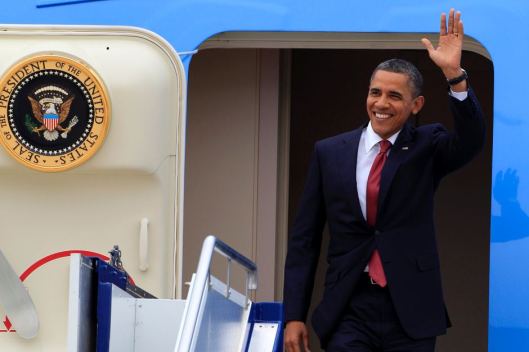
This year is the sixtieth anniversary of the ANZUS Treaty, the military alliance which binds Australia to the United States. Partly to commemorate this occasion, the President of the United States, Mr Barack Obama, made a brief two-day stopover trip to Australia on his way to Bali. He is the fifth American president to visit Australia since Lyndon Johnson arrived in 1966.

Spending two days in Canberra and Darwin, capital cities of our two Territories, he made an address to Parliament, laid a wreath on the Tomb of the Unknown Soldier and paid his respects to the 89 US sailors who perished aboard the USS Peary after being bombed by the Japanese in Darwin Harbour in 1942. It was also announced that a US military base would be stationed in Darwin.

Handsome and charismatic, with a constant friendly smile, the President could not help but make himself popular. Mr Obama has the charm and good manners that we tend to think of as very American, and he made lots of pleasant jokes about Australian slang and the Australian accent, while expressing his fondness for the nation and its people (and no fondness at all for Vegemite, which is an acquired taste).

While in Canberra, he made a visit to a high school and hugged an excited young girl. “He’s so kind … and warm,” she exclaimed. That’s how Barack Obama came across – kind, warm, genuine, funny, and very charming.

Note: President Obama made another visit to Australia in 2014, when he attended the G-20 summit in Brisbane. He gave a speech to students at the University of Queensland, which received thunderous applause from a young audience unused to hearing political leaders talk about climate change and gender equality.

Name Information
Barack is a Swahili variant of the Arabic word barak meaning “blessed”. The name comes from a Semitic root meaning “to kneel down”, with connotations of someone receiving a benediction while on bended knee. In Islam, the related term barakah (“blessing”) means a continuous spiritual presence and revelation providing a flow of blessings and grace to those close to God, such as saints and holy people.

The name is sometimes confused with the Hebrew name Barak, meaning “shining, lightning”. In the Old Testament, Barak was a military commander. In Arabic the equivalent word for “lightning” is buraq – you can see it in the name Al-Buraq, the mystical horse who took the prophet Muhammad on his Night Journey to the heavens on a journey between Jerusalem and Mecca and back.

The Hebrew equivalent of Barack is Baruch, meaning “blessed”. It is related to the Hebrew word berakhah, meaning “benediction, blessing”. In Judaism, berakhah is a blessing or thanksgiving given before enjoying or performing certain acts; for example, before eating: it acknowledges God as the source of all blessings. Baruch can be Latinised as the name Benedict, which is why the Dutch philosopher Baruch Spinoza, who was Jewish, is often known to us as Benedict Spinoza.

As both Arabic and Hebrew are Semitic languages, it is easy to see how such confusion arises over similar or even identical-looking names.

By coincidence, Barak is also an Australian name. The famous Aboriginal spokesman William Barak (sometimes known as King Billy) took his surname from his tribal name of Beruk, meaning “white grub in gum tree”.

President Obama was named after his father, Barack Obama Sr, who was a senior economist in the Kenyan government during the 1960s. Mr Obama Sr was raised in a Muslim family, but was converted to Christianity at the age of six while attending a missionary school.

Apparently his original name was Baraka (from the Islamic term for spiritual blessings and grace), but he changed his name to Barack to avoid the overtly religious connotations of his name. I’m not sure how valid a conversion is in such a young child (it sounds almost coerced), but in any case it didn’t take, and Mr Obama became an atheist. His son did become a Christian, however.

The name Barack has never charted in the United States. Last year 11 babies were named Barack, a number which has decreased since 69 being born in 2009 – the year that Barack Obama Jr became President of the United States. In the year before President Obama’s presidential campaign, just 5 babies were named Barack.

Barack can only be found in British data between 2008 and 2010, peaking in 2009 at 17 births. I haven’t found any Baracks in Australian data, but based on international trends, it may have had a small spike in 2009.

Barack must be the most interesting of the American presidents’ names, and has at least busted the myth that you need a “presidential-style” name to become president of the United States (something like Ulysses or Grover, I presume).

One of its biggest issues as a baby name must be that it is so closely tied to the current US president, and may feel like a “one person name” – especially considering the name’s unique family history.

It could also be confused with similar names, and the pronunciation is something of an issue: although I understand it as buh-RAHK, I have heard it said it in a variety of ways by overseas commentators, including Burrock and Barrack. However, this is a strong handsome name with a nice meaning that will certainly stand out from the crowd.

NAME POLL RESULTS: Barack received an approval rating of 60%. 25% of people thought it was too closely tied to the American president, making it a one person name. However, 14% saw it as strong and commanding, and a further 14% thought it was a name unusual enough to stand out from the crowd. Only one person thought it was too rare, while 3% of people were put off the name because of President Obama.

(Picture shows President Obama arriving in Canberra in 2011; photo from the ABC)

Famous Name: Cadel

25 Monday Jul 2011

Posted by A.O. in Famous Names

≈ 15 Comments

Tags

famous namesakes, fictional namesakes, name history, name meaning, name popularity, rare names, Roman names, surname names, UK name popularity, US name popularity, Welsh names

This blog post was first published on July 25 2011, and revised and updated on July 23 2015.

Famous Namesake
On July 25 2011, Cadel Evans became the first Australian to win the Tour de France in the race’s 108-year history, only the second non-European to officially win it, and at 34, the oldest winner since World War II.

This gruelling 3 600 km (2 200 miles) cycle race lasts for three weeks, and finishes in Paris, with the climax of the final stage along the Avenue des Champs-Élysées. Traditionally the overall winner wears a ceremonial yellow jersey.

This was a great moment in our sporting history, and in Cadel’s home state of Victoria, everyone was urged to wear yellow to work as a show of support. When Cadel returned to Australia in August, there was a huge homecoming parade for him in Melbourne’s Federation Square, with tens of thousands of people dressed in yellow or waving yellow flags. He was also honoured with a state reception.

Cadel was made a Member of the Order of Australia in 2013, and has also been featured on the blog as a celebrity dad. In February 2015, he took part in the inaugural Cadel Evans Great Ocean Road Race and finished fifth, announcing his retirement as soon as the race finished. He is currently Global Ambassador for the BMC Racing Team.

Name Information
As you can probably tell from Cadel’s surname, he is of Welsh ancestry – his great-grandfather was from Wales. Cadel is a variant of the Welsh name Cadell, which is based on cad, the Welsh word for “battle”; there are several related names, such as Cadwalader, meaning “battle leader”. There is a recent fancy that the name is a Welsh form of the Roman name Catallus, although there doesn’t seem to be much evidence to support it.

There were several medieval Welsh kings and princes called Cadell. Cadell Ddyrnllwg was driven from his father’s kingdom by Irish pirates during the chaos of the 5th century. He lived amongst the peasants until a visit from Saint Germanus changed his fortunes. Saint Germanus laid siege to the capital, as it was held by Irish pagans, and Cadell offered the saint his humble hospitality. Saint Germanus had a premonition of disaster, and warned Cadell and his friends to get out of the city. That night the palace was struck by lightning and the resulting fire burned everyone alive, so without any annoying questions from insurance investigators, Cadell was able to regain his throne.

There is a famous explorer in Australian history with the surname Cadell – a Scotsman called Francis Cadell who was the first to explore and navigate the Murray River by steamship. A man who lived a life of adventure, he took part in the New Zealand land wars, where he staged a mutiny against his captain, and also was one of the first to explore the Northern Territory (where Cadel Evans was born), where the Cadell Strait bears his name. Later in life, he took up whaling, pearling, and trading in the East Indies, and was murdered near New Guinea; a fittingly violent end to an exciting life.

A fictional namesake is Cadel Piggot, the protagonist of the Evil Genius series of young adult books by Australian author Catherine Jinks. It’s about a boy who is very small with curly blonde hair and baby blue eyes, and an evil genius with a passion for IT. The series follows his exploits from the ages of 7 to 15 as he gradually develops a sense of right and wrong.

Since Cadel Evans’ historic win at the Tour de France, I have seen quite a few baby boys named Cadel, although the name is still rare in Australia. In the UK, there were 4 baby boys named Cadel in 2013, the name apparently rising slightly after Cadel Evans’ victory. In the US, there were 10 baby boys named Cadel in the US in 2014, down from 19 in 2012 and 17 in 2011. It seems that Cadel Evans did give the name a boost in the US after the 2011 Tour de France, but it has faded, as the name Cadel is now less used than it was in 2010, when there were 12 boys named Cadel.

Cadel fits in quite well with current trends in boy names, looking similar to Caden and Cade. Although at the start of his career, Cadel Evans had his name mispronounced as KAY-del, to sound like cradle without the R, I think by now everyone knows he says his name kuh-DEL (like Adele with a K at the front). This isn’t the British pronunciation, which is more like KAD-el. However, now that Evans has retired, it is unclear whether the name Cadel will continue gathering steam, or run out of puff.

POLL RESULTS
Cadel received an approval rating of 60%. 16% of people thought it was handsome or attractive, but an equal number believed it was too closely associated with Cadel Evans, and felt like a “one person name”. Few were willing to predict the name’s fortunes – 2% thought the name Cadel would continue growing in popularity, while 5% were fairly sure the name was a flash in the pan that would soon be forgotten.

Girls Names from Video Games

10 Sunday Apr 2011

Posted by A.O. in Name Themes and Lists

≈ 10 Comments

Tags

Arabic names, Australian name trends, celebrity baby names, code names, created names, dog names, english names, ethnonyms, famous namesakes, fictional namesakes, flower names, food names, French names, Greek names, hebrew names, Japanese names, locational names, mythological names, name history, name meaning, name popularity, names from movies, names from songs, names from video games, nature names, nicknames, Persian names, popular names, rare names, Russian names, saints names, scandinavian names, stage names, surname names, tree names, unisex names, vintage names, Welsh names, Yiddish names

This blog post was originally published on April 10 2011, and heavily edited and updated on April 16 2015.

Ayame
Ayame is a female ninja in the Tenchu series; she appears petite and feminine, but is possessed of a sharp tongue, and is a cunning and aggressive fighter. Her real name is Omon, so Ayame is her professional or code name. Ayame is the Japanese word for the iris flower. It is used as a girl’s name in Japan, and has a long history, for five generations of kabuki actors, beginning in the 17th century, adopted it as a stage name while playing female roles. The name has become a favourite for Japanese video games, anime, and manga. Pronounced ah-YAH-me, I have seen two girls in Australia with this name, and heard of another. The soft sound and floral meaning make this name an attractive choice which fits in with names like Aya and Ayla.

Coco
Coco is the smart, fearless younger sister of Crash Bandicoot in the Crash Bandicoot series, set in Australia. Coco is a nickname for any name with a CO sound in it, or given because of its similarity to the word cocoa. Its most famous namesake is French fashion designer Gabrielle “Coco” Chanel, who got her nickname from her days as a cabaret singer. It may have been an allusion to either one of her signature songs: Ko Ko Ri Ko (“Cock-a-doodle-doo”), or Qui qu’a vu Coco (“Who Has Seen Coco?” – Coco was a lost male dog). Another theory is that it was based on the French word coquette, used as a slang term for a kept woman or a mistress. Coco the Clown (born Nikolai Poliakoff) is one reminder of its use for males as well. Coco became a celebrity baby name when it was chosen by actress Courtney Cox for her daughter in 2004. Australian journalist Mia Freedman named her daughter Coco the next year, actress Diane Farr called one of her twin daughters Coco in 2008, and Tony Kanal from No Doubt welcomed a daughter with this name in 2011. This is a cute, flirty, yet stylish name that is still underused.

Elika
Prince of Persia is set in ancient Persia and inspired by the religion of Zoroastrianism. Elika is a runaway barefoot princess who must help the hero by systematically travelling the area, and magically healing particular sectors of ground called Fertile Lands; unfortunately each time she does this her life force becomes weaker. In appearance, Elika is beautiful with tousled dark chestnut hair, enigmatic hazel eyes, and a slender, fragile figure; her personality is guarded and serious. She is much greater than she appears, for she holds many secrets, and almost has the status of a demi-goddess. Elika is a name which is found in many different cultures, but I have seen the Persian name Elika translated as being derived from ela or ellka, the Sanskrit for “cardamon”, a fragrant spice tree. In the game Elikas’s name is pronounced ELL-eh-kuh, but eh-LAY-kuh is more traditional. This pretty name fits in with popular names like Ella and Layla, and is not too different from fashionable Elke.

Kairi
Kingdom Hearts is a collaboration between the makers of Final Fantasy and Disney, whereby Disney settings are crossed-over into a fictional universe, and characters from Final Fantasy interact with the player and popular Disney characters. Kairi is one of the hero’s best friends, and also one of the seven Princesses of Hearts – pure maidens whose hearts are free of all darkness. The name Kairi was invented for the game and according to creator Tetsuya Nomura, her name is derived from the Japanese word for “sea”, just as the other two main characters’ names mean “sky” and “land”. The name has become quite popular for use in use other Japanese video games, anime, and manga. It is pronounced KY-rhee, and is similar in sound to familiar names such as Kara, Kyra and Kylie. There is an Australian Aboriginal tribe called the Kairi, whose name has been given to a small town in Far North Queensland, so the name does not even have a particularly foreign sound to Australian ears. Kai can be used as a unisex nickname.

Lara
Lara Croft is the beautiful and intelligent heroine of the Tomb Raider series, an archaeologist travelling the world in search of adventure [pictured]. Lara is a Russian short form of Larissa. In Greek mythology, Larissa is a nymph, and it was also a common name for ancient Greek cities, as the name means “citadel”. Saint Larissa was a 4th century Goth who was martyred in the Crimea; her name is otherwise recorded as Baren or Beride. She is recognised as a saint in the Eastern Orthodox church, and the name Larissa is traditional in Russia and Slavic countries. The name Lara became known in the English-speaking world from Larissa, nicknamed Lara, in Boris Pasternak’s 1957 epic novel, Doctor Zhivago, which was banned in the Soviet Union but popular in the West. It was made into a successful Hollywood movie in 1965, with Julie Christie playing Lara; the piece Lara’s Theme from the film has become a favourite. Lara has charted in Australia since the 1960s, when the film was released, debuting at #337. It reached the Top 100 in the late 1990s, and peaked at #27 in 2002. In 2013 it was #54. Romantic and exotic, Lara is a softer alternative to names such as Laura, Laurel, and Lauren.

Rinoa
Rinoa Heartlilly is the main female character in Final Fantasy VIII, and the love interest of the hero. She is a cute friendly teenager who is member of a resistance faction seeking to liberate a small nation from occupation, and also has magical abilities which render her a “berserker” during warfare. Although it hasn’t been confirmed, game experts believe that the name Rinoa is supposed to be a Japanese rendition of Lenore, a short form of Eleanor. Lenore has a long history as a literary Gothic name, appearing in a Gothic German ballad as well as a poem by Edgar Allen Poe; it is possible that this dark side was intended as part of the character of Rinoa. As there is no spoken pronunciation of her name, you can say it however you like, but RINN-oh-uh seems to be the most commonly used. The nickname Noa gives this a unisex option.

Tira
Tira is a character in the Soulcalibur series. She is a very disturbed person who has been raised since childhood by a group of assassins, and has an uncontrollable urge to kill. A split personality, she has pledged herself to the powers of evil. Tira’s appearance reflects her madness, with rag-doll hair, tattered clothing and bizarre make-up. As her weapon of choice is a ring-blade which looks like a hula-hoop, she resembles a mental patient who has run away to join the circus. The name Tira is most likely an Anglicisation of the Scandinavian name Thyra, which means something like “strength of Thor”. It is pronounced TEE-ra, and people have told me that they love the sound of the name Thyra, but don’t like the look of it, or worry that others would pronounce it like TY-ra or THY-ra. The Tira spelling does solve that problem, and this name fits in well with Australian trends in girls names. I don’t know if it’s because of the video game (which is a slightly worrying thought), but I have seen and heard about quite a few babies called Tira. It seems to be popular to use it in a double name such as Tira-Lee or Tira-Rose.

Wynne
Wynne is a character in Dragon Age: Origins, a prominent mage and powerful spirit healer. Wise, dutiful and virtuous, she could have had a successful political career, but refuses power in order to fight demons and aid the innocent. A tall, handsome, middle-aged woman with an intelligent face, she takes a motherly role, and is blessed with common sense and a dry sense of humour. Wynne is a Welsh surname based on the male name Wyn, meaning “blessed, white, fair”. Although Wynne can be used for both sexes, it is often understood as a specifically feminine form of Wyn. It is the middle name of famous children’s fantasy author Diana Wynne Jones, which may have been a factor in the game makers choosing it. Simple and clean, this resembles the fashionable Winnie.

Zafina
Zafina is a character in the Tekken series who is born into an ancient bloodline which fights evil. The protector of a royal tomb, Zafina uses her spiritual powers to gain omens from the stars. Of Middle Eastern appearance, the game makers believe she is most likely Egyptian. Zafina is an Arabic name, which I have seen translated as “victorious, triumphant”. Pretty and usable, it makes an exotic alternative to Victoria, and sounds enough like familiar names such as Zara, Sophia and Seraphina to be easily accepted.

Zelda
The Legend of Zelda is the longest-running video game series so far. The eponymous Zelda is an elfin princess, usually slender and blonde with dark blue eyes, and often with magical powers. Zelda is a feminine form of the Yiddish name Selig, meaning “blessed, happy”, although it can be also be used as a short form of names such as Griselda. One of its most famous namesakes is Zelda Fitzgerald, wife and muse of American novelist F. Scott Fitzgerald. Beautiful, glamorous and daring, she was an icon of the Jazz Age, until her intensity and high spirits descended into obsession and mental illness. Zelda’s mother named her after characters in two romantic stories; in both of them, Zelda is a beautiful gypsy. The creator of The Legend of Zelda has said that Princess Zelda’s name was inspired by Zelda Fitzgerald. In turn, Princess Zelda has inspired a celebrity baby name, because actor Robin Williams named his daughter Zelda in 1989 because of his love for the video game series. Zelda can be found in Australian records in the late 19th and early 20th centuries, and this is a zippy vintage name that feels clunky cool and fit for a princess.

POLL RESULTS
People’s favourite names were Lara, Zelda, and Wynne, and their least favourites were Elika, Tira, and Rinoa.

Waltzing With … Valentine

13 Sunday Feb 2011

Posted by A.O. in Waltzing with ...

≈ 2 Comments

Tags

birth notices, famous namesakes, fictional namesakes, French name popularity, French names, historical records, holiday names, Latin names, locational names, middle names, name combinations, name history, name meaning, names from films, papal names, rare names, Roman names, saints names, Shakespearean names, UK name popularity, unisex names, US name popularity

great-barrier-reef

Name Story
As tomorrow is St. Valentine’s Day, I thought I would focus on the name connected with this day for lovers.

The history of how the name became associated with a day for sweethearts is rather murky. The feast of Saint Valentine was first established in 496 by Pope Gelasius I, and he freely admitted that nobody had a clue who Valentine was or what he had done apart from give up his life for his faith and been buried on February 14; traditionally in 269.

There were so many martyrs called Valentine that the compilers of hagiographies didn’t know which Valentine Gelasius meant – hardly surprising as he didn’t either – but managed to whittle it down to two candidates: a bishop and a priest. Saint Valentine seemed doomed to be relegated to the ranks of the obscure minor saints.

Then the Italian archbishop and chronicler Jacobus de Voragine compiled The Golden Legend around 1260. This bestseller of the Middle Ages gave the reader a little story about each saint on the liturgical calendar. It included a brief biography of Saint Valentine which portrayed him as a priest who refused to deny Christ before the Emperor Claudius in the year 280.

Before he was decapitated for his obstinacy, he restored the sight of his gaoler’s blind daughter as a show of Christ’s power. (The daughter was also deaf, but The Golden Legend remains mute as to whether that was similarly healed). This legend became more and more romantically embroidered until Saint Valentine was a priest imprisoned for marrying Christian couples, was in love with the blind daughter he healed, and sent her a card signed, “From your Valentine.”

A popular notion is that the church introduced Valentine’s Day as a Christian substitute for the pagan festival of Lupercalia. You will read this all over the place as if it is an established fact. Actually it has pretty much zero evidence to support it, and was first suggested by two 18th century antiquarians (one a priest).

The idea that Saint Valentine’s Day was a day set aside for lovers dates back to a poem written by Geoffrey Chaucer in 1382, in which he pretended it was an ancient tradition. Fake ancient traditions being all the rage in medieval Europe, it quickly became fashionable to write poems and perform other romantic acts for your beloved on February 14.

Older Australians sometimes grumble about the Americanisation of Valentine’s Day, but if that means you get a card, flowers, and a box of chokkies instead of nothing, then hurray for Americanisation say I! The big event that happened here on Valentine’s Day was the decimalisation of our currency in 1966 – mm, romantic.

I wish you all a happy Saint Valentine’s Day, for although the whole thing turns out to be as fake as a decimalised three dollar bill, it’s as real as really real to everyone who gets a flutter in their heart when they receive a poem, card or SMS signed, From your Valentine.

Name Information
Valentine is from the Roman name Valentinus, derived from the Latin valens, meaning “strong, vigorous, healthy, powerful.” The name was popular in ancient Rome; you can tell how common it was from the fact that there are eleven saints called Valentine, and three called Valens. There has also been a Pope Valentine, a member of the Roman nobility who died just five weeks after being consecrated.

The medieval romance Valentine and Orson tells of twin brothers who are abandoned in the woods as babies. While Valentine is brought up as a knight at a royal court, Orson is raised by bears and becomes a wild man of the woods, until he is tamed by Valentine, and becomes his servant. There are two Valentines in the plays of William Shakespare: one a main character in Two Gentlemen of Verona, the other a bit part in Twelfth Night. Valentine is the sort of romantic, fairy-tale name which has seen it chosen for sci-fi, fantasy, and video games.

In use as an English name since the Middle Ages, Valentine is more often given to boys, although girls named Valentine are relatively common (relative to the number of overall Valentines, I mean). In France, Valentine is a girl’s name, the feminine form of Valentinus, said with the accent on the last syllable instead of the first. It is a Top 100 girl’s name in France, and may have been given a boost from the character named Valentine, a student and model, in the film Three Colours: Red.

Valentine was on the US Top 1000 for boys from 1880, and didn’t leave it permanently until the mid-1950s. It’s only charted twice for girls – once in 1885, and once in 1917. In 2013, there were 32 baby girls given the name Valentine, and 35 boys, making the name almost evenly unisex in the United States. The same situation exists in the UK, where there were 9 girls and 8 boys named Valentine in 2013.

Valentine has never charted in Australia, and is in rare use (the Italian form Valentino is far more common), but I do see it as a middle name for both sexes in birth notices, especially around Valentine’s Day. There are thousands of Valentines in Australian historical records, mostly male, although as a middle name more evenly given to both sexes. The name seems fairly multicultral, given to men with British, Italian, German, and Jewish surnames.

Some romantic name combinations from Australia which took my eye were Valentine Orson, Valentine Giovanni, Cecil Endymion Valentine, Percival Valentine, Capel Arthur Valentine, Lemuel Reginald Valentine Fitzgerald, Ethelbert Valentine, Valentine Aubrey Hamilton, and Saint Valentine, and for girls Evangeline Valentine, Delice Frances Valentine, Lila Valentine, Fairy Valentine, Queenie Valentine, and Valentine Lovely.

Famous Australians named Valentine include war hero Valentine Stacy, scientist Valentine Anderson, and radio and TV pioneer Valentine McDowall (born on Valentine’s Day). Convict Valentine Marshall was transported to Tasmania as a teenager for taking part in political riots, but sadly for romance, he later got in trouble for spouse abuse.

More recently, Valentine Trainor invented the sport of Ironman, and Valentine Jones was the guitarist for Billy Thorpe and the Aztecs. Of course, you will see the name of a famous Valentine every time you go the movies at a Hoyts cinema – Val Morgan, the head of Val Morgan Advertising. He handed his name down to his son, William Valentine Morgan.

The suburb of Valentine in Lake Macquare is named after Henry Valentine Joseph Geary, a property developer and mine owner in the area. Meanwhile Valentine Creek in the Snowy Mountains may have been discovered on a Valentine’s Day – the Valentine Hut nearby was originally painted red with white hearts, a motif which even went as far as the toilet seat.

A famous female Valentine was Valentine Leeper, an eccentric teacher born in Melbourne on February 14 in 1900. She became known for writing influential letters on subjects such as education, the ordination of women, international politics and indigenous affairs. She had her own radio show for many years, where she shared little-known facts and her own opinions in equal measure, and if alive today, would surely be a busy blogger and tireless tweeter.

Ms Leeper’s birth date is important in Australian cultural history, because Valentine’s Day in 1900 is the date on which the main events occur in Joan Lindsay’s 1967 novel, Picnic at Hanging Rock. An unsolved mystery about the disappearance of three schoolgirls and their eccentric teacher at Hanging Rock in Victoria, it was made into a successful and much-loved film by Peter Weir. Much later, Lindsay published the final chapter which was to explain everything, although it is still an ambiguous ending, open to interpretation.

Valentine is a name that has a strong meaning, but an elegant and slightly fanciful image. It is a name that will always be associated with love and romance, and would be a perfect choice for a baby born on or near Valentine’s Day. It can be given to both boys and girls, and many parents would probably prefer it tucked away in the middle. Nicknames include Val, Valley or Valli, Nina, and Tina, although the fashionable Lenny also seems possible.

POLL RESULT
Valentine received an excellent approval rating of 84%, making it one of the highest-rated names of the year. 31% of people thought it was a great name, and only 6% of people hated it.

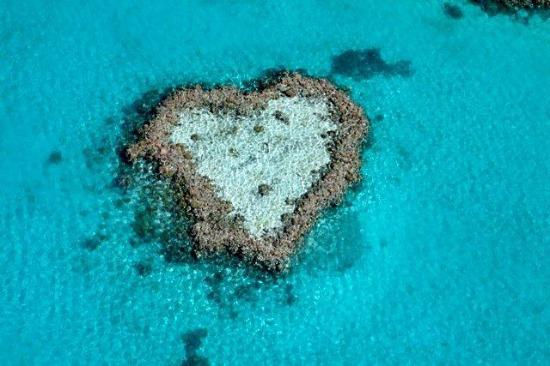
(Photo shows Heart Reef in the Whitsunday Islands)

Newer posts →

Enter your email address to follow this blog

Categories

Archives

Recent Comments

A.O.'s avatarwaltzingmorethanmati… on Zarah Zaynab and Wolfgang…
Madelyn's avatarMadelyn on Zarah Zaynab and Wolfgang…
JD's avatardrperegrine on Can Phoebe Complete This …
A.O.'s avatarwaltzingmorethanmati… on Rua and Rhoa
redrover23's avatarredrover23 on Rua and Rhoa

Blogroll

  • Appellation Mountain
  • Baby Name Pondering
  • Babynamelover's Blog
  • British Baby Names
  • Clare's Name News
  • For Real Baby Names
  • Geek Baby Names
  • Name Candy
  • Nameberry
  • Nancy's Baby Names
  • Ren's Baby Name Blog
  • Sancta Nomina
  • Swistle: Baby Names
  • The Art of Naming
  • The Baby Name Wizard
  • The Beauty of Names
  • Tulip By Any Name

RSS Feed

  • RSS - Posts

RSS Posts

  • Celebrity Baby News: Melanie Vallejo and Matt Kingston
  • Names from the TV Show “Cleverman”
  • Can Phoebe Complete This Sibset?
  • Zarah Zaynab and Wolfgang Winter
  • Baby, How Did You Get That Name?
  • Celebrity Baby News: Media Babies
  • Celebrity Baby News: Adelaide Crows Babies
  • Celebrity Baby News: Chris and Rebecca Judd
  • Names at Work: Name News From the World of Business and Employment
  • Celebrity Baby News: Sporting Round Up

Currently Popular

  • Rare Boys Names From the 1950s
  • The Top 100 Names of the 1930s in New South Wales
  • Girls Names of Australian Aboriginal Origin
  • The Top 100 Names of the 1940s in New South Wales
  • Girls Names From Stars and Constellations

Tags

celebrity baby names celebrity sibsets english names famous namesakes fictional namesakes honouring locational names middle names name combinations name history name meaning name popularity name trends nicknames popular names saints names sibsets surname names twin sets unisex names

Create a free website or blog at WordPress.com.

Privacy & Cookies: This site uses cookies. By continuing to use this website, you agree to their use.
To find out more, including how to control cookies, see here: Cookie Policy
  • Subscribe Subscribed
    • Waltzing More Than Matilda
    • Join 517 other subscribers
    • Already have a WordPress.com account? Log in now.
    • Waltzing More Than Matilda
    • Subscribe Subscribed
    • Sign up
    • Log in
    • Report this content
    • View site in Reader
    • Manage subscriptions
    • Collapse this bar
 

Loading Comments...