• About
  • Best Baby Names
  • Celebrity Baby Names
  • Celebrity Baby Names – Current
  • Celebrity Baby Names – Past
  • Featured Boys Names
  • Featured Girls Names
  • Featured Unisex Names
  • Links to Name Data
  • Waltzing on the Web

Waltzing More Than Matilda

~ Names with an Australian Bias of Democratic Temper

Waltzing More Than Matilda

Tag Archives: names of ships

Famous Names: Neptune and Taylor

12 Wednesday Dec 2012

Posted by A.O. in Famous Names

≈ 1 Comment

Tags

astronomical names, english names, Etruscan names, fairy tales, famous namesakes, historical records, honouring, Indo-European names, Irish names, Italian names, Latin words, locational names, mythological names, name combinations, name history, name meaning, name popularity, names of ships, nicknames, Roman names, surname names, UK name popularity, unisex names, US name popularity
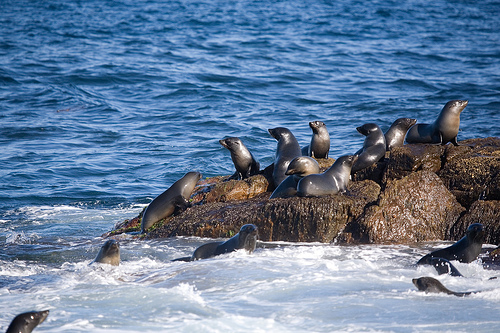
seals on neptuneAt the end of November, the Premier of South Australia announced that the Neptune Islands Group Marine Park would be renamed the Neptune Islands Group (Ron and Valerie Taylor) Marine Park. This is no mere change of name, for a network of 19 marine parks has taken effect in order to protect the seas from over-fishing. The premier noted that the southern oceans had more diversity than the Great Barrier Reef, and contained many plants and animals that cannot be found anywhere else.

The marine park has been named in honour of Ron and Valerie Taylor; divers, film-makers, shark experts, and conservationists who were ardent proponents of preserving marine habitats. Their skills in underwater filming were used on such films as Jaws and The Blue Lagoon, but more importantly, they wrote books and made documentaries to highlight the beauty and fragility of marine ecology. They won many awards for both photography and conservation. Ron passed away this year, and Valerie continues to be an advocate for marine protection.

The Neptune Islands, near Port Lincoln, were named by the navigator and cartographer Matthew Flinders in 1802. Rugged and remote, they seemed to him inaccessible, as if they would would always belong to King Neptune.

Neptune is the English form of Neptunus, the Roman god of fresh water springs, lakes, rivers, and the sea; he is the Roman equivalent of the Greek god Poisedon. He was worshipped in a festival that fell at the height of summer, when rainfall was at its lowest, and water most needed and valuable. As you know, his name has been given to the eighth planet from the Sun.

The meaning and origin of his name is obscure, with etymologists in disagreement over which language/s Neptune might be derived from. The general view is that it means something like “moistness”, “damp, wet”, “clouds, fog”, or “to water, irrigate”.

Another theory is that it is from the Italian town of Nepi, north of Rome, which was anciently known as Nepet or Nepete. This town is famous for its mineral springs, and traditionally connected to the god Neptune, who would presumably have approved of its watery wonders.

The town’s name is Etruscan, from the Etruscan name for Neptune, which was Nethuns. This may be related to the Irish god Nechtan, who had a sacred well, and thus another liquid connection. In fact there are several Indo-European deities with similar names and aqueous roles, and it is speculated that their names may go back to an ancient word meaning “nephew, grandson”.

One of the ships of the Second Fleet was called Neptune, and unfortunately it had the worst reputation of all for its appalling mistreatment of convicts.

Neptune sounds as if it should be ultra rare in Australian name records, but there are quite a few from the 19th century – at least quite a few more than I expected to find. It was mostly used in the middle, such as Cecil Neptune, and Samuel Caesar Neptune, but you can also find men named Neptune Persse and Neptune Frederick. Two of them rejoiced in the full names of Neptune Love and Neptune Blood; I believe the name Neptune is traditional in the Blood family.

Neptune would be very unusual as a baby name today, and I can’t quite imagine what you would use as a nickname – Neppy sounds too much like “nappy” to me. At the very least, please not Tuna.

A complete change of pace brings us to the name Taylor, a very common English surname referring to someone who made clothes as their occupation; the word tailor is ultimately from the Latin talea, meaning “a cutting”. In the Middle Ages, tailoring was a high-status craft, as only the wealthy could afford to have their clothing professionally made, and tailors could command good fees. Both men and women were employed as tailors.

There are many folk tales and fairy stories about tailors, and nearly always the tailor is depicted as being extremely clever, and confidently able to outwit others. Tailors having to be so precise and painstaking in their work, and no doubt with plenty of diplomatic skill to handle their rich clients, they must have gained a reputation for being as sharp as pins and as smooth-talking as silk.

The earliest Taylor-as-a-first-name I can find in the records is from the 16th century, and it was on a female. This may be an error in transcription, as subsequent early Taylors seem to be male (with plenty of girls who had Taylor as a middle name). In the United States, Taylor has always charted as a boy’s name, and only charts for girls from the late 1970s onwards, but is currently Top 100 for girls, and in the 300s for boys. In the UK, it only charts for boys, where it is barely on the Top 100 and falling.

In Australia, Taylor has charted for both boys and girls since the 1980s, when it was #383 for boys and #785 for girls. It peaked for both sexes in the 1990s, when it was #38 for girls and #130 for boys. At the moment, Taylor is only just outside the Top 100 for girls at #108, is #251 for boys, and falling for both sexes.

So that’s a quick survey of Taylor popularity around the world: Top 100 for girls in the US, Top 100 for boys in the UK, and not on the Top 100 at all in Australia.

Here are two very different names which evoke the sea and honour its protectors, as well as having a strong connection to the history of South Australia.

(Picture shows seals on Neptune Island; photo from Flickr)
Famous Names: Sandy and Sable

28 Wednesday Nov 2012

Posted by A.O. in Famous Names

≈ 2 Comments

Tags

African-American names, animal names, colour names, english names, French names, French vocabulary words, Google Earth, Google Maps, historical records, Hurricane Sandy, Mer de Noms, name combinations, name history, name meaning, name trends, names of hurricanes, names of ships, nature names, nicknames, Paradise Lost, rare names, Southern Surveyor, The New York Times, Times Atlas of the World, unisex names, University of Sydney, US National Geophysical Data Center, vocabulary names, Wikipedia

A group of Australian scientists from the University of Sydney have undiscovered an island that was supposed to be in between Australia and New Caledonia.

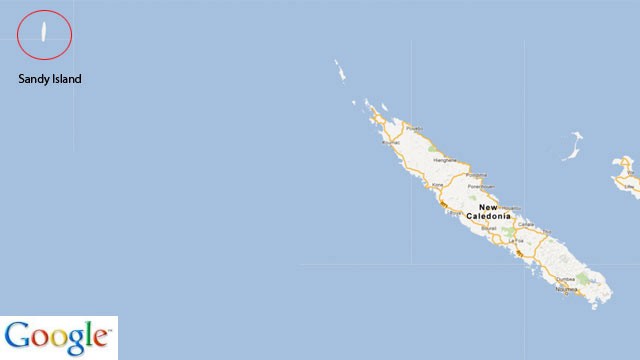
Sandy Island showed up on Google Earth and Google Maps, as well as marine and scientific maps all over the world, including the US National Geophysical Data Center. According to the maps, Sandy Island was about 16 miles long and 3 miles wide – just slightly bigger than Manhattan.

Geologists on the Southern Surveyor, an Australian maritime research vessel, were puzzled by the island which appeared on their weather maps, yet navigation charts showed that the water in that area was very deep – 1400 metres (4620 feet). They decided that they had to go check it out, and found nothing there except sea. The scientists recorded the information so that maps can be changed.

According to the Wikipedia article on Sandy Island, the island was erased from Google Maps on November 26, but although the name Sandy Island doesn’t show up in the search bar, when I looked in the Coral Sea I found the phantom island quite easily, but there was no name attached to it.

If I zoomed in on the island, it simply disappeared, and if I switched to satellite, the island showed up as a black streak surrounded by blue streaks, looking remarkably like someone had scribbled on it with two different felt-tip pens.

Interestingly, if Sandy Island had existed, it would have been in French territorial waters – and the island is not on any recent French government charts. Perhaps because of this, the Times Atlas of the World deleted Sandy Island from its maps after 1999.

The history of the discovery of Australia involved – indeed, was dependent on – faulty maps, necessitating voyages to check out what was here or not, so it makes a strange sort of sense that now Australians must voyage forth to check faulty maps for themselves.

The episode shows that this part of the world is still not well known, and incompletely charted. It’s not quite a matter of Here be dragons, but the reply from most of the map-providers when the error was pointed out was along the lines of, Well it is in the middle of nowhere …

Tens of thousands of years of human occupation, and centuries since the first mapping, and we’re still close to the middle of nowhere. Which is rather exciting – what else in our region is still waiting to be discovered, or undiscovered?

Apart from the Pythonesque nuttiness of this story (no wonder the geologists got the giggles as they sailed through the invisible island), the thing that got my attention was the name Sandy, which has been in the news internationally since Hurricane Sandy hit the north-east coast of the United States in late October, after devastating the Caribbean.

According to this article in The New York Times, names of hurricanes can help to influence the way we name our babies. It’s not as simple as everyone suddenly choosing Sandy as a baby name, but it seems that once we hear a word or a name many times, we instinctively like names that sound similar to it. So experts are expecting a spike in the numbers of babies of 2012 whose names begin with an S, as well as those with an and sound in them, and ones that end in -ee.

There was a story in the Australian press, about an expat couple in New York, whose baby arrived at the height of Sandy’s fury. The parents did consider calling their new daughter Sandy, but in the end chose Sophie. The analysts would be rubbing their hands, because they chose a two-syllable name that starts with S and ends with an -ee sound, just like Sandy.

Sandy is a unisex name which is short for Alexander or Alexandra, but also for any name related to them, such as Alistair, Sander, Alessandra, Sanette, Sandrine, or Sandra. You could use it as a short form of Cassandra, Santos, Sanford, Sandon, Santiago or any similar name. Sandy is a traditional pet name for people with reddish or sandy-blonde hair, and you could see it as a vocabulary, colour, and nature name meaning “sand-coloured, like sand, covered in sand”.

However, another possibility occurred to me while reading about The Case of the Non-Existent Island. On a French chart from 1875, the island is called Île de Sables, which is French for Sandy Island. Because of this, The Times Atlas of the World partly Anglicised the name back again to Sable Island.

While in French, sable means “sand”, the same word in English means something quite different. (I feel that I must be channelling Lou from Mer de Noms, who quite often finds name inspiration in French words). I should point out that the two words are said differently: in French, SAH-bluh; in English, SAY-buhl.

A sable is a species of marten (a relative of minks, weasels and ferrets) which is found mostly in Eurasia and still hunted in Russia. The pelt of the animal has been highly valued since medieval times, because the fur of the sable feels soft whichever way you stroke you; it’s not possible to “go against the grain”.

Because of the animal’s colour, the word sable is also a literary way to say “black”, such as when John Milton refers to “a sable cloud” in Paradise Lost. It amuses me that sandy and sable are opposites as colours, with one signifying a pale shade and the other one that is very dark.

Sable can also be used as a personal name, with the first one I can find in the records dating to the 17th century. It’s used for both boys and girls, although from the beginning more often a female name – maybe because it seems like it could be short for names such as Isabel or Sabella.

Sable is more common in the United States, where it has sometimes been used amongst African-Americans as a positive and beautiful word to denote darkness (similar to the name Ebony, which doesn’t have that connotation here).

In Australia, it appears rarely in the records, nearly always as a female name. One of my favourite combinations for this name was Brightie Sable. It also belonged to a 1900s French immigrant to Australia, who had the French form – Sablé.

So if you feel subconsciously influenced to use a name similar to Sandy, or would like to be part of a name trend, then Sable or Sablé seem like possibilities to choose from, and may please trend analysts immensely.

(Satellite image from Google Maps)

Famous Name: Eclipse

21 Wednesday Nov 2012

Posted by A.O. in Famous Names

≈ 2 Comments

Tags

astronomical names, english names, Greek names, historical records, name combinations, name history, name meaning, names of ships, Nancy's Names, nature names, nicknames, rare names, unisex names, vocabulary names

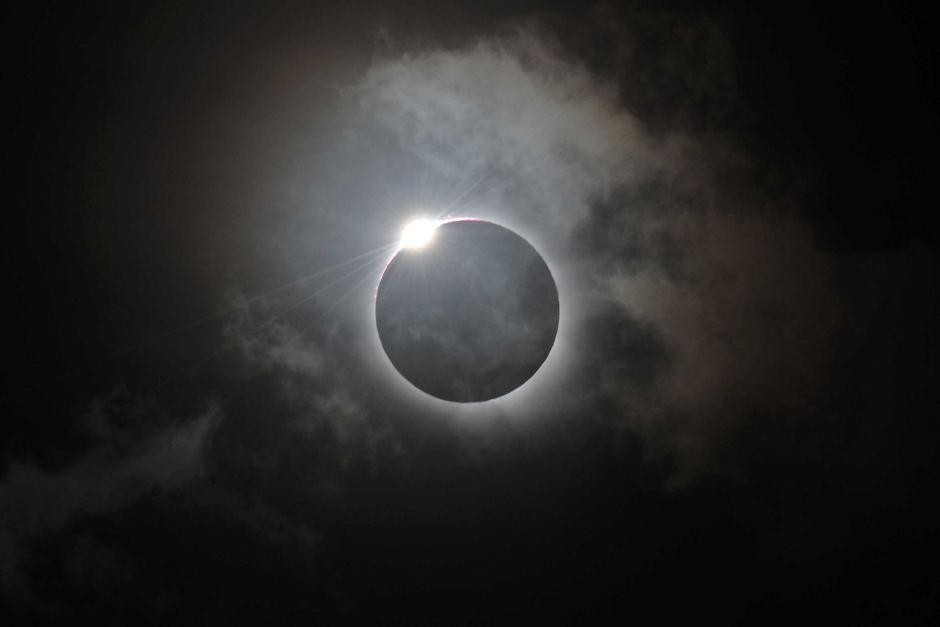
An eclipse is when an astronomical body is obscured, either by passing into the shadow of another body, or having another body pass between it and the viewpoint. The word comes from the ancient Greek ékleipsis, meaning “abandonment, downfall or darkening of a heavenly body”.

Although there are several different types of eclipse possible in the universe, the ones we can see from Earth are the solar and lunar eclipses. We tend to get more excited by solar eclipses, when the Moon appears to pass in front of the Sun, blotting out its light temporarily. The most impressive of all is a total eclipse of the Sun, when the Moon appears to perfectly cover the Sun, so that it disappears from view.

A total eclipse of the Sun can only be viewed along a very narrow band of the Earth’s surface, and on November 13, a total eclipse could be seen in far north-eastern Australia. Although many had gloomily predicted that cloud cover would ruin the eclipse-enjoying experience, just before dawn the clouds obligingly parted, and the Moon passed in front of the Sun. For two minutes it became darker and colder, the birds stopped singing, and tens of thousands of spectators from all over the world gaped in wonder, just as our ancestors did thousands of years ago.

Many indigenous groups, including in Arnhem Land, were watching the event, which has deep spiritual meaning for them. Most Aboriginal cultures believe the Sun is female and the Moon male. In their myths, the Sun is in love with the Moon, but he doesn’t return her feelings, so she chases him around the sky. Occasionally she manages to catch him, and in a jealous rage tries to kill him, but the Moon convinces the spirits which hold up the sky to save him, which they always do.

However, another version is that a solar eclipse marks those rare times when the Sun-woman is hidden by the Moon-man while he relents and makes loves to her, while a similar tale is that a spirit man covers the Earth with his hand to leave it in darkness, so that the Sun and Moon may have privacy together.

In Queensland, the celebrations for the eclipse included a Solar Eclipse Marathon in Port Douglas, and a week long Eclipse Festival at the remote Palmer River Roadhouse. More than 50 000 tourists arrived from Europe, North America and Asia, with some hotels booked out three years in advance. The eclipse was big news, and big business. And why shouldn’t they party? It was the first time in the past thousand years that this part of Australia had experienced a total solar eclipse.

Eclipse can be found as a unisex name in occasional use since the late 18th century. According to blogger Nancy Man at Nancy’s Names, the births of many of those given the name Eclipse can be correlated with either solar or lunar eclipses.

In Australian records, there are only a small number of people listed as having the name Eclipse, and it is exclusively used as a middle name. It is balanced between the sexes, with three women and two men having Eclipse as part of their name. My favourite combinations were Pearl Eclipse and Thomas Eclipse Vivian.

Only a year of birth is given, so it isn’t possible to correlate their dates of birth with eclipses, but it is reasonable to assume that it might have been the inspiration for at least some births. However, there was also a convict ship called Eclipse, although it doesn’t seem to match up with any of the places or dates of birth in the records in any obvious way.

Scientist Dr Natalie Dillon from Mareeba attended the eclipse viewing this year and said:

When it goes dark and the temperature drops, you get a sense of the fragility of life. I just feel in awe. It is like the Moon has wiped a cloth over the face of the Sun and we can start afresh.

An eclipse is a rare celestial event, and one which fills us with a mixture of awe and dread, as well as great joy and a sense of renewal when the light of the Sun is returned. It reminds us how much we need the Sun, and gives us a brief uneasy taste of what Earth would be like without it – chill, dim and silent.

The basis of the word eclipse is the Greek for “I leave behind”. To eclipse someone means to cast them into your shadow, to surpass others with your superior talents or skills – to leave them behind, so that they can never catch up.

As a name, Eclipse has power, a certain foreboding, and perhaps a touch of arrogance. It is little seen, and that gives it an even greater significance. Perhaps it’s not surprising it has been timidly tucked away in the middle.

Nicknames for Eclipse include Clip, Clipper and Clipsie, which give it a much friendlier and more approachable sound.

What do you think – a viable baby name, or a little too much?

Saturday Historical Sibsets: The Siblings of the Sea-Born Babe

20 Saturday Oct 2012

Posted by A.O. in Sibsets in the News

≈ 8 Comments

Tags

Baby Names from Yesteryear, historical events, historical records, honouring, name combinations, names of ships, sibsets

This is a story I read on Baby Names from Yesteryear, and with Zeffy’s blessing, I have investigated some of the history behind it.

On March 21 1857, a baby was born on board a convict ship, two days after leaving England for Western Australia. He was named Alfred John Claris Wells – Alfred and John were family names, but Claris was in honour of the ship he was born on, the Clara. It seems that he went by the name Claris in everyday life.

Claris’ parents weren’t convicts. His father, Alexander Wells, was a pensioner guard employed to watch over the convicts on board ship. These guards tended to be recruited from the rural working class, and offered farmland in Australia as an inducement. The Wells family had been in villages around Sevenoaks in Kent since at least the 17th century, and Alexander’s branch of it had lived in the village of Leigh for several generations.

Claris’ mother was named Caroline Emily Minnor Goulding, and she married Alexander when she was in her early twenties, while he was in his early thirties.

The Clara arrived in Fremantle, Western Australia on July 3 1857 with its one very small extra passenger. The Wells family was offered farmland in Newcastle (now called Toodyay), one of the first inland towns to be established in Western Australia. It’s in the Avon Valley about 85 km from Perth, and today at least, Toodyay is a very pleasant country town, an easy drive from the city and popular for weekends away. Back then, it would been just a village, and farming difficult, even with free convict labour offered as part of the deal.

Claris wasn’t the only child of Alexander and Emily. His siblings were:

Martha (1852-1936) She was born in Kent, and was five years old when she arrived in Australia. She was living in Fremantle when she died at a ripe old age.

Alexander Thomas (b. 1855) He was born in Kent, and seems to have died before the family came to Australia.

Amelia Ann (b.1858-?) Amelia is missing from some family records, which makes me suspect she died during early childhood.

Ellen – known as Eliza (1859-1937) Eliza married a local man named Alfred Hutchings when she was 20, and had twelve children. The Hutchings moved to Northam, a town very close to Toodyay.

Emily (b. 1862-?)

Alexander (1864-?)

Alexander Wells died in 1863 aged 45, leaving his widow Caroline in a fairly desperate situation. She was 34 years old, had at least three children still living, and must have been pregnant.

In 1864 she married a convict called Esau Wetherall, a name that wouldn’t look out of place in a novel by Thomas Hardy. Esau was born in London, and had lived in Somerset. At the age of 35, he was transported to Fremantle on the Scindian, sentenced to fifteen years for horse-stealing. He was in the first group of convicts to arrive in Western Australia, and because they weren’t really prepared for convicts at the time, they only sent those who had a record of good behaviour. While in Toodyay, he was accused of stealing a sheep and brought to trial, but was acquitted. At the time of his marriage to Caroline, he was 49.

Caroline and Esau had only one child together, a baby girl who was stillborn in 1865. This was Claris’ half-sister.

Esau had been married before – his first wife was Mary Mallaby, and they were married in Toodyay the same year that the Wells family had arrived, in 1857, just after Esau was granted his ticket of leave. Mary died in 1864, so like Caroline, Esau had been left widowed and no doubt in equally desperate circumstances.

Esau and Mary had five children together, and these were Claris’ step-siblings.

Sarah (1858-1874) Sarah died when she was only 16 years old.

Mary Ann (b. 1859-1941) Mary married a man named Donald Lee when she was 18, and had fourteen children. She lived her whole life in Toodyay.

Ellen – known as Elizabeth (1861-1941) Elizabeth married a man named Thomas McKnoe when she was 17 and had eleven children. She was living in Perth when she died.

Twins Edwin and Frederick (1864-1864) Mary left behind her newborn twins when she died, and it’s not surprising they only lived for a few months. It’s very possible that Mary died giving birth to the twins, or shortly after the birth.

So Claris Wells had six siblings, one half-sister and five step-siblings.

Esau Wetherall died in 1889, at the age of 73. Although he has numerous descendants living today, for many years the family was deeply ashamed of having convict ancestry, and he wasn’t talked about or even mentioned.

Caroline Wetherall died in 1905 at the age of 75. However, the Wells family continued through her son Claris, and next time I will follow his family line through all the generations.

NOTE: Passenger list for the Clara is here.

(Picture is of a painting of Fremantle Harbour in the 19th century, close to where the Clara would have docked when she arrived)

More About Matilda

29 Sunday Jul 2012

Posted by A.O. in Your Questions Answered

≈ 15 Comments

Tags

angel names, Australian Aboriginal names, Australian names, Biblical names, celebrity baby names, famous namesakes, fictional namesakes, germanic names, Google, Irish names, name combinations, name history, name meaning, name popularity, name trends, names of convicts, names of roses, names of ships, names of stars, names of trains, rhyming names, saints names, Shakespearean names, sibsets, US name popularity, Waltzing More Than Matilda

I love the title I chose for my blog, and as time goes by, it seems to be growing into its name even better. Although I don’t suffer from one ounce of name regret, an unintended side effect of its title is that it when people Google anything to do with the name “Matilda”, they often seem to be guided to Waltzing More Than Matilda.

They have been sent here under false pretences, because the blog isn’t dedicated to the name Matilda, or people named Matilda, or the song Waltzing Matilda. Even though Matilda is a Featured Name, in the wider scheme of things, it doesn’t rate too many mentions at all on the blog. I feel bad that so often, the information they are looking for just isn’t here.

So this is my attempt to answer as many of the Googled questions as I can about the name Matilda. They are all genuine questions, but I have added punctuation and corrected the odd typo to make things easier (it seemed fair enough as people don’t write their Google searches for publication). I’ve added information in brackets to make questions clearer, and where there were several questions asking similar things, I have amalgamated them into a generic enquiry.

I hope you enjoy learning more about Matilda; I ended up learning a great deal myself!

Matildas in the Bible/What is the Biblical significance of the name Matilda?

There aren’t any, and there is none.

Is Matilda the name of an angel?

No. Angels are always given male Hebrew names by tradition.

Is Matilda a saints name?

Yes. Saint Matilda was the wife of King Henry I of Germany, and she was therefore Queen Matilda too. She is said to have been very beautiful and virtuous, and was famous for her devotion to prayer and works of charity. Her feast day is March 14, and she is the patron saint of parents with large families, although she only had five children herself – Hedwig, Otto, Gerberga, Henry and Bruno.

Is there a character named Matilda in Shakespeare?

No.

Is there a star or constellation named Matilda?

No.

Is there a rose named Matilda?

Yes. There’s a hybrid named Rosa “Matilda” which was registered in France in 1988. It’s a hardy perennial shrub, and its scentless blooms are white with delicate pink edges.

Is Matilda an Irish or an Australian name?

Neither – it’s the Latinised form of a Germanic name, Mahthildis.

What is the Irish form of Matilda?

Maitilde. It was never a common name in Ireland though.

Why do Australians claim Matilda (as their own)? It’s not really Australian

It’s because of our national song, Waltzing Matilda. I’m sorry if it annoys you – you sound annoyed. You’re right that it’s not Australian, it’s German originally, but a German migrant to Australia helped to inspire the song.

What was Waltzing Matilda‘s first name?

As far as I know, the song’s title was always Waltzing Matilda.

Is Waltzing Matilda a train?

Not that I know of.

Did James Cook have a kid named Matilda?

No. His children were called James, Nathaniel, Elizabeth, Joseph, George and Hugh.

Were any of the convicts named Matilda?

When I searched the Australian Convict Collection at Ancestry.com.au, I got almost 2000 hits for the name “Matilda”. Some of those would be middle names, and some would be doubled-up entries, so maybe around 1000 convicts had the name Matilda.

There was also a convict ship named the Matilda; she came out in 1791 as part of the Third Fleet. However, she only carried male convicts, so there were no Matildas on the Matilda, alas.

How popular is the name Matilda in Australia?

It made #19 on the national chart for 2011.

A beautiful rocking Australian girl named Matilda?

I’m sure there’s absolutely tons of them.

Is there an Aboriginal name that’s the equivalent of Matilda?

It depends what you mean by “equivalent”. If you mean, Is there an Aboriginal girl’s name with the same meaning as Matilda?, then I don’t think so. Matilda means something like “strong in battle”, as the ancient Germanic tribes had a warrior culture. Aboriginal names tend to be inspired by nature.

However, if you mean, Is there a girl’s name of Aboriginal origin which, like Matilda, is considered to be a stereotypically Australian girl’s name?, then I would suggest that the name Talia fits that description, and Allira seems to be preparing to take its place.

Famous people named Matilda

One of the most notorious in Australia is Matilda Mary “Tilly” Devine, who was a prostitute and madam prominent in the 1920s and ’30s. The press called her “The Worst Woman in Sydney” and “The Queen of the Night”. Her colourful career continued until the late 1960s, and she died relatively well off.

Celebrity babies named Matilda

Matilda Esma Birmingham – Simon Birmingham (2011)

Matilda Thomson – Craig Thomson (2009)

Matilda Kewell – Harry Kewell and Sheree Murphy (2008)

Matilda Rose Ledger – Heath Ledger and Michelle Williams (2005)

Matilda Elizabeth Ramsay – Gordon Ramsay (2002)

In what year was Matilda a name?

Wow, that’s very specific. The name’s origins go back to the Dark Ages, but I’m not sure at which point it was Latinised as Matilda. I do know that it became an English name in 1066, as this was the name of William the Conqueror’s wife. However, her name was pronounced Maude. I think the modern-day pronunciation dates to the 18th century.

There must be a “first Matilda” – the first person with both the modern spelling and pronunciation of the name – but who she is, and what year she was born, I’m afraid I cannot say. I welcome input and suggestions from others more knowledgeable than myself.

Is Matilda too trendy?

No, I don’t think so. It’s trending downwards in Australia and the UK, and is still underused in the United States.

Will Matilda reach Top 100 in North America?

It’s been back on the US Top 1000 for only four years, and you are already worrying about it getting into the Top 100? Sheesh. It’s not even going up in popularity very quickly! If it does, it won’t be for years and years, so quit stressing already.

Is Matilda a boy or a girl name?/Matilda as a boy’s name/Any boys named Matilda?

It’s a girl’s name, and although you are free to use it on a boy, it’s an idea that doesn’t appeal to me. I’ve never heard of a boy named Matilda; they may all call themselves Matt to avoid terminal embarrassment.

What’s a good boy’s name to match with Matilda?

Angus, Banjo, Barnaby, Charlie, Darcy, Harry, Henry, Jack, Jasper, Lachlan, Liam, Sam, William

What girl names go good with Matilda?

Adelaide, Alice, Charlotte, Clementine, Harriet, Edith, Emmeline, Lucy, Poppy, Rose, Ruby, Sophie

An Aussie-style sibset for Matilda?

I think the quintessential Australian sibset is Jack, Matilda, Lachlan, and Ruby.

Names to go with the middle name Matilda?

Annabel Matilda, Caroline Matilda, Eloise Matilda, Jane Matilda, Phoebe Matilda, Violet Matilda

A boy’s name that rhymes with Matilda?

Bob the Builder? Seriously, I don’t think there is one.

Name of story about mean stupid couple who have nice smart kid called Matilda?

Matilda, by Roald Dahl. It was originally published in 1988, made into a film in 1996, and adapted as a musical in 2012.

What’s that song at the start of (the movie) Matilda where she makes stuff spin round?

Little Bitty Pretty One. It was written and originally recorded by Bobby Day; the movie features the 1957 version sung by Thurston Harris.

What are the cast of (the movie) Matilda all doing now?

The whole cast? For flip’s sake, that’s dozens of people! Go look it up at the Internet Movie Database or something.

Matilda is an awesome name

Too right it is!

(Image from Flickr)

Newer posts →

Enter your email address to follow this blog

Categories

Archives

Recent Comments

A.O.'s avatarwaltzingmorethanmati… on Zarah Zaynab and Wolfgang…
Madelyn's avatarMadelyn on Zarah Zaynab and Wolfgang…
JD's avatardrperegrine on Can Phoebe Complete This …
A.O.'s avatarwaltzingmorethanmati… on Rua and Rhoa
redrover23's avatarredrover23 on Rua and Rhoa

Blogroll

  • Appellation Mountain
  • Baby Name Pondering
  • Babynamelover's Blog
  • British Baby Names
  • Clare's Name News
  • For Real Baby Names
  • Geek Baby Names
  • Name Candy
  • Nameberry
  • Nancy's Baby Names
  • Ren's Baby Name Blog
  • Sancta Nomina
  • Swistle: Baby Names
  • The Art of Naming
  • The Baby Name Wizard
  • The Beauty of Names
  • Tulip By Any Name

RSS Feed

  • RSS - Posts

RSS Posts

  • Celebrity Baby News: Melanie Vallejo and Matt Kingston
  • Names from the TV Show “Cleverman”
  • Can Phoebe Complete This Sibset?
  • Zarah Zaynab and Wolfgang Winter
  • Baby, How Did You Get That Name?
  • Celebrity Baby News: Media Babies
  • Celebrity Baby News: Adelaide Crows Babies
  • Celebrity Baby News: Chris and Rebecca Judd
  • Names at Work: Name News From the World of Business and Employment
  • Celebrity Baby News: Sporting Round Up

Currently Popular

  • Celebrity Baby News: Jacinta Allan and Yorick Piper
  • Celebrity Baby News: Jacinta Allan and Yorick Piper
  • Celebrity Baby News: Craig Thomson and Zoe Arnold
  • Celebrity Baby News: Ed Husic and Bridget Tilley
  • The Top 100 Names of the 1940s in New South Wales

Tags

celebrity baby names celebrity sibsets english names famous namesakes fictional namesakes honouring locational names middle names name combinations name history name meaning name popularity name trends nicknames popular names saints names sibsets surname names twin sets unisex names

Create a free website or blog at WordPress.com.

Privacy & Cookies: This site uses cookies. By continuing to use this website, you agree to their use.
To find out more, including how to control cookies, see here: Cookie Policy
  • Subscribe Subscribed
    • Waltzing More Than Matilda
    • Join 517 other subscribers
    • Already have a WordPress.com account? Log in now.
    • Waltzing More Than Matilda
    • Subscribe Subscribed
    • Sign up
    • Log in
    • Report this content
    • View site in Reader
    • Manage subscriptions
    • Collapse this bar
 

Loading Comments...