• About
  • Best Baby Names
  • Celebrity Baby Names
  • Celebrity Baby Names – Current
  • Celebrity Baby Names – Past
  • Featured Boys Names
  • Featured Girls Names
  • Featured Unisex Names
  • Links to Name Data
  • Waltzing on the Web

Waltzing More Than Matilda

~ Names with an Australian Bias of Democratic Temper

Waltzing More Than Matilda

Tag Archives: name history

Famous Name: Tigerlily

19 Wednesday Feb 2014

Posted by A.O. in Famous Names

≈ 3 Comments

Tags

brand names, celebrity baby names, Disney names, english names, fictional namesakes, flower names, name history, name meaning, nature names, nicknames, plant names, rare names, vocabulary names

Lilia_tygrysiaLilium_lancifoliumLilium_tigrinum

Last week we looked at the name of actor Orpheus Pledger, who was in the Channel Nine telemovie, Schapelle. As it turned out, ratings for it were only average, with almost twice as many people tuning in to watch Channel Seven’s mini-series, INXS: Never Tears Us Apart. In fact, since the screening, an INXS album has reached #1 in the charts for the first time since 1990.

Watching the mini-series reminded me of Michael Hutchence’s daughter Heavenly Hiraani Tiger Lily, who was given one of the “crazy celebrity baby names” of the 1990s. It’s interesting how much less “crazy” crazy celebrity baby names seem as the years go by: once Cruz, Maddox, River, Rocco, Banjo, Jett, Sunday and Coco were considered outrageous, but now they’re mainstream. I have to admit that the Heavenly Hiraani part still seems offbeat 17 years later, but Tiger Lily is pretty rocking – a spunky nature name combining flora and fauna.

The Tiger Lily (Lilium lancifolium) is native to China, Korea and Japan, and its common name came about because its flowers are large and bright orange with black markings – although they don’t literally have tigerish stripes, but spots. Introduced to England in the early 19th century, it became naturalised in some parts of the United States (just to confuse things, Americans refer to some native lilies as “Tiger Lilies”).

Easy to grow, the Tiger Lily is edible, and the roots used in Chinese cooking. There is a legend that a Korean hermit took an arrow from the foot of a wounded tiger, and after its death, the tiger transformed into the Tiger Lily, so that he could remain with his human friend. When the hermit died, the flower spread widely, searching for the hermit. The Tiger Lily is said to symbolise wealth, perhaps because its spots reminded people of coins. A funny superstition related to these spots is that if you smell a Tiger Lily, you will end up with freckles!

There is a graceful tiger-lily in Lewis Carroll’s Through the Looking Glass, a passionate and rather bossy bloom which tries to keep all the flowers in line (with the ferocity of a tiger). When Alice wishes to herself that the flowers could talk, the tiger-lily is the first to respond, with “We can talk, when there’s anybody worth talking to”.

The first human character in fiction named Tiger Lily I can think of is the “redskin princess” of the Piccaninny tribe in J.M. Barrie’s Peter Pan. Beautiful and brave, Tiger Lily’s life was saved by Peter Pan, so that her tribe became his allies. As a result, the flirtatious yet aloof Tiger Lily harbours (futile) romantic feelings for Peter, and refuses to marry. Barrie gives her cringe-inducing dialogue, such as “Me Tiger Lily. Peter Pan save me, me his velly nice friend”, and her tribe call Peter The Great White Father – Barrie’s preference for the book’s title, which his publishers’ fortunately didn’t think was a good idea.

In the 1953 Disney film of Peter Pan, this dialogue is embarrassing enough that Tiger Lily doesn’t speak at all, and her role was eliminated in later films, lest the stereotypes of Native Americans should give offence. Because of this, she has never become a Disney princess (in fact, calling her a “princess” would be a whole other cultural controversy).

Another exotic Tiger Lily from children’s fiction is a little girl of Chinese heritage in the Rupert Bear comic strips and television show. A rather mysterious figure of royal blood, her father is a Conjurer, and she has quite a bit of magical knowledge herself, which helps Rupert in several adventures. Not nearly as controversial as Barrie’s Tiger Lily, her role was nonetheless phased out in the 1990s, presumably for similar reasons.

In Australia, Tigerlily is a swimwear fashion label started by designer Jodhi Meares, which gives the name an expensively casual, beachy feel. If you look at the models used by Tigerlily, and at its Facebook page, the ideal “Tigerlily girl” is not some blonde beach bunny with a banging bod, but sophisticated and well-travelled, yet relaxed and confident enough to be in search of the perfect bikini.

Tigerlily is a rare name, but there is something rather magnificent about it. We usually think of lilies as pale and demure, yet here are these flamboyant tiger-cat lilies – big, bright, and bold, growing wild and untamed, or bringing a garden to life with glorious colour. Tigerlily sounds gorgeous and fierce, exotic and feminine, freckled and free-spirited, full of passion and vivacity. It could be seen as whimsical and hippie, but because of the expensive fashion label, also seems quite posh.

Worried that Tigerlily is too big a name for a little girl? Miss Hutchence Geldof goes by Tiger, but you could also use Ty, Tige, Tig, Tiggy, Tilly, Iggy, Lily, Lil, and TL.

POLL RESULT
Tigerlily received an approval rating of 56%. People saw it as a beautiful, whimsical nature name (26%), and wild and bold (19%). However, 13% believed it was still a wacky celebrity baby name, and 12% saw it as too hippy-dippy.

Interview with Zeffy from Baby Names from Yesteryear

16 Sunday Feb 2014

Posted by A.O. in Blog Reviews

≈ 3 Comments

Tags

Baby Names from Yesteryear, name history, name trends, naming advice, nicknames, popular names, rare names

Winterhalter_Eugenie_1855Zeffy is the enthusiastic blogger at Baby Names from Yesteryear, which features wonderful, winning, and sometimes slightly wacky names from history. Whether you enjoy names of English gentlemen, ladies from antiquity, or contemporary British royals, you will find many beautiful names which are elegant, elaborate and eccentric. You will also find names from South America, and names from Zeffy’s own family tree. One of my favourites of Zeffy’s posts is an extremely sweet story about one of her sentimental favourites – I dare you to read it without either smiling tenderly or getting a tear in your eye. Zeffy has been away from blogging for a year, but she’s back (hooray!!!), and this is a chance to catch up with her and find out what Zeffy is short for.

What is your name? 
Sephora. I go by Zeffy online, a nickname given to me by my loopy, but incredibly sweet, university professor.

Have you ever wished you had a different name?
Have I ever! I’ve disliked my name for most of my life. As a child, all I wanted was a nice common name, something like Jessica or Rebecca, so I could blend in. I was a bit shy as a child so I hated being different from everyone else. It was only when I got to my late teens that I realised my name was quite nice and fitted my personality very well. I would never consider changing it now – having such an unusual name is a big part of my identity.

How did you become interested in names?
It goes back to having an unusual name. I’ve always wanted to know where my name came from, what it meant, how it came to be used. My curiosity stemmed from having absolutely no clue about my name’s origins. I guess my interest in names in general dates back to when I started school and noticed that I was the only one whose name wasn’t “normal”. Since then I’ve always loved reading about names and looking up meanings. There hasn’t been a time when I haven’t been interested in names and their stories.

How did you become interested in names from the past?
I’m obsessed with history. I’ve always been interested in the history of people’s lives, particularly focusing on the social and private life of early 19th century English aristocrats. There’s something very fascinating about discovering the small details of what people 200 years ago ate for breakfast, where they bought their boots from, why they married who they did, and what they named their children. That’s what attracts me to names from the past – it’s a glimpse into the personal and private life of someone who lived hundreds of years ago.

What inspired you to begin a name blog?
I came across The Gentleman’s Magazine during my last year of university. I was meant to be researching contemporary reviews for Thomas Paine’s Rights of Man, but I kept flipping back and having a look through all the wedding announcements. Once I left university, I had a heck of a lot of time on my hands, and I really don’t deal well with boredom. I had to find a project to do before I completely lost my sanity. I thought about all the lovely names I’d read and decided to share them. I knew there had to be someone out there who was equally as interested in Georgian era names as I was. I couldn’t be the only one who oohed and ahhed over them!

Do you have a favourite blog entry on Baby Names from Yesteryear?
I really enjoyed writing about The Patronesses of Almack’s and Popular Names of the Georgian Era. They hit on my favourite time period in history so I can’t help but have a soft spot for them. Having said that, the posts I tend to like the most are those which required me to really do research, to look through a number of sources before hitting name gold. I’m such a geek, I know.

Do you have a pet peeve in regard to names? 
When people think that many of the current trends are a modern concept. People have been naming their children all sorts of weird and wonderful things for hundreds, even thousands, of years. Masculine names on girls, surnames used as first names, nature names, unusual names … it’s all been done before, so let’s not get in a tizzy about them now.

There’s also something about the word “unique” which I find unrealistic. The chance of any name being unique is truly slim, and I don’t think it’s a good idea to change spellings in search for uniqueness.

What are some of your favourite names? 
A few of my current favourites are Minerva, Emmeline, Margaux, Josephine and Magdalene. For boys, Alexander, Lucien, Mikael and Hart are long time favourites. I think Noa is absolutely darling. Tierney, Seren, Clover, Lyra, Orion and Shia are just a few that are on my favourites list.

What names do you dislike?
I’ve never been a fan of overly “cute” names, on girls or boys, for a number of reasons. Children don’t need cute names to be cute. A lot of names that fall into that category for me have really taken off in England and Wales where there is currently a trend for over-the-top cuteness, especially on the girls’ side. There’s a message behind that trend which I’m not comfortable with.

I’m also not at all keen on the Mae/May/Mai hyphenated names which are very popular over here. It feels like half the female population under the age of 5 answers to Something-Mae. Don’t get me wrong, I don’t dislike Mae or May. Just please, please stop hyphenating it!

Are there any names you love, but could never use?
So, so many. Hyacinth is always in the back of my mind, but I think of Hyacinth Bucket [from sit-com Keeping Up Appearances]and it’s over. Millicent is another. I really love how it sounds, but not how it looks. Ptolemy is probably the biggest one. Why does the P have to be silent?! I so wish it wasn’t; it would be a serious contender then.

What are your favourite names in the UK Top 100?
Eleanor (#63) and Alexander (#27).

What are your favourite names that have never charted in the UK?
Sanceline and Holland.

Do you have any names picked out for your future children? 
Not really. Children haven’t crossed my mind yet so it’s all up in the air. If, however, I were to have a baby at this exact moment, I guess it would be something like Emmeline Clover, Emmeline Jane Noa, or Noa Emmeline Jane. I adore Jane. I know it has in the past been overused in the middle spot, but it’s lovely and I can’t help myself. For a boy, it would be Alexander Lucien or Shia Alexander. I think when it comes down to it, I won’t be as tame in my choices. It’s fun having a name on the unusual side so I think I’ll go down that path. But who knows?!

What is something we don’t know about you?
I’m incapable or remaining serious for very long. Trying to answer your questions without making silly and inappropriate jokes hasn’t been easy! Also, I love exclamation marks 🙂

What advice would you give someone who was choosing a baby name?
I wouldn’t. I don’t have any children so I don’t know anything about how hard the naming process is or the pressures of it. I only wish all parents would put as much time as possible into choosing their child’s name. Your child has to live with their name every single day. That’s a big thing. Take it seriously! (Yay, got to use an exclamation mark again.)

(Painting shown is Eugenie, Empress of the French and Her Ladies by Franz Xaver Winterhalter; 1855 – one of the many lovely illustrations on Zeffy’s blog)

Famous Name: Orpheus

12 Wednesday Feb 2014

Posted by A.O. in Famous Names

≈ 3 Comments

Tags

famous nameksakes, Greek names, mythological names, name history, name meaning

(c) Lady Lever Art Gallery; Supplied by The Public Catalogue Foundation

The big news this week was the release of Australian convicted drug smuggler Schapelle Corby, who has spent the last nine years in a Balinese prison, but is now out on parole, with the proviso that she continue living in Bali where she can be supervised.

To coincide with this event, Channel Nine put on the television movie Schapelle. There’s a lot of interesting names connected with the movie – Schapelle for starters – but the one I was drawn to was Orpheus, because Orpheus Pledger plays Schapelle’s half-brother James. If the name Orpheus Pledger sounds familiar, you may have seen him on Neighbours.

Orpheus was a musician and poet in ancient Greek mythology. He was venerated as the greatest of all poets and musicians and called “the father of song” – according to one tale, it was the god Apollo himself who gave Orpheus his golden lyre and taught him to play it. Poets told how Orpheus’ music could charm the birds, wild beasts and fish, make trees and rocks dance, and change the course of rivers.

The most famous story about Orpheus involves his wife Eurydice, a tree nymph. At their wedding, Eurydice was attacked by a lustful satyr, and in her efforts to escape, she fell into a nest of vipers and suffered a fatal bite on the foot. Orpheus was the one who discovered her body, and in his grief, he played such sad songs that all the nymphs and gods wept for him. They were moved to such pity that the gods advised him to try to get his wife back by travelling to the Underworld.

Once he was in the Underworld, Orpheus sang before the god Hades and his wife Persephone. For the first and only time, their hearts went out to him in his plight, and they agreed that Eurydice would be allowed to return with him. There was just one condition: Orpheus must walk ahead of her, and never look back until they reached the upper world.

Orpheus did what they asked, but once he was in our world, in his desperate anxiety he looked behind to see if Eurydice was still following. Eurydice disappeared, this time forever, and Orpheus’ heart broke all over again.

This descent to the Underworld connects Orpheus to a myriad of mythological figures from different cultures, including Egyptian, Japanese, Sumerian, Hindu, Christian, Norse, Mayan and Celtic, who travel to the land of the dead. The figure who makes this journey returns with some “gift” from the Underworld, marking them as more than mortal, and suggesting the possibility of overcoming death.

The story of Orpheus has inspired many works of art. Creators as diverse as Neil Gaiman, Stravinsky, Jean Cocteau, Franz Liszt, Tennessee William, Poul Anderson, and Andy Partridge have drawn on his myth. Nick Cave and the Bad Seeds have a satirical retelling of the legend called The Lyre of Orpheus, and Baz Lurhmann’s film Moulin Rouge is partly inspired by the story, using music from Jacques Offenbach’s Orpheus in the Underworld.

Towards the end of his life Orpheus turned away from worshipping any but Apollo. Previously, he had been a devotee of the god Dionysus, deity of wine, madness and ecstasy, but now he gave his allegiance to the god of poetry. While venerating the sun god at dawn, Orpheus was killed by Maenads, the frenzied female worshippers of Dionysus, to punish him for his apostasy. It is said that the women began by throwing sticks and stones at him, but the trees and rocks refused to hurt Orpheus, so that the enraged women tore him to pieces with their bare hands.

Orpheus’ head continued to sing mournfully, and his lyre still played; they floated down a river until they reached the sea, and the winds and waves carried them to the Island of Lesbos. Here the head was buried and a shrine built to Orpheus, where people could consult an oracle. The Muses, the nine goddesses of the arts, pieced Orpheus together, and gave him a burial near Mount Olympus, where nightingales sang over his grave. The Muses placed his golden lyre in the sky, where we can still see it as the constellation Lyra. At last his soul was free to join his bride Eurydice in the Underworld.

The name Orpheus is believed to be derived from an ancient root meaning “to put asunder, to separate”. It could be translated as “darkness”, “fatherless, orphaned”, and “to lament, to sing wildly, to cast a spell” – all these come from the same root word. Putting them together, they sum up Orpheus’ story rather well, because his wildly tragic songs enchanted all who heard them, and he continued to sing as he descended into darkness.

Orpheus is an unusual name with a great deal of power. The story of Orpheus is that of a great artist whose powers were magical – one who defied death itself in his quest for love, and who suffered a cruel fate when he turned towards the light. It is a name which has weight, and even a certain amount of heaviness, but it has everything: Art, Magic, Love, Death, Suffering, Light. It doesn’t seem too strange, as it fits in with currently fashionable names such as Orlando and Orson.

POLL RESULT
Orpheus received a fairly good approval rating of 65%. People saw the name Orpheus as haunting and poetic (20%), beautiful and unusual (17%), and usable, as it fits in with current trends (15%). However, 14% thought the story of Orpheus was too heavy, violent, or depressing.

(Picture shows Orpheus by John Macallan Swan)

Famous Name: Boris

05 Wednesday Feb 2014

Posted by A.O. in Famous Names

≈ 2 Comments

Tags

Bulgar names, Bulgarian names, famous namesakes, fictional namesakes, name history, name meaning, nicknames, royal names, Russian names, saints names, Slavic names, Turkic names, UK name popularity, US name popularity

604458-23038244-860c-11e3-8f28-96b14e4a5093

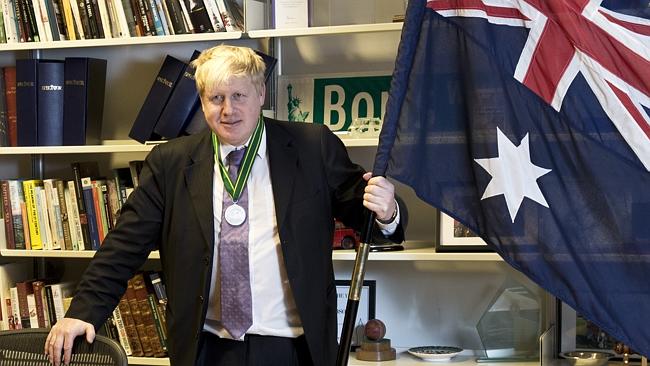
Last week we covered the name of the Australian of the Year for 2014, and here we have another name associated with the Australia Day Foundation awards. At an Australia Day dinner in London, Boris Johnson, the Mayor of London, was declared Honorary Australian of the Year for 2014.

The flamboyant mayor confessed to being a “bit baffled” by his unexpected award, which he received for promoting Australian interests, and campaigning to create visa-free labour and migration between Australia and the United Kingdom. You’ve probably heard on the news that the numbers of Antipodeans in the UK has dropped significantly, partly because of new restrictions on Australians in gaining visas and employment. It’s hard to believe that Londoners want more Australians, but Mayor Johnson will endeavour to get them more anyway.

In case you are dubious about Boris Johnson’s qualifications for being an Australian (even an honorary one), he spent a working holiday in Australia as a teenager, and seems to have had a pretty good time, and he has relatives here. He also points out that as there are more than 200 000 Australians living in London, he can be counted as mayor of the 12th largest Australian city.

Boris is a Bulgar name derived from the Turkic nickname Bogoris, usually interpreted as “short, small”, although other suggestions are “wolf” and “snow leopard, lynx, tiger”. Another theory is that the name ultimately comes from an Iranian source, and may mean “god-like”. Boris can also be used as a short form of the Slavic name Borislav, meaning “one who fights for glory”.

The first person known to history with this name is Prince Boris I, a 9th century ruler of the First Bulgarian Empire who converted to Christianity and adopted the name Mikhail. Boris seems to have converted chiefly for diplomatic and political reasons, for as a Christian ruler he could make more alliances and expand his personal power. However, his conversion also appears to be have been sincere, and at the end of his reign he abdicated to become a monk: he kept having to come out of monkish retirement to quash pagan rebellion and help out with major crises. After his death, he became known as the first Bulgarian saint.

The name Boris became particularly associated with Russia, because Boris II, the great-grandson of Boris I, formed an alliance with the Rus’ Slav prince, Sviatoslav I of Kiev. Sviatoslav’s son Vladimir the Great had a son named Boris – it is conjectured that his mother may have been Bulgarian, possibly even Boris II’s sister. The Kievan Rus’ converted to Christianity, and Boris (son of Vladimir) was later martyred and canonised, becoming one of the Russian Orthodox Church’s most revered saints. The name Boris became used in surrounding countries, and was a traditional name amongst royalty and nobility.

Boris is often seen by English-speakers as an almost comically stereotypical Russian name, and is a favourite choice for fictional villains. This may be a hangover from the Cold War, when Russians were generally portrayed as menacing “baddies”, or it may be because of the English movie star Boris Karloff (real name William Pratt), best known for playing sinister roles in Hollywood horror films such as Frankenstein and The Mummy.

Despite the name being familiar due to high profile Borises such as German former tennis champ Boris Becker, Russian author Boris Pasternak who wrote Dr Zhivago, former Russian President Boris Yeltsin, and Boris Johnson himself, Boris continues to sound rather exotic.

Boris is one of my early name loves, and I think this is because of the novels for young people by Mary Rodgers called Freaky Friday and A Billion For Boris (there’s another book in the series, but my school library didn’t have it). I liked A Billion For Boris better than Freaky Friday, probably because the idea of a psychic television which can make you rich was more appealing to me than swapping lives with my mother (an incredibly selfless workaholic whose life would be daunting for me to take on even as an adult).

Boris is (as you may remember) the tomboyish Annabel’s neighbour, childhood playmate and proto-boyfriend, and as you may also recall, during the course of Freaky Friday, it transpires that Boris’ name is actually Morris – he just has a nasally voice and says his Ms as Bs. Perhaps Mary Rodgers intended this to be a Oh thank goodness – he has a totally normal name! moment, but I was horrified.

To me, Morris was a hideous old man name, reeking of mothballs and uncoolness. Maybe in America in the early 1970s, Morris was considered an okayish name for a nerdy teenager (it only left the US Top 1000 in the 1990s), but by the time I got to read the books, it was nausea-invoking. Luckily, everyone continues to call Morris Boris for the rest of the books.

I thought then, and still tend to think now, that Boris is an awesomely hip yet huggable name, with a lot going for it. Interestingly, the name Boris has risen in popularity in the UK since the 1990s, and last year it made the Top 1000 again at #901 – it debuted there in 2004 at #999.

Political figures are not usually helpful to the popularity of their own names, yet Boris Johnson does not seem to have negatively affected the name Boris. Its rise in the UK may have more to do with the growing number of emigrants to Britain from Russia and Slavic countries though. Indeed, Boris Johnson has Russian ancestry, and describes himself as a “one man melting pot”, so melting a bit of Australian into the pot won’t be any great stretch for him.

POLL RESULT
Boris received an approval rating of 21%. 40% of people saw it as ugly and lumpy, 17% thought it was only suitable for people with Russian or Slavic heritage, and 12% preferred the name Morris. Only 5% of people thought the name Boris was handsome and exotic. 7% were put off the name by Boris Johnson.

Waltzing with …. Candelaria

02 Sunday Feb 2014

Posted by A.O. in Waltzing with ...

≈ 5 Comments

Tags

Canarian names, Marian titles, name history, name meaning, name trends, nicknames, Spanish names

Candlemas

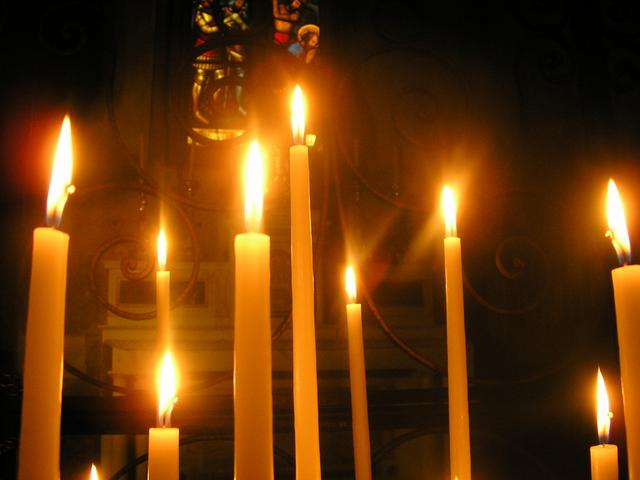
Today is the Feast of Candlemas, which commemorates the presentation of Jesus at the Temple and the Purification of Mary. Traditionally, there is a blessing of the candles to be used by the church that year, followed by a procession around the church with the congregation holding lighted candles, singing hymns of praise. People can also ask for a blessing on their own personal candles.

The feast follows the story given in the Gospel of Luke, where Mary and Joseph took the infant Jesus to the Temple in Jerusalem 40 days after his birth for Mary’s ritual purification after childbirth, and the redemption of a first-born son, according to the Law of Moses. Luke notes that Mary and Joseph sacrificed a pair of pigeons or doves, which was the option offered to the poor – wealthy people sacrificed a lamb.

While in the Temple, the Holy Family encountered an elderly pair of prophets named Simeon and Anna, who prayed for Jesus, prophesying that he would redeem Israel and bring enlightenment to the world. This is significant as the first public recognition of Jesus as a future religious leader, and his first entry into a house of religion.

We know that the Presentation of Jesus at the Temple has been celebrated by the Christian church since at least the 4th century, but its connection with candles only seems to have begun in the Middle Ages. As candles don’t play any role in the Gospel story, one might suspect that the custom began because in Europe, early February marks the midpoint of winter, when it starts to become noticeably lighter. Because Jesus was prophesied to be a “light … to the Gentiles”, there was a natural link between celebrating the return of the sun’s light with the “light of the world”.

Candlemas has many secular traditions associated with it, especially ones connected with agriculture; as the half-way point of winter, Candlemas was a handy reference point. Farmers were meant to have half their winter grain stores left by Candlemas, and it was the date that poultry was supposed to begin laying. It was also the traditional day to bring cattle in from the hay meadows so that the land could be prepared for another crop.

Weather lore is also a Candlemas tradition. In Britain, a saying is: If Candlemas Day is clear and bright, winter will take another flight. If Candlemas bring cloud or rain, winter is gone and will not come again. In the United States, they have the German tradition of Groundhog Day on Candlemas, when folklore says groundhogs will only come out of their burrow if it is cloudy, meaning that spring is on its way; if it is sunny, the groundhog will retreat back into the burrow for six more snoozy weeks of hibernation. In France, they think the opposite is true: a cloudy Candlemas means forty more days of winter, and in Italy, Candlemas is supposed to be the last cold day of the season.

In Australia, we cannot share in these wintry traditions, and as Candlemas often falls during the bushfire season of total fire bans, it would be foolhardy, not to mention illegal, to be messing around with lighted candles at this time. However, Candlemas is also supposed to mark of the end of the Christmas season, and this probably works better in Australia than Europe now, because it is around this time of the year that the Christmas holidays end.

There is a name especially associated with this festival. Candelaria is a Spanish name meaning “Candlemas”, which can be given in honour of the day. It can also be seen as a reference to Our Lady of Candelaria, one of the titles of the Virgin Mary. The Virgin of Candelaria is especially venerated in the Canary Islands, and we learned about this mysterious figure when we covered the name Chaxiraxi late last year. Her feast day is August 15, but she has another on February 2, linking her to Candlemas.

Candelaria is a rather gorgeous Spanish girl’s name, another of the many names which reference light, and in this case, a promise of approaching spring (or in Australia, the promise of cooler weather, which can’t come soon enough for my liking).

Candelaria may seem extravagant to some, and others may worry that the word “candle” is too obvious within it, but it could be used as a middle name if it seems too spectacular as a first name. I think it would be a marvellous name for anyone born around this time of year, and may be especially attractive to those with Spanish or Canarian heritage. The nickname Candy seems dated, but Aria would be smack bang on trend.

POLL RESULT
Candelaria received an approval rating of 42%. 32% of people hated the name, while only 7% loved it.

Famous Name: Adam

29 Wednesday Jan 2014

Posted by A.O. in Famous Names

≈ 4 Comments

Tags

Akkadian names, Arabic names, Assyrian names, Babylonian names, Biblical names, hebrew names, Irish names, modern classics, name history, name meaning, name popularity, popular names, royal names, Scottish names, Semitic names

14Goodes2501_Hero

On Australia Day, the Australian of the Year for 2014 was announced, and it was AFL footballer Adam Goodes, who plays for the Sydney Swans.

Adam is a distinguished player who has experienced a great deal of success in his field, and is very active in the Sydney Indigenous community, providing leadership and guidance to troubled Indigenous youth, including those in youth detention. He has also started an Indigenous football academy, and he and his cousin Michael O’Loughlin founded the Goodes O’Loughlin Foundation which focuses on education, employment and healthy life choices. Adam plans to use his profile as Australian of the Year to help raise awareness of the push for constitutional recognition of Indigenous Australians.

Adam is well known to almost everyone, even those with no religious background, as the first human mentioned in the Bible. He was created by God out of earth, and placed in the paradisical Garden of Eden with his companion Eve. However, they were expelled from the Garden after disobeying God’s commands, and went on to become founders of the human race. Adam is also seen as the first human in Islam, which regards Adam as a prophet, and the first Muslim.

In Hebrew, āḏām is the word for “human”, and the creation story in Genesis uses this word for “mankind”, “humanity”, “a man”, and the person named Adam, in an ambiguous and complex play of meaning. The word comes from a Semitic root meaning “red, fair, handsome”, and is also the masculine form of the Hebrew word adamah, meaning “ground, earth”, related both to the word for “red”, and the word for “blood”. In Arabic, Adam means “made from the earth”.

Putting this all together, the impression one gets from the name is that Adam is a signifier for all men, and all humans, a handsome man created from the red earth, the colour suggesting that of life-giving blood (the clay become flesh), and perhaps even implying that his skin tone was meant to be a coppery, reddish-brown – which seems reasonable given the story’s Middle Eastern origins.

Genesis emphasises Adam’s connection to the earth, for God set Adam to work on the land, to get his hands dirty, scratched by thorns in order to eat and survive. God’s curse was From dust you were made and to dust you will return, meaning that humans were condemned to mortality (still echoed in the funeral service, ashes to ashes, dust to dust). Adam is separated from nature by his humanity, yet inextricably part of nature and still tied to the earth and his earthy instincts – a succinct précis of the human condition.

The first historical person named Adam we know of is an Assyrian king named Adamu, who lived more than 4000 years ago (it is probably worth mentioning that the Babylonian creation story, many centuries older than Genesis, has the same main features, and there the first man is named Lullu, meaning “man, human being”; when the Assyrians copied the story, they called the first man Adami, possibly from the Akkadian for “to make”).

The name Adam came into common use in Britain in the Middle Ages, and became more popular after the Protestant Reformation. It has particularly strong ties to Scotland, perhaps because it was used to Anglicise the Irish name Áedán (an older form of Aidan), traditional amongst the royal houses and nobility of medieval Scotland.

Although in rare use early in the twentieth century, Adam only began charting in Australia in the 1940s. It raced up the charts during the 1950s to make #51 for the 1960s. It peaked in the 1980s at #10, and is still in the Top 100. It is #66 nationally, #55 in New South Wales, #57 in Victoria, #99 in Queensland, #44 in Western Australia, #84 in Tasmania, and #60 in the Australian Capital Territory.

Adam is a modern classic, yet it is an ancient name – the oldest name in the Book! Brief, strong and primal, it is earth and blood, flesh and bone, birth and death, innocence and guilt: the most human of all names, with its hands buried in the soil and its soul yearning for paradise. Adam is all man and all men; we are all Adam and the children of Adam; and yet Adam is still too archetypal to ever become an Everyman name.

It will always remind us of the first man in one of the oldest stories we know. A man whose descendants have continued to live and die and toil and survive – and remember paradise.

POLL RESULT
Adam received an approval rating of 64%. 30% of people saw it as strong and handsome, but 14% thought it was too common.

True Blue Names for Boys

26 Sunday Jan 2014

Posted by A.O. in Name Themes and Lists

≈ 10 Comments

Tags

animal names, Arabic names, Australian idioms, Biblical names, celebrity baby names, colour names, english names, fabric names, famous namesakes, fictional namesakes, fish names, geographic names, Greek names, hebrew names, historical records, metal names, modern classic names, mythological names, name history, name meaning, name popularity, names from movies, names from television, nature names, popular names, Roman names, surname names, tree names, unisex names, vocabulary names

016

Happy Australia Day! Here are ten names for boys which are associated with the colour blue, in honour of the saying, a true blue Aussie.

Bay

A bay is a scoop in the shoreline, much prized for providing safe anchorage and opportunities for fishing. Having a long coastline, Australia has many bays, including the Great Australian Bight which forms the southern edge of the continent, and Botany Bay in Sydney – there is even a Blue Bay on the Central Coast of New South Wales. Although bay also describes the colour of a horse’s coat (coppery brown with black markings), and bay tree is another word for a laurel bush, I tend to think of the name Bay as being influenced more by the geographic term, at least in Australia. Bay can also be from the surname – the first English people with the surname Bay took their name from baille, an enclosed courtyard as part of a Norman castle’s fortifications. Although Bay can be used for both sexes, I have only ever seen it on boys, perhaps because it sounds as if could be short for Bailey.

Blue

Blue is a colour of the spectrum, and a primary colour. Because it is the colour of the sky, it has often been seen as representing heaven and divinity. It has been connected to the “blue collar” working class, but also with the wealthy, and “blue blooded” nobility. Blue is a popular colour for uniforms, and the navy, air force, and police traditionally wear blue. Blue can also mean “sad, melancholy”; hence blues music, which arose out of suffering. The Australian flag and Eureka flag are both blue, blue heelers are tough, loyal Australian cattle dogs, and it is an Australian irony that a red-headed man is called Blue or Bluey – some say because of the redhead’s reputation for temper, as a blue is Australian slang for a fight. Since World War II, blue has been seen as the colour for boys (with pink for girls), giving the name Blue a boyish feel – although celebrity baby Blue Carter shows it works well for girls too.

Dean

The Blue Mountains are to the west of Sydney, part of the Great Dividing Range down the eastern side of Australia. Their name comes from the blue-grey haze which can be seen when the mountains are viewed from a distance, believed to be caused by the diffusion of eucalyptus oils from the trees. One of the most prominent is the Mountain Blue Gum (Eucalptus deanei), a tall forest tree. Its scientific name comes from Henry Deane, an Australian engineer who first collected specimens in the late 19th century. The English surname Dean or Deane comes from dene, meaning “valley” – the Mountain Blue Gum grows in sheltered valleys. Dean has been used as a boys name since the 17th century, and seems to have been initially most popular amongst non-Anglican Protestants. Dean first ranked in Australia in the 1950s, probably because of Hollywood star James Dean; it debuted at #134. By the following decade it had reached the Top 50, and peaked in the 1970s at #34. It didn’t leave the Top 100 until the early 2000s, and since then has gently declined into the mid-100s. It has recently got some exposure via Dean Winchester from the television show Supernatural, played by Jensen Ackles; the character is named after Dean Moriarty, from Jack Kerouac’s On the Road. A simple, clean modern classic, this still has a touch of Hollywood.

Drake

Drake has been used as a boys name since the late 16th history in honour of the heroic sea captain, Sir Francis Drake – the first babies with this name were born around the time of Sir Francis’ death. His surname is from the Old English nickname Draca, meaning “dragon, serpent, sea serpent”, coming from the Latin draco. The word goes back to an ancient root meaning “to see” – perhaps suggesting that dragons had a mesmerising gaze. In European mythology, dragons are serpentine rather than lizard-like, so the word drake covers a range of creatures. The name would have been given to someone who was very bold and fierce, for dragons were generally viewed as evil. They were often shown guarding a hoard of treasure with avaricious ferocity. In the post-Christian era, they became associated with Satan, but in modern fantasy stories, dragons nearly always seem to be noble and friendly. Although dragons are cool, this name reminds me of the watery Rainbow Serpent of Indigenous cultures, depicted as a blue serpent on Sydney’s coat of arms.

Levi

Levi Strauss was the German-American businessman who founded the first company to manufacture blue denim jeans, which gain their colour from indigo dye. Originally sturdy workwear for labourers, jeans became iconic fashion items, and are now essential clothing for almost everyone. In the Old Testament, Levi was the son of Jacob and Leah, and the founder of the Tribe of Levi. The Levites became the priestly caste of the Hebrews – perhaps the most famous members of the Tribe of Levi are Moses, and his siblings Aaron and Miriam. The name Levi is traditionally understood as “he will join”, because Jacob joined with Leah to produce Levi, but Biblical scholars believe it simply means “priest”, and comes from Arabic. Levi has charted in Australia since the 1970s – this was the decade that Levi jeans were first manufactured in Australia, and the brand name probably had more impact than the Biblical figure. Levi was #243 for the 1980s, and climbed steeply to make the Top 100 by the early 2000s, where it remains stable. It is #26 nationally, #31 in New South Wales, #30 in Victoria, #24 in Queensland, #40 in South Australia, #22 in Western Australia, #23 in Tasmania, #13 in the Northern Territory, and #53 in the Australian Capital Territory.

Marlin

Blue marlin are one of the world’s largest fish, blue-black with a silvery white underside, and an elongated upper jaw. They can reach more than 500 kg in weight, and have few predators, apart from humans. Because of their size, power, and elusiveness, they are considered to be one of the most highly prized targets for sports fishing. Found in many oceans of the world, blue marlin have been captured as far south as Tasmania. However, the greatest numbers have been caught off the Gold Coast in Queensland, and the largest ones in Bateman’s Bay, on the south coast of New South Wales. Blue marlin are considered be a threatened species, due to overfishing, and most anglers in Australia use the tag and release method. If you would like to use Marlin as a boy’s name, it doesn’t seem too different from Marlon in sound. The word marlin is short for marlinspike fish, as a marlinspike is a pointed tool used by sailors to separate strands of rope; it comes from the Dutch for “fasten, secure”. Like to use this as a girl’s name? What about Makaira, the Latin name for marlin?

Ocean

Australia is entirely surrounded by ocean, and more than 80% of our population live near the sea. 71% of the planet is covered by ocean, which holds most of Earth’s water. Integral to life on the planet, it is believed that life first arose in its waters. It is not known where all the water on our planet came from, but it must have played a major role in cooling it and making it possible for anything to live here. It still continues to moderate our climate and weather patterns, so we can keep living here. From space, Earth appears to be a marbled blue colour, earning it the moniker The Blue Planet. The word ocean comes from Oceanus, which the ancient Greeks and Romans believed was an enormous river encircling the world. In Greek mythology, this world-ocean was personified as a Titan, depicted as a large, muscular man with a long beard and horns, having a serpent for his lower body. He is the father of the ocean nymphs, and all the rivers, fountains and lakes of the world. Despite these masculine origins, the name Ocean is given to both boys and girls.

River

Although it has around a hundred of them, Australia cannot be said to be a land of great rivers – river beds are often dry, and even our largest rivers tend to be on the thin side. Of course, this means that every single one of them is especially precious. It seems slightly cheating to include them on a list of Blue Names, as every river I have seen here was brown or green in colour. However, rivers are marked in blue on maps, and if you saw one from a distance with a quantity of blue sky reflected in it, from the right angle it would probably look blue-ish. The word river is Anglo-Norman, from the Latin for “riverbank, shore”; it is ultimately from an ancient root meaning “scratch, tear, cut”. River has been used as a first name since the 17th century, and from the beginning seems to have been used with the geographic term in mind, since people named River Banks and River Jordan turn up quite early in the records. The name is unisex, but historically much more common for boys – in Australia, it seems to be more than twice as common for boys as for girls.

Steel

Steel is an alloy of iron and carbon. Steel production began on an experimental basis in Australia in the 19th century, but didn’t really get going until World War I, when BHP opened the first steelworks in Newcastle. Its boom years were after World War II, but since the 1980s our steel production has decreased significantly due to global competition. During its heyday, steelworks provided mass employment and were a source of great pride for workers; it was from the steelworkers that the modern working class emerged. Blue steel is steel that has been given a dark finish, in order to increase toughness. Although we often connect blue steel with guns and other weapons, it is used in many useful capacities, such as on the steel-capped toes of work boots. It gives its name to a colour – steel blue, a shade of blue-grey. Last year I saw several boys named Steel or Steele in birth notices, after the release of the Superman movie, Man of Steel.

Suede

Suede is a soft napped leather, popular for making accessories such as shoes and handbags. It was originally used for women’s gloves, and the word comes from the French gants de Suède, meaning “gloves from Sweden”, since this is where the gloves were imported from. Suede features in the Carl Perkins song, Blue Suede Shoes, considered one of the first rockabilly records, and the first million-selling country song to hit the R&B charts. Perkins wrote the song based on a suggestion from Johnny Cash, and a real life encounter with a man who didn’t want anyone stepping on his blue suede shoes. It was soon afterwards recorded by Elvis Presley, who made it a hit all over again, and the song has gone on to become a rock and roll classic. I have met a little boy named Suede, and once I got used to it, found it rather cool and rockabilly. Suede was named in honour of the song, as his parents are Elvis fans. They probably attended the recent Elvis Presley Festival in Parkes.

POLL RESULTS
The public’s favourite names were Levi, River and Bay, and their least favourite were Ocean, Steel and Suede.

True Blue Names for Girls

19 Sunday Jan 2014

Posted by A.O. in Name Themes and Lists

≈ 6 Comments

Tags

animal names, Australian idioms, Biblical names, bird names, celebrity baby names, colour names, english names, fictional namesakes, flower names, French names, gemstone names, German names, Greek names, middle names, modern classic names, name history, name meaning, name popularity, name trends, names from movies, nature names, nicknames, Norman-French names, Persian names, plant names, popular names, surname names, unisex names

bluewren-male

It will be Australia Day in a week’s time, and rather than cover just one name, I am suggesting names with a “blue” theme, in honour of Australia, where the phrase “true blue” has taken on its own patriotic meaning.

Azura

The name Azura is an elaboration of the colour name Azure. Azure is an intense light blue, the colour of a clear sky on a hot summer’s day. In the patriotic Song of Australia, the lyrics describe how all about is azure bright, and the bird called the azure kingfisher is native to Australia. The English word azure comes from French azur, and is taken from the blue mineral lapis lazuli – lapis means “stone” in Latin, while lazuli is from lāžaward: the Persian name for the mineral, derived from Lazhward, a place where it was mined. According to Jewish tradition, Azura was one of the daughters of Adam and Eve, and the wife of her brother Seth. Azura is a popular name in science fiction and fantasy, most notably in Skyrim, where Azura is the Lady of Twilight who rules over the realm of Moonshadow. Last year, NRL star Anthony Minichiello, and designer Terry Biviano, welcomed their daughter Azura. This is pretty and exotic while still similar to names like Arya and Zara.

Bluebell

The bluebell is a type of hyacinth; a spring bulb which grows wild in the woodlands of Europe and is also a popular garden plant. Its name comes from its violet-blue colour, and mass of bell-like petals. Several other unrelated flowers around the world are named bluebell, and in Australia we have the Royal Bluebell (Wahlenbergia gloriosa). This deep violet wildflower grows abundantly in the Australian Alps, and is the floral emblem of the Australian Capital Territory. Summer flowering, it is hardy and easily grown in the garden; however, it is protected in the wild, and cannot be picked or collected. Bluebell came into use as a girls name during the 19th century, along with other flower names, but doesn’t have a Victorian vintage vibe – it seems hip and funky. I have seen this a few times as a middle name, but would love to see it boldly upfront.

Delphine

Delphine is the French form of Delphina, which can be understood as meaning “from Delphi”. However, the name reminds me of dolphins, whose scientific family name is Delphinidae, from the Greek delphus, meaning “womb”, to indicate that although they look fish-like, as mammals, they bear live young. The Greek town of Delphi, the home of the famous Delphic Oracle in ancient times, is also said to mean “womb”, as it was meant to be the navel of the earth goddess Gaia. The grey-blue colouring of the dolphin suggested this name to me, and there are several species of dolphin which live in, or migrate to, the waters surrounding Australia. Since ancient times, people have been fascinated by dolphins, and there are many stories of wild dolphins rescuing people, helping surfers and swimmers in trouble, or even protecting humans from shark attacks. Their high intelligence and playful behaviour make them appealing companions, and there are several places in Australia where you can swim with and interact with wild dolphins. Delphine is a pretty dolphin-related name for anyone who loves these free-spirited sea creatures, and has Dell and Fifi as potential nicknames.

Indigo

Indigo is one of the seven colours of the rainbow, a dark shade of blue. It was Sir Isaac Newton who introduced indigo as one of the colours of the spectrum, because in the mid-17th century, when he began his work with prisms, the East India Company had begun importing indigo dye to Britain, where it was used to colour clothing a deep blue. Indigo dye comes from the plant Indigofera tinctoria, native to tropical Asia, and the word indigo comes from the Greek, meaning “Indian dye”. Indigo is a rather controversial colour, because Sir Isaac Newton decided there had to be seven colours to match the seven notes of a scale and seven days of the week, and scientists question whether indigo is really a colour of the spectrum, or just the point where blue deepens. Even more confusingly, Sir Isaac Newton seems to have used the word indigo to mean the colour we call blue. Indigo has strong New Age associations, because it is seen as a particularly spiritual colour connected to psychic power. Indigo is a rather trendy girls name in Australia, a favourite choice of celebrities; rising with other Ind- names, it is #137 in Victoria.

Jasmine

I would not have considered this for a list of Blue Names, except that while writing it, Australian actress Cate Blanchett won a Golden Globe for her role in the film Blue Jasmine. There are about twelve species of jasmine native to Australia; these climbing vines come from tropical and subtropical areas of Queensland and northern New South Wales. The flowers are delicate and white, and have a sweet, intoxicating scent; they are both fragile and strong. The word jasmine comes from the Latinised Persian yasamen, meaning “gift from God” – there really is something quite heavenly about jasmine. The name Jasmine is a modern classic which has charted here since the 1960s, and soared during the 1970s to make the Top 100 for the 1980s. It peaked in the early 2000s at #14, and is still stable in the Top 100. It is #36 nationally, #33 in New South Wales, #28 in Victoria, #41 in Queensland, #31 in South Australia, #24 in Western Australia, #59 in Tasmania, #15 in the Northern Territory and #20 in the Australian Capital Territory.

Sailor

This name occurred to me because the Royal Australian Navy winter uniform is dark blue (and the summer uniform has dark blue trim); Sailor could be used as a name to honour a family naval tradition. Sailor has been used as a first name since at least the 19th century, and was used for both sexes, although more common for boys. It received greater recognition in the 1990s, when American model Christie Brinkley gave the name to her daughter, and since then has been overwhelmingly seen as a girls name – perhaps partly because it fits in so well with the trend for names such as Kayla, Layla and Tayla. Weatherman Grant Denyer named his daughter Sailor in 2011, his wife Cheryl a fan of the name ever since Christie Brinkley’s choice. The name Sailor probably came originally from the occupational surname, in which case it can be from the German seiler, and mean “ropemaker”, or English, where it means “dancer, acrobat”, from the Norman French sailleor, meaning “dancer, leaper”. The German origin seems to be more common, and as sailors once worked with ropes, still seems to fit as a sailing name.

Sapphira

A Greek name meaning “sapphire”, which simply means “blue stone”. However, it is likely that the ancient Greeks were referring to lapis lazuli when they used the word – it comes from the Hebrew sappir, meaning “lapis lazuli”. In the New Testament, Sapphira was an early Christian who, along with her husband, was struck dead for concealing money from the church and lying about it. It’s hard not to think that they were executed, although the Biblical account is vague on the details. It’s one of the creepier and more troubling parts of the Bible, and doesn’t really show the early church in a good light. A more pleasant connection is the intelligent and loyal blue dragon named Saphira in Christopher Paolini’s Inheritance series of fantasy novels. Crime novelist Tara Moss chose the name Sapphira for her baby daughter in 2011, apparently because she had blue eyes. Sapphira is an exceptionally beautiful and elegant name which can also reference the sapphire mining trade in Australia.

Sky

The atmosphere as it appears from Earth; the word comes from the Norse word for “cloud” (you can see our ancestors came from a place where skies tended to be cloudy!). On a clear day the sky appears blue because air scatters blue sunlight more than it scatters red. Because of this, we give as a truism that the sky is blue, even though it appears in a range of colours depending on the conditions, and there is a colour named sky blue because of that. Blue skies are symbolic of happiness and good times ahead, and blue skying is to think creatively – to think that the sky is the limit, to reach for the sky. Although there are blue skies all over the world, in Australia the strong sunlight and lack of cloudiness mean we see a lot of blue sky, and intensely blue skies – the patriotic song Awake! Awake, Australia! mentions our “bright blue skies”. Sky is a unisex name which has never charted in Australia, but its similarity to Skye and Skyla will make it seem feminine here.

True

An English word which can be understood as meaning “genuine, trusty, faithful”, ultimately from an ancient root meaning “steady, firm”. A common saying in Australia is to describe someone as a true blue Aussie, as featured in the John Williamson song, True Blue. The phrase true blue goes back to medieval times, when the colour blue symbolised faith and constancy. Although theories abound as why this was so, the most likely explanation is that it’s from the blue-dyed cloth produced in the town of Coventry, famous for not fading with washing, and thus remaining “true”. Later on, the phrase became associated with the Presybterian Church, and later still, the Tory Party, and their “true blue supporters”. In Australia, far from “true blue” having these conservative associations, in the 19th century it was used to describe those working class men who remained true to their labour principles, and was thus a left-wing term. Gradually, true blue came to mean anyone loyal to Australia and its values. True can be used as a name for either sex; on a girl, it seems as if it could be short for Trudy and similar names.

Wren

Australian wrens are similar in appearance, but unrelated to the wrens of Europe and the Americas. In some species, such as the Superb Fairywren and Splendid Fairywren, the breeding male has a very distinctive and beautiful blue plumage in contrast to the grey-brown tones of the females and juniors. In other species and subspecies, both males and females are bright blue, or have blue patches. Because they are tiny, pretty, and have an attractive range of birdsongs, we love it when fairywrens visit our gardens. Seeing a group of colourful wrens flutter through the bushes is the closest thing to having fairies in the garden that most people will experience. Another charming fairywren fact is that the male will present brightly coloured flower petals when courting a female, which to human eyes looks like bringing a bouquet of flowers. Wren has been used as a first name since the 17th century, and from the beginning was unisex, given roughly equally to both sexes, and possibly influenced by the surname, which comes directly from the bird. Today it is usually thought of a girls name, and although I can see it on a boy, the fairywren seems to render it more feminine than masculine. Elsewhere Wren might seem a humble choice as a name, while here I think it’s much brighter and more cheerful.

POLL RESULTS
The public’s favourite names were Wren, Indigo and Delphine, and their least favourite were Sailor, True and Sky.

Famous Names: Rhonda and Ketut

15 Wednesday Jan 2014

Posted by A.O. in Famous Names

≈ 4 Comments

Tags

Balinese names, dated names, fictional namesakes, locational names, name history, name meaning, name popularity, names from songs, names of rivers, unisex names, Welsh names

aami-remix-642-380

For months, Australia has been avidly following the unfolding romance between a redheaded Australian woman who meets a flirtatious local on a Balinese beach, a younger man working as a waiter. Sparks fly, there is unmistakable chemistry … and something surely happens between them. Or has Rhonda read too much into the situation, her brain fevered from multiple viewings of Eat, Pray, Love?

It sounds like the plot of a soap opera, but we’ve actually been watching a clever series of car insurance commercials from AAMI. Rhonda saved so much money on car insurance that she was able to take a holiday, and it was here that the handsome Ketut pressed exotic drinks on her, and who knows what else. Back home, she found herself gaining the attentions of smooth Trent Toogood at her high school reunion, leaving us wondering if her destiny was Trent or Ketut … or if Ketut was nothing more than a fantasy.

The advertisements have captured the public’s imagination, with several fan pages on Facebook to Rhonda and Ketut’s relationship, and tribute tee-shirts being sold in Bali, reading Rhonda is Mine, and Kiss Me Ketut. Lines such as “beautiful brake foot” and “hot like a sunrise” have entered the popular consciousness, and according to Twitter denizens, if you’re australian and rhonda and ketut aren’t your otp there is something v wrong with u.

The public were invited to vote on whether Rhonda should find eternal bliss with either Trent or Ketu (happy singledom not an option). There wasn’t much doubt that there was nothing v wrong with us and that Team Ketu would win, and Rhonda finally found the happy ever after to her unexpected holiday romance.

AAMI have sensibly said they aren’t going to continue Rhonda and Ketut’s story in case people get sick of it, so the loved-up couple won’t be buying home insurance together or honeymooning in Fiji with all the money they saved on life insurance. AAMI increased its sales by almost 22% during the Rhonda-Ketut story line, so it’s a happy ending for them as well.

Rhonda is a modern Welsh name taken from the Rhondda Valley, once a coal mining area with strong community ties. It has been used since the 19th century, and Rhondda seems to be the older spelling in Wales. Rhondda may be from the Welsh for “recite, recount”, related to the Old Irish for “speech”, with the suggestion that the River Rhondda is speaking aloud (in the sense that we say a river is “babbling”). The meaning is usually glossed as “noisy”.

Rhonda first charted in the 1920s, debuting at #371. It soared in popularity during the 1930s, and made the Top 100 by the 1940s. It peaked in the 1950s at #29, then declined; even the Beach Boys song Help Me Rhonda doesn’t seem to have aided it in the 1960s (it may have possibly damaged the name’s popularity). It was out of the Top 100 by the 1970s, and hasn’t charted since the 1990s.

Rhonda is a dated name, with even the Rhonda in the AAMI commercials given the name when it was already out of fashion (the character is 39). Yet there’s something rather appealing about Rhonda – it’s not glamorous, but seems honest, friendly and good-hearted. I don’t think the advertising campaign is likely to boost Rhonda, but it’s a likeable 1950s name with plenty of warmth.

Ketut (keh-TOOT) is a common Balinese name meaning “fourth-born”; like all Balinese names, it is unisex. It’s a suitably humble name for Rhonda’s hunky waiter, but both characters have names which reference cars – Ketut sounds like the toot of a horn, while Rhonda has Honda in it.

We fell in love with Rhonda and Ketut – but do we love their names?

POLL RESULTS
Rhonda received an approval rating of 44%, and Ketut was further behind with 34%.

Famous Names: Mitchell and Mervyn

08 Wednesday Jan 2014

Posted by A.O. in Famous Names

≈ 8 Comments

Tags

english names, famous namesakes, historical records, Irish names, locational names, modern classic names, name history, name meaning, name popularity, nicknames, popular names, Scottish names, surname names, Welsh names

Mitchell Johnson Media Session

It is a glorious summer: beautiful weather, cloudless blue skies, golden sunshine, and best of all – victory in that ancient international cricketing rivalry, the Ashes. Having lost to England during the northern summer of 2013, Australia was itching to get revenge back on home soil, and we did.

For whatever reason, England failed to perform in Australia and had already lost the Ashes 3-0 by Christmas. The series finished 5-0 to Australia, only the third time in history such a whitewash has been achieved, and England lost all 10 wickets in every innings of the Test series – the first time either side has forfeited 100 wickets in Ashes history. Little wonder we celebrated wildly at the Fan Day at the Opera House yesterday, having taken down the team which was ranked #1 in the world and were favourites to win.

Mitchell Johnson was awarded Man of the Series, the fast bowler having taken 37 wickets – the most in an Ashes series in Australia since the late 1970s. Even more remarkably, this was a comeback with a vengeance, because not so long ago, Mitchell was battling injury, his self-confidence destroyed by the jeering of England’s fan base, the Barmy Army (a jingle about Mitchell Johnson is still their most popular song, and I use the word “song” extremely loosely).

Quite apart from his Barmy Army-silencing performance (and I use the word “silencing” with great poetic licence), Mitchell’s value during the Ashes was as a psychological weapon, because he seemed to strike fear into the English batsman. His secret? Maybe it was his training, the confidence brought about by fatherhood, or a pep talk by a war hero, but nearly everyone was convinced it was his moustache. No, seriously.

Mitchell grew a moustache for Movember to raise money for men’s health, but was urged not to shave it off at the end of the month by selector Mervyn “Merv” Hughes, who sports an impressive moustache himself. A public campaign and $10 000 donation from Gillette convinced Mitchell to keep the mo, and it seemed to work.

I was following the Ashes on the BBC, and was interested to see how much that moustache affected the English: it was the “menacing mo”, “the terrifying tash”, “the malicious moustache”, “the fearsome face-fuzz”, or the “horrid horseshoe”, and Mitchell became the “pantomime villain”. Add one moustache, and suddenly this shy, quiet man had become a bowling nightmare to the English.

Unfortunately, Mitchell says the magic mo must go for now, but confirms he will be growing it back when we take on South Africa later in the summer. I just hope it hasn’t lost its mystique by then.

Mitchell is an English surname of several origins. It is said that the first people with this surname came from Mitcham in Surrey (now in the outer suburbs of London), with Mitcham meaning “big town, large settlement”. Mitchell can also be derived from the male name Michel, a Middle English nickname for a large person, meaning “big”. The Normans had the name Michel, but in their case it was a form of the name Michael.

The surname Mitchell must have moved north during the medieval period, as it became particularly associated with Scotland. The Gaelic form of the name is based on the name Michael. In Ireland, Mitchell is used to Anglicise the Irish surname Ó Maoilmhichil, from the clan name Uí Mhaoilmhichil, meaning “devotees of the Archangel Michael”.

The surname Mitchell is one very well known in Australia, for Sir Thomas Livingstone Mitchell was a 19th explorer of Australia. Originally from Scotland, he joined the British army, where he distinguished himself during the Napoleonic Wars, then became a surveyor in New South Wales. He explored New South Wales, Victoria and Queensland, and published two books which included close and sympathetic observations of the Aboriginal people he encountered.

He is also remembered for the invention of the boomerang propeller, and being the last man in Australia to challenge anyone to a duel (both marksmen missed, so nobody was hurt). Many things are named after him, including the town of Mitchell and the Mitchell River in Queensland, the Mitchell Highway between Queensland and New South Wales, and Major Mitchell’s Cockatoo, a very beautiful bird with soft pink and grey markings, much admired by Sir Thomas Mitchell.

Mitchell has been used as a boys name since at least the 16th century, and turns up early in Scotland. There are many men named Mitchell in Australian records, and lots of them emigrated from Scotland or have Scottish surnames.

The name Mitchell has charted in Australia since the 1940s. It climbed gently until the 1980s (the decade when Mitchell Johnson was born), when it suddenly shot into the Top 25 from virtually nowhere. It peaked in the 1990s at #12, and is still stable in the Top 100. Currently it is #45 nationally, #77 in New South Wales, #53 in Victoria, #51 in Queensland, #41 in South Australia, #37 in Western Australia, and #91 in Tasmania.

Australia is the only country in the world where the name Mitchell is still in the Top 100, and with the success of Mitchell Johnson, I don’t see it going anywhere soon. It’s an Australian modern classic with a lot of history, and a name we hold dear.

Mervyn is derived from the Welsh name Merfyn, of uncertain meaning. It is sometimes said to be a variation of the Welsh name Myrddin (“sea fortress”), from whence we get Merlin, but it may mean “big”, and is often translated as meaning something along the lines of “famous to the marrow”. There was a medieval Welsh king named Merfyn.

The name Mervyn was #66 in Australia in the 1900s, and peaked in the 1920s at #44 before declining and leaving the Top 100 in the 1950s. It hasn’t charted since the 1970s. It may be dated, but it is a uniquely Australian name, because in no other country (not even Wales) did it ever become popular.

Two names more Australian than you might have thought – but which one do you prefer?

POLL RESULTS
Mitchell received a respectable approval rating of 68%, while people were less enthusiastic about Mervyn, with an approval rating of 22% – not one person loved the name Mervyn.


← Older posts
Newer posts →

Enter your email address to follow this blog

Categories

Archives

Recent Comments

A.O.'s avatarwaltzingmorethanmati… on Zarah Zaynab and Wolfgang…
Madelyn's avatarMadelyn on Zarah Zaynab and Wolfgang…
JD's avatardrperegrine on Can Phoebe Complete This …
A.O.'s avatarwaltzingmorethanmati… on Rua and Rhoa
redrover23's avatarredrover23 on Rua and Rhoa

Blogroll

  • Appellation Mountain
  • Baby Name Pondering
  • Babynamelover's Blog
  • British Baby Names
  • Clare's Name News
  • For Real Baby Names
  • Geek Baby Names
  • Name Candy
  • Nameberry
  • Nancy's Baby Names
  • Ren's Baby Name Blog
  • Sancta Nomina
  • Swistle: Baby Names
  • The Art of Naming
  • The Baby Name Wizard
  • The Beauty of Names
  • Tulip By Any Name

RSS Feed

  • RSS - Posts

RSS Posts

  • Celebrity Baby News: Melanie Vallejo and Matt Kingston
  • Names from the TV Show “Cleverman”
  • Can Phoebe Complete This Sibset?
  • Zarah Zaynab and Wolfgang Winter
  • Baby, How Did You Get That Name?
  • Celebrity Baby News: Media Babies
  • Celebrity Baby News: Adelaide Crows Babies
  • Celebrity Baby News: Chris and Rebecca Judd
  • Names at Work: Name News From the World of Business and Employment
  • Celebrity Baby News: Sporting Round Up

Currently Popular

  • Celebrity Baby News: Toby Allen and Darren Weller
  • Girls Names of Australian Aboriginal Origin
  • Rare Boys Names From the 1950s
  • Girls Names From Native Australian Flowers
  • The Top 100 Names of the 1920s in New South Wales

Tags

celebrity baby names celebrity sibsets english names famous namesakes fictional namesakes honouring locational names middle names name combinations name history name meaning name popularity name trends nicknames popular names saints names sibsets surname names twin sets unisex names

Blog at WordPress.com.

Privacy & Cookies: This site uses cookies. By continuing to use this website, you agree to their use.
To find out more, including how to control cookies, see here: Cookie Policy
  • Subscribe Subscribed
    • Waltzing More Than Matilda
    • Join 517 other subscribers
    • Already have a WordPress.com account? Log in now.
    • Waltzing More Than Matilda
    • Subscribe Subscribed
    • Sign up
    • Log in
    • Report this content
    • View site in Reader
    • Manage subscriptions
    • Collapse this bar
 

Loading Comments...