• About
  • Best Baby Names
  • Celebrity Baby Names
  • Celebrity Baby Names – Current
  • Celebrity Baby Names – Past
  • Featured Boys Names
  • Featured Girls Names
  • Featured Unisex Names
  • Links to Name Data
  • Waltzing on the Web

Waltzing More Than Matilda

~ Names with an Australian Bias of Democratic Temper

Waltzing More Than Matilda

Tag Archives: name history

Famous Name: Dorrigo

29 Wednesday Oct 2014

Posted by A.O. in Famous Names

≈ 1 Comment

Tags

Australian Aboriginal names, fictional namesakes, locational names, name history, name meaning, name trends, nature names, nicknames, plant names, tree names, unique names

132.Richard Flanagan-The Narrow Road To The Deep North cover

Earlier this month, Tasmanian author Richard Flanagan was named the winner of the Man Booker Prize 2014 for his novel, The Narrow Road to the Deep North. The Man Booker Prize is a prestigious literary award open to all books published in English in the UK that year; until this year, it was only open to authors from Britain or the Commonwealth, but the rules have now been changed so that authors may be from any country. Other Australian authors who have won the Man Booker are Thomas Keneally, for Schindler’s Ark, Peter Carey, for Oscar and Lucinda, and The True Story of the Kelly Gang, and DCB Pierre, for Vernon God Little.

The Long Road to the Deep North is Richard Flanagan’s sixth novel, and an epic work of historical fiction. At its heart is the story of the Burma Railway during World War II, and the prisoners of war who suffered as forced labour to build it. The novel’s protagonist is a Tasmanian medical officer, very loosely modelled on military surgeon Colonel “Weary” Dunlop, who becomes a celebrated war hero, but feels doubtful and ambivalent about his fame; he is also haunted by a wartime love affair which he believes ended in tragedy. The novel’s title is taken from a famous 17th century haibun (journal in prose and haiku) by Japanese poet Matsuo Bashō.

Richard Flanagan’s father Arch was a Japanese prisoner of war, one of the legendary group led by Weary Dunlop who lived and died on the Burma Railway (he has written his own book on the subject called The Line, with another of his sons, sports journalist Martin Flanagan). For more than a decade, Richard felt that The Narrow Road to the Deep North was the novel he needed to write if he was going to continue writing. He wrote five different versions, until he realised that Arch, now in his nineties, was growing frail, and determined to complete the novel before his father died.

Richard drew on many of his father’s memories and experiences, and just before Anzac Day was able to tell his father that he had finished writing the book; that night Arch passed away. The Narrow Road to the Deep North is dedicated to “prisoner san byaku san ju go” – Arch Flanagan’s Japanese prison number, 335.

Winning the Man Booker has made a big difference for Richard Flanagan. Despite reviews describing it as “haunting and evocative“, and imbued with “extraordinary power“, the week before the Man Booker Prize the novel sold just over 300 copies in the UK. The week after winning it, The Narrow Road to the Deep North sold more than 10 000 copies. The £50,000 prize money will allow Richard to keep writing, because before the book was published, he was considering going to work in the mines up north to earn money to live on.

The central character of The Narrow Road to the Deep North is named Dorrigo Evans (christened Alvyn). Many of the novel’s characters have unusual names: Sheephead Morton, Chum Fagan, Yabby Burrows, Gallipoli von Kessler “Kes”. Richard Flanagan says simply that he “made them up“, and that the characters just didn’t work until he got the names right. He also uses a line from Tennyson’s Ulysses: “I am become a name”.

The name Dorrigo barely stands out in such company, and these are colourful Australian war era nicknames, with the reasoning behind them not always immediately obvious. Weary Dunlop himself had such a moniker, gained while at medical school. His first name was Ernest, and he went by his middle name of Edward – so why was he “Weary”? Because of his surname Dunlop, and Dunlop tyres: he was a Dunlop, so he must always be “tired”.

Dorrigo (pronounced DOR-ih-go) is in northern New South Wales. It’s an attractive small country town in an exceptionally beautiful natural setting; the heritage-listed Dorrigo National Park is right near the town with rainforest, waterfalls, stunning views,and a host of bird-life. Dorrigo has a thriving community, and a few years ago the townspeople showed they had a generous spirit in welcoming refugees, helping them to adjust to life in Australia.

Dorrigo was first settled by timber cutters; one of its early farming pioneers was Major Edward Parke. The town’s name was originally Don Dorrigo, and for many years it was fondly imagined that it was named after a Spanish general whom Major Parke fought alongside during the Peninsula War, which had Spain, Portugal and the United Kingdom fighting against the French Empire and Napoleonic Spain. However, subsequent research at the Spanish War Museum has revealed there is no record of any Don Dorrigo.

I have seen two closely related explanations for the name Don Dorrigo. One is that it is a corruption of the Gumbaynggirr word Dunn Dorriga, meaning “tallowwood tree”. Tallowwood (Eucalyptus microcorys) is a common tree in New South Wales and Queensland which grows in forests near coastal areas, so named because its bark has a slightly greasy feel. It is one of the trees on which koalas feed, and its nectar is prized for making honey. More commonly it is said that the word dundorrigo meant “stringybark tree”; stringybark is the generic name for any eucalyptus tree which has thick fibrous bark.

There are more woodsy associations for Dorrigo. The Dorrigo Plum (Endiandra introrsa) is a rare rainforest tree whose dark fruit resembles a plum, hence its name – it is in fact a member of the laurel family. The Dorrigo Pepper (Tasmannia stipitata) is a rainforest shrub which has fragrant leaves and dark blue berries; both leaves and fruit have a hot peppery flavour, and they are harvested as a seasoning.

I have not been able to find any examples of Dorrigo in use as a person’s name, making this a genuinely unique choice. It is a “real name” because of the New South Wales town, and it is from the local Aboriginal language with connections to our native trees, and timber industry.

Richard Flanagan’s award-winning novel gives it a distinguished literary history, and as other Australian Man Booker Prize winners have had their books turned into films, may become more accessible as a movie character’s name in the future. A possible issue with the character of Dorrigo Evans is that although he is a hero, he also has very human failings, and is a philanderer. I don’t know whether that would put people off using the name or not.

Although Dorrigo would be very unusual, I have seen Australian boys called Django and Diego, which don’t sound too much different. Dorrigo is a way to get a fashionable -o ending, and even a slightly exotic feel, while still being familiar and distinctively Australian.

POLL RESULTS
Dorrigo received a respectable approval rating of 60%. 25% of people thought it was cool and different, but 15% saw it as ugly or unattractive. Nobody thought it was too much like Dorothy for a boy’s name.

Girls Names From Native Australian Flowers

26 Sunday Oct 2014

Posted by A.O. in Name Themes and Lists

≈ 16 Comments

Tags

colour names, english names, famous namesakes, fictional namesakes, flower names, French names, Greek names, historical records, honouring, Latin names, locational names, middle names, mythological names, name history, name meaning, name popularity, name trends, names from television, nature names, nicknames, plant names, popular names, Portuguese names, rare names, retro names, Roman names, scientific names, Scottish names, surname names, vocabulary names

BoroniaHeterophyllaLipstickCu600

Now that it’s spring, I have been taking advantage of the warmer weather and lighter evenings to get out into the garden more. I love the spring flowers, which make me think of floral names, so here are some from our native blooms.

Boronia
Boronia (bor-OH-nee-uh) is a native shrub whose cup-shaped, pink or red-hued flowers give off the most exquisite sweet scent; boronias are related to citrus trees, and the fragrance of boronia is slightly lemony. It is a popular ingredient for perfumes and scented oils, but oddly enough, quite a few people are unable to smell boronia at all. Boronias grow in many parts of Australia, but the Brown Boronia, considered to have the most magnificent scent of all, is from Western Australia. Many people find boronia difficult to grow, and might enjoy this plant more by walking through the bush in spring. The plant has given its name to a pleasant suburb of Melbourne, while Boronia Heights is a suburb of Logan. The boronia is named after Francesco Borone, who was the servant of botanist Sir James Smith, but became his talented and valued field assistant. Francesco died in a bizarre accident when he sleep-walked out the window while recovering from illness. When Sir James discovered the boronia several years later, he named it in Borone’s memory. There are quite a few people with the name Boronia in Australian historical records, mostly as a middle name. Bo would make a charming nickname.

Correa
Correa (KOR-ree-uh) is a small shrub related to the boronia, but its bell-shaped flowers have no fragrance; instead it is the leaves which have a fruity smell when crushed. Correa reflexa is known as Native Fuchsia, because of its long tubular petals which are often a dusky pink colour, although correa can come in a range of colours. Correa grows all over Australia, and is an easy garden plant to grow; it blooms in autumn and winter, making it a great plant to brighten up your garden during the cold months. Correa is named in honour of the Portuguese botanist José Correia da Serra; the Correia part of his name is a common Portuguese surname meaning “leather strap”, originally given to those who worked in the leather trade. Correa is a rare find in Australian historical records, and would make a distinctively Australian alternative to names such as Cora.

Daisy
Daisies are simple little picture-book flowers common all over the world; they are symbolic of childhood innocence. There are many types of daisy native to Australia; one of the most popular is the Paper Daisy, called the Everlasting in Western Australia. Small with crisp, papery petals, they are pink and white, and very easy to grow. The word daisy comes from the Old English for “day’s eye”, as English Daisies open when the sun rises and close in the evening. Daisy has been used as a girl’s name since the 16th century, and became popular in the 19th, along with other floral names. It is also used as a nickname for Margaret, because the French name for the Ox-eye Daisy is the Marguerite. The name Daisy was #58 in the 1900s, and left the Top 100 in the 1920s. It dropped from the charts in the 1940s, made a minor come-back in the 1950s, then dropped out again the following decade. Daisy returned to the charts in the 1980s at #646, and climbed fairly steadily. It rejoined the Top 100 last year at #90, making it one of the fastest-rising names of 2013. Wholesome yet also sexy, retro Daisy still sounds fresh … as a fresh a daisy!

Dianella
Dianella is commonly known as Blue Flax-lily, found in all states of Australia. These woodland plants grow in clumps with small, deep blue flowers that bloom in spring and summer; they are popular garden plants being hardy as well as decorative. The Perth suburb of Dianella was named after the flower, which grew in abundance there before development. Dianella is named after the Roman goddess Diana, goddess of the hunt, because she is associated with woodlands; the name Diana may mean “heavenly, divine”. Dianella seems like an interesting way to honour a Diana or Diane, while giving a nod to native flora, and offering popular Ella as the nickname. The name Dianella shows up several times in Australian historical records, always in South Australia for some reason.

Laurina
Hakea laurina, also known as Pincushion Hakea, is a large upright shrub or small tree from south-west Western Australia. The flowers are very striking, being deep pink or red, and shaped like globes with cream spikes coming out of them; they have a mild fragrance, but are best known for producing nectar, which is very attractive to birds. Hakea laurina blooms in autumn and winter, and this popular garden plant is easy to grow, being both drought-tolerant and frost-hardy. Laurina is simply based on the Latin Laurus, as its leaves are similar to those of the laurel tree. The name Laurina dates to the 18th century, and is an elaboration of the name Laura. It has recently been brought to attention through “Melbourne princess” Laurina Fleure, who was a contestant on this season of The Bachelor: although portrayed as a villain by the show’s producers, she gained a fan following and has been dubbed “Australia’s Carrie Bradshaw”.

Lilac
Lilac (Syringa vulgaris) is a small tree native to the Balkans, famous for its pale purple flowers, which have a beautiful sweet fragrance. Australia has a plant which is sometimes called Native Lilac, or Lilac Vine, and that is Hardenbergia violacea, also known as Purple Coral Pea, as it is member of the pea family. It is a hardy and vigorous climbing vine, capable of growing twenty feet; some varieties are low-growing shrubs. In winter it produces masses of showy violet pea-flower blooms, and is an easy to grow garden plant, popular for training over fences and pergolas. Lilac is a word from the French, which ultimately goes back to the Sanskrit for “dark blue”; it has been used as a girl’s name since the 19th century, when other flower names came into fashion. Lilac has never been a common name, but it is very pretty, and would be right on trend, fitting in with popular Lily and Lila, while having its own distinctive sound. It would also make a lovely middle name to match all those girls’ names ending with -a or an EE sound.

Lotus
The lotus flower (Nelumbo nucifera), sometimes known as Sacred Lotus, Red Lily, or Lotus Lily, is an aquatic plant native to Tropical Asia and Northern Australia; it is thought that the plants were brought to Australia many centuries before European settlement. There are many different varieties and cultivars, with one of them being the Waltzing Matilda Lotus, which is small with pink flowers. Lotus flowers can be easily grown all over Australia, but the native lotus will only be happy in warm areas. The Lotus is a very symbolic plant – as it is a stunning flower which grows out of slimy mud, you can see it as a message that life can be beautiful no matter what your origins or circumstances. In Hinduism, a lotus is often used to indicate divine beauty and spiritual growth; in Buddhism it represents purity and non-attachment to the material world. Asian literature sees the lotus as the ideal of feminine grace, beauty, and elegance. The lotus is also a peace symbol, and Aboriginal people from the Top End held up lotus leaves to strangers to show they meant no harm. With so many wonderful meanings for this lovely flower, it’s surprising how little Lotus has been used as an English name. Many will see it as having a hippie vibe, while others may see it as a car name.

Orchid
Orchids are extremely diverse plants found almost everywhere in the world except on glaciers; they grow in the Arctic, and on Macquarie Island near Antarctica. There are hundreds of types of orchids native to Australia. Orchids are grown for their often beautiful flowers, and excite a passion in those who cultivate and collect them that amounts to an obsession. The Cooktown Orchid (Dendrobium phalaenopsis) is the state emblem of Queensland, and grows naturally in the state’s tropical far north. It is considered to be Australia’s showiest orchid, with beautiful mauve flowers that bloom in the dry season. With care, it can be grown outdoors as far south as Brisbane; any lower than that and you need a glasshouse. Orchid has been used as a girl’s name since the 19th century, and despite the beauty of the orchid flower, it has remained in rare use. This may be because the ORK sound at the start is not considered attractive, or because the flower’s name comes from the Greek for “testicle”. Orchid is an unusual, sophisticated floral choice that starts with the fashionable O, but sounds quite distinct from today’s popular names.

Pandorea
Pandorea (pan-DOR-ee-uh) are climbing vines native to Australasia. Pandorea pandorana, otherwise known as Wonga-wonga Vine, is a popular garden plant, being an easy to grow vigorous climber with glossy leaves. The flowers are bell-shaped, bloom profusely in spring, and are naturally creamy-white with maroon markings, but cultivars come in a very wide range of colours. Hardy and adaptable, Wonga-wonga Vine grows all down the east coast, as well as in the central deserts, and is also native to several Pacific Islands. The wood of the vine was used by Aborigines of central Australia to make spears, and it appears in their mythology as a group of women with very thin and flexible bodies. The plant’s scientific name is after Pandora from Greek mythology, who legend says had a container filled with all the world’s evils, which she opened out of curiosity. It is usually thought the name came about because the Pandorea vine grows a pod which opens to reveal a multitude of seeds; supposedly the plant’s namer was reminded of “Pandora’s box” by the seed pod. The name Pandora has a lovely meaning – “all gifts”. If you are attracted to the name Pandora, but have doubts about the myth, or worry it’s too Avatar, or don’t like the -dora sound at the end, why not consider Pandorea as a floral alternative?

Violet
Violets are small violet-blue flowers, which symbolise modesty – we call a shy person a “shrinking violet”, and connect the flowers with pure femininity. They are associated with death and resurrection in Greek myth, and can be used to denote death which comes too soon, such as for Ophelia in Shakespeare’s Hamlet. Violet Day was commemorated in Australia to remember those who died during World War I; the last Violet Day was held in 1970. There are a few species of violet native to Australia – a favourite for gardeners is Viola banksii, which grows naturally in New South Wales. It has striking purple and white flowers, and is very easy to grow, forming an attractive groundcover. The word violet comes by way of the Latin viola, and simply refers to the colour. Violet has been used as a name since the 16th century in Scotland, influenced by the French name Violette. Violet was #22 in the 1900s, and left the Top 100 in the 1940s, before dropping off the charts in the 1960s. It didn’t return until the early 2000s, when it was #569; this follows the publication of Lemony Snicket’s Series of Unfortunate Events, starring pretty teen inventor Violet Baudelaire. After becoming a celebrity favourite, and having a staggeringly swift rise, it made the Top 100 in 2009 at #85, and was #51 last year, being the fastest-rising name in both Western Australia and Tasmania. This is a dainty retro name that has a dark side: its similarity to the words violence and violate act as a counterweight to its maidenly timidity.

POLL RESULTS
The public’s favourite names were Violet, Daisy and Lilac, and their least favourite were Orchid, Boronia and Pandorea.

(Photo shows a Pink Boronia (Boronia heterophylla), Pink Lipstick variety)

Famous Names: Buddy and Sonny

22 Wednesday Oct 2014

Posted by A.O. in Famous Names

≈ 4 Comments

Tags

birth notices, British name trends, celebrity baby names, celebrity sibsets, english names, famous namesakes, historical records, honouring, name history, name meaning, name popularity, nicknames, rare names, slang terms, UK name popularity, US name popularity, vocabulary names

928474-lance-franklin

It’s spring, which means that football season is definitely over now. If you’re a sad case like me, the second the Grand Final is over, you begin looking forward to next season, which is about five months away. You might also spend time looking back on the season which has just passed.

“Buddy” Franklin and “Sonny Bill” Williams are two footballing names I heard repeatedly throughout the 2014 season; every time I watched a sports update on television, or heard it on radio, it seemed as if either Buddy or Sonny would be mentioned at some point.

Lance “Buddy” Franklin is an AFL star, and the brother of netballer Bianca Giteau, who has been featured on the blog twice as a celebrity mum. Not only a leading goal-kicker and multiple medallist, Buddy has tons of celebrity glamour, due to dating Miss Universe Australia winner and model Jesinta Campbell.

The big story that had him constantly in the sporting news was that he swapped clubs, from Hawthorn to the Sydney Swans, and proved one of the Swan’s best players. In a nail-biting finish, Hawthorn and Sydney played each other in the Grand Final – could Hawthorn win without their star player?

Sonny William Williams, or Sonny Bill Williams, is a New Zealand rugby player and former boxer who has code-swapped into rugby league at times. He also has glamour for his many endorsements from fashion labels, and is one of Australia’s most marketable athletes. Last year he signed with the Sydney Roosters for two seasons, and helped take the Roosters to Premiership victory. Could he once again become a premiership winner in his last NRL season?

In the end, all the hype ended in a bit of a fizzle – the Sydney Swans lost, and although the Roosters were the Minor Premiers, they were knocked out during the finals and did not make it to another Grand Final.

Buddy is a slang word meaning “friend, companion” – the equivalent of the Australian favourite, mate. It may be an affectionate alteration of the word brother, but there is an 18th and 19th century English and Welsh dialect word butty, meaning “work-mate”, which was used by coal-miners, which seems more likely. This goes back to the 16th century term booty fellow, given to a partner that you share your booty or plunder with; booty of course means “gains, prizes”, often with connotations of being ill-gotten. Interestingly, we still sometimes jokingly introduce a friend as our partner in crime.

Buddy has been used as a (mostly male) personal name since at least the 18th century, and seems to have historically been much more popular in America. It isn’t always possible to tell from historic records whether Buddy was the person’s name, or a common-law nickname, but in at least several cases, it was the name they were christened with. There are a number of Buddys in Australian historical records, but in most (maybe all?) cases it seems to be either a nickname or a middle name.

Famous people named Buddy nearly always have it as a nickname, such as rock and roll pioneer Charles “Buddy” Holly, or NRL player Yileen “Buddy” Gordon. Fictional Buddys include Buddy Hobbes, the man who thought he was one of Santa’s elves in the Christmas comedy Elf, and Buddy Love, the arrogant alter ego in The Nutty Professor.

Buddy has been chosen as a baby name by two TV chefs – Bartolo “Buddy” Valastro from American show Cake Boss has a son named Buddy after his own nickname, and British chef Jamie Oliver welcomed his son Buddy Bear Maurice in 2010 (the name chosen by Jamie’s model wife Jools). Buddy Oliver still manages to make the occasional “crazy celebrity baby name list”, although his sisters Poppy Honey Rosie, Daisy Boo Pamela and Petal Blossom Rainbow are usually thrown in as a sort of package deal. Australian cricketer Michael Hogan has a son named Buddy.

Buddy has never charted in Australia, but I do see it in birth notices fairly often, mostly from Victoria. In the United States, Buddy peaked at #202 in the 1930s and left the charts in 1989; last year just 21 boys were named Buddy – the same number as those called Trigger. But in 2013, Buddy was #356 in England/Wales; the numbers began climbing the same year Buddy Oliver was born, although it seems to have slackened off slightly.

Sonny is even more straightforward as a slang term than Buddy, as it is a casual or affectionate way to address a young boy, from the word son. As a baby name, you could see Sonny meaning “my son”, or even as another form of Junior.

Sonny has been used as a boy’s name since at least the 17th century, and as with Buddy, it isn’t always possible to know whether it was the person’s given name or their nickname, but it does seem to have been the name they were christened with in many cases. There are many more Sonnys in Australian historical records than Buddys, and often it was a common-law nickname. This seems to have been given humorously in the case of a Thomas Fogg, who was dubbed Sonny Fogg. Sonny Day and Sonny Love may have been real names, however.

Sonny is a popular nickname amongst famous musicians, such as jazz legend Theodore “Sonny” Rollins, rapper Paul “Sonny” Sandoval from Christian metal band P.O.D., and Flower Child era pop singer Salvatore “Sonny” Bono, who was half of Sonny & Cher before becoming a conservative politician. However, Sonny is the real name of blues guitarist Sonny Landreth, and DJ Sonny Moore, who performs under the stage name Skrillex. Even in fiction, Sonny has a musical heritage, because James Baldwin’s story Sonny’s Blues centres on a young jazz musician.

Sonny has been chosen as a baby name by Sophie Ellis-Bextor from English rock band The Feeling, and by Noel Gallagher, from Britpop band Oasis. American actor Jason Lee also has a little boy named Sonny. Australian comedian Hamish Blake welcomed his son Sonny Donald last year, and NRL player Todd Lowrie welcomed son Sonny in 2011.

Sonny is not an unusual name in Australia, being around the mid-100s. In the United States, Sonny has been solidly on the Top 1000 since the 1920s, and peaked at #428 in the 1970s (perhaps under the influence of Sonny Bono, as Sonny & Cher became household names in this decade due to their successful variety shows on television). Currently Sonny is #842 in the US, and relatively stable. In England/Wales, Sonny became a Top 100 name last year, debuting at #90. It is possible it could also make the Top 100 here one day.

These are two cute, friendly, upbeat, boyish nicknamey names that have gained celebrity support and are very much in line with British trends. Some may see the names as a little too snuggly and huggable, but I think they could also seem cool, or even a bit bad boy.

POLL RESULTS
Buddy received an approval rating of 21%, while Sonny was better received with an approval rating of 53%.

(Picture shows Lance Franklin; photo from the Herald Sun)


Requested Names: Maida and Maeva

15 Wednesday Oct 2014

Posted by A.O. in Requested Names

≈ 6 Comments

Tags

aristocratic titles, dog names, english names, fictional namesakes, flower names, French name popularity, French names, Greek names, historical records, Irish names, Italian names, locational names, military events, mythological names, name history, name meaning, name trends, names of businesses, names of ships, nature names, plant names, polynesian names, rare names, Scottish names, Tahitian names, UK name popularity, US name popularity, vintage names, Waltzing More Than Matilda

agriturismo-costantino

Michelle’s partner has suggested the girls’ names Maida and Maeva to add to their name list. At first, Michelle thought these were “made up”, but once she discovered they were genuine names, became a lot more interested in using them, as she quite likes them. She’s asked that Maida and Maeva be featured on Waltzing More Than Matilda, so she can learn more about them.

Maida
This name was popularised in Britain during the 19th century because of the Battle of Maida, which was a British victory against the French during the Napoleonic Wars. It took place in the town of Maida, in Italy, and the British were able to inflict significant losses while incurring far fewer casualties on their side. Through the battle, the British were able to prevent a French invasion of Sicily.

The commander during the Battle of Maida was John Stuart, who was named Count of Maida by Ferdinand IV of Naples and Sicily in thanks for his efforts (the British knighted him, and gave him £1000 a year). Not long after his victory, he received another honour: a pub on the Edgeware Road in London was named The Hero of Maida, and when this area was developed for residential housing in the mid-19th century, it was named Maida Vale after the pub (and indirectly after Sir John Stuart). Maida Vale is now quite an affluent area.

Maida Vale in London has given its name to a suburb in outer Perth, which still has plenty of natural bushland. There is a rare wildflower unique to this area called the Maida Vale Bell (Blancoa canescans), which is a type of kangaroo paw with reddish bell-like flowers. Another Western Australian connection is that the pioneer Sir Richard Spencer took part in the Battle of Maida as a naval captain (the British navy captured a French vessel, and renamed it the Maida). After emigrating to Australia, Spencer ended his days on the heritage-listed Strawberry Hill Farm in Albany.

A Scottish connection is that Sir Walter Scott was given a deer-hound named Maida, reputedly his favourite dog. It was a gift from Sir Walter’s friend, Colonel Alexander MacDonnell of Glengarry, known as Glengarry after his estate. Glengarry’s brother, James MacDonnell, had led the 78th Highlanders Regiment of Foot at the Battle of Maida, and won a Gold Medal for his services. The 78th fought valiantly, and are said to have lost only one man: the name Maida has ever after had particular resonance in Scotland, and is still in some use.

The rural town of Maida, where the Battle of Maida was fought, is in Calabria in southern Italy: often identified as the “toe” of the country’s shape. The name of the town is derived from Greek, and may have the same source as the name Medea, familiar in Greek mythology as the wife of the hero Jason. Her name literally means “cunning”, but with connotations of “rule over, protect”, from an ancient root meaning “to measure, give advice, to heal”.

While the Battle of Maida was behind the name’s surge of popularity in 19th century Britain, it doesn’t explain the handful of times it was used prior to 1806, nor does it explain the name’s use in the United States, where the name Maida occasionally made the Top 1000 between 1880 and 1920. In such cases, the name may be a pet form of names such as Magdalene or Madeline; in Scotland, it could be seen as a variant of Maisie. It also can’t be ruled out that it was sometimes based on the English word maid, shorthand for maiden, meaning “young girl, virgin”.

A 20th century influence on the name in the United States was the Maida series of children’s books by Inez Haynes Irwin, a feminist and socialist author and journalist. The books revolve around a beautiful motherless little girl named Maida Westabrook who possesses both fabulous wealth and a fantastic personality, recovering from severe illness that has left her with a slight disability. It turns out some wholesome child labour and the friendship of a whole neighbourhood of ordinary kids is what she needs to put the roses in her cheeks, and further adventures follow with her posse of plebeian pals.

I read the first book online and was charmed: it’s an urban fairytale, and the sort of vintage book I would have loved reading when I was about nine. I can quite understand why this series of books, spanning from 1909 to 1955, has gained generations of loyal fans, and was not surprised to see several comments from people who had been named for the character or had named their daughters after her.

Last year there were 26 baby girls named Maida in the United States, and 18 in England/Wales. Maida doesn’t show up in recent Australian birth data, although is occasionally seen on older women. There are over a hundred Maidas in Australian historical records, mostly from the late 19th century to the early 20th century.

Maeva
This is from Tahiti, and means “welcome”; it is used as a word and a name in Polynesia, and is a Top 100 name in France, as Tahiti is part of France’s overseas territories. Maeva is pronounced mah-AY-va in Tahitian, but judging from one example on forvo, French people seem to say the name very much like MAY-va.

Maeva is used as a name in Australia too, appearing in historical records from the late 19th century. Most likely it was an elaboration of the Irish name Maeve rather than of Polynesian origin. Maeva was the middle name of Gladys Cumpston, who transcribed texts into Braille. If you look at Maevas in Australia currently, many seem to be French, although there are also Australians, including those of Islander heritage. Last year there were 34 babies named Maeva in the United States, and 4 in England/Wales.

* * * * * * * * * *

Michelle, what an intriguing pair of names your partner has suggested! I am very impressed by his style, because these are both very rare names which are nonetheless bang on for current trends. They fit in so beautifully with the trend for vintage names, and with names beginning with M, and with the AY sound, so that you’d have a baby name different from everyone else’s, without sounding too glaringly different.

Maeva in particular would blend in almost seamlessly, as it sounds like a mixture of Mae, and Maeve, and Ava. It would be very easy to explain to others as “Spelled like Maeve, but with an A at the end”, or “Pronounced like Ava, but with a M at the front”. You might even worry that it blended in a bit too easily, and could be confused with other names – there might be a few moments of “No, it’s Maeva, not Maeve”, although that doesn’t sound like a big deal.

Maida seems a bit more daring, although it reminded me a little of a contracted Matilda, or Maia with a D. I feel as if some people might be slightly taken aback by the Maid- part, as we use the word “maid” to mean “servant, serving girl”. But what a rich and interesting history the name Maida has, with so many layers of meaning and evocation. The more I learned about the name Maida and its many associations, the more I was mentally barracking for you to choose it.

I think these are both beautiful names, rare yet accessible, vintage but in line with current trends. What do you think of Maida and Maeva, readers?

POLL RESULTS
Maida received an approval rating of 56%, while Maeva did extremely well, with its approval rating of 76% making it one of the highest-rated names of 2014.

Thank you to Michelle for requesting Maida and Maeva be featured on Waltzing More Than Matilda

(Photo shows the farmland around the town of Maida in Italy)

Waltzing With … Lucius

05 Sunday Oct 2014

Posted by A.O. in Waltzing with ...

≈ 3 Comments

Tags

aristocratic names, Arthurian names, Biblical names, Etruscan names, famous namesakes, fictional namesakes, Harry Potter names, imperial names, Latin names, name history, name meaning, name popularity, papal names, rare names, Roman names, royal names, royal titles, saints names, Shakespearean names, UK name popularity, US name popularity

y_Daybreak

Today is the start of Daylight Saving Time in New South Wales, Victoria, South Australia, Tasmania, and the Australian Capital Territory. Clocks went forward at 2 am this morning, so if you forgot, you are now an hour behind.

Because daylight saving becomes more pointless the closer you are to the equator, states which have tropical regions do not have daylight saving, and this means Queensland, Western Australia, and the Northern Territory. For everyone else, it’s a reminder we are moving towards summer and increasing hours of daylight, so it seems the perfect opportunity to look at a name connected with light.

Lucius was the most common name in ancient Rome times across all classes; it is usually said to be derived from the Latin word lux, meaning “light”. One theory is that it was given to children who were born at dawn, but the sheer number of people called Lucius makes this untenable. Another theory connects it to loukus, which originally meant “bright, shining”, although by the classical period it had come to mean “a cleared grove”.

Lucius is the name ascribed to an early Roman king, but it is probably a misunderstanding of Lucumo, the Etruscan word for “king”, which would be his title; the name Lucius was traditional in his family, suggesting another origin for the name. The Roman dictator Sulla, who served as an inspiration for Julius Caesar, was named Lucius Cornelius Sulla Felix. There were at least two Roman Emperors named Lucius: Lucius Dominitius Aurelianus (called Aurelian), and Lucius Aurelius Commodus (called Commodus).

Commodus was the son of the emperor Marcus Aurelius, and grandson of an emperor: he was the first emperor to be “born in the purple” (during his father’s reign). He is probably best known to us as the wicked emperor in the movie Gladiator, killed by Russell Crowe in the role of Maximus: although a fictional story, the real Commodus was eccentric and cruel, and assassinated by his wrestling partner, Narcissus.

The name Lucius was a favourite choice amongst early Christians because of the meaning of “light”, and there are several saints with the name. Saint Lucius of Cyrene is mentioned in the New Testament as a founder of the church in Antioch. There have been three popes named Lucius, and Pope Lucius I is also a saint.

Another Saint Lucius is a legendary 2nd century King of the Britons, who tradition credits with introducing Christianity to Britain by writing to the pope asking to be converted. His story became well known after it was included in the histories of Venerable Bede, and embellished by Geoffrey of Monmouth. For centuries it was an important myth of British Christianity, and although there’s no solid evidence he existed, some feel there must be a grain of truth to the legend. The church of St Peter Under Cornhill in London claims St Lucius as its founder.

The Roman philosopher and statesman known to us as Seneca had the full name Lucius Annaeus Seneca. He wrote many of his famous works while in exile, and later became an advisor to the Emperor Nero. This didn’t end well for him, as he was (probably wrongly) implicated in a plot against Nero, and forced to commit suicide. Early Christians greatly approved of him, and virtually hailed him as a humanist saint. According to medieval legend, he was converted to Christianity by Saint Paul, and is mentioned by writers such as Dante and Chaucer.

Despite all this heavy-duty Christian background, and even a British connection, Lucius has never been a common English name. It does seem to have had some history of use in Yorkshire, which has strong ties to the legendary Saint Lucius.

The name Lucius is a traditional one in the aristocratic Cary family, who bear the title Viscount Falkland. The 2nd Viscount fought on the Royalist side in the English Civil War and was killed in action. The current Viscount Falkland is named Lucius, and so is his son (a writer who goes by his middle name, Alexander), and his grandson.

Lucius has probably been used more often in America, and there are a number of famous politicians from the United States bearing this name. It’s also known from American writer and bon vivant, Lucius Beebe, and American sci-fi author Lucius Shepard.

Lucius isn’t too unusual a name in Australian historic records. Dr William Harvey, who was featured on the blog earlier this year, had a father named Lucius who was also a doctor, and it was his father’s death from tuberculosis which led Dr Harvey into specialising in thoracic medicine. A famous Australian with the name is musician Lucius Borich, the son of Kevin Borich, who was in the band The Party Boys.

Lucius doesn’t chart in Australia. 14 baby boys were named Lucius in England/Wales last year, while in the US (where Lucius peaked at #257 in the 19th century), 125 boys were named Lucius in 2013 – the same number as those called Hollis and Zephaniah.

If there seems a lack of real life Luciuses, fiction has stepped into the breach, for they abound in books, movies, TV programs, and video games. It’s no new phenomenon, for Lucius is the narrator of The Golden Ass by African author Apuleius; written in Latin in the 1st century, this comedy is sometimes regarded as the world’s first novel. Lucius is also in Arthurian legend, a fictional Emperor of Rome who King Arthur defeats, thus becoming not just King of Britain, but Emperor over all the West.

Lucius has been used as a character name twice by William Shakespeare, in Titus Andronicus and Julius Caesar. In fact, pretty much anyone who writes a story set in Roman times will include a Lucius somewhere, as it was the #1 name.

One of the best known fictional Luciuses of contemporary times is the slippery Lucius Malfoy from the Harry Potter series. Upper crust, corrupt, bigoted, and ready to slip over to the Dark Side whenever convenient, Lucius is a dyed-in-the-wool villain and general Mr Nastypants for most of the series. Only towards the end does he receive a lukewarm redemption.

His name, although suitably aristocratic, brings to mind Lucius from The Golden Ass, which is a book about witchcraft and magic – not to mention someone (literally) making an ass of themselves. However, just as Malfoy’s son’s name, Draco, means “serpent” and reminds us of the Devil, Lucius’ name is reminiscent of Lucifer, a name related to Lucius, meaning “light-bringer”, and which is often understood by Christianity as Satan’s name before his fall.

Unfortunately, some people think Lucius and Lucifer sound too similar for comfort. Stories that make the connection don’t help, such as the video game Lucius, Son of Lucifer, or the horror novel The Haunting of Sister Mary Francis, which has a character named Lucius Lucifer. On the plus side, that gives Lucius a bit of a “bad boy” edge.

An alternative is Lucian, which is derived from Lucius. Lucian is more popular in Australia than Lucius, being around the 500s, and fits in with the trend for boy’s names ending in N – Lucian almost seems like a fancier version of Lachlan.

Lucius can be pronounced either LOO-see-us, or LOO-shus. The ancient Romans said it more like LOO-ki-us, which perhaps suggests the three syllable pronunciation is more “correct”. Obvious nicknames are Lucky, Luke, Luc, Luca, Luce, Loosh, Lou, and Louie. I have seen a baby Lucius nicknamed Luci or Lucy by his family, which startled me, even though it makes perfect sense.

Handsome, intelligent, and with a rather upper-class image, Lucius does have a few issues, but seems like a name that someone could really fall in love with. It’s quite seductive – even luscious! I’ve noticed this name is often favoured by dads, suggesting that many guys appreciate the richness and power that stand behind it.

This is a rare boy’s name that is perfectly balanced between elegance and strength, brightness and darkness, history and magic, with lashings of Ancient Roman street cred and a bit of sex appeal to boot. Lucius could well be the name that lights up your life.

POLL RESULT
Lucius received a very good approval rating of 77%. 37% of people loved the name Lucius, while 25% of people didn’t mind it. Only around 5% of people hated the name.

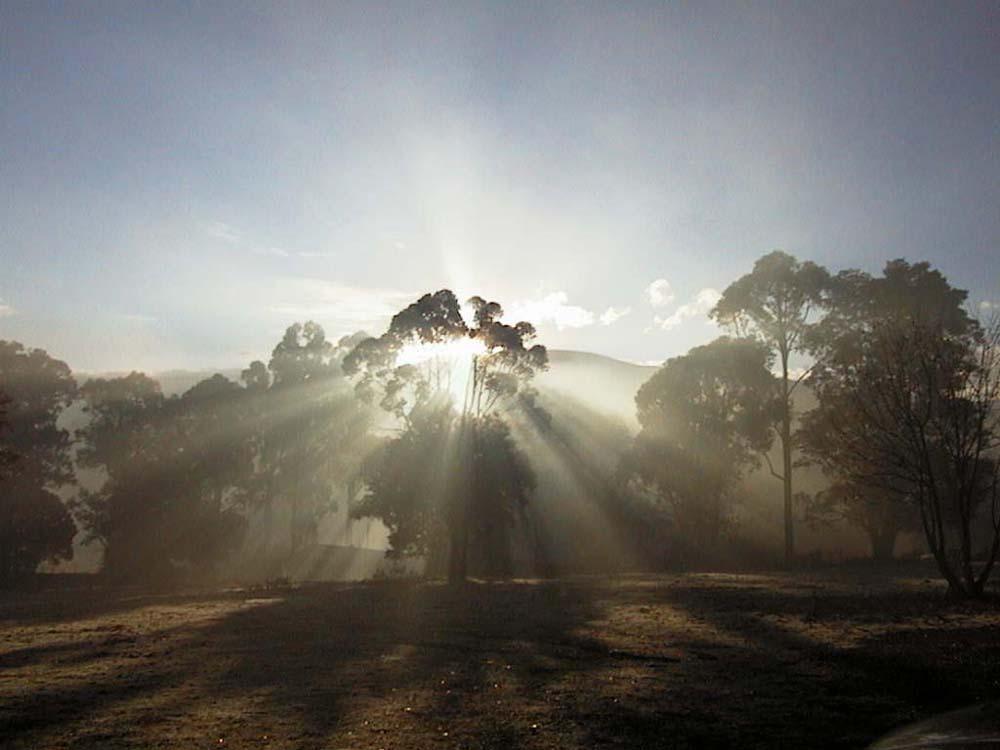
(Photo shows daybreak at Delderfield, Marysville, in country Victoria)


Shortened Names for Boys – 2

28 Sunday Sep 2014

Posted by A.O. in Name Themes and Lists

≈ 2 Comments

Tags

celebrity baby names, famous namesakes, fictional namesakes, Irish names, middle names, modern classic names, name history, name meaning, name popularity, names from television, names of mascots, nicknames, popular names, Scottish names, skateboarding terms, slang terms, surname names, UK name trends, underused modern classics, unisex names, US name trends

Zeke_06_s

Alby
Can be an Anglicised form of the Irish name Ailbhe, a unisex name which is also Anglicised to Alva and Elva. In Ireland particularly, Alby seems to have been used for girls quite frequently. In Australia, Alby is almost always understood as a short form of Albert, and is accepted as a boy’s name: it seems to be more familiar in Australia than in other English-speaking countries. A famous namesake is Albert “Alby” Lowerson, who was awarded the Victoria Cross for bravery during the Battle of Mont St. Quentin on the Western Front during the First World War. Adventure travel film-maker Alby Mangels, who made documentaries in the 1970s and ’80s, is originally from the Netherlands and his birth name is Albertus. Alby was fairly common as both a full name and a nickname in the late 19th century, and is currently having a revival, being around the 200s. It can also be spelled Albie, and this spelling is around the 500s.

Bobby
Pet form of Bob, which is short for Robert; it can also be used as a short form of Roberta, although far more common as a male name. Bobby has been used as an independent name since the 18th century, and is one of those names which seem part of our childhood, as it is such a popular name for characters in books for small children. There’s also the nursery rhyme, Bobby Shafto, and the sweet story of Greyfriars Bobby, the wee Scottish dog who stayed by his master’s grave for years and years. It has a fun meaning in Australia, because in old-fashioned slang, a bobby dazzler is something which is excellent or awesome (it’s probably from Northern English dialect, where bobby meant “well-presented, cheerful”). This year radio host Tim Ross welcomed a son named Bobby Arrow. A bouncy, breezy little name with vintage style, Bobby is around the 300s.

Charlie
Unisex nickname for either Charles or Charlotte. Charlie has been used as an independent name since the 17th century, and as a female name since the 18th century, where it seemed to have a particular usage for girls in Scotland. The big Scottish connection to this name is of course Bonnie Prince Charlie, the Jacobite pretender to the throne, who has remained a figure of romance in some eyes, and appears in Sir Walter Scott’s novel Waverley. It’s interesting that he seems to have inspired the use of Charlie as a girl’s name. There’s tons of famous Charlies, including actors Charlie Chaplin and Charlie Sheen, and musicians Charlie Parker and Charlie Watts, not to mention Charlie Bucket from Charlie and the Chocolate Factory, and Charlie Townsend from Charlie’s Angels. Charlie has charted for boys since the 1950s, and began rising in the 1990s before joining the Top 100 in the early 2000s. It’s currently #20, and fairly stable. As a girl’s name, Charlie joined the charts in the 1990s, and made the Top 100 in 2011. Although it’s not on the Top 100 for girls now, if you add it together with Charli and Charlee, it makes #71.

Freddie
Pet form of Fred, short for Frederick or Frederic, and related names, such as Frederico. It can also be used as a pet form of Alfred, as in the English actor Alfred “Freddie” Highmore, who played Charlie Bucket in Charlie and the Chocolate Factory. It also seems to be used as a nickname to match a surname starting with F, such as with English cricketer Andrew “Freddie” Flintoff, and rugby league player Brad “Freddy” Fittler. One of the most famous namesakes is Freddie Mercury, lead singer of rock band Queen; he was born Farrokh Bulsara, and had used the nickname Freddie since his school days. An independent name since the 18th century, Freddie is very popular in the UK, yet doesn’t chart at all here as a full name; neither does the variant spelling Freddy. It’s a bit puzzling since we’re fine with so many other boyish short forms, but Freddie is an insouciant charmer that I feel will win a few hearts yet.

Jimmy
Pet form of Jim, short for James. Jimmy has been used as an independent name since the 18th century, and is a more modern form of the medieval Jemmy. Famous namesakes include American president Jimmy Carter, actor Jimmy Stewart, rock star Jimmy Page, singer Jimmy Buffet, comedy hosts Jimmy Kimmel and Jimmy Fallon, and comedian Jimmy Carr. Musical Australian Jimmys include Jimmy Chi, who wrote the Aboriginal musical Bran Nue Day, Jimmy Barnes, lead singer of rock band Cold Chisel, and Aboriginal singer and actor Jimmy Little. Jimmy entered the charts in the 1950s at #344, and peaked in the 1990s at #233. It hit its lowest point in 2009 at #474, and since then seems to have been climbing steeply, although still around the 200s. This is a cheery underused modern classic that still has a touch of Everyboy about it.

Kit
Unisex nickname which can be short for the boy’s name Christopher, or the girl’s name Kitty (a pet form of Katherine). Kit is historically much more common for boys, and as an independent name, dates to the 18th century for both sexes. One of its most famous namesakes is American frontiersman Kit Carson, while British actor Kit Harington plays popular character Jon Snow on Game of Thrones, and British writer Kit Pedler created the Cybermen for Doctor Who. In Australia, Kit Denton was a writer and broadcaster who wrote the novel The Breaker, about Breaker Morant; he is the father of comedian and television host Andrew Denton. Media personality Chrissie Swan welcomed a son named Kit in 2011. A cute meaning is that a kit is a baby animal in many species, including rabbits and foxes, and is the name for a group of pigeons. This is a cool and casual name that works well as either a first or middle name.

Lenny
Traditionally a pet form of Leonard, although these days it is often used as a pet form of the fashionable Lennox. Some famous men named Lenny include rock singer Lenny Kravitz, and comedians Lenny Bruce and Lenny Henry. Australian namesakes include AFL star Lenny Hayes from St Kilda, who just retired this year, NRL player Lenny Magey from the North Queensland Cowboys, crime novelist Lenny Bartulin, and Len “Lenny” Pearce from Justice Crew, who was featured as a celebrity dad on the blog. There are famous Australian female Lennys too – Olympic badminton player Lenny Permana, who was born in Indonesia, and children’s author Lenny Pelling. Lenny has been chosen as a baby name by Australian celebrities AFL footballer Michael Firrito, and comedian Mick Molloy, and is used as a nickname for Lennox by radio host Ryan Fitzgerald and racing driver Jason Bright. A favourite in Australia (France is the only country where it’s more popular), Lenny is around the 100s, and could easily go Top 100.

Monty
Short for names such as Montgomery or Montague; surname names where the Mont- part is from the French for “mountain”. Monty became very well known as the nickname of Field Marshal Bernard Montgomery, who served with distinction in both world wars, but is especially famous as the decorated commander of the successful North African campaign in the Western Desert during World War II; Viscount Montgomery spent part of his childhood in Tasmania. His nickname was the inspiration for the British comedy group Monty Python, who found it amusing, and in their turn, Monty Python inspired the character of Dr Montgomery Montgomery, or Uncle Monty, a snake researcher in A Series of Unfortunate Events. Field Marshal Montgomery is rumoured to be behind the phrase the full monty, meaning “everything, the works, the whole kit and caboodle”, although it may actually refer to a complete suit from tailors Montague Burton (the phrase is familiar from the film, The Full Monty). Very much in line with British trends, Monty is around the 400s.

Ollie
Usually seen as a short form of Oliver, but could be a nickname for Olivia or Olive as well, and is sometimes used as a surname-based nickname, such as Australian composer Ian “Ollie” Olsen. Other famous Australians named Ollie include celebrity chef Ollie Gould, who was named Young Chef of the Year in 2013, and Ollie McGill, who is in the band The Cat Empire. Famous sporting namesakes include Ollie Wines, who plays for Port Adelaide in the AFL, Ollie Hoskins, who plays for the Western Force in Super Rugby, and Ollie Atkins, who used to play for the Waratahs in Super Rugby, and is currently signed with Edinburgh. Ollie has a connection with sports, because in skateboarding, an ollie is an oft-used trick where both rider and board jump into the air without the use of hands. It is named after its originator, Alan Gelfand, whose nickname is Ollie. An Australian sporting connection is Olly the Kookaburra, one of the mascots of the 2000 Sydney Olympics – his name was short for Olympic, and he symbolised the Olympic spirit. Ollie is around the 300s, and is in line with British trends, while having a strong Australian feel.

Zeke
Short for Ezekiel, a Hebrew name meaning “God strengthens”; it has more history of use in the United States, where the name Ezekiel has been far more common. It’s well known from popular culture, such as the Big Bad Wolf in Disney cartoons, skater boy Zeke Falcone from Disney sitcom Zeke and Luther, and baking-obsessed basketballer Zeke Baylor in High School Musical. Zeke is the name of the farmhand in The Wizard of Oz movie, who is also in the role the Cowardly Lion (this might explain why some people see Zeke as a “cowpoke” name). Famous Australian namesakes include former Olympic snowboarder Zeke Steggall, the brother of alpine ski champion Zali Steggall, and DJ Zeke Ugle. Zeke was also the nickname of Corporal Roy Mundine, an Indigenous soldier who served with distinction in the Vietnam War, and was severely wounded in the line of duty. Fictional namesakes include the teenage boy whose drawings on his magic electronic pad come to life on cartoon Zeke’s Pad, and the character Zeke Kinski from soap opera Neighbours. This is a cool alternative to Zack in line with American name trends, and is around the 400s.

POLL RESULTS
The public’s favourite names were Charlie, Kit and Alby, and their least favourite were Jimmy, Lenny and Bobby.

(Picture shows Zeke from Zeke’s Pad, a Canada-Australia co-produced animated TV show)

Famous Name: Sheila

24 Wednesday Sep 2014

Posted by A.O. in Famous Names

≈ 4 Comments

Tags

allegorical names, Australian slang terms, dated names, Gaelic names, Irish names, Irish slang, mythological names, name history, name meaning, name popularity, saints names, UK name popularity, US name popularity

GP-cover1-20140122172117554563-496x620

September 9 marked the 119th birthday of Sheila Chisholm (named Margaret, and always known by her middle name). It was a century ago that Sheila left Sydney for her grand tour of Europe. A striking beauty with short auburn hair, lovely complexion, and big hazel eyes, she had grown up on a sheep station in country New South Wales, and was an accomplished horsewoman, and daring swimmer, popular as a good dancer with a sense of humour.

Once arrived in England, Sheila barely had time to “come out” for her first London Season before war was declared, and she headed off to Cairo to nurse wounded soldiers. During the war, she married the eldest son of a Scottish earl, Lord Loughborough (“Luffy”), and became a fixture of smart London society in the Prince of Wales set, admired for her languorous beauty, calm presence, and exotic colonial background.

Her marriage deteriorated, as Luffy was a gambling addict and unfaithful (both were considered acceptable for a man of his class). Sheila also took lovers, amongst them Prince Albert, known to his friends as Bertie. Bertie was entranced by Sheila as soon as they met, and the two became inseparable. King George V naturally wasn’t thrilled, and demanded that Bertie end it: his obedience was rewarded with a dukedom, and he soon married Lady Elizabeth Bowes-Lyon. Bertie later became King George VI, the father of the present queen.

Sheila also received attention from married Russian prince Serge Obolensky, American billionaire Vincent Astor (Serge was his brother-in-law), and film star Rudolph Valentino. However, after her divorce she married English baronet Sir John Milbanke (“Buffles”), and continued her ascent in society. She threw lavish parties, and was friends with celebrities like actor Fred Astaire, socialites Lady Diana Cooper and Wallis Simpson, and writers Noel Coward, Nancy Mitford, and Evelyn Waugh (she gave Waugh the idea for The Loved One).

In the post-war years, after being widowed, she not only became a millionaire businesswoman in the travel industry, but married an exiled Russian prince who was the cousin of her old flame, Obolensky. Sheila was very happy in her marriage to Dmitri Romanoff, so ended her amazing life as a princess.

Sheila’s biography, by journalist Robert Wainwright, is called Sheila: The Australian beauty who bewitched British society. Just published this year, the author has hinted of a possible TV deal – “It’s Downton (Abbey) meets Neighbours“. Keep an eye out!

Sheila is an Anglicised form of the Irish name Síle or Sìle, a medieval Gaelic form of the name Celia (although often understood as a form of Cecilia). It has several variant spellings, including Sheelagh and Shelagh. Rather confusingly, the name Sheila has historically been hyper-Anglicised to Julia.

The name Sheila has a special place in Ireland’s history, because in the patriotic traditions of the 17th century, it was one of the allegorical female names used to stand for Ireland (like Erin and Kathleen). In ballads, Sheelagh is a feminine personification of Ireland, a sovereignty goddess who is wasting away as she lacks a royal suitor. In political pamphlets, Sheelagh was a lady whose health suffered due to the violence inflicted on her by “Mr Bull”.

According to folklore, Sheelah was the name of St Patrick’s wife, or in other traditions, his mother. Irish communities celebrated St Sheelah’s Day on March 18: some say it was a day to sober up, while others saw it as a chance to continue the celebrations. St Sheelah’s health was to be drunk in whiskey, and the shamrock was worn on her day also. St Sheelah’s Day has been associated with snow storms, and in many stories she becomes an old crone, who quarrels with St Patrick and puts a spell of bad weather on the country out of spite. This makes St Sheelah seem more of a weather goddess than anything else – she is certainly not very saintly!

Another Irish connection to the name is the mysterious Sheela na Gig – grotesque carvings of a naked woman displaying an exaggerated vulva. They are all over Europe, but particularly in Ireland; they are often found on churches, and like gargoyles, their hideous appearance is said to drive away evil spirits. The name Sheela na Gig is usually translated as something like “Sheela showing her vagina”.

It is thought that Sheela na Gig represents a Celtic pagan goddess, perhaps a divine hag, or fertility figure. It is hard not to be struck by the coincidence of a “hag” named Sheela and the crone-like St Sheelah, and many note the similarity in sound between Sheela and the Gaelic word sidhe (pronounced SHEE), referring to a race of fairy-like beings who are the remnants of gods and goddesses. All very evocative and enigmatic.

Another riddle is how the name Sheila became Australian slang to mean “woman, girlfriend”. The first use of the slang dates to 1822, and the usual explanation is that Sheila was a common Irish name, and so widespread amongst Irish emigrants to Australia that it became a de facto term to mean “Irish woman”, the female equivalent of Paddy for an Irish man.

However Dr Dymphna Lonergen, an academic who specialises in the Irish language in Australia, notes that this makes little sense. Sheila isn’t a common Irish name, and not even a single woman called Sheila was transported to Australia in the 18th century. There were much larger numbers of Irish emigrants to Britain and America than to Australia, and Sheila never became a generic term for an Irishwoman there – in the US, the term for an Irishwoman is Biddy, short for Bridget.

She suggests that the term derives from Irish slang, where Sìle was used as a derogatory term for a man judged to be weak or effeminate, overly fond of female society and domestic pursuits, or a homosexual (this last sense is a “taboo” word, or underworld slang). Presumably the slang quickly became transferred from “womanish men” to actual women.

Whether the word remained derogatory is still up for debate! However, Robert Wainwright says that the phrase “good looking sheila” dates to the 1920s – the time when Sheila Chisholm first became well known in society. Could this stunning, vivacious Australian woman have inspired its use? If so, it seems like a great compliment.

The name Sheila was #236 in the 1900s, but joined the Top 100 in the 1910s at #83. It peaked in the 1920s at #67, and by the 1930s was already out of the Top 100. It hasn’t charted since the 1950s, and can be seen as a “trendy” name of the 1910s and ’20s (the time when Sheila Chisholm was most in the Australian society pages, and before sheila became widely used slang).

Although it’s often thought as very Australian, the name Sheila enjoyed more popularity in the United States, where it was Top 100 from the 1940s to the 1970s, and peaked higher at #50. It only left the charts in the late 2000s. In the UK, it was far more popular still, and Top 100 from the 1920s (when Sheila Chisholm entered the social scene) to the 1960s (when she died), and peaked at #6 in the 1930s. Last year 10 baby girls in England/Wales were named Sheila, a number which has held steady since 1996.

Disappointed that nobody much in Australia seems to have been named Sheila since around the ’50s? Fear not, because modern variants of Sheila abound here, such as Shayla, Shaylah, Shailah, Shyla, and Shylah, influenced by names like Kayla and Skyla. If they were all added together as one name (even though they sound different), Sheila would be somewhere in in the 100s, so not really that rare at all.

POLL RESULTS
The name Sheila received an approval rating of 31%. People saw the name Sheila as too closely associated with the slang term (27%), and too dated (17%). However, 14% thought it seemed cool, retro, and deserving of a comeback. Only one person thought Sheila made a geat Irish heritage choice.

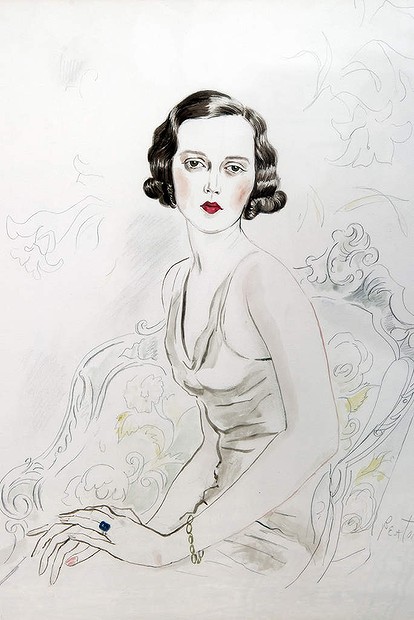
(Portrait of Sheila Chisholm by Cecil Beaton, held by the National Portrait Gallery in London, courtesy of the Rosslyn Family Estate)

Diminutive Names for Girls – 2

21 Sunday Sep 2014

Posted by A.O. in Name Themes and Lists

≈ 6 Comments

Tags

aristocratic names, celebrity baby names, famous namesakes, fictional namesakes, French names, Greek names, international name trends, Italian names, mythological names, name history, name meaning, name popularity, name trends, names from movies, names from television, names of mascots, popular names, retro names, royal names, saints names, Spanish names, unisex names

907393-underbelly-razor

It’s been more than a year since we had a list of short form names, and as this is a huge growth area, it’s time for another.

Ada
Short form of Adelaide and related names. It has been an independent name since the Middle Ages, and was used by royalty and the nobility; an example is the Ada who was reputedly the sister of Charlemagne. There is also a 7th century St Ada, who was a French nun and abbess. Ada was especially popular during the 19th century, and a famous namesake from this era is (Augusta) Ada King, Countess of Lovelace, a daughter of Lord Byron and his only child born in wedlock – nearly always known as Ada Lovelace. Ada was a gifted mathematician who produced an algorithm designed to be used by a machine; in effect, the first computer program. A famous contemporary example is Australian actress Ada Nicomedou. Ada was #40 in the 1900s, and left the Top 100 in the 1920s; it was off the charts by the 1950s. Ada made a comeback in the 1990s at #845, and is currently around the 300s. Fitting in perfectly with the trend for short simple names like Ava, and for traditional old-fashioned names like Elsie, this is a hip retro short form that not too many people are using.

Bella
Short form of Isabella, and other names ending in -bella, such as Annabella or Arabella. However, many people connect it to the Italian word for “beautiful”, and understand it that way. Bella has been an independent name since the Middle Ages, and has had particular use by Jewish families from Russia and Central Europe – two examples are American feminist Bella Abzug, and writer Bella Rosenfeld, the wife of Russian-French artist Marc Chagall. A famous Australian namesake is actress Bella Heathcote, best known for her role on Neighbours a few years ago. Bella first joined the charts in the 1990s at #541, rising on the heels of Isabella, which began its impressive ascent in the 1980s. Bella entered the Top 100 in 2002, debuting at #99; it peaked in 2010 at #41, and is currently #48 nationally. Like Isabella, Bella’s success is often attributed to the Twilight series, although as you can see, it was rising and even popular before the first novel was released in 2005. Stephenie Meyer’s Bella Swan (an irritating character name because it describes the story’s outcome) probably did help though, if only by increasing visibility.

Demi
Short form of the Greek name Demetria, the feminine form of Demetrius, which is derived from the name of the agricultural goddess Demeter. The goddess’ name is often translated as “earth mother” or “barley mother”. Demi is also sometimes connected with the French word demi, meaning “half”, to suggest “small” (as in half-pint). This name has a big dose of star power, thanks to Hollywood actress Demi Moore, and from a generation younger, pop singer and actress Demteria “Demi” Lovato. The name is usually pronounced duh-MEE, but English-speakers sometimes prefer it to be said to rhyme with Emmie. Demi is around the 500s in Australia, and is rising in the US, but falling in the UK, so international trends are at odds on this one.

Ellie
Short form of any name starting with El-, such as Eleanor, Ellen, Elizabeth, or Eloise, and long used as an independent name. It is well known from British pop singer Elena “Ellie” Goulding, and a favourite in the world of fiction. Fictional namesakes include the dainty little girl in The Water Babies, Ellie Linton, heroine of John Marsden’s Tomorrow When the War Began, Eleanor “Ellie” Arroway, brainy heroine of Carl Sagan’s Contact, adventurous Ellie Frederickson from Up, the woolly mammoth from the Ice Age series, and strong matriarch Eleanor “Miss Ellie” Ewing, from Dallas. Ellie joined the charts in the 1980s at #349, and was in the Top 100 as early as 1993, at #98. It managed to get in again a decade later in 2003, at #72, and has remained fairly stable in the bottom half of the Top 100 ever since. Currently it is #56. Ellie fits in perfectly with popular names like Ella, and is well-used without being overly common or rising alarmingly.

Frankie
Unisex nickname that in the case of boys is a pet form of Francis, Francesco, Francisco, Frank, or Franklin, and in the case of girls, of Frances, Francesca, Francisca, or Francine. Famous male Frankies include American crooner Frankie Valli, British comedian Frankie Howerd, American actor Frankie Muniz, who played the title role in Malcolm in the Middle, and Australian kick-boxer Frankie Georgi. A famous female Frankie is British pop singer Frankie Sandford, and the name has been chosen for their daughters by several celebrities, including Drew Barrymore, and in Australia by rugby league star Johnathan Thurston, weather presenter Sara Cumming, and news presenter Rebecca Morse. In the US, Frankie only charts for boys, while in the UK, it charts for both sexes, but is only popular as a boy’s name. In Australia, Frankie is a unisex name, and significantly more common for girls. The reason for its increasingly feminine image here is no doubt because of the hip women’s fashion magazine, frankie.

Gigi
French nickname for any name with a G sound, such as Georgine or Ghislaine. Its most famous namesake is the charming Parisian schoolgirl in Colette’s 1942 novella, Gigi, who is being trained to be a courtesan by her family. Their plans go awry when the gamine Gigi attracts a wealthy older man, and becomes his wife instead of his mistress. It has been turned into a musical and a couple of films, including the 1958 Hollywood production starring Leslie Caron as Gigi, which is surprisingly faithful to the book, except for discreetly upping Gigi’s age from twelve to around sixteen, and adding songs like Thank Heavens For Little Girls. Gigi’s name is short for Gilberte, by the way. In Italy it is a male nickname, short for Luigi. An Australian with this name is actress Gigi Edgely, who has starred in Farscape. A flirty French Lolita, Gigi is currently a hip girl’s name in the style of Coco. It was recently chosen as a celebrity baby name by swimmer Geoff Huegill.

Millie
Short for any name with a mil sound, such as Millicent, Mildred, Camilla, Emilia, or Amelia, and is also spelled Milly. You can see Millie as a vintage charmer, all bonnets and hoop skirts, but there’s also something a little Swinging Sixties about it, thanks to My Boy Lollipop, sung by Millie Small, and the 1967 film Thoroughly Modern Millie, starring Julie Andrews. It has a very Australian connection as Millie the Echidna was one of the official mascots for the Sydney Olympics (her name is short for Millenium). Millie was #196 in the 1900s, and left the charts in the 1930s. It returned in the 1990s at #501, had a definite upsurge after the 2000 Olympics, and in 2011 was only just outside the Top 100, its highest point ever gained. It fits in perfectly with popular names like Milla and Mila, and is right on trend for sprightly vintage names, so it feels as if popularity must be just around the corner for suddenly modern-again Millie.

Stevie
Unisex nickname for either the boys’ name Stephen or Steven, or the girl’s name Stephanie; these are Greek in origin, and mean “crown”. Stevie has been an independent name since the Middle Ages, and although you might think of it as very modern for girls, it’s been a female name since the 18th century. Famous male Stevies include Stevie Wonder, Stevie Ray Vaughan, and Australia’s first international pop star, Stevie Wright. A famous female one is English novelist and confessional poet Stevie Smith, whose real name was Florence, and who gained her nickname from a perceived resemblance to jockey Steve Donaghue. However, the most well known female example is singer-songwriter Stevie Nicks, and it is no doubt her popularity in the 1970s and 1980s which made Stevie seem more feminine. In Australia, Stevie can be only be found in current use as a girl’s name, and it’s around the 300s. While writing this, I realised what a musical name Stevie is – look at all those namesakes from the world of pop and rock!

Tess
Short form of Teresa or Theresa, a rather mysterious name, because the various meanings suggested for it are always Greek, but the name itself is of Spanish origin. Nobody has been able to explain this to my satisfaction. Tess has a very famous literary namesake, the beautiful, tormented title character of Thomas Hardy’s rural tragedy, Tess of the D’Urbervilles. Tess Harding is the celebrated journalist trying to cope with marriage as well as a career in rom-com classic Woman of the Year (1941), with Tess played by Katharine Hepburn in her first outing with Spencer Tracy. Another Tracy connection is the adorably-named Tess Trueheart, eventual wife of comic strip detective, Dick Tracy. Tess Mcleod is one of the sisters in Australian drama series McLeod’s Daughters, played by the popular Bridie Carter. Last year comedian Dave Hughes welcomed a daughter named Tess Clementine, voted the most popular celebrity baby name of 2013. Tess joined the charts in the 1980s at #352, and peaked in the early 2000s at #209. Simple yet strong, pert and practical, Tess is a short and stylish choice.

Tilly
Short for Matilda, this can also be spelled Tillie. Apart from being a short form of a patriotic name, Tilly has a notorious namesake in Australia. Tilly Devine was an infamous figure of the Sydney underworld between the two world wars, who became known first as a prostitute, then as a brothel madam and gang member. Her wealth was legendary – she owned real estate, luxury cars, gold and diamonds, threw lavish parties, and always travelled first class. Operating out of Woolloomooloo, Tilly was known as the “Queen of the ‘Loo”, and in the 1953 travelled to London for the coronation of Queen Elizabeth II. Tilly’s story, and her violent gang war with rival vice queen Kate Leigh, was covered in Channel Nine’s drama series, Underbelly: Razor. Tilly is around the 100s in Australia, so not rare at all, while Tillie does not chart. It is something of a puzzle as to why Millie is preferred to Milly, but Tilly preferred to Tillie. Tilly is a sweet and spunky short form in line with British name trends, with an Australian identity all its own.

Thank you to Brooke for suggesting the name Millie be featured on Waltzing More Than Matilda.

POLL RESULTS

The public’s favourite names were Ada, Tess and Millie, and their least favourite were Frankie, Stevie and Bella.

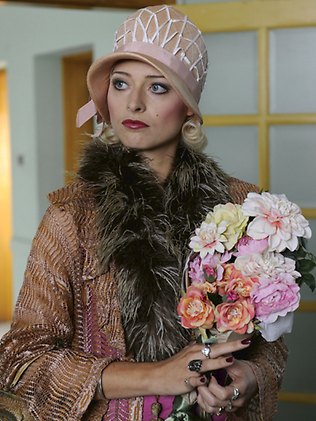
(Photo shows New Zealand actress Chelsie Preston Crayford as Tilly Devine in Underbelly: Razor)

Famous Name: Bruce

17 Wednesday Sep 2014

Posted by A.O. in Famous Names

≈ 7 Comments

Tags

aristocratic surnames, classic names, famous namesakes, fictional namesakes, locational names, name history, name meaning, name popularity, names from songs, names from television, Norman-French names, popular culture, royal names, Scottish names, surname names, UK popularity, US popularity

288848_1250988033522_full

When the name Acacia was featured for Wattle Day, I mentioned that Monty Python made gentle fun of our national flower with their Bruces Sketch, where all the philosophy faculty at the (fictional) University of Woolloomooloo are named Bruce. This seems to be the origin of the notion that Bruce is a particularly Australian name.

Barry Humphries has said that the inspiration for the Bruces Sketch was his Barry Mackenzie character, who began life as a comic strip in Private Eye. Barry Humphries’ television series, The Barry Humphries Scandals, was a precursor to Monty Python, and Eric Idle has cited Humphries as one of his comedy influences.

It’s rumoured, not implausibly, that Humphries himself suggested the name Bruce as an Australian signifier, either directly or indirectly. The name Bruce peaked in Australia in the 1930s, and in Britain slightly later, in the 1940s. Even at its height in the UK, it was only around the bottom of the Top 100, so it wasn’t nearly as common there.

Humphries was born in 1934, so had peers called Bruce. The most obvious example is Australian director Bruce Beresford (born 1940), who directed the Barry Mackenzie films. Like Barry Humphries, Bruce went to England in search of career opportunities, but was unable to break into the British film industry, and found success at home, with movies like Breaker Morant and Puberty Blues, and in North America with Driving Miss Daisy, and Black Robe.

The connection between Barry and Bruce continued when Humphries took the role of a great white shark named Bruce in the animated film, Finding Nemo. The American film-makers named Bruce, primarily not as an Australian reference, but after the shark in Jaws, whose models were all called Bruce after Steven Spielberg’s lawyer. Bruce the Shark does have an Australian accent though, and uses ockerisms like “Good on ya, mate!”.

From the United States, the name Bruce gained a different stereotype, being associated with homosexuality. The reasons are unclear, but one of the most popular theories is that it’s connected to the campy Batman television shows of the 1960s, as Batman’s real name is Bruce Wayne. Another is that it is from the 1960s parody song Big Bruce, where Bruce is a camp hairdresser.

Apart from these reasons, it does seem that the “tough guy” names of one generation are often seen as effeminate, dorky, or otherwise laughable by the next. Something to think about should you be considering one of today’s rugged baby names, such as Axel, Blade, Diesel, or Rowdy.

Bruce is a Scottish surname of Norman-French origin. The Clan Bruce are from Kincardine on the Firth of Forth in Scotland, and trace their origins from the French de Brus or de Bruis, coming from Breux in Normandy (now Brix), sometimes said to mean “the willow lands”. This history and etymology is now considered doubtful, due to lack of evidence.

The first of the family on record to come to Britain was Robert de Brus, who accompanied King Henry I there after the Battle of Tinchbray in 1106. He was granted large tracts of land in Yorkshire, and named 1st Lord of Annandale by King David I of Scotland in 1124. A family legend says that the first of their line was Robert de Brus, who came over with William the Conqueror but this is more wishful thinking than fact.

Of course the most famous member of Clan Bruce was Robert the Bruce, King of the Scots from 1306 to 1329, claiming royal blood as great-great-great-great grandson of David I. One of the most famous warriors of his generation, he led Scotland during the Wars of Scottish Independence against England. He fought successfully during his reign to regain Scotland’s place as an independent nation, with a great victory at the Battle of Bannockburn. Today he is remembered in Scotland as a national hero.

According to a popular legend, while on the run from the English, Robert the Bruce took shelter in a cave. Here he whiled away the lonely hours watching a spider trying to connect one area of the cave’s roof to another using its web. Each time the spider would fail, but kept trying until at last it succeeded Inspired by the plucky little arachnid, Robert the Bruce returned to defeat the English, winning more supporters, and eventual victory. If you ever read this story as a child, it probably ended by saying the moral was :”If at first you don’t succeed, try, try, and try again”.

This story was first told by Sir Walter Scott in in his Tales of a Grandfather: Being Stories of the History of Scotland (1828), and it is believed to have been adapted from a story about Sir James Douglas, Robert the Bruce’s ally and lieutenant. However, the story is very old, being similar to Jewish tales about King David, and Persian stories about Tamerlane and an ant. Apparently people love the idea of beleaguered rulers being inspired by small creatures with exoskeletons.

Robert the Bruce was the high point of the Clan Bruce, although Robert’s son David also became King of Scotland. Various Bruces did historically worthy things, and one of the most famous is Thomas Bruce, 7th Earl of Elgin, who was ambassador to the Ottoman Empire in the 18th and 19th centuries. He spent most of his fortune taking sculptures from the Parthenon in Athens, which was falling into ruins: today they are known as the Elgin Marbles, and on display in the British Museum.

Bruce has been used as a first name since the 17th century, and was used in both England and Scotland. Although it has plenty of history, Bruce didn’t become a huge success as a boy’s name until the 20th century, which gives it a rather modern feel.

In Australia, Bruce is a classic name which has never left the charts. It was #85 in the 1900s, and peaked in the 1930s at #22. It didn’t leave the Top 100 until the 1970s – perhaps Monty Python wasn’t a help to it, or perhaps after many decades its time of popularity was up. Although uncommon, Bruce has remained stable for years around the 400-500s.

So how Australian is the name Bruce really? Well, apart from the Monty Python sketch (which is, you know, fiction), it peaked earlier here than elsewhere, and peaked much higher than in Britain. However, it peaked only a little higher than in the US, where it is also a classic, and peaked at #25 during the 1950s. Its current popularity in Australia is little different to that in the UK and US, so possibly not quite as Australian as you might have thought!

POLL RESULTS
Bruce received an approval rating of 32%. People saw the name Bruce as too dated (25%), too stereotypically ocker (19%), and too boring (14%). However, 8% of people thought it was strong and handsome. Only one person thought the name Bruce was sexy.

(Photo shows Bruce from Finding Nemo)

Famous Name: Laniakea

10 Wednesday Sep 2014

Posted by A.O. in Famous Names

≈ 2 Comments

Tags

American names, astronomical names, Hawaiian names, locational names, name history, name meaning, nicknames, polynesian names

SPACE-TRIANGULUM-GALAXY-MESSIER 33

Do you remember being very young and beginning to discover how where you lived fit into the world? Maybe you realised the number on your front gate was part of your address, or found that the street you lived on was one of many streets in a suburb, and that suburb was in a city with thousands or even millions of people. Perhaps you saw Australia on a world map for the first time, and could see its relation to other countries – didn’t it look far away from anywhere else?

In time you learned that you were on a planet called Earth, and when you were taught about the solar system, discovered that the Earth was really quite small, and a long, long way away from other planets. And that we all revolved around a Sun which was a star, not a very big one, and one of around 100 thousand million in the Milky Way – one of more than a 100 billion galaxies in our universe.

I don’t know about you, but when I learned all this in astronomy class, it totally blew my mind. The same way it blew my mind when I was a toddler and began to gradually understand that our farm was one of many in our hamlet, and that we were all part of a town 25 km away, and the regional centre was 50 km away, and the state capital 300 km away, and the nation’s capital a great distance, and the next country even further than that, across the sea. It made me feel very small and a long way from everything.

And when you were little, did you ever write down your address in this fashion: My Bedroom, 11 Acacia Road, Seaforth, Manly, Northern Beaches, Sydney, Cumberland County, New South Wales, Australia, Oceania, Southern Hemisphere, The Earth, The Solar System, The Milky Way, The Universe? Now there’s an another element to add to the address.

Astronomers have known for ages that the Milky Way is part of a larger cosmic structure, but it was too hard to figure where one group of galaxies ended and the next began. Recently a team of astronomers at the University of Hawaii, led by Brent Tully, have gathered measurements allowing scientists to define superclusters of galaxies. Their work, published this month in Nature, describes the vast group of galaxies to which the Milky Way belongs.

The name of our particular galactic supercluster is Laniakea, which is 520 million light years in diameter, and contains one hundred million billions Suns spread across 100 000 galaxies. The Milky Way is right on the fringes of Laniakea, on the edge of a vast empty region of space known as the Local Void, but we are constantly pulled towards a gravitational force in Laniakea’s centre which scientists have dubbed The Great Attractor.

Within the Laniakea Supercluster, we are part of the Virgo Local Supercluster, and beyond it are the neighbouring superclusters of Hercules, Coma, and Perseus-Pisces. Just as with the original problem of defining the edges of galaxies, it is not yet clearly known where the edges of Laniakea end and the edges of these other superclusters begin.

One surprise was that the Laniakea Supercluster is being pulled by a larger concentration of galaxies called the Shapley Supercluster, so we may be part of even greater structures that are yet to be discovered. Thus our universe expands as knowledge and comprehension grows.

Brent Tully, who has helped create our new map of the Milky Way’s environs, says: Seeing a map gives you a sense of place. For me, having that sense of place and seeing the relationship of things is very important in terms of understanding it. Thanks to Tully and his team, we have gained another insight into our place in the universe – and how small we are, and what a long way from everything.

The name Laniakea was suggested by Nawa’a Napoleon, associate professor of Hawaiian Language at Kapiolani Community College. The Hawaiian name can be translated in a number of ways, including “open skies”, “wide sky”, or “wide horizons”, but in this case it is understood as “immeasurable heavens”. The name was chosen to honour Polynesian navigators who studied the heavens in order to navigate the Pacific Ocean.

Laniakea is pronounced LAN-ee-uh-KAY-uh in the video from Nature I watched, although I have seen it written as la-NEE-uh-KAY-uh. It is well known in Hawaii, as it is the name of a surf beach famous for its sea turtles, and the name has been used for numerous businesses in the area. It does get very occasional use as a personal name, and although it is technically unisex, seems to have only been given to girls. Lani, Nia, and Kea are the obvious nicknames.

This is an elaborate Polynesian name which is unusual, but seems very usable in Australia, which has a significant Pacific Islander population, and where several Polynesian names are familiar. The short forms are very much on trend here.

While Laniakea has had some use as a Hawaiian name for girls, Hawaii has shared the name with the whole planet, and it now belongs to all of us. It’s not just a beautiful beach on the shores of a great ocean, but a multitude of galaxies whirling through the immensity of space, the “immeasurable heavens”. And it is our home.

POLL RESULTS
Laniakea received a very good approval rating of 72%. People saw the name Laniakea as beautiful or pretty (21%), having a cool cosmic connection (20%), and having a fantastic meaning (19%). However, 15% of people thought it was too long and complex. Only one person thought the astronomical background made the name Laniakea seem geeky.

← Older posts
Newer posts →

Enter your email address to follow this blog

Categories

Archives

Recent Comments

A.O.'s avatarwaltzingmorethanmati… on Zarah Zaynab and Wolfgang…
Madelyn's avatarMadelyn on Zarah Zaynab and Wolfgang…
JD's avatardrperegrine on Can Phoebe Complete This …
A.O.'s avatarwaltzingmorethanmati… on Rua and Rhoa
redrover23's avatarredrover23 on Rua and Rhoa

Blogroll

  • Appellation Mountain
  • Baby Name Pondering
  • Babynamelover's Blog
  • British Baby Names
  • Clare's Name News
  • For Real Baby Names
  • Geek Baby Names
  • Name Candy
  • Nameberry
  • Nancy's Baby Names
  • Ren's Baby Name Blog
  • Sancta Nomina
  • Swistle: Baby Names
  • The Art of Naming
  • The Baby Name Wizard
  • The Beauty of Names
  • Tulip By Any Name

RSS Feed

  • RSS - Posts

RSS Posts

  • Celebrity Baby News: Melanie Vallejo and Matt Kingston
  • Names from the TV Show “Cleverman”
  • Can Phoebe Complete This Sibset?
  • Zarah Zaynab and Wolfgang Winter
  • Baby, How Did You Get That Name?
  • Celebrity Baby News: Media Babies
  • Celebrity Baby News: Adelaide Crows Babies
  • Celebrity Baby News: Chris and Rebecca Judd
  • Names at Work: Name News From the World of Business and Employment
  • Celebrity Baby News: Sporting Round Up

Currently Popular

  • Celebrity Baby News: Toby Allen and Darren Weller
  • Girls Names From Native Australian Flowers
  • Girls Names of Australian Aboriginal Origin
  • Rare Boys Names From the 1950s
  • The Top 100 Names of the 1920s in New South Wales

Tags

celebrity baby names celebrity sibsets english names famous namesakes fictional namesakes honouring locational names middle names name combinations name history name meaning name popularity name trends nicknames popular names saints names sibsets surname names twin sets unisex names

Create a free website or blog at WordPress.com.

Privacy & Cookies: This site uses cookies. By continuing to use this website, you agree to their use.
To find out more, including how to control cookies, see here: Cookie Policy
  • Subscribe Subscribed
    • Waltzing More Than Matilda
    • Join 517 other subscribers
    • Already have a WordPress.com account? Log in now.
    • Waltzing More Than Matilda
    • Subscribe Subscribed
    • Sign up
    • Log in
    • Report this content
    • View site in Reader
    • Manage subscriptions
    • Collapse this bar
 

Loading Comments...