• About
  • Best Baby Names
  • Celebrity Baby Names
  • Celebrity Baby Names – Current
  • Celebrity Baby Names – Past
  • Featured Boys Names
  • Featured Girls Names
  • Featured Unisex Names
  • Links to Name Data
  • Waltzing on the Web

Waltzing More Than Matilda

~ Names with an Australian Bias of Democratic Temper

Waltzing More Than Matilda

Tag Archives: middle names

Waltzing With … Paddington

14 Sunday Dec 2014

Posted by A.O. in Waltzing with ...

≈ Comments Off on Waltzing With … Paddington

Tags

Anglo-Saxon names, animal names, english names, fictional namesakes, historical records, locational names, middle names, name history, name meaning, names from movies, names of bears, names of railway stations, nicknames, Old English names, surname names
878C4533-F2F5-0278-FDA4E92FE00A3CE8_m

Family movies as a Christmas season treat is a tradition I really look forward to, and already we have been to see two films based on children’s books with Australian stars: Alexander and the Terrible, Horrible, No Good, Very Bad Day, with Ed Oxenbould as the hero Alexander, and Paddington, with Nicole Kidman as the villain Millicent.

Paddington is surely Britain’s favourite illegal immigrant – a polite stowaway bear from darkest Peru with a penchant for marmalade sandwiches, who is found by the Brown family at a railway station, with a note reading: Please look after this bear. The Browns take the bear home to 32 Windsor Gardens and name him Paddington, after the railway station where they found him (his Peruvian name of Pastuso is apparently too difficult for English-speakers to pronounce).

Michael Bond was inspired to write the Paddington stories by a lonely-looking teddy bear he bought as a present for his wife, and named after the railway station close to their home. The first book was written in the 1950s, and Michael Bond was influenced by his memories of evacuated children during the war, often left at railway stations with a label around their necks to identify them. Surely he was also influenced by increased post-war immigration to London – Paddington’s best friend is a Hungarian shopkeeper.

Without giving away too many spoilers, the movie has all the warm-hearted charm and humour of the books, including lots of jokes for the adults watching. However, it has a touch more darkness and a lot more adventure (much needed, as the books’ big adventures tend to revolve around going to the shops or the cinema). Somehow the movie manages to have some of the books’ sadness, because despite the comedic chaos, there was always a poignancy to Paddington’s situation.

Paddington is a district of central London which began as a Saxon village on the city’s outskirts. Even in the early 19th century, Paddington was surrounded by open fields and meadows.

For many years, the area had a dark connection, because it was in this neighbourhood that the notorious Tyburn Tree, or gallows, was set up. This was the main place for public executions from medieval times to the late 18th century, a spectacle which attracted thousands. A “Paddington Fair Day” meant an execution day, while “to dance the Paddington Frisk” meant to be hanged.

Paddington’s development began in the 19th century, with the canal and the railway station. Paddington Station was designed by the famous engineer Isambard Kingdom Brunel, and today there is a statue of Paddington Bear on platform 1. You can also buy a Paddington Bear stuffed toy from Paddington station, with a label asking you to please take care of this bear. These toys were first created by Jeremy Clarkson’s mother, making enough money to send Jeremy to a private school, and also providing him with his first job as Paddington Bear salesman.

The Victorian era was Paddington’s heyday, when it was described as a “city of palaces”. With its grand terraced houses overlooking Hyde Park, and its garden squares, it became a highly fashionable address. Many famous people have lived in Paddington, including Robert Browning and Winston Churchill, and more recently, Emma Thompson and Tony Blair.

The name Paddington is believed to mean “Padda’s farm”. Padda doesn’t seem to have been a common Anglo-Saxon name, but enough examples exist to show it is genuine. The meaning is not certain (it may be a variant spelling or shortening of another name), but one theory is that it came from the Old English word pad, meaning “toad”. Toads were considered magical creatures in ancient Europe (we still think of witches and wizards as having toads for familiars), and this makes me wonder if the name Paddington is a little more mystical than it might appear at first sight.

Paddington is also an inner-city suburb of Sydney, about 3 km from the CBD, and named after the London area because of its similarly close proximity to the city centre. When the Victoria Barracks army base was built here in the 19th century, the village of Paddington sprung up to house artisans and labourers who worked to build the barracks. It grew rapidly, with large estates filled with terraced housing, and by the early twentieth century was thriving.

During the Great Depression, Paddington became a slum, but after World War II its fortunes changed as European migrants moved in to the suburb, finding it cheap and conveniently located. In the 1960s, students and artists arrived to add bohemian flair, and it also became part of the gay “scene”, with the first Mardi Gras parade marching proudly down Oxford Street in 1978.

As the suburb became gentrified, Paddington’s Victorian architecture meant that it was protected as a heritage area, and these days “Paddo” is fashionable and upmarket. The main streets are filled with art galleries, trendy stores, boutiques, antiques, and interior designers, while artists and craftspeople hawk their wares every weekend at Paddington Market.

There is another Paddington in Brisbane, which is likewise inner city, and has a similar history to the one in Sydney. There is also a gold mine in Western Australia called Paddington.

The name Paddington is not often found in historical records, but use goes back to the 18th century, and is almost certainly prompted by the surname Paddington rather than directly after the place in London. It is much more common as a middle name, and in Australian records, is found extremely rarely, and only as a middle name.

So that’s Paddington – a rare name, but a genuine one, with some history of use even in Australia. It is very closely associated with the famous bear, but that might be exactly the reason a Paddington fan wants to use the name, and Paddington is such a nice bear. In Australia it will remind people of the Sydney suburb, but again, it’s a fashionable area with positive associations.

When I did a couple of minutes idle searching online, I found not just one, but two people considering the name Paddington for a baby – one of them Australian. I have to admit their tentative idea was shot down pretty hard by others, so there doesn’t seem to be much support for the idea of a baby named Paddington.

However, I think it could make an awesome middle name, and if you have your heart set on a little Paddington, Paddy would make a cute nickname. Far be it from me to tell people not to name children after fictional bears.

POLL RESULT
Paddington received an approval rating of 63%. 36% of people didn’t mind the name Paddington, but 24% disliked it. Less than 10% of people loved the name.

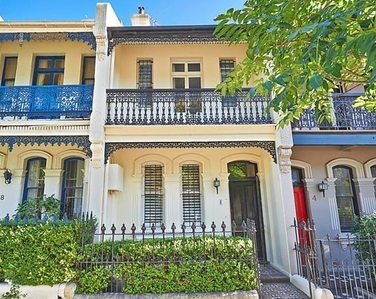
(Photo shows terrace housing in Paddington, Sydney)

Famous Names: Heston and Tex

10 Wednesday Dec 2014

Posted by A.O. in Famous Names

≈ Comments Off on Famous Names: Heston and Tex

Tags

American names, birth notices, code names, controversial names, english names, famous namesakes, historical records, locational names, middle names, name history, name meaning, name popularity, name trends, names of American states, Native American names, nicknames, Old English names, rare names, screen names, surname names, UK name popularity, unisex names, US name popularity

653922-f8a752f2-67cc-11e4-b8fc-0b9f02c7ac0d

In 2014 Melbourne was named the world’s most liveable city by the Economist Intelligence Unit for the fourth year in a row. Their annual survey rates 140 cities out of 100 in healthcare, education, stability, culture and environment, and infrastructure, and Melbourne received 97.5 overall, with perfect scores in healthcare, education, and infrastructure.

To celebrate Melbourne’s continuing success, I thought we’d look at two names that have recently made the news there. Melbourne is not only a very cultured city, it’s also rather quirky, so I picked a couple of cultured, quirky guys.

HESTON
Heston Blumenthal is a multi award-winning British chef at the forefront of the “New Cookery”. Inspired by the playful nature of historic British cuisine, he follows a rigorously scientific approach to cooking, and has unleashed on an appreciative public such delicacies as snail porridge, chocolate wine, and bacon and egg ice cream.

Well known from his television shows, Heston has also been a celebrity chef on MasterChef Australia, been a guest at food festivals in Australia, and you can also buy his products through Coles (maybe you have already purchased one of his Christmas puddings). A great admirer of Australia, Heston has told Britons of Aussie food trends they should copy, including charcoal chicken, Tim Tams, quality beef, street food, and good coffee [article expired].

Early this year it was announced his triple Michelin-starred restaurant The Fat Duck, recognised as the best in Britain, will be temporarily relocated to Melbourne’s Crown Casino next February. He made a savvy move taking The Fat Duck to Melbourne, which has a marvellous foodie culture. The tasting menu is $525 per person (not including drinks), making The Fat Duck the most expensive eatery in Melbourne, more than twice as pricey as its current premier restaurant, Shannon Bennett‘s Vue du Monde.

Despite this hefty price tag, demand was so strong that a ballot system was introduced, with potential patrons having to register before the end of October. Unfortunately some scammers managed to hack into the ballot system, and are now scalping reservations for up to $1000 (you still have to pay for your food on top of that). However, never fear people with more than $1500 to spend on one meal, after six months the restaurant will morph into Dinner by Heston Blumenthal.

Heston is an English surname which comes from a place name; originally a Saxon village, Heston is now a suburb of west London. One of its claims to fame is that British prime minister Neville Chamberlain flew from Heston Aerodrome to Germany in 1938 for uselessly appeasing talks with Adolf Hitler. Naturalist Sir Joseph Banks, who discovered so many species of Australian plants and has the banksia flower named after him, is buried at St Leonards church in Heston.

Heston is usually thought to mean “enclosed settlement” in Old English, because it was part of an area surrounded by forest and woodland. For the same reason, another theory is that it meant “brushwood farm”.

The surname is strongly associated with Hollywood legend Charlton Heston, who starred in films such as The Ten Commandments, Ben-Hur, and Planet of the Apes. Born John Charles Carter, and known as Chuck or Charlie, he created his screen name by combining his mother’s maiden name, Charlton, with his stepfather’s surname.

Heston Blumenthal (who wasn’t rapt with his name as a child) asked his mother if he had been named after Charlton Heston, but she replied that she simply liked the name. When asked about the origins of his name, Blumenthal joked that perhaps his parents had a night out in London and parked at Heston Services (a motorway service station). The headline on the front cover of The Times was Top Chef Named After Parents’ Love of Motorway Services, requiring many apologies from Heston to his mum and dad.

Heston may be unusual, but it is by no means unique, being found thousands of times in historical records going back to the 16th century. There are a few examples of Heston being used as a first name in Australian records, although it is more common in the middle.

It’s a surname name for boys which is is rare yet on trend, and seems pretty cool, although I do think it will instantly remind everyone of the chef. Just like Mrs Blumenthal, you may be required to repeat that you just liked the name. Heston has also highlighted another issue with his name – American actress Tina Fey told him it translates as “shit on you” in Greek, so this is a name which does not travel well, at least not to Greece.

TEX
Tex Perkins is an Australian rock star, best known for fronting The Beasts of Bourbon and The Cruel Sea, but part of many other innovative musical acts. Recently he threw his hat in the ring as an independent candidate for the marginal seat of Albert Park in last month’s state election. His single policy? To get funding for the Palais Theatre in St. Kilda, a heritage-listed concert venue which needs a $40 million refurbishment.

Having gained the sitting Labor candidate’s promise of partial funding if he was elected, Tex directed his preferences to the ALP, then told people not to vote for him, but for Labor instead, and on election day, his How to Vote card instructed them to place the ALP first on the ballot paper. That’s taking self-effacement to a new level. His plan worked – Labor was elected, both in Albert Park and across the state. Let’s hope they honour their promise to the Palais. (Tex still got more than 1000 votes).

Tex is a nickname which is short for Texas, the US state. The state’s name comes from a Native American word in the Caddo language, tejas, meaning “friends, allies”. It was the name the Spanish called the Caddo, and the land they lived on, in today’s East Texas.

There is a Texas in Australia too, a town in southern Queensland. It is said that the name came about because of a territorial dispute between the owners of the land and some squatters – once the legalities were sorted out, the owners humorously called their land Texas because the United States and Mexico had a dispute over Texas, settled by the Mexican-American war. The town of Texas has featured in several country music songs, including one by James Blundell, who has spent quite a bit of time there.

The nickname Tex can be given to someone from the state of Texas, but can also be taken as a code name, and is a favourite for people with a cowboy, country, or Western persona, such as country music stars, cowboy actors, and rodeo promoters.

British soldier Keith “Tex” Banwell was the son of an Australian soldier, and lived in Australia for a few years as a child. A World War II hero who acted as General Montgomery’s double, he helped the Dutch Resistance, and was taken prisoner a few times, spending several months in Auschwitz after refusing to betray his friends. A character straight out of an adventure novel, Tex was his wartime code name.

Tex Morton (born Robert Lane) was a country music pioneer in New Zealand and Australia, and had a career that lasted from the 1930s to the 1970s. Dubbed the Singing Cowboy Sensation, the New Zealand-born yodelling whipcracker and sharpshooter performed at the Grand Old Opry and was a major contributor to the Australian country music scene. Tex Perkins (born Gregory Perkins) followed this lead, as he began in cowpunk, and has taken a Johnny Cash tribute show on the road.

Tex was in the US Top 1000 around the 1940s, but is now a rare name – only 11 boys were named Tex last year, although a further 11 were named Texas, perhaps called Tex on an everyday basis. It’s even less common in the UK, where less than three boys (maybe none) have ever been named Tex, although 19 girls (a meteoric rise) were named Texas, and maybe have Tex as a nickname.

In Victoria, 6 boys were named Tex in 2012, and it’s a name I see fairly regularly in birth notices; to me it seems as if the numbers might even have risen. Perhaps Tex Perkins is helping the name along, although I don’t know if any have actually been named in honour of the rock star. Tex is a great little nickname name, with a cool X-ending like Max, Rex, or Fox. It has a bit of a cowboy feel to it, although Tex Perkins makes it seem a bit rockstar too.

Two cool, charismatic boys names that are a little out of the ordinary – but which one do you prefer?

POLL RESULTS
Both Heston and Tex received approval ratings of 40%, but more people loved the name Tex.

(Picture shows Tex Perkins outside the Palais Theatre; photo from the Herald Sun)

Their Baby Girl Has a Name!

01 Monday Dec 2014

Posted by A.O. in Name Updates

≈ 3 Comments

Tags

birth registration, birth registries, choosing baby names, middle names, nicknames, sibsets

mabel--633378303743281250

Charlotte and Jake had a very difficult time choosing a baby name for their new daughter. Their first choice, Elsie, was derailed by a family disagreement, and they came home from hospital with a nameless baby.

They started calling their little girl Mabel, but received so many rude comments from other people that it made them second-guess themselves, and wonder if it was really the right choice. Their name list got longer and longer, as the sixty-day due date for registration loomed ever closer.

After writing in to the blog, Charlotte and Jake made some tough decisions, and cut their list down to just two names – Elsie Josephine and Mabel Birdie Rose. Their daughter’s name was registered on the 59th day and her name formally announced, but there was a bit of to-and-froing on the registry front, as the middle name remained under discussion. The registry was very supportive and understanding during this process.

Finally, they could tell the world that their baby girl, now four months and one day old, was definitely (absolutely for sure and no take backs) was

MABEL ROSE, nicknamed “BIRDIE“,

little sister to OLIVE.

Charlotte, Jake, and Olive adore Mabel’s name and are very happy with the choice they made. Mabel Rose suits her best because it’s sweet and fuss-free, but the nickname Birdie is one that everyone loves, and Olive also has a cute little pet name that isn’t connected to her name. When Mabel is older, if she wishes, Birdie will be officially added to her name, but even if it’s not on the birth certificate, Birdie will be a part of her name story forever.

I think Charlotte and Jake have done an outstanding job at choosing a name which was perfect for them and their family, and what a great way to incorporate Birdie into her name. The name Mabel was extremely popular with the public, so I think other people are going to be very enthusiastic too.

I’m sure Mabel is going to be very interested in her name story in the future, and will be amazed at how many people were discussing her name before it had even been registered! I hope you’ve all enjoyed being a part of Mabel’s name story, and Charlotte wishes to pass on her deep gratitude to everyone who offered guidance and gave them the confidence to choose the name they loved.

Royal Baby News: Lady Edwina Grosvenor and Dan Snow

18 Tuesday Nov 2014

Posted by A.O. in Celebrity Baby News

≈ 2 Comments

Tags

celebrity baby names, celebrity sibsets, honouring, middle names, royal names

article-1334244-0C486177000005DC-204_468x606

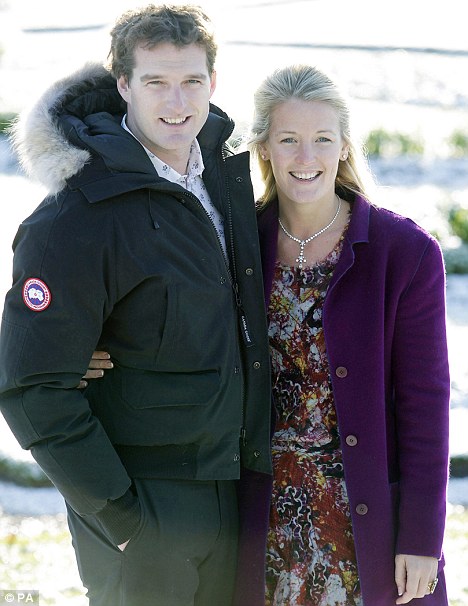
Lady Edwina Grosvenor, and her husband Dan Snow, welcomed their son Wolf Robert on September 9, a brother for Zia, aged 3.

Lady Edwina is a prison reformist and philanthropist. She is the daughter of the Duke of Westminster, the third richest man in Britain, who is significantly wealthier than the queen. Through her mother Natalia Phillips, Lady Edwina is a direct descendant of King George II, and thus has a right of succession to the British throne, although she is only distantly in line. A distant relation of both Queen Elizabeth and Prince Philip, she is also a direct descendant of the Russian author Alexander Pushkin, and Nicholas I of Russia. Princess Diana was Lady Edwina’s godmother, and her mother Natalia is godmother to Prince William.

Dan Snow is a television presenter who has made numerous history programmes for the BBC. Some of the programmes he has presented include Battlefield Britain, Britain’s Lost World, Rome’s Lost Empire, and Battle Castles. In My Family at War, he explored the role of his great-grandfather Thomas Snow, who was a military commander on the Somme during World War I. A political advocate for several causes, he was prominent in the Let’s Stay Together campaign to keep Scotland part of the Union. He and Lady Edwina were married in 2010, in a small private ceremony.

Dan Snow made this statement about the choice of Wolf’s name: Our son was born today, 2005 years to the day since his ancestors erupted out of the Teutoburger Wald and annihilated the mighty legions of Varus. Like those wild Germans, he came screaming out of the dawn mist, under a full moon, and so we named him Wolf.

The Battle of the Teutoburg Forest (Teutoburger Wald) took place in September 9 AD, when an alliance of Germanic tribes led by Arminius, chieftain of the Cherusci tribe, ambushed and annihilated three Roman legions and auxiliaries led by the Roman general Publius Quinctilius Varus. The result of the battle was that Germania remained independent and never became part of the Roman Empire. The date is a matter of speculation, but a full moon in September that year would have been late in the month – September 9 was two days after the new moon. There would been attacks at dawn during the course of the battle, which raged for days.

Wolf and his father Dan share the same middle name, which also happens to be the name of two of Wolf’s great-grandfathers, on both sides of his family.

(Photo of Lady Edwina Grosvenor and Dan Snow on their wedding day from the Daily Mail)

Name News – War Time Edition

13 Thursday Nov 2014

Posted by A.O. in Names in the News

≈ 1 Comment

Tags

baby name campaigns, birth notices, controversial names, Facebook, famous name trends, middle names, mythological names, name petitions, name trends, names of terrorist organisations, popular names, vintage names

Article Lead - narrow6119138610g24r1410499067381.jpg-300x0

Honour a War Veteran … With a Baby
ABC Radio publicised an interesting new campaign for the centenary of World War I. Martin Hamilton-Smith, the South Australian Minister for Veterans Affairs, has a plan to encourage new parents to give their children the names of World War I Anzac soldiers as a way to honour the country’s war veterans.

Martin’s own parents gave him the idea, because they bestowed on him the middle name of his paternal and maternal grandfathers, one of whom served on the Western Front in World War I, and the other who was a Rat of Tobruk in World War II. Martin followed their pattern, giving his son Thomas the middle name Theodore, which was the name of Martin’s great-uncle who was killed in France, and has been able to pass on to his son stories and letters about Theo.

He is calling on parents to consider giving their baby either the first or middle name of an ancestor who served in World War I, and to post their story to his Facebook page. He encourages those who don’t have a direct ancestor to go to a war memorial and pick the name of a soldier. Girls could be named after a nurse who served in World War I, or after a wife or mother bereaved by the war, or who cared for their returned loved ones, many of whom were left with injuries or post-traumatic stress.

The national secretary of the RSL thinks it’s a good idea, but wonders whether children will find it an honour, or a burden. In his wife’s family, a boy has been named after a great-uncle killed in World War I, and it doesn’t seem to have affected him in a negative way.

ABC Radio pictures the playgrounds of the near future filled with children named Bert, Clarry, Reg, Olive, and Edith, but Olive is already in the Top 100, and vintage names are on trend, so it may be difficult to gauge how much influence this campaign will wield on baby names.

POLL RESULTS
57% of people would consider naming their baby after a World War I veteran. 43% saw it as a way to connect their child to our history, while 14% saw it as a way to honour our heroes.
12% were in favour of the idea, but didn’t think it was suitable for their family.
19% of people were against the idea, with 17% saying that children deserved their own identity and a name all their own, while 2% thought it was too much of a burden.
12% weren’t sure how they felt about the idea.
Nobody thought that names from World War I were too old-fashioned for modern children.

Hot Baby Name Trend, 1914 Style
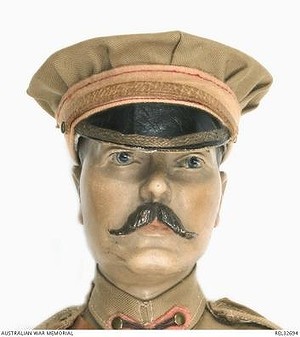
The Canberra Times had a column looking at the events of a century ago. Back in 1914, British army officer Earl Kitchener was the face of the war effort, and a popular subject for Toby jugs, statuettes, and souvenirs. The newspaper looked at the patriotic column of “Clio” in Melbourne’s humorous Punch magazine:

Do you know the baptismal names of Lord Kitchener?”

Not one person in a dozen does. Horatio Herbert. Perfectly appalling names, aren’t they? Shakespeare was perfectly right, you know, when he pertinently inquired, “What’s in a name?” for after all it is not the name but the man who bears it that matters most; and if Lord Kitchener bore any other names … he would still be the most splendid figure in English history to day.

Horatio Herbert is to be the fashionable name for boy babies this year. It is a curious medical fact that during war there are more boys born than girls, and mothers delight in choosing the name of some great soldier for their sons. And so this year the fad is in full swing. It began last week in the birth columns of a daily paper, when the announcement of the birth of a son was followed by his name in brackets (Earl Kitchener). But most mothers are quite content to drop the title, and bestow on their babies the plain names ‘Horatio Herbert.’

I did not find an Earl Kitchener born in 1914 (he might still be alive, or the story might refer to a British newspaper), but there were several born during World War I, and one born during the Boer War, where Earl Kitchener also played a leading role. I only found one Horatio Herbert, and he was born in the 1870s; however, Earl Kitchener went by his middle name, and there are quite a number of Herbert Horatios, and many Herbert Kitcheners. More than a hundred babies were given Kitchener as their middle name, and quite a few had Kitchener as their first name.

Note: “Clio” does not seem to have realised that there are always more boys born than girls, with an estimated 107 boys born for every 100 girls. There is some backing for their statement that more boys than usual are born during war-time, although the reason why is not known. However an Australian newspaper reported in 1941 that Australia bucked this trend, as numbers of boy babies decreased here during World War I, and the first years of World War II.

POLL RESULTS
People’s top choice to honour Earl Kitchener was to make Kitchener the middle name, with a third of respondents voting for it. The least favourite choice was the name combination Herbert Horatio, which got only one vote.

The First Casualties of War Are … Names
And on a very sombre note, a baby name which has been a casualty of war: Isis. The Daily Mail reports that an eight-year-old girl from Sydney named Isis Leskien has suffered the effects of her name.

I know it seems absolutely stupid (because it is), but since the terrorist group often referred to as ISIS has been in the news, people have been distancing themselves from her family, scared to be associated with her. Her brother Maximus has noticed that when they go to soccer together people stare when they hear the name Isis, and mum and dad Sheridan and Frank remember the days when people used to say, “What a beautiful name”, when they heard the name Isis; alas, not any more.

In the US, a petition has been started by a woman named Isis Martinez to ask media outlets to stop referring to the terrorist organisation as ISIS – it currently has more than 35 000 signatures, and the Leskiens are urging people to sign it. Whether it’s the petition or not, I have noticed that on the news here the organisation is now usually called ISIL or the Islamic State, but that may be slender comfort to people called Isis, as the name ISIS continues to be commonly used elsewhere.

POLL RESULTS
66% of people said they didn’t feel any differently about the name Isis
17% said the name Isis now made them feel very uncomfortable
15% said the name Isis now made them feel a little uncomfortable
2% said the name now made them feel so extremely uncomfortable that they would prefer to avoid someone named Isis

(Photo is of a statuette of Earl Kitchener, from the Australian War Memorial)

Famous Name: Gough

12 Wednesday Nov 2014

Posted by A.O. in Famous Names

≈ 6 Comments

Tags

choosing baby names, famous namesakes, historical records, middle names, name history, name meaning, rare names, surname names, Welsh names

971657_10151752994791789_804766665_n

November 11 is Remembrance Day, but it’s important in Australian history for another reason: the constitutional crisis of 1975, when Labor Prime Minister Gough Whitlam was dismissed from office by Governor-General Sir John Kerr. The Opposition had used its control of the Senate to block supply bills which had been passed by the lower house – a move which was within the letter of the law, but went against parliamentary tradition. Without supply, the government was unable to finance itself, and effectively stymied.

The Governor-General took the highly unusual step of breaking the deadlock by dismissing Gough Whitlam without any warning, and installing Opposition Leader Malcolm Fraser as caretaker prime minister until an election could be held. Known as “The Dismissal”, Tuesday November 11 1975 was a day of high drama, with the proclamation read from the steps of Parliament House to a crowd of angry ALP supporters, all booing furiously, until it finished with the traditional sign-off, “God save the queen”.

Gough Whitlam then made his famous speech, which began, Well may we say “God save the queen”, because nothing will save the Governor-General, went on to call Malcolm Fraser Kerr’s cur, and ended by urging his followers to maintain the rage until polling day. These statements became Labor catch phrases, even battle cries, although as it transpired, not enough people maintained sufficient rage, as the Coalition won the pre-Christmas election in a record victory. By some accounts, the Coalition senators would have eventually caved in, rendering The Dismissal unnecessary.

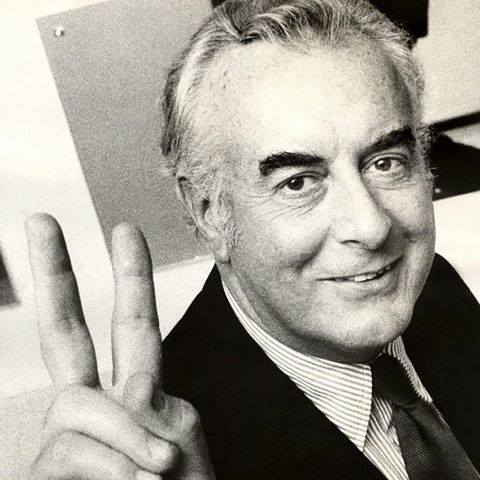
Edward Gough Whitlam, always known by his middle name, was the 21st Prime Minister of Australia, and an enduring icon of the Labor Party. Tall, cultured, articulate, and witty, he modernised the ALP, and after it had spent 23 years in the political wilderness, was able to turn the party from one of protest into a viable alternative government.

Elected in 1972 under the simple but effective slogan It’s Time, Gough Whitlam was a whirlwind of change in the nation, enacting a record number of bills during his three years in office. Troops were withdrawn from the Vietnam War, and draft-dodgers released from prison; a universal health care system was brought in, now called Medicare.

The Family Court was created, Legal Aid established, the death penalty abolished, and no-fault divorce brought in. The Department of Aboriginal Affairs was established, the Racial Discrimination Act enacted, the Aboriginal Land Rights Act passed, and the prime minister handed back traditional lands in the Northern Territory to their original owners. Whitlam was the first prime minister to visit communist China, granted independence to Papua New Guinea, changed Australia’s stance on South Africa’s apartheid policy, and fought against nuclear testing in the Pacific.

His list of achievements roll on and on like the credits of an epic movie. He supported women’s rights, appointing a women’s advisor to the Prime Minister, pushing for equal pay, bringing in welfare for mothers, and increased access to contraception. He supported young people, ending conscription, lowering the voting age to 18, introducing youth radio 2JJ, and abolishing university fees. He supported the arts and the environment, gave us our own national anthem, dumped the out-dated system of knights and dames, got rid of radio and TV licenses, and connected homes to sewerage. Gough brought Australia into the modern age.

After they had both left parliament, former prime ministers Gough Whitlam and Malcolm Fraser made friends and even worked together on political causes, but Whitlam never spoke to Kerr again. Gough Whitlam became an elder statesman in the ALP, and was the first person to be given life membership of the party. The oldest Australian former prime minister thus far, he passed away this year on October 21 aged 98, and his state memorial service was held on November 5, attended by the current, and six former living prime ministers.

Gough is a Welsh surname meaning “red”; the name would have been given to someone with a ruddy complexion or red hair. The surname may pre-date the Norman Conquest, and originates from the Powys region. It is pronounced to rhyme with cough.

Gough has been used as a personal name since the 17th century, mostly for males. It isn’t uncommon in Australian historical records, although far more frequently found as a middle name than a first (just as with Gough Whitlam). Although it isn’t particularly strange, it is very closely associated with the former prime minister, and some Australians may think of it as a “one person name”.

I am sure that at this point I would have warned parents of the obvious pitfalls of using the name Gough on a baby – except that I know someone, have known them very well for a long time in fact, named Gough. He was born during Gough Whitlam’s term of office, and his parents named him in honour of the prime minister, for whom they had an enormous respect.

As it turned out (and this is something else I would have warned about), their son did not share their ideals when he grew up, and his politics are much further to the right than theirs. It sounds as if Gough’s parents did everything wrong, making a foolish and perhaps even selfish decision to saddle their son with a name which might cause him embarrassment in the future.

But the truth is that Gough loves his name, and although he has a perfectly serviceable middle name that he could have used instead, nothing would induce him to be called anything but Gough. Like many people with unusual names, he finds it a wonderful ice-breaker, and nobody ever forgets his name. And because it’s such a famous name, everyone knows how to spell and pronounce it too, which isn’t always the case with unusual names.

That he more or less views Gough Whitlam as a blot on the politico-historical landscape is a source of great amusement to him, and he says people no more expect him to be left-wing than they would expect someone named Elvis to be a great singer. He doesn’t feel that he is under any pressure to emulate Gough Whitlam in any way, but I suppose some might wonder if he has unconsciously fought against his name by taking a very different path (although he has a strong ethic of service to his community, like the former PM).

So I can’t in all conscience warn you that you are making a mistake in choosing the name Gough for your baby. It might have more advantages than you’d initially imagine, and there is no evidence that it will ruin your child’s life or cause name bullying. Perhaps now that Gough Whitlam has passed away after a long and honourable lifetime of public service, it seems even more usable than it did in the early 1970s.

However, I am still fairly sure that even if you insist that your son is named for your great-grandfather Frank Gough who married his cousin Annie Gough and called his first child Gough Gough, everyone will assume that he is really named after Gough Whitlam and that you have outed yourself as a “true believer”. Not that there’s any dishonour in that.

POLL RESULTS
Gough received an approval rating of 46%. 36% of people thought it sounded too much like cough or off, but 15% saw it as strong and unforgettable. 4% of people were put off the name by Gough Whitlam.

(Photo of Gough Whitlam from the Sydney Morning Herald)

Celebrity Baby News: Sporting Babies

10 Monday Nov 2014

Posted by A.O. in Celebrity Baby News

≈ 3 Comments

Tags

celebrity baby names, honouring, middle names

1414964638149

Paralympian Kurt Fearnley, and his wife Sheridan, welcomed their first child in March and named their son Harry. Harry is Kurt’s middle name. Kurt is a wheelchair racer who took up the sport as a teenager; he has won three gold medals, six silver medals, and two bronze medals at Paralympic Games, as well as gold and silver at Commonwealth Games (including this year). He has won the New York City marathon five times (most recently this month), and the Chicago marathon three times. He climbed the Sydney Centrepoint Tower and crawled the Kokoda Trail in 2009, and competed in the Sydney to Harbour Yacht Race in 2011. An advocate for people with disabilities, he was awarded the Order of Australia in 2004.

NRL player Jack Wighton, and his partner Monisha, welcomed their their first child yesterday, November 9, and have named their daughter Aaliyah. Jack has played for the Canberra Raiders since 2012, and also been selected for the Indigenous All Stars and Country Origin.

AFL player Lachie Hansen, and his partner Prue, welcomed their son Ryder last year. Lachie has played for North Melbourne since 2007.

(Photo shows Kurt after winning the New York City marathon, with Sheridan and Harry)

Famous Name: Edward

05 Wednesday Nov 2014

Posted by A.O. in Famous Names

≈ 16 Comments

Tags

Anglo-Saxon names, choosing baby names, classic names, english names, famous namesakes, fictional namesakes, locational names, middle names, name history, name meaning, nicknames, popular names, royal names, saints names

ART11354

This year is the centenary of World War I, and just a few days ago there were commemorative celebrations for the first Australian troops to leave for the battlefields of Gallipoli. Because of this, I have chosen the name of one of our war heroes.

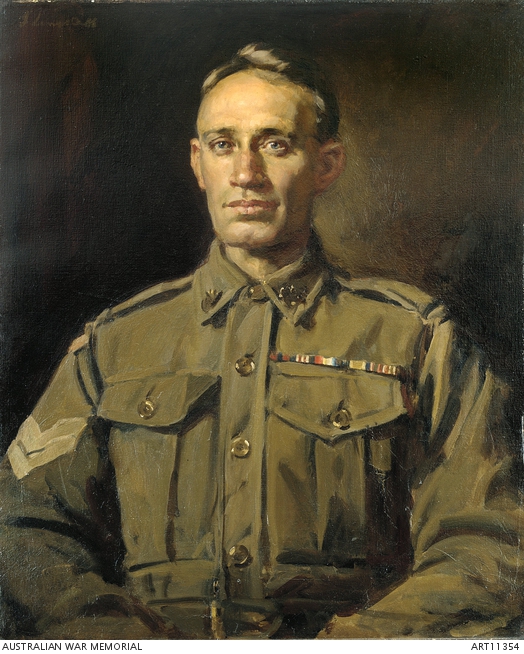
Edward Picton was a shearer and drover from country New South Wales when war broke out in 1914, and by the end of that year he had embarked with the 7th Light Horse Regiment. He saw active service in Gallipoli, and distinguished himself in the campaigns of Sinai and Palestine. Twice he was decorated for capturing prisoners under heavy shelling, and his commanding officer praised him as reliable, full of dash and pluck, and cool under fire.

In early 1918, he received a severe wound which left him with a permanent limp, and was taken prisoner himself; reported as missing in action, he was taken to Turkey to endure many months as a POW, and returned to Australia after the Armistice. Despite his age and disabilities, he also signed up during World War II and served in Egypt and Syria. Although one of the the most decorated soldiers of the Australian Light Horse’s famous 1917-18 campaign, he remained modest, and lived a quiet life with his family.

The name Edward is derived from the Old English ead “wealthy” (or poetically, “blessed, happy”) and weard “guardian, watchman” (the origin of our English word warden), and is usually translated as something like “rich guardian”.

The name was a traditional one amongst Anglo-Saxon royalty and nobility, as were other Ed- names, which emphasised their inherited wealth and power. An early example is the Anglo-Saxon king Edward the Elder, the son of Alfred the Great; he was a successful ruler who is said to have been extremely handsome and intelligent.

Two other pre-Conquest English kings named Edward became saints: Edward the Martyr, whose short reign ended with his murder, and Saint Edward the Confessor, who was one of the patron saints of England until he was replaced by Saint George.

It was because of Saint Edward the Confessor that the name Edward also became traditional amongst the Norman kings, because Henry III named his eldest son Edward in honour of the country’s patron saint, and he became Edward I. Thus Edward became one of those rare Anglo-Saxon names which continued to flourish after the Conquest.

There have been eight English kings named Edward since 1066, with the last one being Edward VIII, who famously abdicated in 1936, the first year of his reign, to marry the American socialite Wallis Simpson.

The name, although perhaps not auspicious for a king any more, is still in use by the British royal family, with a notable example being Prince Edward, Earl of Wessex, the youngest child of Queen Elizabeth, who is currently visiting Australia. The queen has a cousin named Edward – Prince Edward, Duke of Kent. The Duke of Kent was born a year before Edward VIII’s abdication, and I wonder if he would have been given a different name if born a year after the abdication?

If you are a fan of the Anne of Green Gables books, you will know they are mostly set on Prince Edward Island, Canada’s smallest province. They are named after Prince Edward, Duke of Kent and Strathearn, who was Queen Victoria’s father.

Edward is a name which has been something of a favourite in romantic fiction, including the dutiful Edward Ferrars in Jane Austen’s Sense and Sensibility, and the Byronic Edward Rochester in Charlotte Bronte’s Jane Eyre. Mr Rochester was one of the models for another romantic love interest, the vampire Edward Cullen from the Twilight series. There’s also Prince Edward from the movie Enchanted, and from a very different fairy tale, the strangely gifted Edward Scissorhands.

Edward is a classic which has never been off the charts, and barely been out of the Top 100 in Australia. It was at its height in the 1900s at #10, and hit its lowest point in the late 2000s at #103 (it did rise after Twilight). Currently it is #59 nationally, #53 in New South Wales, #39 in Victoria, #83 in Queensland, #30 in Tasmania, and #32 in the Australian Capital Territory, where it was one of the fastest-rising names of 2013.

I must admit to having great affection for the name Edward, because it was the first name I ever bestowed on a human, at the age of three. It is my brother’s name, and my parents allowed me to choose his name, in the hope that this would prove a great bonding experience, as I’d been very jealous and grizzly about the whole “new baby brother” deal.

I chose the name Edward after my favourite literary character, Winnie-the-Pooh – well I was only three! As Pooh fans will know, Winnie-the-Pooh, who was named after a real bear named Winnipeg and a swan named Pooh, is identified in the poetry book When We Were Very Young as having Edward Bear as his official name.

The budding name nerd in me was thrilled at learning someone’s real name, and excited that there were such things as real names. My mum explained that Edward was the “proper name” for Teddy, so the name meant “teddy bear”. That discovery about nicknames coming from names blew my mind. No wonder I couldn’t get enough of Winnie-the-Pooh.

I may have also been drawn to the name because one of the “big boys” in our community (about eleven) was called Edward, and he had apparently impressed me as being very kind and gentle. Perhaps I saw Edward as a “nice guy” name – the kind of person I would want as a brother. If so, my wish came true, as my brother Edward is gentle and kind too, and has devoted his life to helping others. He’s definitely one of the good guys.

Of course I didn’t get things all my own way. My idea was that my brother’s whole name would be Edward Bear, like Winnie-the-Pooh, and that his nickname would be Teddy. My parents said Bear wasn’t a proper name, and the middle name was James, after my dad. Teddy was vetoed, as to my parents’ generation, it was a synonym for thug, and his nickname eventually became, without any particular forethought that I noticed, Eddie. It was an early lesson in name compromise, and that once you’ve named someone, you lose creative control of the project.

My parents’ master plan did not work, and despite naming him, I was a complete brat towards my baby brother, locked in sibling rivalry hell. However, it didn’t last long, as my mother got pregnant again almost immediately, and in an astonishingly short time, there was another baby. Either the shock of having two baby brothers pulled me up, or I had turned four and was now a lot more mature. My parents chose their youngest child’s name themselves (I didn’t get a second gig), and ironically his nickname became Bear, which had nothing to do with his name at all. Talk about name theft!

(I don’t have clear memories of being three, and have drawn on the recollections of my parents and sister for this, but I do remember Winnie-the-Pooh, and the moment of actually announcing Edward’s name. I don’t remember being a massive fangirl of older-boy-Edward, but my family assures me that I was a great admirer; I don’t remember him from the age of three, but obviously I grew up around him and have many later memories. I only recall throwing one jealous tantrum over Eddie, but I’ve been told I was a right little monster).

So there you have it – a handsome classic which is a solid, reliable choice, yet still has some dashing romance to it, as well as teddy bear huggability. Even as a toddler I could tell it was a great name, and it has served my brother well for many years. Highly recommended!

POLL RESULTS
Edward received an excellent approval rating of 83%, making it one of the highest-rated names of 2014. People saw the name Edward as a handsome and elegant classic (31%), noble and gentlemanly (18%), dashing and romantic (13%), and having great nickname options (13%). However, 7% of people thought it was too stuffy and old-fashioned. Nobody thought the name Edward seemed stuck-up or snobbish.

(Portrait of Corporal Edward Picton from the Australian War Memorial)

What Do You Think of Arrow as a Baby Name?

01 Saturday Nov 2014

Posted by A.O. in Naming Assistance

≈ 3 Comments

Tags

Biblical names, celebrity baby names, choosing baby names, famous namesakes, fictional namesakes, historical records, locational names, middle names, name history, names from television, rare names, sibsets, vocabulary names

Arrow-Flying-Through-Air

Courtney and Joel are expecting a baby next month, and although they have agreed on a girl’s name together, are having more difficulty deciding on a name for a boy.

Courtney thinks of her name as “typically 1980s”, and has often had to share her name with someone in her classroom or workplace, so she likes the idea of her child having something a bit more unusual so they can have their name to themselves. However, Joel thinks that unusual names can be a burden for a child, and would prefer something reasonably common.

Meaning is extremely important to Courtney, and she wants the name to be relevant to their lives: they already have a son named Israel, which has a strong meaning, and reflects their faith.

Should they have another boy, Courtney’s choice for their son’s name is Arrow. She likes that it’s a unique name, and has connotations of strength; there are several Bible verses she likes about arrows, so that it would seem to be another name with a religious meaning. Joel worries that Arrow is just too different.

Courtney wants to know if Arrow is too unusual, and whether people think Israel and Arrow would work as a brotherly sibset?

* * * * * * * * * *

It’s the age old debate on baby names – should our children’s names make them stand out, or fit in? Most of us want something in the middle, and agonise over finding a name that manages to both stand out and fit in simultaneously.

And of course everyone has their own opinion on what makes a baby name “too unusual”. Some people think even Top 100 names are a little out there, while others think almost any name they’ve ever seen on a real person is “too common”.

Although you say that you and Joel are at odds when it comes to unusual names, it seems to me Joel must be fairly open-minded. You have a son named Israel, and that is not a common name in Australia – although it’s not unheard of, and famous people like Israel Folau give it plenty of publicity, I estimate there would be less than six Israels born in any state per year. That’s quite a low amount.

Perhaps Joel liked Israel because it’s a name from the Bible, with a history of many thousands of years, so that everyone has heard of Israel, even if they don’t know anyone with the name. Maybe it hit a sweet spot, so that Israel was neither too common for you, nor too strange for Joel.

Arrow is even less common than Israel, but it’s not unheard of as a baby name. I have seen a few children named Arrow, and it’s getting some use as a middle name – including Bobby Arrow, the son of radio host Tim Ross. The name does have some history, being used since the 18th century, and can be found in Australian historical records from the 19th century, although mostly as a middle name – there are only a couple of people with the first name Arrow.

To me, a name that is very rare is not necessarily a “weird” name. A couple of weeks ago, a blog reader named Michelle asked about two rare girls’ names her partner was keen on, Maida and Maeva. I have seen even less children with these names than those called Arrow (in fact, I’ve seen exactly zero babies named Maida or Maeva), but they fit in really well with current trends in girls names, and would not seem strange amongst classmates named Maeve, Mia, Maya, and Mae.

That’s a good way to get a baby name that’s both uncommon but not too strange – find one that is in rare use, but fits in with contemporary name trends. It may get attention for being out of the ordinary, but hopefully most people will find it refreshing rather than confronting. Could Arrow be one of those rare-yet-on-trend names?

I think Arrow fits in with the trends rather well. From the bounding popularity of Archer, and solid performance of Fletcher (maybe even Beau, which sounds like Bow), it would seem that names connected with archery are on the rise. Furthermore names connected with weaponry in general are doing extremely well, because I regularly see boys (and occasionally girls) with names like Hunter, Gunner, Colt, Blade, Gauge, Bowie, Sabre, and Steele.

I’m a bit skittish about the trend for “weapons as baby names”, but Arrow seems much more than just a weapon. It’s connected to tales of derring-do, like Robin Hood and William Tell, and romance, because of Cupid’s arrows of love. It’s also a superhero name because of the Green Arrow – another hot baby name trend, and in the public consciousness because of the television series, Arrow.

And you are drawn to Arrow for reasons of faith, because arrows are mentioned in the Bible, where it describes “the Lord’s arrow of victory”, which “will flash like lightning”. In the Bible, arrows often symbolise the judgement of God. Arrows also symbolise having a clear direction to follow, swiftness and protection, and also mental alertness and toughness.

The name Arrow is on trend because of its sound too – names starting with Ar- are very fashionable, as witnessed by Archer, Ari, Ariel, Aria, Ariana, Aryan, Arthur, and Arlo. Names ending with an O sound are fashionable too, like Hugo, Indigo, Django, Marlowe, and Arlo again. Arrow doesn’t sound that much different to Arlo, when you think about it.

One of the reasons that makes simple English vocabulary names easy to bear is that everyone knows how to spell and pronounce them; unless you fiddle around with the spelling, there’s no headache involved. People might be surprised by the name Arrow, but there’s no cumbersome explanations necessary.

I think Israel and Arrow work really well as brothers. They’re both unusual names that are still very familiar, at least as a nation and a noun. They’re strong and meaningful, and Arrow really takes Israel is an interesting direction, while Israel possibly makes it clearer that Arrow has been chosen for biblical reasons.

So to me Arrow is not too strange as a name, and I briefly mentioned it on the blog as a name which seemed as if it had a lot of potential. But what about Joel – could Arrow ever hit his sweet spot the way that Israel did?

UPDATE: The baby’s name was Gabriel!

POLL RESULTS
84% of people polled believed that Arrow wasn’t too unusual a name to use on a baby. 34% thought it was a bit unusual, but people would soon get used to it, while 19% admitted the name was too unusual for them to use, but that they would find it interesting on someone else’s child. 10% thought it was a very unusual name, but they considered that positive, as it made the name cool and different, and another 10% didn’t think it was really that unusual, as it fitted in so well with current name trends. 11% didn’t think Arrow was unusual in the least. 10% thought that Arrow probably was too unusual, as they couldn’t imagine it on a real person, while 6% thought it was a really weird name.

81% of people polled were in favour of Israel and Arrow as a sibset. 37% thought it was okay, 26% thought it was a good choice that worked well, while 18% saw it as a perfect match. 14% thought it wasn’t so good, and might need a rethink, while 5% considered it a complete mismatch.

Girls Names From Native Australian Flowers

26 Sunday Oct 2014

Posted by A.O. in Name Themes and Lists

≈ 16 Comments

Tags

colour names, english names, famous namesakes, fictional namesakes, flower names, French names, Greek names, historical records, honouring, Latin names, locational names, middle names, mythological names, name history, name meaning, name popularity, name trends, names from television, nature names, nicknames, plant names, popular names, Portuguese names, rare names, retro names, Roman names, scientific names, Scottish names, surname names, vocabulary names

BoroniaHeterophyllaLipstickCu600

Now that it’s spring, I have been taking advantage of the warmer weather and lighter evenings to get out into the garden more. I love the spring flowers, which make me think of floral names, so here are some from our native blooms.

Boronia
Boronia (bor-OH-nee-uh) is a native shrub whose cup-shaped, pink or red-hued flowers give off the most exquisite sweet scent; boronias are related to citrus trees, and the fragrance of boronia is slightly lemony. It is a popular ingredient for perfumes and scented oils, but oddly enough, quite a few people are unable to smell boronia at all. Boronias grow in many parts of Australia, but the Brown Boronia, considered to have the most magnificent scent of all, is from Western Australia. Many people find boronia difficult to grow, and might enjoy this plant more by walking through the bush in spring. The plant has given its name to a pleasant suburb of Melbourne, while Boronia Heights is a suburb of Logan. The boronia is named after Francesco Borone, who was the servant of botanist Sir James Smith, but became his talented and valued field assistant. Francesco died in a bizarre accident when he sleep-walked out the window while recovering from illness. When Sir James discovered the boronia several years later, he named it in Borone’s memory. There are quite a few people with the name Boronia in Australian historical records, mostly as a middle name. Bo would make a charming nickname.

Correa
Correa (KOR-ree-uh) is a small shrub related to the boronia, but its bell-shaped flowers have no fragrance; instead it is the leaves which have a fruity smell when crushed. Correa reflexa is known as Native Fuchsia, because of its long tubular petals which are often a dusky pink colour, although correa can come in a range of colours. Correa grows all over Australia, and is an easy garden plant to grow; it blooms in autumn and winter, making it a great plant to brighten up your garden during the cold months. Correa is named in honour of the Portuguese botanist José Correia da Serra; the Correia part of his name is a common Portuguese surname meaning “leather strap”, originally given to those who worked in the leather trade. Correa is a rare find in Australian historical records, and would make a distinctively Australian alternative to names such as Cora.

Daisy
Daisies are simple little picture-book flowers common all over the world; they are symbolic of childhood innocence. There are many types of daisy native to Australia; one of the most popular is the Paper Daisy, called the Everlasting in Western Australia. Small with crisp, papery petals, they are pink and white, and very easy to grow. The word daisy comes from the Old English for “day’s eye”, as English Daisies open when the sun rises and close in the evening. Daisy has been used as a girl’s name since the 16th century, and became popular in the 19th, along with other floral names. It is also used as a nickname for Margaret, because the French name for the Ox-eye Daisy is the Marguerite. The name Daisy was #58 in the 1900s, and left the Top 100 in the 1920s. It dropped from the charts in the 1940s, made a minor come-back in the 1950s, then dropped out again the following decade. Daisy returned to the charts in the 1980s at #646, and climbed fairly steadily. It rejoined the Top 100 last year at #90, making it one of the fastest-rising names of 2013. Wholesome yet also sexy, retro Daisy still sounds fresh … as a fresh a daisy!

Dianella
Dianella is commonly known as Blue Flax-lily, found in all states of Australia. These woodland plants grow in clumps with small, deep blue flowers that bloom in spring and summer; they are popular garden plants being hardy as well as decorative. The Perth suburb of Dianella was named after the flower, which grew in abundance there before development. Dianella is named after the Roman goddess Diana, goddess of the hunt, because she is associated with woodlands; the name Diana may mean “heavenly, divine”. Dianella seems like an interesting way to honour a Diana or Diane, while giving a nod to native flora, and offering popular Ella as the nickname. The name Dianella shows up several times in Australian historical records, always in South Australia for some reason.

Laurina
Hakea laurina, also known as Pincushion Hakea, is a large upright shrub or small tree from south-west Western Australia. The flowers are very striking, being deep pink or red, and shaped like globes with cream spikes coming out of them; they have a mild fragrance, but are best known for producing nectar, which is very attractive to birds. Hakea laurina blooms in autumn and winter, and this popular garden plant is easy to grow, being both drought-tolerant and frost-hardy. Laurina is simply based on the Latin Laurus, as its leaves are similar to those of the laurel tree. The name Laurina dates to the 18th century, and is an elaboration of the name Laura. It has recently been brought to attention through “Melbourne princess” Laurina Fleure, who was a contestant on this season of The Bachelor: although portrayed as a villain by the show’s producers, she gained a fan following and has been dubbed “Australia’s Carrie Bradshaw”.

Lilac
Lilac (Syringa vulgaris) is a small tree native to the Balkans, famous for its pale purple flowers, which have a beautiful sweet fragrance. Australia has a plant which is sometimes called Native Lilac, or Lilac Vine, and that is Hardenbergia violacea, also known as Purple Coral Pea, as it is member of the pea family. It is a hardy and vigorous climbing vine, capable of growing twenty feet; some varieties are low-growing shrubs. In winter it produces masses of showy violet pea-flower blooms, and is an easy to grow garden plant, popular for training over fences and pergolas. Lilac is a word from the French, which ultimately goes back to the Sanskrit for “dark blue”; it has been used as a girl’s name since the 19th century, when other flower names came into fashion. Lilac has never been a common name, but it is very pretty, and would be right on trend, fitting in with popular Lily and Lila, while having its own distinctive sound. It would also make a lovely middle name to match all those girls’ names ending with -a or an EE sound.

Lotus
The lotus flower (Nelumbo nucifera), sometimes known as Sacred Lotus, Red Lily, or Lotus Lily, is an aquatic plant native to Tropical Asia and Northern Australia; it is thought that the plants were brought to Australia many centuries before European settlement. There are many different varieties and cultivars, with one of them being the Waltzing Matilda Lotus, which is small with pink flowers. Lotus flowers can be easily grown all over Australia, but the native lotus will only be happy in warm areas. The Lotus is a very symbolic plant – as it is a stunning flower which grows out of slimy mud, you can see it as a message that life can be beautiful no matter what your origins or circumstances. In Hinduism, a lotus is often used to indicate divine beauty and spiritual growth; in Buddhism it represents purity and non-attachment to the material world. Asian literature sees the lotus as the ideal of feminine grace, beauty, and elegance. The lotus is also a peace symbol, and Aboriginal people from the Top End held up lotus leaves to strangers to show they meant no harm. With so many wonderful meanings for this lovely flower, it’s surprising how little Lotus has been used as an English name. Many will see it as having a hippie vibe, while others may see it as a car name.

Orchid
Orchids are extremely diverse plants found almost everywhere in the world except on glaciers; they grow in the Arctic, and on Macquarie Island near Antarctica. There are hundreds of types of orchids native to Australia. Orchids are grown for their often beautiful flowers, and excite a passion in those who cultivate and collect them that amounts to an obsession. The Cooktown Orchid (Dendrobium phalaenopsis) is the state emblem of Queensland, and grows naturally in the state’s tropical far north. It is considered to be Australia’s showiest orchid, with beautiful mauve flowers that bloom in the dry season. With care, it can be grown outdoors as far south as Brisbane; any lower than that and you need a glasshouse. Orchid has been used as a girl’s name since the 19th century, and despite the beauty of the orchid flower, it has remained in rare use. This may be because the ORK sound at the start is not considered attractive, or because the flower’s name comes from the Greek for “testicle”. Orchid is an unusual, sophisticated floral choice that starts with the fashionable O, but sounds quite distinct from today’s popular names.

Pandorea
Pandorea (pan-DOR-ee-uh) are climbing vines native to Australasia. Pandorea pandorana, otherwise known as Wonga-wonga Vine, is a popular garden plant, being an easy to grow vigorous climber with glossy leaves. The flowers are bell-shaped, bloom profusely in spring, and are naturally creamy-white with maroon markings, but cultivars come in a very wide range of colours. Hardy and adaptable, Wonga-wonga Vine grows all down the east coast, as well as in the central deserts, and is also native to several Pacific Islands. The wood of the vine was used by Aborigines of central Australia to make spears, and it appears in their mythology as a group of women with very thin and flexible bodies. The plant’s scientific name is after Pandora from Greek mythology, who legend says had a container filled with all the world’s evils, which she opened out of curiosity. It is usually thought the name came about because the Pandorea vine grows a pod which opens to reveal a multitude of seeds; supposedly the plant’s namer was reminded of “Pandora’s box” by the seed pod. The name Pandora has a lovely meaning – “all gifts”. If you are attracted to the name Pandora, but have doubts about the myth, or worry it’s too Avatar, or don’t like the -dora sound at the end, why not consider Pandorea as a floral alternative?

Violet
Violets are small violet-blue flowers, which symbolise modesty – we call a shy person a “shrinking violet”, and connect the flowers with pure femininity. They are associated with death and resurrection in Greek myth, and can be used to denote death which comes too soon, such as for Ophelia in Shakespeare’s Hamlet. Violet Day was commemorated in Australia to remember those who died during World War I; the last Violet Day was held in 1970. There are a few species of violet native to Australia – a favourite for gardeners is Viola banksii, which grows naturally in New South Wales. It has striking purple and white flowers, and is very easy to grow, forming an attractive groundcover. The word violet comes by way of the Latin viola, and simply refers to the colour. Violet has been used as a name since the 16th century in Scotland, influenced by the French name Violette. Violet was #22 in the 1900s, and left the Top 100 in the 1940s, before dropping off the charts in the 1960s. It didn’t return until the early 2000s, when it was #569; this follows the publication of Lemony Snicket’s Series of Unfortunate Events, starring pretty teen inventor Violet Baudelaire. After becoming a celebrity favourite, and having a staggeringly swift rise, it made the Top 100 in 2009 at #85, and was #51 last year, being the fastest-rising name in both Western Australia and Tasmania. This is a dainty retro name that has a dark side: its similarity to the words violence and violate act as a counterweight to its maidenly timidity.

POLL RESULTS
The public’s favourite names were Violet, Daisy and Lilac, and their least favourite were Orchid, Boronia and Pandorea.

(Photo shows a Pink Boronia (Boronia heterophylla), Pink Lipstick variety)

← Older posts
Newer posts →

Enter your email address to follow this blog

Categories

Archives

Recent Comments

A.O.'s avatarwaltzingmorethanmati… on Zarah Zaynab and Wolfgang…
Madelyn's avatarMadelyn on Zarah Zaynab and Wolfgang…
JD's avatardrperegrine on Can Phoebe Complete This …
A.O.'s avatarwaltzingmorethanmati… on Rua and Rhoa
redrover23's avatarredrover23 on Rua and Rhoa

Blogroll

  • Appellation Mountain
  • Baby Name Pondering
  • Babynamelover's Blog
  • British Baby Names
  • Clare's Name News
  • For Real Baby Names
  • Geek Baby Names
  • Name Candy
  • Nameberry
  • Nancy's Baby Names
  • Ren's Baby Name Blog
  • Sancta Nomina
  • Swistle: Baby Names
  • The Art of Naming
  • The Baby Name Wizard
  • The Beauty of Names
  • Tulip By Any Name

RSS Feed

  • RSS - Posts

RSS Posts

  • Celebrity Baby News: Melanie Vallejo and Matt Kingston
  • Names from the TV Show “Cleverman”
  • Can Phoebe Complete This Sibset?
  • Zarah Zaynab and Wolfgang Winter
  • Baby, How Did You Get That Name?
  • Celebrity Baby News: Media Babies
  • Celebrity Baby News: Adelaide Crows Babies
  • Celebrity Baby News: Chris and Rebecca Judd
  • Names at Work: Name News From the World of Business and Employment
  • Celebrity Baby News: Sporting Round Up

Currently Popular

  • The Top 100 Names of the 1930s in New South Wales
  • Rare Boys Names From the 1950s
  • The Top 100 Names of the 1940s in New South Wales
  • Girls Names From Stars and Constellations
  • Celebrity Baby News: Caroline Craig and Callum Finlayson

Tags

celebrity baby names celebrity sibsets english names famous namesakes fictional namesakes honouring locational names middle names name combinations name history name meaning name popularity name trends nicknames popular names saints names sibsets surname names twin sets unisex names

Blog at WordPress.com.

Privacy & Cookies: This site uses cookies. By continuing to use this website, you agree to their use.
To find out more, including how to control cookies, see here: Cookie Policy
  • Subscribe Subscribed
    • Waltzing More Than Matilda
    • Join 517 other subscribers
    • Already have a WordPress.com account? Log in now.
    • Waltzing More Than Matilda
    • Subscribe Subscribed
    • Sign up
    • Log in
    • Report this content
    • View site in Reader
    • Manage subscriptions
    • Collapse this bar
 

Loading Comments...