• About
  • Best Baby Names
  • Celebrity Baby Names
  • Celebrity Baby Names – Current
  • Celebrity Baby Names – Past
  • Featured Boys Names
  • Featured Girls Names
  • Featured Unisex Names
  • Links to Name Data
  • Waltzing on the Web

Waltzing More Than Matilda

~ Names with an Australian Bias of Democratic Temper

Waltzing More Than Matilda

Tag Archives: middle names

Waltzing with … May

28 Sunday Apr 2013

Posted by A.O. in Waltzing with ...

≈ 11 Comments

Tags

anagram names, birth notices, double names, famous namesakes, flower names, middle names, month names, mythological names, name combinations, name popularity, nature names, nicknames, plant names, popular names, retro names, sibsets

eucalyptus-flower-bookIt will be May very soon, and whenever that month comes around, it reminds me of one of my favourite Australian authors from childhood – May Gibbs. Born in England, May grew up in Western Australia, and it was while riding her pony around the bush as a little girl that she began writing stories and drawing pictures based on the native flora.

After going to art school, she became a professional illustrator in the early twentieth century, and was most famed for her “gumnut babies” – plump little cherubs scantily dressed in gumnuts, gumblossom and gumleaves. She even produced postcards of the gumnut babies to support the war effort during WW I, and her house was called Nutcote.

Later she wrote stories to accompany her enchanting drawings, the best-known being the Snugglepot and Cuddlepie series. Adults are charmed by the stories’ sense of fun, but for small children, they are filled with adventure and excitement, and can even be frightening, due to the villains of the story, the wicked Banksia Men. Without being sickly or sentimental, the subtle message of the stories is always that we must care for each other, and for the world around us.

After growing up with May Gibbs’ picture books, it is impossible to walk through the Australian bush and not see it differently; she gave us our own fairy tales and our own mythology of nature. And because many eucalyptus trees flower in autumn (not to mention some banksia species), you can see “gumnut babies” and “banksia men” for yourself in May.

The name May appears to have begun life as a short form of names such as Mary and Margaret, but very soon was associated with the fifth month of the year.

The month of May is generally said to be named by the Romans in honour of the goddess Maia, whose name may mean “greater”. She probably didn’t have a connection to the Greek goddess Maia originally, but the two goddesses became gradually merged into one. Maia was a mother goddess, an earth goddess, and encouraged growth and abundance. May is in the spring in the northern hemisphere, so readily suggests the idea of fecundity.

The poet Ovid said that the month was named for the ancestors, also connected to the word for “greater”; I’m not sure if this was his own idea or one in wide circulation in his day. On the first of May, the Romans sacrificed both to the goddess Maia and to the ancestor spirits who were guardians of the city.

The first of May has quite a history as a day of celebration. In Ireland, it is the Celtic festival of Beltane, which marks the beginning of the summer; this is observed by Neo-Pagans around the world. Related to this is May Day, a European celebration of spring and fertility which often involves dancing around a phallic Maypole decorated in blooms, and choosing a Queen of the May, as if still honouring a spring goddess. In Catholic tradition, the month of May is sacred to the Virgin Mary and the flowering of her spirituality; a continuation of the devotion to floral mother figures.

Another floral connection is the word mayflower, which can refer to several different flowering species, but traditionally is the hawthorn, also known as may, mayblossom, may tree or may thorn. The hawthorn is one of the flowers associated with Beltane, and in Ireland you can make wishes on the maytree during this festival. It is also said that they are inhabited by fairies, especially if you see a lone hawthorn bush out in the wild. To bring us back full circle, hawthorn was sacred to the goddess Maia.

The name May was at its highest popularity in the 1900s, when it was #41 for the decade, and had left the Top 100 by the 1930s. It left the charts entirely between the 1960s and 1980s, but has remained in modest use since the 1990s. Currently it is #557 (11 births) in New South Wales and #489 (10 births) in Victoria.

I should have said in modest use as a first name, because May gets a real workout in the middle position. You can’t read through a few pages of birth notices without seeing name combinations such as Charlotte May, Emma May, Harper May, Pippa May and Zara May – not to mention double names like Gracie-May, Ella-May and Lily-May.

You might say that other names are similarly popular in the middle, such as Elizabeth, Grace and Rose – and Alice is quickly joining their ranks. However, all these names are in the Top 100 and either rising or stable, so they are clearly not being neglected as first names.

Poor May lies in the doldrums, with parents preferring Maya and Mia. Even May’s big sister Mary and anagram twin Amy are much more popular, and April is far more common as a name than the following month.

Yet there is something so simple and sweet about May; it sounds old-fashioned without being the least bit musty. If you would like an underused retro name which still seems fresh and youthful, why not consider rescuing May from the middle, and putting her front, rather than centre?

Name Combinations for May

May Amelia, May Elizabeth, May Kathleen, May Luella, May Sophia, May Victoria

Brothers for May

Charlie, George, Harry, Samuel, Tobias, William

Sisters for May

Alice, Clara, Lillian, Nettie, Rose, Sadie

POLL RESULT: May received an approval rating of 93% – just 1% behind the highest-rated girls name, Layla. 37% of people liked the name May, and 35% loved it.

Famous Name: Gallipoli

24 Wednesday Apr 2013

Posted by A.O. in Famous Names

≈ 3 Comments

Tags

Anzac Day names, controversial names, Greek names, historical records, locational names, middle names, military events, name history, name meaning, names of battlefields, Turkish names

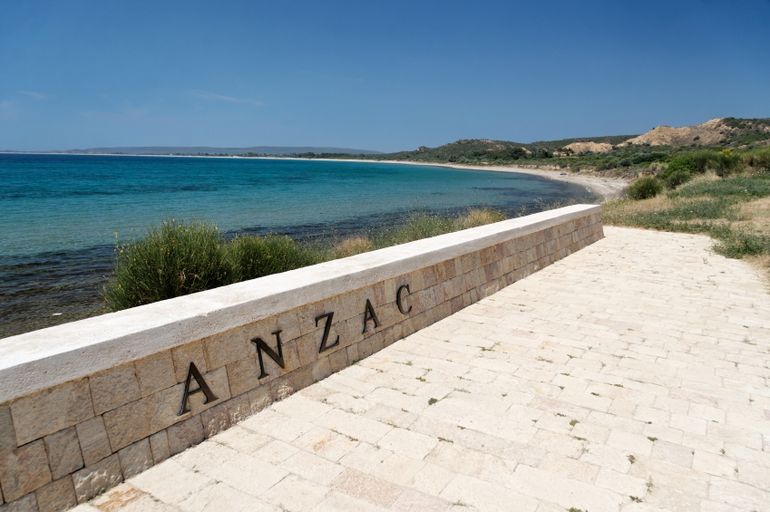
anzac-cove-gallipoli-photo_1343753-770tallGallipoli is a peninsula in Turkey, where the Gallipoli campaign took place between April 25 1915 and January 9 1916 during the First World War. The Australian and New Zealand forces, the Anzacs, landed at dawn at what is now known as Anzac Cove on April 25. The Turkish forces, the Ottomans, defended their territory with a fierce determination, but by evening, the Anzacs had managed to hold a tiny triangle of land about 2 km long and 1 km wide, which they called Anzac.

In his memoir, A Fortunate Life, Albert Facey described his experience of landing at Anzac Cove:

Suddenly all hell broke loose … bullets were thumping into us in the rowing boat. Men were being hit and killed all around me … The boat touched bottom some thirty yards from the shore so we had to jump out and wade in to the beach … The Turks had machine guns sweeping the strip of beach where we landed – there were many dead already when we got there. Bodies of men who had reached the beach ahead of us were lying all along the beach and wounded men were screaming for help. We couldn’t stop for them – the Turkish fire was terrible and mowing into us … we all ran for our lives over the strip of beach.

The Ottomans fought bravely, but there too few of them to drive the Anzacs back into the sea. The commander Mustafa Kemal issued this order to the 57th Infantry Regiment:

I do not order you to fight, I order you to die. In the time which passes until we die, other troops and commanders can come forward and take our places.

They followed their orders. The entire regiment was wiped out by the Anzacs, every man of it either killed, or so badly wounded he could not continue fighting. The modern Turkish army does not have a 57th Regiment, as a mark of respect.

By April 29, the first casualties from Gallipoli reached the Australian hospital near Cairo, in Egypt. Sister Constance Keys of the Australian Nursing Service wrote home:

The greatest number of men we came over with are either killed or wounded. The whole battalion was practically cut to pieces.

The Gallipoli campaign continued for eight more months, with nearly half a million casualties, and more than 100 000 deaths. This includes around 60 000 Turks and 53 000 British and French soldiers, including more than 8500 Australians and 2721 New Zealanders.

In the end, the campaign was a crushing defeat for the Allied forces, and one of the greatest victories for the Turks. It gave them a national identity and fostered their spirit of independence just as much as it did for Australians.

Today there are many cemeteries and war memorials on the Gallipoli Peninsula. Each year on Anzac Day, April 25, commemorative services are held at Gallipoli for the war dead, conducted by Turkey, Australia, New Zealand, Britain and France.

Gallipoli is considered sacred ground to many Australians, consecrated by the blood of those who fell there. Increasingly, it is seen as a place of pilgrimage, with many young people travelling to Gallipoli as a rite of passage.

The Macedonian city of Callipolis was founded in the 5th century BC on the Dardanelles Strait; its name comes from the Greek word kallipolis, meaning “beautiful city”. Also known as Gallipoli, it gives its name to the peninsula it sits on, and its Turkish name is Gelibolu. It is pronounced guh-LIP-uh-lee.

According to Australian historical records the name Gallipoli was given to just two girls during World War I, both of whom died in infancy. I wonder if this name was considered so sacred that it could only be bestowed on those destined for death.

As a middle name, it was given more often, and to equal numbers of males and females. People such as Mercia Gallipoli, Sydney Gallipoli, Brittania Gallipoli and Anzac Gallipoli flourished and increased, and some have only recently left us.

Although place names are becoming increasingly fashionable as baby names, I cannot recommend Gallipoli as a first name. Its extreme rarity, the problems with spelling and pronunciation, and difficulties shortening it to a usable nickname are some of the least problems it faces. In the middle, it seems easier to live with.

To me the main problem with Gallipoli as a first name is its heaviness. It was the scene of battles where many lives were lost, and much blood shed; a place of great suffering and enormous sacrifice. Gallipoli is a place of death – heroic deaths, brave deaths; corpse upon corpse of them. Many dead in the water before they even reached land; many lives given solely to buy others time.

There’s also the uncomfortable fact that we went to Gallipoli as invaders. We invaded someone else’s country, on the orders of another country, and we slaughtered their people. Another uncomfortable fact is that our side lost the campaign, and lost badly. Even more uncomfortably, this hideous loss was a waste of time, resources and life. The Allies achieved nothing from it, and the Turkish people who successfully defended their land were on the losing side of the war.

The name Gallipoli conjures up many emotions. National pride, gratitude for sacrifices made, deep sadness at loss of life, horror at what was endured, anger at the futility of war. And also forgiveness, respect, shared grief, and friendship between nations who were once enemies.

There’s been several quotes in this entry, and I will end with one more, from Turkey’s first president, Mustafa Kemal Ataturk, which is now inscribed on a monument at Gallipoli:

Those heroes that shed their blood and lost their lives… You are now lying in the soil of a friendly country. Therefore rest in peace. There is no difference between the Johnnies and the Mehmets to us where they lie side by side here in this country of ours… You, the mothers who sent their sons from far away countries wipe away your tears; your sons are now lying in our bosom and are in peace. After having lost their lives on this land they have become our sons as well.

POLL RESULT: Gallipoli received an approval rating of 15%, making it one of the least favourite names of the year. People had some real problems with the name Gallipoli, seeing it as having too many issues (31%), too weird (28%), too controversial (13%), and too sad (13%). Only 10% thought Gallipoli was usable as a baby name, and nobody thought it was beautiful.

(Photo is of Anzac Cove, Gallipoli)

Interview with Angela of Upswing Baby Names

07 Sunday Apr 2013

Posted by A.O. in Blog Reviews

≈ Comments Off on Interview with Angela of Upswing Baby Names

Tags

baby name blogs, choosing baby names, Facebook, honouring, middle names, name combinations, popular names, Twitter, Upswing Baby Names, US name popularity, Wordpress

girl-on-a-swing.jpg!BlogAre you looking for a baby name that is a bit different to the rest, but not outrageously so? That’s uncommon, yet not odd or obscure; stylish, but unpretentious; and that stands out from the crowd for all the right reasons? Many parents seek out the golden mean in baby naming, and a good place to start is the beautifully presented Upswing Baby Names, which shows you the practical steps to finding the perfect baby name.

What is your name?

Angela Dawn Mastrodonato

Your blog focuses on finding names “on the upswing” – less common, but rising in popularity. But your own name was at its peak when you were born, so how does that make you feel about it?

I remember when I was a kid feeling glad I wasn’t yet another Jennifer, but also that my name was a bit boring. I used to wish my parents had gone with the other name on their list, Alana. My parents knew Jennifer and Amy were popular (Amy was nixed for that reason), but had no idea Angela was not far behind. I’m not sure knowing that would have made a difference – my parents didn’t want a name as popular as Jennifer, but other than that, they didn’t care.

Have you ever wished you had a different name?

Absolutely! I love imagining different names on myself; one day I’m Alana, the next I’m Gabrielle, the next I’m Felicity.

Would you ever consider legally changing your name?

I would never go to the trouble. My name may not be interesting, but it’s me; I would have a hard time remembering to answer to something else. And the upside of having a common name is that I’ve never had to explain it. I do appreciate my parents unimaginative choice for that reason.

How did your interest in names begin?

I always had a passing interest in names – like most girls, I picked different names for my dolls and imagined my future kids’ names. However, I didn’t become really passionate about names until I named my oldest child, and discovered my daughter’s name wasn’t as uncommon as I thought. After believing I had picked a unique name for her, I started hearing it everywhere. I feared her name would become as popular as Ava, a name I didn’t even realise was in the Top 5 until I had kids.

What inspired you to start a name blog?

The realisation that I couldn’t have ten kids just so I could name them! I had the idea for about two years before I finally had the guts to do it, and then decided on a “different but not too different” angle for my blog. The name, Upswing Baby Names, evolved from that.

Your blog looks very polished and professional – do you have any previous experience?

Thank you! I took web design classes a few years ago, and used to work as an online programme manager. But I didn’t have any experience with WordPress until I created Upswing Baby Names. After hemming and hawing, I took the plunge and purchased a premium WordPress theme; I have never regretted it.

Do you have a favourite blog entry on Upswing Baby Names?

My favourite is Warning: Your Baby’s Name Could Become #1.

Any other ways of staying in touch with Upswing Baby Names?

Twitter and Facebook.

Do you have a pet naming peeve?

I get frustrated by parents who prioritise style over function, such as calling their kid by their middle name just because it flows better.

I also get frustrated by these extremes:

  • Parents who know they are giving their kid a truly problematic name, but don’t care because they love it
  • Parents who second-guess every name on their list, find teasing potential in every name, and need reassurance from every friend and family member before picking a name.

What are your favourite names?

Girls: Cecily, Opal, Ione, Felicity, Cordelia, Verity.

Boys: Hugh, Thaddeus, Roscoe, Linus, Stuart, Ferdinand.

What names do you dislike?

If it hadn’t become so over-used, I would probably like Madison, but I can’t bring myself to like Addison. The M makes a difference.

I fail to see the appeal of Keegan, which is very popular in my New England small town. Brayden also doesn’t appeal to me.

Are there any names you love, but could never use?

Thaddeus and Ferdinand are problematic with my surname. For a real off-the-wall guilty pleasure, I kind of like Serendipity, but acknowledge it has practical problems – it’s five syllables, and doesn’t have many obvious nicknames.

What is your favourite name in the US Top 100?

Girl: Naomi (#93)

Boy: Adrian (#56)

What is your favourite name which has never been on the US Top 1000?

Girl: Oona

Boy: Fritz (it hasn’t been in the Top 1000 since 1970, and never reached the Top 350).

What are your children’s names?

Fiona Dawn and Paul Robert.

If you were pregnant right now, what names would you be considering using?

For a girl, I might bring up Nora, which was one of the names on our list if our second child had been a girl. My husband nixed it, but I think he could eventually come around. He also nixed Cecily, and I might see if he would agree to Celia instead.

A boy might be a little harder. I’ve always liked Leo, but didn’t like it with our surname, but now I sort of like Leo Mastrodonato.

For middle names, I would like to use one of my maternal grandparents names: Marshall and Winifred.

What things do you and your husband disagree about when it comes to choosing baby names?

I wanted names for our kids that I had never seen on anyone else, and I suspect he needed to know someone with the name before he could feel comfortable using it (he knew a Fiona growing up). While I could never bring myself to use a Top 10 name, I think he would have preferred that.

What is something we don’t know about you?

I love experimenting in the kitchen. Sometimes my experiments are flops (black bean brownies didn’t go over well); sometimes the results are mixed (I loved the garbanzo bean [chickpea] chocolate chip cookies, but my husband didn’t); and sometimes they are hits (we’ll make coffee jello again and again).

What advice would you give to someone choosing a baby name?

  • Say the first name and last name together
  • Say the first, middle and last name together
  • Write the first and last name together
  • Write the first, middle and last name together
  • Write down the initials
  • Call out the first name, and any nicknames
  • Call out the first and last names
  • Call out the first and middle names
  • Call out all three names

By doing this, most parents will spot any practical problems.

What’s the best way for parents to choose a name which has that elusive quality of being different, but not too different?

I think I just have a sixth sense for it, which is one reason why I started Upswing Baby Names. One thing I’ve noticed is that names which are scorned by the general public, but have some stylish qualities, will suddenly become celebrated by the general public in the space of 5-10 years.

I started suggesting Dexter in name forums around 2008, and the general response was that the name was “too geeky”. Now it is one of the fastest-rising names in the US (it was #384 in 2011).

I would encourage parents who really like a name, but are hesitant because their family and friends don’t “get it”, is to use the name they really love. You never know when you might be on to the next big name.

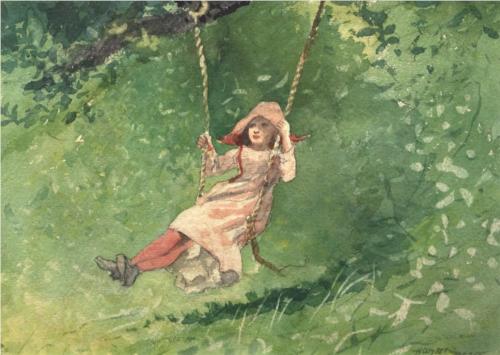
(Picture shows Girl on a Swing by Homer Winslow, 1897)

Celebrity Baby News: Nick Vujicic and Kanae Miyahara

04 Thursday Apr 2013

Posted by A.O. in Celebrity Baby News

≈ 8 Comments

Tags

celebrity baby names, honouring, Japanese names, middle names, name meaning

nick-vujicic-kanae-miyahara-HONEYMOONMotivational speaker Nick Vujicic, and his wife Kanae Miyahara, welcomed their first child on February 13, and have named their son Kiyoshi James.

Nick was born with tetra-amelia syndrome, a rare disorder where the person is missing all four limbs. While still in high school, he worked on fundraising for charities and disability campaigns, and began giving talks at his prayer group. Later he founded his own charity, Life Without Limbs. Since graduating from university, he has become a motivational speaker, travelling all over the world and speaking to schools, churches, and corporations. He wrote his first book in 2010, and markets his own DVDs. In 2009, he starred in the short film The Butterfly Circus, which has won several prizes, and gained Nick a Best Actor award.

Nick met Kanae after moving to the United States in 2007, and the couple were married last year, followed by a honeymoon in Hawaii. The family live in California.

Kiyoshi is a Japanese name meaning “pure”, and James is Nick’s middle name too.

Picture-1334

(Upper photo shows Nick and Kanae on honeymoon; lower photo shows Nick with Kiyoshi)

Waltzing with … Neville

24 Sunday Mar 2013

Posted by A.O. in Waltzing with ...

≈ 2 Comments

Tags

aristocratic names, dated names, english names, famous namesakes, fictional namesakes, Harry Potter names, honouring, locational names, middle names, name combinations, name history, name meaning, name popularity, nicknames, Old French names, sibsets, surname names

Bonner - 700_tcm16-37336Today is Palm Sunday, which commemorates the triumphal ride into Jerusalem by Jesus about a week before the Resurrection. The people hailed him as if he were a victorious king, laying palm branches in his path. We already know that James Cook named the Whitsunday Islands and Trinity Beach after important days in Easter-tide, and on Palm Sunday 1770, he named the Palm Islands in northern Queensland after the day. After World War I Palm Island became an Aboriginal settlement, where the government maintained a repressive control over the Indigenous population.

On March 28 it will be 91 years since Aboriginal activist and Jagera elder Neville Bonner was born, and another tie-in with this time of year is that Neville once lived on Palm Island. Born on a small Aboriginal island settlement in northern New South Wales, he never knew his father and received almost no formal education. After working as a farm labourer, he moved to Palm Island with his family in 1946, and became assistant overseer of the settlement.

His time on Palm Island gave him both an interest and experience in politics, and after moving to Ipswich in 1960, he became the president of moderate indigenous rights organisation One People of Australia League, and an office holder in the Liberal Party. He was the first indigenous Australian politician, and elected senator in his own right four times.

Neville was appointed to the board of the ABC, and the council of Griffith University, which also awarded him an honorary doctorate. In 1979 he was named Australian of the Year, and in 1984 appointed as Officer of the Order of Australia. After his death, the Neville Bonner Memorial Scholarship was created for Indigenous students to take honours in political science. There is a Queensland electorate and a Canberra suburb of Bonner, named after him.

Neville is an English surname which was introduced to Britain by the Normans, and refers to a French place name in Normandy, either Neuville or Neville. Both places mean “new settlement” in Old French, and are common names of towns in France.

The House of Neville is an aristocratic English family which can trace its lineage back to Anglo-Saxon times. Although they married into the Norman nobility and assumed a Norman surname, the male line of the family had been ruling landowners in Northumbria since before the Conquest, with their ancestral seat near Durham, and were already wealthy and powerful in their own region.

The Nevilles continued to gain power, often appointed to prestigious royal offices and administrative roles. Ralph Neville was one of the founding members of the Peerage of England, being one of those summoned to sit in the House of Lords when it was established in 1294, and by the 14th century the family owned large tracts of the north of England.

They married into the royal family, but lost a great deal of power by getting involved in the War of the Roses, and also backing the wrong horse by supporting Mary, Queen of Scots instead of Elizabeth I (the Nevilles also claimed descent from one of the royal families of Scotland). Although their glory days were over, the Nevilles continued gaining earldoms and baronies through a junior line of the family, and they are still members of the peerage.

Neville can be found used as a first name from the 16th century, but remained extremely rare until the 18th century. Given that the Nevilles were so powerful in the north, you might expect to find the name greatly more common there than in the southern counties, but that doesn’t seem to be the case. It did appear to originate in Lincolnshire though, which is one of the many areas where the Nevilles owned estates and had loyal political supporters.

In Australia, Neville just squeezed onto the Top 100 of the 1900s at #99. It continued rising and peaked in the 1920s (when Neville Bonner was born) at #30; it didn’t leave the Top 100 until the 1960s, missing out by only a few places at #104. Neville hasn’t charted at all here since the 2000s.

It is sometimes suggested that the character of Neville Longbottom from the Harry Potter books could help raise the popularity of this name; however, it seems that almost as soon as the first book was published, Neville disappeared from the charts altogether.

The trouble was that Neville Longbottom, although a good person and loyal Gryffindor, was not necessarily an attractive character to parents. Chubby, unpopular and low on self-esteem, he seemed to be dogged by the chronic bad luck suffered by the self-conscious and unconfident. He lost and forgot things, had minor accidents, was bullied by both students and teachers, and was a mediocre student except in Herbology.

In the fifth book, The Order of the Phoenix, it was revealed that Neville’s parents, brave and gifted warriors in the fight against Voldemort, had been tortured to madness and permanently institutionalised. Although this evoked enormous sympathy for Neville, it didn’t help to make his name seem more usable. Nobody was saying, “Yes, I’d love to name my child after a character with insane parents, I can really relate to that”.

With Harry’s encouragement, Neville’s skills as a wizard improve and his courage grows. Once out of Harry’s shadow, he becomes the leader of the resistance group at Hogwarts, the protector of those younger and weaker, and a vital part of Voldemort’s downfall. He is the story’s alternate hero – brave, noble, kind, selfless, and pure-hearted.

Is this late blooming enough to rehabilitate Neville as a name? Or will parents continue to think of the awkward klutz that Neville is for most of the book series?

Neville is a dated name, but we have seen other old-fashioned names come back into use and even become popular. It’s a little clunky, and a tad geeky, but also solid and dignified. I often see Neville used as a middle name to honour a great-grandparent, and I wonder when someone might feel brave enough to use it up front again. Older people will find it almost irresistible to use the long-popular nickname “Nifty” Neville, but the standard Nev still sounds surprisingly dashing.

Name Combinations for Neville

Neville Anthony, Neville Charles, Neville Frederick, Neville John, Neville Peter, Neville Winston

Brothers for Neville

Edwin, George, Harold, Ralph, Stanley, Theodore

Sisters for Neville

Cecily, Emma, Flora, Isabel, Peggy, Susan

POLL RESULT: Neville received an approval rating of 69%. 26% of people liked the name Neville, and only 4% hated it.

(Photo shows Senator Neville Bonner 1979; image from the National Archives of Australia)

Waltzing with … Orange

17 Sunday Feb 2013

Posted by A.O. in Waltzing with ...

≈ 2 Comments

Tags

Banjo Paterson, Celtic names, colour names, Devon names, english names, famous namesakes, French names, fruit names, historical records, locational names, middle names, mythological names, name combinations, name history, name meaning, name trends, nature names, patriotic names, plant names, rare names, royal names, Sanskrit names, sibsets, surname names, tree names, unisex names, vocabulary names

Orange jacket Postcard autumn leavesToday is Banjo Paterson’s birthday, and as we have already covered his name, I thought it would be interesting to look at the name of his birthplace.

At the time of Paterson’s birth, his parents were living at Buckinbah Station, near the town of Yeoval (then known as Buckinbah). Because of the station’s isolation, Banjo’s mother Rose went to stay with her aunt and uncle, Rose and John Templer, at their homestead Narrambla, and it was here that she gave birth to her son. Narrambla is about 2 miles from the centre of Orange, and today lies on the city’s outskirts. Rose herself was born on a homestead near Orange, so it was rather a family tradition.

Orange is a city in the Central West region of New South Wales. It was founded in the early 1820s as a convict settlement, and farmers began settling in the area in 1829. The first discovery of gold in Australia was made in 1851 near Orange, leading to the gold rush. Orange became a trading centre for gold, and continued growing due to its good position for agriculture. It was declared a city in 1946. Orange is known for its fruit growing, especially apples, pears and stone fruits; ironically it is too cool to grow oranges in Orange. It is also a thriving wine making area, and has both gold and copper mining. It is a sister city to Orange in California.

Orange was first called Blackman’s Swamp, after John Blackman, the guide who brought the first explorers there. The name was changed to Orange by the Surveyor-General Sir Thomas Mitchell, in honour of William, Prince of Orange. Mitchell and the Prince had both been aides-de-camp to the Duke of Wellington during the Peninsular War in Spain in the early 19th century. The Prince of Orange later became the first King of the Netherlands.

The Prince’s title originally came from the Principality of Orange in the south of France. It began life as a settlement called Arausio, named after a local Celtic water god; the god’s name is said to mean “temple”, meaning the temples that are on the forehead, not a temple as in a building for worship.

The town’s name was corrupted into Orange, and by the Middle Ages, conflated with the word orange, which comes from the Sanskrit for “orange tree”, naranga. The colour was named after the fruit, and first used this way in the 16th century.

As a personal name, Orange has a longer history than you might imagine, for the girl’s names Orenge and Orengia are found in the 13th century. As this predates the name for the fruit, their etymology is extremely uncertain, and possibly has the same source as the French town, which first became a principality of the Holy Roman Empire in the 12th century.

The surname Orange is either from the place name, or derived from the female name, and when the English name Orange appears in the early 17th century, it may have been after the surname. The name first arises in Devon, and in the beginning was exclusively given to girls, although the name became unisex after William III of England, or William of Orange, gave it a masculine feel.

As a first name, Orange is extremely rare in Australian records, and given to only a few girls, but as a middle name is much more common, and given to boys in almost equal numbers as girls (the middle name Orange was sometimes combined with William in the case of boys, showing that William of Orange still had some naming clout).

Colour names for girls are popular at the moment, with many little girls named Scarlet or Jade; tree names such as Olive and Willow are in the girls’ Top 100, surnames such as Marlowe and Quinn are fashionable for girls, and it’s not unusual to see baby girls named after European cities, such as London or Vienna. Orange seems a more vibrant continuation of these trends. Indeed, you could see it as a hyper juiced-up Clementine.

Orange is such a bright, outgoing, fun colour that it seems very cheerful as a person’s name, but it also has a more serious side, because orange is connected to religion and spirituality. There’s a real yin/yang, East/West dichotomy with the name Orange. Is it as crazy as a clown’s wig? Or as serene as a meditating Buddhist monk?

Orange fruit gains its colour from carotenes, the same thing which makes deciduous leaves turn orange. By chance, the city of Orange is known for its spectacular displays of autumn leaves, and it is therefore known as “The Colour City” (also a play on its name). You might see Orange as a name that evokes the changing of the seasons, and the turn of the year.

Although Orange started life as a girl’s name, it did become unisex, and is so rare that it could be worn by either boys or girls. If you are shy about using this vivid name, it would make an eye-catching middle.

Orange is a bold choice as a baby name, though not without shades of subtlety, and it celebrates Australian geography and history. I think Orange is one of the more distinctive of the patriotic names, and has a real tang to it.

Name Combinations for Orange

Orange Beatrice, Orange Eliza, Orange Lily, Orange May, Orange Ruby, Orange Victoria

Brothers for Orange

Eden, Hartley, Fitzroy, Paterson, Sunny, Tennyson

Sisters for Orange

Audley, Breeza, Corindi, Junee, Kendall, Marinna

Note: Name combinations from historical documents; just for fun, sibsets include names of other towns in New South Wales

POLL RESULT: Orange received an approval rating of only 27% – the lowest-rated featured name of 2013, and the only one to score less than 50%. 40% of people hated the name Orange, and nobody loved it.

(Picture shows a postcard from the city of Orange)

Famous Name: Rose

16 Wednesday Jan 2013

Posted by A.O. in Famous Names

≈ 14 Comments

Tags

classic names, English idioms, english names, flower names, French name popularity, French names, germanic names, Latin names, middle names, mythological names, name history, name meaning, name popularity, nature names, Norman names, plant names, popular names, Scottish name popularity, UK name popularity, vocabulary names

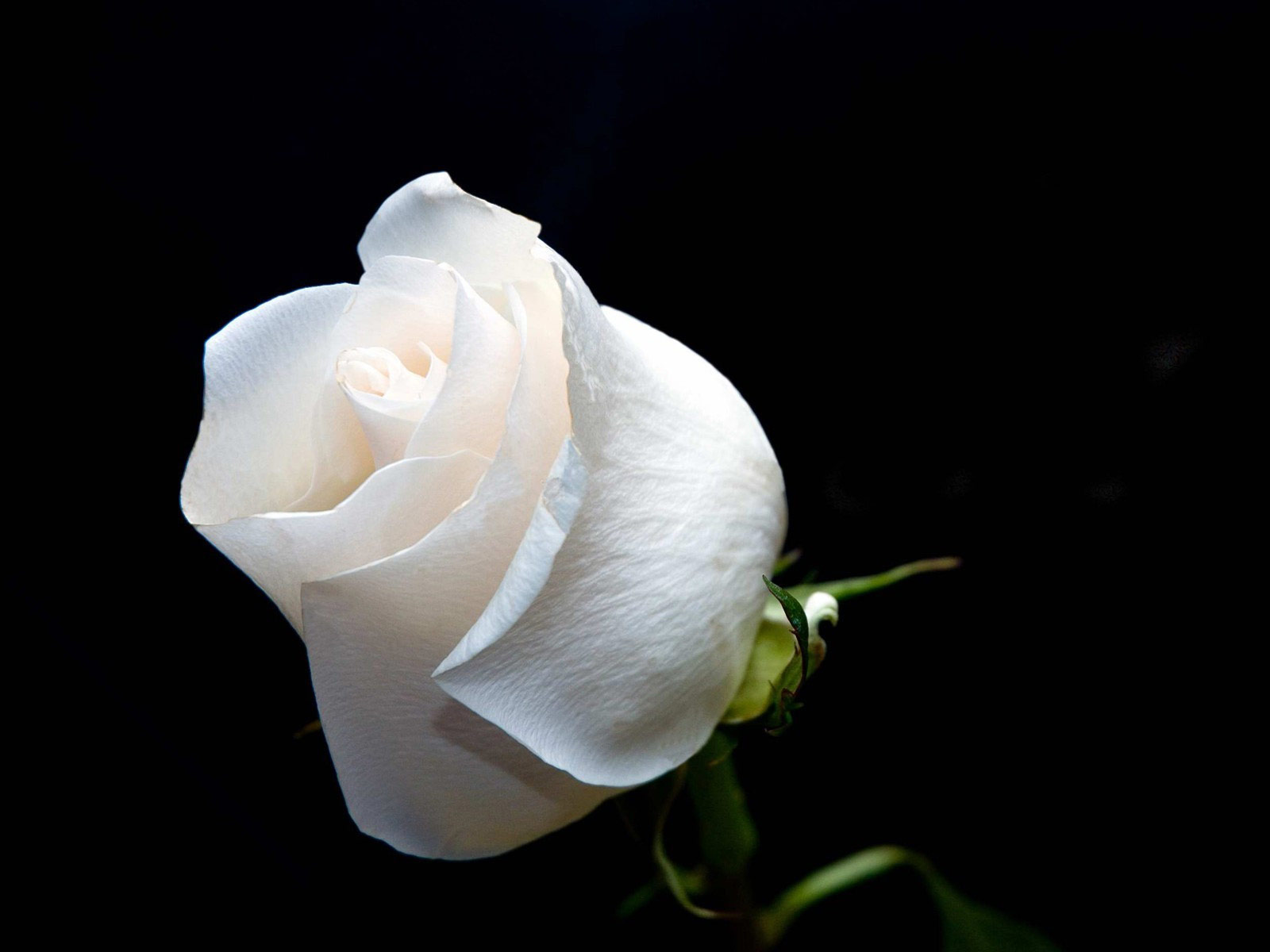
Gift_white_rosesThis Friday will be The Day of the Roses, which sounds lovely, but has a tragic meaning. January 18 this year marks the 36th anniversary of the Granville train  disaster, when a crowded train was derailed in a suburb of western Sydney, and hit the supports of a railway bridge. The bridge collapsed onto the train carriages, crushing the passengers inside. 83 people were killed, and more than 200 injured; it was then Australia’s worst peace time disaster, and is still the worst rail accident in Australian history.

The Granville Memorial Trust was established to commemorate the victims and to campaign for improvements to rail safety. Since the disaster, there has been a substantial increase in money spent maintaining the railways, and standards have improved. Each year on the anniversary of the crash, the Trust organises a memorial service, in which a bell rings 83 times, and 83 roses are thrown onto the railway tracks – one for each of the victims.

Rose is not the simple flower name it at first appears, for it began life as the Germanic name Hrodohaidis or Hrodheid, meaning “bright kind, famous kind” (kind in the sense of type, sort). It was the Normans who introduced it to Britain in the forms Roes, Rohais, Roheis and Rohese. The name Rohese was a fairly common one amongst the Norman nobility in England after the Conquest.

The form Rose began to be used by the early 1200s – even this early it was already being associated with the flower, whose name is French, derived from the Latin rosa. It goes back to an ancient word meaning “sweetbriar” (a wild rose also known as the eglantine rose).

Roses are tens of millions of years old, and have been grown in gardens for thousands of years – perhaps first in China, although they were grown in Persia, Babylon and ancient Egypt as well. The flower was sacred to the goddess Isis, and later the Greeks and Romans identified it with Aphrodite or Venus, so that it became seen as a blossom of beauty and eternal love – which is one reason why you are more likely to receive roses on Valentine’s Day than daisies or sweetpeas.

In medieval Christianity, roses became associated with the Virgin Mary, were carefully cultivated by monks, and in both Christian and Islamic mysticism, the rose can be a symbol of divine love. The rose is the national flower of England and the floral emblem of the United States; the red rose is the symbol of socialism; the white rose of peaceful resistance. The Romans used it as a symbol of secrecy, and to alchemists it meant balance and unity.

This ancient flower speaks to our hearts on so many different levels, and the rose has a richness of beauty we cannot help but admire. Yet it is mysterious too, and its thorns urge us to keep our distance, even while its loveliness attracts. Roses are by no means vain beauties, because they can be used to make perfumes, skin care products and medicines; rose hips can be made into jams, syrups and teas (in fact I am drinking a cup of it as I write). Rose petals are also edible.

We often think of Rose as being a quintessentially English name, and a beautiful Englishwoman is even called an “English rose”. Yet the name is also French, and Rose is Top 100 in France, as well as in England/Wales and Scotland.

In Australia, Rose is a classic which has always charted. It was #55 in 1900, and gradually fell until it left the Top 100 in the 1930s. It reached its lowest point in the 1970s, at #287, and after that began a stately rise, with its sharpest increase in the late 2000s. By 2008 it was near the bottom of the Top 100, and each year has continued to steadily gain. In 2011 it was #66 in New South Wales, and in Victoria and the ACT it has proved to be one of the names with the most growth during 2012. Rose is also extremely popular as a middle name.

Rose is an overwhelmingly feminine name, yet isn’t frilly. It’s both sensual and sensible, possessing the ripeness of a mature woman rather than a frivolous girl. It’s a short name, yet doesn’t seem abrupt or harsh but rather, soft and velvety as one of its own petals. Despite being an English word, there are many international variants of Rose, and it is easily understood in other countries. It is a name from fairy tale, reminding us of Briar Rose, the sleeping beauty, and Rose-Red, the vivid sister of fair Snow-White – and yet it also has a practical and wholesome appeal.

Increasing numbers of parents are choosing the name Rose for their daughters. In The Little Prince, the prince, who is in love with the only rose on his planet, cries in dismay when he comes to Earth and sees dozens of rose bushes; he has given his heart to something special, and found it commonplace. But a wise fox teaches him that his rose is unique, because it is the only one that he loves. There may be a garden of Roses in the world, but only one Rose who blooms there will be the one in your heart.

POLL RESULT: Rose received an approval rating of 86%, making it one of the most highly esteemed names of the year. The name Rose was judged to be beautiful and feminine (54%) and pretty and wholesome (21%), although 7% thought it was better left in the middle position. Nobody thought that the name Rose was boring.

Australian Beaches That Could be Used as Girls Names

30 Sunday Dec 2012

Posted by A.O. in Name Themes and Lists

≈ 8 Comments

Tags

Albanian words, animal names, Australian Aboriginal names, Bonds Baby Search, celebrity baby names, code names, english names, ethnonyms, famous namesakes, fictional namesakes, French names, Gaelic names, historical records, Italian names, Latin words, literary names, locational names, meteorological names, middle names, mythological names, name history, name meaning, name popularity, names from movies, names in songs, names of rivers, Native American names, nature names, nicknames, Polish names, retro names, Robert Louis Stevenson, Russian names, Scottish names, season names, Slavic names, spiritual concepts, surname names, unisex names, vintage names, vocabulary names

morningtideYou may have noticed that all the names that have been featured on the blog since the weather got warmer have had some connection with water or the sea. With summer holidays upon us, it is only fitting that the last Name List for the year is one of Australian beach names.

Airlie

The town of Airlie Beach in the Whitsunday region of north Queensland is a popular tourist destination and one of the departure points for the Great Barrier Reef. Because James Cook thought he arrived here on Whitsunday, every year there is a Blessing of the Fleet on Whitsunday (Pentecost) – although Cook almost certainly got the day wrong and it was really Whitmonday. The town’s beach is quite small, and infested by sea wasps, the most lethal jellyfish in the world. For the convenience of those wishing to avoid a painful death, a swimming lagoon has been built on the foreshore. The town is named after Airlie in Scotland, the seat of the Earl of Airlie. Airlie Castle is referenced in the ballad, The Bonnie House o’ Airlie, and mentioned in Robert Louis Stevenson’s novel, Kidnapped. The meaning is not known, although it’s possibly from the Gaelic for “edge of a ridge”. Airlie is a name reasonably well-known in Australia, although rare elsewhere; there’s ABC presenter Airlie Ward, hockey player Airlie Ogilvie, policy analyst Dr Airlie Worrall, and actress Airlie Dodds. This is a modern name with ties to Scottish history, and would be a great choice if Airlie Beach is meaningful to you.

Bondi

Bondi Beach is extremely popular with locals and tourists alike, one of Sydney’s iconic destinations, and heritage listed. In the fashionable eastern suburbs, it’s a place to see and be seen, lined with hotels, cafes and restaurants from where you can view the beach and beachgoers. Bondi has always had a reputation for showing a lot of flesh, and in stricter times the American actress Jean Parker was booted off it for wearing a bikini. These days topless bathing is common on Bondi. If almost-naked humans aren’t your thing, there is always the chance of seeing dolphins, fairy penguins, and in season, whales. Bondi Beach has many cultural events, including the annual City to Surf charity run, and it stars in TV shows such as Bondi Rescue and Bondi Vet. The name Bondi (said BON-dye) is said to be from boondi, a local Aboriginal word meaning “sound of water breaking over rocks”. The rare use of this name in records may be from the Italian surname Bondi (said bon-DEE), meaning “good day”. I saw a baby girl named Bondi in this year’s Bonds Baby Search. This is an unusual choice, but rather patriotic, and seems ideal for beach-loving Sydneysiders.

Etty

Etty Bay is a picturesque little bay in far north Queensland; the nearest town is Innisfail. Enclosed by rainforest filled with wildlife, it attracts bushwalkers, birdwatchers and picnickers, and is known as one of the best places to see endangered cassowary birds in the wild – cassowaries are large flightless birds around six feet tall. Etty Beach is considered safe for swimming, as long as you avoid saltwater crocodiles and deadly jellyfish. Etty is a pet form of names such as Esther, Ethel, Henrietta and Harriet, and was most common in the nineteenth and early twentieth centuries. With Etta tipped as the next retro-chic name, and Arrietty from The Borrowers receiving notice, Etty seems not only cute and usable, but positively stylish. It fits in with other vintage nicknames such as Elsie, Hattie and Millie.

Miami

Miami is a suburb of the Gold Coast which was first developed in the 1920s to entice tourists, and is still a popular place for people to visit. Its clean sandy surf beach make it a favourite destination for family holidays. It is named after Miami in Florida, as being somewhere else that’s hot, humid and beachy – during the 1920s, Miami enjoyed such prosperity and growth that it was dubbed “The Magic City”. This success the Queensland developers no doubt hoped to emulate. The city of Miami was named after the Miami River, and this in turn was named for the Native American people called the Maiyami. They took their name from the lake they lived by (later known as Lake Okeechobee); the name simply means “big water”. Miami is a name I see sometimes on little girls, and its not only an American place name, but an Australian one as well. It fits in with popular names such as Mia, Maya and Amy.

Pippi

The town of Yamba in northern New South Wales lies at the mouth of the Clarence River, and boasts eleven beaches, including Pippi. It’s primarily known for surfing, and the Pippi Beach Classic is a surfing event held here each January. At one end of the beach is the enticingly-named Lovers Point, and from here is an easy walk up to a rock shelf which gives magnificent views of the sea. Dolphins are plentiful, and whales can be seen during winter and early spring. Pippi Beach is named after the pippis or pipis which can be found here – small edible clams which are often used for fish bait. You may recall that John Sutton, co-captain of the South Sydney Rabbitohs team in the NRL, welcomed a daughter named Pippi last year. As John is a keen surfer, I wondered if Pippi Sutton may have been named after this popular surf beach. You probably also know the name from the Pippi Longstocking books by Astrid Lindgren – the character’s name was invented by Mrs Lindgren’s nine-year-old daughter, Karin. You can see Pippi as short for Phillipa, and if Pippa or Piper delight you, yet seem too common, then sprightly Pippi may fit the bill.

Rainbow

Rainbow Beach is a small town in southern Queensland which was once a centre for sand-mining, but is now a popular tourist destination with an attractive beach and many bushwalking tracks. The town get its name from the brilliant coloured sand dunes which surround it. According to a local Aboriginal legend, the dunes received their colours when the spirit of the rainbow plunged into the cliffs after coming off second-best in battle. More prosaically, the colours stem from the sand’s rich mineral content. The evanescent beauty of rainbows have made them part of mythology for many thousands of years. Both Greek and Norse myth saw the rainbow as a path between heaven and earth; in Irish folklore there is a pot of gold at the end of the rainbow; and in the familiar story of Noah and the Ark from the Old Testament, the rainbow is a sign of God’s promise to never destroy the earth again. In Australian Aboriginal mythology, the rainbow serpent is of great significance and power, creating and marking the earth’s territories, and controlling its water resources. The subject of artists, singers and poets, the stuff of hopes and dreams, the rainbow has long been used as a symbol of social change. The striking name Rainbow is not that rare in old records, and used for both sexes, but is most common as a middle name.

Trinity

Trinity Beach is a suburb of Cairns in far north Queensland; the city lies on Trinity Bay, which is where the suburb gets its name. Captain James Cook named it on his 1770 voyage, as he arrived there on Trinity Sunday, which is the first Sunday after Pentecost (hopefully he had his dates sorted out by this stage). It is a festival to celebrate the Holy Trinity of the three Persons of God: Father, Son, and Holy Spirit. Although the Holy Trinity is a Christian concept, the idea of a triple deity is found in several religions. The name Trinity was used from the 17th century, and was given to both sexes, in honour of the Holy Trinity. In recent years, it has gained a sci-fi image, for there has not only been a cult science-fiction film called Trinity, but Trinity is the love interest in The Matrix movie series, and Trinity Wells a newsreader in Doctor Who, Torchwood and The Sarah Jane Adventures. More ominously, the Trinity Test was the code name for the first detonation of a nuclear bomb in 1945, heralding the start of the Atomic Age.

Vera

Vera View Beach is just north of famous Cottlesloe Beach, in Perth, Western Australia. It isn’t one you will see promoted as a major tourist destination; not the most stunning beach in the world, it nonetheless makes a pleasant walk from the main beach, and is near the main cafe strip. It is also a good place to go snorkelling, as there a small reef nearby teeming with sea life. The beach’s name comes from the fact that it is near Vera View Parade in Cottlesloe. Vera is a Russian name which means “faith”; we tend to be struck by its similarity to the Latin for “truth”, while Albanians notice that it sounds like their word for “spring”. Vera was #15 in the 1900s, and by the 1940s was out of the Top 100. It ceased to chart in the 1980s, but has very recently made a comeback, and was #626 in 2011. Its image was severely dented by the sour-faced prison guard, Vera “Vinegar Tits” Bennett, in the 1970s-80s TV series, Prisoner (no wonder it disappeared from the charts then). However, with simple old names firmly back in fashion, and the V sound becoming increasingly popular, retro Vera could do very well.

Vivonne

Vivonne Bay is on Kangaroo Island in South Australia; the island is off the coast of Cape Jervis. The pristine beach at Vivonne Bay is several kilometres long, and popular for surfing and fishing. There is a tiny town of Vivonne beside the bay. Vivonne Bay was named by the French explorer Nicolas Baudin, who came here in 1803. He was the first to map the western and southern coasts of Australia, and his expedition was a great success, discovering more than 2500 new species and meeting the Indigenous people of Australia. Apparently his expedition harboured a spy – one of his men prepared a report for Napoleon on how to invade and capture the British colony in Sydney Cove, but recommended not to. Baudin died of TB in Mauritius on the way home. He named Vivonne Bay after the French town of Vivonne, near Poitiers (or the aristocratic surname which comes from the town – the town’s name comes from the nearby river Vonne). Readers of Marcel Proust will remember he used the name Vivonne for the river in Swann’s Way. I think this name is pretty, and seems like a cross between Vivienne and Yvonne. It’s different, but not too different.

Wanda

Wanda Beach lies on Bate Bay in the suburb of Cronulla; this is in Sutherland shire, in the southern districts of Sydney. Wanda has a dark past, because there were two murders here in 1965. Two teenage girls, Marianne Schmidt and Christine Sharrock, best friends and neighbours, disappeared at Wanda Beach while on a picnic, and their bodies, partially covered in sand, were found the next day. The murder is still unsolved. Wanda Beach gets its name from an Aboriginal word, wanda, said to mean “beach” or “sand dunes”. Wanda is also a Polish name; there is a medieval Polish legend about a Princess Wanda, and the name was popularised in the English-speaking world by English author Ouida’s 1883 novel, Wanda. The name may come from the West Slavic people known as the Wends; their name possibly means “tribe, kinship, alliance”, ultimately from an ancient word for “love, desire”, and related to the name Venus.

(Photo shows the morning tide coming in at Etty Bay)

The Historical Naming of British Monarchs

23 Sunday Dec 2012

Posted by A.O. in Naming Issues

≈ 11 Comments

Tags

choosing baby names, famous namesakes, historical records, honouring, Mer de Noms, middle names, names of piercings, Nook of Names, regnal names, Robin Hood, royal names, royal naming traditions, saints names, You Can't Call It "It"!

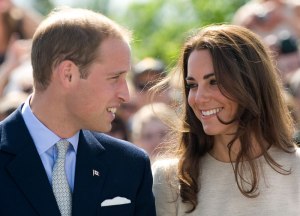
william-kate-canada-love5With the announcement early this month that Prince William and the Duchess of Cambridge are expecting their first child, the baby name blogosphere went slightly gaga. A few people even had a go at predicting the name of the royal baby, with Lou at Mer de Noms and Elisabeth at You Can’t Call It “It”! doing a great job. Of course, Kay at Nook of Names got a jump on all of us, and did her excellent analysis more than a year ago.

I’m going to admit right now that I don’t know what the royal baby will be named, and I can’t guess. I haven’t even been able to guess the baby names chosen by family and close friends, and these are people I know well.

But what I can do is to look at the names of the ruling monarchs of Britain and England (back to William the Conqueror), see how they were named, and then see what the royal baby might be called if the same principles were applied this time. As this gives a wide selection of choice, I have eliminated those names which seem  unlikely as they are still in use by other members of the royal family who have the title Prince or Princess, or which are too obviously “foreign”.

Although this doesn’t actually tell us what the baby will be called, as I studied the names of past monarchs, a few things stood out as to how they weren’t named.

  • Monarchs could be named for someone from several generations back, but almost none were named after a ruler from long ago in history. This makes the idea that the royal baby might be named after someone from many hundreds of years ago, such as Edmund or Matilda, seem rather fanciful.
  • Apart from being named after one of their parents, monarchs were almost never named after a relative who was still alive. For the baby princess to be named Elizabeth, for example, is by no means impossible, but would be historically unusual.
  • The Duchess of Cambridge is not the only commoner to marry a British royal, as the mother of Queen Anne was one. Although royal babies could be named after their commoner mother, they were not named after her relatives. If the royal baby is named after one of the Middletons, it would be a genuine break with tradition, and a sign we have entered a new age.
  • Only one female monarch was given a feminine form of a man’s name, with Queen Victoria named Alexandrina after her godfather, Alexander I of Russia (she didn’t keep the name after she became queen). The idea that the princess could be named Charlotte after Prince Charles, or Phillipa after Prince Phillip, would thus be a very unusual one.
  • The most obvious: nearly all English and British monarchs are named after a relative. The only two I could find who weren’t were Edward I and John. Edward I was named after Saint Edward the Confessor, which was considered wildly eccentric at the time, although Edward is now a traditional royal name. John was named after St. John the Baptist. Very much a younger son, he was not expected to rule, and interestingly his name was shunned by subsequent royalty – there was never a John II.
  • Apart from the occasional deceased uncle or foreign godparent, monarchs were nearly all named after a direct ancestor – a parent, grandparent or great-grandparent, for example. It’s fun looking through the royal family tree and wondering if the royal baby might be given the name of a great-great-great-aunt, or one of Queen Victoria’s sons, but this seems a very distant hope.

Now, with our expectations in check, let’s see what names are available, if we follow history.

POTENTIAL PRINCESSES

Alice

This seems to be almost everyone’s #1 choice for a baby princess, who would be named after her great-great grandmother, Princess Alice of Battenberg, the mother of Prince Philip. There have been four British princesses named Alice, but no queens – in fact, there are many more Queen Alices in fiction than in real life, giving this sweet name a distinct fairy-tale quality on a modern-day monarch.

Elizabeth

Elizabeth is seen as a front-runner, presumably because it’s thought Queen Elizabeth would happily endorse a tiny namesake. Princess Elizabeth would be named after both her great-grandmother and great-great grandmother, and as a bonus, Elizabeth is the middle name of the Duchess of Cambridge. There have been five English queens named Elizabeth, two of them rulers in their own right, and one Scottish Queen Elizabeth. However, as Queen Elizabeth II is still alive, this would be a historically unusual choice.

Diana

The favourite choice of the gossip magazines, and the name of the baby’s grandmother. When the royal couple visited our region, they were asked in an interview if they would call their first daughter Diana, and William said it would be one of her middle names. I actually think it would be nice if Diana was left for Prince Harry to use for his daughter’s first name, since Prince William got his mother’s engagement ring.

Mary

A solid choice that many are tipping, with the princess to be named after her great-great-great-great grandmother, Mary of Teck. There have been six British princesses named Mary, and four queens, two of them rulers; it’s also been used amongst Scottish royalty. Historically speaking, Mary stacks up extremely well.

Victoria

Another favourite choice for the baby princess, who would be named after her great-great-great-great-great grandmother, Queen Victoria. There has only ever been one queen with this name, but eight British princesses called Victoria – in fact it’s the birth name of Alice of Battenberg. A Victoria II would probably go down well with the British populace, although the Crown Princess of Sweden (related to the royal family) will be one day be Queen Victoria as well.

Catherine

Few seem enthusiastic about a baby Princess Catherine, but historically, it’s the most likely option. Eighteen monarchs have been named after a parent, and of the three queens who have ruled Britain, two of them were named after their mother – and the third one took her mother’s name, Victoria, as her regnal name. Queen Elizabeth II herself is named after her mother, Lady Elizabeth Bowes-Lyons. There have been five English queens named Catherine, and at least one of them, Catherine of Aragon, was deeply loved by her subjects.

Margaret

Margaret is a name from Scottish royalty, and a medieval Queen Margaret is one of the patron saints of Scotland. There has been only one English Queen Margaret, and she came to a sad end. A Princess Margaret would be named after Queen Elizabeth’s sister, and I somehow feel that this namesake, who attracted much scandal (whether deserved or not), would not be a help. However, one of Prince Philip’s sisters was named Margarita, and this is the English form of her name too.

Charlotte

A Princess Charlotte would be named after her great-great-great-great-great grandmother, Princess Charlotte of Denmark, whose birth name was Louise. There have been two British princesses called Charlotte; one of them went on to become a queen, but not of Britain. Lady Diana’s brother Charles had a daughter named Charlotte last year, who will be the royal baby’s second-cousin.

Henrietta

Queen Victoria is the only ruling queen to be named after a man – her godfather. We don’t know who will be the royal baby’s godfather, but traditionally the best man from the wedding is chosen as one of them, which makes Prince Harry a shoo-in. Could the princess be given the feminine form of his name? Unlikely, although there has been both a Queen and Princess Henrietta of Britain.

Augusta

A Princess Augusta would be named after her great-great-great-great-great grandmother, Princess Augusta of Hesse-Kassel (who was married to a Duke of Cambridge). There have been five British princesses named Augusta, and although a few of them were in line to one day become queen, by mischance none of them made it that far, giving this name an unlucky feeling for a monarch. This seems very unlikely as a possible royal baby name.

POSSIBLE PRINCES

George

Everyone’s #1 choice for a prince, and you can see why. It’s not only a traditional royal name, held by six British kings and three princes, but also one of the patron saints of England. Prince George could be named in honour of his great-great grandfather, King George VI, although that monarch’s birth name was Albert. The name is also a traditional one in the Spencer family, and Prince William has a cousin named George on the Spencer side, as well as a relative called George on the royal side, the Earl of St Andrews.

Alexander

This name was a traditional one in the monarchy of Scotland, but has never been used in England. The Prince could be named after his great-great-great-great grandfather, Prince Alexander of Hesse and by Rhine, and his great-great-great-great-great grandfather, Duke Alexander of Württemberg. There are two minor royals with this name, Alexander Windsor and Alexander Ogilvy, and a Spencer cousin, Alexander Fellowes, reportedly close friends with Princes William and Harry.

Louis

This is thought to have a reasonable chance of being selected, as Louis is one of Prince William’s middle names, and it’s a traditional one in the British royal family, although more often connected to the French monarchy. Prince Louis could be named after his great-great-great grandfather, Louis Mountbatten (formerly Prince Louis of Battenberg), and his great-great-great-great-great grandfather, Louis IV, Grand Duke of Hesse. However, some royal-watchers think that Louis Lopes, the toddler grandson of Camilla, Duchess of Cornwall, may scupper Louis as a royal name.

Frederick

This is sometimes mentioned as a possible baby name, because it is a traditional one in the royal family. Although there are three princes named Frederick in British history, there are no kings. Lord Frederick Windsor is the son of Prince and Princess Michael of Kent and there is a Spencer cousin named Frederick (the heir to the earldom); another family connection is that the Duchess of Cornwall has a baby grandson named Freddy. Prince Frederick could be named after his great-great-great-great-great grandfather, Friedrich, Duke of Schleswig-Holstein-Sonderburg-Glücksburg. Friedrich is an ancestor of both Queen Elizabeth and Prince Philip.

Francis

This would greatly appeal to fans of Lady Diana, as it is the masculine form of her middle name, Frances. As such, it may not meet with the approval of Queen Elizabeth. However, the prince could be named after his great-great-great-great grandfather, Francis, Duke of Teck – the duke’s son is the only Prince Francis the royal family have had.

Nicholas

Very much an outside chance, for there has never been an English king or prince named Nicholas. There is a minor royal named Nicholas Windsor, but he is not in line to the throne. Prince Nicholas could be named after his great-great-great-great-great grandfather, Nicholas I of Russia.

Joseph

I consider this a very unlikely choice for the royal baby, who would be named after his great-great-great-great-great grandfather, Joseph, Duke of Saxe-Altenburg.

Albert

Queen Victoria longed to have a King Albert on the throne, but her dream was never realised, as even royals called Albert have preferred to take another regnal name. The prince could be named after his great-great grandfather, or after his great-great-great-great-great grandfather, Prince Albert of Saxe-Coburg, and as a bonus to Lady Diana fans, Albert was the name of her grandfather. I fear the genital piercing of this name has ruined the chances of another Prince Albert for some time.

Adolphus

Prince Adolphus was the great-great-great-great-great grandfather of the royal baby to be. Let’s face it – this name would go down like a lead balloon. It’s not happening.

John

Count John Hauke was another great-great-great-great-great grandfather. The British royal family avoid the name John, as it is supposedly an unlucky one for them. King John is a storybook villain, thanks to Robin Hood, and two Prince Johns died young. Diana wanted to call her eldest son John, after her father, but she was not allowed to because of this royal tradition.

What would you like the prince or princess to be named? And do you want the royal family to continue their naming traditions, or start creating new ones?

NOTE: Thank you to Elea from British Baby Names for explaining where King John got his name from.

Celebrity Baby News: Anneliese Seubert and Robert O’Farrell

11 Tuesday Dec 2012

Posted by A.O. in Celebrity Baby News

≈ 2 Comments

Tags

celebrity baby names, honouring, middle names

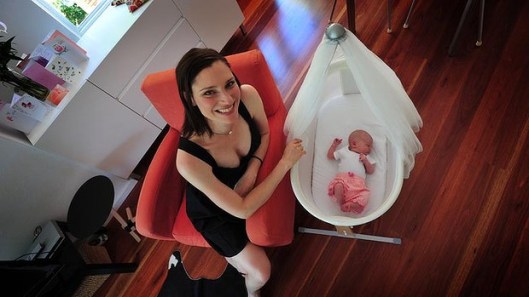
art729-model3-620x349Model Anneliese Seubert, and her partner Robert O’Farrell, welcomed their daughter Camille Winter on December 2, just before midnight. Camille’s middle name is a twist on her great-grandmother’s name, Winifred; it was Robert who came up with Winter.

Anneliese is originally from Germany, coming to Australia as a child. She began modelling at 15, after reaching the finals of the Dolly Covergirl Competition. At 17, she won the 1990 Ford Supermodel of the World competition, winning a contract with Ford Models. Since then she has modelled for designers such as Christian Dior, Karl Lagerfeld, and Yves Saint-Laurent.

Robert is a public servant, and he and Anneliese met three years ago on a blind date; they moved to Canberra two years ago.

We recently had another celebrity baby named after her great-grandmother, Rubika Johnson, and these two babies show the different ways you can honour loved ones, depending on whether you prefer style or sentiment.

← Older posts
Newer posts →

Enter your email address to follow this blog

Categories

Archives

Recent Comments

A.O.'s avatarwaltzingmorethanmati… on Zarah Zaynab and Wolfgang…
Madelyn's avatarMadelyn on Zarah Zaynab and Wolfgang…
JD's avatardrperegrine on Can Phoebe Complete This …
A.O.'s avatarwaltzingmorethanmati… on Rua and Rhoa
redrover23's avatarredrover23 on Rua and Rhoa

Blogroll

  • Appellation Mountain
  • Baby Name Pondering
  • Babynamelover's Blog
  • British Baby Names
  • Clare's Name News
  • For Real Baby Names
  • Geek Baby Names
  • Name Candy
  • Nameberry
  • Nancy's Baby Names
  • Ren's Baby Name Blog
  • Sancta Nomina
  • Swistle: Baby Names
  • The Art of Naming
  • The Baby Name Wizard
  • The Beauty of Names
  • Tulip By Any Name

RSS Feed

  • RSS - Posts

RSS Posts

  • Celebrity Baby News: Melanie Vallejo and Matt Kingston
  • Names from the TV Show “Cleverman”
  • Can Phoebe Complete This Sibset?
  • Zarah Zaynab and Wolfgang Winter
  • Baby, How Did You Get That Name?
  • Celebrity Baby News: Media Babies
  • Celebrity Baby News: Adelaide Crows Babies
  • Celebrity Baby News: Chris and Rebecca Judd
  • Names at Work: Name News From the World of Business and Employment
  • Celebrity Baby News: Sporting Round Up

Currently Popular

  • The Top 100 Names of the 1930s in New South Wales
  • The Top 100 Names of the 1940s in New South Wales
  • Rare Boys Names From the 1950s
  • Girls Names From Stars and Constellations
  • Celebrity Baby News: Alisa Camplin and Oliver Warner

Tags

celebrity baby names celebrity sibsets english names famous namesakes fictional namesakes honouring locational names middle names name combinations name history name meaning name popularity name trends nicknames popular names saints names sibsets surname names twin sets unisex names

Create a free website or blog at WordPress.com.

Privacy & Cookies: This site uses cookies. By continuing to use this website, you agree to their use.
To find out more, including how to control cookies, see here: Cookie Policy
  • Subscribe Subscribed
    • Waltzing More Than Matilda
    • Join 517 other subscribers
    • Already have a WordPress.com account? Log in now.
    • Waltzing More Than Matilda
    • Subscribe Subscribed
    • Sign up
    • Log in
    • Report this content
    • View site in Reader
    • Manage subscriptions
    • Collapse this bar
 

Loading Comments...