• About
  • Best Baby Names
  • Celebrity Baby Names
  • Celebrity Baby Names – Current
  • Celebrity Baby Names – Past
  • Featured Boys Names
  • Featured Girls Names
  • Featured Unisex Names
  • Links to Name Data
  • Waltzing on the Web

Waltzing More Than Matilda

~ Names with an Australian Bias of Democratic Temper

Waltzing More Than Matilda

Tag Archives: honouring

Saturday Sibset: Brodie Holland’s Twin Boys

01 Saturday Oct 2011

Posted by A.O. in Sibsets in the News

≈ 9 Comments

Tags

celebrity baby names, celebrity sibsets, famous namesakes, honouring, nicknames, popular culture, surnames, twin sets

This week twins appeared to be in. Elisabeth at You Can’t Call It “It”! asked people to help name twin girls; should the parents choose the names they love most, or go for something less popular, and how could they honour family members in the process? Lou at Mer de Noms pondered why parents of boy-girl twin sets so often give a more mainstream name to the male twin. My midweek sibsets featured families with twins, including a woman who had given birth to three sets of twins during her life.

So it makes sense that today’s sibset should also be a family with twins, and as I’ve been a bit slack with the celebrity sibsets, it’s time to feature another famous Australian and their family.

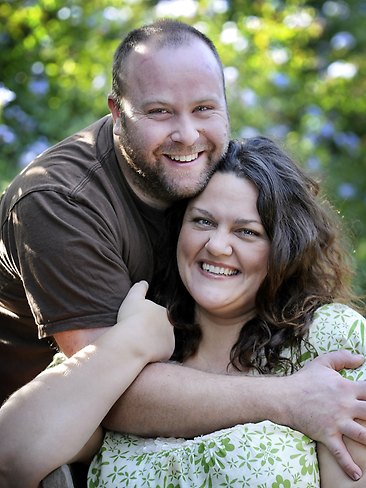
Brodie Holland is a former AFL footballer who is best known for playing with the Collingwood Magpies. He retired in 2008, and now plays suburban football. He has taken part on Dancing with the Stars, where he made the final four, has appeared in advertisements, been a panellist on the AFL Footy Show, and made the obligatory cameo appearance in soap opera, Neighbours.

Brodie married Sarita Stella, a former model from game show, The Price is Right, in 2008, and in 2010 they had a daughter named Stevie.

In March, Sarita gave birth to their identical twin boys, Kip and Bowie, who were 10 weeks premature. Since that time, the boys have been in and out of hospital.

Kip was born with anaemia, and required open-heart surgery, and Bowie was at risk because he received too many red-blood cells while in the womb; this condition is called twin anaemia-polycythemia sequence (TAPS), and affects one-in-twenty identical twins who share the same placenta.

After a long stay in ICU, Kip had to be rushed back to hospital when he stopped breathing due to severe reflux. Later, both babies were admitted to hospital with bronchitis.

Clearly, it’s been a testing time for the Holland family; Brodie says he and Sarita are both positive thinkers by nature, but they couldn’t help but consider the possibility their sons might not make it. Their daughter Stevie was less than 11 months old when the twins were born, so they had three children under the age of one to take care of – just like Sam and Lyndall Mitchell, who also had twins in March with health complications, and a baby less than one year old.

Kip and Bowie are now doing well, putting on weight, and only require monthly check-ups. Brodie says that they feel very lucky, and even though the feeding and changing seems never-ending, he loves every minute of it.

Kip is a short form of Christopher, or any name beginning with Kip-, such as Kipling. Although the word kip is used to identify moves in sports such as dancing, gymnastics and trampolining, it’s most familiar as British slang meaning to have a little sleep (like nap, it is both a noun and a verb).

Bowie seems to be in honour of influential British pop star David Bowie, whose real name is David Jones. He chose his stage name from the 19th American frontiersman, Jim Bowie; Jim Bowie died at the Alamo, and gave his name to the Bowie hunting knife. You could also see Bowie as short for names such as Bowen, or a variant of Beau.

I think Kip and Bowie Holland is a very sprightly twin set – the cute perkiness of Kip makes a nice contrast to the star power of Bowie. I like the way each of the Holland children has a different vowel-sound in their name: short I in Kip, round O in Bowie, and long E in Stevie.

As Bowie is connected with singer David Bowie, and Stevie with singer Stevie Nicks, it does make you wonder if Kip is named after a popular singer from that era as well. I can only think of heavy metal vocalist, Kip Winger, or Kip Herring from punk band, The Vibrators, who don’t have quite the stature of either Bowie or Nicks.

(Story and photo from the Herald Sun, September 5 2011)

Ruby Anne Susie Murch: A Daughter for Cathy Freeman and James Murch

25 Sunday Sep 2011

Posted by A.O. in Celebrity Baby Names

≈ 10 Comments

Tags

celebrity baby names, english names, famous namesakes, French names, honouring, name popularity, nicknames, popular names, vocabulary names

Cathy Freeman’s daughter was one of the most anticipated babies to be born this year, because Cathy is not only one of our greatest athletes, but also one of our most loved. Australia has been blessed with more than its fair share of fast runners, but Cathy did more than run fast – she has that charisma that draws people to her, and a smile that can light up, not just a room, but an entire stadium.

Her sporting achievements are well-known and add up to a stellar career. She began running aged five, won her first gold medal at the age of eight in Brisbane, and was encouraged by her family to pursue her dream of becoming an Olympic athlete. She won her first international gold medal for the women’s relay at the Commonwealth Games in Auckland, 1990; this made her not only the first Aboriginal gold medal winner at a Commonwealth Games, but also the youngest, as she was only 16. To commemorate her achievement, she was awarded Young Australian of the Year in 1990. In her acceptance speech, she said that she ran for all Australians, but particularly for Aboriginal Australians, whom she hoped to inspire to reach their own goals.

Cathy’s childhood dream came true in 1992, when she became the first Aboriginal Australian to compete at an Olympics Games, in Barcelona. She won double gold at the 1994 Commonwealth Games, and in 1996 received her first Olympic medal when she won silver in the 400 metres in Atlanta. Three subsequent Grand Prix victories and her taking first place at the 1997 World Track and Field Championships in Athens confirmed her status as world champion over 400 metres. In 1998, she received the Australian of the Year Award for her athletic achievements. To date, she is the only person who has ever been awarded both Young Australian of the Year and Australian of the Year.

The 2000 Olympics in Sydney were expected to be the jewel in her crown, and she was chosen to light the Olympic flame at the opening ceremony. Cathy didn’t disappoint, as she won her first Olympic gold medal for the 400 metres, and after the race, did her victory lap carrying both the Australian and Aboriginal flags as a symbol of national reconciliation. This had to gain the special permission of the International Olympic Committee, because although the Aboriginal flag is officially recognised in Australia, it isn’t a national flag, and isn’t recognised by the IOC. Cathy later explained that the carrying of both flags was the culmination of a promise that she had made to herself when she was 16, and just beginning her international career.

Further honours came her way: she received the Olympic Order, the Arthur Ashe Courage Award, the Laureus Sportswoman of the Year Award, and the Order of Australia Medal all in the same year, 2001. After her retirement, she devoted herself to many charitable causes, most notably the Cathy Freeman Foundation, which encourages indigenous children to stay in school and succeed academically.

Catherine Astrid Salome Freeman had become not just an athlete, not just an Olympian, not just a gold medallist, but also a spokesperson, a community leader, a role model, an icon, an inspiration, a star. Her success was beyond the wildest dreams of the little girl who had won primary school sports day races in Queensland.

A couple of years ago I watched an episode of genealogy show, Who Do You Think You Are?, featuring Cathy Freeman. She already knew that her grandfather, Frank Fisher, was a famous rugby league player from an Aboriginal mission, known for being a fast sprinter and a fierce competitor on the field, but was surprised to find her great-grandfather, Frank Fisher senior, served in World War I as a member of the Light Horse. She discovered that she had both English and Chinese ancestry on her mother’s side, and that her mother’s family had been sent to a Palm Island penal settlement for being too independent. They were to remain there for four generations – a place so strictly controlled that Cathy’s mother Cecelia was not allowed to visit family members for Christmas; this was in 1963.

As Cathy read the documents connected with her family history, she shed tears of rage and frustration on behalf of her ancestors. She said that if she had known all this when she was an athlete, she would have run even faster, and her running would have been fuelled by anger. Cathy has a tattoo on one bicep that reads Cos I’m Free, and she realised that her freedom was a historically recent thing.

Despite her magnificent public success, her private life was filled with drama, turmoil and even scandal. But as Cathy explained in an interview: “I might be a champion athlete but that doesn’t make me a champion person. Why shouldn’t my personal life be just as difficult and troublesome as any other woman’s? God, the mistakes I have made and the tears I’ve shed . . . Apart from a certain God-given talent I firmly believe the reason I achieved so much is that running was my escape from a chaotic personal life. Athletics was my refuge, something I could lose myself in.”

Fortunately, her chaotic love life got a lot happier and more stable when she met fund manager James Murch at a charity ball – a man that Cathy describes as “fantastic, fabulous, sexy, beautiful, gorgeous”, and also her best friend. In April 2009, Cathy and James were married in a Ba’hai wedding ceremony that included traditional indigenous elements. They were very open about wanting children as soon as possible, and said they were willing to adopt if necessary.

Cathy dropped a hint that she might be pregnant in September last year, during a ceremony to mark the tenth anniversary of the Sydney Olympic Games. She made a comment about her memory living on through her “unborn children and their children”. After she was questioned what she meant by that, her thought was, “Oh dear, what have I said?”. Pictures of her looking plumper, and a suddenly cancelled charity run across Sydney Harbour Bridge only fuelled speculation.

The pregnancy was officially announced in February, and it was also revealed that pregnancy had triggered gestational diabetes, which is said to run in Cathy’s family, and which Aboriginal women have a higher risk of getting. She had to inject herself with insulin four times a day, and after always being so fit and healthy, it was hard for her to adjust to the idea of her body failing her. In fact, in photos taken during the last few months of her pregnancy, Cathy looks noticeably tired and unwell, although she was able to continue going to the gym.

Her daughter Ruby Anne Susie was born on July 8, and we are told that the delivery went smoothly and both mother and baby were healthy. On July 11, she posted photos of Ruby on her website, and said on Twitter that she was recovering well and loving being a new mum. By the end of July, she was back at work promoting children’s sport.

Ruby was the #1 name last year in Victoria, where the Murch family live, and Cathy and James may well have picked it simply because they love it. However, this pretty gemstone has historically been often used as a name in the indigenous community, and there are several famous Aboriginal women called Ruby, including singer-songwriter, Ruby Hunter; political activist Ruby Langford Ginibi; and Ruby Hammond, the first Aboriginal woman political candidate in South Australia.

I think the middle name Anne may be in tribute to Cathy’s older sister, Anne-Marie, who was born with severe cerebral palsy and spent most of her life in a home for the disabled. Cathy always said that she had to run so fast because Anne-Marie couldn’t move her hands and feet at all, and that Anne-Marie has been a constant inspiration in her life – not just the wind beneath her wings, but a tornado. Anne-Marie died when Cathy was sixteen. The second middle name, Susie, is after James’ mother, who sadly passed away before she could ever meet Cathy.

I must confess that I admire Cathy Freeman a great deal, and basically I would have loved any name she chose for her daughter. I think Ruby Anne Susie is a bright, smiley, sunshiney name that’s cute as a button and also honours loved ones – two completely biased thumbs up!

(Photo from Cathy’s Freeman’s website)

Celebrity Baby News: Kristy Hinze and Jim Clark

21 Wednesday Sep 2011

Posted by A.O. in Celebrity Baby News

≈ 3 Comments

Tags

celebrity baby names, honouring

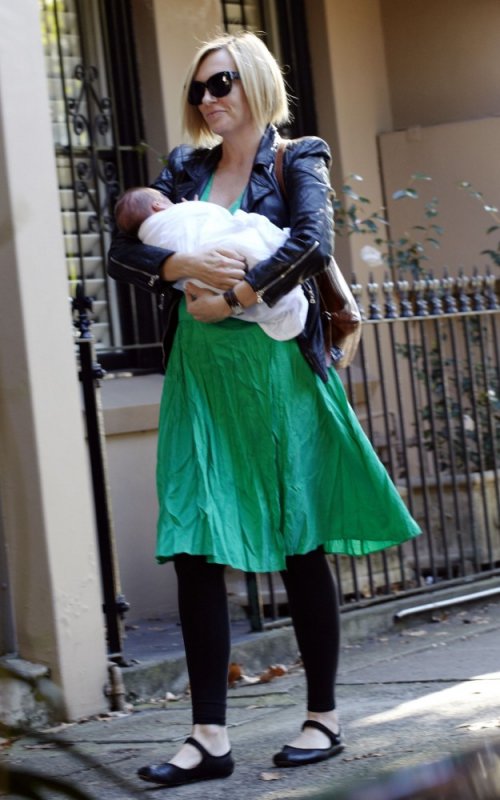
Model Kristy Hinze, and her husband, American Internet billionaire Jim Clark, welcomed their first child together a week ago – a baby girl called Dylan Vivienne, who was born in New York, but is said to have been conceived in Australia. Her middle name honours Kristy’s mother, Vivienne.

Kristy is the grand-daughter of Queensland politician, Russ Hinze, and the sister of Guy Hinze, who owns Bubs Baby Shops. She has been modelling since she was 14, and appeared on season 10 of America’s Next Top Model. She was host and head judge on Project Runway Australia for the first two seasons. She is currently am ambassador for Sportscraft.

Her husband, James H. Clark, founded several Silicon Valley companies, including Silicon Graphics and Netscape. In 1997 he won the Kilby Award for his contribution to computer graphics and networked information exchange. He has two adult children from a previous marriage called Michael and Kathy; Kathy is married to Chad Hurley, co-founder of YouTube.

Kristy and Jim were married March 2009 in the Caribbean. They are expected to head home to their estate in Florida soon.

(Story and photo from The Daily Telegraph, September 21 2001)

Saturday Sibset: The De-Stressed Family

27 Saturday Aug 2011

Posted by A.O. in Sibsets in the News

≈ 5 Comments

Tags

honouring, Maori names, mythological names, Native American names, sibsets, Slavic names, Tewa names, tribal names

Prevention magazine recently had a story about people who had successfully made their lives less stressful, and more fulfilling. One of them was Julija McDowell, who is originally from Canada, and married to an Australian man named Nicholas.

Julija and Nicholas used to live in San Francisco, where they both worked as animators for George Lucas’ company, Industrial Light and Magic. Highly-paid and highly-stressed, they worked 60-100 hours a week.

When Julija became pregnant with their first child in 2004, she decided to leave her job to concentrate entirely on motherhood. Enjoying the less stressful world of parenting, she kept an online diary of what her children did every day, and from this started an online company to give parents ideas for play and interaction with their children.

A year ago, the McDowell family moved to Sydney, and found relocating to Australia a wonderful opportunity to make their lives less stressful. Now both of them are self-employed and work from home, and because the family is always together, has formed a much closer bond.

They have got rid of their television set to give themselves more quality time, and Julija finds simple family pleasures such as eating dinner each evening, or walking her son to school through Sydney Harbour National Park every morning, very relaxing.

These are the names of the McDowell children:

Dragan is aged six. The name Dragon is one in their extended family, and the similar-sounding Dragan is a Slavic name that means “precious”. (For some reason, Julija thinks it also means “traveller”; something which I haven’t been able to figure out). Dragan seems like a way to honour extended family, Julija’s Slavic background, and also choose a name with a very lovely meaning.

Avanyu is aged four. They chose her name before she was even conceived! The McDowells wanted another “monster” name for their next child to match their “dragon” son. They decided on a monster from Native American culture. Avanyu is a Tewa deity, a feathered sea-serpent who is the guardian of water amongst the tribes of the American South-West.

Taikaro is aged 2. They looked for another “monster” name so that they could continue their name theme, but found it harder than they imagined, as none seemed to suit their son. In the end, Nicholas’ mother showed them a list of old family names from the McDowells, and they chose Taikaro from the list. Nicholas’ great-great-great grandfather married a Maori princess from the Taikaro tribe; the name apparently means “the lost coast”, and if so, the tribal name would have been locational. I checked the Maori dictionary, and according to that, the phrase can mean something like “the elusive coast”, perhaps suggesting it was a good place to hide or hard to find, or even “the scooped-out coastline”, which would refer to its appearance.

The McDowells have chosen unusual and creative names for their children from a variety of cultures, and from their family histories. It also shows one of the perils of choosing a “theme” for your family – you might successfully come up with two names that go together perfectly, but that third name that fits the theme, suits the child, and is also loved by the parents can prove elusive!

(Story from Yahoo Lifestyle; photo from socialmoms.net)

Celebrity Baby News: Chrissie Swan and Chris Saville

03 Wednesday Aug 2011

Posted by A.O. in Celebrity Baby News

≈ 3 Comments

Tags

celebrity baby names, celebrity sibsets, honouring, nicknames

Host of morning TV show, The Circle, Chrissie Swan, and her partner Chris Saville, welcomed their second child yesterday, Tuesday August 2, at 5.30 pm. He was born at St Vincent’s Hospital in Melbourne, and weighed 3 kg (6 lb 6 oz). Chrissie Tweeted the news, and the baby’s birth was also announced on The Circle‘s Facebook page. Chrissie and Chris called their son Kit, and he joins big brother Leo, aged 2 and a half.

Chrissie first became known as a popular contestant on reality TV show, Big Brother, in 2003; she came runner up to Regina (Reggie) Bird. After working in breakfast radio, she became one of the four hosts of The Circle last year. This year, she won Most Popular New Female Talent at the TV Week Logie Awards.

Chrissie and Chris have been together for four years, and Chrissie affectionately refers to her partner as “The Chippie”. I’m not sure whether that means he’s literally a carpenter or not.

Kit can be a short form of Christopher, so seems like a cute and fun way to be named after his dad, and maybe his mum as well, who also has a “Chris” name.

Boys Names That Only Chart in Australia

31 Sunday Jul 2011

Posted by A.O. in Name Themes and Lists

≈ 28 Comments

Tags

Arabic names, Biblical names, celebrity baby names, english names, famous namesakes, Gaelic names, hebrew names, honouring, Irish names, literary namesakes, locational names, name data, name history, name meaning, name popularity, nicknames, popular names, Scottish names, surname names

Campbell

This is a Scottish surname, which was originally a Gaelic nickname, Caimbeul, meaning “wry, twisted or crooked mouth”. A p was later added to the spelling in the belief the name was from the French for “beautiful field”. I suppose that meaning seemed a lot more appealing. The Clan Campbell was one of the largest and most powerful of the Highland clans, and the chief of the clan became Duke of Argyll. There are many prominent Australians with this surname. Campbell is #60 in Tasmania, which is very proud of its Scottish heritage, and has a historic town called Campbell. Campbell is on the US Top Top 1000, but only as a girl’s name. As a boy’s name, it has appeared only sporadically, peaked in 1885 at #700, and hasn’t been seen there since 2005.

Darcy

An English surname, from a French place name meaning “town of the bear”, which was introduced by the Normans as the surname of one of William the Conqueror’s barons. It can also be interpreted as an anglicised form of a Gaelic surname meaning “son of the dark one”, and this is a more likely origin in Australia. Although romantics cannot help connecting this to Mr Fitzwilliam Darcy from Jane Austen’s Pride and Prejudice, the most famous Australian with this surname is probably Les Darcy, the folk hero boxer. There are a number of notable Australian men called Darcy, including D’Arcy Niland, the roving novelist, Darcy Ward, the motorcyclist, Darcy Lussick, the rugby league player, and Darcy Dugan, the notorious bank robber. As you can see, although Darcy is unisex, it’s a very manly name here, and only Top 100 for boys. It’s #94 in New South Wales, #57 in Victoria, #97 in South Australia, #75 in Tasmania and #54 in the ACT. Darcy as a male name hasn’t been on the US Top 1000 since 1970, and it peaked in 1968 at #868.

Eamon

The Irish form of Edmund, this is pronounced AY-muhn. It’s use today is probably influenced by the sprint swimmer Eamon Sullivan (pictured). An Olympic athlete, Eamon is not only a good-looking underwear model, he also proved he was a fantastic cook by winning Celebrity Master Chef. Little wonder that he then went on to claim Cleo‘s Bachelor of the Year Contest. It’s #71 in the ACT, and has never charted in another country.

Flynn

An Irish surname meaning “son of Flann”; the name Flann means “red” and was the name of a 9th century Irish king. In Australia, it’s most strongly associated with the Tasmanian-born Hollywood film legend, Erroll Flynn. His name was bestowed upon Disney prince Flynn Rider in honour of Erroll Flynn, as the character has much in common with the actor. As this name has been given to Miranda Kerr and Orlando’s Bloom’s son, Flynn Christopher Bloom, I can see it gaining further in popularity. It’s #94 in Victoria, #79 in Tasmania and #80 in the ACT. It’s never charted in another country.

Hamish

This is the anglicised form of Seumas, which is the Scottish form of James; it’s pronounced HAY-mish. Its current popularity is almost certainly due to a well-known comedian who stars on both radio and television, called Hamish Blake. Multi-award winning, he was recently voted the most recognisable celebrity, and will be included in this year’s issue of Who’s Who. The name is #60 in New South Wales, #49 in Victoria, #45 in South Australia, #28 in Tasmania and #34 in the ACT. Hamish only just made it onto the list – it’s only recently left the Top 100 for Scotland.

Jai

A Hindi name which means “victory”, it can apparently be pronounced either JAY or JY. Jai has been in use in Australia since the 1970s. Jai Abberton is a former pro surfer who is a member of the notorious Bra Boys Gang. Jai Koutrae is an actor who’s appeared in several popular soap operas. Jai Ayoub plays rugby for Western Harbour. Jai Larkan is the lead singer of folk-rock band, The Wishing Well. Jai Taurima is a retired athlete who won silver at the 1998 Commonwealth Games. Lots of guys called Jai! It’s currently #98 in Victoria and #95 in South Australia. It only ever seems to have charted in Australia.

Jed

The short form of the Hebrew name Jedidiah, which means “beloved of Yahweh”. In the Bible, this was a term of endearment given to King Solomon by the prophet Nathan. In use in Australia since the 1980s, there are a number of athletes with this name, including AFL player Jed Adcock (who this year welcomed a daughter named Lily Rose). There’s also some rock singers with the name Jed, including Jed Kurzel, who did the music for the film Snowtown. It’s #99 in Tasmania, whose rural population seems suited to the rustic charms of this name. Jed was on the US Top 1000 from 1947-1989; it peaked in 1978 at #481.

Lachlan

This is a Highland Scottish name from the Gaelic Lochlann, which was used as a nickname for someone from Norway – “the land of the lochs (lakes)”. It’s pronounced LOHK-luhn. There was a strong relationship between the neighbouring lands of Norway and Scotland during the Middle Ages, as both battled for control of the Western Isles of Scotland. There were diplomatic missions between the two nations, and even intermarriage between the royal houses. The name Lachlan has a long history in Australia, owing much to Lachlan Macquarie, a British military officer from the Hebrides who served as Governor of New South Wales from 1810-21, in the period when it was transitioning from a penal colony to a free settlement. He therefore played a major role in the shaping of Australian society, and his liberal views toward ex-convicts and lavish expenditure on public works had a great impact on New South Wales. There are 30 places in Australia named after him, and 6 named after his wife, Elizabeth; on his tomb in Scotland he is called “The Father of Australia”. (American readers may be interested to know that he fought very successfully during the American War of Independence – on the British side of course). When media magnate Rupert Murdoch chose Lachlan as his eldest son’s name, he was perhaps drawing on his own Scottish heritage and honouring a great man from Australian history. Forty years later, this name is still going strong, and there is another generation of well-known Lachlans giving it new impetus, such as soap actor Lachlan Buchanan, and fullback for the Penrith panthers, Lachlan Coote. The name is #6 in New South Wales, #13 in Victoria, #5 in South Australia, #5 in Queensland, #12 in Tasmania and #3 in the ACT. It’s never charted in any other country.

Nate

A short form of Nathan, which is a Hebrew name from the verb “to give”; it can be interpreted as “given”, in the sense that God has given a child. Less persnickety baby name sites often interpret it as meaning “gift”, or “gift from God”, which is a more user-friendly way of putting it. The short form has proved very popular here recently, and I can’t help wondering if that’s partly because Australian baby name sites sometimes list Nate as meaning “little gift”, which I think is taking looseness of interpretation a bit far! Nate has a similar level of popularity to Nathan, and if you’re wondering why I don’t mention Nathaniel as a source of Nate, that’s because it’s not well enough known here to have a nickname yet. A famous Nate is Nate Myles, who plays for the Sydney Roosters in the NRL. It’s #60 in Victoria, #52 in South Australia, #44 in Western Australia, #58 in Tasmania and #50 in the ACT. It’s never charted in any other country.

Taj

An Arabic name meaning “crown”, it’s probably best known from the Taj Mahal in India, the name meaning “crown of buildings”. Taj Burrow is an Australian surfer, and as he’s from Western Australia, it’s not surprising that the name is #42 in that state. Taj has only been on the US Top 1000 twice, in 1976 and 1998, and never got higher than #951.

Zac

The short form of Zachary, the English form of Hebrew name Zechariah, meaning “Yahweh remembers”. In the New Testament, Zechariah is the father of John the Baptist. This seems to have done particularly well as a full name here. It’s been around long enough to have some famous Zacs already, such as Zac Dawson, who plays for St Kilda in the AFL, and Zac Drayson, an actor on the popular soap opera, Home and Away. American actor Zac Efron probably isn’t doing it any harm either. Early this year, V8 ute racer Craig Dontas named his second son Zac Michael. It’s #76 in New South Wales, #52 in Victoria, #77 in South Australia and #80 in Tasmania. It hasn’t charted in any other country.

Close But No Cigar

These names don’t make the top 1000 in the United States, but do chart in countries besides Australia

Angus – #75 in Scotland

Archie – #24 in England/Wales, #43 in Scotland

Reuben – #67 in N. Ireland, #71 in England/Wales

Tom – #10 in France, #18 in Belgium, #38 in Netherlands, #62 in Ireland, #93 in N Ireland

Harvey – #47 in England/Wales

NOTE

Please also read Girls Names That Only Chart in Australia, as it contains information relevant to this blog entry. Since then, the 2010 list for England/Wales has been released.

Girls Names from the Top 100 of the 1930s

19 Sunday Jun 2011

Posted by A.O. in Name Themes and Lists

≈ 37 Comments

Tags

Anglo-Saxon names, Biblical names, celebrity baby names, Christmas names, classic names, english names, European name popularity, famous namesakes, fictional namesakes, flower names, French names, Greek names, honouring, Italian names, Latin names, locational names, middle names, military events, mythological names, name history, name meaning, name popularity, name trends, names from movies, names from songs, nature names, nicknames, plant names, popular names, retro names, Roman names, royal names, saints names, Scottish names, Shakespearean names, Tatar names, unisex names, virtue names, vocabulary names

This blog post was first published on June 19 2011, and revised and updated on June 12 2015.

Alma
May be derived from the Latin almus, meaning “nourishing” – an epithet given to several Roman goddesses, including Ceres. Alma mater, meaning “nurturing mother”, is a Latin term often used to refer to one’s college or university: it was originally a title given to mother goddesses, and later to the Virgin Mary. The obscure 4th century Romano-British saint Alma Pompea, married to the semi-legendary King Hoel of Brittany, is an early example of the name. The name was given a boost after being used in Sir Edmund Spenser’s 1590 poem, The Faerie Queen; he seems to have been influenced by the Renaissance Italian word alma, meaning “soul”. The name became popular in the 19th century, after the Crimean War began with the Battle of Alma, when Anglo-French forces defeated the Russians near the River Alma – the river’s name is from a Tatar word meaning “wild apple”. After this date, babies of both sexes (but mostly girls) were named Alma in honour of the military victory. Alma was #24 in the 1900s, and #97 in the 1930s, leaving the Top 100 the following decade, and the charts in the 1960s. Alma made a mild comeback in 2011, and seems very contemporary, as it has been used in Brokeback Mountain and The Hunger Games. Already popular in Europe, Alma would make an interesting alternative to names such as Amelia, Anna, or Emma.

Audrey
Pet form of the Anglo-Saxon name Etheldreda, meaning “noble strength”; it was the name of a 7th century English princess and saint whose feast day is June 23. It became less common after the Middle Ages, because St Audrey Day Fairs sold low-quality necklaces that were disparagingly called tawdries – which is where we get the word for something cheap and tacky from. Audrey was revived in the 19th century when the Victorians rediscovered many Anglo-Saxon names. The name was already familiar, as Audrey is the simple but honest country girl in Shakespeare’s As You Like It. The Victorians were also in the middle of a Shakespeare revival, so Audrey was a dead cert for a comeback. Audrey was #156 in the 1900s, and peaked in the 1920s at #32. The name was #36 in the 1930s, but plummeted so that it was off the Top 100 by the following decade. It fell to a low of 0 in the 1980s, but climbed after the death of Audrey Hepburn until it reached the Top 100 again in 2008. Once tawdry Audrey now seems charming and stylish, and is currently #44 and climbing.

Elsie
Often said to be a pet form of Elizabeth, but technically a pet form of Elspeth, the Scottish form of the name, and was originally Elspie. The name Elsie can be found in songs and poems dating to the 17th century, and became a 19th century favourite. Elsie was #7 in the 1900s, #59 in the 1930s, and left the Top 100 in the 1940s. Elsie left the charts in the 1970s, but returned in the early 2000s at #731. It joined the Top 100 in 2013 at #91, and last year rose 26 places to #65 – an impressive performance. Sweet and unpretentious, Elsie is very much back in the game.

Hazel
Named for the hedgerow tree or shrub which produces edible nuts; the Celts equated hazelnuts with wisdom and poetic inspiration, and the Druids made staffs from hazel branches. It was considered to be one of the trees belonging to the fairies, and folk tales tell of its ability to protect from evil. Hazel has been used as a personal name since the 17th century, mostly for girls, and became popular in the 19th century when plant names were fashionable. Hazel was #45 in the 1900s, and peaked in the 1910s at #18; by the 1930s it was #55. Hazel left the Top 100 in the 1940s, and the charts by the 1970s, making a return in the late 2000s at #477, after Julia Roberts named her daughter Hazel. Last year Hazel had an outstanding debut as the fastest-rising name of 2014, rising #63 places to #88. One factor must surely be the romantic film The Fault in Our Stars, with its heartbreaking heroine Hazel Lancaster, although there have also been Hazels in the Heroes of Olympus series, and Gossip Girl.

Iris
Greek personification of the rainbow who served as messenger to the gods, and linked them to humanity. The name literally means “rainbow”, which is where the colourful iris flower got its name from – and the colourful irises in our eyes. Irises were used in the Middle Ages as a symbol of monarchy, as the fleur-de-lis pattern depicts. Religious pictures from the medieval period show the Virgin Mary holding an iris to symbolise purity and chastity. Filled with meaning and associations, the name was used by the 19th century British aristocracy for both females and males (because the Greeks called the iris flower a “hyacinth”, and Hyacinth was a male name), but quickly became used by all classes, and nearly always for girls. Iris was #62 in the 1900s, and peaked in the 1910s at #31; it was #72 by the 1930s. Iris left the Top 100 in the 1940s, and left the charts in the 1970s, although it returned in the 1980s at #748. Off the charts in the 1990s, Iris came back in the early 2000s at #551, and is now around the mid-200s and apparently stable. Almost always on the charts, Iris manages to be a “normal” name that is still underused. Hip and artistic, it has slightly dark or even punk undertones. It’s a floral name with a bit of bite.

Josephine
Anglicised form of Joséphine, a pet form of Joséphe, a French feminine form of Joseph; by the 19th century Joséphine had become the standard form of the name. It has been used by several of the royal houses of Europe, and is famous as the first wife of Napoleon Bonaparte, and thus the first Empress of the French. Joséphine was born Marie Joséphe, so it was the pet form of her middle name. Classic Josephine has always been on the charts. It was #86 in the 1900s, peaked in the 1910s at #76, and by the 1930s was #78. It left the Top 100 in the 1940s, and sunk to its lowest level in 2011 at #199, so it has never been out of the 200s. In 2012 it made an appearance again in the Top 100 at #93 after the birth of Princess Josephine, the daughter of Australian-born Princess Mary of Denmark, but has since stabilised into its usual place around the mid-100s. Josephine is a solid stayer with royal blood whose nicknames range from the sensible Jo to the cute Josie to the tomboy Joey to the froufrou Fifi to the cool Joss.

Joy
Refers to the emotion of extreme happiness and gladness. It was originally a Puritan virtue name dating from the 16th century, referring to rejoicing for the salvation of God – perhaps most famous from the hymn, Joy to the World, now often used as a Christmas carol. In fact, joy and Christmas have become so entwined that you could even see Joy as a name suitable for a baby born around late December. However, the name Joy has become secularised, and often linked to the joyful experience of welcoming a child into the world: babies have even been called “bundles of joy”. Joy entered the charts in the 1910s at #205, and was in the Top 100 by the following decade. It peaked in the 1930s and ’40s at #60, and left the Top 100 in the 1960s. Joy reached its lowest point in the 1990s at #802, but then increased slightly in popularity, and was stable in the 500s for some time. Its current position is not known for sure, but is in at least occasional use. Quite common in the middle position, Joy is a strong, simple name with a beautiful meaning, and the current trend for virtue names mean that it would be refreshing to see it up front.

Lillian
Most likely a pet form of Elizabeth dating to the Middle Ages: there is a medieval Scottish ballad about a lady named Lillian. The name became greatly more popular in the 19th century, to the point where it could be seen as another Victorian revival of a medieval name, and may have been understood as an elaboration of Lily, which also became fashionable in the 19th century as a flower name. Lillian is a classic name which has never left the charts. It was #35 in the 1900s, reached #86 by the 1930s, and left the Top 100 in the 1940s. It reached its lowest point in the 1970s at #562, and then climbed steeply, following in the footsteps of Lily, until it reached the Top 100 again in 2008 at #81. It is currently #86, so its position is stable. However, the high number of Lilys and Lillys (not to mention the Laylas and Lolas) mean that lovely Lillian may feel almost too on trend for some.

Marie
French form of Maria: in France it has sometimes used for males, especially as a middle name, but in English-speaking countries is almost always feminine. The name often reminds people of Queen Marie Antoinette, whose first two baptismal names were Maria Antonia – she was Austrian by birth. In the Middle Ages, Marie was commonly used in England, and predates the use of Mary. The medieval poet Marie de France lived and worked in England, possibly at the court of King Henry II – it is even thought that she may have been Henry’s own half-sister. The traditional English pronunciation of the name was MAH-ree (still used in the 20th century), but it is now usually said muh-REE. A name never out of common use for centuries, Marie was #71 in the 1900s, and peaked in the 1930s at #11 – perhaps Irving Berling’s hit song Marie, sung by Rudy Vallee, was an influence on its success at this time. Marie left the Top 100 in the 1960s, and fell off the charts in 2011. It is now only in occasional use, although a common middle name. Marie is still popular in Europe, and this is a pretty, traditional name that still seems very wearable.

Olive
English form of the Roman name Oliva, which refers to both the olive tree and its fruit. There is a legendary Italian martyr called Saint Oliva, known as Blessed Olive. The Crusaders introduced the name Olive to England in the 12th century; returning from the Holy Land, they often gave their children names of Biblical import in honour of their religious duty. Olives play a major role in the Bible, from the dove bringing an olive branch to Noah after the Flood, to Christ ascending to Heaven from the Mount of Olives. It was a name used for both males and females, and in fact I have seen a baby boy named Olive in the past few years – but overall Olive has been more common for girls. Olive became popular in the 19th century, along with other plant names. Olive was #26 in the 1900s, and was #73 by the 1930s. It left the Top 100 in the 1940s, and was off the charts by the 1960s. It returned in the late 2000s, after Australian actress Isla Fisher chose the name Olive for her eldest daughter. After a smooth rise, Olive joined the Top 100 in 2012, debuting at #94. It is currently #76, so rising sedately rather than steeply. Buoyed by the success of Olivia and Oliver, and with a V in the middle like other popular names, Olive should continue to do well.

POLL RESULTS
People’s favourite names were Hazel, Iris and Josephine, and their least favourites were Joy, Marie and Alma.

(Painting is Moira Madden, later Moira Hallenstein by Arthur Challen (1937); from the State Library of Victoria.

Arlo Robert Galafassi: A Son for Toni Collette and Dave Galafassi, a Brother for Sage Florence

12 Sunday Jun 2011

Posted by A.O. in Celebrity Baby Names

≈ 2 Comments

Tags

celebrity baby names, created names, famous namesakes, fictional namesakes, Gaelic names, germanic names, honouring, Irish names, Italian names, locational names, Old English names, surname names, unisex names


Toni Collette is that rare creature – a born actress. At the age of 11 she faked appendicitis so convincingly that doctors performed surgery on her, even though medical tests all showed there was nothing wrong. She has a face which effortlessly transmits emotion to an audience, and the instinctive ability to inhabit a character so completely that few people actually know what Toni looks like in real life. (Much prettier than on camera, is the general verdict).

Born and raised in working class Blacktown, Sydney, she dropped out of the National Institute of the Dramatic Arts to work in film and theatre. At 21 she stole our hearts as the plump, naïve, ABBA-loving Muriel Heslop from Porpoise Spit, in P.J. Hogan’s cult film Muriel’s Wedding, and was then catapulted into the world of Hollywood, Broadway, fame, wealth and awards. She went on to star in films such as The Sixth Sense, About a Boy, and Little Miss Sunshine, and since 2009 has played the title role in the Spielberg-produced TV show, The United States of Tara.

In 2002, she met Dave Galafassi, the drummer for Sydney indie band Gelbison, at a barbeque. She describes him as “balanced, patient, and beautiful,” and says she knew straight away that he was “the one”. In January 2003, Toni and Dave were married at her country house in south-coast Broughton, near Berry. They had a Buddhist ceremony which lasted an entire weekend, and featured dancing monks, vegetarian banquets, and a fireworks display.

Their first child, Sage Florence, was born in Sydney on January 9 2008. When she announced her pregnancy the previous July, Toni noted, “It is strange that in the last three films I’ve done [my character has] been pregnant. I’m just like, what is the universe trying to tell me?”

In October last year, Toni and Dave announced they were happy to be expecting a second child, and Arlo Robert Galafassi arrived this Good Friday, April 22. Arlo made it “the greatest Friday”, was the statement from Toni and Dave. Like his sister, he was born in Sydney, where Toni was filming Mental with P.J. Hogan.

I never knew where the name Arlo came from, and after doing a little digging, I found out that nobody else really knows either! Behind the Name lists it as “meaning uncertain”, but notes that it may come from the fictional place name Arlo Hill in Sir Edmund Spenser’s 1590 poem, The Faerie Queen. It is theorised that Spenser created the name from the Irish place name Aherlow, which is Gaelic for “between two hills”. Wikipedia says that it is either a variation of the English surname Harlow, a variant of Harley or Arlene, or an Italian variant of Carlo. It seems to be a name which originated in America.

Toni Collette has confirmed that her son Arlo was named after the folksinger Arlo Guthrie, son of Woody Guthrie, of whom she and Dave are fans. The middle name Robert is after Toni’s father, Bob.

Toni Collette is very popular in Australia – an amazing feat in a country which enjoys despising its famous people. I think it’s because Toni has always seemed like a hard working actress, rather than a glamorous celebrity. She has lived all over the world, but chose to make her home in her native Sydney instead of relocating to Hollywood. Despite the Buddhism, meditation and astrology, she is always described as “down-to-earth”. Although she has had her share of personal problems, such as eating disorders and panic attacks, she doesn’t hawk them around the chat show circuit, or bring out tearfully brave books on “My Battle With X”. In fact, she’d rather not talk about them. She went to therapy, she got over it. End of story. She doesn’t analyse things, yap about herself, or witter on Twitter, and she seems to have a perpetually sunny attitude and toothy grin. You have to admit, that’s pretty refreshing.

Everyone appears to be completely enamored with her baby name choices as well – nearly every article on baby Arlo is followed by enthusiastic comments praising Arlo as a gorgeous name. Many people were quick to point out that they too, had a little Arlo (one female), and a couple said their Arlo was inspired by the character Arlo Glass on TV show 24. Clearly it’s a name doing well at the moment, and no doubt climbing up the charts. Just as Toni Collette manages to be the celebrity who seems like she could be just like you if talent hadn’t driven her determinedly in another direction, she’s won further esteem by choosing a baby name that’s just what everyone else would have chosen.

I don’t know if I’m quite so in love with the name Arlo; I’m not a huge fan of either folk music or 24, and I must confess I have a perverse side to me that quickly goes off names greeted with universal acclaim. However, I think it’s great with the middle name Robert, a brilliant match with sister Sage, and Arlo Galafassi just sounds wonderful. I also find myself intrigued by the possible connection to Edmund Spenser’s Faerie Queen. As context is everything, I hereby award Arlo Robert Galafassi a thumbs up!

Further Reading:

See the entry on Arlo at Appellation Mountain for more information on the name.

Check out Mer de Noms’ blog entry on The Faerie Queen for more Spenserian names.

Sydney Suburbs That Could Be Used as Boy’s Names

22 Sunday May 2011

Posted by A.O. in Name Themes and Lists

≈ 19 Comments

Tags

Anglo-Saxon names, aristocratic titles, Australian Aboriginal names, birth notices, British names, celebrity baby names, english names, famous namesakes, fictional namesakes, French names, Gaelic names, honouring, Irish names, literary names, locational names, modern classics, name history, name meaning, name popularity, names of businesses, nicknames, Old English names, Old Norse names, Old Welsh names, popular culture, saints names, Scottish names, surname names, unisex names, US name popularity, vocabulary names

KyleBay

This blog post was first published on May 22 2011, and substantially revised and updated on May 14 2015.

Auburn
Auburn is in Sydney’s western suburbs. The commercial district contains many Middle Eastern and Asian shops and restaurants, and is a focal point for migrant groups. Auburn has the oldest Hindu temple in Australia, which opened in 1977, and one of its busiest mosques – the Auburn Gallipoli Mosque, built by the Turkish community in honour of the Gallipoli conflict of 1915. Auburn is named after an Irish village in Oliver Goldsmith’s poem The Deserted Village; the first line of the poem is, Sweet Auburn, loveliest village of the plain. Auburn was a tiny place near Athlone in Westmeath, and doesn’t seem to exist any more – perhaps it was too deserted. Auburn simply means “red-brown”, and usually refers to dark red hair colours. Auburn has been used as a personal name since the 17th century, more often given to boys. It sounds similar to Aubrey, Aubin, and Auberon, and seems quite distinguished, while its literary ancestor gives it a sentimental air.

Bexley
Bexley is a suburb in Sydney’s south, in the St George area. It was originally a land grant to Thomas Sylvester in the 1810s, who sold it to James Chandler in 1822. Lydham Hall, the oldest residence in the area, was part of the 1822 sale. Chandler got fed up with the bushrangers, escaped convicts and other undesirables who infested his personal paradise, and sold it to Charles Tindell. By 1856 Tindell was subdividing the land into lots for homes, and by the late 19th century, Bexley was a thriving town. Its best days are behind it, for this suburb has been on the decline since the 1980s. James Chandler named it Bexley after his birthplace in London; the name comes from the Old English, meaning “box tree meadow”. In uncommon use as a personal name since the 16th century, mostly for boys, Bexley has the fashionable X-factor.

Camden
Camden is a historic town in the Macarthur Region, in the far south of Sydney. It’s pretty and semi-rural with a “gentleman farmer” atmosphere. The Camden area originally belonged to the Gandangara people; European explorers first arrived in 1795. In 1805, Governor King rather begrudgingly gave 5000 acres to John Macarthur, who had been promised land by Secretary of State, Lord Camden. (The descendants of John Macarthur still live in their ancestral home at Camden Park). Macarthur’s wool industry was so successful, a town was necessary in order to support it. Founded in 1840, by the 1880s it was a thriving concern. Camden was named after its sponsor, Lord Camden – his title is from a Gloucestershire place name meaning either “enclosed valley” or “valley of encampments” in Old English. In use since the 17th century, Camden sounds like familiar choices such as Cameron and Caden, while retaining a hint of its aristocratic past. It is in the Top 100 in the US, and I am seeing it more frequently in birth notices here.

Carlton
Carlton is the next suburb to Bexley. It is most famous for being the home of the St George Illawarra Dragons National Rugby League team. Carlton was originally heavily timbered, and given as a land grant to Captain John Towson in 1808. When the railway opened in 1884, the land was subdivided and people began moving to the area. Carlton is named after a suburb of Nottingham; I’m not sure why, but assume that it was Captain Towson’s birthplace. The place name Charlton is very common in the UK, and is a linguistic mix of Anglo-Saxon and Old Norse meaning “settlement of free men”. In use since the 17th century, this is a spin on classic Charles, and a variant of Charlton, that I have seen a bit of lately. Like popular Cooper, it is the name of an Australian brewery.

Colebee
Colebee is a fairly new suburb in Sydney’s far west. It is named after an Aboriginal guide, the son of a tribal chief, who assisted William Cox when he surveyed the land across the Blue Mountains. Colebee also tried to bring a peaceful resolution to the years of conflict that existed between Aborigines and white settlers in the area. For his efforts as a geographer and diplomat, he received the first grant of land that the British made to an indigenous person. He received 30 acres on the South Creek; an area which would later become known as Blacktown, and the location of the suburb of Colebee. The meaning of Colebee is not certain, but I have read a theory that it came from the local word for sea eagle (gulbi). Europeans were struck by the fact it sounded exactly like the English name Colby. If you are considering the name Colby, this spelling not only gives the nickname Cole, but is an important part of Sydney’s history.

Kyle
Kyle Bay is a tiny picturesque suburb in Sydney’s south, in the St George area, and takes its name from the bay on the north shore of the Georges River. It is named after local shipbuilder Robert Kyle, who was granted land here in 1853. Kyle is a Scottish surname from the district of Kyle in Ayrshire. The name is from a common place name, usually translated as from the Gaelic word caol, meaning “narrows, channel, strait”. As there are no channels or straits in this district, the name may come instead from the legendary British king Coel Hen (“Coel the Old”), otherwise known as Old King Cole. His name is possibly from the Old Welsh coel, meaning “belief, omen”. In use as a personal name since the 18th century at least, it was originally given to both sexes in its native Scotland, but is now considered to be a male name. Kyle first charted in the 1960s, debuting at #233; its use seems to be heavily influenced by the female name Kylie, which was popular in that decade. Rising swiftly, Kyle was a Top 100 name by 1980, peaked at #27 in 1998, and left the Top 100 in 2006 – the year after obnoxious shock jock Kyle Sandilands became a judge on Australian Idol. It’s now around the 200s, so it’s a modern classic still in reasonable use.

Miller
Miller is a south-west suburb in the Liverpool area. It was part of the Green Valley Housing Estate built in the 1960s, and the suburb was established in 1965. It is named after Peter Miller, an Irish immigrant who was one of the first settlers in the Green Valley area. His surname of Miller is an occupational one, indicating the bearer worked at or managed a corn mill. In use as a first name since at least the 16th century, it has mostly been given to boys, although I have occasionally seen it given to girls because it is a homophone of the popular girls’ name Milla. Miller is around the mid-200s for boys, so not an unusual choice as a name, although not common either, meaning it might very well hit that sweet spot between “too strange” and “too popular”.

Nelson
Nelson is a suburb in the north-west of Sydney, in the affluent Hills District. Governor William Bligh received a land grant in this area, and the suburb is named after Admiral Horatio Nelson, as Bligh served under his command during the Battle of Copenhagen in 1801. Just in case he hadn’t made it clear enough how much he admired Nelson, he called his property Copenhagen Farm in his further honour. Either Nelson had really impressed him, or he was a total crawler. The surname Nelson means “son of Neil” – Neil being from a Gaelic name which may mean either “champion” or “cloud”. It has been in use as a name for boys since at least the 16th century, but Horatio Nelson helped give the name a boost in the 19th. World leader Nelson Mandela and philanthropist Nelson Rockefeller give this heroic name a lot of clout.

Oran
Oran Park is a suburb of Camden, once the colonial estate of John Douglas Campbell, and for many years the home of the Oran Park Raceway, which regularly hosted major motorsport events. Since 2011 it has been developed for residential housing. Oran Park is named after the village of Oran in Scotland; its name comes from the Scottish Gaelic word for “song”. Oran is also an Anglicised form of the Irish boys’ name Odhran, meaning “sallow, pale green”. Saint Odhran was a follower of St Columba, associated with the island of Iona. There is a strange legend which says he willingly allowed himself to be sacrificed by being buried alive, in what sounds like a pagan ceremony to ensure a chapel could be built, and then popped his head out to tell everyone there was no heaven or hell! St Columba hastily covered Odhran more securely in earth before he gave any more alarming information about the afterlife, or lack thereof. Said like Orange without the ge (OR-an), this attractive Scottish or Irish heritage choice may appeal to nostalgic motorsport fans.

Richmond
Richmond is a historic town to the north-west of Sydney, on the Hawkesbury River flats near the foot of the Blue Mountains. The Darug people lived in this area when Europeans arrived in 1788; in 1789 it was explored by the British. The first settlers came to live here in 1794, and by 1799 it was providing half the grain produced in the colony. Because of its long history, Richmond has many heritage-listed buildings, and the University of Western Sydney dates back to 1891. Richmond was named by Governor Phillip, in honour of Charles Lennox, the Duke of Richmond, who was Master General of Ordance in the British government. His title comes from a town in Yorkshire, which was named after the town of Richemont in Normandy; its name simply means “rich hill”. Similar to both Richard and Edmond, this name has a casually expensive feel, and works well in the middle position.

POLL RESULTS
People’s favourite names were Miller, Camden and Nelson, and their least favourites were Colebee, Kyle and Carlton.

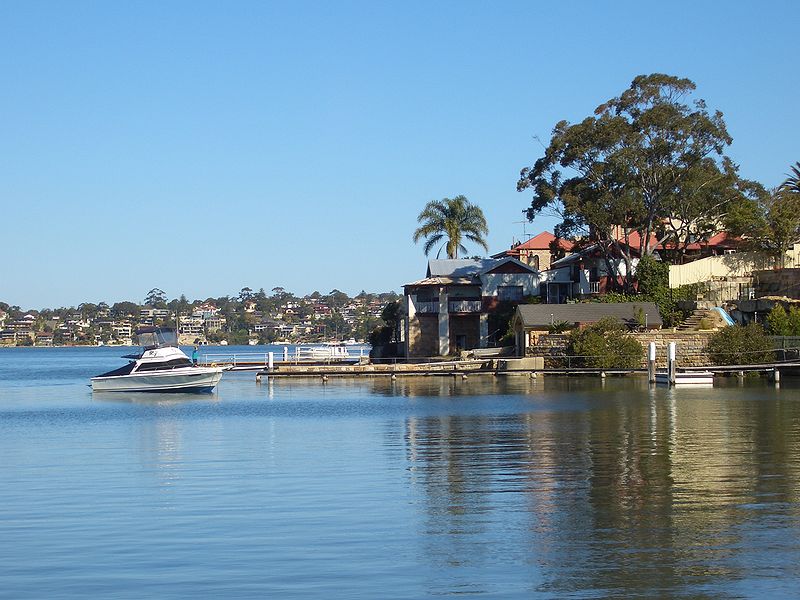
(Photo is of the waterfront at Kyle Bay)

Sydney Suburbs That Could Be Used as Girl’s Names

15 Sunday May 2011

Posted by A.O. in Name Themes and Lists

≈ 15 Comments

Tags

animal names, aristocratic titles, astronomical names, Australian Aboriginal names, english names, famous namesakes, fruit names, Greek names, honouring, Latin names, locational names, mythological names, name history, name meaning, name popularity, names of houses, nature names, nicknames, Old English names, Old Norse names, saints names, surname names, unisex names, Welsh names

Bronte-Beach-6

This blog post was first published on May 15 2011, and revised on May 7 2015.

Arcadia
Arcadia is a semi-rural suburb in the Hornsby shire, first opened up into a settlement by timber cutters in 1817. It is named after a region of Greece that in legend was seen as an idyllic pastoral area. The name of the Greek region means “bear”, and is after a son of Zeus from Greek mythology called Arcas, whose mother Callisto was turned into a bear. He and his mother were made into the constellations of Ursa Major and Ursa Minor – the great and little bear. Because commercial development is severely restricted in the suburb of Arcadia, it has retained an image as a rustic retreat which fits its name. The name Arcadia is a feminine form of the Greek name Arcadius, meaning “from Arcadia”. There are a couple of saints named Arcadius, and there was also an Emperor Arcadius, whose daughter was named Arcadia after him. This name, which has been more often used in continental Europe and Latin American than in English-speaking countries, feels rather exotic, and quite Utopian. It is pronounced ar-KAY-dee-uh, and you could use Arkie, Kay, or Kaydee as a nickname.

Avalon
Avalon is a suburb in the Northern Beaches region famous for its surf culture. An episode of Baywatch was filmed here in the 1990s, and must have impressed, as the show’s producers decided to shoot the rest of the series at Avalon Beach. However, residents complained until Baywatch went to Hawaii instead. Woot, people power! The first land grant in the area was in 1827, but it didn’t receive its name until 1921. It is named after the paradisical island of Celtic myth, where it is said King Arthur received his final resting place. It is thought the name of the island comes from the Welsh word for “apple”, as it is pictured in myth as being blessed by an abundance of fruit. Avalon has been used as a personal name since the 19th century, when anything Arthurian was fashionable, and has more often been given to girls. Fitting in with popular names such as Ava, it seems like a more mystical version of Eden or Heaven.

Bronte
Bronte [pictured] is an upmarket beach-side suburb close to the city centre, with scenic cliff-top walking paths to popular locations such as Cooge and Bondi. This is another suburb with a keen surf culture, and the Bronte surf life saving club, founded in 1903, claims to be the oldest in the world. It has made notable residents over the years, including Peter McCormick, who wrote the national anthem. Robert Lowe, later Viscount Sherbrook, bought 42 acres here in the 1830s. His house was completed in 1845 and named Bronte House in honour of admiral Horatio Nelson, who was the Duke of Bronte. Bronte is a place in Sicily, Italy, near Mount Etna. Its name, pronounced BRON-tee, means “the thunderer”, and as it is right near a volcano, it is easy to see how it got its name. Bronte first joined the charts in the 1990s, and was in the Top 100 by 1997, making #98. It joined the very bottom of Top 100 twice more, in 2000 and 2001, never getting higher than #93, and is now around the 400s. Only in Australia has Bronte attained even mild popularity, and no doubt Bronte Beach helps explain why.

Elanora
Elanora is another Northern Beaches suburb; it is located on a hill overlooking a lagoon and the sea. The northern and south-western sides adjoin national parks, and native wildlife abounds in the area. It’s a suburb of large houses with a country club, and is popular with tourists. Originally a coal mining camp, it came into existence as a residential area in 1929, named Elanora Heights Estate. The name Elanora is derived from an Aboriginal word which means “home by the sea” or “home by the water”. It’s easy to see the appeal of this name – it sounds exactly like the elegant Eleanora, yet has an indigenous origin and pleasant meaning. You could use popular Ella or hip Nora as nicknames.

Eveleigh
Eveleigh is an inner-city suburb, and an area of of great historical importance, because it was here that the first steam locomotives were built in Australia in the railway workshops. The Eveleigh site was also used to manufacture munitions in both world wars, and is significant in the history of unionism. In 1892, unions first successfully negotiated a six-day working week in Eveleigh, and in 917 the General Strike began there. Unlike some of the other suburbs, this isn’t just a swanky address with a nice beach, but a place with working class roots that helped forge our nation. The name Eveleigh is taken from the name of an English estate. It’s a surname that is a variant of Everly, and means “wild boar’s wood”: despite the spelling, it’s pronounced EV-uh-lee, not like Eve + Lee. Similar to popular Evelyn, this spelling may seem more feminine than Everly.

Jannali
Jannali is in Sutherland shire, south of Sydney. The railway was built in 1885, but few people lived in the area until the 1910s. In 1927 the township was named Jannali after a railway signal box that had been there since the beginning. During the Depression, the population of Jannali increased dramatically as people were forced to sell up and move out of the city, and it became known as a place for “battlers” who were doing it tough during the economic hardships of the 1930s. Today Jannali is an unpretentious commuter suburb. When the name Jannali was chosen, it was reported that it was an Aboriginal name from the Northern Territory, meaning “the moon”. Indigenous Australians already used it as a name, and it does have occasional use. Pronounced juh-NAL-ee, the appeal of this name is its vague similarity to names derived from Jane, such as Jan and Janelle, while having an attractive meaning and indigenous origin. It would make a bold alternative to Selena or Luna.

Kareela
Kareela is also in Sutherland shire, and the next suburb to Jannali. Located on the banks of the Georges River, it was first established in 1968. Its name is derived from an Aboriginal word which is said to mean either “place of trees and water” or “south wind”. It was the second meaning that the Geographical Names Board probably had in mind, as the area is known for its strong southerly breezes. Pronounced kuh-RHEEL-ya, Kareela sounds feminine and begins with the popular K sound. People who like Cara and Cordelia may also like the sound of Kareela.

Rosebery
Rosebery is in south-eastern Sydney, near the city centre, and is the seat of local government. In the 1960s it was developed for industry and government housing, and became home to many migrants, especially Greeks and Italians. Rosebery was named after Archibald Primrose, Earl of Rosebery, British Prime Minister in 1894-95. The suburb was named in his honour after a visit he made to Australia in 1883-84. Rosebery is a variant of the place name Roseberry, on the Yorkshire Moors. James Cook once helped his father run a farm here, and climbing the high peaks gave him a taste for adventure which led him to become a sea captain and brought him to Australian shores. It looks like a nature name and sounds like Rose + Bree (ROZE-bree), but Roseberry is a corruption of the Old Norse for “Odin’s rock or crag”. Many of the place names of this area were given by the Vikings. Rosebery is deceptive – it has the air of a fairytale princess, yet its origins are ancient, powerful, and masculine. You may be intrigued by it if you would like an unusual girly name with a surprising amount of grunt.

Rozelle
Rozelle is an inner-city suburb to the west of Sydney’s centre; Rozelle Bay surrounds the container port Glebe Island. Once a colourful working-class district, this attractive village is now fashionable and quirky. The area where Rozelle is now was part of a 1800 land grant to colonial surgeon Dr William Balmain. The land was settled in 1836, and by 1861 was divided into the suburbs of Balmain and Balmain West. By 1900, Balmain West, now a thriving suburb in its own right, became known as Rozelle, after Rozelle Bay. Rozelle Bay (often marked as “Rozella Bay” on old maps), was called after the Australian parrot, the rosella. These beautiful crimson birds were first seen at Rose Hill, the first suburb of Sydney to be established. The parrots were commonly known as “Rose Hill parrots”, then “Rose Hillers”, and finally, “rosellas”. By coincidence, there is an Italian name Rosella, and Rozelle (roe-ZEL), gives it a twist that seems quite cool. It has occasionally been used as a girl’s name.

Sylvania
Sylvania is another southern suburb from Sutherland shire, next to Kareela. It is mostly residential, but also contains areas of native bushland. The traditional owners of this area are the Dharawal people, and their middens, burial sites and rock art remain in sheltered caves along the Georges River. After European settlement, it was acquired as a land grant by John Connell Laycock, and then shortly afterwards by politician Thomas Holt. Holt built Sutherland House on the foreshore in 1818, and a village grew here from 1881 onwards. The name Sylvania is Latin for “wooded area”, and must have been chosen because of its bush setting, but who chose it and why has been lost to history. Sylvania is already a girl’s name, a form of Silvana. However, the suburb’s name is pronounced sil-VAYN-yah and may sound too much like Pennsylvania and Transylvania for some.

POLL RESULTS
Peoples’ favourite names were Bronte, Avalon, and Elanora, and their least favourites were Kareela, Jannali, and Sylvania.

← Older posts
Newer posts →

Enter your email address to follow this blog

Categories

Archives

Recent Comments

A.O.'s avatarwaltzingmorethanmati… on Zarah Zaynab and Wolfgang…
Madelyn's avatarMadelyn on Zarah Zaynab and Wolfgang…
JD's avatardrperegrine on Can Phoebe Complete This …
A.O.'s avatarwaltzingmorethanmati… on Rua and Rhoa
redrover23's avatarredrover23 on Rua and Rhoa

Blogroll

  • Appellation Mountain
  • Baby Name Pondering
  • Babynamelover's Blog
  • British Baby Names
  • Clare's Name News
  • For Real Baby Names
  • Geek Baby Names
  • Name Candy
  • Nameberry
  • Nancy's Baby Names
  • Ren's Baby Name Blog
  • Sancta Nomina
  • Swistle: Baby Names
  • The Art of Naming
  • The Baby Name Wizard
  • The Beauty of Names
  • Tulip By Any Name

RSS Feed

  • RSS - Posts

RSS Posts

  • Celebrity Baby News: Melanie Vallejo and Matt Kingston
  • Names from the TV Show “Cleverman”
  • Can Phoebe Complete This Sibset?
  • Zarah Zaynab and Wolfgang Winter
  • Baby, How Did You Get That Name?
  • Celebrity Baby News: Media Babies
  • Celebrity Baby News: Adelaide Crows Babies
  • Celebrity Baby News: Chris and Rebecca Judd
  • Names at Work: Name News From the World of Business and Employment
  • Celebrity Baby News: Sporting Round Up

Currently Popular

  • Rare Boys Names From the 1950s
  • Girls Names of Australian Aboriginal Origin
  • Celebrity Baby News: Toby Allen and Darren Weller
  • The Top 100 Names of the 1920s in New South Wales
  • Celebrity Baby News: Queensland Babies

Tags

celebrity baby names celebrity sibsets english names famous namesakes fictional namesakes honouring locational names middle names name combinations name history name meaning name popularity name trends nicknames popular names saints names sibsets surname names twin sets unisex names

Create a free website or blog at WordPress.com.

Privacy & Cookies: This site uses cookies. By continuing to use this website, you agree to their use.
To find out more, including how to control cookies, see here: Cookie Policy
  • Subscribe Subscribed
    • Waltzing More Than Matilda
    • Join 517 other subscribers
    • Already have a WordPress.com account? Log in now.
    • Waltzing More Than Matilda
    • Subscribe Subscribed
    • Sign up
    • Log in
    • Report this content
    • View site in Reader
    • Manage subscriptions
    • Collapse this bar
 

Loading Comments...