• About
  • Best Baby Names
  • Celebrity Baby Names
  • Celebrity Baby Names – Current
  • Celebrity Baby Names – Past
  • Featured Boys Names
  • Featured Girls Names
  • Featured Unisex Names
  • Links to Name Data
  • Waltzing on the Web

Waltzing More Than Matilda

~ Names with an Australian Bias of Democratic Temper

Waltzing More Than Matilda

Tag Archives: germanic names

Famous Name: Charles

26 Thursday Feb 2015

Posted by A.O. in Famous Names

≈ 6 Comments

Tags

Anglo-Saxon names, Australian idioms, Australian names, Australian slang, classic names, english names, famous namesakes, French names, German names, germanic names, name history, name meaning, nicknames, popular names, royal names, saints names
6126726-3x2-700x467

Famous Namesake
Fifty years ago, on February 12 1965, a bus left Sydney University on a two-week tour of rural New South Wales. Aboard was a group of 29 white and black activists, mostly students, who had been inspired by the American civil rights movement of the 1960s to protest in support of Indigenous civil rights.

The bus trip had been organised by Student Action for Aborigines, and their elected president was Charles “Charlie” Perkins, one of only two Indigenous students at Sydney University, and a huge fan of Dr Martin Luther King. The trip was later dubbed the Freedom Ride, after the famous Freedom Riders of the American civil rights movement, who took buses through the southern states in 1961 to protest racial segregation.

Some members of SAFA saw themselves as on a fact-finding mission to collect evidence of discrimination against Aborigines in rural Australia. At the time, many Australians believed racism was a problem which existed only in South Africa, or in the deep south of the United States. But the Australian Freedom Riders found that apartheid and segregation did not just happen overseas.

The SAFA were shocked to find the poor living conditions of most rural Aborigines, and that hospitals, schools, and churches separated black people from white in some country towns, as did milk bars, pubs, and cinemas. In others, Indigenous Australians were barred from entering swimming pools, clubs, or restaurants, while it was routine for them to be refused service in shops and businesses.

The students made several non-violent protests on their bus trip, and also tried to encourage Indigenous Australians to join their protests and demand better treatment. In Moree they helped Aboriginal children to go swimming at the pool in defiance of the race-based ban against them, and were greeted with hostility by white locals, who threw eggs, rotten fruit, and stones at the protesters while spitting at them. However, they were eventually able to persuade the town council to overturn the ban.

One of the students on the Freedom Ride was also an ABC journalist, and the SAFA had ensured plenty of media coverage on their bus trip – they even made the news internationally. With the events of the Freedom Ride appearing on television, radio, and in newspaper articles, and with the harsh injustice against Australian Aborigines exposed, it was no longer possible for white Australians to claim ignorance of racism in their own country.

Charles Perkins graduated from Sydney University with a Bachelor of Arts in 1966, becoming the first Indigenous Australian man to graduate from university. The following year, as manager of the Foundation for Aboriginal Affairs, he headed the campaign to advocate for a Yes vote in the Referendum which allowed Aboriginal people to be counted in censuses, and for parliament to be allowed to introduce legislation specifically for Aboriginal people. The Referendum passed, with more than 90% of Australians voting Yes.

He became a public servant with the Office of Aboriginal Affairs, and in 1981 was appointed Permanent Secretary of the Department of Aboriginal Affairs – the first Indigenous Australian to become permanent head of a federal government department. He took leadership roles in the Aboriginal community, and, being a former soccer player, was also appointed to key positions in football administration. He received many awards and honours during his lifetime.

On February 18 this year, his daughter Rachel Perkins was among those who took a bus from Sydney University in a re-enactment for the fiftieth anniversary of the Freedom Ride. Along the way, they were greeted warmly by the communities they entered, rather than having stones thrown at them or being run off the road, as a sign of how things have changed.

Although this year’s five-day bus trip could celebrate improvements in the lives of Indigenous Australians, such as being counted in the census and having access to the same education as white people, it also highlighted the disadvantages that many Aborigines continue to suffer, such as poverty, unemployment, health issues, higher rates of incarceration, and covert racism. The work of the Freedom Riders is by no means complete.

Name Information
Charles is the French form of the Germanic name Karal, which in modern German is Karl; it comes from the Germanic karlaz, meaning “a free man”. In Anglo-Saxon English karlaz became ceorl, denoting the lowest rank of freemen – a peasant who was neither a slave nor a serf. Ceorl does seem to have been used as a name in Anglo-Saxon England, even by royalty. By modern times, the word had become churl, understood as “a country person, someone of low social status”, and eventually seen as someone rude, loutish and vulgar – exhibiting what we call churlish behaviour.

The name has become widely known chiefly because of Charles Martel, a powerful Frankish military leader who never held the title of king, but nevertheless ruled Francia (modern France) as Duke and Prince, and divided the kingdom of the Franks between his sons, just as kings did. His grandson was Charles I, otherwise known as Charlemagne (Charles the Great), called “The Father of Europe”. He united western Europe and laid the foundations for modern France and Germany; his kingdom is known as the Carolingian Empire.

Little wonder the name Charles was a favourite in the French monarchy; the last one was Charles X, who ruled in the 19th century until being forced to abdicate and go into exile. This means that Charles remained a French royal name for over a thousand years.

The name Charles became used by British royalty due to the Stuart kings, who were Scottish; Scotland has long had ties with France. Charles I wasn’t a terrifically popular king, and fought against his enemies in the English Civil War. Losing that, he refused to accept the parliament’s demand for a constitutional monarchy, and was beheaded for treason. He is regarded as a martyr in Anglicanism.

England became a republic for a few years, until the monarchy was restored with the accession of Charles’ son. Charles II was known as the Merry Monarch for his decadent lifestyle, and although he couldn’t stick the parliament either, he managed to dissolve it without getting his head cut off.

We may get a King Charles III in the near future, although some are of the opinion that Charles is not a suitable name for a modern king. The first two Charleses were anti-parliament and resisted a constitutional monarchy, while Charles II is considered to have lived an “immoral” life that we now expect kings not to emulate. (Maybe the spaniels are also an issue). Prince Charles could rule under any of his names, and a popular belief is that he will choose to take the throne as George VII.

There are quite a number of saints named Charles, and several religious leaders, such as Charles Wesley, who co-founded the Methodist Church, and Charles Spurgeon, a famous Baptist preacher.

Famous people from Australian history include explorer Captain Charles Sturt; naval officer Sir Charles Fremantle, after whom the city of Fremantle is named; Charles La Trobe, first Lieutenant-Governor of Victoria; Sir Charles Menzies, founder of the city of Newcastle; astronomer and pioneering meteorologist Charles Todd; Charles Harpur, our first real poet; Sir Charles Kingsford Smith, World War I flying ace and pioneer aviator; Antarctic explorer Charles Laseron; distinguished film-maker Charles Chauvel; artist Charles Blackman; and brilliant neurosurgeon Charles “Charlie” Teo.

Charles is a classic name which has never left the charts, and barely been out of the Top 100. It was #7 in the 1900s, and reached its lowest point in the 1980s at #116. It was back on the Top 100 by the following decade, and since then its position has been fairly stable. In 2013, it was #81 nationally, #81 in New South Wales, #88 in Victoria, #85 in Queensland, #53 in Tasmania, and #86 in the Australian Capital Territory.

With Charles, you get a handsome, elegant classic and a solid, traditional name. Its history takes you back to European royalty, and Charles still feels regal and noble. However, lest the name feel too stiff and formal, it has a number of relaxed, casual nicknames.

Charlie is a popular name in its own right, while the older-style Chas is familiar from comedian Chas Licciardello. The vintage nickname Chilla, which appears to be uniquely Australian, is perhaps best known from 1950s Olympic athlete “Chilla” Porter. The American nicknames Chip and Chuck are rarely used here, probably because they mean “French fry” and “vomit” respectively in Australian English.

POLL RESULTS
Charles received an excellent approval rating of 82%, making it one of the top-rated names of 2015. People saw the name Charles as strong and handsome (18%), a name with history and substance (17%), and formal and elegant (15%). 16% of people thought the nickname Charlie was cute. However, 9% thought the name was too stuffy and old-fashioned. Only one person was bothered by the linguistic connection to the word churlish, and only one person thought the nickname Charlie was silly and childish.

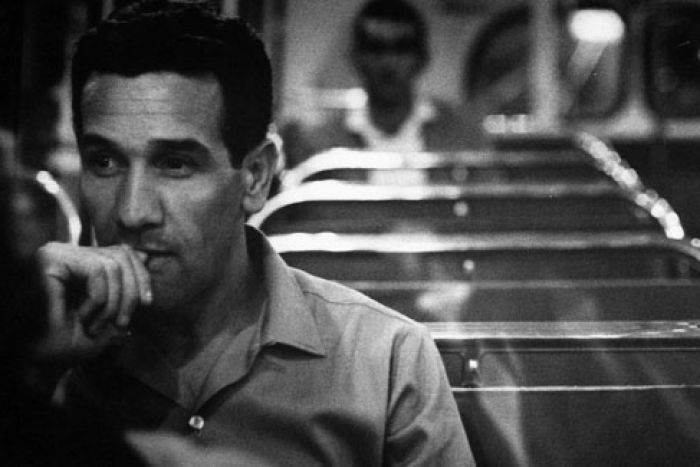
(Picture shows Charles Perkins on the “Freedom Ride bus trip; photo from National Geographic)

Famous Name: Richard

21 Wednesday Jan 2015

Posted by A.O. in Famous Names

≈ 3 Comments

Tags

aristocratic names, classic names, European name popularity, famous namesakes, fictional namesakes, germanic names, medieval nicknames, name history, name meaning, name popularity, nicknames, royal names, saints names, Shakespearean names, surnames, UK name popularity, US name popularity

450245-1b3cb7a2-9613-11e4-9bd9-740a91fb6db7

Famous Namesake
I seem to end up doing names connected with cricket every January, and this year my choice was inspired by seeing The Richies in the stands on Day 2 of the Sydney test against India early in the month – otherwise known as known as Richie Day, which takes place the day before Jane McGrath Day.

The Richies are a group of cricket enthusiasts who dress up as iconic cricket commentator Richard “Richie” Benaud, complete with trademark silver hair, cream jacket, sunglasses, and oversized Channel Nine microphone (it is law that a Richie can only speak on Richie Day if they talk into their microphone).

The Richies were founded in 2010 by Michael Hennessy as a homage to Richie Benaud, who had just announced his retirement from full-time commentating. The first year there were ten Richies, this year there were 350; next year they hope to fill a whole bay, which means 680 Richies.

The group were inspired by comedian Billy Birmingham, who has gained fame for his cricket parodies under the name The Twelfth Man, where he often impersonated Richie Benaud’s distinctive voice. This year Billy Birmingham put The Richies through their paces, and revealed his own sons had dressed as Richie Benaud for the 2013 Test.

As for Richie Benaud himself? He wasn’t just a much-loved commentator, but a great all-rounder who debuted in the 1950s, and was captain for 28 tests between 1958 and 1962 without losing a series. He was the first player to complete the test double of 200 wickets and 2000 runs, and has been inducted into the Australian Cricket Hall of Fame and the ICC Cricket Hall of Fame.

Now 84 and battling skin cancer, Richie Benaud will appear with Billy Birmingham in advertisements for Australia Day this year – but don’t expect Richie to fully endorse his comedy double.

Name Information
Richard is a Germanic name which comes from ric (“power, rule”) and hard (“brave, hardy”), usually translated as “brave ruler”. It was introduced to Britain by the Normans, and has become one of the stock of standard English names, while also well known in other European countries.

Richard has been commonly used by English royalty and aristocracy. One of the best known is Richard I, known as Richard the Lionheart. Said to be tall, elegant, and extremely handsome with red-gold hair, he had a reputation as a great military leader, and remains an enduring figure of romance.

The last English king with the name was Richard III, whose reputation was so tarnished after his death that the name has never been used for a British monarch since (the child who would have been Richard IV was one of the “princes in the Tower” who disappeared in a sinister way, which didn’t help its fortunes as a royal name).

Richard III is infamous from Shakespeare’s play of the same name, where he is portrayed as a deformed, murderous, power-hungry villain. Recently, Richard III has been back in the news after his skeleton was dug up in a Leicester car park, with signs of many injuries from his death at the Battle of Bosworth Fields. Although the skeleton did have scoliosis, so that one shoulder would have been higher than the other, facial reconstruction shows him as looking young and quite pleasant rather than a hideous monster, and modern historians have been kinder towards him.

There are a number of British saints named Richard, including Saint Richard of Chichester, the patron saint of Sussex. There is a Saxon saint named Saint Richard the Pilgrim, but details of his life are sketchy, and Richard doesn’t seem to have been his real name. There are also several Saint Richards who were martyred for their faith in the 16th century.

Because the name has remained in common use for so many years, it is easy to think of famous men named Richard. You might think of composers Richard Strauss and Richard Wagner, singers “Little Richard” (Richard Penniman) and Richard Ashcroft, Beatles drummer Richard Starkey “Ringo Starr”, comedians Richard Pryor and Rich Hall, actors Richard Burton, Richard Attenborough, Richard Gere, Richard Harris, Richard E. Grant, Richard Wilson, and Richard Dean Anderson, presenter Richard Hammond, scientist Richard Dawkins, charismatic entrepreneur Richard Branson, and disgraced former US President Richard Nixon, who was named after Richard the Lionheart.

Richard is a classic name which has never left the charts. It was #26 in the 1900s, and reached its peak in the 1940s at #15. It didn’t leave the Top 100 until the early 2000s, and has gently declined so it is now around the mid-200s. Despite being at its lowest point so far, the name is still in reasonable use and relatively stable. Its popularity is about the same in the UK, and in the US is around the mid 100s. Richard is most popular in the Czech Republic.

Richard has many nicknames, but one thing not helpful to the name is that most of them seem rather dated. Dick, once so common that we could say every Tom, Dick and Harry to mean “every man”, is now frowned upon as an embarrassment, while Dicky reminds older people of “Tricky Dicky” Nixon. Rick and Ricky both peaked in the 1960s, and while I quite like Rich, Richie and Ritchie, Richie Rich, Richie Cunningham, and Ritchie Valens might give them a 1950-ish feel.

You can find medieval short forms of Richard through the English surnames they have inspired. Hick and Hitch led to Hitchens, Higg to Higgins, while Ditch led to Deek and Deex. Dickon was King Richard III’s nickname – also a character in The Secret Garden. Dickon was transformed into names such as Diggin and Diggle, which are quite a lot like fashionable Digby, and make Digger or Digs seem like reasonable vintage-style short forms of Richard. Dix is also a possibility, in line with names such as Max.

With Richard, you get a solid classic name that has never been out of the 200s; a name good enough for kings and saints and celebrities, as well as all manner of ordinary men. It’s a name which matures well, and looks professional on a CV. In fact, as Richie Benaud would say, you might think this name is perfectly “marvellous”!

POLL RESULTS
Richard received an approval rating of 44%. 22% of people were really bothered by the possibility of Dick being given as the nickname for Richard, while 19% saw the name as dated and old-fashioned. However, 14% thought Richard was a name with a solid meaning and history behind it. 3% disagreed with the majority, and thought it was silly and immature to believe there was anything wrong with the nickname Dick.

Famous Name: Ava

17 Wednesday Dec 2014

Posted by A.O. in Famous Names

≈ 3 Comments

Tags

celebrity baby names, english names, famous namesakes, germanic names, modern classics, name history, name meaning, name popularity, name trends, Persian names, royal names, saints names, US name popularity

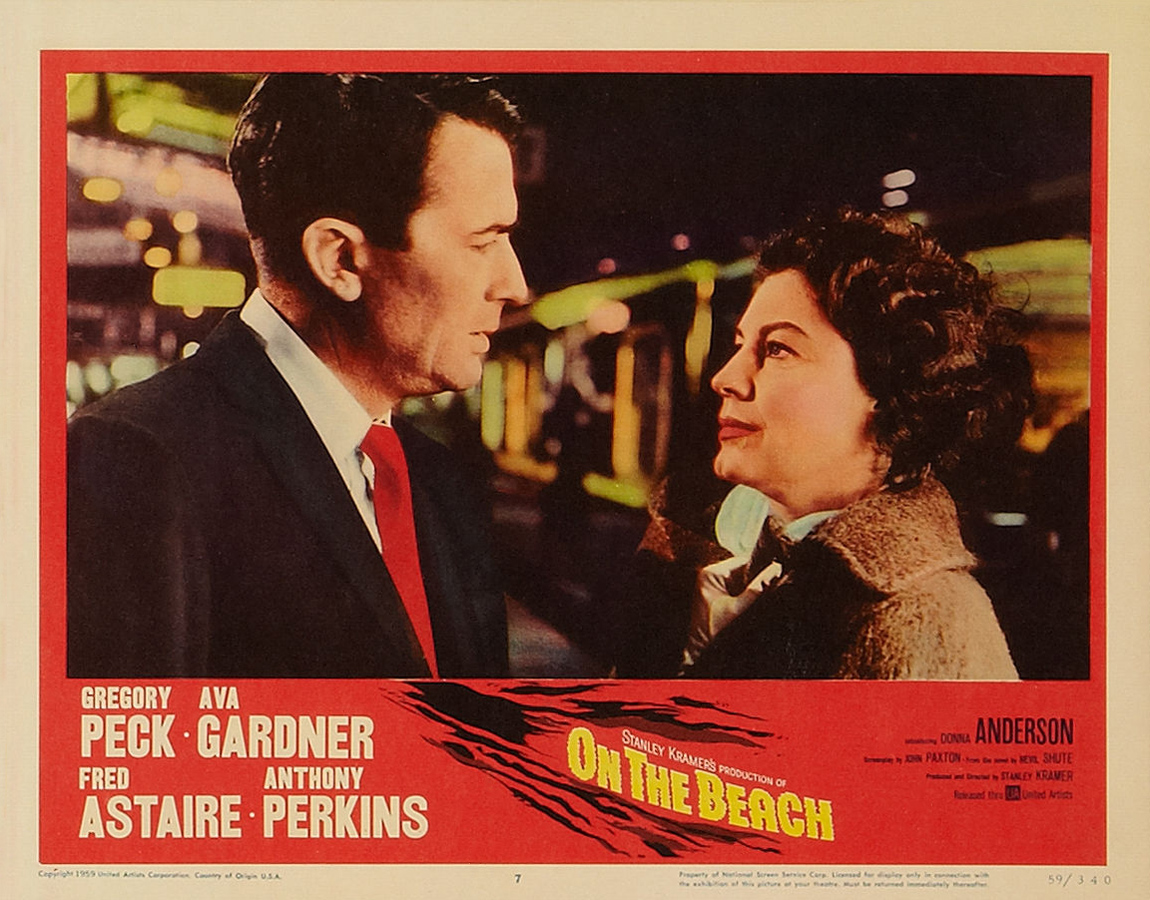
Poster - On the Beach (1959)_11

Today is the 55th anniversary of the release of Stanley Kramer’s On the Beach, starring Ava Gardner and Gregory Peck. Based on the novel by Nevil Shute, the film depicts the aftermath of a nuclear war, set in the near-future of the 1960s. With most of the world’s population dead, the film centres on a small group of people in Melbourne waiting for the lethal fallout to reach them.

Most of On the Beach was filmed on location, and a piece of local folklore is that Ava Gardner described Melbourne as “the perfect place to make a film about the end of the world”. Melbourne was a quiet little place in the 1950s, the first day of filming was abominably hot, and the media was horrible to Ava Gardner, so you could forgive her for being a bit grumpy. However, the quote was actually invented by a Sydney journalist with his tongue in cheek – whatever Ms Gardner’s thoughts about Melbourne, she was too professional to broadcast them publicly.

On the Beach made a financial loss, but was praised by critics, and has become a (slightly neglected) classic. The film created a ruckus in Melbourne, which went so crazy over seeing big Hollywood stars in their little city that they positively frightened most of the cast. Even the Australians cast as extras were mobbed as if they were A-listers. The film’s grim message was considered so traumatic that the Salvation Army, who play a small but significant role in the film, were on hand to provide counselling to people in cinemas.

Another of the film’s achievements was to bring attention to Waltzing Matilda, which is used to great effect during the closing scenes of On the Beach. It also opens the film, used to immediately signify an Australian setting. Waltzing Matilda became more popular after the film – not just in Australia, but overseas as well.

I read On the Beach as a young teenager, and found the story utterly compelling because for once the scenes of horror are set in Australia. The book has sometimes been criticised for showing the end of the world happening so quietly, and the characters going about their daily lives as calmly as possible. But I thought it made the story far more chilling, and far more real; many years later, the story is still vivid in my memory.

Ava was a medieval girl’s name, pronounced AH-vuh. It seems to have been a feminine form of the Germanic name Avo, originally a short form of names starting with Avi-. The meaning of it is much debated, but with no agreement reached. One theory is that it meant “desired”, to indicate a long wished-for child, but other ideas are that it came from aval, meaning “strength, power”, or from alfi, meaning “elf”.

In Norman English, the name produced Aveline, which evolved into Evelina, and is the basis for the surname Evelyn, also used as a first name. Another variant was Avis or Avice, which although it looks like the Latin for “bird”, is an elaboration of Ava. Av- names were quite fashionable in medieval times, thanks to Ava.

Two famous medieval Avas are Saint Ava, a Frankish princess who became a nun after being miraculously cured of blindness, and Ava of Melk, an anchorite and religious poet who was the first known female writer in the German language.

While Ava is still said AH-vuh in Germany and most European countries, in modern English it is usually pronounced AY-vuh. Some people see AY-vuh as a modern continuation of the medieval AH-vuh, while others see it as a completely separate modern English name, perhaps a variant of Eva.

While Ava may well have been understood as a form of Eva by some English-speakers, in continental Europe Ava was often understood as related to the Latin word Ave (said AH-veh), meaning “hail, greeting”, as in Ave Maria, or to similar words and names in modern languages. If we discount the English Ava (AY-vuh) on those grounds, then the European Ava (AH-vuh) must also be brought into question.

I don’t think it’s any coincidence that Ava has historically been more common in the United States than other English-speaking countries, because America has had significant immigration from Germany and Scandinavia. You could see the English pronunciation of Ava as the American pronunciation of the name. You’ve probably noticed that Americans tend to pronounce AY sounds rather than AH ones – for example, they often say the name Dana as DAY-nuh instead of DAH-nuh.

Just to add another layer, Ava is also a common Persian name for girls, meaning “voice, sound, call”, and said AH-vuh, making this a very multicultural name.

The name Ava was popularised in the United States in the 19th century by the Philadelphia socialite Ava Lowle Willing, who married John Astor IV (called Jack), from the prominent Astor family. They named their daughter Ava Alice Muriel Astor (born 1902), making this an early celebrity baby name. The Astors divorced, and not long after, Jack Astor was drowned during the Titanic disaster, making him the richest person to sail on the Titanic, and probably the richest person in the world at the time.

Ava Alice Muriel Astor married Prince Serge Obolensky (an admirer of Australian beauty Sheila Chisholm, and her husband’s cousin), and their wedding was the social event of the London season. Ava Astor went on to divorce and marry several more times in both England and the United States; pretty, supremely wealthy, and a patron of the arts, her name was well known on both sides of the Atlantic.

The actress Ava Gardner was born at the end of 1922, not long after Ava Astor had been photographed visiting Tutankhamen’s tomb in Egypt with her fiancé, Prince Obolensky. Unlike many other film stars, Ava Gardner never had to change her name to something more screen-worthy: it was already perfect – glamorous, fashionable, upper-class sounding, and not too common.

Ava Gardner’s film career did not make Ava a popular name in her lifetime. Continuously on the US Top 1000 since the late 19th century, and #751 in 1941 when Gardner first began getting parts in films, it peaked at #376 during the 1950s, at the height of Gardner’s success.

Ava left the US Top 1000 during the 1970s, when Gardner’s career had waned, but returned in the 1980s, after Ava Gardner suffered two strokes and became bedridden. Her serious health problems were widely publicised, putting her name back in the news, and no doubt there was genuine shock and sympathy for the Hollywood star’s condition.

The name Ava began rising after Ava Gardner’s death in 1990, and its popularity was further hastened by celebrities choosing it as a baby name, including Aidan Quinn, Heather Locklear, and Reese Witherspoon – in the last case at least, as a conscious tribute to the late Ava Gardner.

In Australia, the name Ava first ranked in the 1990s at #465, and rose so rapidly that it was in the Top 100 by 2003, debuting at #70. Bad luck to all those parents who called their baby girl Ava in the 1990s because they saw it an an underused name! Or maybe good luck that they jumped on the trend nice and early.

In 2005, Ava made a massive leap forward to #22, as this was the same year Hugh Jackman and his wife Deborra-Lee Furness welcomed their daughter Ava. In 2011 the name Ava joined the Top 10 at #9, the year after Lleyton Hewitt and Bec Cartright welcomed their youngest daughter and named her Ava.

Currently Ava is #3 nationally, #8 in New South Wales, #2 in Victoria, #8 in Queensland, #3 in Western Australia, #17 in Tasmania, #17 in the Northern Territory, and #2 in the Australian Capital Territory. It was one of the fastest-rising names at Baby Center Australia last year.

Ava is highly popular throughout the English-speaking world, being a Top 10 name in the United States, Canada, England/Wales, Ireland, Scotland, and New Zealand. However, it is slightly more popular in Australia than anywhere else, and has so far peaked higher here than in any other country.

Yes, Ava is very popular – so much so that some parents may be wary of choosing it. But it is also boosting the fortunes of other names, such as sound-alikes Ada, Avery, Aria, Arya and Ayla, and has risen in tandem with Eva, Evie, Evelyn and Ivy.

This modern classic has been very influential on contemporary girls’ name trends. Maybe you won’t use Ava because it is too popular, but you might use one of her style-sisters, like Isla or Maeve. Or perhaps something unusual like Alba, Avalon, Avril or Aveley now seems like a good choice, or an older name like Ida or Maida no longer seems fusty, but pretty and fresh.

The power of Ava is such that we will be hearing her echoes for many, many years to come.

POLL RESULTS
Ava received a respectable approval rating of 64%. 25% of people saw it as simple and elegant, but 19% thought it was too popular. Nobody thought the name Ava was ugly or tacky.

Interesting Girls Names From the 2014 Birth Announcements

30 Sunday Nov 2014

Posted by A.O. in Name Themes and Lists

≈ 2 Comments

Tags

Arabic names, Biblical names, birth notices, celebrity baby names, controversial names, Disney names, epithets and titles, famous namesakes, fictional namesakes, flower names, French names, German names, germanic names, Greek names, hebrew names, Indian names, Latin American names, Latin names, locational names, mythological names, name history, name meaning, names from ballet, names from films, names of businesses, names of cocktails, nature names, nicknames, plant names, rare names, Roman names, saints names, Sanskrit names, Spanish names, surname names, unisex names, yoga names

ArtworkGraphic19PurpleRobe

I’m always on the look-out for unusual names in the birth notices, and here are a dozen that are little used, but have intriguing histories. If you are looking for a rare yet genuine name, but fear choosing something too strange, you can take heart that these names have all been recently used by real life Australian parents.

Anjali
Sanskrit name meaning “divine offering”, from the word anj, meaning “to honour, to celebrate”. The Añjali Mudrā is a gesture of respect used in India as a greeting, where the palms join over the heart. If you go to yoga classes, you may greet each other with an Añjali Mudrā; it’s also part of several yoga positions. Anjali is quite a common name in India, and you may know the name as that of the wife of Indian cricket star, Sachin Tendulkar. A pretty Indian name that works very well in English-speaking countries, it is usually pronounced UN-juh-lee, although English-speakers may prefer an-JAH-lee.

Cataleya
Latin American form of cattleya, a type of South American tropical orchid with large, showy flowers. The orchid is named after English horticulturist William Cattley, who was the first European to successfully bring one into bloom. His surname comes from Catley in Herefordshire, meaning “wildcat wood”. Readers of Marcel Proust may recall that in Swann’s Way, the courtesan Odette wore a cattleya as decoration on her gown one evening, and her lover Swann removed it for her. As one thing led to another, they used cattleya as a private word between them for lovemaking. Cataleya was the highest-rising girls’ name in the United States last year, rocketing into the Top 500 from nowhere. The reason is the 2011 action film Colombiana, where the heroine is the assassin Cataleya, who leaves a cattleya as her calling card. Exotic and with a tough girl namesake, it is pronounced kah-tah-LAY-uh.

Damaris
In the New Testament, a woman named Damaris is mentioned as a convert of Saint Paul in Athens. Very little is known about her, although it is assumed she was a woman of high social status, but she is recognised as a saint in the Orthodox faith, and there is a street named after her in Athens. Her name is a matter of debate: the most popular theory is that is from the Greek word damalis, which literally means “heifer”, but is understood as “young girl”. Another is that it is derived from damar, the Greek word for “wife”. Once fashionable in 17th century England, this is a little-used biblical name that has gained modern glamour by American swimsuit model Damaris Lewis. The name is pronounced DAM-uh-ris.

Esperanza
Spanish form of the Latin name Sperantia, meaning “to hope”; esperanza is the Spanish vocabulary word for “hope”. The name got some publicity in 2010 because of Campamento Esperanza (“Camp Hope”), set up in Chile by friends and relatives after a cave-in at a mine; many weeks later their prayers were answered when all 33 miners were rescued. The following year, jazz singer Esperanza Spalding was named Best New Artist at the Grammy Awards. The name also has a motherly vibe, for Esperanza is the wife of Zorro, and mother of his beloved daughter Elena in The Mask of Zorro, while the mare who gives birth to the stallion Spirit in the animated movie is named Esperanza. Another famous mum is Oscar Wilde’s mother, who wrote under the pen name Speranza. Esperanza is a cool name that’s unusual, but not unfamiliar.

Farrah
Variant of Farah, a unisex Arabic name meaning “joy”. The name is well known because of the glamorous 1970s actress Farrah Fawcett, who passed away a few years ago. Farrah Fawcett posed for an iconic photograph wearing a red Speedo swimsuit, so there is an Australian connection to her. More recently, Farrah King from the hip hop outfit Cherish has given it fresh publicity. Soft and pretty, Farrah is an Arabic name which works well cross-culturally.

Fauve
Modern French name, which is pronounced to rhyme with the word mauve. Fauve literally means “wild beast” in French, referring to beasts of prey, and especially the big cats, such as lions and tigers. The word has a very artistic heritage, because in the early twentieth century, les Fauves were a group of modern artists who were known for their bold use of bright colours; they got their name because their work was criticised as looking like something a wild beast would produce. Henri Matisse is one of the most famous of this group. However, fauve has another meaning in French, and that is “yellowish-brown” – a tawny lion colour which would suit someone with dark blonde hair. Fauve is an uncommon name in France, and a rare one here, although not unheard of. It’s very daring, but also on trend.

Jerusha
In the Old Testament, Jerusha was the daughter of a high priest, and a queen of Judah, the wife of King Uzziah. Uzziah was considered one of the greatest rulers of the kingdom, but he became too proud, and began to usurp the role of the priests. Struck down with a disfiguring skin disease, he was replaced by his son Jotham, who is listed as one of the ancestors of Jesus in the New Testament. The name means “possession” in Hebrew, in the sense of something precious, and is said jeh-ROO-sha. A literary namesake is the teenage girl in the children’s book Daddy Long-Legs: she goes by the name Judy, although Roo would be a very Australian nickname.

Odette
French name which is a pet form of the Germanic names Oda or Odilia. These names may both be feminine forms of names which became the German name Otto, meaning “wealth”, although Odilia might instead mean “fatherland”. The name is forever associated with swans, because Princess Odette is the White Swan in the ballet Swan Lake; a sweet, gentle girl, she has been transformed into a swan, and can only take human form at night. Only true love can break the spell, but thanks to nefarious scheming by the baddies, Odette’s story ends in tragedy. Odette is a dated name in France, but to English-speakers, sounds glamorous and romantic. The Disney movie The Swan Princess, based on the ballet, makes it more accessible as well.

Persephone
In Greek mythology, Persephone was the daughter of the agriculture goddess Demeter, and she is central to one of the oldest myths. Legend says that Demeter kept her daughter hidden away from the other gods, so the two could live in companionship with nature. Hades, the god of death, fell in love with Persephone, and one day when she was gathering flowers, he kidnapped her and took her to live in the Underworld as his wife. Demeter was so grief-stricken that she neglected the earth, and nothing would grow: seeing that people were starving to death, Zeus demanded that Persephone be returned. However, Persephone had eaten a few pomegranate seeds in the Underworld, and having tasted its food, was obliged to spend several months of the year with Hades. While Persephone is underground, Demeter mourns for her, and it is winter: when she returns in spring, life is renewed. This ancient myth of death and rebirth comes from the Near East: many rituals and mystery traditions are associated with it, with special significance for girls and women. The name Persephone is interpreted as “female thresher of corn”, because she is an agricultural goddess, but another theory is that her name means “bringer of death”, as she is goddess of the Underworld. The Greeks had so many forms of her name that it would seem they had trouble pronouncing it, suggesting that her name was pre-Greek; it is said per-SEF-uh-nee. Beautiful and elaborate, primal to the human urge for life everlasting, this would be a wonderful choice for someone who thought that Penelope had become too popular to use.

Reeva
Variant of Riva, a pet form of Rivka, modern Hebrew form of the familiar name Rebecca. This comes from the Hebrew word ribhquh, which literally means “a connection”; it can thus be understood as “joining together, securing”. Reeva is also used as a name in India, a variant of Reva, which is Sanskrit for “one who moves”, and often translated as “swift, agile”. It is one of the epithets of Rati, the Hindu goddess of love. The name came into the public eye in a shocking way when South African model Reeva Steenkamp was shot and killed by her boyfriend, world renowned paralympian Oscar Pistorius, now serving a prison sentence for culpable homicide. Due to the notoriety of the high-profile legal trial, Reeva became the fastest-rising girls’ name in England and Wales last year. Reeva fits in with popular names like Ava and Eva, but the very public tragedy of Reeva Steenkamp’s death may make some parents uneasy about using it.

Sephora
Greek form of Zipporah, variant of the Hebrew name Tzipporah, meaning “bird”. In the Old Testament, Zipporah is mentioned as the daughter of the priest Jethro, and the wife of Moses. When Moses fled Egypt after killing an Egyptian man, he took refuge in the desert country of Midian, on the Arabian Peninsula. When Zipporah and her sisters went to water their flocks, they were driven off by shepherds who wanted the water for themselves, and Moses went to their defence. Moses ended up living with Jethro and working for him, and was given Zipporah in marriage. Zipporah had problems with the in-laws, because Moses’ sister Miriam criticised him for marrying a dark-skinned woman, but she was struck down with leprosy in punishment, showing that God approved of the marriage. Sephora is more popular in France than elsewhere, because of the Parisian cosmetics company of that name, but this lovely name isn’t common anywhere.

Vesper
Roman form of the Greek name Hesperus. In Greek mythology, Hesperus was the personalification of the Evening Star (the planet Venus as seen in the evening); his half-brother Phosphorus was the Morning Star. Vesper can be intepreted as “evening, supper time, west”, and Vespers is the name for the evening prayer service in the Christian church. You may know the poem Vespers by A.A. Milne, about Christopher Robin saying his nightly prayers: it was made part of the minature library collection for Queen Mary’s Doll House. Although a rare name in real life, Vesper has had several outings in the world of fiction. Vesper Lynd was James Bond’s lover in Casino Royale, played by Eva Green in the 2006 movie; her parents gave her the name because she was born on a “dark and stormy night”. The famous “shaken not stirred” martini that Bond invents is named the Vesper after her. Vesper has been picked used as a celebrity baby name – one is the daughter of American rock musician Sam Farrar, whose parents are Australian.

POLL RESULTS
The public’s favourite names were Persephone, Odette and Vesper, and their least favourite were Cataleya, Damaris and Jerusha.

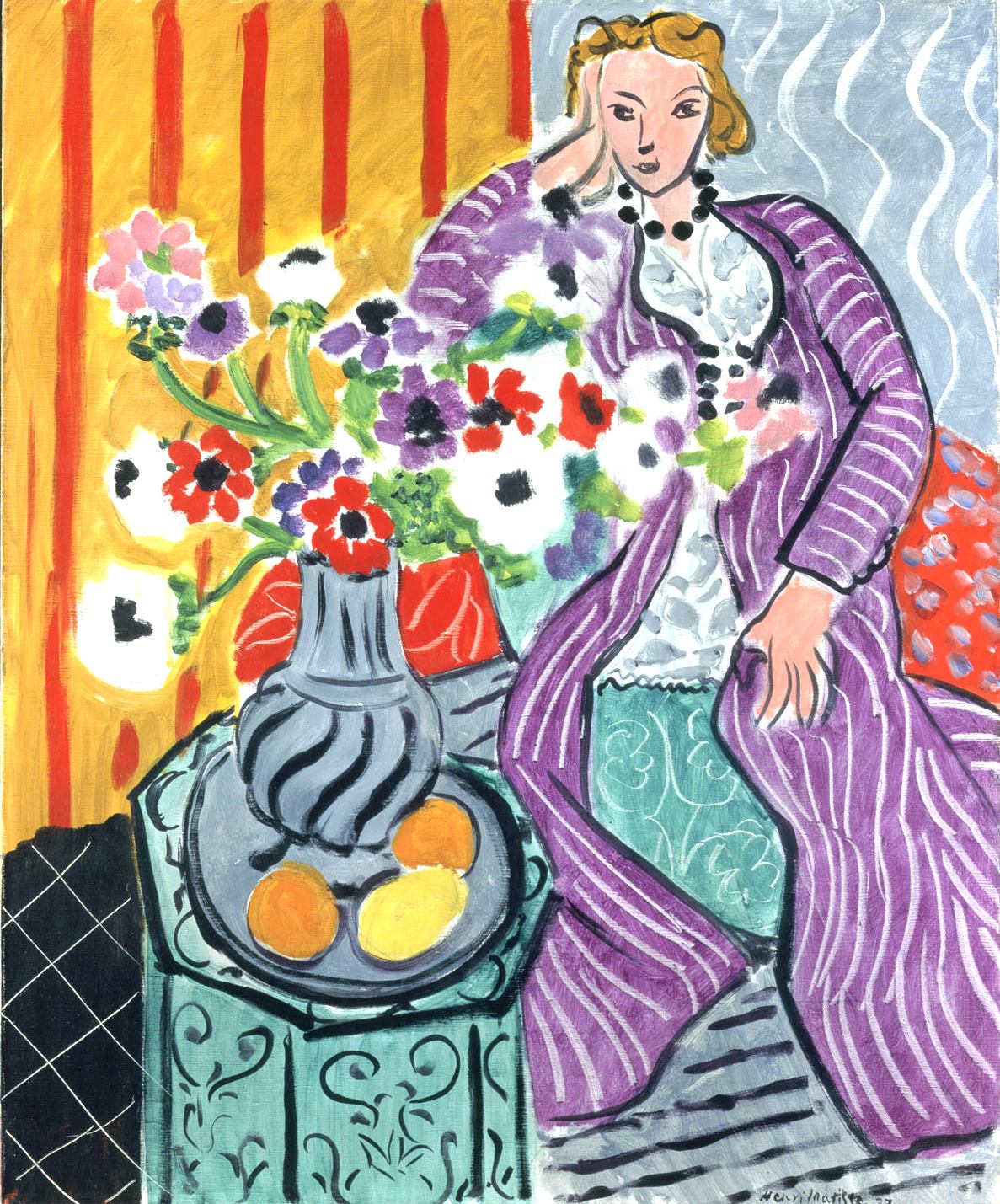
(Picture shows Purple Robe and Anemones by Fauvist Henri Matisse – 1937)

Boys Names From Australian Children’s Literature

24 Sunday Aug 2014

Posted by A.O. in Name Themes and Lists

≈ 10 Comments

Tags

aristocratic names, aristocratic surnames, Australian slang terms, Biblical names, classic names, colour names, english names, famous namesakes, fictional namesakes, Gaelic names, German names, germanic names, Greek names, hebrew names, Irish names, Latin names, locational names, modern classics, mythological names, name history, name meaning, name popularity, names from songs, names from television, names of businesses, nature names, nicknames, Old Gaelic names, Persian names, plant names, popular names, retro names, royal names, saints names, Scottish names, surname names, tree names, underused classics, unisex names

Cyan Magenta Yellow Black

Darius
Odo Hirsch’s Darius Bell and the Glitter Pool (2009) tells the story of the Bells, a proud family fallen on hard times; plucky youngest son Darius must save the family’s estate. (Name nerd bonus info: Odo is the older form of the German name Otto). Darius is the Latin form of Dareios, the Greek form of the Persian name Dārayavahush, meaning “holding on to goodness”. This name was traditional amongst the Persian kings, and Darius I was known as Darius the Great, as he ruled over the Achaemenid Empire at the height of its power. Darius III was defeated by Alexander the Great, and there are a number of minor princes with the name. Darius is mentioned several times in the Old Testament, so it is a Biblical name as well (nobody is sure which historical Darius it means). Although rare, this name is known in Australia from NRL star Darius Boyd, while there is also a Darius in The Hunger Games trilogy. Darius is a cool-sounding name that might appeal to a broad range of people.

Felix
Terry Denton’s first picture book was Felix and Alexander (1985), about a little boy named Alexander who gets lost, and his toy dog Felix must find him. Felix is a Latin name meaning “fortunate”. It was first given as a nickname to the Roman general and statesman Lucius Cornelius Sulla, a free translation of the Greek nickname he acquired during his military campaigns – Epaphroditos, meaning “beloved of Aphrodite”. The Roman procurator Felix is mentioned in the New Testament, although not in a positive way – he imprisoned St Paul. Felix was a favourite name amongst early Christians, and there are heaps of saints named Felix, including the 7th century Felix of Burgundy, who introduced Christianity to East Anglia, and three popes. Two Australian connections are Felix the Cat, and Australia Felix, the name given to the lush farmland of western Victoria by explorer Sir Thomas Mitchell. Felix was #172 in the 1900s, and left the charts in the 1920s. It returned in the 1980s at #396 and climbed steadily; it’s been on and off the Top 100 since 2011. It’s now #86, and was one of the fastest-rising names last year. A hip retro favourite growing in recognition.

Harley
Sleepy Harley (2011), written by Karen Treanor and illustrated by Kelly Iveson, is a picture book about a cat named Harley who tries to find a place to nap in a Perth suburb. Harley is a surname which comes from a place name meaning “hare meadow” in Old English. The de Harley family were nobles whose history can be traced before the Conquest, and Sir Robert Harley, first Earl of Oxford, was from a prominent political family. One of them, William Cavendish-Bentinck, became British Prime Minister in the 18th and 19th centuries; he was the maternal great-great-great grandfather of Queen Elizabeth. The name will remind many of Harley-Davidson motorycles, giving Harley a pretty cool image. Harley was #212 in the 1900s, and went up and down before dropping off the charts in the 1950s. It returned in the 1970s at #462, and rose before peaking at #70 in 1992. It dropped again before starting to rise in the early 2000s, and is not far out of the Top 100. You could see Harley as an underused classic – in use for many years, but never very popular. I have occasionally seen Harley on girls as well.

Jude
Me and Jeshua (1984) by award-winning author Eleanor Spence is a historical novel about the childhood of Jesus of Nazareth, as seen through the eyes of his cousin Jude. Jude is a variant of the name Judas, Greek form of the Hebrew name Judah, meaning “praised”. In the New Testament, Jude is used for the Apostle whose name was Judas, to distinguish him from Judas Iscariot. Jude is also listed in the New Testament as one of the brothers of Jesus (Eleanor Spence follows a tradition they were cousins), but it is not clear if Jude the Apostle was Jesus’ brother. The Apostle Jude is usually connected with the Apostle Simon the Zealot, and according to tradition they were both martyred in Beirut. Jude is well known as the patron saint of lost causes, and this has made him one of the most venerated saints. Contemporary associations are the actor Jude Law, and the Beatles song Hey Jude. Jude can also be used as a girl’s name, short for Judith, as in the YA novel by Maureen McCarthy, Queen Kat, Carmel, and St. Jude Get a Life (1995). This attractive name has quietly been gaining in popularity, and last year joined the Top 100 in Victoria.

Leonard
The Lockie Leonard series by Tim Winton (1990-97) stars a surf rat named Lachlan “Lockie” Leonard who moves to the Western Australian town of Angelus (based on Albany). Leonard is a Germanic name which can be translated as “brave lion” or “brave as a lion”. St Leonard is a legendary 6th century saint, a Frankish nobleman at the court of Clovis I who could liberate prisoners from their chains when invoked. The Normans brought the name to England, although it didn’t become particularly common until the 19th century. Famous Australians with the name include distinguished chemist Leonard Lindoy, and hard-hitting post-war cricketer Leonard “Jock” Livingston, also a talented rugby league footballer. Leonard has been a popular name amongst Jews in the past, including Jock Livingston: other examples are Canadian folk singer Leonard Cohen and actor Leonard Nimoy. Leonard was #39 in the 1900s, and peaked in the 1910s at #35. It didn’t leave the Top 100 until the 1960s, and remained in steady but low use until getting a little boost after The Big Bang Theory, with main character Leonard Hofstadter, began airing in the late 2000s. Clunky cool, this underused classic provides a way to get the popular nickname Lenny.

Nathaniel
In Isobelle Carmody’s YA novel The Gathering (1993), Nathaniel Delaney is a teenager who moves to a grim seaside town and finds himself locked in a battle between the forces of Light and Dark. Nathaniel is a variant of Nathanael, the Greek form of Hebrew Netan’el, meaning “God has given”, nearly always understood as “gift of God”. In the Bible, Nathaniel is usually identified with the Apostle Bartholomew; as Bartholomew means “son of Talmai”, it is taken to be Nathaniel’s surname. Nathaniel was in use as an English name by the 16th century, and became more common after the Protestant Reformation. It was used amongst the aristocracy, and also became a favourite in America, with author Nathaniel Hawthorne a notable bearer. Nathaniel was #179 in the 1900s, and left the charts the following decade. It returned in the 1970s at #296, and climbed steadily until it reached the Top 100 last year at #79, making it one of the fastest-rising names of 2013. A handsome retro name that gives the popular nickname Nate, it’s well known from Australian actor Nathaniel Buzolic, from The Vampire Diaries, and Australian singer-songwriter Nathaniel Willemse, who was on The X-Factor.

Rafferty
The Rafferty series by Joan Woodberry (1959-62) are the adventures of an English boy named Rafferty who moves to a fishing village on the Queensland coast. Rafferty is a common Irish surname, an Anglicised form of O’Raithbheartaigh, meaning “son of Rabhartach”. The Old Gaelic personal name Rabhartach means “wielder of prosperity”. The name has a particular Australian resonance, due to iconic Australian actor John “Chips” Rafferty. He was seen as the quintessential Australian, and took part in a marketing campaign convincing British people to migrate to Australia in the 1950s – this might explain the choice of Rafferty’s name in Woodberry’s books. Another Australian reference is the slang term Rafferty’s rules, meaning “no rules at all”. It gives the name Rafferty a pleasantly raffish, lawless feel. This name is around the 200s in Australia, and although it is rising in the UK, is more popular here than anywher else. I have also begun to see a few girls named Rafferty.

Rowan
The Rowan of Rin fantasy series by Emily Rodda (1993-2003) takes place in a fictional world. Rowan is the unlikely hero, considered a bit of a wimpy weakling by the sturdy villagers of Rin, but when danger strikes, his resourcefulness and courage saves the day. Rowan is a Scottish name that’s an Anglicised form of Ruadhán, a pet form of Ruadh, Gaelic for “red”, often given as a nickname to a man with red hair. You may remember that the red-headed Scottish outlaw Raibeart “Ruadh” MacGregor is known as Rob Roy by the English. Rowan can also be unisex when named after the rowan tree; its English name comes from the Germanic for “to redden”, because of the tree’s red berries, so either way the meaning has a connection with the colour. A pleasant association with the tree is that according to folklore it has the power to ward off evil. The name Rowan has charted for boys since the 1940s, debuting at #205, and climbing until it peaked in the 1980s at #164. It’s now around the 300s-400s. Rowan is an underused modern classic which alludes to a vibrant colour, and a magical tree.

Silvander
Norman Lindsay is famous for writing and illustrating The Magic Pudding (1918), a comic fantasy deservedly recognised as a classic. For some reason, his other children’s book, The Flyaway Highway (1936), is neglected, even though it’s just as funny and fantastical. I loved this story, which relates how Egbert and Muriel Jane meet a “bloke with horns and cows’ hooves” named Silvander Dan, who take them on a journey down the Flyaway Highway. As a child, I thought that the name Silvander was made up for the book (although I’m afraid I was already junior name nerd enough to know what it meant). However, I’ve since found that Silvander was a literary name in the 18th century, and in most of the sources I’ve read, characters named Silvander are untrustworthy bounders! The name is derived from Silvanus, the Roman god of woods and fields, from the Latin silva, meaning “wood, forest”. Although an extremely rare name, it is just enough like Silas and Alexander to not be completely outrageous, and has an agreeably silvery sound. For those who like Leander and Evander, here is another to consider.

Theodore
I told myself I would not choose more than one book from a single author, but was forced to make an exception for Odo Hirsch, from whose oeuvre I could happily fill two lists. Antonio S and the Mystery of Theodore Guzman (1997) is his first novel, a charming story about a boy who lives in a grand old house, and is fascinated by a reclusive actor. (Name nerd bonus info: Odo Hirsch is the pen name of Dr David Kausman). Theodore is from the Greek name Theodorus, meaning “God’s gift”. Theodorus wasn’t uncommon in ancient times; ironically one of its famous bearers was the 4th century BC philosopher Theodorus the Atheist. Because of its meaning, the name was a popular choice for early Christians, and saints named Theodore are numerous, including a 7th century Archbishop of Canterbury and two popes. Theodore was also traditional mongst the Byzantine Emperors, and the Russian Tsars. Theodore was #116 in the 1900s, and reached its lowest point in the 1970s at #383. It began rising steeply in the 1990s, and last year joined the Queensland Top 100 at #79, making it one of the state’s highest-rising names. A sophisticated classic name which comes with cool short forms Theo and Ted, I’d call this underused except I’m not sure how long it will stay that way.

POLL RESULTS
The public’s favourite names were Theodore, Jude and Felix, and their least favourite were Leonard, Darius and Harley.

(Picture shows cover of Lockie Leonard – Human Torpedo by Tim Winton)

Waltzing with … Archibald

27 Sunday Jul 2014

Posted by A.O. in Waltzing with ...

≈ 11 Comments

Tags

adult name changes, aristocratic names, famous namesakes, Gaelic names, germanic names, honouring, name popularity, name trends, names of awards, nicknames, retro names, Scottish names

resize

The Commonwealth Games opened in Glasgow on July 23, so the blog is featuring a few Scottish names; today it’s Archibald. Everyone is talking about the cute Scottish terriers in tartan coats who stole the show at the Commonwealth Games Opening Ceremony, each one of them leading in a national team. I think it was a moment where we all went Awwwww ….

The Scottie dogs were perhaps the only ones whose outfits were not scrutinised, because everyone wants to see whose team uniforms are the best, and worst. Australia traditionally fails dismally in the fashion stakes, and this year we were true to form, sending our team in unpopular outfits which were criticised as looking like something home-made for a Star Trek convention.

I presume the Games Committee sent everyone a cover letter to let them know that Glasgow summers are usually mild, and can have the odd wet day. The Australian designer seems to have understood that as code for “you are entering a polar hell with perpetual torrents of rain”, as everyone was sent equipped with anoraks, woolly jumpers, scarves, snow hats, and who knows what else. As Glasgow is currently in a heatwave, this has led to well-deserved international derision.

But like good hosts, Scotland has saved us from being the worst-dressed team by tactfully showing up in a lurid tartan mixture of bright blue, turquoise, fuschia, navy, caramel and mustard. Thanks Scotland – now our green anoraks with lemon piping, lumpy lime green jumpers, and baggy pants are only second place for ugliest uniform.

The Games have got off to a good start for Australia – we’re currently on top of the medal table by a whisker, we’ve set several world records, and two of the Hockeyroos took a selfie with the queen in the background, and it went viral, so our horrible uniforms haven’t held us back.

Archibald comes from the Germanic elements ercan (“genuine”) and bald (“bold”), and usually translated as “truly bold”. The first part of it was altered to make it seem as if it was derived from Greek archos, meaning “master”.

The Normans introduced the name to Britain, and it quickly became popular in Scotland, where it was used to Anglicise the Gaelic name Gille Easbuig, meaning “servant of the bishop” (it’s also Anglicised to Gillespie). Archibald is a traditional name in the Clan Campbell, as their founder was named Gille Easbuig.

As you would expect, there are quite a few Archibalds in Scottish history, including the fearsome-sounding Archibald the Grim, a 14th century Earl of Douglas and Lord of Galloway. The most powerful magnate in Scotland, he stood in higher stead even than the king. Because of him, the name Archibald became traditional in the Douglas family as well.

The name Archibald is well known in Australia due to the Archibald Prize, which is awarded for portrait painting. It was founded in 1921 from a bequest from J.F. Archibald, the co-owner and editor of The Bulletin in the days of its greatest influence.

J.F. Archibald was an interesting character from a naming perspective – he was baptised John Feltham Archibald, but changed his name to Jules Francois (pronounced FRANK-wa). This was considered rather pretentious, and everyone just called him “Archie”. He also professed to be Scottish, part-French, and Jewish, when he was actually Irish Catholic, which likewise afforded his peers great amusement.

The Archibald Prize is known as “the face that stops the nation”, as it is Australia’s favourite art award. It’s very accessible, especially as many of the portraits are of celebrities, and gets a lot of coverage in the media. Many people are interested to know who wins the Archibald, and generally there is widespread criticism or condemnation for whoever the judges choose. Indeed, the Archibald has been almost continuously controversial, with several protests, disputes, and legal actions throughout its history.

The Archibald Prize also offers two categories that are judged by non-experts: the People’s Choice Award voted by the viewing public, and the Packing Room Prize, awarded by the staff who install the portraits in the gallery. These prizes are more likely to be awarded to portraits of celebrities. It is possible to win the main prize and the other categories, but that rarely happens, and nobody has ever won all three at once.

The Archibald is so famous that it has inspired two parallel art institutions. One of them is the Salon des Refusés (Salon of Rejects – shades of J.F. Archibald!), an exhibition showing works which have been rejected for the Archibald. The prize for this is a People’s Choice Award.

The other is the Bald Archy Prize, a spoof art competition for satirical portraits; the winner is supposedly chosen by a sulphur-crested cockatoo named Maude. Absurdist and irreverent, you can see the appeal to the Australian sense of humour; it’s an extremely popular art award, and heaps of fun. This year’s winner was a portrait of Mitchell Johnson in the guise of Miley Cyrus’ Wrecking Ball – a cheeky comment on his devastating performance in the Ashes.

The name Archibald was #57 in the 1900s, and left the Top 100 in the 1920s; it left the charts in the 1950s. However, since the late 2000s, Archibald has made a slight comeback, and managed to chart several times around the 400-500s. In 2010, there were 11 babies named Archibald in New South Wales, and in 2012, there were 7 babies named Archibald born in Victoria.

The reason for this mild revival? The short form Archie, which has been Top 100 since 2007, and is rising in popularity. If you want a long form for Archie, and you think Archer is too popular or too trendy or too modern or too surnamey, that pretty much leaves Archibald.

Once upon a time, Archibald was perhaps rather fusty – a great-grandfather name smelling strongly of mothballs. But with the revival of vintage names, discerning parents may think it’s time for it to be taken out of storage.

And why not? Archibald is a clunky yet strong name with a long history, and has an aristocratic image. It makes a great Scottish heritage choice, and also references one of Australia’s favourite cultural institutions. Honouring an Archibald in your family has never seemed so possible.

Archibald would look dignified on a CV, and even a possible future knighthood makes Sir Archibald rather pleasing. Yet what could be friendlier and more democratic than simple Archie or Archy for everyday use?

POLL RESULT
Archibald received an approval rating of 53%. 24% of people disliked the name, and a further 24% hated it. However, 20% of people loved the name.

(Photo of Scottish terrier at the Commonwealth Games opening ceremony from the Daily Record)

Perth Suburbs That Could Be Used As Boys Names

20 Sunday Jul 2014

Posted by A.O. in Name Themes and Lists

≈ 4 Comments

Tags

animal names, aristocratic names, aristocratic titles, Australian slang terms, Biblical names, bird names, birth notices, British names, car names, celebrity baby names, Celtic names, english names, famous namesakes, fictional namesakes, Gaelic names, germanic names, hebrew names, historical records, Latin names, locational names, middle names, mythological names, name history, name meaning, name popularity, names from television, names of boats, nature names, nicknames, Puritan names, saints names, Scottish names, surname names, unisex names, US name popularity, US name trends

2725210-01

Ashby
Ashby is a residential northern suburb, first developed in the late 1990s. It is named after the original landowner, Mr E.E. Ashby, who lived here before World War I. Ashby is a surname which means “farm among the ash trees” in a mixture of Old English and Old Norse; it is more common in Lincolnshire, Leicestershire and the East Midlands, which have a history of Scandinavian influence. Ashby has been used as a name for boys since the 17th century, and seems to have been especially popular amongst Puritan families. The town of Ashby-de-la-Zouch in Leicestershire was an important centre for Puritan preaching and education, which may be an inspiration for the name. Ashby isn’t rare in Australian records, although more common as a middle name, and has occasionally been given to girls. I saw this is a boy’s middle name in a birth notice, and thought this might make an appealing Ash- name for boys, which seems more obviously masculine than Ashley. Unfortunately, it could easily be confused with Ashley too.

Bentley
Bentley is 8 km south of the city, and is the location of the main campus of Curtin University. The area has been settled since 1830, and was developed in the post-war period with government housing, including homes for returned servicemen. Today Bentley is very varied: it has a light industrial area, but part of it is still used for grazing. The suburb is named after John Bentley, a veteran of the Crimean War who arrived in the Swan River Colony as a pensioner guard, and supervised convicts building what is now the Albany Highway. Bentley is a surname after the common English place name, meaning “bent-grass meadow”; bent-grass refers to rushes or reeds. Bentley has been used as a boy’s name since the 17th century, and has recently leaped up the charts in the United States to become a Top 100 name. Its jump in popularity is attributed to a baby named Bentley on reality show 16 and Pregnant. In Australia, Bentley is around the high 100s, which is still a lot more popular than it is in the UK. People often connect the name to the luxury car company, founded in 1919 by W.O. Bentley.

Bertram
Bertram is a new suburb of the City of Kwinana, in Perth’s south (for more information, see Leda in Perth Suburbs That Could Be Used As Girls Names). It is named after an assisted migrant from the 1920s, who came here under the group settlement scheme. Bertram is a Germanic name which means “bright raven”; it was introduced to Britain by the Normans. A famous Australian namesake is Sir Bertram Stevens, who was Premier of New South Wales in the years before the Second World War. Bertram has been quite a popular name in fiction, including the main character of Shakespeare’s All’s Well That Ends Well. Unfortunately, Bertram is not, on the face of it, a very sympathetic character, although he gets his regulation happy ending anyway. Another fictional Bertram is Bertie Wooster, from P.G. Wodehouse’s Jeeves books; a good-natured idler, this Bertram is not without charm, although perhaps not the most sturdy namesake. The short form Bertie would be very cute though.

Carlisle
Carlisle is south of the CBD, and close enough to offer views of the city. Originally farmland, it was developed in the late 19th century, and is a fairly typical older suburb. The name Carlisle was chosen by the suburb’s ratepayers, who called it after the northern English city of Carlisle in Cumbria. Their logic was that just as Cumbrian Carlisle is famously near the border between England and Scotland, so was Australian Carlisle right on the border between the city of Perth and its suburbs. However, it is interesting to note that one of the landowners at the time was named Carlisle; it is possible his surname put the idea in the ratepayers’ minds. Carlisle is an ancient city which was one of the most heavily fortified towns of pre-Roman Briton: its name means “stronghold of the god Lugus”. Lugus was one of the most prominent of the Celtic gods, and the Romans identified him with Mercury, as he was known as a god of trade and skill. Carlisle has been used as a boy’s name since the 18th century, and was originally used most often in Cumbria. It has recently received some interest since the name was chosen for one of the more sympathetic vampires in the Twilight series.

Falcon
Falcon is one of the suburbs of Mandurah, a coastal city 45 km from Perth, within the metropolitan area. It is popular with tourists and retirees, making it the least affordable city in Australia. Falcon has a number of beaches, and is named after Falcon Bay, which is pronounced FAWL-kin, rather than FAL-kin – an earlier English pronunciation of the word. Falcon was a yacht whose crew won a silver medal at the 1956 Olympics in Melbourne, and many of Falcon’s streets are named for yachts. Falcon has been used as a boy’s name since medieval times – there is even an obscure St. Falcon, and Falcon was the middle name of Antarctic explorer Robert Scott. The name may be from the Latin Falco, meaning “falcon”, or derived from the Germanic name Fulco, meaning “people”. I did find a few Falcons born in Australia, and for some reason they were nearly all South Australian. In Australia, this name will remind people strongly of the car, the Ford Falcon, and perhaps also the slang term in rugby league for being accidentally hit in the head by the ball. I’m not sure whether the pronunciation will make any difference.

Murdoch
Murdoch is in the south, and the home of Murdoch University. The university is named in honour of Sir Walter Murdoch, a former chancellor of the University of Western Australia, and its founding Professor of English. Sir Walter was a essayist famous for his wit and intelligence, and an active proponent of international peace and justice, political freedom, women’s rights, and affordable childcare. His great-nephew is the media mogul Rupert Murdoch. The surname Murdoch is the Anglicised form of two Gaelic personal names that became conflated with one another, and were written as Muireadhach. One name was Muiredach, meaning “mariner”, and the other was Murchad, meaning “sea warrior”. Muireadhach was a traditional name amongst the Earls of Monteith, and Murdoch has seen particular use in their seat of Perthshire. Murdoch is commonly found in Australian records amongst Scottish families, but although we have enthusiastically embraced Lachlan, Murdoch has been less successful. Fun fact: Murdoch was an early name crush for a particular Australian blogger, which makes you wonder if this could have been a contender without the prominent Murdoch family.

Samson
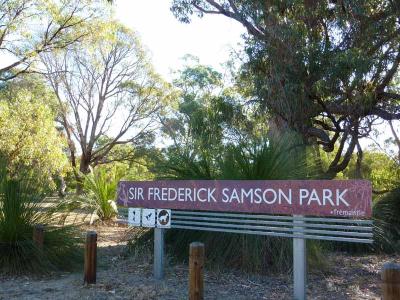
Samson is a small suburb of Fremantle, a southern port city in the Perth metropolitan area. The suburb was only developed in the 1970s, as before this it had belonged to the army, and was a military camp during World War II. The suburb is named after the Samson family, who have been prominent in the Fremantle area for nearly two centuries. Sir Frederick Samson was mayor of Fremantle for twenty years, from the 1950s to the 1970s, and his home, Samson House, is one of Fremantle’s landmarks. The suburb of Samson contains Sir Frederick Samson Park, Fremantle’s only bush reserve. Sir Frederick was the grandson of Lionel Samson, a wealthy Jewish merchant who settled in the Swan River Colony in 1829 and became one of its most successful pioneers. Popular for his charm and wit, respected for his integrity, the business he founded is still run by the Samson family, making it Western Australia’s oldest family business. Samson is one of the most famous characters in the Old Testament, a judge of the Israelites known for his superhuman strength. His name is from the Hebrew for “man of the sun”, leading some scholars to suspect he was originally a sun god, or demi-god. Samson was in use as an English name during the Middle Ages, and there is a Welsh St Samson, one of the Apostles of Brittany. This is a very masculine name which provides another way to get the popular short form Sam.

Sawyer
Sawyers Valley is on the eastern fringe of Perth’s outer suburbs, and 40 km from the city. Its name came about because it was originally a saw mill and timber processing area. It’s now a semi-rural suburb in the bush-covered hills surrounding Perth. Sawyer is an occupational surname for someone who sawed wood for a living – and in the days when most things were made of wood, an important trade. Sawyer has been used as a personal name since the 17th century, mostly as a male name. In Australian records, I can only find it as a man’s first name, although not unusual as a female middle name. Sawyer doesn’t chart in Australia, but has been in the US Top since 1991; it had a huge jump up the charts after Steven Spielberg chose the name for his son in 1992. In America, it is a unisex name, but more common for boys. Although it is in rare use here, I have seen it a few times, on both sexes. Its most famous namesake is Tom Sawyer, the young scamp from the stories by Mark Twain, while it has also been alias for Josh Holloway’s character on Lost.

Stirling
Stirling is a residential suburb 10 km north of the city. The area has a multicultural history, because in the 1920s it attracted retired Chinese miners from the goldfields, returned servicemen from the First World War, and many Italian migrant. It became a successful market gardening region producing almost every vegetable possible, some for export. Even after development in the 1960s and ’70s, the suburb remains one of Perth’s most ethnically diverse, with a third of the population having Italian heritage, and many from Macedonian, Greek and Asian backgrounds. The suburb is named after James Stirling, who was the first governor of Western Australia, and who lobbied for a colony to be founded on the Swan River. Stirling is a Scottish Clan name which comes from the city of that name in central Scotland; it is known as the “Gateway to the Highlands”. The meaning of its name is not known, although folk etymology says that it is from the Gaelic for “place of battle”. Another theory is that it is British, and means “dwelling place of Melyn”; the name Melyn is said to mean “yellow-skinned, sallow-skinned”. Stirling has been used as a boy’s name since the 18th century, and was first used this way in Stirlingshire. I have seen this name quite a few times in birth notices, and it’s one with a great deal of dignity.

Warwick
Warwick is in the northern suburbs of Perth, and a large section of it is still native bushland. It originally belonged to a railway company, and is named after Warwick Road, the major road which goes through it, and pre-dates the suburb’s development. It may have been inspired by Warwick Road in London. The name Warwick comes from the English city of Warwick in the Midlands; its name means “dwellings by the weir” in Old English, as the River Avon flows through it. It’s pronounced WOR-ik. The Earl of Warwick is one of the most prestigious titles in the British peerage, and Guy of Warwick a legendary English hero, which may help explain why Warwick has been used as a boy’s name since at least the 16th century. However, it seems to have originated in Devon, in the seat of a family named Warwick who belonged to the minor nobility. Warwick first charted in the 1910s at #203, joining the Top 100 in the 1940s, where it peaked at #80. It left the Top 100 in the 1960s, and hasn’t charted since the 1990s. Famous Australians with this name include the racing driver Warwick Brown, and flamboyant former AFL star, Warwick Capper.

POLL RESULTS
The public’s favourite names were Sawyer, Samson and Ashby, and their least favourite were Stirling, Warwick and Murdoch.

(Photo shows the entrance to Sir Frederick Samson Park, in Samson)

Famous Name: Grace

21 Wednesday May 2014

Posted by A.O. in Famous Names

≈ 6 Comments

Tags

British name popularity, classic names, colour names, contemporary classics, english names, famous namesakes, germanic names, Latin names, middle names, mythological names, name history, name meaning, name popularity, New Zealand name popularity, nicknames, popular names, royal names, saints names, theological names, virtue names, vocabulary names

Thumbnail_320

Last month it was the 121st birthday of Grace Cossington Smith, one of the most important Australian artists of the 20th century, and a contemporary of Clarice Beckett.

Grace was born in Sydney, and studied under Antonio Dattilo Rubbo, an inspiring and extremely supportive art teacher who encouraged his students to experiment; he affectionately called Grace “Mrs Van Gogh”. Her painting The Sock Knitter, showing her sister knitting socks for the war effort, is considered to be Australia’s first post-Impressionist painting, and she exhibited in galleries from 1915.

Her paintings are notable for their bright patterns and vibrant energy, using careful square brushstrokes to create images of colour shimmering through sunlight. She painted scenes of Sydney, and is famous for her iconic representations of the Harbour Bridge, showing the bridge’s construction. Grace’s Sydney was bustling, busy, exciting; filled with crowds, colour and sunshine. Later in life, she became known for her still lifes and interiors.

Art museums began buying Grace’s work in the 1940s, but she did not become famous until the 1960s, and in 1973 was appointed an Order of the British Empire as an exhibition of her work toured with the Art Gallery of New South Wales. Grace was 81, and let it be known that she would have welcomed recognition a little earlier. She received her OBE while in a nursing home, and by then was too frail to paint any more.

Grace is an English word which can be understood in several different ways. We might think of grace in terms of physical elegance and poise, but there is also social grace, where a person is charming and well-mannered.

The theological concept of Divine Grace is present in several religions. In Christianity, it means the undeserved love and mercy given to us by God – a gift that allows us a share in divinity. Although there are many theological disagreements, nearly all Christians believe that the grace of God is necessary for salvation, and that it is through divine grace that we are able to resist sin.

The word grace comes from the Latin gratia, meaning “kindness, favour, esteem”, ultimately from an ancient root which means “praise, welcome”. The word is related to grateful. Both the secular and spiritual senses of the word grace have connotations of effortlessness – no matter how many lessons in physical movement or etiquette you might have, you can only appear graceful if it seems natural and easy for you. And the grace of God comes not through our own efforts, but is a gift that we are freely given without earning it.

The English name Grace was not originally linked to either of these meanings, but from a Germanic name Grece, meaning “grey”, and pronounced like Grace. However, it quickly became associated with the Latin Gratia or Gracia, to suggest “charming, pleasant”, and it is thought that women with these names would have been known as Grece or Grace in everyday life.

St Gracia of Lerida may have been an influence on the name’s development; she was the daughter of a Spanish Muslim caliph who converted to Christianity and was martyred in the 12th century. Born Zaida, she took Gracia as her Christian name, and is sometimes known as St Grace. There is also an obscure pre-Norman English saint named Grace connected with St Probus of Cornwall; some speculate that she was his wife, and others that she was a great lady who supported him in his ministry. There doesn’t seem to be any evidence that she ever existed.

In Greek mythology, the Graces are goddesses of charm, beauty, nature, creativity, and fertility, patronesses of amusements and festivities. Despite this seemingly frivolous purview, in some mysterious way they were connected to the Underworld and the secrets of the afterlife – perhaps a taste of the joys which might await us on the other side. In Renaissance art, they are usually depicted as three beautiful young women who are either naked or lightly draped in diaphanous garments, and often embracing each other or clasping hands.

These attractive figures might have influenced the choice of the name Grace from the late Middle Ages, but it is usually thought that after the Reformation, Grace would have been given by Puritans as a virtue name, with the religious meaning in mind.

Grace is a classic name which has never left the charts. It was #29 in the 1900s, left the Top 100 in the 1940s, and reached its lowest point in the 1970s at #373. It then began climbing steeply, around the time of Princess Grace of Monaco’s death, and reached the Top 100 in 1988 at #89.

By 1991, Grace was in the Top 50 at #45, and in the Top 20 by 1998 at #13 – the highest point it had ever gained historically. Grace reached the Top 10 in 2002 at #9, however it did not stay there long, and stabilised just outside the Top 10, where it remains today.

Currently Grace is #12 nationally, #11 in Victoria, #14 in New South Wales, #12 in Queensland, #11 in Western Australia, #9 in Tasmania, #11 in the Northern Territory and #10 in the Australian Capital Territory. Highly popular in all states and territories, it is also a Top 100 name in other English-speaking countries, and is most popular in Northern Ireland and Ireland at #3 and #4 respectively. Its popularity in Britain and New Zealand is much the same as here.

Grace is a true timeless classic; a solid choice as an English name which has never gone out of fashion or fallen into disuse in nearly a thousand years. Yet it is more popular now that it has been at any other time in Australia’s history, making it a contemporary classic which feels both traditional and up-to-date.

Grace is a beautiful name with simple elegance; sophisticated and unpretentious, and even more popular as a middle name. It’s a saint, a princess, a goddess, and millions upon millions of ordinary women throughout the ages. There may be many little girls named Grace, but that’s no reason why your daughter cannot join their ranks. Gracie is a common pet form, and quite a few parents are choosing this as the name on the birth certificate.

POLL RESULT
Grace received an excellent approval rating of 83%, making it one of the highest-rated names of 2014. People saw the name Grace as a beautiful timeless classic (29%), simple yet sophisticated (18%), suitable for all ages (18%), and intelligent and professional (11%). However, 6% thought it was too popular. Nobody thought the name Grace was harsh or ugly.

(Picture shows Church Interior by Grace Cossington Smith, c 1941)


Boys Names from the Top 100 of the 1920s

11 Sunday May 2014

Posted by A.O. in Name Themes and Lists

≈ 7 Comments

Tags

Anglo-Saxon names, aristocratic surnames, classic names, dated names, english names, epithets, famous namesakes, Gaelic names, germanic names, Irish names, locational names, middle names, name history, name meaning, name popularity, name trends, nicknames, Norman-French names, Old English names, Old Norse names, retro names, Roman names, royal names, saints names, Scottish names, surname names, unisex names, Welsh names

161695_medium

Happy Mother’s Day! One of my mum’s favourite hobbies is browsing in antique shops and vintage stores: sometimes you find the most wonderful items in these places, and marvel that we ever stopped making such beauties. On the other hand, sometimes there’s nothing but junk in them. But either way, you get to lose yourself in the past for a while. Here are ten boys names from the 1920s, and I will let you decide whether I have dug up something worthwhile, or whether they should be allowed to lie under dust sheets for a few years longer. 

Athol
Based on the place name Atholl, a district of the Scottish Highlands which means “New Ireland” in Gaelic. One of its towns is named Blair Atholl, and the Duke of Atholl is a member of the Scottish peerage – the only person in Europe legally commanding his own private army, the Atholl Highlanders. Both Sydney and Adelaide have suburbs named Blair Athol; the one in Sydney is named after a historic house. A famous Australian namesake is Athol Guy, from folk group The Seekers – he’s the one with glasses. Athol has been used as a first name since the 18th century, and originates from the Atholl region of Scotland. Athol was #86 in the 1900s, and peaked in the 1910s at #70; by the 1920s it was #72. It left the Top 100 in the 1940s, and hasn’t ranked since the 1950s. Athol unfortunately sounds a lot like the female name Ethel, and can be mispronounced to sound like a rude word (I went to primary school with an Athol, and can testify to this). It might be better suited as a middle name.

Bernard
Germanic name translated as “brave as a bear”. It was brought to England by the Normans, where it replaced the Old English equivalent, Beornheard. There are several saints named Bernard, including St Bernard of Mentone, founder of a famous refuge for pilgrims in the French Alps; the St Bernard dogs used to rescue people are named after him. Another is St Bernard of Clairvaux, who founded the Cistercian Order and is a Doctor of the Church, famed for his eloquence. Two Australian celebrities demonstrate the different ways this name can be pronounced: Bernard Fanning from Powderfinger says his name with the accent on the first syllable, while tennis player Bernard Tomic has his name pronounced with the emphasis on the second. Bernard was #62 in the 1900s, and peaked in the 1920s at #53. It didn’t leave the Top 100 until the 1970s, and last ranked in the 1990s. With more than sixty years in the Top 100, yet never in the Top 50, Bernard seems very usable. It’s a strong, masculine name that is quite funky, and comes with cute nicknames like Bernie, Barney, and Bear.

Herbert
Germanic name translated as “bright army”, and found very early in the form Charibert, who was King of the Franks in the 6th century; his daughter married a king of Kent. The Anglo-Saxons had their own form of the name, Hereberht, and there is a 7th century saint with this name, as well as an obscure French St Herbert. When the Normans conquered England, they brought the name with them, and it replaced the Old English form. Unlike many other medieval names, Herbert managed to remain in use because it is an aristocratic surname – the Herbert family have been Earls of Pembroke in an unbroken line since 1501. The first Earl of Pembroke was a courtier married to the sister of Catherine Parr, one of Henry VIII’s wives, and the present Earl still lives on the estate built by the first Earl. The name Herbert became popular during the 19th century, when Sidney Herbert, the 14th Earl, was a distinguished politician famous for being the most handsome MP of his day. Herbert was #23 in the1900s, and #48 by the 1920s. It left the Top 100 in the 1940s, and hasn’t ranked since the 1960s. I have seen one or two small children named Herbert, and this is one for the serious lover of vintage names, with the nicknames Herb, Herbie, and Bertie.

Ian
Anglicised form of Iain, a modern Scottish Gaelic form of John, derived from the medieval Irish name Eoin. Both Iain and Ian date from the 19th century, and it is not impossible that Iain was an attempt to Gaelicise English Ian. Ian was #128 in the 1900s, and joined the Top 100 the following decade. It was #57 in the 1920s, and peaked in the 1950s at #10. It didn’t leave the Top 100 until the 1990s, and is currently stable in the mid-200s. This makes Ian a very safe choice – it’s a classic which was popular for eighty years, and is still in reasonable use.

Lloyd
English form of the Welsh Llwyd, commonly translated as “grey”, which in practice referred to various shades of brown in different contexts, and white, in the sense of grey hair being white. Although Llwyd was sometimes used as a personal name, it became better known as an epithet, which came to describe someone with mouse-brown hair, and then developed into a surname. By this stage, the original meaning of “grey” was pretty much lost, and it was understood as “brown-haired”. The word llwyd could also be understood as meaning “holy, blessed”, although this doesn’t seem to have contributed to the surname. In Britain, Lloyd has some heavy-duty business clout, due to Lloyds Bank, and the insurance market Lloyd’s of London. Use of the name may have been boosted by David Lloyd George, Britain’s only Welsh Prime Minister. Lloyd was #148 in the 1900s, and peaked in the 1910s at #80. By the 1920s it was #91, and it left the Top 100 the following decade. However, the name Lloyd continued to chart until the late 2000s. It’s still in occasional use, and I see it quite often as a middle name in birth notices. Lloyd may be a little clunky, but it’s not an outrageous choice.

Ross
A region in north-west Scotland, said to mean “headland” in Gaelic, perhaps referring to the Black Isle, a peninsula in the Scottish Highlands. Another possibility is that it means “horse island” in Old Norse, in reference to the island of Orkney. The Scottish surname Ross originates from this area. However, the surname has English roots too, because there are places in England named Ross, with the meaning “headland”, and Rozzo was an Anglo-Saxon name meaning “fame” (related to the name Rose). The Rosses were a large Yorkshire family who came over with William the Conqueror from the village of Ros in Normandy (the name means “red’); in the Middle Ages they bought up large tracts of Ayrshire, so their surname also became Scottish. Ross has been used as a personal name since at least the 16th century, and first used in England rather than Scotland. Ross was #203 for the 1900s, and hit the Top 100 in the 1920s at #75. It peaked in the 1950s at #37, didn’t leave the Top 100 until the 1980s, and still ranked in the late 2000s. Ross is fairly common in the middle, and wouldn’t be too surprising up front.

Roy
Anglicised form of Ruadh, a Gaelic name meaning “red”, often used as a nickname for someone with red hair. One of the most famous bearers is Scottish outlaw Raibeart Ruadh MacGriogair, known in English as Rob Roy MacGregor. His story was turned into a best-selling novel by Sir Walter Scott, and Liam Neeson starred in a film about him. The name can also be derived from the surname, which can be from Ruadh, but also from Norman-French Roi, meaning “king”. This could be used as a nickname, but was a medieval personal name as well. Roy was #25 in the 1900s, and #34 by the 1920s. It left the Top 100 in the 1950s, and reached its lowest point in 2010 with a ranking of 0. Since then, Roy has begun to pick up steam, and has become rather fashionable, along with similar names like Royce, Elroy and Leroy. This classic is once again on trend.

Sidney
Aristocratic surname which probably comes from a place name meaning “at the water-meadows” in Old English. However, folk etymology derives it from the French Saint-Denis, a suburb of Paris named after the city’s first bishop. The Sidney family became prominent during the Tudor period; Sir William Sidney was squire to Henry VIII. Sir William’s grandson was poet Sir Philip Sidney, famous for creating the name Stella. The story goes he had a noble and gallant death, for as he lay dying in battle, he gave his water to another wounded soldier, with the words, “Thy necessity is yet greater than mine”. Sir Philip’s great-nephew was Algernon Sidney, a 17th century republican executed for treason, and afterwards revered as a heroic patriot and martyr. Although Sidney had been used as a first name since the 16th century, it became much more popular in the United States during the 18th and 19th, because Algernon Sidney’s anti-monarchist views were highly influential to the American conception of liberty. Although it has charted for both sexes in the US, in Australia Sidney has only charted as a male name. Sidney was #48 in the 1900s, and peaked in the 1910s at #47; by the 1920s it was #63. It left the Top 100 in the 1940s, and dropped from the charts in the 1980s. However, it ranked again in the late 2000s at #450, and has been gently increasing. This retro name is back in style, along with its short form, Sid.

Terence
English form of the Roman family name Terentius, of unknown meaning. The Roman comic playwright we call Terence was named Publius Terentius Afer, and he was a slave (probably from Libya) of a Roman senator from the Terentius family, who educated him, and later freed him; he adopted the name Terentius after gaining his freedom. There are several saints we call Terence, although most of them were named things like Terentianus, Terentian, or Tertius. Terence has been used as an English name since the 17th century, and in Ireland was used to Anglicise the name Toirdhealbhach, meaning “instigator”. Terence was #141 for the 1900s, and joined the Top 100 in the 1920s at #71. It peaked in the 1940s at #30, and left the Top 100 in the 1960s. It hasn’t ranked since the 1990s, but Terence still seems usable, and could be seen as either a “posh” choice or an Irish one.

Wallace
English surname derived from the Norman French waleis, meaning “foreigner”. Although often translated as “Welsh”, the word waleis could refer to someone from Wales, or from the English counties bordering Wales, or to Cornish Celts, or to Bretons who came to England after the Norman Conquest and settled in East Anglia. The surname became associated with Scotland because of the early medieval Kingdom of Strathclyde, which straddled northern England and southern Scotland. The people of Strathclyde spoke Cumbric, a British language closely related to Old Welsh, and were known as walensis. Even after becoming part of Scotland, it remained a distinctive area into the 12th century. The surname is famous because of Sir William Wallace, a commander during the 13th century Wars of Scottish Independence who has become an iconic Scottish national hero. There have been many books and poems written about Wallace’s exploits, and he features in the film Braveheart, played by Mel Gibson. Wallace has been used as a first name since the 17th century, and originates from Scotland. Wallace was #74 for the 1900s, and peaked in the 1920s at #68. It left the Top 100 in the 1940s, and hasn’t ranked since the 1950s. Wallace really deserves to make a comeback, and the nicknames Wally and Wal are cute.

POLL RESULTS
The public’s favourite names were Sidney, Wallace and Ian, and their least favourite were Terence, Athol and Herbert.

(Picture shows two boys riding their tricycles amongst grape vines in Mildura, Victoria in the 1920s; photo from Museum Victoria)

Girls Names From the Top 100 of the 1920s

04 Sunday May 2014

Posted by A.O. in Name Themes and Lists

≈ 5 Comments

Tags

African names, animal names, Arthurian names, Berber names, British names, celebrity baby names, classic names, created names, dated names, Egyptian names, english names, European name popularity, fictional namesakes, gemstone names, germanic names, Greek names, Irish names, Latin names, Libyan names, locational names, mythological names, name history, name meaning, name popularity, names from movies, names from television, nature names, nicknames, Old English names, Old French names, Old Irish names, retro names, saints names, Sanskrit names, scandinavian names, surname names, underused classics, unisex names, Welsh names, Yiddish names

palm-beach-sydney-1920s

The data on popular names are all in, but maybe none of the current Top 100 names interest you. Or perhaps you are dismayed at how much your favourite names went up in popularity last year. If so, why not look at the popular names of ninety years ago, to see if there are some gems from times gone by that are ready to shine again?

Agnes
Agnes of Rome was a 3rd century child martyr. According to tradition, she was a member of the Roman nobility, raised in a Christian family, and a very beautiful young girl. She is said to have been only twelve or thirteen when she died, and like Saint Catherine, is one of the patrons of young girls; the eve of her feast day was a time for girls to perform rituals to discover their future husbands. The name Agnes was very popular in the Middle Ages; one of its attractions was probably that in medieval English it was softened into Annis, so that it sounded as it was related to Anne. The name Agnes is from the Greek for “pure”, but because it sounds similar to the Latin for “lamb”, agnus, Saint Agnes is often depicted holding a lamb. Agnes was #28 for the 1900s, and by the 1920s had fallen to #77. It left the Top 100 in the 1930s, and hasn’t ranked since the 1940s, but is now getting some use again. This soft, elegant name has been chosen for their daughter by several celebrities, including Jennifer Connolly. It is the name of a little girl in the movie Despicable Me, and currently popular in Scandinavia. It feels as if Agnes is already making a comeback.

Beryl
Gemstone name; beryls are stones which in pure form are colourless, but usually tinted by impurities in a variety of shades. Green beryls are called emeralds, and light blue ones are aquamarines, but all colours of beryl have their own name. The word beryl is ultimately from Sanskrit, probably derived from the town of Belur in southern India. Beryl has been used as a first name since the 17th century, but only became popular during the 19th, along with other gemstone names. Historically, it has been used as a male name too, mostly in the United States, perhaps as a variant of the surname Berrill (an occupational name from the wool trade), and the Yiddish name Berel (pet form of Ber, “bear”). Beryl was #61 in the 1900s, and peaked in the 1920s at #8. It left the Top 100 in the 1950s and hasn’t ranked since the 1960s. Beryl is the bossy cook in Downton Abbey, and the evil queen in the Sailor Moon cartoons. This would make a daring gemstone revival, and offers the nickname Berry.

Elva
Variant of the Scandinavian girl’s name Alva, or an Anglicised form of the Irish unisex name Ailbhe, pronounced like Alva, and one of the influences on the name Elvis. You could see Elva as a specifically feminine form of Elvis, and the Irish origin seems most likely in Australia. Elva was #160 for the 1900s, and peaked in the 1920s at #97, before falling steeply; it last ranked in the 1950s. Elva was a “trendy” name in its day, but its relative obscurity has saved it from seeming dated. I have seen several babies named Elva recently, and it doesn’t seem out of place amongst the Evas and Avas.

Gwendoline
Variant of the Welsh name Gwendolen, first used for a legendary queen of Britain by Geoffrey of Monmouth in his History of the Kings of Britain. According to this legend, Gwendolen was the daughter of King Corineus of Cornwall. She defeated her husband after he repudiated her in favour of his mistress; he was killed in battle, and Gwendolen had the mistress drowned. She then took the throne as the first independent queen of the Britons, and ruled for fifteen peaceful years. Gwendolen appears in Edmund Spenser’s The Faerie Queene, and in the poems of William Blake, as a symbol of British sovereignty. Gwendolen has been translated as “white ring, white bow”, although it may have been an attempt to Latinise another Welsh name. Geoffrey re-used the name Gwendolen for the name of Merlin’s wife in his Life of Merlin. Gwendolen and Gwendoline were revived in the Victoria era as part of the fascination with Arthurian names, and names from British legend. Gwendoline was #68 in the 1900s, and peaked in the 1920s at #35. It left the Top 100 in the 1940s, and hasn’t ranked since the 1950s. It still receives occasional use, and has an upper-class British feel to it, while giving Gwen and Winnie as nicknames.

Hilda
Originated as a short form of Germanic names with hild in them, meaning “battle”. Hilda of Whitby was a 7th century saint from Northumberland, and her name in Old English is Hild. Born into royalty, she was baptised as part of the mission by Pope Gregory the Great to convert the English to Christianity. Hilda became a nun, then founded a monastery at Whitby (it was in the Celtic style, where men and women lived separately, but worshipped together). Hilda is described as a woman of great intelligence and energy, a fine abbess and teacher, so wise that rulers came to her for advice, yet caring towards ordinary people. Hilda was #27 in the 1900s, and #71 by the 1920s; it left the Top 100 by the 1930s, and hasn’t ranked since the 1940s. Hilda is a popular name in Sweden, giving this name a sexy Scandinavian feel as well as a sturdy English one; it doesn’t seem radically different from Heidi, and is even slightly like Matilda. It would be an unusual choice, but by no means a strange one.

Kathleen
Anglicised form of Cáitlin, the Irish form of Catelin, the Old French form of Catherine. The Irish Cáitlin can be said kat-LEEN, so it’s just a step to Kathleen. This name has a very Irish association, for Kathleen Ni Houlihan is an emblem of Irish nationalism representing the country of Ireland. She is usually depicted as an old woman who has lost her home and her lands, needing young men willing to fight and die for her. Once she has been rejuvenated by their martyrdom, she appears young and beautiful, and proud as a queen. It combines myths of both paganism and Christianity, and Kathleen Ni Houlihan has appeared in folk songs and poems, and the literary works of William Butler Yeats, Lady Augusta Gregory, Sean O’Casey, and James Joyce, amongst others. The name Kathleen was #10 in the 1900s, peaked in the 1910s at #5, and was #11 by the 1920s. A long time favourite, it didn’t leave the Top 100 until the 1990s, but hasn’t ranked since the late 2000s. Despite being out of fashion, this name was popular for more than eighty years, and still seems fresh and wholesome, with a hint of Irish charm.

Mabel
Short form of Amabel, from the Latin name Amibilis, meaning “lovable”. There were both male and female saints named Amabilis, and the female one is often known as Saint Mable to prevent confusion. Mabel was a popular name in the Middle Ages, and is found in a range of variant spellings; it is thought that it was originally said MAB-ell rather than the current MAY-bel. Mabel became rare in England, but remained in use in Ireland, where it was used to Anglicise the name Maeve. It was revived in the 19th century when Charlotte M. Yonge used it in her best-selling romance, The Heir of Reclyffe, for a character with an Irish background. Mabel was #30 in the 1900s, and had fallen to #90 by the 1920s, leaving the Top 100 the following decade. Mabel left the charts in the 1950s, but returned in the late 2000s. This retro name has plenty of spunk, and although it isn’t popular yet, don’t be surprised if it is again some day.

Monica
Saint Monica was the mother of Augustine of Hippo. A devout Christian, it was her dearest wish for her pagan son to become one as well, and after seventeen years her prayers were answered when he was converted by Saint Ambrose. Of course Augustine went the whole hog and ended up a saint, and a doctor of the church as well. Saint Monica was rather neglected after her death, but her cult became popular during the Middle Ages. Monica was from Libya and her name a Berber one that was common at the time; it is derived from the Libyan god Mon, a form of Amon, one of the most important of the Egyptian gods. In the Middle Ages, the origins of her name being unknown, it was decided that it must come from monere, Latin for “to advise, to warn”. Although this neatly tied in with Saint Monica’s story, it was etymologically incorrect. Monica was #141 in the 1900s, and peaked in the 1920s at #91; it had a minor peak in the 1990s at #127, coinciding with the sitcom Friends, which had the character of Monica Geller. Monica has never left the charts, but never been higher than the bottom of the Top 100, making it a genuine underused classic. It still sounds slightly exotic, and makes a pretty, sophisticated choice that’s never been common.

Peggy
Short form of Margaret, meaning “pearl”. It’s a variant of Meggy which has been in use since medieval times. Peggy first ranked in the 1910s at #189, and peaked in the 1920s at #63. It fell sharply, leaving the Top 100 by the following decade, and hasn’t ranked since the 1980s. Peggy is now staging a comeback, as it fits in perfectly with the trend for vintage and retro short forms. The ambitious career woman Peggy Olsen from Mad Men is a feminist icon, and this name has been chosen as a celebrity baby name by both MP Jacinta Allan, and media personality Chrissie Swan.

Una
Anglicised form of Úna, a medieval Irish name believed to come from the Old Irish for “lamb”. In Irish mythology, Úna was a fairy queen, wife of Finnbheara, the high king of the fairies. It is pronounced OO-na, and was sometimes Anglicised to Agnes, because of the lamb connection, as well as Winnie or Juno, based on similar sounds. Una is also a name created by Edmund Spenser for his epic poem, The Faerie Queene. In the allegory, Una represents the “True Church” (Protestantism), and defeats the representation of the “False Church” (Catholicism). Spenser seems to have based her name on the Latin for “one” (to reference unity and a single choice of faith); the name is said YOO-na. However, Spenser wrote his poem while living in Ireland, and it is hard not to wonder if he had been influenced by the Irish name. Una was #94 in the 1900s, and peaked in the 1920s at #69, leaving the Top 100 the following decade. It hasn’t ranked since the 1940s, but this name is really quite beautiful, and with its clear simplicity, doesn’t seem odd next to Ava and Mia.

POLL RESULTS
The public’s favourite names were Mabel, Gwendoline and Agnes, and their least favourite were Monica, Hilda and Beryl.

(Picture shows women holidaying at Palm Beach in Sydney in the 1920s; photo from the State Library of New South Wales)

← Older posts
Newer posts →

Enter your email address to follow this blog

Categories

Archives

Recent Comments

A.O.'s avatarwaltzingmorethanmati… on Zarah Zaynab and Wolfgang…
Madelyn's avatarMadelyn on Zarah Zaynab and Wolfgang…
JD's avatardrperegrine on Can Phoebe Complete This …
A.O.'s avatarwaltzingmorethanmati… on Rua and Rhoa
redrover23's avatarredrover23 on Rua and Rhoa

Blogroll

  • Appellation Mountain
  • Baby Name Pondering
  • Babynamelover's Blog
  • British Baby Names
  • Clare's Name News
  • For Real Baby Names
  • Geek Baby Names
  • Name Candy
  • Nameberry
  • Nancy's Baby Names
  • Ren's Baby Name Blog
  • Sancta Nomina
  • Swistle: Baby Names
  • The Art of Naming
  • The Baby Name Wizard
  • The Beauty of Names
  • Tulip By Any Name

RSS Feed

  • RSS - Posts

RSS Posts

  • Celebrity Baby News: Melanie Vallejo and Matt Kingston
  • Names from the TV Show “Cleverman”
  • Can Phoebe Complete This Sibset?
  • Zarah Zaynab and Wolfgang Winter
  • Baby, How Did You Get That Name?
  • Celebrity Baby News: Media Babies
  • Celebrity Baby News: Adelaide Crows Babies
  • Celebrity Baby News: Chris and Rebecca Judd
  • Names at Work: Name News From the World of Business and Employment
  • Celebrity Baby News: Sporting Round Up

Currently Popular

  • Celebrity Baby News: Alisa Camplin and Oliver Warner
  • Rare Boys Names From the 1950s
  • Sad Celebrity Baby News (contents may cause distress)
  • Kai Erik Lassila: A Son for Lydia and Lauri Lassila
  • Celebrity Baby News: Jacinta Allan and Yorick Piper

Tags

celebrity baby names celebrity sibsets english names famous namesakes fictional namesakes honouring locational names middle names name combinations name history name meaning name popularity name trends nicknames popular names saints names sibsets surname names twin sets unisex names

Blog at WordPress.com.

Privacy & Cookies: This site uses cookies. By continuing to use this website, you agree to their use.
To find out more, including how to control cookies, see here: Cookie Policy
  • Subscribe Subscribed
    • Waltzing More Than Matilda
    • Join 517 other subscribers
    • Already have a WordPress.com account? Log in now.
    • Waltzing More Than Matilda
    • Subscribe Subscribed
    • Sign up
    • Log in
    • Report this content
    • View site in Reader
    • Manage subscriptions
    • Collapse this bar
 

Loading Comments...