• About
  • Best Baby Names
  • Celebrity Baby Names
  • Celebrity Baby Names – Current
  • Celebrity Baby Names – Past
  • Featured Boys Names
  • Featured Girls Names
  • Featured Unisex Names
  • Links to Name Data
  • Waltzing on the Web

Waltzing More Than Matilda

~ Names with an Australian Bias of Democratic Temper

Waltzing More Than Matilda

Tag Archives: Biblical names

Fresh Names For Boys

01 Sunday Nov 2015

Posted by A.O. in Name Themes and Lists

≈ 5 Comments

Tags

American names, angel names, Aramaic names, Biblical names, celebrity baby names, english names, European name popularity, famous namesakes, fictional namesakes, Greek names, hebrew names, imperial names, Latin names, literary names, locational names, modern names, mythological names, name history, name meaning, name popularity, name trends, names from films, names from television, names of bands, New Zealand name popularity, nicknames, papal names, Puritan names, Romani names, saints names, Spanish names, surname names, UK name popularity, US name popularity

DjangoUnchained_poster2

An audit of Featured Names on the site has revealed there are less boys names than girls, so I’m going to cover two lots of boys names this month to give them a chance to catch up. These names seem “fresh” because they don’t have a history of charting in Australia, aren’t popular, and are rising in other countries. They are ones to keep an eye on!

Arlo
May be a variant of the surname Arlow, a corruption of Harlow. Arlo is the Anglicised form of Aherlow, and the Glen of Aherlow is a picture-postcard valley in Ireland. Its name comes from the Irish eathralach, meaning “between two highlands”, as the valley is nestled between major peaks in the Galtee Mountains. The name became part of English literature when Edmund Spenser used Arlo Hill as a place name in his poem The Faerie Queene; Spenser’s estate in Ireland was near the Glen of Aherlow. Arlo has been used as a boy’s name since the 18th century, and originated in the United States: I think probably from Arlow, used at the same time, and in a couple of records the person is listed as both Arlow and Arlo. One of the its most famous namesakes is folk singer Arlo Guthrie, although you may also think of street skater Arlo Eisenberg, and agent Arlo Glass from TV series 24. Around the 200s in Australia, Arlo is climbing steeply in both the US and UK, and is already popular in New Zealand. Arlo fits in with the trends for an AR sound and O-ending, and being chosen for their sons by both Toni Colette and Kasey Chambers can only have helped.

Bodhi
In Buddhism, bodhi is the deep understanding gained about the true nature of reality; this understanding is part of the Buddha’s liberation on the path to Nirvana. It literally means “awakened” in Sanskrit and Pali, but is often translated as “enlightenment”. The great spiritual teacher Gautama Buddha is said to have attained bodhi while sitting under a sacred fig tree in India, now known as the Bodhi Tree, and Bodhi Day is celebrated by Buddhists on December 8. Bodhi has been used as a personal name since the 20th century, with a surge of interest in the 1970s, when all things Eastern became trendy. The name received a notable outing in the 1991 cult film Point Break, with Patrick Swayve as a rebel surf leader named Bodhi. The film ends at Bells Beach in Victoria, which may help explain why Bodhi is such a favourite in Australia, and around the 200s. It is much rarer in other countries, but climbing steeply in both the UK and US. Apart from the spiritual meaning, Bodhi fits in with names like Beau and Brody. Chosen for his son by actor Cameron Daddo, this is a relaxed surf-friendly name.

Casper
A form of the name Jasper, which has a huge number of European spelling variants. It’s been in use since the Middle Ages, when it was most common in Central Europe. Today Casper is a popular name in The Netherlands and Scandinavia, and rising briskly in the UK, where it is in the 200s. It is around the 400s here, and would make a great alternative to popular Jasper – especially as Casper the Friendly Ghost is no longer much of an issue.

Djanjo
Nickname of the great French jazz guitarist, born Jean Reinhardt. Reinhardt was of Romani descent, and his nickname means “I awake” in the Romani language”: it is pronounced JANG-go. There was a revival of interest in his “gypsy jazz”sound in the 1960s, and Django’s musical influence can barely be overstated; he has been an inspiration to generations of guitarists. His music has been used in movie soundtracks, and Djanjo himself is a character in Martin Scorcese’s Hugo, while being referenced in other films. Djanjo is the main character in a popular series of spaghetti Westerns, and got a reboot in Quentin Tarantino’s Django Unchained, with Jamie Foxx as freed slave Djanjo Freeman. Django isn’t common in any country, but has been rising in the UK since Tarantino’s 2012 film. Cool and on trend, this is a musical name with a cowboy vibe.

Ezra
In the Old Testament, Ezra was a scribe and priest, and according to Jewish tradition is credited with introducing several of the main aspects of Jewish law and teachings. This makes him a greatly respected figure in Judaism, and also in Islam and Christianity. His name is translated as “help”, although it may be a contraction of the Hebrew name Azaryahu, meaning “God helps”. Ezra has been in use as an English name since since at least the 16th century, and has been more common in the US; a famous namesake is the American poet Ezra Pound, and it’s referenced in the name of rock band Better Than Ezra. Ezra is around the 300s here, but is rising steeply in the US and UK; it is only just outside the US Top 100. This is becoming an increasingly hip choice.

Micah
In the Old Testament, Micah was a prophet of Israel. His name looks a lot like Michael, and has a similar meaning: “who is like Yahweh?”, while Michael means “who is like God?” (in both cases, it it is rhetorical, as nobody is God’s equal). Micah’s prophecies became especially relevant to Christians, as one was interpreted as meaning the Messiah would be born in Bethlehem, and Jesus referred to the Book of Micah several times in his teachings. Because of this, the prophet is regarded as a saint, and the name Micah has been used since the 17th century, introduced by the Puritans. Micah is around the 100s here, and is even more popular in the US, although not so common in the UK. The name has become a favourite in horror and fantasy works, and will appeal to people who like Michael, but want something with a more contemporary feel.

Rafael
From the Hebrew name Rafa’el meaning “God heals”; the name is often spelled Raphael, with Rafael most common in Spanish-speaking countries. In Jewish tradition, Raphael is one of the seven archangels, and mentioned in the Old Testament. He is an angel of healing and protection from demons, and venerated in Christianity and Islam as well as Judaism. Regarded as a saint in Catholicism, St Raphael is the patron of pilgrims and travellers, as well as of medical workers. The name Rafael has been in use since the Middle Ages and was common in Spain. A well-known contemporary namesake is Spanish tennis champion Rafael Nadal. Rafael is around the 100s here, and in the 200s in the US and UK. It is a popular name in Europe, especially in Portugal, and is rising in France and Switzerland. Romantic and with strong, positive associations, this comes with the obvious nicknames Raf and Rafe.

Roman
Derived from the Latin name Romanus, which simply means “a Roman” to signify a man from Rome or a citizen of the Roman Empire. There are a number of saints named Romanus, including an early martyr, as well as a pope and several Byzantine emperors. The name is particularly associated with Russia and Eastern Europe, as there were quite a few Russian, Romanian, and Bulgarian leaders named Roman. However use of the name was internationally quite widespread, and can be found in Spain, Germany, and England from early on. There are two famous film directors with this name: Roman Polanski and Roman Coppola, the son of Francis Ford Coppola. Roman is around the 200s here, and is rising very steeply in the US and UK, only just outside the Top 100 in both countries. Rom- names are on trend, and this is a stylish multicultural choice which was selected for her middle son by Cate Blanchett.

Silas
In the New Testament, Silas was an early Christian leader chosen to be a companion of St Paul. The pair were briefly imprisoned together, until a convenient earthquake broke their chains and burst the prison doors open. Paul refers to him by the Roman name Silvanus, which is from the Latin silva meaning “forest”; in Roman mythology, Silvanus was the god of forests. This would identify Silas as the same person as Saint Silvanus, who was one of the disciples of Jesus; tradition says he became a bishop and died a martyr. If so, Silas could be a nickname, or understood as a Greek form of Silvanus. However, Silas is a Greek form of the Hebrew name Saul, meaning “asked for, prayed for”, which was also Saint Paul’s birth name. Whether Silas was two people or one is a question for the scholars, but Silas became an English name by at least the 16th century because of this character. Here the name Silas is around the 500s, but it is far more popular in the US, and rising in the UK. In popular culture, it has become associated with villains – the creepy albino monk from The Da Vinci Code, and serial killer Silas Blisset in British soap Hollyoaks. The wicked factor has actually boosted the name’s popularity.

Thaddeus
In the New Testament, the Apostle Jude is usually identified as being the same person as the Apostle Judas Thaddeus, called so to differentiate him from Judas Iscariot. Thaddeus (said THAD-ee-us) seems to be derived from tadda, the Aramaic word for “breast, heart”, perhaps an affectionate nickname in the same way we might say dear heart or bosom buddy. It could also mean “hearty”, to suggest someone strong-hearted or warm-hearted. Perhaps the closest thing in English is the familiar piratical address my hearty, which has connotations of strength and courage, but also loyalty and camaraderie. Sometimes the name is given as Lebbeus, which could come from leb, the Hebrew word for “heart”, and thus be a translation of Thaddeus. Another theory is that it is from Todos, an Aramaic form of the name Theodore, although this fails to explain why the Bible also translates it as Lebbeus. It is unclear whether Judas Thaddeus is the same person as St Thaddeus, said to be one of the disciples of Jesus who was a missionary in Syria. In use as an English name since the 17th century, and given impetus by American Puritans, Thaddeus has a strong history in the United States. It is in the US Top 1000 and rising, and has been rising steeply in the UK since 2013. It’s very rare in Australia, but this is a handsome traditional name with a great meaning – Thad, Tad, Ted, and Teddy are obvious nicknames.

POLL RESULTS
People’s favourite names were Arlo, Rafael and Casper, and their least favourite were Bodhi, Thaddeus and Djanjo.

(Picture shows a poster for the movie Django Unchained, with helpful pronunciation guide)
Boys Names from International Destinations

04 Sunday Oct 2015

Posted by A.O. in Name Themes and Lists

≈ 2 Comments

Tags

animal names, Biblical names, Dutch names, english names, European name popularity, famous namesakes, honouring, Irish names, locational names, mythological names, name history, name meaning, name popularity, name trends, names from songs, names from video games, names of businesses, nicknames, saints names, Shakespearean names, slave names, superhero names, surname names, UK name popularity, unisex names, US name popularity

Ikuta Shrine

Arden
A region of Warwickshire in England, once thickly covered in trees and known as the Forest of Arden. It has strong Shakespearean connections, as William Shakespeare’s home town of Stratford-upon-Avon is one of the region’s main attractions. Furthermore, the Arden family were prominent in the area for centuries – they are one of the few landed families in England who can trace their lineage back to before the Norman Conquest. William Shakespeare’s mother, Mary Arden, was one of this family. Shakespeare’s comedy As You Like It is set in the Forest of Arden, a creative mixture of the real forest, a romanticised version of it, and the Ardennes Forest in central Europe. The name Arden is thought to come from the Ancient British word ardu, meaning “high land”; it has been used as a personal name since the 17th century, and had strong ties with Warwickshire. Arden is more popular for girls in the US (perhaps because of cosmetics company Elizabeth Arden), but is fairly even in the UK, and rising for both sexes. This matches my own observations in Australia, and it fits with both male and female name trends.

Boston
The capital of Massachusetts, one of the oldest and largest cities in the United States. Founded by Puritans in the 17th century, it was the scene of many of the key events in the American Revolution – perhaps most famously, the Boston Tea Party. Boston is one of the most economically powerful cities in the world, and a major educational centre, the home of top universities such as Harvard. It has been called “The Athens of America” for its contribution towards literature, art, music, and high culture in general. It is also known for its strong Irish history and culture: former President John F. Kennedy was from a Boston family of Irish Catholic heritage. The city is called after the town of Boston in Lincolnshire, whose name is said to be a contraction of “St Botolph’s town” – St Botolph was an obscure yet strangely popular Anglo-Saxon saint, and his name is believed to be an Old English one meaning “messenger wolf, herald wolf”. Also a surname, Boston has been in use since the 18th century. I saw this name more frequently after the Boston Marathon terrorist attacks in 2013, which matches the situation in the UK, although the name remained stable in the US.

Cairo
The capital of Egypt, and one of the largest cities in the world. Founded in the 10th century, it is close to several ancient sites, including the Pyramids, so that despite being a busy metropolis, it is often associated with the romance of Ancient Egypt. Cairo is a transliteration of the Arabic name for the city: al-Qāhirah, meaning “the victorious”. The reason for the name is because the planet Mars (in Arabic, Al Najm Al Qahir) was rising at the time of the city’s founding. The Egyptian name for the city is Khere-Ohe, meaning “place of combat”, referring to a battle which is supposed to have occurred here between the gods Set and Horus. Not only a strong, war-like name, Egyptian-themed names are very cool at present, and this might appeal to someone wanting a nod to African or Arabic culture. It fits very well with current trends in boys names and can be shortened to Cai.

Cuba
The largest island in the Caribbean, which was claimed for Spain by Christopher Columbus in 1492. It is an ethnically diverse nation with a tumultuous history, and has been under Communist rule since 1965. The island’s name comes from the indigenous Taino language, but the meaning is not certain: it may be from cubao, meaning “where fertile land is abundant”, or coabana, meaning “great place”. Cuba has become well known as a boy’s name due to Hollywood actor Cuba Gooding Jr. As his name tells you, Cuba was named after his father Cuba Gooding Sr, lead singer of the group The Main Ingredient. Cuba Sr’s father Dudley was from Barbados, but fled to Cuba, and met and married a woman there. After she was murdered because of their involvement in the Pan-African movement, Dudley promised her on her deathbed that he would name his first son Cuba. That is a very powerful name story for the name Cuba, and let’s face it, yours won’t be able to compete. However, Cuba has been used as a name since the 18th century, and in the US had strong ties to the African-American community: it may have originally been given as a slave name.

Denver
The capital of Colorado, and one of the largest cities in the American south-west. Set high in the Rocky Mountains, it has the distinction of being exactly one mile above sea level. The city was named after a 19th century politician, James W. Denver, in hopes of currying favour. The surname Denver is after a village in Norfolk, meaning “the passage of the Danes” in Old English – it’s a place on the River Ouse once crossed by Danish invaders. Famous people with the surname include Bob Denver from Gilligan’s Island, and singer John Denver (born Henry Deutchendorf). Denver Pyle played Jesse Duke in The Dukes of Hazzard, while a famous Australian namesake is Denver Beanland, a former Liberal politician from Queensland. The name isn’t particularly strongly tied to the city and can be seen just as easily as a surname name. In use in Australia since the 19th century, it has a reasonable history, so that it doesn’t seem too modern and trendy, despite having a fashionable letter V. Little wonder that it seems to be in quiet but steady use.

Harlem
An area of Manhattan in New York City which has been known as a major centre for African-American culture since the “Harlem Renaissance”of the 1920s. Originally a village settled by Dutch immigrants, it is named after the city of Haarlem in the Netherlands. Haarlem is the capital of North Holland, and historically the centre of the famous tulip industry. Its name probably means something like, “home on the forested dunes”, as it lies on a thin strip of land near the North Sea. It is also a surname; one example is former Norwegian prime minister Gro Harlem. I see this name fairly regularly, and that’s probably because it fits in so well with the strong trend for Har- sounds in boy’s names, such as Harvey, Harley, Harland, and so on. Not only similar to these, Harlem celebrates a place with a cool, and perhaps slightly dangerous image. The Harlem Shake memes could even be a contributing factor!

Jericho
A city in Palestine on the River Jordan. It is believed to be one of the oldest inhabited cities in the world, and the oldest walled city; archaeologists have found remains in Jericho dated to 9000 BC. Jericho features in a famous Bible story, which tells how Joshua, the general of Moses, took the city of Jericho. The Israelites marched around the city perimeter for six days with the Ark of the Covenant. On the seventh day, they marched around seven times, then the priests blew a ram’s horn and the Israelites raised a great shout. The walls of the city fell down, and the Israelites slaughtered almost all the inhabitants. There is a very rousing African-American spiritual about the incident, where the “walls came tumbling down” – an inspiration for the Thatcher era pop song. Archaeologists tell us that although Jericho’s famous walls have been brought down during various conflicts, Jericho was temporarily abandoned during the time that Joshua was supposed to have lived. Perhaps more importantly for the name, it fits in with the current fashion for names with an -o ending, and joined the US Top 1000 in 2013, as it has recently become known as one of the Teen Titan superheroes, and a common name in video games.

Kobe
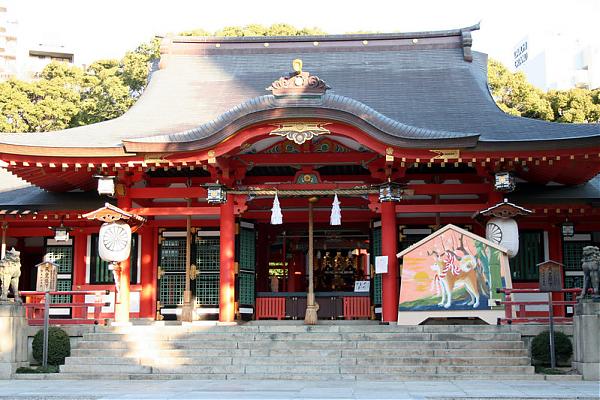
A busy port in Japan, and one of the country’s largest cities. It is famous for its hot springs, which provide a tranquil retreat and have been in use since at least the 8th century, making them amongst Japan’s oldest. The city’s name is connected to its Ikuta Shrine, a Shinto shrine founded in the early 3rd century to venerate Wakahirume, the Japanese goddess of the rising sun and weaving. The city’s name is derived from kamube, an old name for the people who supported the shrine. It is also a Japanese surname, after the city. The name has been popularised by American basketballer Kobe Bryant, whose parents named him after Kobe beef, a very high quality meat from Japan, that they saw on a restaurant menu. Although the Japanese pronunciation is more like KO-BEH, English-speakers generally say it as a homophone of the name Coby, which is one of the name’s attractions. In fact, it is also a Dutch pet form of Jakob. Kobe is around the 100s in Australia, significantly more popular than in either the US or the UK, although it is a Top 50 name in Belgium.

Memphis
The largest city in the state of Tennessee. It is famous as a centre for popular music; because of this, almost a thousand songs are about Memphis, or mention it in some way, and Graceland, Elvis Presley’s famous estate, is a major tourist attraction of the city. Memphis is named after a a capital of ancient Egypt because the American city is situated on the Mississippi, just as the Egyptian one was situated on the River Nile. The Egyptian city is now in ruins, but was once a port and busy commercial centre. Memphis is the Greek transliteration of the Egyptian name Men-nefer, meaning “enduring and beautiful”, and Greek mythology personified it as a nymph named Memphis who founded the city along with her husband, a king and son of Zeus. Despite this feminine history for the name, Memphis is much more common as a male name than a female one, most likely because of Elvis. It is around the 600s for boys in Australia, more popular than in either the US or UK.

Tyrone
The largest county in Northern Ireland. Its name comes from Tir Eoghain, meaning “land of Eoghan”; according to Irish legend, Eoghan was a son of a great medieval king who claimed this land for himself. Eoghan may be derived from Eugene, and thus an Irish form of the Welsh name Owen; others say it is from the Old Irish, and means “born under the protection of the sacred yew tree”. Tyrone has been used as a personal name since the 18th century, and originated in the United States, presumably as an Irish heritage name. It later became used in Ireland too. The name was popularised by Hollywood actor Tyrone Power Jr; part of a long line of actors, the name Tyrone was traditional in his family. The original Tyrone Power, the great-great-grandfather of the Hollywood actor, was from a landed family in Ireland. Tyrone entered the charts in the 1960s at #413, and peaked in the late 2000s at #181. Currently around the 300s, it has never become popular, yet never gone out of use, pioneering, and still fitting in with, the well-worn trend for Ty- names for boys, such as Tyler and Tyson.

POLL RESULTS
People’s favourite names were Arden, Jericho and Boston, and their least favourite were Cairo, Harlem and Cuba.

(Photo of the Ikuta Shrine in Kobe, Japan by Suguri F)

Famous Name: David

23 Wednesday Sep 2015

Posted by A.O. in Famous Names

≈ 4 Comments

Tags

Biblical names, classic names, famous namesakes, hebrew names, international name popularity, mythological names, name history, name meaning, name popularity, popular names, royal names, saints names, Semitic names, US name popularity

David_Unaipon

Famous Namesake
Next week it will be the 143rd birthday of David Unaipon, who was born September 28 1872 – Unaipon is an Anglicised form of the name Ngunaitponi. David was a writer, mythologist, inventor, motivational speaker, lecturer, religious leader, and political activist; in his lifetime he was hailed as a genius. Yet he was given no schooling after the age of 13, and was often denied service because of the colour of his skin.

Born on a South Australian mission, his high intelligence was obvious even as a child. Frustrated by the scarcity of career paths open to him, and almost complete lack of educational ones, after work he would devour books on literature, science and philosophy until the early hours of the morning. He became obsessed with the idea of inventing a perpetual motion machine (a hot topic of the day), and this led to his first patented invention: an innovative design for shearing machines which is the basis for modern mechanical shears.

In all, David took out 19 provisional patents on his inventions, but could not afford to fully patent them: he made no money from his inventions, and received no credit apart from one newspaper article. His other inventions include a centrifugal motor, a multi-radial wheel, and a mechanical propulsion device. One of his ideas was a basic design for a helicopter in 1914, based on the spinning motion of a boomerang; this earned him the title of “Australia’s Leonardo”. A recognised authority on ballistics, he also had a great interest in lasers which he foresaw might one day have military applications – this was some years before Einstein’s pioneering work on lasers.

David worked as a lay preacher and missionary, but was also keen to educate white people on Indigenous mythology and culture. David compiled his versions of Aboriginal legends, influenced by his study of classical and Egyptian mythology, and written in a style reminiscent of John Milton. They were published in a series of booklets and articles, and eventually commissioned as Myths and Legends of the Australian Aboriginals in 1930: David was paid $150 for his work, but received no credit. He was the first Indigenous Australian writer to be published.

Urbane and cultured, dignified in bearing, formal of manner, and fastidious in speech, David defied the stereotypes then held about Aboriginal Australians, and confounded expectations. Even when sympathetic, the newspapers spoke of him in ways which now make us squirm.

He was not just a genius: he was a “black genius” or “Australia’s cleverest darkie”. One journalist calls him “a remarkably intelligent specimen of primitive man”, and writes that people can barely believe he is a “full blooded Aborigine”. “An outstanding representative of the primitive race”, and “remarkably able … even amongst superior whites”, it was made clear that he was an exception to every rule, and one fine shining hour for a people who were inevitably dying out.

David lived to the age of 94, packing many lifetimes into his generous span of years; he continued working on his inventions into old age, and right to the end remained determined to discover the secret of perpetual motion.

He had lobbied the government on Aboriginal rights, been the first Aboriginal person to attend a royal levee, and received a Coronation Medal. The David Unaipon Literary Award is given to an unpublished Indigenous author each year, and the David Unaipon College of Indigenous Education And Research at the University of South Australia is named after him. You may also have David in your wallet – he is on the $50 note.

An extraordinary Australian with an original mind, he was neither mute nor inglorious, yet his story is one of undeveloped potential. Howard Florey was sent to Oxford University as a Rhodes Scholar, and he changed the world: what might David Unaipon have done if given similar opportunities and advantages?

Name Information
David is derived from the Hebrew name Dawid, from the Semitic root dwd, meaning “to love”. It is usually translated as “beloved” or “my darling”. There were a number of Semitic deities with names from the same source, and it is possible the name David was originally given in honour of these gods, or came to be understood as “beloved of God”.

The name has come into common use because of the character from the Bible. In the Old Testament, David was an armour-bearer to Saul, the first king of Israel. David was a talented musician, and whenever Saul was feeling particularly wretched, David would play the lyre to him until he felt better. David was a great warrior, and Saul made him commander over his armies: eventually he became so popular that after Saul’s death David was anointed king.

A popular story from the Bible is about David’s youth. Saul’s armies were facing those of the Philistines, and their opponents sent their largest warrior to fight someone in single combat – a huge giant named Goliath (around six foot nine, or just over 2 metres tall). Everyone was afraid to take on the big boy, until David stepped forward and accepted the challenge. He brought Goliath down with a slingshot, then cut off his head using the giant’s own sword. In modern parlance, a David and Goliath battle is one where the underdog wins, and we all love a story where the “little guy” is victorious over someone more powerful.

King David is a central figure in Judaism, a symbol of Jewish kingship. According to the Hebrew canon, a descendant of King David will one day sit on the throne of Israel, heralding an era of global peace. Christianity views David as a divinely appointed king, and the ancestor of Jesus Christ. In Islam, David (Dāwūd) is revered as one of the great prophets.

David has been a popular figure in art and literature, most notably Michelangelo’s statue of him as a young man, the epitome of masculine strength and beauty. In the Bible, David is described as a handsome youth with beautiful eyes, and ruddy in colour. This has often been taken to mean David was red-haired (Jewish tradition makes David a redhead), but the word used refers to the same coppery-brown skin tone assigned to Adam. There is another connection between these two characters: Adam is the first name in the Bible, while David is the last.

David has been used as an English name since the Middle Ages; in medieval Europe, David was seen as the ideal chivalrous hero, and a model for kingship. Saint David is the patron saint of Wales, and his icons include the leek, a Welsh national symbol. A Welsh short form of his name, Taffy, was used to refer to a Welshman (often insultingly) for many years, just as a Paddy meant an Irishman. King Edward VIII went by David, which was his final middle name, given in honour of the national saint.

The name David also has a strong history in Scotland, as David I was a powerful medieval Scottish king who supported his niece, the Empress Matilda, in her claim to the English throne. A defender of the Scottish church’s independence from the English church, contemporary historians describe him as pious and just. He is regarded as a saint in Roman Catholicism.

David is a solid classic which has never left the Top 100. It was #28 in the 1900s, and peaked at #1 through most of the 1960s, making it the most popular boy’s name for that decade. Currently it is #91 nationally, #92 in New South Wales, #76 in Queensland (where it was one of the fastest rising names of last year), #98 in Tasmania, and #83 in the Australian Capital Territory.

Thanks to the fame of King David, David is a popular name around the world, including in eastern and western Europe, Scandinavia, and Latin America. It is most popular in Croatia, at #4. It is popular in all English-speaking countries, and most popular in the United States, at #18. It is still a popular name in Israel, and seems a patriotic choice as the national flag has a Star of David on it.

David is an attractive classic name with a beautiful meaning. An ancient name with a heroic royal namesake, it has never gone out of style and remains popular. Widely recognised around the world, it travels well and can work cross-culturally. A beloved name for thousands of years, it would not be surprising if this name was perfect for your darling son.

POLL RESULTS
David received a creditable approval rating of 70%. People saw the name David as a timeless classic which would never go out of style (27%), clean and wholesome (19%), and handsome or attractive (16%). However, 21% thought it was too common and boring. Only person thought David seemed too mature to give to a little boy, and just one thought it was too biblical.

(The photo of David Unaipon is the same one used for the bank note).

German Names For Boys

30 Sunday Aug 2015

Posted by A.O. in Name Themes and Lists

≈ 3 Comments

Tags

Ancient Germanic names, animal names, aristocratic names, Biblical names, birth notices, European name popularity, famous namesakes, fictional namesakes, German name popularity, German names, Greek names, hebrew names, imperial names, Latin names, name history, name meaning, name popularity, names from songs, nature names, rare names, Roman names, royal names, saints names

Wolf_Howling

Andreas
Latinised form of the Greek form of Andrew, meaning “manly”. Saint Andreas of Alexandria was an early martyr. The name has been used in Germany since the Middle Ages; a famous medieval namesake is Andreas Osiander, a Lutheran mystic and theologian, while a contemporary one is the German opera singer Andreas Scholl. The name Andreas was used in Britain too, although probably the name was still pronounced the same way as Andrew in everyday life. There is an Old English poem called Andreas about Saint Andrew, which turns him into an Old English warrior, battling the forces of evil. Another English literary connection is the 12th century author Andreas Capellanus (Andrew the Chaplain), who wrote a satirical treatise on the courtly love. Just outside the Top 100 in Germany, Andreas is a popular name in Austria and Scandinavia. It’s not often seen here, perhaps because of fears it will be be confused with its feminine counterpart, Andrea. Pronounced something like ahn-DRAY-ahs in Germany, this German classic seems like a fresh update to flagging Andrew, and has recently had some publicity from the disaster movie San Andreas.

Anton
The equivalent of Antony, used throughout Europe since the Middle Ages, and a traditional name amongst European nobility and royalty. Famous namesakes include the Austrian composer Anton Bruckner, and Russian writer Anton Chekhov. A famous Australian namesake is SBS journalist and anchorman Anton Enus, who was born in South Africa. Antons in fiction tend to be baddies, which isn’t a help to the name’s image. One exception is the American children’s book Summer of My German Soldier, where Anton is an escaped German POW who befriends a little Jewish girl. Anton is a popular name in Germany, and around the 400s here. A suave multicultural choice – and even the many villainous Antons in fiction give it a bit of an edge.

Florian
From from the Roman name Florianus, derived from Florus, which is from the Latin for “flower”. Florianus, or Florian, was one of the Roman emperors, and the noble von Blumenthal family from Brandenburg claimed descent from him via an imaginative legend whereby his sons fled to northern Germany, and taught everyone how to make wine. Saint Florian was a Roman soldier whose duties included organising fire brigades; he was martyred by drowning in a river which is now in Austria, and he is a favourite saint in central Europe. Saint Florian is the patron of Poland, and the city of Linz in Austria, and in Austria and Germany, Florian is used as a call sign for fire engines and stations. With such imperial, noble, saintly, patriotic, and rather butch firefighting associations, it’s little wonder Florian is a common name in Germany, and still on the Top 100. It’s rare here, but the rise of Florence in some ways gives it more familiarity, and I have seen an Australian baby named Florian. It seems hip and elegant.

Johannes
Latin form of Ioannes, the Greek form of the Hebrew name Yochanan, which in English is John. Famous German namesakes are seriously heavy duty achievers. Johannes Gutenberg, who introduced the printing press to 15th century Europe – it began a cultural revolution which changed the world and is largely responsible for most of us being able to read. Astronomer Johannes Kepler, a key figure in the 17th century scientific revolution whose works provided the foundations for the theory of gravitational force. Johannes Brahms, one of the great composers of the 19th century, honoured in the German hall of fame. A famous Australian namesakes is former Queensland premier Sir Johannes “Joh” Bjelke-Petersen, husband to Florence, and a force in conservative politics; he was of Danish descent. Popular in central Europe and Scandinavia, Johannes is #56 in Germany. It doesn’t chart here, but I do see it sometimes in birth notices. In Germany it’s pronounced yo-HAHN-nes, while here it may be pronounced in order to give the nickname Joe. A strong, handsome, intelligent classic.

Justus
Latin name meaning “just”. A Christian named Jesus Justus is mentioned by St Paul in the New Testament, while Joseph Justus is a disciple of Christ considered as a possibility to become an Apostle to replace Judas – he is venerated as St Justus of Eleutheropolis. There are quite a number of saints named Justus, including a Pope and an Archbishop of Canterbury. One of the most influential is a legendary one named Justus of Beauvais, who was beheaded as a child and went for a stroll holding his head: one of those fashionable saintly miracles which sent you straight to the top of the medieval pops for some reason. A famous German namesake is Justus Perthes, an 18th century publisher who founded the Almanach de Gotha, a directory of European royalty and nobility. An Australian namesake is Justus Jorgensen, who founded an artist’s colony in Melbourne called Montsalvat which is still open. Justus is #99 in Germany, and is on the US Top 1000. It seems like a solid alternative to the English virtue name Justice, although pronounced quite differently in Germany.

Karsten
German form of Christian. It is more common as a surname than a first name in Germany, and is rare here as well, but I do see it occasionally in birth notices, and one of the athletes we sent to the 2012 Olympics was named Karsten. That makes it seem unusual but normal, and it’s very much like familiar names such as Carson and Carter.

Klaus
Short form of Nikolaus, a German form of Nicholas. The patron saint of Switzerland is Saint Nicholas of Flüe, affectionately known as Brother Klaus. There are many famous German people with this name, including Klaus Neumann, Luftwaffe flying ace, artist and musician Klaus Voormann, who designed album covers for bands like The Beatles, Klaus Badelt, who composed the film score to the 2003 version of Ned Kelly, singer Klaus Meine from The Scorpions, and actor Klaus Kinski, father to Natassja Kinski. There are famous fictional characters with this name too, such as teen bookworm Klaus Bauldelaire from A Series of Unfortunate Events, vampire-werewolf hybrid Klaus Mikaelson from The Vampire Diaries, and Olympian athlete-cum-goldfish Klaus Heissler from American Dad. Slightly dated in Germany, this charming name is very rare in English-speaking countries, probably because it reminds people of Santa Claus. Klaus is said to rhyme with house though.

Otto
Modern form of the ancient Germanic name Audo or Odo, originally short forms of names beginning with aud-, meaning “wealth, riches, fortune”. A name in common use by German royalty and nobility, there have been four Holy Roman Emperors named Otto. Otto I, or Otto the Great, was the son of Saint Matilda, and married an English princess. Otto IV was the son of Matilda of England, the daughter of Henry II. Two famous writers had dads named Otto: Anne Frank and Sylvia Plath. The name might also remind you of statesman Otto von Bismarck or film director Otto Preminger. In fiction, Otto has often been used as a comedic or joke name, but “Big Otto” Delaney from Sons of Anarchy is an example of it being both serious and powerful. Currently #320 in Germany, Otto is popular in Scandinavia and gaining popularity in both the US and UK. It’s around the 200s here, and seems hip and rather quirky.

Rudolf
Modern form of the ancient Germanic name Hrodulf, translated as “famous wolf”. It was commonly used by German royalty and nobility, and Rudolf II was a Holy Roman Emperor. Although not generally considered a successful ruler, his patronage of the arts made him a key player in the Renaissance, while his interest in the occult and alchemy helped bring about the scientific revolution – there would be no chemists without alchemists! A famous namesake of modern times is the great ballet dancer Rudolf Nureyev, who partnered Margot Fonteyn. Another is the Austrian philosopher Rudolf Steiner, who sought to find a system of thought which would be both scientific and spiritual in nature. Anthony Hope’s novel, The Prisoner of Zenda, is about two men named Rudolf – one a European king, the other his distant cousin visiting from England who must impersonate him. Despite all these interesting Rudolfs, the name is rarely used here as it reminds people of the Christmas song, Rudolph the Red Nosed Reindeer. Rather a shame, as this name is strong and rather charismatic. I do know someone named Rudolf who has never been bothered by the song though.

Wolf
Short form of names such as Wolfgang (“wolf path) and Wolfram (“wolf raven”), sometimes used as an independent name. A famous Australian namesake is Wolf Blass, a German immigrant who founded the famous winery in South Australia; his name was short for Wolfgang. The word wolf is the same in English and German (although pronounced differently), and you can also see this as a vocabulary name referring to the animal. Humans have always been fascinated by wolves, and in various mythologies they can be symbols of both danger (such as in the fairy tale Red Riding Hood) and nurturing (like the wolf mother who suckled the twins Romulus and Remus). A common thread in many legends from around the world is that of humans descended from wolves, or humans in wolf form, including werewolves. The power of the wolf makes this an attractive name, and it’s right on trend along with other animal names.

POLL RESULTS
People’s favourite names were Otto, Wolf and Anton, and their least favourite were Justus, Johannes and Rudolf.

Waltzing With … Felix

02 Sunday Aug 2015

Posted by A.O. in Waltzing with ...

≈ 3 Comments

Tags

Biblical names, European name popularity, famous namesakes, fictional namesakes, Greek names, historical records, imperial titles, Latin names, middle names, mythological names, name history, name meaning, name popularity, names of cats, New Zealand name popularity, nicknames, papal names, patriotic names, popular names, retro names, saints names, UK name popularity, US name popularity

3092894-6735042798-Knml3

Famous Namesake
I think many Australians would readily associate this name with Felix the Cat, the silent film era cartoon. One of the most recognisable cartoon characters in film history, he was the first animated character to become popular enough to attract a cinema audience.

Felix the Cat was created by Sydney-born Pat O’Sullivan, who arrived in the United States in 1910 and began working as a cartoonist. By 1916, he had opened his own cartoon studio, and around 1917 he created Felix the Cat, inspired by a cat his wife Marjorie brought into the office. Under contract to provide one cartoon a month to cinemas, by 1921 Felix was in sixty percent of North American cinemas.

Pat O’Sullivan was fiercely protective of his creation, successfully gained royalties from pirated merchandise, and took action when Walt Disney made a Felix carbon-copy called Julius. Unfortunately for Felix, Disney then went on to create a certain Mickey Mouse, who starred in early talkie Steamboat Willie in 1928. This spelled the beginning of the end for Felix, and by 1931 it was obvious that Walt Disney was going to be the big success story of cartooning.

After Pat O’Sullivan’s death in 1933, his lead animator Otto Messmer took credit for the creation of Felix. Messmer’s claim is still accepted in the United States, even though O’Sullivan was acknowledged as Felix’s creator during his lifetime. Australian film curators have pointed out that it is O’Sullivan’s handwriting on the early Felix sketches, and that kittens in an early film are given Australian accents, saying ‘lo, Mum! ‘lo Ma!

The cartoon cat that Felix was based on was called Thomas or Tom (a fairly obviously cat-related name), but Pat O’Sullivan changed his name to Felix. Apparently this was after the Australian boxer Peter Felix, who was born in the West Indies, and won the heavyweight title in the 1890s – he often wore black and was a flashy dresser. Pat had seen Peter Felix in his last big fight in 1908, shortly before he left Australia. O’Sullivan had a strong interest in boxing, and when he first arrived in New York he himself boxed for prize money.

The name Felix was a very Australian choice, because in 1836 Scottish explorer Thomas Mitchell called the lush pastureland of western Victoria Australia Felix, meaning “happy Australia, fortunate Australia”. In 1845 English travel writer Richard Howitt’s lively Impressions of Australia Felix was published, and in 1849 the Australia Felix magazine was founded.

After the colony was named Victoria in 1850, the name Australia Felix gradually dropped out of use. However, 19th century Victorian politician Jonas Australia Felix Levien provides an example of it being used as a name, and he wasn’t born until the 1870s. (I have also found someone named Australia Felix Drake in historical records).

Despite all these Australian references, I can’t help wondering if Pat O’Sullivan was also thinking of Felis, the scientific name for the cat genus, from the Latin word feles, meaning “cat”.

Pat O’Sullivan gave Felix a lucky name, and the cat brought Pat luck and success. He did not have a very happy end to his life though. His marriage became increasingly strained (it probably got off to a rocky start, as they wed while he was on bail for raping a teenage girl; he was subsequently imprisoned for 9 months), and Marjorie fell to her death from their second floor apartment in 1932. O’Sullivan’s mental faculties deteriorated due to syphilis, and he died of alcoholism a year after his wife’s death.

Name Information
Felix is a Latin name meaning “lucky, fortunate”. It was first given as a nickname to the 1st century BC Roman general and statesman Lucius Cornelius Sulla, a free translation of the Greek nickname he acquired during his military campaigns – Epaphroditos, meaning “beloved of Aphrodite”.

Whether the goddess Aphrodite was taking care of him or not, Sulla was very successful, holding the position of consul twice, and being awarded the Grass Crown, the rarest and most prestigious Roman military honour, given only to those whose actions saved an entire legion or the whole army. Like Alexander the Great, he achieved many of his victories before his thirtieth birthday, and provided the model for later Roman leaders to gain power by force.

After him, the nickname became a common one for Roman leaders to take, and several emperors adopted it as a title. The Roman procurator Marcus Antonius Felix is mentioned in the New Testament, although not in a positive way – he imprisoned Saint Paul.

Felix was a favourite name amongst early Christians, as the name can imply being in the favour of God, or blessed by God. There are masses of saints named Felix, including quite a few martyrs, and three popes with the name. Saint Felix of Burgundy was sent as a missionary to East Anglia in the 7th century, and there are several churches dedicated to him in Yorkshire and East Anglia. The village of Felixkirk in Yorkshire is named after him, and so might be Felixstowe in Suffolk.

Although more common in Continental Europe, Felix has been in use as an English name since the Middle Ages, in honour of these various saints. It is particularly associated with East Anglia and south-eastern England in general, showing the legacy of Felix of Burgundy.

Felix was #172 in the 1900s, and left the charts in the 1920s (Felix the Cat didn’t do it any good). It returned in the 1980s at #396 and climbed steadily; it’s been on and off the Top 100 since 2011. Currently it is #89 nationally, #86 in New South Wales, #78 in Victoria, #36 in Tasmania, and #54 in the Australian Capital Territory. It was one of the fastest-rising names in Tasmania and Victoria last year, and one of the nationally fastest-rising names of 2013.

In the US, Felix is #267 and rising steeply, while the UK has a similar popularity to Australia, at #91 and rising. Felix is #66 in New Zealand and fairly stable – the highest popularity of any English-speaking country. Felix is well used in Western Europe and Scandinavia, and is most popular in Austria at #4.

Handsome, intelligent, and upbeat, Felix is a name with an irresistibly positive meaning and strong Australian associations. Once seen as rather hipster, this retro name is growing in popularity, and fittingly it’s rather a favourite in the state of Victoria.

POLL RESULT
Felix received an outstanding approval rating of 93%, making it the highest-rated boys name in the Waltzing With … category for 2015. 45% of people loved the name Felix, and only 3% hated it.

Suburbs of Adelaide and Hobart Which Could Be Used as Girls Names

19 Sunday Jul 2015

Posted by A.O. in Name Themes and Lists

≈ 2 Comments

Tags

American names, Anglo-Saxon names, aristocratic surnames, Australian Aboriginal names, Biblical names, celebrity baby names, Cornish names, Dutch names, english names, famous namesakes, Finnish names, food names, French names, fruit names, hebrew names, Italian names, Latin names, locational names, name history, name meaning, name popularity, names from songs, names from television, names of ships, names of sporting teams, nature names, nicknames, plant names, popular names, surname names, tree names, unisex names, vintage names

OLYMPUS DIGITAL CAMERA

Beulah
Beulah Park is an affluent suburb of Adelaide, named after a village in Wales. The name Beulah is from a Hebrew word translated as “married (woman)”. In the Old Testament, the prophet Isaiah prophesies that the land of Israel shall be known as Beulah, because it shall be as if “married” to God, to indicate an especially close and loving relationship. Because of this, Beulah was used by John Bunyan and William Blake to mean a mystical place from which Heaven can be seen; it’s also used this way in the hymn Beulah Land. Beulah has been used as an English name since at least the 17th century, and was taken up by the Puritans. It has been much more popular in the United States, and was Top 100 in the late 19th and early 20th centuries; however it hasn’t charted there since the 1950s. Poor Beulah has come to exemplify the “ugly old lady” name, even though it doesn’t sound much different to Bella or Ruby (put the OO sound from Ruby into Bella, and you’ve got Beulah!). Can vintage Beulah ever be pretty again?

Brooklyn
Brooklyn Park is in Adelaide’s western suburbs, and was probably named after the borough of New York City. Brooklyn was settled by the Dutch, and originally called Breukelen, after a town in the Netherlands, whose name means “broken land”. Apparently this is because both the Breukelens were built on marshes, where the land is broken up with little streams, and I have also seen Brooklyn translated as “marshland”. Brooklyn has been used as a personal name since the 19th century, and originated in the United States. It was at first more common as a male name, but today Brooklyn only charts as a girls name in the US. In the UK it is more common for boys, thanks to David Beckham’s son Brooklyn – the name has charted for boys in the UK since 1999, when Brooklyn Beckham was born. In Australia, the name Brooklyn is fairly evenly used for both genders, although not very common for either. An attractive underused modern name suitable for either sex, although international trends suggest it is turning pink again.

Cherry
Cherry Gardens is a semi-rural suburb of Adelaide named for the native cherry trees which once grew there in profusion. The name Cherry can be from the cherry tree, or its delicious red fruit, although I think many people would be reminded of cherry blossom, which is enchantingly pink and lovely. In Australia, cherries are especially connected with the town of Young in New South Wales, which promotes itself as the Cherry Capital of of Australia, and holds a Cherry Festival every year. It also recalls the popular Cherry Ripe, which is Australia’s oldest chocolate bar. Cherry can be given as a nickname for names such as Charity, and can also be from the surname Cherry, which might refer to someone who grew or sold cherries: this probably explains boys given the name Cherry. Cherry has been used as a name since the 17th century (perhaps influenced by the popular poem and song Cherry Ripe), but it only became common in the 19th. It has a 1950s vibe, and seems “ripe” for teasing, but also bright and irrepressibly cheery. It’s a name that makes you smile when you say it aloud.

Eden
Eden Hills is a suburb of Adelaide, and well suits its name, as it in the city’s foot hills, and contains bushland, parks, and a botanic garden. The first landowner in the area was William Cook, who settled here in 1839. He was the master of a vessel called the Eden, and it is believed that’s where the suburb got its name. The name Eden is usually given in reference to the Garden of Eden in the Bible. The name has been translated as if derived from the Akkadian edinnu, meaning “steppe, plain”. It’s now thought to be related to an Aramaic root meaning “fruitful, well-watered” – this fits in better with the biblical description, as the Garden of Eden was said to be irrigated by rivers and filled with fruit trees (of course fruit was to prove a real problem). In Hebrew, the word is understood as meaning “pleasure”, and Eden is recorded in the Old Testament as a personal name. It has been used as an English name since the Middle Ages as a variant or pet form of the Anglo-Saxon Ed- names, such as Eadhun, meaning “rich bear cub” (the source of the aristocratic Eden surname). The biblical meaning came into use around the 16th century, and the name has always been given to both sexes, but is more common as a feminine one. Eden has charted since the 1980s at #757 (the decade of popular TV drama series, Return to Eden – in this case, Eden was the name of an estate in the Northern Territory). It joined the Top 100 in 2011 and is now #68. Although it has only ever charted as a girl’s name, it is quietly but steadily given to boys too, and seems rather distinguished as a male name. A clean attractive name suitable for both sexes.

Fern
Fern Tree is an outer suburb of Hobart, named so because of the Tasmanian Tree Ferns which grow abundantly in the area. It’s a popular place for bushwalking. Ferns are ancient plants which have remained unchanged for more than a hundred million years, and are extremely hardy and easy to grow. Because ferns don’t have flowers or seeds, people didn’t know how they reproduced for a long time (now we know – it’s from spores). This enigma gave it a magical air, and it has long been associated with fairies and spells. Ferns have a special connection with New Zealand, used as an emblem by sporting teams, especially the netball team, the Silver Ferns. Fern has been used as a person’s name since at least the 17th century, but it became quite popular in the 19th century. Not only were plant names very fashionable then, but the Victorians went fern-crazy, and there was a real fad for collecting the plants. This is a vintage nature name which doesn’t seem old-fashioned in the least, but rather off-beat and artistic.

Lenah
Lenah Valley is in the foothills of Mount Wellington in Hobart, and was settled in the 19th century. There are several bushland reserves here, and it is the home of the Lady Franklin Museum, a classical temple built by pioneer Jane Franklin, wife of the explorer John Franklin; it now houses the Art Society of Tasmania. Lenah is the local Aboriginal word for “kangaroo”. It looks like the name Lena, but is said LEN-uh, not LEEN-uh. This would work well cross-culturally, while having a very Australian meaning.

Lutana
Lutana in Hobart’s north was originally built by the Electrolytic Zinc company as housing for its workers. A competition was held to name it in the 1920s, and the name Lutana was selected; it’s the local Aboriginal word for “moon”. A famous namesake is Lutana Spotswood, an Indigenous language worker who gave a eulogy in the Palawa language at the funeral of Tasmanian premier Jim Bacon. Lutana is pronounced loo-TAN-uh. This is quite similar to the familiar Luna in sound and meaning, but is purely Australian and avoids any concern over loony or lunatic. Not only can you use Lulu as a nickname, but I have seen quite a few baby girls lately named Tanna, so the sound must appeal to Australian parents.

Marion
Marion is in Adelaide’s south-west, and was named after a young daughter of James Fisher, the Resident Commissioner in the 1830s, who was responsible for disposing of public land. Miss Fisher’s name was actually Marianne, not Marion, and she lived to be one hundred years old. Marion is a medieval French pet form of the name Marie. During the Middle Ages, one of the most popular type of French folk song revolved around a shepherdess named Marion, and her lover, a knight named Robin. This all sounds very familiar, but strangely enough there doesn’t seem to be any proven link between these songs and the English tales of Robin Hood and Maid Marian. There is also a surname Marion, taken directly from the woman’s name, and this has been quite often been given as a boy’s name – most famously to the actor John Wayne, born Marion Morrison. Perhaps people thought it was the masculine form of Mary. In the US, Marion has charted as a unisex name fairly evenly given to both sexes, but it has only charted as a female name in Australia. Marion was #89 in the 1900s, and peaked in the 1930s at #47. It left the Top 100 in the 1960s, and hasn’t charted since the 1980s. Although this name is dated, there is something rather glamorous about it, thanks to French actress and singer Marion Cotillard. If you’re worried about Margot becoming too popular, why not consider this other French charmer?

Penna
Penna is in the outer suburbs of Hobart, and is sometimes listed as a village or a commuter town. It’s name is most likely from the Cornish surname Penna, meaning “headland”, as it is faces onto a peninsula. Penna as a personal name can be from the Latin word penna, meaning “feather, wing”. This is where our word pen comes from, as we once wrote with feathered quills, but even in English, the word penna means a contour feather on a bird. There’s also the Italian surname Penna, which comes from the Latin pinnus, meaning “pointed”, and refers to someone who lived on a hill. In Finland, Penna can be given to boys as a variant of the name Ben. Penna has been used as a personal name since the 18th century, and when you look through the records, it’s clear that it is a multicultural choice, used all over the world, including Hungary, Italy, Greece, Norway, Persia and Brazil, as well as English-speaking countries. Recently it was chosen by actor Ian Ziering for his daughter, giving this rare name some much needed publicity. The rise of Penelope makes Penna seem more usable.

Rosetta
Rosetta is a small suburb of Hobart thought to be named after Rosetta Cottage. This was built in the early 19th century by John Beresford, who came to Australia as a convict on the First Fleet, and took up land in Tasmania to become a prosperous farmer. Rosetta Cottage later became a private girls’ school, and then the Undine Hotel – it is now a B&B. It seems likely the cottage was named after the Rosetta Stone, a 2nd century BC stone slab discovered in Egypt in 1799 which had the text in Egyptian hieroglyphics, Egyptian script, and ancient Greek. This allowed Egyptian hieroglyphics to be translated for the first time, and even now, Rosetta Stone is used to mean a crucial key in decoding information. The Rosetta Stone is so named because it was found in the Egyptian town of Rosetta. Rosetta, meaning “little rose”, is the western version of the town’s Arabic name Rashid, meaning “guide” – both are corruptions of the Coptic name Trashit, which I think just describes it as a mouth of the Nile. This is a pretty vintage name, very much on trend, which has a wealth of meaning and history behind it. Rosie or Etta could be used as the nickname.

POLL RESULTS
People’s favourite names were Fern, Eden and Lenah, and their least favourite were Lutana, Brooklyn and Beulah.

(Photo shows Wittunga Botanic Garden in Eden Hills, Adelaide)

Uncommon Boys Names from the Birth Announcements of 2011-12

21 Sunday Jun 2015

Posted by A.O. in Name Themes and Lists, Requested Names

≈ 4 Comments

Tags

aliases, aristocratic surnames, Australian slang terms, Biblical names, english names, epithets and titles, famous namesakes, fictional namesakes, food names, fruit names, germanic names, hebrew names, honouring, imperial titles, Irish names, Italian names, Latin names, locational names, mythological names, name history, name meanings, name popularity, name trends, names from movies, names of bands, Old Norse names, plant names, Polish names, rare names, royal names, saints names, Scottish names, Slavic names, surname names, unisex names, US name popularity, US name trends, weaponry terms

Billy-Slater-5941649Augustus
The Emperor Augustus was the founder of the Roman Empire and its first emperor; the month of August was named after him. His reign initiated the Pax Romana, a relatively conflict-free period which lasted for more than two centuries. Born Gaius Octavius, he was granted the title of Imperator Caesar Divi Filius Augustus, meaning “Military Commander and Caesar, the Son of God, the Venerable”, with the Augustus part meaning “venerable”, from the Latin augeo, meaning “increase, growth, honour”. Before it became an imperial title, Augustus was an epithet used to signal something that was sacred, and the title was adopted by the Holy Roman Emperors in the Middle Ages. Augustus has been a favourite name amongst European royalty, and traditionally used by the Hanoverians in the British monarchy. Hazel has shot into the Top 100 since The Fault in Our Stars, and I wonder if it could also boost regal Augustus, as this is the name of Hazel’s love interest? The name is already rising in the US, so maybe. Gus is a popular short form, although I have seen a lot of interest in Augie because of the Australian rock band Augie March, named for a character in a Saul Bellow novel.

Brasco
Scottish surname referring to someone from the village of Brisco in Cumbria, once part of the Strathclyde kingdom of Scotland. The place name comes from the Old Norse for “wood of the Britons”. Also an extremely rare Italian surname which is probably from the Germanic brakia, meaning “struggle”, used as a nickname. The name is well known because of the undercover alias Donnie Brasco used by FBI agent Joseph Pistone during the 1970s: his autobiography inspired the movie Donnie Brasco, with Johnny Depp in the title role. It has an unfortunate meaning in Australia, as brasco is slang for “toilet”, from the manufacturer Brass Co. Brasco is an extremely cool-sounding name, and as for the toilet association – better tell everyone to just forget about it!

Casimir
Latinised form of the Polish name Kazimierz, from the Slavic for “to destroy fame”, referring to someone who annihilates their opponent in battle so completely that they lose all honour. Four medieval rulers of Poland have been named Casimir, and St Casimir, the son of Casimir IV, is the patron saint of Poland and Lithuania. Kazimierz is a reasonably popular name in Poland, but Casimir is rare around the world, even in countries with high immigration from Poland. However, this is a handsome heritage choice, not so different from fashionable Casper and hip Caspian, with Caz as the obvious nickname, although Cass and even Cash seem possible.

Fintan
Irish name thought to mean “white fire”. In Irish mythology, Fintan mac Bóchra was a seer who accompanied Noah’s granddaughter to Ireland before the Great Flood. When the floodwaters hit, his family were all drowned, but Fintan managed to survive under the sea in the form of a salmon for a year; he also lived as an eagle and a hawk before returning to human form. He lived for more than 5000 years after the Deluge, becoming the repository of all wisdom. Once Christianity arrived in Ireland, Fintan decided to leave the world of mortals with a magical hawk who was born at the same time as he. There are a staggering 74 Irish saints named Fintan, which shows what a common name it must have been, and it is still in regular use in Ireland. The popular boy’s name Finn, and all the similar names, such as Finlay and Finnian, make this seem on trend.

Gage
English surname which can be related to the word gauge, meaning “measure”, and would have started as an occupational surname for someone who checked weights and measures. It can also be an occupational surname for a moneylender, as gage meant “pledge” – that which the person would put up as surety against the money loaned (as when objects are pawned). Its related to the words wage and mortgage, and also to the word engage: when you get engaged to someone, you make a pledge to them. Gage is an aristocratic surname; Sir William Gage first introduced the plum-like greengage into England in the 18th century, which is where its English name comes from. Gage has been used as a personal name since the 18th century, originating in the west country. It first joined the US charts in 1989, the same year that Stephen King’s Pet Sematary was made into a horror film; the protagonist’s toddler son is named Gage, played by Miko Hughes (from Full House). Although Gage takes on a particularly macabre role in the story, the cuteness of little blond Miko must have had an effect. Still in fairly common use in the US, Gage is a rare name in Australia and the UK – its similarity to the word gauge, used in the context of guns, makes this an on-trend weaponry name.

Loki
In Norse mythology, Loki is a mysterious figure, sometimes depicted as a trickster or god of deceit. Other times he is a troublemaker, or commits outright evil. Although said to be one of the giant folk, he is sometimes numbered amongst the gods, and seems to have been on friendly terms with them at some point. However, after many acts of mischief and malice, they punished him by having him bound by the entrails of one of his sons, with a serpent dripping venom on him, making him writhe in pain, which causes earthquakes. It is foretold that at the end of the world, he will slip free from his bonds and fight against the gods on the side of the giants, and be slain. Fittingly for such an enigmatic character, the meaning of Loki isn’t known. However, he is also called Lopt, meaning “air”, suggesting he was associated with that element. In Scandinavian folklore, the phenomenon where the air shimmers on a hot day is said to be caused by Loki. The name has been used more often since the Marvel comics world was brought to life on film, with Loki as a super-villain played by Tom Hiddleston. Hiddleston portrays a complex, vulnerable, intelligent character whose charisma and style has won him legions of fans. Not only a cute-sounding mischievous name, Loki is quite similar to popular names like Luca and Lachlan, so it doesn’t seem strange.

Nazareth
Biblical place name; in the New Testament it is described as the home town of Jesus and his family. It’s also a title, because Jesus is often called Jesus of Nazareth. In early times, Christians were called Nazarenes (“people of Nazareth”) by non-Christians, and the modern Jewish word for Christians is notzrim, while in the Quran Christians are known as naṣārā – all coming from the name Nazareth. Archaeologists think that Nazareth would have been a small, insignificant village at the time of Jesus; today it is a city in northern Israel with most of its citizens Arabs, both Muslim and Christian. A place of Christian pilgrimage, it also has several sites of Islamic significance. The meaning of the city’s name is uncertain – it may come from the Hebrew for “branch”, or “watch, guard, keep”, implying it was originally on a hill, or protected in a secluded spot. Nazareth has been used as a personal name since at least the 16th century, and is of Puritan origin. Originally used mostly for girls, overall it has been given fairly evenly to both sexes, and has never been very common. An unusual Biblical name which is overtly Christian.

Roland
Derived from the Germanic name Hruodland, translated as “famous land”, or perhaps “fame of his country”. Roland was an 8th century Frankish military leader under Charlemagne, responsible for defending France against the Bretons. It is recorded that he was killed at the Battle of Roncevaux Pass in northern Spain by a group of rebel Basques. He became a major figure in medieval legend, and his death an epic tale of a Christian hero slain in battle against Muslims (the real Roland was killed by Christians, although Charlemagne was engaged in a war against Islamic forces in Spain). The 11th century La Chanson de Roland (The Song of Roland) describes Roland fighting a rearguard action against thousands of Muslims with a magical sword given to Charlemagne by an angel. Against the sensible advice of his best friend Oliver, Roland proudly refuses to call for reinforcements until it is too late, then dies a martyr’s death before angels take his soul to Paradise. In an English fairy tale based on a Scottish ballad, Childe Rowland is a prince who rescues his sister from the Dark Tower of the King of Elfland; the story is mentioned in Shakespeare’s King Lear. It helped inspire the poem Childe Roland to the Dark Tower Came by Robert Browning, and in turn this informed Stephen King’s fantasy series, The Dark Tower, with Roland Deschain as the flawed hero. Roland was #107 in the 1900s and continued falling until it left the charts altogether in the 1990s. This is a traditional underused name which is heroic and noble.

Slater
English surname referring to someone who worked with slate, especially in laying slate roof tiles. The surname comes from Derbyshire, and although it is of Norman-French origin, possibly existed before the Conquest. It has been used as a personal name since the 17th century, and from the beginning was associated with Derbyshire and the Midlands, which has a long history as a centre for slate quarrying. An unfortunate association in Australia is that slater is another word for a wood louse. The surname has several sporting namesakes, including former cricketer and media personality Michael Slater, rugby league star Billy Slater, and American surfing champion Kelly Slater. That probably helps explain use of the name Slater at present, and it seems like a tougher, edgier version of Tyler.

Willoughby
English surname after a village in Lincolnshire, meaning “homestead by the willows, settlement by the willows”. Willoughby’s main claim to fame is that it was the birthplace of John Smith, who was one of the leaders of the Virginia Colony in early colonial America, and connected with the Native American girl known as Pocahontas. Willoughby is an aristocratic surname connected with several baronies; the family trace their lineage to a Norman knight who was granted land in Lincolnshire by William the Conqueror. Since the 17th century, the Barony of Willoughby de Eresby has been associated with the office of the Lord Great Chamberlain, who has charge of the royal apartments and hall at Westminster Palace, and plays a major role at coronations: the current baroness was one of the maids of honour at Queen Elizabeth’s coronation. Willoughby is also a suburb of Sydney on the Lower North Shore, first settled as farmland under Captain Arthur Phillip. Some people believe Surveyor-General Sir Thomas Mitchell chose the suburb’s name in honour of Sir James Willoughby Gordon, whom he had served under during the Peninsular War. In use as a personal name since the 17th century, Willoughby is a hip boy’s name which seems like a spin on popular William, while also boosted by looking like a masculine form of Willow. Will is the obvious nickname.

Thank you to Leah for suggesting the name Willoughby be featured on Waltzing More Than Matilda.

POLL RESULTS
People’s favourite names were Augustus, Willoughby and Fintan, and their least favourite were Nazareth, Brasco and Slater.

(Photo of Billy Slater from the Herald Sun)

Name News – Name Stories Edition

03 Wednesday Jun 2015

Posted by A.O. in Names in the News

≈ Comments Off on Name News – Name Stories Edition

Tags

animal names, Biblical names, choosing baby names, flower names, honouring, Italian names, middle names, name meanings, names of streets, nature names, nicknames, popular names, Sanskrit names, Spanish names


894442-3f7723a6-e3f6-11e4-a3c3-bea7019da5adLin Zhang and her husband Cheng-Hung Tsai met each other in Darwin, and bought their first house there. The house was on Charlotte Street, so they named their daughter Charlotte. They loved the old-fashioned feel of the name, and liked the idea of a link between the first house and the first baby. Charlotte was the most popular girl’s name in the Northern Territory the year Charlotte Tsai was born, and it’s a nice reminder that even the #1 name can have a good story behind it.

A baby boy born in Cairns was delivered at home with the help of paramedics named Jeremy Lawrance and Alex May [pictured]. His parents Kurt Caulton and Georgina Saltmere had a very easy decision to make choosing a baby name – his name is Jeremy Alexander after the paramedics who were there to bring him into the world.

Sydney barrister Julie Taylor was 19 weeks pregnant when she was taken hostage in the siege at the Lindt Cafe last December. Although she managed to escape minutes before police stormed into the building, her best friend Katrina Dawson lost her life during the exchange of gunfire. Julie’s daughter was born last month, and she is named Emily Katrina in honour of Ms Dawson.

Journalist Josephine Cafagna had a rotten time in 2014, losing five loved ones. But there was a beautiful ending to the year, when she welcomed a grandnephew named Alessio Luke, the first person of the new generation born in their family. Josephine’s mum, now a great-grandmother, showed Alessio’s parents a piece of paper where she’d written down her three favourite names for the expected baby. Being a good grandmother and not wanting to impose, she kept her thoughts to herself, but one of the names was Elisio, which she found in the Bible (it’s the Italian form of Elisha). The middle name Luke is after an uncle who died as a teenager in a terrible accident, and is still deeply missed.

Earlier this year I wrote about New South Wales tightening up their birth registry legislation after a couple of tragic events involving newborn babies. One of them was a baby girl whose remains were found buried on Maroubra Beach in Sydney’s eastern suburbs, and her parents never located. Maroubra local Bill Green, and his wife Filomena d’Alessandro, read that the baby girl would receive a destitute burial, and were determined that not happen. They officially “adopted” the baby, and arranged a memorial service in her honour, giving her the name Lily Grace. Every year there will be a ceremony for Lily, and children like her, who have died without a known family.

This year is the centenary of Anzac, and it will also be the 100th birthday of Anzac Dowker in November. Her mother Elizabeth had six children, with Anzac being the second-last born, and she was having trouble thinking of names for the baby. The man at the registry office suggested Anzac as a name they might like, so she was named Bessie Anzac. However, she didn’t like her first name, and has always gone by her middle name, Anzac. Anzac is very proud of her patriotic name.

Names from The Best Gift of Life

Yolanda Lionheart “Yoli“: Parents Lena and Carlo picked Yolanda because it is a Spanish name; they met in Spain, and Yolanda was conceived there. The middle name came about because when Yolanda was a newborn, she made squeaky little roaring noises like a lion cub. It’s a name that melts Lena’s heart every time she says it, but unfortunately the name didn’t get approval from the grandparents. Yolanda has a big sister named Francesca.

Ace: Ace’s dad is named Radley, nicknamed “Rad”, and mum Jess felt sure that someone named Rad needed a son named Ace! Luckily Rad agreed.

Narayan: Narayan’s dad James belongs to the Hare Krishna movement, and he is named in honour of his father’s personal guru. Narayan is a Sanskrit name for Vishnu (God), meaning “the essence of all”. Narayan’s mum is named Krystal.

Sisters Taleah and Emmi-Belle: Mum Nikki had picked out the names Sofia and Daisy for her daughters, but dad Chris insisted that they were Taleah and Emmi-Belle. Dad won both times, and luckily Nikki agrees he made the right decisions.

Henley Violet: Mum Emma had her heart set on a flower name, because floristry and gardening is something she loved sharing with her mother. The names Dahlia, Rose and Ivy were all considered, but didn’t seem right. So it was decided the middle name would be a flower instead. Dad Tim had fallen in love with the name Henley after watching a movie (maybe Now You See Me, with Isla Fisher in the role of Henley Reeves), and started calling his daughter Henley before she was even born. Emma was worried about the possibility of “Hen” as the nickname, but she now often calls her daughter “little Hen”.

Shayla Tigerlily: Mum Tegan was going to be called Shayden if she was a boy, and had always wanted to call her son Shayden. She had a girl instead, but considers Shayla a feminine form of Shayden. Tigerlily was chosen as a middle name because Tegan loves nature and flowers.

Theodore Luca: Dad Oliver liked the name Ted and mum Charlotte loved the name Theodore, so the name worked for both of them. They like that it means “God’s gift”, and they believe that Luca means “light”.

Famous Name: Diana

20 Wednesday May 2015

Posted by A.O. in Famous Names

≈ Comments Off on Famous Name: Diana

Tags

aristocratic names, Biblical names, European name popularity, famous namesakes, honouring, Latin names, modern classics, mythological names, name history, name meaning, name popularity, rare names, Roman names, royal names, Shakespearean names, UK name popularity, US name popularity

168

Famous Namesake
The birth of Princess Charlotte Elizabeth Diana has many people wondering if Charlotte can get to #1 – it would be an easy feat in Australia, as its just been deposed by Olivia, and could regain its throne by going up just one spot in the rankings. It feels as if I am already seeing more Charlottes in birth notices, so who knows!

The princess’ name also invites the question of whether her middle name, Diana, may become more popular as either a first or a middle name. It is well known that the name Diana honours Princess Charlotte’s grandmother Diana, Princess of Wales – Lady Diana Spencer before her marriage, and dubbed “Lady Di” by the press.

Famous for her beauty and charisma, Diana gained respect for her charity work, and sympathy for her unhappy marriage and divorce. Her life, lived under intense scrutiny, ended shockingly in a car crash, leading to an outpouring of public grief. Years later, her memory is still fresh, and she continues to be a subject of fascination for the media.

Diana’s name is a traditional one in the Spencer family, and she was named after a distant 18th century ancestor, who was also Lady Diana Spencer. Tall, fair, charismatic, and attractive, it was hoped this earlier Lady Diana would marry the Prince of Wales, Frederick, the son of King George II. These plans came to naught, and she married a future Duke of Bedford instead.

The parallels between these two namesakes are striking: both grew up at the stately home of Althorp, both socialised with the royal family, both were intended brides of a Prince of Wales, and both unexpectedly died young – the earlier Lady Diana of TB at 25.

Another Lady Diana Spencer born in the 18th century was known as Lady Di, and a Lady of the Bedchamber to Queen Charlotte. A talented artist, she was most famous for the unhappiness of her first marriage, which was marked by infidelity, and ended in divorce. Days later, she married again, to a celebrated wit who was a great-grandson of King Charles II. It was out of the frying pan and into the fire, as her second husband was evil-tempered, a drug fiend, and extremely filthy in his habits. He died begging her pardon for the life of misery he had given her.

While Princess Charlotte’s first two names connect her equally to her royal and commoner families, her third name is a link to her famous grandmother, not just a style icon and People’s Princess, but a beloved mother still deeply missed by her sons. It’s also a connection to her aristocratic Spencer line. Diana has already been used as a middle name twice to honour Diana, Princess of Wales – for Princess Charlotte, and for Diana’s niece, Charlotte Diana Spencer – and perhaps there will be more family namesakes in the future.

Name Information
In Roman mythology, Diana is the goddess of the hunt, having power over wild animals. Associated with countryside and woodlands, oak groves are sacred to her. She is a goddess of the moon, the twin sister of the sun god Apollo. Diana is also a goddess of women, childbirth and midwifery, although a maiden goddess. She is the Roman equivalent of Artemis.

On the one hand, Diana is inaccessible like the chill light of the moon, ever virgin, dwelling far away on sacred mountains, deep in the woods. On the other, she bestowed divine authority onto kings, with her own priest taking the role of King of the Grove. Women worshipped her when they wished to become pregnant, and during pregnancy, as they prayed to her for an easy delivery. Thus this seemingly cold distant goddess helped the survival of humanity.

Diana was one of the most widely worshipped and ancient of the Roman gods, pre-dating the city, and originating amongst the Latin tribes of the Alban Hills. She was the especial patron of the lower classes, with slaves being able to claim asylum in her temples. Diana is portrayed as young and beautiful, often dressed for the hunt in a short tunic and boots, carrying her bows and arrows, and accompanied by a deer or hunting dogs.

The name Diana is believed to come from the Latin dius, meaning “sky”, from an ancient root meaning “bright sky, daylight”. Related to it are the Latin words deus, meaning “god”, die, meaning “day, daylight”, and diurnal, meaning “day time”. The name is usually translated as “divine, deity”.

The goddess Diana is mentioned in the New Testament, because of Ephesus in present-day Turkey, the location of The Temple of Diana. It was one of the Seven Wonders of the Ancient World, and the man who compiled the list considered the Temple of Diana to be the greatest of them all, outstripping the pyramids of Egypt and the hanging gardens of Babylon in its beauty and brilliance.

In the Acts of the Apostles, the Ephesian craftsmen who earned their living making shrines of the goddess felt their livelihoods threatened by St Paul’s preaching of Christianity, and organised a spirited protest march, shouting the catchy slogan, Great is Diana of the Ephesians! In the short term, the situation by was smoothed over by a city bureaucrat.

In the long term, Christianity didn’t do the worship of Diana any favours, although when the Temple of Diana was eventually destroyed, it was by pagan Goths, not Christians. However, worship of the goddess Diana is alive and well, and still practised in various strains of modern Wicca and witchcraft.

Diana has been a favourite in the arts for centuries, featured in many paintings and sculptures. Referenced numerous times in Shakespeare, she actually appears in both Pericles and All’s Well That Ends Well. Neither has her fame diminished. Her myth was the basis for Wonder Woman, and she is a character in the Sailor Moon series, as well as featuring in several video games.

Diana has been used as an English name since at least the 16th century. It has been something of a favourite amongst the English aristocracy, with a famous example being Lady Diana Cooper (nee Manners). Beautiful, witty, and glamorous, her parents hoped that she would one day marry the Prince of Wales (later Edward VIII) – what is it with Dianas being matched up with Princes of Wales? Instead she married a future ambassador to France. Lady Diana had a glittering career as a socialite, writer, and actress, and was often referenced in Jazz Age literature.

The name Diana first charted in the 1910s, debuting at #301; this was the decade when Lady Diana Cooper first came to prominence as a member a group of aristocrats and intellectuals, and coincides with the publication of Anne of Green Gables, where Diana Barry is Anne’s pretty and loyal best friend. It rose steadily, and joined the Top 100 in the 1930s, peaking the following decade at #59 – the time when Lady Diana Cooper became a celebrated hostess in postwar France.

The name remained stable through the 1950s and ’60s, under the influence of sexy British actresses, Diana Dors and Diana Rigg, but left the Top 100 in the 1970s, and continued falling – Diana, Princess of Wales, did not halt its downward progress. The name had a slight boost in 2009, the year after Diana’s inquest found there was no evidence of foul play in her death, but hasn’t charted since 2011.

Diana is still only #297 in the US, although falling, while in the UK it is #358, and rose in 2013. A popular name in Spain and Poland, it is most popular in Hungary, at #75.

Diana is a beautiful, elegant name, with a history that is divine, noble, and even royal. It seems to have become prematurely dated in Australia, as the name remains in use in other countries, and is popular in Europe. I wonder if the name has become too firmly attached to Diana, Princess of Wales, with her luminous fame and life tragically cut short. Will the baby princess help give Diana a boost, or will it merely underline it as a name reserved for Diana’s family?

POLL RESULTS
Diana received a decent approval rating of 60%. 19% of people thought the name Diana was beautiful and elegant, but 15% believed it was too strongly associated with Diana, Princess of Wales. Nobody thought the name Diana was ugly and frumpy.

Waltzing With … Matthew

15 Sunday Mar 2015

Posted by A.O. in Waltzing with ...

≈ 2 Comments

Tags

animal names, Biblical names, classic names, famous namesakes, hebrew names, Irish names, locational names, name history, name meaning, name popularity, names of cats, names of ships, nature names, patriotic names, popular names, saints names

Flinders-with-map-72-dpi

Famous Namesake
Tomorrow it will be the 241st birthday of the English explorer Matthew Flinders, who was the first to circumnavigate Australia.

He’s a historical figure that Australia has taken to its heart, and it’s very difficult not to find him almost immediately endearing. As a schoolboy, he read Robinsoe Crusoe and became enamoured of a desire to go to sea; apparently against all advice, he joined the navy at the age of fifteen. He never lost his love for Defoe’s novel – one of the last letters he ever wrote was to order a copy of the new edition.

Matthew first came to New South Wales in 1795, as midshipman on the Reliance, where he made a good impression as navigator and cartographer, became excellent friends with the ship’s surgeon, George Bass, and gained a black and white cat. Born on the ship, the kitten fell overboard, but was able to swim back and climb a rope to safety. Matthew saw it was intelligent with a strong survival instinct, and named it Trim after the butler in Lawrence Sterne’s Tristram Shandy, because of the cat’s faithful and affectionate nature.

Flinders and Bass made expeditions to Botany Bay and up the Georges River, from Port Jackson to Lake Illawarra, and to Moreton Bay, where their arrival on Coochiemudlo Island is still celebrated each year on Flinders Day.

The daring duo were sent to find a passage from the mainland to Tasmania (then Van Diemen’s Land). The passage they found is named Bass Strait, and its largest island is Flinders Island. Matthew charted all the islands, and he and George Bass were the first to circumnavigate Tasmania.

Matthew’s work gained the attention of the great scientists of the day, especially Sir Joseph Banks, who convinced the Admiralty to send Flinders to chart the entire coastline of New Holland. Matthew was promoted to commander, and given a slightly dilapidated ship called the Investigator (England was at war with France, and the navy was saving the really good ships for fighting).

Flinders wed his childhood friend Ann Chappell while in England (he named Mount Chappell Island in Bass Strait after her). Newly married, but with an expedition to command where women were strictly forbidden, he tried to smuggle Ann onto the Investigator. Sir Joseph Banks found out, and put an immediate stop to it. Ann was left at home: however, Matthew was allowed take Trim on the voyage.

The circumnavigation of Australia started on Cape Leeuwin in Western Australia, and continued eastward across the Great Australian Bight. Flinders ran into French explorer Nicolas Baudin in South Australia; although hostilities had temporarily ceased between England and France, both men thought their countries were still at war, but peacefully exchanged discoveries with each other. Matthew named the place where they met Encounter Bay.

Although circumnavigation was completed, it was not possible for Matthew to chart the entire coast, due to problems with the ship. Once back in Sydney in 1803, the Investigator was judged unseaworthy, and as he was unable to continue his work, Matthew set sail again on a ship called the Porpoise, which only made it as far as the Great Barrier Reef: the place was named Wreck Reef as a result. Flinders made it across open seas back to Sydney in the ship’s cutter, and (still accompanied by Trim), took command of the Cumberland to get home.

The Cumberland was also in poor condition, and Flinders was forced to put in at the Isle de France (now called Mauritius), just three months after Nicolas Baudin had died there. War had broken out with France again a few months previously, but Matthew Flinders thought that being on an important scientific mission, having a French passport, and knowing Nicolas Baudin would afford him diplomatic immunity.

The French governor disagreed, and detained Matthew there for years, even after Napoleon told him to release Flinders. Trim, who proved such a comfort to him, disappeared in mysterious circumstances, and the heartbroken Matthew believed he had been killed and eaten by the island’s slaves (not the first brave explorer to have met this fate, if true).

Finally, Matthew returned to England in 1810, his wife having waited more than nine years to see him again. Now in very poor health after his harsh imprisonment on Mauritius, he worked on completing his atlas.

It was during his voyages that Matthew Flinders began to use the name Australia to refer to the continent he was exploring. He wasn’t the first to use the name, but previously geographers used it for the whole South Pacific region.

Sir Joseph Banks, who had been such an interfering nuisance by not letting Ann accompany her husband Matthew on the Investigator, now turned out to disapprove of the name Australia. Despite Matthew’s objections, his book came out under the title A Voyage to Terra Australis. The final proofs came to him on his death bed, but by then he was unconscious; he died the day after his book was published, having never regained consciousness.

A Voyage to Terra Australis was the first book to use the name Australia for our continent, as Matthew Flinders was sure that there was no other great landmass in the area it could apply to. With his gift for nomenclature, he noted that the name Australia was “more agreeable to the ear” than any other. His chosen name stuck, and it was Governor Lachlan Macquarie who recommended that it be officially adopted, which took place in 1824.

Amongst all the places in Australia which Matthew charted, he never named one after himself, but that has been well and truly remedied, with more than a hundred places bearing the name Flinders – from the Flinders Ranges to Flinders Bay to the suburb of Flinders in Canberra, not to mention Melbourne’s Flinders Street, the Flinders Highway, and Adelaide’s Flinders University. There are more statues of Matthew Flinders in Australia than of any other man, and the only person to outdo him is Queen Victoria.

Even Trim the cat has not been forgotten, as he has a bronze statue at the Mitchell Library in Sydney, while the library has a cafe named after him, and sells a wide variety of Trim-related merchandise at their gift shop. Author Bryce Courtenay wrote a novel called Matthew Flinders’ Cat, in memory of the pet that Matthew Flinders called “the best and most illustrious of his race … and best of creatures … ever the delight and pleasure of his fellow voyagers”.

Name Information
Matthew is the English form of Matthaios, the Greek form of the Hebrew name Matityahu, meaning “gift of Yahweh”, and almost always translated as “gift of God”.

The name became common because of the Apostle Matthew. Matthew was one of the first to join Jesus’ ministry, and is described in the New Testament as a publican. In Roman times, this meant a public contractor, who was responsible for collecting duties and taxes. It’s possible that Matthew collected the taxes of the Hebrews on King Herod’s behalf.

Publicans were very unpopular – not only because nobody likes paying taxes, but because they were seen as traitors collaborating with the Roman Empire. It’s significant that Jesus chose a publican as one of his followers, because it suggests he was actively seeking out people on the fringes of Hebrew society, and those despised by others.

The New Testament mentions a tax collector named Levi who was called to join Jesus, and it is tempting to think that Levi and Matthew were the same person, but this is never made explicit. If so, he may have been born Levi, and taken (or been given) the name Matthew to symbolise his new life.

According to Christian tradition, Matthew was the author of The Gospel of Matthew; as a publican, he would probably have been literate enough to have written it. However, most modern scholars believe that the Gospel was written later, by someone who strove to emphasise that Jesus was part of Jewish tradition. This makes it seem as if it may have been written for a Jewish Christian community, to ensure that their Jewish laws were not lost in a church that was gradually losing touch with its Hebrew roots. It’s possible such a community would have venerated Matthew as a leader of a former generation, and kept records of his teachings and stories.

Tradition says that Matthew preached to Jewish communities in Judea, before travelling through other countries of the Middle East and eastern Europe: so many conflicting countries are mentioned that one wonders if he ever left Judea at all. He is regarded as a martyr, although no specific martyrdom is given for him, and many doubt this belief. Saint Matthew is the patron of accountants, bankers, tax collectors, and public servants (all important jobs which still don’t make you very popular).

Matthew has been in use as a name since the Middle Ages, and in Ireland has been used to Anglicise the Irish name Mathúin, meaning “bear”.

Never out of common use in the post-medieval era, Matthew is a classic which has remained on the charts since Federation, and never been out of the Top 200. It was #89 in the 1900s, and left the Top 100 in the 1910s, reaching its lowest point in the 1940s at #161. It climbed steeply to re-join the Top 100 by the 1960s, and peaked in the 1980s as the #1 name of the decade. It has fallen very gradually since then, and is still in the Top 50. Currently it is #48 nationally, #41 in New South Wales, #56 in Victoria, #55 in Queensland, #35 in Western Australia, #83 in Tasmania, and #55 in the Australian Capital Territory.

Matthew is a popular name in all English-speaking countries, but most popular in Northern Ireland, where it is in the Top 10. Its popularity in Australia is very similar to that in New Zealand and England/Wales.

Matthew is not only a strong, handsome, timeless classic, it honours a man who was daring enough to follow a childhood dream, and courageous enough to sail through seas unknown. He had the determination and tenacity to see through painstaking, detailed scientific work, and endured shipwreck, starvation and attack on his voyage, as well as cruel imprisonment which shortened his life.

Most importantly, he was the man who named us – we could not be Australia without him, making Matthew one of the most Australian names possible for a boy.

POLL RESULT
Matthew received an outstanding approval rating of 92%, making it one of the highest-rated names of 2015. 44% of people thought the name Matthew was okay, and only one person hated it.

(Photo shows the Matthew Flinders memorial, including his cat Trim, which was unveiled at Australia House last year, and is at Euston Station in London, above where Matthew Flinders is rumoured to be buried. Flinders University helped pay for the statue.)

← Older posts
Newer posts →

Enter your email address to follow this blog

Categories

Archives

Recent Comments

A.O.'s avatarwaltzingmorethanmati… on Zarah Zaynab and Wolfgang…
Madelyn's avatarMadelyn on Zarah Zaynab and Wolfgang…
JD's avatardrperegrine on Can Phoebe Complete This …
A.O.'s avatarwaltzingmorethanmati… on Rua and Rhoa
redrover23's avatarredrover23 on Rua and Rhoa

Blogroll

  • Appellation Mountain
  • Baby Name Pondering
  • Babynamelover's Blog
  • British Baby Names
  • Clare's Name News
  • For Real Baby Names
  • Geek Baby Names
  • Name Candy
  • Nameberry
  • Nancy's Baby Names
  • Ren's Baby Name Blog
  • Sancta Nomina
  • Swistle: Baby Names
  • The Art of Naming
  • The Baby Name Wizard
  • The Beauty of Names
  • Tulip By Any Name

RSS Feed

  • RSS - Posts

RSS Posts

  • Celebrity Baby News: Melanie Vallejo and Matt Kingston
  • Names from the TV Show “Cleverman”
  • Can Phoebe Complete This Sibset?
  • Zarah Zaynab and Wolfgang Winter
  • Baby, How Did You Get That Name?
  • Celebrity Baby News: Media Babies
  • Celebrity Baby News: Adelaide Crows Babies
  • Celebrity Baby News: Chris and Rebecca Judd
  • Names at Work: Name News From the World of Business and Employment
  • Celebrity Baby News: Sporting Round Up

Currently Popular

  • Celebrity Baby News: Alisa Camplin and Oliver Warner
  • Rare Boys Names From the 1950s
  • Sad Celebrity Baby News (contents may cause distress)
  • Celebrity Baby News: Nicki Gemmell and Andrew Sholl
  • Celebrity Baby News: Jacinta Allan and Yorick Piper

Tags

celebrity baby names celebrity sibsets english names famous namesakes fictional namesakes honouring locational names middle names name combinations name history name meaning name popularity name trends nicknames popular names saints names sibsets surname names twin sets unisex names

Blog at WordPress.com.

Privacy & Cookies: This site uses cookies. By continuing to use this website, you agree to their use.
To find out more, including how to control cookies, see here: Cookie Policy
  • Subscribe Subscribed
    • Waltzing More Than Matilda
    • Join 517 other subscribers
    • Already have a WordPress.com account? Log in now.
    • Waltzing More Than Matilda
    • Subscribe Subscribed
    • Sign up
    • Log in
    • Report this content
    • View site in Reader
    • Manage subscriptions
    • Collapse this bar
 

Loading Comments...