Celebrity Baby News: Claire Hooper and Wade

Tags

,

Claire-Hooper

Comedian Claire Hooper, and her husband Wade, welcomed their daughter Penelope in February. Penelope’s original nickname was Fat Tony, presumably after the character from The Simpsons, but this seems to have been a “baby nickname”, rather than what they intended to call her permanently. Elsewhere she is referred to as Penny.

Claire graduated from Curtin University in Perth with a degree in Theatre Studies, and worked in theatre as both an actor and a director, including youth theatre. In 2004 she won the Western Australian finals of Triple J’s Raw Comedy, and in 2005 was selected for the Melbourne International Comedy Festival, and won Best and Fairest at the National Improvisation Championships in Sydney. As well as working in stand up, Claire has often appeared on television, including Stand Up Australia, Rove Live, How the Quest Was Won, The Sideshow, and Good News Week. In 2010 she released her first book, Love Bites: 101 Tips for Dating Guys With Fangs. Recently Claire ran a half-marathon at the Medibank Melbourne Marathon Festival, finishing in two hours and thirty-five minutes.

Does an Australian celebrity choosing the name Penelope give Australian Penelope-lovers the willies? Or have so many celebrities chosen it now that one more doesn’t make any difference?

Requested Names: Maida and Maeva

Tags

, , , , , , , , , , , , , , , , , , , , , , , , , , , ,

agriturismo-costantino

Michelle’s partner has suggested the girls’ names Maida and Maeva to add to their name list. At first, Michelle thought these were “made up”, but once she discovered they were genuine names, became a lot more interested in using them, as she quite likes them. She’s asked that Maida and Maeva be featured on Waltzing More Than Matilda, so she can learn more about them.

Maida
This name was popularised in Britain during the 19th century because of the Battle of Maida, which was a British victory against the French during the Napoleonic Wars. It took place in the town of Maida, in Italy, and the British were able to inflict significant losses while incurring far fewer casualties on their side. Through the battle, the British were able to prevent a French invasion of Sicily.

The commander during the Battle of Maida was John Stuart, who was named Count of Maida by Ferdinand IV of Naples and Sicily in thanks for his efforts (the British knighted him, and gave him £1000 a year). Not long after his victory, he received another honour: a pub on the Edgeware Road in London was named The Hero of Maida, and when this area was developed for residential housing in the mid-19th century, it was named Maida Vale after the pub (and indirectly after Sir John Stuart). Maida Vale is now quite an affluent area.

Maida Vale in London has given its name to a suburb in outer Perth, which still has plenty of natural bushland. There is a rare wildflower unique to this area called the Maida Vale Bell (Blancoa canescans), which is a type of kangaroo paw with reddish bell-like flowers. Another Western Australian connection is that the pioneer Sir Richard Spencer took part in the Battle of Maida as a naval captain (the British navy captured a French vessel, and renamed it the Maida). After emigrating to Australia, Spencer ended his days on the heritage-listed Strawberry Hill Farm in Albany.

A Scottish connection is that Sir Walter Scott was given a deer-hound named Maida, reputedly his favourite dog. It was a gift from Sir Walter’s friend, Colonel Alexander MacDonnell of Glengarry, known as Glengarry after his estate. Glengarry’s brother, James MacDonnell, had led the 78th Highlanders Regiment of Foot at the Battle of Maida, and won a Gold Medal for his services. The 78th fought valiantly, and are said to have lost only one man: the name Maida has ever after had particular resonance in Scotland, and is still in some use.

The rural town of Maida, where the Battle of Maida was fought, is in Calabria in southern Italy: often identified as the “toe” of the country’s shape. The name of the town is derived from Greek, and may have the same source as the name Medea, familiar in Greek mythology as the wife of the hero Jason. Her name literally means “cunning”, but with connotations of “rule over, protect”, from an ancient root meaning “to measure, give advice, to heal”.

While the Battle of Maida was behind the name’s surge of popularity in 19th century Britain, it doesn’t explain the handful of times it was used prior to 1806, nor does it explain the name’s use in the United States, where the name Maida occasionally made the Top 1000 between 1880 and 1920. In such cases, the name may be a pet form of names such as Magdalene or Madeline; in Scotland, it could be seen as a variant of Maisie. It also can’t be ruled out that it was sometimes based on the English word maid, shorthand for maiden, meaning “young girl, virgin”.

A 20th century influence on the name in the United States was the Maida series of children’s books by Inez Haynes Irwin, a feminist and socialist author and journalist. The books revolve around a beautiful motherless little girl named Maida Westabrook who possesses both fabulous wealth and a fantastic personality, recovering from severe illness that has left her with a slight disability. It turns out some wholesome child labour and the friendship of a whole neighbourhood of ordinary kids is what she needs to put the roses in her cheeks, and further adventures follow with her posse of plebeian pals.

I read the first book online and was charmed: it’s an urban fairytale, and the sort of vintage book I would have loved reading when I was about nine. I can quite understand why this series of books, spanning from 1909 to 1955, has gained generations of loyal fans, and was not surprised to see several comments from people who had been named for the character or had named their daughters after her.

Last year there were 26 baby girls named Maida in the United States, and 18 in England/Wales. Maida doesn’t show up in recent Australian birth data, although is occasionally seen on older women. There are over a hundred Maidas in Australian historical records, mostly from the late 19th century to the early 20th century.

Maeva
This is from Tahiti, and means “welcome”; it is used as a word and a name in Polynesia, and is a Top 100 name in France, as Tahiti is part of France’s overseas territories. Maeva is pronounced mah-AY-va in Tahitian, but judging from one example on forvo, French people seem to say the name very much like MAY-va.

Maeva is used as a name in Australia too, appearing in historical records from the late 19th century. Most likely it was an elaboration of the Irish name Maeve rather than of Polynesian origin. Maeva was the middle name of Gladys Cumpston, who transcribed texts into Braille. If you look at Maevas in Australia currently, many seem to be French, although there are also Australians, including those of Islander heritage. Last year there were 34 babies named Maeva in the United States, and 4 in England/Wales.

* * * * * * * * * *

Michelle, what an intriguing pair of names your partner has suggested! I am very impressed by his style, because these are both very rare names which are nonetheless bang on for current trends. They fit in so beautifully with the trend for vintage names, and with names beginning with M, and with the AY sound, so that you’d have a baby name different from everyone else’s, without sounding too glaringly different.

Maeva in particular would blend in almost seamlessly, as it sounds like a mixture of Mae, and Maeve, and Ava. It would be very easy to explain to others as “Spelled like Maeve, but with an A at the end”, or “Pronounced like Ava, but with a M at the front”. You might even worry that it blended in a bit too easily, and could be confused with other names – there might be a few moments of “No, it’s Maeva, not Maeve”, although that doesn’t sound like a big deal.

Maida seems a bit more daring, although it reminded me a little of a contracted Matilda, or Maia with a D. I feel as if some people might be slightly taken aback by the Maid- part, as we use the word “maid” to mean “servant, serving girl”. But what a rich and interesting history the name Maida has, with so many layers of meaning and evocation. The more I learned about the name Maida and its many associations, the more I was mentally barracking for you to choose it.

I think these are both beautiful names, rare yet accessible, vintage but in line with current trends. What do you think of Maida and Maeva, readers?

POLL RESULTS
Maida received an approval rating of 56%, while Maeva did extremely well, with its approval rating of 76% making it one of the highest-rated names of 2014.

Thank you to Michelle for requesting Maida and Maeva be featured on Waltzing More Than Matilda

(Photo shows the farmland around the town of Maida in Italy)

Celebrity Baby News: Elyse Taylor and Seth Campbell

Tags

1410787948529_wps_31_elyse_taylor_0708_JPG

Model Elyse Taylor, and her husband Seth Campbell, welcomed their daughter Lila Louise in March.

Elyse began modelling at 18, and has done catwalk modelling for brands such as Dolce & Gabbana and Tommy Hilfiger, and well as appearing on the covers of magazines such as Vogue, Elle and Harper’s. In 2008 she was named one of the faces of Estee Lauder. She became an ambassador for O’Neill surf brand in 2011, and was chosen to judge the O’Neill Model Search. Elyse is best known for her work with Australian fashion brand Kensie, and for modelling for Victoria’s Secret in 2009 and 2012.

Seth Campbell is a New York businessman who is the founder of Upper Echelon Shoes; the UES label is worn by celebrities such as Gwen Stefani, Miley Cyrys, Diddy, Carmen Electra, and Fergie. He and Elyse were married in August on his family estate in The Hamptons; the reception included Australian touches such as meat pies, and pairs of thongs as gifts for the guests.

Baby Names That Don’t Always Travel Well

Tags

, , , , , , , , , , , , , , , , ,

suitcase-man-desert

Last month I had an article on baby names that are widely popular all over the world, and this post is its opposite – a look at some baby names which are common or accepted in Australia, but can be problematic in other countries.

While an international name means that most people understand your name easily, these are names that not everyone are going to immediately “get”. They may need explanation, a thick skin, and in some cases, a nickname or more appropriate middle name to the rescue.

I often see Australians having a laugh at foreigners with “funny” names, so this is a reminder that one day your child could be the foreigner with the funny name!

BOYS

Banjo
It’s the name of our national poet, but let’s face it, it will sound weird to people in other countries.

Connor
Sounds very much like the French word connard, which is an extremely rude insult.

Duncan
In Australia this is an underused classic. However, in many parts of the world, the American company Dunkin’ Donuts makes people associate the name with sugary deep-fried dough. It’s enough for Nancy from Nancy’s Baby Names to consider the name unusable – she’s from New England, which is where Dunkin’ Donuts originated. Dunkin’ Donuts are rapidly expanding through the United States, and sold in many countries around the world. They used to be here too, and I can’t remember the name being an issue – maybe I didn’t eat enough doughnuts.

Hamish
Although popular here for decades, this is a very rare name in the United States, and according to Nameberry, is seen as “redolent of Olde Scotland”. Even Angela Mastrodonato from Upswing Baby Names sees Hamish as much too stereotypically Scottish for American use. In German, Hamish sounds just like the word hämisch, meaning “bitter, spiteful”.

Harry
In many parts of the United States, this name is commonly pronounced the same way as the word hairy. It is enough of a problem that the city of Fort Wayne in Indiana decided not to name a government building, or any streets, after a popular mayor named Harry Baals (Baals pronounced like the word “balls”). However, there is a Harry Ball [baseball] Field in Massachusetts which doesn’t seem to have caused any issues.

Kai
Kai is a common name for boys and girls in many countries of the world – but not New Zealand. Why? Because it’s the Maori word for “food”.

Kevin
This Australian classic that we were happy to elect to high public office seems to be the most internationally despised name, with Germans in particular discriminating against Kevins. They even have a word for it: Kevinism (like racism, but more socially acceptable). In the UK, it’s short form Kev is another word for chav.

Luke
In Russian it sounds the same as the word for man hole.

Ned
In Scotland, ned is very derogatory slang for “thug, lout”, and even in parts of England isn’t viewed favourably (rather in the fashion of Kevin).

Rex
A classic name in Australia, but considered to be a dog’s name in Central and Eastern Europe: in Germany, they cannot seem to disassociate it from German Shepherd star, Inspector Rex. We also have a tradition of dogs called Rex, and Inspector Rex is on here television here too. Go figure.

GIRLS

Allegra
An allergy medication in the United States – it’s sold as Telfast here.

Bebe
In French, this is the word for baby. Comedian Adam Hills has a daughter called Beatrice, nicknamed Bebe, and during this year’s comedy festival in (French-speaking) Montreal, he noted the puzzled and disdainful reactions he received when announcing his daughter’s name (much like here if you told people you’d called your baby, Baby). In Finland, a bebe is a type of cake.

Harriet
Harriet was one of the fastest-rising names of last year. But in Iceland it became a huge problem for one family, with the threat of Harriet’s passport being cancelled. Harriet doesn’t make sense grammatically in Icelandic, so it is on the list of banned baby names. Of course, that only applies to babies born to at least one Icelandic parent – it won’t stop someone named Harriet living in Iceland. However, English people who work in Iceland and have names that aren’t on the official list say their names have made communication very difficult, due to the problems with Icelandic grammar. I suspect that in countries which have official lists of names, anyone with a name that doesn’t make the list might be seen in a negative light, as they won’t have a “real name”.

Jemima
Fashionable Jemima is a “problem name” in the United States, where Aunt Jemima is a highly popular brand of breakfast foods. The image for Aunt Jemima is an African-American woman, originally a stereotyped figure from a minstrel show. Even though the modern icon of Aunt Jemima is quite different, many white Americans still feel uncomfortable about the brand’s racially-loaded history. They may also be discomfited that Jemima was a “slave name” – probably an Anglicisation of one of the many similar-sounding African names. African-Americans seem less conflicted about using the name Jemima, and can even feel positive towards the affirming side of the trademark.

Lola
Means “grandmother” in the Philippines – it’s the opposite problem to Bebe.

London
In Britain this is considered a “weird name”. Well fair enough – imagine if you met an Englishwoman named Canberra Smith! (I think it would be cool, but still weird).

Nikita
Although nearly always a female name here, in Russia and eastern Europe it is a male name. Rocking up and declaring yourself to be a girl named Nikita is the same as a woman in Australia explaining she’s named Nicholas.

Piper
Sounds very similar to the Dutch word pijpen, which literally means “playing the flute”, but is also vulgar slang for oral sex. Apparently sounds enough like it to be readily confused by Dutch speakers.

Pippa
This just entered the Top 100 in Australia, rising since the royal wedding in 2011. However, in Sweden it is a vulgar word for sexual intercourse, and in Italy, slang for masturbation or a hand job. In Poland, the word pipa is pronounced just like Pippa, and means “vagina”; as in English, this word can be used as an insult against a person.

Poppy
In German, Poppy sounds similar to poppen, a vulgar slang term for sexual intercourse. Names with a P-p sound seem to be a bit of an issue.

What names do you know of that might be a problem in other countries?

Celebrity Baby News: Vineyard Babies

Tags

, , ,

r0_3_1200_678_w1200_h678_fmax

Peter and Hannah Logan, from Logan family wine company in the Mudgee area, welcomed their daughter Clementine Frances last March, during the 2014 vintage. The middle name Frances is in honour of Peter’s mother. Peter is planning a Clementine label wine, probably a riesling. He already has wine labels named after Hannah, his father Malcolm, mother Frances, sister Kylie, and brother Greg; the Ridge of Tears label is named for the Clan Logan’s Gaelic battle cry.

Damien Stevens and Jodie Belleville, award-winning Hunter Valley winemakers who have recently opened the Hart & Hunter winery and cellar, welcomed their daughter Audrey this year, a little sister for Grace, aged 5 (Grace can be seen running through a vineyard on their website). Damien and Jodie are in partnership with their London-based friends, Dan and Elle Hart.

(Photo shows Peter and Hannah with Clementine)

Celebrity Baby News: Netball Babies

Tags

,

103839-be7b1d7e-1dea-11e4-8419-143870261118

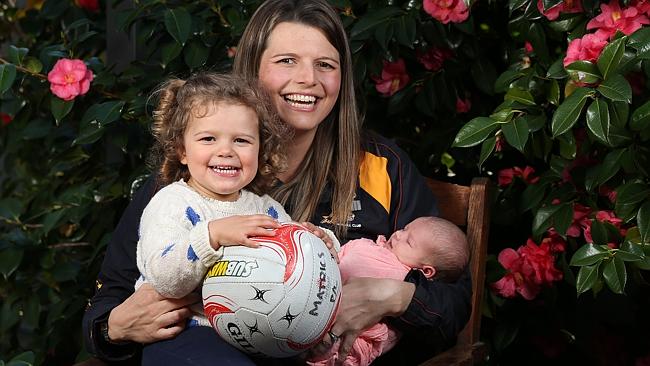
Jacqui Illman, coach of the Matrics in Adelaide, and her husband Matt, welcomed their daughter Leila on July 28. Leila joins big sister Lucy, aged 2. Leila was born just before the Matrics won their State Premier League grand final.

Jemma Johnston, who plays for Canberra’s netball team in the State League, and her partner, welcomed their son SamuelSam” at the end of last year.

(Photo shows Jacqui with Leila and Lucy)

Celebrity Baby News: Radio Round Up

Tags

, , ,

109159-d2f0dd26-439b-11e4-bbb6-36a0bafef4a2

Lucy Holmes, and her husband, musical director Derek Bailey, welcomed their first child on August 23 and have named their daughter Shiloh. Lucy is originally from Britain, and is well known as a Kylie Minogue impersonator, the star of international hit tribute stage show, 100% Kylie. As well as working as a singer, actress, and model, Lucy hosts the breakfast show on 89.9 Light FM, a Christian community radio station in Melbourne. Name bonus info: According to her Twitter account, Lucy once had an imaginary friend named Sally Walker.

Abby Coleman, and her husband, builder Scott Burdon, welcomed their second child last month, and have named their son Jagger James. Jagger Burdon joins big brother Finlay, aged 3; Finlay’s birth was featured on the blog. Abby is a radio host on B105 in Brisbane.

(Photo shows Abby with her son Jagger)

Daisy Darling and Ruby Kiss

Tags

, , ,

perth zoo

Multiples
Cherokee Rose and Imogen May
Phoenix and Loxley – both boys
Vashisth, Anaya and Aditya

Girls
Airley Emma-Lee Skye
Aliika Jane (Xavier)
Anastasia Margaret (Alexandra, Zachary, Samuel)
Arabella Jade (Brayden, Jorja)
Asher Evelynne
Azuma
Daisy Darling
Davina (Kiara Jade)
Delilah Rose
Emmeline Ruth “Emme”
Georgia Grace (Alex, Lachlan, Mitchell)
Gracie Joan (William)
Ivy Bloom
Jasmine Sienna (Jessica)
Kelsey Dayna (Cienna, Dominic)
Lola Judith Mae (Max, Audrey)
Lucia Rosa
Marlowe Daisy (Hunter)
Mietta Eve (Jarvis, Tilly)
Nikita Louise
Olive Clara Hazel
Ruby Kiss
Sapphira
Summer Debbie
Tilly Anne

Boys
Andrew Desmond (Victoria)
Coby Brian
Euan Archie
Floyd-Henry
Hilton George (Freya)
Jack Kingsley
Joe Erik Ross (Rae)
Jonty William (Blake)
Judd Alexander
Levi Jude
Liam Kees (Joel, Bobby)
Lincoln Atlas
Luca Hendrik
Mac Walter
Marcel Francis (Jakobi, Guinevere)
Oscar Harry Rupert (Zeb)
Ricky John (Taylor, Nicola)
Ronan Michael
Ruben Anthony
Tao (Indah)
Taylor Ashley (Bailey)
Ted Arie
Vaughan Thomas (Ava, Esther)
Vincent Matteo (Lily, Linkin, Rocco)
Zailen Tye

(Photo shows native everlasting daisies at Perth Zoo)

Names Spotted at Home and Abroad: Name Story Special (Spring 2014)

Tags

, , , , , , , , , , , , , , , , , , ,

our-family_10

When I looked through my name files, I saw I had quite a collection of stories explaining how babies had received their names. I thought it would be worthwhile to see how other parents go about choosing baby names, as some of their solutions have been quite creative. (You may remember some of these names from the weekly Birth Announcements).

Footy Fever
Baby Aish Barker of Adelaide was named after a famous footballing family where three generations have played for Norwood Football Club. Dad is a massive Norwood fan, and always knew that this child would be called Aish, a name chosen in advance of the birth, regardless of the baby’s gender. Aish is a girl, and her big sister is Teegan. The Aish family feel honoured to have a baby named after them.

Reality Check
Amity McIntosh was born last Easter in Toowoomba, a sister to Dylan. She is named after Amity Dry, who got her big break after appearing on renovation reality show, The Block, in 2003; she and her husband were the winners that year. Through exposure gained on the show, Amity Dry got a recording contract, and has released two albums, as well as writing a musical play. You might remember that the name Amity has just reached the Top 100 in Queensland, so even though Ms Dry is from Adelaide, her name seems to have been a big hit north of the border.

His Name is History
Ethan Forbes Thomas was born in Sydney last autumn, the great-great-great grandson of William Thomas, the first Lord Mayor of Forbes, in country New South Wales. His parents were originally going to use the name William to honour the family connection, but there were already a lot of Williams in their family. They still wanted a name connected to their revered great-great, so chose the name of the town instead. The Thomas family have a strong connection to their family heritage in Forbes, and planned to have Ethan baptised in Forbes in September. Forbes is a very interesting town historically, as it was a gold-rush town in the 19th century. The bushranger Ben Hall was shot near there, and Ned Kelly‘s sister Kate lived in Forbes: she drowned saving an Aboriginal child during a flood, and is buried in the town’s cemetery.

Gender Swap Baby
Sebastian Carvajal was born on Mother’s Day in Melbourne, and was a “surprise baby”, because his parents were told at their ultrasound scan that their baby was a girl. They had therefore painted the nursery pink, bought girl baby clothes, and picked out the name Olivia, not to mention planning trips to the nail salon and dance classes. I remember reading that parents who opt to find out the sex of their baby in advance tend to have very set ideas about gender roles, and this seems like a good example – pink and dance classes for girls, blue and hobby cars for boys! I was interested that they had Olivia chosen for a girl and Sebastian for a boy, because Olivia and Sebastian are a couple in Shakespeare’s Twelfth Night.

Named After Mum’s Cheeks
Rosie Lyn Killalea was born in June in Sydney, and she is named that because her mum’s childhood nickname was Rosie, as she had rosy-red cheeks. Her middle name Lyn is after her great-grandmother, who passed away a year before Rosie was born. Rosie has inherited her mum’s pink cheeks.

Two Grandmothers in One Name
Lana Rosanna Krause was born in Rockhampton in July. Her middle name was chosen because her mother’s mum is named Annette and her father’s mum is named Rose.

Greek Mystery
Aeson Carter Small was born in August in Gladstone, just as his parents returned from holiday. When his parents first decided to start trying for a baby, they discovered that his mother was pregnant just two days later. They picked the name Aeson, because they believed that it was a translation from the Greek for “meant to be”, but I think they must have got it from some dodgy name book, because the meaning of Aeson isn’t known. In Greek myth, Aeson was the father of Jason, and he came to an unfortunate end.

He’s Cruz, Not Acacia
Cruz Zion Petterson, of Sutherland Shire, was born in the car on the way to the hospital. The car was parked on Fauna Place, just off Acacia Road in Sutherland, and some people thought he should have been named Acacia; however the Pettersons didn’t think either Acacia or Fauna were viable options for their son. I wonder if Cruz would have been called Acacia if he was a girl? Cruz wasn’t born in a Holden Cruze, but in a Mitsubishi 380. Cruz has a big sister named Starr and a big brother named Phoenix.

Names From The Best Gift of Life

The Best Gift of Life is a blog that Sarah from For Real Baby Names put me onto. It has interviews with mums, many of whom have interests in fashion, photography, and interior design, about their lives and their babies. One of the interview questions is about how they chose their baby’s name, so I thought I’d share some from Australian families.

Bambi – parents Vanessa and Sean liked the name, and knew she would be the cutest little girl.

Johnny Jay – named after mum Shaunyl’s grandfather, John James. Johnny honours Johnny Cash, one of Shaunyl’s favourite singers.

Kawa Leaf – parents are Dee and Desmond. Kawa means “river” in Japanese. Dee lived in Japan in her early twenties, and the name resonated with her; she is of Chinese heritage, and in Chinese Kawa translates as “family” + “fine painting”. The middle name Leaf was chosen because at the time of Kawa’s conception and during the pregnancy, the family were living in a garden nursery called New Leaf.

Peaches Wilde – parents Tess and Caleb had the name picked out even while they were dating. Peachy was mum’s nickname, so dad thought Peaches was perfect. The middle name Wilde was chosen because dad is a “wild hearted” stuntman, so the name honours both parents.

Ravi and Nova – two brothers born a year apart to Camille and Dean. Ravi‘s name was chosen at the 14 week mark of pregnancy, but Nova‘s took longer as most of their favourite names got “swiped”. Both parents like unusual names, and Camille comes from a family which includes Afrika, Harmony, India, Nimue and Joaquin, so different names blend in better.

Seb – named after the Spanish city of San Sebastian which his parents Karrie-Anne and Brent fell in love with on holiday. They were never going to call him Sebastian, so used the short form, Seb.

(Picture is of Peaches Wilde with her mother Tess; photo from The Best Gift of Life)

Waltzing With … Lucius

Tags

, , , , , , , , , , , , , , , , , , , ,

y_Daybreak

Today is the start of Daylight Saving Time in New South Wales, Victoria, South Australia, Tasmania, and the Australian Capital Territory. Clocks went forward at 2 am this morning, so if you forgot, you are now an hour behind.

Because daylight saving becomes more pointless the closer you are to the equator, states which have tropical regions do not have daylight saving, and this means Queensland, Western Australia, and the Northern Territory. For everyone else, it’s a reminder we are moving towards summer and increasing hours of daylight, so it seems the perfect opportunity to look at a name connected with light.

Lucius was the most common name in ancient Rome times across all classes; it is usually said to be derived from the Latin word lux, meaning “light”. One theory is that it was given to children who were born at dawn, but the sheer number of people called Lucius makes this untenable. Another theory connects it to loukus, which originally meant “bright, shining”, although by the classical period it had come to mean “a cleared grove”.

Lucius is the name ascribed to an early Roman king, but it is probably a misunderstanding of Lucumo, the Etruscan word for “king”, which would be his title; the name Lucius was traditional in his family, suggesting another origin for the name. The Roman dictator Sulla, who served as an inspiration for Julius Caesar, was named Lucius Cornelius Sulla Felix. There were at least two Roman Emperors named Lucius: Lucius Dominitius Aurelianus (called Aurelian), and Lucius Aurelius Commodus (called Commodus).

Commodus was the son of the emperor Marcus Aurelius, and grandson of an emperor: he was the first emperor to be “born in the purple” (during his father’s reign). He is probably best known to us as the wicked emperor in the movie Gladiator, killed by Russell Crowe in the role of Maximus: although a fictional story, the real Commodus was eccentric and cruel, and assassinated by his wrestling partner, Narcissus.

The name Lucius was a favourite choice amongst early Christians because of the meaning of “light”, and there are several saints with the name. Saint Lucius of Cyrene is mentioned in the New Testament as a founder of the church in Antioch. There have been three popes named Lucius, and Pope Lucius I is also a saint.

Another Saint Lucius is a legendary 2nd century King of the Britons, who tradition credits with introducing Christianity to Britain by writing to the pope asking to be converted. His story became well known after it was included in the histories of Venerable Bede, and embellished by Geoffrey of Monmouth. For centuries it was an important myth of British Christianity, and although there’s no solid evidence he existed, some feel there must be a grain of truth to the legend. The church of St Peter Under Cornhill in London claims St Lucius as its founder.

The Roman philosopher and statesman known to us as Seneca had the full name Lucius Annaeus Seneca. He wrote many of his famous works while in exile, and later became an advisor to the Emperor Nero. This didn’t end well for him, as he was (probably wrongly) implicated in a plot against Nero, and forced to commit suicide. Early Christians greatly approved of him, and virtually hailed him as a humanist saint. According to medieval legend, he was converted to Christianity by Saint Paul, and is mentioned by writers such as Dante and Chaucer.

Despite all this heavy-duty Christian background, and even a British connection, Lucius has never been a common English name. It does seem to have had some history of use in Yorkshire, which has strong ties to the legendary Saint Lucius.

The name Lucius is a traditional one in the aristocratic Cary family, who bear the title Viscount Falkland. The 2nd Viscount fought on the Royalist side in the English Civil War and was killed in action. The current Viscount Falkland is named Lucius, and so is his son (a writer who goes by his middle name, Alexander), and his grandson.

Lucius has probably been used more often in America, and there are a number of famous politicians from the United States bearing this name. It’s also known from American writer and bon vivant, Lucius Beebe, and American sci-fi author Lucius Shepard.

Lucius isn’t too unusual a name in Australian historic records. Dr William Harvey, who was featured on the blog earlier this year, had a father named Lucius who was also a doctor, and it was his father’s death from tuberculosis which led Dr Harvey into specialising in thoracic medicine. A famous Australian with the name is musician Lucius Borich, the son of Kevin Borich, who was in the band The Party Boys.

Lucius doesn’t chart in Australia. 14 baby boys were named Lucius in England/Wales last year, while in the US (where Lucius peaked at #257 in the 19th century), 125 boys were named Lucius in 2013 – the same number as those called Hollis and Zephaniah.

If there seems a lack of real life Luciuses, fiction has stepped into the breach, for they abound in books, movies, TV programs, and video games. It’s no new phenomenon, for Lucius is the narrator of The Golden Ass by African author Apuleius; written in Latin in the 1st century, this comedy is sometimes regarded as the world’s first novel. Lucius is also in Arthurian legend, a fictional Emperor of Rome who King Arthur defeats, thus becoming not just King of Britain, but Emperor over all the West.

Lucius has been used as a character name twice by William Shakespeare, in Titus Andronicus and Julius Caesar. In fact, pretty much anyone who writes a story set in Roman times will include a Lucius somewhere, as it was the #1 name.

One of the best known fictional Luciuses of contemporary times is the slippery Lucius Malfoy from the Harry Potter series. Upper crust, corrupt, bigoted, and ready to slip over to the Dark Side whenever convenient, Lucius is a dyed-in-the-wool villain and general Mr Nastypants for most of the series. Only towards the end does he receive a lukewarm redemption.

His name, although suitably aristocratic, brings to mind Lucius from The Golden Ass, which is a book about witchcraft and magic – not to mention someone (literally) making an ass of themselves. However, just as Malfoy’s son’s name, Draco, means “serpent” and reminds us of the Devil, Lucius’ name is reminiscent of Lucifer, a name related to Lucius, meaning “light-bringer”, and which is often understood by Christianity as Satan’s name before his fall.

Unfortunately, some people think Lucius and Lucifer sound too similar for comfort. Stories that make the connection don’t help, such as the video game Lucius, Son of Lucifer, or the horror novel The Haunting of Sister Mary Francis, which has a character named Lucius Lucifer. On the plus side, that gives Lucius a bit of a “bad boy” edge.

An alternative is Lucian, which is derived from Lucius. Lucian is more popular in Australia than Lucius, being around the 500s, and fits in with the trend for boy’s names ending in N – Lucian almost seems like a fancier version of Lachlan.

Lucius can be pronounced either LOO-see-us, or LOO-shus. The ancient Romans said it more like LOO-ki-us, which perhaps suggests the three syllable pronunciation is more “correct”. Obvious nicknames are Lucky, Luke, Luc, Luca, Luce, Loosh, Lou, and Louie. I have seen a baby Lucius nicknamed Luci or Lucy by his family, which startled me, even though it makes perfect sense.

Handsome, intelligent, and with a rather upper-class image, Lucius does have a few issues, but seems like a name that someone could really fall in love with. It’s quite seductive – even luscious! I’ve noticed this name is often favoured by dads, suggesting that many guys appreciate the richness and power that stand behind it.

This is a rare boy’s name that is perfectly balanced between elegance and strength, brightness and darkness, history and magic, with lashings of Ancient Roman street cred and a bit of sex appeal to boot. Lucius could well be the name that lights up your life.

POLL RESULT
Lucius received a very good approval rating of 77%. 37% of people loved the name Lucius, while 25% of people didn’t mind it. Only around 5% of people hated the name.

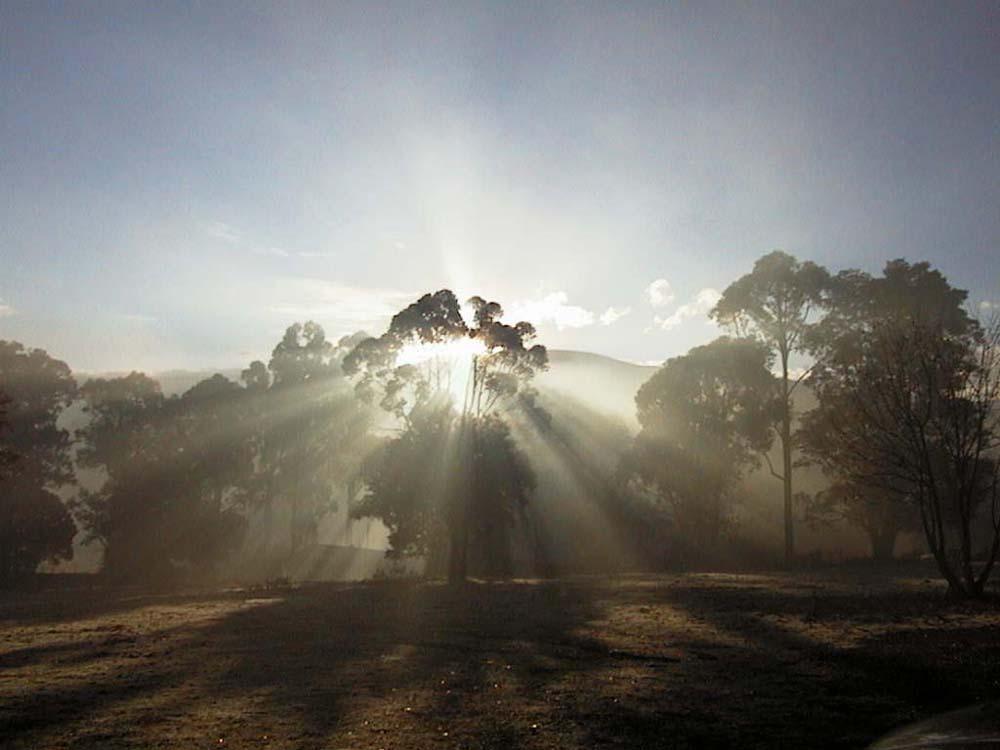
(Photo shows daybreak at Delderfield, Marysville, in country Victoria)