Can Cousins Be Named Mai$ie and Macy?

Tags

, , ,

baby-name-turf-wars1-e1341264890105

Vanessa and her husband are expecting their fourth child next month. They already have a son named Darcy, and two daughters named Molly and Matilda, and would like a traditional name which fits in with this sibset.

They live in a rural area, and would like a “country” style name which would suit their farming background (by this they mean an Australian country name, not an American “cowboy” type name). If they have a boy, they are considering the name Digby, which is the name of a good friend.

If they have a girl, they have fallen in love with the name Mai$ie. However, Vanessa’s sister-in-law, who lives not too far away and who she is reasonably close to, is expecting a baby girl several weeks after her, and is planning to call her daughter Macy.

Vanessa thinks Mai$ie and Macy are two separate names that are pronounced in different ways. Unfortunately, her sister-in-law disagrees. She believes that Vanessa has “betrayed” her, and “stolen her thunder”, and has made every effort to cut Vanessa out of her life (as much as is possible when you are family members living nearby).

Vanessa is having trouble understanding what her sister-in-law’s issue is, and she wonders what people think of this problem.

* * * * * * * *

I’ll get straight to the sister-in-law issue, which I suspect is your main reason for writing in. This is an extension of the “name stealing” issue – some people not only want their child to be the only one (in their family or their town) with a particular name, but they don’t want anyone else to choose a name which even sounds alike. This is a problem, as there are so many names which sound similar to other names that obeying this request can seriously limit your pool of name choices.

That your sister-in-law feels “betrayed” suggests that she announced her name choice before you did, and is now angry that you picked a name that she sees as uncomfortably close to her favourite name, Macy. I wonder if this is her first baby, as that might increase feelings of wanting to feel “special”: in any case, she probably feels that announcing Macy’s name will have had a bit of shine taken off it.

Funnily enough, the last couple who wrote in to the blog considering the name Digby had a name-stealing issue too, as friends of theirs already had a son named Digby. After some deep soul-searching, and considering other names they could use instead, they decided to use Digby anyway, as it was the only name they really loved. Their friends were quite upset over their choice, and after that things became quite cool between them.

The trouble is, it’s a bit harder to just press on regardless when it’s a family member who is upset with your decision. This is your sister-in-law, who lives an hour’s drive away and who you felt quite close to. You’ve already had a taste of being cold-shouldered for just thinking about using the name Mai$ie, and I’m sure it’s made things quite awkward and unpleasant for you, and possibly for the extended family as well.

As you previously got on fairly well, I hope you will be able to get your relationship with your sister-in-law back on track. If you are are able to talk to her, it might be an idea to find out what exactly she is so upset about. Does she hate the idea of the cousins having similar names that might be confused, as they will be very close in age? Or does she just hate the idea of you being the first?

As both of you are aware you are due to give birth before her, and are therefore in the stronger position, and the default “winner” in this situation. I wonder what she would do if the positions were reversed – would she kindly step aside and choose a different name for her daughter so that you could have Mai$ie? Something tells me that she would stick with Macy, even though it meant risking having two cousins with similar names.

The basic etiquette in this situation is “first in, best dressed”. As the “loser” with less power in this situation, it is her role to accept this as gracefully as she can, and to realise that she has the choice of either picking a different name (if she can’t bear the thought of cousins named Mai$ie and Macy), or of learning to live with the situation if she can’t bear the thought of giving up the name Macy.

As the “winner”, it is your role to be as gracious, understanding, and sympathetic to her plight as possible. It’s perfectly okay to be sorry that she’s unhappy without feeling responsible for it, or changing your behaviour to suit her. You can let her know that you didn’t have any intention to hurt her, and that if you have a daughter named Mai$ie, it won’t in any way make her little Macy any less special, or loved, or welcomed into the family.

I don’t think it would be helpful to your relationship with your sister-in-law for you to choose another name, unless you genuinely feel that this whole episode has spoiled the name Mai$ie for you, or you fall in love with another name.

If you name your daughter Mai$ie as you always intended, then most likely she will eventually get over it, especially if she finds that the names aren’t any huge problem, and that the whole family easily copes with having a Mai$ie and a Macy. Be brave, and be prepared to continue being gracious and compassionate to your sister-in-law until everyone gets used to it.

And most of all, don’t make too big a deal about any of this until the baby is born, as you don’t even know at this point whether you are having a girl at all. It would be silly to have a big fight or a huge drama over something that might never happen. It might be a good idea to gently remind your sister-in-law that for all you know, it is a boy on the way for you.

In some ways, it would be rather convenient if you did have a boy – I’m sure your sister-in-law thinks so, anyway! If you did, Digby would be a great choice. It’s a handsome name, has a nice country feel to it while also being quite hip, and is a lovely way to honour your friend.

Readers, what do you think about Vanessa’s “name-stealing” dilemma, and what advice do you have for her?

Obi Rex and Zeb Barry

Tags

, ,


10711118_10152405986586608_8744561442002715930_nTwins
Liana Belle and Tynan Andrew (Alara)
Marcus Patrick and Travis Patrick

Girls
Adelaide Zoe
Annabel Western Susan
Ayla Jill (Ella)
Bella Catherine Lynn
Chloe Jane (Reef)
Evie Annie Ada
Felicity Fay (Hayden)
Floredre
Frankie Summer (Alex, Poppy)
Genevieve Hope (Anna)
Georgia Dale
Grace Anissa
Liara Louise
Luca Lucia
Madelyn Min (Taylor)
Molly Glenda
Nyah Lilly
Poppy Gwendoline Rose
Scarlett Belle (Edwin)
Tabitha Wendy (Holly, Kinzie)
Tayla Destiny
Thea Frances (Elijah, Meggie)
Trinity Elizabeth (Ayrton, Jensen)
Xana-Lee
Zara Jean (Jake, Max)

Boys
Alessio Luke
Aston Edward James (Isla)
Aurelio Fabrizio (Emilio, Dante)
Barlin (Emery)
Cecil Joshua (Amelia, Juliet)
Clancy Cash (Olive)
Eli Nathaniel
Floyd
Gadsby
Henry Beau
Jack Ronan
Joel Dean Hutchinson (Ava, Elise)
Kingston Mark (Hunter, Lennox)
Lachlan Alfred
Micah Bryce (Addison, Ella)
M-J
Obi Rex
Oliver Lyell (Harlee, Jayda, Nikita)
Rafael John (Josiah, Xavier)
Remy Louis Patrick (Hudson, Matilda)
Rhythm
Taj Peter
Vincent Van (Lincoln)
William Hugh (James Michael)
Zeb Barry

(Picture shows The Pyramid of the Dawn at Founders Square in Concordia Capital District in The Province of Aurora in the Empire of Atlantium. The Empire of Atlantium is a sovereign state located in the Lachlan River Valley of New South Wales: it was originally formed in 1981 by three teenagers; photo from its Facebook page).

Famous Name: Philip

Tags

, , , , , , , , , , , , , , , , , , , ,

159088

Famous Namesake
Australia Day is a day not just to celebrate, but to honour Australians for their achievements and service to the community. However, this year even the Australian of the Year was almost completely forgotten as everyone was swept up in a media maelstrom when Prince Philip was named a Knight of Australia.

Former Prime Minister Gough Whitlam replaced the British honours system in 1975 with the Order of Australia, and Knights and Dames were added to it in 1976 by former prime minister Malcolm Fraser. Knights and Dames were then dumped by the Hawke government in 1986.

Last year Knights and Dames were re-instated by the current prime minister, who declared that they would celebrate pre-eminent Australians such as Governors-Generals, chief justices and the like. The prime minister didn’t consult his senior colleagues over the decision, which many felt to be a mistake which could come back to bite him. This is the moment it bit.

There are several reasons why declaring Prince Philip a Knight of Australia went down badly. For one thing, the prime minister didn’t consult any of his colleagues over the decision, which re-ignited fears of an arrogant leader making “captain’s calls” which could alienate his own cabinet. For another, Prince Philip wasn’t a pre-eminent Australian, so the appointment was outside the stated brief.

The prime minister’s decision has been widely criticised, and had scorn poured upon it. The decision has been described as “a time warp” and “ludicrous … cultural cringe” by some in the Opposition, while those on the prime minister’s own side labelled it “April Fool’s Day”, “total craziness”, and “a joke”. High profile supporters of the prime minister, such as conservative commentator Andrew Bolt and media baron Rupert Murdoch thought it was “pathetically stupid” and “an embarrassment”. No wonder the newspapers have dubbed it a “Knightmare“.

Comedian Adams Hills commented that, “Giving a Knighthood to Prince Philip is like giving a Beyonce CD to Jay-Z. Surely he could just pick one up at home”. In fact, Prince Philip, the Duke of Edinburgh, already has three British knighthoods, and has had knighthoods bestowed upon him numerous times by various countries, including Nepal, Peru, and a whole bunch of others you never knew cared.

So an Australian knighthood isn’t completely bizarre, and Prince Charles is already a Knight of Australia, while Prince Philip is a Companion of the Order of Australia. In fact, in Vanuatu Prince Philip is worshipped as a god, which makes a knighthood look pretty low-key in a “least we could do” sort of way.

The problem is that the prime minister was already floundering in a sea of unpopularity, and when you are in dangerous waters, you cannot afford to make a mistake. The knighthood to Prince Philip was the equivalent of a drowning swimmer cutting his leg open, and now (to continue this laboured metaphor), the sharks have the scent of blood and are circling in a menacing sort of way.

The Coalition have already lost the Victorian state election after only one term, and after the Prince Philip debacle, it performed so dismally in the Queensland state election that it is predicted to have lost its majority from a seemingly unassailable 78 seats, and former premier Campbell Newman has lost his seat and left politics. Many pundits are now predicting a federal leadership spill.

Name Information
Philip is the English form of the Greek name Philippos, meaning “friend of horses”. The name isn’t just about being an animal-lover – in ancient Greece, only the wealthiest people could afford to own horses, so the name proclaims a high status. (In the same way, knights are also high-status and connected with horses). Aptly, Prince Philip is a keen equestrian who still participates in carriage driving, a sport which he helped develop.

The name Philip was traditional in the Macedonian royal family, and Alexander the Great‘s father was named Philip. Because of this, it was a highly popular name in Macedonia, although common in the rest of the Hellenic world. Prince Philip was born in Greece to a prince of Greece and Denmark, so his royal Greek name is very suitable.

There are two saints named Philip from the New Testament. One is the Apostle Philip, who seems to have been a friend of Peter and Andrew; according to tradition, he was martyred by being crucified upside down. The other is Saint Philip the Evangelist, mentioned as being one of the deacons chosen to help care for the poor.

The name Philip came into common use in western Europe by the Middle Ages, and was a traditional name in several royal houses, including France, Spain, and Portugal. Philip was used in England from medieval times too, with a notable example being the Elizabethan courtier Sir Philip Sidney, who created the name Stella for a poem.

However, the name became less common for a time because of King Philip II of Spain, who tried to invade England, and whose Spanish Armada was famously defeated by the English in 1588. Philip had actually been king of England for a short time, due to his marriage to Mary I, and they hadn’t been a popular couple. However, under Philip’s rule Spain reached the peak of its power, and was called “the empire on which the sun never sets”. The Philippines is named after him.

By the 19th century, everyone was over the whole Spanish Armada thing, and Philip was completely rehabilitated, no doubt assisted by Phillip, the surname form of the name – which has an Australian link, thanks to Captain Arthur Phillip, the founder of Sydney (Phillip Island in Melbourne, and the suburb of Phillip in Canberra are named after him).

It’s not hard to think of famous Philips and Phillips, including poet Philip Larkin composer Philip Glass, self-help guru Dr Phil McGraw, novelist Philip Pullman, singer Phillip Everly from The Everly Brothers, actor Philip Seymour-Hoffman, and record producer Phil Spector, to name a few. Funnily enough, when I think of fictional Philips, most of them seem to be cartoons, such as Philip J. Fry from Futurama, Phillip Argyle from South Park, and Prince Phillip (!) from Sleeping Beauty.

Philip was #69 in the 1900s and Phillip was #95; they both peaked in the 1950s at #33 and #19 respectively. Philip left the Top 100 in 1989, while Phillip managed to last slightly longer, until 1996. Philip has fallen more dramatically, with not enough births since 2009 to show up in the records, while Phillip is around the 400s.

Philip is still getting reasonable use in the UK and US, but while Phillip has a similar popularity to Philip in the United States, in the 300s, Phillip (#709) is far less common in the UK than Philip (#288). One can only speculate why we all have taken a different position in regard to Philip and Phillip. Philip is most popular in Denmark and Norway.

As I already covered my brother Edward’s name, I will mention that Philip was the name my dad chose for my youngest brother, named for his cousin and best friend. Philip’s middle name is Andrew, after my mother’s favourite great-uncle, who was from the Scottish Highlands.

However, both these choices turned out to be superfluous, because almost as soon as Philip was brought home and settled into his cot, my dad said admiringly, “He’s so brown – like a little brown bear”, and from then on he was Little Brown Bear, and eventually just Bear. He never goes by Philip.

(I should probably add that my family are otherwise very fair skinned with light hair, so Philip’s handsome olive skin and dark hair seemed like an exciting novelty to us. This colouring turns up in many families of Cornish heritage, and legend has it that they are descendants of the Spanish Armada, or Moorish pirates, which is almost certainly complete fiction).

Philip is a classic name with ancient roots, a royal history, and a biblical heritage. It has become less common than its surname twin Phillip, although neither is used extensively. It has some great nicknames – if you’re not excited about Phil, there’s always Pip, the hero of Charles Dickens’ Great Expectations, while Philo, Flip and Pippin would also be possibilities.

POLL RESULTS
Philip received an approval rating of 57%. 21% of people saw Philip as too dated and old-fashioned, but 19% thought it was sensible and honest. 10% were put off the name by Prince Philip, while nobody thought the name was snobbish or stuck-up.

(Picture shows Prince Philip with a friend at the Royal Windsor Horse Show last year; photo from The Express).

Names of Australian Prime Ministers

Tags

, , , , , , , , , , , , , , , , , , , , , , , , , , ,

voice-fed-r2-c1

Some people say you should give your son the kind of name that will sound good on a prime minister. Here’s ten names borne by prime ministers, as either first names, middle names, or surnames. Maybe one of them is right for your child.

Aloysius
Joseph Aloysius Lyons was the 10th prime minister, swapping from the Labor Party to lead the conservative United Australia Party. Genial and laidback, he was one of the most popular of our prime ministers, and the nation mourned when he died suddenly in 1939, becoming the first PM to die in office. He is the only Tasmanian prime minister, and his widow Dame Enid Lyons became the first woman to sit in the House of Representatives. Aloysius is the Latin form of Aloys, an old Occitan form of Louis, used to Latinise the Italian form, Luigi. Aloysius Gonzaga is a 16th century Italian saint from a noble family, who lost his life caring for plague victims not long after becoming accepted as a Jesuit. Because of the saint, Aloysius is seen as a specifically Catholic name, and is more common in the middle position. It has strong scientific credentials, as Aloysius Lilius was the first to propose the Gregorian calendar, and Dr Aloysius Alzheimer identified the first case of the disease which bears his name. Rich and flamboyant, Aloysius is usually pronounced al-uh-WISH-us in Australia.

Andrew
Andrew Fisher was the 5th prime minister, a Labor leader who served as PM three times. Originally from Scotland, he had a background working for the miner’s union. He was prime minister at the time of the Gallipoli campaign, and ultimately responsible for getting Australian troops out. Andrew is the English form of the Greek name Andreas, meaning “manly, brave”. The name came into common use because of Saint Andrew, one of the Apostles, and the brother of Saint Peter; Andrew was the first Apostle, who led the other disciples to Jesus. Tradition says Andrew preached around the Black Sea, and legend has it that he was crucified on an X-shaped cross, now called the St Andrew’s cross, or saltire. Saint Andrew is the patron of Scotland, where his relics are supposed to have been taken in the 6th century. The place of their safekeeping was renamed St Andrews, and the saltire is on the Scottish flag. Andrew is a classic which has never left the charts. It was #56 in the 1900s, and peaked in the 1970s at #4; it only left the Top 100 last year. A handsome classic with ties to Scotland, this name has had some recent bad publicity.

Christmas
Earle Christmas Grafton Page was the 11th prime minister, and leader of the Country Party, the forerunner to the National Party. He is our longest-serving federal parliamentarian, spending nearly 42 years in parliament, but was only prime minister as caretaker for three weeks after the death of Joseph Lyons. Christmas is the holiday in honour of the birth of Jesus Christ, literally meaning “Christ’s mass”. Christmas has been celebrated since the 4th century, with the December 25 date originating in Rome. While a Christian festival in origin, Christmas is commonly seen as a secular holiday that brings everyone together. Christmas has been given as a first name since at least the 16th century, and early examples were born around Christmas time. Originally Christmas was given fairly equally to boys and girls, but overall is historically much more common as a boy’s name. This may be because Christmas is also a surname, perhaps originally a nickname given to someone who organised Christmas festivities. A sweet middle name for a baby born during the Christmas season (although Earle Page was born in August), as a first name it can shorten to Chris, Christy, or Chrissie.

Deakin
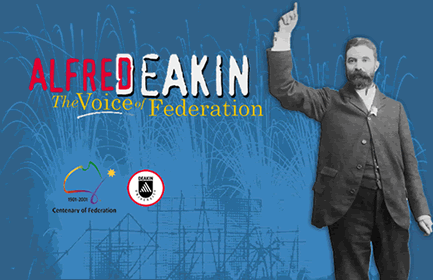
Alfred Deakin was a leader in the movement towards federation who became the 2nd prime minister, serving as PM three times. The founder of the Commonwealth Liberal Party, he is honoured as a founding father by the modern Liberal Party. A man liked and admired by almost everyone, he is almost certainly Australia’s most spiritual prime minister. A sincere spiritualist, his diaries show that he prayed constantly for divine guidance, read scriptures and mystical works, and wanted his influence on the world to be one of light and truth. The surname Deakin is a variant of Deacon, an occupational surname for someone who served in the church ranking just below a priest, and whose duties included assisting the priest and carrying out parish work; the word is ultimately from the Greek for “servant”. A very old surname, it originates from Suffolk, and possibly dates to before the Norman Conquest. I have quite often seen Australian boys named Deakin (far more than ones named Deacon), and the prime minister may well be an inspiration, although Deakin University means it could be after an alma mater.

Fraser
Malcolm Fraser was the 22nd prime minister, who came to power after the controversial Dismissal of Gough Whitlam. He won three successive elections for the Liberal Party, and has had a distinguished retirement in roles for the UN and Care International. He is now estranged from the Liberal Party, and often speaks out on human rights issues. The Scottish Clan Fraser trace their origins to France, although the surname’s meaning is uncertain. One theory is that it is derived from a (now lost place name) La Frezeliere in Anjou. Another idea is that it comes from fraise, the French word for “strawberry”, and the Clan Fraser displays strawberries on its coat of arms. Although a charming notion, this is almost certainly folk etymology. Known for their skills as warriors, the Frasers fought with William Wallace and Robert the Bruce, and took part in the Battles of Bannockburn and Culloden; at the last, they were massacred in great numbers, and a great stone marks where the Frasers fell. This is a handsome name, popular in Scotland, that I quite often see in birth notices.

Grey
John Grey Gorton was the 19th prime minister and a Liberal leader, the only Senator to become PM. Although a popular man with a bit of a larrikin streak, he was a poor public speaker, and the media portrayed him as a buffoon, in contrast to the eloquent Opposition leader, Gough Whitlam. The surname Grey, a variant of Gray, could be a nickname given to someone with grey hair. It can also be a Norman name, coming from the place name Graye in Normandy; this is from the Gallo-Roman personal name Gratus, meaning “welcoming, pleasing”. This second origin seems to be the earliest, and comes from the north of England. Grey can also be given directly as a colour name – the colour grey is associated with modesty and humility, business and professional life, twilight and elves, and also ambiguity (shades of grey). The subdued Grey has been used as a personal name since at least the 16th century, and is historically more common for boys, although it works well in the middle for either sex.

Melbourne
Stanley Melbourne Bruce was the 8th prime minister, a leader of the conservative Nationalist Party. He oversaw the transfer of the national capital to Canberra, became the first PM to live at The Lodge, and modernised federal government administration. He later became an excellent ambassador and highly influential in British politics, taking a key role at the League of Nations. He was eventually raised to the peerage; the royal family attended his memorial service in London, although his ashes are scattered over Lake Burley Griffin in Canberra. Melbourne is the capital of Victoria, and considered our cultural capital. In the 19th century, it became the richest city in the world, and the second-largest after London, gaining the moniker of “Marvellous Melbourne”. Stanley Bruce was from a wealthy Melbourne family, and born in the 1880s when the city was booming and bustling, so the name was a badge of pride. Founded by John Batman from Tasmania, Melbourne was originally called Batmania, but almost immediately someone re-named it after the British prime minister William Lamb, 2nd Viscount Melbourne. A member of the Irish peerage, Lamb’s title was after his Derbyshire estate, Melbourne Hall; the nearby town of Melbourne means “mill stream”. A distinguished middle name, although Batmania has its attractions.

Paul
Paul Keating was the 24th prime minister, delivering a shock record fifth election victory for the Labor Party during the recession years of the 1990s. Cultured and intellectual with an acerbic wit and colourful range of insults, he loves Mahler and collects French antique clocks. Paul is the English form of the Roman name Paulus, meaning “small, humble” in Latin; it seems to have begun as a nickname, and gradually become accepted as a personal name. Although common in ancient Rome, the name has become widespread because of Saint Paul, the Apostle most responsible for spreading Christianity throughout the Western world. Both a Jew and a Roman citizen, the saint’s name was Saul, but his Roman name was Paulus. The New Testament tells of his dramatic conversion. A zealous persecutor of Christians, Saul had a vision on the road to Damascus where the resurrected Christ reproached him for his actions, leaving him temporarily blinded. From then on, he became an equally zealous Christian, and in the process, changed history. By tradition, Paul was martyred in Rome. Paul is a classic name which was #132 in the 1900s, and joined the Top 100 in the 1920s before peaking in 1967 at #3. It left the Top 100 in the early 2000s, and is currently in the mid-200s. A softer-sounding boy’s classic which works well as both a first and middle name.

Reid
Sir George Reid was the 4th prime minister, and leader of the conservative Free Trade Party. A humorous and entertaining orator, audiences flocked to his election meetings, although his enemies viewed him as a clown. After his term in office, he was appointed Australia’s first High Commissioner in London, where he made himself so popular that he was elected to the British House of Commons during World War I. The surname Reid is a variant of Read, Reade and Reed, and generally accepted as a Scottish form, as the reid spelling comes from Northumberland near the Scottish border. It is derived from read, the Old English word for “red”, and began as a nickname for someone with red hair or a ruddy complexion. Reid has been used as a first name since the 17th century, and was first used this way in Scotland. Strong, short and simple, I occasionally see this in birth notices, although more commonly as a middle name: I have even seen it chosen for a girl.

Winston
John Winston Howard was the 25th prime minister, winning a record number of seats for the Liberal Party at the 1996 election so that the party would have been able to govern in its own right. He served four terms as PM, spending almost twelve years in the role. The name Winston is strongly associated with inspirational wartime British prime minister, Sir Winston Churchill, who John Winston Howard is named for. Churchill was named after his 17th century ancestor Sir Winston Churchill, whose name was his mother’s maiden name: she was Sarah Winston, daughter of Sir Henry Winston of Gloucestershire. After this, the name became traditional in the Churchill family. There is an Anglo-Saxon personal name Wynstan, meaning “joy stone”, usually given as the origin of Winston. The Churchill’s Winston surname is probably from the village of Winstone in Gloucestershire, which means “Wynna’s stone”, with Wynna meaning “joy”, so having much the same meaning. However, if it ultimately comes from the village of Winston in Suffolk, it means “Wine’s settlement”, with Wine meaning “friend”, so “friend town”. Nice either way. This is fast becoming seen as a hip, sophisticated choice.

POLL RESULTS
People’s favourite names were Winston, Reid, and Fraser, and their least favourite were Paul, Melbourne and Christmas.

(Picture shows a poster for the centenary of Federation at an exhibition at Deakin University in Victoria)

Celebrity Baby News: Sporting Babies

Tags

, ,

560037-394a773a-a143-11e4-998e-73436098ad1e

Former cricketer and sports commentator Greg Blewett, and his wife Katheryn, welcomed their first child together on January 17, and named their son Samuel Hugh. Samuel is named after Katheryn’s father, who passed away suddenly in 2012, while his middle name is in honour of cricketer Phillip Hughes, who died in a freak cricketing accident last November. Greg has a teenaged daughter named Taylor from his previous marriage to Jodie Blewett, now Jodie Oddy, who has been featured on the blog as a celebrity mum.

NRL footballer Josh McCrone, and his wife Courtney, recently welcomed their son Archie Thomas, a little brother for their daughter Ava, aged 2; Ava’s birth was featured on the blog. Josh plays for the Canberra Raiders.

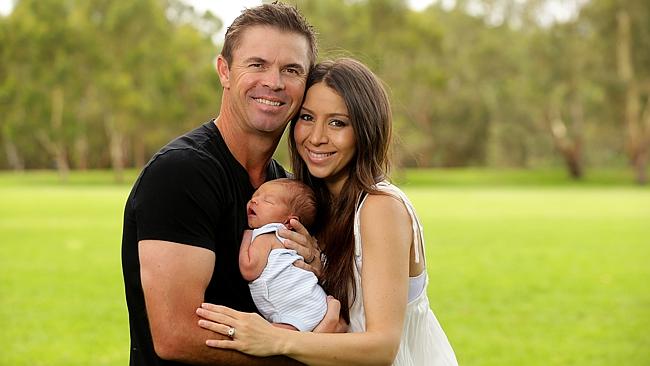
(Photo shows Greg and Katheryn with baby Samuel)

Billie Jazz and Vogue Leslie

Tags

, , ,

560167_436240569734450_324943704_n

Multiples
Matilda and Violet
Chloe, Maddison and Dior

Girls
Abbey Laurel Janet (Owen)
Adeline Lydia Katherine
Anabella Rita Margaret
Aurora Ellen (Hamish)
Billie Jazz (Jaxon, Marley, Angus)
Chelsea Estellise
Clementine June (Millie, Jessamine, Willem, April)
Evelyne Veronique
Hannah Tabita
Hazel Victoria (Albert)
Joelle (Jonzelle, Jolea)
Konstance (Sotiri)
Lacey Charlotte
Layla Priscilla Anoushka (Sadie)
Lucinda Jillia
Molly Annabel (Sophie)
Nala Jane
Porcha Indiana
Raven Jade
Raylene Ivy-Lee Dawn
Sophie Eileen
Sylvia Rose (Lucas)
Tiana Mary
Vogue Leslie (Logan, Dalton, Diaz, Orlando)
Willlow-Raigne Harper-Fay (Laydleigh, Roan, Aylah-Skye)

Boys
Alastair Hugh Robert
Alijah Jeremy (Ameleo)
Arlo Wayne (Seth)
Ashton (Te’amo)
Bodhi Ronald
Blakeley Thomas
Darcy Rick
Edan Scott (Ryan, Aidan, Finn)
Flynn Robbie
Hartley JR
Henry James Frederick Joachim
Ira Macqueen (Mia)
James Magnus (Nicola, Hannah)
Jax Cole (Indie)
Monty (Oscar)
Lawson Sam
Leo Cory (Otty)
Liam Ilia
Narayan
Oisin Patrick (Lily)
Oscar Raymond (Ethan)
Otis Henry Leo
Valentino Alfonso
Vinnie Jay
Walter Samuel

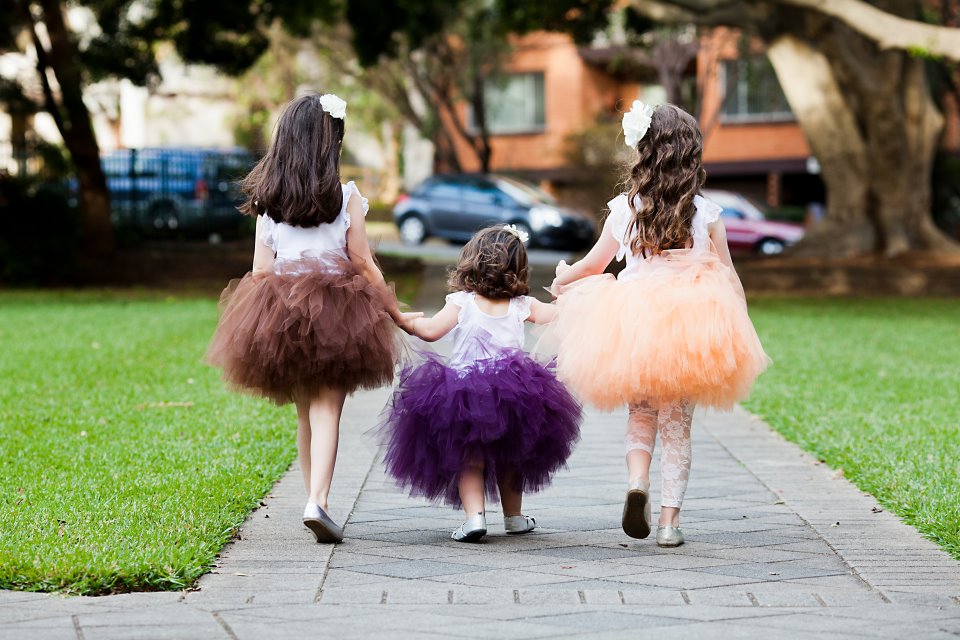
(Photo from Little Chiyo designer tutus, Gold Coast, Queensland)

Celebrity Baby News: Piper O’Neill and Jordan Green

Tags

,

326634-b450c8f8-a684-11e4-84f2-050052afbf33

Beauty queen Piper O’Neill, and her partner Jordan Green, welcomed their son Taylor Ethan on January 23. Taylor joins big sister Elsie, aged 17 months.

Piper was named Mrs Australia late last year, and is the first pageant queen in Australia to be crowned while pregnant. She will fly to Florida in July to represent Australia in the Mrs International pageant. Piper grew up in Portland, Oregon to an Australian father and American mother, and is a global ambassador for Sydney-based charity Mums on a Mission, which raises money for causes such as the Children’s Hospital in Westmead. She hopes to use her pageant title to raise awareness of positive body image.

Celebrity Baby News: Ben and Jemma van Ryt

Tags

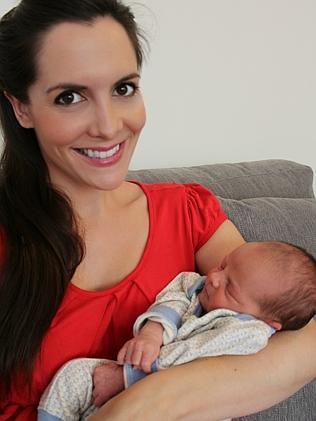
Ben and Jemma Van Ryt with their newborn son Thomas James

Reality TV contestants Ben and Jemma van Ryt welcomed their first child on November 21 last year, and have named their son Thomas James.

Ben and Jemma took part in the 2013 series of home renovation show House Rules, and still live in the house in Perth that they renovated for the show. Before Thomas was born, they gave the house a Hamptons-style makeover and turned the spare bedroom into a nursery. Ben is a carpenter, and Jemma is a legal assistant.

Requested Name: Waratah

Tags

, , , , , , , , , , , , ,

Telopea-Speciosissima-Close2

Last year I featured our national flower, Acacia, as a name for Wattle Day. It was Australia Day last Monday, so I will be looking at another flower which is important to us – and was once a strong contender to become our national floral emblem.

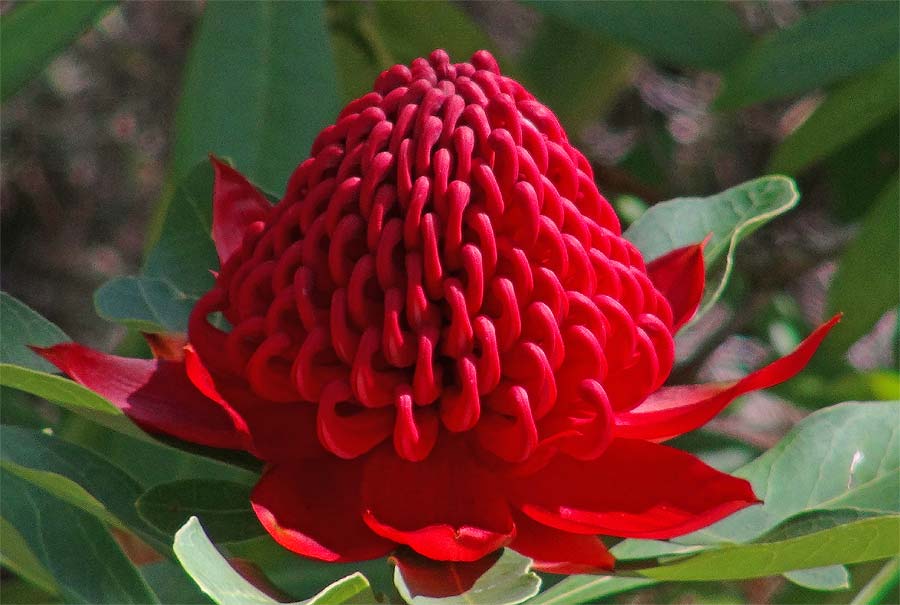
Teleopea speciosissima is the Latin name for the New South Wales waratah, usually just called waratah. Native to the state suggested by its name, the waratah is a large shrub with striking, large crimson flowerheads, each containing hundreds of individual flowers. It blooms in the spring, and provides nectar for insects, birds, and pygmy possums. There are other species of waratah, most of which are native to New South Wales with a couple in Victoria and Tasmania, but Teleopea speciosissima is the best known.

The flower’s Latin name Telopea means “seen from afar”, to indicate its eye-catching appearance, while speciosissima means “most beautiful”. The common name comes from the Eora or Dharawal language indigenous to the Sydney area.

There are stories about the waratah in Indigenous Australian folklore. A Dreamtime legend from the Eora tells of a pigeon searching for her husband, when she has to take shelter in a waratah bush after being attacked and wounded by a hawk. Her husband calls to her, and as she struggles in the bush, her blood turned the white waratah flowers red.

A story from the Burragorang Valley, now lying beneath Waragamba Dam, relates that there was once a beautiful maiden who always dressed in a red cloak. When her lover did not return from battle, she died of grief, and the first waratah grew from the ground where she died. The waratah flower was a totem for the Dharawal people, who used it in ceremonies and arranged celebrations for the period of its flowering.

Europeans discovered the waratah when they arrived in 1788, and it was introduced to Britain the next year, where it managed to become a popular garden plant, despite being a little temperamental to grow; the Royal Horticultural Society gave it an Award of Merit in 1914. Today the waratah is grown commercially in several countries.

The waratah was often used in art design, being incorporated in many advertisements and commercial packaging. You may see stained glass windows in the Sydney Town Hall featuring waratahs, designed by French artist Lucien Henry in the late 19th century, while artist Margaret Preston produced her iconic waratah woodcuts in the 1920s, which are often reproduced.

After federation in 1901, the search was on for a flower to represent the country. Nationalistic fervour was high, and there were two main candidates – the waratah and the wattle. We already know that naturalist Archibald Campbell championed the wattle, while botanist Richard Baker was a waratah booster. He argued that the waratah was a better choice because it is only found in Australia, a truly national flower, while the blooms would make a distinctive motif.

The debate raged furiously, and so strongly did Baker make his points that he was nicknamed Commander in Chief of the Waratah Armed Forces. Lucien Henry would have been pleased, because he had been passionate about Australian native flowers, and taught courses in drawing them. When he returned to Paris, he wrote a book called Waratah: Australian Legend, to promote the flower he used so extensively in his designs. Lucien Henry died in 1896, and shortly afterwards, the popularity of Australian native flowers, including the waratah, exploded.

As with so many of these vigorous debates, it was unclear who had won, and the foundation stones for the national capital in 1913 diplomatically depicted both plants. Gradually the wattle became accepted as the national flower, while the waratah symbolised the state of New South Wales, having been chosen for the state rugby union team, the Waratahs, since the 1880s.

In 1962, the waratah was officially proclaimed the state floral emblem, and is incorporated into the logo for New South Wales, and the former department store, Grace Brothers. When an Australian team won Best in Show at the Chelsea Flower Show, it featured a building in the shape of a waratah, to indicate their Australian theme.

The Waratah Festival was once held every spring at the time of the plant’s flowering, but this has been replaced with the Sydney Festival, now held in January at the height of summer. Rather a shame, considering the long traditions for waratah celebrations in the Sydney region.

Many things have been named in honour of the waratah. There is the suburb of Telopea in Parramatta, while one of the oldest parks in Canberra is called Teleopea Park (Telopea Park School is the oldest school in Canberra). Waratah is a suburb in Newcastle, and also a town in Tasmania, while Waratah Bay is in Victoria – it is not named directly after the plant, but after a ship called the Waratah which anchored there when it needed repairs after being damaged.

(Incidentally, Waratah seems to be an unlucky name for boats. The SS Waratah disappeared without trace off the coast of South Africa in 1909, with hundreds of passengers on board, while another ship of that name was lost in the English Channel, one on a voyage to Sydney, one south of Sydney, and another in the Gulf of Carpentaria. The Waratah Bay one clearly got off lightly only being damaged. Sailors being superstitious, I cannot recommend this ill-starred name for your vessel. However, the steam tug Waratah is part of the Sydney Heritage Fleet, so maybe it’s okay if you just trundle around Sydney Harbour).

Waratah is found as a patriotic personal name in Australian historical records around the late 19th and early 20th centuries, mostly in the middle. Although slightly more common as a girl’s middle name, it seems to be have been given to both sexes as a first name in roughly equal numbers, which is unusual for a flower name.

However, apart from the flowers being large, bright and striking, rather than delicate, pale and pretty, the word waratah – pronounced WOR-uh-tah – doesn’t have a strongly feminine sound, sharing the WOR sound found in names such as Warren and Warwick. And although it ends in -ah, like many female names, there are also boy’s names ending in the same sound, like Noah, Joshua and Luca, so it has a very unisex feel to it.

I did manage to find a couple of Waratahs born in England in the 19th century, but cannot tell whether they had any connection to Australia, or if their parents were just fans of the flower. We can still chalk this up as an overwhelmingly Aussie name.

Like the brilliant flower, Waratah is a spectacular and distinctively Australian name choice. It is very patriotic, and if you are from New South Wales, has special meaning for your state. You may feel inclined to tuck it away in the middle, but if would be an unforgettable first name for either boys or girls.

Thank you to Michelle for suggesting the name Waratah to be featured on Waltzing More Than Matilda.

POLL RESULTS
Waratah received an approval rating of 44%. 31% of people thought the name Waratah was too strange and unusual, and 16% believed it was only suitable as a middle name. However, 27% saw it as a patriotic and distinctively Australian choice. Nobody saw the name Waratah as too old-fashioned.

Celebrity Baby News: Sonia Kruger and Craig McPherson

Tags

, ,

2601_krugerlead_spTelevision host Sonia Kruger, and her partner Craig McPherson, welcomed their first child on January 24 and have named their daughter Maggie. Maggie is named after Sonia’s mother Margaret, and also after the baby on The Simpsons. Sonia says the reference will make sense to anyone who knows her family. Craig wasn’t sure that Maggie was a “baby name”, but then Sonia reminded him of Maggie Simpson.

Sonia first came to prominence playing Tina Sparkle in the 1992 film Strictly Ballroom, as well as acting as a ballroom consultant for the movie. She has hosted numerous television programmes over the years, notably as a co-host on Dancing with the Stars. Since 2012, she has been both the host of Big Brother, and co-host of Channel Nine’s daytime chat show, Mornings. Sonia’s co-host is David Campbell, who recently welcomed twins.

Craig is an executive producer on Channel Seven’s current affairs program, Today Tonight. He and Sonia have been together for more than six years, and have long tried to have a baby, with some attempts sadly ending in miscarriage. Maggie was conceived with IVF, using a donated egg, and she is a sister to Craig’s six children from his previous relationship.