Top Baby Names in Queensland for 2014

Tags

,

GIRLS

  1. Olivia
  2. Charlotte
  3. Mia
  4. Ruby
  5. Sophie
  6. Ava
  7. Emily
  8. Amelia
  9. Chloe
  10. Isabella
  11. Ella
  12. Grace
  13. Isla
  14. Sophia
  15. Ivy
  16. Willow
  17. Sienna
  18. Harper
  19. Lily
  20. Matilda
  21. Scarlett
  22. Abigail
  23. Lucy
  24. Hannah
  25. Evie
  26. Zoe
  27. Layla
  28. Emma
  29. Georgia
  30. Isabelle
  31. Evelyn
  32. Maddison
  33. Summer
  34. Savannah
  35. Annabelle
  36. Aria
  37. Lilly
  38. Imogen
  39. Zara
  40. Eva
  41. Alexis
  42. Jasmine
  43. Elizabeth
  44. Mila
  45. Madison
  46. Audrey
  47. Mackenzie
  48. Stella
  49. Alice
  50. Piper
  51. Poppy
  52. Violet
  53. Ellie
  54. Sofia
  55. Chelsea
  56. Holly
  57. Bella
  58. Jessica
  59. Addison
  60. Paige
  61. Molly
  62. Maya
  63. Eden
  64. Sarah
  65. Phoebe
  66. Peyton
  67. Eloise
  68. Anna
  69. Heidi
  70. Claire
  71. Lacey
  72. Ariana
  73. Indiana
  74. Hayley
  75. Alyssa
  76. Isabel
  77. Eleanor
  78. Lara
  79. Charlie
  80. Amber
  81. Indie
  82. Elsie
  83. Rose
  84. Ayla
  85. Pippa
  86. Nevaeh
  87. Jade
  88. Aaliyah
  89. Frankie
  90. Brooklyn
  91. Bonnie
  92. Olive
  93. Penelope
  94. Madeleine
  95. Lillian
  96. Skye
  97. Alexandra
  98. Madeline
  99. Lola
  100. Gabriella
  101. Indigo
BOYS

  1. Oliver
  2. William
  3. Jack
  4. Noah
  5. Harrison
  6. Thomas
  7. Hunter
  8. Cooper
  9. Lucas
  10. James
  11. Samuel
  12. Lachlan
  13. Mason
  14. Liam
  15. Ethan
  16. Henry
  17. Alexander
  18. Levi
  19. Max
  20. Hudson
  21. Elijah
  22. Jackson
  23. Charlie
  24. Xavier
  25. Benjamin
  26. Jacob
  27. Riley
  28. Joshua
  29. Archer
  30. Leo
  31. Eli
  32. Harry
  33. Ryan
  34. Flynn
  35. Lincoln
  36. Isaac
  37. Tyler
  38. Blake
  39. Archie
  40. Jaxon
  41. Oscar
  42. Nate
  43. Carter
  44. Connor
  45. Braxton
  46. Patrick
  47. Chase
  48. Jayden
  49. Hayden
  50. Sebastian
  51. George
  52. Jake
  53. Luke
  54. Matthew
  55. Daniel
  56. Joseph
  57. Kai
  58. Michael
  59. Finn
  60. Caleb
  61. Theodore
  62. Logan
  63. Aiden
  64. Edward
  65. Parker
  66. Luca
  67. Austin
  68. Hugo
  69. Ashton
  70. Beau
  71. Bailey
  72. Dylan
  73. Zachary
  74. Louis
  75. Seth
  76. David
  77. Ryder
  78. Angus
  79. Hamish
  80. Nathaniel
  81. Dominic
  82. Nicholas
  83. Declan
  84. Jett
  85. Charles
  86. Jasper
  87. Jordan
  88. Toby
  89. Phoenix
  90. Harvey
  91. Owen
  92. Fletcher
  93. Mitchell
  94. Alex
  95. Jaxson
  96. Jai
  97. Tyson
  98. Nathan
  99. Harley
  100. John

GIRLS

Biggest Risers
Molly (+33), Heidi (+31), Ariana (+30 at least), Eleanor (+25 at least), Isabel (+21), Elsie (+20 at least), Lara (+20), Anna and Evelyn (+19)

Biggest Fallers
Lola (-34), Abby (-25 at least), Indigo and Lillian (-24), Hayley and Nevaeh (-23), Samantha (-19 at least), Madeleine (-18), Amity (-17 at least)

New
Ariana, Eleanor, Elsie, Frankie, Bonnie, Madeline, Gabriella

Gone
Abby, Samantha, Amity, Charlee, April, Indi, Charli, Eliza

BOYS

Biggest Risers
Austin (+32), Carter (+30), David (+25 at least), Luca (+25), Archer (+22), Leo (+20), Edward (+19), Theodore (+18), Finn and Kai (+17)

Biggest Fallers
Mitchell (-22), Nicholas (-20), Joshua (-18), Jesse (-16 at least), Dylan (-16), Zachary (-15), Lewis (-14 at least), Alex (-14), Ryder (-13), Cody (-12 at least)

New
David, Phoenix, Harvey, Fletcher, Jai, Harley

Gone
Lewis, Cameron, Cody, Bentley, Jax, Darcy, Felix, Wyatt

Historical Naming Patterns in the House of Windsor – Part 2: Sisters for Prince George

Tags

, , , , , , ,

queen1

Last week I examined how babies have been named in the House of Windsor, with a look at the factors common to the names of those close to the throne. By following those methods used in the past, I looked at names that could be considered for a brother for Prince George.

In case you can’t be bothered reading the whole post, the basic thing to keep in mind is: names of royals (kings, queens, princes, and princesses) that are currently popular. Now it’s time to look at what a possible sister to Prince George could be called.

Elizabeth #39
There have been several princesses named Elizabeth, five British queens, and one queen of Scotland named Elizabeth; of course Elizabeth II is the current monarch, and her mother’s name was Elizabeth too. Elizabeth is also the middle name of the duchess. Current gossip says that Elizabeth is the name that the Duke and Duchess have already chosen for their baby, should they have a girl, and gained permission from the queen. As 2015 is the year that Queen Elizabeth is set to become the longest-reigning monarch in British history, it would seem like the perfect gesture, especially if the baby arrives on Queen Elizabeth’s birthday. A cute connection is that Lily could be used as the nickname, which is one of Catherine’s favourite flowers.
My rating: nine coronets

Alice #27
A name introduced to the royal family by Queen Victoria, there have been four princesses named Alice. The most recent was an aunt of Queen Elizabeth, who was married to the Governor-General of Australia, and lived here for two years after World War II. She reached the greatest age of anyone yet in the British royal family, passing away at the age of 102. Another was Alice of Battenberg, a great-granddaughter of Queen Victoria who married into the Greek royal family, and became the mother of Prince Philip. Alice is one of Princess Anne’s middle names, and it is also a prominent name in the Spencer family, as Alice Spencer was a patron of the arts. And don’t George and Alice sound adorable together? No wonder this has often been tipped as a possibility.
My rating: eight and a half coronets

Victoria #88
This only became a British royal name with the accession of the teenaged Alexandrina, who used her middle name to rule as Queen Victoria. The last of the Hanoverians, the longest-reigning British monarch so far, and a powerful symbol of the British Empire, Victoria is an eminently suitable royal name which has been handed down to seven princesses – Queen Victoria’s mother was another Princess Victoria. In fact, Alice of Battenberg’s first name was Victoria, making this another possibility to honour the mother of Prince Philip. A popular choice with the bookies, Victoria is said to be one of Catherine’s favourite names (more gossip!). The timing is perhaps not as good as for Elizabeth, with the queen set to overtake Queen Victoria’s record reign next year.
My rating: eight coronets

Eleanor #57
This name was introduced to English royalty by Eleanor of Aquitaine, a wealthy, powerful French duchess who married Henry II, and was the mother of two kings – Richard I, and King John. Other medieval Eleanors married English kings, and the name was handed down to multiple princesses.  This seems a very suitable name for a princess; elegant and restrained with an impeccable royal pedigree. It’s the name of one of Prince William’s Spencer cousins, which isn’t necessarily a drawback – all three of Prince George’s names are shared with Spencer cousins.
My rating: seven and a half coronets

Amelia #1
There have been two British princesses named Amelia – one a daughter of George II, and the other a daughter of George III. The latter Amelia (called Emily) was beautiful and charming, and great hopes for held for her future, but unfortunately she died of measles, and her death devastated the royal family, helping to precipitate her father into madness. There is an Amelia in the Windsor family, a grand-daughter of Prince Edward, Duke of Kent, and one in the Spencer family as well, a cousin of Princes William and Harry, who is considered rather “wild”. There is no historical reason a #1 name would be rejected (the queen’s sister Princess Margaret had the #1 name of her era), and Amelia is in with a genuine chance, although it may come with some baggage.
My rating: six coronets

Sophia #15
This is a truly royal name, because Sophia of Hanover was the mother of King George I, and to be in the line of succession to the British throne, you must be a direct descendant of Sophia. There has been a queen named Sophia (George I’s wife), and three princesses, with the most recent being born in the 18th century. Sophia has been used as a middle name in the royal family fairly often, although I think George and Sophia as royal siblings are a bit much.
My rating: five coronets

Alexandra #102
Queen Alexandra was the wife of Edward VIII; a Danish princess by birth, she was elegant, fashionable, and extremely popular with the British public. There have been a number of princesses named Alexandra, including ones still living – a notable example is Princess Alexandra, who is a cousin of the queen, and one of the most active members of the royal family. It’s a popular royal middle name, and the queen herself has Alexandra as one of her middle names. To me this would be a slightly odd choice, as Alexander is one of Prince George’s middle names
My rating: four coronets

Sophie #9
This is a name from Prince Philip’s family, because Princess Sophie of Greece and Denmark was the Duke of Edinburgh’s sister. Another family connection is that Prince Edward’s wife is named Sophie, and she has reportedly been a good friend to Catherine, as well as a favourite of Queen Elizabeth. Despite not being a name of a British queen or princess, I don’t think Sophie can be entirely ruled out.
My rating: three coronets

Charlotte #21
Queen Charlotte was the wife of George III, and there have been two Princess Charlottes in the British royal family named after her. The last one was Princess Charlotte of Wales, who died young in childbirth, deeply mourned by the public, who had hoped she would one day be queen. Although not used for a princess since, Charlotte is in use as a middle name in the current royal family. Charles Spencer, brother to Diana, Princess of Wales, has a very young daughter named Charlotte Diana, so a bit awkward to use it if the duke and duchess also want Diana as the middle name. Although the name could seem like a nod to Prince Charles, so far the royal family has not used feminised forms of male names to honour men. Charlotte is also the middle name of Pippa Middleton, sister to the duchess; although some people think this makes the name more likely, to me it makes it less likely, because the royals probably don’t want the name to seem as if it is honouring a commoner in-law.
My rating: two coronets

Isabella #8
This was a reasonably common royal name in the Middle Ages, introduced by a beautiful French countess who married King John. Another beautiful queen was the Isabella who married King Edward III; a French princess, she became known as The She-Wolf of France for her intrigues against her husband, which led to him being deposed, and their son Edward III becoming king. For ever after, she has been viewed as a femme fatale figure. This name has also been used in the Spencer family, but its wolfish image is problematic. I think it’s too ornate for a British princess, and the Twilight connection probably isn’t a help.
My rating: one coronet

Matilda #36
This name goes right back the beginning of English royalty, because Matilda of Flanders was the wife of William the Conqueror. There have been three other medieval English queens named Matilda, and one princess who became the Empress Matilda and claimed the English throne during a period of anarchy – she was never proclaimed queen, but rather Lady of the English, and her son was made king when he was old enough. In more modern times, Matilda has been used as a middle name within the royal family. This name would greatly please the royal family’s Australian subjects, although I can’t think of any reason why they would particularly want to please us, unless that toy bilby we gave Prince George was a bigger hit than it seemed at the time. I can’t say this is impossible, but it doesn’t seem at all likely.
My rating: one coronet

Emma #55
This royal name pre-dates the Norman Conquest, because Emma of Normandy married both Ethelred the Unready and Cnut the Great, and was the mother of Edward the Confessor, once regarded as a patron saint of England. She was the first English queen to have a portrait, and was both rich and influential. Despite being way, way back, she is an ancestor of the current royal family. However, I do think this is just too mists-of-timey.
My rating: half a coronet

Edith #164
Edith was a common royal name in Anglo-Saxon times, and one princess named Edith was a saint. Edith of Essex was the wife of Edward the Confessor, and highly influential. While this is very ancient history, Matilda of Scotland, who married Henry II and was the mother of the Empress Matilda, was baptised Edith, only receiving the Norman name Matilda upon her marriage to a Norman king. Although she was a stand-out queen, and the link between modern royalty and the Anglo-Saxon kings, this is a pretty flimsy connection, and regrettably it seems most unlikely, although personally I would love it. So English, so regal, so refined, and quite a fashionable name to boot.
My rating: half a coronet

Maria #83
Maria d’Este was an Italian princess who became queen through marrying James II, but she was known as Queen Mary in England until her husband fled to France during the Glorious Revolution. Too foreign.
My rating: zero coronets

Beatrice #95
This has a long, if sparing, use as a royal name. Beatrice of England was the daughter of Henry III, while Queen Victoria had both a daughter and a grand-daughter called Princess Beatrice. It’s currently in use by Princess Beatrice of York, Prince William’s cousin, and her name was considered an unusual choice at the time. As she is the daughter of the controversial Prince Andrew, I don’t think this is in with any sort of chance.
My rating: zero coronets

Unlike the potential princely names, which had no glaringly obvious choice, there are some very clear winners for a princess. I am tipping Elizabeth, Alice, or Victoria, with some chance of Eleanor or Amelia, and Sophia as an outsider. With solid options on the girls’ list, I can’t see any reason why the royals would need to look beyond it, and feel pretty confident one of the names in this post will be used.

UPDATE: The royal baby was a princess named Charlotte!

POLL RESULTS
People’s favourite choices for a princess were Alice, Victoria, and Eleanor. 10% of people voted for Elizabeth, and 9% voted for Charlotte, the next two most popular choices. Nobody voted for the names Sophie or Maria. 3% of people felt that the royal couple would start a new trend in baby names, which was very far from happening – the chosen name fits in well with all the historical naming patterns identified in the articles.

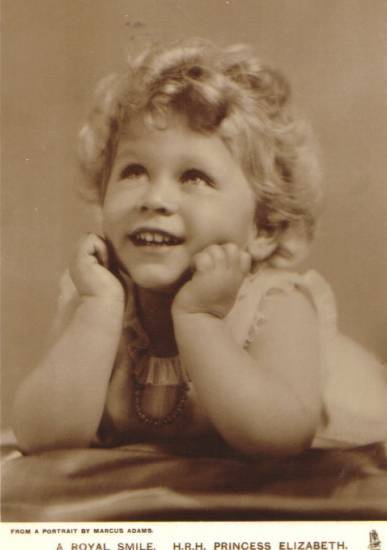
(Picture shows a photo of Queen Elizabeth II as a very young child – could there soon be another Princess Elizabeth in the House of Windsor?)

The Top 50 Baby Names in South Australia for 2014

Tags

,

GIRLS

  1. Charlotte
  2. Grace
  3. Chloe
  4. Olivia
  5. Emily
  6. Ava
  7. Sophie
  8. Amelia
  9. Mia
  10. Isabella
  11. Ella
  12. Isla
  13. Ruby
  14. Scarlett
  15. Harper
  16. Lily
  17. Sophia
  18. Sienna
  19. Hannah
  20. Lucy
  21. Zoe
  22. Ivy
  23. Madison
  24. Zara
  25. Georgia
  26. Imogen
  27. Eva
  28. Matilda
  29. Willow
  30. Isabelle
  31. Layla
  32. Abigail
  33. Evie
  34. Ellie
  35. Emma
  36. Alexis
  37. Alice
  38. Maddison
  39. Mackenzie
  40. Aria
  41. Savannah
  42. Holly
  43. Addison
  44. Evelyn
  45. Jasmine
  46. Lilly
  47. Sofia
  48. Annabelle
  49. Elsie
  50. Poppy
BOYS

  1. Oliver
  2. Jack
  3. William
  4. Lucas
  5. Noah
  6. James
  7. Lachlan
  8. Harrison
  9. Charlie
  10. Liam
  11. Max
  12. Ethan
  13. Thomas
  14. Henry
  15. Mason
  16. Jacob
  17. Alexander
  18. Oscar
  19. Samuel
  20. Riley
  21. Sebastian
  22. Hunter
  23. Isaac
  24. Hudson
  25. Tyler
  26. Xavier
  27. Leo
  28. Archie
  29. Jackson
  30. Harry
  31. Blake
  32. Levi
  33. Daniel
  34. Logan
  35. Benjamin
  36. Patrick
  37. Austin
  38. Jaxon
  39. Joshua
  40. Archer
  41. Elijah
  42. Lincoln
  43. Edward
  44. Cooper
  45. Jordan
  46. Ryan
  47. Ashton
  48. Chase
  49. Nate
  50. George

GIRLS

Biggest Risers
Madison (+21), Ellie (+17 at least), Eva (+13), Harper (+12), Aria (+11 at least)

Biggest Fallers
Summer (-22 at least), Chelsea (-21 at least), Emma (-20), Jessica (-13 at least), Evie (-12)

New
Ellie, Aria, Holly, Addison, Lilly, Sofia, Annabelle, Elsie

Gone
Summer, Chelsea, Jessica, Violet, Eliza, Mila, Alyssa, Audrey

BOYS

Biggest Risers
Archie (+23 at least), Patrick (+15 at least), Leo (+15), Austin (+14 at least), Sebastian (+13)

Biggest Fallers
Joshua (-25), Connor (-21 at least), Mitchell (-18 at least), Cooper (-18), Jayden (-11 at least)

New
Archie, Patrick, Austin, Lincoln, Jordan, Ashton, George

Gone
Connor, Mitchell, Jayden, Caleb, Aiden, Angus, Michael

Cloud Zen and Eden Zephyr

Tags

,

15.10 002

Girls
Ada Aiko
Annabelle Farley “Belle” (Felicity, James)
Avery Hope (Eden, Sam, Imogen)
Beatrice Victoria (Caroline)
Cadence Rose (Bonnie, Samson)
Dakoda Jewels (Tiarna, Latoya, Mikayla, Tahlia)
Dulcie Autumn (Molly, Isla, Wyatt, Violet, Abel, Nyle)
Eleanor Ruth
Elsie Bess (Campbell, Isla)
Evie Lola (Tom, Charlie)
Hazel May (Delilah)
Ijana (Owen, Katja)
Isla Jennifer Joy (Chace)
Koa (Jailyn, Mila)
Leilani Seruia (Emanuel)
Melody Paula Faye
Miranda Cate
Moriah (Esafe, Sheerah)
Phillipa Vera (Jessica)
Polly Dot
Reeve Milah (Dante, Tanner)
Scarlett Rosemary (Oscar)
Varli Lee (Kodi, Tori)
Victoria Evelyn Larkin
Whitney Estella (Ryder, Soraya)

Boys
Angus Clancy
Austin Sinclair
Brooklyn (Chanel)
Buddy Fred (Henry, Charlie, Harry, Johnny)
Carter Shane Taia
Cloud Zen
Douglas Gregory (Christian, Kyle, Imogen)
Eden Zephyr
Felix Lars (Lola, Angus)
Gideon Paul
Hugo Patrick (Anastasia, Rupert)
Humphrey Ross (Archie, Evie)
Jacob Edward
Lachlan Fisher (Hamish, Isabel)
Laeton Clem
Leo Bobby
Milano John (Marchesa, Gabriel)
Murphy Sidney (Quinn, Fraser, Emmett)
Nathaniel Leslie (Hayley)
Quinnten Hunter James (Tayla, Amber, Braxton, Faith)
Rocco Ellis (Sonny)
Sasha Jasper (Noah)
Sidney (Gaia)
Theodore Laurence “Theo” (Xavier)
Vin (Mason)

(Picture shows clouds over Yanchep, north of Perth; photo from Angie in Yanchep)

Famous Name: Georgina

Tags

, , , , , , , , , , , ,

708662-gina-rinehart

Famous Namesake
The Channel 9 mini-series House of Hancock has just come to an end, having enjoyed a certain amount of notoriety and controversy. The series is based on one of Australia’s real life soap operas: the family of wealthy Western Australian mining magnate Lang Hancock.

The main focus of the mini-series is on the relationship between Lang and his daughter Georgina (called Gina), brought under pressure when the teenaged Gina married a man old enough to be her father, which is increased when freshly-widowed Lang married his Filipina maid, who was young enough to be his daughter. The story then follows Gina’s relentless rise to wealth and power as Lang’s heiress, accompanied by family ructions.

Gina Rinehart is the chair of Hancock Prospecting, founded by her father Lang. She is the richest person in Australia, and a few years ago was the world’s richest woman, but is now only the sixth-richest. She was named after her father, who has George as one of his middle names, while her middle name Hope is her mother’s name.

Mrs Rinehart took legal action against the makers of House of Hancock, with her lawyer calling the program “almost entirely fiction”, “replete with falsehoods”, and its depiction of true events as “twisted.” Part of her legal team’s argument was that actors in House of Hancock breached consumer law against misleading and deceptive conduct by pretending to be someone else. I can only think a lot of actors, if not all of them at some time or another, have similarly breached consumer law.

Her lawyers were successful: Gina was granted access to the second episode before it went to air, and certain cuts were hastily made to key scenes before the show went to air, leading to a very abrupt ending. Despite all the cuts, House of Hancock was a hit, attracting more than 25% of the audience, or nearly 2 million viewers per episode. Actress Mandy McElhinney (Rhonda from the AAMi commercials) has garnered praise for her outstanding performance.

Although the details haven’t been made public, apparently one of the things Gina objected to was her father’s ghost coming back to chat with her, which she assures us did not happen. I for one believe her story, and don’t need a lawyer to convince me. She also says that she never fought with her stepmother, and in fact never spoke to her at all, painting a picture of happy family life in the process.

Despite making sure that House of Hancock came with a disclaimer that it had been fictionalised for dramatic purposes and was not a documentary, Gina Rinehart is still fuming, and will now sue Channel Nine for defamation. No stranger to the courtroom, she mounted an eleven-year legal battle against her stepmother Rose Porteous, claiming that she had hastened Lang Hancock’s death (the coroner determined he had died of natural causes). In turn, Gina has been in a long-running legal feud with her children over the family trust.

So that’s Georgina Rinehart – large, in charge, rich as filth, and liable to sue you if you claim she talks to ghosts and her stepmother.

Name Information
Georgina is a feminine form of George. Like its male counterpart, it has been in use for many centuries, but only gained prominence after the House of Hanover began to rule Britain in the 18th century, with George becoming a traditional royal name.

Georgina has been used as a middle name in the royal family – an example is Princess Maud of Fife, grand-daughter of Edward VII. It’s also been used by the aristocracy: Georgina Ward, Countess of Dudley, was one of the great beauties of the Victorian era, while Georgina Gascoyne-Cecil, Marchioness of Salisbury, was the wife of British prime minister, Lord Robert Cecil.

Georgina has been rather a favourite for characters in children’s literature, with the best known perhaps Georgina Kirrin from Enid Blyton’s Famous Five series. Georgina is a tomboy who is always called “George”. In the TV series Gossip Girl, the character of Georgina Sparks has been turned into one of the show’s villains; she goes by “Georgie”.

Georgina is an underused classic name which has never left the charts, yet never been popular. It was #171 in the 1900s, and hit its peak in the 1970s at #109 – it may not be a coincidence that the Famous Five series was on TV in that decade. Currently it is around the mid-200s, and I see the name Georgina quite often in birth notices.

Georgina is more popular in the UK, where it is #173 and falling, but doesn’t chart in the US. This gives it a rather “British” feel, although it’s used internationally, including in Spain, the Netherlands, and Central and Eastern Europe.

This is a stylish yet solid choice which has all the advantages of a classic name that doesn’t feel dated, without any popularity to worry about. It has a rather upper middle class image in Australia, but has a number of breezy, carefree nicknames to go by, including George, Georgie, Gia, Gina, Ginny, Gigi, and Nina.

POLL RESULTS
Georgina received a creditable approval rating of 73%. People saw the name Georgina as familiar without being common (21%), and stylish and classy (16%). However, 10% were put off the name by Gina Rinehart.

(Photo of Gina Rinehart from news.com.au)

Historical Naming Patterns in the House of Windsor – Part 1: Brothers for Prince George

Tags

, , , , , , , ,

Queen_Victoria_with_Prince_Arthur

In 2012 I did an article on the historical naming of British monarchs, in preparation for the birth to the next heir to the throne, who turned out to be Prince George Alexander Louis – a slight score for me, as these were the first three boys’ names I suggested.

As Prince George is now expecting a brother or sister, I thought we’d take on what is a rather more difficult challenge – the naming of younger siblings of the future monarch: “spares” to the heir.

I haven’t gone back to the misty beginnings of English royalty, or to William the Conqueror, or even to the House of Hanover, or the reign of Queen Victoria. This will be a modern prince or princess born in the 21st century, and I thought that just looking at those close to the throne in the House of Windsor would be quite enough information.

I earlier looked at the “rules” of naming monarchs, and found that there are also “rules” to naming a monarch’s siblings. We can keep these guidelines in mind as we go, to ensure our expectations remain realistic.

  • All those who were the child of a monarch or an heir to the throne had a name earlier used by royalty – what we think of as traditional English royal names.
  • Nearly all of them had a name that had earlier been used for a British prince or princess. Those that didn’t had names of previous kings and queens. Not one was given an obscure royal name.
  • Perhaps surprisingly, very few of them seem to have been directly named after a relative or family member (although in some cases that information may have been kept private). Those that were, were named after royal grandparents or great-grandparents, usually deceased. Feminisations of male names for girls have not been been used so far (although female Windsors are less common than males, so there is less data to work from).
  • In my earlier article, I pointed out that monarchs were almost never given a name from royalty’s distant past, and that expecting a Queen Matilda or a King Edmund was therefore a forlorn hope. However, not so with a monarch’s siblings. Some were given a name from hundreds of years ago, and one or two even had names from the Middle Ages, so a wider variety of names can be considered.
  • Re-using royal and family names is common, even if there are other members of the royal family who are still alive with the same name – hardly surprising when they are drawing upon a relatively limited number of names. So we can’t rule out a name just because it’s already in use by a cousin or great-uncle. This applies to titles: it seems to be fine for there to be another Prince Soandso, as they can be told apart by their full title. For example, Prince Edward, Earl of Essex doesn’t get muddled with his mother’s cousin, Prince Edward, Duke of Kent. Again, this widens the pool slightly.
  • All those who were the child of a monarch or an heir to the throne were given a name that was relatively popular at the time of their birth. Nearly all of them had a name in the Top 100 for their era, while none had a name below the Top 200. This drastically shrinks the number of names on the table.

To find possible names for the siblings of Prince George, in theory all it takes is cross-referencing the UK Top 200 with a list of British royalty (kings, queens, princes, and princesses). Let’s see what the results are for a possible brother to Prince George, a future prince of the United Kingdom, once we remove Prince George’s own three names (slightly risky, as royals have been known to receive a sibling’s middle name as their first name).

Arthur #43
While the idea of a King Arthur would invite ridicule, a Prince Arthur seems suitable. In use by the English monarchy since the Middle Ages, it is a traditional royal name. Queen Victoria’s favourite son was Prince Arthur, while his son was the most recent Prince Arthur, born in the 19th century. The queen’s father had Arthur as one of his middle names, as do Prince Charles and Prince William, so this would link a prince with his father, grandfather, and great-great grandfather. I like the idea, and George and Arthur sound good as brothers. But do the royals consider this middle name material only?
My rating: seven and a half coronets

Frederick #82
There have been three Prince Fredericks, with the most recent the second son of King George III, born in the 18th century. The name is in use by the royal family; for example, Lord Frederick “Freddie” Windsor. Frederick is also a traditional name in the Spencer family, which makes this seem eminently suitable. George and Frederick sound great as brothers – maybe too much so, as this fraternal combination has already been used, by J.K. Rowling! Could the royals cope with the princes being dubbed The Weasley Twins by the press? I hope so.
My rating: seven coronets

Alfred #136
Alfred the Great was King of Wessex, a direct ancestor of the current royal family, so this name has some serious royal clout. There have been three Prince Alfreds, with the most recent a grandson of Queen Victoria who was born in the 19th century. He’s thought to have shot himself after going mad from syphilis, which doesn’t seem that auspicious (although his only crime was being born before the discovery of penicillin). I hope this isn’t a stumbling block, as George and Alfred sound perfect as brothers, while the popular nickname Alfie is very lovable.
My rating: seven coronets

James #9
James is a very royal name, because St James’s Palace is the official residence of the monarchy. As a prince’s name it could be problematic, because the only Prince James was the Scottish “Old Pretender”, who illegally claimed the British throne. Another slight issue is that Prince Edward’s young son is named James, Viscount Severn, and although he isn’t a prince, there is a legal question mark over his non-princely status that an actual Prince James may underline.

A traditional name in the Scottish monarchy, two of Scotland’s King Jameses have been kings of England, ruling as James I and II. With Scotland voting to remain part of the union, the royal family may be eager to choose a Scottish name.

My main objection is that I don’t much like George and James as royal brothers: to me they are too alike and could be confused in public announcements. I feel the heir to the throne needs a distinctive name, and would prefer James in the middle. However, the royals may think differently.
My rating: five and a half coronets

Charles #61
Prince Charles will be the hypothetical prince’s grandfather, and Charles is a traditional British royal name. There have been two kings named Charles, and several princes with the name, controversially including Bonnie Prince Charlie, the Young Pretender of the Jacobite cause. Charles is a name which comes from the Stuarts, and you could see this as another pro-union Scottish choice. It’s also traditional in the Spencer family, and presumably wouldn’t even be shared for that long, as Prince Charles is due to become king. There is nothing concrete against it, but my gut says no to this, except in the middle. (My gut is often wrong though).
My rating: five coronets

Henry #18
Wonderfully royal, the name Henry has been borne by eight kings and several princes, and is already in use by Prince William’s brother, known as Harry. A non-ruling prince hasn’t been given the name of an uncle before, and while this could happen, I don’t think it shows much imagination for a second son to be given the same name as the previous second son. Besides, what nickname could they give him, because Harry’s taken?
My rating: two and a half coronets

William #8
A suitable royal name, borne by four kings, and multiple princes going back to the Middle Ages. One of those princes is the Duke of Cambridge himself. Although it’s not impossible that a son could be named after him, it’s never been done before in the House of Windsor. Even in non-royal families, it’s not considered traditional for a second son to be named for his father, so this would be a surprise.
My Rating: two coronets

Edward #33
While Edward VIII ruined this name for a future king by his abdication, it’s still fine for a prince, and there have been several Prince Edwards. In fact, there are already two Prince Edwards – the son of Queen Elizabeth, and her cousin. Adding a third seems going a bit far to me.
My Rating: two coronets

David #50
This is a name from Scotland’s royalty. David I was a medieval King of Scotland, who had a strong relationship with the English monarchy, and married an English bride. This is another Scottish choice to celebrate the union, but the royal family have only used this as a middle name (it’s one of Prince Harry’s middle names).
My rating: one coronet

Michael #53
There is already a prince with this name in the royal family, the queen’s cousin, Prince Michael of Kent. He was named after his ancestor, Grand Duke Michael of Russia, and this is not a traditional British royal name. I don’t consider this name likely at all, although not impossible as a middle name.
My rating: half a coronet

Robert #98
A name from Scottish royalty, with the best known example Robert I, or Robert the Bruce, one of Scotland’s national heroes. He fought against England in the Wars of Independence, and because of him, the English crown was forced to recognise Scotland as an independent country. Not only does this name seem anti-union, there is a horrible ballad called Prince Robert, about a man who is poisoned by his mother. Despite being a traditional name in the Spencer family, I can’t feel happy about this.
My rating: half a coronet

Albert #99
Prince Albert was consort to Queen Victoria, and his name became traditional in the royal family as either a first or middle name. The last Prince Albert became King George VI, the queen’s father, and using this name would be a nice gesture were it not for the genital piercing called the Prince Albert. This is a non-starter in my book, although very likely as a middle name.
My rating: zero coronets

John #107
As mentioned in the earlier article, this name has been forbidden in the royal family.
My rating: zero coronets

Andrew #154
Prince Andrew is the second son of Queen Elizabeth, and he is named after his paternal grandfather, Prince Andrew of Greece and Denmark. Because his name is not from English royalty, and because the prince is currently embroiled in an international paedophile scandal, his name is unlikely to be used.
My rating: zero coronets

So judging by history, my picks for the prince’s name would be Arthur, Frederick, or Alfred, with an outside chance of James or Charles. There is no overwhelming contender, as there was with Prince George’s name, so I wonder if a surprise choice is on the way, or if a new trend in royal names will make itself felt. Perhaps a royal name from further down the popularity charts is on its way?

UPDATE: The royal baby was a princess named Charlotte, so none of the names for a prince were necessary after all.

POLL RESULTS
People’s favourite choices for a possible prince were Arthur, Frederick, and Alfred, while the names William and Andrew received no votes at all. The 4% of people who thought the royal couple would start their own trend in baby names were obviously off base.

(Picture is of Queen Victoria with her son Prince Arthur, a painting by Franz Xaver Winterhalter)

Waltzing More Than Matilda’s Fourth Birthday

Tags

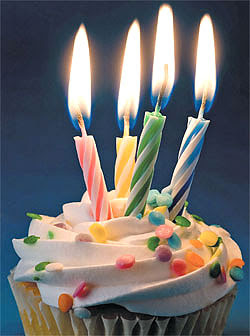
cupcake-with-four-candles

Here we are at the four-year mark, and rather than simply light the candles and blow up a few balloons, I thought that my readers deserved some sort of explanation.

The past year has been quite a challenging one. It started off with mass layoffs in my workplace, and while I understand that losing your job is a horrible experience, it’s stressful for the people left behind as well (the higher workload for no extra pay was the least of our problems).

Just I’d started to adjust to the new situation at work, my husband became seriously ill with a mystery complaint. He was hospitalised several times, and otherwise pretty much out of action, so it was up to me to take on a heavier load, in between worrying my head off. (His problem was eventually diagnosed and successfully treated, and he’s now fighting fit – thank you to everyone who sent kind thoughts in his illness, it was very much appreciated).

About the point when everything seemed to be at their absolute worst, we decided to undertake some home renovating projects, for reasons which seemed sensible at the time. It turned out to be a lot harder than we had anticipated, and in the process, I fractured my hand a couple of weeks before Christmas. Recovery has been painful, but my hand is quite a lot better now I’m seeing a physio, and because the time needed to heal is longer than my sick leave allowance, I won’t be returning to work. Renovations are still ongoing, but we hope to finish them fairly soon.

Has all this affected my blogging? You bet it has. I did wonder whether I should just stop blogging entirely until everything was back to normal, but I had no guaruntee that normality would ever return, and I feared I might never get back to my blog at all. In the end, I decided it was better for the blog to remain active, even if it suffered in the process. And there were definitely days when Waltzing More Than Matilda was the only thing keeping me sane.

This is not just an explanation, it’s an apology. I’m aware that I have been a sub-par blogger, and I’m sorry for the missed articles, the slow updating and maintainence, the missing or incorrect polls, and for all the spelling and grammatical errors which I notice when I read over blog posts.

I’m sorry if I didn’t visit your blog, or leave comments, or took ages to answer your e-mail, or didn’t answer it very well, or failed to re-tweet, or didn’t update Facebook. I’m sorry if I didn’t reply to your blog comment, and I’m sorry that I had to turn off comments on posts more than a few months old because I didn’t have the time and energy to deal with all the spammers and trolls.

And of course thank you for being patient and forgiving, thank you for your kind e-mails offering support and encouragement, thank you for reading, and commenting, and voting on polls, and retweeting, and Facebooking, and liking, and subscribing, and buying books, and nominating names, and sending in your own name stories, and continuing to stick with the blog even through tough times. It’s appreciated more than you could ever imagine.

Now it’s a case of onwards and upwards (or at least onwards) as I work to get the blog back on track. Name polls from last year have all been calculated with the results published, and the top-rated names of 2014 have now been added to the Best Baby Names page. Because there were no polls in 2011 and 2012, I am going to be editing and re-blogging old posts on “Throwback Thursdays” so you can have a chance to re-read them, and vote on them. The first one will be next Thursday, February 19.

That’s it for another year!

Celebrity Baby News: Media Babies

Tags

,

742620-70b7df96-a76f-11e4-84f2-050052afbf33

Radio host Michael “Wippa” Wipfli, and his wife Lisa, welcomed their first child on February 6 and have named their son Theodore George Jack, to be known as “Teddy“. Michael announced Teddy’s name on air on February 9. Michael is co-host on Nova FM’s Fitzy and Wippa, with fellow celebrity dad, Ryan “Fitzy” Fitzgerald. Lisa apparently liked the name Hugo, but Michael vetoed it because Ryan’s oldest son is named Hewston, nicknamed “Hewie“, and he feared the mockery should the radio partners have sons named Hewie and Hugo.

Sports broadcaster Tiffany Cherry welcomed her daughter Vivienne on January 1 at 8.31 pm, Epworth Freemason’s Hospital in Melbourne [pictured]. Vivienne was conceived with IVF using an international sperm donor. Tiffany has worked as a sports broadcaster in Australia and the US, and set up the Melbourne bureau of ESPN. She was the AFL’s first female boundary rider on Fox Footy, and been a host for the 2000 Olympics, 2008 Australian Open, 2010 Winter Olympics, the 2010 Commonwealth Games, and the 2012 Olympics. Trained in sports medicine, Tiffany is a hurdler who has represented Australia internationally, and has been Cathy Freeman’s training partner.

Famous Name: Liberty

Tags

, , , , , , , , , , , , , , , , ,

B86XPzcCMAA8YGz

On February 1, award-winning Latvian-Australian journalist Peter Greste was freed from the Egyptian prison where he had been confined for 400 days. While on temporary assignment for news service Al Jazeera in Egypt, Peter was arrested with two of his colleagues in December 2013, charged with aiding the outlawed Muslim Brotherhood. After a farcical show-trial in which no evidence was presented, the three of them were sentenced to seven to ten years imprisonment as terrorists.

Regarded as political prisoners by the international community, there has been a concerted global campaign by journalists to free the Al Jazeera staff, using the slogan: Journalism is not a crime. Along with diplomatic negotiations, this resulted in a retrial being announced, followed by Peter being deported to Australia.

Peter kept himself sane in prison through exercise and meditation, and undertaking a degree in International Relations. He thought of the things he wanted most – to watch the sunset, to see the stars in the sky, and to feel sand between his toes.

Once released, he tweeted a photo of himself at the beach in Cyprus, saying how sweet freedom was. Peter is elated to be back with his family, but is concerned about his colleagues Mohamed Fahmy and Baher Mohammad, who are still in prison. Let the campaign to free Al Jazeera staff continue until they all can be at liberty.

The word liberty means “freedom”, ultimately from the Latin libertas. Libertas was the Roman goddess of liberty.

Our modern ideal of political liberty comes from the ancient Greeks, and is closely bound up with democracy. A free society, where all citizens live in liberty, is generally seen as one where slavery does not exist, and where everyone has equal political rights.

Liberty, in conjunction with equality and fraternity, was the catch-cry of the French Revolution, now the motto of modern France. For a time, Lady Liberty replaced the Virgin Mary on altars, and the French Republic symbol of Marianne portrays the goddess of Liberty, an allegory of democracy, reason, and freedom.

Liberty has also been a guiding principle for the United States, with the the Declaration of Independence promising “Life, Liberty, and the Pursuit of Happiness”, while Abraham’s Lincoln’s Gettysburg Address speaks of a nation “conceived in liberty”.

The Pledge of Allegiance offers fealty to a nation who stands for “liberty and justice for all” (taken directly from the French motto), and the patriotic song My Country, ‘Tis of Thee praises the “sweet land of liberty” – referenced in Martin Luther King’s I Have a Dream speech.

As a sign of their shared love for the ideal of liberty, the people of France gifted the people of the United States with a giant statue of Liberty Enlightening the World, known as the Statue of Liberty. Standing on Liberty Island in New York City’s harbour, it is one of America’s best known icons, symbolically welcoming immigrants to a land of freedom.

Liberty is also a Christian virtue, symbolising being set free from the slavery of sin. There are several mentions of liberty in the Bible, including the quote from Leviticus which is written on the Liberty Bell in Philadelphia: Proclaim liberty throughout all the land unto all the inhabitants thereof.

Liberty has been used as a personal name since the 18th century – the time of the French Revolution and the American War of Independence. In the beginning, it was far more common in America, strongly resonating with the American desire for freedom. The name Liberty was given from the time of the first protests against British taxation, under the Liberty Tree in Boston.

In the United Kingdom, the name Liberty was particularly associated with Kent during the 18th century. Kent has long been an area of military importance, and Chatham Dockyard on the River Medway built naval ships for centuries. During the 18th century, the UK was at war with France and Spain, and Kent was a major centre for the defence of Britain. Interestingly, many of the Libertys were born around the Chatham area.

Liberty is often thought of as a “hippie” name, symbolic of the flower child yearning for personal freedom. However, it must have many times been given patriotically, with political freedom in mind.

Historically, Liberty has been given to boys more commonly than to girls, perhaps because it has often been connected with military events and political power. The goddess Liberty (“Lady Liberty”) certainly helps give it a feminine air, and these days it is thought of as a primarily female name, although the film The Man Who Shot Liberty Valance (with Lee Marvin in the title role) is a reminder of its unisex status.

The name Liberty turns up on the US Top 1000 at three historically apt moments. First in 1918, at the end of World War I, then in 1976, in the American bicentenary, and it has been on the charts since 2001, the year of the September 11 terrorist attacks in New York and Washington. Currently it is #532 and fairly stable.

Liberty is most popular in the UK, where it is associated with the prestigious Liberty department store in London’s West End, which has been selling luxury goods since the 19th century. (The store’s name has nothing to do with freedom, but is named after its founder, Arthur Liberty, whose surname means “lead worker”). Liberty silks and prints have helped give it a fashionable air.

Having been in the Top 500 since before 1996, Liberty peaked in 2003 at #157, when conservative MP George Osborne chose it for his daughter, perhaps giving it an aristocratic stamp. The name had a small boost of popularity after the 2005 London Bombings, and is currently #373.

Liberty has never charted in Australia, and is a rare find in historical records here, more often used in the middle. It does seem to have been fairly evenly chosen for both boys and girls in the late 19th century. A famous Australian with the name is Liberty Wilson, the sister of comedian Rebel Wilson, while one with Liberty as his middle name is Walter Liberty Vernon, the architect who designed the Art Gallery of New South Wales.

Liberty is an interesting virtue name that is very rare in Australia compared to its use in the UK and US. I can see it appealing to a wide variety of people from all walks of life, and a broad spectrum of political views. Libby or Libbie is the obvious nickname, but for a boy named Liberty, or for a girl who wants a boyish nickname, there is always Berty. In Australia, Liberty Eggs may be a slight issue, although free range chickens seem a positive thing to me, while the Subaru Liberty makes this a car name.

POLL RESULTS
Liberty received a decent approval rating of 68%. People saw the name Liberty as interesting and different (24%), having a wonderful meaning (22%), and pretty or beautiful (16%). However, 14% thought it was too hippy-dippy. 2% of people were reminded too strongly of the Liberty Subaru or Liberty eggs.

Waltzing With … Anna

Tags

, , , , , , , , , , , , , , , , , , , , , , , , ,

Pavlova RM90_01

Famous Namesake
On Thursday February 12, it will be the 134th birthday of the Russian prima ballerina Anna Pavlova. At a time when the rules of classical ballet were rigidly enforced, the dainty Anna performed in a graceful, romantic style, with less emphasis on precision and acrobatics. The principal artist with the Imperial Ballet and the Ballets Russes, she formed her own company and became the first ballerina to tour as an international star.

It was during one of her tours to Australia and New Zealand in the 1920s that Anna Pavlova would be honoured with the creation of an iconic Australasian dish, and in the process spark a rivalry between the two Trans-Tasman nations, who both claim it as their national dessert.

A pavlova is a meringue cake which has a crisp outer shell, and a soft marshmallow-y filling; a delectable, sweet, melt-in-your-mouth treat which is traditionally smothered in whipped cream and fresh summer fruit. Supposedly, the fragile pavlova was inspired by light-as-air Anna Pavlova, with its meringue casing designed to emulate the soft folds of her white ballet skirt.

Both New Zealand and Australia have some rather dubious stories as to how the pavlova first came to be made and named, but indefatigable research by a New Zealand food historian shows that it definitely originated in New Zealand, with a 1929 recipe being found in a New Zealand magazine. Meanwhile, it didn’t make an appearance in Australia until the early 1930s. So New Zealand gets the honours for inventing the pavlova, although it really does feel as if Australia has embraced the pavlova more heartily – it is a favourite choice to celebrate Australia Day.

I always have a pavlova for my Name Day cake: it not only reflects my name, Anna, but is perfect for a hot summery February Name Day. It’s also very appropriate, because my dad is from New Zealand and my mum born in Australia, so it symbolises the two countries coming together.

Name Information
Anna is the Latinised Greek form of the Hebrew name Hannah, meaning “favour, grace, graciousness”, sometimes translated more freely as “God has favoured me”, or “the grace of God”. The New Testament uses the Greek form Anna, in contrast to the Old Testament Hannah.

The Gospel of Luke tells of Anna the Prophetess, an old widow perhaps more than a century in age, who was very devout, and spent all her time fasting and praying. At the Presentation of Jesus in the Temple, celebrated as Candlemas in early February, she immediately recognised the infant Jesus as the redeemer, and gave thanks to God for having been allowed to see Jesus in her lifetime. Despite having a walk-on role in the Gospels, Anna is recognised as a saint.

According to Christian legend, the mother of the Virgin Mary was also named Anna (or Hannah), but she is usually referred to as Saint Anne in order to avoid confusion with Anna the Prophetess. The use of the name Anna was inspired by Saint Anne rather than the aged prophetess.

In classical mythology, Anna was the sister of Dido, Queen of Carthage; she appears in Virgil’s Aeneid. According to the poet Ovid, this Anna was the same being as the Roman goddess Anna Perenna, whose name refers to the “circle of the year” (per annum, in Latin). Her feast day marked the first full moon of the year, and people offered sacrifices so that the year should be successful.

Ovid relates that Anna escaped from Carthage to Italy, where she accidentally drowned and became a river nymph – he translated her name as meaning “perennial stream” (amnis perennis). Ovid says that the goddess was a tiny old woman who baked cakes, and that crude jokes and songs were sung at her festivals. She may have been a mother goddess, and originally Etruscan – if so, her name might be from the Etruscan nanas, meaning “to bear, to beget (a child)”.

Another mythological Anna is the half-sister of King Arthur, usually referred to as Morgause; in many stories she bears Arthur a son, to his downfall. Morgause seems to be a title, meaning “of the Orkneys”, so Anna would have been her personal name.

It may be that she is based on the Irish goddess Anu, sometimes called Ana or Annan. One possibility is that Anu is another name for the mother goddess Danu/Dana, while the war goddess the Morrigan was sometimes called Anand. The British had a winter storm goddess that they referred to as Gentle Annie or Annis, apparently from terror of her hideous powers (this is another link with the name Agnes in Britain). The name is speculated to come from the ancient Celtic anon, meaning “deity, spirit”.

While we’re looking at the name Anna in different cultures, it is worth mentioning that it is also a man’s name, because Anna (or Onna) was an Anglo-Saxon king. One theory is that his name was a nickname for Ethelmund, meaning “noble protection”, or one of the other Ethel- names. Don’t ask me how Anna is short for Ethelmund!

The name Anna has been in common use in the west since the Middle Ages, and has historically been more popular in Eastern Europe and Scandinavia, where it was used by the nobility. It was traditional in the Russian royal family, and the 18th century Empress Anna of Russia was a nasty piece of work. Apart from Anna Pavlova, another famous Russian Anna is the beautiful Anna Karenina, title character of the tragic novel by Leo Tolstoy, considered one of the greatest works of fiction ever written.

Anna is a classic name which has never left the charts. It was #208 in the 1900s, and sunk to its lowest level in the 1920s at #353. After that, it began climbing and joined the Top 100 in the 1950s at #89. The rise into popularity may have been influenced by the 1948 film version of Anna Karenina, starring Vivien Leigh, and helped along by the 1956 film The King and I, with Deborah Kerr in the role of Anna. These movies probably helped give Anna a touch of exoticism.

The King and I was based on the Broadway musical of the same name, in turn based on the book Anna and the King of Siam by Margaret Landon, from the memoirs of Anna Leonowens about her experiences as a royal teacher in Bangkok in the 1860s (Anna Leonowens lived for a few years in Western Australia). Anna and the King was made into a TV show in 1972, and although it flopped in the US, had a decent lifespan on Australian television as re-runs, giving the name Anna a fair amount of exposure during the 1970s.

Anna peaked at the start of the 1980s at #34, then gradually sank into the bottom half of the Top 100. It has not shown any signs of serious decline, but remained relatively stable. In 2013, Anna was #64 nationally, #60 in New South Wales, #81 in Victoria, #87 in Queensland, where it rejoined the Top 100 and was one of its fastest-rising names, #47 in Western Australia, and #71 in the Australian Capital Territory. Preliminary results for 2014 suggest Anna may have improved its position, and is one of Victoria’s fastest-rising names of last year.

One of the factors helping the name along must surely be Princess Anna from the 2013 hit Disney film Frozen, the younger sister of “snow queen” Elsa. Anna is an attractive heroine who is brave and hopeful, with a strong, loving heart. I know many little girls – and even some not so little ones – who adore Anna for being sweet and genuine, with an endearing awkwardness. I wonder how many baby Annas have had their name suggested by an older sister?

Anna is still popular and stable after many decades, and even shows signs of a recent boost. It is a popular name all over the world, but tends to be most popular in central and Eastern Europe, and is the #1 name in Austria. Last year blog readers voted Anna their favourite internationally recognisable girls’ name.

I have found Anna a very easy name to wear. It’s a common name never out of use, but has never been highly popular, so I don’t actually know many people with my name, although everyone has heard of it. Nobody has had any problems spelling it (I learned to write my name as a toddler in about a minute!), and everyone can pronounce it to my satisfaction, even those who don’t speak English. The biggest issue is that it sounds similar to other names, such as Hannah and Emma, which can cause a slight hold-up over the phone.

I can’t pretend that Anna is a very exciting name, but for such a short and simple one, I don’t think it is completely boring either. It’s a palindrome, which tickled me as a child, and it has quite an interesting history – it fascinates me that so many Annas from legend have been elderly women, sometimes with quite a dark side! Its “foreignness” made it popular in the mid twentieth century, and even now I think it has a slight touch of European exoticism: Disney chose it for a Scandinavian princess, after all.

POLL RESULT
Anna received a frankly unbelievable approval rating of 100%, making it the highest-rated girls name in the Waltzing With … category, the highest-rated girls name overall, and the highest-rated overall name of 2015. 46% of people loved the name Anna, and nobody disliked or hated it. I have trouble accepting that I have the perfect name, and can’t help thinking that everyone was too polite to say they didn’t like it!

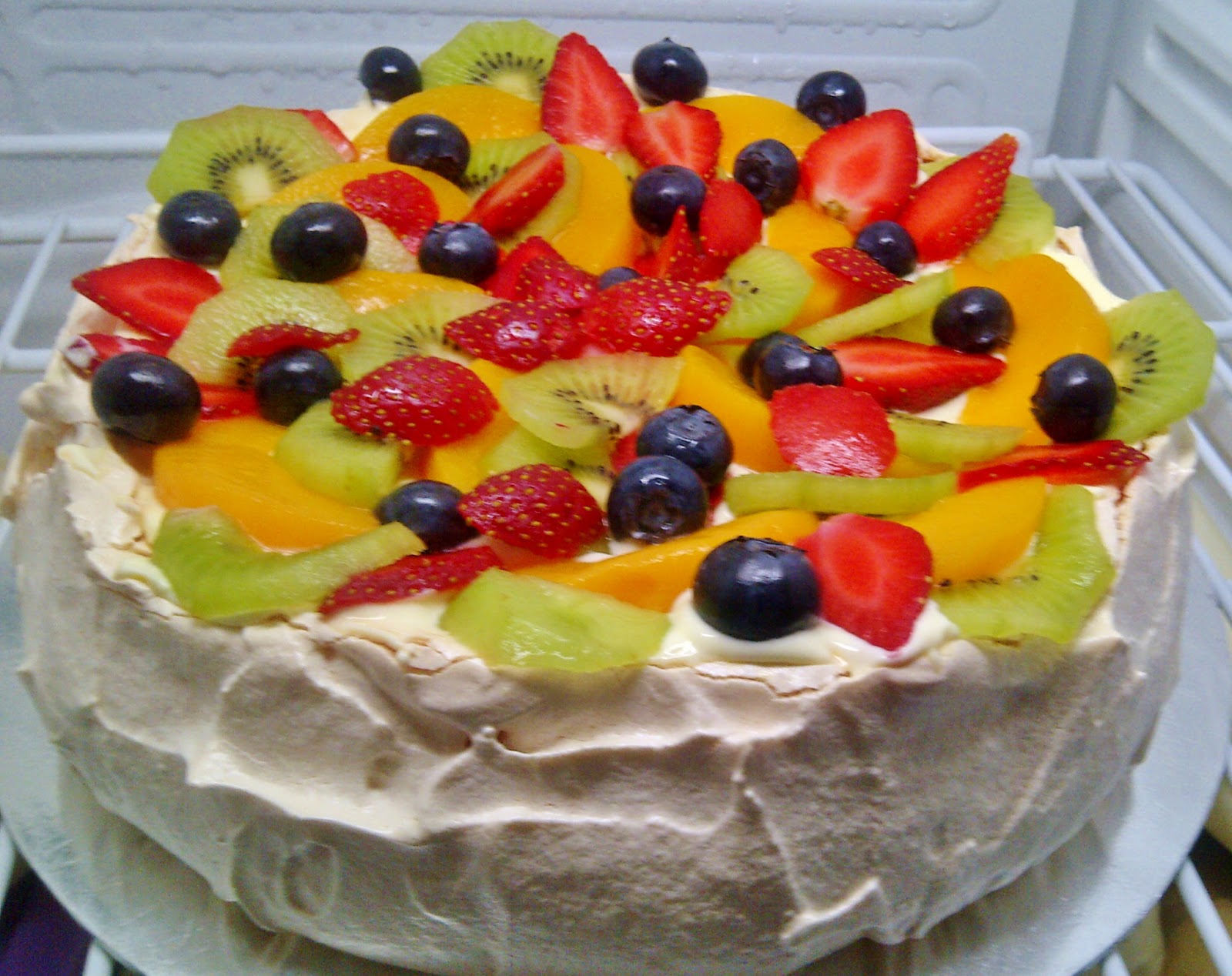
(Picture shows a pavlova; photo from Just LilDaisy)