Greens MP Adam Bandt, and his wife Claudia Perkins, welcomed their first child in late June and named their daughter Wren. Adam contested the seat of Melbourne in 2007, and was the most successful candidate from a minor party contesting a seat in the lower house, losing only very narrowly to Labor. He was elected to the seat in 2010, the first Australian Greens MP to be elected during a general election, and re-elected in 2013. Prior to his election, Adam was a lawyer in industrial and labour relations, and often wrote articles on legal issues. Claudia is a former staffer for the Labor Party.
(Wren’s name was announced as Wren Perkins: I’m not completely sure whether Perkins is Wren’s middle name or whether she has her mother’s surname. I’m putting it as her surname, mostly because Wren Bandt doesn’t sound right).
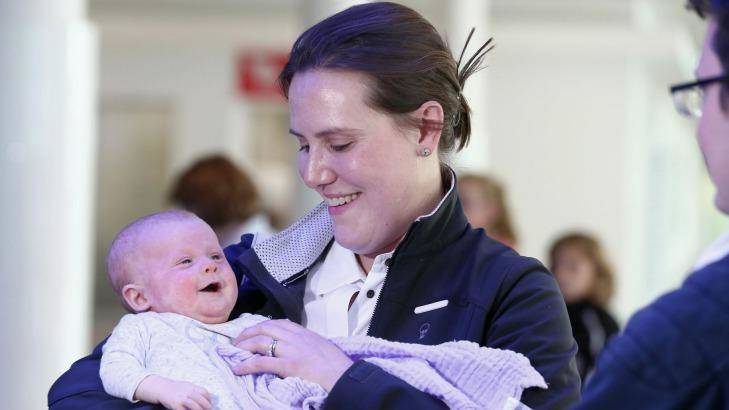
Liberal MP Kelly O’Dwyer, and her husband Jon Mant, welcomed their first child in late May and named their daughter Olivia [pictured]. Kelly became the member for Higgins in 2009, and is the first woman to gain Liberal Party preselection for a safe seat in metropolitan Melbourne. Before entering politics Kelly was a solicitor and bank executive, and was appointed Parliamentary Secretary to the Treasurer last year. Jon is an executive director at financial services company UBS.
1. John (2864)
2. William (1933)
3. James (936)
4. George (883)
5. Arthur (776)
6. Thomas (761)
7. Robert (675)
8. Frederick (615)
9. Charles (590)
10. Ronald (585)
11. Harold (539)
12. Edward (514)
13. Albert (509)
14. Henry (492)
15. Jack (441)
16. Norman (422)
17. Ernest (402)
18. Alfred (391)
19. Eric (390)
20. Reginald (382)
21. Stanley (379)
22. Walter (371)
23. Joseph (324)
24. Raymond (320)
25. Cecil (313)
26. Kenneth (306)
27. Allan (299)
28. Gordon (291)
29. Herbert (283)
30. Keith (267)
31. Roy (267)
32. Richard (254)
33. Frank (236)
34. Donald (232)
35. Leonard (221)
36. David (220)
37. Alexander (200)
38. Victor (195)
39. Colin (194)
40. Harry (191)
41. Douglas (176)
42. Clarence (158)
43. Alan (155)
44. Patrick (150)
45. Mervyn (142)
46. Cyril (141)
47. Sidney (132)
48. Percy (122)
49. Noel (117)
50. Geoffrey (109)
51. Vincent (107)
52. Allen (107)
53. Bernard (102)
54. Neville (100)
55. Lawrence (98)
56. Michael (96)
57. Horace (95)
58. Bruce (95)
59. Clifford (95)
60. Edwin (92)
61. Leo (88)
62. Samuel (86)
63. Claude (83)
64. Maurice (81)
65. Aubrey (79)
66. Lionel (79)
67. Peter (73)
68. Andrew (72)
69. Wilfred (71)
70. Athol (69)
71. Kevin (66)
72. Laurence (66)
73. Clive (65)
74. Edgar (64)
75. Archibald (62)
76. Hugh (61)
77. Wallace (61)
78. Philip (60)
79. Maxwell (57)
80. Lloyd (54)
81. Daniel (53)
82. Russell (52)
83. Ian (51)
84. Malcolm (48)
85. Dudley (46)
86. Ralph (44)
87. Hilton (43)
88. Percival (83)
89. Oswald (42)
90. Stephen (42)
91. Hector (40)
92. Phillip (40)
93. Clement (38)
94. Neil (34)
95. Arnold (34)
96. Clyde (33)
97. Ivan (33)
98. Anthony (33)
99. Milton (32)
100. Owen (32)
Sinead and William have two small daughters named Orla and Freya, and would love another child. Although they aren’t expecting yet, Sinead is already anxious about choosing baby names due to the reactions they got from William’s family with the first two names.
Criticisms of the names Orla and Freya have ranged from ignorant (the names are “masculine” or “old lady” names), to ridiculous (“It sounds fat”), to vulgar (fancied similarities between the names and obscene words). The criticism is ongoing even after a year or two, and they always gleefully pass on any silly or mean comments they receive about the names from others (“Mrs Tenby mixed Orla up with orca!”).
When they’re not name bullying their own flesh and blood, William’s family are nice, sane, ordinary country people, the salt of the earth and pillars of their community. They don’t have much of a filter, and distrust anything unfamiliar. They kept pointing out to Sinead and William how all the nice girls’ names were in the Top 10, and wouldn’t they prefer Chloe and Georgia?
Sinead has tried to express how she feels to her in laws, and explain why they chose the names, but the response is always along the lines of: You shouldn’t have picked ugly, weird names for your children if you didn’t want people to say that they’re ugly and weird.
William loves their daughters’ names, and is proud of them. When Sinead almost gave in to the name nagging and chose a Top 50 name for their first daughter, William insisted they go with the name they actually loved. However, he feels that his family have their hearts in the right place, and are only being honest. He thinks Sinead shouldn’t be too sensitive about a bit of family teasing.
Sinead’s background is slightly different to William’s. Her parents are Irish immigrants, and she grew up in the suburbs of a large city. She loved that her mum and dad named her Sinead Euphemia, a name that stood out amongst her friends and classmates. Growing up, Sinead was confident enough to correct children and adults on the pronunciation of her name, and enjoyed discussing her name with others.
However her little sister Aoife Catherine had a very different experience. Shy and reserved by nature, she felt humiliated whenever her name got mangled, and readily submitted to being called Eva to avoid any fuss. By the time she was in kindergarten, she insisted on being known by her middle name, and now goes by Kate. Her sister’s experience also makes Sinead wary of choosing anything too unusual, and fearful she may have burdened her daughters with names that could likewise cause them problems.
Sinead has a nice list of possible names that she loves, but almost every one of them makes her pause and wonder if it will be dragged through the mud by her in laws, or end up being more drama than its worth. She has already cut Saoirse, Cillian, Saskia, and Ceridwen for fear they will be “too weird” for people to cope with.
GIRLS
Maeve (her first choice, but their surname is similar to Grove – is Maeve Grove too much?)
Inez (has been told it sounds like a rude word)
Isobel
Astrid
Thea
Marion
Gwen (is Gwen Grove too alliterative?)
Sian
Carys
Middle name would almost certainly be Elizabeth, but Eleanor is a strong contender (both family names). Neither of these names sound right with Isobel, which would probably eliminate it.
BOYS
Alasdair (but feels in laws will only accept Alistair or Alastair)
Euan
Leon
Leo
Theo
Sebastian
Samuel
Lewis
Louis
Dominic
Henry
Anthony
Rowan
The middle name would be John, William, or Gordon.
Sinead feels a bit silly writing in about names for a baby who doesn’t exist yet, but she would love to get some feedback on names which isn’t from her in laws and to feel less anxiety about choosing another baby name.
* * * * * * * * * *
Sinead, I think it would be foolish for you to choose baby names based on the opinions of your in laws. As you know, their tastes are very conservative, and they are highly resistant to learning anything new. It’s a big wide world outside the cow paddock, but they don’t seem to want to know about it.
I think their comments have been appalling and unacceptable. Yet I can’t help feeling a bit sorry for your in laws. You’re a bright, highly educated, very successful woman, and without meaning to, I’m sure a hundred times you have made them feel like stupid, unsophisticated bumpkins.
You’re from the big smoke with fancy ways and book learning, and you make them look pretty small pond in comparison. I do think that they use your children’s names as a way to cut you down to size, and put you in your place.
It’s something a lot of families do, and look at this article I found on Clare’s Name News with daft reactions to baby names – even standard names like Poppy and Sebastian get absolutely hammered. I know plenty of people who’ve chosen popular names for their children, and they’re still too “weird” for the older generation.
I hope your inlaws plan to cut this out once your daughters are old enough to understand what they’re saying. However, I’m not too worried about your girls if they don’t. Because look at their parents – a mum who was a feisty little girl ready to stand up for her name, and a thick-skinned dad who says, “We love your names, and we don’t give a hoot what grandma thinks”. Not to mention some very outspoken relatives, so your inlaws might get a taste of their own medicine one day!
Another reason it would be crazy to make name decisions based on what your in laws think is that they are quite simply wrong. There’s nothing bad about the names Orla and Freya, and they don’t seem particularly burdensome. They’re pretty names with an interesting history, and they’re fairly easy to spell and pronounce.
Freya is not far out of the Top 100, so it’s not at all rare – in fact, parents often fret about using it, because “it’s getting too common” (Australian actresses Freya Stafford and Freya Tingley have given it a boost). Orla is much less common, but it’s one of those names you see often enough that it doesn’t seem outrageous: so far this year I have seen one baby named Orla. There’s also the foreign affairs journalist Orla Guerin from the BBC – have your in laws ever seen her on the news?
I wonder if you have been too busy to attend a playgroup or mother’s group in your community, because I would be surprised if you received any rude comments from other parents about Freya and Orla, or that they would have any problems with them. I’m sure they will fit in just fine with the kids in their area – I see baby names from your region quite often, and they have a pretty broad range, with several hip vintage and nature names. Freya and Orla may well have classmates called Elva, Lucian, and Fox!
Your sister’s experience with her name should give you courage rather than add to your fears, because it shows that even if someone doesn’t care for their name, it’s not a big problem. Your smart little sister was able to solve her name woes by the age of five by simply using her middle name. Mind you, I think the name Aoife would have been much harder to cope with when she was a child than it would be today: we’ve moved on so much since then. Okay, not where your inlaws live – but most other places!
I think you should make a list of names that you and William like, and not bother with what your inlaws will think of them. Clearly they’re not going to be happy unless you choose something like Jack or Sophie, and are probably going to make unpleasant comments no matter what name you pick. Besides, they’ve already got to choose their own childrens’ names – why should they get to help choose yours as well?
I feel a bit sad you’ve eliminated Saskia based on some silly comments from your inlaws. It’s such a pretty name, and it’s rather fashionable at the moment. Actress Saskia Burmeister has given it a boost, and there’s also been a popular kid’s TV series featuring a teenager named Saskia. Saoirse isn’t that uncommon either – there’s a couple of young actresses with this name, including Saoirse Ronan. It would probably have a couple of pronunciation issues though.
Maeve seems like a wonderful choice – fashionable, Irish, goes well with Orla and Freya, and easy to cope with. Maeve Grove is a bit awkward, but I don’t think it’s necessarily a dealbreaker. I do think Gwen Grove is too much though: it’s a real tongue-twister, and sounds like Glengrove with a lisp. Inez doesn’t sound like a rude word to me, unless I’m either mispronouncing the name or the rude word! However, I’m never sure how to pronounce this name, as everyone seems to say it differently. All your other choices are great, and I think Carys is a fantastic match with Orla and Freya.
Your boys’ choices are all really handsome, but quite conservative compared to the names you have picked for girls. Is that your natural name style, or have you been scared out of anything more unusual by family? Alasdair, Euan and Rowan all seem like natural matches with Orla and Freya, but any name you love will be fine.
I really think you are worrying too much, and it’s a shame that other people have spoiled what should be a joyful, exciting pastime – dreaming up names for your future baby! Don’t let them spoil it any longer.
Readers, have family or friends criticised your baby names, and if so, how did you deal with it? And what do you think of Sinead’s name choices?
Girls
Amelia Morganne
Ariana (Sebastian, Marcus)
Avery Skye
Bronte Charlotte
Caitlin Giovanna (John, Alexander)
Charisse (Mariana)
Chloe Tinaashe
Dimity Faye
Elinor Audrina (Felicitie)
Everly Victoria Nichola
Grace Imogen (Jackson, Henry, Ethan)
Harper Lee (Oliver)
Hattie Jaq (Raphaella, Scout)
Isabelle Jan “Belle”
Josie Elizabeth (Allara)
Kalani Coral
Luella Winter
Macy Lillian (Geraldine)
Marissa Ida (Dylan)
Nyree Pearl
Onyx (Azalea)
Piper Gloria (Amity)
Rachel Giuliana
Ruby Gwen Mary
Sadie Harper (Miller)
Savannah Ivy Ann
Sloane Maree
Stevie Min
Winnie Therese (Denver, Quincy)
Zaarlea Liisa (Kiian, Brayden)
Boys
Angus Robert Moffatt (Scarlett)
Archer Stelios (Theo)
Baxter Caedan (Olivia, Kennedy)
Benaiah
Biagio Benito (Natalya, Daniel, Olivia, Lara)
Caleb Lewis
Casey James (Joelle Anne)
Cruze Edward
Dante Cornelius Gino
Felix Marshall
Finley Ian Ablin (Mackenzie)
Fletcher Laurence (Harvey Keith)
Harvey Walter Michael
Henry Maxwell
Jimi Arthur (Honey, Shaun, River, Skye, Paige)
Laurence William (Joseph)
Levi Xavier Curtis (Matthew, Natacha, Zac, Brock, Maddi)
Lucian (London)
Mack Wilfred (Jude)
Maximus John John (Georgia, Alexander)
Micah Warren (Dylan, Vada, William)
Murphy Jack (Lilah)
Nathaniel Timothy (William, Samuel)
Oakley (Lilly)
Pilot Walker
Quaid Kenneth
Ronny Blake
Santana Prince – surname Royall
Toby Hugh (Bella)
Wilder Indie
Thank you to Brooke from Baby Name Pondering for her contributions from the Herald Sun.
(Picture shows Tabbi Fasnacht preparing to surf at Clifton Beach near Hobart after a rare snowfall on the beach this month; photo fromPerth Now)
Famous Namesakes
This month it will be the 95th birthday of Darcy Dugan, who was born in Sydney on August 29 1920. Although Darcy was a career criminal who committed many armed hold-ups, he gained folk hero status as the most notorious prison escape artist in New South Wales.
Darcy spent 44 years in prison, with a death sentence commuted to life imprisonment, and made six escapes from custody in all. Legend has it that his trademark was to scrawl Gone to Gowings on his cell wall before each escape – Gowings was a popular department store, and in the slang of the time, to go to Gowings meant “to leave in haste”.
Dugan’s experience of prison brutality and police corruption led him to become a campaigner for prison reform: after being released he worked towards the rehabilitation of ex-prisoners. Darcy died in 1991, and his memoir Bloodhouse was published a few years ago, the manuscript only to be released once he and all his enemies were dead.
Another literary namesake is the author D’Arcy Niland, who wrote numerous short stories, and several successful novels, including The Shiralee, about a swagman on the road with his little girl, Buster. Niland knew this subject well, for he had wandered around rural New South Wales with his father during the Great Depression.
The writer was born Darcy Niland in 1917, and named after the Australian boxer Les Darcy, who had died the year Niland was born. D’Arcy Niland, a keen boxer himself, began researching a book about Les Darcy, which was eventually completed by his widow Ruth Park, and son-in-law Rafe Champion, both successful writers. As Darcy Dugan was only a few years younger than Niland, I suspect he was probably named after the boxer as well.
Name Information Darcy can be a variant of D’Arcy, an English surname of French origin: it comes from the village of Arcy in Normandy, which means “bear town”. In Ireland, the name Darcy is usually from the same source, brought over by the Normans. Occasionally it is an anglicisation of the Gaelic name O’Dorchaidhe, meaning “son of the dark one”, although this is generally anglicised to Dorsey.
Darcy is an aristocratic name, with the Darcy family of Yorkshire holding noble titles since the 17th century, although the family had been prominent since the Middle Ages. The 4th and final Earl of Holdernesse was Robert Darcy, an 18th century diplomat: he was said to have been the last direct descendant of the Norman barons still in the Peerage.
His daughter Lady Amelia married “Mad Jack” Byron, the father of poet Lord Byron. Their daughter Augusta Leigh is supposed to have been in a relationship with her half-brother, and bore him a child called by her middle name Medora, after a character in one of Byron’s poems.
Many readers will be reminded of a purely fictional aristocrat: Mr Fitzwilliam Darcy from Jane Austen’s Pride and Prejudice. Tall, dark, handsome, rich, and aloof, he both attracts and irritates the spirited heroine Elizabeth Bennet, but she learns that Darcy can be generous and noble-spirited (and has a gorgeous estate).
Mr Darcy has entranced generations of women, been depicted on screen by actors such as Sir Laurence Olivier and Colin Firth, and inspired modern works of fiction, including Lost in Austen and Bridget Jones’ Diary. Scientists have even named a male sex pheromone Darcin in honour of the romantic hero (it attracts female mice, not witty damsels).
Jane Austen is believed to have named Fitzwilliam Darcy after both Robert Darcy and William Fitzwilliam, 4th Earl of Fitzwilliam, an important 18th century statesman and one of the richest people in Britain. Perhaps she saw her hero as continuing the line of Norman barons, while also claiming some distant share of royal blood through his Fitzwilliam ancestry.
She was presumably not to know the scandalous direction the Darcy connection would take: it may amuse some readers to know that when Medora Leigh was born a year after Pride and Prejudice was published, she was baptised Elizabeth. This is just possibly not a coincidence – Augusta Leigh was a Jane Austen fan, and Lord Byron owned a copy of Pride and Prejudice.
Darcy has been used as a personal name at least since the 17th century, and originated in Yorkshire, influenced by the aristocratic Darcy family. It was originally nearly always given to boys, but overall, Darcy has more often been a girls’ name.
Australia is apparently the only country where Darcy is primarily a male name. From the 1900s, it is listed on the charts as a unisex name, and first charted as a boys’ name in the 1950s at #319 – around the time Darcy Dugan became famous.
It went off the charts altogether in the 1960s and ’70s, returning in the 1980s at #434, when Darcy Dugan was released from prison, and D’Arcy Niland’s The Shiralee was made into a mini-series. It then climbed steeply, making the Top 100 for the first time in 1997 at #77 (not long after the Pride and Prejudice mini-series). It never got any higher than its initial position, remaining in the bottom quarter of the Top 100.
Last year it dropped off the national Top 100, and the Top 100 in Victoria, Queensland and the Australian Capital Territory. It is currently #97 in New South Wales and #87 in Tasmania. Darcy is around the 400s as a girls’ name, but if you included variants such as Darci and Darcie would be somewhat higher.
Darcy joined the UK Top 100 for the first time in 2013; it is #93 for girls and rising. In the UK, 28 baby boys were named Darcy as opposed to 588 baby girls. Darcey is even more popular for girls in the UK, at #84 and rising – the ballerina Darcey Bussell (born Marnie Crittle) has been a major influence on the name. Darcey is one of her middle names, while Bussell is the surname of her Australian adoptive stepfather – her biological father was the Australian designer John Crittle, descended from the first free settler to Australia. Spelling variants make this name even more common for girls in Britain.
In the US, Darcy has not charted since the mid 1990s. It peaked for girls at #349 and for boys at #869, both in 1968 (the song Darcy Farrow was released in 1967 by George Hamilton IV, about a girl named Darcy; the same year the sci-fi novel Too Many Magicians was published, featuring a detective named Lord Darcy, so it was on the radar for both genders). Last year in the US there were 183 baby girls named Darcy and 12 boys, but if you include spelling variants it is even more overwhelmingly a female name.
With such manly namesakes as Les Darcy, Darcy Dugan, and D’Arcy Niland, you can see how this unisex name became all-boy in Australia. But is it possible for it to follow international trends and become a girls’ name in the future? In a word, yes. It is currently falling in use for boys while climbing for girls, and has never peaked higher than #77. Ashley peaked at #60 for boys, and became far more common as a girls’ name, so it’s happened before. In the meantime, this is a name that seems just right for either a Mister Darcy or a Miss Darcy.
POLL RESULTS
Darcy received a creditable approval rating of 70%. People saw Darcy as cute and spunky (15%), cool and classy (12%), and romantic and dreamy (10%). However, 7% thought it seemed downmarket and lower class – as opposed to the 6% who saw it as yuppy and snobbish!
72% of people thought Darcy was better as a boy’s name, while 28% preferred it as a name for girls.
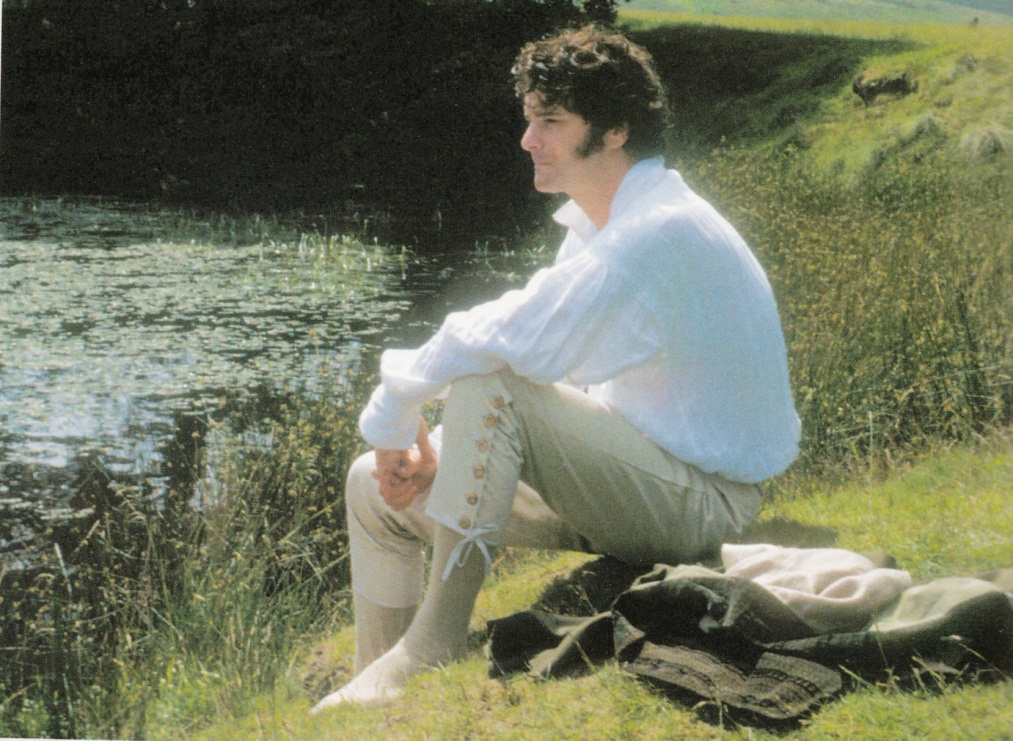
(Photo shows Colin Firth as Mr Darcy in the 1995 TV mini-series of Pride and Prejudice)
Carissa and Nick were expecting their second child, and were trying to choose between Avery and Quinn for a girl, and Jensen and Carson for a boy.
They had a boy, and named him
JENSEN FERO,
brother to Harper.
Jensen is the name Harper would have had if she’d been a boy, and although they considered other names, it’s proven to be the perfect choice. The name really suits Jensen, and Carissa receives many compliments on her son’s name, and how well it goes with Harper. If Jensen had been a girl, his name would have been Quinn.
Congratulations to Carissa and Nick! And a reminder not to throw away all your name lists, because they’re a go-to resource for your baby’s younger brothers and sisters.
Actress Lucy Durack, and her husband Christopher Horsey, welcomed their first child on June 11 and have named their daughter Polly Gladys [pictured]. Lucy is a stage actress most famous for playing the role of Glinda the Good in Wicked, and Elle Woods in the musical theatre version of Legally Blonde, for which she won Best Actress at both the Sydney Theatre Awards and the Helpmann Awards. She has often appeared in other stage productions, films, and television, and has created a number of audio books, including for her own pioneering family story, Kings in Grass Castles, by famous West Australian author Mary Durack (no confirmation if the name Polly is a nod to Dame Mary Durack). Christopher is a choreographer.
Businessman and professional gambler David Walsh, and his wife Kirsha Kaechele, welcomed their first child on July 20 and have named their daughter Sunday. Sunday is named after the famous arts patron Sunday Reed, whose name has been covered on the blog. David and Kirsha shared a special moment at the Heide Museum of Modern Art co-founded by Sunday Reed, which seems to be the inspiration for her name. David is the founder and owner of the acclaimed Museum of Old and New Art in Hobart, affectionately known as MONA. Kirsha is originally from the United States, and is an artist, art curator, and founder of the Life is Art Foundation. David has two adult daughters named Jamie and Grace from previous relationships, who are Sunday’s sisters.
These are two lovely fashionable names that may appeal to artistic souls and free spirits. I note that this is the second celebrity baby on the blog who was named for Sunday Reed after a special moment at the Heide (Kate Langbroek had an epiphany with a rockmelon there, and doesn’t appreciate other celebrities or other parents using the name Sunday for their children). The Heide is clearly one of those places with a spot of baby naming magic!
Kate and Daniel are expecting a baby boy later in the year and feeling slightly stuck with names. They both like vintage-style names, but Kate doesn’t want anything too popular.
These are names that Kate loves and Daniel can tolerate:
Arthur Theodore Edward (maybe too common?) Edmund
Daniel loves the name Xavier, and has vetoed Reuben.
The potential middle names they have picked out are Henry, Arthur, Ambrose, and Adam, which are all family names.
Kate and Daniel already have a daughter called Matilda, and don’t want a name that starts with M, or ends in -a or -er that might clash with hers. The family surname begins with H and ends in T eg Hackett, and the name can’t clash with that either.
They’d like feedback on their name list, and are interested in hearing any suggestions people have for them.
* * * * * * * * *
Kate and Daniel, let’s look at your name list.
ARTHUR
I love that this is a family name you would consider moving from the position to the first name. That makes it seem pretty special, and I think Matilda and Arthur sound great together, while Arthur Henry is a handsome name combination. I’m not sure how a name ending in -ur is different to one ending in -er (I say them pretty much the same way), but this is a family name, and you might consider that trumps any name rules you have.
THEODORE
Another fantastic choice that sounds great with Matilda, and has fashionable nickname options like Theo and Ted. Theodore sounds good with all the middle names you are considering, with Theodore Arthur and Theodore Ambrose particularly attractive.
EDWARD
A handsome classic name that is a nice match with Matilda and sounds good with your chosen middle names – Edward Arthur and Edward Henry appeal to me. It isn’t in the Top 50 nationally, but if you are in the south-eastern states and territory, it will probably seem more popular than that in your region. Also, because Edward has almost never been out of the Top 100, that might make it seem too common overall, since it is a popular name in all age groups. On the other hand, that gives it a “timeless classic” status you might approve of.
EDMUND
This is the only name on your list that actually is a non-popular vintage name, and would be a brilliant alternative to popular Edward, while sharing the nickname Ted with both Edward and Theodore (the fact you chose all three makes me wonder if you are working towards having a Ted?). It is a perfect match with Matilda, and based on what you asked for, this should be an automatic winner.
XAVIER
This breaks quite a few of your “names rules” because it’s a modern classic, it’s popular and becoming more popular, and it ends in -er. But I am fully in favour of breaking your own name rules for a name that you love, and this makes a nice, contemporary-sounding match with Matilda, and has more or less the same popularity as Matilda too. I think this sounds best with the middle name Adam, if you planned to use it.
It seems as if there are names that Kate loves and Daniel can tolerate, while Daniel loves a name that Kate can tolerate. In an ideal world you would both love the same names, but it’s possible that in this case you might have to compromise a bit.
It seems as if compromise might be harder on Daniel, because so far, he only really loves one name. And it doesn’t fit with the “name rules”, which makes me wonder if they are rules you came up with together? I think some more negotiation might be necessary here!
Daniel, is it possible there are other names you could love? Or would you be satisfied if Kate chose the first name (as long as you had full veto powers, of course), and you chose the middle name?
I also wonder what would happen if you had a third child, and it was a boy too – would Xavier be on the table for his name, or even be the natural choice if Daniel didn’t get his choice this time? If so, do you need a name now that might go with Xavier further down the track? You also need to bear in mind that Xavier might be even more popular by the time you have a third child.
In a case like this where there isn’t one name that’s both your favourite, I think you should discuss together what things you want in a name, what’s important to you, and how important it is to you. Then be very businesslike and award each name on your list points for how well it fulfils your wants.
Then once you get down to the 2-3 names which seem to best suit your needs, drop the points system and just think about how much you like the name. Which name make you feel warm inside when you say it? Which one makes you smile? Which one can you imagine yelling out on school sports day? Which one makes you feel proud to introduce your son?
Other names you might like:
Felix (a retro name with Xavier’s X-factor)
Frederick (fashionable classic with low popularity)
George (a steady classic like Edward)
Leo
Sebastian
Tobias
Nathaniel
Joseph (another steady classic)
Gabriel
Alfred (another classic with low popularity, shortens to Alfie)
Winston (vintage, low popularity)
Stanley (another classic with low popularity)
Some of these names are popular, but none more popular than Xavier and Matilda.
Kate and Daniel, you’ve got some great names already, and I’m sure you will be able to agree on a name that works for both of you.
Twins
Henry James and Theodor William
Kahlia Maree and Saydee Anne
Girls
Alyra Natalie
Annabelle Victoria (Daisy)
Ava Teoni
Elanora May (Elijah)
Emily Diana
Eve Margot (Lillian, Grace, Lachie)
Francesca Lily
Gaye Patricia
Hadleigh (Nat, Seb, Lachlan)
Imogen Clare
Isabelle Dawn
Ivy Chee-Xin (Mia, Zoe)
Lara Estelle
Lexie Adele (Ameika)
Lottie Isobel
Luca Anne (Jed)
Marcella Grace
Meg Rose
Nelly Kate
Olivia Jenevieve
Phoebe Jayne Ruby
Remi Kedea (Aria)
Silvia Therese (Romeo)
Zara Matilda
Zoe Annabella Mary
Boys
Ailbe Edward (Austin, Matilda, Killian)
Austin Cole (Kaitlin, Bailey, Hayden, Maikayla, Beau)
Azeem (Te Paea)
Banjo Jack
Benji Ronald (Billie)
Costa Stan
Dominic Julian
Felix Archibald (Reilly, Oliver, Jasper)
Fintan Vincent (Sinead, Cian)
Frederick George Ari
Hunter Reed (Deacon)
Jamie Steven
Jobe Patrick (Max, Jack)
Jonah (Samuel, Edward, Penelope)
Kingston (Latisha, Saskia)
Lawson Tex (Gia)
Lenny Keith (Breanna, Lachlan, Tayla)
Luka James (Valentina)
Moise Alain Junior
Nathaniel William Robert
Ned Macklin (Bailey)
Remi Phillip
Tyson Leo
William Kylde (Jessie, Letisha)
Zayne Anthony
Famous Namesake
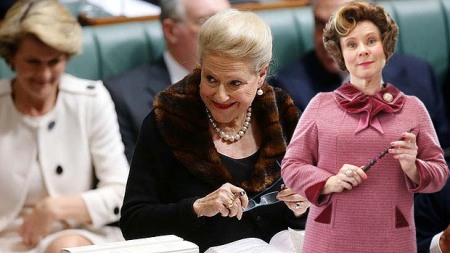
Bronwyn Bishop resigned as Speaker of the House two days ago, after a furore over her use of travel allowances. Usually when someone is caught out abusing the system they quickly hand in their notice and quietly slip away before too many questions can be raised. However Ms Bishop refused to admit she had done anything wrong and resisted all pressure to resign for three weeks, which meant we had plenty of time to hear about her extravagant travel expenses.
They included a $6000 private flight from Sydney to Nowra for a Liberal party fundraiser, and more than $1000 on a limo so she could attend a theatre premiere in her home city. There was also the $600 return flight to attend colleague Sophie Mirabella’s wedding in Albury, and $130 000 spent on overseas travel to Europe and Asia, including $1000 a day on private limos.
The one that really left people gobsmacked was a $5000 chartered helicopter to take her from Melbourne to a Liberal party fundraiser in Geelong and back – a trip which takes only about an hour each way by road. Referred to as Choppergate, this was the scandal that brought Ms Bishop down. She wasn’t a first-timer at this: in the 1980s she once hired a helicopter at taxpayer’s expense to transport her from a fete to a dog show.
Ironically, back in the 1990s Bronwyn Bishop rose to fame as the face of public accountability when she was on the Senate estimates and joint public accounts committee. This sounds dull and usually was – an assessment of government departments and where they spent their appropriations. Under Bishop, committee meetings became virtual show trials where senior public servants were routinely interrogated, hectored, and taunted for their spending habits.
When Bronwyn Bishop was appointed Speaker in 2013, the Opposition described her as Dolores Umbridge, after the infamous headmistress from the Harry Potter series. This didn’t refer to a penchant for hair ribbons or interest in fluffy kittens, but indicated a fear she was to be a corrupt tool of government. This turned out to be not unfounded, for in her term of office Ms Bishop showed considerable bias, ejecting 393 Opposition members from the house, but only 7 of her own party.
Bronwyn Bishop was appointed to the role of Speaker by the Prime Minister, who describes her as a close personal friend, and himself as her ideological love child. This has turned out to be yet another damaging captain’s call, and no doubt the next Speaker will be the choice of his party.
It’s been a spectacular fall from grace for the longest-serving woman in Parliament, who once boasted she would be a future Prime Minister. Now the Prime Minister admits her parliamentary career is at an end.
BRONWYN Bronwyn is a variant of Bronwen, a modern Welsh name meaning “white breasted, fair breasted”. The meaning is possibly less important than the fact it is very similar to the medieval Welsh name Branwen, meaning “fair raven”; in Welsh legend, Branwen was the sister of Brân the Blessed. Both Bronwen and Bronwyn have been used since the 19th century.
There is a popular notion that Bronwyn is the masculine form of Bronwen, since in Welsh the suffix -wyn is usually attached to masculine names. In fact, you can get into some quite nasty arguments about it on baby name forums, with angry people telling you that you have ignorantly given your daughter Bronwyn a specifically male name.
However if you look at the records, Bronwyn was always used as a girl’s name in Wales right from the start, with the -wyn spelling just a variant, not an indication of gender. Interestingly, the few examples of men named Bronwyn I found, dating from the 20th century, were all from outside Wales. I suspect their parents read up on the Welsh language and “corrected” Bronwyn from feminine to masculine, possibly being a bit too clever in the process and giving their sons a traditionally female name.
While Bronwen was originally by far the more common spelling in the 19th century, Bronwyn overtook it in the 20th. It was popularised by the 1941 film How Green Was My Valley, with Anna Lee in the role of Bronwyn, the narrator’s sister-in-law that he loves. The film is based on the 1939 novel by author Richard Llewellyn, and is set in a Welsh mining village. In the book the sister-in-law’s name is Bronwen, and I’m not sure why Hollywood decided to spell her name with a Y. Perhaps they thought it looked more feminine.
The name Bronwyn first joined the charts in the 1940s, coinciding with the release of the film; it made its debut at #143. (Bronwyn Bishop was born in 1942, the year after the film came out). By the 1950s it had joined the Top 100 and peaked in 1964 at #53. It left the Top 100 in 1980, and hasn’t charted since the late 2000s.
For some reason, Bronwyn has only been popular in Australia: it doesn’t seem to have ever been a Top 100 name in the UK, and has never even charted in the US. In 2013, there were 23 baby girls named Bronwyn in England/Wales, and last year there were 49 baby girls named Bronwyn in the US. Numbers of Bronwyns seem fairly stable in both countries.
Bronwen has never charted in Australia. In the UK in 2013 Bronwens and Bronwyns were roughly equal (21 babies named Bronwen), while in the US there were 6 Bronwens, a lot less popular than Bronwyn.
Although Bronwyn is now a dated name, the sound of it seems to have led to the popularity of similar-sounding Bronte, which joined the Top 100 just as Bronwyn slipped off the charts. Perhaps even the rise of Bonnie owe something to Bronwyn, since a common nickname for Bronwyn is Bronnie.
DOLORES Dolores is a Spanish name meaning “pain, sorrow”. It is taken from one of the titles of the Virgin Mary, Nuestra Senora de Dolores, or Our Lady of Sorrows. The title refers to the Seven Sorrows of Mary, which are seven sad events in Mary’s life connected with her son Jesus. They begin with his Presentation in the Temple, and the prophecies made about him, and end with his body being placed in the tomb.
The feast day for Our Lady of Sorrows began in the Middle Ages, and was originally the third Sunday after Easter; today it is September 15. It’s possible that the name Dolores was first given to girls born around this feast day, although I can’t find any evidence for this.
The feast was rarely celebrated until the 16th century, and by the 17th century Dolores had become a common name in Spanish-speaking countries, although occasionally also used by Catholics in other countries. It came into common use in the English-speaking world in the 19th century, and was a particular favourite with Irish Catholics.
Dolores has never charted in Australia. In the United States, Dolores joined the Top 100 during the 1920s, the era when Mexican actress Dolores del Rio flourished as a Hollywood star. The first Latin American actress to become famous internationally, Dolores was exquisite, elegant, and gracious.
The name left the US Top 100 in the 1940s, after Dolores de Rio was accused of Communism during the McCarthy era, and continued her career in her homeland. The name left the charts in the 1980s, after Dolores del Rio’s death, but Dolores is still remembered as one of the classic Hollywood beauties, and a great lady.
During Ms del Rio’s heyday this name must have been exotic and glamorous, but now seems dated and frumpy. The evil Dolores Umbridge from Harry Potter has not helped its image: her name was chosen because it sounds similar to the English word dolorous, which can be understood as “causing pain or grief” (it has the same Latin source as the name Dolores). However, Lola is a popular pet form of Dolores, and I can see Lolita, Dolly and Lolly becoming fashionable in the future.
Two names connected with Hollywood beauties which have fallen from favour, but are probably more influential on current trends that we give them credit for. Which one will score higher, I wonder?
POLL RESULTS
Bronwyn received an approval rating of 44%. 39% of people weren’t keen on the name Bronwyn, while 18% loved it.
Dolores received an even lower approval rating of 28%. 40% of people weren’t keen on the name Dolores, while 10% loved it.




 Waltzing More Than Matilda