Celebrity Baby News: Michael and Lindy Klim

Tags

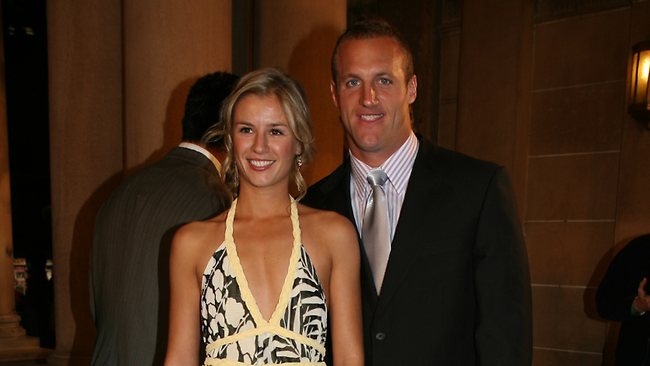
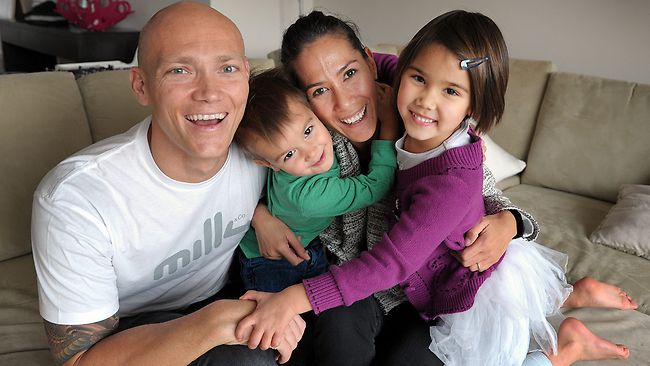
Swimmer Michael Klim, and his wife Lindy, welcomed their third child on Wednesday June 22; a baby girl named Frankie. Frankie Klim was born in a Melbourne hospital, and Michael has Tweeted that mother and baby are doing well.

Frankie joins big sister Stella (aged 5), and big brother Rocco (aged 3).

Michael and Lindy were married in April 2006; Lindy is a Balinese princess, and before her marriage was a model and fashion entrepreneur. Michael announced his return to swimming in January this year after retiring in June 2007.

(Picture shows Michael and Lindy with Stella and Rocco).

Saturday Sibset: Michael Ennis and Family

Tags

, , , ,

First cab off the rank for sibsets in the news are the children of Michael Ennis, who is the hooker for National Rugby League team, the Canterbury-Bankstown Bulldogs. Since 2009, he has also been hooker for the New South Wales Blues in the State of Origin series.

This story appeared in the sport section of The Daily Telegraph, dated June 17.

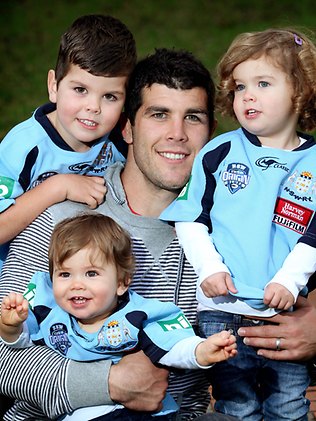
It shows Michael with his three children, all suitably dressed in Blues jerseys – Jack, aged 4; Kobyfox, aged 2; and baby Randy, who is 11 months old.

Michael and his wife Simone have picked interesting, and unexpected, names for their kids as a sibset. Jack is a perennial favourite, and #4 in New South Wales. Randy’s name has never been on the Top 100, and his middle name is Wolfe. Kobyfox seems to be a unique combination of the names Koby and Fox. I wonder if Jack has an animal as his middle name.

The point of the story is that none of the children are old enough to remember the last time New South Wales won State of Origin, way back in 2005. Having lost, then won, games in the series, New South Wales is hoping to win the third and deciding match against Queensland in Brisbane on July 6. Michael, well-known for being a “hands on” father, is planning to fly his whole family to the game, so that hopefully they can watch their dad, and their state team, win Origin for the first time in their young lives.

Let’s hope it’s a Blues win next month, so these kids can finally experience a New South Wales victory!

Celebrity Baby News: Daniel Kerr and Natasha Pozo

Tags

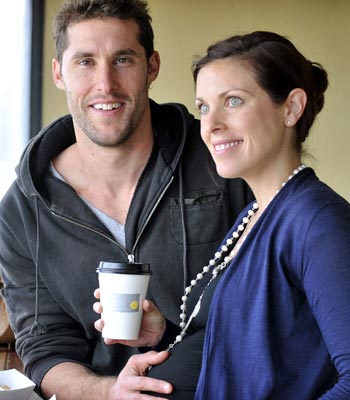
Daniel Kerr, midfielder for the West Coast Eagles, and his wife, former model Natsha Pozo, welcomed their first child, a daughter named Lola Violet, on June 22. Lola Violet Kerr is said to have weighed 6 pounds 6 ounces (almost 3 kg) at birth.

Daniel and Natasha were married at the beginning of last year; their wedding was held at Daniel’s old school, Aquinas College.

Girls Names from the Top 100 of the 1930s

Tags

, , , , , , , , , , , , , , , , , , , , , , , , , , , , , , , , , , , , , ,

This blog post was first published on June 19 2011, and revised and updated on June 12 2015.

Alma
May be derived from the Latin almus, meaning “nourishing” – an epithet given to several Roman goddesses, including Ceres. Alma mater, meaning “nurturing mother”, is a Latin term often used to refer to one’s college or university: it was originally a title given to mother goddesses, and later to the Virgin Mary. The obscure 4th century Romano-British saint Alma Pompea, married to the semi-legendary King Hoel of Brittany, is an early example of the name. The name was given a boost after being used in Sir Edmund Spenser’s 1590 poem, The Faerie Queen; he seems to have been influenced by the Renaissance Italian word alma, meaning “soul”. The name became popular in the 19th century, after the Crimean War began with the Battle of Alma, when Anglo-French forces defeated the Russians near the River Alma – the river’s name is from a Tatar word meaning “wild apple”. After this date, babies of both sexes (but mostly girls) were named Alma in honour of the military victory. Alma was #24 in the 1900s, and #97 in the 1930s, leaving the Top 100 the following decade, and the charts in the 1960s. Alma made a mild comeback in 2011, and seems very contemporary, as it has been used in Brokeback Mountain and The Hunger Games. Already popular in Europe, Alma would make an interesting alternative to names such as Amelia, Anna, or Emma.

Audrey
Pet form of the Anglo-Saxon name Etheldreda, meaning “noble strength”; it was the name of a 7th century English princess and saint whose feast day is June 23. It became less common after the Middle Ages, because St Audrey Day Fairs sold low-quality necklaces that were disparagingly called tawdries – which is where we get the word for something cheap and tacky from. Audrey was revived in the 19th century when the Victorians rediscovered many Anglo-Saxon names. The name was already familiar, as Audrey is the simple but honest country girl in Shakespeare’s As You Like It. The Victorians were also in the middle of a Shakespeare revival, so Audrey was a dead cert for a comeback. Audrey was #156 in the 1900s, and peaked in the 1920s at #32. The name was #36 in the 1930s, but plummeted so that it was off the Top 100 by the following decade. It fell to a low of 0 in the 1980s, but climbed after the death of Audrey Hepburn until it reached the Top 100 again in 2008. Once tawdry Audrey now seems charming and stylish, and is currently #44 and climbing.

Elsie
Often said to be a pet form of Elizabeth, but technically a pet form of Elspeth, the Scottish form of the name, and was originally Elspie. The name Elsie can be found in songs and poems dating to the 17th century, and became a 19th century favourite. Elsie was #7 in the 1900s, #59 in the 1930s, and left the Top 100 in the 1940s. Elsie left the charts in the 1970s, but returned in the early 2000s at #731. It joined the Top 100 in 2013 at #91, and last year rose 26 places to #65 – an impressive performance. Sweet and unpretentious, Elsie is very much back in the game.

Hazel
Named for the hedgerow tree or shrub which produces edible nuts; the Celts equated hazelnuts with wisdom and poetic inspiration, and the Druids made staffs from hazel branches. It was considered to be one of the trees belonging to the fairies, and folk tales tell of its ability to protect from evil. Hazel has been used as a personal name since the 17th century, mostly for girls, and became popular in the 19th century when plant names were fashionable. Hazel was #45 in the 1900s, and peaked in the 1910s at #18; by the 1930s it was #55. Hazel left the Top 100 in the 1940s, and the charts by the 1970s, making a return in the late 2000s at #477, after Julia Roberts named her daughter Hazel. Last year Hazel had an outstanding debut as the fastest-rising name of 2014, rising #63 places to #88. One factor must surely be the romantic film The Fault in Our Stars, with its heartbreaking heroine Hazel Lancaster, although there have also been Hazels in the Heroes of Olympus series, and Gossip Girl.

Iris
Greek personification of the rainbow who served as messenger to the gods, and linked them to humanity. The name literally means “rainbow”, which is where the colourful iris flower got its name from – and the colourful irises in our eyes. Irises were used in the Middle Ages as a symbol of monarchy, as the fleur-de-lis pattern depicts. Religious pictures from the medieval period show the Virgin Mary holding an iris to symbolise purity and chastity. Filled with meaning and associations, the name was used by the 19th century British aristocracy for both females and males (because the Greeks called the iris flower a “hyacinth”, and Hyacinth was a male name), but quickly became used by all classes, and nearly always for girls. Iris was #62 in the 1900s, and peaked in the 1910s at #31; it was #72 by the 1930s. Iris left the Top 100 in the 1940s, and left the charts in the 1970s, although it returned in the 1980s at #748. Off the charts in the 1990s, Iris came back in the early 2000s at #551, and is now around the mid-200s and apparently stable. Almost always on the charts, Iris manages to be a “normal” name that is still underused. Hip and artistic, it has slightly dark or even punk undertones. It’s a floral name with a bit of bite.

Josephine
Anglicised form of Joséphine, a pet form of Joséphe, a French feminine form of Joseph; by the 19th century Joséphine had become the standard form of the name. It has been used by several of the royal houses of Europe, and is famous as the first wife of Napoleon Bonaparte, and thus the first Empress of the French. Joséphine was born Marie Joséphe, so it was the pet form of her middle name. Classic Josephine has always been on the charts. It was #86 in the 1900s, peaked in the 1910s at #76, and by the 1930s was #78. It left the Top 100 in the 1940s, and sunk to its lowest level in 2011 at #199, so it has never been out of the 200s. In 2012 it made an appearance again in the Top 100 at #93 after the birth of Princess Josephine, the daughter of Australian-born Princess Mary of Denmark, but has since stabilised into its usual place around the mid-100s. Josephine is a solid stayer with royal blood whose nicknames range from the sensible Jo to the cute Josie to the tomboy Joey to the froufrou Fifi to the cool Joss.

Joy
Refers to the emotion of extreme happiness and gladness. It was originally a Puritan virtue name dating from the 16th century, referring to rejoicing for the salvation of God – perhaps most famous from the hymn, Joy to the World, now often used as a Christmas carol. In fact, joy and Christmas have become so entwined that you could even see Joy as a name suitable for a baby born around late December. However, the name Joy has become secularised, and often linked to the joyful experience of welcoming a child into the world: babies have even been called “bundles of joy”. Joy entered the charts in the 1910s at #205, and was in the Top 100 by the following decade. It peaked in the 1930s and ’40s at #60, and left the Top 100 in the 1960s. Joy reached its lowest point in the 1990s at #802, but then increased slightly in popularity, and was stable in the 500s for some time. Its current position is not known for sure, but is in at least occasional use. Quite common in the middle position, Joy is a strong, simple name with a beautiful meaning, and the current trend for virtue names mean that it would be refreshing to see it up front.

Lillian
Most likely a pet form of Elizabeth dating to the Middle Ages: there is a medieval Scottish ballad about a lady named Lillian. The name became greatly more popular in the 19th century, to the point where it could be seen as another Victorian revival of a medieval name, and may have been understood as an elaboration of Lily, which also became fashionable in the 19th century as a flower name. Lillian is a classic name which has never left the charts. It was #35 in the 1900s, reached #86 by the 1930s, and left the Top 100 in the 1940s. It reached its lowest point in the 1970s at #562, and then climbed steeply, following in the footsteps of Lily, until it reached the Top 100 again in 2008 at #81. It is currently #86, so its position is stable. However, the high number of Lilys and Lillys (not to mention the Laylas and Lolas) mean that lovely Lillian may feel almost too on trend for some.

Marie
French form of Maria: in France it has sometimes used for males, especially as a middle name, but in English-speaking countries is almost always feminine. The name often reminds people of Queen Marie Antoinette, whose first two baptismal names were Maria Antonia – she was Austrian by birth. In the Middle Ages, Marie was commonly used in England, and predates the use of Mary. The medieval poet Marie de France lived and worked in England, possibly at the court of King Henry II – it is even thought that she may have been Henry’s own half-sister. The traditional English pronunciation of the name was MAH-ree (still used in the 20th century), but it is now usually said muh-REE. A name never out of common use for centuries, Marie was #71 in the 1900s, and peaked in the 1930s at #11 – perhaps Irving Berling’s hit song Marie, sung by Rudy Vallee, was an influence on its success at this time. Marie left the Top 100 in the 1960s, and fell off the charts in 2011. It is now only in occasional use, although a common middle name. Marie is still popular in Europe, and this is a pretty, traditional name that still seems very wearable.

Olive
English form of the Roman name Oliva, which refers to both the olive tree and its fruit. There is a legendary Italian martyr called Saint Oliva, known as Blessed Olive. The Crusaders introduced the name Olive to England in the 12th century; returning from the Holy Land, they often gave their children names of Biblical import in honour of their religious duty. Olives play a major role in the Bible, from the dove bringing an olive branch to Noah after the Flood, to Christ ascending to Heaven from the Mount of Olives. It was a name used for both males and females, and in fact I have seen a baby boy named Olive in the past few years – but overall Olive has been more common for girls. Olive became popular in the 19th century, along with other plant names. Olive was #26 in the 1900s, and was #73 by the 1930s. It left the Top 100 in the 1940s, and was off the charts by the 1960s. It returned in the late 2000s, after Australian actress Isla Fisher chose the name Olive for her eldest daughter. After a smooth rise, Olive joined the Top 100 in 2012, debuting at #94. It is currently #76, so rising sedately rather than steeply. Buoyed by the success of Olivia and Oliver, and with a V in the middle like other popular names, Olive should continue to do well.

POLL RESULTS
People’s favourite names were Hazel, Iris and Josephine, and their least favourites were Joy, Marie and Alma.

(Painting is Moira Madden, later Moira Hallenstein by Arthur Challen (1937); from the State Library of Victoria.
Arlo Robert Galafassi: A Son for Toni Collette and Dave Galafassi, a Brother for Sage Florence

Tags

, , , , , , , , , , , ,


Toni Collette is that rare creature – a born actress. At the age of 11 she faked appendicitis so convincingly that doctors performed surgery on her, even though medical tests all showed there was nothing wrong. She has a face which effortlessly transmits emotion to an audience, and the instinctive ability to inhabit a character so completely that few people actually know what Toni looks like in real life. (Much prettier than on camera, is the general verdict).

Born and raised in working class Blacktown, Sydney, she dropped out of the National Institute of the Dramatic Arts to work in film and theatre. At 21 she stole our hearts as the plump, naïve, ABBA-loving Muriel Heslop from Porpoise Spit, in P.J. Hogan’s cult film Muriel’s Wedding, and was then catapulted into the world of Hollywood, Broadway, fame, wealth and awards. She went on to star in films such as The Sixth Sense, About a Boy, and Little Miss Sunshine, and since 2009 has played the title role in the Spielberg-produced TV show, The United States of Tara.

In 2002, she met Dave Galafassi, the drummer for Sydney indie band Gelbison, at a barbeque. She describes him as “balanced, patient, and beautiful,” and says she knew straight away that he was “the one”. In January 2003, Toni and Dave were married at her country house in south-coast Broughton, near Berry. They had a Buddhist ceremony which lasted an entire weekend, and featured dancing monks, vegetarian banquets, and a fireworks display.

Their first child, Sage Florence, was born in Sydney on January 9 2008. When she announced her pregnancy the previous July, Toni noted, “It is strange that in the last three films I’ve done [my character has] been pregnant. I’m just like, what is the universe trying to tell me?”

In October last year, Toni and Dave announced they were happy to be expecting a second child, and Arlo Robert Galafassi arrived this Good Friday, April 22. Arlo made it “the greatest Friday”, was the statement from Toni and Dave. Like his sister, he was born in Sydney, where Toni was filming Mental with P.J. Hogan.

I never knew where the name Arlo came from, and after doing a little digging, I found out that nobody else really knows either! Behind the Name lists it as “meaning uncertain”, but notes that it may come from the fictional place name Arlo Hill in Sir Edmund Spenser’s 1590 poem, The Faerie Queen. It is theorised that Spenser created the name from the Irish place name Aherlow, which is Gaelic for “between two hills”. Wikipedia says that it is either a variation of the English surname Harlow, a variant of Harley or Arlene, or an Italian variant of Carlo. It seems to be a name which originated in America.

Toni Collette has confirmed that her son Arlo was named after the folksinger Arlo Guthrie, son of Woody Guthrie, of whom she and Dave are fans. The middle name Robert is after Toni’s father, Bob.

Toni Collette is very popular in Australia – an amazing feat in a country which enjoys despising its famous people. I think it’s because Toni has always seemed like a hard working actress, rather than a glamorous celebrity. She has lived all over the world, but chose to make her home in her native Sydney instead of relocating to Hollywood. Despite the Buddhism, meditation and astrology, she is always described as “down-to-earth”. Although she has had her share of personal problems, such as eating disorders and panic attacks, she doesn’t hawk them around the chat show circuit, or bring out tearfully brave books on “My Battle With X”. In fact, she’d rather not talk about them. She went to therapy, she got over it. End of story. She doesn’t analyse things, yap about herself, or witter on Twitter, and she seems to have a perpetually sunny attitude and toothy grin. You have to admit, that’s pretty refreshing.

Everyone appears to be completely enamored with her baby name choices as well – nearly every article on baby Arlo is followed by enthusiastic comments praising Arlo as a gorgeous name. Many people were quick to point out that they too, had a little Arlo (one female), and a couple said their Arlo was inspired by the character Arlo Glass on TV show 24. Clearly it’s a name doing well at the moment, and no doubt climbing up the charts. Just as Toni Collette manages to be the celebrity who seems like she could be just like you if talent hadn’t driven her determinedly in another direction, she’s won further esteem by choosing a baby name that’s just what everyone else would have chosen.

I don’t know if I’m quite so in love with the name Arlo; I’m not a huge fan of either folk music or 24, and I must confess I have a perverse side to me that quickly goes off names greeted with universal acclaim. However, I think it’s great with the middle name Robert, a brilliant match with sister Sage, and Arlo Galafassi just sounds wonderful. I also find myself intrigued by the possible connection to Edmund Spenser’s Faerie Queen. As context is everything, I hereby award Arlo Robert Galafassi a thumbs up!

Further Reading:

See the entry on Arlo at Appellation Mountain for more information on the name.

Check out Mer de Noms’ blog entry on The Faerie Queen for more Spenserian names.

Celebrity Baby News: Mark and Claudine Gasnier

Tags

, ,

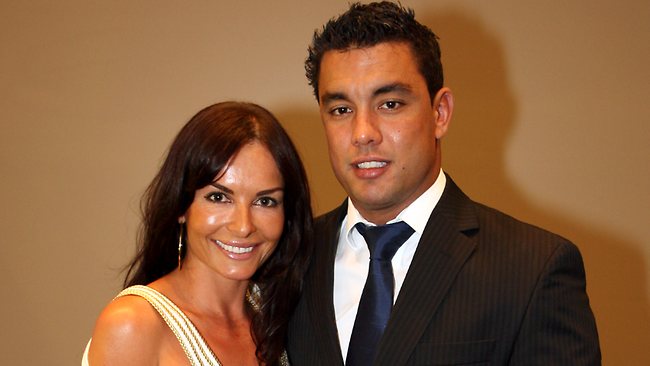
Mark Gasnier, from the NRL’s St. George Illawarra Dragons, and his wife Claudine, welcomed their first child on June 1 – a boy named Kalani Jean. Kalani Gasnier’s birth was announced on Twitter. Kalani is a unisex Hawaiian name meaning “heaven, sky”, and of course Jean is the French form of John. Jean is Claudine’s father’s name and John is Mark’s dad, so the middle name is after both grandfathers.

Claudine’s parents are French, and she and Mark spent two years in France while Gasnier played rugby union for a Paris team. Mark and Claudine were married in Sydney early last year.

Since Mark returned to the Dragons, he was been part of their victory in the 2010 Grand Final, when they became Premiers for the first time, and participated in their 2011 World Cup Challenge and Charity Shield wins. He was also selected to join the NSW Rugby League Team for the 2011 State of Origin series.

It was greatly feared that the baby might arrive early and interfere with the plans for State of Origin, but Kalani Jean was considerate enough to turn up on the arranged date so dad could play football.

Celebrity Baby News: Adam and Bec Woolnough

Tags

Adam Woolnough, from the NRL’s Melbourne Storm, and his wife Bec, welcomed their first child on May 31 – a boy named Cash Allen. Cash Woolnough’s birth was announced on Twitter.

Adam and Bec were married on Halloween in 2009. After their wedding, they embarked on an eight-month world trip together. They backpacked through South America, and crossed the United States from coast to coast, sleeping in their car to save money, as well as visiting Europe, Egypt and South Africa. Cash was conceived in South Africa, four weeks before they returned home last year.

Two Souls with But a Single Thought: Agreeing on Baby Names

Tags

, ,


Two souls with but a single thought

Two hearts that beat as one.

~Friedrich Halm~

It’s a nice and often quoted idea, but the truth is, it can sometimes be quite hard for two souls to have but a single thought. Frankly, it can be a bit of an ask for even one soul to contain a single thought when it comes to baby names.

The most compatible of couples can have differing opinions about the perfect name for their baby, but reach agreement they must. Under Australian law, both parents of a baby have to sign the birth certificate in order to get it registered. (If you are a single mother, you only need to gain the father’s agreement if you have put his name on the birth certificate).

As it is your legal imperative to choose a baby name in unison with your partner, it seems to be my duty to offer guidance on how to reach this happy state of concurrence with the least possible amount of wailing, gnashing of teeth, hair-pulling and shin-kicking.

1: Take your time

You have your entire pregnancy to choose a baby name, and about twenty weeks to choose a gender-specific name, if you have decided to find out the baby’s sex in advance. After the baby is born, you have a generous sixty days to get all your paperwork in and register the birth. If you are still dithering or arguing after the baby is born, take as much time as you need until you are really sure.

2: Do it your way

Every couple has their own way of deciding on baby names. Some couples write their favourite names on separate lists, then swap lists and cross names off they don’t like. Others start reading a baby name book at page 1 and keep reading until they see a name they both like (these tend to end up with a baby name starting with A, I’ve noticed). Others patiently wait for inspiration to strike, and one day they watch an old movie with Spencer Tracey, and there you go, their baby is named Spencer as easy as that. You can download name-selecting software, scan birth notices, ask all your friends and family, hang out on name forums, pick names out of a hat, or pray for divine guidance – it’s completely your choice. There’s no right or wrong way to do it, so go with what works for you.

3: Don’t take it personally

It’s natural to get emotionally attached to your favourite names. When someone says, “Nope, I don’t like that name at all,” it can be confronting or even upsetting. But getting defensive doesn’t help. Remind yourself that they are only rejecting a name, they are not rejecting you.

4: Don’t be rude

Knowing that the other person might get a bit upset if you trash-talk their most beloved baby name ever, try to be sensitive about it. Avoid using judgemental words like “ugly”, “stupid”, “insane”, or “bogan”. Also try to avoid eye-rolling or making vomiting noises.

5: Explain yourself

When you dislike a name your partner suggests, instead of just stating, “I don’t like it”, try to explain why you don’t like it, while remembering to be nice about it eg “I don’t care for the name Spike; I’m not keen on vocabulary names, and I would prefer something softer-sounding and more traditional for our daughter”. Straight away, your partner can begin to identify what names you might like just from that one sentence.

6: Look for similarity

When you disagree on baby names, try to concentrate on where your tastes converge, not where they differ. If he likes Jedidiah and you like Gabriel – great, both of you chose Biblical Hebrew names. She picked Ava but you prefer Hayley – fantastic, both two-syllable names of old movie stars from the Top 50 with an AY sound in them. If one of you wants Nyssa and the other Peri … well you both like cutesy unusual names. And you’re Dr Who nerds. Start from the point where you want the same thing.

7: Accept vetoes

If your partner hates nature names, throw Ocean off your list. And if they have a horror of any name on the Top 100, forget about Charlotte or William. The funny thing is, if you just accept someone’s veto, they are more likely to change their mind later on than if you argued with them. The person who hates nature names may give the thumbs up to Hazel, casually explaining that they don’t count plant or flower names as “nature” names. And the person who swore up and down that the Top 100 was off-limits may suddenly decide that Declan isn’t too popular after all.

8: Take a break

When couples spend ALL their time discussing baby names, reading baby name books and revising their baby name list, they can easily get burnt out. After a while, names start to blur into each other, and you can no longer tell the difference between Daniel, Dean and Damien; nor do you know or care whether Pax is male, female, or unisex. It’s easy to start getting cranky at this point, and this is when arguments are most likely to happen. So just stop for a while. Put the books away and concentrate on other things.

9: Be prepared to compromise

If you can’t reach agreement easily, you may need to compromise. There are so many ways to do this that it could it be an article all on its own. Maybe one picks the first name, and the other the second name. Maybe you combine your two favourite names into a third name. Maybe mum picks the name of the first child, and dad picks the second. The important thing is that it really is a compromise, and not just one person agreeing with the other because they’re worn out. Make sure you’re clear about what you definitely want before you begin compromising.

10: If all else fails

If you are absolutely deadlocked and neither of you will agree to compromise … well that doesn’t bode well for the rest of your relationship, does it? But as far as baby names go, there is a solution to your dilemma. According to the law, if a couple are unable to agree on a name for their baby, the Registrar-General will choose the name for them so that the baby can be registered. So there you go – worst case scenario, the Registrar-General will select a name if neither of you clowns can manage it. More good news: I asked at a birth registry to explain how a Registrar-General might go about choosing a baby name for someone, and I was told that they didn’t know of a case where it had ever happened. So all the other parents must have managed to find a name for their baby in time, and that means chances are, you will too.

Acknowledgements: Thank you to Sandra Salcedo from the ACT Government Office of Regulatory Services for her help in sending me the relevant legal information.

Celebrity Baby News: Emmy Kubainski and Tom Fotheringham

Tags

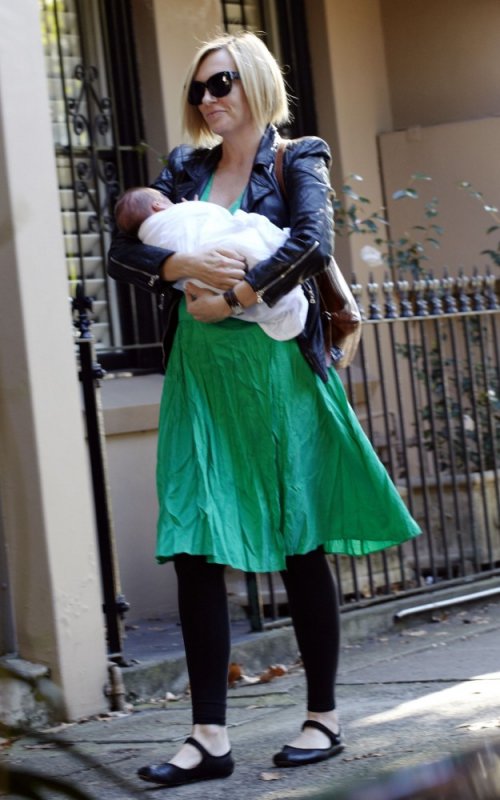
St John of God hospital must have been busy last night, because down the hall from the Embleys, Channel 7 journalist and news presenter Emmy Kubainski, and her husband, lawyer Tom Fotheringham, were greeting their first child, a daughter called Allegra Eve. Allegra weighed 7 pounds (3.17 kg).

Emmy and Tom met while studying at Queensland University of Technology in Brisbane, and moved to Perth in 2005 after Emmy gained a cadetship with the ABC. The couple were married in Margaret River three years ago.