Girls Names From Stars and Constellations

Tags

, , , , , , , , , , , , , , , , , , , , ,

Christmas is a time for stars – we put stars on our Christmas trees, sing about stars in carols, send cards with glittering stars on them, and cut gingerbread in the shape of stars. Elea at British Baby Names has a post on starry names up on her lovely Advent calendar; she also had a post on astronomical names back in October, which contains many star names. If you name your child after a star, you will want to show them “their” star when they get older, so I’ve given a few hints as to the best time to view the star from Australia; to learn more, two great resources are the Skynotes newsletter from the Melbourne Planetarium (includes video), and the Beginner’s Guide to the Night Sky at ABC Science. I normally do ten names per list, but because it’s the last set for the year I’ve done twelve – besides, stars naturally seem to go in groups of twelve, don’t they?

Alya

Alya is a common name for the yellow binary star Theta Serpentis in the constellation Serpens (“The Serpent”). Its name comes from the Arabic word alyah, meaning “fat tail of the sheep”. Arab astronomers saw this part of the sky as a pasture, with Alya representing a sheep’s tail. The Arabs have cooked with the rich fat from a sheep’s tail for centuries, and it is still considered a delicious comfort food. It might seem like calling your daughter Lard, but it fits in with the popular Aaliyah variants, while being simpler to pronounce and spell. You can always tell people the baby is named after a star that represents a sheep gambolling in a field; however vegetarians may not be able to get past the fact that the Arabs were looking up at the star and thinking, “Yum yum yum”. Serpens is visible in Australia in the middle of winter, and its stars are not easy to see.

Andromeda

Andromeda is a constellation named after a character from Greek mythology. This princess was chained naked to a rock for a sea monster to gobble, thanks to her rather stupid mother’s boasting of her beauty. The hero Perseus, on his way home from other heroic deeds, saw her in distress, and did the traditional hero’s rescue-and-marry-damsel manoeuvre. An awkward detail was that Andromeda was already engaged to her uncle, but Perseus turned him into stone, which got rid of him nicely. The name is pronounced an-DROHM-eh-da, and is said to mean “to think as a man” in Greek, interpreted as meaning to be as intelligent or brave as a man – which sounds a bit sexist, but the story isn’t exactly a feminist fairytale, and it’s clearly meant to be complimentary. Andromeda is a stunning name which can easily be shortened to Andie, Annie, Meda, Mia or Romy; it will remind people of the Andromeda Galaxy, which you can see best in November from Australia, along with the constellation.

Capella

Capella is a common name for the yellow star Alpha Aurigae, the brightest in the constellation Auriga (“The Charioteer”). It means “little she-goat” in Latin, and represents the divine goat Amalthea from Roman mythology. Amalthea was the foster-mother of the god Jupiter, and provided him with milk. When Jupiter broke off one of her horns, it became the ‘”horn of plenty”, which provided its owner with whatever food they desired. For the Boorong people of Victoria, this star was Purra, a kangaroo who is chased and killed by the twins in the constellation of Gemini; the tracks of Purra form the bed of the Wimmera River. Capella is a small town in central Queensland named after the star, so it’s a surprisingly Australian choice as a star name. It’s a fresh twist on Capri or Caprice, with the popular -ella ending. You can see Capella on the northern horizon during summer in Australia, and it’s bright enough to be clearly visible.

Carina

Carina is a constellation of the southern hemisphere; its name is Latin for “keel”, and it represents part of the ship, the Argo, sailed by Jason and the Argonauts in Greek legend. The most prominent star in the constellation is Canopus, the brightest star of southern skies, clearly visible and high in the sky. If you live in the far south of Australia, Canopus will never set. The Bibbulum people of south-western Australia saw Canopus as their ancestor Waa Wahn, the trickster crow. The Maoris called it Atutahi, or “Stand Alone”, because of its brightness. Carina also has meteor showers which peak around Australia Day, and contains the Diamond Cross, sister to the Southern Cross. Considering that the winged keel on Australia II is said to have won us the America’s Cup in 1983, Carina adds up to being a patriotic star name (and suitable for boaties). As Carina is also a name related to either Cara or Katherine, it has the added advantage of sounding like a “regular name”.

Gemma

Gemma is a common name for the binary star Alpha Coronae Borealis, the brightest in the constellation Corona Borealis (“The Northern Crown”). In Greek mythology, Corona Borealis represents a crown worn by Ariadne when she married the wine god Dionysus; Gemma is Latin for “jewel”, so it’s “the jewel in the crown”. Australian Aborigines called this constellation The Boomerang, because of its shape (being in the southern hemisphere, we see the constellation upside-down). Gemma is a popular name in Australia, and the star association helps give it another layer of meaning, while also showing that you don’t need to have a strange or rare name to be named after a star. The constellation is best viewed in winter from Australia, and its difficult to see without practice.

Lucy

In the constellation Centaurus (“The Centaur”) is a tiny white dwarf star, smaller than the Earth, with the boring name of BPM 37093. Its carbon atoms are believed to have formed a crystalline structure, and because diamonds are also carbon arranged in crystalline formation, astronomers have nicknamed this star Lucy – as in Lucy in the Sky with Diamonds. It’s a fun star and song reference for a very popular name, and as you probably know, Lucy means “light”, which seems apt for a star. Because of its size, you can only see Lucy with a telescope; however the constellation Centaurus is the most magnificent in the southern hemisphere, with two of the brightest stars, Alpha and Beta Centauri. You can see a great portion of the Milky Way in Centaurus, and on a moonless autumn night, it will be easy enough to point at Lucy’s general location. Does it matter if it cannot be seen? The Little Prince told us that what is essential is invisible to the eye …

Lyra

Lyra is a small constellation whose name is Greek for “lyre”. It is associated with the myth of Orpheus, a legendary musician, poet and prophet who is best known for his descent into the Underworld in search of his wife, Eurydice. According to some accounts, he died being ripped apart by savage Bacchantes, the female worshippers of the god Dionysus; the Muses gave him a proper burial, and he was finally reunited with his beloved. The Muses took his lyre to heaven and placed it amongst the stars in his honour. In Australia, you can see Lyra low in the northern sky during winter. The name has become well known since Lyra Belacqua is the young heroine of Philip Pullman’s His Dark Materials Trilogy. English model Sophie Dahl named her daughter Lyra in May this year.

Maia

Maia is the common name for 20 Tauri, a blue giant in the constellation Taurus, and the fourth-brightest star in the Pleiades cluster. In Greek mythology, the Pleiades were seven beautiful nymphs who were sisters. They were pursued by the hunter Orion, and Zeus changed them first into doves, and then into stars – where they are still chased by the constellation Orion. The Pleiades are often called the Seven Sisters, and you can see them clearly in summer from Australia. The Aborigines have several legends about the Pleiades, and one involves seven sisters being pursued by a man, just like the Greek myth. Maia was the eldest of the Pleiades, and the mother of the god Hermes. The meaning of the name is uncertain; it may be a respectful title for a mature lady. Maia the star appears as a character in Mary Poppins by P.L. Travers – an Australian writer who clearly loved stars, because the Mary Poppins books are filled with them. Maia is said like the popular Maya (MY-ah), but seems more elegant and literary.

Mimosa

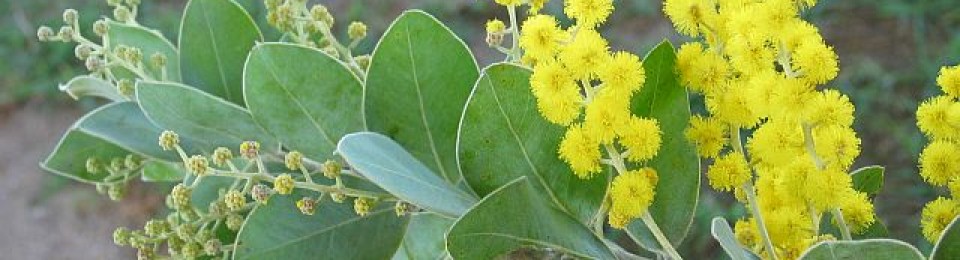
Mimosa is a common name for the yellow binary star Beta Crucis, the second-brightest in the constellation Crux (“Cross”). Crux is the smallest of the constellations, but very significant in Australia, as it is our dear Southern Cross, represented on the national flag as well as the Eureka flag (Mimosa is the left-hand arm of the Cross). Various Aboriginal peoples saw the Cross as an eagle’s footprint, a stingray, a possum in a tree, or two brothers cooking a fish on their campfire. The Aborigines of Eastern Australia called it Mirrabooka; Mirrabooka was a kind and clever man who was placed in the sky by the creator Biami so he could watch over the earth. Because the Southern Cross is always visible here, Mirrabooka never leaves us. The Maoris call it The Anchor; it anchors the Milky Way. The star Mimosa received its name because of its colour; the mimosa is another name for the silver wattle. The name is from the Greek for “mimic”. It’s an extravagant name that’s very patriotic; you could use Mim, Mimi, Mia or Mo as nicknames.

Mira

Mira is the common name for Omicron Ceti, the most notable star in the constellation Cetus. It’s a binary star consisting of a red giant and a white dwarf; the closest symbiotic pair of stars to the Sun. Mira is a variable star; like other red giants, its surface oscillates so that its brightness increases and decreases. Mira was the first variable star ever observed in modern times, and so it gained its name, for Mira means “wonderful, astonishing” in Latin, and is said MEE-rah. The constellation Cetus depicts the sea monster that was going to eat Andromeda: for some reason it has also been immortalised in the stars, and placed worrying close to its intended victim. It’s a large constellation, but not very bright or easy to see; it’s best viewed in Australia in November. At its brightest, you can see Mira with the naked eye; at its dimmest, you will need powerful binoculars to view it. Mira is also a Sanskrit name meaning “ocean”, and a Slavic name possibly meaning “peace”.

Talitha

Talitha is one of the common names for Iota Ursae Majoris, a yellow and purple star system in the constellation Ursa Major consisting of two binary stars orbiting around each other. The name is Arabic, and means “the third leap”, referring to a gazelle jumping about, which is how Arab astronomers saw this portion of the sky. Talitha is also the Aramaic for “little girl”, and is taken from the New Testament when Jesus raises a child from the dead by saying Talitha cumi (“Little girl, get up”). Talitha is pretty, and fits in with popular names like Talia and Taia; it’s pronounced TAH-lith-ah. Ursa Major, or the Great Bear, is one of the best known and loved constellations of the northern hemisphere, but in Australia it can only be viewed in April/May, and is so low on the northern horizon we see only part of it; we cannot see Talitha at all.

Vega

Vega is the common name for Alpha Lyrae, the brightest star in the constellation Lyra, and fifth-brightest star in the sky. The name is from Arabic, and means “falling” or “landing”, referring to the constellation Arab astronomers called The Alighting Vulture. Lyra was seen as a descending vulture; an idea dating back to ancient Egypt and ancient India. Even when the Greeks said it was a lyre, it was still often pictured as a vulture or eagle holding the instrument in its talons. The Boorong people saw Vega as a Mallee Fowl, and knew that once the star disappeared in October, it was time to collect that bird’s eggs. Vega is also a Spanish surname meaning “meadow-dweller”; it’s familiar from the Spanish playwright Lope de Vega, and folk singer Suzanne Vega. Vega is a glamorous-sounding name that’s strongly associated with its star. Once you learn to find Lyra, it will be easy to spot Vega because of its luminosity.

Baby Center Australia Releases Its Name List for 2011

Tags

, , , , , , , , , , , , ,

There have been several stories in the press about how babycenter.au has revealed the top names of 2011. What they don’t say is that this isn’t based on birth data from registries, but just on names chosen and made public by the members of the website.

Baby Center also combines spelling of names, which in some ways gives a more accurate impression of the most popular names; on the other hand, it won’t necessarily gel with what the official data says. So yes, take notice of these trends (especially as they are the closest thing we have to a national survey) but they are not the final word on the subject by any means.

Most Popular Girls’ Names

  1. Chloe
  2. Sophie
  3. Ruby
  4. Charlotte
  5. Olivia
  6. Lily
  7. Ava
  8. Ella
  9. Emily
  10. Mia
  11. Sienna
  12. Amelia
  13. Isabella
  14. Lucy
  15. Zoe
  16. Grace
  17. Isabelle
  18. Maddison
  19. Emma
  20. Charlie (tied with Hannah)

Most Popular Boys’ Names

  1. Oliver
  2. Noah
  3. William
  4. Lachlan
  5. Ethan
  6. Jack
  7. Lucas
  8. Charlie
  9. Joshua
  10. Thomas
  11. Max
  12. Riley
  13. Jacob
  14. Aiden
  15. Liam
  16. Jackson
  17. Cooper
  18. Alexander
  19. Xavier
  20. Benjamin

Trends in Boys Names

Jack declines in popularity, and loses his position at #1 to Oliver. Old Testament names for boys continue to increase in popularity; big risers include Jacob, Noah and Joshua. William went to #3, which they attribute to the Royal Wedding, although William has been extremely popular for many years.

Dropping from the list are James, Samuel and Ryan, to be replaced by Alexander, Xavier and Benjamin. If Ryan really does drop significantly it will be interesting, as it has remained stable for around two decades.

Trends in Girls Names

Chloe moves into the #1 spot, while Lily declines in popularity. Isabella falls further down the charts, which Baby Center assures us is due to the Twilight series coming to an end. I’m not sure how they make this tally with the fact that Isabella was popular in the 1990s, while the first Twilight novel wasn’t published until 2005. Nor does this explain the increasing popularity of Jacob, which is also a name from Twilight.

Baby Center places Charlie for girls in the Top 20, because they combine it with the spellings for Charli. Although I think Charlie will be in the Girls Top 100 for 2011, I don’t think it will be Top Twenty. Baby Center also assures us most girls named Charlotte (#4) will be called Charlie in everyday life. I’m not sure where they have gained this information from.

Matilda and Georgia have dropped off the list altogether.

Unique Names

So if these are the popular names, what about the names that were given to only one baby on the website?

Boys: Audi, Brisbane, Fonzie, Harlem, Hawk, Haze, Hendrix, Hercules, Matisse, Rocky, Rome, Spirit, Toohey, Voltaire, Westin

Girls: Breeze, Clover, Deep, Halo, Justice, Lake, Oceana, Rain, Rainbow, Sailor, Serenity, Spring, Star, Storm, Vanilla, Zen

I somehow think that more than one baby received at least some of these names this year, although I expect all of them will be rare.

Eliza Scarlet and Charlie Jack – Birth Announcements from the Melbourne “Age” (November)

Tags

, ,

Twins

Ashlee Jade and Caitlin Anne

Hannah Francesca and Amelia Georgina

Matilda and Jack (Flynn)

 Girls

Allira Marie

Arabella May

Camilla Julia

Clementine

Eliza Scarlet

Sarah Phillipa (Miranda)

Willow Elizabeth Louise

 Boys

Alexander James William

Archibald Clement (Kade)

Charlie Jack (Alex)

Declan Alexander

Edward Gordon (Angus)

Emerson John (Tori, Mia)

George Edward Harrison (Freddie)

Maxwell Thomas

Sidney Gillon (Edie, Cleo)

William Ernest (Mietta)

Angelique and Valentino – Birth Announcements from the “Adelaide Advertiser”

Tags

,

Girls

Angelique Valerie-Suzanne (Markus)

Charlotte Elsie (Lachlan, Nicholas)

Clara May (Felix)

Grace Lily Louise (Austin)

Lucy Kay (Emily)

Macy Harper (Liam, James)

Nina Maria (Jacques)

Scarlett Nancy

Sophie Milla (Ella, Tahlia)

Zaylee Lynay (Tarkyn, Breeya)

Boys

Ari Michael

Henryk Stasio

Oliver John Angus

Paul Constantine (Deamanthe, Dimi)

Rimino Stefan “Remy” (Frankie)

Taylan Geoffrey (Hunter, Ason)

Valentino Sam (Santina)

William Aleksander (Charlie, Lilli)

Winston Bay (Jalen, Archer, Avalon)

Wolfe Phillip

Celebrity Baby News: Chris and Jane Thompson

Tags

, ,

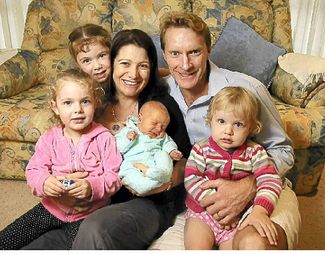
Sunshine Coast councillor, Chris Thompson, and his wife Jane, welcomed their fourth child and first son on December 2, weighing 3.8 kg. They have named him Matthew Ian, and Matthew arrived on his due date, at 7.50 pm after a brief labour, and shortly before his parents’ sixth wedding anniversary.

Matthew Thompson joins big sisters Seanna, aged 5; Ella, nearly 4; and Mary, aged 21 months. The girls are “smitten” with their “early Christmas present”, and keep “poking and prodding” their new brother. The Thompsons don’t plan on having any more children.

The Thompsons chose the name Matthew because they liked it, and Ian is Councillor Thompson’s father’s name. They considered Thomas, but didn’t like the idea of people calling him Tommy, and also Joseph – but having a Mary and a Joseph in one sibset didn’t seem feasible.

Chris Thompson has been a Councillor since 2004, and holds the portfolio of Financial Management and Business Unit Performance.

(Story and photo from Sunshine Coast Daily, December 8 2011)

Midweek Sibsets: Sibsets of Successful South Australian Mums

Tags

, , , , ,

We’ve missed several weeks of celebrity sibsets, so today we will make up for it with a group of sibsets from some mothers in the public eye who have to juggle a busy working life with an often equally busy family life.

Peta Mantzarapis

Power-mum Peta is managing director of Maloney Field Services, a property consulting company for petroleum and natural gas companies. Just in case this wasn’t enough, to fill in her spare time she runs the children’s fashion label, Sebastian and Sienna, with her sister. Last year she won the Telstra South Australian Young Businesswoman of the Year Award.

She has a flexible workplace, and an accommodating helpful husband called Sam, but she’s still taken babies to boardrooms, had them asleep under her desk, tried to look cool in a meeting even though she’s just cleaned vomit off her car, and opened her briefcase to find it’s filled with toy cars and fairy wands.

Peta and Sam have two daughters called Sienna, aged 4, and Evangeline, aged 2; Evangeline is called Evie in everyday life. It’s a pretty, popular and girly sibset, and shows that owners of kid’s clothing labels do often use their own children’s names as inspiration.

Amanda Blair

Amanda is a radio presenter on 5AA, doing the 1-4 pm shift on weekdays. Before she had children, she says that she was completely disorganised and just did things to suit herself; now she runs on a tight schedule to military precision. Work is her “saviour”, as every afternoon she gets “adult time” where she can chat to other grown ups and have cups of tea.

She says it’s not possible to continue the life you had before children as a parent, and what she most misses is her friendships, which are often maintained with a brief phone call each month. Even though she has a nanny, her life still feels so “crazy” she wants to punch childless people in the face when they say they’re busy. However, she loves every second of it.

Amanda and her husband Michael Farquarson have four children, which they planned on a rigorous “breeding roster” for fear they would have trouble conceiving due to their age. Amanda considered herself completely non-maternal, but once she had one child was “hooked”, and immediately needed more of them, finding motherhood the best thing ever.

Their kids are Sidney (Sid), aged 7; Ginger, aged 5; Frank, aged 3; and Nancy, aged 2. Sidney is a boy and Ginger is a girl, in case you are wondering (see The Name Agender’s entry on Ginger for more information). It’s a lovely no-nonsense Australian sibset with Depression-era chic; there’s a school of thought that you can’t have famous couples’ names as siblings, but here we have a Sid and a Nancy! I’m not sure if it reminds anyone else of Sid Vicious from the Sex Pistols and his girlfriend Nancy Spungen; their self-destructive relationship was depicted in the film Sid and Nancy. Sid Vicious’ real name was John, however.

Rosanna Mangiarelli

We’ve seen celebrity mum Rosanna on the blog already; she’s the presenter of Channel 7’s current affairs show, Today Tonight. Out of all the mums interviewed, she seems the most conflicted about balancing career and motherhood, admitting to sobbing after dropping her daughter off at childcare. She only had 8 weeks maternity leave after having Emma, and is adamant that she needs more time off with the next baby.

She has Emma, aged 2 and a half, and as we know, she went on to have Olivia last month. Two Top 10 girls names that have been popular for a long time – both began rising in popularity during the 1970s and ’80s and were Top 20 by the 1990s. I get the feeling that Rosanna had these names picked out well in advance.

Niki Vasilakis

Niki is an award-winning concert violinist with the Adelaide Symphony Orchestra, was named Young South Australian of the Year in 2007, is Youth Patron of the Adelaide Festival Centre, and had her first baby around a year ago. Being a performer, she couldn’t afford to have a lot of time off to have a baby, and was back at work within three weeks: she did her normal music practice the day she gave birth.

It’s been very challenging and she has had to make a lot of sacrifices, but she credits her “amazing husband” and “big Greek family” for providing her with “unbelievable support”. Her big tip? Don’t wear a satin gown to perform in while breast feeding.

Niki’s baby daughter is named Amarie-Rose. Amarie is one of those modern names that are hard to say where they originated from; it looks like a contraction of Anne-Marie, and that’s usually how it is understood.

(Story and photo from Sunday Mail, November 5 2011; photo shows Amanda Blair with her four children)

Poet Poppin Nicholson: A Daughter for Kasey Chambers and Shane Nicholson, a Sister for Talon Jordi and Arlo Ray

Tags

, , , , , ,

Kasey Chambers has impeccably authentic country music roots. When she was only a few weeks old, her father, guitarist Bill Chambers, and her mother Diane took her and her two-year-old brother Nash to the Nullarbor Plain. It was meant to be a working holiday shooting foxes and rabbits, but the holiday lasted for ten years. Kasey grew up wandering the desert with her nomadic parents. They slept in the open air, or in the back of the family Landcruiser; each night under the stars, Bill would sing country songs to them around the campfire.

When the ten year “holiday” came to an end, the Chambers family moved to a fishing village in South Australia so that Bill and Diane could resume their interrupted music careers, and Kasey and Nash could attend school with children their own age. Back in civilisation, with mod cons like radio and TV, Kasey discovered Top 40 music and was soon rocking out to Mötley Crüe and Metallica – but those formative years spent listening to her dad sing songs by Hank Williams and the Carter Family left their mark on her.

Bill and Diane began playing in pubs and clubs again and before long they became a group, as first Kasey, and then Nash, joined their parents on stage. They called themselves The Dead Ringer Band, as Nash and Kasey resembled their parents so closely. During her teens, Kasey not only gained experience as a performer, but also began writing songs. Nash built his own studio so that he could produce the band’s albums (he is now a full-time music producer). The Dead Ringer Band put out seven albums, won three ARIAs, two MOs and seven Golden Guitars during the 1990s.

After Bill and Diane separated, the band took a long break. When EMI tried to sign them and found the band were no longer together, they were happy to sign Kasey as a solo artist instead. She and Diane took a trip to Africa, and there she wrote many of the songs for her first album, The Captain. The Captain was recorded on Norfolk Island, her mother’s new home, with her dad playing guitar and her brother producing. The album went double platinum, and Kasey went on to win ARIAs for Best Country Album and Best Female Artist. On the back of her success, she toured the US as a support act to Lucinda Williams, and supported Emmylou Harris on her Australian tour.

The Captain was a good start to Kasey’s solo career, but her next album, Barricades and Brick Walls, made her a country pop star. Not only did the album go seven times platinum, but her single “Not Pretty Enough” went double platinum. She is the only Australian country artist to have a #1 single and a #1 album in the charts at the same time. She won ARIAs for Album of the Year, Best Country Album and Best Female Artist.

In 2005 Kasey married singer-songwriter Shane Nicholson; they met in the early 2000s when Kasey’s brother Nash produced Shane’s critically-acclaimed album It’s a Movie, for which Kasey and Shane performed a duet. In 2007, Kasey and Shane welcomed their first child together, Arlo Ray – he is named after folk musician Arlo Guthrie, and Ray is the name of Shane’s father.

Kasey already had a four-year-old son from a previous relationship to actor Cori Hopper, and although Cori may not have been the perfect partner for her, they were compatible enough as baby-namers to both come up with the name Talon for their son independently. Kasey is a fan of songwriter Fred Eaglesmith, and Cori was a supporter of the West Coast Eagles football team, so Talon made sense to both of them. Talon was declared one of the worst celebrity baby names in a Brisbane newspaper, and an elderly woman told her the name was “horrible” – luckily Kasey just found this hilarious.

To continue the family tradition, Talon Hopper is already writing his own songs, and has his own band, called The Little Hillbillies, of which Arlo is also a member. Others in the band are Nash’s children Eden, Béla and Skye, and Bill Chamber’s kids from his new relationship, called Tyler and Jake. Rounding it out is Townes Werchon, the son of Kasey’s best friends Worm and Bernadette. The band has brought out an album called Little Kasey Chambers, Poppa Bill and The Little Hillbillies. Kasey says it is a “politically incorrect” children’s album (I think that means it has songs about poo on it). The album was nominated for the ARIA for Best Children’s Album in 2010, but lost to The Wiggles’ Let’s Eat! I hope that wasn’t about poo, anyway.

And now Kasey and Shane have added their baby girl, Poet Poppin, to this big crazy musical extended family. I am just so happy to have Miss Poet Poppin Nicholson as my last celebrity baby name profile for the year, because she is a name-blogger’s dream. She’s exactly what people want from a celebrity baby name – something original, slightly outrageous, fun, fresh and lyrical.

Poet because she is the daughter of two songwriters, and Poppin was chosen by her big brothers – because she kept “poppin’ around” in Kasey’s womb before she was born. Add another celebrity trend to the mix: baby names chosen by their siblings. If all the digits on both my hands were thumbs, I still wouldn’t have enough to give as many thumbs up as I’d like.

This year Kasey won the International Songwriting Competition’s Grand Prize for “Beautiful Mess”, a song she wrote for her children:

She says, “I was at home babysitting a friend’s one-year-old son along with my two boys. It was one of those chaotic days with kids running around and having lots of fun while this song was coming out. And that’s what it felt like that day – a beautiful mess. That’s what parenting constantly feels like. It’s specifically written for Arlo and Talon, who are the most important things in my entire life. I love them, and I have an outlet to show them that through songs.”

That’s kind of how I see Kasey’s naming style: it’s kind of a mess, but boy, it’s just beautiful.

(Photo from Shane Nicholson’s website).

Famous Name: Douglas

Tags

, , , , , , , , , , , , ,

doulass

This blog post was first published on December 3 2011, and substantially revised and reposted on December 10 2015.

Famous Namesake
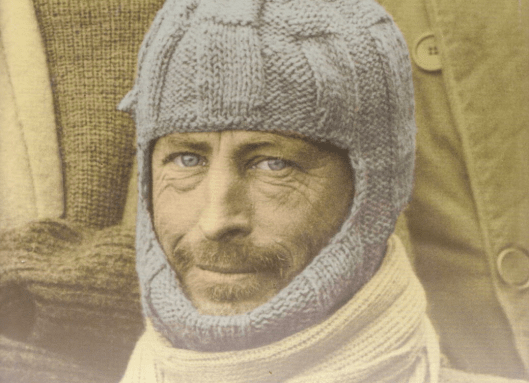
Yesterday marked one hundred years since the Australasian Antarctic Expedition set sail from Hobart in the SY Aurora on December 2, 1911. It arrived at an unexplored region of Antarctica on January 8, 1912, and set up base camp. The site proved to be unrelentingly windy, with constant blizzards that made things hellish for the intrepid explorers.

Douglas Mawson was one of the leaders on the expedition. A geologist and lecturer from the University of Adelaide, he had been asked to join Robert Scott’s British expedition to find the South Pole (Scott was famously beaten to the punch by Norwegian Roald Amundsen). Mawson turned him down, as he thought it would be better to take his own team, and lead an expedition to the unexplored bits of Antarctica, which was most of it.

Douglas was part of a three-man sledging team called the Far-Eastern Party, which included Belgrave Ninnis, the son of a British arctic explorer, and Swiss mountaineer Xavier Mertz.

The group was making excellent progress when Ninnis fell into a snow-covered crevasse that the other two men crossed without incident; he took with him six huskies, a tent, most of the food and other essential supplies, and was never seen again. The glacier they were traversing is now called Ninnis Glacier in his honour.

Mawson and Mertz continued their frozen nightmare, forced to eat their huskies to supplement their scant rations. Although both men were unwell, Mertz became seriously ill and died in less than a week. It is thought that he may have died of an overdose of Vitamin A from eating husky liver, which Mawson solicitously fed him, in the fond belief that he was giving Mertz the best of the provisions.

Other theories are that Mertz died from hypothermia, from the shock of eating meat after being a vegetarian, or from the psychological stresses of the journey – especially the death of Ninnis, as the two men had been exceptionally good friends.

In the days before he died, Mertz became weak, exhausted, dizzy and delirious, even biting off the tip of one of his own fingers. He had dysentery, nausea, and stomach pain; his skin peeled away and his hair fell out – not surprisingly, another of his symptoms was depression. Whatever he died from, his demise caused him terrible suffering.

Douglas Mawson sledged the last 100 miles alone, falling into a crevasse on the way and having to climb out using the harness, only to see the boat he was to have returned on disappearing over the horizon. He had to spend another year in Antarctica.

Douglas was knighted in 1914 and The American Geographical Society awarded him a medal in 1916. The work he did was ground-breaking, and led to Australia getting its own portion of Antarctica, from where we still do important research.

For decades Sir Douglas Mawson was regarded unquestioningly as a hero, and his image is on the snow-white Australian $100 note. More recently his part in the expedition has been scrutinised, and attracted criticism. However there is no doubting his strength, courage, and determination to survive against all odds. He is remembered as an enthusiastic and kind man who never boasted of his remarkable exploits.

Name Information
Douglas is an Anglicisation of Scottish surname Dubhghlas meaning “dark river”. It originally belonged to the Douglas Water, which is a river in South Lanarkshire in southern Scotland. On its shores is a village named Douglas after the river, and the Douglas family took the village’s name as their surname when they moved here in the 12th century.

The Clan Douglas was one of the most powerful families of Scotland in the Middle Ages, often holding the real power behind the throne. The heads of the House of Douglas held the titles of the Earl of Douglas and the Earl of Angus, sometimes known as the Black Douglas and the Red Douglas. Their family estate was Castle Douglas, which Sir Walter Scott fictionalised as Castle Dangerous in his novel of the same name.

The Douglases are said to be descended from a Flemish knight, and fought with William Wallace and Rober the Bruce in the Wars of Independence. Sir James Douglas was the first to be labelled the Black Douglas by the English for what they considered his dark deeds: it was a title taken up with pride. The Douglases intermarried with the House of Stuart, gaining a royal connection.

The Douglases became so powerful they were seen as a threat. In 1440 the teenaged William Douglas, the 16th Earl of Douglas, and his younger brother were invited to dine with the ten-year-old King James I of Scotland. While they ate, a black bull’s head – symbol of death – was placed before the young earl. The Douglas boys were then dragged outside, given a mock trial and beheaded, so Clan Douglas lay siege to Edinburgh Castle. Called the Black Dinner, it is the inspiration for the Red Wedding in Game of Thrones.

Douglas has been used as a personal name at least since the 16th century, and seemingly originates in England rather than Scotland. It was originally a unisex name, given equally to boys and girls, and by the 17th century was primarily a female name. A famous example is Douglas Sheffield, Baroness Sheffield, who had an affair with Robert Dudley, the favourite of Queen Elizabeth I, and had a son by him. In the 18th century Douglas became more common for males than females, so this is an example of a name that went from the girls to the boys.

The name is a traditional one in the Hamilton family, which married into the Douglases in the 17th century; although the Hamiltons’ surname is now Hamilton-Douglas, they are actually Douglases by descent. The head of Clan Douglas today is the Duke of Hamilton, Alexander Douglas Douglas-Hamilton.

Douglas was #59 in the 1900s, and peaked in the 1920s at #28, during the career peak of actor Douglas Fairbanks, known as The King of Hollywood in that era. It remained on the Top 100 until the 1970s, and disappeared from the charts in 2010, although returning the following year. It is apparently now in rare use.

In the US Douglas has always been on the Top 1000. It was on the Top 100 from the end of the 1920s to the end of the 1980s. It peaked in 1942 at #23 – two wartime namesakes are General Douglas Macarthur, and Douglas Fairbanks son, Douglas Fairbanks Jr, who became a highly decorated naval officer. It is currently #598 and falling.

In the UK, Douglas was on the Top 100 from the 1880s to the 1970s, peaking in the 1920s. Although it got as low as 508 in 2008, it has been climbing ever since, and is now #276. A current famous namesake is the handsome British actor Douglas Booth.

Douglas is a strong and rugged sounding classic name that is no longer in fashion, but still in use. British trends suggest that it is due for a comeback, and thanks to Douglas Booth, perhaps we can once again see Douglas as a romantic, dashing name, as it was in the 1920s because of Douglas Fairbanks. The nickname Doug seems very dated, but Dougie is cute, and even Gus seems possible.

POLL RESULTS
Douglas received an approval rating of 49%. 22% of people thought it wasn’t ready for a comeback, and 15% saw it as dorky and nerdy, although 17% saw it as strong and rugged. In contrast, 10% of people thought it was ready for a comeback, and saw it as a hip choice most parents weren’t clued into yet.

Odessa and Cezar – Birth Announcements from the “Sydney Morning Herald” (November)

Tags

,

Girls

Amber McLeod (Jack)

Annaliese Deborah (Lara)

Camilla Rose (Georgia, Ellen)

Charlotte Rosie (Harrison)

Indigo Sally

Mollie Bee (Jesse)

Odessa Joan

 Boys

Andrew David (Abbie)

Atticus Hunter

Benjamin Lucas

Cezar Habib (Elias, Robbie)

Charles Campbell (William, Heidi)

Indy

Jack (Ashley, Jocelyn, Chloe, Keira)

Lachlan James (Madeline, Josephine)

Luca Giuseppe

Tyson Leigh (Sophie)

Lewy Digger – Birth Announcements from the “Canberra Times” (November)

Tags

,

Girls

Allira Skye

Amelie Graceborn

Anna Kate Margaret

Arabella Joan

Asher Lilly (Sam)

Dannika Evelyn

Evelyn Mercy Jean

Korey Madison McCauley (Mason)

Sienna Bella (Zak, Tayla)

Violet Ellen

 Boys

Billy Edward (Casey)

Cameron Lyal (Logan)

Dylan Eddie Monday

Flynn Bradford Malin

Julian Anthony Paul

Levi Dan (Madison)

Lewy Digger

Perry Edgar

Rhys Myles Desmond

Zachary Arthur