Celebrity Baby News: Todd and Sally Lowrie

Tags

, , , ,

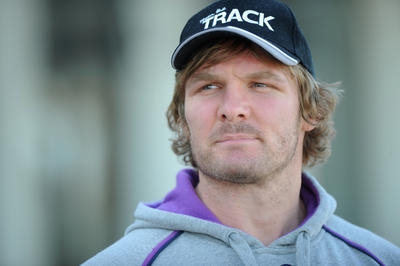
NRL player Todd Lowrie, and his wife Sally, welcomed their daughter Lani Mae on October 2, shortly after Todd’s team, the Melbourne Storm, won the 2012 Premiership. Lani Lowrie joins big brother Sonny, aged 1. Sonny’s birth was announced on the blog last year.

Todd began his professional career in 2003, and signed with the Melbourne Storm in 2010. He will be going to the New Zealand Warriors for the 2013 and 2014 seasons. Todd’s dad Bert Lowrie is the team manager for the State of Origin NSW Blues.

An interesting point about Todd’s own name is that his first name, Todd, is from a medieval English word for “fox”, while his surname, Lowrie, is an old Scottish slang word for “fox”. In this story of The Marriage of Robin Redbreast, recited by the sister of Robert Burns, the name Tod Lowrie is used to mean “Mister Fox”.

Celebrity Baby News: Heather Garriock and Mat Louchart

Tags

, , ,

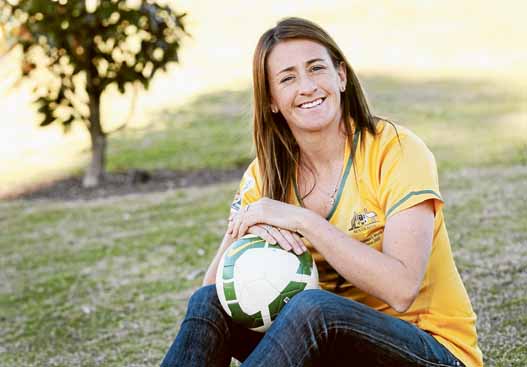
Soccer player Heather Garriock, and her partner Mat Louchart, welcomed their first child last month, and have named their daughter Kaizen Rose. Kaizen Louchart’s birth was announced on Facebook.

Heather started out playing for Australian teams, before playing overseas for clubs in the United States and Denmark. In 2008, she was drafted into the prestigious Women’s Professional Soccer League in America, where she played for the Chicago Red Stars. On her return to Australia, she went back to Sydney FC. She has played for the women’s national team, the Matildas, since she was a teenager, and attended two Olympic Games with them. Heather runs the Macarthur Youth Football Academy in Camden.

Mat is originally from France, and he and Heather met in Abu Dhabi while she was playing in a tournament.

Kaizen is the Japanese word for “improvement, change for the better”. The word has entered the English language to refer to the Japanese philosophy of continuous small improvements in business processes in the workplace, and applied to almost any industry. The word is pronounced KY-zen, and makes for an interesting modern virtue name.

Celebrity Baby News: Collette Dinnigan and Bradley Cocks

Tags

, ,

Fashion designer Collette Dinnigan, and her husband Bradley Cocks, welcomed their son Hunter Desmond David on November 5. Desmond is the name of Collette’s father, while Bradley’s dad is named David. Hunter Cocks was born at the Mater Hospital in Sydney weighing 4 kg (around 9lb). Hunter joins big sister Estella, aged 8, the daughter of Collette’s former partner, television presenter Richard Wilkins.

Collette was born in South Africa and grew up in New Zealand. She opened her first store in Sydney in the 1990s, exporting her designs all over the world. She was the first Australian designer to launch a ready-to-wear collection in Paris, and her range is now stocked in her stores in Sydney, Melbourne and London, as well as in David Jones department stores and Target. Collette’s name was featured on the blog last year.

Bradley is originally from Canada, and is a self-described luxury travel entrepeneur who is passionate about the environment and surfing. He has written for magazines such as Vogue Italia and The Australian Financial Review. He and Collette were married last year in Italy.

Celebrity Baby News: Wes Carr and Charlotte Gregg

Tags

, ,

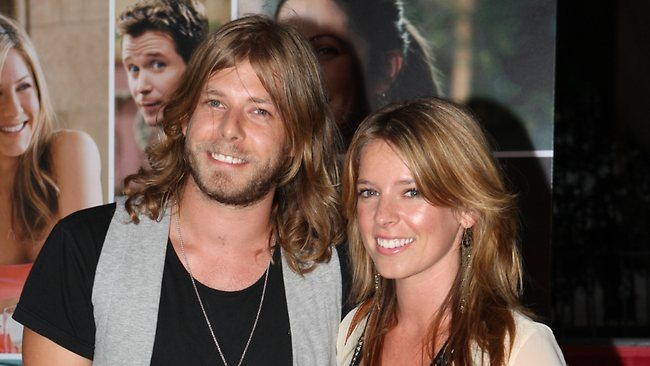
Singer Wes Carr, and his wife, actress Charlotte Gregg, welcomed their first child on November 5, and have named their son Willow Harrison. Willow Carr was born in Sydney at 11.49 pm, and weighed 4.2 kg (9lb 4oz).

Wes was already a professional musician with his first album just out when he won the sixth season of Australian Idol in 2008. Since then he has released another album, seen his first single, You, debut at #1, and announced his new independent music project, Buffalo.

Charlotte has appeared in many TV dramas, including Underbelly, Home and Away, Offspring and Lowdown. She met Wes at a barbecue in 2008, and the couple were married last April, honeymooning in Europe.

There’s been several celebrities this year who have used a unisex name for their son, even though it is popular for girls. This one comes with an inbuilt boyish nickname – Will.

Famous Name: Bede

Tags

, , , , , , , , , , , ,

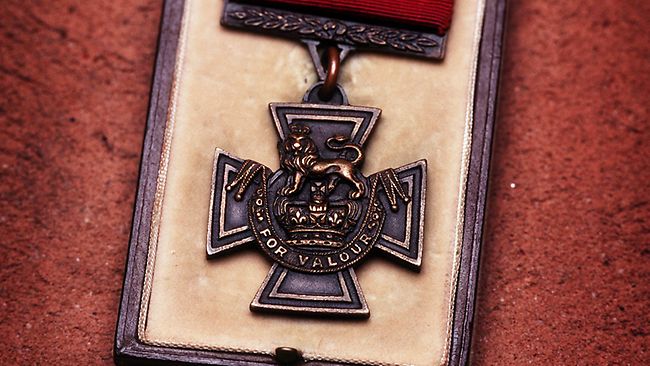
On November 1, Corporal Daniel Keighran became the third Australian soldier serving in Afghanistan to receive the Victoria Cross, the highest military decoration awarded for bravery in Australia. Corporal Keighran is the first member of the Royal Australian Regiment, and the 99th Australian, to receive a VC, and did so with great modesty and humility. Daniel’s wife Kathryn had no idea of the courage her husband had displayed under fire in battle two years ago until she learned he was about to be decorated for it. The Victoria Cross was awarded in a ceremony at Government House in Canberra.

Watching this story on the news reminded me to look at the list of those Australians awarded the Victoria Cross in the past, as I wanted to cover the name of a World War I hero for Armistice Day, which is on Sunday. As I ran my eye down the list, one name stuck out because it has been in my Request file for ages, and I briefly covered it in my article at Nameberry a short time ago. So it was quite an easy choice for me to select Bede as this week’s Famous Name.

Corporal Thomas James Bede Kenny, always known as Bede, was born in Sydney in 1896. The son of a butcher, he had just begun training as a chemist’s assistant when he enlisted with the Australian Imperial Force in 1915. He initially served in Egypt, then was sent to northern France in 1916 to take part in the second phase of the battle of Pozières, in the battalion bombing platoon.

It was in the spring of 1917, as British and Australians captured the outpost villages of the Hindenberg Line, that he performed the acts of valour that were to earn him the Victoria Cross. In the attack on Hermies, his platoon came under heavy fire from a machine-gun post which caused severe casualties. Bede rushed at the enemy single-handed, hurling three bombs, the last of which knocked out the post. He then took the surviving Germans prisoner, his actions contributing significantly to the success of the operation.

Later he was injured in battle and invalided home to Australia, arriving in Sydney to a hero’s welcome a few weeks before the Armistice. He was offered the chance to join the military police, and rejected it immediately, as for some reason he had a great dislike of them.

In civilian life, he worked as a salesman, and was happily married; he is remembered as a popular man with many friends, and a fondness for innocent pranks. He was left partially deaf from the war, and also suffered the effects of trench foot throughout his life. The great tragedy of his life was the deaths of two of his three children, which he never recovered from.

Like Corporal Keighran, Corporal Kenny never talked about his wartime experiences, and the only sign that he was proud of his military service was that he always led the VC winners at the Sydney Anzac Day marches. He died in 1953, and by a cruel irony, his pallbearers were military policemen.

The most famous person with the name Bede is the 7th/8th century English saint, Venerable Bede. Although it is not certain, it is thought that his Anglo-Saxon name, Beda, is from the Old English word bēd, meaning “prayer”. If so, it’s possible that his parents chose a religious life for him from his birth. The name wasn’t a common one, but interestingly, one of the kings of Lindsey, in England’s north, was named Beda; as Venerable Bede was from this area, it’s tempting to wonder if he was named after an ancestor, or a famous local namesake.

Venerable Bede is most famous for his prolific writing career, eventually completing over sixty books, most of which have survived. He wrote on a wide variety of subjects, including science, history, grammar, hagiography and theology; his best known work is An Ecclesiastical History of the English People, which begins with Caesar’s invasion of Britain, and ends with Bede’s own times. His use of AD to refer to events after the birth of Christ helped it become standard. He was also a teacher, a music lover, and was said to be accomplished at singing and poetry recitation, even writing some poetry of his own.

Bede is the only Englishman to be declared a Doctor of the Church; he is also the only Englishman to be mentioned in Dante’s Paradiso, where he appears amongst the theologians and doctors of the church. He is regarded as a saint in both the Catholic and Anglican churches.

If you are thinking that Bede (pronounced BEED) sounds a lot like the word bead, you would be correct. That’s because the Old English word bede, meaning “prayer” is the source of the modern word bead – because beads are used as a means of keeping count of prayers, a practice in Christianity which dates to the 5th century (although prayer beads are ancient and used in many religions). Because of this, you will sometimes see the name Bede interpreted as “bead” or “prayer bead”.

Bede isn’t a common name in Australia; at the same time, it isn’t all that unusual either. There are plenty of Bedes in the records, and if you go to the Australian Dictionary of Biography, you will find quite a few famous Australians with Bede as part of their name. What you primarily notice is that these Bedes tend to be from Catholic backgrounds (and some High Anglicans), and that Bede is usually one of their middle names. It is also the name of Bede Durbidge, who won Surfer of the Year a few years ago, giving the name a more cool laidback image.

I can imagine some people thinking that Bede sounds weird and ungainly; something only a staunchly Catholic family would use; a name best suited to leaving in the middle position. Which sounds perfectly reasonable – except that less than half a century ago, there was another boy’s name that seemed weird and ungainly, was used almost exclusively by Catholics, and generally relegated to the middle position, usually after Francis.

That name was Xavier, which is now #22 and rising. Could Bede be the Xavier of the future?

It’s a very old name with a solid history of use in Australia, part of the Catholic tradition, and with spiritual associations. It’s short yet substantial, clunky yet surprisingly cool. It’s the name of our heroes, our leaders, our intellectuals, our athletes, our artists, our businessmen, and for many of us, our dads and uncles and grandfathers too.

Wherever it might be headed, I see this name often enough in birth notices to know that it is not going away, which gives me a strange feeling of comfort.

(Photo of the Victoria Cross from The Australian)

Celebrity Baby News: Jonathan and Kylie Brown

Tags

,

AFL star Jonathan Brown, and his wife Kylie, welcomed their son Jack William on November 4. Jack Brown joins big sister Olivia, aged 3.

Jonathan is the captain of the Brisbane Lions, and is considered one of the greatest players in the game. He has made the All-Australian team twice, won the Coleman Medal once, and the Merrett-Murray Medal three times. He is the son of Brian Brown, who played for Fitzroy, with Jonathan recruited under the father-son rule. He is the nephew of Noel Mugavin who played for Fitzroy, and of Billy Picken, who played for Collingwood; his cousin is Liam Picken who plays for the Western Bulldogs. He is a regular guest panellist on the AFL Footy Show.

Kylie (nee Adams) is a former model, and first met Jonathan during celebrations after a game. The couple were married in 2008, later honeymooning in the United States.

Celebrity Baby News: Two Football Babies

Tags

AFL footballer Corey Enright, and his wife Renee, welcomed their first child on October 28 and have named their son Boh Finley. Boh Enright was born at 2.04 pm weighing 4.14 kg (9lb 2oz). Corey plays for the Geelong Cats, while Renee is a fashion stylist for Westfield Geelong; she also writes fashion features for Baby&Child magazine. Corey and Renee were married just over a year ago at a beach wedding in Queensland.

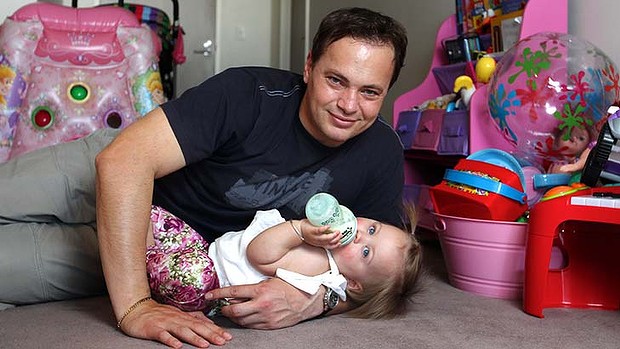
Former soccer player Mark Bosnich, and his partner Sara Jones, welcomed their daughter Allegra last spring. This seems to be the first time that Allegra’s birth has been mentioned in the press. Mark was born in Sydney, and played in the English premier league for Aston Villa, Manchester United, and Chelsea, as well as representing Australia. After many years in London, he returned to Australia in 2008, where he played for the Central Coast Mariners and Sydney Olympic. He has had a chequered career and battled a costly drug addiction, but has now rebuilt his life, and is a commentator on Fox Sports as well as a player manager.

Allegra is proving quite the favourite as a celebrity baby name!

(Photo shows Mark and Allegra)

Waltzing With … Archer

Tags

, , , , , , , , , , , , , ,

This article was first posted on November 4 2012, and revised and re-published on June 16 2016.

Famous Namesake
On Tuesday it is Melbourne Cup Day, which, more than any other day on the calendar, holds Australia in thrall. On the second Tuesday in November, at 3 pm, the nation collectively holds its breath while its most famous horse race, the Melbourne Cup, is run at Flemington in Melbourne.

It’s known as “the race that stops a nation”, because at 3 pm you are expected to drop whatever you’re doing to tune in and watch the Melbourne Cup. Workplaces and schools may take the afternoon off to hold Melbourne Cup lunches, or at the very least switch a TV on just before 3 pm. It’s a day when almost everyone will place a bet on the race – even if it’s just putting a dollar on the favourite, or taking part in the office sweep. In Melbourne, the day of the race is a public holiday.

American author Mark Twain went to the 1895 Melbourne Cup and commented, Nowhere in the world have I encountered a festival of people that has such a magnificent appeal to the whole nation. The Cup astonishes me. More than 110 000 people attend the race, and it’s a huge fashion-fest, with ladies frocking up, and gentlemen wearing formal suits. Others relish the opportunity to dress in outrageous costumes. It’s a day to eat, drink, gamble and be merry – a big, bright, boozy, and rather garish carnival.

The Melbourne Cup itself is the jewel in the crown of the Spring Racing Carnival, and is said to be the richest and most prestigious “two mile” handicap in the world. The prize money is over $6 million, and the trophy itself is a hand-crafted golden cup worth $125 000. It’s the biggest prize in any Australian sporting event.

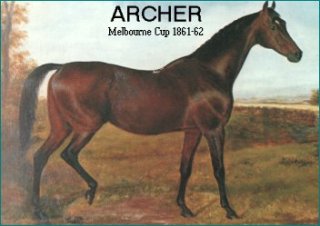
The first Melbourne Cup was run in 1861, and the winner that year was a horse named Archer. Race horses are often named quite logically, and Archer’s sire was William Tell. Born near Braidwood, in country New South Wales, he was trained near Nowra. Archer was a large horse, standing over 16 hands high with a powerful body. He ran badly in his first two races, and was rated poorly, until he won seven races in 1861, and was entered in the Melbourne Cup.

The first Melbourne Cup was action-packed. Three horses fell during the race (two of them died), two jockeys suffered broken bones, and one horse bolted off the course entirely, but the race gamely continued, and Archer won by six lengths in a time of 3 minutes and 52 seconds – the slowest in which a horse has ever won the Melbourne Cup.

He set another record the following year by winning the Melbourne Cup again; until the 1930s, he was the only horse to have won back-to-back Melbourne Cups. He was meant to enter in 1863 as well, but unfortunately there was a mix-up with telegrams and he didn’t manage to make the deadline in time.

Many legends have sprung up around Archer, such as that he had to walk all the way from Sydney to Melbourne in order to take part in the race, and that his jockey, Johnny Cutts, was an Aborigine from the Nowra area. Neither of these stories is true – Archer travelled to the race by steamship and rail, and Johnny Cutts wasn’t Aboriginal, and was from Sydney. The phrase since Archer won the Cup has entered our language, to refer to a long time distant.

Name Information
Archer is an English occupational surname referring to someone who uses a bow and arrows. The surname was introduced to Britain by the Normans, and by the end of the Middle Ages the Norman-French word archer had replaced the English bowman.

People have been hunting and fighting with bow and arrows since the Stone Age, and there are many famous archers in world mythology. During the Middle Ages, professional archers were rare, and most archers during war were recruited from the peasantry so archery was often seen as a lower-class pursuit. However, by the 14th century archers were used effectively in battle, making it a more attractive option. The use of firearms made archers obsolete, and the last recorded use of them in battle in England was in 1642.

The last known person to die from a British archer in battle was in 1940, when a German was killed during the retreat from Dunkirk by a delightfully eccentric officer named Jack Churchill, who insisted on fighting throughout World War II with bow, arrows and a sword; he also played the bagpipes while setting off grenades, to add to the effect. Incredibly brave and highly decorated, Churchill, known as Mad Jack, was later a military instructor in Australia, where he became an enthusiastic surfer. A shame we didn’t manage to keep him, as this man is now my personal hero!

Archer has been used as a personal name since the 17th century, and an early namesake was the British MP Sir Archer Croft, 2nd Baronet – Archer was his mother’s maiden name. Another who had Archer as a family name was the 18th century American politician Archer Mathews, a founder of Lewisburg in Virginia. In the 19th century, escaped slave Archer Alexander served as the model for the Emancipation Memorial in Lincoln Park, built by T.S. Eliot’s grandfather.

Archer joined the Australian Top 100 in 2012, and since then has continued rising. Currently it is #39 nationally, #49 in New South Wales, #27 in Victoria, #33 in Queensland, #29 in South Australia, #51 in Tasmania, and #38 in the Australian Capital Territory. It was one of the fastest rising names in Victoria last year.

Archer was a Top 1000 name in the US in the late 19th century, but spent many years off the charts until it returned in 2009. It has risen steeply since then, and is now #289. In the UK Archer has been in the Top 500 since 2012 and is currently #359. Archer is Top 100 in New Zealand – the only other country besides Australia where Archer is popular, although its popularity is highest in Australia.

No wonder this handsome name is so popular – it feels both vintage and contemporary, and fits in with the trend for names with an AR sound, and names connected with hunting and weaponry. One of its attractions is that it provides a way to get the popular nickname Archie without using Archibald, although Arch is another possibility.

Archer is a name from Australian history which celebrates the biggest sporting event of the year – one that almost everyone will participate in. It’s a name from the hunt and battlefield, but also referencing daring archers, from Robin Hood to the Hunger Games, and perhaps even comedy super-spy Sterling Archer from the animated show.

Could Archer follow its equine namesake and gallop to the #1 position on the charts? The odds are against it, but chances are it will continue cantering along the home stretch.

POLL RESULT
Archer received an outstanding approval rating of 93%, making it one of the most popular names of 2012. 36% of people loved the name Archer, and nobody hated it.

Is Cressida a Girl Name or a Car Name?

Tags

, , , , , , , , , , , ,

Emily and David are expecting a baby girl in three weeks, and still haven’t settled on a name for her. They’ve thought of lots of nice names they could use, but each one seems to have its drawbacks, and they keep crossing names off their list and changing their minds. So far, they don’t really love one name more than another; none of them seem to jump out and say, “I’m the one – stop looking!”.

When they chose their first child’s name, it was much easier. David suggested the name Clementine, Emily loved it too, and straight away it seemed perfect and they never considered anything else. This time it’s been quite different, and they’ve found the process more worrisome.

At the moment they have on their list:

  • Cressida – Emily is slightly bothered by the car called the Toyota Cressida
  • Ottilie – concerned about spelling and pronunciation issues
  • Josephine – like it a lot, but doesn’t seem very exciting
  • Isadora – worried about references to Dora the Explorer, or that she’ll be yet another Izzy in a sea of Isabellas and Isabels
  • Mathilda – David loves Mathilde, but Emily thinks it’s too French and won’t be pronounced correctly; also aware of the popularity of Matilda, which isn’t a problem if it’s the right name
  • Francesca – loved it for ages, but a friend has just used it

Their name style is for names that have been forgotten by most people, a bit quirky, and with a vintage feel. They would like a name that is interesting and offbeat, but not “made up”. They seem to be leaning towards three-syllable names ending with -a, and Emily loves names that have a European/French vibe to them but don’t sound out of place in an English-speaking country.

David and Emily have a typically Scottish surname, such as Baxter, Cameron or Ramsay.

~ ~ ~ ~ ~ ~ ~ ~ ~ ~ ~

Emily and David, I know you probably feel slightly desperate, with your baby due in only a few weeks, and still no name picked for her. However, I think you’re actually doing really great. You know what your name style is, and you have very compatible tastes in names. You’ve already drawn up a list of lovely names, and if your daughter was born tomorrow, you could probably use any of them for her.

I think you had such a dream run choosing the name for your first child that your expectations are slightly unrealistic. Sometimes the perfect name drops into your lap from the heavens, but you can’t expect that to happen every time. Finding little niggling things wrong with the names you like best is completely normal.

I’d stop trying to find the perfect name that ticks absolutely every box and has no flaws of any kind, and concentrate on finding one that you both like, and that you can imagine saying every day for the rest of your lives. A name that your daughter can grow into and grow up with, and a name that fits into your family and lifestyle. It doesn’t have to be “perfect” – it just needs to work for you.

Let’s have a look at your name list:

Cressida

I’m extremely biased, as this is one of my favourite names and has been for many years. I love the upper-class eccentric feel of the name, and the crisp sound of the first syllable. The meaning of the name – “golden” – is also beautiful.

I know you’re a bit worried about the Toyota Cressida, but they stopped making them 20 years ago, which seems like ancient history to me. The Cressida isn’t a famous or classic car, and I haven’t heard it mentioned for decades (I actually forgot this car even existed) . In Australia, the car isn’t said the same way as the name either – it’s pronounced kreh-SEE-dah, whereas the girl’s name is KREHS-ih-dah (in the US, they say the car name “correctly”). On the one hand, that makes the human name distinct from the car; on the other hand, some people may try to say your daughter’s name like the car, and would need gentle correction.

The fact that you feel a bit excited about this name is a good sign, and the way it breaks one of your “rules” is also encouraging. You didn’t want another name starting with C, so the fact you are still seriously considering it means you must be very interested. I would definitely keep this one on your list for now.

Ottilie

I love the idea of this name, but like you, I’d be concerned about the pronunciation. I’ve listened to it being said by people from around the world on forvo, and it seems to be said quite differently in each country. The only English-speaking nation to contribute is the USA, and they seem to have two pronunciations – OTT-uh-lee, and aw-TIL-ee-uh. I actually don’t know how to pronounce this name correctly, and I’m unclear as to whether there even is a correct way to say it. I’ve tried saying all the pronunciations in my standard Australian accent, and I’m not impressed with the results. I think you’d have to be really certain you knew how it was going to be said, prepared to educate people on it, and to be forgiving if they mangled it. If this doesn’t daunt you, then you obviously love the name dearly, and should keep it on your list.

Josephine

This is a great name, and a classic which has never gained high levels of popularity. However, I dislike it as a sister match to Clementine, as to me the endings of the names are too similar.

Isadora

I think this name is gorgeous, and would make a lovely match with Clementine, and with your surname. I don’t think she would be “yet another Izzy”, as most girls called Isabella go by Bella as their nickname. I think you are worrying way too much about Dora the Explorer – Dora the Explorer is a positive character! She’s smart, kind, friendly and helpful. I would definitely keep this one your list, and give it serious consideration.

Mathilda

I sympathise with David – he’s right, Clementine and Mathilde are a great match. On the other hand, you’re right about the French pronunciation. Mathilda seems like a good compromise, and I think it’s worth keeping this one on your list too.

Francesca

The fact that your friend has used the name, and you still have it on your list, shows that you have quite an attachment to it. Understandable – it’s a lovely name, and like Clementine, is fashionable without being popular. Whether you use it or not depends on how you and your friend feel about sharing your childrens’ names; whether you think that seems cute and fun and a wonderful bond between you, or whether it would cause problems in your relationship. It probably depends a lot on what kind of a friendship you have, and maybe even how often you see each other. If both of you are happy to share, then I’d keep it on your list.

You asked for more name ideas: I feel as if you have already thought of everything by now, having already crossed off a long list of possible names. However, here’s some more:

Aurelia

Like Cressida, this name means “golden”, and is a nice match with Clementine. To me it seems European, vintage and quirky. I’ve seen a few people in birth notices choose Aurelia as a middle name, so I can tell that parents like it, but haven’t quite the confidence yet to use it as a first name. I’d like to see it move out of the middle name spot.

Elodie

You considered Eloise at one point; I thought this seemed an alternative to that. It’s pretty, French, and like Clementine is fashionable and underused at present.

Lilias

You might think this is a bit corny, but I couldn’t resist matching your Scottish surname with a Scottish name. Lilith was on your reject list, and this has a very similar sound. As a clementine is a type of mandarin, Clementine and Lilias is a sweet “fruit and flower” sibset.

Miranda

This is a Latinate name like Clementine, and I think Clementine and Miranda make a pretty and romantic sibset. Miranda is a name which is currently gaining in popularity while not being heavily used yet, and I think it would meet with widespread approval.

Rosamund or Rosamond

You already rejected Rosalie and Rosalind, so I thought I’d try you with another Rose name. It’s European, aristocratic and slightly off-beat, and Clementine and Rosamund make an elegant sibset.

Sylvia or Silvia

To me, this has a similar feel to many names on your reject list. It’s European and vintage, and definitely isn’t heavily used. I like the woodsy meaning, and the silvery sound of the name. Like Clementine, it’s not a nature name, but it somehow feels like one.

Readers, when you hear the name Cressida, do you think “girl” or “car”? Which names on Emily and David’s list do you like best, or which names would you recommend to them?

NOTE: The baby’s name was Isadora Mathilde!
I Get Interviewed at A Baby Name Per Day

Tags

,

Recently I was interviewed by Cristina at A Baby Name Per Day, where my thoughts on names were probed, and my own names profiled.

It was really fun, and in the process I actually got to think about some things I probably wouldn’t have otherwise. One of the hardest questions to answer was what I’d call myself if I wasn’t an Anna … the answer surprised me a little bit.

Thanks so much Cristina, and I hope anyone who is interested in learning more about me, or more about my name, will pop over and have a read of the interview.