• About
  • Best Baby Names
  • Celebrity Baby Names
  • Celebrity Baby Names – Current
  • Celebrity Baby Names – Past
  • Featured Boys Names
  • Featured Girls Names
  • Featured Unisex Names
  • Links to Name Data
  • Waltzing on the Web

Waltzing More Than Matilda

~ Names with an Australian Bias of Democratic Temper

Waltzing More Than Matilda

Category Archives: Names in the News

Old Names Are New … And New Names Are Old News

26 Thursday Sep 2013

Posted by A.O. in Names in the News

≈ 5 Comments

Tags

Arabic names, created names, famous namesakes, fictional namesakes, French names, Latin names, locational names, name data, name trends, Polish names, retro names, Roman names, saints names, Spanish names, spellcheck software, Stars Wars, surname names, titles, Twitter, UK trends, US trends, vocabulary names
Old Fashioned Names

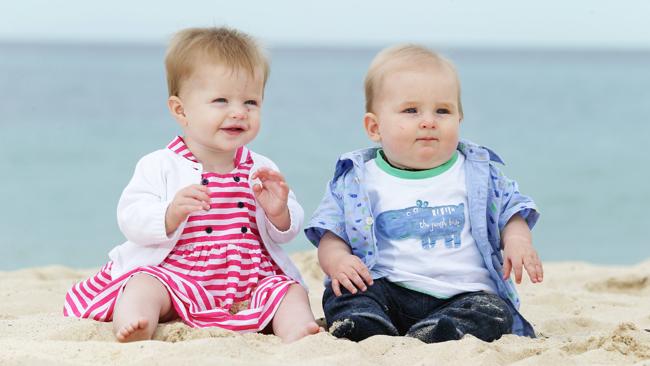
When it comes to baby names, the newspapers generally run with one of two stories. Either they tell us that “normal” baby names are “back in fashion” (what a relief!), or else they give us dire warnings of “bizarre” baby names which are definitely the sign of the apocalypse, or can at least make us feel all smug and superior for five minutes.

It’s not often they run with both these at once, but in a journalistic triumph, they brought forth two opposing baby name stories within two days of each other. I’m not sure whether they didn’t bother co-ordinating, or hoped nobody would notice the obvious incongruity.

The Daily Telegraph told us that in the future, baby names will no longer be odd hyphenations or spelling variants, because when they looked through the New South Wales data, most of the names popular during the 1940s and ’50s, which had almost disappeared by the early 2000s, have had a resurgence in the past decade.

Henry has almost tripled from 106 in 2002, to 276 in 2012; Evelyn is up from 17 to 112; and Matilda has skyrocketed from 68 to 265. Of the twenty traditional names they chose to look at, only Samuel and Beatrice had suffered a slight decline.

This trend, we are told, reflects a desire for individuality, substance, and “a bit of class”. It has been spearheaded by the young royals, William and Catherine, although they weren’t even engaged at the turn of the century, so I’m not sure how they managed to influence an entire decade of baby names.

Furthermore, we can be assured this signals a return to conservative values, discipline being back in vogue, school uniforms, and clearly defined gender roles (which apparently means girls wearing pink and boys wearing blue).

Generation X parents get the gong for doing their research and picking out good solid names that you can yell from the soccer match sidelines without embarrassment, and which will, it seems, affect their children’s entire destinies and even give them a good Twitter handle. Goodness. Who would thought calling your kid Mabel was so significant?

Meanwhile, over the border, the Courier Mail interviewed an anonymous schoolteacher from Logan (love the old anonymous schoolteacher as a source – can’t be proved they exist, can’t be proved they don’t), and she says names have become increasingly bizarre over the past 20 years, and now spellcheck software can’t even recognise them. I find most names aren’t recognised by spellcheck – where is this spellcheck software which can recognise all the names in the world?

Then comes a long list of names of children who we are told are enrolled at Logan schools, and are meant to be horrified by.

One of them is Romaine – a French name, the feminine of Roman. Another is Cassius, a Roman name and also a saints’s name; it’s gaining in popularity in both the US and the UK. I say thumbs up to Romaine and Cassius’ parents! Felicitas is another Roman saint’s name, with the meaning “fortunate” in Latin. How does a schoolteacher not recognise these as names? That to me is the scary part.

There are names from other cultures, such as Alareal, a Spanish surname derived from the word for “royal”; Jadzia, a Polish form of Hedwig; Santiana, a Spanish surname which means “St. Anna”; Thiery, a French form of Theodoric. Qaira is Arabic, and Zenen is Spanish, but I don’t know anything more than that.

There’s quite a few vocabulary names, including Beautiful, Bravado, Brilliance, Cherish, De Ja Vu, Freedom, Gorgeous, Heritage, Miracle, Precious, Sapphire, Styles, and Twinkle. A spellchecker will recognise them, and they’re all words with positive meanings. When you think of it, most names start out as vocabulary words anyway.

There’s two titles as names: Caesar and Marquis. I’m mentioning these since it’s said Australians can’t use titles as names, but clearly we can in some cases.

There’s real place names: Australasia, which is patriotic; Avantika, the ancient name for a city in India; Jetiis, a village in Indonesia. And a fictional place name: Ataria, an island in Star Wars.

There’s names of celebrities, such as Beyonce, and Kahu, which is a tribute to Brisbane Broncos NRL star Jordan Kahu, and Kovee, after the musician.

There’s Caylis, who is one of the Neopets, Darian, derived from Darius, Hawke, a surname, and Jezzer, a short form of Jeremy.

There’s some variant spellings, such as Bayleigh, Emmerson, Izack, Kaelani, Khaileb, Khynan, and Psalmz, which I don’t find too outrageous.

There’s some “tweaking” of names such as Leilesha, Mikaiah, Shaylani, Tanyce and Taylay, which don’t offend me. I notice there is a Congresswoman in the US named Tanyce, so it doesn’t seem to impede your progress in life.

There’s some names I don’t recognise, although that doesn’t necessarily make them “bad” names, and I can see that they are in use elsewhere: Kalaize, Millieka, Narvasha, and Shizia.

Finally, we end with Sambo, which I agree seems a bit unfortunate, but does have a number of origins, and L-Car, pronounced Ledashcar (although wouldn’t it be Eldashcar???). Anyway I have already made my views known on this subject, and won’t repeat them here.

So there you go – either names are becoming more and more conservative, or they are becoming ever more strange and confusing. You can decide for yourself which one is correct, if either is.

POLL RESULTS
29% believed that names were not becoming either more conservative or more bizarre, but were staying much the same
24% thought that names were becoming both more conservative, and more bizarre
20% thought they were becoming more conservative for the middle classes, but more diverse for the lower classes
12% didn’t know, and felt confused
7% felt that names were in fact all becoming more bizarre across the board
The remaining 8% (representing three people) chose options where they were the only person to have that opinion


Rich List Baby Names

15 Thursday Aug 2013

Posted by A.O. in Names in the News

≈ 4 Comments

Tags

classic names, famous namesakes, name popularity, name studies, popular names, rare names

0dfda646-ffc9-11e2-82b3-338937740ac4_556245252--646x363

BRW magazine puts out the Rich 200 list of the top 200 richest people in Australia each year, and has looked through all the names on their Rich List since the magazine was founded in 1984, to see which names are most common for rich people. They then suggest that parents may like to choose these names for their babies, in hopes that they will then become rich, or at least not look out of place just in case they ever do become rich.

You probably won’t be staggered to learn that the most common name on the Rich Lists was John, with fifty men of this name being included since 1984.

Top Ten Rich List Names for Boys

  • John
  • Peter
  • David
  • Michael
  • Robert
  • William
  • Ian
  • Paul
  • George
  • Andrew

Girls names were rather more problematic, since only 7% of the Rich List have been women, and only two female names have turned up more than once – Rose and Christina, of which there are just two examples of each. Despite having virtually no data to work with, they still manage to come up with a Top Ten for girls names as well. It seems to be based on simply putting the rest of them in alphabetical order.

Top Ten Rich List Names for Girls

  • Rose
  • Christina
  • Andrea
  • Angela
  • Charlotte
  • Elizabeth
  • Gina (short for Georgina)
  • Nicole
  • Penelope
  • Therese

You can probably see a major flaw in their name-your-baby-the-rich-way plan, in that the names on the boys list are classic names which have retained high levels of popularity over time.

John has never been off the Top 100, and was the #1 name from 1910 to 1940; it didn’t leave the Top Ten until the 1970s. So there are lots of rich men named John, but there are also lots of high school teachers, auto mechanics, scientists, discharged bankrupts, and murderers named John as well. It’s not so much a “rich man name” as an “everyman” name.

Even BRW admits that an unusual name will not disqualify you from wealth, because there are people on the Rich List named Ranald, Sinclair, Wolf, Brettney, and Merlin as well. (They also include Iris for some reason, although Iris is not particularly unusual even now, and was Top 100 from 1900-1940.)

John and Rose are nice names, well worth choosing if you like them, but they won’t make a difference to your child’s bank account. A name cannot magically bring wealth, and if you look at the Top Ten of the Rich 200, you can see that at least half of them inherited all, or the bulk of, their fortune.

The richest person in Australia is Gina Rinehart, who got her money, not because was named Georgina, but because her wealthy father died and left her his fortune. In other words, if you would like your children to be rich, the best thing to do is become rich yourself, and leave them all your money in your will. They will be able to inherit from you no matter what their first name is.

How did most people on the Top Ten get rich? Mining and property development. So go buy a mine, and turn it into a block of flats, and your child is well on its way to financial security.

Names in the News

30 Tuesday Jul 2013

Posted by A.O. in Names in the News

≈ 4 Comments

Tags

created names, epithets and titles, Game of Throne names, honouring, name campaigns, name combinations, name contests, name popularity, name social groups, name studies, names from television, nicknames, popular names, sibsets, vintage names

News

Dr Benjamin Pitcher, from the University of London, analysed the most popular names in the UK, Australia, and the US, and found that boys names are more likely to have “large” vowel sounds, while girls are more likely to have “small” vowel sounds in their names. Larger sounding vowels pull the tongue to the back of the mouth, creating more airspace and releasing lower frequency sounds, while smaller vowels force the tongue forwards and upwards, giving high pitched sounds. Examples of “large” vowels in names include Jack, Lachlan, Cooper, Noah and Tom, while “small” vowels can be found in Isabella, Olivia, Mia, Lily and Ella. Dr Pitcher says this is an example of biological evolution, but only looked at names between 2001 and 2010, which doesn’t seem like enough of a time period to evolve in. I was interested to see that a Dr Pitcher would end up studying pitch, and that his first name, Benjamin, tends towards the more feminine vowels.

More studies into gender differences in names show that in English-speaking countries, girls names tend to be longer, to have unstressed “weak” initial syllables, end on a vowel sound, and to have more vowel sounds generally. It is thus supposed that girls names are more “decorative”, and boys names more “functional”. I wonder what they think in non-English countries, because in India, Arabic countries, and Polynesian islands, male names are often just as long and vowel-heavy as female ones, and I’m sure they don’t think of their boys names as “weak” or “girly”. Perhaps we should we be asking ourselves why we see our girls names as “weak and decorative” – it probably says a lot more about our own attitudes than it does about their vowels. Because take away all our value judgements, and there is no real reason while a girls name like Jane is “stronger” and more “functional” than one such as Olivia or Isabella.

The invented word Khaleesi, from Game of Thrones, has the meaning of “queen” in the fictional Dothraki language, although it is a title and not a personal name. Khaleesi has been used as a baby name since the TV show aired in Australia, and it turns out that it is more popular in Queensland – 15 babies named Khaleesi have been born in Queensland so far this year, compared to 4 each in Victoria and South Australia, and 6 in New South Wales. Could it be the meaning of “queen” which unconsciously makes it more appealing to Queenslanders? Two Queensland fans of the show who chose the name for their daughter say that they couldn’t agree on any name until the first season of Game of Thrones began airing. They thought Khaleesi was a really nice name which would be suitable for an adult too, and found out the spelling from the show’s website. Makes you wonder what all these Khaleesis would be called if the books hadn’t been turned into a TV series …

The town of Busselton on Western Australia’s south-west coast has a social group for women named June, and on June 1 each year, they celebrate Happy June Day. (Because if the first of May is May Day, then obviously the first of June is June Day … right?) In existence since 2010, this year eight women named June got together for a cuppa and to find out what else they have in common. Two of the Junes were born in June (well, actually, one of them was born on May 31, but so close to midnight it was practically June). One of the Junes has four children born during the month of June, half the Junes had a mother named Mary, and two Junes have a sister named Barbara. June peaked in the 1930s at #10, and this is something cool to look forward to if you have a popular name – starting your own name group.

This year’s mission for the Junes was to see more newborn babies named June – a wish which was granted instantly, because after a friend sent her the story about June Day in the Busselton paper, Eleisha Whiston contacted the June group to tell them she named her daughter June on May 25. Baby June is named after her 83-year-old great-grandmother, who was born in June. Her brother Hugo also has a June birthday. The Happy Junes were “overwhelmed” to hear of a new June so soon. You know what? June is a lovely name. Seriously consider having a little June – no matter what the moon, or whether born at morn or afternoon, that name would be a real boon, bringing great fortune. Then every day would mean a Happy June.

Meanwhile, Dave Noonan from Hobart’s Heart 107.3 radio station became alarmed at the thought that his own name might die out, and initiated a Save Dave campaign, to convince the women of Hobart to call their sons Dave. Eventually, Matt and Melissa Moore welcomed their son at 4.33 am on July 19, and named him David Xander, to be rewarded with a newly-renovated kitchen. Melissa plans to call her son Davey as his nickname, which she finds “cuter”, making the contest seem a bit pointless.

Names in the News

17 Wednesday Jul 2013

Posted by A.O. in Names in the News

≈ 1 Comment

Tags

baby name books, celebrity baby names, Gold Coast Bulletin, Maitland Mercury, Nameberry, popular names, products with human names, rare names, royal baby names, royal names, Sydney Morning Herald, Twitter

News

We’re all getting royal baby name fever, and Nameberry are currently running a “Guess the Royal Baby Name” Competition. You have to pick the full name, with all middle names in their correct order, for ONE GENDER ONLY and you can only guess ONCE. More than 200 people have already entered, so don’t forget to check that someone hasn’t already made your suggestion. The first correct entry wins a $100 gift voucher from the Nameberry store – what a fantastic prize! Be in it to win it.

The Maitland Mercury is also running a royal baby name contest, and you only have to get the first two names right. So if you guess Victoria Alice Mary Rose, and the baby is named Victoria Alice Elizabeth Diana – that’s good enough. To give you some ideas, the most common names in both family trees are Elizabeth and John, but more unusual names from the baby’s ancestry include Boniface, Lancelot, Cyrian, Marmaduke, Sylvanus, Garin, Theophilus, Elie, Eusebia, Honor, Thomasin, Ursula, Permelia, Albina, Grissel, and Hyacinth. To enter, get your hands on a copy of the July 8 edition of the Mercury, and fill in the enclosed coupon. The prize will be a piece of royal memorabilia.

The Gold Coast Bulletin ran a royal baby name contest of their own, and some of the suggestions were Hashtag, Betty, Frank and Cody. Favourite names chosen for the future prince or princess by Gold Coasters included Jack or Juliette, Nicholas or Sally, Cyril or Charlotte, Jacinta and Isabel. The most commonly suggested names were Elizabeth or Diana for a girl, and George for a boy. A local royal watcher is hoping for a Victoria or an Edward.

Meanwhile, an Australian relative of Kate Middleton’s mother from Gilgandra predicts that the royal baby will be a girl named Elizabeth. She will be born between 2 pm and midnight, and weigh less than 2.26 kg (5 lb). She also predicted the baby would be born “within a few days” on July 5, so I think that one at least has got away from her.

Is your son named Jack, Joshua or Thomas? If so, you’ve gone with a safe bet, as these are the only names to have appeared on every Top 10 names list in New South Wales since 1995, with powerhouse Joshua the number one name from 1995 to 2003. No girls names have managed to withstand the test of time like this.

Perhaps you went with something less popular – if so, you don’t need to worry. Journalist Fallon Hudson admits that she hated her unusual name growing up, and thought about changing it to Sarah or Jessica. Her name was confused with Falcon and Felon, and sometimes it just plain confused people. But she’s learned to appreciate her name, even embraced it. So if your children aren’t too enthusiastic about their names, just wait a while. They might come around.

Have you ever bought a dining table named Ashton or a flower arrangement called Ava, and wondered how businesses pick out human names for their products? Hat designer Brenda Lui, who has headwear named Gretel, Celeste, Jacinta and Kiama, explains that she picks her feminine hat names out of a baby name book in alphabetical order. I would love to know how she selects a name from within each letter of the alphabet. Brenda, if you ever read this, please get in contact!

The rugby league columnist for the Sydney Morning Herald wonders when the birth of a footballer’s baby became news. I don’t know, but I feel I’m not helping the matter … On June 10, the columnist fretted as to why Jonathan Thurston’s baby hadn’t been announced in a press release (I feel his pain), and said sarcastically that if anyone could publish the baby’s name it would be as big as Watergate. If you check my blog, June 10 was when I announced Frankie Louise Thurston’s name, which the Cowboys had announced through their Twitter account. Now I feel like Woodward and Bernstein … which makes Twitter Deep Throat.

Name News Round Up

13 Monday May 2013

Posted by A.O. in Names in the News

≈ 4 Comments

Tags

birth notices, celebrity baby names, choosing baby names, Essential Baby, Facebook, Google, honouring, McCrindle Research, name image, name perceptions, polynesian names, popular names, Twitter, US name data, US name popularity

NewsThe papers took a break from berating Australians for their taste in baby names on the day that the US name data was released, and reported that they had found a nation even worse at naming children. If you thought the Australian name list was weird, just wait until you see the American one, this article gloats. Only a few weeks ago, they were telling us that at last normal names were popular again, but now  popular names here are “weird”, but not as weird as in the US. The headline tells us that King and Messiah are the most popular names in the US, which is a blatant lie – of course the most popular names are Jacob and Sophia. Yep, weird old Jacob and Sophia. Tut tut.

Back to berating us. According to this article in the Herald Sun, birth notices display an increasing abundance of ludicrous made up names, or worse still, perfectly normal names that are deliberately misspelt. I read birth notices almost every day, and I haven’t seen an increasing abundance of either. Nine out of ten times when I see a name that looks “made up”, when I do a quick Google check, it turns out to be legitimate name I didn’t know about. I suspect a similar level of ignorance would explain most cases of “made up names”. Also, variant spellings tend to be pretty low key – it’s mostly just Izabellas, Ryleighs and the like. There’s maybe a handful of times per year that the spelling of a name is so unintuitive and confusing that I actually can’t tell what name it is supposed to represent. Hardly an abundance.

More advice on variant spellings from Mark McCrindle, and this time I think it’s probably a valid point. He suggests that with our names now so firmly attached to our digital profile, a variant spelling could mean that your email doesn’t go through, or your Twitter handle is confused with someone else’s because it has been misread. Of course, we don’t know whether email, Twitter and Facebook etc will still exist in the future, or what form they will take if they do, but at least this is a practical issue to think about when deciding how to spell your child’s name.

An article on the Essential Baby website discussed severe baby name anxiety – getting so stressed over what to call your child that you become unable to pick any name at all. That’s the case with Sydney mum Kellie, who is still unable to name her seven-week-old daughter. Kellie’s partner has left her in full control of the naming, but it’s a responsibility she doesn’t want. Interestingly, Kellie blames at least some of her problem on sharing her shortlist before the birth, as the responses of her peers influenced her feelings toward the names she had chosen. If prone to self-doubt and anxiety, over-sharing before the birth may not be a good idea.

Meanwhile a mother writing in the Messenger Daily News knew exactly what to name her daughter – Lily. It had been her favourite name for years, and she loved it. But she spent most of her pregnancy agonising over the choice, worrying that Lily was too popular a name. As labour began, she committed to Lily because she wanted to be able to tell her daughter her name had been chosen with love. When daughter #2 was expected, the chosen name Harper caused similar prenatal agony as she worried it was too much of a “celebrity name”, but again, she went with her heart. What a lot of unnecessary stress we put ourselves through!

The parents of rugby union player Scott Sio had a different approach to naming their child. A few days after he was born, Scott’s father David played against Scotland for Samoa. It was decided that if Samoa won, the baby would be given a Samoan name – Manu. However, Scotland prevailed, so his name was chosen from the victorious side. Scott Sio says his name story is “kinda cool”.

While rushing around one morning with the TV on in the background, I heard the tail end of a piece on ABC News Breakfast. It seems that viewers had phoned or emailed in with their opinions on names, and it was generally agreed that little boys whose names start with J are always in trouble. One of the presenters has a son named Jack, but he didn’t seem to think Jack was any more trouble than the next child. So there you go – name your son a name starting with J, and the perception may be that he’s a bit of a handful, at least amongst the sort of people who email breakfast TV.

Speaking of name perception, there’s a slightly creepy TV commercial for the Kia Cerato which shows a man on a date when his other girlfriend calls on the car phone requesting a hook-up. She has a phone sexline voice, and her name is Chantelle. A few years ago, there was a survey of 4000 people in Britain, and it transpired that girls named Chantelle were considered the most likely to have sex on a first date or engage in casual sex, which may have influenced the advertising agency’s choice of name for the “other woman”.

Meanwhile I keep getting sent the same chain email about an earlier British survey published by that august research institution, The Sun. Their survey, which had only 1000 respondents, showed that men believed the “easiest” girls were named Kelly, Tanya, Debs, Becky, Steph, Michelle, Tina, Lisa, Carly and Nicky. Women believed that men named Lee, Dave, Andy, Steve, Kevin, Gary, Paul, Darren, Jason and Ben were the most likely to “try something on” on a first date, and were therefore seen as guys to avoid.

Name News Round-Up

30 Tuesday Apr 2013

Posted by A.O. in Names in the News

≈ 2 Comments

Tags

classic names, McCrindle Research, middle names, name data, name image, name popularity, name stealing, name trends, popular names, rare baby names, urban legends

NewsThere seems to be a bit of a theme in the name stories I’ve been reading lately, which taps into a struggle to identify whether a name is “normal” or “unusual”.

Hooray for Normal Names

Every time the popular baby names are released, there is always a collective sigh of relief in the media that finally, normal names are back in style again. This strikes me as asinine, because popular names, by their very nature, are always normal. As most parents choose a name from the Top 100, then by definition Top 100 names are “normal” – common, usual, standard, typical, expected.

Apart from the classics, many of our “normal” names weren’t always so normal. Jayden would have been an extremely unusual choice in the 1940s, and Sienna almost unheard of in the 1900s. Meanwhile, Edna is rarely seen today, but in the 1910s it was the #3 name. No doubt some of our current popular names will be curiosities in one hundred years, while some bizarre name choices of today will have become popular. Yet normal names will always be in fashion.

Urban Name Legends

This journalist claims to know a paediatric nurse who tells her all manner of odd baby names. Abcd is plausible enough, and probably not as a weird as she imagines it is. I can believe in Kevin Ice-T quite easily – a mix of classic name up front, quirky name in the middle, which we’ve seen a fair bit of in birth notices. At Eeyore, I’m beginning to feel slightly dubious (I wonder if they misunderstood a name from another culture, such as Ayor. Or Aurore).

Another one she has heard is a baby just named , as in, a comma. Although she says this isn’t a lie, we know it is because that’s not legal in Australia. Same with Cuntley, which would also not be permitted under Australian law, as it contains an obscenity.

A-a (said Adasha) is interesting, because the urban myth is actually that the name is La-a (Ladasha). I’m not sure whether is this some new variation, or if she simply misheard it. It’s amazing how many people say they “know” someone who has met or heard of a La-a, yet these vast numbers never show up in the official data. It’s also interesting that when journalists had access to every single birth registered in Australia and got snarky about them, they did not mention seeing one La-a – a pretty glaring omission if it existed.

It’s a low point for journalism, but even the media will pass on these idiotic myths, giving them greater credibility for the credulous. Let’s just say I will believe in a La-a when I see one, and I will only tell you about it when I have at least some documented evidence to pass on.

Names with Variant Spellings … Too Risky?

When McCrindle released their version of the Australian Top 100, it came with a warning. Mark McCrindle said that if you chose a variant spelling such as Jaxon or Tayla, you risked being seen as unsophisticated, and that you may even harm your child’s career prospects.

This reminded me that when I was a teenager, the advice was that anyone with a tattoo would never get a job – at least, not a “good” job. Today I get served by people with tattoos at most businesses I go to, and my boss (working in a professional-level government position) has a tattoo. It’s hard to predict the future when you assume it will be much like the present.

If variant spellings continue being popular, then they will become so common as to be readily accepted. A future prime minister called Jaxon or Tayla seems just as likely as one called Lucas or Charlotte – after all, perhaps many people would have been surprised in 1950 to be told the Prime Minister of 2010 would be called Julia.

Not So Unusual

When the Daily Mercury in Mackay asked parents to write in to their Facebook page with their children’s unusual names, they received 68 responses. The “unusual” names were ones such as Axl, Caprice, Jakobi, Hudson, Kyan, Denham and Naraya. Although these don’t seem too out there (Typhoon was intriguing), the parents had plenty of people telling them their name choices were unusual. Which makes them unusual enough to suit them.

When most people say they want an unusual name, they don’t want to call their child Faceplant Extractia or Mining-Boom Jazzhands – they just want something that their friends and family haven’t thought of yet. You can’t help wondering what happens when someone else in their community decides on the name Caprice or Axl though … which brings me to the next story.

Stolen Dreams

This article describes the sense of betrayal experienced by Lisa, when her ex-boyfriend Adam married someone else – and had the exact same wedding that Lisa had once dreamed of. Cruelly, Adam and Mrs Adam had also decided on matching Tiffany rings, cocktails at sunset, and a honeymoon in Bora Bora.

Lisa was convinced this was all done as a mockery of her own nuptial dreams, and believed that Adam and his bride had “stolen” her wedding.

Clinical psychologist Amanda Symboluk (whose name must be made up, it’s so perfect for a psychologist) says that Lisa is probably “reading too much into it”, and advises that she (and others in her predicament) shouldn’t “take things personally”.

This reminded me a lot of “baby name stealing” – much as we fondly believe we have chosen a unique name, like Lisa’s dream wedding, it may be more generic than we think. Just as honeymooners tend to gravitate towards Bora Bora rather than Uppsala, parents are more likely to pick the name Scarlett Rose than Lucretia Zixi.

So if you are perturbed to find that someone has already taken that special name you had always dreamed of using, whether it be Odin, Penelope, Dashiell or Juniper, take the advice of Dr. Symboluk – don’t read too much into it, and don’t take it personally.

The Geography of Sydney Baby Names

16 Tuesday Oct 2012

Posted by A.O. in Names in the News

≈ 6 Comments

Tags

classic names, famous namesakes, modern classic names, popular names, retro names, surnames names

A news story I quoted on the weekend said that when it comes to the most popular names, each region of New South Wales tended to be quite similar. This story, on the other hand, says that there are subtle differences between the names chosen in different areas.

At Westmead Hospital in Sydney’s west, the most popular names are Joshua, Ethan and Lucas for boys, and Olivia, Mia and Chloe for girls.

At the Royal Hospital in Randwick in the eastern suburbs, the most popular names for boys are William, Alexander and James, and for girls, Isabella, Sophie and Grace.

On the upper-class north shore, boys were most likely to be called Oliver, Thomas or Jack, and girls Chloe, Charlotte or Emily.

In the southern suburban areas of Sutherland Shire and St. George, the most popular boy’s names are Lucas, Benjamin and Christian, and the most popular girls Olivia, Amelia and Zoe. (Overseas readers may be interested to know that the Australian equivalent of Jersey Shore is set in Sutherland Shire).

The article says that this means that in the west, they choose “Hollywood movie star” names, while in the east, they opt for more “conservative, traditional or Biblical” names. I find this quite confusing, because Joshua, Ethan and Chloe are names from the Bible, and from the other group, only James is Biblical.

And whether a name is “Hollywood” seems rather subjective, because of course there is Will Smith, Alexander Skarsgard, James Dean, Isabella Rosselini, Sophie Monk and Grace Kelly! I couldn’t actually see why the west was more “Hollywood” than the east.

The ones from the eastern suburbs hospital do tend to be names which have charted since 1900, and the ones from the west are all modern classics. So perhaps we can say, very vaguely and generally, that people in more affluent areas of Sydney are more likely to prefer classic and retro names, while working-class areas prefer modern classics.

However, the working-class choice was Sophia, which is a retro name charting since 1900, while affluent choice Sophie is a modern classic, so it’s not cut-and-dried by any means. Both areas liked James, Chloe and Isabella, so there are several name choices which apparently suit all classes.

Away from Sydney, on the Central Coast and in Newcastle, the popular boys were Cooper, Noah, Riley, Lachlan and Tyler, and the most common girls Ruby, Sienna, Ava and Ella. Interestingly, if you live somewhere regional and coastal, you do seem more likely to call your son Cooper or Riley, and the addition of Tyler makes it seem this is where surnames-as-first-names rule.

Rather typically, neither of the articles from Sydney bothers to look at other regions of New South Wales or even acknowledges they exist. I would have been very interested to see the popular names from other regional centres.

Name News Round-Up

13 Saturday Oct 2012

Posted by A.O. in Names in the News

≈ 4 Comments

Tags

Australian Aboriginal names, baby name superstitions, birth records, birth registries, changing a baby's name, choosing baby names, locational names, name changes, name combinations, name meanings, name popularity, name trends, nicknames, popular names, vintage names

I’ve read quite a few odd little snippets abut names in the news, and the holidays seems like a good opportunity to share them.

The same names popular across New South Wales

Data from the NSW Registry of Births, Deaths and Marriages shows that most areas followed the same name trends last year, despite cultural and ethnic differences. One of the major exceptions to the rule was the name Aaliyah, which is #77 across the state, but a Top Ten name in Blacktown, in Sydney’s western suburbs. At the public hospitals of Royal North Shore and Royal Prince Alfred, Oliver and Chloe were the most popular names; Olivia was the favourite name at Westmead, St George and Nepean hospitals, while Isabella topped the girl’s list at Randwick, Blacktown and Liverpool hospitals. Ethan was #1 in Liverpool, while the Central Coast was the only region to appreciate Cooper in significant numbers. Amelia proved an across-the-board favourite in almost every region, only failing to make the Top Ten in Newcastle, St Leonards, Central Coast and Blacktown.

Lismore bucks the trend

Despite this uniformity, up in Lismore in the state’s far north, they pride themselves on doing things a little differently, including baby names. In the Northern Rivers region, the most popular baby names are Riley and Mia (#20 and #5 in the state respectively). Cooper is the #2 boy’s name in Lismore, adding weight to the idea that it is coastal areas which tend to go for this name. Grace is #4 in Lismore, although #14 in the state.

Baby name regret, 1909 style

This is a story sent in by a reader to one of those columns where people send in their odd little stories.

The Unthank family of Somerville welcomed their baby daughter Hazel Ethel in 1909. Today Somerville is a suburb of Melbourne, but back then it was a rural orchard town. In order to register his daughter’s birth, Mr Unthank had to drive 10 km (6 miles) by horse and carriage to Hastings, a bustling seaside town (now another suburb).

On his way to the registry office, he dropped into the local pub to visit his wife’s family, who owned the pub, and share the good news. They all had a few drinks, and decided Hazel Ethel wasn’t suitable after all. They picked a new name, wrote it down on a piece of paper, and Mr Unthank continued his journey.

When Mr Unthank got home, he casually told his wife that he and her sisters had changed the baby’s name, but unfortunately he couldn’t remember what it was, as he had handed the slip of paper to the registrar and thought no more about it.

It was six weeks before they could find the time to visit their relatives again, and in the meantime, they had no idea what their daughter’s name was. They just called her Bubby. Eventually, they discovered her name was Zalie Vivienne Unthank, but for the rest of her life, Zalie was known by her family as Bub.

Perhaps not so strangely, both Hazel and Zalie now sound perfectly suitable as contemporary baby names. Do you think her dad and aunties made the right choice for 1909? And which one sounds better today?

(You can see the birth record for Zalie here, where her name is given as Zalie Vyvian).

Baby name superstitions

In a newspaper article from Tasmania dated 1936, it is claimed that in times gone by, it was considered lucky to choose a baby’s name before it was born. The name had to be chosen in the first nine days after birth, or it would be an unlucky child. The article unfortunately doesn’t say how long ago these superstitions were in effect.

The town that got its name back

This isn’t about baby names, but I checked my blog’s title, and it says it is about Australian names, not just baby or even people names.

The town of Mutchilba in far north Queensland is on the small side, but famed for its mangoes. In 1999, the town was quietly downgraded and removed from the map. The population of Mutchilba was (statistically speaking) moved to swell the ranks of nearby Dimbulah, which has the same postcode.

It’s said that life moves at a slower pace in the tropical heat, and perhaps that explains why the good people of Mutchilba failed to notice the change in status to their little town until July of this year. Perhaps nobody bought any new maps in the interim. Certainly nobody bothered telling them.

However, when the local paper published an article informing them of what had occurred, they were hopping mad, and launched a campaign to get their town back.

I’m happy to say they were successful, and as of October 12 this year, Mutchilba is now officially a town once more. Queensland Natural Resources and Mines Minister Andrew Cripps says the State Government fast-tracked the process, and that he took personal interest in the case, being from the far north himself.

The mayor of Mutchilba is now hoping to re-launch the Mutchilba Mango Mardi Gras, the annual festival celebrating the mango harvest, as a means of highlighting the town’s unique identity.

Mutchilba has a lovely meaning in the local language – “place of many birds”.

News Limited Name Study

30 Thursday Aug 2012

Posted by A.O. in Historical Records, Names in the News

≈ 3 Comments

Tags

classic names, hyphenated names, name studies, popular names, popularity, punctuation in names, unique names, unisex names, variant spellings

John and Margaret – #1 in Australia Since Forever

News Ltd analysed all the name data in Australia since 1790, and have found that the most popular names in our history are John for boys, and Margaret for girls. Nearly 262 000 boy babies have been named John in the past 220 years, and 96 458 baby girls have received the name Margaret.

Also-Rans

While John is oodles ahead of the #2 boy’s name, David, Margaret wasn’t far ahead of Sarah, Elizabeth and Mary.

Most Consistent Performers

William and Mary have appeared in the Top Ten for each year more often than any other names.

Top Ten Then, and Now

Only two names in history have managed to make the overall Top Ten and the Top Ten of 2011 – William and James. That shows how tough it is to choose a name which is truly “timeless”. And for a girl, apparently impossible.

Numbers of Names

112 689 different names have been used between 1790 and 2011 – 76 459 female, and 46 230 male. Much more variety in girl’s names, it seems (although I wonder how many of those are just variant spellings?)

Unique Names

51 293 females and 31 042 males have received unique names in our history (again, is this including variant spellings?)

The Gamut of Unique Names

Girls – Aab to Zyrkia-Lee

Boys – A to Zzak (aha, I knew it was just variant spellings!)

Differences Between States

South Australia: The most relaxed about gender, with a number of boys called Sharon, and girls named George, David, John, Stephen and Trevor. (Or else they just have more clerical errors than any other state).

Victoria: The most likely to abandon old-time names, with Basil, Cecil, Agnes and Eunice completely out of use since the late 1920s to early 1930s. (This seems rather selective).

Queensland: The most likely state to have hyphenated names and/or apostrophes in their names. Examples included Lospipeli-Fakamanatu-He-Lotu-Ka, Onyx-Z’Xyon, Zche-Ztev’n and Bendeicta-Malia-Eva-I-Loto-Mua.

Tasmania: The most fond of variant spellings for names (I can attest that this one is quite accurate).

Please note that Western Australia and the Australian Capital Territory declined to share their name data, which must make the study incomplete.

Worst Names Ever, According to “Experts”

These names were voted the worst of all time, by a panel of un-named experts. (Probably just the journalists and a couple of their friends). See if you agree!

BOYS

  1. B/O
  2. Trey’Von
  3. Adaquix-Jeramiah
  4. Zzak (I think they just lazily went for the last name on the list)
  5. Aeneas (philistines)
  6. Baileyjayden
  7. Trinkyn
  8. A, B, C, D etc (I think they lazily just went for the first name on the list)
  9. Niño (I think they’re daft to say this is a bad name)
  10. Ace (ridiculous that this makes the Top Ten of worst names!)

GIRLS

  1. Bacardee (plain snobbish to make this the #1 worst name in history)
  2. Kataraina-Heneti-Teowaena-Hune-Maera (cultural diversity – boo! hiss!)
  3. Chawnlahnee
  4. Janis-“Milly”
  5. Achant’E
  6. Tinkerbell (bit predictable to go after this one)
  7. Lotus-Moon (ditto)
  8. Dare (I fail to see the horror)
  9. Abbegaile (no WAY is this the worst variant spelling in history! I even know how it’s said!)
  10. Bardót-Dior

First Names of All Female Australian Athletes at the 2012 London Olympics

09 Thursday Aug 2012

Posted by A.O. in Historical Records, Names in the News

≈ Comments Off on First Names of All Female Australian Athletes at the 2012 London Olympics

Tags

name combinations, nicknames

Abby

Alana (2)

Alethea Nevada

Alexandra

Alicia (2)

Amanda

Amy (2)

Angie

Anastasia

Anna (2)

Annabelle

Annette

Ash

Ashlee

Ashleigh (2)

Becchara

Beki

Belinda (3)

Benita

Bianca

Blair

Brittany (2)

Bronte (2)

Bronwen (2)

Brooke

Carmen

Carli

Caroline

Casey (2)

Cate

Claire

Chloe (2)

Dana

Dani

Dina

Edwina

Elisa

Elise

Elizabeth (2)

Eloise (2)

Emily (4)

Emma (2)

Erin

Frankie

Gemma

Georgia (2)

Genevieve

Glencora

Hannah (3)

Hayley

Holly

Hope

Jade (3)

Jaele

Jane

Janine

Jarmila

Jenna

Jennifer

Jenny-Lynn

Jess

Jessica (3)

Jessicah

Jian Fang

Jo

Jodie

Josephine

Julia

Kaarle

Kaila

Kate (3)

Kathleen

Kathryn

Kerry

Kim

Kimberley

Kobie

Kristi

Kristy

Krystal

Kylie

Lalita

Larrissa

Laura

Lauren (4)

Lauryn

Leanne

Leisel

Leiston

Libby

Lisa-Jane

Liz

Loudy

Louise

Lucinda (2)

Lyndal

Lyndsie

Madonna

Mary

Meagen

Megan

Mel

Melanie

Melissa (4)

Miao

Naomi

Naomi-Lee

Nicola

Nina

Olia

Olivia

Pauline

Phoebe

Rach

Rachel (2)

Rebecca

Regan

Renee

Renuga

Robyn (2)

Rowie

Sally (3)

Samantha (3)

Sarah (3)

Seen

Shara

Sharleen

Sophie

Stephanie

Suzanne

Suzy

Tamika

Tamsin

Tarren

Teneal

Tess

Tessa

Toni

Victoria (2)

Vivian

Yolane

Zoe

← Older posts
Newer posts →

Enter your email address to follow this blog

Categories

Archives

Recent Comments

A.O.'s avatarwaltzingmorethanmati… on Zarah Zaynab and Wolfgang…
Madelyn's avatarMadelyn on Zarah Zaynab and Wolfgang…
JD's avatardrperegrine on Can Phoebe Complete This …
A.O.'s avatarwaltzingmorethanmati… on Rua and Rhoa
redrover23's avatarredrover23 on Rua and Rhoa

Blogroll

  • Appellation Mountain
  • Baby Name Pondering
  • Babynamelover's Blog
  • British Baby Names
  • Clare's Name News
  • For Real Baby Names
  • Geek Baby Names
  • Name Candy
  • Nameberry
  • Nancy's Baby Names
  • Ren's Baby Name Blog
  • Sancta Nomina
  • Swistle: Baby Names
  • The Art of Naming
  • The Baby Name Wizard
  • The Beauty of Names
  • Tulip By Any Name

RSS Feed

  • RSS - Posts

RSS Posts

  • Celebrity Baby News: Melanie Vallejo and Matt Kingston
  • Names from the TV Show “Cleverman”
  • Can Phoebe Complete This Sibset?
  • Zarah Zaynab and Wolfgang Winter
  • Baby, How Did You Get That Name?
  • Celebrity Baby News: Media Babies
  • Celebrity Baby News: Adelaide Crows Babies
  • Celebrity Baby News: Chris and Rebecca Judd
  • Names at Work: Name News From the World of Business and Employment
  • Celebrity Baby News: Sporting Round Up

Currently Popular

  • Celebrity Baby News: Jacinta Allan and Yorick Piper
  • Celebrity Baby News: Jacinta Allan and Yorick Piper
  • Celebrity Baby News: Craig Thomson and Zoe Arnold
  • The Top 100 Names of the 1940s in New South Wales
  • Celebrity Baby News: Ed Husic and Bridget Tilley

Tags

celebrity baby names celebrity sibsets english names famous namesakes fictional namesakes honouring locational names middle names name combinations name history name meaning name popularity name trends nicknames popular names saints names sibsets surname names twin sets unisex names

Blog at WordPress.com.

Privacy & Cookies: This site uses cookies. By continuing to use this website, you agree to their use.
To find out more, including how to control cookies, see here: Cookie Policy
  • Subscribe Subscribed
    • Waltzing More Than Matilda
    • Join 517 other subscribers
    • Already have a WordPress.com account? Log in now.
    • Waltzing More Than Matilda
    • Subscribe Subscribed
    • Sign up
    • Log in
    • Report this content
    • View site in Reader
    • Manage subscriptions
    • Collapse this bar
 

Loading Comments...