• About
  • Best Baby Names
  • Celebrity Baby Names
  • Celebrity Baby Names – Current
  • Celebrity Baby Names – Past
  • Featured Boys Names
  • Featured Girls Names
  • Featured Unisex Names
  • Links to Name Data
  • Waltzing on the Web

Waltzing More Than Matilda

~ Names with an Australian Bias of Democratic Temper

Waltzing More Than Matilda

Category Archives: Famous Names

Famous Name: Philip

04 Wednesday Feb 2015

Posted by A.O. in Famous Names

≈ 3 Comments

Tags

animal names, Biblical names, classic names, Disney names, Disney princes, english names, European name popularity, famous namesakes, fictional namesakes, Greek names, honouring, locational names, middle names, name history, name meaning, name popularity, nicknames, royal names, surname names, UK name popularity, US name popularity

159088

Famous Namesake
Australia Day is a day not just to celebrate, but to honour Australians for their achievements and service to the community. However, this year even the Australian of the Year was almost completely forgotten as everyone was swept up in a media maelstrom when Prince Philip was named a Knight of Australia.

Former Prime Minister Gough Whitlam replaced the British honours system in 1975 with the Order of Australia, and Knights and Dames were added to it in 1976 by former prime minister Malcolm Fraser. Knights and Dames were then dumped by the Hawke government in 1986.

Last year Knights and Dames were re-instated by the current prime minister, who declared that they would celebrate pre-eminent Australians such as Governors-Generals, chief justices and the like. The prime minister didn’t consult his senior colleagues over the decision, which many felt to be a mistake which could come back to bite him. This is the moment it bit.

There are several reasons why declaring Prince Philip a Knight of Australia went down badly. For one thing, the prime minister didn’t consult any of his colleagues over the decision, which re-ignited fears of an arrogant leader making “captain’s calls” which could alienate his own cabinet. For another, Prince Philip wasn’t a pre-eminent Australian, so the appointment was outside the stated brief.

The prime minister’s decision has been widely criticised, and had scorn poured upon it. The decision has been described as “a time warp” and “ludicrous … cultural cringe” by some in the Opposition, while those on the prime minister’s own side labelled it “April Fool’s Day”, “total craziness”, and “a joke”. High profile supporters of the prime minister, such as conservative commentator Andrew Bolt and media baron Rupert Murdoch thought it was “pathetically stupid” and “an embarrassment”. No wonder the newspapers have dubbed it a “Knightmare“.

Comedian Adams Hills commented that, “Giving a Knighthood to Prince Philip is like giving a Beyonce CD to Jay-Z. Surely he could just pick one up at home”. In fact, Prince Philip, the Duke of Edinburgh, already has three British knighthoods, and has had knighthoods bestowed upon him numerous times by various countries, including Nepal, Peru, and a whole bunch of others you never knew cared.

So an Australian knighthood isn’t completely bizarre, and Prince Charles is already a Knight of Australia, while Prince Philip is a Companion of the Order of Australia. In fact, in Vanuatu Prince Philip is worshipped as a god, which makes a knighthood look pretty low-key in a “least we could do” sort of way.

The problem is that the prime minister was already floundering in a sea of unpopularity, and when you are in dangerous waters, you cannot afford to make a mistake. The knighthood to Prince Philip was the equivalent of a drowning swimmer cutting his leg open, and now (to continue this laboured metaphor), the sharks have the scent of blood and are circling in a menacing sort of way.

The Coalition have already lost the Victorian state election after only one term, and after the Prince Philip debacle, it performed so dismally in the Queensland state election that it is predicted to have lost its majority from a seemingly unassailable 78 seats, and former premier Campbell Newman has lost his seat and left politics. Many pundits are now predicting a federal leadership spill.

Name Information
Philip is the English form of the Greek name Philippos, meaning “friend of horses”. The name isn’t just about being an animal-lover – in ancient Greece, only the wealthiest people could afford to own horses, so the name proclaims a high status. (In the same way, knights are also high-status and connected with horses). Aptly, Prince Philip is a keen equestrian who still participates in carriage driving, a sport which he helped develop.

The name Philip was traditional in the Macedonian royal family, and Alexander the Great‘s father was named Philip. Because of this, it was a highly popular name in Macedonia, although common in the rest of the Hellenic world. Prince Philip was born in Greece to a prince of Greece and Denmark, so his royal Greek name is very suitable.

There are two saints named Philip from the New Testament. One is the Apostle Philip, who seems to have been a friend of Peter and Andrew; according to tradition, he was martyred by being crucified upside down. The other is Saint Philip the Evangelist, mentioned as being one of the deacons chosen to help care for the poor.

The name Philip came into common use in western Europe by the Middle Ages, and was a traditional name in several royal houses, including France, Spain, and Portugal. Philip was used in England from medieval times too, with a notable example being the Elizabethan courtier Sir Philip Sidney, who created the name Stella for a poem.

However, the name became less common for a time because of King Philip II of Spain, who tried to invade England, and whose Spanish Armada was famously defeated by the English in 1588. Philip had actually been king of England for a short time, due to his marriage to Mary I, and they hadn’t been a popular couple. However, under Philip’s rule Spain reached the peak of its power, and was called “the empire on which the sun never sets”. The Philippines is named after him.

By the 19th century, everyone was over the whole Spanish Armada thing, and Philip was completely rehabilitated, no doubt assisted by Phillip, the surname form of the name – which has an Australian link, thanks to Captain Arthur Phillip, the founder of Sydney (Phillip Island in Melbourne, and the suburb of Phillip in Canberra are named after him).

It’s not hard to think of famous Philips and Phillips, including poet Philip Larkin composer Philip Glass, self-help guru Dr Phil McGraw, novelist Philip Pullman, singer Phillip Everly from The Everly Brothers, actor Philip Seymour-Hoffman, and record producer Phil Spector, to name a few. Funnily enough, when I think of fictional Philips, most of them seem to be cartoons, such as Philip J. Fry from Futurama, Phillip Argyle from South Park, and Prince Phillip (!) from Sleeping Beauty.

Philip was #69 in the 1900s and Phillip was #95; they both peaked in the 1950s at #33 and #19 respectively. Philip left the Top 100 in 1989, while Phillip managed to last slightly longer, until 1996. Philip has fallen more dramatically, with not enough births since 2009 to show up in the records, while Phillip is around the 400s.

Philip is still getting reasonable use in the UK and US, but while Phillip has a similar popularity to Philip in the United States, in the 300s, Phillip (#709) is far less common in the UK than Philip (#288). One can only speculate why we all have taken a different position in regard to Philip and Phillip. Philip is most popular in Denmark and Norway.

As I already covered my brother Edward’s name, I will mention that Philip was the name my dad chose for my youngest brother, named for his cousin and best friend. Philip’s middle name is Andrew, after my mother’s favourite great-uncle, who was from the Scottish Highlands.

However, both these choices turned out to be superfluous, because almost as soon as Philip was brought home and settled into his cot, my dad said admiringly, “He’s so brown – like a little brown bear”, and from then on he was Little Brown Bear, and eventually just Bear. He never goes by Philip.

(I should probably add that my family are otherwise very fair skinned with light hair, so Philip’s handsome olive skin and dark hair seemed like an exciting novelty to us. This colouring turns up in many families of Cornish heritage, and legend has it that they are descendants of the Spanish Armada, or Moorish pirates, which is almost certainly complete fiction).

Philip is a classic name with ancient roots, a royal history, and a biblical heritage. It has become less common than its surname twin Phillip, although neither is used extensively. It has some great nicknames – if you’re not excited about Phil, there’s always Pip, the hero of Charles Dickens’ Great Expectations, while Philo, Flip and Pippin would also be possibilities.

POLL RESULTS
Philip received an approval rating of 57%. 21% of people saw Philip as too dated and old-fashioned, but 19% thought it was sensible and honest. 10% were put off the name by Prince Philip, while nobody thought the name was snobbish or stuck-up.

(Picture shows Prince Philip with a friend at the Royal Windsor Horse Show last year; photo from The Express).

Famous Name: Richard

21 Wednesday Jan 2015

Posted by A.O. in Famous Names

≈ 3 Comments

Tags

aristocratic names, classic names, European name popularity, famous namesakes, fictional namesakes, germanic names, medieval nicknames, name history, name meaning, name popularity, nicknames, royal names, saints names, Shakespearean names, surnames, UK name popularity, US name popularity

450245-1b3cb7a2-9613-11e4-9bd9-740a91fb6db7

Famous Namesake
I seem to end up doing names connected with cricket every January, and this year my choice was inspired by seeing The Richies in the stands on Day 2 of the Sydney test against India early in the month – otherwise known as known as Richie Day, which takes place the day before Jane McGrath Day.

The Richies are a group of cricket enthusiasts who dress up as iconic cricket commentator Richard “Richie” Benaud, complete with trademark silver hair, cream jacket, sunglasses, and oversized Channel Nine microphone (it is law that a Richie can only speak on Richie Day if they talk into their microphone).

The Richies were founded in 2010 by Michael Hennessy as a homage to Richie Benaud, who had just announced his retirement from full-time commentating. The first year there were ten Richies, this year there were 350; next year they hope to fill a whole bay, which means 680 Richies.

The group were inspired by comedian Billy Birmingham, who has gained fame for his cricket parodies under the name The Twelfth Man, where he often impersonated Richie Benaud’s distinctive voice. This year Billy Birmingham put The Richies through their paces, and revealed his own sons had dressed as Richie Benaud for the 2013 Test.

As for Richie Benaud himself? He wasn’t just a much-loved commentator, but a great all-rounder who debuted in the 1950s, and was captain for 28 tests between 1958 and 1962 without losing a series. He was the first player to complete the test double of 200 wickets and 2000 runs, and has been inducted into the Australian Cricket Hall of Fame and the ICC Cricket Hall of Fame.

Now 84 and battling skin cancer, Richie Benaud will appear with Billy Birmingham in advertisements for Australia Day this year – but don’t expect Richie to fully endorse his comedy double.

Name Information
Richard is a Germanic name which comes from ric (“power, rule”) and hard (“brave, hardy”), usually translated as “brave ruler”. It was introduced to Britain by the Normans, and has become one of the stock of standard English names, while also well known in other European countries.

Richard has been commonly used by English royalty and aristocracy. One of the best known is Richard I, known as Richard the Lionheart. Said to be tall, elegant, and extremely handsome with red-gold hair, he had a reputation as a great military leader, and remains an enduring figure of romance.

The last English king with the name was Richard III, whose reputation was so tarnished after his death that the name has never been used for a British monarch since (the child who would have been Richard IV was one of the “princes in the Tower” who disappeared in a sinister way, which didn’t help its fortunes as a royal name).

Richard III is infamous from Shakespeare’s play of the same name, where he is portrayed as a deformed, murderous, power-hungry villain. Recently, Richard III has been back in the news after his skeleton was dug up in a Leicester car park, with signs of many injuries from his death at the Battle of Bosworth Fields. Although the skeleton did have scoliosis, so that one shoulder would have been higher than the other, facial reconstruction shows him as looking young and quite pleasant rather than a hideous monster, and modern historians have been kinder towards him.

There are a number of British saints named Richard, including Saint Richard of Chichester, the patron saint of Sussex. There is a Saxon saint named Saint Richard the Pilgrim, but details of his life are sketchy, and Richard doesn’t seem to have been his real name. There are also several Saint Richards who were martyred for their faith in the 16th century.

Because the name has remained in common use for so many years, it is easy to think of famous men named Richard. You might think of composers Richard Strauss and Richard Wagner, singers “Little Richard” (Richard Penniman) and Richard Ashcroft, Beatles drummer Richard Starkey “Ringo Starr”, comedians Richard Pryor and Rich Hall, actors Richard Burton, Richard Attenborough, Richard Gere, Richard Harris, Richard E. Grant, Richard Wilson, and Richard Dean Anderson, presenter Richard Hammond, scientist Richard Dawkins, charismatic entrepreneur Richard Branson, and disgraced former US President Richard Nixon, who was named after Richard the Lionheart.

Richard is a classic name which has never left the charts. It was #26 in the 1900s, and reached its peak in the 1940s at #15. It didn’t leave the Top 100 until the early 2000s, and has gently declined so it is now around the mid-200s. Despite being at its lowest point so far, the name is still in reasonable use and relatively stable. Its popularity is about the same in the UK, and in the US is around the mid 100s. Richard is most popular in the Czech Republic.

Richard has many nicknames, but one thing not helpful to the name is that most of them seem rather dated. Dick, once so common that we could say every Tom, Dick and Harry to mean “every man”, is now frowned upon as an embarrassment, while Dicky reminds older people of “Tricky Dicky” Nixon. Rick and Ricky both peaked in the 1960s, and while I quite like Rich, Richie and Ritchie, Richie Rich, Richie Cunningham, and Ritchie Valens might give them a 1950-ish feel.

You can find medieval short forms of Richard through the English surnames they have inspired. Hick and Hitch led to Hitchens, Higg to Higgins, while Ditch led to Deek and Deex. Dickon was King Richard III’s nickname – also a character in The Secret Garden. Dickon was transformed into names such as Diggin and Diggle, which are quite a lot like fashionable Digby, and make Digger or Digs seem like reasonable vintage-style short forms of Richard. Dix is also a possibility, in line with names such as Max.

With Richard, you get a solid classic name that has never been out of the 200s; a name good enough for kings and saints and celebrities, as well as all manner of ordinary men. It’s a name which matures well, and looks professional on a CV. In fact, as Richie Benaud would say, you might think this name is perfectly “marvellous”!

POLL RESULTS
Richard received an approval rating of 44%. 22% of people were really bothered by the possibility of Dick being given as the nickname for Richard, while 19% saw the name as dated and old-fashioned. However, 14% thought Richard was a name with a solid meaning and history behind it. 3% disagreed with the majority, and thought it was silly and immature to believe there was anything wrong with the nickname Dick.

Famous Name: Duke

14 Wednesday Jan 2015

Posted by A.O. in Famous Names

≈ Comments Off on Famous Name: Duke

Tags

aristocratic titles, famous namesakes, historical records, honouring, Irish names, middle names, name history, name meaning, name popularity, naming laws, nicknames, screen names, slang terms, stage personae, surname names, UK name popularity, US name popularity, vintage names

Front page only -Dukes_Day_A4_Jack McCoy 27 June

Famous Namesake
Last weekend there was a festival at Freshwater, on Sydney’s northern beaches, in honour of Hawaiian surfer Duke Kahanamoku. A century ago, Duke introduced surfing to Australia, riding a board he fashioned from Sydney timber on Christmas Eve, 1914. It was so popular that he gave a second demonstration on January 10 1915.

It was Australian swimmer Cecil Healy who brought Duke here. Cecil was one of Australia’s greatest competitive swimmers at the turn of the twentieth century, saving numerous people from drowning as a surf lifesaver, touring Europe to demonstrate the daring new “crawl” stroke, and competing in the earliest modern Olympic Games.

At the 1912 Games in Stockholm, Cecil and Duke both qualified for the semi-finals in the 100 metre event, but because the American team missed the bus, none of the US swimmers qualified for the finals. Cecil intervened, and helped the Americans appeal: because of his assistance, the Americans were allowed to swim another race, and Duke qualified for the finals. In the final, Duke won easily, and Cecil came second.

His good sportsmanship had cost Cecil a gold medal, but it gained him a friend. When Cecil invited Duke to come to Australia and give swimming and surfing exhibitions, he could hardly refuse. Just two years after introducing surfing to California, Duke was at Freshwater to demonstrate the Hawaiian sport. The crowd went wild, and in a heartbeat, Australia’s love affair with surfing had begun.

Today Freshwater boasts the title Home of Australian Surfing. Duke’s board is on display at the Freshwater Surf Life Saving Club, and there is a bronze statue of Duke Kahanamoku on the headland at Freshwater. Freshwater is a sister city to Waikiki in Honolulu, and every year it celebrates Duke’s Day, to honour the Hawaiian athlete who made such a huge contribution to Australian culture.

Duke Kahanamoku continued to win Olympic medals, and later became a Hollywood actor. In 1940, he married Nadine Alexander, an American dancer whose mother had been an opera singer from South Australia. Sadly, Cecil Healy was killed on the Somme in 1918, the only Australian gold medal-winning Olympian to die in battle.

Name Information
Duke is an aristocratic title, traditionally the highest rank of the nobility, just below a monarch. Dukes can also rule their own countries as monarchs, but today there is only one ruling duke – His Royal Highness Henri, Grand Duke of Luxembourg. Although we usually think of dukes as being male, Queen Elizabeth is both Duke of Normandy and Duke of Lancaster.

The word comes from the Latin dux, meaning “leader”. It could be given to a military commander, and also governors of provinces. Later it meant the highest-ranking military officer in a province.

As a slang term, the dukes are the fists, and thus “to duke it out” means to settle a score using your fists. This is probably from Cockney rhyming slang, where Duke of York means “fork”; fork is Cockney slang for “hand”, because they have a similar shape.

The surname Duke could have been given to someone who worked in a duke’s household or was part of his entourage, and as medieval dukes tended to have other nobles around them, many of the early Dukes were of aristocratic origins. The surname can also be derived from the Irish name Marmaduke, meaning “follower of Saint Maedoc”, and it has a long history in Ireland, especially Northern Ireland.

Just as with the surname, Duke can be used as a nickname for the first name Marmaduke, however it is often bestowed or self-chosen as an honorific nickname. Jazz legend Edward “Duke” Ellington was given his nickname in childhood from his elegant manners. Hollywood star John Wayne (born Marion Morrison) also became known as Duke in childhood, because he was always in the company of his dog, Duke. Understandably he preferred Duke to his given name Marion, and when he started out as an actor tried using Duke Morrison as his screen name, but the producers preferred John Wayne. The Thin White Duke was one of David Bowie’s stage personae.

Duke has been used as a personal name since at least the 16th century, and although it originated in England, has historically been more common in the United States. In case you were wondering, Duke Kahanamoku was named after his father, and Duke Kahanamoku Senior was given his name in honour of Prince Alfred, Duke of Edinburgh, who was visiting Hawaii in 1869.

Duke has been on and off the US Top 1000 since 1880, and after a break of more than forty years, it returned in 2013 and is currently #718. In England/Wales, there were 21 baby boys named Duke last year.

Duke can be found as a personal name in Australian historical records from the late 19th century onwards. It is much more common as a middle name, and as it was sometimes given to girls in this position, suggests it was inspired by the surname in many cases. It is often found as a common law nickname, and in one case at least, the baby was christened rather humorously, as his name was Duke Wellington.

The name became problematic in Australia during the 1990s when name laws were introduced, because titles as names were not permitted. This wasn’t much of an issue at the time, as the numbers of parents wanting to call their sons Duke were few and far between – flourishing at the turn of the twentieth century, the name Duke was very much out of fashion back then.

However, things have changed. Not only are vintage names firmly back in style, there have been a number of recent fictional Dukes to raise interest in the name, including Duke from GI Joe (played by Channing Tatum in the movies), Duke Crocker from supernatural drama Haven, Duke Nukem from the video games, and maybe even the Dukes of Hazzard, who got a big-screen outing.

As a result, some parents have begun to chafe against this restriction, and in New South Wales, the name Duke was successfully challenged in 2009, so that it is now permitted in this state. Queensland has revealed that it has registered Duke as a baby name, and in South Australia the name Duke was registered 4 times last year. In Victoria, the name Duke was registered 8 times in 2012, and in Tasmania, Duke was registered twice in 2010.

Some parents may still be avoiding the name in the belief it is outlawed (I have seen babies named Juke and Djuke in a possible attempt to circumvent the name laws), but all signs point to it being an accepted choice. So if you want to use this rather cool vintage name for your son – go for it!

POLL RESULTS
Duke received an approval rating of 52%. 22% of people thought the name Duke was strong and masculine, but 12% thought it was inappropriate because it was a title.

Famous Name: Jasper

07 Wednesday Jan 2015

Posted by A.O. in Famous Names

≈ 5 Comments

Tags

American slang terms, Banjo Paterson, Chaldean names, Christmas names, english names, English slang terms, European name popularity, gemstone names, locational names, name history, name meaning, name popularity, New Zealand, Pashto names, popular names, royal names, saints names, unisex names, William Shakespeare

1024px-Edward_Burne-Jones_-_The_Adoration_of_the_Magi_-_Google_Art_Project

Name Story
Yesterday was Epiphany, which commemorates the Adoration of the Magi in western Christianity. According to The Gospel of Matthew, the magi were learned men from the East who followed a mysterious star to kneel before the baby Jesus, bearing gifts of gold, frankincense, and myrrh.

Although the Bible does not specify a number, it is usually assumed there were three, because there were three gifts. The Magi were Zoroastrian priests from Persia, and the word magi has been traditionally translated as “wise men”, although modern translations of the Bible use the word “astrologers”, as Zoroastrians studied the stars.

Christian legend sometimes calls them the “three kings”, due to a Psalm which says May all kings fall before him. In some countries, January 6 is known as the Feast of Kings, and it is most famous from the Epiphany carol, We Three Kings of Orient Are.

The date of January 6 is purely symbolic – the Magi are supposed to have arrived some time in the two years after the birth of Jesus, and although they are often included in Nativity scenes, the Bible says they visited Mary at her house, not in the stable. Tradition says that after the Magi returned home, they became Christians and were martyred: they are thus regarded as saints.

The Bible being so short on details, legend has filled in the blanks with imaginative flair. The Magi are given names, usually said to be Gaspar, Melchior, and Balthasar. Gaspar is identified as a middle-aged brown-skinned Indian who brings the frankincense; Melchior as an elderly white-skinned Persian who carries the gold; and Balthasar as a young black-skinned Arabian who bears the gift of myrrh.

Perhaps you think it is far-fetched that a group of men would cross the desert (a difficult journey of many months) in order to worship a foreigner of a religion that isn’t even theirs. However, history records that it did happen, at least once.

King Tiridates of Armenia, a Zoroastrian priest of Armenian, Greek, and Persian ancestry, travelled to Rome in 66 AD on a visit to the Emperor Nero with a huge retinue of followers, including his magi. As his tribute king, Tiridates knelt before Nero, proclaiming that he worshipped him as a god (this was mere diplomacy; Tiribates was apparently disgusted by Nero). Unlike the Bible story, it was Nero who gave gifts to Tiridates, and paid for all his travel expenses.

It has been suggested that this state visit may have provided the inspiration for the Adoration of the Magi in the Gospel of Matthew. However, it’s also evidence that the journey of the Magi as described in the Bible has some degree of plausibility.

Epiphany is the traditional date for the end of the Twelve Days of Christmas, and in the past, its eve was celebrated as Twelfth Night, with much feasting and tomfoolery. William Shakespeare wrote his comedy Twelfth Night as an entertainment for the end of the Christmas season: its theme of cross-dressing is appropriate, for it was the rule that everything had to be topsy-turvy. If you went to a Christmas pantomime, you’ll know this tradition continues.

Most people say your Christmas decorations have to come down by Epiphany, and many people will go back to work by this date. I’m not back at work yet – but I am back at blogging! Hope you had a great Christmas and New Year.

Name Meaning, History and Popularity
Jasper is the English form of Gaspar, derived from the ancient Chaldean word gizbar, meaning “treasurer”; the modern Hebrew word for treasurer is still gizbar. These days the word treasurer doesn’t sound too glamorous (if you’ve ever been treasurer of your local tennis club or something, you’ll know it’s essentially a boring, thankless job), so the name is sometimes translated as “master of the treasure house”.

The traditional names for the three Magi date back to at least the 6th century, and Gaspar is the only one whose name may be inspired by a real person. The apocryphal Acts of Thomas mentions a Zoroastrian king named Gudnaphar, and Gondophares was a traditional name and title in the House of Suren – they were kings of Iranian background who ruled in the area around northern India.

According to tradition, Saint Thomas the Apostle travelled to India as a missionary. Gondophares was identified in medieval texts as the Indian king who brought incense to the baby Jesus as one of the Magi, and was converted to Christianity by Saint Thomas. Gondophares is the Greek form of the Pashto name Gandapur, meaning “may he find glory”.

Jasper is also the word for a gemstone which is usually red, yellow, brown or green in colour. The word comes from the Old French for “spotted stone, speckled stone”, and may be Semitic in origin. It was a favourite gemstone in ancient times, especially the green variety, although the ancients probably called many different minerals “jasper”; it is mentioned in the Bible. Because of the gemstone, Jasper has occasionally been used as a name for girls.

Jasper has been used as an English name since the Middle Ages, in honour of the saint, although it was never highly popular. It has also been used as a slang term – in England, it is an old country term for a wasp (because it sounds a bit similar), and in America, it has been used as slang for a simpleton or hick (perhaps because it sounded a backwoodsy sort of name there).

There is a Lake Jasper in south-west Western Australia; it has very clear fresh water and is popular for picnics. It’s named in honour of Jasper Bussell, who died in infacy, and was the brother of the famous Grace Bussell, who we met earlier. Its use by the wealthy and prominent Bussells suggests a rather upper class image in the 19th century.

There is also a small village in the mountains of New South Wales named Wee Jasper, where Banjo Paterson once had a country home. Folklore relates the village got its name due a Scottish settler who came home with a “wee jasper” in his pocket, the gemstone found in some stream amongst the hills.

Jasper has ranked in Australia since the 1990s, when it debuted at #237. It joined the Top 100 in 2009, at #98, and since then has remained around the bottom of the Top 100. Currently it is #82 nationally, #87 in New South Wales, #77 in Victoria, #87 in Queensland, #22 in Tasmania, and #80 in the Australian Capital Territory.

In the English-speaking world, Jasper is most popular in Australia, as it is not yet Top 100 in the US or UK, although rising, and has just joined the New Zealand Top 100 at #85. It isn’t popular in many other countries, but ranks highest in Belgium, at #55.

Jasper is a handsome and sophisticated choice related to gifts, gems, and treasure that will please many parents for not being overused. It isn’t highly popular anywhere in the world, and in Australia has never been higher than the bottom quarter of the Top 100; nor does it show signs of rising alarmingly. The name has its detractors, due to some image problems from popular culture, but no doubt that’s one of the factors keeping use down. I think it helps make Jasper seem a bit quirkier.

And the name commemorates one of the most beautiful Christmas stories – who could resist the magic of a star guiding your way?

POLL RESULTS
Jasper received an excellent approval rating of 89%, making it the most highly-rated boy’s name in the Famous Name category for 2015. People saw the name Jasper as hip and quirky (29%), handsome or cute (22%), and cool and sophisticated (19%). However, 3% thought the name seemed creepy and evil. Only one person thought Jasper was too old-fashioned, and just one thought it was too posh.

(Picture shows The Adoration of the Magi, an 1890 tapestry by Edward Burne-Jones)

Famous Name: Ava

17 Wednesday Dec 2014

Posted by A.O. in Famous Names

≈ 3 Comments

Tags

celebrity baby names, english names, famous namesakes, germanic names, modern classics, name history, name meaning, name popularity, name trends, Persian names, royal names, saints names, US name popularity

Poster - On the Beach (1959)_11

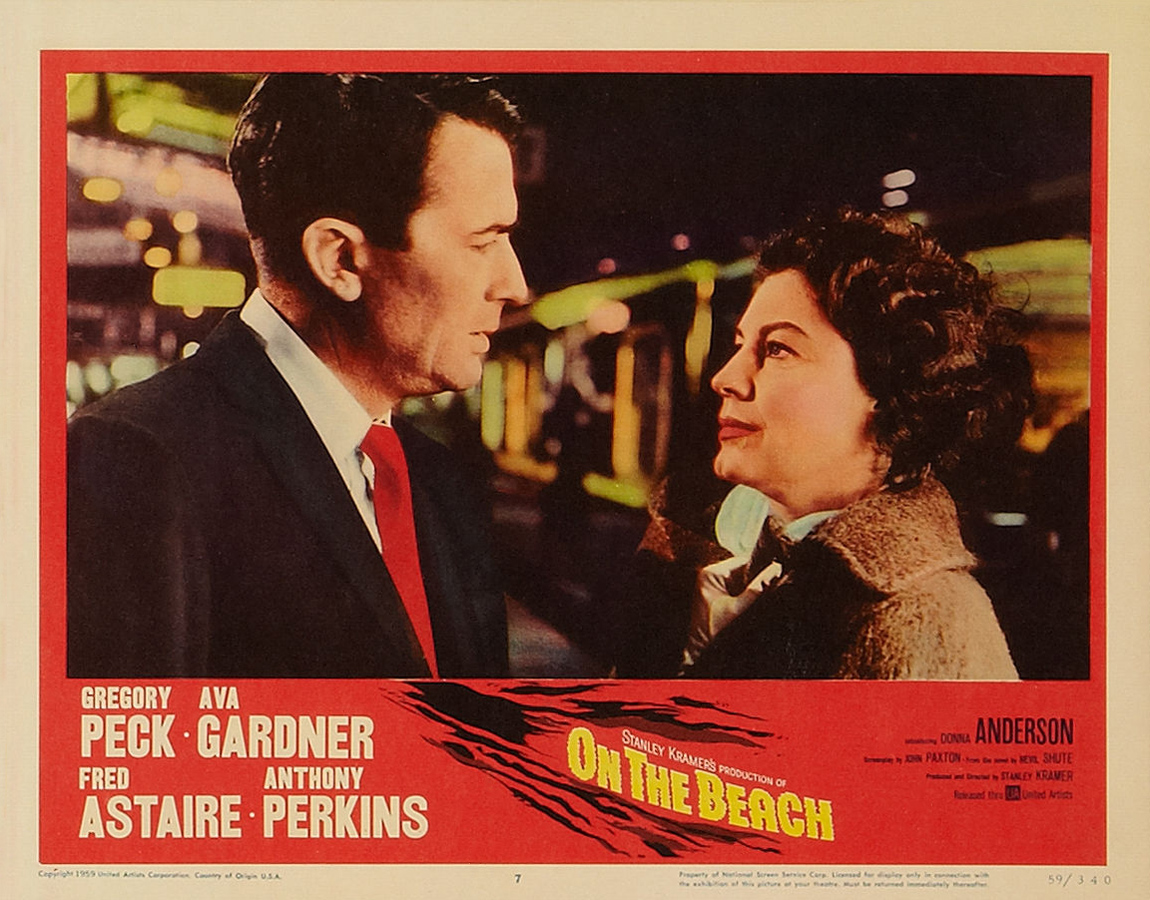
Today is the 55th anniversary of the release of Stanley Kramer’s On the Beach, starring Ava Gardner and Gregory Peck. Based on the novel by Nevil Shute, the film depicts the aftermath of a nuclear war, set in the near-future of the 1960s. With most of the world’s population dead, the film centres on a small group of people in Melbourne waiting for the lethal fallout to reach them.

Most of On the Beach was filmed on location, and a piece of local folklore is that Ava Gardner described Melbourne as “the perfect place to make a film about the end of the world”. Melbourne was a quiet little place in the 1950s, the first day of filming was abominably hot, and the media was horrible to Ava Gardner, so you could forgive her for being a bit grumpy. However, the quote was actually invented by a Sydney journalist with his tongue in cheek – whatever Ms Gardner’s thoughts about Melbourne, she was too professional to broadcast them publicly.

On the Beach made a financial loss, but was praised by critics, and has become a (slightly neglected) classic. The film created a ruckus in Melbourne, which went so crazy over seeing big Hollywood stars in their little city that they positively frightened most of the cast. Even the Australians cast as extras were mobbed as if they were A-listers. The film’s grim message was considered so traumatic that the Salvation Army, who play a small but significant role in the film, were on hand to provide counselling to people in cinemas.

Another of the film’s achievements was to bring attention to Waltzing Matilda, which is used to great effect during the closing scenes of On the Beach. It also opens the film, used to immediately signify an Australian setting. Waltzing Matilda became more popular after the film – not just in Australia, but overseas as well.

I read On the Beach as a young teenager, and found the story utterly compelling because for once the scenes of horror are set in Australia. The book has sometimes been criticised for showing the end of the world happening so quietly, and the characters going about their daily lives as calmly as possible. But I thought it made the story far more chilling, and far more real; many years later, the story is still vivid in my memory.

Ava was a medieval girl’s name, pronounced AH-vuh. It seems to have been a feminine form of the Germanic name Avo, originally a short form of names starting with Avi-. The meaning of it is much debated, but with no agreement reached. One theory is that it meant “desired”, to indicate a long wished-for child, but other ideas are that it came from aval, meaning “strength, power”, or from alfi, meaning “elf”.

In Norman English, the name produced Aveline, which evolved into Evelina, and is the basis for the surname Evelyn, also used as a first name. Another variant was Avis or Avice, which although it looks like the Latin for “bird”, is an elaboration of Ava. Av- names were quite fashionable in medieval times, thanks to Ava.

Two famous medieval Avas are Saint Ava, a Frankish princess who became a nun after being miraculously cured of blindness, and Ava of Melk, an anchorite and religious poet who was the first known female writer in the German language.

While Ava is still said AH-vuh in Germany and most European countries, in modern English it is usually pronounced AY-vuh. Some people see AY-vuh as a modern continuation of the medieval AH-vuh, while others see it as a completely separate modern English name, perhaps a variant of Eva.

While Ava may well have been understood as a form of Eva by some English-speakers, in continental Europe Ava was often understood as related to the Latin word Ave (said AH-veh), meaning “hail, greeting”, as in Ave Maria, or to similar words and names in modern languages. If we discount the English Ava (AY-vuh) on those grounds, then the European Ava (AH-vuh) must also be brought into question.

I don’t think it’s any coincidence that Ava has historically been more common in the United States than other English-speaking countries, because America has had significant immigration from Germany and Scandinavia. You could see the English pronunciation of Ava as the American pronunciation of the name. You’ve probably noticed that Americans tend to pronounce AY sounds rather than AH ones – for example, they often say the name Dana as DAY-nuh instead of DAH-nuh.

Just to add another layer, Ava is also a common Persian name for girls, meaning “voice, sound, call”, and said AH-vuh, making this a very multicultural name.

The name Ava was popularised in the United States in the 19th century by the Philadelphia socialite Ava Lowle Willing, who married John Astor IV (called Jack), from the prominent Astor family. They named their daughter Ava Alice Muriel Astor (born 1902), making this an early celebrity baby name. The Astors divorced, and not long after, Jack Astor was drowned during the Titanic disaster, making him the richest person to sail on the Titanic, and probably the richest person in the world at the time.

Ava Alice Muriel Astor married Prince Serge Obolensky (an admirer of Australian beauty Sheila Chisholm, and her husband’s cousin), and their wedding was the social event of the London season. Ava Astor went on to divorce and marry several more times in both England and the United States; pretty, supremely wealthy, and a patron of the arts, her name was well known on both sides of the Atlantic.

The actress Ava Gardner was born at the end of 1922, not long after Ava Astor had been photographed visiting Tutankhamen’s tomb in Egypt with her fiancé, Prince Obolensky. Unlike many other film stars, Ava Gardner never had to change her name to something more screen-worthy: it was already perfect – glamorous, fashionable, upper-class sounding, and not too common.

Ava Gardner’s film career did not make Ava a popular name in her lifetime. Continuously on the US Top 1000 since the late 19th century, and #751 in 1941 when Gardner first began getting parts in films, it peaked at #376 during the 1950s, at the height of Gardner’s success.

Ava left the US Top 1000 during the 1970s, when Gardner’s career had waned, but returned in the 1980s, after Ava Gardner suffered two strokes and became bedridden. Her serious health problems were widely publicised, putting her name back in the news, and no doubt there was genuine shock and sympathy for the Hollywood star’s condition.

The name Ava began rising after Ava Gardner’s death in 1990, and its popularity was further hastened by celebrities choosing it as a baby name, including Aidan Quinn, Heather Locklear, and Reese Witherspoon – in the last case at least, as a conscious tribute to the late Ava Gardner.

In Australia, the name Ava first ranked in the 1990s at #465, and rose so rapidly that it was in the Top 100 by 2003, debuting at #70. Bad luck to all those parents who called their baby girl Ava in the 1990s because they saw it an an underused name! Or maybe good luck that they jumped on the trend nice and early.

In 2005, Ava made a massive leap forward to #22, as this was the same year Hugh Jackman and his wife Deborra-Lee Furness welcomed their daughter Ava. In 2011 the name Ava joined the Top 10 at #9, the year after Lleyton Hewitt and Bec Cartright welcomed their youngest daughter and named her Ava.

Currently Ava is #3 nationally, #8 in New South Wales, #2 in Victoria, #8 in Queensland, #3 in Western Australia, #17 in Tasmania, #17 in the Northern Territory, and #2 in the Australian Capital Territory. It was one of the fastest-rising names at Baby Center Australia last year.

Ava is highly popular throughout the English-speaking world, being a Top 10 name in the United States, Canada, England/Wales, Ireland, Scotland, and New Zealand. However, it is slightly more popular in Australia than anywhere else, and has so far peaked higher here than in any other country.

Yes, Ava is very popular – so much so that some parents may be wary of choosing it. But it is also boosting the fortunes of other names, such as sound-alikes Ada, Avery, Aria, Arya and Ayla, and has risen in tandem with Eva, Evie, Evelyn and Ivy.

This modern classic has been very influential on contemporary girls’ name trends. Maybe you won’t use Ava because it is too popular, but you might use one of her style-sisters, like Isla or Maeve. Or perhaps something unusual like Alba, Avalon, Avril or Aveley now seems like a good choice, or an older name like Ida or Maida no longer seems fusty, but pretty and fresh.

The power of Ava is such that we will be hearing her echoes for many, many years to come.

POLL RESULTS
Ava received a respectable approval rating of 64%. 25% of people saw it as simple and elegant, but 19% thought it was too popular. Nobody thought the name Ava was ugly or tacky.

Famous Names: Heston and Tex

10 Wednesday Dec 2014

Posted by A.O. in Famous Names

≈ Comments Off on Famous Names: Heston and Tex

Tags

American names, birth notices, code names, controversial names, english names, famous namesakes, historical records, locational names, middle names, name history, name meaning, name popularity, name trends, names of American states, Native American names, nicknames, Old English names, rare names, screen names, surname names, UK name popularity, unisex names, US name popularity

653922-f8a752f2-67cc-11e4-b8fc-0b9f02c7ac0d

In 2014 Melbourne was named the world’s most liveable city by the Economist Intelligence Unit for the fourth year in a row. Their annual survey rates 140 cities out of 100 in healthcare, education, stability, culture and environment, and infrastructure, and Melbourne received 97.5 overall, with perfect scores in healthcare, education, and infrastructure.

To celebrate Melbourne’s continuing success, I thought we’d look at two names that have recently made the news there. Melbourne is not only a very cultured city, it’s also rather quirky, so I picked a couple of cultured, quirky guys.

HESTON
Heston Blumenthal is a multi award-winning British chef at the forefront of the “New Cookery”. Inspired by the playful nature of historic British cuisine, he follows a rigorously scientific approach to cooking, and has unleashed on an appreciative public such delicacies as snail porridge, chocolate wine, and bacon and egg ice cream.

Well known from his television shows, Heston has also been a celebrity chef on MasterChef Australia, been a guest at food festivals in Australia, and you can also buy his products through Coles (maybe you have already purchased one of his Christmas puddings). A great admirer of Australia, Heston has told Britons of Aussie food trends they should copy, including charcoal chicken, Tim Tams, quality beef, street food, and good coffee [article expired].

Early this year it was announced his triple Michelin-starred restaurant The Fat Duck, recognised as the best in Britain, will be temporarily relocated to Melbourne’s Crown Casino next February. He made a savvy move taking The Fat Duck to Melbourne, which has a marvellous foodie culture. The tasting menu is $525 per person (not including drinks), making The Fat Duck the most expensive eatery in Melbourne, more than twice as pricey as its current premier restaurant, Shannon Bennett‘s Vue du Monde.

Despite this hefty price tag, demand was so strong that a ballot system was introduced, with potential patrons having to register before the end of October. Unfortunately some scammers managed to hack into the ballot system, and are now scalping reservations for up to $1000 (you still have to pay for your food on top of that). However, never fear people with more than $1500 to spend on one meal, after six months the restaurant will morph into Dinner by Heston Blumenthal.

Heston is an English surname which comes from a place name; originally a Saxon village, Heston is now a suburb of west London. One of its claims to fame is that British prime minister Neville Chamberlain flew from Heston Aerodrome to Germany in 1938 for uselessly appeasing talks with Adolf Hitler. Naturalist Sir Joseph Banks, who discovered so many species of Australian plants and has the banksia flower named after him, is buried at St Leonards church in Heston.

Heston is usually thought to mean “enclosed settlement” in Old English, because it was part of an area surrounded by forest and woodland. For the same reason, another theory is that it meant “brushwood farm”.

The surname is strongly associated with Hollywood legend Charlton Heston, who starred in films such as The Ten Commandments, Ben-Hur, and Planet of the Apes. Born John Charles Carter, and known as Chuck or Charlie, he created his screen name by combining his mother’s maiden name, Charlton, with his stepfather’s surname.

Heston Blumenthal (who wasn’t rapt with his name as a child) asked his mother if he had been named after Charlton Heston, but she replied that she simply liked the name. When asked about the origins of his name, Blumenthal joked that perhaps his parents had a night out in London and parked at Heston Services (a motorway service station). The headline on the front cover of The Times was Top Chef Named After Parents’ Love of Motorway Services, requiring many apologies from Heston to his mum and dad.

Heston may be unusual, but it is by no means unique, being found thousands of times in historical records going back to the 16th century. There are a few examples of Heston being used as a first name in Australian records, although it is more common in the middle.

It’s a surname name for boys which is is rare yet on trend, and seems pretty cool, although I do think it will instantly remind everyone of the chef. Just like Mrs Blumenthal, you may be required to repeat that you just liked the name. Heston has also highlighted another issue with his name – American actress Tina Fey told him it translates as “shit on you” in Greek, so this is a name which does not travel well, at least not to Greece.

TEX
Tex Perkins is an Australian rock star, best known for fronting The Beasts of Bourbon and The Cruel Sea, but part of many other innovative musical acts. Recently he threw his hat in the ring as an independent candidate for the marginal seat of Albert Park in last month’s state election. His single policy? To get funding for the Palais Theatre in St. Kilda, a heritage-listed concert venue which needs a $40 million refurbishment.

Having gained the sitting Labor candidate’s promise of partial funding if he was elected, Tex directed his preferences to the ALP, then told people not to vote for him, but for Labor instead, and on election day, his How to Vote card instructed them to place the ALP first on the ballot paper. That’s taking self-effacement to a new level. His plan worked – Labor was elected, both in Albert Park and across the state. Let’s hope they honour their promise to the Palais. (Tex still got more than 1000 votes).

Tex is a nickname which is short for Texas, the US state. The state’s name comes from a Native American word in the Caddo language, tejas, meaning “friends, allies”. It was the name the Spanish called the Caddo, and the land they lived on, in today’s East Texas.

There is a Texas in Australia too, a town in southern Queensland. It is said that the name came about because of a territorial dispute between the owners of the land and some squatters – once the legalities were sorted out, the owners humorously called their land Texas because the United States and Mexico had a dispute over Texas, settled by the Mexican-American war. The town of Texas has featured in several country music songs, including one by James Blundell, who has spent quite a bit of time there.

The nickname Tex can be given to someone from the state of Texas, but can also be taken as a code name, and is a favourite for people with a cowboy, country, or Western persona, such as country music stars, cowboy actors, and rodeo promoters.

British soldier Keith “Tex” Banwell was the son of an Australian soldier, and lived in Australia for a few years as a child. A World War II hero who acted as General Montgomery’s double, he helped the Dutch Resistance, and was taken prisoner a few times, spending several months in Auschwitz after refusing to betray his friends. A character straight out of an adventure novel, Tex was his wartime code name.

Tex Morton (born Robert Lane) was a country music pioneer in New Zealand and Australia, and had a career that lasted from the 1930s to the 1970s. Dubbed the Singing Cowboy Sensation, the New Zealand-born yodelling whipcracker and sharpshooter performed at the Grand Old Opry and was a major contributor to the Australian country music scene. Tex Perkins (born Gregory Perkins) followed this lead, as he began in cowpunk, and has taken a Johnny Cash tribute show on the road.

Tex was in the US Top 1000 around the 1940s, but is now a rare name – only 11 boys were named Tex last year, although a further 11 were named Texas, perhaps called Tex on an everyday basis. It’s even less common in the UK, where less than three boys (maybe none) have ever been named Tex, although 19 girls (a meteoric rise) were named Texas, and maybe have Tex as a nickname.

In Victoria, 6 boys were named Tex in 2012, and it’s a name I see fairly regularly in birth notices; to me it seems as if the numbers might even have risen. Perhaps Tex Perkins is helping the name along, although I don’t know if any have actually been named in honour of the rock star. Tex is a great little nickname name, with a cool X-ending like Max, Rex, or Fox. It has a bit of a cowboy feel to it, although Tex Perkins makes it seem a bit rockstar too.

Two cool, charismatic boys names that are a little out of the ordinary – but which one do you prefer?

POLL RESULTS
Both Heston and Tex received approval ratings of 40%, but more people loved the name Tex.

(Picture shows Tex Perkins outside the Palais Theatre; photo from the Herald Sun)

Famous Name: Georgette

03 Wednesday Dec 2014

Posted by A.O. in Famous Names

≈ 6 Comments

Tags

fabric names, famous namesakes, French names, historical records, name history, name meaning, names of ships, nicknames, vintage names

786px-SSGeorgette-450x343

The SS Georgette was a steamship with a short, unsuccessful career, but in the four years of her existence, played a role in two daring rescues. Built in Scotland in 1872, she came to Western Australia the following year as part of a passenger service between Fremantle, Albany, and Geraldton.

In April 1876, an American whaler called the Catalpa rescued Fenian political prisoners from Fremantle Gaol: the Fenians were Irish republican nationalists, and the organisation was founded in the United States and named after the Fianna. The Catalpa dropped anchor in international waters, and sent a whaleboat to collect the prisoners. While they were still rowing back to the Catalpa, the Georgette (which had been commandeered by the navy) was sent to intercept them, but was too late – the prisoners had already boarded the Catalpa.

The next day, having received official orders, the Georgette returned and demanded the prisoners back, but being in international waters, the Catalpa told them to buzz off. After firing a warning shot and risking a diplomatic incident, the Georgette rather pointlessly pursued the Catalpa until it was low on fuel. The Fenians made it safely to America in a few months, and I think we’ll hear more of their story next year, because now we have to get back to the Georgette.

1876 wasn’t a good year for the Georgette, because around midnight on December 1, while taking passengers and jarrah wood from Fremantle to Adelaide, she sprung a leak near Margaret River. The ship’s pumps would not work, and by 4 am, all the passengers and crew were desperately bailing water out with buckets while the captain made for the shore. The rising water extinguished the ship’s fires, leaving her drifting a few kilometres from the coastline. Lifeboats were lowered, but the first one was thrown against the ship by a wave and broke in half; some of its occupants were rescued by a second lifeboat, but several women and children perished.

As the Georgette drifted into Calgardup Bay, it was spotted from the shore by an Indigenous stockman named Sam Yebble Isaacs, who was employed by the Bussells, a prosperous family of early settlers that the city of Busselton is named for. Sam ran for the homestead to raise the alarm, but the only people there were the Bussells’ sixteen-year-old daughter, Grace, and her mother.

Grace and Sam rode down to the bay on horseback to find the Georgette had now run aground and was breaking up. To the amazement of the watching shipwreck victims, Grace and Sam rode straight down the cliffs and out into the surf, swimming their horses into the sea. They carried as many people to shore as they could, and Grace and Sam continued their exhausting rescue mission for four hours, as the captain kept launching lifeboats which immediately capsized in the dangerous surf. Out of the fifty people on board the Georgette, all but a dozen were saved.

When the survivors had all been carried to Redgate Beach, the Bussell family sent a bullock dray to collect them, and provided food and accommodation for two days, until a ship could be found to take them to Fremantle.

Grace Bussell’s heroism was reported around the world, and she was hailed as “the Grace Darling of the West” – Grace Darling was a young Englishwoman who became extremely famous for helping to rescue the survivors of a shipwreck. Poems were written in Grace Bussell’s honour; the Royal Humane Society awarded her a silver medal for bravery, and the British government gave her a gold watch and chain.

In contrast, Sam Isaacs received far less attention, even though it had been he who first found the shipwreck, and who had worked alongside Grace for hours. His role was underplayed, or even left out altogether, and when he was mentioned, he was often just identified as a “black servant”.

Sam was awarded a bronze medal for bravery by the Royal Humane Society, and Isaacs family history tells us that he was granted 100 acres of land as part of his reward, became a farmer, and raised a large family. There is a monument to Sam Isaacs in Bussellton Park, and another intriguing American connection is that Sam’s father was a Native American who had worked as a whaler. Sam still has descendants in the area.

Grace’s story had a rather romantic twist because a young surveyor from Perth named Frederick Drake-Brockman heard of her heroic actions. Deciding that this was the girl who must become his future wife, he rode 300 kilometres to meet her, and four years later the couple got married in Bussellton.

Frederick, who was also from a prominent pioneering family, later took on the important role of Surveyor General. As a surveyor, he named the coastal village of Gracetown after his wife, as well as the wheatbelt town of Lake Grace. Grace and Frederick had seven children, and two of their sons became decorated World War I heroes.

At Redgate Beach a large rock that sits off the coast is called Isaacs Rock, and there is a plaque commemorating Grace’s bravery; the ship’s bell from the Georgette is on display at the Augusta Historical Museum. The Georgette itself, which ended lives and changed others, lies beneath the waves, and on a clear day, when the tide is low, you may still be able to see her remains.

Georgette is a feminine form of Georges, the French form of George. A famous namesake is actress Georgette “Googie” Withers, who married an Australian actor and moved here in the 1950s. She had a successful career in the theatre, on Broadway, and on television. She was named an Honourary Officer of the Order of Australia in the 1980s, and only passed away a few years ago at the age of 90.

The name will probably remind many people of British author Georgette Heyer, who wrote popular novels from the 1920s to the 1970s. She virtually created the genre of the historical romance, and any name nerd who has become enamoured with the Georgian and Regency eras has probably read a few of Heyer’s well-researched escapist melodramas, filled with dashing highwaymen, damsels in distress, rich earls, bounders, cads, and beautiful girls who become the toast of society but want to marry for love.

Georgette is also a fabric, a thin crêpe material originally made from silk. It was named after the early 20th century French dressmaker, Georgette de la Plante. Georgette is notable for its crinkly appearance, and was a particular favourite for dresses in the 1930s.

Although it has never charted in Australia, Georgette is found reasonably often in historical records from the late 19th century up to the 1970s. Some of the Australian Georgettes have French surnames, and it also made a rather handy middle name, going well with a variety of first names.

Georgette has something of a period flavour, as it was most popular around the turn of the century, and associated with Regency romances and 1930s fashions. On the other hand, it also seems like a viable choice for a baby born today. Vintage names are back in style, George names for girls are fairly common, and we’re used to names ending in -ette, like Juliette.

This is an elegant name that’s more sophisticated than the standard Georgia or Georgina. It doesn’t appeal to everyone, but some will discern its charms. Georgie would be the standard nickname in Australia, but the French would use Gigi (tres chic!), and Jette would be a very cool nickname.

POLL RESULTS
Georgette received an approval rating of 55%. 21% of people saw it as an unusual, stylish vintage choice, but 16% thought it was ugly and frumpy. Only one person thought Georgette should just be used as a middle name.

Famous Name: Owen

26 Wednesday Nov 2014

Posted by A.O. in Famous Names

≈ 6 Comments

Tags

Arthurian names, classic names, famous namesakes, Frankish names, French names, Greek names, Irish names, name history, name meaning, name popularity, popular names, royal names, saints names, Shakespearean names, Welsh names

P08567.002

Owen Glendower Howell-Price was one of a family of brothers from the greater Sydney region who served with distinction during World War I. Owen was studying agriculture when war broke out, and he was commissioned second lieutenant in the 3rd Battalion of the Australian Imperial Forces.

Appointed assistant adjutant, he was immediately promoted when the adjutant was killed on the first day of the Gallipoli landing. Promoted to captain, he won the Military Cross for his fighting at Lone Pine, and due to heavy casualties, was temporarily in charge of the whole battalion. A fine trainer and organiser, he continued fighting even when wounded.

After the evacuation from Gallipoli, Owen was sent to northern France where his courage set a magnificent example during those bloody battles, always placing himself in the most dangerous positions. He was awarded a Distinguished Service Order for his leadership abilities, and promoted to lieutenant-colonel.

In 1916 Owen was shot in the head, and died the following day; his last words were: “Give my love to the battalion”. The young officer, just 26 when he died, was perhaps too serious and responsible for real popularity, but behind his stern manner lay a deep loyalty to his men, and his final thoughts were for them.

Owen’s brothers Philip and Richmond were also killed in France, so of their six boys, five of whom served overseas during World War I, the Howell-Prices lost half.

Owen is the modern form of the medieval Welsh name Owain. One of the most famous of its namesakes is Owain mab Urien, a 6th century prince from one of the kingdoms of northern Britain who fought valiantly against the Angles, and was killed in battle, thus ending any hope that the kingdom could continue.

So celebrated were the victories of he and his father, King Urien, that they were given a place in Arthurian mythology as Knights of the Round Table, despite being more than a generation too late to be contemporaries of any historical King Arthur. In Arthurian legend, Owain is often said to be King Arthur’s nephew, and the son of Morgan le Fay.

There have been several other British and Welsh kings and princes named Owain. Owain ap Gruffudd was known as Owain the Great, and the first to be known as Prince of Wales. Owen of the Red Hand was a Welsh soldier who fought with the French against the English during the Hundred Years War, and was a claimant of the title Prince of Wales until his assassination. Like King Arthur, he is supposed to be merely sleeping until he can become king of the Britons.

Owen Glyndŵr (or Glendower) was the last native Welshman to hold the title of Prince of Wales, and instigated the Welsh revolt against Henry IV. His uprising was fiercely fought, long-running, and initially quite successful, but ultimately the Welsh were defeated. Owen Glyndŵr evaded capture, ignoring offers of a royal pardon from Henry V, and was never betrayed, despite having a large reward on his head.

He features in William Shakespeare’s Henry IV, Part 1, and is an important figure in Welsh nationalism, on par with King Arthur, and has the same familiar theme of simply waiting until Wales is threatened so that he can once again rise to its defence. It was this Welsh national hero that Owen Howell-Price was named for: his father was born in Wales, and his mother was of Welsh heritage.

Owen Tudor, a courtier of Henry IV whose father had been one of Owen Glendower’s rebels, fought for the English at Agincourt. He secretly married Queen Catherine Valois, the widow of Henry V, and became the founder of the Tudor dynasty, which included the powerhouse Henry VIII, and reached its final flowering in Elizabeth I.

There is a 7th century Saint Owen, a man of high rank who became a Benedictine monk in England, and a French Saint Owen, or more correctly Ouen, who was a Frankish bishop of Rouen. Ouen is based on the Frankish name Audoin, perhaps based on a Germanic name such as Odwin. Yvain is the usual way of transliterating Sir Owain’s name in medieval French chronicles.

The origin of the name Owain is not known for sure. It is often said to be a Welsh form of the Greek name Eugenius or Eugene, but another theory is that it is a Welsh form of the medieval Irish name Éoġan (modernised as Eoghan), which is said exactly the same as Owen. Unfortunately, it is not quite sure what this means either – some say it means “born from the yew tree”, although others are of the opinion that this is also a form of Eugenius, bringing us back full circle.

Although etymologists cannot agree among themselves, what is clear is that Owain shares a similar sound with several other names, like Eoghan and Eoin, and may have been understood as their Welsh equivalent, even if of a different origin.

Owen is a classic name which has never left the charts in Australia. It was #112 in the 1900s, and joined the Top 100 the following decade, remaining there until the 1950s. It reached its lowest point in the 1990s at #166, then began climbing steeply. It reached the Top 100 again in 1997 at #85, then returned in 2003 at the same level. Currently it is #73 nationally, #90 in New South Wales, #81 in Victoria, #86 in Queensland, #46 in Western Australia, #47 in Tasmania, where it was the fastest-rising boys’ name last year, and #67 in the Australian Capital Territory.

This is a handsome, solid classic which has never been out of the Top 200. It has a rich royal history which has become intertwined with romantic legend, yet it feels very modern. Rising gently in the charts, it is now at its highest level of popularity, and fits in perfectly with contemporary name trends. It’s a softer-sounding boys’ name that is still very masculine, and even heroic, which might make it easy for parents to agree upon it. It is certainly a very easy name to own, and if you choose it, you will be owin’ nobody an explanation. Oh, when it’s time to pick a baby name, it’s Owen for the win!

POLL RESULTS
Owen received an outstanding approval rating of 85%, making it one of the highest-rated names of 2014. People saw the name Owen as cute on a little boy but dignified on a grown man (28%), handsome and classic (23%), and strong and masculine (14%), while 12% loved its connection to Arthurian myth and Welsh legend. However, 6% thought it was too popular. Nobody thought the name Owen was cutesy or wussy.

(Picture shows the officers of the 3rd Battalion; Owen Howell-Price is second from the right in the second row from the front. Of these 26 men, 14 of them were killed in battle. Photo from the Australian War Memorial).

Famous Name: Caleb

19 Wednesday Nov 2014

Posted by A.O. in Famous Names

≈ Comments Off on Famous Name: Caleb

Tags

animal names, baby name books, Biblical names, controversial names, famous namesakes, fictional namesakes, hebrew names, modern classics, name history, name meaning, name trends, nicknames, popular names, saints names, tribal names

148170-a35f84fa-ca7d-11e3-9aee-4ab1c4ff1b91

Duckbour Caleb James Shang, known as Caleb, or by his Chinese name Lee, or the nickname “Charlie”, was one of the more unlikely heroes of World War I. Quiet, soft-spoken and shy, the slightly-built Queenslander from far north Cairns was 170 cm tall and weighed 51 kg. Furthermore, as the son of a Chinese-born father and Australian-born mother, nobody expected him to even enlist, as only those of European ancestry were considered eligible for military service at this time, and it was unusual for people of Asian ancestry to join the armed forces.

Yet both Caleb and his brother Sidney enlisted in 1916, and in 1917 Caleb joined the 47th Battalion in time to join heavy fighting in Flanders on the Western Front. He later fought on the Somme during the heaviest attack ever faced by Australian soldiers, and after his battalion was disbanded due to severe casualties, he served in the 45th Battalion during the Battle of Amiens. Here he was wounded, and evacuated to England before being sent back to Australia when the war was over.

Caleb was a runner, signaller, and scout, tirelessly running messages and bringing supplies at all hours, signalling while exposed to the enemy, constantly volunteering for dangerous missions into enemy territory, and attacking snipers in broad daylight. The runner’s job was one of the most dangerous on the Western Front, and had a terrifying casualty rate, yet for most of his war service, Caleb got through these perilous situations without a scratch.

Caleb’s outstanding endurance, contempt for danger, gallantry, skilful resourcefulness, and devotion to duty inspired those around him, and earned him the admiration of both the officers and men. The first Australian soldier of Chinese descent to be decorated, the most highly decorated Chinese Australian soldier of World War I, and the most highly decorated Queensland soldier of his time, he received the Distinguished Conduct Medal twice, and was awarded the Military Medal.

When he returned home to Cairns in 1919, Private Caleb Shang received a hero’s welcome, with 3000 people turning out to jubilantly greet him on the wharf at dawn. The mayor was there, as were the Returned Soldiers League, and the Cairns Citizen Brass Band played See the Conquering Hero Comes. The Cairns Post raised a subscription fund to start him off in civilian life, and more than £45 was raised by the townspeople.

During World War II, Caleb served with the Volunteer Defence Force in Cairns; during his service he suffered several head injuries, which may explain why he later spent time in a psychiatric hospital. In the 1940s, there was heightened anti-Asian feeling due to the war against Japan, and Caleb was sometimes the target of racist slurs, as few people knew of his distinguished war record and volunteer service. In 1943, he attended his only Anzac Day parade, apparently in response to the racism he encountered during World War II.

According to Caleb’s sister Alma, he never talked about the war to his family. In 2002, Caleb’s daughter Delta, then in her 70s, described her father as reserved, modest, understanding, kind and gentle, speaking very little about his war service. She could not guess what motivated him to enlist, but knew that her father loved a challenge.

Caleb Shang’s story is not completely unlike that of Caleb in the Bible. According to the Old Testament, Caleb was one of twelve spies sent out by Moses into the land of Canaan. Each spy was the head of one of the twelve tribes of Israel, and Caleb represented the tribe of Judah. Ten of the spies reported back that it would be impossible to conquer the land, but Joshua and Caleb brought back encouraging reports to Moses. Because of Caleb and Joshua’s courage and faith, they were the only two ancient Israelites allowed to reach the Promised Land, and Caleb was granted lands around Hebron, now in Palestine.

There is another Caleb mentioned in the Bible, the great-grandson of Judah. Jewish tradition says these two Calebs are the same person, which would explain why Caleb was the head of the tribe. However, biblical scholars find this unlikely – in fact, they are not even sure that Caleb the spy was an Israelite by birth, as the Bible indicates he was a Kenizzite, from a desert tribe. He might have been accepted into the tribe of Judah, and if so, becoming its head would have indicated someone of really superior ability. That’s more impressive than just inheriting the role from great-granddaddy.

Bible historians believe the story of Caleb represents the movement of a clan which invaded Palestine from the south, settled around Hebron, and became gradually absorbed into the tribe of Judah. According to Bible genealogies, the Calebites were descendants of Esau, twin brother to Jacob, so were closely related to the Israelites, and natural friends and allies. (Nabal, the grumpy first husband of the prophetess Abigail, was a Calebite). The Bible story is a way to explain how a non-Israelite desert people became part of the tribe of Judah.

The original Hebrew spelling of the name Caleb is identical with the Hebrew word kelev, meaning “dog”. Animal names are not unusual in the Old Testament, although nobody knows for sure why Caleb might have been called this. Considering his non-Israelite origins, it’s possible that his name was non-Hebrew, and just sounded like the Hebrew word for dog.

However, some scholars think it may have been given to indicate his original tribal totem as an ethnic signifier; if so, the totem would have referred to the Canaan dog. This is a breed of pariah dog which has existed since biblical times, and is one of the oldest breeds of dog in the world. The Old Testament makes several references to these dogs, both wild ones roaming in packs through the desert, and those which worked alongside humans. The Canaan dog is modern Israel’s national dog.

Canaan dogs are strong, athletic, agile and healthy, with a well-developed survival instinct. Highly intelligent and naturally defensive, they make excellent watch dogs, who bark readily as a warning. They are not aggressive towards humans, being cautious and even docile, and remain strongly attached and loyal to their owners. They are still used as sheep dogs by the Bedouins.

For a tribe to take the Canaan dog as their totem, they would have seen themselves as survivors in the harsh desert – not fighters ready to attack, but willing to defend their territory. Baby name books are generally reluctant to admit the meaning of “dog” to Caleb, and often gloss it as “faithful” or “devoted to God”. Although you can see the Caleb from the Bible story as having canine faithfulness, the original tribal totem seems much more likely to indicate a people tough enough to get through anything.

Caleb has a long history as a Christian name, because a 5th century king of Axum (around modern-day Ethiopia) was named Kaleb; he is considered a saint in the Orthodox tradition. Caleb has been used as an English name since at least the 16th century, and became much more common after the Protestant Reformation (Kaleb has been used almost as long by English-speakers, but not so widely).

A fictional namesake is the hero of William Godwin’s radical 18th century novel, Things as They Are, or The Adventures of Caleb Williams. A raging commercial success, the book was both condemned as dangerous anarchist propaganda, and glorified as an inspiring work of genius. Another is Caleb “Cal” Trask from John Steinbeck’s East of Eden, portrayed on film by James Dean. There have been many other Calebs in fiction, right up to the present, with Pretty Little Liars, and Divergent.

Caleb has charted since the 1970s, when it debuted at #443. It rose steeply until joining the Top 100 in 1996 at #83, but has never been higher than #50. Currently it is #72 nationally, #71 in New South Wales, #95 in Victoria, #66 in Queensland, #61 in Tasmania, where it was one of the fastest-rising boy’s names of last year, and #78 in the Australian Capital Territory.

This is a handsome modern classic – one of the Old Testament biblical names for boys which sounded fresher and more exotic than the familiar Bible classics. Despite being popular for many years, it has remained relatively stable in the bottom half of the Top 100, making it a safe choice. Perhaps the meaning has dogged its footsteps, but I can’t really see any problem as dogs are our beloved companions, known for their beautiful, faithful natures. Cal, Cale or Cabe can be used as nicknames.

POLL RESULTS
Caleb received an excellent approval rating of 84%, making it one of the highest-rated names of 2014. People saw the name Caleb as a modern classic with plenty of history (30%), strong and masculine (19%), and handsome or cute (13%). However, 9% thought it was too popular. 15% of people thought the possible meaning of “dog” wasn’t a problem, as dogs are faithful, smart, and loving, while 6% were really bothered by the canine connection. Nobody thought the name Caleb was harsh or ugly.

Famous Name: Gough

12 Wednesday Nov 2014

Posted by A.O. in Famous Names

≈ 6 Comments

Tags

choosing baby names, famous namesakes, historical records, middle names, name history, name meaning, rare names, surname names, Welsh names

971657_10151752994791789_804766665_n

November 11 is Remembrance Day, but it’s important in Australian history for another reason: the constitutional crisis of 1975, when Labor Prime Minister Gough Whitlam was dismissed from office by Governor-General Sir John Kerr. The Opposition had used its control of the Senate to block supply bills which had been passed by the lower house – a move which was within the letter of the law, but went against parliamentary tradition. Without supply, the government was unable to finance itself, and effectively stymied.

The Governor-General took the highly unusual step of breaking the deadlock by dismissing Gough Whitlam without any warning, and installing Opposition Leader Malcolm Fraser as caretaker prime minister until an election could be held. Known as “The Dismissal”, Tuesday November 11 1975 was a day of high drama, with the proclamation read from the steps of Parliament House to a crowd of angry ALP supporters, all booing furiously, until it finished with the traditional sign-off, “God save the queen”.

Gough Whitlam then made his famous speech, which began, Well may we say “God save the queen”, because nothing will save the Governor-General, went on to call Malcolm Fraser Kerr’s cur, and ended by urging his followers to maintain the rage until polling day. These statements became Labor catch phrases, even battle cries, although as it transpired, not enough people maintained sufficient rage, as the Coalition won the pre-Christmas election in a record victory. By some accounts, the Coalition senators would have eventually caved in, rendering The Dismissal unnecessary.

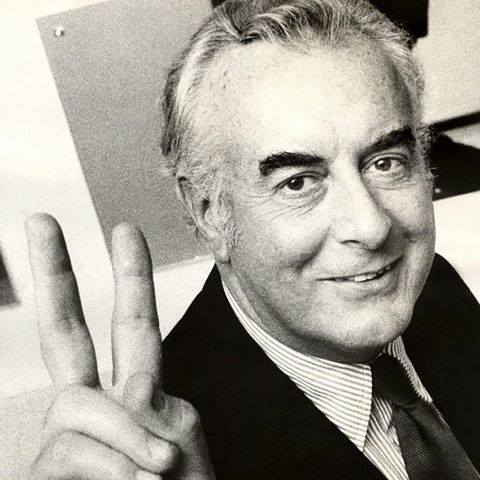
Edward Gough Whitlam, always known by his middle name, was the 21st Prime Minister of Australia, and an enduring icon of the Labor Party. Tall, cultured, articulate, and witty, he modernised the ALP, and after it had spent 23 years in the political wilderness, was able to turn the party from one of protest into a viable alternative government.

Elected in 1972 under the simple but effective slogan It’s Time, Gough Whitlam was a whirlwind of change in the nation, enacting a record number of bills during his three years in office. Troops were withdrawn from the Vietnam War, and draft-dodgers released from prison; a universal health care system was brought in, now called Medicare.

The Family Court was created, Legal Aid established, the death penalty abolished, and no-fault divorce brought in. The Department of Aboriginal Affairs was established, the Racial Discrimination Act enacted, the Aboriginal Land Rights Act passed, and the prime minister handed back traditional lands in the Northern Territory to their original owners. Whitlam was the first prime minister to visit communist China, granted independence to Papua New Guinea, changed Australia’s stance on South Africa’s apartheid policy, and fought against nuclear testing in the Pacific.

His list of achievements roll on and on like the credits of an epic movie. He supported women’s rights, appointing a women’s advisor to the Prime Minister, pushing for equal pay, bringing in welfare for mothers, and increased access to contraception. He supported young people, ending conscription, lowering the voting age to 18, introducing youth radio 2JJ, and abolishing university fees. He supported the arts and the environment, gave us our own national anthem, dumped the out-dated system of knights and dames, got rid of radio and TV licenses, and connected homes to sewerage. Gough brought Australia into the modern age.

After they had both left parliament, former prime ministers Gough Whitlam and Malcolm Fraser made friends and even worked together on political causes, but Whitlam never spoke to Kerr again. Gough Whitlam became an elder statesman in the ALP, and was the first person to be given life membership of the party. The oldest Australian former prime minister thus far, he passed away this year on October 21 aged 98, and his state memorial service was held on November 5, attended by the current, and six former living prime ministers.

Gough is a Welsh surname meaning “red”; the name would have been given to someone with a ruddy complexion or red hair. The surname may pre-date the Norman Conquest, and originates from the Powys region. It is pronounced to rhyme with cough.

Gough has been used as a personal name since the 17th century, mostly for males. It isn’t uncommon in Australian historical records, although far more frequently found as a middle name than a first (just as with Gough Whitlam). Although it isn’t particularly strange, it is very closely associated with the former prime minister, and some Australians may think of it as a “one person name”.

I am sure that at this point I would have warned parents of the obvious pitfalls of using the name Gough on a baby – except that I know someone, have known them very well for a long time in fact, named Gough. He was born during Gough Whitlam’s term of office, and his parents named him in honour of the prime minister, for whom they had an enormous respect.

As it turned out (and this is something else I would have warned about), their son did not share their ideals when he grew up, and his politics are much further to the right than theirs. It sounds as if Gough’s parents did everything wrong, making a foolish and perhaps even selfish decision to saddle their son with a name which might cause him embarrassment in the future.

But the truth is that Gough loves his name, and although he has a perfectly serviceable middle name that he could have used instead, nothing would induce him to be called anything but Gough. Like many people with unusual names, he finds it a wonderful ice-breaker, and nobody ever forgets his name. And because it’s such a famous name, everyone knows how to spell and pronounce it too, which isn’t always the case with unusual names.

That he more or less views Gough Whitlam as a blot on the politico-historical landscape is a source of great amusement to him, and he says people no more expect him to be left-wing than they would expect someone named Elvis to be a great singer. He doesn’t feel that he is under any pressure to emulate Gough Whitlam in any way, but I suppose some might wonder if he has unconsciously fought against his name by taking a very different path (although he has a strong ethic of service to his community, like the former PM).

So I can’t in all conscience warn you that you are making a mistake in choosing the name Gough for your baby. It might have more advantages than you’d initially imagine, and there is no evidence that it will ruin your child’s life or cause name bullying. Perhaps now that Gough Whitlam has passed away after a long and honourable lifetime of public service, it seems even more usable than it did in the early 1970s.

However, I am still fairly sure that even if you insist that your son is named for your great-grandfather Frank Gough who married his cousin Annie Gough and called his first child Gough Gough, everyone will assume that he is really named after Gough Whitlam and that you have outed yourself as a “true believer”. Not that there’s any dishonour in that.

POLL RESULTS
Gough received an approval rating of 46%. 36% of people thought it sounded too much like cough or off, but 15% saw it as strong and unforgettable. 4% of people were put off the name by Gough Whitlam.

(Photo of Gough Whitlam from the Sydney Morning Herald)

← Older posts
Newer posts →

Enter your email address to follow this blog

Categories

Archives

Recent Comments

A.O.'s avatarwaltzingmorethanmati… on Zarah Zaynab and Wolfgang…
Madelyn's avatarMadelyn on Zarah Zaynab and Wolfgang…
JD's avatardrperegrine on Can Phoebe Complete This …
A.O.'s avatarwaltzingmorethanmati… on Rua and Rhoa
redrover23's avatarredrover23 on Rua and Rhoa

Blogroll

  • Appellation Mountain
  • Baby Name Pondering
  • Babynamelover's Blog
  • British Baby Names
  • Clare's Name News
  • For Real Baby Names
  • Geek Baby Names
  • Name Candy
  • Nameberry
  • Nancy's Baby Names
  • Ren's Baby Name Blog
  • Sancta Nomina
  • Swistle: Baby Names
  • The Art of Naming
  • The Baby Name Wizard
  • The Beauty of Names
  • Tulip By Any Name

RSS Feed

  • RSS - Posts

RSS Posts

  • Celebrity Baby News: Melanie Vallejo and Matt Kingston
  • Names from the TV Show “Cleverman”
  • Can Phoebe Complete This Sibset?
  • Zarah Zaynab and Wolfgang Winter
  • Baby, How Did You Get That Name?
  • Celebrity Baby News: Media Babies
  • Celebrity Baby News: Adelaide Crows Babies
  • Celebrity Baby News: Chris and Rebecca Judd
  • Names at Work: Name News From the World of Business and Employment
  • Celebrity Baby News: Sporting Round Up

Currently Popular

  • Rare Boys Names From the 1950s
  • The Top 100 Names of the 1940s in New South Wales
  • Girls Names From Stars and Constellations
  • Celebrity Baby News: Jacinta Allan and Yorick Piper
  • Celebrity Baby News: Livinia Nixon and Alistair Jack

Tags

celebrity baby names celebrity sibsets english names famous namesakes fictional namesakes honouring locational names middle names name combinations name history name meaning name popularity name trends nicknames popular names saints names sibsets surname names twin sets unisex names

Create a free website or blog at WordPress.com.

Privacy & Cookies: This site uses cookies. By continuing to use this website, you agree to their use.
To find out more, including how to control cookies, see here: Cookie Policy
  • Subscribe Subscribed
    • Waltzing More Than Matilda
    • Join 517 other subscribers
    • Already have a WordPress.com account? Log in now.
    • Waltzing More Than Matilda
    • Subscribe Subscribed
    • Sign up
    • Log in
    • Report this content
    • View site in Reader
    • Manage subscriptions
    • Collapse this bar
 

Loading Comments...