• About
  • Best Baby Names
  • Celebrity Baby Names
  • Celebrity Baby Names – Current
  • Celebrity Baby Names – Past
  • Featured Boys Names
  • Featured Girls Names
  • Featured Unisex Names
  • Links to Name Data
  • Waltzing on the Web

Waltzing More Than Matilda

~ Names with an Australian Bias of Democratic Temper

Waltzing More Than Matilda

Category Archives: Famous Names

Famous Name: Ascot

27 Wednesday Jun 2012

Posted by A.O. in Famous Names

≈ 4 Comments

Tags

english names, locational names, middle names, name combinations, name history, name meaning, Nameberry, Saxon names, Stupid Kid Names, The Beauty of Names, vocabulary words

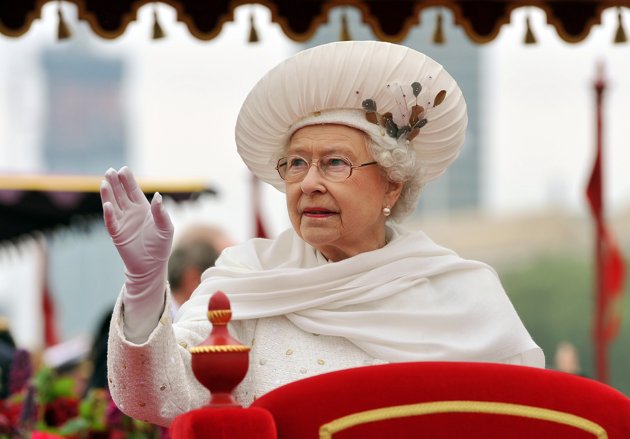
We began the Famous Names of June with the Queen’s Diamond Jubilee and that’s how we shall end it, for last week was Royal Ascot in Britain. This famous race meeting is one of the high points of the British social calendar, and is attended by Queen Elizabeth and other members of the royal family, who arrive each day in a horse-drawn carriage.

This year there was a record crowd of around 10 000 Aussies at Royal Ascot; so many descended on the racecourse that several bookies were taking bets in Australian dollars. They were there to see Australia’s favourite mare, Black Caviar – one of the racing world’s greatest sprinters, who has won a record number of races in her career. She had already won 21 consecutive races from 21 starts – could she make it 22? Could she win internationally? And could she win at Ascot?

It turned out she could – by just a whisker. It was a nail-biting photo finish to the Diamond Jubilee Stakes on June 23 which left the Australian fans jubilating. Black Caviar won her owners more than $6 million and she got to meet the Queen, who patted her nose. Unfortunately, the mare sustained injuries during the race, so it may be the last one of her career.

Ascot is an upmarket village in Berkshire, its name from the Saxon for “eastern cottage”; probably referring to it being to the east of the royal estate of Easthamstead, where Edward III had a royal hunting lodge in Windsor Forest. For most its history, Ascot was a large and dangerous heathland, frequented by highwayman and other rogues. You seemed to be allowed to shoot them on sight, like other vermin.

It was Queen Anne who discovered what a wonderful place this empty heath made for galloping around on one’s hunting horse. It was conveniently located just five miles from Windsor Castle, and presumably she had bodyguards to shoot the highwayman so they didn’t bother her as she bolted around the heath on her plunging steed.

As it had proved such a superb place for horses to gallop, Queen Anne founded Ascot Racecourse in 1711; the first race was three heats of four miles long, so it was an endurance test more than anything else. Not only is the Racecourse a vital part of the village, but Queen’s Anne’s “Her Majesty’s Plate” became Royal Ascot Week.

The Royal Enclosure at Ascot (an innovation of King George III) is a pinnacle of sartorial elegance with a very strict dress code. (Fun fact: 400 Australians are admitted to the Royal Enclosure each year on a ballot system). Not surprisingly, Ascot has given its name to at least two items of men’s fashion.

The ascot tie, a type of cravat, dates from the early 19th century, although by the Edwardian era it was no longer correct dress for Ascot, and had become casual wear for playing sport in. If you are having trouble picturing an ascot, an orange one is worn by Freddie in the Scooby-Doo cartoons, as ascots had a revival during the psychedelic days of the 1960s and ’70s. The ascot cap is a hard flat cap that was popular in the early 20th century, and presumably was considered suitable for wearing to Ascot, although information on its history is pretty thin.

There are several suburbs in Australia named Ascot after the one in Britain; the one in Perth even has its own racecourse. Although lacking in royal history, it’s over a century old and still an excellent racecourse; the finest in Western Australia.

Ascot is occasionally used as a boy’s name, although apparently it’s listed on a website called Stupid Kid Names (kind of mean, and not written in very good English as you can probably tell from the title alone – I can’t link to it as it’s chock-full of foul language, but I’m sure you can find it if you want to). However, this website also censures such perfectly normal names as Aidan, Asher and Declan (I couldn’t be bothered reading past D in the index), so I wouldn’t pay any attention to that.

I was happy to see that our own Bree from The Beauty of Names stuck up for several of these unfairly vilified names at Nameberry, and if you happen to find your own name on this site, don’t sweat it. Some people have psychological issues and  a limited vocabulary, and although you may wish they would get counselling and buy a thesaurus before starting a website, they are at perfect liberty to do otherwise under our democratic system.

Ascot is a place name with an interesting history, and connections to royalty, fashion and the sporting world. It may appeal to you if you are looking for an unusual name which is both modern and somewhat distinguished, and it sounds a bit similar to Astor and Aston. I think it would work well in the middle position, as it is a good match with so many different names. George Ascot, Dean Ascot, Mason Ascot, James Ascot, Barney Ascot, Monty Ascot, William Ascot … see what I mean?
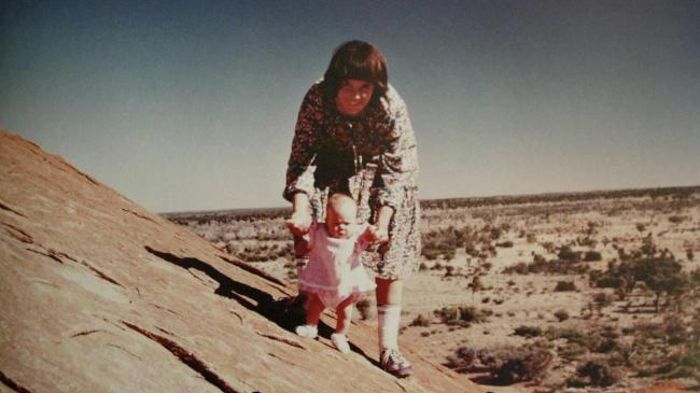
Famous Name: Azaria

20 Wednesday Jun 2012

Posted by A.O. in Famous Names

≈ 8 Comments

Tags

1001 Unusual Baby Names, baby name books, Biblical names, hebrew names, honouring, name history, name meaning, The Complete Book of Names, unisex names, US name popularity

On June 12 this year, a very long legal case finally came to an end, when coroner Elizabeth Morris ruled that Azaria Chantel Loren Chamberlain had been taken by a dingo on August 17 1980. Azaria was nine weeks old when she died, and June 12 was the day after what would have been Azaria’s thirty-second birthday, had she lived.

The disappearance and death of baby Azaria in the Northern Territory was a case which generated mass hysteria, divided the nation, and led to a cruel media-driven witch hunt against Azaria’s grieving parents, Lindy and Michael. It remains an ugly stain on our national psyche, and a lesson in not being too ready to believe the worst about the latest media “villain”. A lesson we unfortunately never seem to learn.

The Chamberlains had been on a camping holiday at Uluru (Ayers Rock) with their three young children when Lindy screamed that a dingo had taken her baby from their tent. Witnesses at the time believed her implicitly; there were warning signs everywhere about the dangers of dingoes, and six weeks earlier, a three year old named Amanda Cranwell had been dragged from her parents’ car by a dingo and had to be driven off. Azaria’s brother Aidan said that he heard a dingo in the tent with them, and Aboriginal trackers reported that she had been dragged by an animal.

A coronial inquest found that Azaria had been taken by a dingo, but her missing body disposed of by unknown human means. That should have been the end of this family’s tragedy, but instead it had just begun. For reasons unclear to me, the Northern Territory police refused to accept the findings, and charged the Chamberlains with murder.

Michael was a pastor in the Seventh Day Adventist Church. People didn’t know much about this minority religion, and mistrusted the Chamberlains as somehow “different”. Lindy maintained the calm dignity of someone who knew she was innocent and believed that God was on her side. This was taken as unnatural – why didn’t she shriek and cry hysterically like a proper woman? Why did she never squeeze out at least a few tears? Why did she seem so assured when she was only a housewife?

Wild rumours began to circulate, and the media gleefully reported each one. One was that the Chamberlains’ religion demanded a child sacrifice, and they had gone into the outback with the express purpose of murdering their baby daughter. Another was that they weren’t Christians at all – they were Satanists, devil worshippers or into black magic; being religious was just a front. Another notion was that perhaps their religion forbade medical assistance (it doesn’t), and that they had killed a terminally ill Azaria rather than let her suffer a slow death. One of the sickest was that Azaria’s brothers Aidan and Reagan, then aged six and four, had killed her and her parents covered it up.

It is shocking and heartbreaking that people in modern times could be so ignorant, gullible and superstitious; it beggars belief that anyone could think a mother would kill her daughter in front her other children, and have the audacity to do so in broad daylight surrounded by witnesses, washing off all blood and disposing of all evidence within ten minutes. However, so convincing was this view of the evil, unnatural Lindy that she was found guilty and sentenced to prison in 1982. Four years later, some of Azaria’s missing clothing was found in a dingo’s lair, and Lindy was released.

The Chamberlains’ marriage did not survive and both remarried. The fate of Azaria was still listed as “unknown”, and her story became urban legend; she was part of the horrors of the outback, she was our nightmare and our collective guilt. She was a meme, a joke, a rumour, a punchline, a subject of gossip, a tee-shirt slogan, an industry which brought out books, tea towels, movies, TV shows and even an opera.

Last week Azaria’s extraordinary story ended, and she was at last declared officially dead and given a death certificate. The coroner offered her heartfelt sympathies to the Chamberlains for the loss of their daughter and sister, however the Northern Territory government refuses to apologise for the events which followed that loss.

Azaria is a variant of the Hebrew name Azariah, which means “Yahweh has helped”; however Azariah is pronounced az-uh-RY-uh, and most people say Azaria a-ZAHR-ree-uh. Despite Azariah being a male name in the Old Testament, Azaria is more commonly used as a girl’s name.

During the hysteria surrounding the Chamberlain case, it was falsely claimed that the name Azaria meant “sacrifice in the wilderness”, with the obvious conclusion  that the Chamberlains had marked their daughter from birth for ritual infanticide. (I would have thought that if you actually were planning to do that to your baby, you’d choose a name that drew less attention to your nefarious scheme).

The original coroner made a finding that Azaria did not in fact mean “sacrifice in the wilderness”, making it one of the few times in legal history when a court has made a ruling on the meaning of a name. Lindy found the name in 1001 Unusual Baby Names, where it was identified with standard baby name book laxness as the feminine form of Azariah, meaning “blessed by God”. The current edition of the book is called The Complete Book of Baby Names, now boasts over 100 000 entries, and has updated Azaria to mean “helped by God”.

Azaria’s name was an unusual name when she was born, and it is still uncommon. I have seen the name a few times in birth announcements, using both the Azaria and Azariah spellings, and given to both girls and boys. Azaria has been on the US Top 1000 since the mid-2000s, suggesting that the name is on the rise internationally rather than being an Australian phenomenon.

The first time I saw the name given to a new baby I gave an unconscious start of shock, but then rationality kicked in and I could see that the name deserves to be used again, and it would be ridiculous to avoid it. Until I saw Azaria with the middle name Chamberlain. Maybe it was a family name, maybe it was honouring an unfortunate victim, but even 32 years later, for me it was too soon.

Famous Name: Venus

13 Wednesday Jun 2012

Posted by A.O. in Famous Names

≈ 7 Comments

Tags

astronomical names, Australian Aboriginal names, Babylonian names, english names, Greek names, Latin names, locational names, mythological names, Norman-French names, Phoenician names, planet names, popular culture, Roman names, ship names, surname names

Last Wednesday was the transit of Venus, the planet taking about six and a half hours to cross the face of the Sun. Most of Australia was in a prime position to view this astronomical event (with special protective glasses, or else streamed live on the Internet so as not to damage our eyes).

Transits of Venus occur in pairs 8 years apart, separated by gaps of 121.5 years and 105.5 years. So the one before this one was in June 2004, and the next one will be in December 2117. I don’t want to be a pessimist, but if you missed this last one, I think you’ve lost your chance to see another.

The transit of Venus is not only a rare and lovely astronomical event, it is also an essential part of Australian history. It was in 1766 that the Royal Society sent Captain James Cook to observe the transit of Venus from the Pacific region. The reason scientists were so keen to get accurate observations was because astronomer Edmond Halley (of Halley’s Comet fame) had suggested that if you measured one of the transits, you could then use the data to figure out the distance from the Earth to the Sun, and thence to work out the distances to all the other bodies in the solar system.

For a variety of reasons, nearly all the scientists sent around the world ran into technical problems, and it was up to Captain Cook to take the observations, which he did in Tahiti in 1769. He then opened his sealed orders from the British Admiralty to find he had been sent on a secret mission to discover the mythical Terra Australis. There was no such place, and discovering New Zealand was a massive disappointment, as it was nowhere near the size the expedition had been hoping for.

Now some men would have gone home, feeling that observing the transit of Venus and discovering New Zealand was enough for one trip. But Captain Cook was made of sterner stuff, and he took it upon himself to become the first European to explore the east coast of Australia, and also to claim it as British territory. His reward was to be given a promotion, and sent back again to look just a bit harder for Terra Australis.

By sailing around diligently discovering places and claiming them for Britain, he was at last able to establish that Terra Australis didn’t exist, although Britain now owned a reasonable sized country it could send convicts to. The maps Cook made in the process were so good that they were still being used in the twentieth century, and the observations he took of the transit of Venus were used to calculate the distance between the Earth and the Sun with reasonable accuracy.

The planet Venus has an ancient connection to Australia as well, because the Yolngu people of Arnhem Land believe she is an important creator spirit called Banumbirr. Through dawn ceremonies performed with beautifully decorated Morning Star poles, they communicate with their dead ancestors through a rope of light which Banumbirr trails behind her. The ceremony means the ancient Yolngu people must have had enough astronomical knowledge to track the complex motion of Venus, as it rises before dawn only at certain times of the year.

I love stars, and although Venus is a planet, I, like almost everyone else, know it as both the Morning Star and the Evening Star. The brightest object in the night sky after the Moon, Venus is the first light to appear at dusk, and the last to disappear at dawn. In fact, I have often wished on Venus, with that little rhyme which begins, Star light, star bright, first star I see tonight …. Sometimes my wishes came true, sometimes they didn’t! Fickle Venus.

The Babylonians may have been the first to understand that the morning and evening stars were the same object, and called it Ishtar, after their goddess of love, sex, fertility and war. Other cultures followed the tradition, and to the Romans she was Venus; her morning aspect was called Lucifer (“light-bringer”), and her evening one Vesper.

Venus was a Roman goddess of love, beauty, sex, fertility, luck and war; her name is from the Latin word venus, meaning “sexual love, sexual desire”. The word is closely related to venenum, meaning “poison, venom”, which probably demonstrates a certain ambivalence towards passionate love we share today. The word venenum also meant charm, as in a love potion. Falling madly in love with someone can feel as if we have been given some sort of magic potion, and if it all goes wrong, we do indeed feel as awful as if we had swallowed poison instead!

The Romans said that Venus was the mother of Aeneas, the Trojan ancestor of Rome’s founder, Romulus, and therefore the mythological ancestor of the Roman people. The month of April was sacred to her, and she was associated with springtime flowering and the fecundity of nature. Her earliest festivals were ones that celebrated gardens and wine-drinking, and many of her attributes seem to be taken from more ancient goddesses of water and purity. Later on, Venus was identified with the Greek goddess Aphrodite and the Phoenician goddess Astarte.

The beauty of Venus has made her a popular subject in art, especially as it was acceptable (and practically mandatory) to show her nude or semi-nude. Two of the most famous are probably the classical statue, the Venus de Milo, which has the arms missing, and Bottichelli’s painting, The Birth of Venus. To call a woman “a Venus” means that she is beautiful and desirable in a very erotic way.

As well as being a female first name, Venus can be an English surname. It’s not related to the goddess, but is from the Norman-French place name of Venoix, near the city of Caen.

Venus is also a place name; there are two towns in Australia called Venus Bay – one in South Australia and the other in Victoria. Both these fishing villages are named after ships called Venus, which brings us to another intriguing Australian connection to Venus.

It is said that the drinking song, The Good Ship Venus, may have been influenced by actual events, when convicts travelling on the brigantine Venus mutinied and took the ship to New Zealand, becoming Australia’s first pirates. Two of the convicts were female, and there were reports of great immorality aboard ship – a possible inspiration for the song’s bawdy lyrics.

Venus is a rarely used name, but one which evokes both feminine beauty and the twinkle of a lovely “star” which can grant wishes …. sometimes. It’s one which has several connections with Australia, and is deeply woven into our nation’s history and culture. That makes Venus a surprisingly patriotic name choice, although I do feel on this one, we have waltzed far, far beyond Matilda!

(Photo of the transit of Venus from NASA)

Famous Name: Diamond

06 Wednesday Jun 2012

Posted by A.O. in Famous Names

≈ 11 Comments

Tags

British Baby Names, english names, famous namesakes, fictional namesakes, gemstone names, Greek names, honouring, Mer de Noms, name history, name meaning, nature names, surname names, US name popularity, vocabulary names

Queen Elizabeth II is only the second monarch since Queen Victoria to reign for sixty years. Last weekend, it was the Queen’s Diamond Jubilee celebration, where the British enjoyed four days of triumphant pageantry, horse-drawn carriages, royal barges, processions, church services, street parties, luncheons, concerts, festivities and general revelry. Naturally the Brits didn’t allow a bit of very British rain to stop the fun.

We also celebrated here, in a more humble and low-key sort of way, and even managed to have wet weather, in a meteorological show of sympathy. We sent a detachment of the New South Wales Mounted Police to represent us at the pageant, and Indigenous performer Gurrumul came on stage for Sing, a song written especially for the Jubilee featuring 200 artists from the Commonwealth; Kylie Minogue and Rolf Harris also performed at the concert (not together).

Australia has another connection to the Queen’s Jubilee: earlier this year, the largest pink diamond ever mined in Australia was found at Rio Tinto’s Argyle mine in the north-west of Western Australia (which is the source of most of the world’s supply of pink diamonds). The diamond is 12.76 carat, and, in honour of the Diamond Jubilee, has been dubbed the Argyle Pink Jubilee diamond. It was cut and polished in Perth, and will be sold later this year; pink diamonds cost about 20 times more than equivalent white diamonds.

The name Diamond is ultimately from the Greek adamas, meaning “unbreakable, invincible” (although the Greeks probably used the word to refer to other gemstones). It is from this that we get the words adamant, meaning “determined, unyielding”, and adamantine, meaning “as hard as diamond”. Diamonds are famous for their hardness, as well as their clarity and fiery white lustre.

It is thought that diamonds were first recognised and mined in India, where they have been used in Hindu religious icons for thousands of years. India remained the only source of diamonds until the 18th century, when they were discovered in Brazil, and today most of the world’s diamonds are cut and polished in India.

Diamonds have been used for jewellery since ancient times, and one of the most famous of their uses is for engagement rings. Medieval Italians called the diamond the “stone of reconciliation”, saying that it would maintain harmony between husband and wife. Diamonds were therefore recommended for betrothal rings, although they could only be afforded by royalty and aristocracy. It was the marketing campaign of De Beers begun in 1938 that sold us the idea that everyone needed to have a diamond engagement ring; such a campaign was necessary because of the large quantities of diamonds being brought in, especially from South Africa.

Mention of Africa brings up a grim factor of the diamond industry: the blood diamonds. In politically unstable countries of central and west Africa, revolutionary groups have taken over control of diamond mines, using the proceeds to fund their operations. Processes are in place to prevent blood diamonds from entering the mainstream market, and although they aren’t perfect, your chance of actually buying a “blood diamond” from a reputable jeweller is probably fairly remote.

However, the ethics of diamond mining are still pretty murky in many areas. Mines in India and South Africa not infrequently use child labour, working conditions can be cruel, and miners and gemstone cutters earn a pittance in relation to the value of the stones they help produce. De Beers have built mines in areas where they have forcefully displaced the indigenous people of the region, so even an “ethical diamond” may not be as ethical as you hoped.

For some reason, the name Diamond seems to get more negative reactions than other gemstone names, like Ruby or Pearl. The very hardness and sparkle which makes real diamonds so valuable, somehow makes the name Diamond appear “cheap” or “rough”. When diamonds symbolise so many positive things – strength, beauty, eternal love – that seems a foolish distinction to make.

Diamond is a gemstone name that works equally well for boys. For a start, the English surname Diamond is specifically masculine, and comes from an Anglo-Saxon personal name Dayman, meaning “man who takes care of livestock”. In Ireland, the surname is based on the personal male name Dermot, while the surname taken directly from the gemstone was adopted by some Jewish families from Eastern and Central Europe.

George McDonald’s enchanting fairy tale At the Back of the North Wind has a little boy named Diamond as its hero, and the movie I Am Sam has Dakota Fanning playing a girl named Lucy Diamond Dawson, her name a direct reference to the Beatle’s song, Lucy in the Sky with Diamonds.

Another connection with diamonds and royalty is a little girl named Diamond Ann Marshall, who was chosen to meet Catherine, Duchess of Cambridge on the royal tour of Canada. Diamond wrote the duchess a nice letter, and when she met her, gave her a big hug. Diamond was a cancer patient at the time, but is now in remission. Diamond’s name was given to her in honour of Princess Diana – I’m guessing Diamond Ann sounded like the name Diana to her parents.

Diamond as a girl’s name has been on the US Top 1000 since 1986, and peaked at #150 in 1999. It’s currently #760 and falling. It may be on the wane in America, but I hope that the Jubilee year inspires a spike of baby Diamonds in Commonwealth countries.

Looking for some more baby names for the Diamond Jubilee? Go check out these blogs from Elea at British baby Names, and Lou at Mer de Noms.

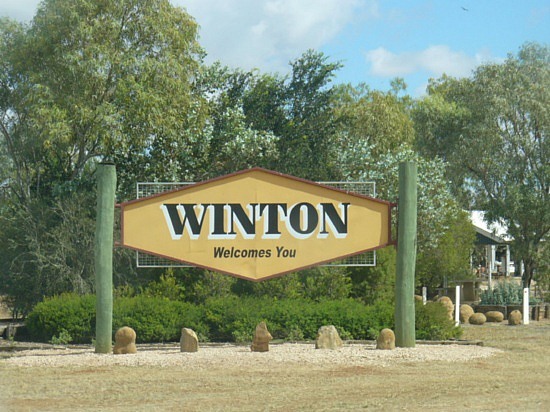
Famous Name: Winton

30 Wednesday May 2012

Posted by A.O. in Famous Names

≈ 6 Comments

Tags

Anglo-Saxon names, Banjo Paterson, Bonds Baby Search, British-Roman names, english names, famous namesakes, locational names, name history, name meaning, Old English names, popular culture, surname names, Waltzing Matilda

The small town of Winton in outback Queensland has played a pivotal role in Australian literature and the development of an Australian legend, for it was at a cattle station named Dagworth Homestead, just to the north of the town, that A.B. “Banjo” Paterson wrote Waltzing Matilda, and it was set to music (based on a traditional tune) by Christina Macpherson in 1895.

Indeed, the very plot of the song is said to have been inspired by events which took place at Dagworth Homestead during the Great Shearer’s Strike of 1891, when three policemen gave chase to a swagman named Samuel Hoffmeister, who shot and killed himself at the waterhole rather than allow himself to be arrested. It is thought that Christina and her brother Bob told Banjo Paterson the story during his stay at the station.

The folklore of the song and its creation is the pride of Winton, which has its own museum, the Waltzing Matilda Centre. Waltzing Matilda received its first public performance in Winton’s North Gregory Hotel, on April 6 1895, and this year, the town of Winton held its inaugural Waltzing Matilda Day on April 6, to honour and celebrate our national song.

In fact, the town’s mayor, Ed Warren, has asked that Waltzing Matilda Day be declared a public holiday. A worthy notion, but even someone as keen on holidays as me cannot help noticing we already have Easter and Anzac Day that month, so April seems a little full up.

The town of Winton was named by postmaster Robert Allen, supposedly after his birthplace in England, a suburb of the seaside town of Bournemouth in Dorset. The suburb is named after Winton Castle in Scotland, home to the Earl of Winton, a relative of local Dorset family, the Talbots. Winton Castle is near Edinburgh, and was originally owned by one of the oldest families in Scotland, the Setons; it was built in 1480 on lands the family had acquired in 1150. It is now an award-winning hotel and conference centre.

However, as it turns out, Robert Allen was actually born in Winchester in Hampshire, which was also known as Winton. This lovely cathedral town’s name is a mixture of British-Roman and Anglo-Saxon, and means “market town”.

The surname Winton is famous in Australia as belonging to Western Australian novelist Tim Winton. He has won a swag of literary prizes, including the NBC Banjo Award for Cloudstreet. He has been named a Living Treasure by the National Trust, and awarded the Centenary Medal for services to literature and the community.

While writers who have found literary acclaim aren’t always popular with the ordinary reading public, nearly everyone I know who reads at all lists Tim Winton as one of their favourite authors. He manages to combine wonderful storytelling with a uniquely spare prose style

As well as writing and winning awards, Tim also finds time to support the environmental movement. As a patron of the Australian Marine Conservation Society, he has raised awareness about sustainable seafood consumption and campaigned against shark finning; he is also patron of Stop the Toad Foundation and has contributed to The Last Whale website. He has been prominent in the campaigns to save Moreton Bay and Ningaloo Reef.

Mr Winton writes novels for grown ups, and also children’s books, most notably the Lockie Leonard stories, about young surf rat Lockie who moves from the city to the coastal south-west of Western Australia (probably not coincidentally, this is exactly what Tim Winton did when he was twelve). The TV series based on the books is filmed in Albany, where Tim grew up, and has also won a stack of well-deserved awards.

The English surname Winton can come from Winton in Lancashire, whose name means “willow wood farm” – a place where willow trees were farmed for their extremely useful wood. Winton in Westmoreland, however, means “Wina’s pasture”. The name Wina meant “friend” in Old English. It is from this personal name that Winton Castle in Scotland is also named, which seems to have brought us full circle.

I saw the name Winton on a baby boy who competed in the Bonds Baby Search. It’s very similar to the aristocratic Winston, yet with its own connections to the world of Australian literature, the Australian coast and the Australian outback. It seems like an unusual yet stylish choice.

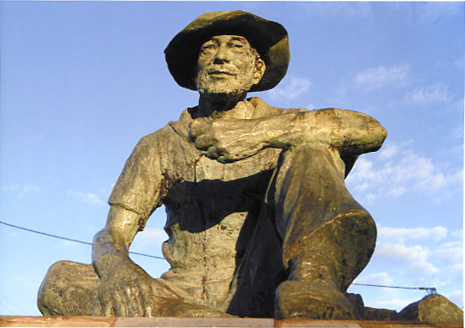
(Photo above shows the statue of the Jolly Swagman in Winton, sculpted by Daphne Mayo)

Famous Name: Lockyer

23 Wednesday May 2012

Posted by A.O. in Famous Names

≈ 6 Comments

Tags

english names, famous namesakes, honouring, locational names, name history, name meaning, name popularity, name trends, nicknames, surname names

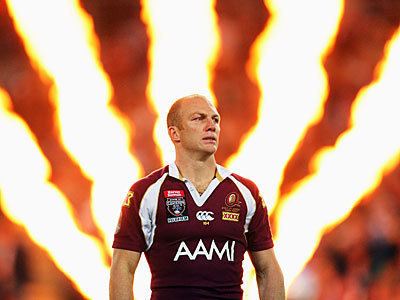
Tonight is the first game in the best-of-three State of Origin Series for the National Rugby League, which pits traditional rival states, Queensland (the Maroons) and New South Wales (the Blues), against each other. Mention of the series tends to make people from New South Wales a little prickly and defensive, for they are all too conscious that for the past six years, they have been bested by a superior Queensland side.

Some may be hoping desperately for a reprieve this year, because Queensland’s former captain, Darren Lockyer, retired at the end of the 2011 season. Generally acknowledged as the greatest rugby league player in history, he has set the record for most number of games played during his seventeen season career, and his list of achievements rolls on and on like the credits at the end of a movie, including a slab of stats that reduces everyone to a sort of silent awe.

Amongst his many well deserved honours include being named in the Queensland Team of the Century, a 2 metre tall bronze statue of his likeness at Suncorp Stadium in Brisbane, and part of the Warrego Highway being re-named Darren Lockyer Way.

As well as his feats of athleticism and natural talent, his inner strength and personal courage, he was also a model of good sportsmanship, a consummate professional, a successful leader, and a gentleman of the game. He is a champion, a king, and a legend of rugby league, who has left behind a legacy of which to be proud.

Lockyer is an English surname which can either refer to someone who was a locksmith by trade, or who was a lock-keeper on a river or canal (or possibly even someone who lived near a lock on a river or canal). It’s pronounced very much as it looks: LOCK-yehr.

According to Ancestry.com, it is a name originating in Dorset, and if you check the British census records, there do seem to be many Lockyer families in the West Country of England compared to the rest of the nation. Although Lockyer is a fairly common name in England and Australia, it appears to be quite rare in the United States.

Apart from Darren Lockyer, the name is well known in Queensland, because the Lockyer Valley is an area of rich farmland in the Brisbane region. It is named after Edmund Lockyer, who came to Australia in the early 19th century as captain of the 57th regiment (he was from Devon, so the West Country heritage theory is holding firm). One of his first tasks was to explore the Brisbane River area, which is why the valley bears his name.

I thought of adding the name Lockyer because I have already seen reports of parents choosing it for a baby name, and seen it on babies in birth announcements and baby contests. One man commented in a sports news forum that his neighbours had named their son Lockyer in honour of Darren Lockyer; his response was Why Lockyer for chrissake? What’s wrong with calling him Darren?

It’s pretty obvious – Darren is currently out of favour, in the low 400s and falling. Meanwhile, the enormous popularity of Lachlan has made similar-sounding names very usable. Australian babies named Loki, Loic and Link, although unusual, do not seem strange or out of place here.

Lockyer fits in perfectly with this trend, and seems like a name that would go down very well in Queensland, or anywhere which appreciates the greats of National Rugby League. The nickname Locky, shared with Darren Lockyer himself, almost makes it seem like a variant of Lachlan, which has the nicknames Lachie and Lockie.

Famous Name: Evelyn

16 Wednesday May 2012

Posted by A.O. in Famous Names

≈ 6 Comments

Tags

classic names, english names, famous namesakes, fictional namesakes, germanic names, Italian names, locational names, name history, name meaning, name popularity, name trends, nicknames, Norman names, Old French names, popular names, rose names, surname names, unisex names

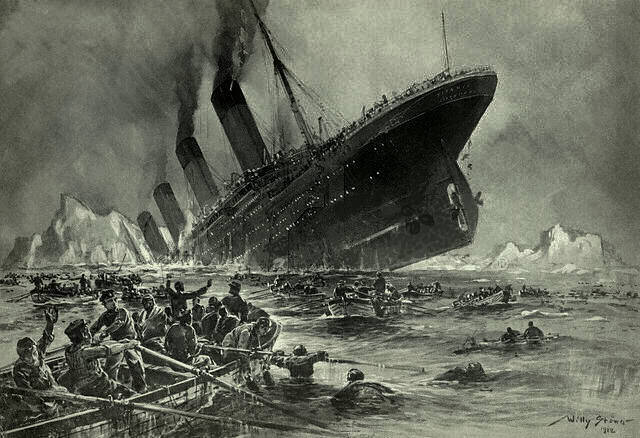
April 15 this year marked one hundred years since the sinking of the RMS Titanic. There were many exhibitions to mark the event, and James Cameron re-released his romantic film Titanic in 3-D form. As I read the many newspaper articles about  the centenary, and watched ceremonies being performed in various countries on television, I wondered whether there were any Australians aboard the ill-fated Titanic, and if so, had any of them survived?

It turned out that there were six Australians who travelled on the Titanic – four crew members, and two passengers. Crew members Donald Campbell, Alfred Nicols and Leonard White were drowned and their bodies never found, while second-class passenger Arthur McCrae also drowned, but his body was recovered and buried in Halifax, Canada. That left two survivors: third-class passenger Charles Dahl, and crew member Evelyn Marsden.

Although Charles had spent thirty years in Australia, he was born in Norway and was actually in the process of making his way back to his home country when he travelled on the Titanic (he eventually made it home and died in Norway many years later). This leaves Evelyn Marsden as the only female Australian survivor, the only surviving Australian crew member, and the only Australian-born survivor. That made me decide to choose Evelyn as my Famous Name to mark the centenary of the sinking of the RMS Titanic.

Evelyn was from country South Australia, and the daughter of a railway worker. As a young girl, she learned to row a boat on the Murray River while staying on a farm, and later trained as a nurse at Adelaide Hospital. She had previously worked on board the Titanic‘s sister-ship, the Olympic, and signed on to work as a stewardess on the Titanic on April 6 1912, aged 28. She also assisted as a nurse for the first class passengers.

During the sinking, Evelyn escaped on board Boat 16, which held about forty people. They were in the life boat all night, from about half past one in the morning until around seven in the morning, when they were picked up by the Carpathia. Evelyn’s rowing skills became necessary, because she helped row the boat, and also took care of a baby.

Shortly after the disaster, she married a doctor named Abel James who had also worked on board ocean liners, and they went to live in South Australia. Evelyn made a point of returning to the farm, and thanked them for teaching her to row. Evelyn and her husband ended up living in Bondi, Sydney, and when they both passed away in the late 1930s, they were buried in Waverley Cemetery. Their grave was unmarked until 2000.

Evelyn is an English surname derived from the female name Aveline. Aveline is the Norman French form of Germanic Avelina, a pet form of Avila. It’s not certain what Avila meant, but it’s generally thought (perhaps hopefully) that it meant “desired”, as in a child that was long hoped for. The name is possibly related to Ava.

Other theories I have heard are that the surname is derived from aveline, the Old French word for “hazelnut” (the word comes from the Italian city of Avella), or after a place in Shropshire, which the Normans are supposed to have named after a village in France, Ivelyn. In early records, the surname is found as both Ivelyn and Avelyn.

Evelyn was first given to boys in the 17th century, since Aveline was no longer in use as a woman’s name. In the 19th century it began to be bestowed on girls as well, quite possibly because Fanny Burney’s novel Evelina reminded everyone that the name had a possible feminine origin (Evelina is the Latinate form of Aveline). If you are a fan of the theory that the surname is after the hazelnut, then you may see the male name Evelyn and the female name Evelyn as having quite separate origins.

The most famous person with the surname Evelyn is probably 17th century English writer John Evelyn, best known for his diaries. He wrote on many other subjects as well, including gardening, and the Evelyn rose is named after him – a beautiful old-fashioned rose with clusters of large pinky-apricot blooms. There is currently a campaign to restore Evelyn’s own garden at Sayes Court, in east London.

Nearly everyone has heard of the male English novelist Evelyn Waugh (whose wife was famously also called Evelyn), and a famous Australian man named Evelyn is Evelyn Owen from Wollongong, who invented the Owen gun. Mr Owen was apparently known by the nickname Evo. A famous Australian woman named Evelyn was Evelyn Tazewell, a champion hockey player in South Australia for many decades. Miss Tazewell went by the nickname Taz.

Evelyn is a classic name which has never been out of the charts. It was Top 100 in the 1900s, and stayed there until the 1950s. It reached its lowest point in the 1980s, at #435, then began climbing again. Last year it joined the Top 100 for the first time since the 1940s, coming in at #67 (an impressive leap). It has never charted as a male name since Federation.

The pronunciation of Evelyn is up for discussion, because it can be said EEV-lin, EEV-uh-lin, EV-lin or EV-uh-lin. I have heard theories that EEV is the British way and EV the American way, but plenty of people in both places say it the other way around. Another theory is that EEV is the masculine pronunciation, and the girl’s name should be said with an EV. This advice sounds plausible to me, but surely rather outdated given that Evelyn hasn’t been a serious contender as a boy’s name for over 120 years?

Most people in Australia go with the EV-uh-lin pronunciation, although EV-lin gets used as well, because it’s a more “Irish” way of saying it (apparently). I must be very odd, because I naturally say EEV-uh-lin, as if the name was related to the name Eve. I don’t recommend following my (no doubt wrong) example, except that it does lead rather neatly into the popular nickname Evie. You could use Evvie for the other pronunciation, although to me that sounds as if you are saying heavy in a Cockney accent.

Classic Evelyn is very much back in fashion, and looks certain to soar. She fits right in with Ava, Eva, Eve, Evie, Eden, Eloise, Madeleine, Madison and Addison, yet has an elegant air all her own.

Famous Names: Blake

09 Wednesday May 2012

Posted by A.O. in Famous Names

≈ 9 Comments

Tags

english names, famous namesakes, fictional namesakes, name history, name meaning, name popularity, nicknames, Old English names, popular names, surname names, unisex names

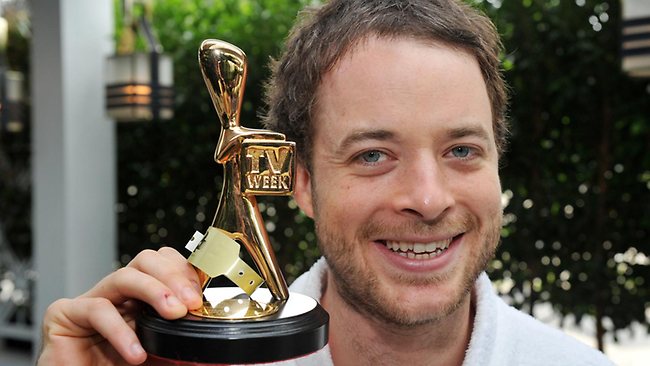
Comedian Hamish Blake has cropped up several times on the blog. His name was included in the post Boys Names That Only Chart in Australia, and we also took a look at how successful his name is. He’s had a dream run in the not-usually-lucrative field of comedy ever since he dropped out of a double degree in Science and Commerce to buddy up with Andy Lee as a comedic duo. Together they have had a ratings winning drivetime radio show filled with prank calls and the like, and several successful TV shows, most recently, Hamish and Andy’s Gap Year. Eventually it all paid off for at least one of them when Hamish won the Gold Logie for being the Most Popular Personality on Australian Television at this year’s Logie Awards.

Blake is an English surname which has two different origins of opposing meanings. Both of them began as nicknames. One is the Old English blæc, meaning “black”, referring to someone with black hair or a dark complexion. The other is from blāc, meaning “pale”, referring to someone with very blond hair or a fair complexion. One theory is that the two nicknames were ethnically based, with the first denoting the dark Celts, and the second denoting the fairer Jutes, who were from Jutland (today it’s Denmark, and the bits of Germany that join on to Denmark).

Although you’ve no doubt twigged that blæc became our English word black, it may not have immediately occurred to you that blāc is related to our English word bleak. Late in the Middle Ages, the two words were merged into blake, moving us closer toward the modern word black, but somehow immersing in it a word meaning the opposite. However, if you consider black and bleak together, they don’t seem quite so contradictory.

The Blakes are an Irish aristocratic family, dating back to the Norman Conquest of Ireland, so you could see the first name Blake as derived from this aristocratic surname. However, those of a literary bent are more likely to see it as honouring William Blake, the visionary English poet and painter who was a seminal influence on the Romantics. If you are something of a sci-fi fan, the name may remind you of Roj Blake, from the popular 1970s and ’80s TV series, Blake’s 7.

Blake reminds me of the much-loved illustrator Quentin Blake, as I was raised reading Roald Dahl‘s books, with the enchanting Mr Blake’s humorous drawings, which convey life and movement so effortlessly. My childish desire was to look as cheerfully plain and lank as the children that Quentin Blake drew; however to my disgust, my parents insisted on lots of fresh air, exercise and home grown produce, so that I remained obstinately tanned, rosy-cheeked and sturdy. Luckily I didn’t know enough about genetics to realise it was also their fault I wasn’t plain!

Another Blake from the era of the 1980s was Blake Carrington from American soap opera, Dynasty. This ruthlessly wealthy oil tycoon, whose life revolved around kidnappings, comas and the search for Nazi gold, seems to have given the name a rather “preppy” image in the United States. We don’t have the word preppy here, but as far as I can work out, it means “offensively middle-class”. Perhaps someone more knowledgeable can enlighten me on this one? I suspect that here its image is a bit more relaxed (although rebel Blake Dean from Home and Away managed to have a rather tortured time in Summer Bay, even without any Nazi gold).

Blake is often listed as a unisex name on international sites, although it is Top 100 for boys, and the only female Blake ever mentioned is actress Blake Lively from Gossip Girl. There is nothing especially boyish about the meaning of the name Blake, but its consonant-vowel-K sound has the same pattern as names such as Jack, Luke and Jake, giving it a masculine intonation (although it is a bit like Brooke, too). Although I could accept it as unisex, it’s seen as a male name in Australia, and you may get some resistance to using it for a girl. The similarity between Blake and the word bloke could well be keeping it in the boy’s club.

Blake first entered the charts in the 1950s, and took off in the 1970s (hmm, Blake’s 7, anyone?), so that it was Top 100 by the 1980s. It reached its peak in the 1990s, just outside the Top 20. Since then, it has fallen in popularity, although it is still in the Top 50 (and more popular in Australia than anywhere else in the world). Perhaps surprisingly, Hamish Blake doesn’t seem to have helped the popularity of the name, even though the name Hamish is doing pretty well for itself in the charts.

Although statistically Blake has passed its prime, to many it fits into that handy category of Popular But Not Too Popular Names, and has many namesakes from popular culture which have garnered it affection. It’s a nice, short, simple name which sounds sporty, surfer and skater, but still has some room for art and poetry. I tend to think its real strength is as a middle name, however.

Famous Name: Molly

02 Wednesday May 2012

Posted by A.O. in Famous Names

≈ 4 Comments

Tags

english names, famous namesakes, fictional namesakes, name history, name meaning, name popularity, nicknames, popular names

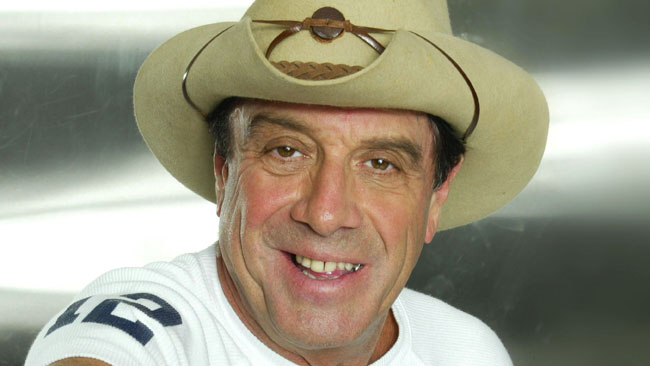
Early in his career, music guru Ian Meldrum was dubbed “Molly” by a DJ who enjoyed giving men female nicknames. Oddly enough, Ian comes from the Mallee district of country Victoria, and his nickname at school had been Malleeroot (a malleeroot is the underground trunk of a mallee tree). He seems to have found the nickname familiar enough to keep, or been too good-natured to reject it.

Shortly before Christmas last year, Australia was shocked to learn that Molly Meldrum had fallen from a ladder while putting up decorations, and been found unconscious. He was taken to Alfred Hospital, where his life hung in the balance. He lay in an induced coma with serious head injuries, a broken shoulder, broken ribs, a punctured lung, and cracked vertebrae.

While Molly lay unconscious in intensive care, there was an outpouring of concern for him – not just from stars like Kylie Minogue, Elton John, Darren Hayes, Russell Morris, Michael Buble, Cher and Madonna, but from thousands of his fans in Australia.

For almost half a century, Molly has been a key figure in the Australian music industry, and for decades, the key figure in the industry. A music journalist, band manager and music producer, he went on to host a seminal and wildly popular music show called Countdown, which a generation grew up watching. He became instantly known for his cowboy hat, rambling discourse, and his catchphrase, “Do yourself a favour”. For viewers, he felt like one of the family – maybe a slightly eccentric uncle whose visits were always fun, if unpredictable.

The wonderful thing about Molly’s career is that he is the epitome of the passionate amateur, who started at the bottom as a roadie, and, being a natural networker, built up a worldwide list of contacts that saw him working at Abbey Road, becoming a media icon, making friends with some of the biggest pop stars in the world, and winning many awards, including an Order of Australia.

As I read through the tributes pouring in on Twitter or to the newspapers, it struck me that he is a person who had touched many people’s lives, and a person with a remarkable talent for engendering love and respect from others. People remembered him from years ago – some of them had only had a single telephone conversation with him, or once sat next to him on a plane, but he had won them over with his unpretentious friendliness. He treated everyone, not just as an equal, but as his best mate.

Others had worked with Molly decades earlier, and recalled with great fondness how kind he had been to them. For someone to charm the rich and famous is no great feat – I’m sure most of us could suck up to celebrities if our careers depended on it. But to consistently show courtesy to everyone, to chat for hours with an elderly lady he would never see again and who had no idea who he was, to be solicitous to people who could not possibly aid his rise to the top – that is something much rarer and more extraordinary.

Molly was moved to a rehabilitation centre just prior to Australia Day, and in March was allowed to go home, while continuing daily rehab as an outpatient. Not long before ANZAC Day, he felt well enough to give his first interview. He appeared hospital-pale, and had the slight slur in his voice common to the brain-injured, but strangely, intensive speech therapy had removed his characteristic umming and aahing in conversation! Thank goodness he still had the hat.

He expressed enormous surprise and gratitude that so many people, friends and strangers alike, had cared for his safety and well-being, and announced that he was giving up drinking. Molly is now convalescing in Thailand, where his partner is from, and hopefully going from strength to strength.

Molly is a pet form of the name Mary which developed from the medieval diminutives Malle and Molle. Molly seems to have existed as an independent name since the 16th century. People often think of it as a very Irish name, because of the folk song Molly Malone, where Molly is a fishmonger from “Dublin’s fair city”. Although Dublin does have a statue of a rather bosomy Molly Malone in honour of this mythical lady, the song seems to have been written in Scotland. Nonetheless, the name Molly is currently more popular in Ireland and Northern Ireland than anywhere else in the British Isles (although not as popular as in Sweden, for some reason).

Molly was in use in the 1900s, although it wasn’t a very common name, and only dropped off the charts completely during the 1960s. The name took off in popularity during the 1990s, and was Top 100 in the early 2000s. It’s currently #53 in New South Wales, and fairly stable.

I can’t help noticing that Molly only became a popular girl’s name once the TV show Countdown had finished, in 1987. Perhaps a weekly reminder that a man could be called Molly was not helpful to the parents of baby girls.

However, if you were going to name your little girl after an elderly gentleman, you really couldn’t find a nicer one than Molly.

Famous Names: Sebastian and Jenson

21 Wednesday Mar 2012

Posted by A.O. in Famous Names

≈ 8 Comments

Tags

Disney names, english names, fictional namesakes, Google, honouring, Latin names Greek names, locational names, Mer de Noms, name history, name meaning, name popularity, nicknames, popular names, pseudonyms, royal names, saints names, Shakespearean names, surname names, UK popularity

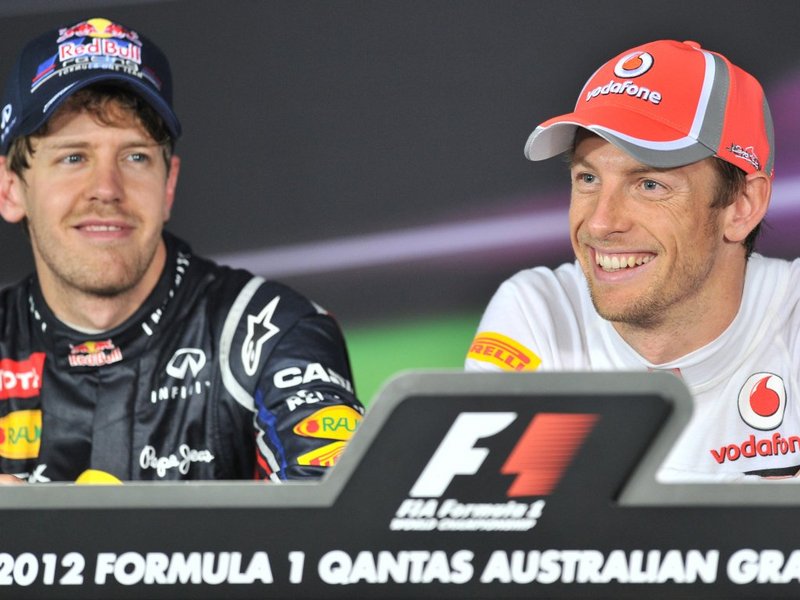
The Australian Grand Prix was held in Melbourne on the weekend, and before the event there was plenty of buzz in the media around German Sebastian Vettel, and British Jenson Button. These glamorous visitors from Europe always get a lot of attention, for both are handsome and charming; Vettel amusing and slightly mysterious, Button affable and quietly confident. In the end, Button opened the F1 season with a victory, winning comfortably against Vettel with a 2.2 second margin. It is his third Australian Grand Prix victory. (Picture has Vettel on the left in black).

I thought we’d take a look at the names of both these Formula One champions, because Sebastian and Jenson are Googled often to reach my blog, and so far I haven’t added any requested boys names to the Featured Names list, while I’ve been quite conscientious about adding the girls.

Sebastian is from the Latin name Sebastianus, which means “from Sebaste”. There were several places called Sebaste, because it is the Greek form of Augusta, named in honour of the Emperor Augustus. His adopted name meant “great, majestic, venerable”. There are towns in modern-day Turkey and Palestine with this name (or a version of it), still with ancient Roman ruins which can be visited.

The name became well known because of Saint Sebastian, a 3rd century Roman soldier originally from southern France. Skilled at converting people, according to legend he was shot through with arrows, yet did not die, so had to be martyred twice. He became popular in the Middle Ages because he was said to protect people from the plague, and also began to be depicted as a beautiful, semi-nude young man. (In early pictures, he looks like an ordinary bearded fully-clothed saint).

The name was popular amongst Continental royalty and nobility, and still retains a slightly upper-class image. Sebastian is Viola’s twin brother in Shakespeare’s gender-switching romantic comedy, Twelfth Night. Lord Sebastian Flyte is one of the main characters in Evelyn Waugh’s novel, Brideshead Revisited; beautiful and rather fey, the TV series and film makes it clear Sebastian is homosexual, although this is left ambiguous in the novel. Indeed, Saint Sebastian himself is considered a gay icon (for pretty flimsy reasons), and the name was a code for homosexuality; Oscar Wilde’s pseudonym was Sebastian Melmoth. So far, so androgynous.

However, the name got a watery overhaul when the name Sebastian was given to a Jamaican lobster in the Disney film, The Little Mermaid. Sebastian is a court composer, and a good friend and adviser to Ariel, the mermaid of the title. A Rastafarian who can lay down a reggae beat, he has given the name a new level of cool. The choice of his name seems like a deliberate reference to another famous composer: Johann Sebastian Bach. Incidentally, Sebastian is the lobster’s surname – his first name is Horatio (maybe after the American composer, Horatio Parker).

Sebastian first entered the charts in the 1960s and began steadily climbing, to become Top 100 by the 2000s. At #38 it still seems to be gaining in popularity – an elegant name that belongs to many people’s favourite Disney character.

Jenson is a lot more straightforward. It’s a surname which is basically a form of Johnson, being based on the name Jens, a short form of Johannes. According to Lou at Mer de Noms (rather a Jenson Button fan), the name Jenson has edged itself into the UK Top 100, and its growing popularity can be attributed almost solely to Mr Button himself. As to how he got his name, he was named after a family friend, Erling Jensen (father of F1 driver Steven Jensen). The spelling was altered so that it didn’t reference Jensen Motors, who made British sports cars until the 1970s.

It’s an attractive name, and one I think we’d be using in spades if Jenson Button was Australian. As it is, it’s one many parents are at least putting on their lists, although my personal feeling is that Jensen is slightly more popular, thanks to handsome American actor Jensen Ackles, from Supernatural. As I’ve said before, with female Jennifer become less popular, it gives male names starting with Jen- more of a chance.

When I try to decide which name I like best, Sebastian or Jenson, I find myself in private debate. If I take the side of Sebastian, it seems more sophisticated than Jenson, complex and multi-syllabled, romantic and princely. On the other hand, if I take the side of Jenson, it seems more laddish and chipper, down-to-earth and unpretentious, with oodles of cheeky British charm.

So I am content to say these are both very nice names, and I won’t force them to compete against each other in some Baby Name Grand Prix. When it comes to nicknames for them, I think of Seb and Bastian, and Jens and Sonny, respectively.

← Older posts
Newer posts →

Enter your email address to follow this blog

Categories

Archives

Recent Comments

A.O.'s avatarwaltzingmorethanmati… on Zarah Zaynab and Wolfgang…
Madelyn's avatarMadelyn on Zarah Zaynab and Wolfgang…
JD's avatardrperegrine on Can Phoebe Complete This …
A.O.'s avatarwaltzingmorethanmati… on Rua and Rhoa
redrover23's avatarredrover23 on Rua and Rhoa

Blogroll

  • Appellation Mountain
  • Baby Name Pondering
  • Babynamelover's Blog
  • British Baby Names
  • Clare's Name News
  • For Real Baby Names
  • Geek Baby Names
  • Name Candy
  • Nameberry
  • Nancy's Baby Names
  • Ren's Baby Name Blog
  • Sancta Nomina
  • Swistle: Baby Names
  • The Art of Naming
  • The Baby Name Wizard
  • The Beauty of Names
  • Tulip By Any Name

RSS Feed

  • RSS - Posts

RSS Posts

  • Celebrity Baby News: Melanie Vallejo and Matt Kingston
  • Names from the TV Show “Cleverman”
  • Can Phoebe Complete This Sibset?
  • Zarah Zaynab and Wolfgang Winter
  • Baby, How Did You Get That Name?
  • Celebrity Baby News: Media Babies
  • Celebrity Baby News: Adelaide Crows Babies
  • Celebrity Baby News: Chris and Rebecca Judd
  • Names at Work: Name News From the World of Business and Employment
  • Celebrity Baby News: Sporting Round Up

Currently Popular

  • Rare Boys Names From the 1950s
  • The Top 100 Names of the 1940s in New South Wales
  • Girls Names From Stars and Constellations
  • Celebrity Baby News: Livinia Nixon and Alistair Jack
  • Celebrity Baby News: Jacinta Allan and Yorick Piper

Tags

celebrity baby names celebrity sibsets english names famous namesakes fictional namesakes honouring locational names middle names name combinations name history name meaning name popularity name trends nicknames popular names saints names sibsets surname names twin sets unisex names

Blog at WordPress.com.

Privacy & Cookies: This site uses cookies. By continuing to use this website, you agree to their use.
To find out more, including how to control cookies, see here: Cookie Policy
  • Subscribe Subscribed
    • Waltzing More Than Matilda
    • Join 517 other subscribers
    • Already have a WordPress.com account? Log in now.
    • Waltzing More Than Matilda
    • Subscribe Subscribed
    • Sign up
    • Log in
    • Report this content
    • View site in Reader
    • Manage subscriptions
    • Collapse this bar
 

Loading Comments...