• About
  • Best Baby Names
  • Celebrity Baby Names
  • Celebrity Baby Names – Current
  • Celebrity Baby Names – Past
  • Featured Boys Names
  • Featured Girls Names
  • Featured Unisex Names
  • Links to Name Data
  • Waltzing on the Web

Waltzing More Than Matilda

~ Names with an Australian Bias of Democratic Temper

Waltzing More Than Matilda

Yearly Archives: 2011

Celebrity Baby News: Cathy Freeman and James Murch

09 Saturday Jul 2011

Posted by A.O. in Celebrity Baby News

≈ 2 Comments

Tags

celebrity baby names

Olympic gold medallist Cathy Freeman, and her husband, stockbroker James Murch, welcomed their first child yesterday, July 8, at 8:21 am – a daughter named Ruby Anne Susie. Although Cathy’s pregnancy triggered Type 2 diabetes, which runs in her family, the childbirth went smoothly, and both mother and baby are reported to be doing well. Ruby Murch’s birth was announced on the Athletics Australia website.

Cathy retired from her stellar athletic career in 2003, and since then has been involved in numerous community and charitable projects. Cathy and James were married in April 2009.

This is the second celebrity baby called Ruby this year – the first was Ruby Anne O’Halloran, daughter of media personality Suzie Wilks.

Celebrity Baby News: Aaron and Larissa Wright

06 Wednesday Jul 2011

Posted by A.O. in Celebrity Baby News

≈ Comments Off on Celebrity Baby News: Aaron and Larissa Wright

Tags

celebrity baby names

Another breakfast radio host has welcomed a new baby, this time Aaron Wright, who has the early morning show on Christian radio station Hope 103.2. His wife Larissa gave birth to a baby girl yesterday, and they have named her Mikaela Faith.

Mikaela Faith Wright was born 8.43 am July 5, weighed in at 3.8 kg (8.8 lbs), and was 50.7 cm long.

The radio website announcing the news gives the background to the names Mikaela and Faith, suggesting that her names were chosen with a specifically Christian meaning in mind.

Midweek Sibset: The Gender-Neutral Sibset

06 Wednesday Jul 2011

Posted by A.O. in Sibsets in the News

≈ 5 Comments

Tags

english names, Estonian names, famous namesakes, fictional namesakes, locational names, mythological names, name history, name meaning, Nigerian names, surname names, unisex names

There has been an international brouhaha over the decision by Canadian couple Kathy Witterick and David Stocker not to reveal the sex of their baby, Storm. As brother Jazz enjoys wearing pink dresses and pigtails, Kathy and David decided it would be better if their child’s sex remained private to their family to avoid any more societal gender issues.

This story got plenty of media time in Australia, as in other countries, and mostly people were very much against the idea of raising a “genderless baby”. This opinion piece in the The Age says that the parents are selfishly putting their own ideological agenda before their child’s welfare, while more forthright articles suggested the parents’ idea was just absurd.

However, Emma Jane in The Australian was one of those who took a more sympathetic view. She believes that gender stereotyping of babies and toddlers has reached a ridiculous level, where even new-born infants are dressed in either pink frills or solid workmanlike blue.

She dressed her daughter Alice in boy’s clothes and gender-neutral primary colours as a baby, which was declared to be “child abuse” by a concerned onlooker. Now 4 years old, Alice can make her own choices, which, it turns out, means a wardrobe full of pink and girly outfits.

Sydney couple Jay Black and Scott Collins are supporters of Witterick and Stocker’s choice to raise a “genderless child”. (I think Jay and Scott are a female-male couple). Jay and Scott are trying to raise their sons, Poe, 4, and Ilo, 22 months, without gender stereotypes. Their boys have ambiguous haircuts, play with dolls, and are supported if they choose to wear skirts and dresses.

In line with this lack of gender demarcation, Poe and Ilo have been given unusual unisex names.

Poe is a surname, most famous as that of the American Gothic writer, Edgar Allen Poe. His surname is a variant of the early English name Peacock, which began as a nickname for someone who was vain or dandified, or from someone who bred peacocks. In a few cases, it may have come from a house distinguished by the sign of a peacock. Poe Ballantine is an American novelist, while Poe is the stage name of American rock singer Anne Danielewski. Poe is also a raven character in the TV series Ruby Gloom.

Ilo is such a rare name that information on it is scarce, and I have turned to Appellation Mountain to discover that it’s the name of an Estonian goddess dedicated to feasting whose name may mean “pleasure”, and possibly a Nigerian boy’s name meaning “joy”. Sylvia Plath’s teenage diaries rather fervently describe a blonde Estonian refugee called Ilo Pill; he was male, so even in Estonia the name of the goddess seems to have been used for both boys and girls. In addition, Ilo is a lake in North Dakota, USA, and a port town in Peru, so you may take it as a geographic name as well. It’s so neutral that you can’t even tell which country the name is from, or what it means! It can either be pronounced EYE-low, or EE-loh (I believe).

Celebrity Baby News: Ross Stevenson and Sarah Fallshaw

05 Tuesday Jul 2011

Posted by A.O. in Celebrity Baby News

≈ 1 Comment

Tags

celebrity baby names

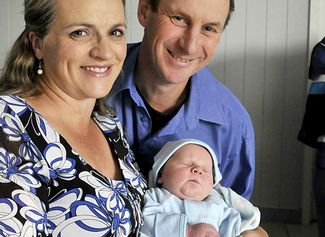
Breakfast radio star Ross Stevenson, and his partner, Sarah Fallshaw, welcomed their first child, a boy, on June 29. He weighed 3.1 kg (6 lb 12 oz).

The Ross and John Show on 3AW often makes fun of celebrity baby names that they find risible, as well as traditional baby names with unusual spellings. Perhaps knowing his own baby name choice would come under scrutiny as a result, it took Ross nearly a week to announce the name of his new son.

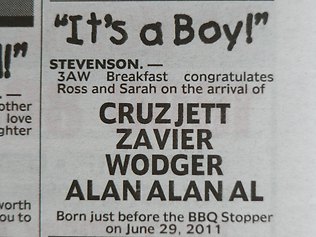
As a prank, the 3AW breakfast team posted a joke birth announcement in the Herald Sun, suggesting that the new baby’s name was Cruzjett Zavier Wodger Alan Alan Al.

Meanwhile, listeners posted their own ideas, putting forward names such as Hamish, Angus, Ian, Liam, James, Oscar, Adam, Ned, Charlie, Simon, Luke, Mackenzie and William. Someone suggested Arlo – clearly that name has legs!

However, this morning Ross announced that, apparently rejecting these friendly hints, his son was to be called Hugh. As Ross’ real surname is Campbell, the baby’s name is Hugh Campbell.

Interestingly, only recently I suggested Hugh as a possible baby name in Boys Names from the Top 100 of the 1930s. Perhaps Ross and Sarah have been searching my blog for baby name ideas, or maybe I just have my finger on the pulse of Australian society …

Ross has two other sons from a previous relationship, but their names have not been publicly made known. Something a radio fan posted made me think their names might be Vincent and Joseph.


The Baby Who Came with a Song

05 Tuesday Jul 2011

Posted by A.O. in Babies in the News

≈ 6 Comments

Tags

Australian Aboriginal names, locational names, unisex names

It was Territory Day on July 1, which celebrates the day that the Northern Territory commenced self-government in 1978. This year, the centenary of the territory’s foundation, the Northern Territory government and Music NT offered a $10 000 prize to the person who wrote the best Territory Anthem.

The winner was musician and music teacher Stephanie Harrison, from Alice Springs. Stephanie was in the early stages of labour on June 29 when she was told that her song, Stand As One, had won the contest our of 120 entries. And 48 hours later she and her partner Jack Batty had something else to celebrate – the birth of their son Tanami Batty.

Stephanie says that the song “came out of nowhere”, and that “I just couldn’t get the bloody song out of my head”.

The prize money means that she can stay home with Tanami without financial worries, and will also be used to fund some family road trips.

Her song was performed by the Darwin Symphony Orchestra and Darwin Chorale at Parliament House as part of the Territory Day celebrations.

Tanami is named after the Tanami Desert in the Northern Territory. It is pronounced tan-uh-my.

Although it’s rare, this isn’t the first time I have seen Tanami used as a name, but it’s the first time I have seen it on a boy. It seems like a brilliant name for a baby born on, or near, Territory Day.

Waltzing with … Griffith

03 Sunday Jul 2011

Posted by A.O. in Waltzing with ...

≈ 9 Comments

Tags

famous namesakes, name history, name meaning, nicknames, surname names, Welsh names

This blog post was first published on July 3 2011, and revised on July 9 2015.

Famous Namesake
On July 9 it will be Constitution Day, when Australia celebrates the date that our Constitution became law in the year 1900. Well, not so much “celebrates”, as “ignores”. Unlike in many other countries, Constitution Day is not a public holiday here, and only a tiny minority of people know of its existence.

This ignorance is not completely our fault. Constitution Day was only brought into being in 2000, and seems to be have been imagined as a one-off event for the Centenary of the Constitution. However, someone or other must have decided this was a bit slack, and it was revived in 2007, so technically we’ve only had a Constitution Day for a few years.

It is the National Archives of Australia in Canberra who organises events for Constitution Day, which includes ceremonial viewings of the original Constitution document – our nation’s “birth certificate”. It is a good opportunity to educate children and adults about our Constitution, as Australians are often more familiar with elements of America’s constitution.

Sir Samuel Griffith is accepted as the principal author of the Australian Constitution. Born in Wales in 1845, his family emigrated to Queensland when he was eight years old. A lawyer and politician, he became Premier of Queensland, and Chief Justice of the Supreme Court of Queensland.

Always a supporter of Federation, he headed the Queensland delegation to the 1891 Sydney Constitutional Convention, where he was appointed vice-president and took a leading role. “It fell to my lot to draw the Constitution,” he wrote, “after presiding for several days on a Committee, and endeavoring to ascertain the general consensus of opinion.”

Naturally there were several drafts to be submitted to committees, and approved in two referenda by the Australian people. More than half a million people in six colonies voted for the Constitution, the first national constitution anywhere in the world to be put to a popular vote. Finally, it was given royal assent by Queen Victoria on July 9 1900.

Sir Samuel Griffith saw the Constitution he helped write enshrined in law, and the Federation he’d worked toward come into being. He was the obvious choice to be the first Chief Justice of the High Court of Australia, where he served admirably and was awarded several honours. In his spare time, he became the first Australian translator of Dante’s Inferno.

After his death in 1920, his name was commemorated by the naming of a suburb of Canberra after him; as well as Griffith University in Queensland (Griffith in New South Wales is named after Arthur Griffith, the state’s first Minister of Public Works). The Samuel Griffith Society is a conservative organisation dedicated to defending the principles of the Constitution.

The Australian Constitution is often praised internationally, because it isn’t the product of war or revolution, but came out of a democratic process of public debate and agreement. Australia had led the way in constitutional development, but unfortunately, we often think of it as rather boring.

It was not so when it was created, but an object of great pride, the beginnings of Australian independence. And many current issues, such as same-sex marriage, the rights of asylum seekers, and the citizenship of terrorism suspects and our prime minister, require an interest in and knowledge of our Constitution.

It’s not a dry old document at all, but a vital, engaging one which is still growing and evolving.

Name Information
The surname Griffith is an anglicised form of the Welsh name Gruffudd, and this spelling has been in use since the Middle Ages. The meaning of Gruffudd is not certain, but is thought to mean something like “lord with a strong grip”, or “strong lord”.

The name Gruffud was commonly used amongst medieval Welsh royalty, and Gruffudd ap Llywelyn was an 11th-century Welsh ruler who fought against England. (Sir Samuel Griffith, always proud of his Welsh heritage, named his son Llewellyn).

Griffith is a name from our Federation history that’s traditional but still stands out from the crowd. It’s strong, but has a pleasantly soft sound; it looks distinguished and sounds smart, yet doesn’t seem elitist or nerdy. I admit it’s a tiny bit awkward to say, which means Griff as a nickname is almost certain to be used on an everyday basis.

POLL RESULT
Griffith received an approval rating of 78%, making it one of the highest-rated names of 2011. 38% of people thought it was okay, while only 2% hated it.

Midweek Sibset: The Very Big Family

29 Wednesday Jun 2011

Posted by A.O. in Sibsets in the News

≈ 9 Comments

Tags

sibsets

When Jeni and Ray got married, Jeni was 19, and didn’t want children. She was dismayed to find that her new husband, who had proposed marriage after 2 weeks of dating, wanted six kids.

Fast-forward 22 years, and Jeni and Ray Bonnell have recently welcomed their new baby, Damian Ronald, into their life. Damian Bonnell was born in Toowoomba, Queensland, on Saturday June 4 2011 at 6.50 am, weighing in at 8 pounds 11 ounces, or just under 4 kg.

Damian is the fifteenth child born to Jeni and Ray, making them the largest nuclear family in Australia.

Jeni describes their family life as “loving” and “happily chaotic”, but much like everyone else’s, just with extra washing to do. Oh, and they drive their own bus. Other than that, it’s a normal routine of school, homework and chores, with church and a roast dinner on Sundays.

Damian’s brothers and sisters are Jesse (21), Brooke (20), Claire (17), Natalie (15), Karl (14), Samuel (12), Cameron (11), Sabrina (9), Timothy (8), Brandon (6), Eve (5), Nate (3), Rachel (2), and Eric (1).

Jesse and Brooke have moved out of home, but you can tell what a close family it is, because both of them bought houses right near their childhood home.

I know name collectors often say they would need to have more than a dozen children to use all their favourite names, so, er – here’s a chance to see what your life would look like if that happened!

When I see other families with lots of children, I’ve noticed that they often stick with an obvious theme to help choose baby names, such as all the names starting with the same letter, or all of them being from the Bible. Sometimes you can see that invention begins to run out, so that the first children have fairly standard names like Andrew and Emily, and then the names get steadily more random, so that the last ones are called Bobo, Hex and Glass or something.

Another naming issue for large families is that almost an entire generation can separate the first-born from the last-born, and if you always choose popular names, you’ll end up with your eldest children being called Darren and Brittany, and your youngest being called Kai and Sienna – total naming mis-match. This is something I see a lot, actually – it’s a dilemma for parents who have children in their early 20s, then have a couple more in their late 30s, because fashions in naming change the meantime.

I think that in general the Bonnells have avoided many of these pitfalls, and they certainly don’t seem to have had any problems running out of ideas for names. Which is a good thing, because the Bonnells say they would love to have more children!

Boys Names from the Top 100 of the 1930s

26 Sunday Jun 2011

Posted by A.O. in Name Themes and Lists

≈ 18 Comments

Tags

Anglo-Saxon names, animal names, aristocratic names, Arthurian names, Celtic names, classic names, english names, epithets, European name popularity, famous namesakes, fictional namesakes, Gaelic names, German names, germanic names, Greek names, Irish name popularity, Irish names, Latin names, mythological names, name history, name meaning, name popularity, name trends, names from films, names from television, nicknames, Old English names, Old Norse names, retro names, royal names, royal titles, saints names, Scottish names, Slavic names, Spanish names, UK name trends, US name trends, Welsh names

This post was first published on June 26 2011, and substantially revised and updated on June 25 2015.

Alfred
Anglo-Saxon name meaning “elf counsel”. The name became famous due to Alfred the Great, 9th century king of Wessex, who defended England against the Vikings, and was the first to call himself King of the Anglo-Saxons. Renowned for his love of learning, he encouraged education and reformed the legal system. Although not officially a saint, he is regarded as a Christian hero, and has a feast day in the Anglican Church. The name Alfred continued to be used even after the Norman Conquest, when many Anglo-Saxon names were discarded. It dwindled after the Middle Ages, but had a revival in the 19th century, and was chosen as the name of one of Queen Victoria’s sons – an earlier Prince Alfred was the son of King George III, and the current British family trace their ancestry back to Alfred the Great. Alfred is a classic name which has never left the charts. It was #14 in the 1900s, and #50 by the 1930s. Alfred left the Top 100 in the 1950s, and is currently around the 300s, its position apparently fairly stable. Popular in Scandinavia, Alfie, Fred, and Freddie give this venerable classic several cute nickname options.

Brian
Irish name, possibly from the Celtic bre, meaning “hill”, to suggest “high, great, exalted”. In Irish mythology, Brian is one of three brothers who are sent on a worldwide magical quest. In some versions, Brian is the clever one of the three, while his brothers are bumbling and easily pushed around. A famous namesake is Brian Boru, the first High King of Ireland, and founder of the O’Brien dynasty; he made the name common in Ireland. The name Brian was also used in Brittany, and became quite popular in East Anglia, where it was spread by Breton immigrants, and in the north of England, brought over by Scandinavian settlers who had lived in Ireland. It experienced a revival in the early 20th century. Brian is a classic name which has never left the charts. It was #169 in the 1900s, and joined the Top 100 in the 1920s. Peaking in the 1930s and ’40s at #7, Brian didn’t leave the Top 100 until the 1980s – Monty Python’s Life of Brian having turned it into a “joke name” didn’t help its fortunes. However, it’s been reasonably stable for about a decade, and is around the 300s. Brian remains a popular name in Ireland. This is a strong-sounding Irish classic still getting reasonable use.

Colin
Anglicised form of the Scottish name Cailean, meaning “whelp, pup, young dog” in Gaelic. It is also a medieval pet form of Col, short for Nicholas, so it’s an English name as well. Cuilén mac Ildulb was a 10th century King of the Scots, while Sir Colin Campbell (“Colin the Great”) was a 13th century cousin of Robert the Bruce, and one of the earliest known members of the Clan Campbell, ancestor of the Earls of Argyll. The name became traditional in the Campbell family because of him. Colin was #51 in the 1900s, and peaked in the 1930s at #14. It left the Top 100 in the 1980s, and although it stayed in use for many years afterwards, now seems to be quite rare. Colin is a traditional name which has a gentle and slightly poetic feel, and works well in the middle.

Edwin
Modern form of the Anglo-Saxon name Eadwine, meaning “rich friend”. The name was traditional amongst Anglo-Saxon royalty and nobility, with the most famous Edwin being a 7th century king of Northumbria who converted to Christianity; it was said that during his reign, the land was so peaceful that a woman with a new baby could walk across the country without being harmed (it tells you something that this was considered remarkable). He was canonised as a saint after his death. The name Edwin sunk in popularity after the Norman Conquest, but was revived in the 19th century during the Victorian enthusiasm for early English names. Edwin is a classic name which has never left the charts. It was #52 in the 1900s, and #88 by the 1930s. It left the Top 100 in the 1940s, and is currently around the 400s. A good alternative to popular Edward, while still having Eddie, Ed, Ned, and Ted as nicknames.

Frederick
English form of the Germanic name Friduric, translated as “peaceful ruler”; the modern German version is Friedrich. A favourite amongst European royalty, the name was traditional amongst the Holy Roman Emperors, with Frederick I also known as Frederick Barbarossa, meaning “red bearded” in Italian. Descended from two of Germany’s leading royal houses, he is regarded as the greatest of the medieval Holy Roman Emperors. Handsome, charismatic, and courtly, he was ambitious and skilful, greatly increasing Germany’s power base, and bringing back the Roman rule of law. According to medieval legend, he is not dead, but sleeps in a cave, waiting to return Germany to its former greatness. There are also a couple of medieval German saints named Frederick. The name was brought to England by the Normans after the Conquest, but it didn’t catch on. It was revived in the 18th century when the German House of Hanover inherited the British throne; Prince Frederick was the eldest son of King George II. Frederick is a classic name which has never left the charts. It was #8 in the 1900s, and #26 by the 1930s. It left the Top 100 in the 1960s, and sunk to its lowest level in the 1990s, at #459. Since then it has gradually increased in popularity, and is now around the low 200s. A distinguished name with friendly nicknames like Fred and Freddie, Frederick is already popular in the UK.

Ivan
Slavic form of John. A traditional Slavic name, there have been many famous Ivans in history, including six tsars of Russia, and many Croatian and Ukrainian leaders. St Ivan is a legendary hermit from Bohemia, while St Ivan of Rila is the patron saint of Bulgaria. Ivan continues to be a popular name in Eastern Europe, while the Spanish form Iván is popular in Spain and Latin America. Its long-term use in the English-speaking world may come from its similarity to the Welsh form of John, Ifan, so it can be seen as an Anglicised form of the Welsh name. Ivan is a classic name which has never left the charts. It was #117 in the 1900s, peaked in the 1910s at #97, and was #100 in the 1930s. It left the Top 100 in the 1940s and is currently around the low 300s, having been reasonably stable since the 1990s. That makes it a great cross-cultural choice which has remained both familiar and underused.

Lawrence
Variant of Laurence, and the usual surname form of the name. St Lawrence of Rome was a 3rd century Spanish saint who was archdeacon of Rome during a time of Christian persecution. There are many stories and legends about him. One is that he spirited the Holy Grail to Spain, where it remains in Valencia. Another is that the Emperor demanded that Lawrence hand over all the church’s goods. Lawrence hastily distributed everything the poor, then presented the city’s suffering, saying that these were the true treasures of the church. For this act of defiance, he was supposedly martyred by being roasted over a gridiron; after hours of pain, he remarked cheerfully: I’m well done. Turn me over! He is one of the most widely venerated saints, and his tomb a favourite pilgrimage site since the 4th century. Lawrence is a classic name which has never left the charts. It was #67 in the 1900s, peaked at #55 in the 1910s and ’20s, and was #61 in the 1930s. It left the Top 100 in the 1960s, and reached its lowest point in 2010 at #466. Since then it has risen again, and is now in the 200s, outstripping Laurence in popularity. This rugged-sounding classic comes with the nicknames Lawrie and Larry.

Lionel
Medieval pet form of Leon, a Greek name meaning “lion”; it could also be directly from Lion, which was used as a nickname in the Middle Ages. According to Arthurian legend, Sir Lionel was a Breton king, and knight of the Round Table. He features in the Grail Quest, where he is shown to be unworthy of the Grail, and more interested in fighting than the spiritual life. Lionel of Antwerp was a son of King Edward III, and reputedly a giant of a man, almost seven feet tall and of athletic build. It is through him that the House of York claimed the throne of England, and the name was a common one amongst the aristocracy. Lionel was #68 in the 1900s, peaked in the 1910s at #66, and was #73 by the 1930s. It left the Top 100 in the 1950s, and hasn’t charted since the 1980s. The name is rising in both the the UK and US, fitting in well with both popular Leo, and the trend for animal names. Definitely a worthy choice that has too often been overlooked!

Rex
The Latin word for “king”, and the title of the ancient kings of Rome (“Rex Romae“) – according to legend, the first king of Rome was Romulus. The Roman monarchs did not inherit kingship, but were elected to the role, and held absolute power. The word rex is ultimately from an ancient root meaning “to rule”, and it is related to the Sanskrit term Raja, the German word reich, and the English words rich, right, regal, royal, reign, and realm. Rex has been used as a personal name since the 17th century, but only came into common use in the 19th century. Rex was #138 in the 1900s, and entered the Top 100 in the 1920s. Peaking in the 1930s at #74, Rex left the Top 100 in the 1950s. It left the charts in the 1980s, but returned the following decade at #635. It has continued climbing, and is now around the 300s. No wonder Rex is making a comeback – it’s short and snappy, ends in the fashionable X (like Max), and sounds very masculine and confident.

Walter
English form of the ancient Germanic name Walthari, meaning “ruler of the army”. It was brought to England by the Normans and soon replaced its Old English version, Wealdhere. Mythologist Jacob Grimm theorised that the name may have originally been an epithet of one of the Germanic war gods, and be linked to the Norse god Tyr. The name was especially famous in the Middle Ages because of Walter of Aquitaine, a legendary king of the Visigoths; medieval poems tell of his military exploits, fighting one-handed against his foes. He may be based on a 5th century king of Aquitaine, Wallia – his name is probably from the Old Norse for “slaughter”. There is a 12th century English saint called Walter. Walter was #15 in the 1900s, and #46 by the 1930s. It left the Top 100 in the 1950s, and dropped off the charts in the 1990s. However, it made a comeback in 2011 after the hit TV show Breaking Bad aired in Australia, with ailing chemistry teacher turned criminal Walter White played by Bryan Cranston. His name was inspired by the American poet, Walt Whitman, and he is also often known as Walt. His teenage son is Walter White Jr, giving the name a younger image to match Walter Snr’s villainous smarts. Walter is currently around the 500s, and it is yet to be seen whether it continues rising now the show has finished. I hope so, because this retro name now seems fresh and unconventional.

POLL RESULTS
People’s favourite names were Walter, Frederick and Alfred, and their least favourites were Lionel, Ivan and Brian.

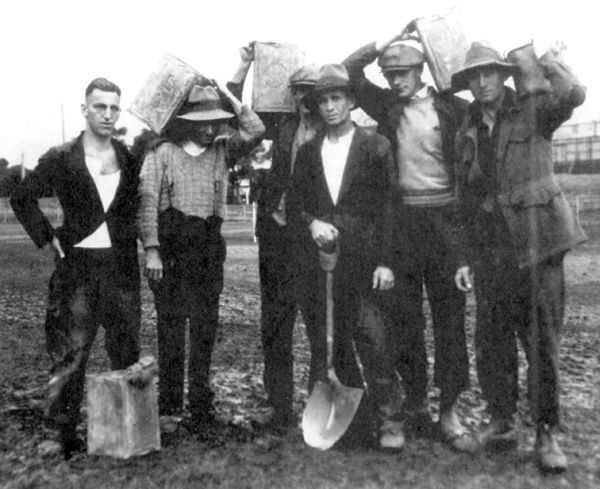
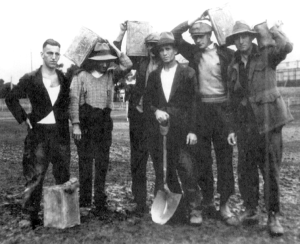
(Photo of men doing relief work during the Great Depression in 1933 from the National Library of Australia)

Celebrity Baby News: Garth and Leanne Tander

25 Saturday Jun 2011

Posted by A.O. in Celebrity Baby News

≈ 4 Comments

Tags

celebrity baby names

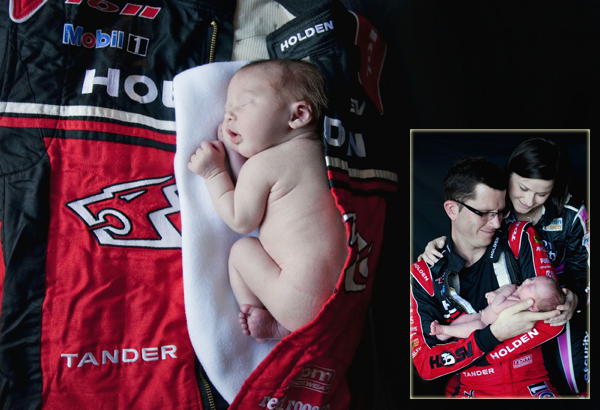
V8 motor racing champion Garth Tander, and his wife, fellow racing driver Leanne, have welcomed their first child, a daughter named Scarlett. Scarlett Tander was born at 8.45 am Friday 24 June, and weighed 7 lb 9 oz (3.5 kg).

This is the second celebrity baby called Scarlett we have had on the blog this year – the first one being Scarlett Mitchell, the daughter of Sam Mitchell.

Garth has raced with the Holden Racing Team since 2008. Leanne is also extremely successful in the sport, but will be taking maternity leave for 2011 to concentrate on motherhood. She is adamant that she is not retiring.

Celebrity Baby News: Michael and Lindy Klim

25 Saturday Jun 2011

Posted by A.O. in Celebrity Baby News

≈ 4 Comments

Tags

celebrity baby names

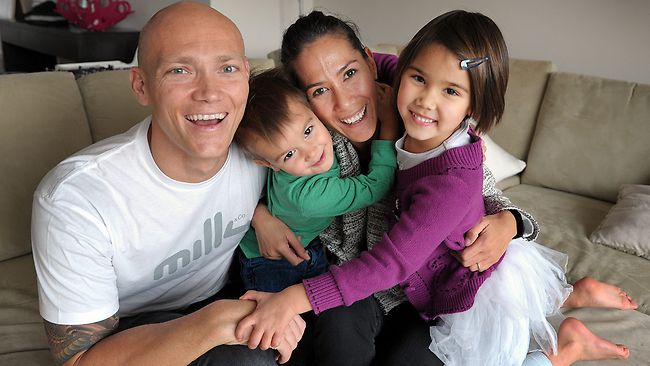
Swimmer Michael Klim, and his wife Lindy, welcomed their third child on Wednesday June 22; a baby girl named Frankie. Frankie Klim was born in a Melbourne hospital, and Michael has Tweeted that mother and baby are doing well.

Frankie joins big sister Stella (aged 5), and big brother Rocco (aged 3).

Michael and Lindy were married in April 2006; Lindy is a Balinese princess, and before her marriage was a model and fashion entrepreneur. Michael announced his return to swimming in January this year after retiring in June 2007.

(Picture shows Michael and Lindy with Stella and Rocco).

← Older posts
Newer posts →

Enter your email address to follow this blog

Categories

Archives

Recent Comments

A.O.'s avatarwaltzingmorethanmati… on Zarah Zaynab and Wolfgang…
Madelyn's avatarMadelyn on Zarah Zaynab and Wolfgang…
JD's avatardrperegrine on Can Phoebe Complete This …
A.O.'s avatarwaltzingmorethanmati… on Rua and Rhoa
redrover23's avatarredrover23 on Rua and Rhoa

Blogroll

  • Appellation Mountain
  • Baby Name Pondering
  • Babynamelover's Blog
  • British Baby Names
  • Clare's Name News
  • For Real Baby Names
  • Geek Baby Names
  • Name Candy
  • Nameberry
  • Nancy's Baby Names
  • Ren's Baby Name Blog
  • Sancta Nomina
  • Swistle: Baby Names
  • The Art of Naming
  • The Baby Name Wizard
  • The Beauty of Names
  • Tulip By Any Name

RSS Feed

  • RSS - Posts

RSS Posts

  • Celebrity Baby News: Melanie Vallejo and Matt Kingston
  • Names from the TV Show “Cleverman”
  • Can Phoebe Complete This Sibset?
  • Zarah Zaynab and Wolfgang Winter
  • Baby, How Did You Get That Name?
  • Celebrity Baby News: Media Babies
  • Celebrity Baby News: Adelaide Crows Babies
  • Celebrity Baby News: Chris and Rebecca Judd
  • Names at Work: Name News From the World of Business and Employment
  • Celebrity Baby News: Sporting Round Up

Currently Popular

  • Celebrity Baby News: Radio Babies
  • The Top 100 Names of the 1920s in New South Wales
  • Saturday Celebrity Sibset: A Taste of Scotland - Leigh McClusky and Simon Haigh
  • Girls Names From Stars and Constellations
  • Celebrity Baby News: Jacinta Allan and Yorick Piper

Tags

celebrity baby names celebrity sibsets english names famous namesakes fictional namesakes honouring locational names middle names name combinations name history name meaning name popularity name trends nicknames popular names saints names sibsets surname names twin sets unisex names

Create a free website or blog at WordPress.com.

Privacy & Cookies: This site uses cookies. By continuing to use this website, you agree to their use.
To find out more, including how to control cookies, see here: Cookie Policy
  • Subscribe Subscribed
    • Waltzing More Than Matilda
    • Join 517 other subscribers
    • Already have a WordPress.com account? Log in now.
    • Waltzing More Than Matilda
    • Subscribe Subscribed
    • Sign up
    • Log in
    • Report this content
    • View site in Reader
    • Manage subscriptions
    • Collapse this bar
 

Loading Comments...