• About
  • Best Baby Names
  • Celebrity Baby Names
  • Celebrity Baby Names – Current
  • Celebrity Baby Names – Past
  • Featured Boys Names
  • Featured Girls Names
  • Featured Unisex Names
  • Links to Name Data
  • Waltzing on the Web

Waltzing More Than Matilda

~ Names with an Australian Bias of Democratic Temper

Waltzing More Than Matilda

Tag Archives: US name popularity

Waltzing With … Lachlan

06 Sunday Sep 2015

Posted by A.O. in Waltzing with ...

≈ 4 Comments

Tags

aristocratic names, celebrity baby names, classic names, famous namesakes, Gaelic names, name history, name meaning, New Zealand name popularity, nicknames, patriotic names, popular names, Scottish names, UK name popularity, US name popularity
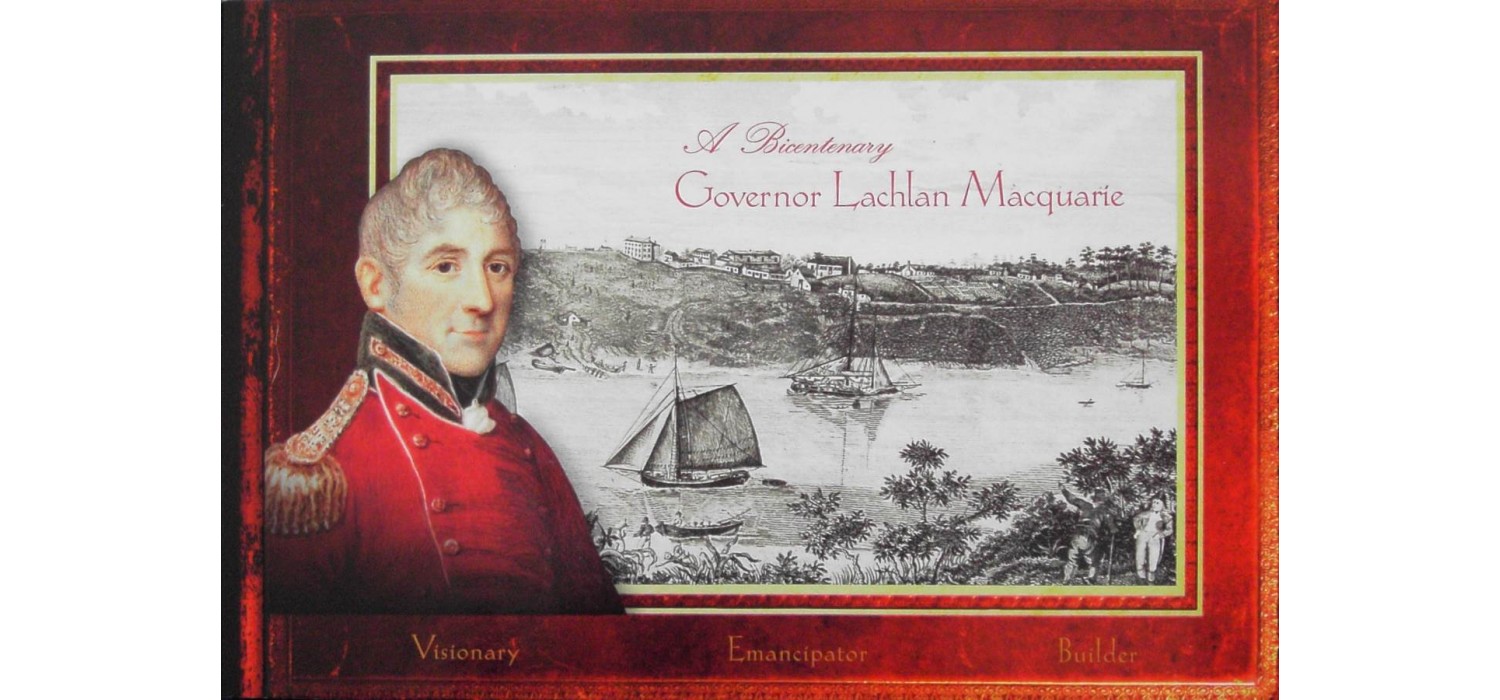
2010-australia-post-booklet-governor-lachlan-macquarie-stamp-packs-and-booklets-a3440-1500x700

Famous Namesakes
The name Lachlan has a long history in Australia because of Lachlan Macquarie, a British military officer born in the Hebrides who served as the fifth and last Governor of New South Wales. While still a teenager, he served during the American War of Independence, and saw active service in India and Egypt, eventually being promoted to the rank of Major-General.

Lachlan served his term as Governor from 1810-1821, and he had plenty to cope with, as the colony was disorderly following the Rum Rebellion against the former Governor, William Bligh. There was also a severe drought during his term, which brought about a financial depression, and the end of the Napoleonic Wars in 1815 led to a huge increase in Australia’s population from both settlers and convicts. Despite these challenges, Lachlan loved Sydney’s climate and setting, and saw the colony in very positive terms.

This was the period of Australia’s history where it was in transition from a penal colony to a free settlement. Lachlan held liberal views towards convicts, pardoning them as often as possible. He scandalised settlers by accepting freed convicts into society, and appointing them to government positions – even as magistrates. He sponsored massive exploration, and established Bathurst, the first inland city.

He spent lavishly on public works, which the British government strongly opposed, as they still saw Australia as a dumping ground for convicts, to be run as cheaply as possible. Sydney’s layout is based on Lachlan’s street plan for the central city, and the colony’s most prestigious buildings were on Macquarie Street. He designed the Georgian-style Rum Hospital, which today is the state’s Parliament House, while its stables house the Sydney Conservatorium of Music. He also designed the city centre of Hobart in Tasmania.

So much of the modern Australia we know was first begun by Governor Macquarie. He established the British system of justice, and the first Supreme Court. He encouraged the creation of the colony’s first bank, The Bank of New South Wales (now Westpac), and produced Australia’s first official currency. Towards the end of his term, he decreed that all traffic should keep to the left in New South Wales in line with British custom.

Perhaps the most important change he made was a symbolic one – he recommended that the name Australia be formally adopted, giving the seal of approval to Matthew Flinders’ choice. Little wonder that on Lachlan Macquarie’s tomb on the Island of Mull in Scotland he is called The Father of Australia.

Happy Father’s Day! And Happy Father’s Day to Lachlan Macquarie, the father of our country.

Name Information
Lachlan is a Scottish name from the Highlands. It is from the Gaelic Lochlann, meaning “land of the lochs” (land of the lakes). It was originally given as a nickname for someone from Norway: Norway has almost half a million freshwater lakes, so it well deserves this epithet. The name is pronounced LOK-lun.

The word Lochlann was first used to indicate “a Viking, a raider”, but gradually came to mean anyone of Norse descent. There was a strong link between the neighbouring lands of Norway and Scotland during the Middle Ages, as both battled for control of the Western Isles of Scotland. As part of the effort to improve the Scotland-Norway relationship, there were diplomatic missions between the two nations, and even intermarriage between the royal houses.

The name Lachlan (or Lochlann) was commonly used amongst the noble families of Scotland, who were often of part Norse descent. The name was traditional in the Clan Maclean, an old Highland clan who owned land in Argyllshire and the Hebrides. (Lachlan Macquarie’s mother was the daughter of the chieftain of the Clan Maclaine, another spelling of Mclean, and his father was the chieftain’s cousin). The current chief of Clan Maclean is Sir Lachlan Maclean of Duart and Morven, 12th Baronet of Nova Scotia.

The name Lachlan is only popular in Australia and New Zealand (it is #27 in New Zealand). In the UK Lachlan was #546 in 2013, while Lochlan was #709; the name is fairly stable there. In the US, the name Lachlan first joined the Top 1000 in 2013, and is currently #902 – a long way off being popular, but gaining in popularity. In the US, the name was given to 14 girls last year, which seems very wrong from an Australian viewpoint!

The name Lachlan was #173 in the 1900s, and went off the charts altogether during the 1920s and ’30s. It returned in the 1940s at #220, and gradually increased in popularity. There was a surge in popularity during the 1970s, most likely because media magnate Rupert Murdoch named his eldest son Lachlan in 1971. Rupert’s grandfather was from Scotland, and the choice of Lachlan’s name may have been inspired by his Scottish heritage as much as a tribute to Lachlan Macquarie.

Lachlan first joined the Top 100 in 1982 at #96, joined the Top 50 in 1989, and the Top 25 in 1996 – fairly brisk progress up the charts. It suddenly leapt into the Top 5 in 1997, the year after Lachlan Murdoch joined the board of Newscorp. However, it never made #1, peaking at #2 in 2002 and 2005, and has now left the Top 10. Currently it #11 nationally, #15 in New South Wales, #10 in Victoria, #12 in Queensland, #7 in South Australia, #12 in Western Australia, #6 in Tasmania, #8 in the Northern Territory, and #4 in the Australian Capital Territory.

This is a strong handsome Australian classic with a connection to Australian colonial history. A popular name for many years, it is by no means fresh or original, but still a worthy choice.

POLL RESULT
Lachlan received an outstanding approval rating of 91%, making it one of the highest-rated names of 2015. 39% of people loved the name Lachlan, and only one person hated it.

(Picture shows a 2010 stamp booklet issued in honour of Lachlan Macquarie’s bicentenary as governor)
Famous Names: Bowie and Pluto

20 Thursday Aug 2015

Posted by A.O. in Famous Names

≈ 2 Comments

Tags

astronomical names, Disney names, dog names, english names, famous namesakes, Gaelic names, Greek names, historical records, Irish names, middle names, mythological names, name trends, names of weapons, nicknames, rare names, Scottish names, slave names, stage names, surname names, UK name popularity, unisex names, US name popularity

get-ready-for-david-bowie-to-take-over-melbourne-1432194284

Names in the News
On July 14 this year NASA’s New Horizons space probe made its closest encounter with the dwarf planet Pluto. Australia was the first place on Earth to receive images of Pluto from New Horizons, at the CSIRO’s Canberra Deep Space Communication Complex at Tidbinbilla. The CDSCC has been tracking New Horizons since it was launched in 2006, and it will take more than a year to receive all the data.

Two days later, the David Bowie Is touring exhibition opened at Melbourne’s Australian Centre for the Moving Image, and broke all records for ticket sales before anyone stepped inside the doors. First staged at the Victoria and Albert Museum in London, it has already been seen by more than 1 million people around the world. The show includes costumes, video, photographs, and items from Bowie’s own collection, including notes and sketches.

David Bowie has a special significance in Melbourne. His first Australian tour was in 1978, and the biggest concert of his career to that point was at the Melbourne Cricket Ground. People queued for three weeks to buy tickets, and the fact that it poured with rain did nothing to dampen the spirits of 40 000 fans. His experiences in Australia in the 1970s inspired the music video for Let’s Dance, filmed in Sydney and outback Carinda).

Besides having key Australian events at around the same time, there isn’t an obvious connection between Bowie and Pluto. Except that Bowie has had so many references to space in his music – Space Oddity, Ashes to Ashes, Ziggy Stardust, Moonage Daydream, The Stars (Are Out Tonight), Life on Mars?, Star Man – that it doesn’t seem too much of a stretch to cover these names together.

BOWIE
Scottish surname derived from the Gaelic nickname Buidhe, meaning “yellow”, to denote someone blond or fair haired. It has also been used to Anglicise the Irish surname Ó Buadhaigh, meaning “son of Buadhach”, with Buadhach meaning “victorious”, although more commonly that’s Anglicised to Boyce. In rare cases it may be a variant of the English surname Bye, from the Old English for “bend”, referring to someone who lived on a river bend.

The Bowie surname originates from Kintyre in western Scotland, and the Bowie family were early colonists to America, with John Bowie Snr one of the founders of Maryland in the early 18th century. He was the grandfather of James “Jim” Bowie, who played a prominent role during the Texas Revolution, and died at the Battle of the Alamo in 1836.

The thick heavy blade known as a Bowie knife is named after Jim, who carried a hunting knife with him and had a reputation as a skilled knife fighter. His brother Rezin Bowie is supposed to have been the creator of the Bowie knife, although Bowie family history relates that it was Rezin’s blacksmith who created the knife.

David Bowie was born David Jones, and first performed as Davie Jones, which risked being confused with Davy Jones from The Monkees. He chose his stage name after seeing the movie The Alamo in 1963, with Richard Widmark as Jim Bowie; allegedly he wanted a name with a “cutting” feel to it, like Mick Jagger’s, and the Bowie knife gave it some edge. He deliberately chose the name of a famous American, as American music and culture had first inspired him.

Bowie has been used as a personal name since the 18th century, and originated in Scotland. Mostly used as a middle name, it was first given as a family name, but in 19th century America increasingly given to honour Jim Bowie: it was particularly found in the southern states. The name Bowie has been given to both sexes, but mostly to boys.

Jagger, Lennon, and Hendrix are reasonably common names, but even with the fame of David Bowie, the name Bowie is in rare use. It doesn’t chart in Australia, while in the UK there has been a smattering of Bowies on the charts since 2003; in 2013 there were 5 baby boys named Bowie. In the US last year, there were 59 baby boys named Bowie and 30 baby girls (numbers rose considerably for boys, but fell for girls).

It is slightly puzzling why Bowie isn’t used more. It sounds like familiar names like Beau, Bohdi, and Brodie, is a counterpoint to popular Archer, and as a knife it fits the trend for weaponry names like Blade.

One issue is that the pronunciation is slightly confused. In the US, Bowie tends to be said BOO-ee, the usual pronunciation of the surname and the Bowie knife. The British sometimes say the first syllable of David Bowie’s surname like the bough of a tree, whereas Bowie himself says it like bow and arrows.

PLUTO
In Greek mythology, Pluto is the god of the Underworld and the afterlife. His earlier name was Hades, but gradually this was used to mean the Underworld itself. Pluto is the Latinised form of the Greek Plouton, meaning “wealth, riches”, and the name is sometimes glossed as “giver of wealth”.

It makes sense that Pluto should be associated with wealth, because he has dominion over all the precious metals, gems, and resources under the earth, and all crops planted in soil. He was a god of abundance, and from early on was associated with agricultural fertility – which is why he was the natural husband for the agricultural goddess Persephone. Pluto and Persephone were revered as a divine couple with knowledge of the mysteries of birth and rebirth.

In the Christian era, there was often a horror of gods of death and the Underworld, who tended to be associated with Satan or demons. Pluto’s image, never a particularly cheerful one, became positively macabre, with Hades a place of torment. In Dante’s Inferno, Pluto rules the fourth circle of Hell, where those who have squandered their wealth are sent. Medieval English writers sometimes conflated Hades with Fairyland, giving Pluto a magical elf-king quality.

The dwarf planet Pluto was discovered in 1930 by a young astronomer named Clyde Tombaugh who had just started working at the Lowell Observatory in Arizona. It was named by an eleven-year-old Oxford schoolgirl named Venetia Burney. She made the suggestion to her grandfather Falconer Madan, retired from the University of Oxford’s Bodleian Library. He had the connections to ensure that Venetia’s idea got to the right people, they unanimously agreed, and Venetia was paid £5 (around $450 in today’s money). A big help was that the first two letters were PL – the initials of Percival Lowell, who had founded the observatory.

When Walt Disney studios created a pet dog for Mickey Mouse in 1930, he was named Pluto – apparently after the planet, although nobody is able to confirm that. So Pluto went from being a god name to a dog name!

Pluto is a gloomy god, a dwarf planet, a cartoon dog … but the name has also been rarely used for humans. The name is first found in colonial America in the 18th century, as a slave name. Pluto can be found in Australian historical records (Pluto Riches and Pluto Surprise are two interesting finds), and was also given to Aboriginal servants. Overall, Pluto has mostly been used in the United States. Use of the name, always low, fell after 1930 and never recovered, although it isn’t clear whether parents were put off by the astronomical body or the Disney character.

Pluto is probably too much of a space oddity to use as a first name, but would make a memorable middle.

Two rare names from the stars: which one will rate better?

POLL RESULTS
The name Bowie received an approval rating of 50%. 42% of people weren’t keen on it, although 17% loved it.

The name Pluto was much less popular, with an approval rating of 15%. 46% of people weren’t keen on it, and only 7% thought it was a good name.

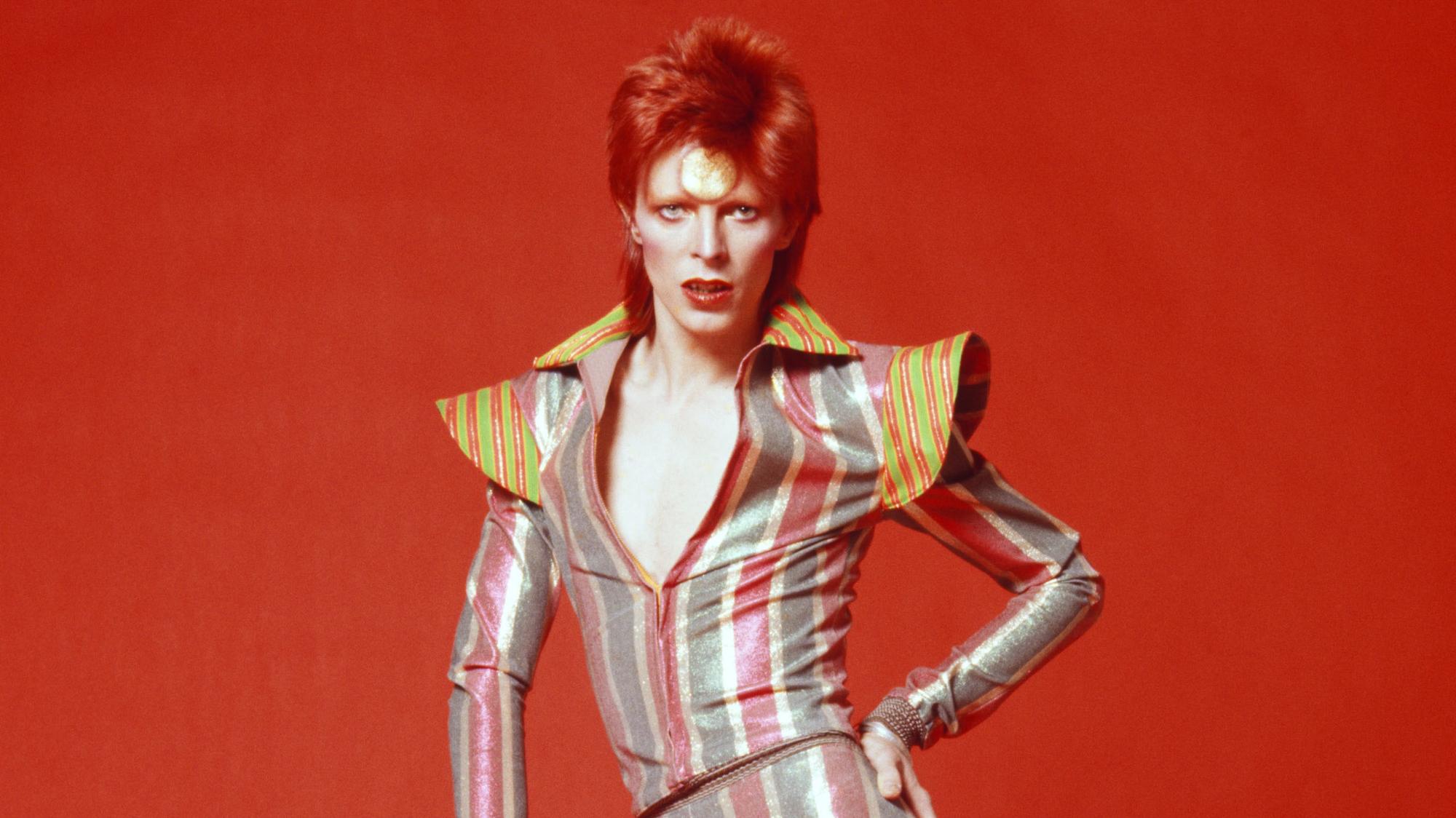
(Picture of David Bowie in 1973 by Masayoshi Sukita; photo from Urban Walkabout)

Famous Name: Darcy

12 Wednesday Aug 2015

Posted by A.O. in Famous Names

≈ 3 Comments

Tags

animal names, aristocratic surnames, english names, famous namesakes, Gaelic names, Irish names, locational names, name history, name meaning, name popularity, names from songs, popular names, scientific names, surname names, UK name popularity, unisex names, US name popularity

colin

Famous Namesakes
This month it will be the 95th birthday of Darcy Dugan, who was born in Sydney on August 29 1920. Although Darcy was a career criminal who committed many armed hold-ups, he gained folk hero status as the most notorious prison escape artist in New South Wales.

Darcy spent 44 years in prison, with a death sentence commuted to life imprisonment, and made six escapes from custody in all. Legend has it that his trademark was to scrawl Gone to Gowings on his cell wall before each escape – Gowings was a popular department store, and in the slang of the time, to go to Gowings meant “to leave in haste”.

Dugan’s experience of prison brutality and police corruption led him to become a campaigner for prison reform: after being released he worked towards the rehabilitation of ex-prisoners. Darcy died in 1991, and his memoir Bloodhouse was published a few years ago, the manuscript only to be released once he and all his enemies were dead.

Another literary namesake is the author D’Arcy Niland, who wrote numerous short stories, and several successful novels, including The Shiralee, about a swagman on the road with his little girl, Buster. Niland knew this subject well, for he had wandered around rural New South Wales with his father during the Great Depression.

The writer was born Darcy Niland in 1917, and named after the Australian boxer Les Darcy, who had died the year Niland was born. D’Arcy Niland, a keen boxer himself, began researching a book about Les Darcy, which was eventually completed by his widow Ruth Park, and son-in-law Rafe Champion, both successful writers. As Darcy Dugan was only a few years younger than Niland, I suspect he was probably named after the boxer as well.

Name Information
Darcy can be a variant of D’Arcy, an English surname of French origin: it comes from the village of Arcy in Normandy, which means “bear town”. In Ireland, the name Darcy is usually from the same source, brought over by the Normans. Occasionally it is an anglicisation of the Gaelic name O’Dorchaidhe, meaning “son of the dark one”, although this is generally anglicised to Dorsey.

Darcy is an aristocratic name, with the Darcy family of Yorkshire holding noble titles since the 17th century, although the family had been prominent since the Middle Ages. The 4th and final Earl of Holdernesse was Robert Darcy, an 18th century diplomat: he was said to have been the last direct descendant of the Norman barons still in the Peerage.

His daughter Lady Amelia married “Mad Jack” Byron, the father of poet Lord Byron. Their daughter Augusta Leigh is supposed to have been in a relationship with her half-brother, and bore him a child called by her middle name Medora, after a character in one of Byron’s poems.

Many readers will be reminded of a purely fictional aristocrat: Mr Fitzwilliam Darcy from Jane Austen’s Pride and Prejudice. Tall, dark, handsome, rich, and aloof, he both attracts and irritates the spirited heroine Elizabeth Bennet, but she learns that Darcy can be generous and noble-spirited (and has a gorgeous estate).

Mr Darcy has entranced generations of women, been depicted on screen by actors such as Sir Laurence Olivier and Colin Firth, and inspired modern works of fiction, including Lost in Austen and Bridget Jones’ Diary. Scientists have even named a male sex pheromone Darcin in honour of the romantic hero (it attracts female mice, not witty damsels).

Jane Austen is believed to have named Fitzwilliam Darcy after both Robert Darcy and William Fitzwilliam, 4th Earl of Fitzwilliam, an important 18th century statesman and one of the richest people in Britain. Perhaps she saw her hero as continuing the line of Norman barons, while also claiming some distant share of royal blood through his Fitzwilliam ancestry.

She was presumably not to know the scandalous direction the Darcy connection would take: it may amuse some readers to know that when Medora Leigh was born a year after Pride and Prejudice was published, she was baptised Elizabeth. This is just possibly not a coincidence – Augusta Leigh was a Jane Austen fan, and Lord Byron owned a copy of Pride and Prejudice.

Darcy has been used as a personal name at least since the 17th century, and originated in Yorkshire, influenced by the aristocratic Darcy family. It was originally nearly always given to boys, but overall, Darcy has more often been a girls’ name.

Australia is apparently the only country where Darcy is primarily a male name. From the 1900s, it is listed on the charts as a unisex name, and first charted as a boys’ name in the 1950s at #319 – around the time Darcy Dugan became famous.

It went off the charts altogether in the 1960s and ’70s, returning in the 1980s at #434, when Darcy Dugan was released from prison, and D’Arcy Niland’s The Shiralee was made into a mini-series. It then climbed steeply, making the Top 100 for the first time in 1997 at #77 (not long after the Pride and Prejudice mini-series). It never got any higher than its initial position, remaining in the bottom quarter of the Top 100.

Last year it dropped off the national Top 100, and the Top 100 in Victoria, Queensland and the Australian Capital Territory. It is currently #97 in New South Wales and #87 in Tasmania. Darcy is around the 400s as a girls’ name, but if you included variants such as Darci and Darcie would be somewhat higher.

Darcy joined the UK Top 100 for the first time in 2013; it is #93 for girls and rising. In the UK, 28 baby boys were named Darcy as opposed to 588 baby girls. Darcey is even more popular for girls in the UK, at #84 and rising – the ballerina Darcey Bussell (born Marnie Crittle) has been a major influence on the name. Darcey is one of her middle names, while Bussell is the surname of her Australian adoptive stepfather – her biological father was the Australian designer John Crittle, descended from the first free settler to Australia. Spelling variants make this name even more common for girls in Britain.

In the US, Darcy has not charted since the mid 1990s. It peaked for girls at #349 and for boys at #869, both in 1968 (the song Darcy Farrow was released in 1967 by George Hamilton IV, about a girl named Darcy; the same year the sci-fi novel Too Many Magicians was published, featuring a detective named Lord Darcy, so it was on the radar for both genders). Last year in the US there were 183 baby girls named Darcy and 12 boys, but if you include spelling variants it is even more overwhelmingly a female name.

With such manly namesakes as Les Darcy, Darcy Dugan, and D’Arcy Niland, you can see how this unisex name became all-boy in Australia. But is it possible for it to follow international trends and become a girls’ name in the future? In a word, yes. It is currently falling in use for boys while climbing for girls, and has never peaked higher than #77. Ashley peaked at #60 for boys, and became far more common as a girls’ name, so it’s happened before. In the meantime, this is a name that seems just right for either a Mister Darcy or a Miss Darcy.

POLL RESULTS
Darcy received a creditable approval rating of 70%. People saw Darcy as cute and spunky (15%), cool and classy (12%), and romantic and dreamy (10%). However, 7% thought it seemed downmarket and lower class – as opposed to the 6% who saw it as yuppy and snobbish!

72% of people thought Darcy was better as a boy’s name, while 28% preferred it as a name for girls.

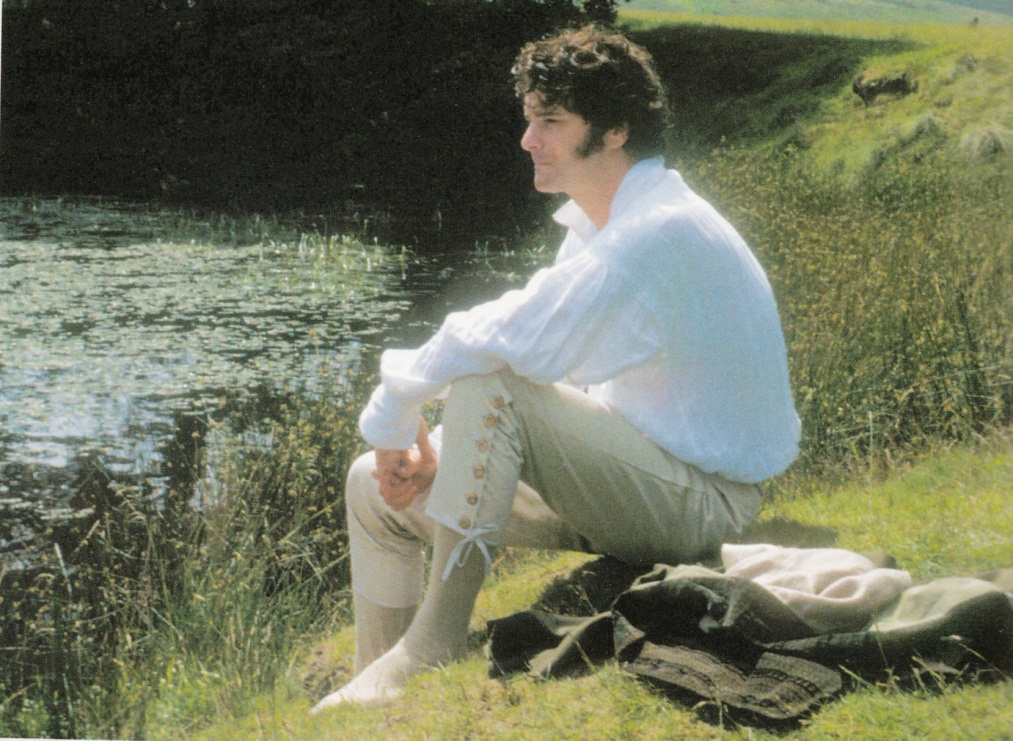
(Photo shows Colin Firth as Mr Darcy in the 1995 TV mini-series of Pride and Prejudice)

Famous Names: Bronwyn and Dolores

05 Wednesday Aug 2015

Posted by A.O. in Famous Names

≈ 5 Comments

Tags

controversial names, dated names, famous namesakes, fictional namesakes, Harry Potter names, Marian titles, modern names, name history, name meaning, name popularity, name trends, names from films, nicknames, Spanish names, UK name popularity, US name popularity, Welsh names

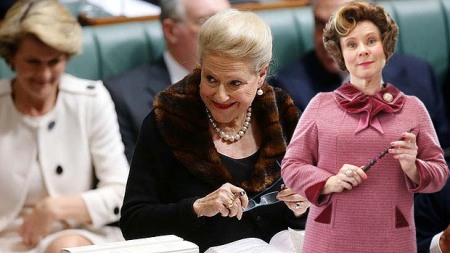
BronwynBishopDolores

Famous Namesake
Bronwyn Bishop resigned as Speaker of the House two days ago, after a furore over her use of travel allowances. Usually when someone is caught out abusing the system they quickly hand in their notice and quietly slip away before too many questions can be raised. However Ms Bishop refused to admit she had done anything wrong and resisted all pressure to resign for three weeks, which meant we had plenty of time to hear about her extravagant travel expenses.

They included a $6000 private flight from Sydney to Nowra for a Liberal party fundraiser, and more than $1000 on a limo so she could attend a theatre premiere in her home city. There was also the $600 return flight to attend colleague Sophie Mirabella’s wedding in Albury, and $130 000 spent on overseas travel to Europe and Asia, including $1000 a day on private limos.

The one that really left people gobsmacked was a $5000 chartered helicopter to take her from Melbourne to a Liberal party fundraiser in Geelong and back – a trip which takes only about an hour each way by road. Referred to as Choppergate, this was the scandal that brought Ms Bishop down. She wasn’t a first-timer at this: in the 1980s she once hired a helicopter at taxpayer’s expense to transport her from a fete to a dog show.

Ironically, back in the 1990s Bronwyn Bishop rose to fame as the face of public accountability when she was on the Senate estimates and joint public accounts committee. This sounds dull and usually was – an assessment of government departments and where they spent their appropriations. Under Bishop, committee meetings became virtual show trials where senior public servants were routinely interrogated, hectored, and taunted for their spending habits.

When Bronwyn Bishop was appointed Speaker in 2013, the Opposition described her as Dolores Umbridge, after the infamous headmistress from the Harry Potter series. This didn’t refer to a penchant for hair ribbons or interest in fluffy kittens, but indicated a fear she was to be a corrupt tool of government. This turned out to be not unfounded, for in her term of office Ms Bishop showed considerable bias, ejecting 393 Opposition members from the house, but only 7 of her own party.

Bronwyn Bishop was appointed to the role of Speaker by the Prime Minister, who describes her as a close personal friend, and himself as her ideological love child. This has turned out to be yet another damaging captain’s call, and no doubt the next Speaker will be the choice of his party.

It’s been a spectacular fall from grace for the longest-serving woman in Parliament, who once boasted she would be a future Prime Minister. Now the Prime Minister admits her parliamentary career is at an end.

BRONWYN
Bronwyn is a variant of Bronwen, a modern Welsh name meaning “white breasted, fair breasted”. The meaning is possibly less important than the fact it is very similar to the medieval Welsh name Branwen, meaning “fair raven”; in Welsh legend, Branwen was the sister of Brân the Blessed. Both Bronwen and Bronwyn have been used since the 19th century.

There is a popular notion that Bronwyn is the masculine form of Bronwen, since in Welsh the suffix -wyn is usually attached to masculine names. In fact, you can get into some quite nasty arguments about it on baby name forums, with angry people telling you that you have ignorantly given your daughter Bronwyn a specifically male name.

However if you look at the records, Bronwyn was always used as a girl’s name in Wales right from the start, with the -wyn spelling just a variant, not an indication of gender. Interestingly, the few examples of men named Bronwyn I found, dating from the 20th century, were all from outside Wales. I suspect their parents read up on the Welsh language and “corrected” Bronwyn from feminine to masculine, possibly being a bit too clever in the process and giving their sons a traditionally female name.

While Bronwen was originally by far the more common spelling in the 19th century, Bronwyn overtook it in the 20th. It was popularised by the 1941 film How Green Was My Valley, with Anna Lee in the role of Bronwyn, the narrator’s sister-in-law that he loves. The film is based on the 1939 novel by author Richard Llewellyn, and is set in a Welsh mining village. In the book the sister-in-law’s name is Bronwen, and I’m not sure why Hollywood decided to spell her name with a Y. Perhaps they thought it looked more feminine.

The name Bronwyn first joined the charts in the 1940s, coinciding with the release of the film; it made its debut at #143. (Bronwyn Bishop was born in 1942, the year after the film came out). By the 1950s it had joined the Top 100 and peaked in 1964 at #53. It left the Top 100 in 1980, and hasn’t charted since the late 2000s.

For some reason, Bronwyn has only been popular in Australia: it doesn’t seem to have ever been a Top 100 name in the UK, and has never even charted in the US. In 2013, there were 23 baby girls named Bronwyn in England/Wales, and last year there were 49 baby girls named Bronwyn in the US. Numbers of Bronwyns seem fairly stable in both countries.

Bronwen has never charted in Australia. In the UK in 2013 Bronwens and Bronwyns were roughly equal (21 babies named Bronwen), while in the US there were 6 Bronwens, a lot less popular than Bronwyn.

Although Bronwyn is now a dated name, the sound of it seems to have led to the popularity of similar-sounding Bronte, which joined the Top 100 just as Bronwyn slipped off the charts. Perhaps even the rise of Bonnie owe something to Bronwyn, since a common nickname for Bronwyn is Bronnie.

DOLORES
Dolores is a Spanish name meaning “pain, sorrow”. It is taken from one of the titles of the Virgin Mary, Nuestra Senora de Dolores, or Our Lady of Sorrows. The title refers to the Seven Sorrows of Mary, which are seven sad events in Mary’s life connected with her son Jesus. They begin with his Presentation in the Temple, and the prophecies made about him, and end with his body being placed in the tomb.

The feast day for Our Lady of Sorrows began in the Middle Ages, and was originally the third Sunday after Easter; today it is September 15. It’s possible that the name Dolores was first given to girls born around this feast day, although I can’t find any evidence for this.

The feast was rarely celebrated until the 16th century, and by the 17th century Dolores had become a common name in Spanish-speaking countries, although occasionally also used by Catholics in other countries. It came into common use in the English-speaking world in the 19th century, and was a particular favourite with Irish Catholics.

Dolores has never charted in Australia. In the United States, Dolores joined the Top 100 during the 1920s, the era when Mexican actress Dolores del Rio flourished as a Hollywood star. The first Latin American actress to become famous internationally, Dolores was exquisite, elegant, and gracious.

The name left the US Top 100 in the 1940s, after Dolores de Rio was accused of Communism during the McCarthy era, and continued her career in her homeland. The name left the charts in the 1980s, after Dolores del Rio’s death, but Dolores is still remembered as one of the classic Hollywood beauties, and a great lady.

During Ms del Rio’s heyday this name must have been exotic and glamorous, but now seems dated and frumpy. The evil Dolores Umbridge from Harry Potter has not helped its image: her name was chosen because it sounds similar to the English word dolorous, which can be understood as “causing pain or grief” (it has the same Latin source as the name Dolores). However, Lola is a popular pet form of Dolores, and I can see Lolita, Dolly and Lolly becoming fashionable in the future.

Two names connected with Hollywood beauties which have fallen from favour, but are probably more influential on current trends that we give them credit for. Which one will score higher, I wonder?

POLL RESULTS
Bronwyn received an approval rating of 44%. 39% of people weren’t keen on the name Bronwyn, while 18% loved it.

Dolores received an even lower approval rating of 28%. 40% of people weren’t keen on the name Dolores, while 10% loved it.

(Photo from the ABC website)

Waltzing With … Felix

02 Sunday Aug 2015

Posted by A.O. in Waltzing with ...

≈ 3 Comments

Tags

Biblical names, European name popularity, famous namesakes, fictional namesakes, Greek names, historical records, imperial titles, Latin names, middle names, mythological names, name history, name meaning, name popularity, names of cats, New Zealand name popularity, nicknames, papal names, patriotic names, popular names, retro names, saints names, UK name popularity, US name popularity

3092894-6735042798-Knml3

Famous Namesake
I think many Australians would readily associate this name with Felix the Cat, the silent film era cartoon. One of the most recognisable cartoon characters in film history, he was the first animated character to become popular enough to attract a cinema audience.

Felix the Cat was created by Sydney-born Pat O’Sullivan, who arrived in the United States in 1910 and began working as a cartoonist. By 1916, he had opened his own cartoon studio, and around 1917 he created Felix the Cat, inspired by a cat his wife Marjorie brought into the office. Under contract to provide one cartoon a month to cinemas, by 1921 Felix was in sixty percent of North American cinemas.

Pat O’Sullivan was fiercely protective of his creation, successfully gained royalties from pirated merchandise, and took action when Walt Disney made a Felix carbon-copy called Julius. Unfortunately for Felix, Disney then went on to create a certain Mickey Mouse, who starred in early talkie Steamboat Willie in 1928. This spelled the beginning of the end for Felix, and by 1931 it was obvious that Walt Disney was going to be the big success story of cartooning.

After Pat O’Sullivan’s death in 1933, his lead animator Otto Messmer took credit for the creation of Felix. Messmer’s claim is still accepted in the United States, even though O’Sullivan was acknowledged as Felix’s creator during his lifetime. Australian film curators have pointed out that it is O’Sullivan’s handwriting on the early Felix sketches, and that kittens in an early film are given Australian accents, saying ‘lo, Mum! ‘lo Ma!

The cartoon cat that Felix was based on was called Thomas or Tom (a fairly obviously cat-related name), but Pat O’Sullivan changed his name to Felix. Apparently this was after the Australian boxer Peter Felix, who was born in the West Indies, and won the heavyweight title in the 1890s – he often wore black and was a flashy dresser. Pat had seen Peter Felix in his last big fight in 1908, shortly before he left Australia. O’Sullivan had a strong interest in boxing, and when he first arrived in New York he himself boxed for prize money.

The name Felix was a very Australian choice, because in 1836 Scottish explorer Thomas Mitchell called the lush pastureland of western Victoria Australia Felix, meaning “happy Australia, fortunate Australia”. In 1845 English travel writer Richard Howitt’s lively Impressions of Australia Felix was published, and in 1849 the Australia Felix magazine was founded.

After the colony was named Victoria in 1850, the name Australia Felix gradually dropped out of use. However, 19th century Victorian politician Jonas Australia Felix Levien provides an example of it being used as a name, and he wasn’t born until the 1870s. (I have also found someone named Australia Felix Drake in historical records).

Despite all these Australian references, I can’t help wondering if Pat O’Sullivan was also thinking of Felis, the scientific name for the cat genus, from the Latin word feles, meaning “cat”.

Pat O’Sullivan gave Felix a lucky name, and the cat brought Pat luck and success. He did not have a very happy end to his life though. His marriage became increasingly strained (it probably got off to a rocky start, as they wed while he was on bail for raping a teenage girl; he was subsequently imprisoned for 9 months), and Marjorie fell to her death from their second floor apartment in 1932. O’Sullivan’s mental faculties deteriorated due to syphilis, and he died of alcoholism a year after his wife’s death.

Name Information
Felix is a Latin name meaning “lucky, fortunate”. It was first given as a nickname to the 1st century BC Roman general and statesman Lucius Cornelius Sulla, a free translation of the Greek nickname he acquired during his military campaigns – Epaphroditos, meaning “beloved of Aphrodite”.

Whether the goddess Aphrodite was taking care of him or not, Sulla was very successful, holding the position of consul twice, and being awarded the Grass Crown, the rarest and most prestigious Roman military honour, given only to those whose actions saved an entire legion or the whole army. Like Alexander the Great, he achieved many of his victories before his thirtieth birthday, and provided the model for later Roman leaders to gain power by force.

After him, the nickname became a common one for Roman leaders to take, and several emperors adopted it as a title. The Roman procurator Marcus Antonius Felix is mentioned in the New Testament, although not in a positive way – he imprisoned Saint Paul.

Felix was a favourite name amongst early Christians, as the name can imply being in the favour of God, or blessed by God. There are masses of saints named Felix, including quite a few martyrs, and three popes with the name. Saint Felix of Burgundy was sent as a missionary to East Anglia in the 7th century, and there are several churches dedicated to him in Yorkshire and East Anglia. The village of Felixkirk in Yorkshire is named after him, and so might be Felixstowe in Suffolk.

Although more common in Continental Europe, Felix has been in use as an English name since the Middle Ages, in honour of these various saints. It is particularly associated with East Anglia and south-eastern England in general, showing the legacy of Felix of Burgundy.

Felix was #172 in the 1900s, and left the charts in the 1920s (Felix the Cat didn’t do it any good). It returned in the 1980s at #396 and climbed steadily; it’s been on and off the Top 100 since 2011. Currently it is #89 nationally, #86 in New South Wales, #78 in Victoria, #36 in Tasmania, and #54 in the Australian Capital Territory. It was one of the fastest-rising names in Tasmania and Victoria last year, and one of the nationally fastest-rising names of 2013.

In the US, Felix is #267 and rising steeply, while the UK has a similar popularity to Australia, at #91 and rising. Felix is #66 in New Zealand and fairly stable – the highest popularity of any English-speaking country. Felix is well used in Western Europe and Scandinavia, and is most popular in Austria at #4.

Handsome, intelligent, and upbeat, Felix is a name with an irresistibly positive meaning and strong Australian associations. Once seen as rather hipster, this retro name is growing in popularity, and fittingly it’s rather a favourite in the state of Victoria.

POLL RESULT
Felix received an outstanding approval rating of 93%, making it the highest-rated boys name in the Waltzing With … category for 2015. 45% of people loved the name Felix, and only 3% hated it.

Requested Name: Beau

22 Wednesday Jul 2015

Posted by A.O. in Requested Names

≈ 15 Comments

Tags

english names, famous namesakes, fictional namesakes, name history, name meaning, name popularity, names from films, names from television, names of bands, New Zealand name popularity, nicknames, popular names, slang terms, surname names, UK name popularity, unisex names, US name popularity

tumblr_m9gx02m0KS1qld6eho1_1280

Beau is a French word meaning handsome or attractive: it is the masculine form of belle, and both of these words are from the Latin bellus, meaning “beautiful, pretty, agreeable”. It is directly related to the English word beautiful, and is part of English surnames such as Beauregard (“beautiful view”) or Beaumont (“beautiful mountain”).

You can see Beau as a short form of such surnames, or as directly from the English word beau, which is old-fashioned slang for a man who is a well-dressed dandy, or for a woman’s lover or sweetheart. Both senses of the word go back to the Middle Ages, but it is rare to hear people using these slang terms in everyday modern life.

Some of the most famous namesakes were called Beau as a nickname, to indicate that they were at the very height of fashion. Richard “Beau” Nash was Master of Ceremonies in Bath and Tunbridge Wells in the 18th century, while George “Beau” Brummel was an arbiter of men’s fashions in Regency England, a friend of the future King George IV.

Beau Brummel was famous for his charisma and wit, and his name is synomous with style and masculine good looks. He changed men’s fashions from the wearing of bright colours, lace, jewels, and spangles to elegantly tailored dark clothing with a white shirt – it’s because of him that we consider it “good taste” for a man to dress in an expensively discreet suit.

Both the famous Beaus were middle-class men who had the confidence and personality to mix with the cream of society, and as a direct result, both died in debt (Beau Brummell died raving mad from syphilis, but this has not tarnished his image, just added a tinge of poignancy).

Beau Brummell has inspired several literary portraits, including as a character in Arthur Conan Doyle’s historical novel Rodney Stone. He was also in Georgette Heyer’s Regency Buck, and it became almost de rigeur to include him as a character in regency romances. Recently Beau Brummell has turned detective in a series by Rosemary Stevens, and taken part in homoerotic fiction written by Cecilia Ryan. Beau Brummel has also appeared on stage, radio plays, TV dramas, movies, and an operetta. The latest outing was probably on UK TV in This Charming Man, with James Purefoy as Beau.

The name Beau has been in use since the late 18th century, not long after the death of Beau Nash. Beau Nash was so severely mourned by his former mistress when he died that she supposedly lived in a hollowed out tree on a bale of straw for thirty or forty years: I haven’t the foggiest how that made her feel better, but presume the straw was changed from time to time.

Originally Beau was given fairly equally to boys and girls in Britain, but soon became overwhelmingly male as the name became more common in the United States. Interestingly, this pattern still holds true, as Beau is evenly unisex in the UK, but only charts for boys in the US. In Australia, Beau is usually considered a boy’s name, but you can still encounter the occasional girl named Beau.

In the US, Beau has been in the Top 1000 since the late 1960s. Its appearance then may have been because of the actor Lloyd “Beau” Bridges, the son of Lloyd Bridges. Beau Bridges received his nickname after Ashley Wilkes’ son in Gone With the Wind. During the 1960s Beau Bridges often appeared on his father’s TV show, The Lloyd Bridges Show, and gained parts in TV series such as The Fugitive and Bonanza.

Other 1960s influences were the rock band The Beau Brummells, Roger Moore playing Beau Maverick on the TV show Maverick, and the film Beau Geste, with Guy Stockwell in the title role as an American hero fighting for the French Foreign Legion – his nickname is from the French phrase beau geste, meaning “noble gesture”. In the US, the name Beau is currently #228 and rising.

In the UK, Beau has been in the Top 1000 for boys since at least 1996, and for girls since 2002. Currently Beau is #175 for boys and #169 for girls in the UK, but it is screeching up the charts for girls while staying stable for boys. Furthermore, if you include names like Bo, and double names like Beau-Lily, there are even more girls called Beau in the UK, so this seems to be in pink territory in Britain.

In Australia, Beau joined the charts in the 1970s at #261, and first joined the Top 100 in 1986 at #85. It made the Top 50 in 2011 and 2012 (at #50 and #40), but other than that has been steadily in the bottom half of the Top 100, or just below the Top 100. That makes it a good choice for someone who wants a name that is common, without ever having been highly popular.

Currently Beau is #80 nationally, #61 in New South Wales, #70 in Queensland, #88 in Tasmania, and #48 in the Australian Capital Territory. It has just dropped off the Top 100 in Victoria, and the Top 50 in Western Australia.

The name Beau is more popular in Australia than anywhere else in the world, although it is also Top 100 in New Zealand. Once of the factors in its success is probably the number of sportsmen named Beau, such as cricketer Beau Casson, AFL footballers Beau Maister and Beau Waters, and rugby union footballer Beau Robinson, who plays for the Queensland Reds.

However it is in rugby league that the name Beau really shines, boasting Beau Champion from the Parramatta Eels, Beau Falloon from the Gold Coast Titans, Beau Henry who has just left the Titans to play in the NSW Cup, Beau Scott from the Newcastle Knights, and Beau Ryan, who has retired from the Cronulla Sharks and become a comedian – his segment Beau Knows on the NRL Footy Show a reference to Nike’s Bo Knows ad campaign with American footballer Vincent “Bo” Jackson.

Non-sporting Australian Beaus include actor Beau Brady, who was on Home and Away for several years, and Beau Brooks, from online comedy group The Janoskians.

With Beau you get a simple no-fuss name with a very attractive meaning that is cute on a little boy and rather romantic or even sexy on a grown man. For centuries the name has been associated with masculine taste and style, and it sounds handsome and charming. Although unisex in other places, it is solidly masculine and even sporty in Australia, and has been in the Top 100 for decades without ever becoming highly popular. There is plenty to love about sweetheart Beau!

Thank you to Renee for suggesting Beau be featured on Waltzing More Than Matilda, a name she is considering using.

POLL RESULTS
Beau received an approval rating of 72%. People saw the name Beau as adorable on a little boy and charming on a grown man (18%), and either cute or handsome (15%). However, 13% thought it was too nicknamey for a formal name. 5% found the connection to the old slang meanings of beau a turn off. Only one person thought the name Beau was too popular.

(Picture shows James Purefoy as Beau Brummell in This Charming Man)

Famous Name: Atlas

01 Wednesday Jul 2015

Posted by A.O. in Famous Names

≈ 1 Comment

Tags

astronomical names, Berber names, famous namesakes, Greek names, historical records, locational names, mythological names, name history, name meaning, name popularity, names of mountains, scientific names, UK name popularity, US name popularity

961765-1c41258c-1892-11e5-8706-97259cdfe878

Name in the News
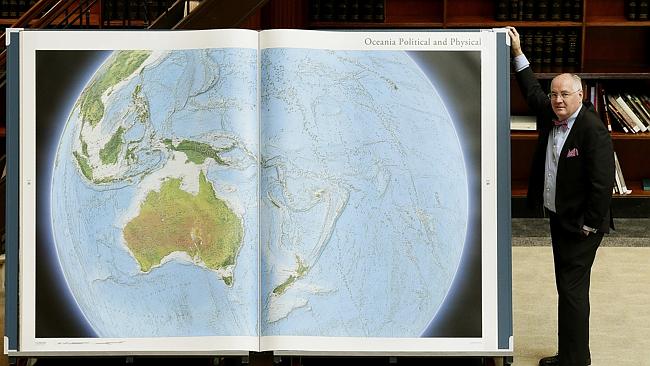
A Sydney publisher has put Australia (and the rest of the world) on the map after bringing out the world’s largest atlas. The happily-named Gordon Cheers first dreamed up the atlas 25 years ago, after seeing the huge Klencke Atlas at the British Library, presented to King Charles II in 1660.

The Earth Platinum atlas weighs 150 kg, is 1.8 metres tall and 2.7 metres across when it is open; it is 128 pages long, and each page needs two people to turn it. There are 61 pages of maps compiled by a team of 88 cartographers, showing maps of the continents and oceans, and very detailed regional maps.

As well as a double-page layout of the world’s flags, there are 27 photographic image of famous locations. One of them also broke the record for the world’s largest image in a book – it’s a picture of the Shanghai skyline made from over 12 000 photos. Last year the Earth Platinum atlas was recognised by the International Map Industry Association, and it has also entered the Guinness Book of World Records.

Only 31 copies of the limited edition atlas were produced, each one costing $100 000. One copy belongs to the British Library, who plans to exhibit it for six days each year. Officially launched on June 26, the only copy of Earth Platinum in Australia can be seen at the State Library of New South Wales until July 19.

Name Information
In Greek mythology, Atlas was one of the Titans, the ancient gods who preceded the Olympians, and who were the children and grandchildren of the earth goddess Gaia, and the sky god Uranus. The younger generation of gods, led by Zeus, waged war against their elders, and eventually prevailed, gaining dominion over the world.

Atlas was one of the leaders of the Titans during the war, and was given a special punishment – for all eternity, he was condemned to stand at the western edge of the earth (Gaia) and hold up the heavens (Uranus) on his shoulders, so that the twain should never meet.

Once the sky was able to lie upon the earth each night and mate with her, and from these couplings were born the Titans: now Zeus demanded that Atlas keep them separated forever, so that they could conceive no further gods. In other words, Atlas was to be used as a contraceptive device for deities.

Another tale tells of a giant named Atlas who tried to drive away the hero Perseus, fearing that he would steal the golden apples from Atlas’ garden. For this he was turned to stone by the head of the Medusa, becoming the Atlas Mountains in northern Africa.

This contradicts another story, where the hero Heracles had to fetch the golden apples from Hera’s garden, which was tended by Atlas’ daughters, the nymphs called the Hesperides. Heracles asked Atlas to fetch him the apples, offering to hold the sky up while he ran the errand. Atlas tried to trick Heracles into taking on the job permanently, but Heracles asked Atlas if he could just hold up the sky for a few minutes while he arranged his cloak as padding for his shoulders. Once Atlas took the heavens again, Heracles grabbed the golden apples and hoofed it, leaving Atlas holding the baby.

There is a nicer ending to the story, where Heracles built the Pillars of Hercules, the peaks flanking the Strait of Gibraltar near Spain; one of the pillars is the Rock of Gibraltar. Heracles told Atlas that from now on, the Pillars would hold up the heavens, liberating Atlas from his burdensome task.

It is not certain what the name Atlas means. The Roman poet Virgil translated it as related to “enduring”, possibly because he knew that a local name for the Atlas Mountains was Douris. Etymologists tend to interpret it as meaning “uphold, support”, although the name may actually be pre-Greek. The name of the Atlas Mountains is thought to be derived from a Berber word simply meaning “mountain”.

The Atlantic Ocean is named after Atlas, because it was seen as the western edge of the world. The mythical doomed Atlantis, vaguely located beyond the Pillars of Hercules in the Atlantic Ocean, means “island of Atlas”.

Plato says that the first king of Atlantis was named Atlas (not the Titan, but a son of Poseidon), and some believe that he based him on a legendary North African king named Atlas, a skilled astronomer and inventor of the first celestial globe, which mapped the constellations. The connection with North Africa and the heavens suggests the legendary king was inspired by the Titan.

It was 16th century geographer and cartographer Gerardus Mercator who first used the word atlas to mean a collection of maps, dedicating his own atlas to honour King Atlas, the legendary African astronomer. However, he conflated the king with the Titan Atlas, and even before that it had become traditional to show Atlas holding up the celestial spehere on early maps. Because of the connection with maps, we sometimes think of Atlas as holding up a globe of the world, although it is a puzzle how Atlas could stand on the earth while holding up the world.

Atlas has further connections to the heavens, because it is a star system in the constellation of the Pleiades, which is often called the Seven Sisters. The Titan Atlas was the father of seven sea-nymphs, and after he was sent off to carry the heavens, there was nobody around to take care of his daughters. The girls were pursued by the hunter Orion, so Zeus first turned them into doves, and then into stars so their father might see them in the sky and be comforted.

Another story is that the sisters committed suicide in despair at their father’s fate, and were immortalised as stars. Because astronomy places Atlas in the constellation as well, it seems he truly was liberated by Heracles, and can now be with his daughters for all time, protecting them from Orion, who you may still see pursuing the sisters across the night sky.

One of Saturn’s moons is named Atlas, because it appears to hold up the rings of Saturn, as if carrying them on its shoulders. It was decided that the major moons of Saturn would be given the names of Titans, as Saturn is the Roman name for Cronos, the head of the Titans. The name Atlas has also been given to one of the craters on our own moon (it’s right near Hercules).

Atlas has been used as a personal name since the 18th century, and became more common in the 19th century, especially in the United States. There are quite a few Atlases in Australian records, both male and female, and used as a first and middle name fairly equally.

Atlas made a couple of appearances on the US Top 1000 in the 19th century, and began charting again in 2013; it is currently #646 and rising. Actress Anne Heche welcomed a son Atlas in 2009, which seems to have increased interest in the name. In 2013, 12 baby boys were named Atlas in the UK, the name rising steeply since 2011. There is evidence that the name Atlas is growing in popularity in Australia too, although like the UK, still in rare use.

Atlas is a powerful, indeed a Titanic name, reminding us of famous strongman Charles Atlas. It suggests the brawn to hold up the heavens, and the fortitude to carry a load on his shoulders without complaining. However, not only are mythological names on trend, we are more comfortable now bestowing big names on little babies, and giving them something to aspire to.

And Atlas isn’t just a dumb muscle man – he’s a philosopher king who studied the cosmos, and glittering stars in one of the most familiar of our summer constellations. The name Atlas has also been chosen for several comic book and video game characters, giving it a bit of geek chic.

In short, if you are among the growing number of parents who are drawn to Atlas, you will be getting a strong yet simple name with a mountain of history, a world of legend, and an ocean of science behind it. Not to mention one heck of a lot of geography!

POLL RESULTS
Atlas received a decent approval rating of 65%. 17% of people thought it was too closely associated with the book of maps, but 16% saw it as strong and powerful, and another 16% as cool and different.

Waltzing With … Victoria

28 Sunday Jun 2015

Posted by A.O. in Waltzing with ...

≈ Comments Off on Waltzing With … Victoria

Tags

classic names, European name popularity, famous namesakes, Latin names, locational names, Marian titles, mythological names, name history, name meaning, names of businesses, popular names, royal names, saints names, Spanish names, UK name popularity, US name popularity

portland

Famous Namesake
July 1 will mark the 164th anniversary of the independence of Victoria. When the British settled Australia in 1788, they claimed the entire eastern side of Australia as the Colony of New South Wales. The area now known as Victoria was first settled in 1803, partly due to French explorer Nicolas Baudin, who had spent several weeks surveying Bass Strait.

Governor Philip Gidley King got nervous that the French could be planning to establish their own settlement and challenge the British claim to Australia. Rather than risk a future where we might say Bonjour over a croissant or ride clean, efficient trains, the British formed a settlement at Port Phillip. It didn’t work out, and a year later they all nicked off to Tasmania. They tried again in 1826 (after another French explorer started hovering around), but that only lasted a year as well.

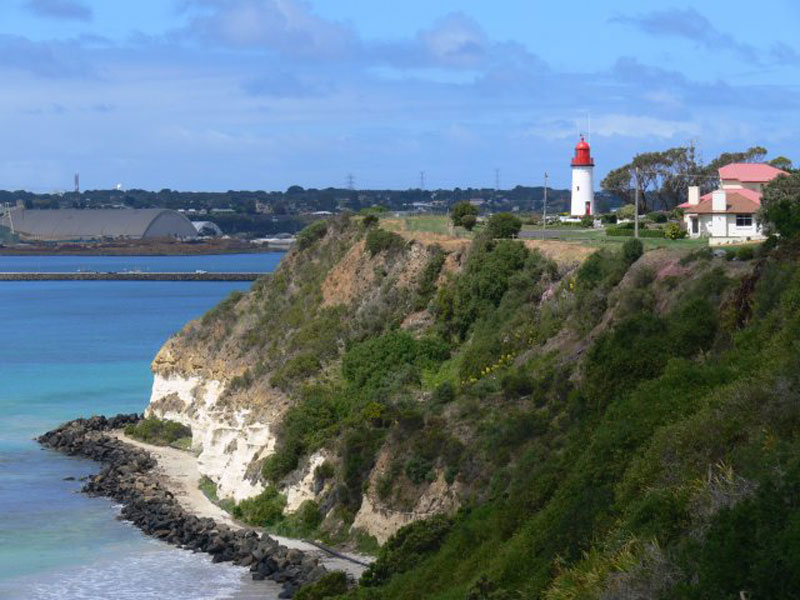
Paranoid government had failed, so it was capitalism’s turn to give it a go. Entrepreneurs arrived from Tasmania in 1834-35 to form settlements at Portland and Port Phillip (later Melbourne), which soon became prosperous, thriving communities, although at a devastating cost to the Indigenous inhabitants. Wealthy pastoralists took possession of vast tracts of fertile land, and soon Melbourne was the centre of Australia’s wool trade.

With such power and influence behind it, the Port Phillip District began lobbying for independence by 1840. In 1850 the colony was separated from New South Wales, and named Victoria, after Queen Victoria, and officially founded on July 1 1851. That same year, gold was discovered around Ballarat and Bendigo, sparking one of the largest gold rushes the world has ever seen. Wealth was about to begin pouring into its coffers, and Melbourne to become one of the great cities of the world.

The colony was off to a flying start, soon to to become the state we all know and love. The most beautiful state in Australia, ranging from lush pasture to snowy mountain ranges to golden beaches, it has charming country towns and a sophisticated, quirky capital. You can even get excellent croissants there. Viva la Victoria!

Name Information
Victoria was the Roman personification of victory in battle; her name is the Latin word for “victory”. In her older form, she was known as the goddess Vica Pota, translated by the Romans as meaning “conquering and gaining mastery”.

Victoria symbolised victory over death, and she chose who would be successful on the battlefield, so it was very important to get on her good side. Because of this, she was a popular goddess with many temples in her honour, worshipped by those who returned from war in triumph. She can often be seen on Roman coins and jewellery, and it is common to depict Victoria driving a chariot, probably because Nike, the Greek goddess of victory, was the charioteer for Zeus when he went into battle.

Victoria (or Nike) was depicted as a beautiful woman in flowing garments with large wings sprouting from her shoulders, so that she could fly over battlefields, giving encouragement to the conqueror and proclaiming messages of glory from on high. Statues of her in this mode are called winged victories, such as the Winged Victory of Samothrace. Later this image became Christianised, as it became the rule to portray angels, especially in church architecture, as graceful women with wings, a direct inspiration from the winged victories.

Victoria is also the feminine form of the Roman name Victor, meaning “victor, conqueror”. Like Victor, it was a popular choice for early Christians, symbolising victory over sin and death, and there are quite a few Christian martyrs named Victoria. Some are identified as women of the nobility, and others as servants, so it seems to have been used by all classes in the Roman Empire.

The name Victoria has long had a particular association with Spain, because it also one of the titles of the Virgin Mary: Nuestra Señora de Victoria, or Our Lady of Victory. In 1571, Pope Pius V instituted a feast day for Our Lady of Victory, after a coalition of southern European forces, led by Spain, defeated the fleet of the Ottoman Empire at the Battle of Lepanto.

Although well used in Continental Europe and popular in Spain, Victoria didn’t become common in Britain until the 19th century, when Queen Victoria took the throne in 1937 – there was an enormous jump in use between the 1820s and the 1840s, although it still wasn’t a popular name in England during Victoria’s reign.

Victoria is a classic name which has never left the charts. It was #124 in the 1900s, and sunk until it reached its lowest level ever in the 1930s, at #0. Victoria came back strongly, and was already #155 in the 1940s – perhaps the war era made the idea of commemorating victory very appealing. Victoria made the Top 100 in 1960 at #97, but for most of the 1960s and ’70s was just outside the Top 100. It made good headway in the 1980s, and peaked in 1991 at #49. It left the Top 100 in 2008, but remained within close reach, and was back again in 2010.

Currently it is #80 nationally, #59 in New South Wales, #74 in Victoria, and #85 in the Australian Capital Territory. It appears very stable – it hasn’t been far outside since the Top 100 since the 1950s, and has only once made it into the Top 50. That makes it a safe choice which has never been highly popular, yet has remained common for more than half a century.

Victoria is a popular name around the world, but is most popular in the US at #19. Its popularity in the UK is similar to that in Australia. Not just popular in English-speaking countries, Victoria is a Top 100 name in Western Europe, Eastern Europe, and Scandinavia; still a favourite in Spain, it is also popular in Latin America. Meanwhile international variants such as Viktoria, Victorija, Victorie, Victoire, Vitoria, and Vittoria are popular in a host of countries. That makes Victoria an internationally recognised name that works cross-culturally.

Victoria is a classic traditional girl’s name that’s popular, but not too popular. It’s a long, feminine name that doesn’t seem frilly or elaborate, but clean and professional. It’s well known internationally without seeming exotic. It has a strong meaning connecting it to power and success, which is quite unusual for a girl’s name.

Victoria is a goddess, an angel, a saint, and a winner of battles. Many people will connect her with a queen, and there’s no doubt that Victoria is royal to her fingertips. She’s classy, and every inch a lady, but Victoria’s Secret makes her seem rather sexy too. A fun nickname would be Plum, from the Victoria Plum, like the writer Plum Sykes. My preference is for the lively Vita, inspired by another author from Kent, Vita Sackville-West.

POLL RESULT
Victoria received an outstanding approval rating of 91%, making it one of the highest-rated names of 2015. 33% of people thought the name Victoria was okay, and only 3% hated it.

(Photo shows Portland, the first permanent European settlement in Victoria)

Famous Names: Jedda and Rosalie

24 Wednesday Jun 2015

Posted by A.O. in Famous Names

≈ 7 Comments

Tags

animal names, Australian Aboriginal names, bird names, celebrity baby names, ethnonyms, European name popularity, famous namesakes, fictional namesakes, flower names, French names, historical records, international name trends, Latin names, locational names, name history, name meaning, name popularity, names from movies, nature names, nicknames, plant names, saints names, screen names, UK name popularity, US name popularity

JEDDA

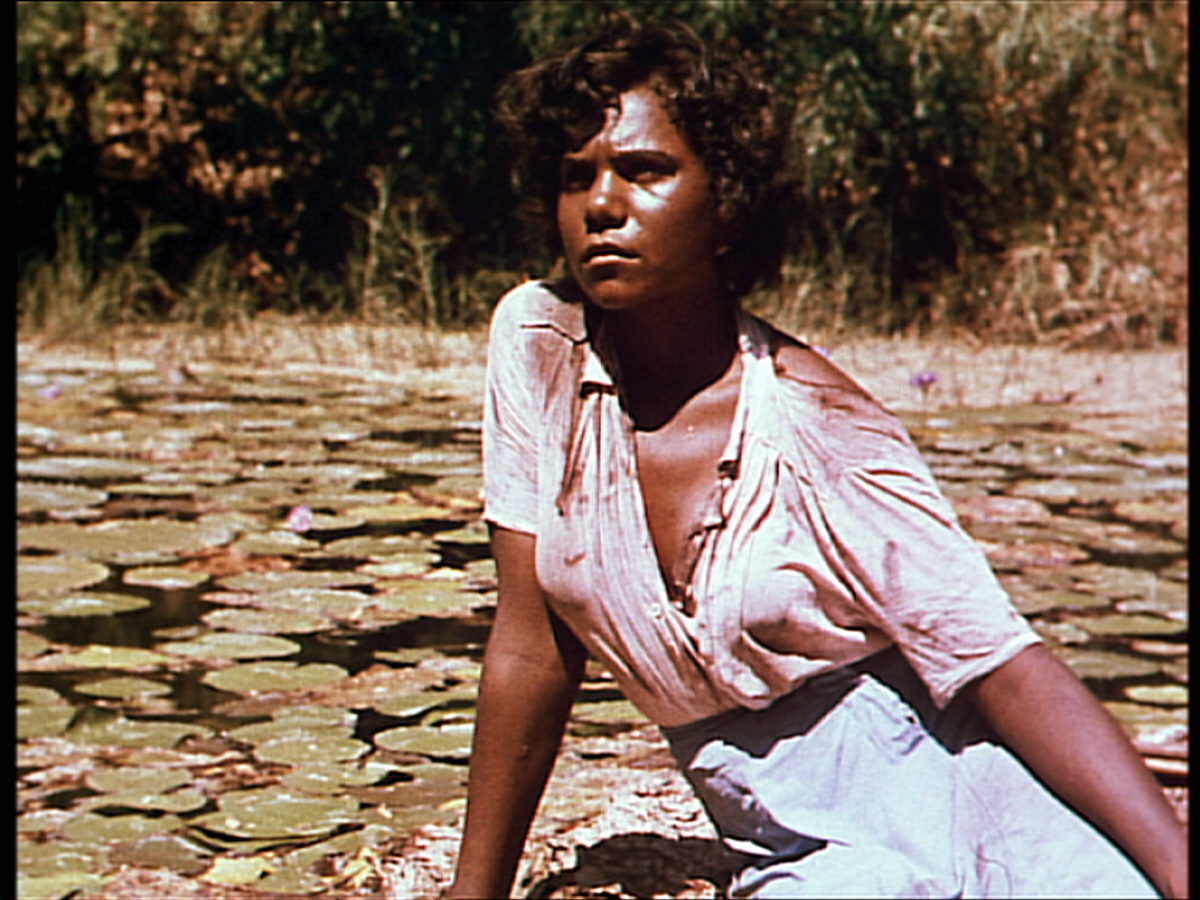
Last month the Australian film Jedda returned to the Cannes film festival, sixty years after it was first shown there in 1955. Jedda was the work of distinguished film-makers Charles and Elsa Chauvel; the first Australian feature film to be shot in colour, and the first to have Aboriginal actors in lead roles.

In the film, Jedda is an Aboriginal girl who is brought up by a white couple on a cattle station after her mother dies. She is raised in European ways, and forbidden to learn about her own culture, kept separated from the other Aborigines on the station.

When she gets older, Jedda finds herself strangely drawn to an Aboriginal man living in the bush, and following the traditional ways of his people. He abducts her, but when they come to his tribal lands, Jedda discovers that their relationship is forbidden by Aboriginal law. It’s a Romeo and Juliet scenario, and as with Shakespeare’s tale, it ends in tragedy for the star-crossed lovers.

The role of Jedda was given to Rosalie Kunoth, an Aboriginal teenager from the Northern Territory, who was studying in Alice Springs. The Chauvels gave her the screen name Ngarla for the film, which they thought looked more “authentic”. Ngarla was the name of Rosalie’s mother’s people – the Ngarla are from the Pilbara region of Western Australia. This was distressing to Rosalie, as it was culturally inappropriate.

The filming was challenging for Rosalie in many ways, and when she attended the premiere (sitting in the white section of a segregated cinema), was horrified by the film’s eroticism. Rosalie was an Anglican nun for ten years; she then left the order, married, and eventually returned to the Northern Territory. Now a respected Aboriginal elder, Rosalie Kunoth-Monks has spent her life working as an Indigenous activist, taking on leadership roles in her community. She has a daughter named Ngarla.

Jedda was a groundbreaking film in Australian cinema history, especially significant as it gained international attention and respect at a time when Australian cinema was practically nonexistent. As well as its other “firsts”, it was the first Australian film to be shown at Cannes, and nominated for the Palme d’Or.

Although it has dated in some ways, it remains a powerful and heartbreaking story. Jedda was created in opposition to the assimilationist policies of the 1950s, and the film is still relevant in light of the Stolen Generations. It helped inspire Indigenous film-maker Tracey Moffatt, whose Night Cries is a re-imagined “what might have been” sequel to Jedda.

JEDDA
In the movie Jedda, Aboriginal servants name the baby Jedda when she arrives, because she “flies in” like a “jedda bird”. Jedda appears to be from the Noongar word djida or jida, meaning “bird” (more specifically a wren), even though Noongar people are from south-west Western Australia, and the film is set in the Northern Territory. In the film, the identification with Jedda as a bird connects her to flight, to freedom and capture, and also to the spirit world.

Australian records show the name Jedda in sporadic use as far back as the 19th century, including by Indigenous Australians. I can only speculate as to where their names might have come from; in the case of Europeans, maybe as a variant of the name Jetta. It is possible that Indigenous women born before the film was made took (or were given) the name Jedda after its release. In addition, I have seen Indigenous women named Djida and Jida.

Jedda is also a plant name, as the jedda bush is native to the Cape York Peninsula region of far north Queensland. It is named after Jedda Creek, which is where it was first found, but I have not been able to discover the origin of the creek’s name – it may even have been named after the film.

Jedda is in use as a personal name for both Indigenous and non-Indigenous Australians, and is a popular name for homes, businesses, and streets. It is often used as a name for animals too, and in particular I have encountered quite a few horses named Jedda. This may be why in the children’s novel, Hating Alison Ashley by Robin Klein, the heroine’s sister Jedda pretends she is a horse. I’ve seen the name given to a boy, and it does have a bit of a unisex vibe, as it shortens to Jed.

Jedda is an Australian name made famous by a classic film, and appealing to both Indigenous and non-Indigenous parents. Although traditionally female, it could even be used for both sexes. It tends to be seen as slightly dated, yet it has never been common and is similar to Gemma, Jenna, Jed, and Jett.

ROSALIE
French form of the Latin name Rosalia, derived from rosa, meaning “rose”. Saint Rosalia was a medieval hermit who tradition says was a Norman noblewoman led by angels to live in a cave in Sicily. The saint became known in 1624, when she is supposed to have miraculously cured a plague. The saint’s name Rosalie was given to a young nun named Jeanne-Marie Rendu, and she became Blessed Sister Rosalie, who performed a lifetime of charity in the slums of 19th century Paris, and was mourned by the city when she died.

The name Rosalie came into common use in the 18th century, and was especially used in France, Germany, and Central Europe. It only became common in the English-speaking world in the 19th century, possibly because of the French courtesan Rosalie Duthé, who became the mistress of French kings and aristocrats. As a young woman she moved to London to escape the French Revolution, and gained the immensely rich George Wyndham, 3rd Earl of Egremont, as a lover. Beautiful and golden-tressed, Rosalie was apparently not overburdened with brains, and it is theorised that she is the originator of the “dumb blonde” stereotype.

The name Rosalie first joined the charts in the 1910s, debuting at #268. The name peaked in the 1940s at #141, probably because of the 1937 movie Rosalie, starring Eleanor Powell as a princess in disguise: Cole Porter’s song Rosalie is from the movie. Rosalie dropped off the charts in the early 2000s, but returned in 2009 at #519, the year after the first Twilight film was released, with Nikki Reed in the role of Rosalie Hale. Rosalie is described as being “the most beautiful person in the world”, which must have been a drawcard. The name Rosalie is apparently now in rare use again.

In the US, Rosalie returned to the Top 1000 in 2009, under the influence of Twilight. It is now #310 and rising. In the UK, the name Rosalie suddenly began rising steeply in 2009, and is now #394. Rosalie is also in the 300s in France, and is a popular name in The Netherlands, at #79.

Rosalie is a pretty, charming, European-style name with that touch of fairy-tale magic which has seen it chosen in films for a student princess and a vampire beauty. As Rose- names are becoming increasingly fashionable, it is a bit surprising that Australia seems to to be lagging behind the international trends – although it might just be that our data-collection is lagging.

I have seen quite a few birth notices for baby girls named Rosalee, Rosaleigh, Rosa-Lee and so on, and wonder if the spelling is an issue for some parents. Perhaps they worry that Rosalie will be said with the end rhyming with Lorelei, or just don’t like the idea of a name that ends in -lie. This makes me wonder if there are more Rosalies out there than meets the eye. A fantastic underused traditional choice, in any case.

POLL RESULTS
Jedda received an approval rating of 53%. 39% of people weren’t keen on the name Jedda, while 16% loved it.

Rosalie received a very good approval rating of 76%, making it one of the highest-rated names of 2015. 39% of people loved the name Rosalie, and only 4% thought it was a terrible name.


Uncommon Boys Names from the Birth Announcements of 2011-12

21 Sunday Jun 2015

Posted by A.O. in Name Themes and Lists, Requested Names

≈ 4 Comments

Tags

aliases, aristocratic surnames, Australian slang terms, Biblical names, english names, epithets and titles, famous namesakes, fictional namesakes, food names, fruit names, germanic names, hebrew names, honouring, imperial titles, Irish names, Italian names, Latin names, locational names, mythological names, name history, name meanings, name popularity, name trends, names from movies, names of bands, Old Norse names, plant names, Polish names, rare names, royal names, saints names, Scottish names, Slavic names, surname names, unisex names, US name popularity, US name trends, weaponry terms

Billy-Slater-5941649Augustus
The Emperor Augustus was the founder of the Roman Empire and its first emperor; the month of August was named after him. His reign initiated the Pax Romana, a relatively conflict-free period which lasted for more than two centuries. Born Gaius Octavius, he was granted the title of Imperator Caesar Divi Filius Augustus, meaning “Military Commander and Caesar, the Son of God, the Venerable”, with the Augustus part meaning “venerable”, from the Latin augeo, meaning “increase, growth, honour”. Before it became an imperial title, Augustus was an epithet used to signal something that was sacred, and the title was adopted by the Holy Roman Emperors in the Middle Ages. Augustus has been a favourite name amongst European royalty, and traditionally used by the Hanoverians in the British monarchy. Hazel has shot into the Top 100 since The Fault in Our Stars, and I wonder if it could also boost regal Augustus, as this is the name of Hazel’s love interest? The name is already rising in the US, so maybe. Gus is a popular short form, although I have seen a lot of interest in Augie because of the Australian rock band Augie March, named for a character in a Saul Bellow novel.

Brasco
Scottish surname referring to someone from the village of Brisco in Cumbria, once part of the Strathclyde kingdom of Scotland. The place name comes from the Old Norse for “wood of the Britons”. Also an extremely rare Italian surname which is probably from the Germanic brakia, meaning “struggle”, used as a nickname. The name is well known because of the undercover alias Donnie Brasco used by FBI agent Joseph Pistone during the 1970s: his autobiography inspired the movie Donnie Brasco, with Johnny Depp in the title role. It has an unfortunate meaning in Australia, as brasco is slang for “toilet”, from the manufacturer Brass Co. Brasco is an extremely cool-sounding name, and as for the toilet association – better tell everyone to just forget about it!

Casimir
Latinised form of the Polish name Kazimierz, from the Slavic for “to destroy fame”, referring to someone who annihilates their opponent in battle so completely that they lose all honour. Four medieval rulers of Poland have been named Casimir, and St Casimir, the son of Casimir IV, is the patron saint of Poland and Lithuania. Kazimierz is a reasonably popular name in Poland, but Casimir is rare around the world, even in countries with high immigration from Poland. However, this is a handsome heritage choice, not so different from fashionable Casper and hip Caspian, with Caz as the obvious nickname, although Cass and even Cash seem possible.

Fintan
Irish name thought to mean “white fire”. In Irish mythology, Fintan mac Bóchra was a seer who accompanied Noah’s granddaughter to Ireland before the Great Flood. When the floodwaters hit, his family were all drowned, but Fintan managed to survive under the sea in the form of a salmon for a year; he also lived as an eagle and a hawk before returning to human form. He lived for more than 5000 years after the Deluge, becoming the repository of all wisdom. Once Christianity arrived in Ireland, Fintan decided to leave the world of mortals with a magical hawk who was born at the same time as he. There are a staggering 74 Irish saints named Fintan, which shows what a common name it must have been, and it is still in regular use in Ireland. The popular boy’s name Finn, and all the similar names, such as Finlay and Finnian, make this seem on trend.

Gage
English surname which can be related to the word gauge, meaning “measure”, and would have started as an occupational surname for someone who checked weights and measures. It can also be an occupational surname for a moneylender, as gage meant “pledge” – that which the person would put up as surety against the money loaned (as when objects are pawned). Its related to the words wage and mortgage, and also to the word engage: when you get engaged to someone, you make a pledge to them. Gage is an aristocratic surname; Sir William Gage first introduced the plum-like greengage into England in the 18th century, which is where its English name comes from. Gage has been used as a personal name since the 18th century, originating in the west country. It first joined the US charts in 1989, the same year that Stephen King’s Pet Sematary was made into a horror film; the protagonist’s toddler son is named Gage, played by Miko Hughes (from Full House). Although Gage takes on a particularly macabre role in the story, the cuteness of little blond Miko must have had an effect. Still in fairly common use in the US, Gage is a rare name in Australia and the UK – its similarity to the word gauge, used in the context of guns, makes this an on-trend weaponry name.

Loki
In Norse mythology, Loki is a mysterious figure, sometimes depicted as a trickster or god of deceit. Other times he is a troublemaker, or commits outright evil. Although said to be one of the giant folk, he is sometimes numbered amongst the gods, and seems to have been on friendly terms with them at some point. However, after many acts of mischief and malice, they punished him by having him bound by the entrails of one of his sons, with a serpent dripping venom on him, making him writhe in pain, which causes earthquakes. It is foretold that at the end of the world, he will slip free from his bonds and fight against the gods on the side of the giants, and be slain. Fittingly for such an enigmatic character, the meaning of Loki isn’t known. However, he is also called Lopt, meaning “air”, suggesting he was associated with that element. In Scandinavian folklore, the phenomenon where the air shimmers on a hot day is said to be caused by Loki. The name has been used more often since the Marvel comics world was brought to life on film, with Loki as a super-villain played by Tom Hiddleston. Hiddleston portrays a complex, vulnerable, intelligent character whose charisma and style has won him legions of fans. Not only a cute-sounding mischievous name, Loki is quite similar to popular names like Luca and Lachlan, so it doesn’t seem strange.

Nazareth
Biblical place name; in the New Testament it is described as the home town of Jesus and his family. It’s also a title, because Jesus is often called Jesus of Nazareth. In early times, Christians were called Nazarenes (“people of Nazareth”) by non-Christians, and the modern Jewish word for Christians is notzrim, while in the Quran Christians are known as naṣārā – all coming from the name Nazareth. Archaeologists think that Nazareth would have been a small, insignificant village at the time of Jesus; today it is a city in northern Israel with most of its citizens Arabs, both Muslim and Christian. A place of Christian pilgrimage, it also has several sites of Islamic significance. The meaning of the city’s name is uncertain – it may come from the Hebrew for “branch”, or “watch, guard, keep”, implying it was originally on a hill, or protected in a secluded spot. Nazareth has been used as a personal name since at least the 16th century, and is of Puritan origin. Originally used mostly for girls, overall it has been given fairly evenly to both sexes, and has never been very common. An unusual Biblical name which is overtly Christian.

Roland
Derived from the Germanic name Hruodland, translated as “famous land”, or perhaps “fame of his country”. Roland was an 8th century Frankish military leader under Charlemagne, responsible for defending France against the Bretons. It is recorded that he was killed at the Battle of Roncevaux Pass in northern Spain by a group of rebel Basques. He became a major figure in medieval legend, and his death an epic tale of a Christian hero slain in battle against Muslims (the real Roland was killed by Christians, although Charlemagne was engaged in a war against Islamic forces in Spain). The 11th century La Chanson de Roland (The Song of Roland) describes Roland fighting a rearguard action against thousands of Muslims with a magical sword given to Charlemagne by an angel. Against the sensible advice of his best friend Oliver, Roland proudly refuses to call for reinforcements until it is too late, then dies a martyr’s death before angels take his soul to Paradise. In an English fairy tale based on a Scottish ballad, Childe Rowland is a prince who rescues his sister from the Dark Tower of the King of Elfland; the story is mentioned in Shakespeare’s King Lear. It helped inspire the poem Childe Roland to the Dark Tower Came by Robert Browning, and in turn this informed Stephen King’s fantasy series, The Dark Tower, with Roland Deschain as the flawed hero. Roland was #107 in the 1900s and continued falling until it left the charts altogether in the 1990s. This is a traditional underused name which is heroic and noble.

Slater
English surname referring to someone who worked with slate, especially in laying slate roof tiles. The surname comes from Derbyshire, and although it is of Norman-French origin, possibly existed before the Conquest. It has been used as a personal name since the 17th century, and from the beginning was associated with Derbyshire and the Midlands, which has a long history as a centre for slate quarrying. An unfortunate association in Australia is that slater is another word for a wood louse. The surname has several sporting namesakes, including former cricketer and media personality Michael Slater, rugby league star Billy Slater, and American surfing champion Kelly Slater. That probably helps explain use of the name Slater at present, and it seems like a tougher, edgier version of Tyler.

Willoughby
English surname after a village in Lincolnshire, meaning “homestead by the willows, settlement by the willows”. Willoughby’s main claim to fame is that it was the birthplace of John Smith, who was one of the leaders of the Virginia Colony in early colonial America, and connected with the Native American girl known as Pocahontas. Willoughby is an aristocratic surname connected with several baronies; the family trace their lineage to a Norman knight who was granted land in Lincolnshire by William the Conqueror. Since the 17th century, the Barony of Willoughby de Eresby has been associated with the office of the Lord Great Chamberlain, who has charge of the royal apartments and hall at Westminster Palace, and plays a major role at coronations: the current baroness was one of the maids of honour at Queen Elizabeth’s coronation. Willoughby is also a suburb of Sydney on the Lower North Shore, first settled as farmland under Captain Arthur Phillip. Some people believe Surveyor-General Sir Thomas Mitchell chose the suburb’s name in honour of Sir James Willoughby Gordon, whom he had served under during the Peninsular War. In use as a personal name since the 17th century, Willoughby is a hip boy’s name which seems like a spin on popular William, while also boosted by looking like a masculine form of Willow. Will is the obvious nickname.

Thank you to Leah for suggesting the name Willoughby be featured on Waltzing More Than Matilda.

POLL RESULTS
People’s favourite names were Augustus, Willoughby and Fintan, and their least favourite were Nazareth, Brasco and Slater.

(Photo of Billy Slater from the Herald Sun)

← Older posts
Newer posts →

Enter your email address to follow this blog

Categories

Archives

Recent Comments

A.O.'s avatarwaltzingmorethanmati… on Zarah Zaynab and Wolfgang…
Madelyn's avatarMadelyn on Zarah Zaynab and Wolfgang…
JD's avatardrperegrine on Can Phoebe Complete This …
A.O.'s avatarwaltzingmorethanmati… on Rua and Rhoa
redrover23's avatarredrover23 on Rua and Rhoa

Blogroll

  • Appellation Mountain
  • Baby Name Pondering
  • Babynamelover's Blog
  • British Baby Names
  • Clare's Name News
  • For Real Baby Names
  • Geek Baby Names
  • Name Candy
  • Nameberry
  • Nancy's Baby Names
  • Ren's Baby Name Blog
  • Sancta Nomina
  • Swistle: Baby Names
  • The Art of Naming
  • The Baby Name Wizard
  • The Beauty of Names
  • Tulip By Any Name

RSS Feed

  • RSS - Posts

RSS Posts

  • Celebrity Baby News: Melanie Vallejo and Matt Kingston
  • Names from the TV Show “Cleverman”
  • Can Phoebe Complete This Sibset?
  • Zarah Zaynab and Wolfgang Winter
  • Baby, How Did You Get That Name?
  • Celebrity Baby News: Media Babies
  • Celebrity Baby News: Adelaide Crows Babies
  • Celebrity Baby News: Chris and Rebecca Judd
  • Names at Work: Name News From the World of Business and Employment
  • Celebrity Baby News: Sporting Round Up

Currently Popular

  • Rare Boys Names From the 1950s
  • The Top 100 Names of the 1930s in New South Wales
  • Celebrity Baby News: Toby Allen and Darren Weller
  • Celebrity Baby News: Jason Morrison and Heidi Tiltins
  • Celebrity Baby News: Jacinta Allan and Yorick Piper

Tags

celebrity baby names celebrity sibsets english names famous namesakes fictional namesakes honouring locational names middle names name combinations name history name meaning name popularity name trends nicknames popular names saints names sibsets surname names twin sets unisex names

Create a free website or blog at WordPress.com.

Privacy & Cookies: This site uses cookies. By continuing to use this website, you agree to their use.
To find out more, including how to control cookies, see here: Cookie Policy
  • Subscribe Subscribed
    • Waltzing More Than Matilda
    • Join 517 other subscribers
    • Already have a WordPress.com account? Log in now.
    • Waltzing More Than Matilda
    • Subscribe Subscribed
    • Sign up
    • Log in
    • Report this content
    • View site in Reader
    • Manage subscriptions
    • Collapse this bar
 

Loading Comments...