• About
  • Best Baby Names
  • Celebrity Baby Names
  • Celebrity Baby Names – Current
  • Celebrity Baby Names – Past
  • Featured Boys Names
  • Featured Girls Names
  • Featured Unisex Names
  • Links to Name Data
  • Waltzing on the Web

Waltzing More Than Matilda

~ Names with an Australian Bias of Democratic Temper

Waltzing More Than Matilda

Tag Archives: UK name popularity

Famous Name: Cadel

25 Monday Jul 2011

Posted by A.O. in Famous Names

≈ 15 Comments

Tags

famous namesakes, fictional namesakes, name history, name meaning, name popularity, rare names, Roman names, surname names, UK name popularity, US name popularity, Welsh names

This blog post was first published on July 25 2011, and revised and updated on July 23 2015.

Famous Namesake
On July 25 2011, Cadel Evans became the first Australian to win the Tour de France in the race’s 108-year history, only the second non-European to officially win it, and at 34, the oldest winner since World War II.

This gruelling 3 600 km (2 200 miles) cycle race lasts for three weeks, and finishes in Paris, with the climax of the final stage along the Avenue des Champs-Élysées. Traditionally the overall winner wears a ceremonial yellow jersey.

This was a great moment in our sporting history, and in Cadel’s home state of Victoria, everyone was urged to wear yellow to work as a show of support. When Cadel returned to Australia in August, there was a huge homecoming parade for him in Melbourne’s Federation Square, with tens of thousands of people dressed in yellow or waving yellow flags. He was also honoured with a state reception.

Cadel was made a Member of the Order of Australia in 2013, and has also been featured on the blog as a celebrity dad. In February 2015, he took part in the inaugural Cadel Evans Great Ocean Road Race and finished fifth, announcing his retirement as soon as the race finished. He is currently Global Ambassador for the BMC Racing Team.

Name Information
As you can probably tell from Cadel’s surname, he is of Welsh ancestry – his great-grandfather was from Wales. Cadel is a variant of the Welsh name Cadell, which is based on cad, the Welsh word for “battle”; there are several related names, such as Cadwalader, meaning “battle leader”. There is a recent fancy that the name is a Welsh form of the Roman name Catallus, although there doesn’t seem to be much evidence to support it.

There were several medieval Welsh kings and princes called Cadell. Cadell Ddyrnllwg was driven from his father’s kingdom by Irish pirates during the chaos of the 5th century. He lived amongst the peasants until a visit from Saint Germanus changed his fortunes. Saint Germanus laid siege to the capital, as it was held by Irish pagans, and Cadell offered the saint his humble hospitality. Saint Germanus had a premonition of disaster, and warned Cadell and his friends to get out of the city. That night the palace was struck by lightning and the resulting fire burned everyone alive, so without any annoying questions from insurance investigators, Cadell was able to regain his throne.

There is a famous explorer in Australian history with the surname Cadell – a Scotsman called Francis Cadell who was the first to explore and navigate the Murray River by steamship. A man who lived a life of adventure, he took part in the New Zealand land wars, where he staged a mutiny against his captain, and also was one of the first to explore the Northern Territory (where Cadel Evans was born), where the Cadell Strait bears his name. Later in life, he took up whaling, pearling, and trading in the East Indies, and was murdered near New Guinea; a fittingly violent end to an exciting life.

A fictional namesake is Cadel Piggot, the protagonist of the Evil Genius series of young adult books by Australian author Catherine Jinks. It’s about a boy who is very small with curly blonde hair and baby blue eyes, and an evil genius with a passion for IT. The series follows his exploits from the ages of 7 to 15 as he gradually develops a sense of right and wrong.

Since Cadel Evans’ historic win at the Tour de France, I have seen quite a few baby boys named Cadel, although the name is still rare in Australia. In the UK, there were 4 baby boys named Cadel in 2013, the name apparently rising slightly after Cadel Evans’ victory. In the US, there were 10 baby boys named Cadel in the US in 2014, down from 19 in 2012 and 17 in 2011. It seems that Cadel Evans did give the name a boost in the US after the 2011 Tour de France, but it has faded, as the name Cadel is now less used than it was in 2010, when there were 12 boys named Cadel.

Cadel fits in quite well with current trends in boy names, looking similar to Caden and Cade. Although at the start of his career, Cadel Evans had his name mispronounced as KAY-del, to sound like cradle without the R, I think by now everyone knows he says his name kuh-DEL (like Adele with a K at the front). This isn’t the British pronunciation, which is more like KAD-el. However, now that Evans has retired, it is unclear whether the name Cadel will continue gathering steam, or run out of puff.

POLL RESULTS
Cadel received an approval rating of 60%. 16% of people thought it was handsome or attractive, but an equal number believed it was too closely associated with Cadel Evans, and felt like a “one person name”. Few were willing to predict the name’s fortunes – 2% thought the name Cadel would continue growing in popularity, while 5% were fairly sure the name was a flash in the pan that would soon be forgotten.

Waltzing With … Florence

29 Sunday May 2011

Posted by A.O. in Waltzing with ...

≈ 15 Comments

Tags

celebrity sibsets, english names, famous namesakes, French names, Latin names, locational names, name history, name meaning, name popularity, New Zealand name popularity, nicknames, retro names, saints names, UK name popularity, unisex names, US name popularity

This blog post was first published on May 29 2011, and almost completely rewritten on May 28 2015.

Famous Namesake
Autumn is the traditional time of year for farm produce fairs, and on the last Sunday in May is held the Goomeri Pumpkin Festival. Goomeri is a small country town in southern Queensland; quiet and pleasant, it is known for its gourmet food industries.

The highlight of the Goomeri calendar is its Pumpkin Festival, in which they do almost everything to pumpkins, including eat them. There is the pumpkin shot-put, a pumpkin beer brewing competition, pumpkin judging contests, and the Great Australian Pumpkin Roll, in which up to 1000 pumpkins are rolled down Policeman’s Hill. There will of course be cooking demonstrations, food stalls, and all kinds of pumpkin-related culinary delights, including that old favourite, pumpkin scones.

Wen you see “pumpkin scones” and “Queensland” in the same paragraph, the name of only one person can come to mind – Florence Bjelke-Petersen. The widow of Queensland’s longest-serving Premier, Lady Florence Bjelke-Petersen has been a force in conservative politics, a part of Queensland history, and an Australian icon.

Florence was the wife of peanut farmer and Country Party member Johannes “Joh” Bjelke-Petersen, and after Joh became Premier of Queensland in 1968, Florence began to take on a bigger public role. The Queensland National Party increasingly promoted a Bjelke-Petersen “personality cult”, and Florence was a vital part of that.

Her down-to-earth sayings and common-sense attitudes became widely quoted by the media, and she published a cookbook which contained a recipe for her famous pumpkin scones. She was a Senator from 1981-1993; she worked for issues that affected Queensland and was popular with both sides of politics. When Joh Bjelke-Petersen was knighted in 1984, she became Lady Bjelke-Petersen – affectionately known as Lady Flo.

Lady Bjelke-Petersen is now in her nineties and still going strong. Although she no longer makes pumpkin scones, she reads the newspapers every day and has strong opinions on politics, as well as attending church every Sunday, and playing the organ each week for a local nursing home. In her youth, she always vowed she would be known by her full name, Florence, as she hated the short name Flo, but history intervened, and as often happens, she didn’t get much say in it.

Name Information
Florence began as the medieval English form of the Latin name Florentius, from florens, “flowering, flourishing, prospering”. There are several saints named Florentius, with the earliest being a 3rd century Roman soldier who was martyred in Italy. Florence could also be used as a French form of the female name Florentia; St Florentia was a 4th century hermit who was martyred in France.

In the Middle Ages, Florence was used as a name for both males and females, but by the 16th century had become overwhelmingly feminine in usage. Its connection with “flowering”, and similarity to the female name Flora were probably responsible.

Although the name Florence was already in reasonable use, it received a huge boost in the mid nineteenth century because of Florence Nightingale, the founder of modern nursing. Florence Nightingale came to prominence during the Crimean War of 1853-56, when she was hailed as a ministering angel, and called The Lady with the Lamp. It is notable that during the 1850s, the name Florence, which was steadily increasing in popularity at the time, suddenly skyrocketed, and continued rising for the rest of the century.

Florence Nightingale was born in the city of Florence, in Italy, and named after her birthplace. It was something of a family pattern, because her older sister, Frances Parthenope, was similarly named after the place of her birth, Parthenopolis, now part of Naples.

The city of Florence was established by the Romans, and originally named Fluentia, meaning “flowing” in Latin, because it was situated between two rivers – the Arno and the Greve. Later its name was corrupted to Florentia, meaning, as we already know, “flowering, flourishing”. Its new name suited it, because the city did indeed flourish and prosper, and by the 15th century was one of the largest and wealthiest cities of Europe. It is considered to be the birthplace of the Renaissance, and called “The Athens of the Middle Ages”; a beautiful city rich in history and culture, famous for its Renaissance art and architecture.

The name Florence was #5 in the 1900s, and fell until it left the Top 100 in the 1940s. It disappeared from the charts in the 1960s, making a minor comeback in the 1990s at #800, before dropping off the charts again in the early 2000s. In the late 2000s, Florence returned at #528 – this was the time that British indie band Florence + the Machine began its career, headed by flame-haired lead vocalist Florence Welch (Florence’s mother is a Professor of Renaissance Studies, so perhaps she was named with the Italian city in mind).

Since then, Florence has continued to rise, and is now in the 100s, almost certainly headed for the Top 100; it joined the New Zealand Top 100 in 2013. In the UK, Florence is even more popular, rising steadily through the 1990s to join the Top 100 in 2008, and is currently #29 and still rising. In the US, Florence hasn’t charted since the early 1980s; however the name is steadily rising, and last year 182 baby girls were given the name Florence.

Fashionable Florence is rising under the influence of British trends, and making friends everywhere – even people who profess to detest place names on people will forgivingly make an exception for Florence. As lovely as a Renaissance statue and as wholesome as pumpkin scones fresh from the oven, this retro name makes a stylish choice, and little wonder parents are eagerly snapping it up while it’s still hot.

POLL RESULTS
Florence received an approval rating of 80% from the public, making it one of the highest-rated names of the year. 40% of people loved the name Florence, while only 6% hated it.

(Photo of pumpkin scones from The Daily Telegraph)

Waltzing With … Autumn

20 Sunday Mar 2011

Posted by A.O. in Waltzing with ...

≈ 4 Comments

Tags

American names, birth notices, Canadian name popularity, english names, famous namesakes, name combinations, name history, name meaning, name popularity, nature names, royal names, season names, UK name popularity, US name popularity, US name trends, vocabulary names

This post was originally published on March 20 2011, and almost entirely rewritten on March 26 2015.

Tomorrow is the Autumn Equinox, ushering in my favourite season of the year. The searing heat of summer finally retreats, leaving us with a long stretch of sunny days with blue skies, white fluffy clouds, and invigorating fresh breezes, coupled with cool nights where we can finally turn off the fan and pull the covers over us for a deep, refreshing sleep at last.

After a blazing heatwave or a devastating cyclone season, the cool air of autumn comes as a relief. Following a dry summer, autumn rain can be a blessing. I love watching the leaves of the deciduous trees turn red and gold, the clear blue skies and mellow warm days followed by crisp doona-snuggling nights. And then later, the thick grey mists, sparkling frosts, and drifts of brown leaves brought down by the cold wind.

Not all of Australia experiences autumn, with the tropics having just a Wet Season and a Dry, and only a small portion of south-eastern Australia having the classic picture postcard four seasons, crisply demarcated from each other.

Indigenous Australians had their own seasons, which differed from region to region, and which began and ended, not with a particular date on the calendar, but according to observations of the natural world. In the area which is now the Greater Sydney Basin, the Illawarra, and the Southern Highlands, the D’harawal people (who had seven seasons in all) marked the beginning of Marrai’gang around this time of year when the marrai’gang (quoll) began mating and the lilly-pilly fruit started to ripen on the trees.

Other countries may have more spectacular autumns than Australia, with more brilliant colours, but so often there is a melancholy that goes with it, a feeling that the natural world is winding down for the year, and corresponding brooding thoughts of our own mortality.

Here there is no tinge of sadness, and far from the woods bearing “bare ruined choirs”, our native trees almost never lose their leaves. Many native plants begin flowering in the autumn, so that the bush is filled with the bright colours of banksia, grevillea, and correa, as well as the purple lilly-pilly. Some species of bird migrate from the mountains to the coast during autumn, with flocks of thousands making an amazing sight. The loveliness of an Australian autumn is quiet and subtle.

While other seasons have their own beauty, they also seem to have their drawbacks. Winter – too cold! Summer – too hot! Spring – too changeable! Only autumn seems perfectly balanced, with the right amount of warm days and cool days, delightfully dry days and welcome wet days, each marching smoothly and evenly from the blues and golds of March, through the browns and yellows of April, to the greys and greens of May.

Name Information
The word autumn is from the French automne, taken from the Latin autumnus. This is derived from the Etruscan, relating to the passing of the year, ultimately from an ancient root meaning “cold”.

North Americans have two words for the season – autumn and fall. The reason is because the words autumn and fall both came into common use in the 16th and 17th centuries, and as English people began successfully migrating to North America in the early 17th century, they took both words with them. While the word fall for the season aptly fell out of use in Britain, it became the dominant word in the United States.

While autumn is from French, fall is from Old English, and refers to the falling of leaves, as well as the year falling away. It’s a word that makes a lot of linguistic sense, because it’s the exact opposite of spring in meaning (thus North Americans get the handy little mnemonic for the start and end of daylight saving time – spring forward and fall back an hour).

North Americans use autumn and fall interchangeably, and can do so even within the same sentence. However, although personal preference plays a part, in general they seem to use fall in a more practical way, while autumn is literary and formal. So children go back to school in the fall, but fashions come in autumn tones; TV networks bring out their fall schedules, but beloved grandfathers enter their autumn years. In other words, autumn is not just the word for the season, but a poetic or elegant description of the season.

The interesting thing is why there are two words for autumn anyway – it’s not as if winter and summer have other names. The truth is, autumn is a modern concept. In the medieval period, the year was divided into just two seasons, winter and summer. The time of year closest to what we call autumn was known as harvest, and it seems to have corresponded with late summer/early autumn.

By the 16th century, people had begun moving away from a rural way of life, and harvest was no longer an appropriate name for the time of year. I guess people felt awkward clattering up the cobbled streets of London, dodging carriages and chamber pots, telling each other that they would catch up next harvest. Both autumn and fall were tried out as descriptions of the transition from the heat of summer to the cold of winter, and by the 18th century they had both superseded the rustic word harvest. However, by the 19th, fall was no longer used in Britain, and it became seen as American usage only.

(This explains why fall never became part of the Australian vocabulary – as we weren’t settled by the British until the late 18th century, autumn was already the accepted word for the season. It would have been a very inappropriate name on this continent anyway, as there are few native trees here whose leaves fall in the autumn, or ever.)

So even though we might think of the season of autumn as ancient, timeless, and natural, it is in fact not just a modern construct, but a specifically urban one.

Knowing the history of the word autumn, it will not come as any surprise that use of Autumn as a personal name for girls is quite recent, dating back only to the 19th century. Nor will it seem at all strange that its use was in the beginning almost entirely North American, because on that continent autumn was not the standard word for the season, but one imbued with a certain archaic charm.

This trend continues, because in the US, Autumn has been in the Top 1000 since 1969, giving it a “hippie name” vibe. Currently it is in the Top 100 and gently rising, being #69 in 2011 and #65 in 2013. It is also a Top 100 name in some Canadian provinces.

In England/Wales, Autumn was in the 500s until Princess Anne’s son Peter Phillips began dating a Canadian named Autumn Kelly in 2002, upon which the name Autumn began climbing in the UK, with a steeper ascent after Autumn and Peter’s wedding in 2008. After peaking at #179 in 2011, just after Autumn Phillips had given birth to her first child Savannah, the name has since levelled off and is now #197.

In Australia, the name Autumn is rarely found in historical records, and it has never charted here. In 2013, 3 baby girls were named Autumn in South Australia, in 2012, 9 baby girls were given the name Autumn in Victoria, and in Tasmania in 2010 there was only one baby called Autumn. The royal connection does not seem to have helped it here, as it has in the UK, and I only see it occasionally in Australian birth notices.

Autumn is a modern nature name for girls that is pretty without being frilly, and may appeal to some Australian parents by dint of being underused here. It celebrates a beautiful time of year, and could suit a child born in autumn, or with autumn-toned colouring. With Autumn, you get that attractive combination of a name that is completely “normal” and familiar, while not being at all common. That alone makes Autumn seem like a pretty awesome choice!

POLL RESULT
Autumn received an extraordinary approval rating of 92%, making it one of the highest rated names of the year. 38% of people loved the name Autumn, while not a single person hated it.

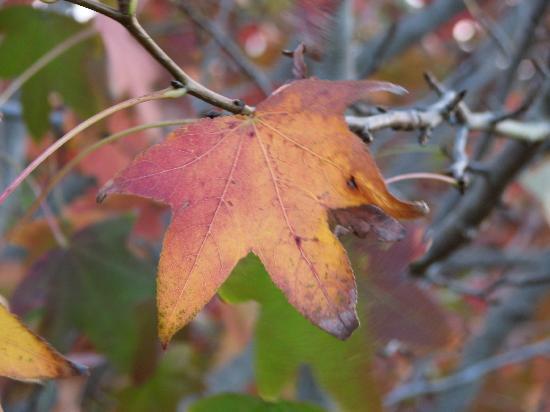
(Photo shows an autumn leaf in the Aurora Valley of Bangalow, New South Wales)

Girls Names from Songs

06 Sunday Mar 2011

Posted by A.O. in Name Themes and Lists

≈ 39 Comments

Tags

American names, aristocratic names, Australian slang terms, British name trends, created names, famous namesakes, fictional namesakes, food names, French names, fruit names, gemstone names, germanic names, Hawaiian names, hebrew names, Latin names, name history, name meaning, name trends, names from films, names from songs, nature names, nicknames, Old Norse names, patriotic names, plant names, polynesian names, popular names, retro names, royal names, saints names, scandinavian names, Turkish names, UK name popularity, unisex names, vintage names, Yiddish slang


This list was first published on March 6 2011, and substantially revised and updated on March 12 2015.

Astrid
Goodbye (Astrid Goodbye) was a 1979 single for popular rock band Cold Chisel, written as an energetic set finisher. Songwriter Don Walker didn’t know anyone named Astrid, and thinks he probably heard of the name because of Bill Wyman’s partner, Astrid Lundstrom. Astrid is the modern form of Ástríðr, an Old Norse name which can be translated as “beloved of God”, or more freely as “divine beauty”. A traditional name amongst Scandinavian royalty since medieval times, it was the name of Canute the Great’s sister, giving it a slender English connection. It became well known in the English-speaking world because of popular Swedish children’s novelist Astrid Lindgren, the author of the Pippi Longstocking books, and has received fresh attention from Astrid Hofferson in the film How to Train Your Dragon. The name is often understood as being related to the word “star”, because it sounds like the Greek aster, which was exploited in a Dr Who special where Kylie Minogue played star-loving Astrid Peth. This attractive name is currently around the 500s.

Ayla
Ayla was a 1987 single for New Wave duo Flash and the Pan, comprised of music industry powerhouses and ex-Easybeats, Harry Vanda and George Young. The name Ayla has several possible origins. It can be a variant of the Hebrew name Elah, meaning “terebinth tree”, pronounced eh-LAH, or a Turkish name meaning “halo of light around the moon”, and often translated as “moonlight”. In Turkey, it is pronounced to sound like the name Isla. The name Ayla was also used for a beautiful, inventive, and spiritually gifted palaeolithic superwoman in the popular Earth Children  novel series by Jean M. Auel. In the books, Ayla is a Neanderthal attempt at the character’s real name, which isn’t given, but much longer; it is said like Kayla without the K. The name Ayla first joined the US Top 1000 in 1987, a year after Auel’s Clan of the Cave Bear was made into a film, starring Daryl Hannah. Despite being a flop, it seems to have catapulted Ayla to #593, and to have helped inspire the Flash and the Pan song. In Australia, Ayla joined the Top 100 in 2013, fitting in with popular names like Layla and Ava.

Clementine
Col Joye’s 1959 #1 hit single (Rockin’ Rollin’) Clementine is a hip retelling of the folk ballad, My Darling Clementine. In this version, the miner’s daughter Clementine is a jeep-driving “real down chick” who meets up with a “cat from the city” in a jumping joint where she hops, bops, and “digs that crazy rhythm”. Clementine is a French form of Clementina, the feminine form of Clement, from the Latin name Clemens, meaning “merciful, gentle”. Clement is a saint’s name, so Clementine would originally have been given with this in mind, and the name dates to the Middle Ages. It has a rather aristocratic image, with several French princesses named Clémentine, and Sir Winston Churchill’s wife was also called Clementine. A clementine is a small citrus fruit, but that isn’t an issue in Australia, where they are nearly always sold as mandarins. Clementine was quite a popular name in Australia in the 19th century, but has never been in the charts since Federation. There has been renewed interest in the name recently, with the quirky Clementine children’s book series by Sara Pennypacker, Clementine the moral compass in The Walking Dead video game, and free spirit Clementine in the film, Eternal Sunshine of the Spotless Mind. Expect to see more of this elegant vintage name in the future.

Evie
Stevie Wright is the former lead singer of legendary 1960s rock band The Easybeats. Australia’s first international pop star, he was the first forced to deal with the pressures of being famous and beautiful at a very young age, and the first to blaze, burn out, and come crashing down in spectacular fashion. Evie is his 1974 rock ballad of young love and new life blossoming, blooming, and then going appallingly wrong, and is the only 11-minute song to become a #1 hit. Evie is a pet form of Eve, or a short form of names like Evelyn. It’s been used as an independent name since the 18th century in America, and may have a Dutch influence. Evie first joined the charts in the early 2000s, after the song was covered by one-off supergroup The Wrights in 2004. It climbed so steeply that it was in the Top 100 by the late 2000s, and was #22 in 2013. It’s even more popular in the UK, so you can see this as part of the British nicknamey trend, as much as a tribute to an Australian classic.

Georgy
The Seekers were a folk group, and the first Australian band to achieve major success in the UK and US. Georgy Girl was the title song to the 1966 British movie of the same name, a Swinging Sixties coming-of-age tale about a naïve, frumpy young girl and her unconventional love affairs. The song went to #1 in Australia, and was The Seekers’ highest-charting single in the US, where it got to #2 and was used to advertise mineral water. Georgy can be used as a pet form of either the male name George, or the female names Georgia, Georgette, or Georgiana – the “Georgy Girl”in the song is named Georgina. Although Georgy has a long history of use for both sexes, it is far less common that the variant Georgie, which has charted for girls since the 1990s and is rising steeply in the 200s.

Leilani
Leilani, released 1982, was the début single by quirky rock group Le Hoodoo Gurus (later Hoodoo Gurus). The song’s narrative is loosely based on the plot of 1951 B-grade movie Bird of Paradise, and combines an exotic South Pacific setting with an oddly suburban mindset, and a fun faux-Polynesian chorus filled with Australian place names. Leilani is a Hawaiian name meaning “heavenly garland of flowers”, but often understood as “heavenly child”, pronounced lay-LAH-nee. It fits in with the trend for L-l names, such as Lillian, and is currently around the 300s. A very pretty Polynesian heritage choice which has the fashionable nickname Lani.

Matilda
Waltzing Matilda was written by Banjo Paterson in 1895. The Matilda in the song isn’t a dancing girl, but is what swagmen called the bundle that they carried; to “waltz Matilda” is to walk while carrying a bundle. It is said that the swagman in the song was a real person called Samuel Hoffmeister who was involved in the Shearer’s Strike of that year, so it’s a political protest song (unintentionally). Waltzing Matilda is our unofficial national song and the lyrics are written on every Australian passport. Matilda is a Germanic name meaning “mighty in battle”. A traditional name amongst European royalty, it was literally brought over with the Conqueror to England, as it was the name of William I’s wife, the mother of William II and Henry I. Her grand-daughter was named after her, and she was married to a Holy Roman Emperor, so was the Empress Matilda. She tried to claim the throne of England as her father’s heir, but was never crowned queen, being named Lady of the English – her son instead became King Henry II. Saint Matilda was a medieval German queen whose son became a Holy Roman Emperor; she is the patron saint of large families. Matilda was #144 in the 1900s, and disappeared from the charts in the 1930s. It made a comeback in the 1980s, after Matilda the Kangaroo was chosen as the mascot for the 1982 Commonwealth Games, held in Brisbane and won by Australia. Matilda joined the Top 100 in the early 2000s, peaked in 2009 at #16, and by 2013 had only fallen to #18. A patriotic retro name choice that is extremely stable in the charts.

Rosie
Founded by the brothers of one of the Easybeats, AC/DC is Australia’s most successful rock band, and one of the most successful world-wide. Whole Lotta Rosie is their cheeky 1978 single, allegedly based on Bon Scott’s real life encounter with an obese Tasmanian woman. Rosie is a pet form of Rose which has a long history as an independent name; it can be used as a short form of any Rose- name, such as Rosalie, Rosamund, Rosetta, or Rosemary. Rosie was #229 in the 1900s, and left the charts in the 1930s. It made a come-back in the 1980s, reaching #749 and climbing steeply. It was in the mid-100s in Victoria in 2012. A sweet, fresh-faced retro name that is already Top 100 in Britain.

Ruby
Ruby Wednesday is an early song by rock band Eskimo Joe, released in 1999. A whimsical re-take on the Rolling Stones’ Ruby Tuesday, it made the Triple J Hottest 100 the year it came out. Ruby is a precious gemstone, whose name comes from the Latin for “red”. It’s been used as a girl’s name since the 17th century, but became popular in the 19th, when gemstone names became fashionable. Ruby was #21 in the 1900s, and had left the Top 100 by the 1930s. It disappeared from the charts in the 1950s, but came back in the 1980s at #548. It reached the Top 100 in 1996, peaked at #1 in 2012, and and by 2013 was #2. A spunky retro choice which has already reached maximum popularity, and is therefore expected to gradually fall.

Sadie
Sadie (The Cleaning Lady) was a 1967 novelty song and the first solo single for pop idol Johnny Farnham; it hit #1 and was the biggest-selling single by an Australian artist in the 1960s. Sadie is a pet form of Sarah, which seems to have originated in 18th century America. The name gained an especially Jewish image in 19th century England, where in Yiddish slang, a Sadie was a low status Jewish girl, sometimes with connotations of prostitution. It’s interesting how often Sadie is linked with that profession, such as Sadie Thompson in the W. Somerset Maughan’s Rain, while The Beatles’ Sadie adds another “sexy” image to the name. Sadie was #145 in the 1900s, and left the charts in the 1940s. It returned in the late 2000s at #566, and in Victoria is in the mid-100s, a similar popularity to that in the UK, while it is already a Top 100 name in the US. This sassy retro name looks set to go places.

POLL RESULTS
People’s favourite names were Evie, Matilda, and Clementine, and their least favourite were Ayla, Leilani, and Georgy.

Waltzing With … Valentine

13 Sunday Feb 2011

Posted by A.O. in Waltzing with ...

≈ 2 Comments

Tags

birth notices, famous namesakes, fictional namesakes, French name popularity, French names, historical records, holiday names, Latin names, locational names, middle names, name combinations, name history, name meaning, names from films, papal names, rare names, Roman names, saints names, Shakespearean names, UK name popularity, unisex names, US name popularity

great-barrier-reef

Name Story
As tomorrow is St. Valentine’s Day, I thought I would focus on the name connected with this day for lovers.

The history of how the name became associated with a day for sweethearts is rather murky. The feast of Saint Valentine was first established in 496 by Pope Gelasius I, and he freely admitted that nobody had a clue who Valentine was or what he had done apart from give up his life for his faith and been buried on February 14; traditionally in 269.

There were so many martyrs called Valentine that the compilers of hagiographies didn’t know which Valentine Gelasius meant – hardly surprising as he didn’t either – but managed to whittle it down to two candidates: a bishop and a priest. Saint Valentine seemed doomed to be relegated to the ranks of the obscure minor saints.

Then the Italian archbishop and chronicler Jacobus de Voragine compiled The Golden Legend around 1260. This bestseller of the Middle Ages gave the reader a little story about each saint on the liturgical calendar. It included a brief biography of Saint Valentine which portrayed him as a priest who refused to deny Christ before the Emperor Claudius in the year 280.

Before he was decapitated for his obstinacy, he restored the sight of his gaoler’s blind daughter as a show of Christ’s power. (The daughter was also deaf, but The Golden Legend remains mute as to whether that was similarly healed). This legend became more and more romantically embroidered until Saint Valentine was a priest imprisoned for marrying Christian couples, was in love with the blind daughter he healed, and sent her a card signed, “From your Valentine.”

A popular notion is that the church introduced Valentine’s Day as a Christian substitute for the pagan festival of Lupercalia. You will read this all over the place as if it is an established fact. Actually it has pretty much zero evidence to support it, and was first suggested by two 18th century antiquarians (one a priest).

The idea that Saint Valentine’s Day was a day set aside for lovers dates back to a poem written by Geoffrey Chaucer in 1382, in which he pretended it was an ancient tradition. Fake ancient traditions being all the rage in medieval Europe, it quickly became fashionable to write poems and perform other romantic acts for your beloved on February 14.

Older Australians sometimes grumble about the Americanisation of Valentine’s Day, but if that means you get a card, flowers, and a box of chokkies instead of nothing, then hurray for Americanisation say I! The big event that happened here on Valentine’s Day was the decimalisation of our currency in 1966 – mm, romantic.

I wish you all a happy Saint Valentine’s Day, for although the whole thing turns out to be as fake as a decimalised three dollar bill, it’s as real as really real to everyone who gets a flutter in their heart when they receive a poem, card or SMS signed, From your Valentine.

Name Information
Valentine is from the Roman name Valentinus, derived from the Latin valens, meaning “strong, vigorous, healthy, powerful.” The name was popular in ancient Rome; you can tell how common it was from the fact that there are eleven saints called Valentine, and three called Valens. There has also been a Pope Valentine, a member of the Roman nobility who died just five weeks after being consecrated.

The medieval romance Valentine and Orson tells of twin brothers who are abandoned in the woods as babies. While Valentine is brought up as a knight at a royal court, Orson is raised by bears and becomes a wild man of the woods, until he is tamed by Valentine, and becomes his servant. There are two Valentines in the plays of William Shakespare: one a main character in Two Gentlemen of Verona, the other a bit part in Twelfth Night. Valentine is the sort of romantic, fairy-tale name which has seen it chosen for sci-fi, fantasy, and video games.

In use as an English name since the Middle Ages, Valentine is more often given to boys, although girls named Valentine are relatively common (relative to the number of overall Valentines, I mean). In France, Valentine is a girl’s name, the feminine form of Valentinus, said with the accent on the last syllable instead of the first. It is a Top 100 girl’s name in France, and may have been given a boost from the character named Valentine, a student and model, in the film Three Colours: Red.

Valentine was on the US Top 1000 for boys from 1880, and didn’t leave it permanently until the mid-1950s. It’s only charted twice for girls – once in 1885, and once in 1917. In 2013, there were 32 baby girls given the name Valentine, and 35 boys, making the name almost evenly unisex in the United States. The same situation exists in the UK, where there were 9 girls and 8 boys named Valentine in 2013.

Valentine has never charted in Australia, and is in rare use (the Italian form Valentino is far more common), but I do see it as a middle name for both sexes in birth notices, especially around Valentine’s Day. There are thousands of Valentines in Australian historical records, mostly male, although as a middle name more evenly given to both sexes. The name seems fairly multicultral, given to men with British, Italian, German, and Jewish surnames.

Some romantic name combinations from Australia which took my eye were Valentine Orson, Valentine Giovanni, Cecil Endymion Valentine, Percival Valentine, Capel Arthur Valentine, Lemuel Reginald Valentine Fitzgerald, Ethelbert Valentine, Valentine Aubrey Hamilton, and Saint Valentine, and for girls Evangeline Valentine, Delice Frances Valentine, Lila Valentine, Fairy Valentine, Queenie Valentine, and Valentine Lovely.

Famous Australians named Valentine include war hero Valentine Stacy, scientist Valentine Anderson, and radio and TV pioneer Valentine McDowall (born on Valentine’s Day). Convict Valentine Marshall was transported to Tasmania as a teenager for taking part in political riots, but sadly for romance, he later got in trouble for spouse abuse.

More recently, Valentine Trainor invented the sport of Ironman, and Valentine Jones was the guitarist for Billy Thorpe and the Aztecs. Of course, you will see the name of a famous Valentine every time you go the movies at a Hoyts cinema – Val Morgan, the head of Val Morgan Advertising. He handed his name down to his son, William Valentine Morgan.

The suburb of Valentine in Lake Macquare is named after Henry Valentine Joseph Geary, a property developer and mine owner in the area. Meanwhile Valentine Creek in the Snowy Mountains may have been discovered on a Valentine’s Day – the Valentine Hut nearby was originally painted red with white hearts, a motif which even went as far as the toilet seat.

A famous female Valentine was Valentine Leeper, an eccentric teacher born in Melbourne on February 14 in 1900. She became known for writing influential letters on subjects such as education, the ordination of women, international politics and indigenous affairs. She had her own radio show for many years, where she shared little-known facts and her own opinions in equal measure, and if alive today, would surely be a busy blogger and tireless tweeter.

Ms Leeper’s birth date is important in Australian cultural history, because Valentine’s Day in 1900 is the date on which the main events occur in Joan Lindsay’s 1967 novel, Picnic at Hanging Rock. An unsolved mystery about the disappearance of three schoolgirls and their eccentric teacher at Hanging Rock in Victoria, it was made into a successful and much-loved film by Peter Weir. Much later, Lindsay published the final chapter which was to explain everything, although it is still an ambiguous ending, open to interpretation.

Valentine is a name that has a strong meaning, but an elegant and slightly fanciful image. It is a name that will always be associated with love and romance, and would be a perfect choice for a baby born on or near Valentine’s Day. It can be given to both boys and girls, and many parents would probably prefer it tucked away in the middle. Nicknames include Val, Valley or Valli, Nina, and Tina, although the fashionable Lenny also seems possible.

POLL RESULT
Valentine received an excellent approval rating of 84%, making it one of the highest-rated names of the year. 31% of people thought it was a great name, and only 6% of people hated it.

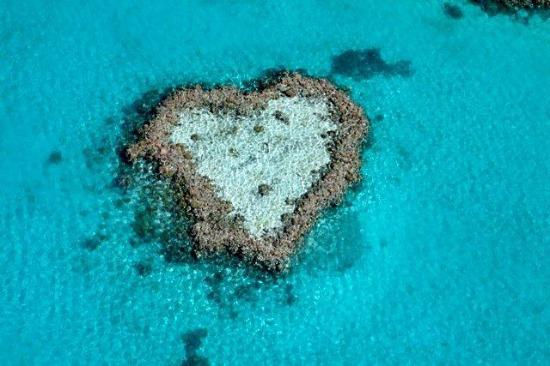
(Photo shows Heart Reef in the Whitsunday Islands)

Newer posts →

Enter your email address to follow this blog

Categories

Archives

Recent Comments

A.O.'s avatarwaltzingmorethanmati… on Zarah Zaynab and Wolfgang…
Madelyn's avatarMadelyn on Zarah Zaynab and Wolfgang…
JD's avatardrperegrine on Can Phoebe Complete This …
A.O.'s avatarwaltzingmorethanmati… on Rua and Rhoa
redrover23's avatarredrover23 on Rua and Rhoa

Blogroll

  • Appellation Mountain
  • Baby Name Pondering
  • Babynamelover's Blog
  • British Baby Names
  • Clare's Name News
  • For Real Baby Names
  • Geek Baby Names
  • Name Candy
  • Nameberry
  • Nancy's Baby Names
  • Ren's Baby Name Blog
  • Sancta Nomina
  • Swistle: Baby Names
  • The Art of Naming
  • The Baby Name Wizard
  • The Beauty of Names
  • Tulip By Any Name

RSS Feed

  • RSS - Posts

RSS Posts

  • Celebrity Baby News: Melanie Vallejo and Matt Kingston
  • Names from the TV Show “Cleverman”
  • Can Phoebe Complete This Sibset?
  • Zarah Zaynab and Wolfgang Winter
  • Baby, How Did You Get That Name?
  • Celebrity Baby News: Media Babies
  • Celebrity Baby News: Adelaide Crows Babies
  • Celebrity Baby News: Chris and Rebecca Judd
  • Names at Work: Name News From the World of Business and Employment
  • Celebrity Baby News: Sporting Round Up

Currently Popular

  • Celebrity Baby News: Toby Allen and Darren Weller
  • Rare Boys Names From the 1950s
  • Girls Names From Native Australian Flowers
  • Girls Names of Australian Aboriginal Origin
  • The Top 100 Names of the 1920s in New South Wales

Tags

celebrity baby names celebrity sibsets english names famous namesakes fictional namesakes honouring locational names middle names name combinations name history name meaning name popularity name trends nicknames popular names saints names sibsets surname names twin sets unisex names

Blog at WordPress.com.

Privacy & Cookies: This site uses cookies. By continuing to use this website, you agree to their use.
To find out more, including how to control cookies, see here: Cookie Policy
  • Subscribe Subscribed
    • Waltzing More Than Matilda
    • Join 517 other subscribers
    • Already have a WordPress.com account? Log in now.
    • Waltzing More Than Matilda
    • Subscribe Subscribed
    • Sign up
    • Log in
    • Report this content
    • View site in Reader
    • Manage subscriptions
    • Collapse this bar
 

Loading Comments...