• About
  • Best Baby Names
  • Celebrity Baby Names
  • Celebrity Baby Names – Current
  • Celebrity Baby Names – Past
  • Featured Boys Names
  • Featured Girls Names
  • Featured Unisex Names
  • Links to Name Data
  • Waltzing on the Web

Waltzing More Than Matilda

~ Names with an Australian Bias of Democratic Temper

Waltzing More Than Matilda

Tag Archives: Shakespearean names

Names of Australian Models

06 Sunday Nov 2011

Posted by A.O. in Name Themes and Lists

≈ 27 Comments

Tags

Cornish names, created names, famous namesakes, fictional namesakes, French names, hebrew names, Indian names, Italian names, Latin names, Maori names, mythological names, name history, name meaning, Native American names, nicknames, Shakespearean names, Tamil names, Welsh names

Because we had two sets of male names for Boys Names from the Australian Football League and Boys Names from the National Rugby League, we need to have two sets of female names to keep the numbers even. As the spring fashion collections are out now, and ladies are getting frocked up for the spring racing season, it seemed a good time of year to feature women’s names from the world of Australian fashion.

Bambi (Northwood-Blyth)

Bambi Northwood-Blyth is a young up and coming model from Melbourne. She became known once her photo started being seen in tabloids partying with her surfer boyfriend who owns a fashion label, and soon became an internationally known “it” girl. At 5 foot 7, Bambi is unusually short for a fashion model, has a very distinctive look with heavy dark eyebrows, and sports tattoos and facial piercings. Bambi is a diminutive of the Italian word bambina, meaning “girl child”; English equivalents of Bambi might be Babe or Lassie. A girl named Bambi (real name Francesca) is the heroine of 1914 novel, Bambi, by Marjorie Benton Cooke. It recounts the romantic adventures of a lively young society girl in New York, and seems an entertaining enough read. However, it’s been overtaken in the public consciousness by a male deer called Bambi, hero of a novel by Felix Salten which was made into an animated Disney movie. Since then, Bambi has taken on connotations of being doe-eyed, long-limbed and generally adorable, like a baby deer. Bambi is usually a nickname or stage name in real life, and this case is no exception: Bambi Northwood-Blyth’s real name is Stephanie.

Cheyenne (Tozzi)

Cheyenne Tozzi was raised in Sydney, and is the type of blonde bikini babe which makes her suitable to be the face of Mambo Goddess and Just Jeans. She’s been hailed as “the next Elle McPherson”, and seems to be dating someone new every time you open a gossip magazine, from Kanye West to Mickey Rourke to Brandon Davis to our own Taj Burrow. Cheyenne is the name of a Native American people from the Great Plains region. Their name is what the Dakota Sioux called them, and means something like “the people of an alien language” (literally, “red-talkers”). One of their most famous members was the chief Black Kettle, who tried to make peace with the American settlers, and was killed by General George Custer. It’s pronounced shy-AN, and seems to be have been first used as a name in 1950s TV western, Cheyenne, about a cowboy called Cheyenne Bodie. It’s now seen as a primarily feminine name, and you should be aware that many Native Americans find using tribal names as personal names culturally insensitive or even offensive.

Demelza (Reveley)

Demelza Reveley is from Wollongong, and won the fourth series of Australia’s Next Top Model. Despite winning the show, judges said she lacked the sophistication to be a top model, and was just young and pretty. She has posed for Cosmopolitan and Vogue, and is currently the face of Sydney’s fashionable Strand Arcade shopping centre. Demelza is the name of a Cornish village said to mean “fort of Maeldaf”. The name Demelza was used for a character in the Winston Graham’s Poldark novels, and it became well known after the novels were turned into a TV series in the 1970s; the part of Demelza Poldark was played by Angharad Rees. Part of the success of the name at the time may be because, in the story, Demelza is told that her name means “thy sweetness”. Demelza Reveley’s parents obviously like unusual names – her sister’s name is Tanith.

Elle (Macpherson)

Elle Macpherson (pictured) was born in Sydney, and first modelled in New York as a teenager to raise money for her law degree (soon abandoned). She became known for her girl next door looks and magnificent figure, which earned her the sobriquet of “The Body”. Elle became part of the generation of supermodels in the 1980s, and went on to control many business interests. Today she is a multimillionaire businesswoman with her own fashion label, and is the face of Revlon cosmetics. She lives in Britain with her two sons. Elle’s name is short for her real name of Eleanor. Elle is the name of the world’s largest fashion magazine, founded in Paris in 1945. At one time, Elle Macpherson appeared in every issue of the magazine for six years in a row, and at the age of 21, married its creative director, Gilles Bensimon. The magazine’s name is the French word for “she”.

Miranda (Kerr)

Miranda Kerr was raised in the country town of Gunnedah in New South Wales before her family moved to Brisbane. She won the 1997 Dolly magazine contest at the age of 13, became a swimwear model, and relocated to New York. She is the first Australian to become a Victoria’s Secret lingerie model. She is married to actor Orlando Bloom, and is the mother of Flynn Christopher Blanchard Copeland Bloom. The name Miranda was created by William Shakespeare for his play, The Tempest; Miranda is the teenage daughter of the duke Prospero, and the two of them have been exiled on a remote island since Miranda was a toddler. Miranda’s name is derived from Latin for “admirable, miraculous” – Prospero is a magician, and perhaps chose a rather magical sounding name for his daughter. Miranda seems to be a popular name in Australia, at least in fiction; there seems to be a lot of Mirandas in films and television shows, including the beautiful schoolgirl Miranda in Picnic at Hanging Rock, based on the novel by Joan Lindsay. As this movie is very mysterious, it adds up to Miranda being a remarkably magical and mystical name.

Myfanwy (Shepherd)

Myfanwy Shepherd is from Cairns; she auditioned for the fourth series of Australia’s Next Top Model, but was rejected, as judges didn’t believe she had what it takes. A few months later, she was on the runways of New York, London, Paris and Milan. Myfanwy is a medieval Welsh name revived in the 19th century. It is often translated as “my fine one” or “my rare one”, but this seems to be an imaginative gloss, as it is more likely from the Welsh for “beloved”. A 14th-century legend tells of Myfanwy Fychan, who was said to be the most beautiful woman in Powys, and vain enough to love nothing more than hearing her appearance praised. She took a fancy to a penniless bard because he could compose poems extolling her loveliness. Fickle as well as vain, she soon dumped him for someone richer and better looking, and the bard was left to wander around sadly composing poetry to his lost love. This rather unpleasant character’s story was turned into a popular song by Joseph Parry in the 19th century. The name is pronounced muh-VAHN-wee, however Australian Myfanwys have a range of pronunciations, including like Tiffany with an M at the front. Like Myfanwy Shepherd, they all seem to use Myf (said MIFF) as the nickname.

Pania (Rose)

Pania Rose is from Perth in Western Australia; she was discovered during a national teen covergirl contest. She’s posed for Marie Claire and Spanish Vogue, and is most famous for her 2006 Sports Illustrated Swimsuit Edition appearance. The name Pania is one from Maori mythology; Pania of the Reef was a beautiful sea maiden. She fell in love with a handsome son of a chieftain, and the pair became secretly married. These mortal-to-sea creature love affairs always seem to go horribly wrong in tales, and this one is no exception. Pania stayed with her husband every night, but during the day she needed to be in the sea in order to survive. Her frustrated husband got tired of not having a wife around during the day, and tried to force her to remain on land against her will. Horrified that he would risk her life, she fled from him into the ocean. There is a statue of Pania on the city of Napier’s Marine Parade that is sometimes compared to that of The Little Mermaid in Copenhagen. The name is said PAH-NEE-AH, and it may mean “polished”.

Tabrett (Bethell)

Tabrett Bethell was born in Sydney, and was a teenage model and cheerleader for the NRL Cronulla Sharks. After this she trained as an actress, has been in several films, and played a key role in the US fantasy TV show, Legend of the Seeker, where she gained a fan following. Tabrett’s unusual name came about because of an argument her parents had about what to name her. Her mother had chosen the name Siobhan, but her father preferred the name Murray. Her dad left the hospital and went for a drive, where he saw a sign for Tabrett Street. He drove back to the hospital, and suggested Tabrett instead, which her mother proved equally enthusiastic about. Tabrett is pronounced with the emphasis on the first syllable, and for many years, Tabrett was told her name was Welsh. I have read that it is derived from the Hebrew word tofe, for the hand drum that is used to praise Yahweh, and is interpreted as meaning “celebration”. Although Tabrett’s surname is Welsh, meaning “son of Ithel”, by coincidence it looks similar to the Hebrew for “house of God”, so there is some odd Welsh-yet-Hebrew/Hebrew-yet-Welsh theme to her name, I think.

Tahnee (Atkinson)

Tahnee Atkinson is from Perth, and is the winner of the fifth series of Australia’s Next Top Model. Tahnee has a curvaceous figure, and her weight was sometimes an issue during the course of the show. As part of her prize, she received a contract with Maybelline and a spread in Harper’s Bazaar, which retained exclusive rights to her for six months. Tahnee is a name that has long been a favourite in Australia; the oldest Tahnee I know is in her late fifties, and the youngest was born last year. The meaning of the name is uncertain, but Australians often fondly believe it to be Aboriginal or Maori in origin. Most likely, it just a variant of Tania; it is pronounced TAH-nee (like tardy with an N in it instead of a D).

Valli (Kemp)

Valli Kemp was born in Kenya to British parents, moved to London when she was seven and to Sydney when she was twelve. She was chosen Miss World Australia in 1970, and seen as the epitome of early ’70s glamour, with bedroom eyes and full lips. After moving to London for the Miss World finals (Grenada won), she became part of the “beautiful people” scene, and appeared in a few films, most notably cult horror flick Dr Phibes Rises Again, opposite Vincent Price. After moving back to Australia in the 1980s, she became a full-time artist and art teacher. The name Valli means “creeping plant” in Tamil, which refers to either a sweet potato or a yam; both of these grow on vines. Valli is a Hindu goddess in the mythology of South India and Sri Lanka. In the stories, a chieftain and his wife prayed for a child, and found a baby girl amongst the vines in the forest; they raised her as their own and she grew up to be princess of her tribe. She became the wife of Lord Murugan, the most loved deity in Sri Lanka – a brave warrior who protects even the most humble.

Girls Names from the Top 100 of the 1930s

19 Sunday Jun 2011

Posted by A.O. in Name Themes and Lists

≈ 37 Comments

Tags

Anglo-Saxon names, Biblical names, celebrity baby names, Christmas names, classic names, english names, European name popularity, famous namesakes, fictional namesakes, flower names, French names, Greek names, honouring, Italian names, Latin names, locational names, middle names, military events, mythological names, name history, name meaning, name popularity, name trends, names from movies, names from songs, nature names, nicknames, plant names, popular names, retro names, Roman names, royal names, saints names, Scottish names, Shakespearean names, Tatar names, unisex names, virtue names, vocabulary names

This blog post was first published on June 19 2011, and revised and updated on June 12 2015.

Alma
May be derived from the Latin almus, meaning “nourishing” – an epithet given to several Roman goddesses, including Ceres. Alma mater, meaning “nurturing mother”, is a Latin term often used to refer to one’s college or university: it was originally a title given to mother goddesses, and later to the Virgin Mary. The obscure 4th century Romano-British saint Alma Pompea, married to the semi-legendary King Hoel of Brittany, is an early example of the name. The name was given a boost after being used in Sir Edmund Spenser’s 1590 poem, The Faerie Queen; he seems to have been influenced by the Renaissance Italian word alma, meaning “soul”. The name became popular in the 19th century, after the Crimean War began with the Battle of Alma, when Anglo-French forces defeated the Russians near the River Alma – the river’s name is from a Tatar word meaning “wild apple”. After this date, babies of both sexes (but mostly girls) were named Alma in honour of the military victory. Alma was #24 in the 1900s, and #97 in the 1930s, leaving the Top 100 the following decade, and the charts in the 1960s. Alma made a mild comeback in 2011, and seems very contemporary, as it has been used in Brokeback Mountain and The Hunger Games. Already popular in Europe, Alma would make an interesting alternative to names such as Amelia, Anna, or Emma.

Audrey
Pet form of the Anglo-Saxon name Etheldreda, meaning “noble strength”; it was the name of a 7th century English princess and saint whose feast day is June 23. It became less common after the Middle Ages, because St Audrey Day Fairs sold low-quality necklaces that were disparagingly called tawdries – which is where we get the word for something cheap and tacky from. Audrey was revived in the 19th century when the Victorians rediscovered many Anglo-Saxon names. The name was already familiar, as Audrey is the simple but honest country girl in Shakespeare’s As You Like It. The Victorians were also in the middle of a Shakespeare revival, so Audrey was a dead cert for a comeback. Audrey was #156 in the 1900s, and peaked in the 1920s at #32. The name was #36 in the 1930s, but plummeted so that it was off the Top 100 by the following decade. It fell to a low of 0 in the 1980s, but climbed after the death of Audrey Hepburn until it reached the Top 100 again in 2008. Once tawdry Audrey now seems charming and stylish, and is currently #44 and climbing.

Elsie
Often said to be a pet form of Elizabeth, but technically a pet form of Elspeth, the Scottish form of the name, and was originally Elspie. The name Elsie can be found in songs and poems dating to the 17th century, and became a 19th century favourite. Elsie was #7 in the 1900s, #59 in the 1930s, and left the Top 100 in the 1940s. Elsie left the charts in the 1970s, but returned in the early 2000s at #731. It joined the Top 100 in 2013 at #91, and last year rose 26 places to #65 – an impressive performance. Sweet and unpretentious, Elsie is very much back in the game.

Hazel
Named for the hedgerow tree or shrub which produces edible nuts; the Celts equated hazelnuts with wisdom and poetic inspiration, and the Druids made staffs from hazel branches. It was considered to be one of the trees belonging to the fairies, and folk tales tell of its ability to protect from evil. Hazel has been used as a personal name since the 17th century, mostly for girls, and became popular in the 19th century when plant names were fashionable. Hazel was #45 in the 1900s, and peaked in the 1910s at #18; by the 1930s it was #55. Hazel left the Top 100 in the 1940s, and the charts by the 1970s, making a return in the late 2000s at #477, after Julia Roberts named her daughter Hazel. Last year Hazel had an outstanding debut as the fastest-rising name of 2014, rising #63 places to #88. One factor must surely be the romantic film The Fault in Our Stars, with its heartbreaking heroine Hazel Lancaster, although there have also been Hazels in the Heroes of Olympus series, and Gossip Girl.

Iris
Greek personification of the rainbow who served as messenger to the gods, and linked them to humanity. The name literally means “rainbow”, which is where the colourful iris flower got its name from – and the colourful irises in our eyes. Irises were used in the Middle Ages as a symbol of monarchy, as the fleur-de-lis pattern depicts. Religious pictures from the medieval period show the Virgin Mary holding an iris to symbolise purity and chastity. Filled with meaning and associations, the name was used by the 19th century British aristocracy for both females and males (because the Greeks called the iris flower a “hyacinth”, and Hyacinth was a male name), but quickly became used by all classes, and nearly always for girls. Iris was #62 in the 1900s, and peaked in the 1910s at #31; it was #72 by the 1930s. Iris left the Top 100 in the 1940s, and left the charts in the 1970s, although it returned in the 1980s at #748. Off the charts in the 1990s, Iris came back in the early 2000s at #551, and is now around the mid-200s and apparently stable. Almost always on the charts, Iris manages to be a “normal” name that is still underused. Hip and artistic, it has slightly dark or even punk undertones. It’s a floral name with a bit of bite.

Josephine
Anglicised form of Joséphine, a pet form of Joséphe, a French feminine form of Joseph; by the 19th century Joséphine had become the standard form of the name. It has been used by several of the royal houses of Europe, and is famous as the first wife of Napoleon Bonaparte, and thus the first Empress of the French. Joséphine was born Marie Joséphe, so it was the pet form of her middle name. Classic Josephine has always been on the charts. It was #86 in the 1900s, peaked in the 1910s at #76, and by the 1930s was #78. It left the Top 100 in the 1940s, and sunk to its lowest level in 2011 at #199, so it has never been out of the 200s. In 2012 it made an appearance again in the Top 100 at #93 after the birth of Princess Josephine, the daughter of Australian-born Princess Mary of Denmark, but has since stabilised into its usual place around the mid-100s. Josephine is a solid stayer with royal blood whose nicknames range from the sensible Jo to the cute Josie to the tomboy Joey to the froufrou Fifi to the cool Joss.

Joy
Refers to the emotion of extreme happiness and gladness. It was originally a Puritan virtue name dating from the 16th century, referring to rejoicing for the salvation of God – perhaps most famous from the hymn, Joy to the World, now often used as a Christmas carol. In fact, joy and Christmas have become so entwined that you could even see Joy as a name suitable for a baby born around late December. However, the name Joy has become secularised, and often linked to the joyful experience of welcoming a child into the world: babies have even been called “bundles of joy”. Joy entered the charts in the 1910s at #205, and was in the Top 100 by the following decade. It peaked in the 1930s and ’40s at #60, and left the Top 100 in the 1960s. Joy reached its lowest point in the 1990s at #802, but then increased slightly in popularity, and was stable in the 500s for some time. Its current position is not known for sure, but is in at least occasional use. Quite common in the middle position, Joy is a strong, simple name with a beautiful meaning, and the current trend for virtue names mean that it would be refreshing to see it up front.

Lillian
Most likely a pet form of Elizabeth dating to the Middle Ages: there is a medieval Scottish ballad about a lady named Lillian. The name became greatly more popular in the 19th century, to the point where it could be seen as another Victorian revival of a medieval name, and may have been understood as an elaboration of Lily, which also became fashionable in the 19th century as a flower name. Lillian is a classic name which has never left the charts. It was #35 in the 1900s, reached #86 by the 1930s, and left the Top 100 in the 1940s. It reached its lowest point in the 1970s at #562, and then climbed steeply, following in the footsteps of Lily, until it reached the Top 100 again in 2008 at #81. It is currently #86, so its position is stable. However, the high number of Lilys and Lillys (not to mention the Laylas and Lolas) mean that lovely Lillian may feel almost too on trend for some.

Marie
French form of Maria: in France it has sometimes used for males, especially as a middle name, but in English-speaking countries is almost always feminine. The name often reminds people of Queen Marie Antoinette, whose first two baptismal names were Maria Antonia – she was Austrian by birth. In the Middle Ages, Marie was commonly used in England, and predates the use of Mary. The medieval poet Marie de France lived and worked in England, possibly at the court of King Henry II – it is even thought that she may have been Henry’s own half-sister. The traditional English pronunciation of the name was MAH-ree (still used in the 20th century), but it is now usually said muh-REE. A name never out of common use for centuries, Marie was #71 in the 1900s, and peaked in the 1930s at #11 – perhaps Irving Berling’s hit song Marie, sung by Rudy Vallee, was an influence on its success at this time. Marie left the Top 100 in the 1960s, and fell off the charts in 2011. It is now only in occasional use, although a common middle name. Marie is still popular in Europe, and this is a pretty, traditional name that still seems very wearable.

Olive
English form of the Roman name Oliva, which refers to both the olive tree and its fruit. There is a legendary Italian martyr called Saint Oliva, known as Blessed Olive. The Crusaders introduced the name Olive to England in the 12th century; returning from the Holy Land, they often gave their children names of Biblical import in honour of their religious duty. Olives play a major role in the Bible, from the dove bringing an olive branch to Noah after the Flood, to Christ ascending to Heaven from the Mount of Olives. It was a name used for both males and females, and in fact I have seen a baby boy named Olive in the past few years – but overall Olive has been more common for girls. Olive became popular in the 19th century, along with other plant names. Olive was #26 in the 1900s, and was #73 by the 1930s. It left the Top 100 in the 1940s, and was off the charts by the 1960s. It returned in the late 2000s, after Australian actress Isla Fisher chose the name Olive for her eldest daughter. After a smooth rise, Olive joined the Top 100 in 2012, debuting at #94. It is currently #76, so rising sedately rather than steeply. Buoyed by the success of Olivia and Oliver, and with a V in the middle like other popular names, Olive should continue to do well.

POLL RESULTS
People’s favourite names were Hazel, Iris and Josephine, and their least favourites were Joy, Marie and Alma.

(Painting is Moira Madden, later Moira Hallenstein by Arthur Challen (1937); from the State Library of Victoria.

Boys Names From Songs

13 Sunday Mar 2011

Posted by A.O. in Name Themes and Lists

≈ 20 Comments

Tags

classic names, created names, english names, famous namesakes, fictional namesakes, Gaelic names, germanic names, Greek names, hebrew names, Italian names, meteorological names, modern classics, name popularity, names from fairy tales, names from nursery rhymes, names from songs, names from television, nicknames, Old English names, Persian names, popular names, royal names, saints names, Scottish names, Shakespearean names, slang terms, underused modern classics, unisex names


This blog post was first published on March 13 2011, and heavily edited and updated on March 20 2015. Not being psychic, I did not know then of the vile crimes that Rolf Harris would be imprisoned for, otherwise he would not have been included.

Duncan
Slim Dusty’s country song Duncan is one of his two hits which went to #1.The song describes the great enjoyment experienced drinking at the atmospheric Town and Country pub with his mate Duncan. Although the narrator also drinks with Colin, Kevin, Patrick, and Robert to obtain similar effects, it is Duncan who will always be remembered as the mate Slim would “love to have a beer with”. Duncan is the Anglicised form of the Gaelic name Donnchadh; it may mean either “brown-haired warrior”, or “brown-haired chieftain”. A traditional name amongst Scottish nobility and royalty, there have two medieval Scottish kings named Duncan, with Duncan I the original of William Shakespeare’s King Duncan in Macbeth. Unlike in the play, Duncan was a young king, and not assassinated by his war leader Macbeth, but killed in battle against him. Saint Duncan was of royal blood too, and an abbot of Iona. Duncan was #134 in the 1900s, and peaked in the 1970s at #122. It doesn’t seem to have charted since 2009, so this is a handsome underused Scottish choice.

Erasmus
Erasmus is a 2006 song by alternative rock band You Am I, a nostalgic remembrance of the 1990s. Erasmus is derived from the Greek for “beloved”. Saint Erasmus of Formia was a bishop who, according to tradition, was martyred for his faith in the 4th century. He is more commonly known as Saint Elmo, the old Italian form of his name, and St Elmo’s Fire is named after him – the glowing electrical discharge that can appear around tall, pointed structures during thunderstorms. As it was known for appearing around the masts of ships in the days of sail, Saint Erasmus is a patron of sailors. A famous namesake is Erasmus of Rotterdam, a Catholic priest, theologian, and classical scholar of the Renaissance who is known as “The Prince of Humanists”. Charles Darwin‘s grandfather was Erasmus, named after an ancestor, and Charles’ brother also had the same name. This rare name has geek chic, with history, strength, bags of brain power, and of course, a beautiful meaning. Rasmus and Raz could be used as nicknames.

Harry
Lazy Harry’s, or, The Road to Gundagai is a traditional folk song with a connection to Banjo Paterson, as he was the first to have it published, in 1905. The song tells of two shearers from a Riverina station who set out for Sydney to spend their pay cheques, but get no further than Lazy Harry’s pub between Wagga Wagga and Gundagai before they’ve spent the lot. Harry is a medieval English form of Henry which has never gone out of use. It has also been used as a pet form of Henry and Harold, and more recently, of Harrison. Harry is a classic name which has never left the charts. It was #32 in the 1900s, left the Top 100 in the 1950s, and reached its lowest point in the 1970s at #234. It began rising in the 1980s after the birth of Prince Henry, always known by his nickname Harry, and joined the Top 100 in the early 1990s. It continued rising through the 2000s, along with the popularity of boy wizard Harry Potter, and peaked in 2010 at #27, although by 2013 it had only dropped one place, to #26. Classic Harry is royal and magical, yet also friendly and casual.

Henry
Henry Lee is Nick Cave & The Bad Seeds’s 1996 version of an English folk song called Young Hunting, which in the United States is usually titled Love Henry or Henry Lee. It is a macabre tale of sexual jealousy; a man tells his mistress that he is leaving her for another woman, and while offering him a farewell kiss, she stabs him and throws his body in a well. P.J. Harvey sings the woman’s part of this eerie duet. Henry is from the Germanic name Heimrich, meaning “home ruler”. It has been commonly used amongst European royalty, and there are many rulers of Germany, France, Spain and Portugal named Henry, or one of its equivalents. There have also been six Holy Roman Emperors named Henry, one of them a saint. Henry is a traditional name in the British royal family, and there have been eight English kings named Henry. Henry is a classic name which has never left the charts. It was #11 in the 1900s, and left the Top 100 in the 1950s, hitting its lowest point in the 1970s at #265. It was back on the Top 100 by the 1990s, and had reached #23 by 2013. Henry is a handsome classic which is slowly rising in popularity.

Jack
Adam Harvey’s 2001 country song The House That Jack Built went to #1. It’s inspired by the nursery rhymes The House That Jack Built and Jack and Jill, while giving them a modern twist. Jack is a short form of Jackin, which began as Jankin, a medieval pet form of John. It has been used as an independent name since the Middle Ages, and was so popular in that era that it became a slang word to mean “man, male”. Jack is a fairytale hero, such as Jack and the Beanstalk and Jack the Giant Killer, and a trickster figure, like a jack-in-the-box and the knave in a deck of cards. Jack has a particularly British association, because of the Union Jack which is on our flag. Suffice to say I could talk about Jack until you were completely jack of it! Jack is a classic name which has never left the charts. It was #24 in the 1900s, and left the Top 100 in the 1940s. It hit its lowest point in the 1960s at #277, and was Top 100 again by the 1980s. It hit its peak in the 2000s at #1 name, when there were many heroes on film and TV named Jack. By 2013 it had only fallen two places, to #3, so it has been extremely stable as well as extremely popular. Jack the lad is an everyman name, and a nickname with its own rich history.

Jake
Jake the Peg is a 1965 novelty song by Rolf Harris, based on the Dutch-Canadian song Ben van der Steen. It’s a simple tale of an unfortunate man born with three legs, and Harris performed it onstage with a theatrical prop which left the audience guessing as to which of the three legs was fake. It has been voted one of the best Australian singles of all time. Jake is a medieval variant of Jack, but today is often used as a short form of popular Jacob. Jake first joined the charts in the 1970s at #392, the same decade as Jacob, and just after the song’s release. It joined the Top 100 in the 1980s and peaked in the 1990s at #6. In 2013 it was #43. More boyish than Jacob, more rakish than Jack, this name lets you know that everything is “jake”.

Jessie
Rick Springfield’s pop song Jessie Girl was an instant hit, reaching #1 on the Billboard Hot 100 of 1981, and winning a Grammy. According to Springfield, Jessie’s Girl was inspired by a real-life admiration he had for his friend Gary’s girlfriend. He considered using Gary’s real name, until he saw a girl wearing a softball jersey with the name Jessie on it. The song has been featured in movies and TV shows, and named one of the best songs of the 1980s. As a boy’s name, Jessie is a variant of the Hebrew name Jesse, which may mean “gift”. It’s also a girl’s name which was originally a Scottish pet form of Jean, but also used as a pet form of Jane, and more recently, of Jessica. In Australia, Jessie charted as a unisex name until the 1950s, but since the 1970s and the rise of Jessica, has only charted for girls. It made the Top 100 in the 1990s, when Jessica was the #1 name, and is currently in the 300s. Still usable for boys, although the popular Jessica has given it a pink vibe.

Johnny
Men at Work’s 1982 rock song Be Good Johnny is an obvious reference to Chuck Berry’s Johnny B. Goode. The song is about a young boy, a seemingly troubled daydreamer who can’t relate to or listen to adult authority. It could be the anthem for ADHD kids, and in fact a cover version of the song is the theme tune to the reality TV series Supernanny. Johnny is a pet form of John, long used as an independent name. There’s been heaps of famous Johnnys in Australia – Johnny Diesel, Johnny O’Keefe, Johnny Young, Johnny Lewis and Johnny Warren, to name a few. Johnny has charted since the 1950s, when it debuted at #265. It has not yet become popular, and is currently in the 200s. Modern classic Johnny seems like it has a lot of potential to go further.

Normie
Rak Off Normie was written as a sequel to comedian Bob Hudson’s satirical narrative, The Newcastle Song, which was at #1 for four weeks in 1975. The Newcastle Song is about a young man called Normie looking for a date, and pokes fun at the working class youth culture in the city of Newcastle. Eager for further success, Bob Hudson rapidly penned Rak Off Normie from the point of view of the girl Normie is attracted to, and Maureen Elkner was chosen to sing it. The song reached #6 on the charts. Normie is a pet form of Norman, used as an independent name since the 19th century. It is well known in Australia from 1960s pop star Normie Rowe, and will probably only make a comeback if Norman does.

Sam
Olivia Newton-John’s Sam reached #1 on the Billboard Easy Listening chart of 1977. It’s a song about two people who have been (apparently deservedly) dumped by their respective lovers and are now lonely; the song implies that the two of them may get together in order to comfort each other. Sam can be used as a short form of names such as Samuel or Samson, and as short for the female name Samantha. It is also a Persian name meaning “very dark”, and is familiar from Frodo’s companion in The Lord of the Rings, whose name is short for Samwise (samwise is the Old English for “half-wise, half-wit”). Sam has long been used as an independent name, overwhelmingly given to boys. Sam first joined the charts in the 1950s at #301, and was Top 100 by 1986. It peaked at #62 in 1991, left the Top 100 in 2011, and is still only just outside the Top 100. Well known from Welsh children’s TV show Fireman Sam, which has an Australian rescue pilot in it, this is a modern classic with boyish charm.

POLL RESULTS
People’s favourite names were Jack, Harry, and Duncan, and their least favourite were Johnny, Jake, and Normie.

Waltzing With … Valentine

13 Sunday Feb 2011

Posted by A.O. in Waltzing with ...

≈ 2 Comments

Tags

birth notices, famous namesakes, fictional namesakes, French name popularity, French names, historical records, holiday names, Latin names, locational names, middle names, name combinations, name history, name meaning, names from films, papal names, rare names, Roman names, saints names, Shakespearean names, UK name popularity, unisex names, US name popularity

great-barrier-reef

Name Story
As tomorrow is St. Valentine’s Day, I thought I would focus on the name connected with this day for lovers.

The history of how the name became associated with a day for sweethearts is rather murky. The feast of Saint Valentine was first established in 496 by Pope Gelasius I, and he freely admitted that nobody had a clue who Valentine was or what he had done apart from give up his life for his faith and been buried on February 14; traditionally in 269.

There were so many martyrs called Valentine that the compilers of hagiographies didn’t know which Valentine Gelasius meant – hardly surprising as he didn’t either – but managed to whittle it down to two candidates: a bishop and a priest. Saint Valentine seemed doomed to be relegated to the ranks of the obscure minor saints.

Then the Italian archbishop and chronicler Jacobus de Voragine compiled The Golden Legend around 1260. This bestseller of the Middle Ages gave the reader a little story about each saint on the liturgical calendar. It included a brief biography of Saint Valentine which portrayed him as a priest who refused to deny Christ before the Emperor Claudius in the year 280.

Before he was decapitated for his obstinacy, he restored the sight of his gaoler’s blind daughter as a show of Christ’s power. (The daughter was also deaf, but The Golden Legend remains mute as to whether that was similarly healed). This legend became more and more romantically embroidered until Saint Valentine was a priest imprisoned for marrying Christian couples, was in love with the blind daughter he healed, and sent her a card signed, “From your Valentine.”

A popular notion is that the church introduced Valentine’s Day as a Christian substitute for the pagan festival of Lupercalia. You will read this all over the place as if it is an established fact. Actually it has pretty much zero evidence to support it, and was first suggested by two 18th century antiquarians (one a priest).

The idea that Saint Valentine’s Day was a day set aside for lovers dates back to a poem written by Geoffrey Chaucer in 1382, in which he pretended it was an ancient tradition. Fake ancient traditions being all the rage in medieval Europe, it quickly became fashionable to write poems and perform other romantic acts for your beloved on February 14.

Older Australians sometimes grumble about the Americanisation of Valentine’s Day, but if that means you get a card, flowers, and a box of chokkies instead of nothing, then hurray for Americanisation say I! The big event that happened here on Valentine’s Day was the decimalisation of our currency in 1966 – mm, romantic.

I wish you all a happy Saint Valentine’s Day, for although the whole thing turns out to be as fake as a decimalised three dollar bill, it’s as real as really real to everyone who gets a flutter in their heart when they receive a poem, card or SMS signed, From your Valentine.

Name Information
Valentine is from the Roman name Valentinus, derived from the Latin valens, meaning “strong, vigorous, healthy, powerful.” The name was popular in ancient Rome; you can tell how common it was from the fact that there are eleven saints called Valentine, and three called Valens. There has also been a Pope Valentine, a member of the Roman nobility who died just five weeks after being consecrated.

The medieval romance Valentine and Orson tells of twin brothers who are abandoned in the woods as babies. While Valentine is brought up as a knight at a royal court, Orson is raised by bears and becomes a wild man of the woods, until he is tamed by Valentine, and becomes his servant. There are two Valentines in the plays of William Shakespare: one a main character in Two Gentlemen of Verona, the other a bit part in Twelfth Night. Valentine is the sort of romantic, fairy-tale name which has seen it chosen for sci-fi, fantasy, and video games.

In use as an English name since the Middle Ages, Valentine is more often given to boys, although girls named Valentine are relatively common (relative to the number of overall Valentines, I mean). In France, Valentine is a girl’s name, the feminine form of Valentinus, said with the accent on the last syllable instead of the first. It is a Top 100 girl’s name in France, and may have been given a boost from the character named Valentine, a student and model, in the film Three Colours: Red.

Valentine was on the US Top 1000 for boys from 1880, and didn’t leave it permanently until the mid-1950s. It’s only charted twice for girls – once in 1885, and once in 1917. In 2013, there were 32 baby girls given the name Valentine, and 35 boys, making the name almost evenly unisex in the United States. The same situation exists in the UK, where there were 9 girls and 8 boys named Valentine in 2013.

Valentine has never charted in Australia, and is in rare use (the Italian form Valentino is far more common), but I do see it as a middle name for both sexes in birth notices, especially around Valentine’s Day. There are thousands of Valentines in Australian historical records, mostly male, although as a middle name more evenly given to both sexes. The name seems fairly multicultral, given to men with British, Italian, German, and Jewish surnames.

Some romantic name combinations from Australia which took my eye were Valentine Orson, Valentine Giovanni, Cecil Endymion Valentine, Percival Valentine, Capel Arthur Valentine, Lemuel Reginald Valentine Fitzgerald, Ethelbert Valentine, Valentine Aubrey Hamilton, and Saint Valentine, and for girls Evangeline Valentine, Delice Frances Valentine, Lila Valentine, Fairy Valentine, Queenie Valentine, and Valentine Lovely.

Famous Australians named Valentine include war hero Valentine Stacy, scientist Valentine Anderson, and radio and TV pioneer Valentine McDowall (born on Valentine’s Day). Convict Valentine Marshall was transported to Tasmania as a teenager for taking part in political riots, but sadly for romance, he later got in trouble for spouse abuse.

More recently, Valentine Trainor invented the sport of Ironman, and Valentine Jones was the guitarist for Billy Thorpe and the Aztecs. Of course, you will see the name of a famous Valentine every time you go the movies at a Hoyts cinema – Val Morgan, the head of Val Morgan Advertising. He handed his name down to his son, William Valentine Morgan.

The suburb of Valentine in Lake Macquare is named after Henry Valentine Joseph Geary, a property developer and mine owner in the area. Meanwhile Valentine Creek in the Snowy Mountains may have been discovered on a Valentine’s Day – the Valentine Hut nearby was originally painted red with white hearts, a motif which even went as far as the toilet seat.

A famous female Valentine was Valentine Leeper, an eccentric teacher born in Melbourne on February 14 in 1900. She became known for writing influential letters on subjects such as education, the ordination of women, international politics and indigenous affairs. She had her own radio show for many years, where she shared little-known facts and her own opinions in equal measure, and if alive today, would surely be a busy blogger and tireless tweeter.

Ms Leeper’s birth date is important in Australian cultural history, because Valentine’s Day in 1900 is the date on which the main events occur in Joan Lindsay’s 1967 novel, Picnic at Hanging Rock. An unsolved mystery about the disappearance of three schoolgirls and their eccentric teacher at Hanging Rock in Victoria, it was made into a successful and much-loved film by Peter Weir. Much later, Lindsay published the final chapter which was to explain everything, although it is still an ambiguous ending, open to interpretation.

Valentine is a name that has a strong meaning, but an elegant and slightly fanciful image. It is a name that will always be associated with love and romance, and would be a perfect choice for a baby born on or near Valentine’s Day. It can be given to both boys and girls, and many parents would probably prefer it tucked away in the middle. Nicknames include Val, Valley or Valli, Nina, and Tina, although the fashionable Lenny also seems possible.

POLL RESULT
Valentine received an excellent approval rating of 84%, making it one of the highest-rated names of the year. 31% of people thought it was a great name, and only 6% of people hated it.

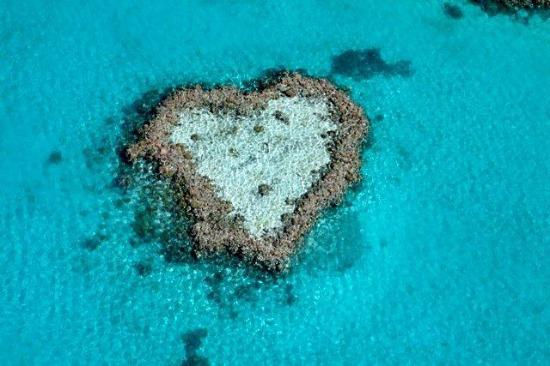
(Photo shows Heart Reef in the Whitsunday Islands)

Newer posts →

Enter your email address to follow this blog

Categories

Archives

Recent Comments

A.O.'s avatarwaltzingmorethanmati… on Zarah Zaynab and Wolfgang…
Madelyn's avatarMadelyn on Zarah Zaynab and Wolfgang…
JD's avatardrperegrine on Can Phoebe Complete This …
A.O.'s avatarwaltzingmorethanmati… on Rua and Rhoa
redrover23's avatarredrover23 on Rua and Rhoa

Blogroll

  • Appellation Mountain
  • Baby Name Pondering
  • Babynamelover's Blog
  • British Baby Names
  • Clare's Name News
  • For Real Baby Names
  • Geek Baby Names
  • Name Candy
  • Nameberry
  • Nancy's Baby Names
  • Ren's Baby Name Blog
  • Sancta Nomina
  • Swistle: Baby Names
  • The Art of Naming
  • The Baby Name Wizard
  • The Beauty of Names
  • Tulip By Any Name

RSS Feed

  • RSS - Posts

RSS Posts

  • Celebrity Baby News: Melanie Vallejo and Matt Kingston
  • Names from the TV Show “Cleverman”
  • Can Phoebe Complete This Sibset?
  • Zarah Zaynab and Wolfgang Winter
  • Baby, How Did You Get That Name?
  • Celebrity Baby News: Media Babies
  • Celebrity Baby News: Adelaide Crows Babies
  • Celebrity Baby News: Chris and Rebecca Judd
  • Names at Work: Name News From the World of Business and Employment
  • Celebrity Baby News: Sporting Round Up

Currently Popular

  • Celebrity Baby News: Jacinta Allan and Yorick Piper
  • Celebrity Baby News: Jacinta Allan and Yorick Piper
  • The Top 100 Names of the 1940s in New South Wales
  • Celebrity Baby News: Craig Thomson and Zoe Arnold
  • Celebrity Baby News: Ed Husic and Bridget Tilley

Tags

celebrity baby names celebrity sibsets english names famous namesakes fictional namesakes honouring locational names middle names name combinations name history name meaning name popularity name trends nicknames popular names saints names sibsets surname names twin sets unisex names

Blog at WordPress.com.

Privacy & Cookies: This site uses cookies. By continuing to use this website, you agree to their use.
To find out more, including how to control cookies, see here: Cookie Policy
  • Subscribe Subscribed
    • Waltzing More Than Matilda
    • Join 517 other subscribers
    • Already have a WordPress.com account? Log in now.
    • Waltzing More Than Matilda
    • Subscribe Subscribed
    • Sign up
    • Log in
    • Report this content
    • View site in Reader
    • Manage subscriptions
    • Collapse this bar
 

Loading Comments...