• About
  • Best Baby Names
  • Celebrity Baby Names
  • Celebrity Baby Names – Current
  • Celebrity Baby Names – Past
  • Featured Boys Names
  • Featured Girls Names
  • Featured Unisex Names
  • Links to Name Data
  • Waltzing on the Web

Waltzing More Than Matilda

~ Names with an Australian Bias of Democratic Temper

Waltzing More Than Matilda

Tag Archives: Scottish names

Shortened Names for Boys – 2

28 Sunday Sep 2014

Posted by A.O. in Name Themes and Lists

≈ 2 Comments

Tags

celebrity baby names, famous namesakes, fictional namesakes, Irish names, middle names, modern classic names, name history, name meaning, name popularity, names from television, names of mascots, nicknames, popular names, Scottish names, skateboarding terms, slang terms, surname names, UK name trends, underused modern classics, unisex names, US name trends

Zeke_06_s

Alby
Can be an Anglicised form of the Irish name Ailbhe, a unisex name which is also Anglicised to Alva and Elva. In Ireland particularly, Alby seems to have been used for girls quite frequently. In Australia, Alby is almost always understood as a short form of Albert, and is accepted as a boy’s name: it seems to be more familiar in Australia than in other English-speaking countries. A famous namesake is Albert “Alby” Lowerson, who was awarded the Victoria Cross for bravery during the Battle of Mont St. Quentin on the Western Front during the First World War. Adventure travel film-maker Alby Mangels, who made documentaries in the 1970s and ’80s, is originally from the Netherlands and his birth name is Albertus. Alby was fairly common as both a full name and a nickname in the late 19th century, and is currently having a revival, being around the 200s. It can also be spelled Albie, and this spelling is around the 500s.

Bobby
Pet form of Bob, which is short for Robert; it can also be used as a short form of Roberta, although far more common as a male name. Bobby has been used as an independent name since the 18th century, and is one of those names which seem part of our childhood, as it is such a popular name for characters in books for small children. There’s also the nursery rhyme, Bobby Shafto, and the sweet story of Greyfriars Bobby, the wee Scottish dog who stayed by his master’s grave for years and years. It has a fun meaning in Australia, because in old-fashioned slang, a bobby dazzler is something which is excellent or awesome (it’s probably from Northern English dialect, where bobby meant “well-presented, cheerful”). This year radio host Tim Ross welcomed a son named Bobby Arrow. A bouncy, breezy little name with vintage style, Bobby is around the 300s.

Charlie
Unisex nickname for either Charles or Charlotte. Charlie has been used as an independent name since the 17th century, and as a female name since the 18th century, where it seemed to have a particular usage for girls in Scotland. The big Scottish connection to this name is of course Bonnie Prince Charlie, the Jacobite pretender to the throne, who has remained a figure of romance in some eyes, and appears in Sir Walter Scott’s novel Waverley. It’s interesting that he seems to have inspired the use of Charlie as a girl’s name. There’s tons of famous Charlies, including actors Charlie Chaplin and Charlie Sheen, and musicians Charlie Parker and Charlie Watts, not to mention Charlie Bucket from Charlie and the Chocolate Factory, and Charlie Townsend from Charlie’s Angels. Charlie has charted for boys since the 1950s, and began rising in the 1990s before joining the Top 100 in the early 2000s. It’s currently #20, and fairly stable. As a girl’s name, Charlie joined the charts in the 1990s, and made the Top 100 in 2011. Although it’s not on the Top 100 for girls now, if you add it together with Charli and Charlee, it makes #71.

Freddie
Pet form of Fred, short for Frederick or Frederic, and related names, such as Frederico. It can also be used as a pet form of Alfred, as in the English actor Alfred “Freddie” Highmore, who played Charlie Bucket in Charlie and the Chocolate Factory. It also seems to be used as a nickname to match a surname starting with F, such as with English cricketer Andrew “Freddie” Flintoff, and rugby league player Brad “Freddy” Fittler. One of the most famous namesakes is Freddie Mercury, lead singer of rock band Queen; he was born Farrokh Bulsara, and had used the nickname Freddie since his school days. An independent name since the 18th century, Freddie is very popular in the UK, yet doesn’t chart at all here as a full name; neither does the variant spelling Freddy. It’s a bit puzzling since we’re fine with so many other boyish short forms, but Freddie is an insouciant charmer that I feel will win a few hearts yet.

Jimmy
Pet form of Jim, short for James. Jimmy has been used as an independent name since the 18th century, and is a more modern form of the medieval Jemmy. Famous namesakes include American president Jimmy Carter, actor Jimmy Stewart, rock star Jimmy Page, singer Jimmy Buffet, comedy hosts Jimmy Kimmel and Jimmy Fallon, and comedian Jimmy Carr. Musical Australian Jimmys include Jimmy Chi, who wrote the Aboriginal musical Bran Nue Day, Jimmy Barnes, lead singer of rock band Cold Chisel, and Aboriginal singer and actor Jimmy Little. Jimmy entered the charts in the 1950s at #344, and peaked in the 1990s at #233. It hit its lowest point in 2009 at #474, and since then seems to have been climbing steeply, although still around the 200s. This is a cheery underused modern classic that still has a touch of Everyboy about it.

Kit
Unisex nickname which can be short for the boy’s name Christopher, or the girl’s name Kitty (a pet form of Katherine). Kit is historically much more common for boys, and as an independent name, dates to the 18th century for both sexes. One of its most famous namesakes is American frontiersman Kit Carson, while British actor Kit Harington plays popular character Jon Snow on Game of Thrones, and British writer Kit Pedler created the Cybermen for Doctor Who. In Australia, Kit Denton was a writer and broadcaster who wrote the novel The Breaker, about Breaker Morant; he is the father of comedian and television host Andrew Denton. Media personality Chrissie Swan welcomed a son named Kit in 2011. A cute meaning is that a kit is a baby animal in many species, including rabbits and foxes, and is the name for a group of pigeons. This is a cool and casual name that works well as either a first or middle name.

Lenny
Traditionally a pet form of Leonard, although these days it is often used as a pet form of the fashionable Lennox. Some famous men named Lenny include rock singer Lenny Kravitz, and comedians Lenny Bruce and Lenny Henry. Australian namesakes include AFL star Lenny Hayes from St Kilda, who just retired this year, NRL player Lenny Magey from the North Queensland Cowboys, crime novelist Lenny Bartulin, and Len “Lenny” Pearce from Justice Crew, who was featured as a celebrity dad on the blog. There are famous Australian female Lennys too – Olympic badminton player Lenny Permana, who was born in Indonesia, and children’s author Lenny Pelling. Lenny has been chosen as a baby name by Australian celebrities AFL footballer Michael Firrito, and comedian Mick Molloy, and is used as a nickname for Lennox by radio host Ryan Fitzgerald and racing driver Jason Bright. A favourite in Australia (France is the only country where it’s more popular), Lenny is around the 100s, and could easily go Top 100.

Monty
Short for names such as Montgomery or Montague; surname names where the Mont- part is from the French for “mountain”. Monty became very well known as the nickname of Field Marshal Bernard Montgomery, who served with distinction in both world wars, but is especially famous as the decorated commander of the successful North African campaign in the Western Desert during World War II; Viscount Montgomery spent part of his childhood in Tasmania. His nickname was the inspiration for the British comedy group Monty Python, who found it amusing, and in their turn, Monty Python inspired the character of Dr Montgomery Montgomery, or Uncle Monty, a snake researcher in A Series of Unfortunate Events. Field Marshal Montgomery is rumoured to be behind the phrase the full monty, meaning “everything, the works, the whole kit and caboodle”, although it may actually refer to a complete suit from tailors Montague Burton (the phrase is familiar from the film, The Full Monty). Very much in line with British trends, Monty is around the 400s.

Ollie
Usually seen as a short form of Oliver, but could be a nickname for Olivia or Olive as well, and is sometimes used as a surname-based nickname, such as Australian composer Ian “Ollie” Olsen. Other famous Australians named Ollie include celebrity chef Ollie Gould, who was named Young Chef of the Year in 2013, and Ollie McGill, who is in the band The Cat Empire. Famous sporting namesakes include Ollie Wines, who plays for Port Adelaide in the AFL, Ollie Hoskins, who plays for the Western Force in Super Rugby, and Ollie Atkins, who used to play for the Waratahs in Super Rugby, and is currently signed with Edinburgh. Ollie has a connection with sports, because in skateboarding, an ollie is an oft-used trick where both rider and board jump into the air without the use of hands. It is named after its originator, Alan Gelfand, whose nickname is Ollie. An Australian sporting connection is Olly the Kookaburra, one of the mascots of the 2000 Sydney Olympics – his name was short for Olympic, and he symbolised the Olympic spirit. Ollie is around the 300s, and is in line with British trends, while having a strong Australian feel.

Zeke
Short for Ezekiel, a Hebrew name meaning “God strengthens”; it has more history of use in the United States, where the name Ezekiel has been far more common. It’s well known from popular culture, such as the Big Bad Wolf in Disney cartoons, skater boy Zeke Falcone from Disney sitcom Zeke and Luther, and baking-obsessed basketballer Zeke Baylor in High School Musical. Zeke is the name of the farmhand in The Wizard of Oz movie, who is also in the role the Cowardly Lion (this might explain why some people see Zeke as a “cowpoke” name). Famous Australian namesakes include former Olympic snowboarder Zeke Steggall, the brother of alpine ski champion Zali Steggall, and DJ Zeke Ugle. Zeke was also the nickname of Corporal Roy Mundine, an Indigenous soldier who served with distinction in the Vietnam War, and was severely wounded in the line of duty. Fictional namesakes include the teenage boy whose drawings on his magic electronic pad come to life on cartoon Zeke’s Pad, and the character Zeke Kinski from soap opera Neighbours. This is a cool alternative to Zack in line with American name trends, and is around the 400s.

POLL RESULTS
The public’s favourite names were Charlie, Kit and Alby, and their least favourite were Jimmy, Lenny and Bobby.

(Picture shows Zeke from Zeke’s Pad, a Canada-Australia co-produced animated TV show)

Famous Name: Bruce

17 Wednesday Sep 2014

Posted by A.O. in Famous Names

≈ 7 Comments

Tags

aristocratic surnames, classic names, famous namesakes, fictional namesakes, locational names, name history, name meaning, name popularity, names from songs, names from television, Norman-French names, popular culture, royal names, Scottish names, surname names, UK popularity, US popularity

288848_1250988033522_full

When the name Acacia was featured for Wattle Day, I mentioned that Monty Python made gentle fun of our national flower with their Bruces Sketch, where all the philosophy faculty at the (fictional) University of Woolloomooloo are named Bruce. This seems to be the origin of the notion that Bruce is a particularly Australian name.

Barry Humphries has said that the inspiration for the Bruces Sketch was his Barry Mackenzie character, who began life as a comic strip in Private Eye. Barry Humphries’ television series, The Barry Humphries Scandals, was a precursor to Monty Python, and Eric Idle has cited Humphries as one of his comedy influences.

It’s rumoured, not implausibly, that Humphries himself suggested the name Bruce as an Australian signifier, either directly or indirectly. The name Bruce peaked in Australia in the 1930s, and in Britain slightly later, in the 1940s. Even at its height in the UK, it was only around the bottom of the Top 100, so it wasn’t nearly as common there.

Humphries was born in 1934, so had peers called Bruce. The most obvious example is Australian director Bruce Beresford (born 1940), who directed the Barry Mackenzie films. Like Barry Humphries, Bruce went to England in search of career opportunities, but was unable to break into the British film industry, and found success at home, with movies like Breaker Morant and Puberty Blues, and in North America with Driving Miss Daisy, and Black Robe.

The connection between Barry and Bruce continued when Humphries took the role of a great white shark named Bruce in the animated film, Finding Nemo. The American film-makers named Bruce, primarily not as an Australian reference, but after the shark in Jaws, whose models were all called Bruce after Steven Spielberg’s lawyer. Bruce the Shark does have an Australian accent though, and uses ockerisms like “Good on ya, mate!”.

From the United States, the name Bruce gained a different stereotype, being associated with homosexuality. The reasons are unclear, but one of the most popular theories is that it’s connected to the campy Batman television shows of the 1960s, as Batman’s real name is Bruce Wayne. Another is that it is from the 1960s parody song Big Bruce, where Bruce is a camp hairdresser.

Apart from these reasons, it does seem that the “tough guy” names of one generation are often seen as effeminate, dorky, or otherwise laughable by the next. Something to think about should you be considering one of today’s rugged baby names, such as Axel, Blade, Diesel, or Rowdy.

Bruce is a Scottish surname of Norman-French origin. The Clan Bruce are from Kincardine on the Firth of Forth in Scotland, and trace their origins from the French de Brus or de Bruis, coming from Breux in Normandy (now Brix), sometimes said to mean “the willow lands”. This history and etymology is now considered doubtful, due to lack of evidence.

The first of the family on record to come to Britain was Robert de Brus, who accompanied King Henry I there after the Battle of Tinchbray in 1106. He was granted large tracts of land in Yorkshire, and named 1st Lord of Annandale by King David I of Scotland in 1124. A family legend says that the first of their line was Robert de Brus, who came over with William the Conqueror but this is more wishful thinking than fact.

Of course the most famous member of Clan Bruce was Robert the Bruce, King of the Scots from 1306 to 1329, claiming royal blood as great-great-great-great grandson of David I. One of the most famous warriors of his generation, he led Scotland during the Wars of Scottish Independence against England. He fought successfully during his reign to regain Scotland’s place as an independent nation, with a great victory at the Battle of Bannockburn. Today he is remembered in Scotland as a national hero.

According to a popular legend, while on the run from the English, Robert the Bruce took shelter in a cave. Here he whiled away the lonely hours watching a spider trying to connect one area of the cave’s roof to another using its web. Each time the spider would fail, but kept trying until at last it succeeded Inspired by the plucky little arachnid, Robert the Bruce returned to defeat the English, winning more supporters, and eventual victory. If you ever read this story as a child, it probably ended by saying the moral was :”If at first you don’t succeed, try, try, and try again”.

This story was first told by Sir Walter Scott in in his Tales of a Grandfather: Being Stories of the History of Scotland (1828), and it is believed to have been adapted from a story about Sir James Douglas, Robert the Bruce’s ally and lieutenant. However, the story is very old, being similar to Jewish tales about King David, and Persian stories about Tamerlane and an ant. Apparently people love the idea of beleaguered rulers being inspired by small creatures with exoskeletons.

Robert the Bruce was the high point of the Clan Bruce, although Robert’s son David also became King of Scotland. Various Bruces did historically worthy things, and one of the most famous is Thomas Bruce, 7th Earl of Elgin, who was ambassador to the Ottoman Empire in the 18th and 19th centuries. He spent most of his fortune taking sculptures from the Parthenon in Athens, which was falling into ruins: today they are known as the Elgin Marbles, and on display in the British Museum.

Bruce has been used as a first name since the 17th century, and was used in both England and Scotland. Although it has plenty of history, Bruce didn’t become a huge success as a boy’s name until the 20th century, which gives it a rather modern feel.

In Australia, Bruce is a classic name which has never left the charts. It was #85 in the 1900s, and peaked in the 1930s at #22. It didn’t leave the Top 100 until the 1970s – perhaps Monty Python wasn’t a help to it, or perhaps after many decades its time of popularity was up. Although uncommon, Bruce has remained stable for years around the 400-500s.

So how Australian is the name Bruce really? Well, apart from the Monty Python sketch (which is, you know, fiction), it peaked earlier here than elsewhere, and peaked much higher than in Britain. However, it peaked only a little higher than in the US, where it is also a classic, and peaked at #25 during the 1950s. Its current popularity in Australia is little different to that in the UK and US, so possibly not quite as Australian as you might have thought!

POLL RESULTS
Bruce received an approval rating of 32%. People saw the name Bruce as too dated (25%), too stereotypically ocker (19%), and too boring (14%). However, 8% of people thought it was strong and handsome. Only one person thought the name Bruce was sexy.

(Photo shows Bruce from Finding Nemo)

Boys Names From Australian Children’s Literature

24 Sunday Aug 2014

Posted by A.O. in Name Themes and Lists

≈ 10 Comments

Tags

aristocratic names, aristocratic surnames, Australian slang terms, Biblical names, classic names, colour names, english names, famous namesakes, fictional namesakes, Gaelic names, German names, germanic names, Greek names, hebrew names, Irish names, Latin names, locational names, modern classics, mythological names, name history, name meaning, name popularity, names from songs, names from television, names of businesses, nature names, nicknames, Old Gaelic names, Persian names, plant names, popular names, retro names, royal names, saints names, Scottish names, surname names, tree names, underused classics, unisex names

Cyan Magenta Yellow Black

Darius
Odo Hirsch’s Darius Bell and the Glitter Pool (2009) tells the story of the Bells, a proud family fallen on hard times; plucky youngest son Darius must save the family’s estate. (Name nerd bonus info: Odo is the older form of the German name Otto). Darius is the Latin form of Dareios, the Greek form of the Persian name Dārayavahush, meaning “holding on to goodness”. This name was traditional amongst the Persian kings, and Darius I was known as Darius the Great, as he ruled over the Achaemenid Empire at the height of its power. Darius III was defeated by Alexander the Great, and there are a number of minor princes with the name. Darius is mentioned several times in the Old Testament, so it is a Biblical name as well (nobody is sure which historical Darius it means). Although rare, this name is known in Australia from NRL star Darius Boyd, while there is also a Darius in The Hunger Games trilogy. Darius is a cool-sounding name that might appeal to a broad range of people.

Felix
Terry Denton’s first picture book was Felix and Alexander (1985), about a little boy named Alexander who gets lost, and his toy dog Felix must find him. Felix is a Latin name meaning “fortunate”. It was first given as a nickname to the Roman general and statesman Lucius Cornelius Sulla, a free translation of the Greek nickname he acquired during his military campaigns – Epaphroditos, meaning “beloved of Aphrodite”. The Roman procurator Felix is mentioned in the New Testament, although not in a positive way – he imprisoned St Paul. Felix was a favourite name amongst early Christians, and there are heaps of saints named Felix, including the 7th century Felix of Burgundy, who introduced Christianity to East Anglia, and three popes. Two Australian connections are Felix the Cat, and Australia Felix, the name given to the lush farmland of western Victoria by explorer Sir Thomas Mitchell. Felix was #172 in the 1900s, and left the charts in the 1920s. It returned in the 1980s at #396 and climbed steadily; it’s been on and off the Top 100 since 2011. It’s now #86, and was one of the fastest-rising names last year. A hip retro favourite growing in recognition.

Harley
Sleepy Harley (2011), written by Karen Treanor and illustrated by Kelly Iveson, is a picture book about a cat named Harley who tries to find a place to nap in a Perth suburb. Harley is a surname which comes from a place name meaning “hare meadow” in Old English. The de Harley family were nobles whose history can be traced before the Conquest, and Sir Robert Harley, first Earl of Oxford, was from a prominent political family. One of them, William Cavendish-Bentinck, became British Prime Minister in the 18th and 19th centuries; he was the maternal great-great-great grandfather of Queen Elizabeth. The name will remind many of Harley-Davidson motorycles, giving Harley a pretty cool image. Harley was #212 in the 1900s, and went up and down before dropping off the charts in the 1950s. It returned in the 1970s at #462, and rose before peaking at #70 in 1992. It dropped again before starting to rise in the early 2000s, and is not far out of the Top 100. You could see Harley as an underused classic – in use for many years, but never very popular. I have occasionally seen Harley on girls as well.

Jude
Me and Jeshua (1984) by award-winning author Eleanor Spence is a historical novel about the childhood of Jesus of Nazareth, as seen through the eyes of his cousin Jude. Jude is a variant of the name Judas, Greek form of the Hebrew name Judah, meaning “praised”. In the New Testament, Jude is used for the Apostle whose name was Judas, to distinguish him from Judas Iscariot. Jude is also listed in the New Testament as one of the brothers of Jesus (Eleanor Spence follows a tradition they were cousins), but it is not clear if Jude the Apostle was Jesus’ brother. The Apostle Jude is usually connected with the Apostle Simon the Zealot, and according to tradition they were both martyred in Beirut. Jude is well known as the patron saint of lost causes, and this has made him one of the most venerated saints. Contemporary associations are the actor Jude Law, and the Beatles song Hey Jude. Jude can also be used as a girl’s name, short for Judith, as in the YA novel by Maureen McCarthy, Queen Kat, Carmel, and St. Jude Get a Life (1995). This attractive name has quietly been gaining in popularity, and last year joined the Top 100 in Victoria.

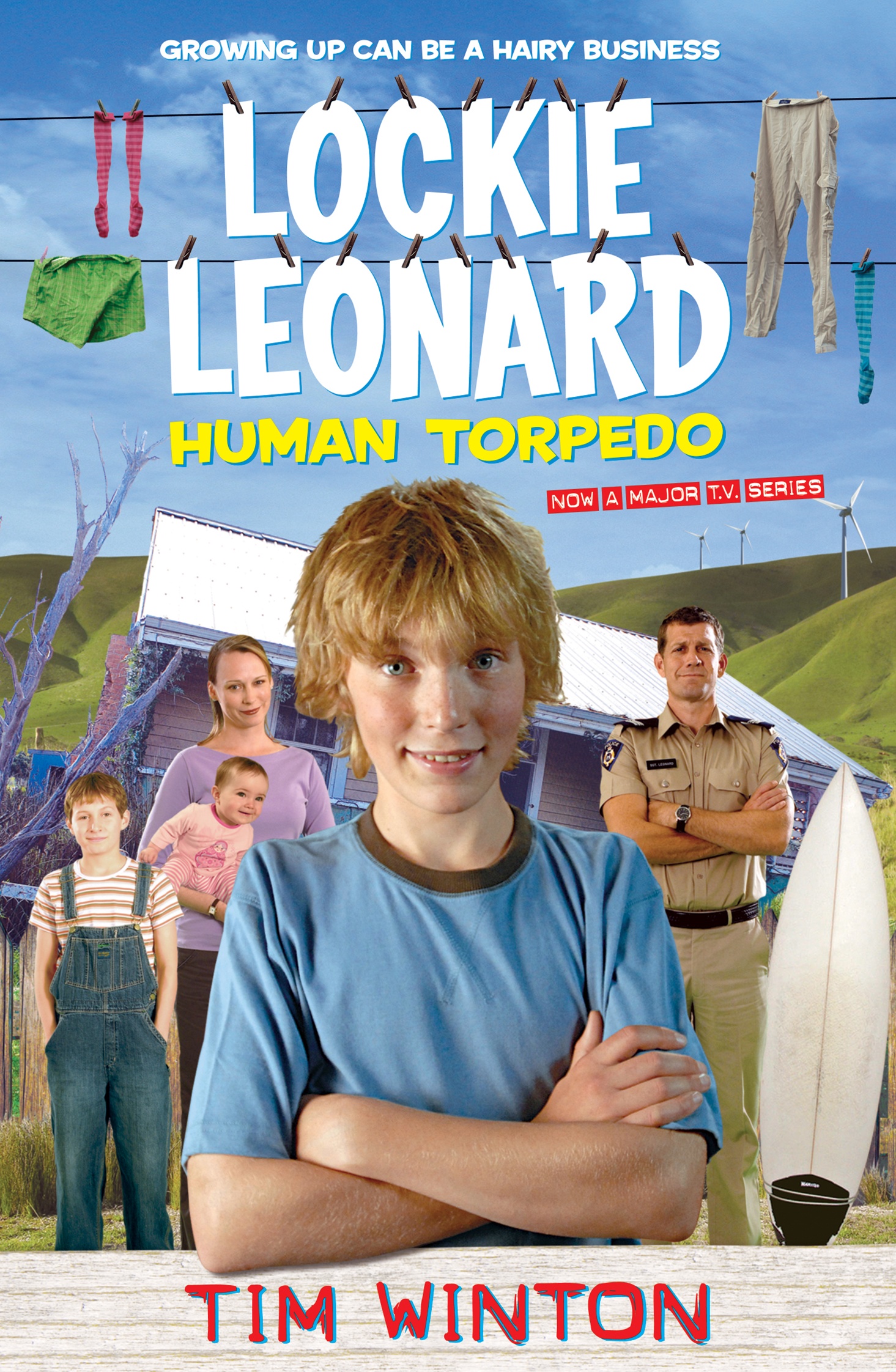
Leonard
The Lockie Leonard series by Tim Winton (1990-97) stars a surf rat named Lachlan “Lockie” Leonard who moves to the Western Australian town of Angelus (based on Albany). Leonard is a Germanic name which can be translated as “brave lion” or “brave as a lion”. St Leonard is a legendary 6th century saint, a Frankish nobleman at the court of Clovis I who could liberate prisoners from their chains when invoked. The Normans brought the name to England, although it didn’t become particularly common until the 19th century. Famous Australians with the name include distinguished chemist Leonard Lindoy, and hard-hitting post-war cricketer Leonard “Jock” Livingston, also a talented rugby league footballer. Leonard has been a popular name amongst Jews in the past, including Jock Livingston: other examples are Canadian folk singer Leonard Cohen and actor Leonard Nimoy. Leonard was #39 in the 1900s, and peaked in the 1910s at #35. It didn’t leave the Top 100 until the 1960s, and remained in steady but low use until getting a little boost after The Big Bang Theory, with main character Leonard Hofstadter, began airing in the late 2000s. Clunky cool, this underused classic provides a way to get the popular nickname Lenny.

Nathaniel
In Isobelle Carmody’s YA novel The Gathering (1993), Nathaniel Delaney is a teenager who moves to a grim seaside town and finds himself locked in a battle between the forces of Light and Dark. Nathaniel is a variant of Nathanael, the Greek form of Hebrew Netan’el, meaning “God has given”, nearly always understood as “gift of God”. In the Bible, Nathaniel is usually identified with the Apostle Bartholomew; as Bartholomew means “son of Talmai”, it is taken to be Nathaniel’s surname. Nathaniel was in use as an English name by the 16th century, and became more common after the Protestant Reformation. It was used amongst the aristocracy, and also became a favourite in America, with author Nathaniel Hawthorne a notable bearer. Nathaniel was #179 in the 1900s, and left the charts the following decade. It returned in the 1970s at #296, and climbed steadily until it reached the Top 100 last year at #79, making it one of the fastest-rising names of 2013. A handsome retro name that gives the popular nickname Nate, it’s well known from Australian actor Nathaniel Buzolic, from The Vampire Diaries, and Australian singer-songwriter Nathaniel Willemse, who was on The X-Factor.

Rafferty
The Rafferty series by Joan Woodberry (1959-62) are the adventures of an English boy named Rafferty who moves to a fishing village on the Queensland coast. Rafferty is a common Irish surname, an Anglicised form of O’Raithbheartaigh, meaning “son of Rabhartach”. The Old Gaelic personal name Rabhartach means “wielder of prosperity”. The name has a particular Australian resonance, due to iconic Australian actor John “Chips” Rafferty. He was seen as the quintessential Australian, and took part in a marketing campaign convincing British people to migrate to Australia in the 1950s – this might explain the choice of Rafferty’s name in Woodberry’s books. Another Australian reference is the slang term Rafferty’s rules, meaning “no rules at all”. It gives the name Rafferty a pleasantly raffish, lawless feel. This name is around the 200s in Australia, and although it is rising in the UK, is more popular here than anywher else. I have also begun to see a few girls named Rafferty.

Rowan
The Rowan of Rin fantasy series by Emily Rodda (1993-2003) takes place in a fictional world. Rowan is the unlikely hero, considered a bit of a wimpy weakling by the sturdy villagers of Rin, but when danger strikes, his resourcefulness and courage saves the day. Rowan is a Scottish name that’s an Anglicised form of Ruadhán, a pet form of Ruadh, Gaelic for “red”, often given as a nickname to a man with red hair. You may remember that the red-headed Scottish outlaw Raibeart “Ruadh” MacGregor is known as Rob Roy by the English. Rowan can also be unisex when named after the rowan tree; its English name comes from the Germanic for “to redden”, because of the tree’s red berries, so either way the meaning has a connection with the colour. A pleasant association with the tree is that according to folklore it has the power to ward off evil. The name Rowan has charted for boys since the 1940s, debuting at #205, and climbing until it peaked in the 1980s at #164. It’s now around the 300s-400s. Rowan is an underused modern classic which alludes to a vibrant colour, and a magical tree.

Silvander
Norman Lindsay is famous for writing and illustrating The Magic Pudding (1918), a comic fantasy deservedly recognised as a classic. For some reason, his other children’s book, The Flyaway Highway (1936), is neglected, even though it’s just as funny and fantastical. I loved this story, which relates how Egbert and Muriel Jane meet a “bloke with horns and cows’ hooves” named Silvander Dan, who take them on a journey down the Flyaway Highway. As a child, I thought that the name Silvander was made up for the book (although I’m afraid I was already junior name nerd enough to know what it meant). However, I’ve since found that Silvander was a literary name in the 18th century, and in most of the sources I’ve read, characters named Silvander are untrustworthy bounders! The name is derived from Silvanus, the Roman god of woods and fields, from the Latin silva, meaning “wood, forest”. Although an extremely rare name, it is just enough like Silas and Alexander to not be completely outrageous, and has an agreeably silvery sound. For those who like Leander and Evander, here is another to consider.

Theodore
I told myself I would not choose more than one book from a single author, but was forced to make an exception for Odo Hirsch, from whose oeuvre I could happily fill two lists. Antonio S and the Mystery of Theodore Guzman (1997) is his first novel, a charming story about a boy who lives in a grand old house, and is fascinated by a reclusive actor. (Name nerd bonus info: Odo Hirsch is the pen name of Dr David Kausman). Theodore is from the Greek name Theodorus, meaning “God’s gift”. Theodorus wasn’t uncommon in ancient times; ironically one of its famous bearers was the 4th century BC philosopher Theodorus the Atheist. Because of its meaning, the name was a popular choice for early Christians, and saints named Theodore are numerous, including a 7th century Archbishop of Canterbury and two popes. Theodore was also traditional mongst the Byzantine Emperors, and the Russian Tsars. Theodore was #116 in the 1900s, and reached its lowest point in the 1970s at #383. It began rising steeply in the 1990s, and last year joined the Queensland Top 100 at #79, making it one of the state’s highest-rising names. A sophisticated classic name which comes with cool short forms Theo and Ted, I’d call this underused except I’m not sure how long it will stay that way.

POLL RESULTS
The public’s favourite names were Theodore, Jude and Felix, and their least favourite were Leonard, Darius and Harley.

(Picture shows cover of Lockie Leonard – Human Torpedo by Tim Winton)

Famous Names: Clyde and Campbell

06 Wednesday Aug 2014

Posted by A.O. in Famous Names

≈ 2 Comments

Tags

aristocratic surnames, birth notices, dated names, famous namesakes, Gaelic names, locational names, modern classics, name history, name meaning, name popularity, names of mascots, names of rivers, Scottish names, surname names, US name popularity

6388929879_8002efc401_z

The Glasgow Commonwealth Games ended on Sunday, a very friendly games where Glasgow gave everyone a warm welcome. It was the first time England had won since 1986, and those games were also held in Scotland. In fact, it was a great Games for the British, with England, Scotland (fourth), and Wales (thirteenth) all winning more medals than they ever had before, in something of an Olympian afterglow.

At the closing ceremony, the baton was passed on to Australia, because the next Commonwealth Games will be held on the Gold Coast in April 2018. Let’s hope we’ll have better uniforms for that. Oh and by the way – it poured with rain the last few days of the Glasgow Games, but our team was warm and dry in their jumpers and anoraks, so who’s laughing now?

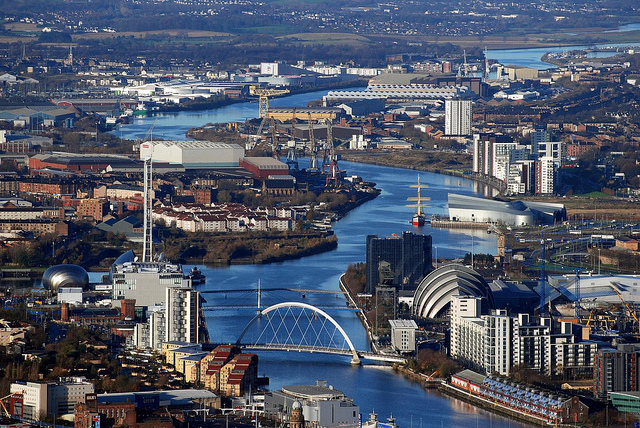
Now the Games are over for four more years, this is the end of our Scottish names. I picked the name Clyde because that was the mascot for the Glasgow Games, a cheery looking thistle named after the River Clyde, which flows through the city of Glasgow.

As an Australian reference, I picked Campbell for the Campbell sisters, Cate and Bronte, who did so well in the swimming. Between them they won five gold medals, so as many as Wales, and if they were a country they would have come fourteenth in the medal tally. They were also on the team which set a world record for the women’s freestyle relay.

Clyde is a Scottish surname, given to those who lived along the River Clyde. The Clyde is the third largest river in Scotland, and has its source in the Lowther Hills, in Scotland’s Southern Uplands. It meanders west across the country, and empties into the Firth of Clyde, the largest and deepest coastal waters of the British Isles.

The river’s Gaelic name is Chluaidh, which probably means “cleansing”. It may be related to the Latin cloaca, “sewer, drain”. Clyde has been used as a first name for boys since around the 18th century.

One of my favourite Australian Clydes is Clyde Fenton, a flying doctor in the years before WW II, who piloted his own plane as well as serving as a medical officer in the Northern Territory. Known for his kind and determinedly helpful nature, as well as his great resilience, he was famous for his daring rescues, lively escapades, and madcap pranks, which usually got him into trouble with the authorities. Although fairly indifferent to his own personal safety, he surprisingly lived into his eighties.

The name Clyde was #104 in the 1900s, when Clyde Fenton was born, and peaked in the 1910s at #96. It left the Top 100 in the 1920s, and hasn’t charted since the 1950s. Although it’s a dated name, it has never been really popular, and perhaps isn’t as tied to a particular era as you might think. Interestingly, this name just reached the Top 1000 again in the US, so seems to be having a comeback there.

The name sounds big and capable to me – perhaps because of Clydesdale horses. These Scottish horses were so important in colonial Australia they were called “the breed that built Australia”.

Campbell is a Scottish surname. The Clan Campbell are one of the largest of the Highlands clans, and became one of the most powerful families in Scotland. The Campbells had a reputation for being good soldiers and fighters, but lacking in diplomacy and cunning. The chief of the clan is the Duke of Argyll, in the Peerage of Scotland. The current Duke is Torquil Campbell, and his son and heir is Archibald Campbell, who is around ten years old – I think you will remember that Archibald is a traditional name in the Campbell family.

The name Campbell comes from Cam Beul, a Gaelic nickname meaning “crooked mouth, wry mouth”. The first person given this nickname is said to have been Dugald on Lochawe in the 12th century, who supposedly had a habit of talking out of one side of his mouth.

The name was originally Cambel, but as early as the 14th century it began to be spelled with a p, perhaps because the Norman knights at the Scottish court who were responsible for administration misunderstood it as from the Norman-French camp bello, “beautiful plain”. Campbell has been used as a (mostly male) first name since the 17th century.

Campbell began charting in the 1960s, debuting at #302. This is the decade British speed enthusiast Donald Campbell made several attempts in Australia to break land and water speed records, finally achieving success in 1964, when he broke both the land speed record on Lake Eyre in South Australia, and the water speed record on Lake Dumbleyung in Western Australia.

The popularity of the name Campbell went up steeply in the 1990s, the decade when sound-alike Cameron reached its height and began falling, and peaked in the early 2000s at #181. In New South Wales it seems to be somewhere in the 300s, but in Victoria it is around the high 100s. In the past, it has managed to be a Top 100 name in Tasmania.

It would be interesting to see how Queensland premier Campbell Newman affects the popularity of the name, since politicians generally don’t give names a boost, and Campbell Newman is extremely unpopular, according to the polls. In fact, it will be interesting to see whether he is still premier at the next Commonwealth Games. I do see Campbell quite frequently in birth notices, but not in Queensland, I must admit.

(Premier Newman was born in the 1960s, just as the name Campbell hit the charts, and a year before Donald Campbell broke the speed records in Australia, so his parents were naming trail-blazers.)

Campbell is a strong, handsome Scottish choice which has managed to become a modern classic without ever becoming popular. This makes it a desirable option for parents seeking a name that is familiar without being common.

Two Scottish surnames-as-first-names – but which one is better?

POLL RESULTS
Clyde received an approval rating of 41%, while Campbell did rather better at 59%.

(Picture shows the River Clyde in Glasgow, taken from the air)

Famous Name: Fiona

30 Wednesday Jul 2014

Posted by A.O. in Famous Names

≈ 6 Comments

Tags

baby name books, created names, famous nameksakes, Gaelic names, Irish names, literary names, modern classic names, name history, name meaning, name popularity, names from films, names of personifications, pen names, pseudonyms, Scottish names

2014ARC_Lowry.jpg.496x605_q85

The Archibald Prize this year was won by Fiona Lowry, for her portrait of architect Penelope Seidler. The Art Gallery of NSW trustees, who are the judges of the Archibald, seemed to avoid controversy this year by awarding the $75 000 prize to an overwhelming favourite.

Fiona first saw Penelope Seidler six years ago at a gallery opening, and was struck by her beauty and presence; she decided then that she would like to paint her. The portrait was begun at Penelope’s home, Killara House, a heritage-listed Sydney icon which she designed with her husband, the famous modernist architect Harry Seidler.

Fiona’s paintings are made with an airbrush and a limited range of soft pastel colours, creating an often unsettling atmosphere seen through a fine mist. I can’t help thinking that Clarice Beckett would give a wry smile … and that once again, Penelope proves a winner!

The name Fiona was created by the 18th century Scottish poet James McPherson, and first used in his famous Ossian poems, which were a great influence on the Romantic movement, and instigator of the Gaelic revival. MacPherson pretended his poems were “translations” of ancient Gaelic poems, but could never produce the originals, and it is now agreed that while he based them on old ballads, many of the stories and characters are from his imagination.

In the Fingal section of the Ossian poems, MacPherson wrote: Let the sons of Fiona rise, on the lone plains of her lovely Ardan. Fiona is a not a person, but a feminine personification, like Erin or Brittania, or Lady Liberty. But a personification of what?

You may recall that the Irish hero Finn McCool’s warriors were called the Fianna. Although that looks as it means “Finn’s men”, fiann means “soldier, warrior, hero” in Old Irish, and fianna is its plural. Fianna can thus be translated as “war band”. Although the Fianna come from mythology, it is believed that such bands did exist in medieval Ireland; young men and women of the nobility who had not yet come into their inheritance and had no lands of their own.

Fiona is James MacPherson’s transcription of Fianna, which he may have written to make it look as if it was derived from Fionn, or Finn, meaning “fair, white”, in order to give his Fingal the status of the great Irish hero Finn McCool. You might see MacPherson’s “Fiona” as a personification of Celtic pride, independence, and fighting spirit.

Baby name books often try to claim Fiona as a feminine form of Finn or Fionn, but in medieval Gaelic, adding an -a to a name did not make it feminine. Instead -nat or –sech were used, so the feminine forms of Finn are Finnat and Finnsech (genuine medieval names). Just to confuse things, Fíona is a modern Irish name meaning “wine”. Although some people take Fiona as an Anglicisation of Fíona, it’s more that an Irish meaning was found for an existing name.

Fiona was used as a pseudonym by the Scottish writer William Sharp. Although already a distinguished poet, biographer, and literary editor, he chose to sometimes write romantic novels and poetry as Fiona McLeod – which he feared would not be accepted if it was known he was the author. William Sharp edited the Ossian poems, which is most likely where he found the name Fiona.

William Sharp had a love affair with a woman named Edith Wingate Rinder, and it was those works inspired by his passion for Edith that he attributed to “Fiona McLeod”. The poetry he wrote under the influence of this inspiration is considered his greatest work, and the Fiona McLeod novels proved so popular that they brought him financial success. You could say that “Fiona” was the name William gave his feminine side, and tapping into it unleashed a wave of creativity.

The secret of William Sharp’s dual identity only became publicly known after his death, when his wife revealed that her husband was the author of all works by Fiona McLeod. It was after Fiona McLeod became a popular novelist that the name Fiona became well known, so while James MacPherson may have created it, it was another Scottish writer who spread its use.

Fiona first charted in Australia in the 1950s, making an impressive début at just outside the Top 100 at #105. The reason for its sudden appearance on the charts is the 1954 film Brigadoon, based on the Broadway musical of the same name. It’s about two American men who are hunting in Scotland when they happen upon a miraculous village which rises out of the mists every hundred years for just one day. One of the men falls in love with a girl from the village named Fiona Campbell (Fiona McLaren in the original musical), played in the film by Cyd Charisse. The magic and romance of the story were clearly a hit with Australian audiences.

By 1960, Fiona was #57, by 1961 it was in the Top 50 at #47, and by 1967 it had just scraped into the Top 20. Fiona reached its peak in 1970 at #14, and was last in the Top 100 in 1986. A famous fictional Fiona during the 1970s was matriarch Fiona Cleary, from Colleen McCullough’s The Thorn Birds, although by this time the name was falling in popularity.

If you judge the name Fiona purely as a name nerd, you must admit it has some black marks against it. It’s a “made up” name, and furthermore, not even a name made up for a character – it’s basically the Khaleesi of the 18th century. It was popularised by a man pretending to be a woman, in part to obscure an extra-marital affair. It’s not the most promising name history of all time.

Fiona leapt into the charts out of nowhere due to popular culture – a musical film which was a box office success, but received lukewarm reviews. It was a “trendy” name that climbed in popularity very suddenly, then sank again at almost the same rate. It’s a “dated” name, in that it is dated to a particular era – you can be almost sure that someone named Fiona was born somewhere between Brigadoon and The Thorn Birds 1983 mini-series, and most likely between the late 1960s and mid-1970s (Fiona Lowry was born in 1974).

But isn’t it tiresome to always judge names through the lens of nerdism? Because in spite of all this, I think Fiona remains a pretty, delicate name with a fascinating literary history. It has a romance to it – a name created by a poet who changed the face of literature, made well known by a writer who had a talent he never knew existed until he fell in love, brought to popularity through a miraculous love affair.

I like the fact that such a gentle-sounding name has a war-like meaning; it’s a warrior princess of a name. Despite being dated, Fiona doesn’t sound particularly dated – it even has a fashionable OH sound in the middle. There are tons of Fionas in current popular culture, including Princess Fiona, the feisty green ogress from Shrek.

If you love the name Fiona, take heart – it is no longer plummeting in popularity, but relatively stable around the 300-400s, and can claim modern classic status. Furthermore, in the United States, which is much slower to appreciate British (especially Scottish) names, Fiona only began charting in the 1990s and has been gradually climbing ever since.

I have a family member who is a massive fan of the Shrek movies, and especially of Princess Fiona. Sometimes I think I will be a grandmother to a little Fiona, and the idea doesn’t displease me at all.

POLL RESULTS
Fiona received a very good approval rating of 72%. People saw the name Fiona as strong and feisty (23%), and beautiful or pretty (19%). However, 16% of people considered it too dated to be a baby name. The association with Shrek didn’t seem to be an issue, with twice as many people (10%), thinking it was a cool association than a problematic one (5%). Only one person thought the name Fiona was “too made up”.

(Painting is Penelope Seidler by Fiona Lowry)

Waltzing with … Archibald

27 Sunday Jul 2014

Posted by A.O. in Waltzing with ...

≈ 11 Comments

Tags

adult name changes, aristocratic names, famous namesakes, Gaelic names, germanic names, honouring, name popularity, name trends, names of awards, nicknames, retro names, Scottish names

resize

The Commonwealth Games opened in Glasgow on July 23, so the blog is featuring a few Scottish names; today it’s Archibald. Everyone is talking about the cute Scottish terriers in tartan coats who stole the show at the Commonwealth Games Opening Ceremony, each one of them leading in a national team. I think it was a moment where we all went Awwwww ….

The Scottie dogs were perhaps the only ones whose outfits were not scrutinised, because everyone wants to see whose team uniforms are the best, and worst. Australia traditionally fails dismally in the fashion stakes, and this year we were true to form, sending our team in unpopular outfits which were criticised as looking like something home-made for a Star Trek convention.

I presume the Games Committee sent everyone a cover letter to let them know that Glasgow summers are usually mild, and can have the odd wet day. The Australian designer seems to have understood that as code for “you are entering a polar hell with perpetual torrents of rain”, as everyone was sent equipped with anoraks, woolly jumpers, scarves, snow hats, and who knows what else. As Glasgow is currently in a heatwave, this has led to well-deserved international derision.

But like good hosts, Scotland has saved us from being the worst-dressed team by tactfully showing up in a lurid tartan mixture of bright blue, turquoise, fuschia, navy, caramel and mustard. Thanks Scotland – now our green anoraks with lemon piping, lumpy lime green jumpers, and baggy pants are only second place for ugliest uniform.

The Games have got off to a good start for Australia – we’re currently on top of the medal table by a whisker, we’ve set several world records, and two of the Hockeyroos took a selfie with the queen in the background, and it went viral, so our horrible uniforms haven’t held us back.

Archibald comes from the Germanic elements ercan (“genuine”) and bald (“bold”), and usually translated as “truly bold”. The first part of it was altered to make it seem as if it was derived from Greek archos, meaning “master”.

The Normans introduced the name to Britain, and it quickly became popular in Scotland, where it was used to Anglicise the Gaelic name Gille Easbuig, meaning “servant of the bishop” (it’s also Anglicised to Gillespie). Archibald is a traditional name in the Clan Campbell, as their founder was named Gille Easbuig.

As you would expect, there are quite a few Archibalds in Scottish history, including the fearsome-sounding Archibald the Grim, a 14th century Earl of Douglas and Lord of Galloway. The most powerful magnate in Scotland, he stood in higher stead even than the king. Because of him, the name Archibald became traditional in the Douglas family as well.

The name Archibald is well known in Australia due to the Archibald Prize, which is awarded for portrait painting. It was founded in 1921 from a bequest from J.F. Archibald, the co-owner and editor of The Bulletin in the days of its greatest influence.

J.F. Archibald was an interesting character from a naming perspective – he was baptised John Feltham Archibald, but changed his name to Jules Francois (pronounced FRANK-wa). This was considered rather pretentious, and everyone just called him “Archie”. He also professed to be Scottish, part-French, and Jewish, when he was actually Irish Catholic, which likewise afforded his peers great amusement.

The Archibald Prize is known as “the face that stops the nation”, as it is Australia’s favourite art award. It’s very accessible, especially as many of the portraits are of celebrities, and gets a lot of coverage in the media. Many people are interested to know who wins the Archibald, and generally there is widespread criticism or condemnation for whoever the judges choose. Indeed, the Archibald has been almost continuously controversial, with several protests, disputes, and legal actions throughout its history.

The Archibald Prize also offers two categories that are judged by non-experts: the People’s Choice Award voted by the viewing public, and the Packing Room Prize, awarded by the staff who install the portraits in the gallery. These prizes are more likely to be awarded to portraits of celebrities. It is possible to win the main prize and the other categories, but that rarely happens, and nobody has ever won all three at once.

The Archibald is so famous that it has inspired two parallel art institutions. One of them is the Salon des Refusés (Salon of Rejects – shades of J.F. Archibald!), an exhibition showing works which have been rejected for the Archibald. The prize for this is a People’s Choice Award.

The other is the Bald Archy Prize, a spoof art competition for satirical portraits; the winner is supposedly chosen by a sulphur-crested cockatoo named Maude. Absurdist and irreverent, you can see the appeal to the Australian sense of humour; it’s an extremely popular art award, and heaps of fun. This year’s winner was a portrait of Mitchell Johnson in the guise of Miley Cyrus’ Wrecking Ball – a cheeky comment on his devastating performance in the Ashes.

The name Archibald was #57 in the 1900s, and left the Top 100 in the 1920s; it left the charts in the 1950s. However, since the late 2000s, Archibald has made a slight comeback, and managed to chart several times around the 400-500s. In 2010, there were 11 babies named Archibald in New South Wales, and in 2012, there were 7 babies named Archibald born in Victoria.

The reason for this mild revival? The short form Archie, which has been Top 100 since 2007, and is rising in popularity. If you want a long form for Archie, and you think Archer is too popular or too trendy or too modern or too surnamey, that pretty much leaves Archibald.

Once upon a time, Archibald was perhaps rather fusty – a great-grandfather name smelling strongly of mothballs. But with the revival of vintage names, discerning parents may think it’s time for it to be taken out of storage.

And why not? Archibald is a clunky yet strong name with a long history, and has an aristocratic image. It makes a great Scottish heritage choice, and also references one of Australia’s favourite cultural institutions. Honouring an Archibald in your family has never seemed so possible.

Archibald would look dignified on a CV, and even a possible future knighthood makes Sir Archibald rather pleasing. Yet what could be friendlier and more democratic than simple Archie or Archy for everyday use?

POLL RESULT
Archibald received an approval rating of 53%. 24% of people disliked the name, and a further 24% hated it. However, 20% of people loved the name.

(Photo of Scottish terrier at the Commonwealth Games opening ceremony from the Daily Record)

Requested Famous Name: Annabelle

23 Wednesday Jul 2014

Posted by A.O. in Famous Names, Requested Names

≈ 3 Comments

Tags

aristocratic names, famous namesakes, honouring, Latin names, modern classic names, name history, name meaning, name popularity, name trends, names of boats, popular names, portmanteau names, Scottish names, UK name popularity, US name popularity

Annabelle_Rankin

Famous Namesake
On July 28, it will be the 106th birthday of pioneering stateswoman Dame Annabelle Rankin, who was the first woman from Queensland to sit in the Parliament of Australia, the second female Australian Senator, and second female parliamentarian for the Liberal Party.

Annabelle was the daughter of Colin Rankin, a Scottish-born Queensland politician who served in both the Boer War and First World War; Annabelle was named after her mother. Her father encouraged her to travel, and when she left school, she went to China, Japan, England, Scotland, and continental Europe. With a background in community involvement, she worked in the slums of London, and with refugees from the Spanish Civil War.

Back in Australia, Annabelle was a volunteer during World War II, serving at air raid shelters and hospitals, and organised the YWCA’s welfare efforts for servicewomen. Her responsibilities involved travelling to military bases in Queensland and New South Wales, and she accompanied Eleanor Roosevelt, First Lady of the United States of America, and Lady Gowrie, wife of the governor-general, on their visits to the troops.

After the war, she stood as a candidate for the Liberal-Country Party, and entered the Senate on July 1 1947. Annabelle was the first woman in the British Commonwealth to be appointed as an opposition whip, and was the whip in the Senate from 1951 to 1966.

Dame Annabelle was appointed Minister for Housing in 1966, becoming the first woman in Australia to administer a government department. As minister, she worked to provide housing for old age pensioners, and introduced a housing system for Aboriginal Australians and new migrants. As a newspaper of the time helpfully noted: “She tackles men’s problems too”.

After retiring from parliament in 1971, Dame Annabelle was appointed high commissioner to New Zealand – the first woman in Australian to lead a diplomatic mission. She supported several community organisations, including the Australian Red Cross Society, Country Women’s Association, Girl Guides, Victoria League, and Royal Commonwealth Society.

She was for many years the President of the Queensland branch of the Children’s Book Council of Australia, and the Dame Annabelle Rankin Award for services to children’s literature in Queensland is given in her honour. Another of her namesakes is the Annabelle Rankin, one of the ferries on Sydney Harbour.

Dame Annabelle was easily recognisable from her auburn hair and warm brown eyes, and combined a cheerful, friendly demeanour with a strong, uncompromising will, and apparently tireless energy. She was an excellent orator, and very capable of handling the occasional heckler (by no means were all the hecklers male, either).

While researching the name Annabelle, I noticed quite a few people seemed to think that the name Annabelle sounded “unprofessional”, and predicted that a woman named Annabelle could never be taken seriously in public life. If nothing else, the career of Annabelle Rankin proves this to be completely untrue.

Name Information
Annabelle is a variant of the name Annabel, which originated in Scotland during the Middle Ages. Although it is sometimes treated as a cross between Anna and Belle, this isn’t plausible as it pre-dates the common use of the name Anna in Scotland.

It’s assumed to be a variant of the Latin name Amabel, meaning “lovable” – the long form of Mabel, and close relation to familiar Amy. It may have been influenced by the name Agnes (“pure”), which was said (and often spelled) Annas at that time.

The Annabelle spelling probably has been influenced by Anna and Belle in the modern era, and is often understood as meaning “graceful and beautiful”. Although this isn’t very good etymology, the name is a bit of a hodge-podge, and you might feel free to translate it as you wish.

The names Annabel and Annabelle have long been favourites with the British peerage, both English and Scottish, which gives them a rather aristocratic air. I tend to feel that Annabel is a bit more “posh”, while others may think that the Frenchified Annabelle seems more stylish and “finished”.

Annabelle has charted in Australia since the 1970s, when it debuted at #580. Since the 1980s it has risen steeply, and it entered the Top 100 in 2000, at #92. It entered the Top 50 in 2007, when it reached #46, and although it wobbled a little here and there, it is now at the highest point it has ever been.

Currently it is #44 nationally, #35 in New South Wales, #50 in Victoria, #43 in Queensland, #47 in Western Australia, #61 in Tasmania, and #36 in the Australian Capital Territory.

Annabelle is also Top 100 and climbing in the US and the UK, but is more popular here than anywhere else, making Annabelle one of those unexpectedly Australian names. Annabelle is also Top 100 in New Zealand, but isn’t rising in popularity.

Annabel has charted in Australia since the 1960s, entering the rankings at #420, but while it also rose steeply during the 1980s, hasn’t become popular, and is still in the 100s. Annabel is only just outside the Top 100 in the UK, but is stable rather than rising, which is probably similar to the situation here. In the US, it is rising steeply, but only in the high 400s, so a long way off popularity.

Annabelle is a pretty, elegant, ultra-feminine name that’s well on its way to becoming a modern classic (while Annabel is already there). It fits in so smoothly with the trend for -belle and -bella names that it’s become quite popular, and may become more so.

Although it wasn’t originally linked to the names Anna and Belle, it might be used to honour people with those names, or similar names. Possible short forms abound, but all the the Annabelles I’ve ever met have only used their full name – it strikes me as one of those relatively long names that are somewhat nickname-resistant. There’s plenty to love about adorable Annabelle!

Thank you to Brooke for suggesting the name Annabelle to be featured on Waltzing More Than Matilda

POLL RESULTS
Annabelle received an approval rating of 62%. 20% of people preferred the name Annabel, but 16% thought Annabelle was beautiful and feminine. Only person thought the name Annabelle was too popular. I wonder if Annabel would have done better – perhaps we will feature it another time.

(Photo is of Dame Annabelle Rankin)

Perth Suburbs That Could Be Used As Boys Names

20 Sunday Jul 2014

Posted by A.O. in Name Themes and Lists

≈ 4 Comments

Tags

animal names, aristocratic names, aristocratic titles, Australian slang terms, Biblical names, bird names, birth notices, British names, car names, celebrity baby names, Celtic names, english names, famous namesakes, fictional namesakes, Gaelic names, germanic names, hebrew names, historical records, Latin names, locational names, middle names, mythological names, name history, name meaning, name popularity, names from television, names of boats, nature names, nicknames, Puritan names, saints names, Scottish names, surname names, unisex names, US name popularity, US name trends

2725210-01

Ashby
Ashby is a residential northern suburb, first developed in the late 1990s. It is named after the original landowner, Mr E.E. Ashby, who lived here before World War I. Ashby is a surname which means “farm among the ash trees” in a mixture of Old English and Old Norse; it is more common in Lincolnshire, Leicestershire and the East Midlands, which have a history of Scandinavian influence. Ashby has been used as a name for boys since the 17th century, and seems to have been especially popular amongst Puritan families. The town of Ashby-de-la-Zouch in Leicestershire was an important centre for Puritan preaching and education, which may be an inspiration for the name. Ashby isn’t rare in Australian records, although more common as a middle name, and has occasionally been given to girls. I saw this is a boy’s middle name in a birth notice, and thought this might make an appealing Ash- name for boys, which seems more obviously masculine than Ashley. Unfortunately, it could easily be confused with Ashley too.

Bentley
Bentley is 8 km south of the city, and is the location of the main campus of Curtin University. The area has been settled since 1830, and was developed in the post-war period with government housing, including homes for returned servicemen. Today Bentley is very varied: it has a light industrial area, but part of it is still used for grazing. The suburb is named after John Bentley, a veteran of the Crimean War who arrived in the Swan River Colony as a pensioner guard, and supervised convicts building what is now the Albany Highway. Bentley is a surname after the common English place name, meaning “bent-grass meadow”; bent-grass refers to rushes or reeds. Bentley has been used as a boy’s name since the 17th century, and has recently leaped up the charts in the United States to become a Top 100 name. Its jump in popularity is attributed to a baby named Bentley on reality show 16 and Pregnant. In Australia, Bentley is around the high 100s, which is still a lot more popular than it is in the UK. People often connect the name to the luxury car company, founded in 1919 by W.O. Bentley.

Bertram
Bertram is a new suburb of the City of Kwinana, in Perth’s south (for more information, see Leda in Perth Suburbs That Could Be Used As Girls Names). It is named after an assisted migrant from the 1920s, who came here under the group settlement scheme. Bertram is a Germanic name which means “bright raven”; it was introduced to Britain by the Normans. A famous Australian namesake is Sir Bertram Stevens, who was Premier of New South Wales in the years before the Second World War. Bertram has been quite a popular name in fiction, including the main character of Shakespeare’s All’s Well That Ends Well. Unfortunately, Bertram is not, on the face of it, a very sympathetic character, although he gets his regulation happy ending anyway. Another fictional Bertram is Bertie Wooster, from P.G. Wodehouse’s Jeeves books; a good-natured idler, this Bertram is not without charm, although perhaps not the most sturdy namesake. The short form Bertie would be very cute though.

Carlisle
Carlisle is south of the CBD, and close enough to offer views of the city. Originally farmland, it was developed in the late 19th century, and is a fairly typical older suburb. The name Carlisle was chosen by the suburb’s ratepayers, who called it after the northern English city of Carlisle in Cumbria. Their logic was that just as Cumbrian Carlisle is famously near the border between England and Scotland, so was Australian Carlisle right on the border between the city of Perth and its suburbs. However, it is interesting to note that one of the landowners at the time was named Carlisle; it is possible his surname put the idea in the ratepayers’ minds. Carlisle is an ancient city which was one of the most heavily fortified towns of pre-Roman Briton: its name means “stronghold of the god Lugus”. Lugus was one of the most prominent of the Celtic gods, and the Romans identified him with Mercury, as he was known as a god of trade and skill. Carlisle has been used as a boy’s name since the 18th century, and was originally used most often in Cumbria. It has recently received some interest since the name was chosen for one of the more sympathetic vampires in the Twilight series.

Falcon
Falcon is one of the suburbs of Mandurah, a coastal city 45 km from Perth, within the metropolitan area. It is popular with tourists and retirees, making it the least affordable city in Australia. Falcon has a number of beaches, and is named after Falcon Bay, which is pronounced FAWL-kin, rather than FAL-kin – an earlier English pronunciation of the word. Falcon was a yacht whose crew won a silver medal at the 1956 Olympics in Melbourne, and many of Falcon’s streets are named for yachts. Falcon has been used as a boy’s name since medieval times – there is even an obscure St. Falcon, and Falcon was the middle name of Antarctic explorer Robert Scott. The name may be from the Latin Falco, meaning “falcon”, or derived from the Germanic name Fulco, meaning “people”. I did find a few Falcons born in Australia, and for some reason they were nearly all South Australian. In Australia, this name will remind people strongly of the car, the Ford Falcon, and perhaps also the slang term in rugby league for being accidentally hit in the head by the ball. I’m not sure whether the pronunciation will make any difference.

Murdoch
Murdoch is in the south, and the home of Murdoch University. The university is named in honour of Sir Walter Murdoch, a former chancellor of the University of Western Australia, and its founding Professor of English. Sir Walter was a essayist famous for his wit and intelligence, and an active proponent of international peace and justice, political freedom, women’s rights, and affordable childcare. His great-nephew is the media mogul Rupert Murdoch. The surname Murdoch is the Anglicised form of two Gaelic personal names that became conflated with one another, and were written as Muireadhach. One name was Muiredach, meaning “mariner”, and the other was Murchad, meaning “sea warrior”. Muireadhach was a traditional name amongst the Earls of Monteith, and Murdoch has seen particular use in their seat of Perthshire. Murdoch is commonly found in Australian records amongst Scottish families, but although we have enthusiastically embraced Lachlan, Murdoch has been less successful. Fun fact: Murdoch was an early name crush for a particular Australian blogger, which makes you wonder if this could have been a contender without the prominent Murdoch family.

Samson
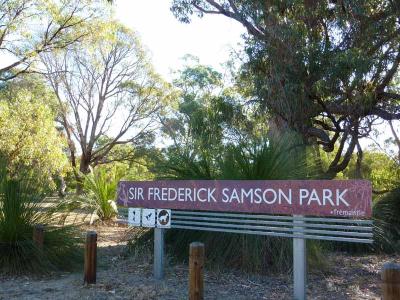
Samson is a small suburb of Fremantle, a southern port city in the Perth metropolitan area. The suburb was only developed in the 1970s, as before this it had belonged to the army, and was a military camp during World War II. The suburb is named after the Samson family, who have been prominent in the Fremantle area for nearly two centuries. Sir Frederick Samson was mayor of Fremantle for twenty years, from the 1950s to the 1970s, and his home, Samson House, is one of Fremantle’s landmarks. The suburb of Samson contains Sir Frederick Samson Park, Fremantle’s only bush reserve. Sir Frederick was the grandson of Lionel Samson, a wealthy Jewish merchant who settled in the Swan River Colony in 1829 and became one of its most successful pioneers. Popular for his charm and wit, respected for his integrity, the business he founded is still run by the Samson family, making it Western Australia’s oldest family business. Samson is one of the most famous characters in the Old Testament, a judge of the Israelites known for his superhuman strength. His name is from the Hebrew for “man of the sun”, leading some scholars to suspect he was originally a sun god, or demi-god. Samson was in use as an English name during the Middle Ages, and there is a Welsh St Samson, one of the Apostles of Brittany. This is a very masculine name which provides another way to get the popular short form Sam.

Sawyer
Sawyers Valley is on the eastern fringe of Perth’s outer suburbs, and 40 km from the city. Its name came about because it was originally a saw mill and timber processing area. It’s now a semi-rural suburb in the bush-covered hills surrounding Perth. Sawyer is an occupational surname for someone who sawed wood for a living – and in the days when most things were made of wood, an important trade. Sawyer has been used as a personal name since the 17th century, mostly as a male name. In Australian records, I can only find it as a man’s first name, although not unusual as a female middle name. Sawyer doesn’t chart in Australia, but has been in the US Top since 1991; it had a huge jump up the charts after Steven Spielberg chose the name for his son in 1992. In America, it is a unisex name, but more common for boys. Although it is in rare use here, I have seen it a few times, on both sexes. Its most famous namesake is Tom Sawyer, the young scamp from the stories by Mark Twain, while it has also been alias for Josh Holloway’s character on Lost.

Stirling
Stirling is a residential suburb 10 km north of the city. The area has a multicultural history, because in the 1920s it attracted retired Chinese miners from the goldfields, returned servicemen from the First World War, and many Italian migrant. It became a successful market gardening region producing almost every vegetable possible, some for export. Even after development in the 1960s and ’70s, the suburb remains one of Perth’s most ethnically diverse, with a third of the population having Italian heritage, and many from Macedonian, Greek and Asian backgrounds. The suburb is named after James Stirling, who was the first governor of Western Australia, and who lobbied for a colony to be founded on the Swan River. Stirling is a Scottish Clan name which comes from the city of that name in central Scotland; it is known as the “Gateway to the Highlands”. The meaning of its name is not known, although folk etymology says that it is from the Gaelic for “place of battle”. Another theory is that it is British, and means “dwelling place of Melyn”; the name Melyn is said to mean “yellow-skinned, sallow-skinned”. Stirling has been used as a boy’s name since the 18th century, and was first used this way in Stirlingshire. I have seen this name quite a few times in birth notices, and it’s one with a great deal of dignity.

Warwick
Warwick is in the northern suburbs of Perth, and a large section of it is still native bushland. It originally belonged to a railway company, and is named after Warwick Road, the major road which goes through it, and pre-dates the suburb’s development. It may have been inspired by Warwick Road in London. The name Warwick comes from the English city of Warwick in the Midlands; its name means “dwellings by the weir” in Old English, as the River Avon flows through it. It’s pronounced WOR-ik. The Earl of Warwick is one of the most prestigious titles in the British peerage, and Guy of Warwick a legendary English hero, which may help explain why Warwick has been used as a boy’s name since at least the 16th century. However, it seems to have originated in Devon, in the seat of a family named Warwick who belonged to the minor nobility. Warwick first charted in the 1910s at #203, joining the Top 100 in the 1940s, where it peaked at #80. It left the Top 100 in the 1960s, and hasn’t charted since the 1990s. Famous Australians with this name include the racing driver Warwick Brown, and flamboyant former AFL star, Warwick Capper.

POLL RESULTS
The public’s favourite names were Sawyer, Samson and Ashby, and their least favourite were Stirling, Warwick and Murdoch.

(Photo shows the entrance to Sir Frederick Samson Park, in Samson)

Waltzing with … Forrest

18 Sunday May 2014

Posted by A.O. in Waltzing with ...

≈ 3 Comments

Tags

english names, famous namesakes, fictional namesakes, name history, name meaning, nature names, rare names, Scottish names, surname names

OLYMPUS DIGITAL CAMERA

The name Forrest has been so often in the newspapers lately that I thought it must be time to cover it. The reason it’s in the papers is because of mining magnate Andrew “Twiggy” Forrest, the 9th richest person in the country, with a fortune of $3.66 billion.

The head of the Fortescue Metals Group, Andrew has recently bought massive pastoral holdings in the Pilbara, making him one of Western Australia’s biggest landowners. He also recently bought Harvey Beef, the biggest beef exporter in Western Australia, and the only one which exports to China.

Andrew is a prominent philanthropist; he and his wife Nicola are the first Australians to pledge half their wealth to charity while living. He has made large contributions to Indigenous employment, charities for children and the homeless, disaster relief, and his alma mater Hale School – the oldest private boy’s school in Western Australia, whose Forrest Library is named in Andrew’s honour.

Last October, Andrew announced he would donate $65 million towards higher education in Western Australia – one of the nation’s highest philanthropic donations. He has also become known for his fight against modern slavery, launching a global campaign with the support of the Pope, Archbishop of Canterbury, and Grand Imam of al-Azhar.

Andrew likes to be seen as apolitical, but has friends on both sides of politics, and has made donations to the WA Labor Party. He has also been vehement in his opposition to the mining tax, and urged the Federal Government to strip welfare payments from teenagers if they are not in school, work, or training. This week’s budget demonstrated the power of his political influence.

Andrew Forrest is the great-great nephew of Sir John Forrest, an explorer and who became the first premier of Western Australia; he was the first professional politician in Western Australia and never lost an election. Sir John has many sites named after him, including John Forrest National Park, Western Australia’s oldest national park. This must be a rare example of a forested area named after someone named Forrest.

John’s brother Alexander was also an explorer and politician, with significant investments in land and mining. Their brother David was Andrew Forrest’s great-grandfather. David was the first manager of Minderoo Station in the Pilbara, which was bought by the Forrest brothers in 1878, and owned by them until it was sold by Andrew’s father Donald in 1998 due to drought and debt. Andrew, who had once worked as a jackaroo at the station, bought back the family property in 2009.

Forrest is a surname which is easy to translate, as it comes from the Old French word forest. Today we might see Forest as a tranquil nature name, perhaps even slightly hippy. In a time when national forests are protected, they seem a haven where we can all enjoy their natural beauty.

However, the original meaning of forest in Norman England was quite different. The word referred to large tracts of heath and woodland reserved for the sole use of the king and, by invitation, the aristocracy. At the height of afforestation in the Middle Ages, a third of southern England was set aside, with a certain amount of ordinary people getting booted out of their homes to make way for these forests.

Forests were not for communing with nature and tree-hugging, they were for royals and nobles to hunt wild animals, and there could be harsh penalties for anyone else who entered them, especially if they were there to poach game. The word forest comes from the Latin for “outside” – not because forests are outdoors, but because they were outside the laws of the land, and the law offered you no protection if you were caught in one. That’s why outlaws (such as fictional Robin Hood) lived in the forest, and why they were taking such a daring risk in doing so.

The surname Forrest would have been held by someone who lived near a royal forest, or someone who worked in one, perhaps as a gamekeeper or warden (a lot of security staff was needed to protect the game). Although widely used in Britain, the surname became particularly associated with Scotland because of the Clan Forrester, which originated in the Edinburgh region. Sir John Forrests’ parents were emigrants from Scotland, who came to Australia as servants of a prominent colonial physician.

Forrest has been used as a first name as early as the 16th century, and originated in England rather than Scotland. It has been most used in the United States, but the name isn’t uncommon in Australian records, and Forrests from Western Australia may have been named after (or been part of) the famous Forrest family.

The most famous fictional Forrest is surely Forrest Gump, from the book and movie of the same name. In the story, Gump is named after his ancestor Nathan Bedford Forrest, a popular yet highly controversial Confederate General who was accused of war crimes and became one of the early members of the Ku Klux Klan. Unlike his rather wily and unscrupulous ancestor, Forrest Gump is naive and good-hearted.

Forrest has never charted in Australia, but its meaning and history almost make it seem traditional: this is a good example of a name that is very unusual, yet not in the slightest bit strange or confusing. The Forrest dynasty gives it depth and dignity, while the modern understanding of forests resonates with Australians, thanks to our mythology of the bush.

Forests may remind us of freedom and toughness, and the literal meaning of “outside the law” of wild bushrangers. They might also remind us of the fight to save our native forests, a struggle which seems more vital now than ever.

POLL RESULT
Forrest received an extremely good approval rating of 78%. 31% of people said they didn’t mind it, while 25% thought it was a good name. Less than 10% of people hated the name.

(Photo shows a view through wandoo trees in John Forrest National Park, overlooking Perth)

Boys Names from the Top 100 of the 1920s

11 Sunday May 2014

Posted by A.O. in Name Themes and Lists

≈ 7 Comments

Tags

Anglo-Saxon names, aristocratic surnames, classic names, dated names, english names, epithets, famous namesakes, Gaelic names, germanic names, Irish names, locational names, middle names, name history, name meaning, name popularity, name trends, nicknames, Norman-French names, Old English names, Old Norse names, retro names, Roman names, royal names, saints names, Scottish names, surname names, unisex names, Welsh names

161695_medium

Happy Mother’s Day! One of my mum’s favourite hobbies is browsing in antique shops and vintage stores: sometimes you find the most wonderful items in these places, and marvel that we ever stopped making such beauties. On the other hand, sometimes there’s nothing but junk in them. But either way, you get to lose yourself in the past for a while. Here are ten boys names from the 1920s, and I will let you decide whether I have dug up something worthwhile, or whether they should be allowed to lie under dust sheets for a few years longer. 

Athol
Based on the place name Atholl, a district of the Scottish Highlands which means “New Ireland” in Gaelic. One of its towns is named Blair Atholl, and the Duke of Atholl is a member of the Scottish peerage – the only person in Europe legally commanding his own private army, the Atholl Highlanders. Both Sydney and Adelaide have suburbs named Blair Athol; the one in Sydney is named after a historic house. A famous Australian namesake is Athol Guy, from folk group The Seekers – he’s the one with glasses. Athol has been used as a first name since the 18th century, and originates from the Atholl region of Scotland. Athol was #86 in the 1900s, and peaked in the 1910s at #70; by the 1920s it was #72. It left the Top 100 in the 1940s, and hasn’t ranked since the 1950s. Athol unfortunately sounds a lot like the female name Ethel, and can be mispronounced to sound like a rude word (I went to primary school with an Athol, and can testify to this). It might be better suited as a middle name.

Bernard
Germanic name translated as “brave as a bear”. It was brought to England by the Normans, where it replaced the Old English equivalent, Beornheard. There are several saints named Bernard, including St Bernard of Mentone, founder of a famous refuge for pilgrims in the French Alps; the St Bernard dogs used to rescue people are named after him. Another is St Bernard of Clairvaux, who founded the Cistercian Order and is a Doctor of the Church, famed for his eloquence. Two Australian celebrities demonstrate the different ways this name can be pronounced: Bernard Fanning from Powderfinger says his name with the accent on the first syllable, while tennis player Bernard Tomic has his name pronounced with the emphasis on the second. Bernard was #62 in the 1900s, and peaked in the 1920s at #53. It didn’t leave the Top 100 until the 1970s, and last ranked in the 1990s. With more than sixty years in the Top 100, yet never in the Top 50, Bernard seems very usable. It’s a strong, masculine name that is quite funky, and comes with cute nicknames like Bernie, Barney, and Bear.

Herbert
Germanic name translated as “bright army”, and found very early in the form Charibert, who was King of the Franks in the 6th century; his daughter married a king of Kent. The Anglo-Saxons had their own form of the name, Hereberht, and there is a 7th century saint with this name, as well as an obscure French St Herbert. When the Normans conquered England, they brought the name with them, and it replaced the Old English form. Unlike many other medieval names, Herbert managed to remain in use because it is an aristocratic surname – the Herbert family have been Earls of Pembroke in an unbroken line since 1501. The first Earl of Pembroke was a courtier married to the sister of Catherine Parr, one of Henry VIII’s wives, and the present Earl still lives on the estate built by the first Earl. The name Herbert became popular during the 19th century, when Sidney Herbert, the 14th Earl, was a distinguished politician famous for being the most handsome MP of his day. Herbert was #23 in the1900s, and #48 by the 1920s. It left the Top 100 in the 1940s, and hasn’t ranked since the 1960s. I have seen one or two small children named Herbert, and this is one for the serious lover of vintage names, with the nicknames Herb, Herbie, and Bertie.

Ian
Anglicised form of Iain, a modern Scottish Gaelic form of John, derived from the medieval Irish name Eoin. Both Iain and Ian date from the 19th century, and it is not impossible that Iain was an attempt to Gaelicise English Ian. Ian was #128 in the 1900s, and joined the Top 100 the following decade. It was #57 in the 1920s, and peaked in the 1950s at #10. It didn’t leave the Top 100 until the 1990s, and is currently stable in the mid-200s. This makes Ian a very safe choice – it’s a classic which was popular for eighty years, and is still in reasonable use.

Lloyd
English form of the Welsh Llwyd, commonly translated as “grey”, which in practice referred to various shades of brown in different contexts, and white, in the sense of grey hair being white. Although Llwyd was sometimes used as a personal name, it became better known as an epithet, which came to describe someone with mouse-brown hair, and then developed into a surname. By this stage, the original meaning of “grey” was pretty much lost, and it was understood as “brown-haired”. The word llwyd could also be understood as meaning “holy, blessed”, although this doesn’t seem to have contributed to the surname. In Britain, Lloyd has some heavy-duty business clout, due to Lloyds Bank, and the insurance market Lloyd’s of London. Use of the name may have been boosted by David Lloyd George, Britain’s only Welsh Prime Minister. Lloyd was #148 in the 1900s, and peaked in the 1910s at #80. By the 1920s it was #91, and it left the Top 100 the following decade. However, the name Lloyd continued to chart until the late 2000s. It’s still in occasional use, and I see it quite often as a middle name in birth notices. Lloyd may be a little clunky, but it’s not an outrageous choice.

Ross
A region in north-west Scotland, said to mean “headland” in Gaelic, perhaps referring to the Black Isle, a peninsula in the Scottish Highlands. Another possibility is that it means “horse island” in Old Norse, in reference to the island of Orkney. The Scottish surname Ross originates from this area. However, the surname has English roots too, because there are places in England named Ross, with the meaning “headland”, and Rozzo was an Anglo-Saxon name meaning “fame” (related to the name Rose). The Rosses were a large Yorkshire family who came over with William the Conqueror from the village of Ros in Normandy (the name means “red’); in the Middle Ages they bought up large tracts of Ayrshire, so their surname also became Scottish. Ross has been used as a personal name since at least the 16th century, and first used in England rather than Scotland. Ross was #203 for the 1900s, and hit the Top 100 in the 1920s at #75. It peaked in the 1950s at #37, didn’t leave the Top 100 until the 1980s, and still ranked in the late 2000s. Ross is fairly common in the middle, and wouldn’t be too surprising up front.

Roy
Anglicised form of Ruadh, a Gaelic name meaning “red”, often used as a nickname for someone with red hair. One of the most famous bearers is Scottish outlaw Raibeart Ruadh MacGriogair, known in English as Rob Roy MacGregor. His story was turned into a best-selling novel by Sir Walter Scott, and Liam Neeson starred in a film about him. The name can also be derived from the surname, which can be from Ruadh, but also from Norman-French Roi, meaning “king”. This could be used as a nickname, but was a medieval personal name as well. Roy was #25 in the 1900s, and #34 by the 1920s. It left the Top 100 in the 1950s, and reached its lowest point in 2010 with a ranking of 0. Since then, Roy has begun to pick up steam, and has become rather fashionable, along with similar names like Royce, Elroy and Leroy. This classic is once again on trend.

Sidney
Aristocratic surname which probably comes from a place name meaning “at the water-meadows” in Old English. However, folk etymology derives it from the French Saint-Denis, a suburb of Paris named after the city’s first bishop. The Sidney family became prominent during the Tudor period; Sir William Sidney was squire to Henry VIII. Sir William’s grandson was poet Sir Philip Sidney, famous for creating the name Stella. The story goes he had a noble and gallant death, for as he lay dying in battle, he gave his water to another wounded soldier, with the words, “Thy necessity is yet greater than mine”. Sir Philip’s great-nephew was Algernon Sidney, a 17th century republican executed for treason, and afterwards revered as a heroic patriot and martyr. Although Sidney had been used as a first name since the 16th century, it became much more popular in the United States during the 18th and 19th, because Algernon Sidney’s anti-monarchist views were highly influential to the American conception of liberty. Although it has charted for both sexes in the US, in Australia Sidney has only charted as a male name. Sidney was #48 in the 1900s, and peaked in the 1910s at #47; by the 1920s it was #63. It left the Top 100 in the 1940s, and dropped from the charts in the 1980s. However, it ranked again in the late 2000s at #450, and has been gently increasing. This retro name is back in style, along with its short form, Sid.

Terence
English form of the Roman family name Terentius, of unknown meaning. The Roman comic playwright we call Terence was named Publius Terentius Afer, and he was a slave (probably from Libya) of a Roman senator from the Terentius family, who educated him, and later freed him; he adopted the name Terentius after gaining his freedom. There are several saints we call Terence, although most of them were named things like Terentianus, Terentian, or Tertius. Terence has been used as an English name since the 17th century, and in Ireland was used to Anglicise the name Toirdhealbhach, meaning “instigator”. Terence was #141 for the 1900s, and joined the Top 100 in the 1920s at #71. It peaked in the 1940s at #30, and left the Top 100 in the 1960s. It hasn’t ranked since the 1990s, but Terence still seems usable, and could be seen as either a “posh” choice or an Irish one.

Wallace
English surname derived from the Norman French waleis, meaning “foreigner”. Although often translated as “Welsh”, the word waleis could refer to someone from Wales, or from the English counties bordering Wales, or to Cornish Celts, or to Bretons who came to England after the Norman Conquest and settled in East Anglia. The surname became associated with Scotland because of the early medieval Kingdom of Strathclyde, which straddled northern England and southern Scotland. The people of Strathclyde spoke Cumbric, a British language closely related to Old Welsh, and were known as walensis. Even after becoming part of Scotland, it remained a distinctive area into the 12th century. The surname is famous because of Sir William Wallace, a commander during the 13th century Wars of Scottish Independence who has become an iconic Scottish national hero. There have been many books and poems written about Wallace’s exploits, and he features in the film Braveheart, played by Mel Gibson. Wallace has been used as a first name since the 17th century, and originates from Scotland. Wallace was #74 for the 1900s, and peaked in the 1920s at #68. It left the Top 100 in the 1940s, and hasn’t ranked since the 1950s. Wallace really deserves to make a comeback, and the nicknames Wally and Wal are cute.

POLL RESULTS
The public’s favourite names were Sidney, Wallace and Ian, and their least favourite were Terence, Athol and Herbert.

(Picture shows two boys riding their tricycles amongst grape vines in Mildura, Victoria in the 1920s; photo from Museum Victoria)

← Older posts
Newer posts →

Enter your email address to follow this blog

Categories

Archives

Recent Comments

A.O.'s avatarwaltzingmorethanmati… on Zarah Zaynab and Wolfgang…
Madelyn's avatarMadelyn on Zarah Zaynab and Wolfgang…
JD's avatardrperegrine on Can Phoebe Complete This …
A.O.'s avatarwaltzingmorethanmati… on Rua and Rhoa
redrover23's avatarredrover23 on Rua and Rhoa

Blogroll

  • Appellation Mountain
  • Baby Name Pondering
  • Babynamelover's Blog
  • British Baby Names
  • Clare's Name News
  • For Real Baby Names
  • Geek Baby Names
  • Name Candy
  • Nameberry
  • Nancy's Baby Names
  • Ren's Baby Name Blog
  • Sancta Nomina
  • Swistle: Baby Names
  • The Art of Naming
  • The Baby Name Wizard
  • The Beauty of Names
  • Tulip By Any Name

RSS Feed

  • RSS - Posts

RSS Posts

  • Celebrity Baby News: Melanie Vallejo and Matt Kingston
  • Names from the TV Show “Cleverman”
  • Can Phoebe Complete This Sibset?
  • Zarah Zaynab and Wolfgang Winter
  • Baby, How Did You Get That Name?
  • Celebrity Baby News: Media Babies
  • Celebrity Baby News: Adelaide Crows Babies
  • Celebrity Baby News: Chris and Rebecca Judd
  • Names at Work: Name News From the World of Business and Employment
  • Celebrity Baby News: Sporting Round Up

Currently Popular

  • Celebrity Baby News: Alisa Camplin and Oliver Warner
  • Rare Boys Names From the 1950s
  • Sad Celebrity Baby News (contents may cause distress)
  • Celebrity Baby News: Jacinta Allan and Yorick Piper
  • Celebrity Baby News: Nicki Gemmell and Andrew Sholl

Tags

celebrity baby names celebrity sibsets english names famous namesakes fictional namesakes honouring locational names middle names name combinations name history name meaning name popularity name trends nicknames popular names saints names sibsets surname names twin sets unisex names

Create a free website or blog at WordPress.com.

Privacy & Cookies: This site uses cookies. By continuing to use this website, you agree to their use.
To find out more, including how to control cookies, see here: Cookie Policy
  • Subscribe Subscribed
    • Waltzing More Than Matilda
    • Join 517 other subscribers
    • Already have a WordPress.com account? Log in now.
    • Waltzing More Than Matilda
    • Subscribe Subscribed
    • Sign up
    • Log in
    • Report this content
    • View site in Reader
    • Manage subscriptions
    • Collapse this bar
 

Loading Comments...