• About
  • Best Baby Names
  • Celebrity Baby Names
  • Celebrity Baby Names – Current
  • Celebrity Baby Names – Past
  • Featured Boys Names
  • Featured Girls Names
  • Featured Unisex Names
  • Links to Name Data
  • Waltzing on the Web

Waltzing More Than Matilda

~ Names with an Australian Bias of Democratic Temper

Waltzing More Than Matilda

Tag Archives: royal names

Famous Name: Owen

26 Wednesday Nov 2014

Posted by A.O. in Famous Names

≈ 6 Comments

Tags

Arthurian names, classic names, famous namesakes, Frankish names, French names, Greek names, Irish names, name history, name meaning, name popularity, popular names, royal names, saints names, Shakespearean names, Welsh names

P08567.002

Owen Glendower Howell-Price was one of a family of brothers from the greater Sydney region who served with distinction during World War I. Owen was studying agriculture when war broke out, and he was commissioned second lieutenant in the 3rd Battalion of the Australian Imperial Forces.

Appointed assistant adjutant, he was immediately promoted when the adjutant was killed on the first day of the Gallipoli landing. Promoted to captain, he won the Military Cross for his fighting at Lone Pine, and due to heavy casualties, was temporarily in charge of the whole battalion. A fine trainer and organiser, he continued fighting even when wounded.

After the evacuation from Gallipoli, Owen was sent to northern France where his courage set a magnificent example during those bloody battles, always placing himself in the most dangerous positions. He was awarded a Distinguished Service Order for his leadership abilities, and promoted to lieutenant-colonel.

In 1916 Owen was shot in the head, and died the following day; his last words were: “Give my love to the battalion”. The young officer, just 26 when he died, was perhaps too serious and responsible for real popularity, but behind his stern manner lay a deep loyalty to his men, and his final thoughts were for them.

Owen’s brothers Philip and Richmond were also killed in France, so of their six boys, five of whom served overseas during World War I, the Howell-Prices lost half.

Owen is the modern form of the medieval Welsh name Owain. One of the most famous of its namesakes is Owain mab Urien, a 6th century prince from one of the kingdoms of northern Britain who fought valiantly against the Angles, and was killed in battle, thus ending any hope that the kingdom could continue.

So celebrated were the victories of he and his father, King Urien, that they were given a place in Arthurian mythology as Knights of the Round Table, despite being more than a generation too late to be contemporaries of any historical King Arthur. In Arthurian legend, Owain is often said to be King Arthur’s nephew, and the son of Morgan le Fay.

There have been several other British and Welsh kings and princes named Owain. Owain ap Gruffudd was known as Owain the Great, and the first to be known as Prince of Wales. Owen of the Red Hand was a Welsh soldier who fought with the French against the English during the Hundred Years War, and was a claimant of the title Prince of Wales until his assassination. Like King Arthur, he is supposed to be merely sleeping until he can become king of the Britons.

Owen Glyndŵr (or Glendower) was the last native Welshman to hold the title of Prince of Wales, and instigated the Welsh revolt against Henry IV. His uprising was fiercely fought, long-running, and initially quite successful, but ultimately the Welsh were defeated. Owen Glyndŵr evaded capture, ignoring offers of a royal pardon from Henry V, and was never betrayed, despite having a large reward on his head.

He features in William Shakespeare’s Henry IV, Part 1, and is an important figure in Welsh nationalism, on par with King Arthur, and has the same familiar theme of simply waiting until Wales is threatened so that he can once again rise to its defence. It was this Welsh national hero that Owen Howell-Price was named for: his father was born in Wales, and his mother was of Welsh heritage.

Owen Tudor, a courtier of Henry IV whose father had been one of Owen Glendower’s rebels, fought for the English at Agincourt. He secretly married Queen Catherine Valois, the widow of Henry V, and became the founder of the Tudor dynasty, which included the powerhouse Henry VIII, and reached its final flowering in Elizabeth I.

There is a 7th century Saint Owen, a man of high rank who became a Benedictine monk in England, and a French Saint Owen, or more correctly Ouen, who was a Frankish bishop of Rouen. Ouen is based on the Frankish name Audoin, perhaps based on a Germanic name such as Odwin. Yvain is the usual way of transliterating Sir Owain’s name in medieval French chronicles.

The origin of the name Owain is not known for sure. It is often said to be a Welsh form of the Greek name Eugenius or Eugene, but another theory is that it is a Welsh form of the medieval Irish name Éoġan (modernised as Eoghan), which is said exactly the same as Owen. Unfortunately, it is not quite sure what this means either – some say it means “born from the yew tree”, although others are of the opinion that this is also a form of Eugenius, bringing us back full circle.

Although etymologists cannot agree among themselves, what is clear is that Owain shares a similar sound with several other names, like Eoghan and Eoin, and may have been understood as their Welsh equivalent, even if of a different origin.

Owen is a classic name which has never left the charts in Australia. It was #112 in the 1900s, and joined the Top 100 the following decade, remaining there until the 1950s. It reached its lowest point in the 1990s at #166, then began climbing steeply. It reached the Top 100 again in 1997 at #85, then returned in 2003 at the same level. Currently it is #73 nationally, #90 in New South Wales, #81 in Victoria, #86 in Queensland, #46 in Western Australia, #47 in Tasmania, where it was the fastest-rising boys’ name last year, and #67 in the Australian Capital Territory.

This is a handsome, solid classic which has never been out of the Top 200. It has a rich royal history which has become intertwined with romantic legend, yet it feels very modern. Rising gently in the charts, it is now at its highest level of popularity, and fits in perfectly with contemporary name trends. It’s a softer-sounding boys’ name that is still very masculine, and even heroic, which might make it easy for parents to agree upon it. It is certainly a very easy name to own, and if you choose it, you will be owin’ nobody an explanation. Oh, when it’s time to pick a baby name, it’s Owen for the win!

POLL RESULTS
Owen received an outstanding approval rating of 85%, making it one of the highest-rated names of 2014. People saw the name Owen as cute on a little boy but dignified on a grown man (28%), handsome and classic (23%), and strong and masculine (14%), while 12% loved its connection to Arthurian myth and Welsh legend. However, 6% thought it was too popular. Nobody thought the name Owen was cutesy or wussy.

(Picture shows the officers of the 3rd Battalion; Owen Howell-Price is second from the right in the second row from the front. Of these 26 men, 14 of them were killed in battle. Photo from the Australian War Memorial).
Royal Baby News: Lady Edwina Grosvenor and Dan Snow

18 Tuesday Nov 2014

Posted by A.O. in Celebrity Baby News

≈ 2 Comments

Tags

celebrity baby names, celebrity sibsets, honouring, middle names, royal names

article-1334244-0C486177000005DC-204_468x606

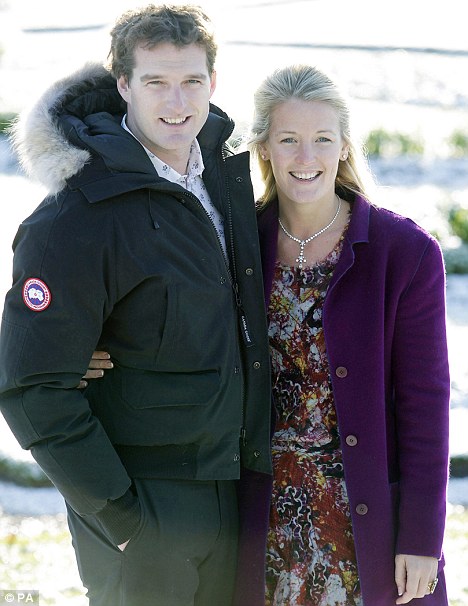
Lady Edwina Grosvenor, and her husband Dan Snow, welcomed their son Wolf Robert on September 9, a brother for Zia, aged 3.

Lady Edwina is a prison reformist and philanthropist. She is the daughter of the Duke of Westminster, the third richest man in Britain, who is significantly wealthier than the queen. Through her mother Natalia Phillips, Lady Edwina is a direct descendant of King George II, and thus has a right of succession to the British throne, although she is only distantly in line. A distant relation of both Queen Elizabeth and Prince Philip, she is also a direct descendant of the Russian author Alexander Pushkin, and Nicholas I of Russia. Princess Diana was Lady Edwina’s godmother, and her mother Natalia is godmother to Prince William.

Dan Snow is a television presenter who has made numerous history programmes for the BBC. Some of the programmes he has presented include Battlefield Britain, Britain’s Lost World, Rome’s Lost Empire, and Battle Castles. In My Family at War, he explored the role of his great-grandfather Thomas Snow, who was a military commander on the Somme during World War I. A political advocate for several causes, he was prominent in the Let’s Stay Together campaign to keep Scotland part of the Union. He and Lady Edwina were married in 2010, in a small private ceremony.

Dan Snow made this statement about the choice of Wolf’s name: Our son was born today, 2005 years to the day since his ancestors erupted out of the Teutoburger Wald and annihilated the mighty legions of Varus. Like those wild Germans, he came screaming out of the dawn mist, under a full moon, and so we named him Wolf.

The Battle of the Teutoburg Forest (Teutoburger Wald) took place in September 9 AD, when an alliance of Germanic tribes led by Arminius, chieftain of the Cherusci tribe, ambushed and annihilated three Roman legions and auxiliaries led by the Roman general Publius Quinctilius Varus. The result of the battle was that Germania remained independent and never became part of the Roman Empire. The date is a matter of speculation, but a full moon in September that year would have been late in the month – September 9 was two days after the new moon. There would been attacks at dawn during the course of the battle, which raged for days.

Wolf and his father Dan share the same middle name, which also happens to be the name of two of Wolf’s great-grandfathers, on both sides of his family.

(Photo of Lady Edwina Grosvenor and Dan Snow on their wedding day from the Daily Mail)

Waltzing With … Constance

09 Sunday Nov 2014

Posted by A.O. in Waltzing with ...

≈ 3 Comments

Tags

aristocratic names, famous namesakes, fictional namesakes, French name popularity, Latin names, name history, name meaning, name popularity, nicknames, Old French names, Puritan names, rare names, Roman names, royal names, Shakespearean names, UK name popularity, US name popularity, virtue names

9-2508527-bun230914key1c_fct667x500x4.0x98.0_t620

This Tuesday is Remembrance Day, so today we will remember a World War I heroine. The Australian nurses who served in World War I have not always received the full recognition they deserve, but the award-winning television miniseries Anzac Girls, based on their stories, has brought these “other Anzacs” attention this year.

More than 5000 Australian nurses served during World War I, many of them in the sort of unofficial capacity that meant they are barely remembered today. They worked under gruelling conditions, underpaid, under-resourced, and often forced to improvise. They shared many of the soldiers’ hardships, including illness, physical danger, and psychological trauma.

Nurses were a vital part of the war effort, taking care of wounded soldiers, and offering comfort and cheer, giving them the courage to go back to the battlefield. No matter what horrors they saw, nurses had to remain cheerful, because the men depended on them. Many nurses became friends with their patients, meaning that losing one in battle brought deeper emotional strain. The Allied soldiers often commented that Australian nurses were amongst the kindest and most caring, and their professional standards were high.

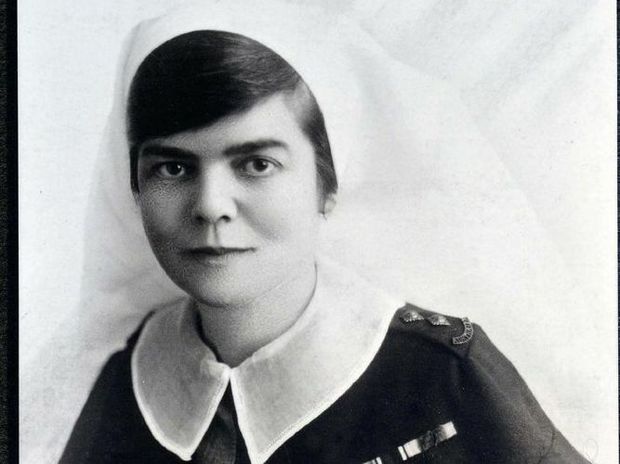
Sister Constance Keys has been on the blog twice before – she was amongst a group of nurses whose photo was used for Girls Names from the 1910s, and a quote from one of her letters was used for the entry on Gallipoli. Constance Keys was a Brisbane nurse who enlisted in the Australian Army Nursing Service in 1914, serving in Egypt, England, France, and Belgium.

Constance treated casualties from Gallipoli, and for most of 1918 was right near the front line in northern France, where her nursing station was heavily bombed more than once. Conditions were wet and cold, greatly increasing the suffering of her patients, and making movement difficult. She and her staff treated those who had been gassed, coped with influenza outbreaks, and had many casualties who suffered from exhaustion as well as wounds.

Sister Keys was discharged from the AIF in 1920 as one of the most highly decorated nurses in the AANS. Twice mentioned in dispatches for bravery, she received the Royal Red Cross, first and second class, and was awarded the Médaille des Epidémies in recognition of her work for French refugees. After the war, she became a hospital matron, and married a Gallipoli veteran; during World War II she trained Red Cross volunteers and entertained soldiers.

After her death, her wartime diaries and letters came to light, as well as her autograph book, in which she managed to get the signature of King George V. They give a clear picture of a young woman who was not only courageous and compassionate, but determined to remain in good spirits.

Under fire, Constance was “only afraid of being afraid”, and in the English fogs, “apart from the constant feeling of loss, quite well”. She writes of her little troubles, such as not having enough food, her hair falling out, and being a “bushwhacker” in regard to fashion, all in bright and amusing terms. She was a caring nurse who wrote letters and postcards to soldiers with no mail, felt guilty that she could only afford to shout ten men to lemonade and not everyone, and took time to make mud pies with a “little French kid”.

Connie also enjoyed those moments of pleasure and fun that came her way, such as buying a lovely pair of buttoned boots in England, seeing exquisite Oriental artefacts in Cairo shop windows, a mess room in Belgium with a sweet-toned piano for her to play, going on leave in Cannes to wake up to eucalypts and wattles outside her window. But she always remained a Queensland girl who had forgotten the taste of mango, and longed for a slice of passionfruit cake.

Constance is the medieval Old French form of the Roman name Constantia, the feminine form of Constantius, derived from the name Constans. This Latin name means “constant, steadfast”, referring to someone steady and faithful in their purpose or feelings. It is the basis for the English word constancy.

Traditional amongst European royalty and nobility, this name literally came over with the Conqueror, because Constance was one of the children of William I, said to have been the most gifted of his daughters. Princess Constance was her mother’s favourite child, so she wasn’t offered in marriage until she was positively ancient by medieval standards – in her mid to late twenties. She married a duke of Brittany, but died not long afterwards, reputedly poisoned by her servants.

Constance has often been used by the British aristocracy. One example is Lady Constance Bulwer-Lytton, a suffragette who went by the alias Jane Warton so she wouldn’t receive special treatment. A vegetarian, campaigner for birth control, prison reformist, and supporter of Morris dancing, she never married, as her mother would not allow her to marry a man from a lower social class. She died from a heart attack and series of strokes in her fifties; it is thought from the force-feedings she endured while hunger-striking in prison.

Other upper-class Constances include the pacifist writer Lady Constance Malleson, who performed as an actress under the name Colette O’Niel, Lady Constance Gaskell, Lady in Waiting to Princess Marina, and (Constance) Gwladys Robinson, Marchioness of Ripon, a patron of the arts and friend of celebrities such as Oscar Wilde and Nellie Melba. This reminds me that Oscar Wilde’s wife was named Constance too.

Constance is a favourite choice for aristocrats in English fiction, such as P.G. Wodehouse’s imposing Lady Constance Keeble, and Lady Constance Chatterley who forms a close connection with her husband’s gamekeeper in D.H. Lawrence’s Lady Chatterley’s Lover. It is also a Shakespearean name, because the historical character Constance, Duchess of Brittany, who married a son of Henry II, appears in King John.

But Constance was not just a name for dames, duchesses, and dowagers. Being a virtue name, it was appreciated by the Puritans, and Constance Hopkins was a teenaged girl who sailed on the Mayflower as a pilgrim: she was a sister of the baby boy Oceanus who was born on the voyage, and often mentioned in name blogs. Constance married and had twelve children, who provided her with seventy four grand-children; she has many living descendents. So the name Constance has plenty of history in America too.

Constance left the US Top 1000 in 2000, is still falling, and last year there were 103 baby girls named Constance – the same number as those called Arwen. It is much more popular in the UK, where Constance is #267 and stable. Constance is most popular in France, where it is just outside the Top 100 and rising.

In Australia, Constance was #83 in the 1900s, and peaked in the 1920s at #76, before leaving the Top 100 in the 1930s. It dropped off the charts in the 1960s, and made a minor come-back in the 1990s at #751. I rarely see a baby named Constance, but it does get a bit of use as a middle name, where it makes a wonderful alternative to the popular Grace.

Constance is a beautiful, elegant traditional name; a strong, brave name for a woman, yet also modest and sensible. It’s in rare use now, but that may be a drawcard for those parents wanting a familiar name that isn’t common. The nickname Connie sounds dated, which probably helps explain its lack of popularity, but you could use something more modern, like Coco or Tansy. However, Constance doesn’t need a nickname in my opinion – it’s lovely all on its own.

POLL RESULT
Constance received an outstanding approval rating of 88%, making it the highest-rated of the featured names of the “Waltzing” category in 2014. 34% of people liked the name Constance, while 30% didn’t mind it. Only 1% (1 person) hated the name the Constance.

(Photo of Sister Constance “Connie” Keys from the Bundaberg News Mail)

Famous Name: Edward

05 Wednesday Nov 2014

Posted by A.O. in Famous Names

≈ 16 Comments

Tags

Anglo-Saxon names, choosing baby names, classic names, english names, famous namesakes, fictional namesakes, locational names, middle names, name history, name meaning, nicknames, popular names, royal names, saints names

ART11354

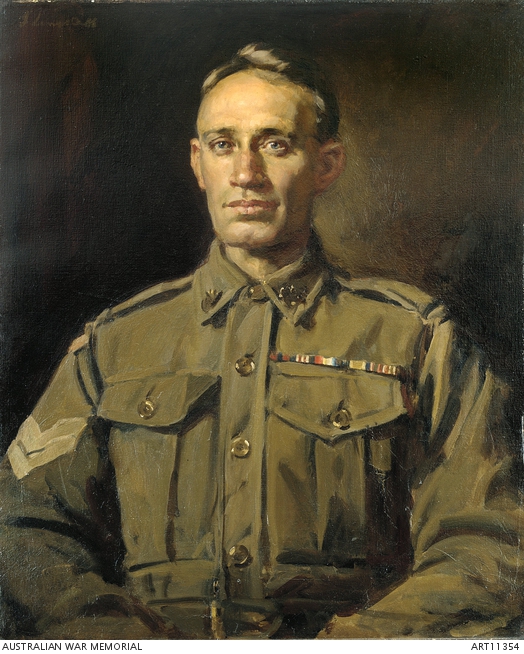
This year is the centenary of World War I, and just a few days ago there were commemorative celebrations for the first Australian troops to leave for the battlefields of Gallipoli. Because of this, I have chosen the name of one of our war heroes.

Edward Picton was a shearer and drover from country New South Wales when war broke out in 1914, and by the end of that year he had embarked with the 7th Light Horse Regiment. He saw active service in Gallipoli, and distinguished himself in the campaigns of Sinai and Palestine. Twice he was decorated for capturing prisoners under heavy shelling, and his commanding officer praised him as reliable, full of dash and pluck, and cool under fire.

In early 1918, he received a severe wound which left him with a permanent limp, and was taken prisoner himself; reported as missing in action, he was taken to Turkey to endure many months as a POW, and returned to Australia after the Armistice. Despite his age and disabilities, he also signed up during World War II and served in Egypt and Syria. Although one of the the most decorated soldiers of the Australian Light Horse’s famous 1917-18 campaign, he remained modest, and lived a quiet life with his family.

The name Edward is derived from the Old English ead “wealthy” (or poetically, “blessed, happy”) and weard “guardian, watchman” (the origin of our English word warden), and is usually translated as something like “rich guardian”.

The name was a traditional one amongst Anglo-Saxon royalty and nobility, as were other Ed- names, which emphasised their inherited wealth and power. An early example is the Anglo-Saxon king Edward the Elder, the son of Alfred the Great; he was a successful ruler who is said to have been extremely handsome and intelligent.

Two other pre-Conquest English kings named Edward became saints: Edward the Martyr, whose short reign ended with his murder, and Saint Edward the Confessor, who was one of the patron saints of England until he was replaced by Saint George.

It was because of Saint Edward the Confessor that the name Edward also became traditional amongst the Norman kings, because Henry III named his eldest son Edward in honour of the country’s patron saint, and he became Edward I. Thus Edward became one of those rare Anglo-Saxon names which continued to flourish after the Conquest.

There have been eight English kings named Edward since 1066, with the last one being Edward VIII, who famously abdicated in 1936, the first year of his reign, to marry the American socialite Wallis Simpson.

The name, although perhaps not auspicious for a king any more, is still in use by the British royal family, with a notable example being Prince Edward, Earl of Wessex, the youngest child of Queen Elizabeth, who is currently visiting Australia. The queen has a cousin named Edward – Prince Edward, Duke of Kent. The Duke of Kent was born a year before Edward VIII’s abdication, and I wonder if he would have been given a different name if born a year after the abdication?

If you are a fan of the Anne of Green Gables books, you will know they are mostly set on Prince Edward Island, Canada’s smallest province. They are named after Prince Edward, Duke of Kent and Strathearn, who was Queen Victoria’s father.

Edward is a name which has been something of a favourite in romantic fiction, including the dutiful Edward Ferrars in Jane Austen’s Sense and Sensibility, and the Byronic Edward Rochester in Charlotte Bronte’s Jane Eyre. Mr Rochester was one of the models for another romantic love interest, the vampire Edward Cullen from the Twilight series. There’s also Prince Edward from the movie Enchanted, and from a very different fairy tale, the strangely gifted Edward Scissorhands.

Edward is a classic which has never been off the charts, and barely been out of the Top 100 in Australia. It was at its height in the 1900s at #10, and hit its lowest point in the late 2000s at #103 (it did rise after Twilight). Currently it is #59 nationally, #53 in New South Wales, #39 in Victoria, #83 in Queensland, #30 in Tasmania, and #32 in the Australian Capital Territory, where it was one of the fastest-rising names of 2013.

I must admit to having great affection for the name Edward, because it was the first name I ever bestowed on a human, at the age of three. It is my brother’s name, and my parents allowed me to choose his name, in the hope that this would prove a great bonding experience, as I’d been very jealous and grizzly about the whole “new baby brother” deal.

I chose the name Edward after my favourite literary character, Winnie-the-Pooh – well I was only three! As Pooh fans will know, Winnie-the-Pooh, who was named after a real bear named Winnipeg and a swan named Pooh, is identified in the poetry book When We Were Very Young as having Edward Bear as his official name.

The budding name nerd in me was thrilled at learning someone’s real name, and excited that there were such things as real names. My mum explained that Edward was the “proper name” for Teddy, so the name meant “teddy bear”. That discovery about nicknames coming from names blew my mind. No wonder I couldn’t get enough of Winnie-the-Pooh.

I may have also been drawn to the name because one of the “big boys” in our community (about eleven) was called Edward, and he had apparently impressed me as being very kind and gentle. Perhaps I saw Edward as a “nice guy” name – the kind of person I would want as a brother. If so, my wish came true, as my brother Edward is gentle and kind too, and has devoted his life to helping others. He’s definitely one of the good guys.

Of course I didn’t get things all my own way. My idea was that my brother’s whole name would be Edward Bear, like Winnie-the-Pooh, and that his nickname would be Teddy. My parents said Bear wasn’t a proper name, and the middle name was James, after my dad. Teddy was vetoed, as to my parents’ generation, it was a synonym for thug, and his nickname eventually became, without any particular forethought that I noticed, Eddie. It was an early lesson in name compromise, and that once you’ve named someone, you lose creative control of the project.

My parents’ master plan did not work, and despite naming him, I was a complete brat towards my baby brother, locked in sibling rivalry hell. However, it didn’t last long, as my mother got pregnant again almost immediately, and in an astonishingly short time, there was another baby. Either the shock of having two baby brothers pulled me up, or I had turned four and was now a lot more mature. My parents chose their youngest child’s name themselves (I didn’t get a second gig), and ironically his nickname became Bear, which had nothing to do with his name at all. Talk about name theft!

(I don’t have clear memories of being three, and have drawn on the recollections of my parents and sister for this, but I do remember Winnie-the-Pooh, and the moment of actually announcing Edward’s name. I don’t remember being a massive fangirl of older-boy-Edward, but my family assures me that I was a great admirer; I don’t remember him from the age of three, but obviously I grew up around him and have many later memories. I only recall throwing one jealous tantrum over Eddie, but I’ve been told I was a right little monster).

So there you have it – a handsome classic which is a solid, reliable choice, yet still has some dashing romance to it, as well as teddy bear huggability. Even as a toddler I could tell it was a great name, and it has served my brother well for many years. Highly recommended!

POLL RESULTS
Edward received an excellent approval rating of 83%, making it one of the highest-rated names of 2014. People saw the name Edward as a handsome and elegant classic (31%), noble and gentlemanly (18%), dashing and romantic (13%), and having great nickname options (13%). However, 7% of people thought it was too stuffy and old-fashioned. Nobody thought the name Edward seemed stuck-up or snobbish.

(Portrait of Corporal Edward Picton from the Australian War Memorial)

Waltzing With … Lucius

05 Sunday Oct 2014

Posted by A.O. in Waltzing with ...

≈ 3 Comments

Tags

aristocratic names, Arthurian names, Biblical names, Etruscan names, famous namesakes, fictional namesakes, Harry Potter names, imperial names, Latin names, name history, name meaning, name popularity, papal names, rare names, Roman names, royal names, royal titles, saints names, Shakespearean names, UK name popularity, US name popularity

y_Daybreak

Today is the start of Daylight Saving Time in New South Wales, Victoria, South Australia, Tasmania, and the Australian Capital Territory. Clocks went forward at 2 am this morning, so if you forgot, you are now an hour behind.

Because daylight saving becomes more pointless the closer you are to the equator, states which have tropical regions do not have daylight saving, and this means Queensland, Western Australia, and the Northern Territory. For everyone else, it’s a reminder we are moving towards summer and increasing hours of daylight, so it seems the perfect opportunity to look at a name connected with light.

Lucius was the most common name in ancient Rome times across all classes; it is usually said to be derived from the Latin word lux, meaning “light”. One theory is that it was given to children who were born at dawn, but the sheer number of people called Lucius makes this untenable. Another theory connects it to loukus, which originally meant “bright, shining”, although by the classical period it had come to mean “a cleared grove”.

Lucius is the name ascribed to an early Roman king, but it is probably a misunderstanding of Lucumo, the Etruscan word for “king”, which would be his title; the name Lucius was traditional in his family, suggesting another origin for the name. The Roman dictator Sulla, who served as an inspiration for Julius Caesar, was named Lucius Cornelius Sulla Felix. There were at least two Roman Emperors named Lucius: Lucius Dominitius Aurelianus (called Aurelian), and Lucius Aurelius Commodus (called Commodus).

Commodus was the son of the emperor Marcus Aurelius, and grandson of an emperor: he was the first emperor to be “born in the purple” (during his father’s reign). He is probably best known to us as the wicked emperor in the movie Gladiator, killed by Russell Crowe in the role of Maximus: although a fictional story, the real Commodus was eccentric and cruel, and assassinated by his wrestling partner, Narcissus.

The name Lucius was a favourite choice amongst early Christians because of the meaning of “light”, and there are several saints with the name. Saint Lucius of Cyrene is mentioned in the New Testament as a founder of the church in Antioch. There have been three popes named Lucius, and Pope Lucius I is also a saint.

Another Saint Lucius is a legendary 2nd century King of the Britons, who tradition credits with introducing Christianity to Britain by writing to the pope asking to be converted. His story became well known after it was included in the histories of Venerable Bede, and embellished by Geoffrey of Monmouth. For centuries it was an important myth of British Christianity, and although there’s no solid evidence he existed, some feel there must be a grain of truth to the legend. The church of St Peter Under Cornhill in London claims St Lucius as its founder.

The Roman philosopher and statesman known to us as Seneca had the full name Lucius Annaeus Seneca. He wrote many of his famous works while in exile, and later became an advisor to the Emperor Nero. This didn’t end well for him, as he was (probably wrongly) implicated in a plot against Nero, and forced to commit suicide. Early Christians greatly approved of him, and virtually hailed him as a humanist saint. According to medieval legend, he was converted to Christianity by Saint Paul, and is mentioned by writers such as Dante and Chaucer.

Despite all this heavy-duty Christian background, and even a British connection, Lucius has never been a common English name. It does seem to have had some history of use in Yorkshire, which has strong ties to the legendary Saint Lucius.

The name Lucius is a traditional one in the aristocratic Cary family, who bear the title Viscount Falkland. The 2nd Viscount fought on the Royalist side in the English Civil War and was killed in action. The current Viscount Falkland is named Lucius, and so is his son (a writer who goes by his middle name, Alexander), and his grandson.

Lucius has probably been used more often in America, and there are a number of famous politicians from the United States bearing this name. It’s also known from American writer and bon vivant, Lucius Beebe, and American sci-fi author Lucius Shepard.

Lucius isn’t too unusual a name in Australian historic records. Dr William Harvey, who was featured on the blog earlier this year, had a father named Lucius who was also a doctor, and it was his father’s death from tuberculosis which led Dr Harvey into specialising in thoracic medicine. A famous Australian with the name is musician Lucius Borich, the son of Kevin Borich, who was in the band The Party Boys.

Lucius doesn’t chart in Australia. 14 baby boys were named Lucius in England/Wales last year, while in the US (where Lucius peaked at #257 in the 19th century), 125 boys were named Lucius in 2013 – the same number as those called Hollis and Zephaniah.

If there seems a lack of real life Luciuses, fiction has stepped into the breach, for they abound in books, movies, TV programs, and video games. It’s no new phenomenon, for Lucius is the narrator of The Golden Ass by African author Apuleius; written in Latin in the 1st century, this comedy is sometimes regarded as the world’s first novel. Lucius is also in Arthurian legend, a fictional Emperor of Rome who King Arthur defeats, thus becoming not just King of Britain, but Emperor over all the West.

Lucius has been used as a character name twice by William Shakespeare, in Titus Andronicus and Julius Caesar. In fact, pretty much anyone who writes a story set in Roman times will include a Lucius somewhere, as it was the #1 name.

One of the best known fictional Luciuses of contemporary times is the slippery Lucius Malfoy from the Harry Potter series. Upper crust, corrupt, bigoted, and ready to slip over to the Dark Side whenever convenient, Lucius is a dyed-in-the-wool villain and general Mr Nastypants for most of the series. Only towards the end does he receive a lukewarm redemption.

His name, although suitably aristocratic, brings to mind Lucius from The Golden Ass, which is a book about witchcraft and magic – not to mention someone (literally) making an ass of themselves. However, just as Malfoy’s son’s name, Draco, means “serpent” and reminds us of the Devil, Lucius’ name is reminiscent of Lucifer, a name related to Lucius, meaning “light-bringer”, and which is often understood by Christianity as Satan’s name before his fall.

Unfortunately, some people think Lucius and Lucifer sound too similar for comfort. Stories that make the connection don’t help, such as the video game Lucius, Son of Lucifer, or the horror novel The Haunting of Sister Mary Francis, which has a character named Lucius Lucifer. On the plus side, that gives Lucius a bit of a “bad boy” edge.

An alternative is Lucian, which is derived from Lucius. Lucian is more popular in Australia than Lucius, being around the 500s, and fits in with the trend for boy’s names ending in N – Lucian almost seems like a fancier version of Lachlan.

Lucius can be pronounced either LOO-see-us, or LOO-shus. The ancient Romans said it more like LOO-ki-us, which perhaps suggests the three syllable pronunciation is more “correct”. Obvious nicknames are Lucky, Luke, Luc, Luca, Luce, Loosh, Lou, and Louie. I have seen a baby Lucius nicknamed Luci or Lucy by his family, which startled me, even though it makes perfect sense.

Handsome, intelligent, and with a rather upper-class image, Lucius does have a few issues, but seems like a name that someone could really fall in love with. It’s quite seductive – even luscious! I’ve noticed this name is often favoured by dads, suggesting that many guys appreciate the richness and power that stand behind it.

This is a rare boy’s name that is perfectly balanced between elegance and strength, brightness and darkness, history and magic, with lashings of Ancient Roman street cred and a bit of sex appeal to boot. Lucius could well be the name that lights up your life.

POLL RESULT
Lucius received a very good approval rating of 77%. 37% of people loved the name Lucius, while 25% of people didn’t mind it. Only around 5% of people hated the name.

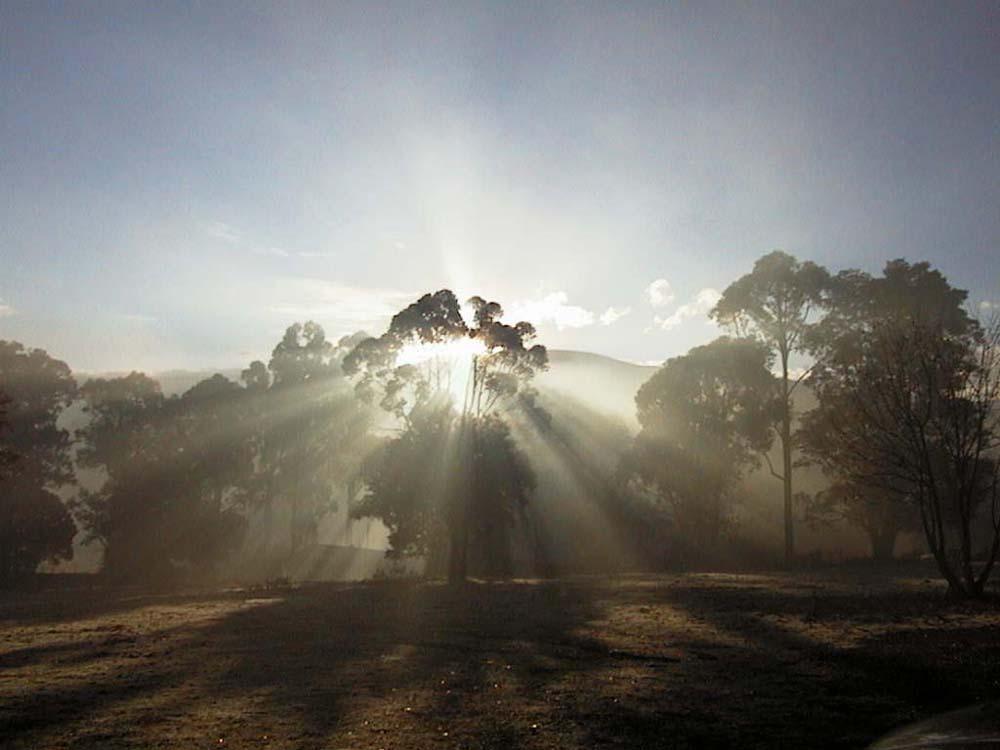
(Photo shows daybreak at Delderfield, Marysville, in country Victoria)


Diminutive Names for Girls – 2

21 Sunday Sep 2014

Posted by A.O. in Name Themes and Lists

≈ 6 Comments

Tags

aristocratic names, celebrity baby names, famous namesakes, fictional namesakes, French names, Greek names, international name trends, Italian names, mythological names, name history, name meaning, name popularity, name trends, names from movies, names from television, names of mascots, popular names, retro names, royal names, saints names, Spanish names, unisex names

907393-underbelly-razor

It’s been more than a year since we had a list of short form names, and as this is a huge growth area, it’s time for another.

Ada
Short form of Adelaide and related names. It has been an independent name since the Middle Ages, and was used by royalty and the nobility; an example is the Ada who was reputedly the sister of Charlemagne. There is also a 7th century St Ada, who was a French nun and abbess. Ada was especially popular during the 19th century, and a famous namesake from this era is (Augusta) Ada King, Countess of Lovelace, a daughter of Lord Byron and his only child born in wedlock – nearly always known as Ada Lovelace. Ada was a gifted mathematician who produced an algorithm designed to be used by a machine; in effect, the first computer program. A famous contemporary example is Australian actress Ada Nicomedou. Ada was #40 in the 1900s, and left the Top 100 in the 1920s; it was off the charts by the 1950s. Ada made a comeback in the 1990s at #845, and is currently around the 300s. Fitting in perfectly with the trend for short simple names like Ava, and for traditional old-fashioned names like Elsie, this is a hip retro short form that not too many people are using.

Bella
Short form of Isabella, and other names ending in -bella, such as Annabella or Arabella. However, many people connect it to the Italian word for “beautiful”, and understand it that way. Bella has been an independent name since the Middle Ages, and has had particular use by Jewish families from Russia and Central Europe – two examples are American feminist Bella Abzug, and writer Bella Rosenfeld, the wife of Russian-French artist Marc Chagall. A famous Australian namesake is actress Bella Heathcote, best known for her role on Neighbours a few years ago. Bella first joined the charts in the 1990s at #541, rising on the heels of Isabella, which began its impressive ascent in the 1980s. Bella entered the Top 100 in 2002, debuting at #99; it peaked in 2010 at #41, and is currently #48 nationally. Like Isabella, Bella’s success is often attributed to the Twilight series, although as you can see, it was rising and even popular before the first novel was released in 2005. Stephenie Meyer’s Bella Swan (an irritating character name because it describes the story’s outcome) probably did help though, if only by increasing visibility.

Demi
Short form of the Greek name Demetria, the feminine form of Demetrius, which is derived from the name of the agricultural goddess Demeter. The goddess’ name is often translated as “earth mother” or “barley mother”. Demi is also sometimes connected with the French word demi, meaning “half”, to suggest “small” (as in half-pint). This name has a big dose of star power, thanks to Hollywood actress Demi Moore, and from a generation younger, pop singer and actress Demteria “Demi” Lovato. The name is usually pronounced duh-MEE, but English-speakers sometimes prefer it to be said to rhyme with Emmie. Demi is around the 500s in Australia, and is rising in the US, but falling in the UK, so international trends are at odds on this one.

Ellie
Short form of any name starting with El-, such as Eleanor, Ellen, Elizabeth, or Eloise, and long used as an independent name. It is well known from British pop singer Elena “Ellie” Goulding, and a favourite in the world of fiction. Fictional namesakes include the dainty little girl in The Water Babies, Ellie Linton, heroine of John Marsden’s Tomorrow When the War Began, Eleanor “Ellie” Arroway, brainy heroine of Carl Sagan’s Contact, adventurous Ellie Frederickson from Up, the woolly mammoth from the Ice Age series, and strong matriarch Eleanor “Miss Ellie” Ewing, from Dallas. Ellie joined the charts in the 1980s at #349, and was in the Top 100 as early as 1993, at #98. It managed to get in again a decade later in 2003, at #72, and has remained fairly stable in the bottom half of the Top 100 ever since. Currently it is #56. Ellie fits in perfectly with popular names like Ella, and is well-used without being overly common or rising alarmingly.

Frankie
Unisex nickname that in the case of boys is a pet form of Francis, Francesco, Francisco, Frank, or Franklin, and in the case of girls, of Frances, Francesca, Francisca, or Francine. Famous male Frankies include American crooner Frankie Valli, British comedian Frankie Howerd, American actor Frankie Muniz, who played the title role in Malcolm in the Middle, and Australian kick-boxer Frankie Georgi. A famous female Frankie is British pop singer Frankie Sandford, and the name has been chosen for their daughters by several celebrities, including Drew Barrymore, and in Australia by rugby league star Johnathan Thurston, weather presenter Sara Cumming, and news presenter Rebecca Morse. In the US, Frankie only charts for boys, while in the UK, it charts for both sexes, but is only popular as a boy’s name. In Australia, Frankie is a unisex name, and significantly more common for girls. The reason for its increasingly feminine image here is no doubt because of the hip women’s fashion magazine, frankie.

Gigi
French nickname for any name with a G sound, such as Georgine or Ghislaine. Its most famous namesake is the charming Parisian schoolgirl in Colette’s 1942 novella, Gigi, who is being trained to be a courtesan by her family. Their plans go awry when the gamine Gigi attracts a wealthy older man, and becomes his wife instead of his mistress. It has been turned into a musical and a couple of films, including the 1958 Hollywood production starring Leslie Caron as Gigi, which is surprisingly faithful to the book, except for discreetly upping Gigi’s age from twelve to around sixteen, and adding songs like Thank Heavens For Little Girls. Gigi’s name is short for Gilberte, by the way. In Italy it is a male nickname, short for Luigi. An Australian with this name is actress Gigi Edgely, who has starred in Farscape. A flirty French Lolita, Gigi is currently a hip girl’s name in the style of Coco. It was recently chosen as a celebrity baby name by swimmer Geoff Huegill.

Millie
Short for any name with a mil sound, such as Millicent, Mildred, Camilla, Emilia, or Amelia, and is also spelled Milly. You can see Millie as a vintage charmer, all bonnets and hoop skirts, but there’s also something a little Swinging Sixties about it, thanks to My Boy Lollipop, sung by Millie Small, and the 1967 film Thoroughly Modern Millie, starring Julie Andrews. It has a very Australian connection as Millie the Echidna was one of the official mascots for the Sydney Olympics (her name is short for Millenium). Millie was #196 in the 1900s, and left the charts in the 1930s. It returned in the 1990s at #501, had a definite upsurge after the 2000 Olympics, and in 2011 was only just outside the Top 100, its highest point ever gained. It fits in perfectly with popular names like Milla and Mila, and is right on trend for sprightly vintage names, so it feels as if popularity must be just around the corner for suddenly modern-again Millie.

Stevie
Unisex nickname for either the boys’ name Stephen or Steven, or the girl’s name Stephanie; these are Greek in origin, and mean “crown”. Stevie has been an independent name since the Middle Ages, and although you might think of it as very modern for girls, it’s been a female name since the 18th century. Famous male Stevies include Stevie Wonder, Stevie Ray Vaughan, and Australia’s first international pop star, Stevie Wright. A famous female one is English novelist and confessional poet Stevie Smith, whose real name was Florence, and who gained her nickname from a perceived resemblance to jockey Steve Donaghue. However, the most well known female example is singer-songwriter Stevie Nicks, and it is no doubt her popularity in the 1970s and 1980s which made Stevie seem more feminine. In Australia, Stevie can be only be found in current use as a girl’s name, and it’s around the 300s. While writing this, I realised what a musical name Stevie is – look at all those namesakes from the world of pop and rock!

Tess
Short form of Teresa or Theresa, a rather mysterious name, because the various meanings suggested for it are always Greek, but the name itself is of Spanish origin. Nobody has been able to explain this to my satisfaction. Tess has a very famous literary namesake, the beautiful, tormented title character of Thomas Hardy’s rural tragedy, Tess of the D’Urbervilles. Tess Harding is the celebrated journalist trying to cope with marriage as well as a career in rom-com classic Woman of the Year (1941), with Tess played by Katharine Hepburn in her first outing with Spencer Tracy. Another Tracy connection is the adorably-named Tess Trueheart, eventual wife of comic strip detective, Dick Tracy. Tess Mcleod is one of the sisters in Australian drama series McLeod’s Daughters, played by the popular Bridie Carter. Last year comedian Dave Hughes welcomed a daughter named Tess Clementine, voted the most popular celebrity baby name of 2013. Tess joined the charts in the 1980s at #352, and peaked in the early 2000s at #209. Simple yet strong, pert and practical, Tess is a short and stylish choice.

Tilly
Short for Matilda, this can also be spelled Tillie. Apart from being a short form of a patriotic name, Tilly has a notorious namesake in Australia. Tilly Devine was an infamous figure of the Sydney underworld between the two world wars, who became known first as a prostitute, then as a brothel madam and gang member. Her wealth was legendary – she owned real estate, luxury cars, gold and diamonds, threw lavish parties, and always travelled first class. Operating out of Woolloomooloo, Tilly was known as the “Queen of the ‘Loo”, and in the 1953 travelled to London for the coronation of Queen Elizabeth II. Tilly’s story, and her violent gang war with rival vice queen Kate Leigh, was covered in Channel Nine’s drama series, Underbelly: Razor. Tilly is around the 100s in Australia, so not rare at all, while Tillie does not chart. It is something of a puzzle as to why Millie is preferred to Milly, but Tilly preferred to Tillie. Tilly is a sweet and spunky short form in line with British name trends, with an Australian identity all its own.

Thank you to Brooke for suggesting the name Millie be featured on Waltzing More Than Matilda.

POLL RESULTS

The public’s favourite names were Ada, Tess and Millie, and their least favourite were Frankie, Stevie and Bella.

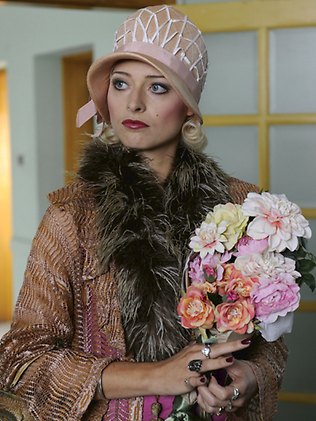
(Photo shows New Zealand actress Chelsie Preston Crayford as Tilly Devine in Underbelly: Razor)

Famous Name: Bruce

17 Wednesday Sep 2014

Posted by A.O. in Famous Names

≈ 7 Comments

Tags

aristocratic surnames, classic names, famous namesakes, fictional namesakes, locational names, name history, name meaning, name popularity, names from songs, names from television, Norman-French names, popular culture, royal names, Scottish names, surname names, UK popularity, US popularity

288848_1250988033522_full

When the name Acacia was featured for Wattle Day, I mentioned that Monty Python made gentle fun of our national flower with their Bruces Sketch, where all the philosophy faculty at the (fictional) University of Woolloomooloo are named Bruce. This seems to be the origin of the notion that Bruce is a particularly Australian name.

Barry Humphries has said that the inspiration for the Bruces Sketch was his Barry Mackenzie character, who began life as a comic strip in Private Eye. Barry Humphries’ television series, The Barry Humphries Scandals, was a precursor to Monty Python, and Eric Idle has cited Humphries as one of his comedy influences.

It’s rumoured, not implausibly, that Humphries himself suggested the name Bruce as an Australian signifier, either directly or indirectly. The name Bruce peaked in Australia in the 1930s, and in Britain slightly later, in the 1940s. Even at its height in the UK, it was only around the bottom of the Top 100, so it wasn’t nearly as common there.

Humphries was born in 1934, so had peers called Bruce. The most obvious example is Australian director Bruce Beresford (born 1940), who directed the Barry Mackenzie films. Like Barry Humphries, Bruce went to England in search of career opportunities, but was unable to break into the British film industry, and found success at home, with movies like Breaker Morant and Puberty Blues, and in North America with Driving Miss Daisy, and Black Robe.

The connection between Barry and Bruce continued when Humphries took the role of a great white shark named Bruce in the animated film, Finding Nemo. The American film-makers named Bruce, primarily not as an Australian reference, but after the shark in Jaws, whose models were all called Bruce after Steven Spielberg’s lawyer. Bruce the Shark does have an Australian accent though, and uses ockerisms like “Good on ya, mate!”.

From the United States, the name Bruce gained a different stereotype, being associated with homosexuality. The reasons are unclear, but one of the most popular theories is that it’s connected to the campy Batman television shows of the 1960s, as Batman’s real name is Bruce Wayne. Another is that it is from the 1960s parody song Big Bruce, where Bruce is a camp hairdresser.

Apart from these reasons, it does seem that the “tough guy” names of one generation are often seen as effeminate, dorky, or otherwise laughable by the next. Something to think about should you be considering one of today’s rugged baby names, such as Axel, Blade, Diesel, or Rowdy.

Bruce is a Scottish surname of Norman-French origin. The Clan Bruce are from Kincardine on the Firth of Forth in Scotland, and trace their origins from the French de Brus or de Bruis, coming from Breux in Normandy (now Brix), sometimes said to mean “the willow lands”. This history and etymology is now considered doubtful, due to lack of evidence.

The first of the family on record to come to Britain was Robert de Brus, who accompanied King Henry I there after the Battle of Tinchbray in 1106. He was granted large tracts of land in Yorkshire, and named 1st Lord of Annandale by King David I of Scotland in 1124. A family legend says that the first of their line was Robert de Brus, who came over with William the Conqueror but this is more wishful thinking than fact.

Of course the most famous member of Clan Bruce was Robert the Bruce, King of the Scots from 1306 to 1329, claiming royal blood as great-great-great-great grandson of David I. One of the most famous warriors of his generation, he led Scotland during the Wars of Scottish Independence against England. He fought successfully during his reign to regain Scotland’s place as an independent nation, with a great victory at the Battle of Bannockburn. Today he is remembered in Scotland as a national hero.

According to a popular legend, while on the run from the English, Robert the Bruce took shelter in a cave. Here he whiled away the lonely hours watching a spider trying to connect one area of the cave’s roof to another using its web. Each time the spider would fail, but kept trying until at last it succeeded Inspired by the plucky little arachnid, Robert the Bruce returned to defeat the English, winning more supporters, and eventual victory. If you ever read this story as a child, it probably ended by saying the moral was :”If at first you don’t succeed, try, try, and try again”.

This story was first told by Sir Walter Scott in in his Tales of a Grandfather: Being Stories of the History of Scotland (1828), and it is believed to have been adapted from a story about Sir James Douglas, Robert the Bruce’s ally and lieutenant. However, the story is very old, being similar to Jewish tales about King David, and Persian stories about Tamerlane and an ant. Apparently people love the idea of beleaguered rulers being inspired by small creatures with exoskeletons.

Robert the Bruce was the high point of the Clan Bruce, although Robert’s son David also became King of Scotland. Various Bruces did historically worthy things, and one of the most famous is Thomas Bruce, 7th Earl of Elgin, who was ambassador to the Ottoman Empire in the 18th and 19th centuries. He spent most of his fortune taking sculptures from the Parthenon in Athens, which was falling into ruins: today they are known as the Elgin Marbles, and on display in the British Museum.

Bruce has been used as a first name since the 17th century, and was used in both England and Scotland. Although it has plenty of history, Bruce didn’t become a huge success as a boy’s name until the 20th century, which gives it a rather modern feel.

In Australia, Bruce is a classic name which has never left the charts. It was #85 in the 1900s, and peaked in the 1930s at #22. It didn’t leave the Top 100 until the 1970s – perhaps Monty Python wasn’t a help to it, or perhaps after many decades its time of popularity was up. Although uncommon, Bruce has remained stable for years around the 400-500s.

So how Australian is the name Bruce really? Well, apart from the Monty Python sketch (which is, you know, fiction), it peaked earlier here than elsewhere, and peaked much higher than in Britain. However, it peaked only a little higher than in the US, where it is also a classic, and peaked at #25 during the 1950s. Its current popularity in Australia is little different to that in the UK and US, so possibly not quite as Australian as you might have thought!

POLL RESULTS
Bruce received an approval rating of 32%. People saw the name Bruce as too dated (25%), too stereotypically ocker (19%), and too boring (14%). However, 8% of people thought it was strong and handsome. Only one person thought the name Bruce was sexy.

(Photo shows Bruce from Finding Nemo)

Boys Names From Australian Children’s Literature

24 Sunday Aug 2014

Posted by A.O. in Name Themes and Lists

≈ 10 Comments

Tags

aristocratic names, aristocratic surnames, Australian slang terms, Biblical names, classic names, colour names, english names, famous namesakes, fictional namesakes, Gaelic names, German names, germanic names, Greek names, hebrew names, Irish names, Latin names, locational names, modern classics, mythological names, name history, name meaning, name popularity, names from songs, names from television, names of businesses, nature names, nicknames, Old Gaelic names, Persian names, plant names, popular names, retro names, royal names, saints names, Scottish names, surname names, tree names, underused classics, unisex names

Cyan Magenta Yellow Black

Darius
Odo Hirsch’s Darius Bell and the Glitter Pool (2009) tells the story of the Bells, a proud family fallen on hard times; plucky youngest son Darius must save the family’s estate. (Name nerd bonus info: Odo is the older form of the German name Otto). Darius is the Latin form of Dareios, the Greek form of the Persian name Dārayavahush, meaning “holding on to goodness”. This name was traditional amongst the Persian kings, and Darius I was known as Darius the Great, as he ruled over the Achaemenid Empire at the height of its power. Darius III was defeated by Alexander the Great, and there are a number of minor princes with the name. Darius is mentioned several times in the Old Testament, so it is a Biblical name as well (nobody is sure which historical Darius it means). Although rare, this name is known in Australia from NRL star Darius Boyd, while there is also a Darius in The Hunger Games trilogy. Darius is a cool-sounding name that might appeal to a broad range of people.

Felix
Terry Denton’s first picture book was Felix and Alexander (1985), about a little boy named Alexander who gets lost, and his toy dog Felix must find him. Felix is a Latin name meaning “fortunate”. It was first given as a nickname to the Roman general and statesman Lucius Cornelius Sulla, a free translation of the Greek nickname he acquired during his military campaigns – Epaphroditos, meaning “beloved of Aphrodite”. The Roman procurator Felix is mentioned in the New Testament, although not in a positive way – he imprisoned St Paul. Felix was a favourite name amongst early Christians, and there are heaps of saints named Felix, including the 7th century Felix of Burgundy, who introduced Christianity to East Anglia, and three popes. Two Australian connections are Felix the Cat, and Australia Felix, the name given to the lush farmland of western Victoria by explorer Sir Thomas Mitchell. Felix was #172 in the 1900s, and left the charts in the 1920s. It returned in the 1980s at #396 and climbed steadily; it’s been on and off the Top 100 since 2011. It’s now #86, and was one of the fastest-rising names last year. A hip retro favourite growing in recognition.

Harley
Sleepy Harley (2011), written by Karen Treanor and illustrated by Kelly Iveson, is a picture book about a cat named Harley who tries to find a place to nap in a Perth suburb. Harley is a surname which comes from a place name meaning “hare meadow” in Old English. The de Harley family were nobles whose history can be traced before the Conquest, and Sir Robert Harley, first Earl of Oxford, was from a prominent political family. One of them, William Cavendish-Bentinck, became British Prime Minister in the 18th and 19th centuries; he was the maternal great-great-great grandfather of Queen Elizabeth. The name will remind many of Harley-Davidson motorycles, giving Harley a pretty cool image. Harley was #212 in the 1900s, and went up and down before dropping off the charts in the 1950s. It returned in the 1970s at #462, and rose before peaking at #70 in 1992. It dropped again before starting to rise in the early 2000s, and is not far out of the Top 100. You could see Harley as an underused classic – in use for many years, but never very popular. I have occasionally seen Harley on girls as well.

Jude
Me and Jeshua (1984) by award-winning author Eleanor Spence is a historical novel about the childhood of Jesus of Nazareth, as seen through the eyes of his cousin Jude. Jude is a variant of the name Judas, Greek form of the Hebrew name Judah, meaning “praised”. In the New Testament, Jude is used for the Apostle whose name was Judas, to distinguish him from Judas Iscariot. Jude is also listed in the New Testament as one of the brothers of Jesus (Eleanor Spence follows a tradition they were cousins), but it is not clear if Jude the Apostle was Jesus’ brother. The Apostle Jude is usually connected with the Apostle Simon the Zealot, and according to tradition they were both martyred in Beirut. Jude is well known as the patron saint of lost causes, and this has made him one of the most venerated saints. Contemporary associations are the actor Jude Law, and the Beatles song Hey Jude. Jude can also be used as a girl’s name, short for Judith, as in the YA novel by Maureen McCarthy, Queen Kat, Carmel, and St. Jude Get a Life (1995). This attractive name has quietly been gaining in popularity, and last year joined the Top 100 in Victoria.

Leonard
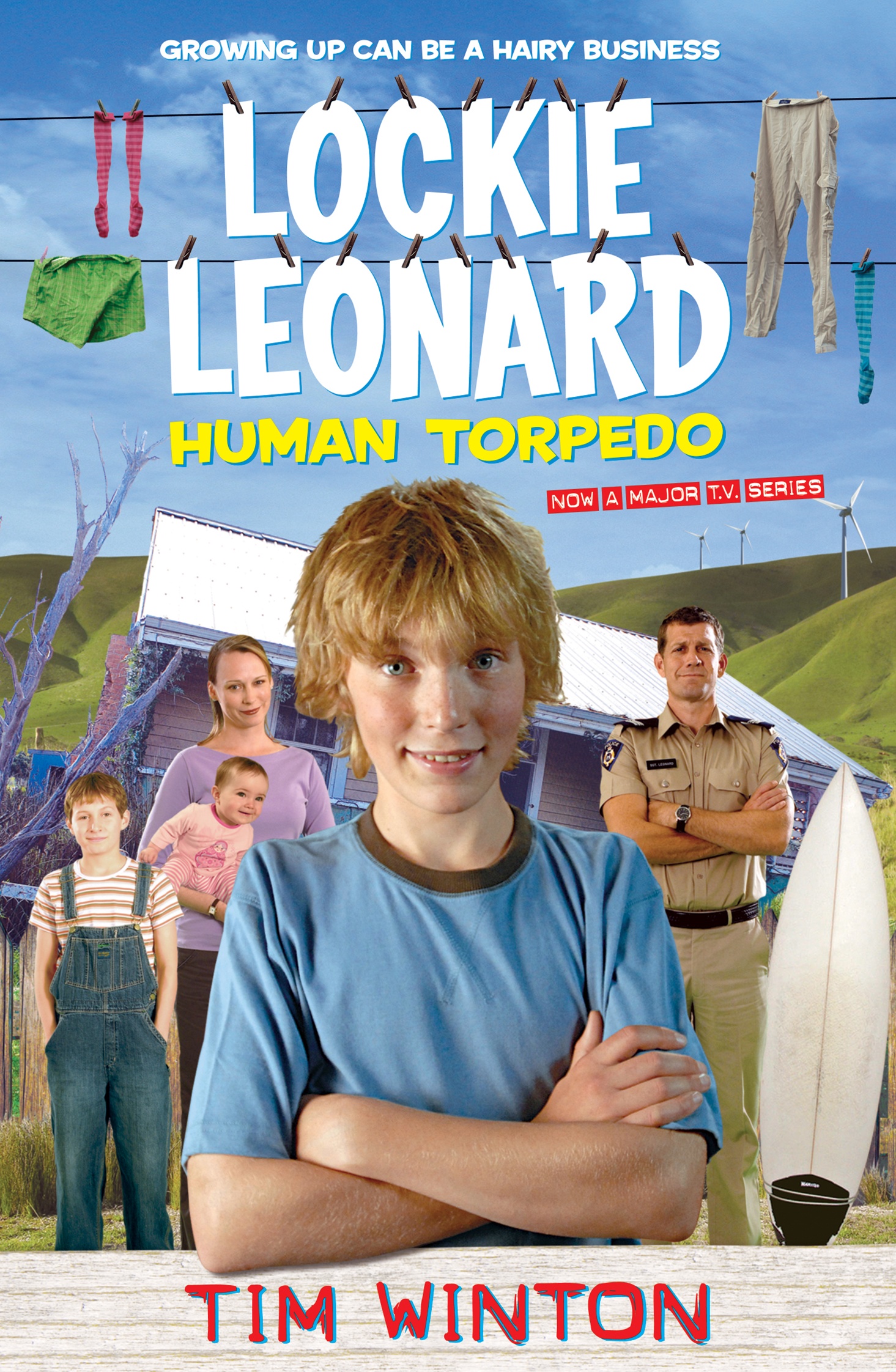
The Lockie Leonard series by Tim Winton (1990-97) stars a surf rat named Lachlan “Lockie” Leonard who moves to the Western Australian town of Angelus (based on Albany). Leonard is a Germanic name which can be translated as “brave lion” or “brave as a lion”. St Leonard is a legendary 6th century saint, a Frankish nobleman at the court of Clovis I who could liberate prisoners from their chains when invoked. The Normans brought the name to England, although it didn’t become particularly common until the 19th century. Famous Australians with the name include distinguished chemist Leonard Lindoy, and hard-hitting post-war cricketer Leonard “Jock” Livingston, also a talented rugby league footballer. Leonard has been a popular name amongst Jews in the past, including Jock Livingston: other examples are Canadian folk singer Leonard Cohen and actor Leonard Nimoy. Leonard was #39 in the 1900s, and peaked in the 1910s at #35. It didn’t leave the Top 100 until the 1960s, and remained in steady but low use until getting a little boost after The Big Bang Theory, with main character Leonard Hofstadter, began airing in the late 2000s. Clunky cool, this underused classic provides a way to get the popular nickname Lenny.

Nathaniel
In Isobelle Carmody’s YA novel The Gathering (1993), Nathaniel Delaney is a teenager who moves to a grim seaside town and finds himself locked in a battle between the forces of Light and Dark. Nathaniel is a variant of Nathanael, the Greek form of Hebrew Netan’el, meaning “God has given”, nearly always understood as “gift of God”. In the Bible, Nathaniel is usually identified with the Apostle Bartholomew; as Bartholomew means “son of Talmai”, it is taken to be Nathaniel’s surname. Nathaniel was in use as an English name by the 16th century, and became more common after the Protestant Reformation. It was used amongst the aristocracy, and also became a favourite in America, with author Nathaniel Hawthorne a notable bearer. Nathaniel was #179 in the 1900s, and left the charts the following decade. It returned in the 1970s at #296, and climbed steadily until it reached the Top 100 last year at #79, making it one of the fastest-rising names of 2013. A handsome retro name that gives the popular nickname Nate, it’s well known from Australian actor Nathaniel Buzolic, from The Vampire Diaries, and Australian singer-songwriter Nathaniel Willemse, who was on The X-Factor.

Rafferty
The Rafferty series by Joan Woodberry (1959-62) are the adventures of an English boy named Rafferty who moves to a fishing village on the Queensland coast. Rafferty is a common Irish surname, an Anglicised form of O’Raithbheartaigh, meaning “son of Rabhartach”. The Old Gaelic personal name Rabhartach means “wielder of prosperity”. The name has a particular Australian resonance, due to iconic Australian actor John “Chips” Rafferty. He was seen as the quintessential Australian, and took part in a marketing campaign convincing British people to migrate to Australia in the 1950s – this might explain the choice of Rafferty’s name in Woodberry’s books. Another Australian reference is the slang term Rafferty’s rules, meaning “no rules at all”. It gives the name Rafferty a pleasantly raffish, lawless feel. This name is around the 200s in Australia, and although it is rising in the UK, is more popular here than anywher else. I have also begun to see a few girls named Rafferty.

Rowan
The Rowan of Rin fantasy series by Emily Rodda (1993-2003) takes place in a fictional world. Rowan is the unlikely hero, considered a bit of a wimpy weakling by the sturdy villagers of Rin, but when danger strikes, his resourcefulness and courage saves the day. Rowan is a Scottish name that’s an Anglicised form of Ruadhán, a pet form of Ruadh, Gaelic for “red”, often given as a nickname to a man with red hair. You may remember that the red-headed Scottish outlaw Raibeart “Ruadh” MacGregor is known as Rob Roy by the English. Rowan can also be unisex when named after the rowan tree; its English name comes from the Germanic for “to redden”, because of the tree’s red berries, so either way the meaning has a connection with the colour. A pleasant association with the tree is that according to folklore it has the power to ward off evil. The name Rowan has charted for boys since the 1940s, debuting at #205, and climbing until it peaked in the 1980s at #164. It’s now around the 300s-400s. Rowan is an underused modern classic which alludes to a vibrant colour, and a magical tree.

Silvander
Norman Lindsay is famous for writing and illustrating The Magic Pudding (1918), a comic fantasy deservedly recognised as a classic. For some reason, his other children’s book, The Flyaway Highway (1936), is neglected, even though it’s just as funny and fantastical. I loved this story, which relates how Egbert and Muriel Jane meet a “bloke with horns and cows’ hooves” named Silvander Dan, who take them on a journey down the Flyaway Highway. As a child, I thought that the name Silvander was made up for the book (although I’m afraid I was already junior name nerd enough to know what it meant). However, I’ve since found that Silvander was a literary name in the 18th century, and in most of the sources I’ve read, characters named Silvander are untrustworthy bounders! The name is derived from Silvanus, the Roman god of woods and fields, from the Latin silva, meaning “wood, forest”. Although an extremely rare name, it is just enough like Silas and Alexander to not be completely outrageous, and has an agreeably silvery sound. For those who like Leander and Evander, here is another to consider.

Theodore
I told myself I would not choose more than one book from a single author, but was forced to make an exception for Odo Hirsch, from whose oeuvre I could happily fill two lists. Antonio S and the Mystery of Theodore Guzman (1997) is his first novel, a charming story about a boy who lives in a grand old house, and is fascinated by a reclusive actor. (Name nerd bonus info: Odo Hirsch is the pen name of Dr David Kausman). Theodore is from the Greek name Theodorus, meaning “God’s gift”. Theodorus wasn’t uncommon in ancient times; ironically one of its famous bearers was the 4th century BC philosopher Theodorus the Atheist. Because of its meaning, the name was a popular choice for early Christians, and saints named Theodore are numerous, including a 7th century Archbishop of Canterbury and two popes. Theodore was also traditional mongst the Byzantine Emperors, and the Russian Tsars. Theodore was #116 in the 1900s, and reached its lowest point in the 1970s at #383. It began rising steeply in the 1990s, and last year joined the Queensland Top 100 at #79, making it one of the state’s highest-rising names. A sophisticated classic name which comes with cool short forms Theo and Ted, I’d call this underused except I’m not sure how long it will stay that way.

POLL RESULTS
The public’s favourite names were Theodore, Jude and Felix, and their least favourite were Leonard, Darius and Harley.

(Picture shows cover of Lockie Leonard – Human Torpedo by Tim Winton)

Famous Name: Roxanne

20 Wednesday Aug 2014

Posted by A.O. in Famous Names

≈ 3 Comments

Tags

Appellation Mountain, Babynameobsessed, Bactrian names, celebrity baby names, famous namesakes, fictional namesakes, French names, Iranian names, Latinised names, name history, name meaning, name popularity, names from movies, names from songs, names from television, royal names

tumblr_mdn8en8PGI1qa13pro1_1280Ebony at Babynameobsessed has a series called Names From My Childhood, and Abby recently had a post on girls names from 1980s television at Appellation Mountain. So I thought I would cover a 1980s name from my TV-watching childhood.

I was slightly hampered as a young television viewer, because I grew up in a rural area which only had one channel, and my family’s home was in some kind of TV black spot which meant we couldn’t get any television reception at all. However, I had friends and relatives within walking and cycling distance, so rather than get home from school and slump in front of the box, I got home from school, jumped on my bike, pedalled furiously, then slumped in front of the box.

Of course, I had to pretty much watch whatever other people had on, and my young cousins used to tune in to the long-running puppet show Mr Squiggle, where a cheery pencil-nosed man from the moon turned children’s squiggles into recognisable pictures. Mr Squiggle had a human assistant, and as it was on air for fifty years, you can tell someone’s age from the assistant they watched. Baby Boomers loved Miss Pat, Gen Xers were Miss Jane fans, while for my cousins it was Roxanne all the way.

Slightly embarrassing to admit, but while Abby was (apparently) watching Dallas and Dynasty, I was enjoying kiddie puppet shows!

Roxanne is a variant of Roxane, a French form of Roxana. Roxana is the Latinised form of the name Roshanak; a Bactrian name derived from the Avestan language of East Iran, meaning “bright, shining, radiant”. It can be understood as “luminous beauty”, “lovely flame”, or “shining star”, and this is one of the many names which have the meaning of “light” behind them. Roshanak is still a common girl’s name in Iran.

The name has become well known to us due to one woman – a Bactrian princess who became the wife of Alexander the Great. Roxana was from the ancient city of Balkh, now a small town in northern Afghanistan, and she met Alexander when he conquered the fort she was hiding in.

It is said that Alexander fell for Roxana on sight, and according to the Macedonians she was the one of the loveliest women they had seen in Asia. Despite strong opposition from his generals, Alexander married Roxana.

Instead of marrying purely for political ends, Alexander married for love, because he is said to have been infatuated with the beautiful Roxana. For her part, Roxana was pleased that her new husband didn’t force himself upon her at once, but actually made an effort to get to know her as a person (which tells you what marriage in the ancient world was generally like).

After Alexander died, Roxana bore him a posthumous son, also Alexander. To protect her position and that of her son, she murdered Alexander’s second wife Stateira, married for reasons of diplomacy, and probably his third wife as well, who was Stateira’s cousin. Roxana and her son were assassinated themselves in the power struggles following Alexander’s death.

Roxana’s romantic story was told in Nathaniel Lee’s 17th century tragedy, The Rival Queens, or the Death of Alexander the Great. The play was a huge hit right into the 19th century, and actresses who were jealous of each other were often cast in the lead roles, to add extra spice to the performance.

The name received a further boost from Daniel Defoe’s 18th century novel, Roxana, about a woman who falls into prostitution but gains freedom by marrying for money. Although a murderer and a prostitute/gold digger may not seem like appealing namesakes, they were strong, independent female characters, and Roxana became established as an English name in the 18th century.

The French form became well known through Edmond Rostand’s 19th century play Cyrano de Bergerac, where Roxane is the beautiful woman Cyrano longs for and woos for another, falsely believing she could never love an “ugly” man like himself.

Roxanne first ranked in the charts in the 1950s, after the 1950 film version of Cyrano de Bergerac, with Mala Powers in the role of Roxane; Roxanne debuted at #364 that decade. Roxanne was #282 in the 1960s, sank to #424 in the 1970s, and peaked in the 1980s at #272.

The 1980s put the focus on the name Roxanne for a few reasons. The hit song Roxanne was recorded by The Police in 1978 and re-released in 1979; Sting was inspired to write the song by the prostitutes around the band’s hotel in Paris. An old poster for Cyrano de Bergerac was hanging in the hotel’s foyer, which is where the name Roxanne came from. Not only popular in the charts of 1979-80, the pop classic Roxanne has been inducted into the Grammy Hall of Fame, and was remixed into El Tango de Roxanne in Moulin Rouge.

In the mid-1980s, the world of hip-hop went through The Roxanne Wars, where a series of “answer records” were released, inspired by UTFO’s Roxanne, Roxanne. Because of UTFO’s non-appearance at a show, teenager (Lolita) Roxanne Shante brought out Roxanne’s Revenge in answer. There were perhaps as many 100 answer records during the Roxanne Wars, and even a dance, as referenced in Do the Roxanne. So chances are you know at least one 1980s song with Roxanne in the title!

You might not think that a prostitute and a (rather silly and contrived) musical rivalry would be of much help to a name’s popularity, but as we’ve seen, a prostitute and a rather silly and contrived stage rivalry is exactly how Roxana became established in the 18th century. History repeats.

And keeps repeating. Towards the end of the 1980s, the movie Roxanne came out with Daryl Hannah in the title role: a clever rom-com remake of Edmond Rostand’s Cyrano de Bergerac, which gave the tragedy an upbeat ending. In the movie, Roxanne is a brainy astronomer.

After the 1980s, the name Roxanne plummeted, and left the charts completely in the early 2000s. You might say this name is dated, and could claim it as a trendy name, but as Roxanne never became popular, it still seems usable – in fact celebrity parents Toby Allen and Darren Weller chose it as their daughter’s name.

Roxanne has a fashionable X in it, while the -anne at the end makes it seem like one of the many Anne names. I have seen a couple of babies named Roxy, maybe influenced by celebrity mum Roxy Jacenko, and Rocky would make a cool tough-girl nickname.

POLL RESULTS
Roxanne received an approval rating of 51%. 16% of people saw Roxanne as too dated and 1980s, but 15% thought it was strong and sexy.


Girls Names from Australian Children’s Literature

17 Sunday Aug 2014

Posted by A.O. in Name Themes and Lists, Requested Names

≈ 10 Comments

Tags

astronomical names, Babylonian names, Biblical names, classic names, english names, Etruscan names, fictional namesakes, flower names, French names, Greek names, hebrew names, Irish names, Italian names, Latin names, Median names, middle names, month names, mythological names, name history, name meaning, name popularity, name trends, names from television, nature names, nicknames, plant names, popular names, retro names, Roman names, royal names, Semitic names, Shakespearean names, underused classics, underused names, unisex names

HarrietYoullDriveMeWild01

This week it is Children’s Book Week, which is run by the Children’s Book Council of Australia. Librarians and teachers everywhere will be thinking up exciting new ways to encourage children to read, while the CBC has awarded prizes to the best new Australian children’s books. I thought it would be fun to join in the celebrations, and many of the books chosen are classics and award winners.

Amaryllis
I know two characters with this name. One is Amaryllis “Ryl” Mereweather, from H.F. Brinsmead’s Pastures of the Blue Crane (1964), about a teenage girl who inherits an old shack in northern New South Wales. (Name nerd bonus info: H.F. Brinsmead stands for Hesba Fay – Hesba is derived from the Greek hesperus, meaning “western”). The other is in Sally Odger’s fantasy Amy Amaryllis (1992), about an ordinary Australian girl named Amy Day who switches identities with a girl named Amaryllis Loveday, from a magical world named Ankoor. Amaryllis is a Greek name meaning “to sparkle”, perhaps to suggest sparkling eyes. In Virgil’s pastoral poems, The Eclogues, Amaryllis is a beautiful shepherdess, and the poet makes a play on words to suggest that her name comes from Latin amor, “love”. The amaryllis flower is often known as “Easter lily” in Australia; it is named after the literary character, so this is not just a simple flower name. Unusual and lovely, Amaryllis comes with a host of possible nicknames, including Amy, Ryl, Rylla, Lily, Lissy, and Mary.

Beatrice
In Playing Beatie Bow (1980) by Ruth Park, Beatie Bow is a local legend, a game that children play to frighten each other. But when teenage loner Abigail watches the game, she is brought to the Sydney of one hundred years earlier by a strange girl named Beatrice “Beatie” Bow. This classic is a YA time-travel historical mystery adventure with a dash of romance, and so firmly grounded in The Rocks area of Sydney that you can follow every step of Abigail’s journey. (Name nerd bonus info: Abigail’s parents named her Lynette, but when her parents separate, she chooses Abigail for herself, because it’s an “old witch” name). Beatrice is the Italian form of Beatrix, very famous because of the beautiful muse in Dante’s Divine Comedy. The name has been used in England since the Middle Ages, including by royalty; Princess Beatrice of York was named after a daughter of Queen Victoria, but itwas used in the royal family long before. It’s also a Shakespearean name, because in the comedy Much Ado About Nothing, Beatrice is the witty heroine. Beatrice was #50 in the 1900s, and left the Top 100 in the 1930s; by the 1960s it had left the charts. It made a modest comeback in the 1990s, after the birth of Princess Beatrice, and has remained around the 500-600 level. This is an elegant retro name which has long remained underused. Bea is the usual nickname, although Beatrice Prior from the Divergent series goes by Tris.

Blossom
Little Ragged Blossom is one of the main characters in May Gibbs‘ Snugglepot and Cuddlepie series (1918-40), featuring her plump “gum nut babies”. Blossom is a poor little gum-blossom girl, alone in the world until she gains the friendship and protection of gum-nut boys Snugglepot and Cuddlepie. From then on, she is part and parcel of their adventures, and not infrequently plays the role of damsel in distress, such as when she needs rescuing from the wicked Banskia Men. Even now, I cannot see a gum tree in bloom without imagining the flowers as little blossom girls … The word blossom is used for flowers that grow in masses and clusters, especially on trees, and evokes spring and freshness. Blossom has been used as a girl’s name since the 18th century, and is probably more common as a nickname, such as aviation engineer Maxine “Blossom” Miles, or a middle name, such as jazz singer (Margrethe) Blossom Dearie. On television, Blossom was one of the Powerpuff Girls, and Blossom Rosso the floppy-hatted heroine of sitcom Blossom. Ultra-feminine, quirky and cool, could Blossom be the ultimate flower name?

Celia
Feeling Sorry for Celia (2000) is Jaclyn Moriarty’s side-splittingly comic début epistolary YA novel. Private school girl Elizabeth spends most of her time fretting over her best friend Celia, whose life is one self-caused drama after another. However, a pen-pal programme with the local public school teaches Elizabeth how real friendship works. Celia is the feminine form of Caelius, a Roman family name traditionally derived from caelum, Latin for “heaven”. However, the Caelii traced their ancestry to the Etruscan hero Caeles Vibenna, so the name probably isn’t Latin in origin. It may come from Cel, the Etruscan earth goddess who is the equivalent of Gaia; her name means “honoured”, and the Etruscans named the month of Celi (September) after her. I like the idea of an earthy goddess becoming connected with heaven. Shakespeare used the name for an attractive, serious character in As You Like It, and Ben Jonson wrote the poem Song to Celia, which became Drink To Me Only With Thine Eyes. These writers sparked interest in Celia as an English name in the 17th century. This literary name is both rare and traditional, and doesn’t seem out of place next to popular names like Olivia and Sienna.

Dot
Ethel C. Pedley’s posthumous novel Dot and the Kangaroo (1899) is about a five-year-old girl named Dot who wanders off into the bush and gets lost. She is befriended by a kangaroo who has lost her joey, and gives Dot some magic berries that allow her to understand the speech of animals. It has a strong conservationist message in regard to our native flora and fauna, which is still very much needed. The book was the first to show Australian animals in a genuine Australian setting, and became an immediate favourite. Dot is a short form of Dorothy which dates to medieval times, and has been used as an independent name at least since the 17th century. This adorably pert little name could honour a Dorothy, and also works well in the middle.

Esther
Ethel Turner’s Seven Little Australians (1894) is the only Australian book to be continuously in print for more than a century. Featuring a family of mischievous, lovable army brats who live in Sydney’s outer suburbs, it is surprising how little it has dated. Blended families, teen rebellion, obsession with body image, schoolgirl crushes, and discipline problems … all topics of interest more than a hundred years ago too. The seven little Australians are Meg, Pip, Judy, Nell, Bunty, Baby, and The General; their father is stern Captain Woolcot and stepmother (The General’s mother) is Esther. Esther is beautiful and sweet, but barely older than her eldest step-children, and incapable of really mothering them. Hilarious, heart-warming, and tragic, this is one of Australia’s best-loved children’s books. In the Bible, Esther was a Jewish queen of a Persian king; her story is the basis for the Jewish holiday of Purim. The meaning of Esther is much debated. It may be from a Semitic word meaning “star, morning star”, or a Median word meaning “myrtle” (the translation of her Hebrew name, Hadassah). Another theory is that it comes from the Babylonian fertility goddess Ishtar (Ishtar also represents the morning star, Venus). Esther was #73 in the 1900s, and left the charts in the 1920s. It reached its lowest point in the 1950s and ’60s at #379, but has climbed since then, and isn’t far outside the Top 100 in Victoria. This underused classic is very much on trend at present.

Harriet
Harriet, You’ll Drive Me Wild (2000) is a picture book written by kidlit doyenne Mem Fox, illustrated by Marla Frazee. Harriet Harris is a toddler who doesn’t mean to be naughty, but trouble follows in her wake without her even trying. Harriet’s mother is a calm woman who doesn’t like to yell, but Harriet pushes her to breaking point. The book helps explain to littlies why parents lose their cool. (Name nerd bonus info: Mem Fox’s full name is Merrion, but she has always gone by Mem). Harriet is the English form of Henriette, the feminine form of French Henri, and thus a feminine form of Harry. Harriet was #122 in the 1900s, and left the charts in the 1930s. It returned in the 1970s, and has been climbing ever since. Last year it was one of the fastest rising names of 2013, and joined the Top 100 at #89. Cute and spunky, it can be shortened to Hallie or Hattie – Hattie is a hen in Mem Fox’s Hattie and the Fox (1986).

Josie
Josephine Alibrandi, known as Josie to her friends, features in Melina Marchetta’s breakthrough YA novel, Looking for Alibrandi (1992). A coming of age story, its smart-mouth heroine is in her last year of school, dealing with boys, family, exams, mean girls, and her father, who left when she was a baby and has suddenly reappeared in her life. Looking for Alibrandi was an instant success upon publication, and has been called “the most stolen library book”. Josie is a short form of Josephine, used as an independent name since the 16th century. It has sometimes been given to boys, as a short form of Joseph or Josiah. Josie first ranked in the 1920s at #291, and left the charts in the 1940s. It returned in the 1970s, and climbed before peaking in 2009 at #175. This is an underused retro name which doesn’t sound old-fashioned, but sassy and stylish.

Liesel
Liesel Meminger is the young girl in Markus Zusak’s The Book Thief (2005), set in Nazi Germany during World War II, and narrated by Death himself. Liesel is illiterate at the start of the story, but through learning to read, discovers a lifelong love of words, and finds solace in stealing books to share with others. Against a backdrop of fear and horror, the story shows that books can feed the soul even in our darkest hours. The story does end up having an Australian connection, and a specific Australian setting is used in a very unexpected way. Liesel is a German pet form of Elisabeth, pronounced LEE-zel. Although it’s never charted in Australia, this charming name is very familiar because of Liesl from The Sound of Music, and swimmer Leisel Jones.

Norah
Norah Linton is the heroine of Mary Grant Bruce’s Billabong series (1910-42). Making her début in A Little Bush Maid at the age of twelve, Norah lives at Billabong Station in northern Victoria. She’s a hardy, spirited tomboy who loves horse-riding, camping, and fishing, and is a total daddy’s girl. The books haven’t aged too well, but Norah is an ancestor of other feisty, independent Australian heroines, such as Ryl Merewether and Josie Alibrandi. Norah is a variant of Nora, a pet form of names such as Honoria and Eleanor. It’s often thought of as particularly Irish, and records show many Norahs of the 18th century were born in Ireland. Hip and arty, Norah is fast growing in popularity in both the UK and US, and already popular in Europe, but almost unknown in Australia. It deserves serious consideration by those keen to get ahead of the trends.

Thank you to Manday for suggesting the name Liesel be featured on Waltzing More Than Matilda, and for recommending The Book Thief be added to this list.

POLL RESULTS
The public’s favourite names were Beatrice, Harriet and Norah, and their least favourite were Josie, Blossom and Dot.

(Picture shows cover of Harriet, You’ll Drive Me Wild, from Mem Fox’s website)

← Older posts
Newer posts →

Enter your email address to follow this blog

Categories

Archives

Recent Comments

A.O.'s avatarwaltzingmorethanmati… on Zarah Zaynab and Wolfgang…
Madelyn's avatarMadelyn on Zarah Zaynab and Wolfgang…
JD's avatardrperegrine on Can Phoebe Complete This …
A.O.'s avatarwaltzingmorethanmati… on Rua and Rhoa
redrover23's avatarredrover23 on Rua and Rhoa

Blogroll

  • Appellation Mountain
  • Baby Name Pondering
  • Babynamelover's Blog
  • British Baby Names
  • Clare's Name News
  • For Real Baby Names
  • Geek Baby Names
  • Name Candy
  • Nameberry
  • Nancy's Baby Names
  • Ren's Baby Name Blog
  • Sancta Nomina
  • Swistle: Baby Names
  • The Art of Naming
  • The Baby Name Wizard
  • The Beauty of Names
  • Tulip By Any Name

RSS Feed

  • RSS - Posts

RSS Posts

  • Celebrity Baby News: Melanie Vallejo and Matt Kingston
  • Names from the TV Show “Cleverman”
  • Can Phoebe Complete This Sibset?
  • Zarah Zaynab and Wolfgang Winter
  • Baby, How Did You Get That Name?
  • Celebrity Baby News: Media Babies
  • Celebrity Baby News: Adelaide Crows Babies
  • Celebrity Baby News: Chris and Rebecca Judd
  • Names at Work: Name News From the World of Business and Employment
  • Celebrity Baby News: Sporting Round Up

Currently Popular

  • Celebrity Baby News: Alisa Camplin and Oliver Warner
  • Rare Boys Names From the 1950s
  • Sad Celebrity Baby News (contents may cause distress)
  • Celebrity Baby News: Jacinta Allan and Yorick Piper
  • Celebrity Baby News: Nicki Gemmell and Andrew Sholl

Tags

celebrity baby names celebrity sibsets english names famous namesakes fictional namesakes honouring locational names middle names name combinations name history name meaning name popularity name trends nicknames popular names saints names sibsets surname names twin sets unisex names

Create a free website or blog at WordPress.com.

Privacy & Cookies: This site uses cookies. By continuing to use this website, you agree to their use.
To find out more, including how to control cookies, see here: Cookie Policy
  • Subscribe Subscribed
    • Waltzing More Than Matilda
    • Join 517 other subscribers
    • Already have a WordPress.com account? Log in now.
    • Waltzing More Than Matilda
    • Subscribe Subscribed
    • Sign up
    • Log in
    • Report this content
    • View site in Reader
    • Manage subscriptions
    • Collapse this bar
 

Loading Comments...